Antique Textile Fragments

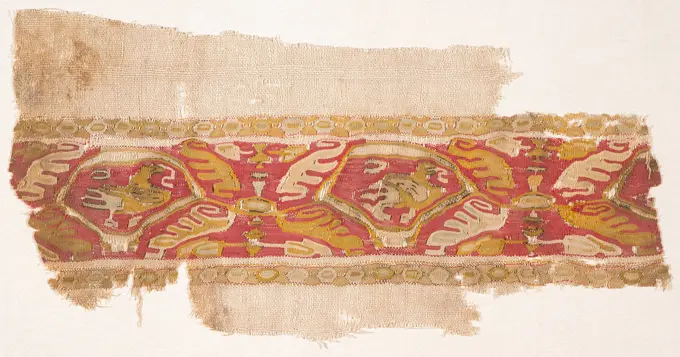
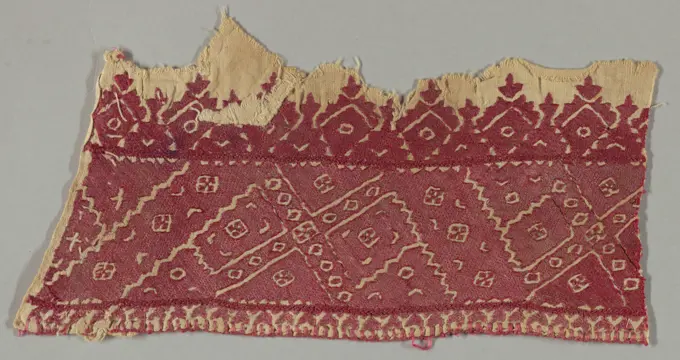
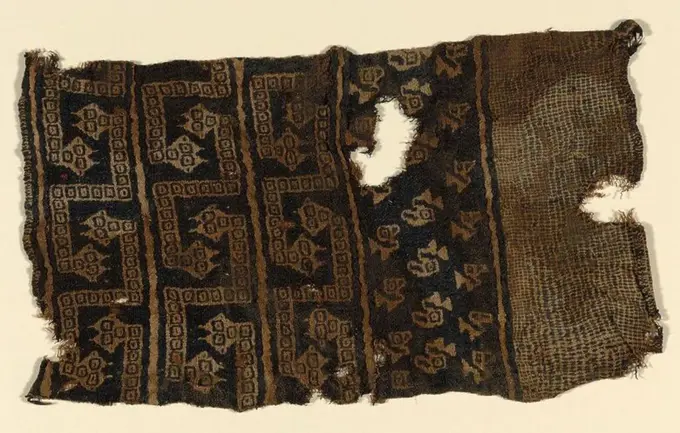
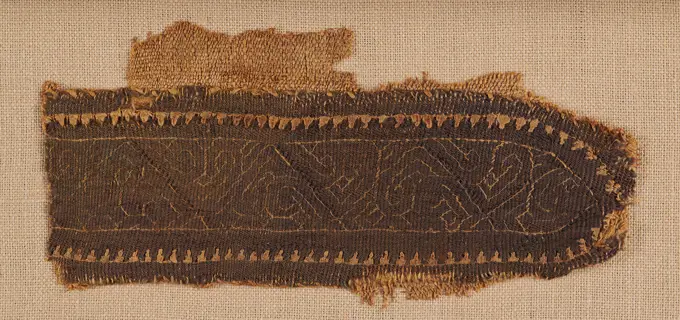
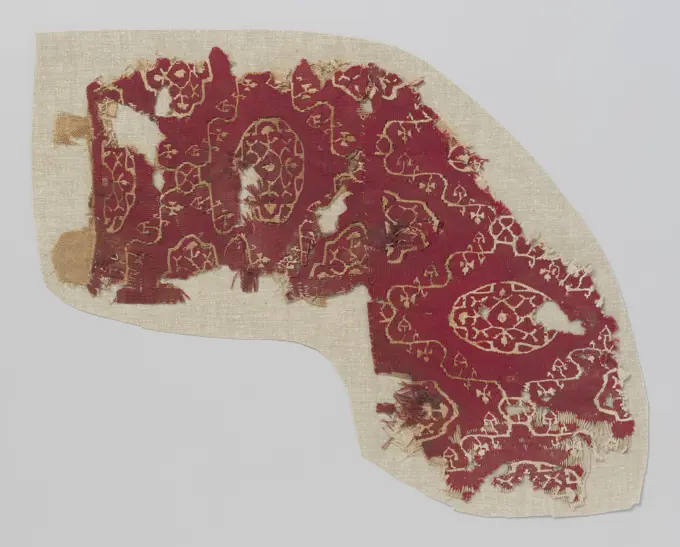
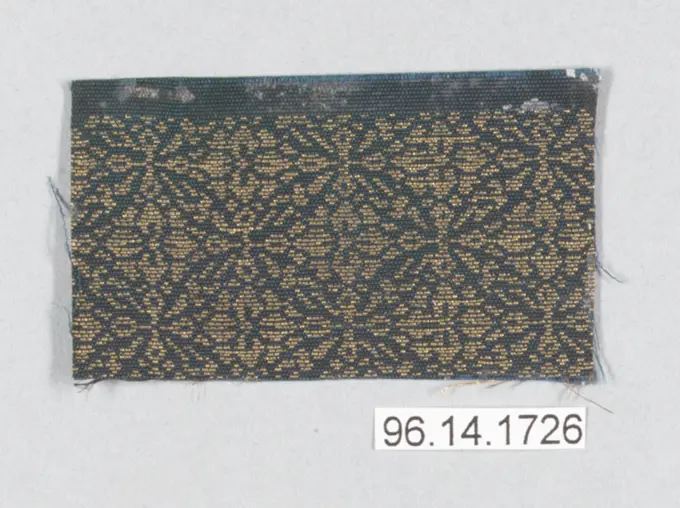
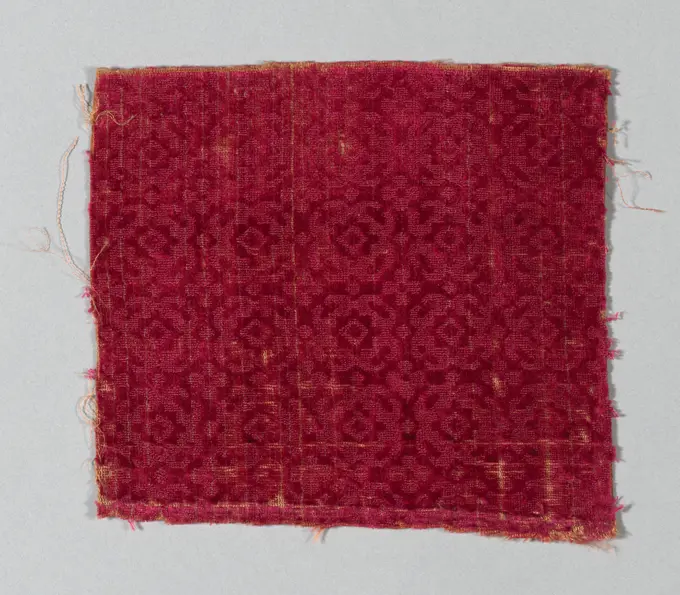
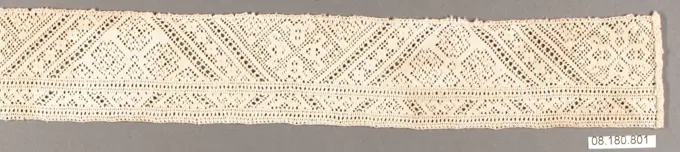
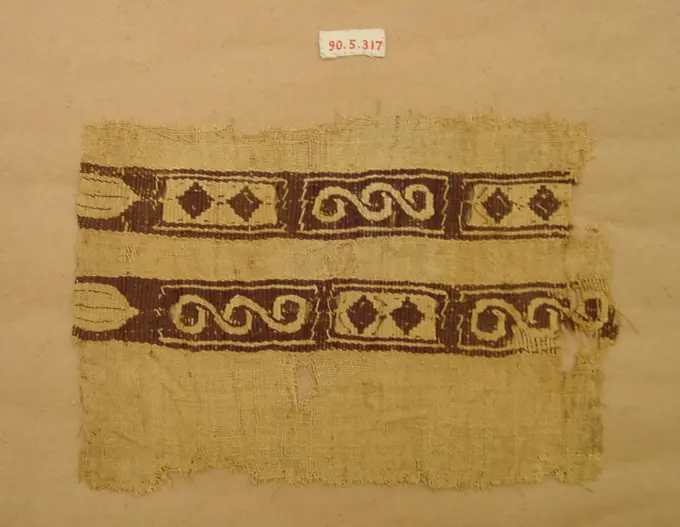
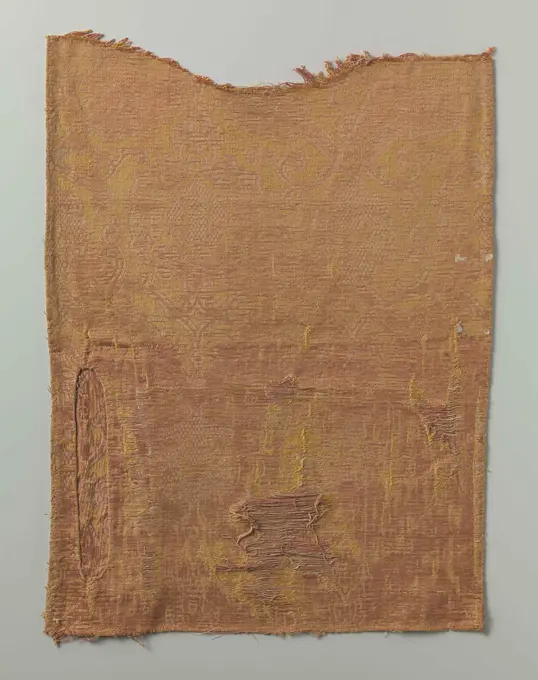
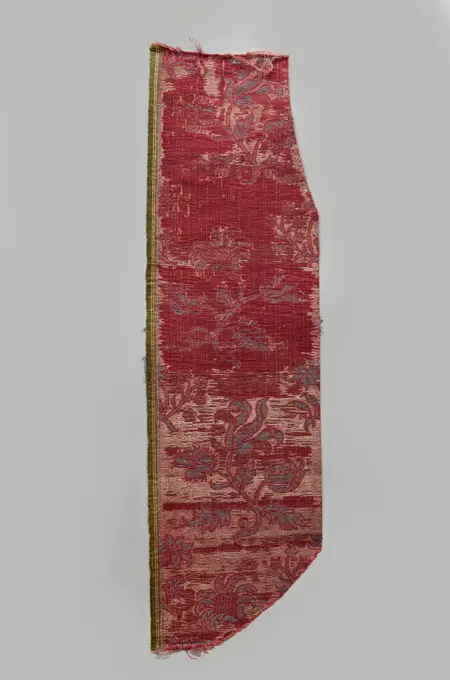
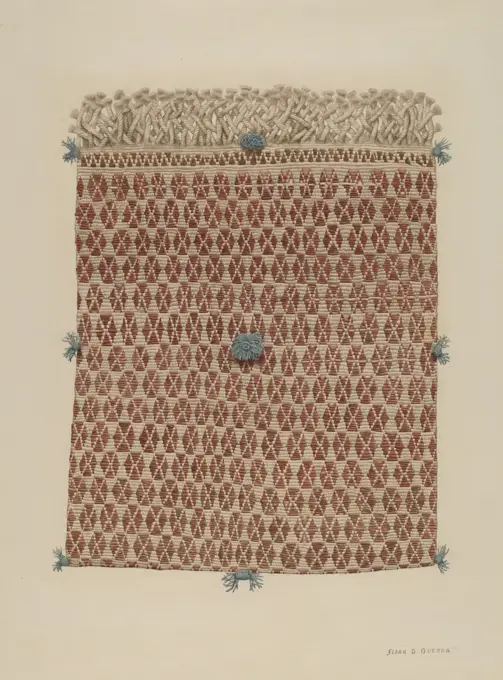
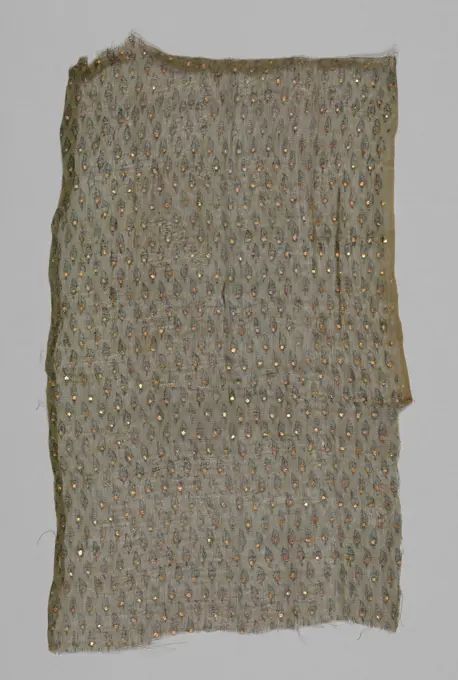
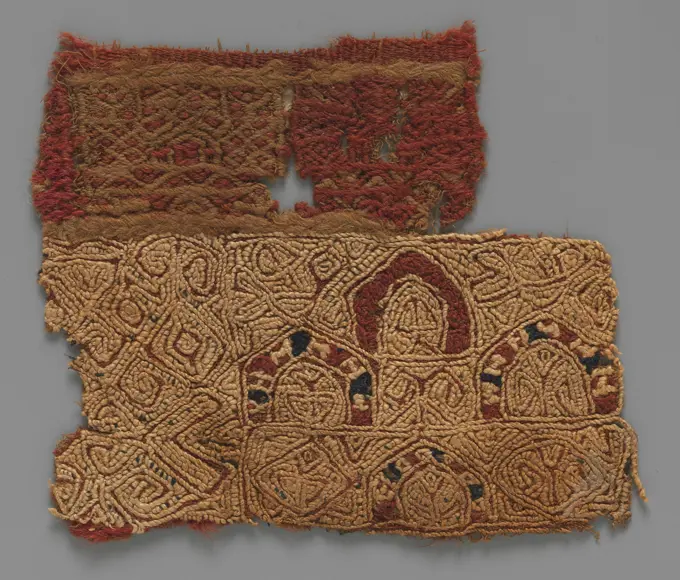
Historical textile fragments showcasing intricate embroidery and weaving techniques, highlighting patterns of flowers and geometric shapes.
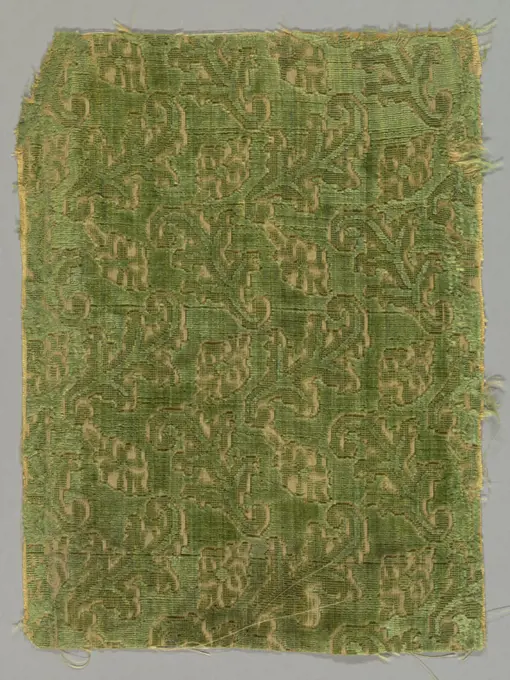
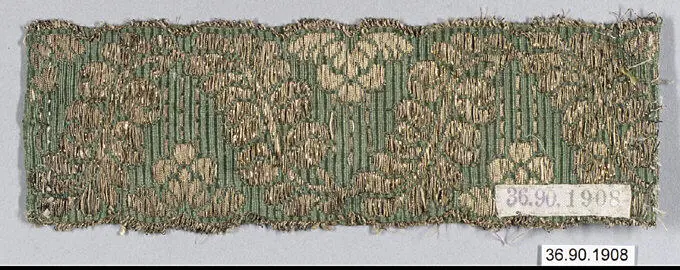
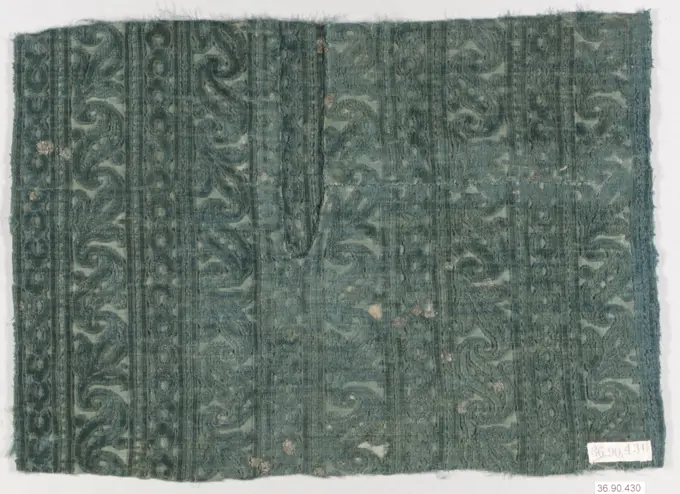
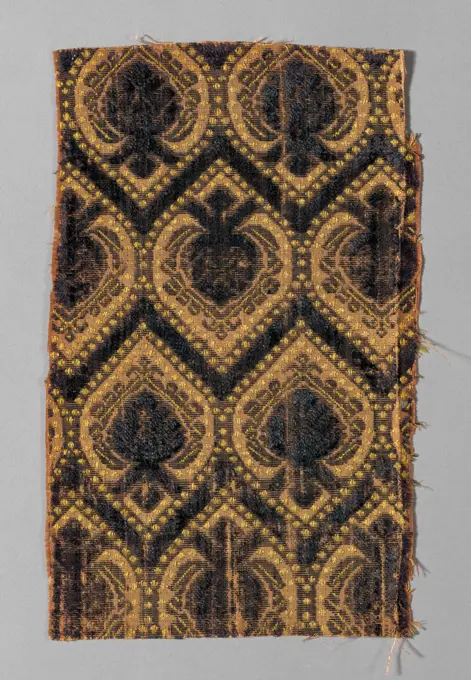
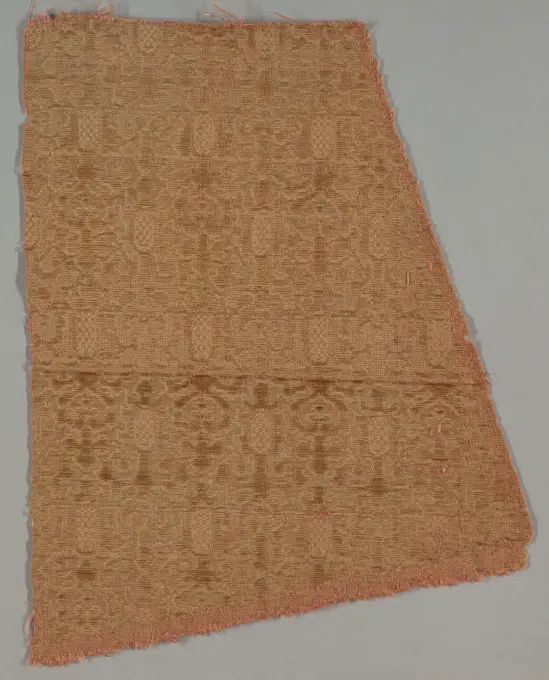
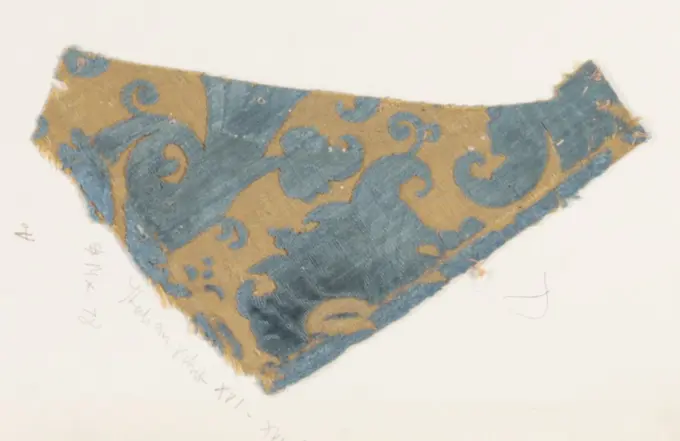
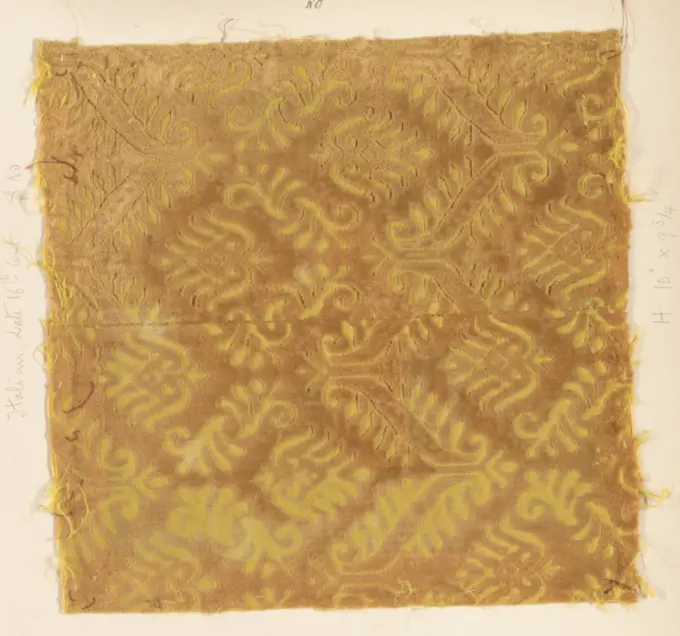
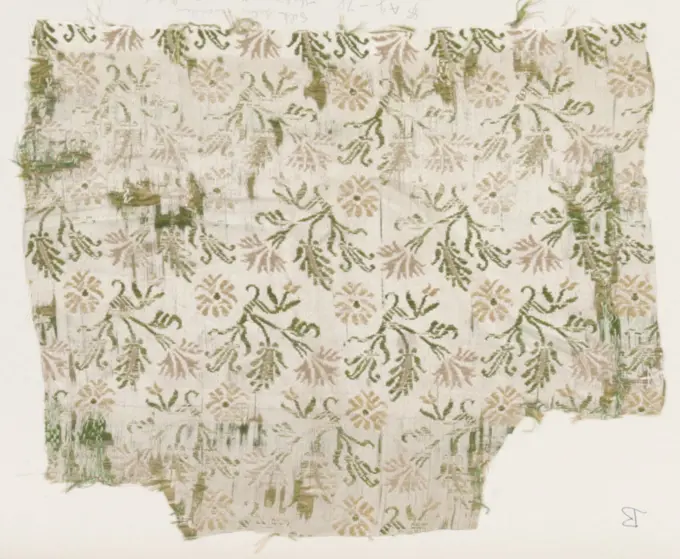
Fragments, Medium: silk Technique: cut and uncut supplementary warp pile (velvet) in a plain weave foundation, Green cut and uncut velvet in a diagonal arrangement of stylized leaves., Italy, 16th-17th century, woven textiles, Fragments
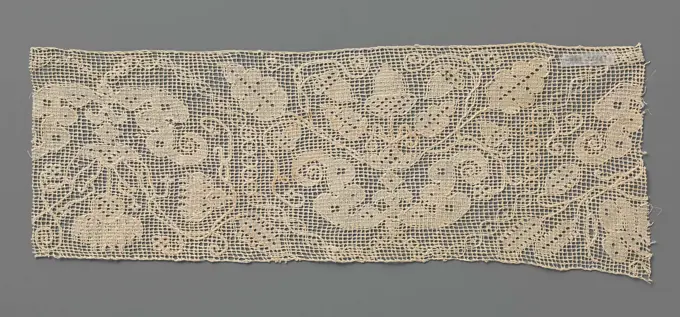
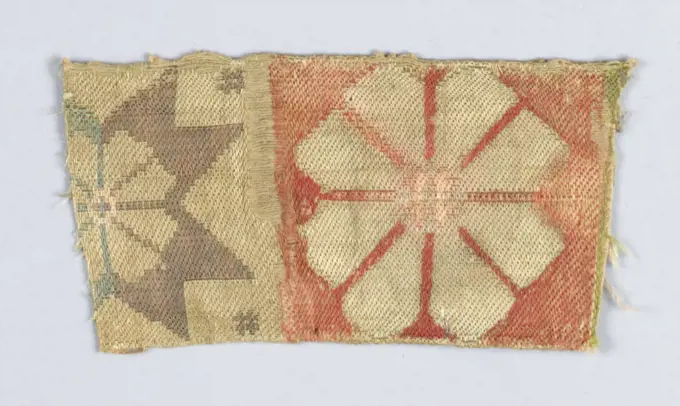
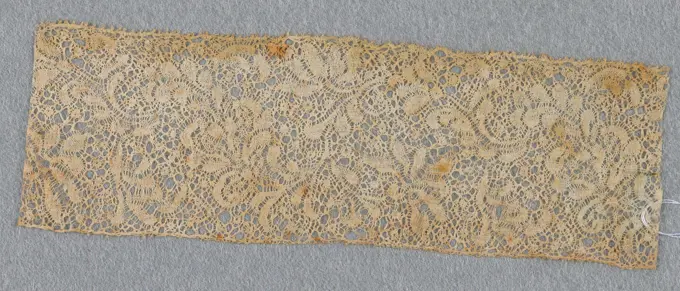
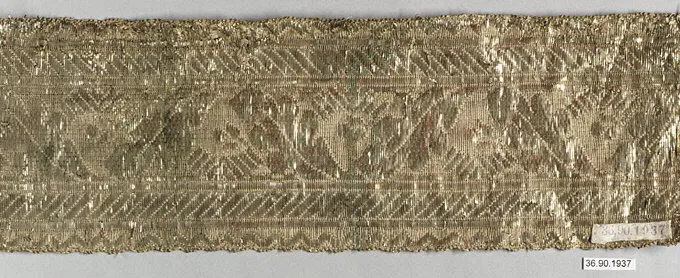
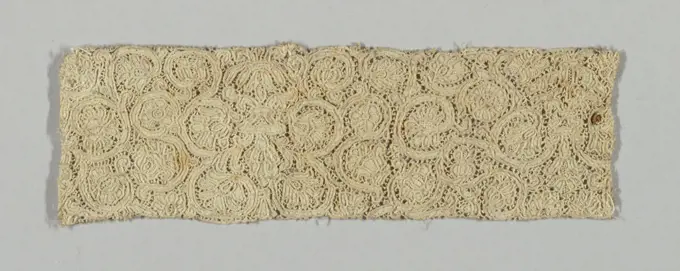
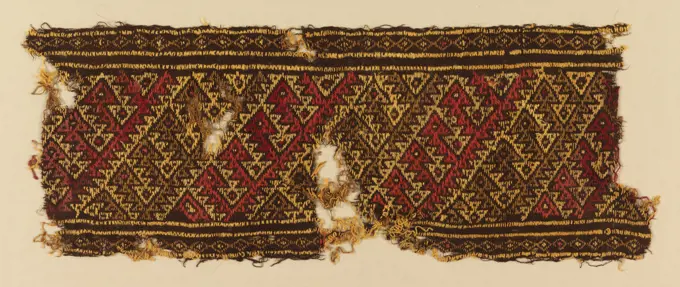
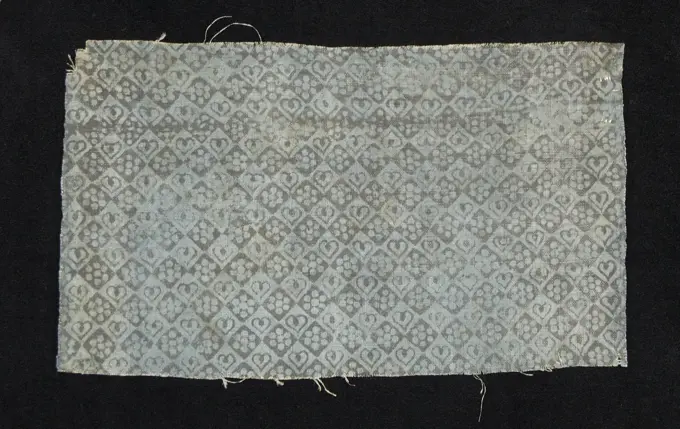
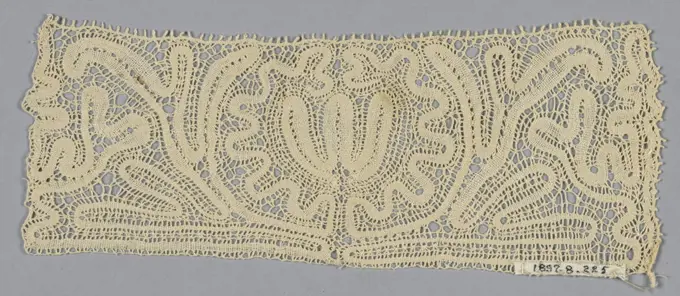
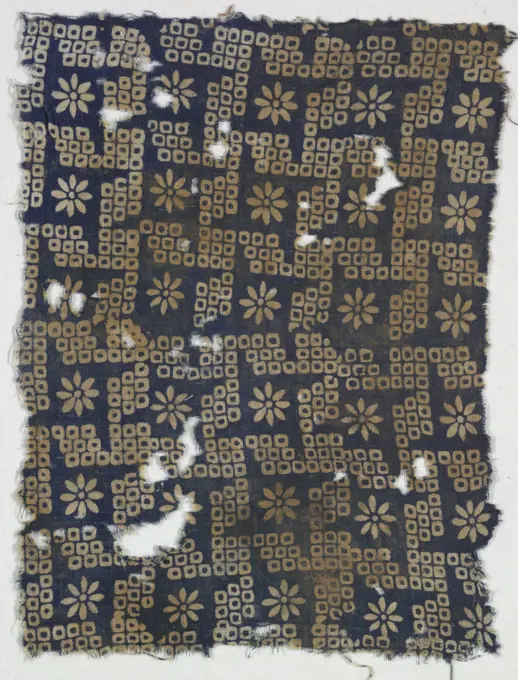
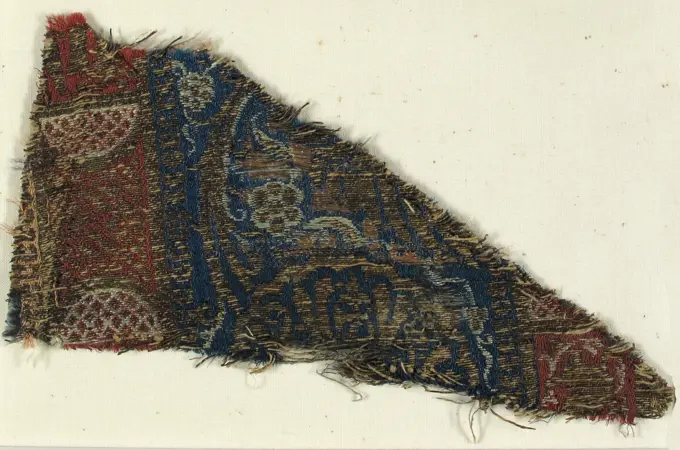
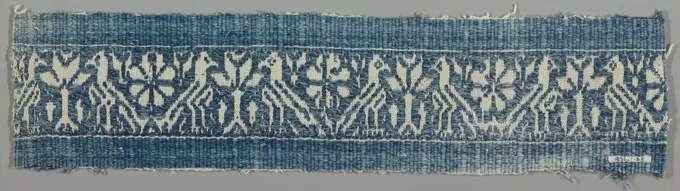
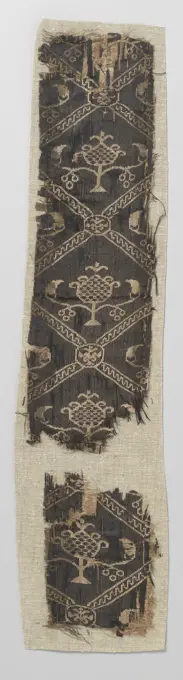
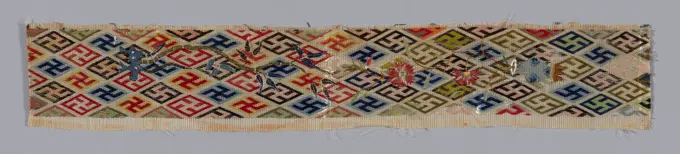
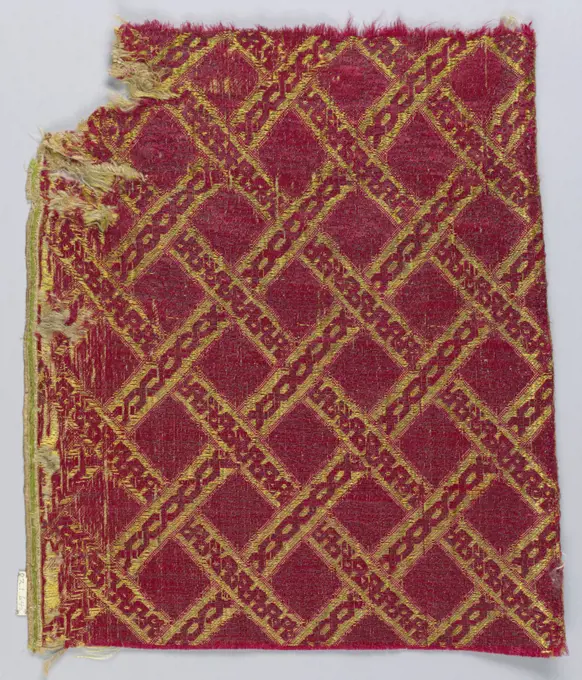
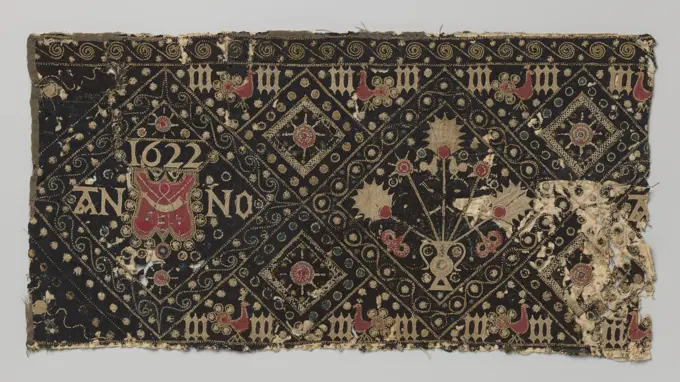
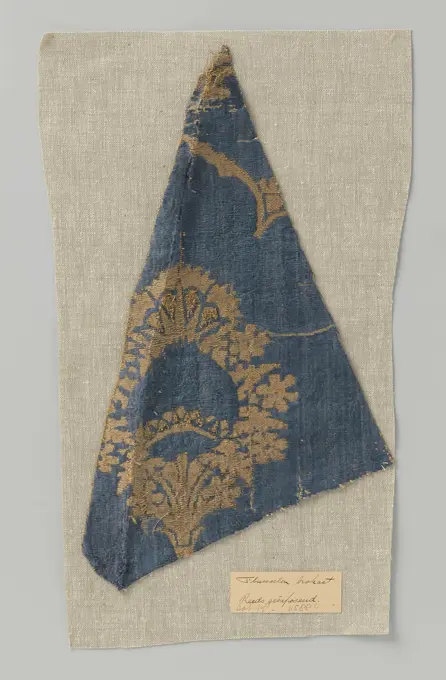
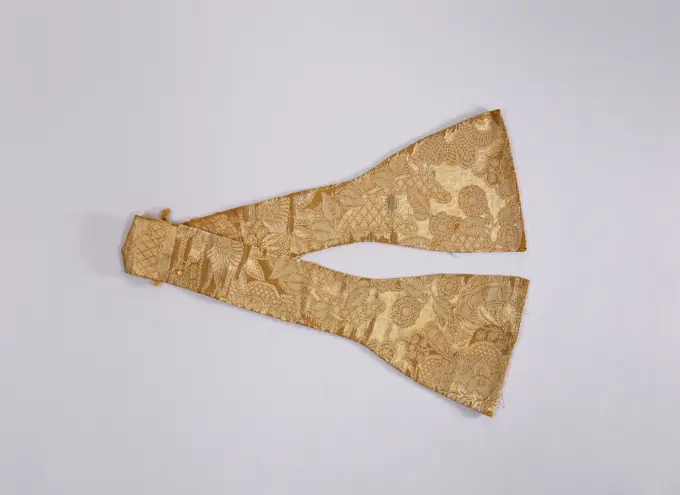
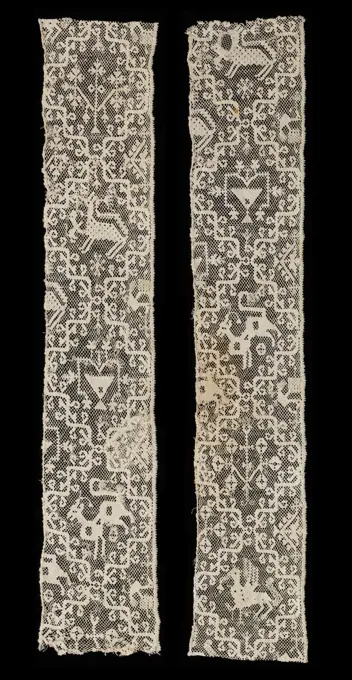
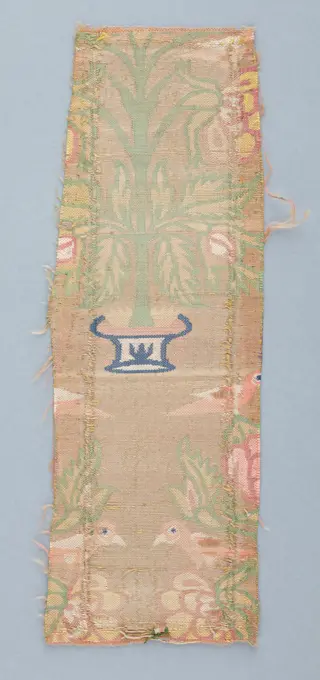
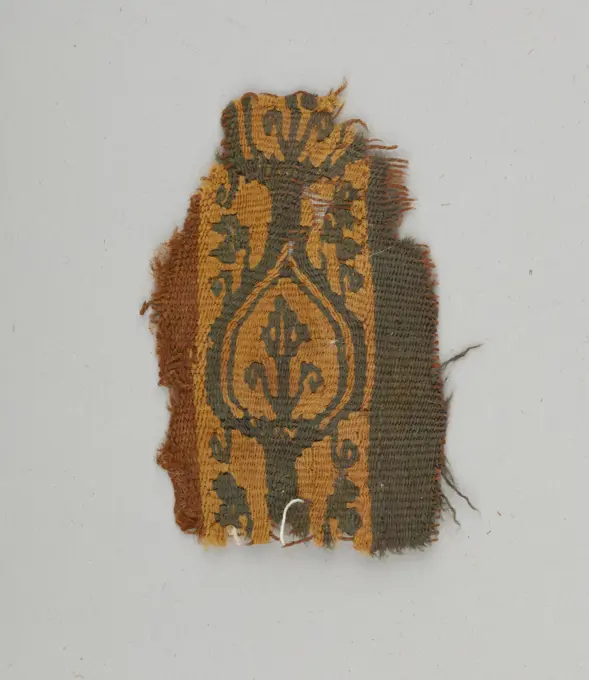
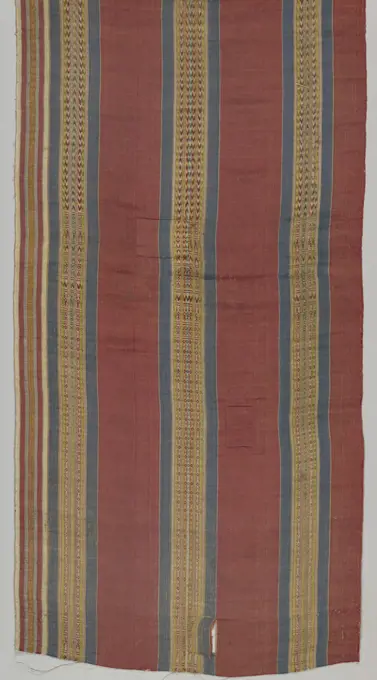
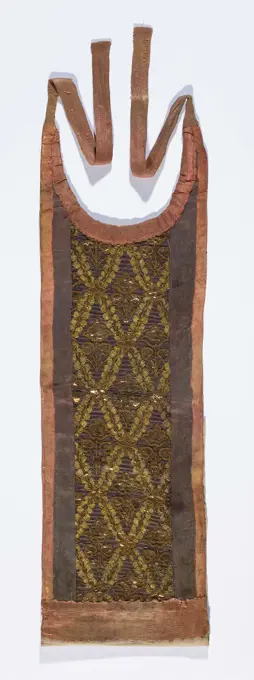
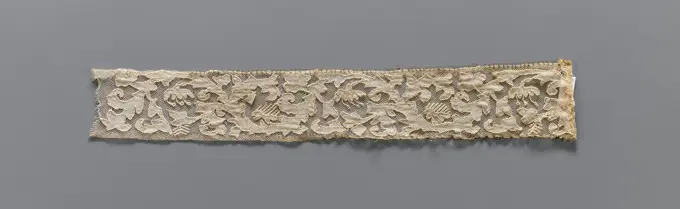
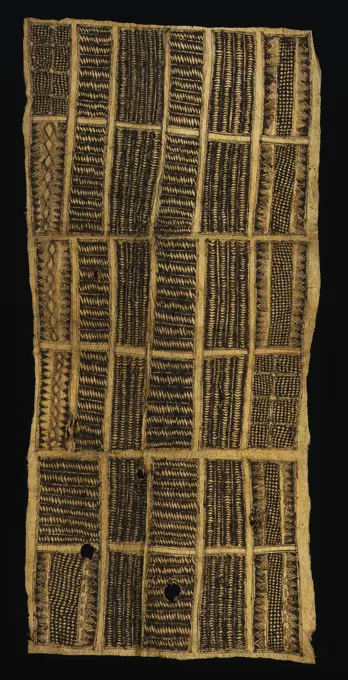
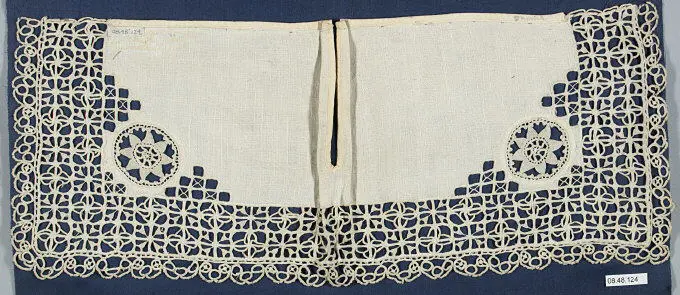
Piece late 18th-early 19th century European. Piece 224989Strook kantborduurwerk met eikenbladeren en eikels.Strip natural-colored edge embroidery: File side. The repetitive and symmetrical pattern consists of a triangular bowl with oak leaves and three fucks. The bowl stands on a trunk with curling leaves and with a foot that is formed by a splitting chain of connected ovals, which goes through as a pendulum in the foot of the consecutive (reverse) scale. The pattern is alternately reversed and is embroidered in the cross-linking technology, on a finely knotted network with square meshes. There are contour lines arranged around the motifs with a slightly thicker and shiny thread. Upper and bottom of the strip are straight finished.Band fragment, Medium: silk, linen Technique: complementart wefr 2/1 twill, Fragment with rosette and part of an eight pointed star., Germany or Spain, 15th century, woven textiles, Band fragmentBorder; medium:Galloon 18th century French. Galloon 225018Band, Medium: Technique: needle lace (punto in aria), Band fragment, densely worked, with a tight scrolling vine., Italy, 16th-17th century, lace, BandBand, Medium: wool Technique: plain weave with discontinuous supplementary warps patterning, Band of brown wool with diagonally placed design in red, yellow and lighter browns., Peru, 1100, woven textiles, BandFragments, Medium: silk Technique: cut and uncut supplementary warp pile (velvet) in a plain weave foundation, Green cut and uncut velvet in a diagonal arrangement of stylized leaves., Italy, 16th-17th century, woven textiles, FragmentsPiece 16th-17th century Italian. Piece 223532Textile 1700-1899 Russian. Textile 173408Fragment, Medium: linen Technique: bobbin lace (continuous tape), Fragment of continuous tape in design of wavy, ribbon-like floral pattern with bars connecting motifs., Belgium, possibly 17th century, lace, FragmentFragment Made 1625-1675 Italy. cut and uncut velvet .Textile Fragment. Egypt, 8th-9th century. Textiles; fragments. Linen plain weave with linen-warp and silk-weft tapestry weaveBand (Morocco); silk embroidery on linen foundationFragment; silk, metallicTextile, Medium: cotton Technique: resist-printed, Simple floral motif within a grid of S-shapes and rosettes. White design on blue ground., India, 15th-18th century, printed, dyed & painted textiles, TextileTextile, Medium: silk, gilded parchment wound around linen core Technique: two interconnected structures: 4&1 satin and weft faced plain weave (lampas), Fragment of woven silk with a deep blue ground and design in metallic gold. Addorsed griffons surrounded by vines and grape leaves., Italy, 14th century, woven textiles, TextileTextile 14th century Italian (). Textile 463234Towel Fragment (Italy), 17th century; linen, cotton; Warp x Weft: 8.6 x 36.3 cm (3 3/8 x 14 5/16 in.)Textile Fragment. Iran or Iraq, 7th-8th century. Textiles; fragments. Wool and cotton weft-faced compound twill (samite)Fragment samiet, anonymous, c. 500 - c. 899 Tissue fragment consisting of two parts. Black soil with golden diamond pattern with stylized floral pattern on stem inside, from which stylized leaf vines come. A circle motif with an ornament on the points of the windows. Egypt silk samite Tissue fragment consisting of two parts. Black soil with golden diamond pattern with stylized floral pattern on stem inside, from which stylized leaf vines come. A circle motif with an ornament on the points of the windows. Egypt silk samiteBand (from Woman's Trousers or Robe) Made 1875-1900 China. .Hebrew ritual lace (one of four) early 18th century Italian, Burano. Hebrew ritual lace (one of four) 226263Fragment, Medium: silk, linen (), metallic, Lattice pattern in red and yellow., 17th century, woven textiles, FragmentFragment late 16th century Italian. Fragment. Italian. late 16th century. Silk. Textiles-WovenFragment Made 1250-1532 Peru. Cotton, stripes of plain weave and plain weave derived float weave . ChimúShoulder Cloth(Limar)Two glaces;  XVII century (1601-00-00-1700-00-00);Baptismal rug or bark rug of embroidery on dark blue fabric, anonymous, c. 1622 Baptismal rug or bar rug of two sewn -blown pieces of dark blue fabric on which a weapon is embroidered with a hunting horn, the year in 1622 and a few times a Gothic letter M. Possibly ecclesiastical textile. Europe cotton (textile). wool embroidering Baptismal rug or bar rug of two sewn -blown pieces of dark blue fabric on which a weapon is embroidered with a hunting horn, the year in 1622 and a few times a Gothic letter M. Possibly ecclesiastical textile. Europe cotton (textile). wool embroideringFragment with Tapestry-Weave Band and Applied Border 6th-8th century. Fragment with Tapestry-Weave Band and Applied Border 443757Decorated Squares Motif, Mulberry paper (kozo washi) treated with fermented persimmon tannin (kakishibu), and silk threads (itoire), Two rows of squares, decorated with different designs, alternate between positive and negative motifs, creating a checkered pattern within the design. The positive spaces squares are all the same abstract tall grass motif. While other squares resemble a similar soot ball characteristics but differentiate amongst one another., Japan, mid 18th - early 19th century, textile designs, Katagami, KatagamiFragment of a decorative board of a liturgical robe, anonymous, c. 1400 - c. 1550 Fragment of brown side with the present of the message of the angel Gabriël to Maria, above which pomegranate pattern and part of the same performance. Italy Ketting an element: Silk. Elements: Linen (material). Metal Thread broach Fragment of brown side with the present of the message of the angel Gabriël to Maria, above which pomegranate pattern and part of the same performance. Italy Ketting an element: Silk. Elements: Linen (material). Metal Thread broachWoven Band, before 1929. Egypt. Wool; overall: 3.9 x 18.5 cm (1 9/16 x 7 5/16 in.).Sadlo (Modified Half Sari), c. 1950, 157 1/2 x 48 5/8 in. (400.05 x 123.51 cm), Wool; printed, India, 20th centurySquare 4th century. Square. 4th century. Linen, wool; tapestry weave. Attributed to Egypt. TextilesFragment. Peru. Date: 900 AD-1470. Dimensions: 35.8 x 20.8 cm (14 x 8 1/8 in.)weft repeat: 5.8 cm 2 1/4 in. Cotton, plain weave with paired warps; center: cotton, plain weave double cloth; two selvages present. Origin: Peru. Museum: The Chicago Art Institute, Chicago, USA. Author: Chancay.Fragment of the game or decorative belt; Egyptian workshop; IV-V century (301-00-00-500-00-00);Tissue fragment in tapestry, anonymous, c. 500 - c. 799 Tissue fragment consisting of two parts that are sewn together, with a natural -colored motif of wavy tendrils with triangular leaves that form a winding diamond motif on a wine red soil, in which a medallion with stylized branches and lines. Along one side are two pieces visible from the linen substrate wheeze. Egypt Ketting an element: Linen (material). Entry: Wool tapestry Tissue fragment consisting of two parts that are sewn together, with a natural -colored motif of wavy tendrils with triangular leaves that form a winding diamond motif on a wine red soil, in which a medallion with stylized branches and lines. Along one side are two pieces visible from the linen substrate wheeze. Egypt Ketting an element: Linen (material). Entry: Wool tapestryTextile Fragment, probably 1500s. Egypt, Mamluk period, probably 16th century. Lampas, silk and gold thread; overall: 49 x 15.3 cm (19 5/16 x 6 in.).Fragments of a Carpet, 1600-1650. Imperial Manufactory (Indian). Silk and wool; average: 85.1 x 21.6 cm (33 1/2 x 8 1/2 in.).Piece 19th century Japan. Piece 67439Textile Sample from Sample Book 19th century Japan. Textile Sample from Sample Book 68184Fragments (Spain); silkBand, Medium: linen Technique: bobbin lace, Binche style with Binche ground, Belgium, 18th century, lace, BandFragment zijdeweefsel.Fragment gray damask with pattern of stylized tulips and other flowers.Fragment. Italy. Date: 1625-1675. Dimensions: . Plain compound cloth. Origin: Italy. Museum: The Chicago Art Institute, Chicago, USA.Sidewall - fragment, Machine-printed paper, Parts a,b are joined together. Small floral medallions create a diaper pattern. There is an all-over background pattern of very small fish-scale or brick design. Printed in dark blue on a mica ground., USA, 1865-80, Wallcoverings, Sidewall - fragmentTextile Fragment 5th-6th century. Textile Fragment 444363Kesa Made 1867-1900 Japan. Silk .Textile; silk, linenFragment zijdedamast.Fragment of 14 pieces of green silk constructed on pattern together. Replacing flower vase. In between leaf garlands and flowers.Fragment early 16th century Italian, Venice or Turkish. Fragment 230587Border Made 401 CE-500 CE Egypt. Linen and wool, tapestry weave .Galloon 17th-18th century Unknown. Galloon 213861Fragment blue velvet broker with pomegranate pattern. Fragment silk velvet brocade with blue ground pattern of golden by flowers and leaves surround pomegranate in lobby contour. See also A and B.Border Fragment; warp; s-spun linen. weft: s-spun linen, s-spun woolsBed curtain border 1800-1850 Russian. Bed curtain border 173341Fragment, Medium: silk, metallic thread Technique: cut supplementary warp pile (velvet) in a twill foundation, Wedge-shaped fragment with a design of multicolored cut velvet floral garlands on an off-white ground shot with silver threads., France, late 18th century, woven textiles, Fragment. Cisele solid twill velvet .Piece 17th century Japan. Piece 71117Fragment zijdelampas.Fragment side amapas, more or less hemisphere, with lace pattern and flower and leafwork, mirror image of BK-NM-3639-a.Textile Fragment 9th-10th century. Textile Fragment. 9th-10th century. Linen, wool; plain weave, tapestry weave. Attributed to Egypt. Textiles-WovenFragment 18th century Swedish. Fragment. Swedish. 18th century. Bobbin lace. Textiles-LacesFragment of a Sleeve 3rd-4th century. Fragment of a Sleeve 443803Fragment, 17th century; silk, velvet; Warp x Weft: 15.8 x 13.3 cm (6 1/4 x 5 1/4 in.)Fragment yellow brocatel with spitsovals and stylized flowers. Fragment of two sewn pieces of silk tissue with pattern of spitsovals within which stylized flowers. Colors red and yellow.Fragment (Spain); bast fiber warp, silk weft; Warp x Weft: 14.7 x 9.4 cm (5 13/16 x 3 11/16 in.)Fragment of the fabric;  XVI/XVII century (1590-00-00-1610-00-00);fabricsTwo Fragments Made 1501-1600 Italy. Silk, warp-float faced satin weave with supplementary pile warps forming cut, uncut and voided velvet .CHAICE VEIL unknownFragment 16th-17th century Italian. Fragment 230515Fragments; silk, metallic thread; Bequest of Marian Hague; 1971-50-53-a/dFlora G Guerra, Money Bag, 1935 1942 Money BagTextile (Spain); silk, metallic threadTextile Fragment 18th century. Textile Fragment. 18th century. Cotton and metallic thread. Country of Origin India. TextilesCeremonial Band (Tali TauBatu)Border of a Shawl, 1800s. India, Punjab, 19th century. Tapestry twill; wool; overall: 18.8 x 57.5 cm (7 3/8 x 22 5/8 in.).Border early 18th century Flemish, Mechlin. Border 218227Maniple;  18th century (1701-00-00-1800-00-00);Five gold -colored passions with fringes on cardboard, anonymous, c. 1700 - c. 1899 Cardboard on which five passions are fixed, made of gold -colored wire with fringes. Red silk has also been used in the top two passions. The letters A to E are written on the cardboard next to the strips. unknown silk. metal Cardboard on which five passions are fixed, made of gold -colored wire with fringes. Red silk has also been used in the top two passions. The letters A to E are written on the cardboard next to the strips. unknown silk. metalBands; linen; a) H x W: 33.7 x 6.5 cm (13 1/4 x 2 9/16 in.) b) H x W: 33.7 x 6.5 cm (13 1/4 x 2 9/16 in.); Bequest of Richard Cranch Greenleaf in memory of his mother, Adeline Emma Greenleaf; 1962-50-286-a,bFragment of samite  silk fabric brocaded with gold unknownFragment late 16th century Italian. Fragment 230120Fragment of Coptic fabric unknownFragment early 17th century Italian. Fragment 230364Fragments, Medium: silk, linen Technique: warp faced plain weave with supplementary warp forming float patterning, Vertical stripes between broad red stripes., North Africa, 17th-18th century, woven textiles, FragmentsTextile fragment with Architectural Motif 7th-9th century. Textile fragment with Architectural Motif 445723Chestpiece. unknown, authorFragment 16th century Italian. Fragment 230473Tapestry Fragment 9th-13th century Lambayeque (Sicán). Tapestry Fragment 307932Hat van Tulle Doorstop, Anonymous, c. 1835 - c. 1845 Hat van Tulle Doorstop. The pattern consists of leaf hangers. West-Europa . Hat van Tulle Doorstop. The pattern consists of leaf hangers. West-Europa .Two fragments of the application;  19th century (1801-00-00-1900-00-00);Long Shawl Made 1825-1875 France (Object Probably made in), Scotland (Object Probably made in), Paisley (Object Probably made in). Wool and silk, weft-float faced 1 3 'Z' twill weave with supplementary patterning wefts bound in weft-float faced 1 3 'Z' twill interlacings; main warp fringe; woven on loom with Jacquard attachment .Lepau (tapa cloth), Santa Cruz Islands, maker unknown. Gift of Alexander Turnbull, 1913.Collar Norwegian 20th centuryBowl 9th-10th century. Bowl 449494Fragment (Peru); wool, cottonCover;  the nineties of the 18th century (1889-00-00-1900-00-00);Textile Sample from Sample Book 19th century Japan. Textile Sample from Sample Book 68240Sarong Fragment (Indonesia); cotton