Antique Textile Fragments

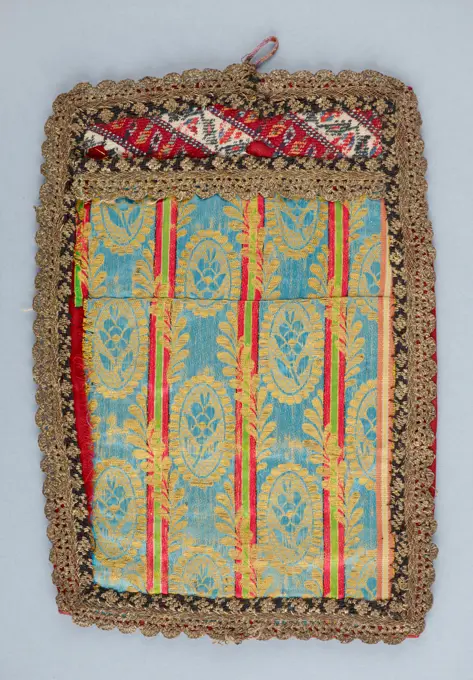
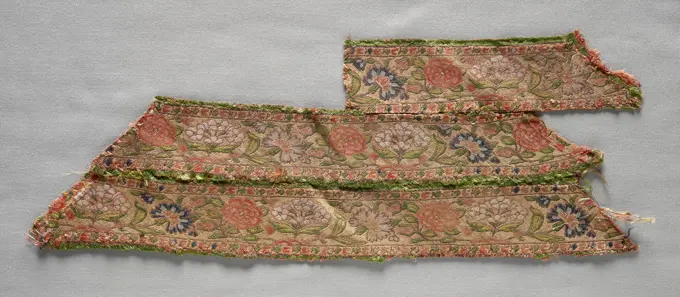
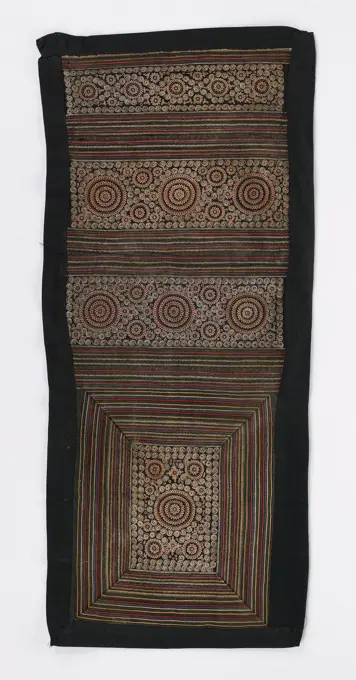
Intricately designed textile fragments from historical periods, highlighting various patterns and textiles from Turkey and China.

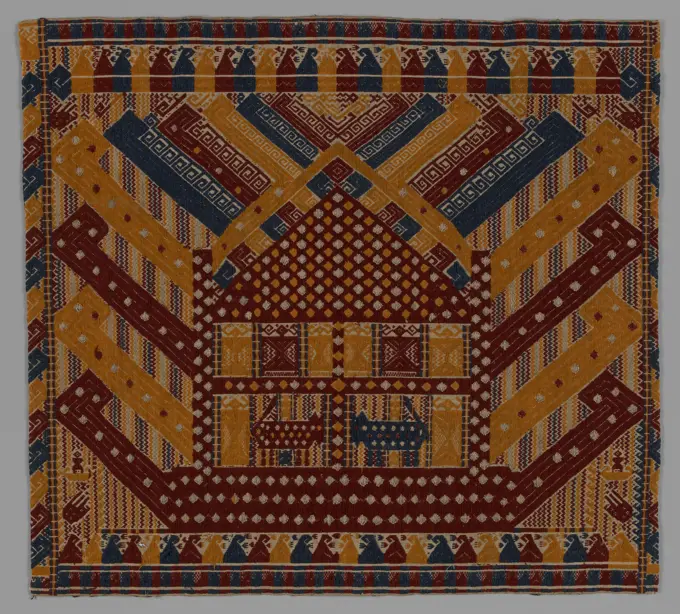
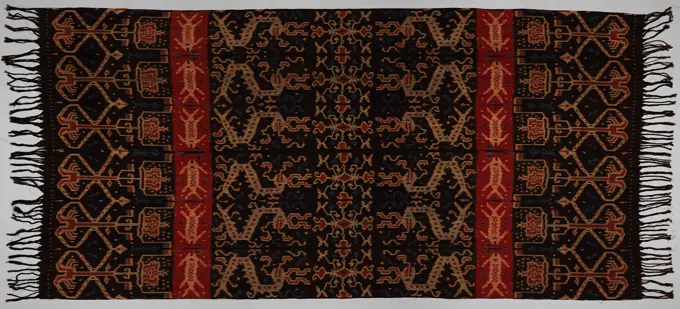
Kamben geringsing (ceremonial cloth), Medium: cotton Technique: tied resist patterning in warp and weft (double ikat) on plain weave Label: cotton with tied resist patterning in warp and weft (double ikat), Cotton textile created in the double ikat or 'geringsing' technique showing a 'kota-mesir' pattern (four-pointed star, notched internal pattern, divides piece into semi-circular segments). Semi-circles depict 'wayang patlikur isi' motif (geometric wayang figure) and other figures. Wide border at end with geometric pattern. Design in tan on black. Fringed., Tenganan, Bali, Indonesia, 19th century, printed, dyed & painted textiles, Kamben geringsing (ceremonial cloth)
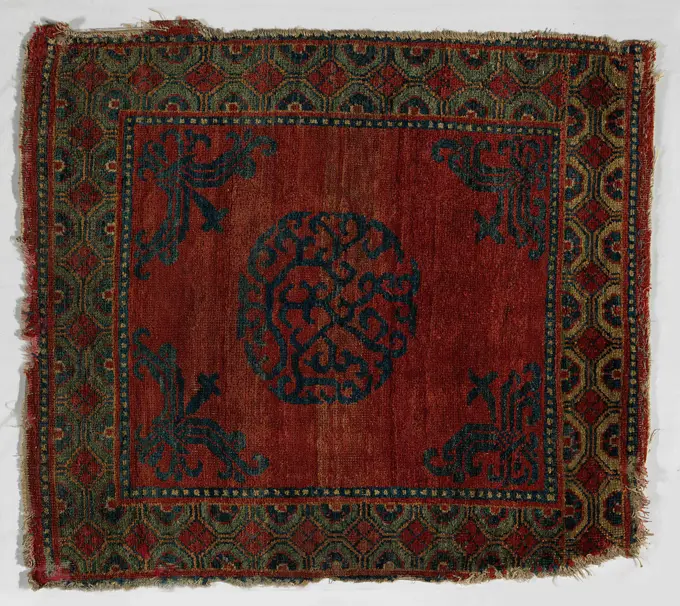
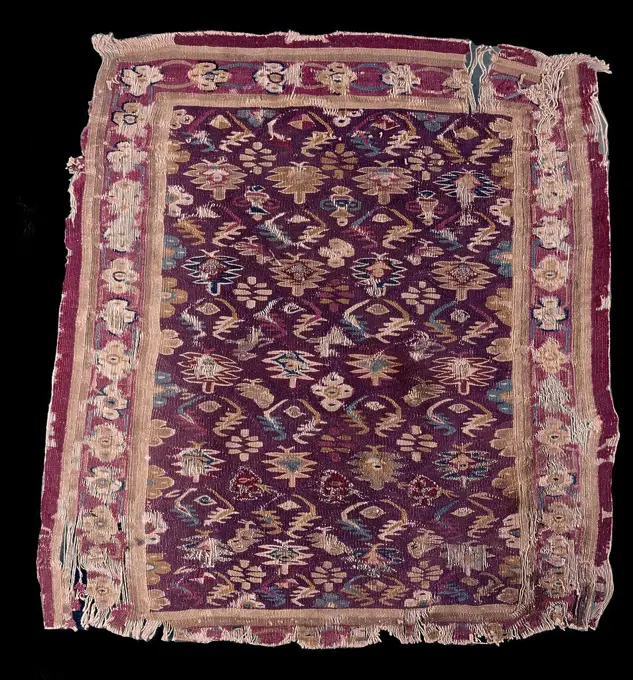
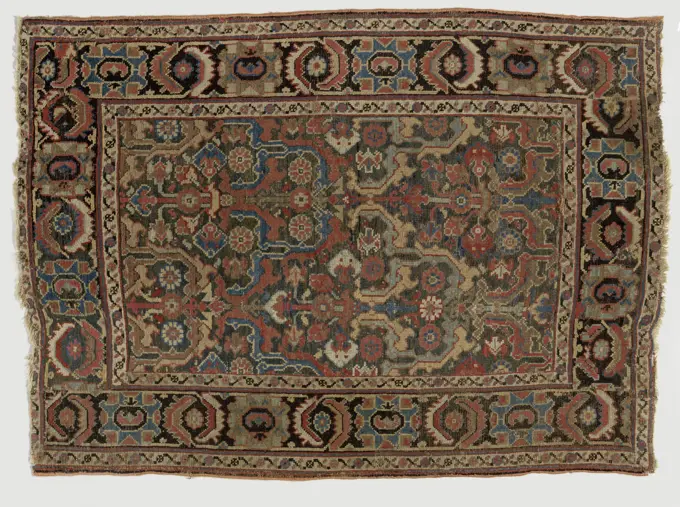
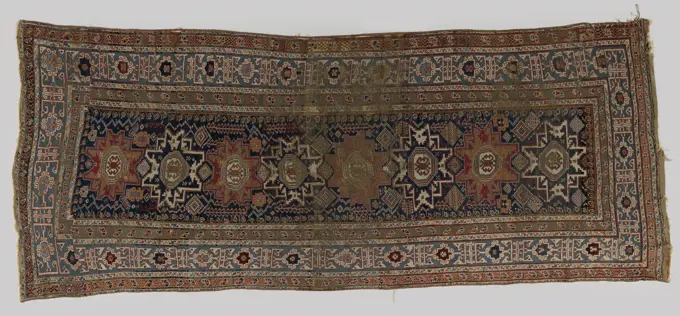
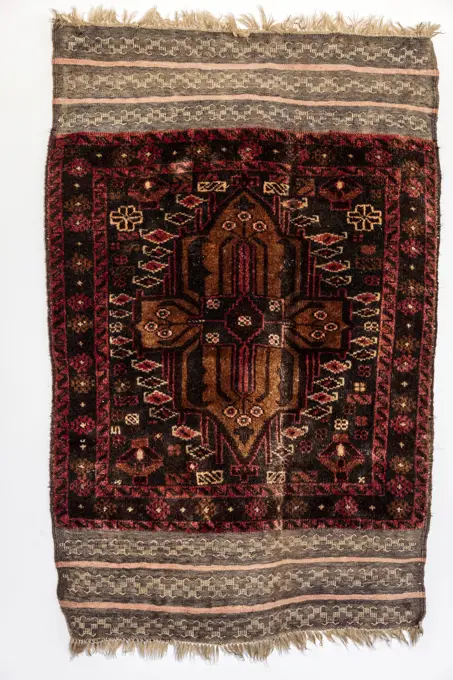
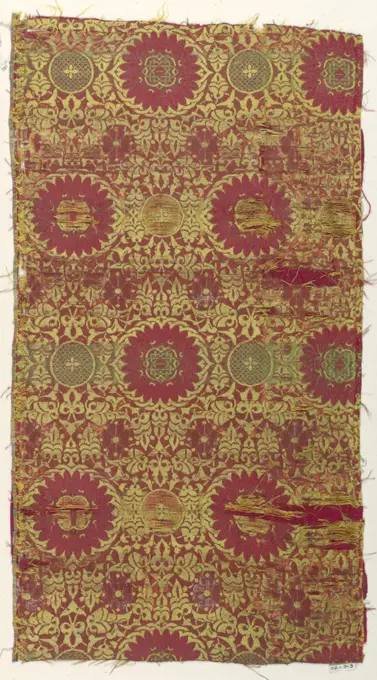
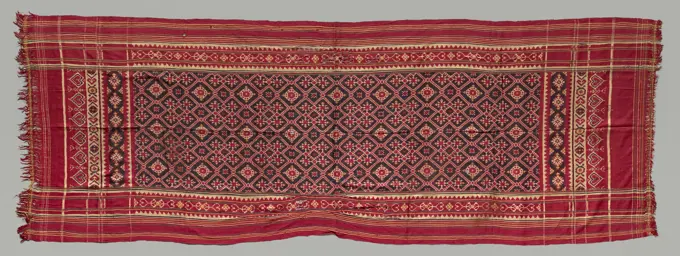
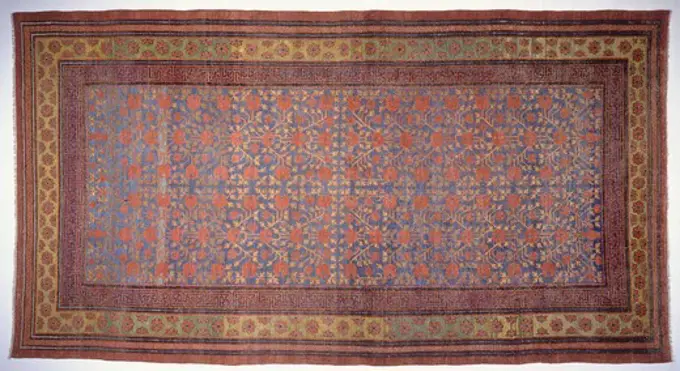
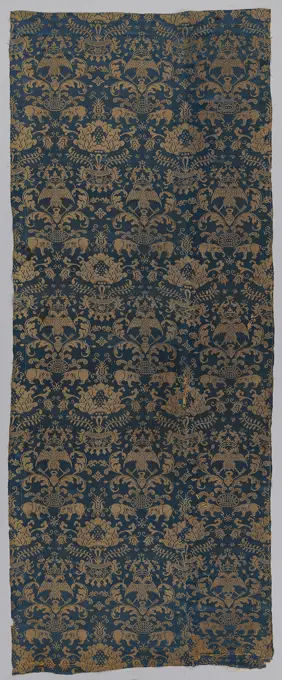
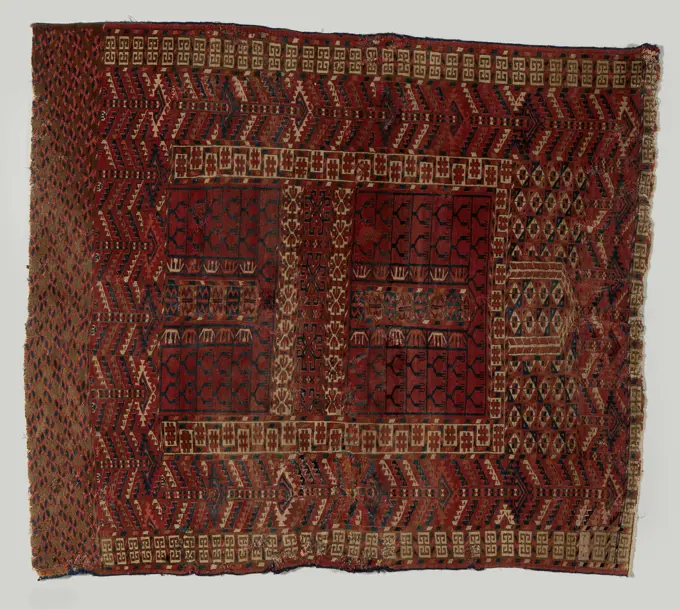
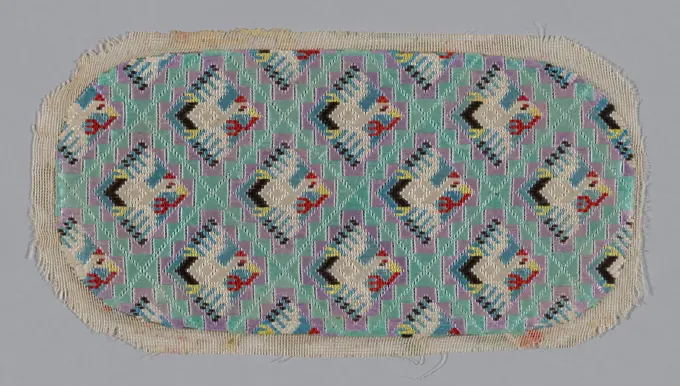
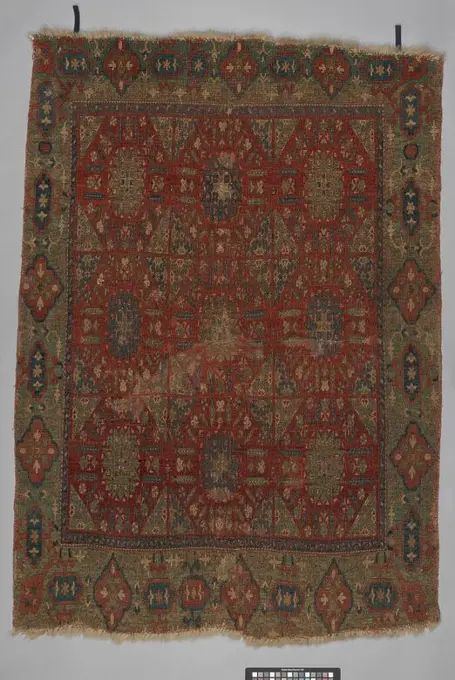
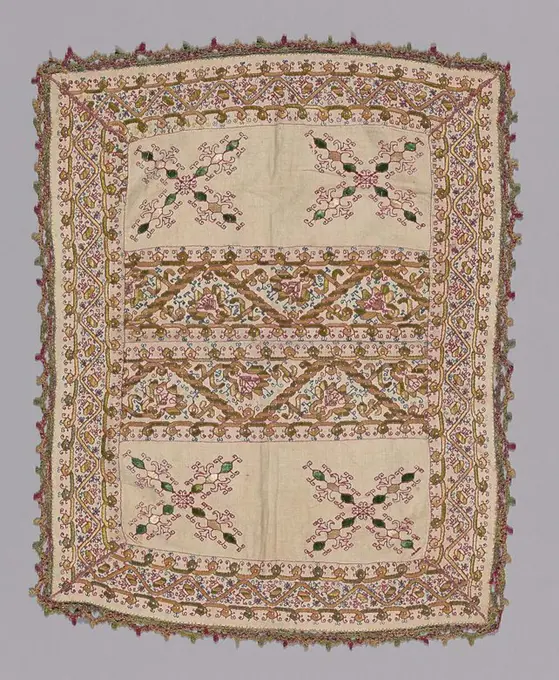
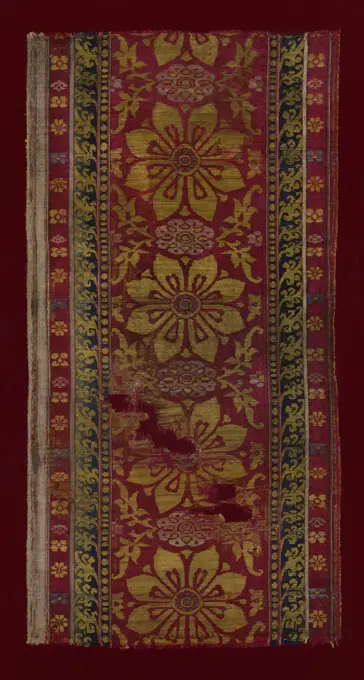
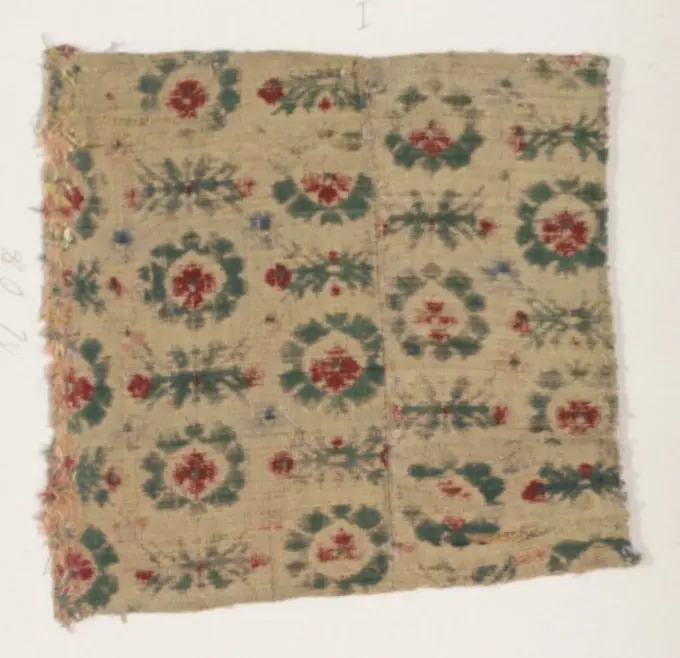
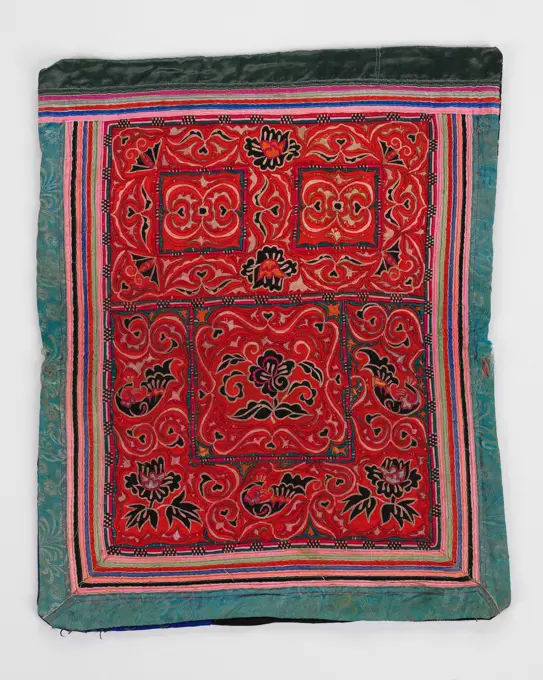
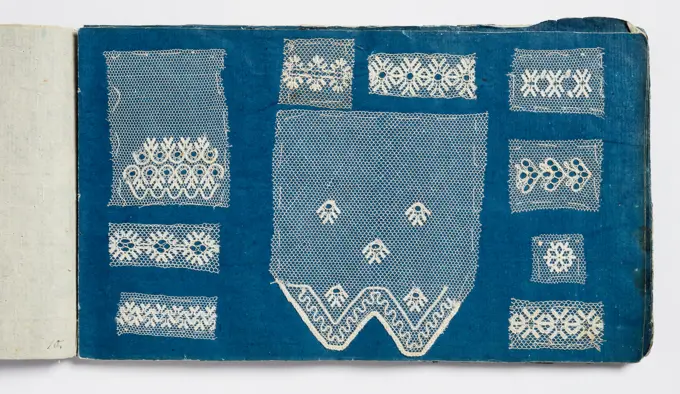
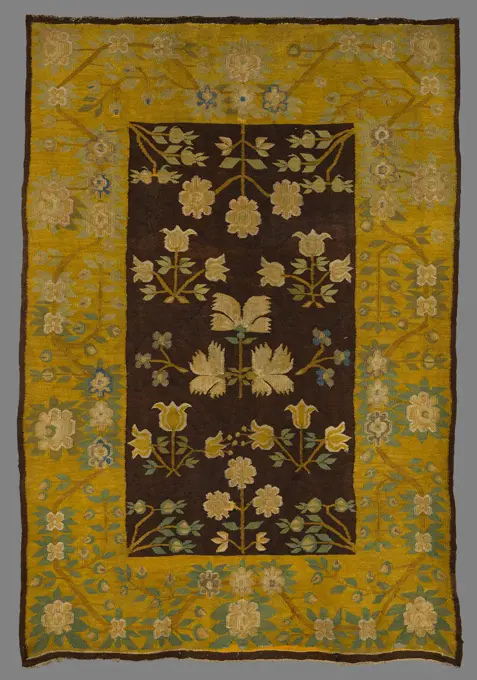
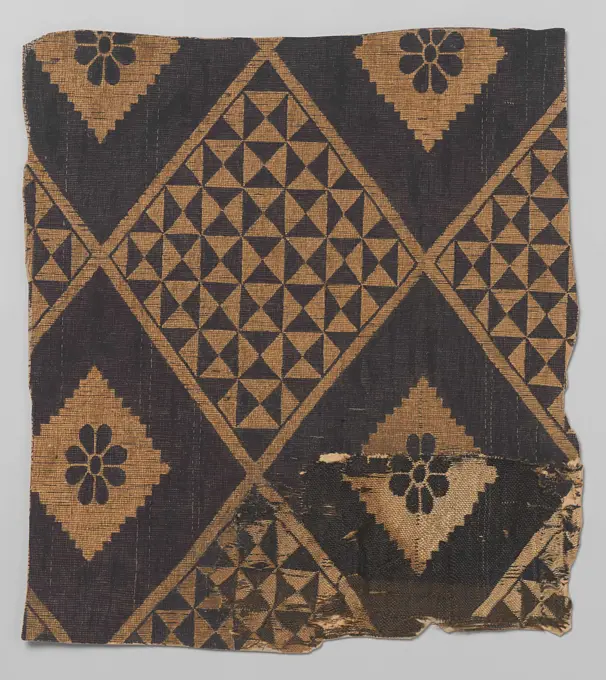
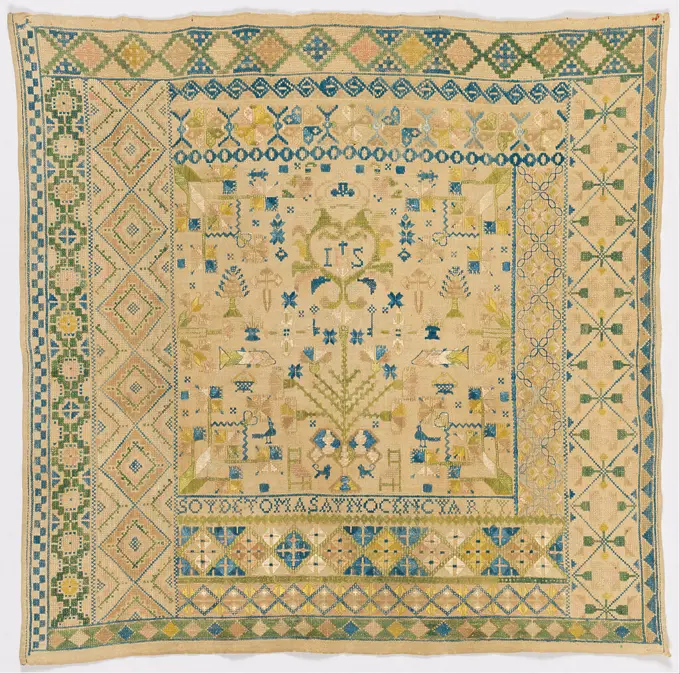
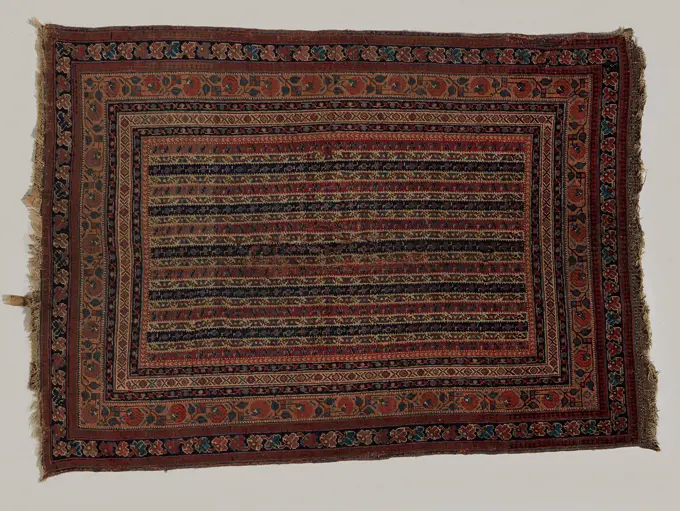
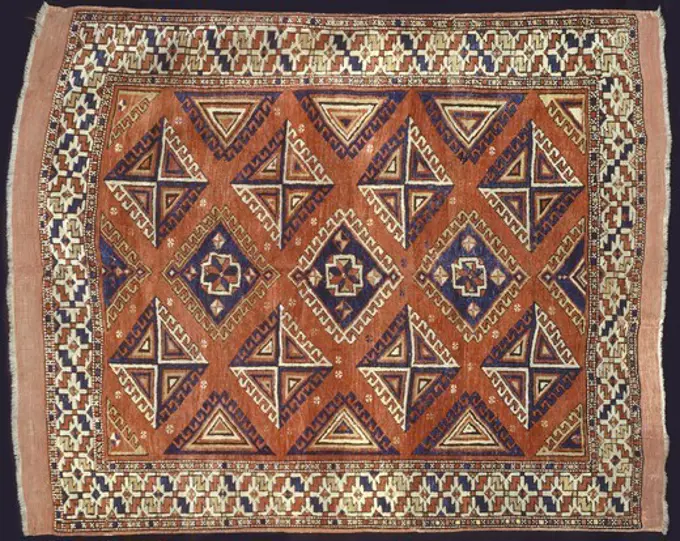
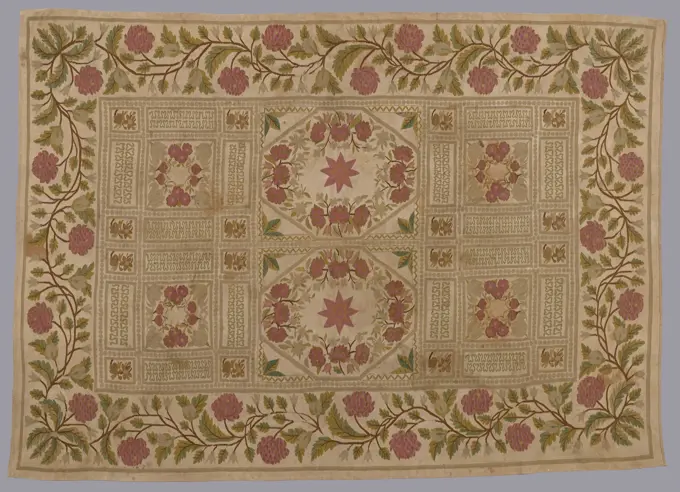
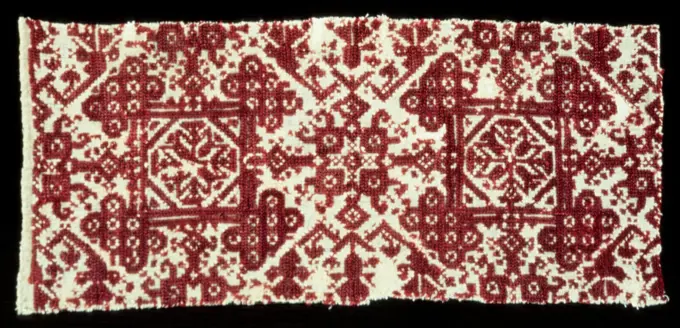
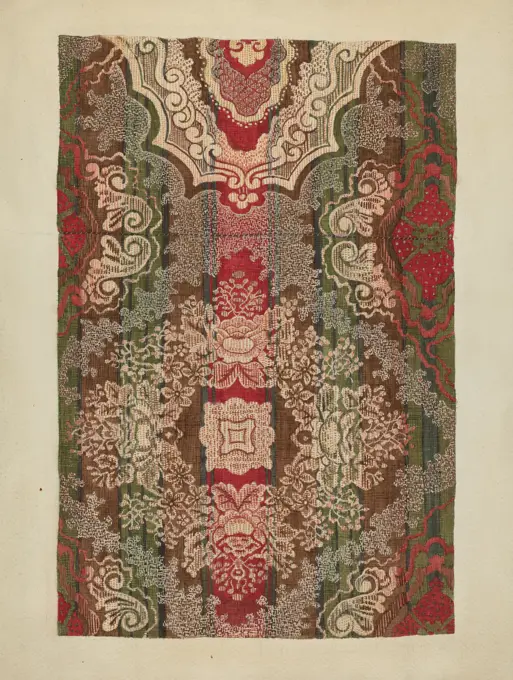
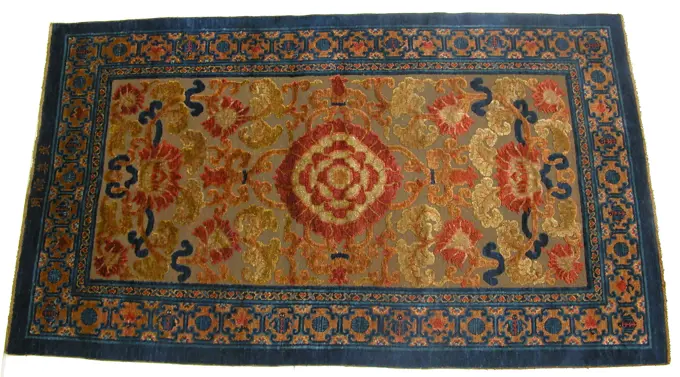
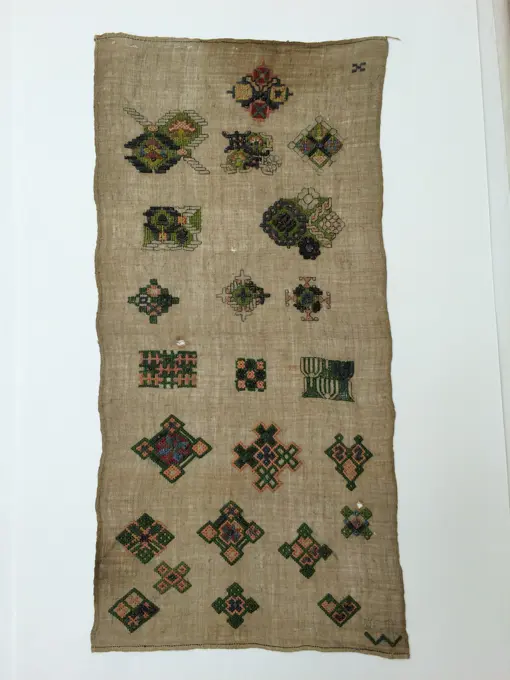
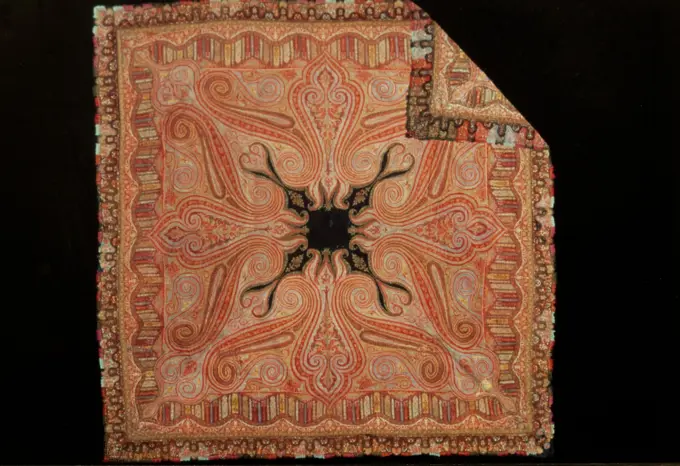
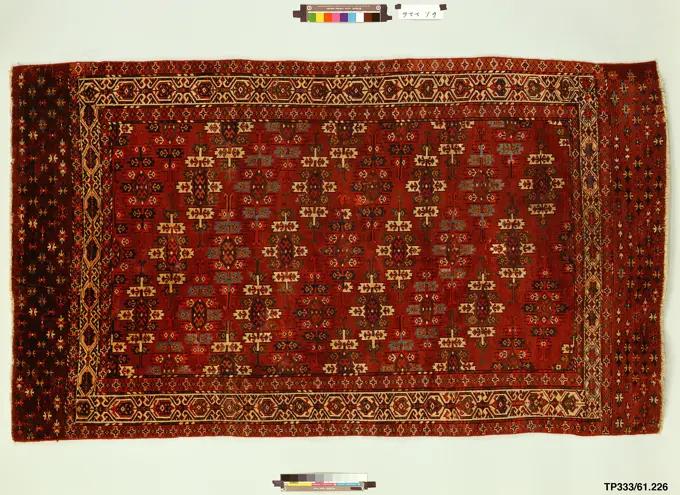
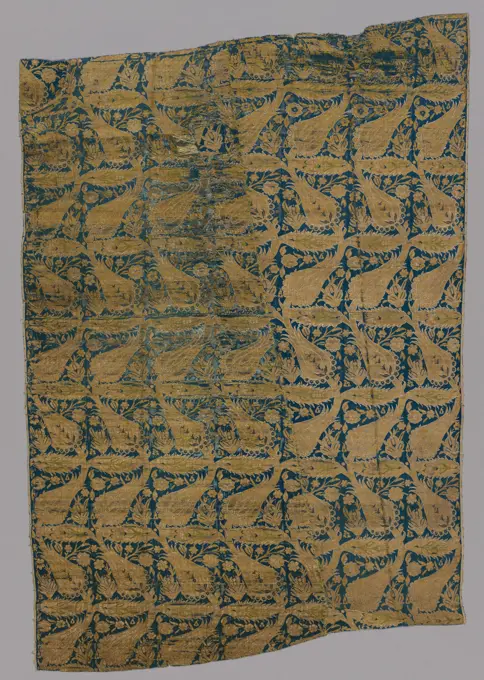
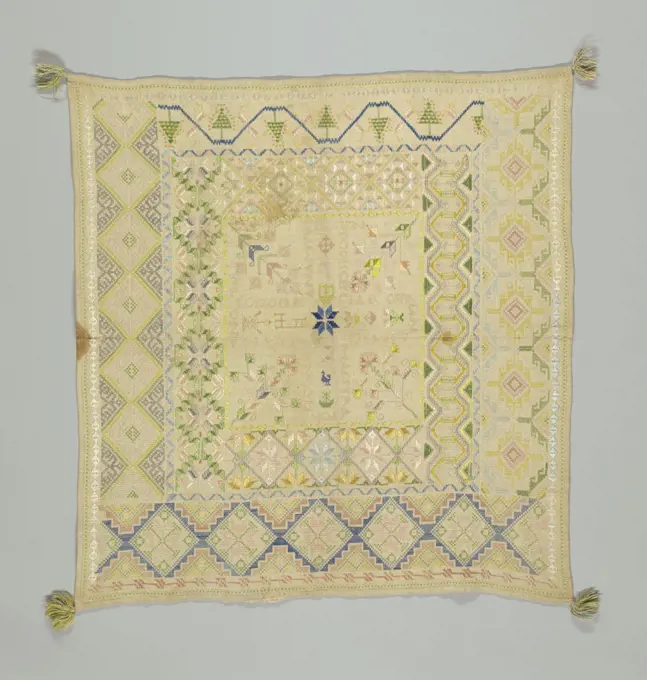
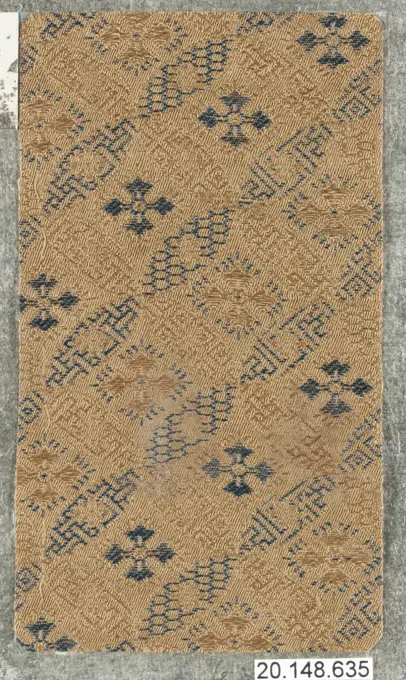
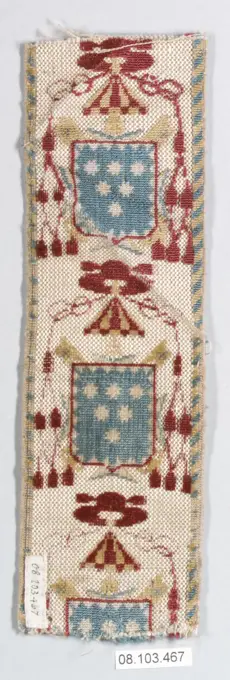
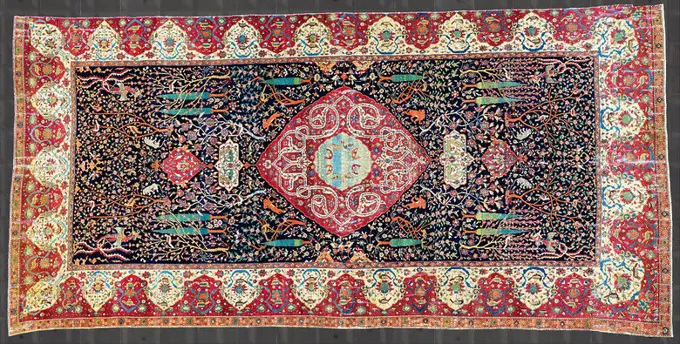
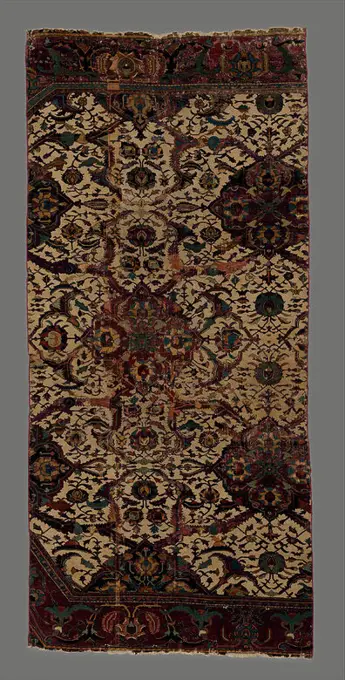
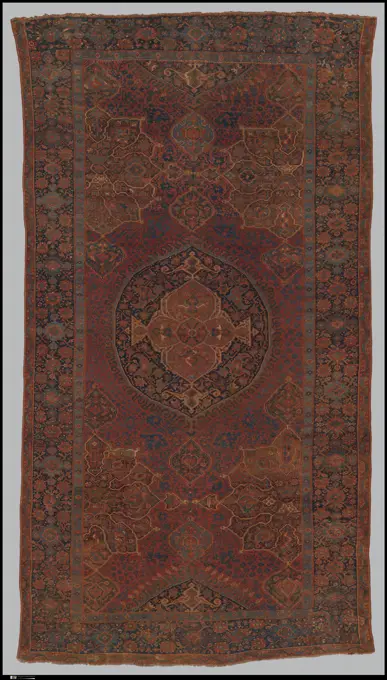
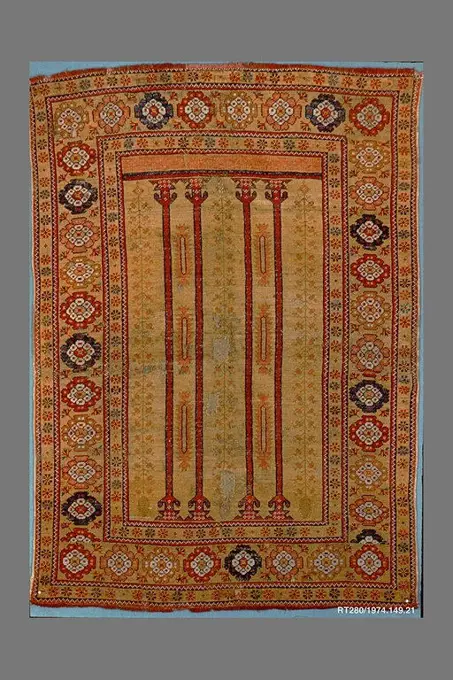
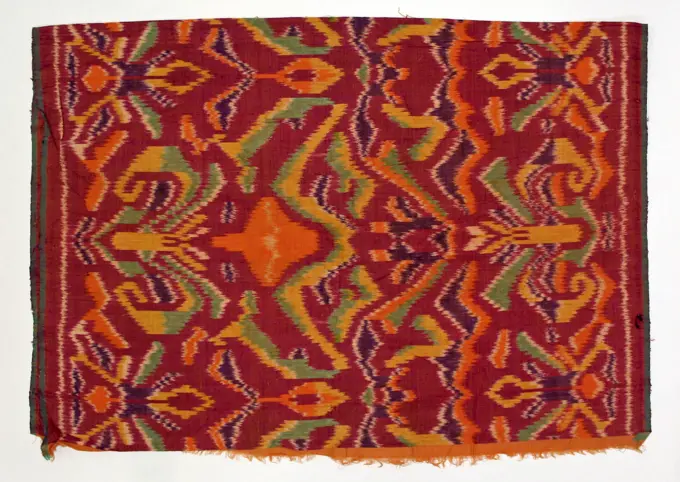
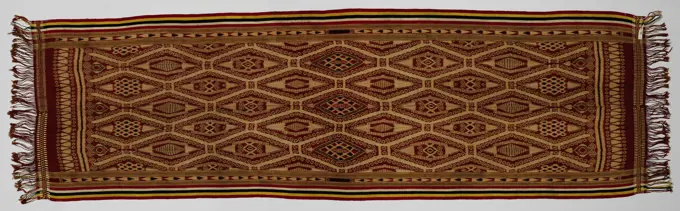
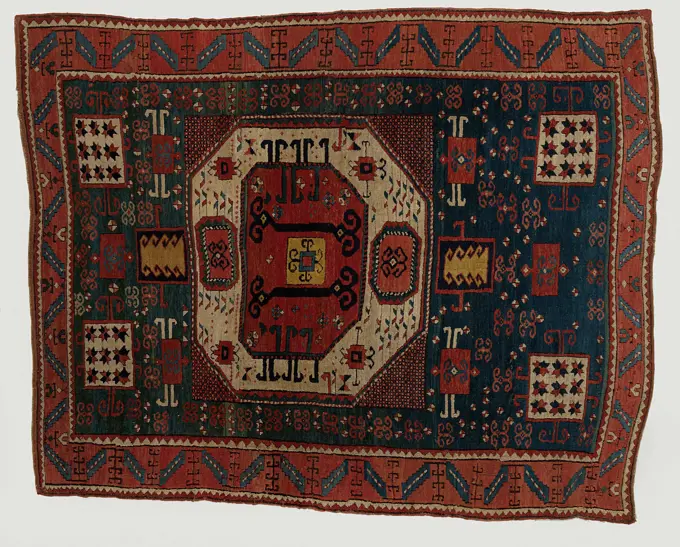
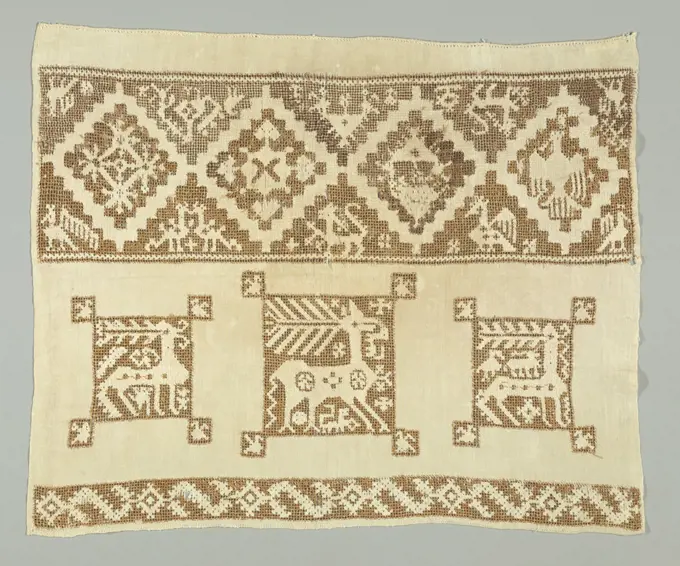
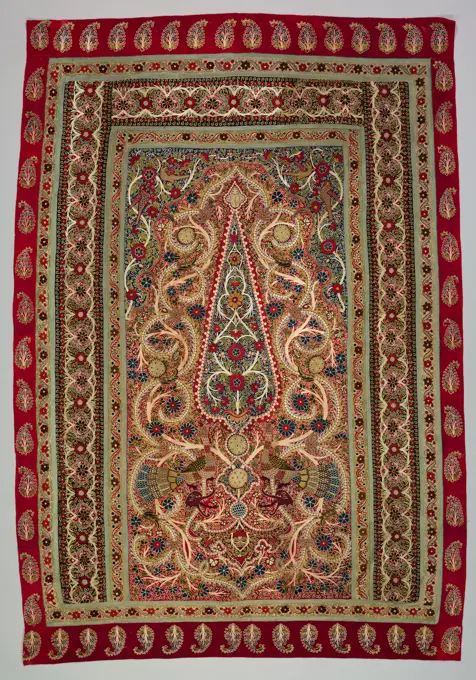
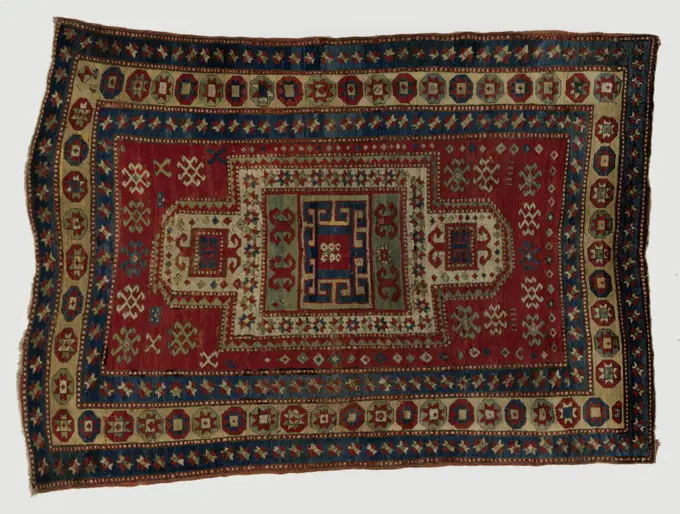
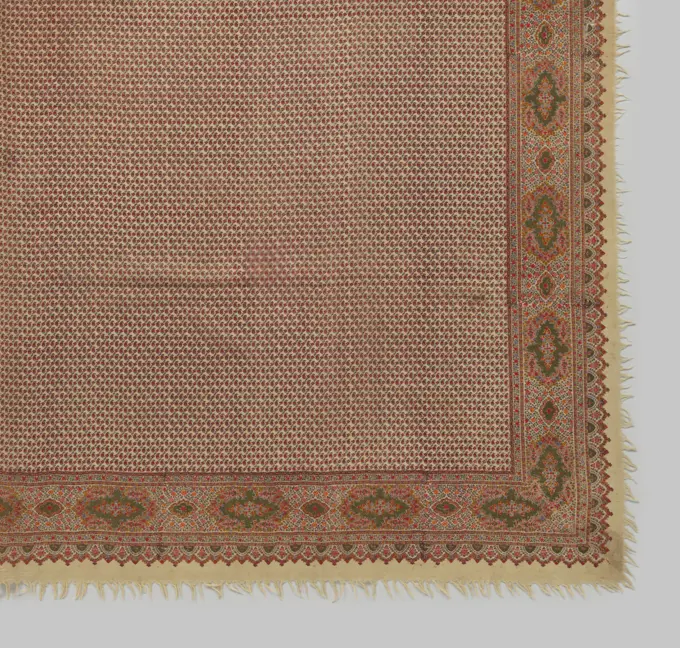
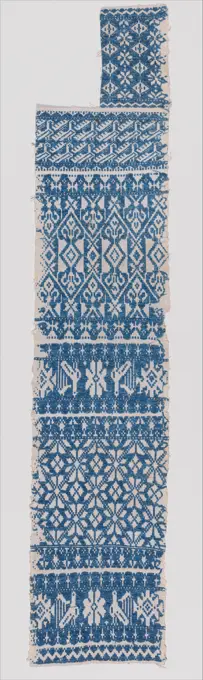
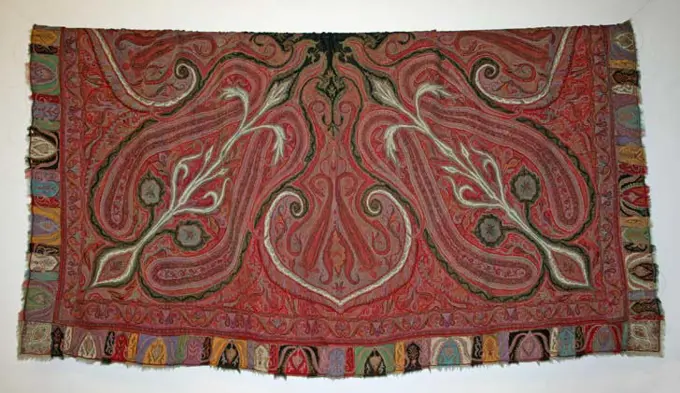
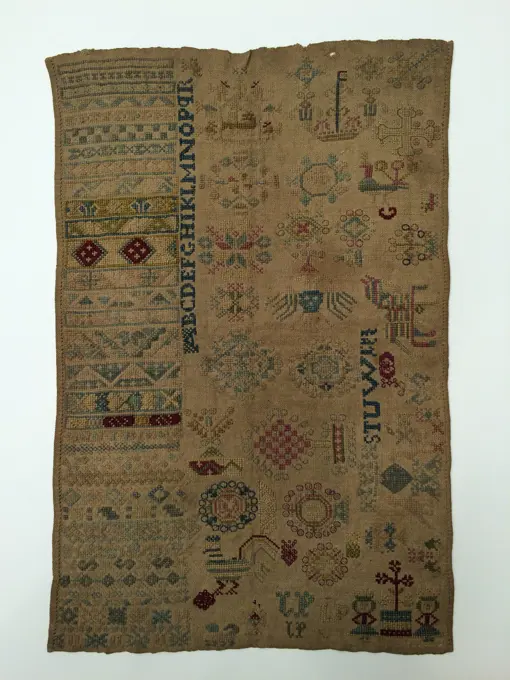
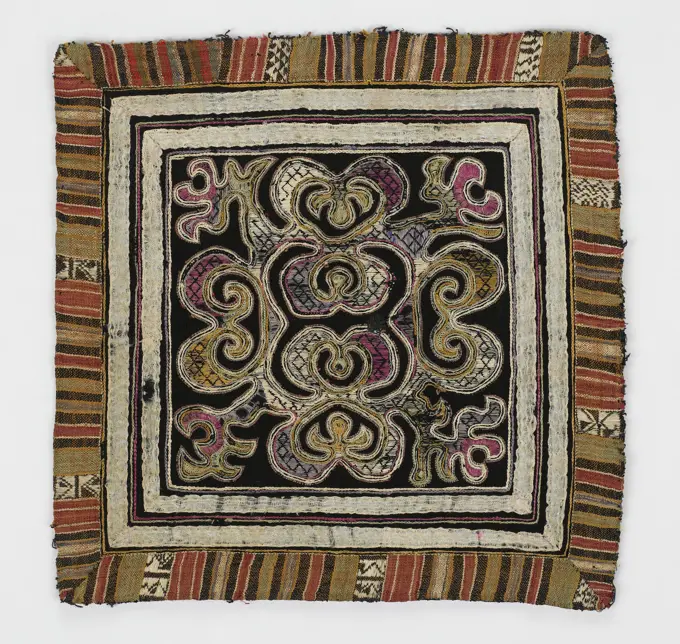
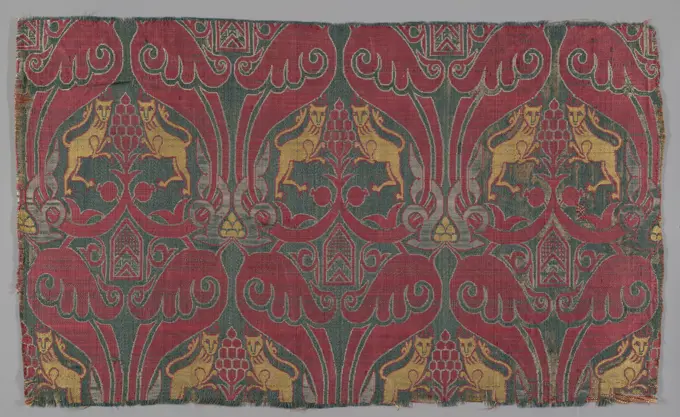
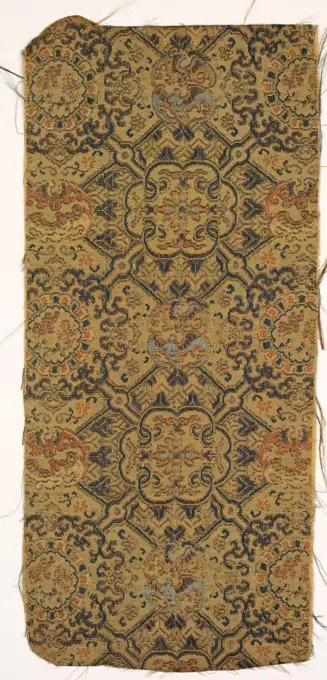
Fragment, 1800. China, 19th century. Silk; overall: 31.8 x 15.3 cm (12 1/2 x 6 in.).Panel Made 1501-1600 Turkey. Silk; brocaded in elaborate interlacing forms filled with octagonal shapes . AnonymousCover. Turkey. Date: 1675-1725. Dimensions: 208.3 x 152.2 cm (82 x 60 in.). Embroidered linen. Three bands ogival motif and flowers, palmette border. Origin: Turkey. Museum: The Chicago Art Institute, Chicago, USA.Oriental carpet. Oriental carpet, prayer, Kos-GhioDes, of which the midfield is decorated with a double mih bar and a medallion. Light blue corner pieces with tulips. The widest edge is decorated with a zigzag and triangles.Oriental carpet. Oriental carpet, medalleled. In the middle a medallion with flowers against a plain terracotta fond. The edge is divided into red and olive green color surfaces by windows and octos; A flower in every octagon.Kamben geringsing (ceremonial cloth), Medium: cotton Technique: tied resist patterning in warp and weft (double ikat) on plain weave Label: cotton with tied resist patterning in warp and weft (double ikat), Cotton textile created in the double ikat or 'geringsing' technique showing a 'kota-mesir' pattern (four-pointed star, notched internal pattern, divides piece into semi-circular segments). Semi-circles depict 'wayang patlikur isi' motif (geometric wayang figure) and other figures. Wide border at end with geometric pattern. Design in tan on black. Fringed., Tenganan, Bali, Indonesia, 19th century, printed, dyed & painted textiles, Kamben geringsing (ceremonial cloth)Ritual Weaving(Tampan)TEJIDO DE ARTE PERUANO. Location: MUSEO DE AMERICA-COLECCION. MADRID. SPANIEN.Fragment of Russian sash unknownOriental carpet, Anonymous, 1800 - 1900 Oriental carpet, flower rug. In the Middenvleden angular vase shapes, composed of arabesken, with flower bouquets. Three-stark edge, the widest of which is decorated with palmets and leaf motifs along S-Vranken. Southwest perzia (Possible) Necklace and impact: Wool Oriental carpet, flower rug. In the Middenvleden angular vase shapes, composed of arabesken, with flower bouquets. Three-stark edge, the widest of which is decorated with palmets and leaf motifs along S-Vranken. Southwest perzia (Possible) Necklace and impact: WoolCarpet in carpet format, decorated with eight so-called lesghi stars as the main motif and as a scatter motif. Three edges, the middle one of which is a kufic, anonymous, 1800 - 1949 Carpet in carpet format, decorated with eight so-called lesghi stars as the main motif and as a scatter motif. Of the three edges, the middle one is a kufic. Caucasus wool Carpet in carpet format, decorated with eight so-called lesghi stars as the main motif and as a scatter motif. Of the three edges, the middle one is a kufic. Caucasus woolAfrica, Tanzania, Zanzibar, Stone Town. Close-up of hand-made carpet.Fragments, Medium: silk Technique: two integrated fabric structures; 4&1 satin patterned by plain weave, Alternation of large and small rosettes with foliate forms filling in the background., Spain, 15th century, woven textiles, FragmentsPanel Made 1550-1600 Turkey. Silk .Sampler (Spain); silk embroidery on linen foundationIndian Trade Cloth(Patolu)Rugs and Carpets: China - 19th century - Yarkand carpetTextile with elephants, crowned double headed eagles, and flowers second half 16th century Chinese, Macao, for Iberian market A symbol of exoticism and power, the Asian elephant (identified by its small ears) shares the visual space of this finely patterned silk satin damask with a European double-headed crowned eagle beneath a stylized, oval-shaped lotus.¹ The elephant is shown with multiple tusks, three on one side and one peeking out on the other. As such, the animal seen here likely represents the Buddhist six-tusked elephant described in a fifth-century Chinese translation of a sutra as being resplendent and white and having lotuses, jade maidens, and other symbolic figures at the end of each tusk.²Elephants have a long history in China. Given as tribute to the emperor by local rulers, particularly from neighboring Southeast Asian regions where they were raised, elephants were also presented as diplomatic gifts to important foreign kings. Apart from their use as work animals and aOriental carpet. Oriental carpet that was probably used to close the tent input, Tekke Ensi.Carpet 19th century. Carpet 445278Sampler(Limar)Glasses Case Made 1875-1900 China. embroidered on gauze .Oriental flower carpet of knotted wool ,, 1800 - 1949 Eastern carpet of knotted wool. Midfield: on red long distance three standing straight stems with rosettes and windows with hooks, between which rows of multicolored rosettes with toothed contours and white sawded leaves and lying S-shapes. The midfield is surrounded with an edge of triangles in which, among other things, octagon with bars. Dark blue inner edge with red hooks and a red outer edge with sloping stripes in white, blue and yellow. Board: two zigzag hem. Southern Persia wool Eastern carpet of knotted wool. Midfield: on red long distance three standing straight stems with rosettes and windows with hooks, between which rows of multicolored rosettes with toothed contours and white sawded leaves and lying S-shapes. The midfield is surrounded with an edge of triangles in which, among other things, octagon with bars. Dark blue inner edge with red hooks and a red outer edge with sloping stripes in white, blue and yellow. Board:'Chessboard' Carpet. Dimensions: Rug: H. 73 1/2 in. (186.7 cm)W. 51 in. (129.5 cm). Date: late 16th-early 17th century.The field of the so-called "Chessboard" carpet is usually applied on a vermillion ground and divided into rectangular compartments, each containing an eight-pointed star composed of an endless knot of interlaced bands. The stars are encircled by small abstract radiating trefoil ornaments resembling fleur-de-lys, cypresses, and rosettes. On the large border that frames the central compartments of this design, poly-lobed lozengelike medallions alternate with cartouches. Stylized fleur-de-lys fill these motifs as well as the blue-green background. Museum: Metropolitan Museum of Art, New York, USA.Cover. Italy. Date: 1601-1675. Dimensions: 70.3 x 56.3 cm (27 5/8 x 22 1/4 in.). Linen, plain weave; embroidered with silk in buttonhole, double running, and satin stitches; edged with silk, bobbin straight lace. Origin: Italy. Museum: The Chicago Art Institute, Chicago, USA.Fragment (China); silk; Warp x Weft: 12.5 x 31.2 cm (4 15/16 x 12 5/16 in.)Textile Fragment withLotusesFragment 18th century Italian. Fragment 230398Ritual Textile (PuaSungkit)Carpet, supposedly stripe rug. In midfield V-shaped stripes with flowers and a vertical line with windows. Four -time edge with flower vines., 1800 - 1900 Eastern carpet, stripe rug. In midfield V-shaped stripes with flowers and a vertical line with windows. Four -time edge with flower vines. At the top an embroidered beard. Kurdistan wool Eastern carpet, stripe rug. In midfield V-shaped stripes with flowers and a vertical line with windows. Four -time edge with flower vines. At the top an embroidered beard. Kurdistan woolBaby Carrier, 21 1/4 x 17 3/8 in. (53.98 x 44.13 cm), Cotton; needlework, ChinaSample Book (England); paper, linenTextile 1850-99 Russian. Textile 173421Millefleur Carpet with a Flower-and-Trellis Pattern late 18th-early 19th century A lozenge diaper pattern of floral stems provides visual structure to this millefleur carpet with hundreds of densely arranged flowers. In a break from more typical millefleur designs in which flowers fill a niche-like space or simply cover the entire field with an abundance of blossoms, the flowers of this carpet are arranged in a repeating geometric pattern. The presence of five and seven blossoms clustered on each stem was typical of millefleur carpets produced in the preceding century in Kashmir.. Millefleur Carpet with a Flower-and-Trellis Pattern 451982Rug;  19th century (1801-00-00-1900-00-00);PZS, collection, KilimyFragment Samiet. Black and natural silk tissue fragment with a pattern of windows, alternately filled with stylized rosette in rhombus or with triangles forming cub cartridge. Supplemented with bij drawing on cardboard substrate.Man's Hinggi Cloth (Warp-Ikat Mantle) Made 1801-1900 Indonesia. Cotton, plain weave; warp-dyed (ikat); fringe on two sides .Sampler. Date/Period: Early 19th century. Sampler. Medium: silk embroidery on linen foundation. Technique: embroidered in cross, satin, stem, chain, four-sided, and back stitches on plain weave foundation. Height: 590 mm (23.22 in); Width: 600 mm (23.62 in). Author: Tomasa Ynocenya Reg.Dodenduck. .Sampler (Spain); Embroidered by Matea Gonzalez; Student of Matilda Fernandez; silk embroidery on linen foundationOriental carpet. Oriental carpet, stripes rug. Midfield is decorated with stripes and floral running tendrils. Multiple edge, the widest of which is decorated with a floral rank.Rugs and Carpets: Turkey - Western Anatolia - 18th century. Bergama carpet, 1,57 x 1,36 metresShawl mid-19th century. Shawl 447627Eastern carpet, anonymous, c. 1850 - c. 1900 Eastern carpet. Midfield is a solid red triangle along which a tilt edge runs. Triple edge, the widest of which is decorated with rosette flowers. Talish (possibly) ketting: wool. inslag: cotton (textile) Eastern carpet. Midfield is a solid red triangle along which a tilt edge runs. Triple edge, the widest of which is decorated with rosette flowers. Talish (possibly) ketting: wool. inslag: cotton (textile)Textile (Romania); wool, silk, cotton, linen, silver foil on silk core (1952)SERVATE;  XIXW. (1801-00-00-1900-00-00);Fragment, Medium: silk Technique: plain compound satin, Latticework and arabesques in red, blue and brown on a light tan ground., China, 19th century, woven textiles, FragmentTextile, 18th century, 6 x 37 in. (15.24 x 93.98 cm), Greece, 18th centuryDorothy Lacey, Ingrain Carpet, c 1937 Ingrain CarpetRug late 19th century China. Rug 70592Buffet runner of écru cotton, decorated with woven embossed motifs with rosettes and windows and further a fillet side with two winged lions and climbing side with blocks ...Embroidered spot sampler first half 17th century British Spot samplers feature motifs that are scattered in a seemingly random fashion over the surface of the foundation fabric, usually linen. These samplers are rarely signed or dated, and often include motifs that are only partially worked, leading to the conclusion that this type of sampler was made as a personal stitch reference for its maker, and not for display, as band samplers were signed by student embroiderers. The sampler features geometric spots, many of which are worked as diaper patterns (a pattern that has a regular repeat in all directions). The spots are stitched primarily of green and metal threads.. Embroidered spot sampler 228290Square Shawl, 19th century, L.76-½ x W.75-½ in., wool, cotton, India, 19th centuryWall hanging  colourful stripes with golden, oval medalIIons unknownThree Strips Pieced Together, 1700s - 1800s. Iran, 18th-19th century. Compound tabby weave, brocaded; silk and gold filé; overall: 27.3 x 17.8 cm (10 3/4 x 7 in.).Part of a Ceremonial Cloth(Palepai)Zhaoton-style Loin Cloth, 38 x 17 5/16 in. (96.52 x 43.97 cm), Cotton, ChinaCushion cover with blue raster design, lodged triangles, rosettes and daisies. Cushion cover whose midfield is divided into windows through a blue grid, diagonally. Double edge. The inner with traveled triangles, the outer with rosettes and daisies. Upper and bottom of an embroidered beard.Cushion Cover, 1700s. Dagestan, 18th century. Embroidery, silk; overall: 92.1 x 69.9 cm (36 1/4 x 27 1/2 in.).Carpet first half 19th century. Carpet 451669Lampas with compressed undulating vines, early 1600s. Turkey, Bursa. Lampas: silk and gilt-metal thread; average: 109.2 x 75.2 cm (43 x 29 5/8 in.).Panel (sleeveband) Made 1875-1900 China. embroidered gauze . Han-ChinesePiece from Coverlet 19th century China. Piece from Coverlet 70498Carpet Made 1864 Caucasus. The prevalent Chinese dragon design appears on this sileh, or flat-woven soumak carpet, from the Caucasus. These geometric dragons are flying with thier tails high in the air, and the bottom extensions of the backward ìSî shapes represent their lower jaws. Carpets with inscriptions and dates are extremely rare, but this example is even more remarkable beacause it was woven in one piece; the large majority of such carpets were woven in two parts. Its exceptionally rich coloring, including a wide range of blue and green tones is also an unusual feature.. Cotton and wool, plain weave with discontinuous supplementary wrapping wefts (soumak); square braided main warp fringe .Coif, late 1500s. England, Elizabethan Period, late 16th century. Silk, gold and silver thread, sequins, padding, linen; embroidery; overall: 21 x 42.2 cm (8 1/4 x 16 5/8 in.). Sumptuous interlacing scrolls bearing flora and fruit embroidered with gold, silver, and silk thread decorate this set composed of a coif (cap seen here) and forehead cloth (see 1934.231). Individual motifs representing England appear within the scrolls, such as the Tudor rose, carnation, honeysuckle, and acorn. Fashionable ladies wore coifs in the house as semiformal dress and in bed for receiving guests. The large loops along its lower edge were drawn together to keep it in place. Worn pointing backward, the forehead cloth functioned like a visor, supposedly preventing wrinkles and keeping off the sun and cold air.Storage Bag Fragment. Dimensions: H. 16 1/4 in.. (41.3 cm)W. 27 1/2 in. (69.9 cm). Date: mid-19th century. Museum: Metropolitan Museum of Art, New York, USA.Panel Made 1801-1900 India. Polychrome silk threads on silk ground; embroidered .Fragment 17th century Italian or Greek. Fragment 213086Apron, ChinaSampler, Fabiana Muriel, Medium: silk embroidery on linen foundation Technique: embroidered in cross, satin, stem, back, and marking cross stitches on plain weave foundation, Spot motifs and inscription arranged around a central cross, within a frame of concentric borders, in pale blue, green, yellow and pink on a natural ground. A tassel of embroidery silks on each corner., Spain, 1808, embroidery & stitching, SamplerPiece 18th century Japan. Piece 71630Galloon 17th century Italian. Galloon 213964Coverlet Made 1853 Ohio. Cotton and wool, plain weave with supplementary patterning wefts bound by main warps in plain interlacings with main warp and supplementary patterning weft fringe .The Schwarzenberg Carpet. Date/Period: 1500 - 1600. Carpet. Author: Iran Unknown.Oriental carpet. Oriental carpet, prayer cloth with two keyhole motifs. In the dark brown-brown midfield keyhole motifs and a stermotief. A blue border with multicolored flowers stands between hems with equal branches. Button: Ghiledes knot.Prayer Mat, 1700s - 1800s. India, 18th-19th century. Embroidery, silk and gold thread; overall: 47.6 x 32.7 cm (18 3/4 x 12 7/8 in.).Carpet Fragment. Dimensions: H. 107 in. (271.8 cm)W. 48 7/16 in. (123.1 cm). Date: 17th-18th century. Museum: Metropolitan Museum of Art, New York, USA."Medallion Ushak" Carpet 17th century Made in large numbers and hugely popular both in the Ottoman empire and in Europe, medallion Ushak carpets such as this were produced from the later fifteenth century to the eighteenth. The design in theory repeats infinitely in all directions, although "cut" by the border. It consists of ogival medallions alternating with smaller eight-lobed "stars.". "Medallion Ushak" Carpet 445311Towle border 1800-1850 Russian. Towle border 173356Fragment; silk; Bequest of Richard Cranch Greenleaf in memory of his mother, Adeline Emma Greenleaf; 1962-56-90Fragment; silk, metallic; Warp x Weft (right selvedge present): 19.3 x 18.4 cm (7 5/8 x 7 1/4 in.)Fragment Made 1700-1800 China. Silk, satin weave with supplementary wefts bound by secondary binding warps in twill interlacings .Carpet probably 18th century. Carpet 452573Textile Thailand late 18th-early 19th centuryDoek, Anonymous, 1900 - 1949 Cloth with geometric motifs. Borneo cotton (textile) Cloth with geometric motifs. Borneo cotton (textile)Medalleled, Z.G. Holbein variant, Kazak. Medallide, in 2-1-2 formula, Holbein variant, Kazak. Midfield: Ultramarine blue, top-up Petrol-colored fond with medallions in 2-1-2 formation; From one large octagon in white, within which one planted red and two smaller octagons and above and below each two white square angles. The octagon is finished to a rectangle by triangles with fine cubes in red and blue, all with a white dot. On the field twice two white squares with stars and two purple blue with an ocher-colored motif, all between scattering, O.A. from X motifs in red. Edge: Triple. The middle is brick red with zigzag. Sawtooth leaves set in blue to a angular rank in black. Equal hems of matching triangles.Shawl; Hinggi Kombu. Shawl with heraldic lions, snakes and patola motifs.Cover, Medium: linen Technique: withdrawn element with darned motifs, Cover with three stags inside squares. Above stags is a wide border with stepped diamonds enclosing geometric snowflake patterns and a single bird motif. Narrow border stags has alternating curving vine and diamond-shaped pattern., Italy, 17th century, lace, CoverCHAICE VEIL unknownTent Wall Panel(), 1800s. Iran, Rasht, Qajar period (1779-1925). Wool: inlaid work; silk: embroidery, chain stitch; overall: 194.9 x 132.7 cm (76 3/4 x 52 1/4 in.). Elaborate arched panels with multiple borders similar to this textile formed the mosaic-like interior walls of imperial tents. Here, the field is dominated by a richly decorated cypress tree above peacocks and dragon heads on an ornate foliate ground. Bright white silk “pearl” outlines, vines, and ringlets in chain-stitch embroidery enliven the pattern on contrasting colors of fulled wool. Internationally fashionable botehs, or paisleys, decorate the outer red borders. Although this patchwork technique was recorded in Iran in the 1670s, most examples survive from the 19th century, when foreigners praised them as “really [the most beautiful embroidery.” The technique appears in furnishing fabrics, horse covers, as well as imperial portraits, including one depicting the Qajar monarch Fath ‘Ali Shah, who ruled in 1797-1837.Medailla, Kazak ,, 1800 - 1900 Medaillas, Kazak. Midfield: bright red stock with a double yellow mihrab with a white border. Inside decor of soft green panels, on which X and T-Haken. Edges: triple; All equally wide. The middle one is golden yellow, on which octagons are in light green, red, ultramarine and white, within which stars. The inner and outer edges are the same and exhibit an ultramarine blue fond. Jumper wool Medaillas, Kazak. Midfield: bright red stock with a double yellow mihrab with a white border. Inside decor of soft green panels, on which X and T-Haken. Edges: triple; All equally wide. The middle one is golden yellow, on which octagons are in light green, red, ultramarine and white, within which stars. The inner and outer edges are the same and exhibit an ultramarine blue fond. Jumper woolSquare cashmere scarf, the middle of which is printed with small blue-red botas, border with a list within which green cartouches and lobben, anonymous, c. 1840 - c. 1850 Square palm shell of printed wool. The center pattern consists of an asmetrical standing pattern of diagonally suitable small botas, in red and blue, interspersed by diagonals of fine flower garlands in red and ballow, against a white stock. Compared to the own center line, symmetrical pointed soil is green cartouches with angular lobed yellow contours with red and light blue 'precious stones', at which there are four small pink cartouches, while everything is filled with very small flowers with very small flowers. Between the cartouches there are small diamond shapes on a white crowd on which are grouped rosette flowers in a grid, all yellow petals that have been surrounded with red. Corner solution is random, everything in absentia. Outside, a fine -bobed double edge of green and white lobes runs in a puntrand of alVelvet Fragments Sewn Together, late 1500s. Italy, late 16th century. Velvet; overall: 37 x 39.5 cm (14 9/16 x 15 9/16 in.).Piece 16th century Italian. Piece 226401Shawl ca. 1865 Indian. Shawl 123220Embroidered sampler 17th century Dutch, Marken Island This sampler, which features various geometric motifs, and an alphabet, is typical of Marken Island samplers, which are characterized by bands of colorful patterns. Girls stitched these bands to practice patterns for "vernaaide linten"- ribbons that were attached to a cap and which were an important part of the costume tradition on Marken Island. These ribbons consisted of black embroidery on white linen. The women of Marken are said to have kept their samplers in or near their kitchens for handy reference, so much of the needlework appears darkened from residue from cooking fires. Samplers from this area, including this one, often include striped horses. Other motifs include a ship, dog in a house or other enclosure, and striped rooster. The initials "LP," which are stitched several times, are probably the initials of the samplers maker.. Embroidered sampler 228070Back Plate, 14 x 14 in. (35.56 x 35.56 cm), Cotton, metal strips (), ChinaFragment Silk Luwel with tires and palmets, Anonymous, 1500 - 1625 A fragment polychrome silk fluble. On a white warp in purple velvet, a backdrop of soiled tires and palmets. Italy silk. satin. velvet (fabric weave). ciselé velvet A fragment polychrome silk fluble. On a white warp in purple velvet, a backdrop of soiled tires and palmets. Italy silk. satin. velvet (fabric weave). ciselé velvetCovert of saddle bag, decorated with gridwork in which cross flowers, Jaffi Volk, c. 1800 - c. 1900 Cover of a saddle bag, Jaffi Kurdistan-Mosul. The midfield is divided into windows in which cross flowers. The half windows aside are filled with concentric window lines. Checked edge with rosettes. An embroidered beard on two sides. Kurdistan Necklace and impact: Wool Cover of a saddle bag, Jaffi Kurdistan-Mosul. The midfield is divided into windows in which cross flowers. The half windows aside are filled with concentric window lines. Checked edge with rosettes. An embroidered beard on two sides. Kurdistan Necklace and impact: WoolTextile Fragment 15th century This silk textile shows pairs of confronting lions on either side of a stylized tree, enclosed by swooping crimson-colored split palmette leaves and set against a green ground. The lions have been compared to a Granadine textile bearing Nasrid heraldic emblems and rampant lions, which possibly served as the model. Variants of this pattern, depicting slightly different plant forms or animals illustrate that these textiles were mass-produced. For similar textiles in the museums collection, see also 25.120.453, 20.94.1, and 1981.372.. Textile Fragment 446156