Antique Textile Fragments

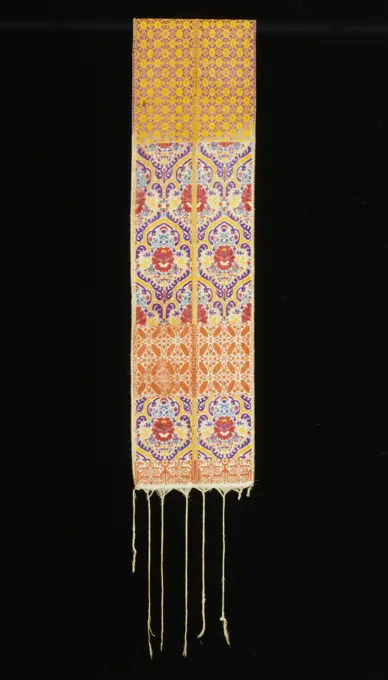
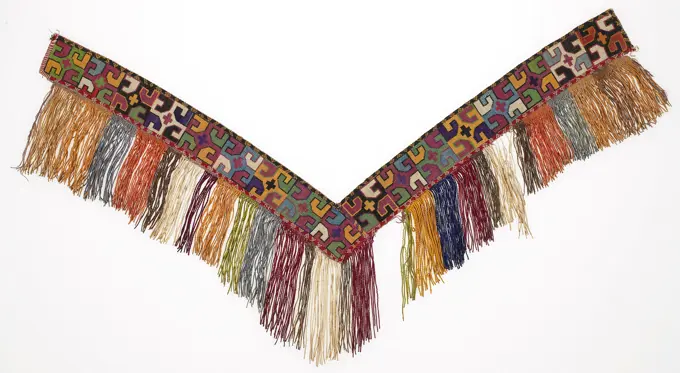
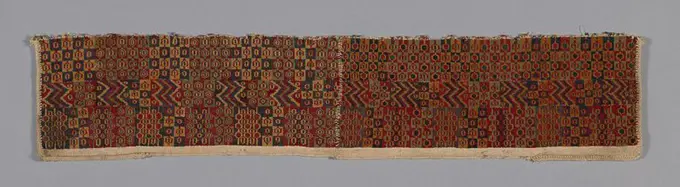
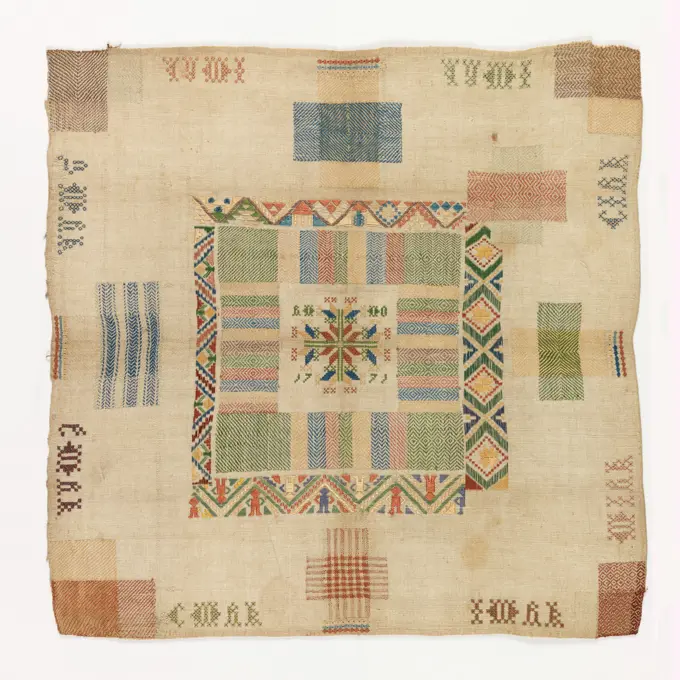
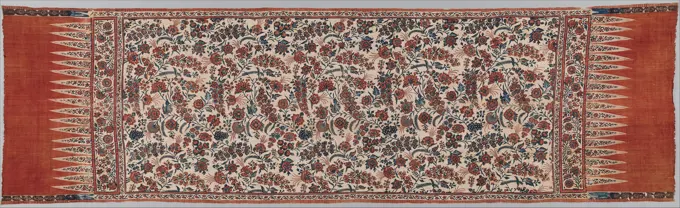
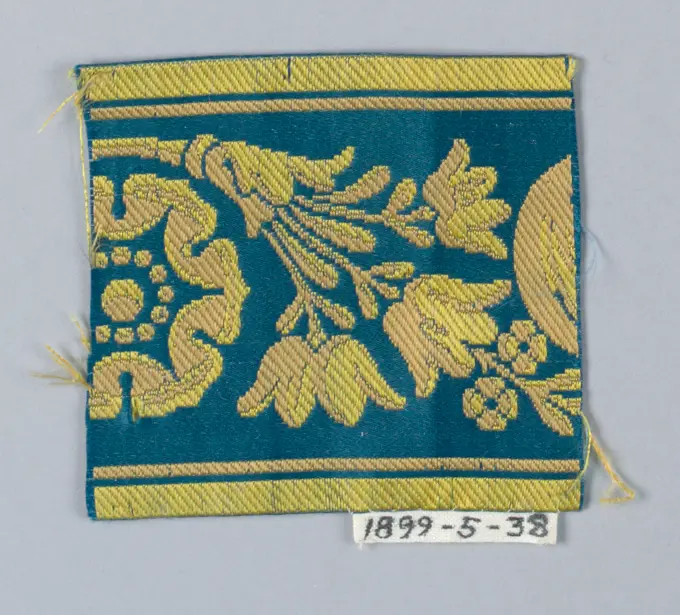
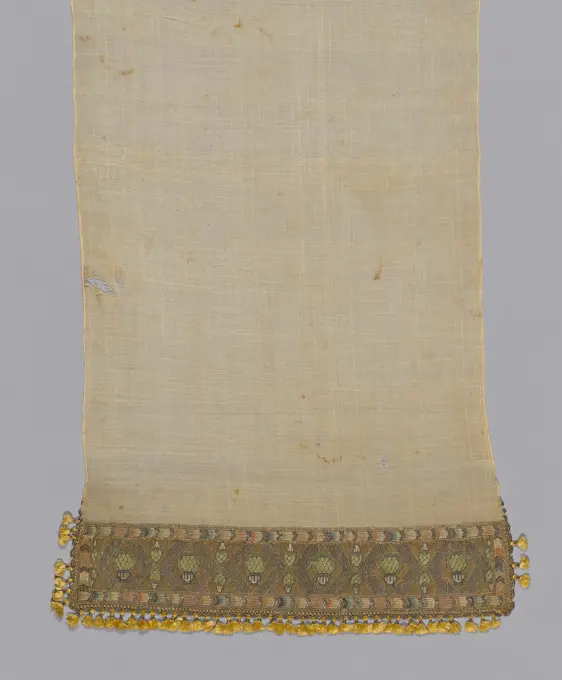
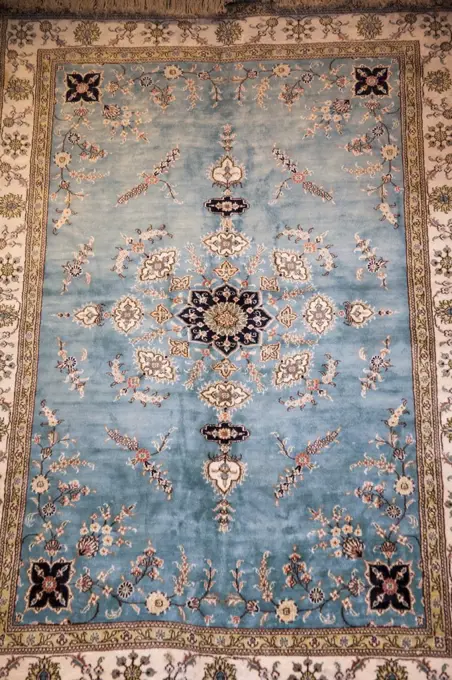
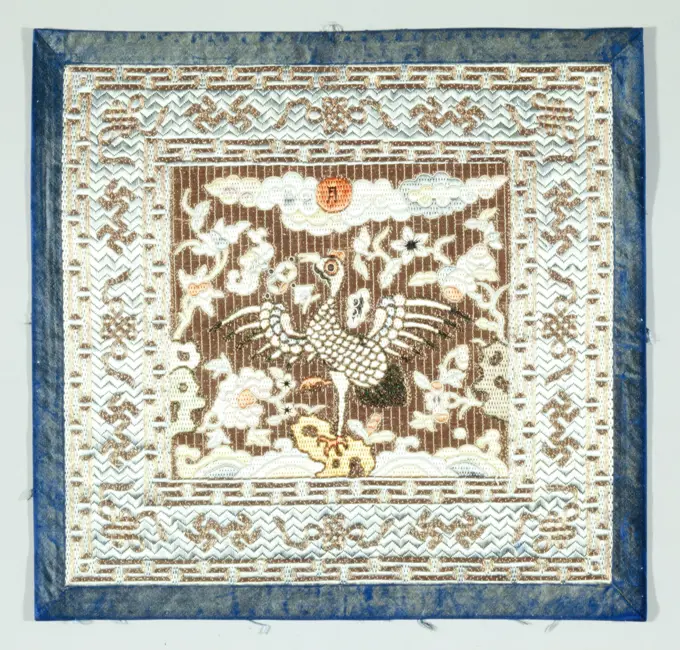
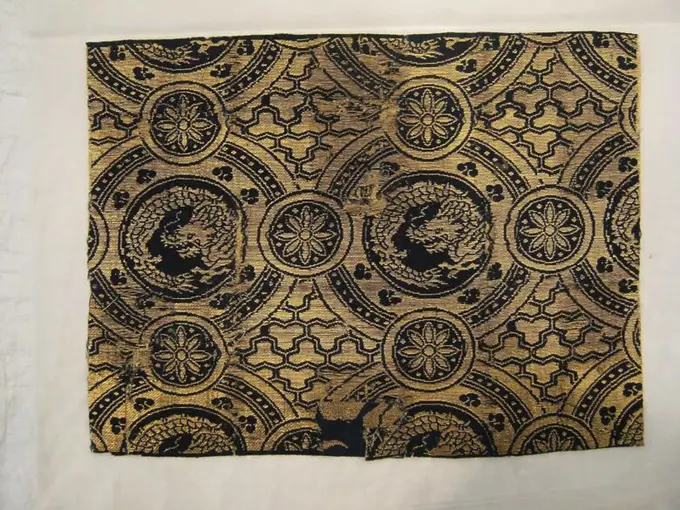
Intricately designed textile fragments from historical periods, highlighting various patterns and textiles from Turkey and China.

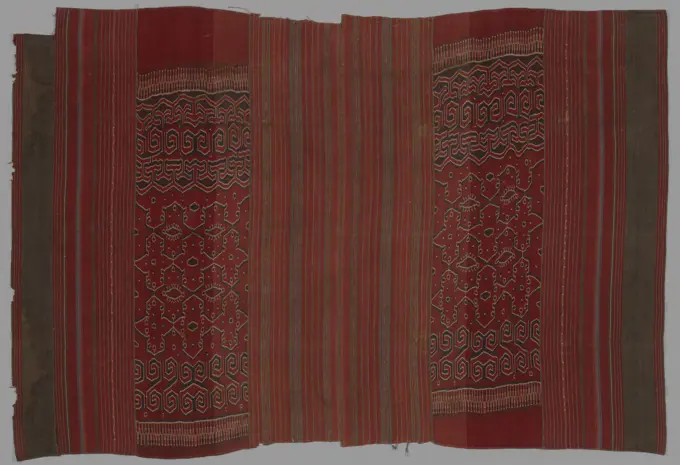
Kamben geringsing (ceremonial cloth), Medium: cotton Technique: tied resist patterning in warp and weft (double ikat) on plain weave Label: cotton with tied resist patterning in warp and weft (double ikat), Cotton textile created in the double ikat or 'geringsing' technique showing a 'kota-mesir' pattern (four-pointed star, notched internal pattern, divides piece into semi-circular segments). Semi-circles depict 'wayang patlikur isi' motif (geometric wayang figure) and other figures. Wide border at end with geometric pattern. Design in tan on black. Fringed., Tenganan, Bali, Indonesia, 19th century, printed, dyed & painted textiles, Kamben geringsing (ceremonial cloth)
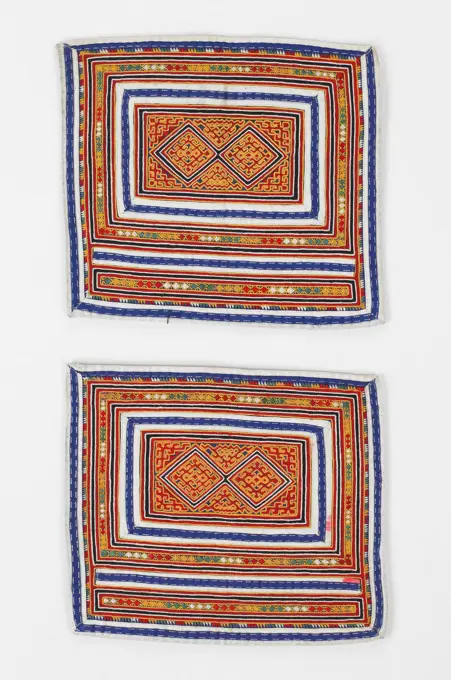
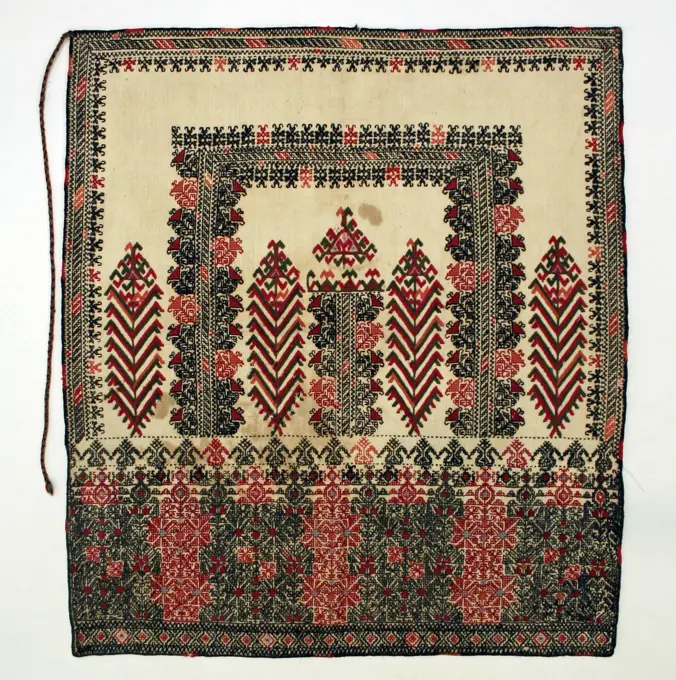
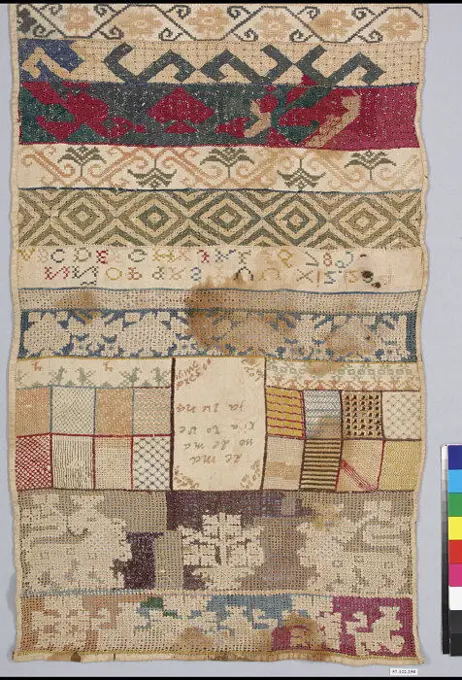
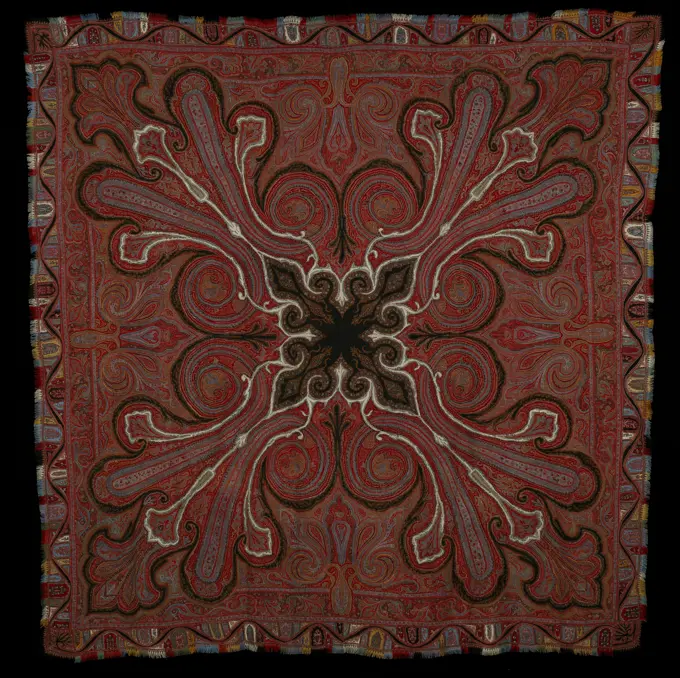
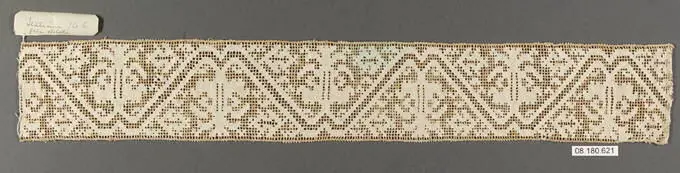
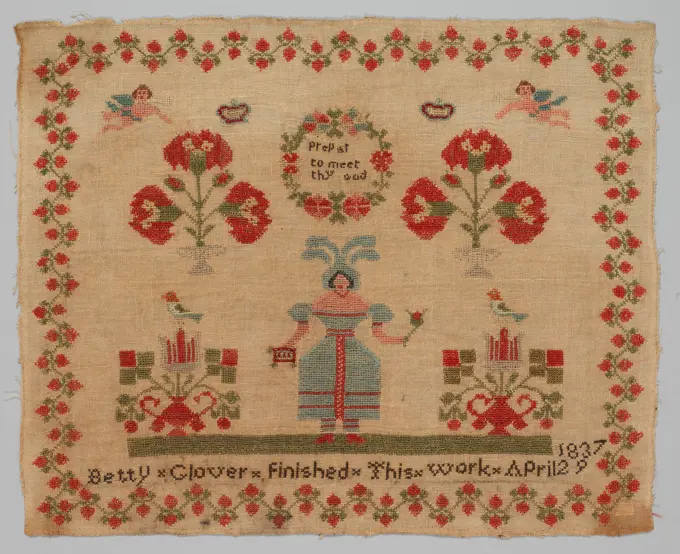
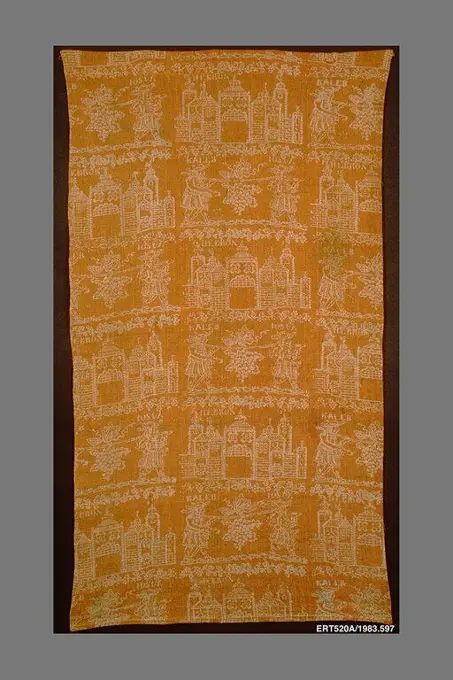
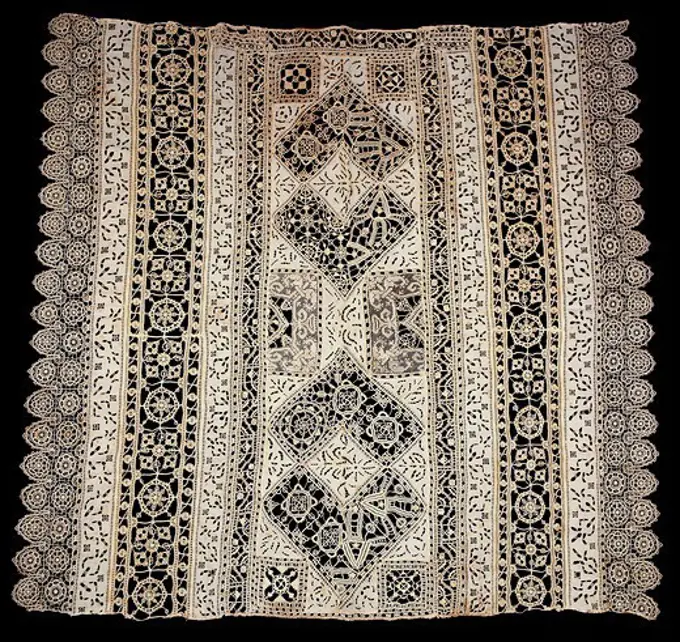
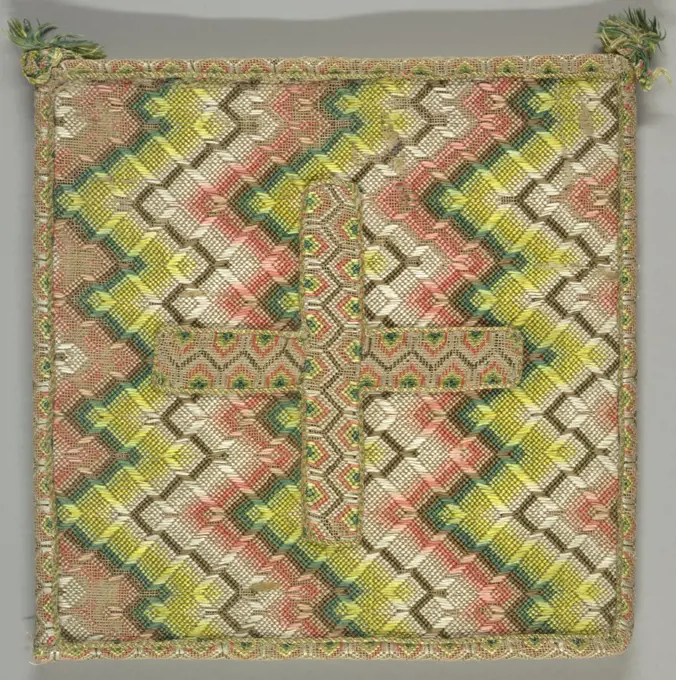
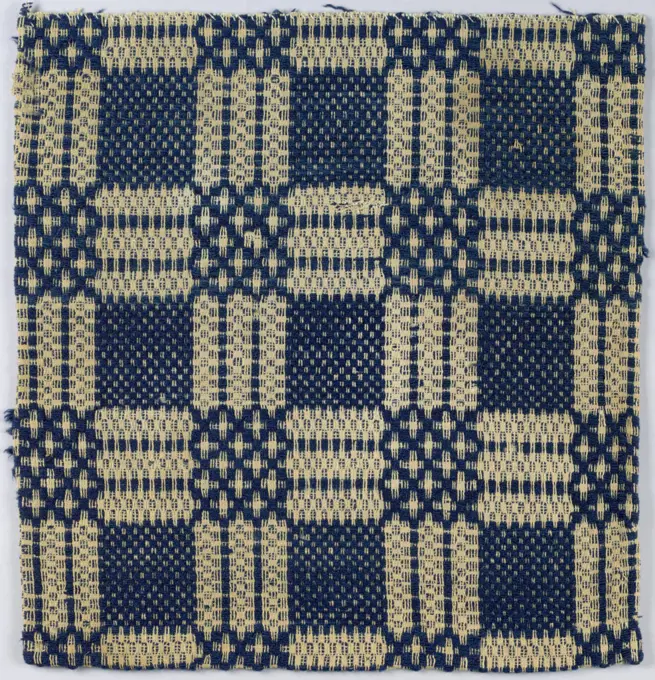
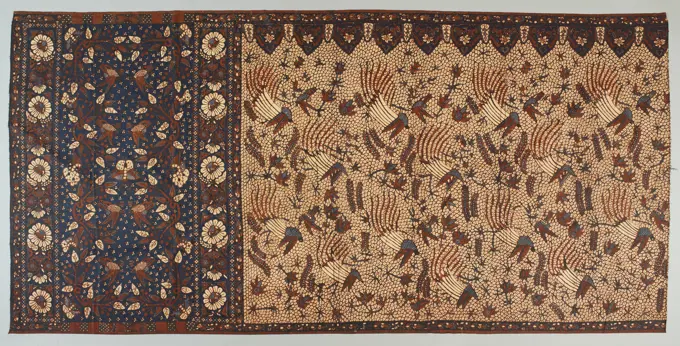
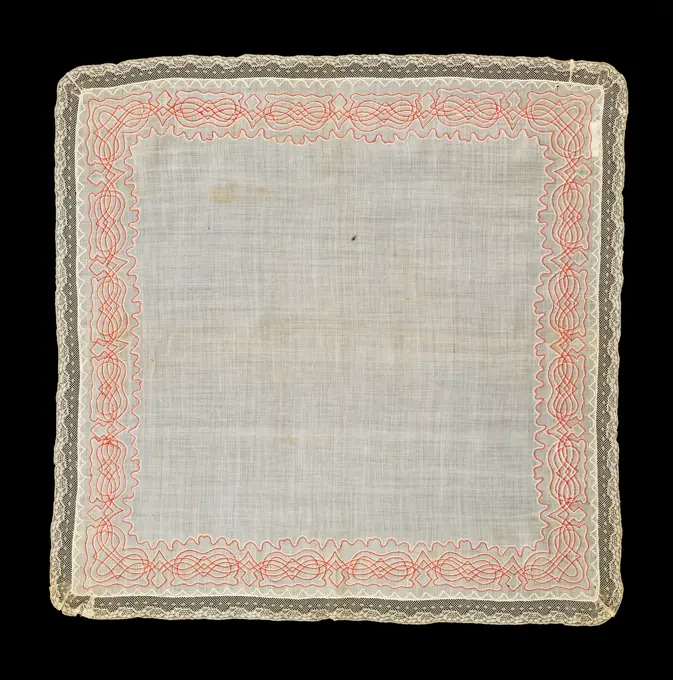
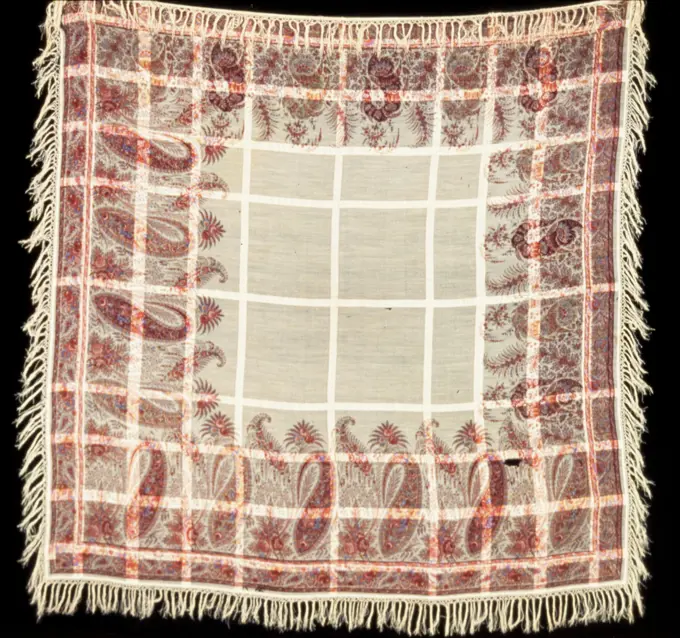
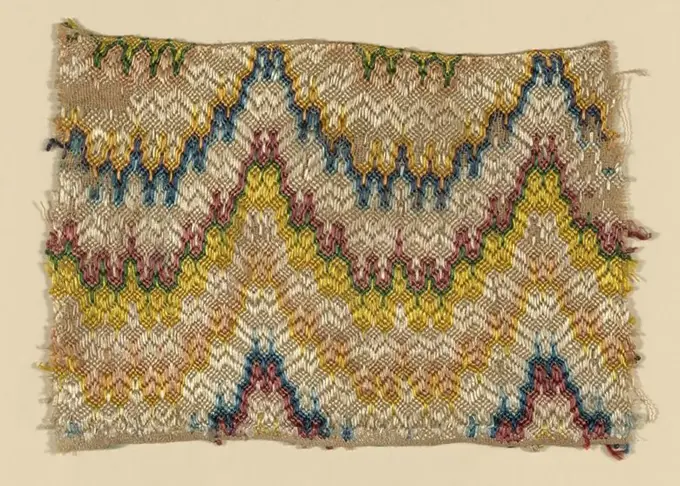
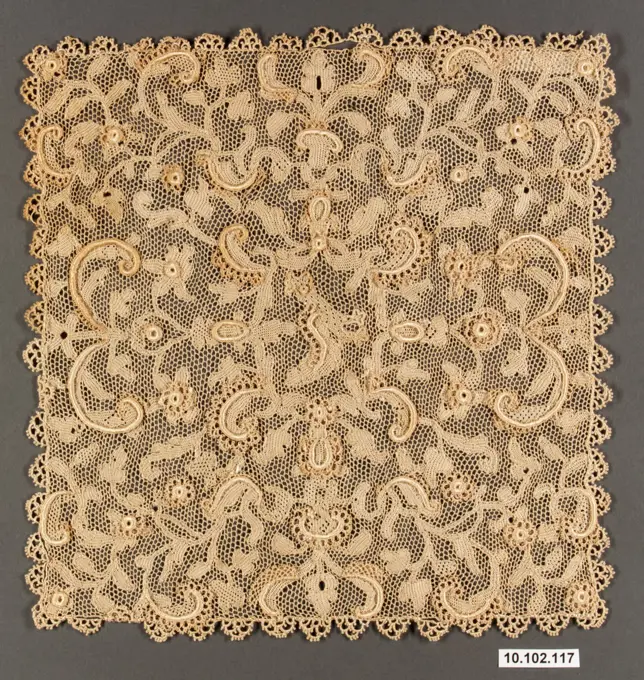
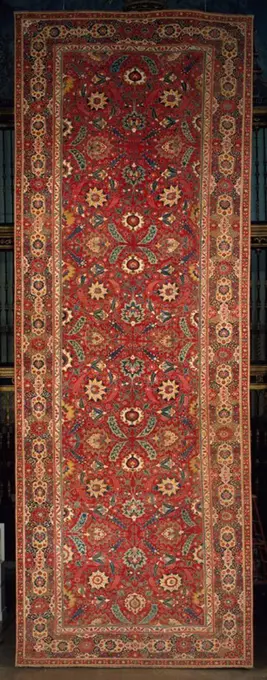
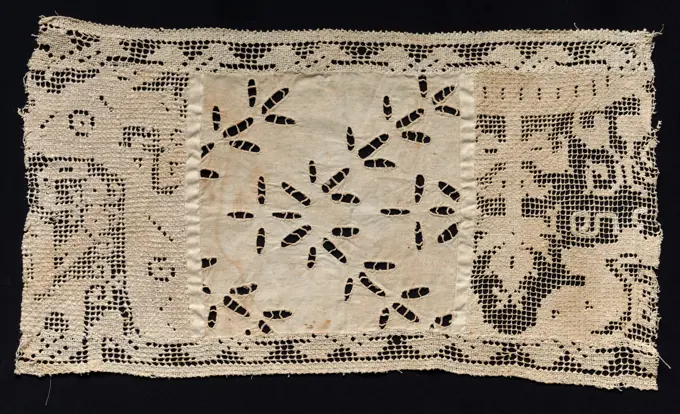
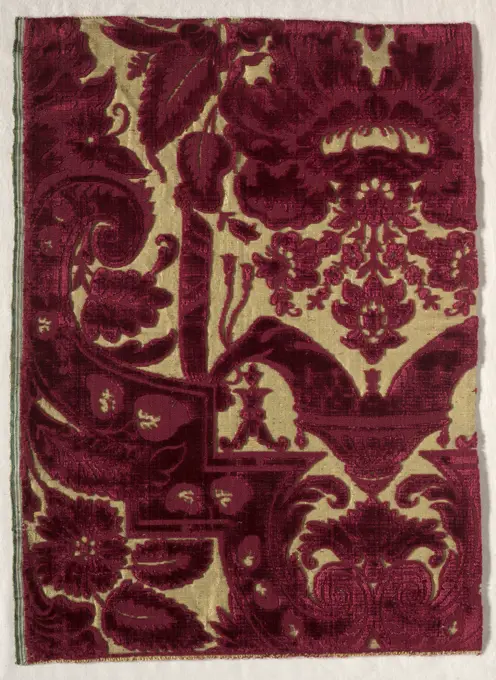
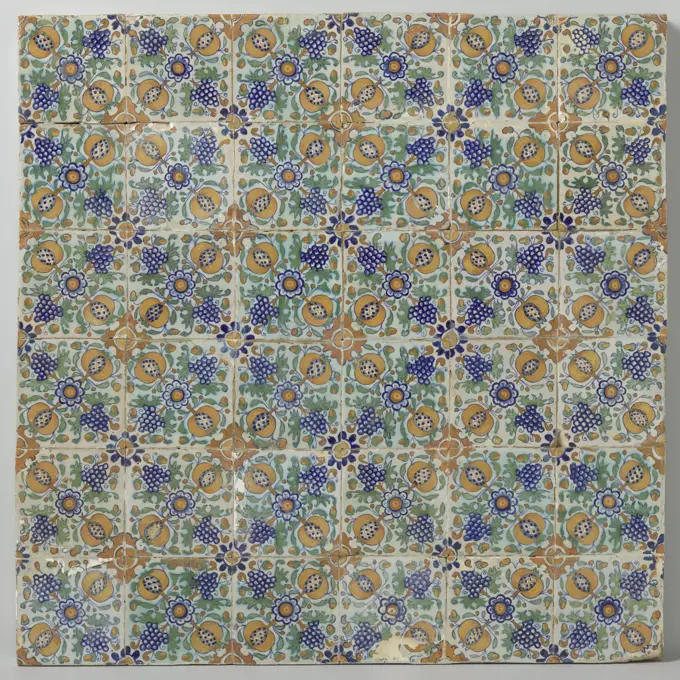
Textile (France); Produced by Oberkampf & Cie. (France); cotton; Warp x Weft: 25.5 x 41 cm (10 1/16 x 16 1/8 in.) Repeat H x W (straight): 24.8 x 17.5 cm (9 3/4 x 6 7/8 in.)Pair of Cuffs, 20th century, 9 7/8 x 8 7/8in. (25.1 x 22.5cm), Cotton, China, 20th centuryShawl; Patola, Patan. Shawl with geometric motifs.Apron 19th century Greek. Apron 85896Skirt Border, 1600s - 1700s. Greece, Dodecanese Islands, Karpathos Island, 17th-18th century. Embroidery: silk on linen tabby ground; overall: 53.4 x 42.6 cm (21 x 16 3/4 in.).Sampler 19th century Mexican. Sampler 228177Baby Carrier, 25 x 63 in. (63.5 x 160.02 cm) (without ties), Cotton; needlework, ChinaDETALLE DE UNA ALFOMBRA TIPO ALMIRANTE. Location: INSTITUTO VALENCIA DE DON JUAN-COLECCION. MADRID. SPANIEN.Womans Sarung (Sora Langi)Shawl, 19th century, L.77-1/2 x W.78 in., Wool; woven fabric, India, 19th centuryHead covering, 1945-1975, 18 7/8 x 15 1/2 in. (47.94 x 39.37 cm) (irregular, without fringe), Silk; needlework, Laos, 20th centurySkirt, c. 1950, 30 7/8 x 22 1/4 in. (78.42 x 56.52 cm), Cotton, Myanmar (Burma), 20th centuryFragment, 19th century, 7 7/8 x 6 1/4 in. (20.02 x 15.88 cm), Cotton; embroidery, Czechoslovakia, 19th centuryBand 16th century Italian. Band 214971Fragment of a woven fabric, anonymous, c. 1580 - c. 1620 Fragment red seals with pattern in the colors red, yellow and blue, locally frocated with strips of gold paper. Dessin: double eagle, injured pest talks with small leaves and stylized lotus flowers. Macao (possibly) Silk. Lamé (textiles) Fragment red seals with pattern in the colors red, yellow and blue, locally frocated with strips of gold paper. Dessin: double eagle, injured pest talks with small leaves and stylized lotus flowers. Macao (possibly) Silk. Lamé (textiles)Embroidered Strip, early 1900s. India, 20th century. Embroidery; cotton, metal and silk thread, sequins; overall: 83.8 x 25.4 cm (33 x 10 in.).Shoulder Defense (Sode) late 14th-early 16th century Japanese. Shoulder Defense (Sode). Japanese. late 14th-early 16th century. Iron, leather, lacquer, silk, copper, gold. Armor Parts-Arms & ShouldersSampler 1837 British. Sampler. British. 1837. Wool and silk on linen canvas. Textiles-EmbroideredTextile Fragment Paracas. , ca. 300 B.C.E. Camelid (alpaca) fiber, 3 1/2 x 9 3/4 in. (8.9 x 24.8 cm).   Arts of the Americas ca. 300 B.C.E.Silk Fragment, 14th-15th century. Spain, Islamic period, 14th-15th century. Lampas weave, silk; average: 31.1 x 30.5 cm (12 1/4 x 12 in.).Length 18th century German. Length 229786Chair session with embroidery ,, 1500 - 1600 Wine red velvet seat seat with application boarding. On the short sides are truncated branches wounded by a ribbon. Side branches with acanthus leaf and ending in lily, acorns, corn citizen and grape bunches. Application of gold brocade embroidered with green and yellow side. Along the contours, gold and blue cord slack. Silver thread sheets. ItalyFrance velvet (fabric weave). silver thread Wine red velvet seat seat with application boarding. On the short sides are truncated branches wounded by a ribbon. Side branches with acanthus leaf and ending in lily, acorns, corn citizen and grape bunches. Application of gold brocade embroidered with green and yellow side. Along the contours, gold and blue cord slack. Silver thread sheets. ItalyFrance velvet (fabric weave). silver threadLaces, 16th century. Needle, reticella and filet cloth lace, embroidered in cutwork (Punto Tagliato), cm 86 x 83, approximately 1585.Burse, Medium: wool, linen Technique: counted stitch embroidery (bargello), Zigzag pattern of white, pinks and greens, with a cross of a different pattern in the middle., Europe, 19th century, costume & accessories, BurseSquare palms scarf with only one corner pattern between two field edges with floral motifs, anonymous, c. 1825 - c. 1845 Square palm shell of woven wool and silk with a yellowish white stock on which one corner pattern between two field edges in light blue, cobalt blue, red, beige; Sparable with white cotton (). Austria (possibly) whole: Wool. whole: Silk. Decoration: Cotton (textile) Square palm shell of woven wool and silk with a yellowish white stock on which one corner pattern between two field edges in light blue, cobalt blue, red, beige; Sparable with white cotton (). Austria (possibly) whole: Wool. whole: Silk. Decoration: Cotton (textile)Carpet;  18th century (1701-00-00-1800-00-00);Genius, Mieczysław (1852-1920), gift (provenance), flowers, plant ornaments, equipment and home equipmentWedding Bed Cover, c. 1900, 61 x 34 1/2 in. (154.94 x 87.6 cm), Cotton, China, 19th-20th centuryFragment (Germany); linenMerklap with double grapes, alphabet and text all around. Year 1773. ,, 1773 Merklap with embroidery. The embroidery has the year 1773, a double grape ross, the alphabet and text all around. The pattern is symmetrical and partially mirror image. The lap is connected by an intermediate creature to a brand patch with invnr. BK-KOG-2672. Netherlands linen (material). silk embroidering Merklap with embroidery. The embroidery has the year 1773, a double grape ross, the alphabet and text all around. The pattern is symmetrical and partially mirror image. The lap is connected by an intermediate creature to a brand patch with invnr. BK-KOG-2672. Netherlands linen (material). silk embroideringCoverlet fragment, Medium: wool, cotton Technique: compound weave, Coverley fragment of dark indigo blue wool and undyed cotton showing abstract Cross of Tennessee” pattern., USA, late 18th-early 19th century, woven textiles, Coverlet fragmentSquare (Iran)Back Band, 41-15/16 x 9-3/8 in. (106.5 x 23.8 cm), Cotton, buttons, metallic thread, TibetPanel, Medium: silk and wool on cotton Technique: embroidered on plain weave, Rectangular panel with three symmetrical floral repeats embroidered in green, blue, red, white and black silk and wool on a predominantly orange embroidered ground in a variety of surface stitches., Balkans, 18th-19th century, embroidery & stitching, PanelBorder fragment, Medium: linen, silk, metal-wrapped silk Technique: silk embroidery using back and montenegrin cross stitch; metal thread embroidery using chain, detached buttonhole or looping (sometimes padded), satin, overcast loops, and whipped stem stitches on plain weave, Border fragment of natural linen embroidered in gold, silver and colored silks, mainly red and green. Design shows a symmetrical arrangement of curving vines and flowers with two wyverns confronted. Between the wyverns is a small eagle with wings spread and head in profile. Within a frame made by the vine tendrils is a ring-like shape with the cypher 'SN' or 'CN.' Much of the gold is laid down over the colored silk producing a luminous quality., Italy or Germany, 16th century, embroidery & stitching, Border fragmentThrone back part. unknown, authorBelt, 20th century, 70 x 12 1/2 in. (177.8 x 31.8 cm) (excluding fringe), Rayon brocade, Morocco, 20th centurySquare Shawl Made 1840-1845 India. Wool, double interlocking twill tapestry weave, woven in rectangular sections; attached Harlequin tabs pieced twill weaves; embroidered in back and satin stitches; laid work and couching; warp fringe .SARONG  Battered plant and zoomorphic patterns in cream, rust and navy blue unknownFragment Made 1601-1700 Italy. Linen, plain weave; embroidered with silk floss in flame stitch .Handkerchief 1860-80 Russian This object is from the collection of Natalia de Shabelsky (1841-1905), a Russian noblewoman compelled to preserve what she perceived as the vanishing folk art traditions of her native country. Traveling extensively throughout Great Russia, she collected many fine examples of textile art of the wealthy peasant class. From the 1870s until moving to France in 1902, Shabelsky amassed a large collection of intricately embroidered hand-woven household textiles and opulent festival garments with rich decoration and elaborate motifs. The Brooklyn Museum holdings include many fine examples including the majority of the garments. Portions of Shabelsky's collection are also housed at the Museum of Fine Arts, Boston, the Cleveland Art Museum, and the Russian Museum of Ethnography in St. Petersburg.. Handkerchief 157580Hanging (Mawa Jawa)Shawl, 19th century, 72 x 72 in. (182.88 x 182.9 cm), Silk; printed, France, 19th centurySarape with Serrated Diamond Pattern 1880-1900 New Mexico. Wool, plain weave with lazy lines and dovetail tapestry weave; twined warp ends and selvages; looped and knotted corner tassels . Navajo (Diné)Towel border 1800-1850 Russian. Towel border 173354Fabric piece, 20th century, 66 1/2 x 37 3/4 in. (168.9 x 95.9 cm), Cotton, silk, Guatemala, 20th centuryShawl 1860s European. Shawl 84635Baby Carrier, 20th century, 42 x 64in. (106.7 x 162.6cm), Cotton, silk, metallic sequins, embroidery, China, 20th centuryPiece 19th century Japan. Piece 72076Iket (Headcloth) Made 1801-1900 Java. Cotton, batik dyed .Fragment. Italy. Date: 1601-1700. Dimensions: 18.2 x 24.7 cm (7 1/4 x 9 3/4 in.). Linen, plain weave; embroidered with silk floss in a variation of flame stitch (Irish stitch). Origin: Italy. Museum: The Chicago Art Institute, Chicago, USA.Square (one of four) 18th century Italian. Square (one of four). Italian. 18th century. Needle lace. Textiles-LacesRug;  2. PO. 18th century (1751-00-00-1800-00-00);rugChalice cover 18th century Southern German. Chalice cover 216387Traditional carpet with pattern, exhibition in the State History Museum, interior view, Bishkek, Kyrgyzstan, AsiaVestment (For a First-degree Taoist Priest). Zheng Wuda (Hui- chang, active c. 1793); Han-Chinese; China. Date: 1793. Dimensions: 139.6 × 156.2 cm (55 × 61 1/2 in.). Silk, warp-float faced 7:1 satin weave; embroidered with silk, peacock-feather-wrapped silk, gold-leaf-over-lacquered-paper-strip-wrapped silk, and gold-leaf-over-lacquered paper in surface satin stitches; laid work and couching; appliquéd with forms of silk, plain weaves between two layers of paper, some with gold- and silver-leaf-over-lacquered paper, and embroidered with silk in chain and knot stitches, needle looping with laid thread and darned bars, and silk and gold-leaf-over-lacquered-paper-strip-wrapped silk, laid work and couching; edged with cotton, plain weave; lined with ramie, plain weave; metal button. Origin: China. Museum: The Chicago Art Institute, Chicago, USA.Sampler 19th century British. Sampler. British. 19th century. Silk on cotton. Textiles-EmbroideredConciliate belt;  2nd half 18th century (1751-00-00-1800-00-00);Altar Frontal Made 1601-1700 Italy. Linen, plain weave; embroidered in silk .Carpet. Dimensions: Rug: L. 363 1/2 in (923.3 cm)W. 133 1/2 in. (339.1 cm)Wt. 186 lbs. (84.4 kg)Storage Tube: L. 156 in. (396.2 cm)Diam. 11 in. (27.9 cm). Date: mid-17th century.The characteristic red of Indian carpets emphasizes the graceful yet dynamic design of the trellis pattern connecting the floral and serrated motifs. The serrated leaves enclosing a palmette, as well as the medallions and cartouches in the border, recall sixteenth century Herat carpets from Iran, but the exuberance of the floral forms and richness of color confirm an Indian origin. Museum: Metropolitan Museum of Art, New York, USA.Trimming, Medium: silk, Trimming fragment with an incomplete design of a single yellow flower on a red ground., France, ca. 1830, trimmings, TrimmingChasuble with embroidered corphrey unknownPillow, 19th century, 45 1/4 x 20 x 5 3/4 in. (114.94 x 50.8 x 14.61 cm) (without pompons), Wool, cotton, animal hide, down, Sweden, 19th centuryFragment Made 1601-1700 Italy. .Fragment of Band with Vegetal Motifs, 17th century. Spain, 17th century. Needle lace, filet/lacis (knotted ground and darned in two directions) and cutwork insertion; bleached linen (est.); overall: 31.5 x 55.6 cm (12 3/8 x 21 7/8 in.). Textiles often incorporate multiple needlework techniques within a single piece. The insert in the center of this piece of lace is made using the cutwork technique. In cutwork, portions of the textile ground, such as a linen or cotton cloth, are cut away and threads are removed to create holes. The edges of the hole are then reinforced with embroidery and a pattern of needle lace can be created within the perimeter. Rather than adding to the cloth to create a design, the craftsperson removes threads to fabricate a pattern. The cutwork may have been inserted to replace a damaged area.Piece 16th century Italian or German. Piece 226399Abstract patterned fabric with gilt thread used for a cushionSampler (Mexico); Embroidered by Benita Hernandes; cotton embroidery on linen foundationPiece 16th-17th century Italian, possibly Perugia. Piece 217394Cushion Cover, 1800s. Italy, 19th century. Velvet; silk and metallic thread; overall: 104.1 x 59.1 cm (41 x 23 1/4 in.).Velvet, 1600s - 1700s. France, 17th-18th century. Velvet; overall: 50.2 x 36.2 cm (19 3/4 x 14 1/4 in.).Cover (Italy); linenIndian ornamentFragment. Dimensions: 11 13/16 in. high 11 7/16 in. wide (30 cm high 29 cm wide). Date: 3rd-4th century. Museum: Metropolitan Museum of Art, New York, USA.Piece 18th-19th century Japan. Piece. Japan. 18th-19th century. Silk. Textiles-WovenManiple, embroidered, red unknownPiece 18th-19th century Japan. Piece. Japan. 18th-19th century. Silk. Textiles-WovenField of thirty -six tiles with rosettes, grape bunches and pomegranates, anonymous, c. 1600 - c. 1625 Field of thirty -six tiles (6 x 6) each with a multicolored (blue, green, yellow and orange) painted performance. In the middle a rosette surrounded by grape bunches and pomegranates. In the corners, a quarter rosette. Netherlands earthenware majolica Field of thirty -six tiles (6 x 6) each with a multicolored (blue, green, yellow and orange) painted performance. In the middle a rosette surrounded by grape bunches and pomegranates. In the corners, a quarter rosette. Netherlands earthenware majolicaPiece 18th century Japan. Piece 65916Germantown Eyedazzler Rug Made 1800-1890 Arizona. Brillant color and bold overall patterns with serrated diamonds, chevrons, and interlocking lines are hallmarks of the ìEye Dazzlerî style of Navajo (DinÈ) textiles produced from the late-19th to the early-20th century. Earlier Navajo blankets featured broad horizontal bands of indigo blue, white, dark brown, black, and red, subsequently enhanced with the addition of small diamonds, bars, and squares. The lively approach of Eye Dazzler weaving developed out of a period of major cultural and artistic transformation beginning in 1864 when the U.S. government forcefully resettled the Navajo in the Bosque Redondo reservation. From the early 1860s, the Navajo received brightly colored commercial yarns as part of their U.S. government annuities. The new Eye Dazzler weaving also incorporated design elements characteristic of Mexican Saltillo blankets, which featured serrated diamonds and zigzag lines.The creator of this blanket fully utilized Handkerchief (Switzerland); cottonTrimming fragment, Medium: silk Technique: woven, Leaves and berries in yellow and white in red., France, ca. 1830, woven textiles, Trimming fragmentTextile (China); cottonSegusha, early 20th century, 25 x 24 1/2 in. (63.5 x 62.23 cm) (irregular shape), Silk, cotton; cross-stitch, Uzbekistan, 20th centuryFragment. Probably central coast, Peru. Date: 1000-1476. Dimensions: 13.7 x 64.8 cm (5 3/8 x 25 1/2 in.). Cotton and wool (camelid), slit and single interlocking tapestry weave with supplementary weft slit closure; edged with cotton, plain weave and with cotton, cross-knit loop stitches. Origin: Peru. Museum: The Chicago Art Institute, Chicago, USA.Star-Shaped Tile dated A.H. 663/ A.D. 1265. Star-Shaped Tile 444458Sampler (Netherlands); silk embroidery on linen foundationTrimming (France); silkHip Wrapper (Tuppotiya) late 18th century India (for Indonesian market). Hip Wrapper (Tuppotiya) 75912Charles Roadman, Coverlet, c 1940 CoverletRug, 20th century, 102 x 138 in. (259.08 x 350.52 cm), Wool on cotton warp, Iran, 20th centurySash orHeadband.  Artist: UnknownTrimming Fragment (France); silkTowel or Napkin Made 1801-1900 Turkey. embroidered .Shawl, Medium: wool Technique: embroidered and pieced Label: wool embroidery on wool twill weave, pieced together, Square multicolored shawl with a patchwork border of small fringed pieces has a small black star-shape in the center., India for European market, 19th century, costume & accessories, ShawlTurkish carpet for sale in the Grand Bazaar, Istanbul, TurkeyBand (Italy); linenCeremonial bath mat (or wrap), early 20th century, 68 x 42 in. (172.72 x 106.68 cm), Silk, Turkey, 20th centuryInsignia Badge for a First Rank Officer, late 19th century, 12 1/4 x 12 1/2in. (31.1 x 31.8cm), Silk, China, 19th centuryAntependium;  XIXW. (1801-00-00-1900-00-00);Fragment. Japan. Date: 1775-1800. Dimensions: 18.1 x 23.9 cm (7 1/8 x 9 3/8 in) (per old card). Plain compound twill, silk and gilt paper; 3 strips to m.m. Origin: Japan. Museum: The Chicago Art Institute, Chicago, USA.