Antique Textile Fragments

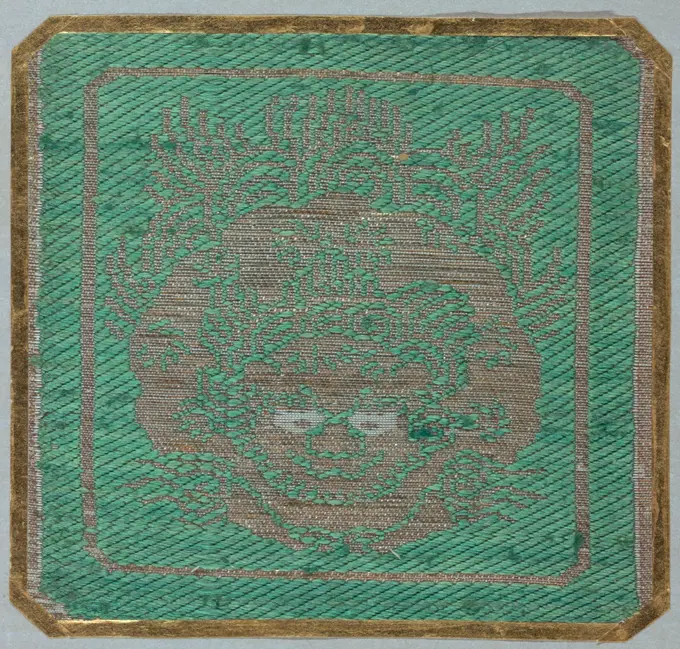
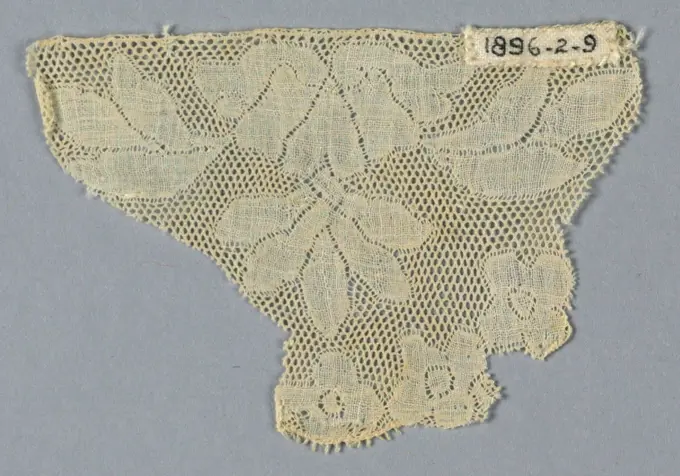
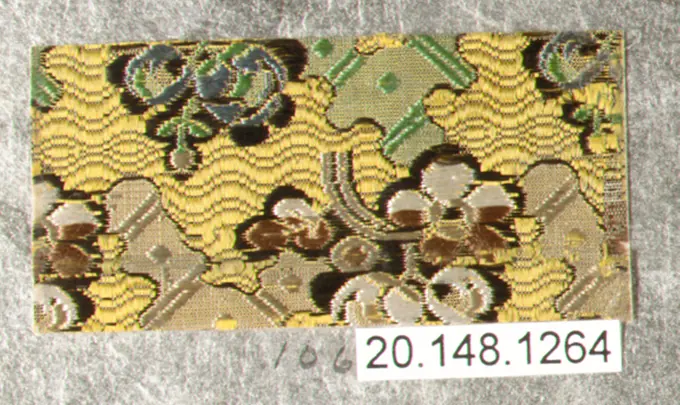
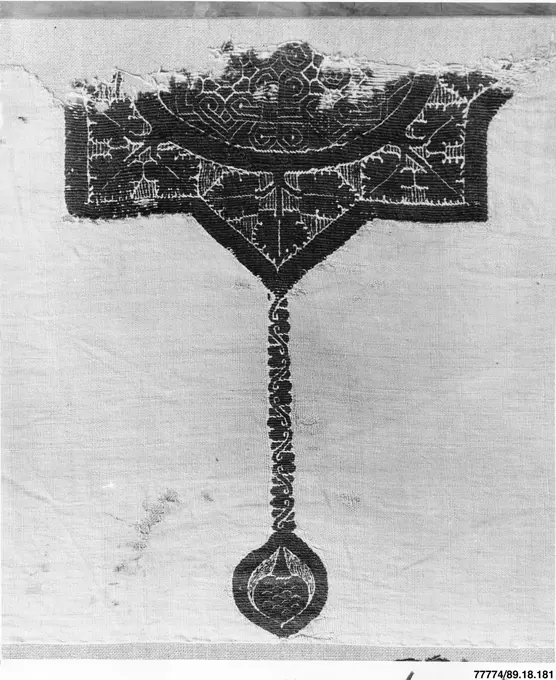
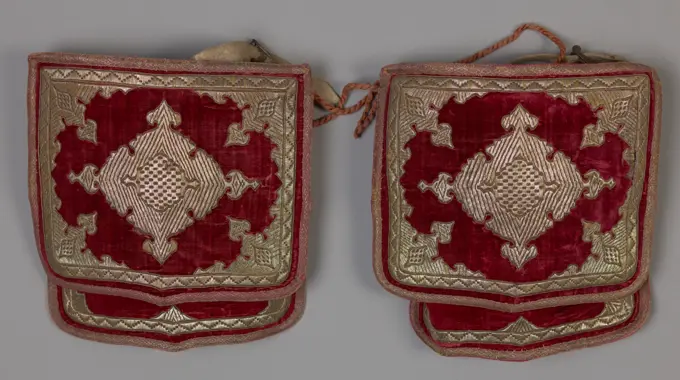
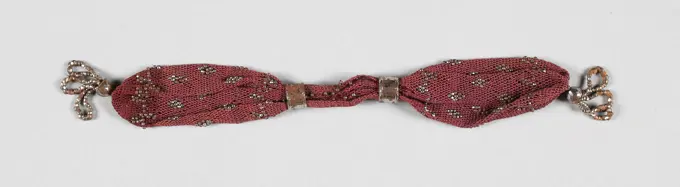
Historical textile fragments showcasing intricate embroidery and weaving techniques, highlighting patterns of flowers and geometric shapes.
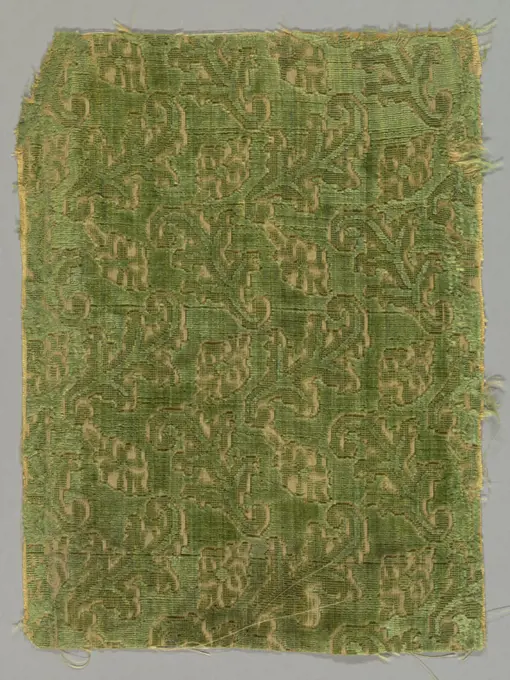
Fragments, Medium: silk Technique: cut and uncut supplementary warp pile (velvet) in a plain weave foundation, Green cut and uncut velvet in a diagonal arrangement of stylized leaves., Italy, 16th-17th century, woven textiles, Fragments
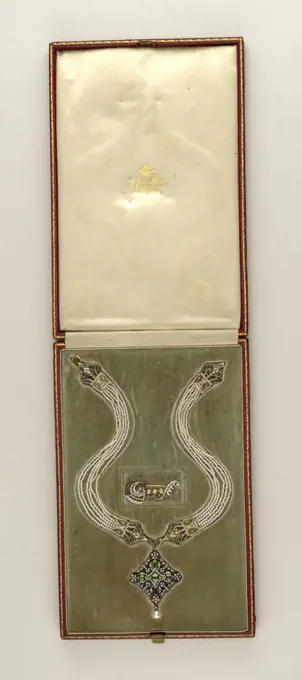
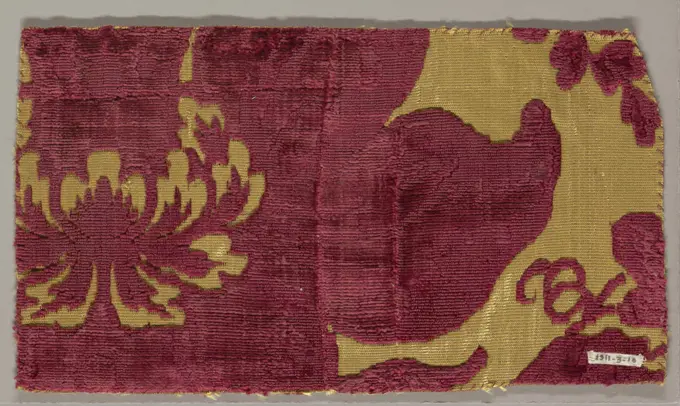
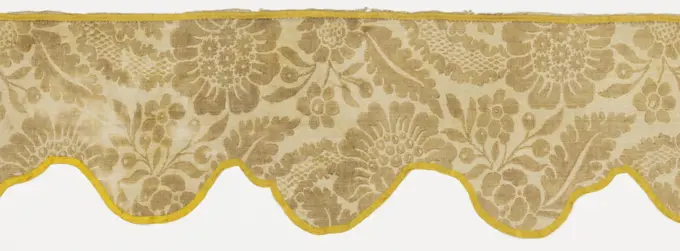
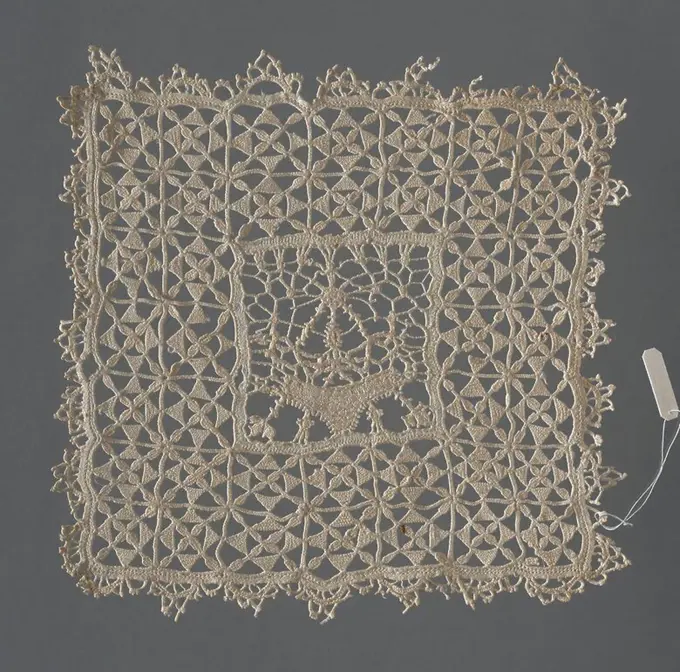
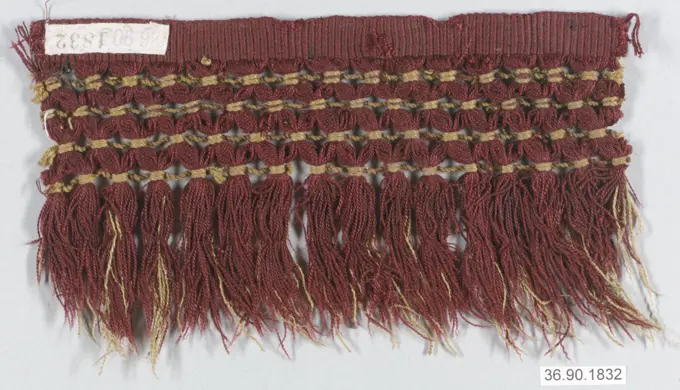
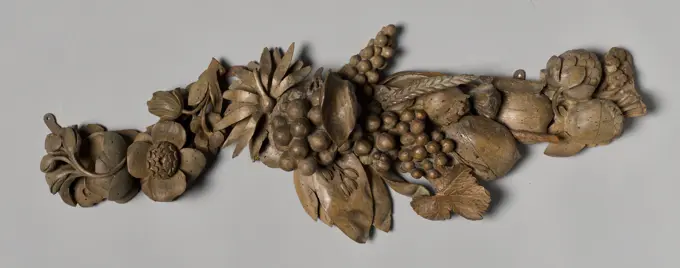
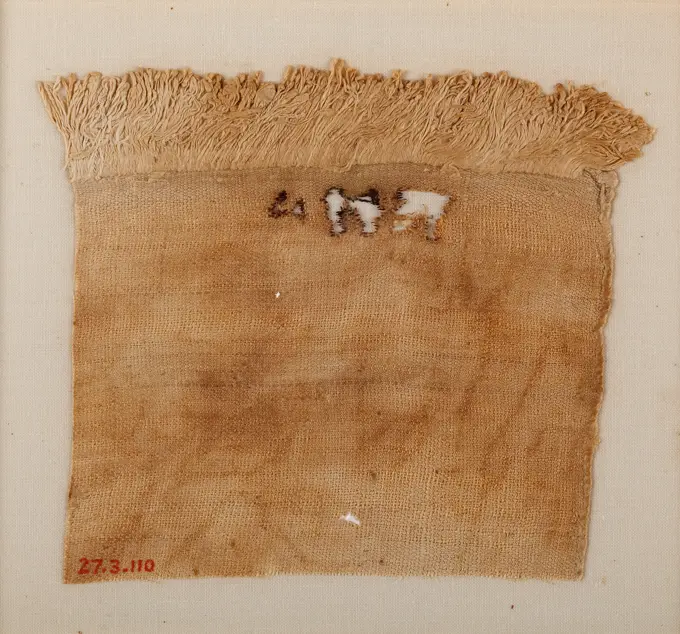
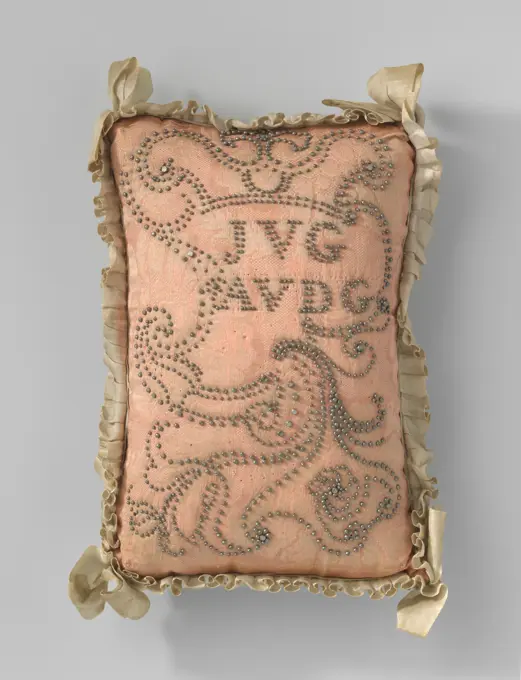
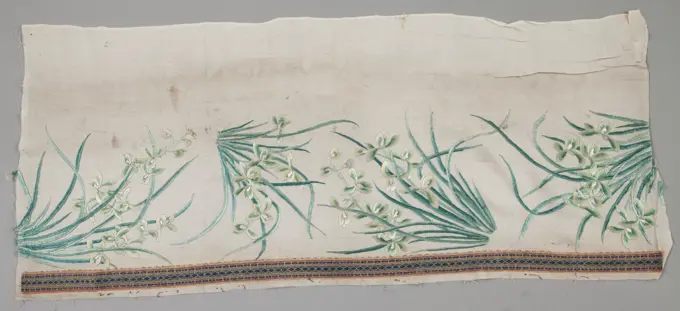
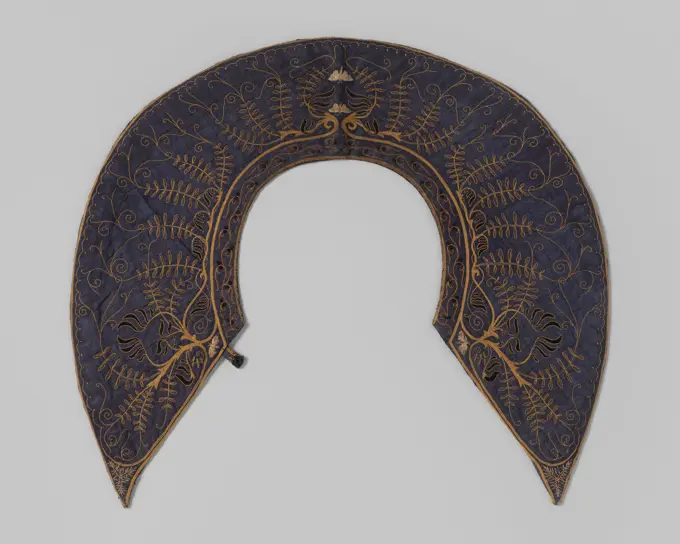
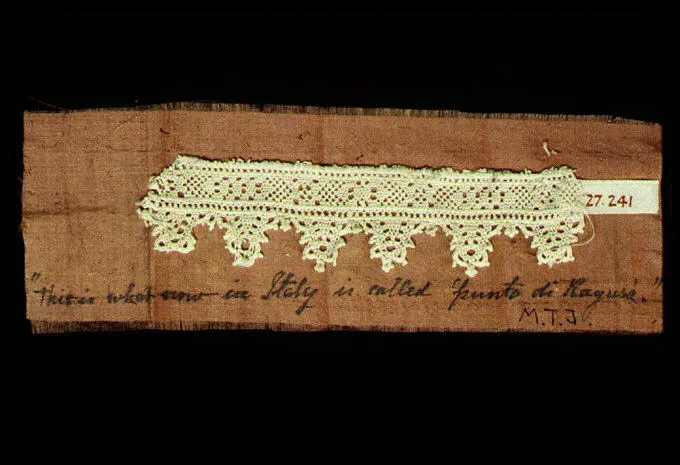
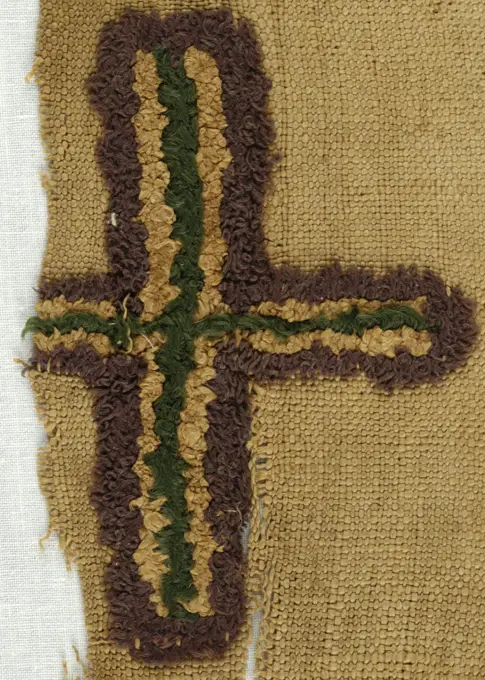
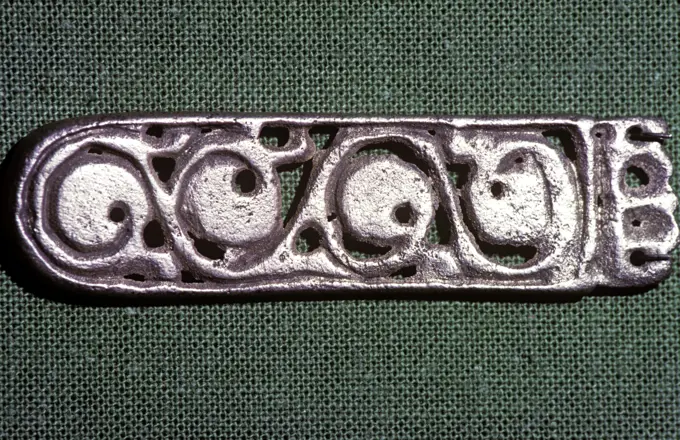
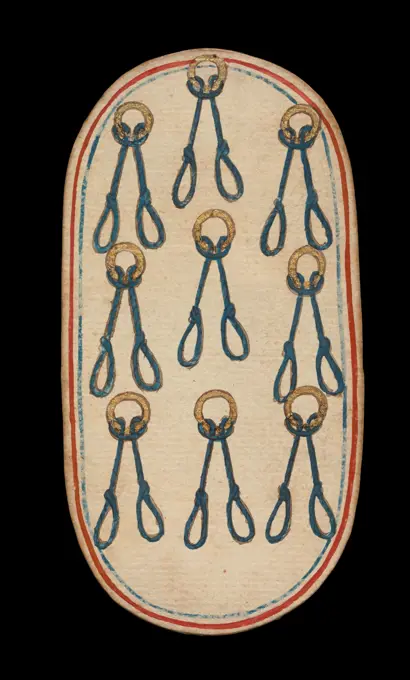
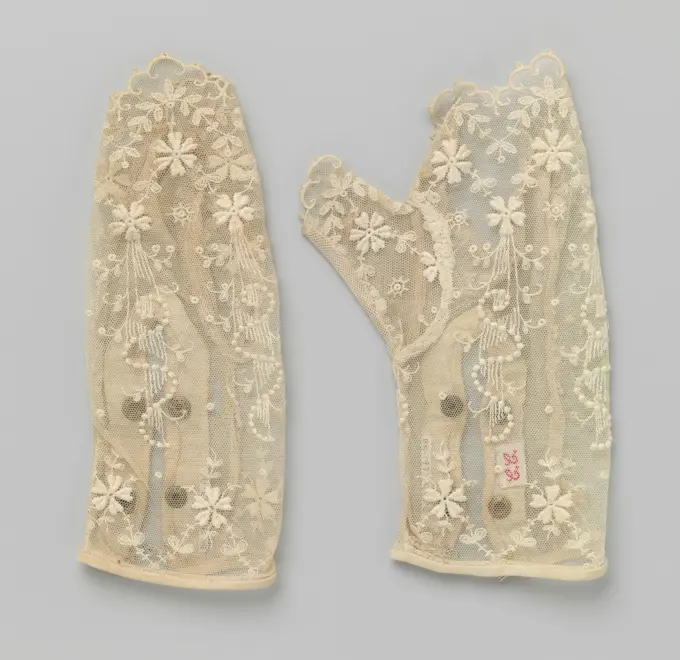
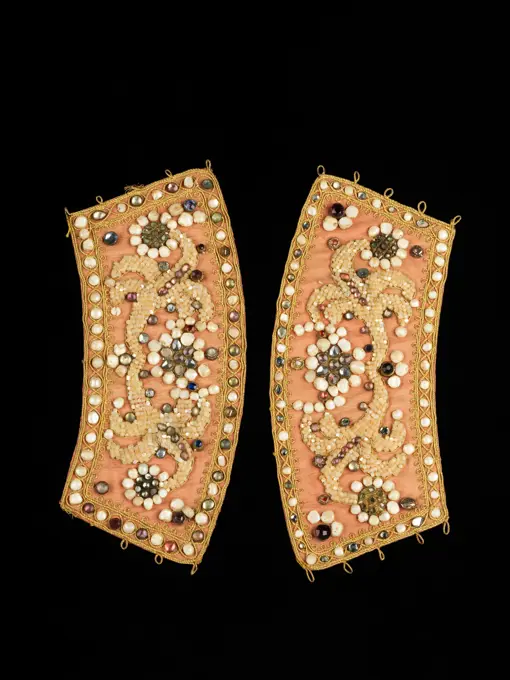
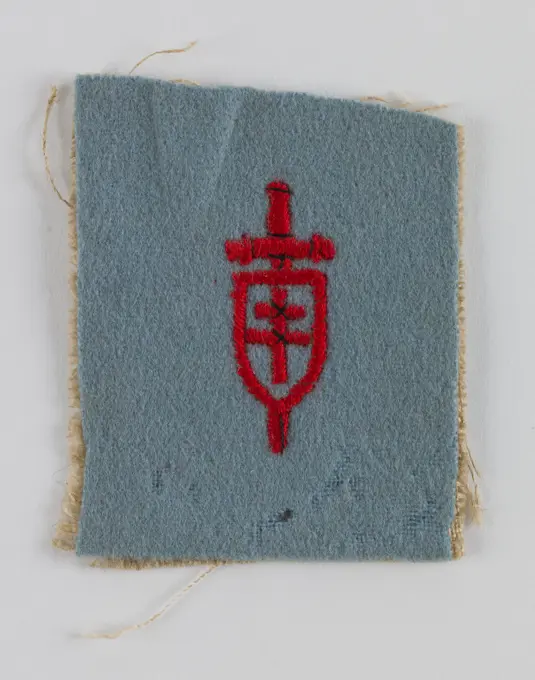
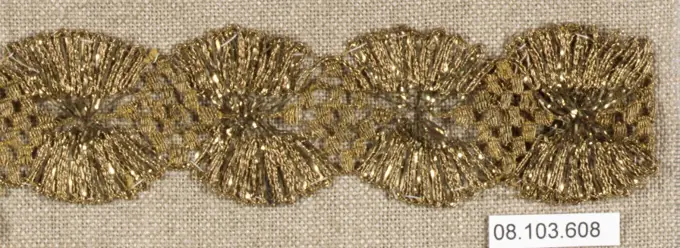
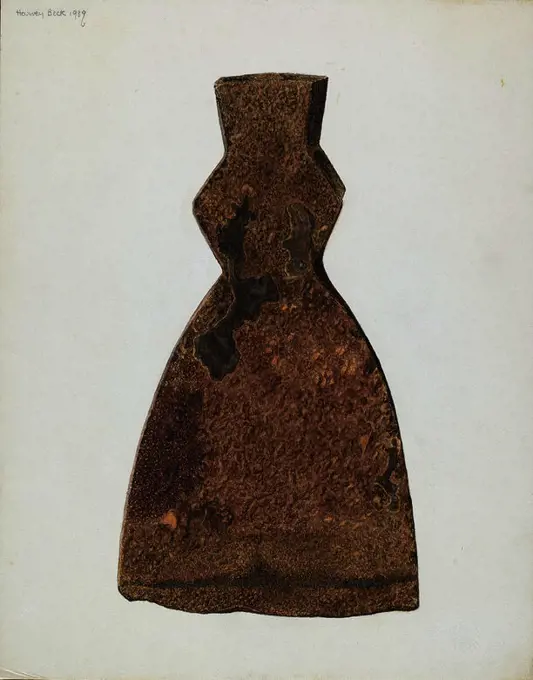
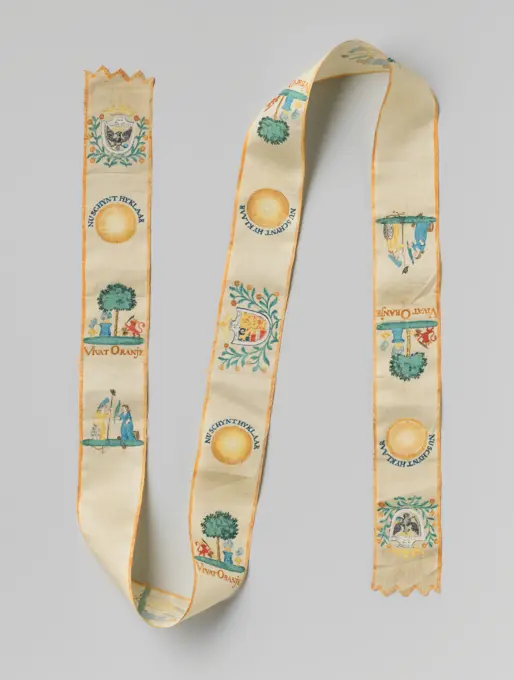
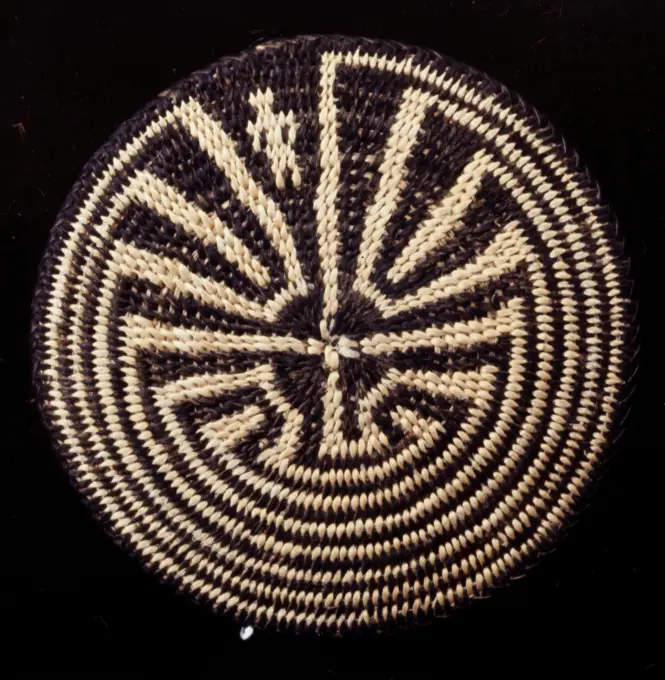
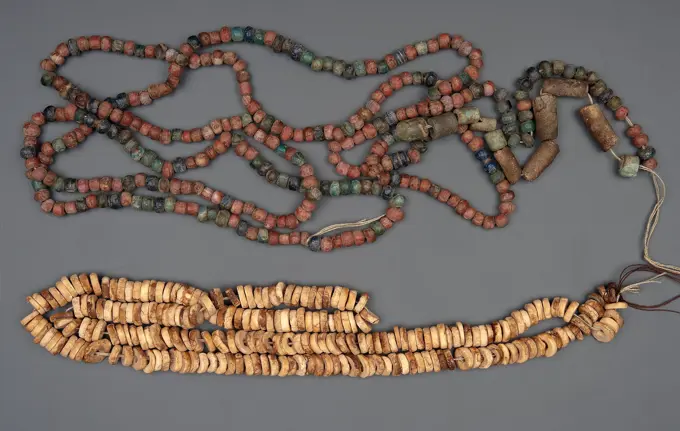
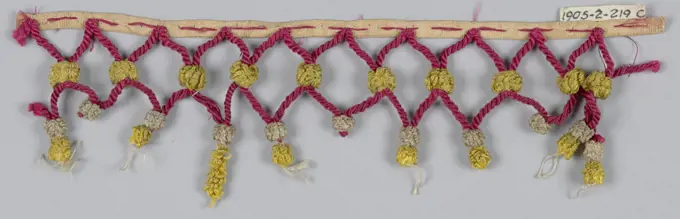
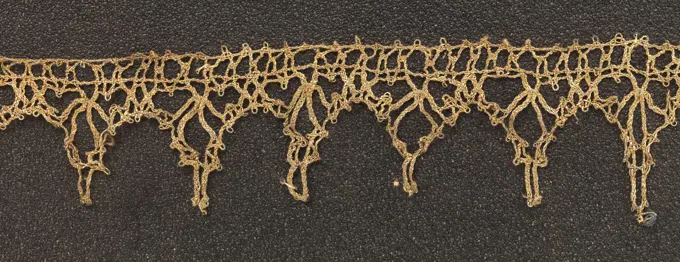
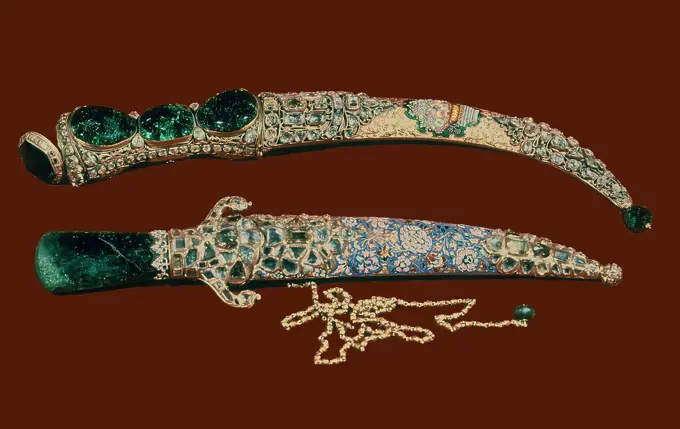
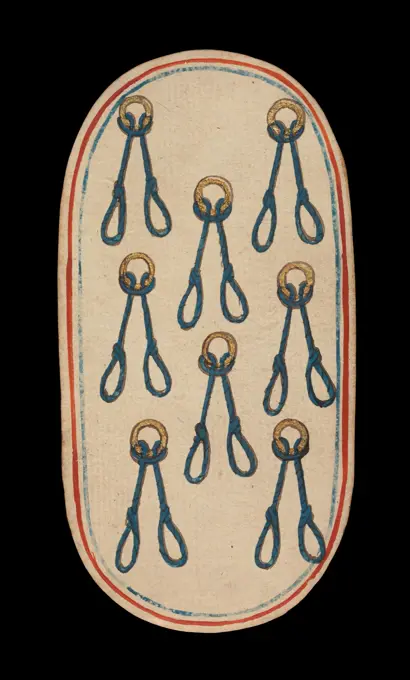
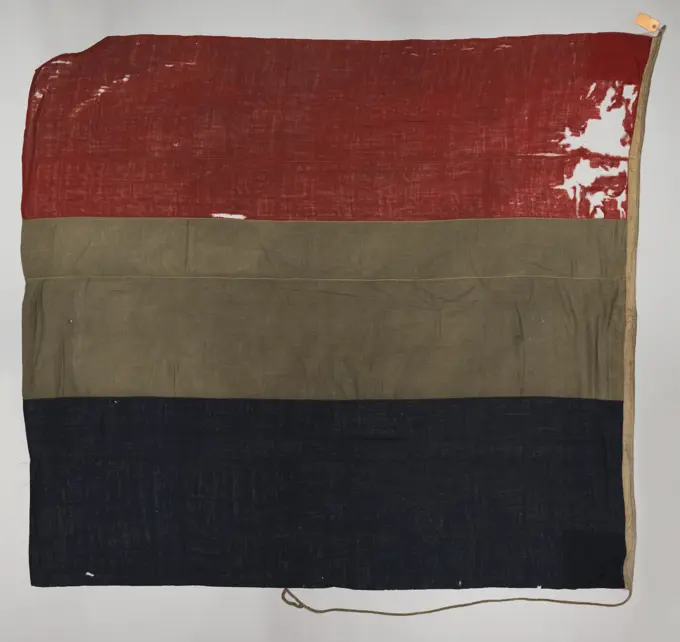
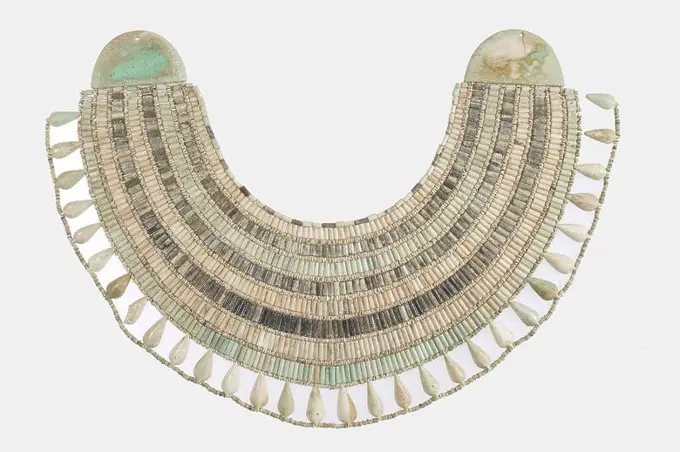
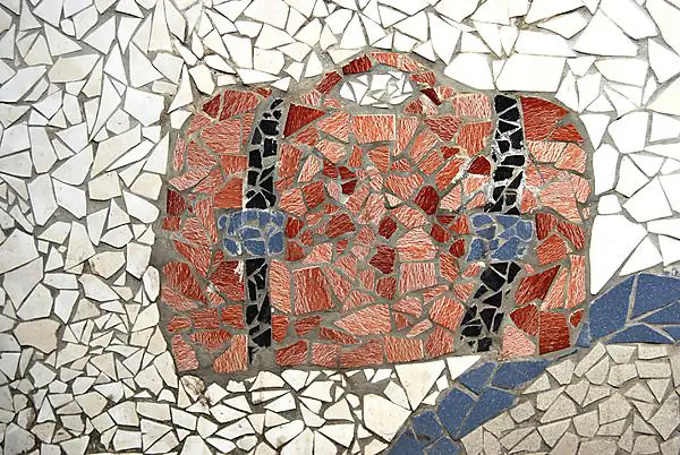
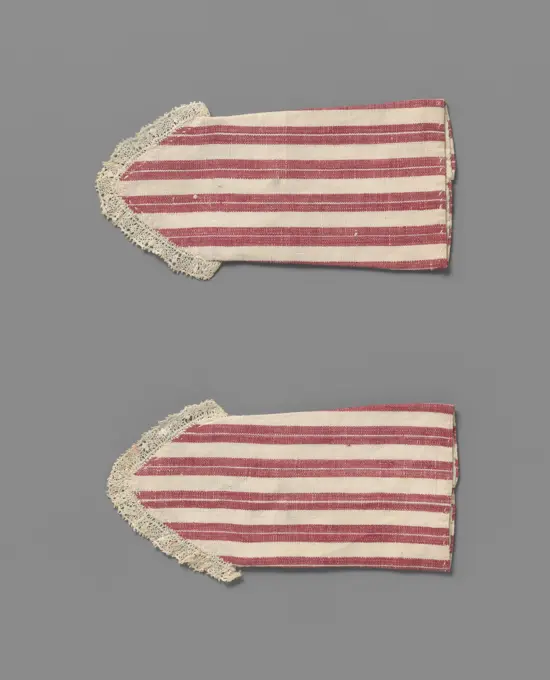
CombSamples (France); cotton, paperNecklace, Gold, enamel, diamonds, pearls, peridots, Gold and enamel necklace composed of three components: two sections of six-strands of seed pearls flanking a pendant with five peridots, diamonds, and drop pearl. Components can be separated to form two bracelets and stand-alone pendant., London, England, ca. 1890, jewelry, Decorative Arts, NecklacePiece 18th century China. Piece 71541Fragment, Medium: silk, metallic threads Technique: cut and uncut (ciselé) supplementary warp pile in a satin ground (velvet), Very incomplete design of a large-scale flower in cut and uncut red pile on a yellow ground. Originally with flat metallic strips that floated across the ground, but these are almost entirely gone., Spain, 17th century, woven textiles, FragmentValance, Medium: linen Technique: block printed on plain weave foundation, Valance with scalloped edges made of printed linen with a large scale floral pattern in brown. Bound with a yellow silk ribbon., England, 1750-1800, printed, dyed & painted textiles, ValanceChalice Cover. Italy. Date: 1601-1625. Dimensions: 17.8 x 17.5 cm (7 x 6 7/8 in.). Linen, needle lace worked on a plain weave cut and drawn thread grid; embroidered in antique hem, double hem, and overcast stitches. Origin: Italy. Museum: The Chicago Art Institute, Chicago, USA.Gold side strip, 1700 - 1800 Gold side strip.  . Gold side strip.  .Piece late 18th century British. Piece. British. late 18th century. Silk. Textiles-TrimmingsFringe British early 19th centuryBursa of yellow sides of embroidery, anonymous, c. 1800 - c. 1849 Bursa of yellow sides atine with embroidery in silk and in high relief with gold and silver wire with a representation of Greek cross. Bursa is part of a couple (BK-2008-176-A to E). Netherlands silk. silver thread. Bursa of yellow sides atine with embroidery in silk and in high relief with gold and silver wire with a representation of Greek cross. Bursa is part of a couple (BK-2008-176-A to E). Netherlands silk. silver thread.Piece 19th century China. Piece. China. 19th century. Silk. Qing dynasty (1644-1911). Textiles-WovenCarving from an Overmantel, c. 1675-1677. Grinling Gibbons (British, 1648-1721). Lindenwood; See cover record.Fragment (Band). Nazca; Peru, Probably south coast. Date: 700 AD-900 AD. Dimensions: 21.0 × 3.8 cm (8 1/4 × 1 1/2 in.). Origin: Peru. Museum: The Chicago Art Institute, Chicago, USA.Linen mark (Type XIII) Middle Kingdom ca. 1961-1917 B.C. View more. Linen mark (Type XIII). ca. 1961-1917 B.C.. Linen. Middle Kingdom. From Egypt, Upper Egypt, Thebes, Deir el-Bahri, Tomb MMA 507 (The Slain Soldiers), from body no. 4, MMA excavations, 1926-27. Dynasty 12BROCHE DE CINTURON VISIGODO DE CASTILTIERRA-SORIA. Location: INSTITUTO VALENCIA DE DON JUAN-COLECCION. MADRID. SPAIN.Textile Fragment, undetermined , 1000-1400., 5 1/8 x 5 7/16 in. (13 x 13.8 cm).   Arts of the Americas 1000-1400Fragment, Medium: wool Technique: plain weave with continuous supplementary weft patterning, The fragment has woven parts from sides with bird motifs in brown and light tan on a tan background. The center part shows the warp. Two loom sticks are attached. Fragment was found in Chillon Valley, near Hasierida San Miguel de Chocas. (b and c are 2 loom sticks), Peru, 900-1100, woven textiles, FragmentCarpet Fragment 18th century. Carpet Fragment 447722Birth cushion of rose silk damast and yellow satin with a pattern of pink carnations, in which a crown and initials jvg and avdg are punctured with headers of different thickness. Birth cushion of rose silk damast and yellow satin with a pattern of pink carnations, in which a crown and initials jvg and avdg are punctured with headers of different thickness.Sleeve of the outfit  on a cream background embroidered green clumps of orchids and sewn colorful tape unknownCap ca. 1835 American. Cap. American. ca. 1835. linenArmband -Collar of dark blue shantoeng, with silk embroidered, anonymous, c. 1900 - c. 1925 Cone -shaped collar of dark blue shantoeng, embroidered with ocher yellow and black silk. The embroidery has the shape of leaf vines and insects. The collar is fed with black (artificial) silk. Netherlands Embroidery: Silk. Cone -shaped collar of dark blue shantoeng, embroidered with ocher yellow and black silk. The embroidery has the shape of leaf vines and insects. The collar is fed with black (artificial) silk. Netherlands Embroidery: Silk.Trim, small fringe, 18th-19th century, 37 x 1/2 in. (93.98 x 1.27 cm), Passementerie, 18th-19th centuryMitaine van Zijde Groen, Beige and Witstragen, c. 1800 - c. 1820 Mitaine van Zijde, alternating green, beige and white in width. Set with paved black tulle. Zaanstreek whole: Silk. knitting Mitaine van Zijde, alternating green, beige and white in width. Set with paved black tulle. Zaanstreek whole: Silk. knittingFragment 17th century Italian. Fragment 230501Strip 16th century Italian. Strip 222127Fragment with Cross and Geometric Decoration Coptic. Fragment with Cross and Geometric Decoration, 5th-7th century C.E. Flax, wool, 6 1/4 x 10 in. (15.9 x 25.4 cm).   Egyptian, Classical, Ancient Near Eastern Art 5th-7th century C.E.Tangka Curtain 17th-18th century China. Tangka Curtain 70372Europe, Czech Republic. Silvered bronze strap end with scroll ornaments. 8C AD. Pobedim. Slovakia.Cap Crown Made 1725-1750 Brussels. Linen, bobbin part lace of a type known as Brussels with Droschel mesh ground .Terracotta fragment of a column-krater (bowl for mixing wine and water) 470-450 B.C. Greek, Attic Part of the neck of column krater with a band of pendant, linked lotus buds with dots in the interstices. Terracotta fragment of a column-krater (bowl for mixing wine and water). Greek, Attic. 470-450 B.C.. Terracotta; red-figure. Classical. VasesFringe (Spain); silkBand ca. 1550 Italian, Sicily. Band. Italian, Sicily. ca. 1550. Drawnwork, linen. Textiles-LacesBand 6th-8th century. Band 445805Napkin with flowers and garlands, anonymous, c. 1800 - c. 1810 Linnamast napkin with flowers and garlands. Midfield: A straight -up fine swinging branch, with cord and brush, is intersected by a wide wavy -leafed branch. Edges: three times a straight list, coordinously wound; The middle one is wide and with leaves wound, the outer narrow and with a fine flower branch overranks. Brabant (possibly) linen (material) damask Linnamast napkin with flowers and garlands. Midfield: A straight -up fine swinging branch, with cord and brush, is intersected by a wide wavy -leafed branch. Edges: three times a straight list, coordinously wound; The middle one is wide and with leaves wound, the outer narrow and with a fine flower branch overranks. Brabant (possibly) linen (material) damaskFragment (Japan)Fragment (France); linenTassel 17th century Italian. Tassel. Italian. 17th century. Linen. Textiles-Trimmings9 of Nooses, from The Cloisters Playing Cards ca. 1475-80 South Netherlandish The Cloisters set of fifty-two cards constitutes the only known complete deck of illuminated ordinary playing cards (as opposed to tarot cards) from the fifteenth century. There are four suits, each consisting of a king, queen, knave, and ten pip cards. The suit symbols, based on equipment associated with the hunt, are hunting horns, dog collars, hound tethers, and game nooses. The value of the pip cards is indicated by appropriate repetitions of the suit symbol. The figures, which appear to be based on Franco-Flemish models, were drawn in a bold, free, and engaging, if somewhat unrefined, hand. Their exaggerated and sometimes anachronistic costumes suggest a lampoon of extravagant Burgundian court fashions. Although some period card games are named, it is not known how they were played. Almost all card games did, however, involve some form of gambling. The condition of the set indicates that the cards were hFragment, Medium: Warp; S-spun linen. Wefts; S-spun linen, S-spun wool. Technique: Slit tapestry with supplementary weft wrapping., Seven lobed dark with leaf with small stem at the bottom., Egypt, 3rd-4th century, woven textiles, FragmentMitaine from machine -made side, with separate open thumb, creamy white, c. 1935 Right mitaine of mechanically manufactured creamy white side with flour and bulbs motif and a separate open thumb. At the wrist two art fabric press studs and a hook. West-Europa whole:. whole: Cotton (textile). whole: Right mitaine of mechanically manufactured creamy white side with flour and bulbs motif and a separate open thumb. At the wrist two art fabric press studs and a hook. West-Europa whole:. whole: Cotton (textile). whole:Cuffs fourth quarter 18th century Russian This object is from the collection of Natalia de Shabelsky (1841-1905), a Russian noblewoman compelled to preserve what she perceived as the vanishing folk art traditions of her native country. Traveling extensively throughout Great Russia, she collected many fine examples of textile art of the wealthy peasant class. From the 1870s until moving to France in 1902, Shabelsky amassed a large collection of intricately embroidered hand-woven household textiles and opulent festival garments with rich decoration and elaborate motifs. The Brooklyn Museum holdings include many fine examples including the majority of the garments. Portions of Shabelsky's collection are also housed at the Museum of Fine Arts, Boston, the Cleveland Art Museum, and the Russian Museum of Ethnography in St. Petersburg.. Cuffs 156479Band (Italy); silk, linen; Bequest of Richard Cranch Greenleaf in memory of his mother, Adeline Emma Greenleaf; 1962-56-1Border tile, flower decoration in blue, yellow and green, top and bottom blue and yellow, border tile wall tile tile material ceramics earthenware glaze, baked 2x glazed painted border tiles fragment flower decoration in blue yellow and green top and bottom edge blue and yellow.Carrying Cloth. Provincial Inca; Peru, south coast, Rio Grande Valley. Date: 1476-1532. Dimensions: 23.5 × 26 cm (9 1/4 × 10 1/4 in.). Double cloth; edges embroidered with wool yarn; braided straps at each corner ending in tassels. Origin: Peru. Museum: The Chicago Art Institute, Chicago, USA.H-Comb, 1500-1600. Made in France or England. Pinto Collection - Purchased from Edward H Pinto, 1965.. Richly carved boxwood combs were given as expensive love tokens in medieval times. The carver chose boxwood because it was the only wood with a sufficiently straight and dense grain to allow him to carve such fine teeth without splitting. He cut the teeth using a double-bladed saw called a stadda. A skilled craftsman with a steady hand could usually cut up to fifty teeth per inch.Anonymous. "Collet leg of the French Body of Volunteers of Free France". 1940-1945. General Leclerc Museum of Hauteclocque and the Liberation of Paris, Jean Moulin Museum. 158806-8Piece 18th century China. Piece 72146Frank van Goud, 1700 - 1900 Fringes of gold.  . Fringes of gold.  .Alfred Parys, Pie Plate, c 1939 Pie PlateGalloon 18th century French. Galloon 214105Ship Builder's Axe Head. Dated: 1939. Dimensions: overall: 27.9 x 21.9 cm (11 x 8 5/8 in.) Original IAD Object: overall: 12" long; cutting edge: 6 1/2" long; poll: 2 1/4" long; 1 3/8" wide. Medium: watercolor and graphite on paperboard. Museum: National Gallery of Art, Washington DC. Author: Harvey Beck.Oranjelint, anonymous, 1725 - 1750 ribbon (material) Ribbon with serrated ends and cent. The crowned coat of arms of Oranje-Nassau, surrounded by branches with orange apples. L. and r. of that, pair -wise: - Oranjeboom with left 2 objects from which smoke is circling and a standing lion with a sword and arrow bundle on the right. - Allegorical representation; On the left a standing helmeted woman with a stick a hat in one hand and a shield in the other hand. She is offered palm branch by a woman in a long robe. - Oranjeboom. - Oranjezon. - Crowned coat of arms. Netherlands silk printingBasketry Plaque, 20th century, 3 1/8 x 3 1/8 in. (7.94 x 7.94 cm), Plant fibers, United States, 20th century, Se-e-he Ki, or Elder Brother’s House is the name of these basket designs. Se-e-he was the hero in many old stories of the Akimel O’othom. At first he was held in great esteem, but later he lost his popularity and became a vagabond, often being pursued by his enemies after voyaging into the village from his home in the mountains. He would retreat, but the trails were so confusing that his enemies could never follow him. Carefully tracing the basket’s maze design will lead to his home in the center without crossing any lines.Piece 18th century Japan. Piece 72093Tile 1101-1300 Iran. Bands of inscription adorn monuments throughout the Islamic world. This tile was previously part of longer architectural panel containing pious inscriptions, undoubtedly attached to a religious monument. The script used here, thuluth, is known for its elongated horizontal extensions at the ends of letters. The thuluth script first emerged in the 11th century and has remained one of the most popular forms of calligraphy.. Fritware with moulded decoration, painted in blue under an opaque turquoise glaze . IslamicCollar of needle side, anonymous, c. 1775 - c. 1799 Round collar consisting of two strips made from the needle side: men's-Aalençon. Both strips have a pattern of loose leaves and a pendulum on which leaves and flowers. The motifs are connected to each other by a hexagonal founded Maas soil and a narrow part by quadrangular meshes. The Schulprand consists of wheels, and is trimmed with picots. Alençon (Possible) . Alençon Lace Round collar consisting of two strips made from the needle side: men's-Aalençon. Both strips have a pattern of loose leaves and a pendulum on which leaves and flowers. The motifs are connected to each other by a hexagonal founded Maas soil and a narrow part by quadrangular meshes. The Schulprand consists of wheels, and is trimmed with picots. Alençon (Possible) . Alençon LaceTextile Fragment 3rd-4th century. Textile Fragment 443386Cap streamers, Medium: linen Technique: bobbin lace, Brussels style, The design shows a dense, symmetric pattern of elaborate floral and foliated forms, rising from stylized vases., Belgium, 1700-1750, lace, Cap streamersPrzeszo Przyszoci unknownFragment of a Bowl 9th century. Fragment of a Bowl. 9th century. Earthenware; white slip with polychrome slip decoration under transparent glaze, incised. Excavated in Iran, Nishapur. Attributed to Iran, Nishapur. CeramicsNecklace;  IV-VI century; Postmeroic period (301-00-00-600-00-00);Collection of ancient Egypt, message, rescue excavations, IV Qatracta, SudanBourse. 1815. GAL1994.221.XFragment, Medium: silk and metal thread Technique: appliqué on velvet, Appliqué of cut-out shapes of red velvet and yellow silk with couched threads on a circle of white silk figured ground., 17th century, embroidery & stitching, FragmentSample early 19th century French. Sample 224713Fringe, Medium: silk Technique:, Heading of narrow tape with intervals of appliqued red cord. Cords are caught together in lozenge pattern and end in loops. Decorated with ornaments of yellow and cream-colored silks., France, late 18th century, trimmings, FringeStrip of Goudkant.strip or Gold Side.Four empty vintage tin signs on a white background Four empty vintage tin signs on a white background Copyright: xZoonar.com/BorisxZerwannx 14621779Sample (France)Buckle (Italy); silver, turquoisePUÑAL OTOMANO EN ORO ESMALTES Y PIEDRAS PRECIOSAS - SIGLO XVII. Location: PALACIO TOPKAPI-MUSEO. ISTANBUL. TURQUIA.8 of Nooses, from The Cloisters Playing Cards ca. 1475-80 South Netherlandish The Cloisters set of fifty-two cards constitutes the only known complete deck of illuminated ordinary playing cards (as opposed to tarot cards) from the fifteenth century. There are four suits, each consisting of a king, queen, knave, and ten pip cards. The suit symbols, based on equipment associated with the hunt, are hunting horns, dog collars, hound tethers, and game nooses. The value of the pip cards is indicated by appropriate repetitions of the suit symbol. The figures, which appear to be based on Franco-Flemish models, were drawn in a bold, free, and engaging, if somewhat unrefined, hand. Their exaggerated and sometimes anachronistic costumes suggest a lampoon of extravagant Burgundian court fashions. Although some period card games are named, it is not known how they were played. Almost all card games did, however, involve some form of gambling. The condition of the set indicates that the cards were hScheepsvlag, Anonymous, 1800 - 1890 flag. ship flag Three jobs Red-white-blue. Inscription: Ned Vl 4 «Kd. Netherlands woolFragment 16th-17th century Italian. Fragment 230411Textile Samples. Dated: c. 1939. Dimensions: overall: 28.5 x 21.3 cm (11 1/4 x 8 3/8 in.). Medium: watercolor and gouache on paperboard. Museum: National Gallery of Art, Washington DC. Author: Paul Kelly.Broad collar. Dimensions: l. 26 cm (10 1/4 in); w. 38 cm (14 15/16 in). Dynasty: Dynasty 12-13. Date: ca. 1981-1640 B.C.. Museum: Metropolitan Museum of Art, New York, USA.Tea cozy -Suitcase, mosaic from broken tiles at a station, Dorsten, Ruhrgebiet area, North Rhine-Westphalia, Germany, EuropeFrank Nelson, Doily, c 1939 DoilyKalasha symbool, anonymous, 1890 - 1910 Indian miniature. drawing A vase with an eye on both sides and left and right of the vase a flower on an orange-red surface, framed by a yellow piping in black framework lines and a white piping with an ornamental edge of flowers and leaves, around it an orange-red Rand, partly cut away. Gujarat paper brushMitaine of red and white striped linen, lined, anonymous, c. 1700 - c. 1800 Mitaine of red white striped linen, at the top a narrow spool side with crochet and eye closure, for baby or child. Zaanstreek whole: Linen (Material). edge:. Closure: Metal bobbin lace Mitaine of red white striped linen, at the top a narrow spool side with crochet and eye closure, for baby or child. Zaanstreek whole: Linen (Material). edge:. Closure: Metal bobbin laceCobbler's Willkom (Welcome Glass). Germany, probably Franconia, 1698. Furnishings; Serviceware. Glass, enamel, giltTrimming Fragment (France); silkMatch Container, 8 5/16 x 6 3/4 x 1 3/4 in. (21.11 x 17.15 x 4.45 cm) (without dangles), Beads, cotton, sequins, United StatesPair of tassels 17th century Italian. Pair of tassels. Italian. 17th century. Linen. Textiles-TrimmingsTextile Fragment 5th century Coptic. Textile Fragment 475269Case (Inrō) with Design of Parrot on Swing (obverse) Basket of Pomegranates (reverse) 18th-19th century Japan. Case (Inrō) with Design of Parrot on Swing (obverse) Basket of Pomegranates (reverse) 58689Ribbon (Russia); silk, metallic threadA porcelain dish by Maria Lebedeva, 1920. Artist: Maria Vasilievna Lebedeva (1895-1942)