Antique Timepieces

A collection of historical pocket watches and ornate clocks, showcasing intricate designs and craftsmanship in metallic finishes.

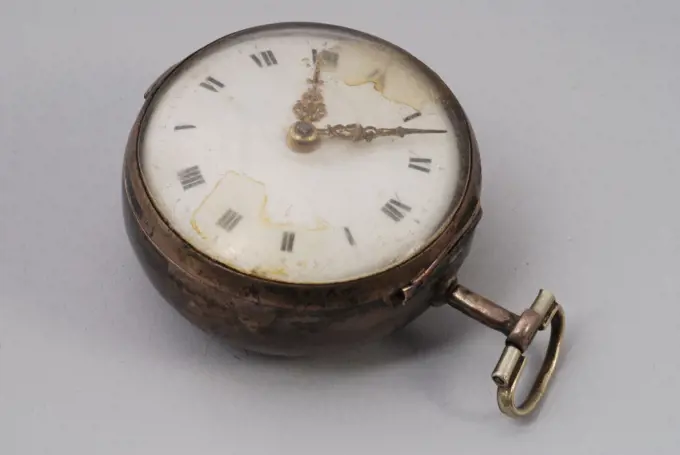
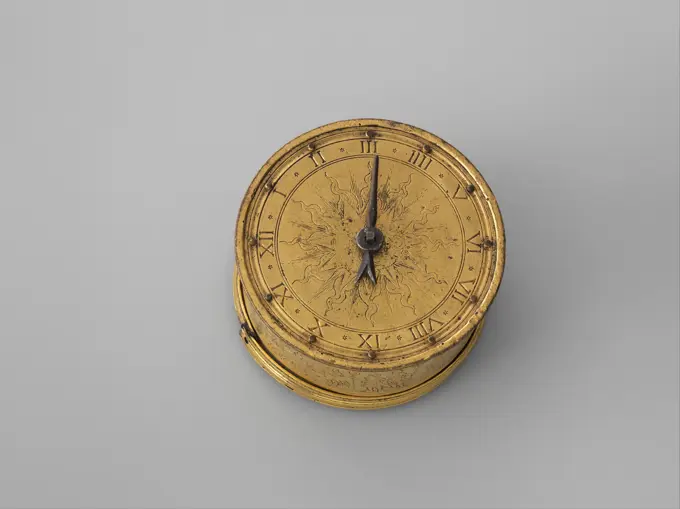
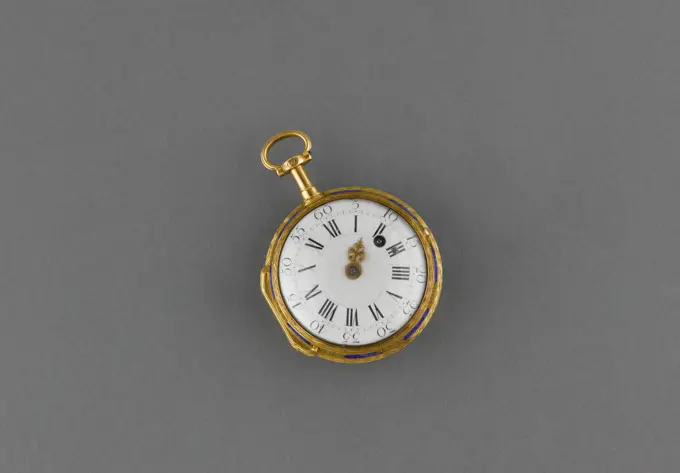
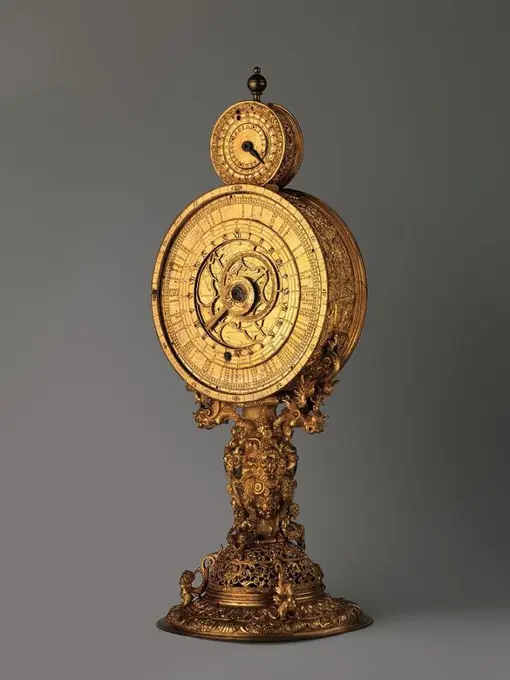
Watch of gilded copper, J. Worke (Possible), c. 1775 - c. 1800 Gilded copper watch with an enamelled dial. The two cupboard bottoms are made of glass, the edges with leaf work engraved. London copper (metal). glass gilding Gilded copper watch with an enamelled dial. The two cupboard bottoms are made of glass, the edges with leaf work engraved. London copper (metal). glass gilding
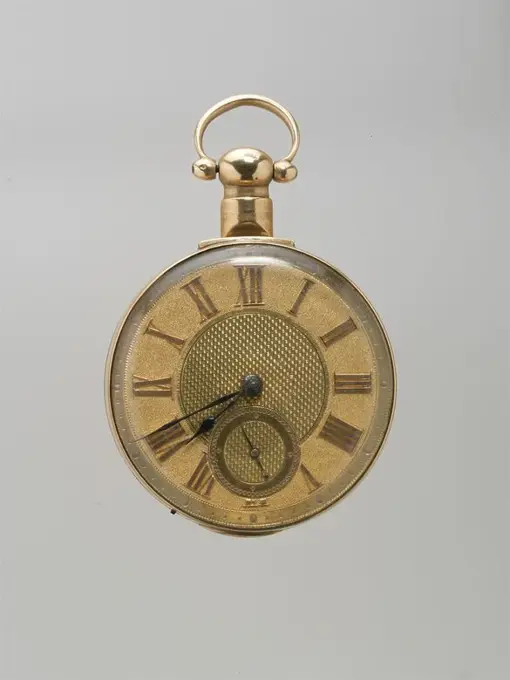
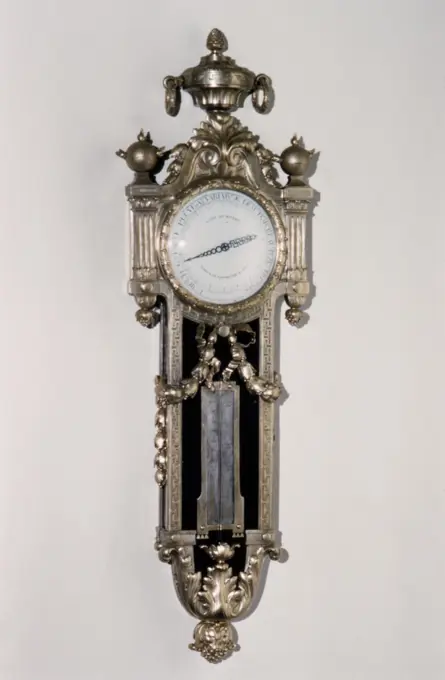
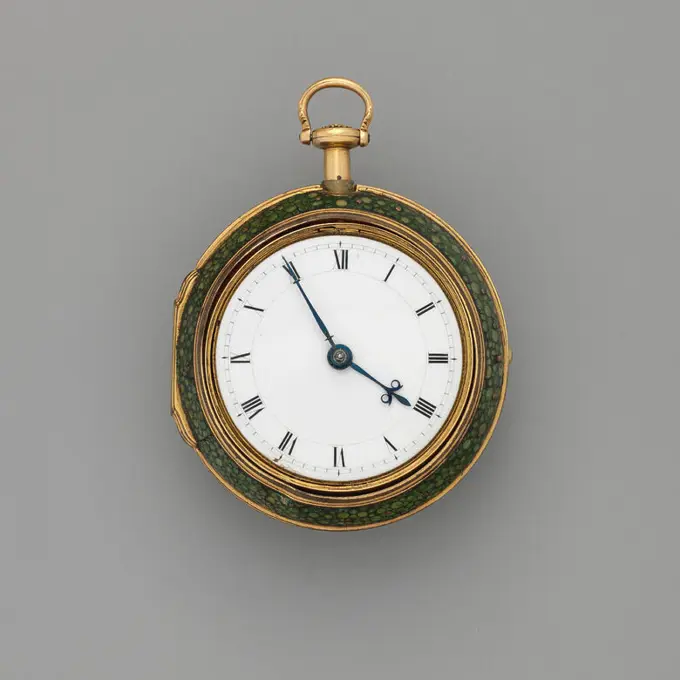
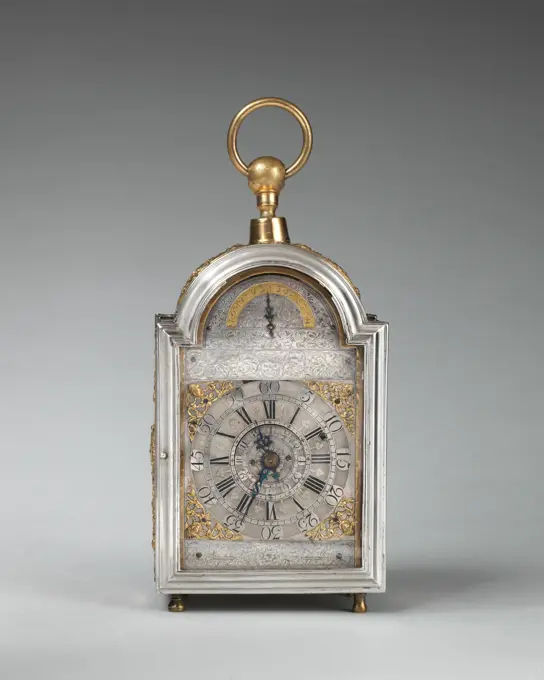
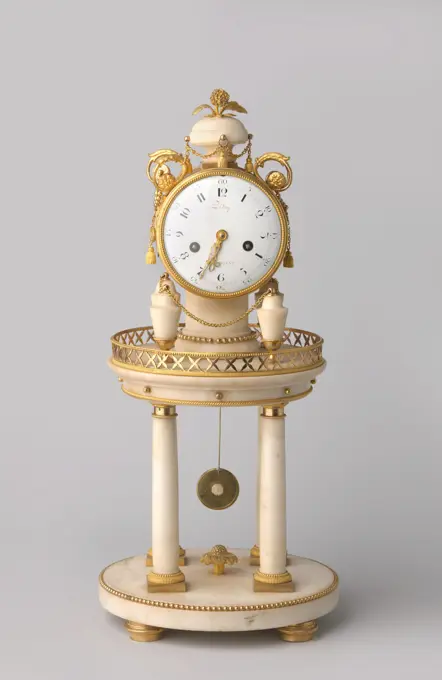
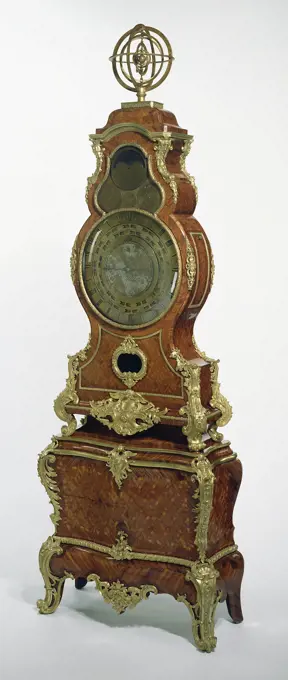
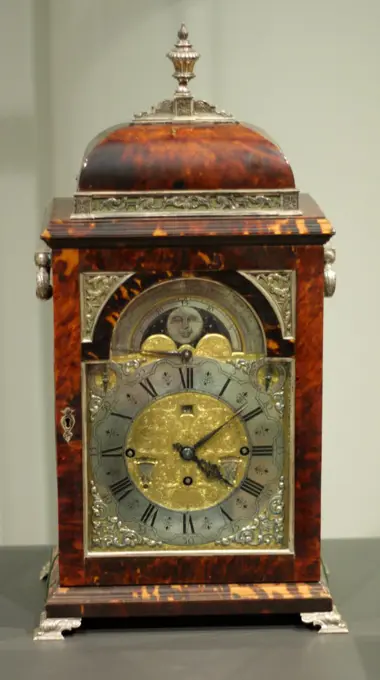
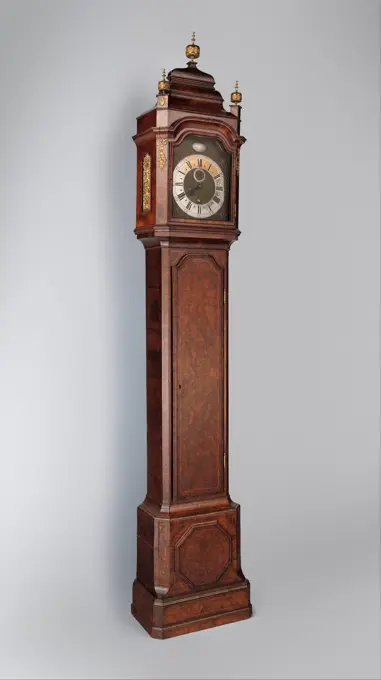
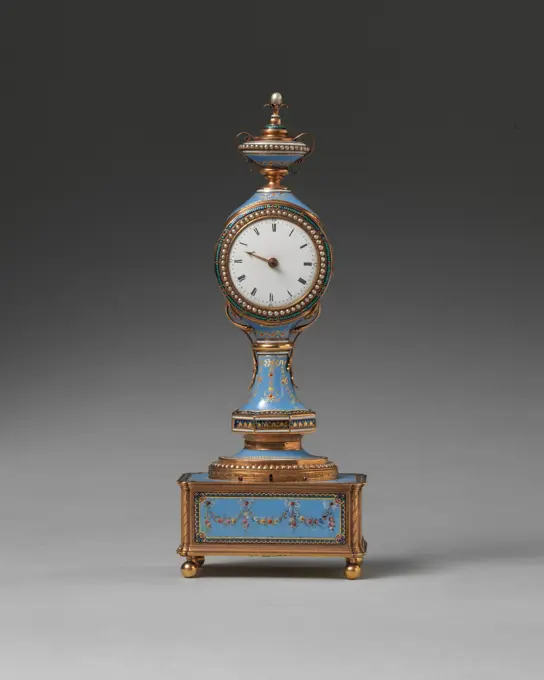
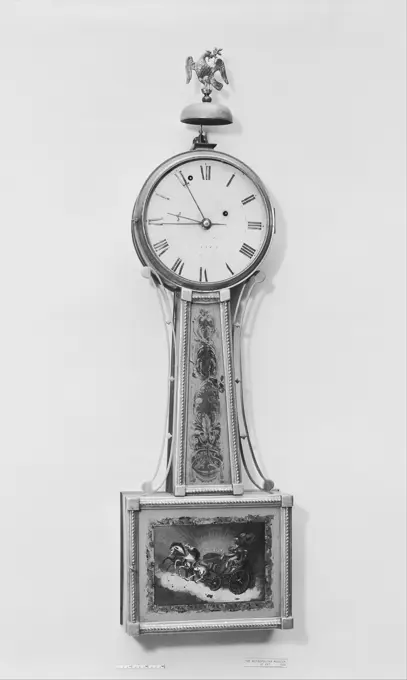
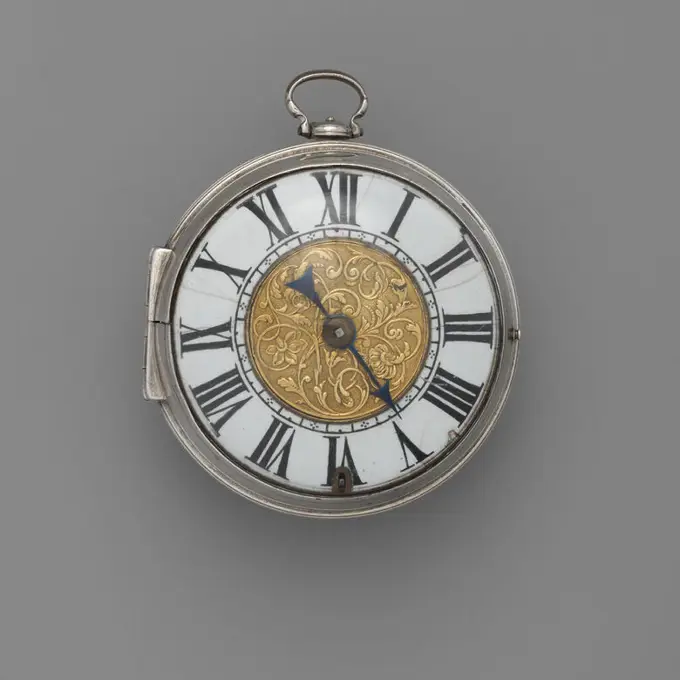
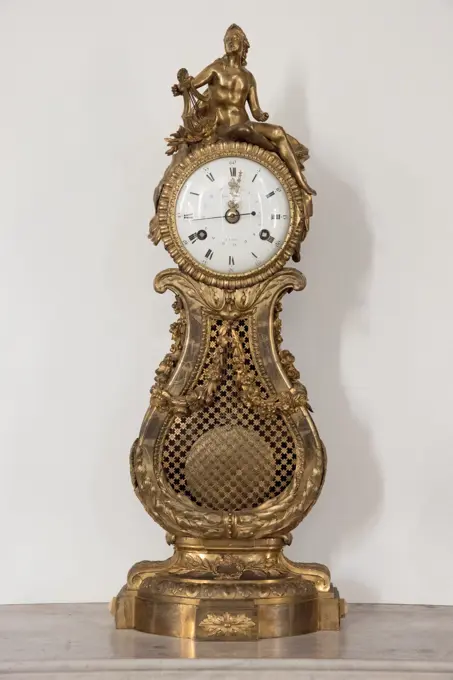
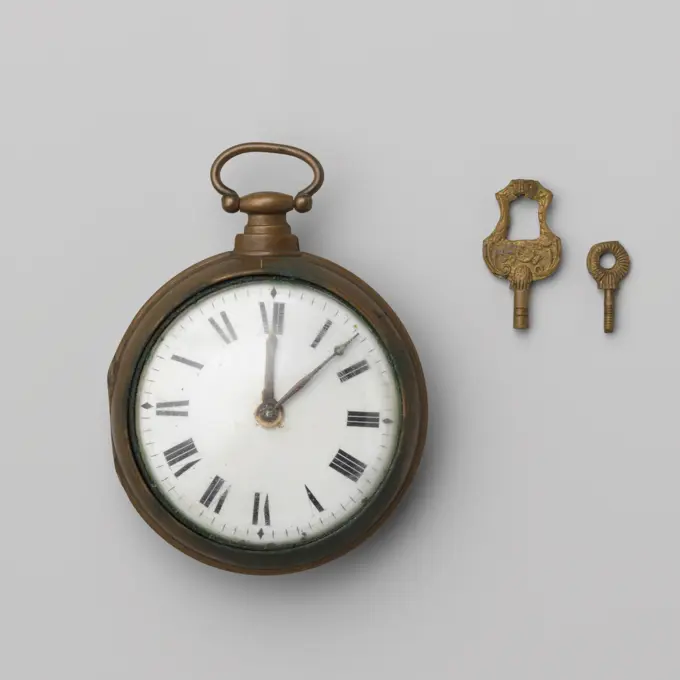
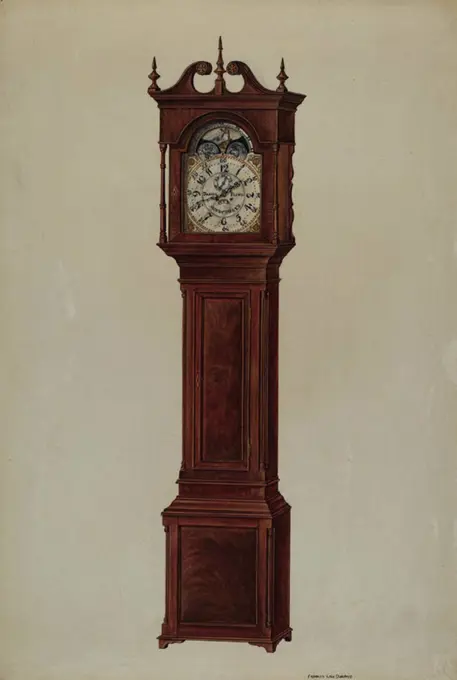
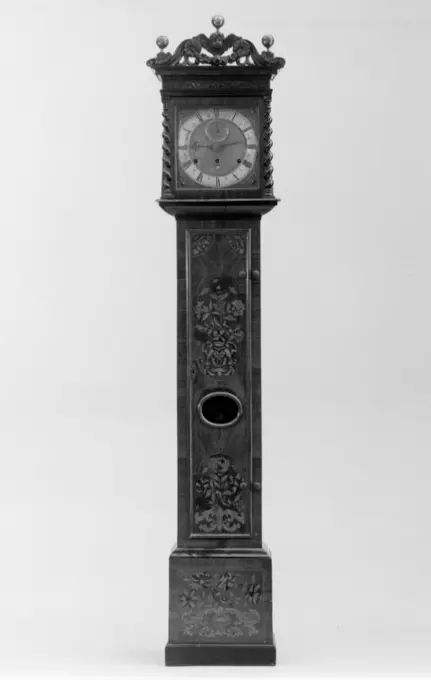
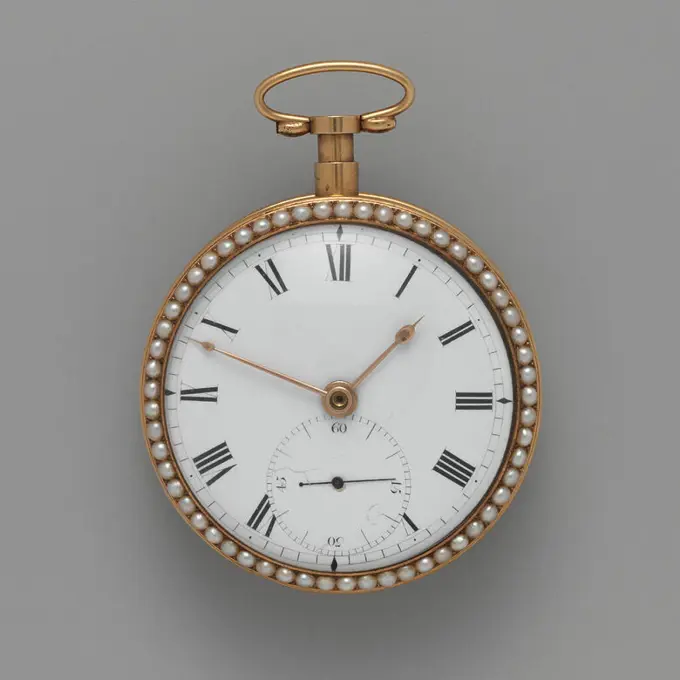
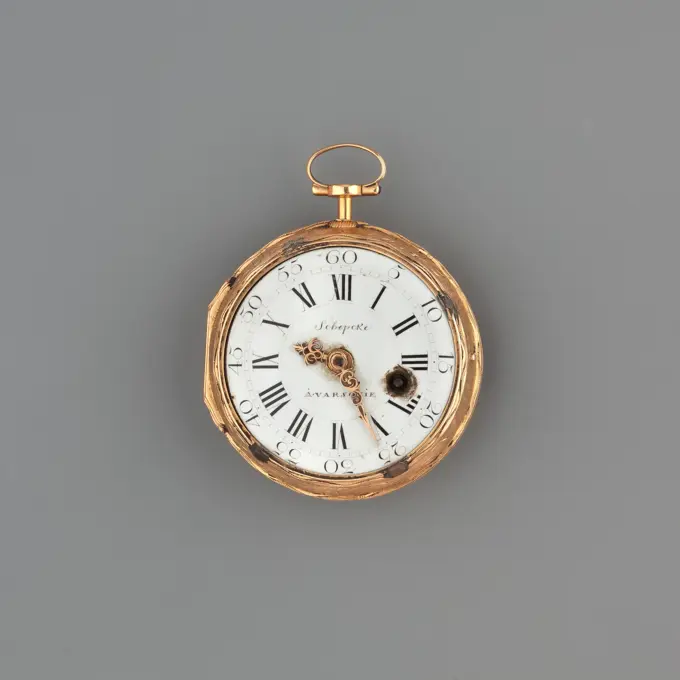
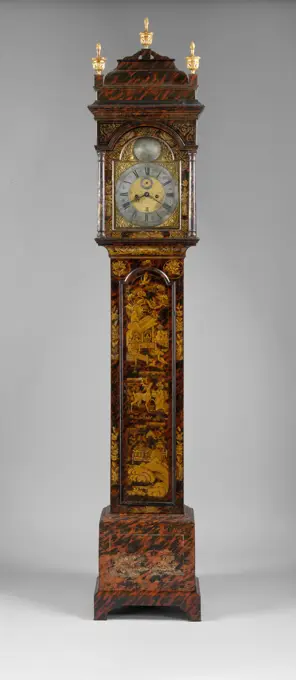
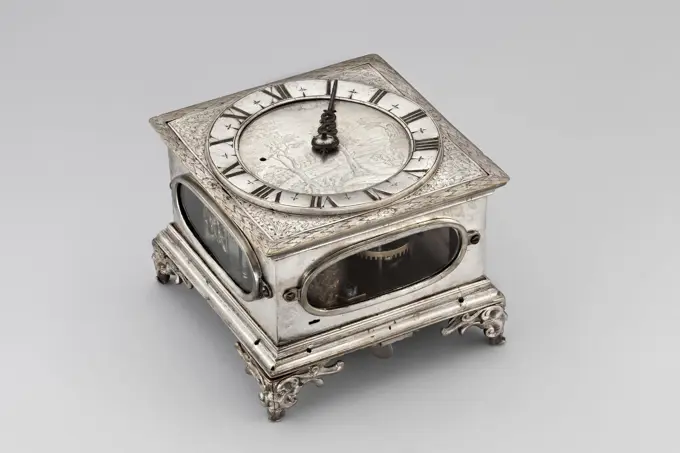
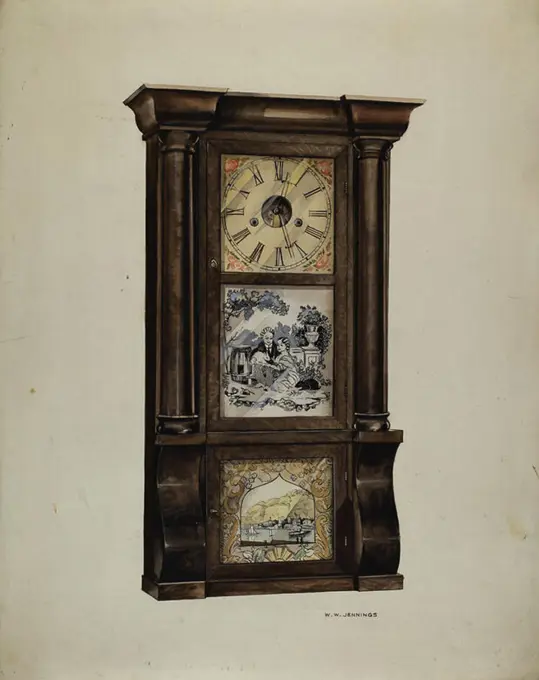
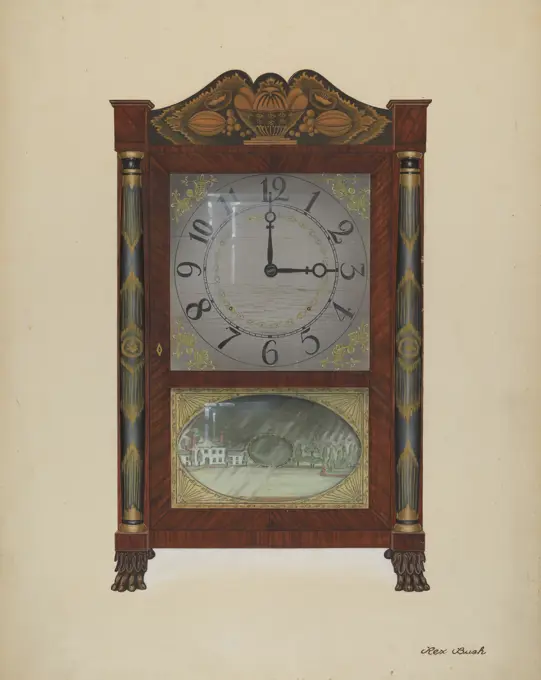
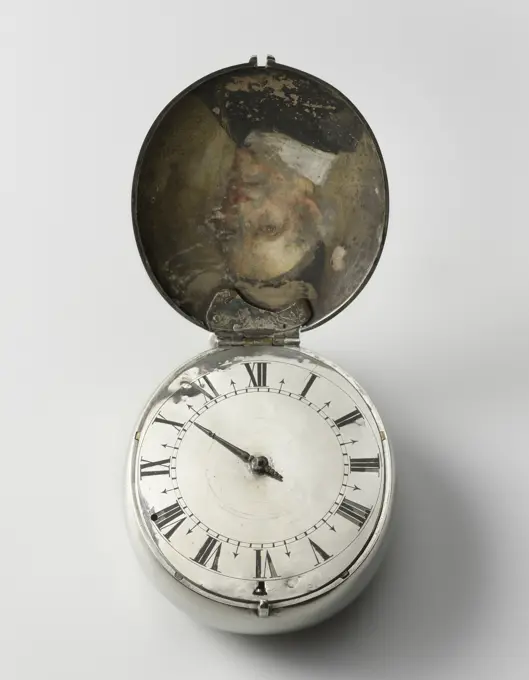
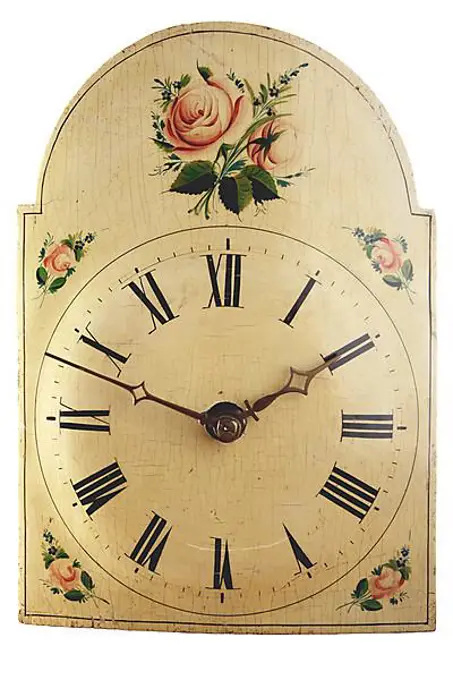
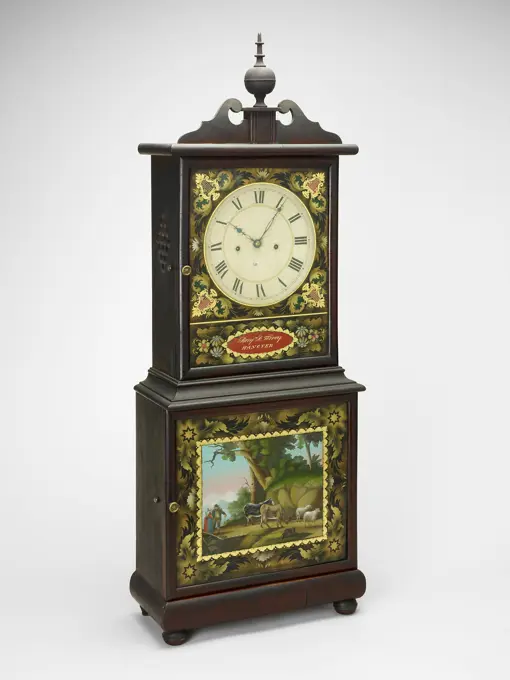
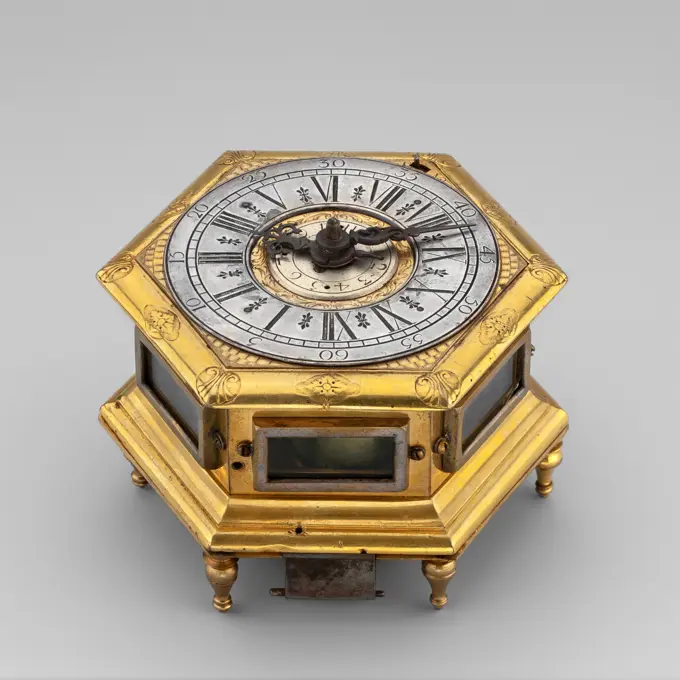
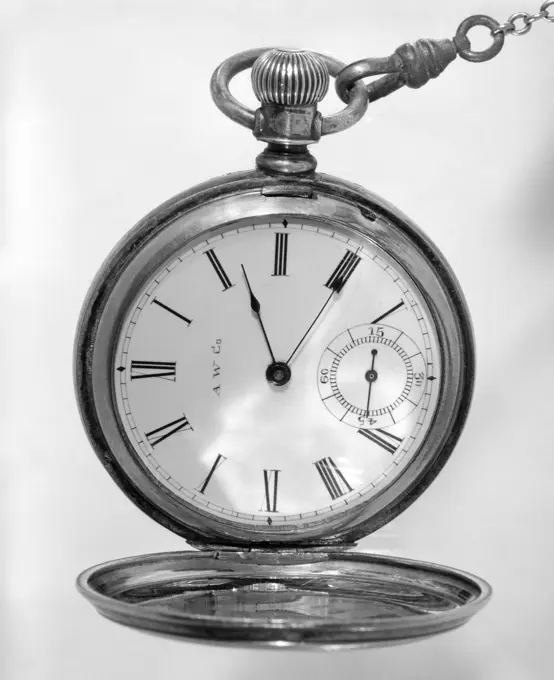
Watch of gilded copper, J. Worke (Possible), c. 1775 - c. 1800 Gilded copper watch with an enamelled dial. The two cupboard bottoms are made of glass, the edges with leaf work engraved. London copper (metal). glass gilding Gilded copper watch with an enamelled dial. The two cupboard bottoms are made of glass, the edges with leaf work engraved. London copper (metal). glass gildingPocket watch; Bushman, John (1692-1720); approx. 1700 (1690-00-00-1710-00-00);Watch. Culture: British, Richmond, Yorkshire. Dimensions: Diameter: 2 in. (5.1 cm). Maker: Watchmaker: W. Mitchell. Date: early 19th century. Museum: Metropolitan Museum of Art, New York, USA.Wall clock-barometer (baromètre et thermomètre en cartel) ca. 1770 Clockmaker: Lange de Bourbon. Wall clock-barometer (baromètre et thermomètre en cartel) 202167Table clock BreguetRepeater watch. Culture: British, London. Dimensions: Diam.: 2-3/8 in. (6 cm). Maker: Watchmaker: William Webster (British, Clockmakers' Company 1710-34, died 1735). Date: ca. 1770. Museum: Metropolitan Museum of Art, New York, USA.Watch. Golden watch in loose increded gold cupboard. The commercial supernat of the watch is also unfiled. The golden dial has black and Arabic minute riot religions in golden pictures on granulated ground. In the middle is a relief of tendrils with two birds, a mask and a cartouche noticed: Will. GIB .. Furthermore, an opening for the staggered date. The platin with rich-processed gap has been marked: Wiliam Gib. Rotterdam 515.Clock; wood, carved and gildedRELOJ DE ESFERA VICTORIANA EN GUILLOCHE 1870. Location: PRIVATE COLLECTION. MADRID. SPAIN.Balloon bracket clock ca. 1795 British. Balloon bracket clock. British. ca. 1795. Satinwood veneer inlaid with marquetry woods, gilt bronze. HorologyTraveling clock with alarm and calendar ca. 1700-1710 Probably by Joseph Paulet In the late seventeenth and early eighteenth century small clocks adapted for traveling were comparatively rare. This example, in an exquisite case of engraved and repoussé silver, with a champlevé silver dial, belongs to a group of five or six examples, all signed "Paulet London." The universal ball joint at the top allows the clock to swing from its suspension ring, cushioning the jolts of motion.. Traveling clock with alarm and calendar. British, London. ca. 1700-1710. Case and dial: silver, partially gilded; brass, partially gilded; steel. HorologyHorloge, Record Watch Co. (possibly), 1888 Silver watch with gold -plated dial. The outer cabinet is decorated with black enamelled tracks. ClockMaker: Everbey: Berlin silver (metal). gilding (material). gilding Silver watch with gold -plated dial. The outer cabinet is decorated with black enamelled tracks. ClockMaker: Everbey: Berlin silver (metal). gilding (material). gildingWatch. Culture: British, London. Dimensions: Diam. 2 in. (5.1 cm). Maker: Watchmaker: Dutton, Jr.. Date: early 19th century. Museum: Metropolitan Museum of Art, New York, USA.Watch with Palmette, anonymous, c. 1820 - c. 1840 Gold watch, with enamelled rear bottom. A palm with stiff flower vines on this. France (possibly) gold (metal). Gold watch, with enamelled rear bottom. A palm with stiff flower vines on this. France (possibly) gold (metal).Pendulum of White Marble under Round Glass Stolp, Anonymous, 1775 - 1800 Pendulum of white marble and gold -plated bronze under a round glass bell jar on a mahogany pedestal with a wine -red maraboo dust edge. Four columns rest on a round base, between which a dash of leaves and fruits. On top of the cover plate, structured as entablement, there is a truncated column, around which four vase -shaped ornaments, connected by chains. The clock on the middle column; At the front with a door with bulb glass. On top of a vase on a base with decorated lid; Aside flower, leaf and cord work. The enamel dial bears the signature in red: Deduy a l'Orient. France marble (rock). bronze (metal). glass. mahogany (wood). gilding Pendulum of white marble and gold -plated bronze under a round glass bell jar on a mahogany pedestal with a wine -red maraboo dust edge. Four columns rest on a round base, between which a dash of leaves and fruits. On top of the cover plate, structured as entablement, there is aWooden pedestal of a pendulum, art dealership E.J. Van Wisselingh, 1898 The pedestal of Coromandelhout has a cut ornament with leaves and two mice on the front, as well as a mouse on each side. A turtle has been cut out at the ends of the edge. Amsterdam . cutting The pedestal of Coromandelhout has a cut ornament with leaves and two mice on the front, as well as a mouse on each side. A turtle has been cut out at the ends of the edge. Amsterdam . cuttingClock-watch. Culture: British, London. Dimensions: Diameter: 1 3/8 in. (3.5 cm). Maker: Watchmaker: Daniel Delander (British, 1678-1733). Date: ca. 1705. Museum: Metropolitan Museum of Art, New York, USA.Planisphere Clock; Movement by Alexandre Fortier (French, about 1700 - 1770), and case attributed to Jean-Pierre Latz (French, about 1691 - 1754); Paris, France; about 1745 - 1749; Oak veneered with kingwood; silvered brass; gilt-bronze mounts, glass; gilt paper; 281.9 x 94 x 38.1 cm (111 x 37 x 15 in.)Table Clock. Jan van Ceulen, The Hague c 1700-1725. Oak veneered with tortoiseshell, silver, brass and fabric. This clock not only tells the time, it also gives the date and phases of the sun and the moon. It has a movement with nine bells that can play ten melodies. In the early 18th century a timepiece with so many different functions was still a rare and precious object.Mantle Clock' still bank, 20th century, 5 15/16 x 5 13/16 x 3 in. (15.08 x 14.76 x 7.62 cm), Metal, pigment, glass, United States, 20th centuryWatch with a Skeleton Dial, Carl Chasté, before 1815 Golden men's watch, the rear floor completely shot with the exception of a small circle. The Carure is ribbed. The dial with shaded figure ring with golden Roman hour figures has a circular opening, making the radar work visible as well as on the underside, where the Platine has been replaced by glass. Marked on the copper edge: Carl Chasté. Amsterdamclockmaker: Switzerland (possibly) gold (metal). copper (metal). glass Golden men's watch, the rear floor completely shot with the exception of a small circle. The Carure is ribbed. The dial with shaded figure ring with golden Roman hour figures has a circular opening, making the radar work visible as well as on the underside, where the Platine has been replaced by glass. Marked on the copper edge: Carl Chasté. Amsterdamclockmaker: Switzerland (possibly) gold (metal). copper (metal). glassMantel clock. Large gilt-bronze mantel clocks from Paris were considered symbols of wealth and good taste throughout Europe. For example, in the 18th century, Swedish kings purchased two mantel clocks of this model. The clocks plain, monumental shape -a lyre with a wounded dragon - is an early example of the Neoclassical style.Tall Clock ca. 1790 Joseph Mulliken. Tall Clock. American. ca. 1790. Mahogany, white pine. Made in Concord, Massachusetts, United StatesLongcase clock with calendar probably ca. 1720 Clockmaker: Daniel Delander Delander, a former journeyman in the workshop of Thomas Tompion, was another innovative clockmaker who contributed to the superb reputation of English horology in the seventeenth and eighteenth centuries. The eightday movement of this example has rack-and-snail striking and bolt-and shutter maintaining power. It has an unusual duplex escapement that was apparently invented by the clockmaker and used in a small number of his clocks. The maker of Delanders distinctive case is unknown. One of several variants of the same model, this case has a number of features that are rare for the period: the chamfered corners of the base and hood, the hexagonal panel in the base, and the shape of the low broken-arch dial, which is repeated in the outline of the top of the door to the trunk. The dome at the top of the hood is a later addition, as are the finials.. Longcase clock with calendar. British, London. probably ca. 1720Pocket watch with a key Hats & cie.PENDULO FRANCES DE CHIMENEA-FRANCIA-MEDIADOS S XVIII-87X40 CM. Location: BANCO HIPOTECARIO. MADRID. SPAIN.Clock 18th century Clockmaker: Le Febvre, Fils. Clock 196406Shelf Clock. Dated: 1935/1942. Dimensions: overall: 29.3 x 22.2 cm (11 9/16 x 8 3/4 in.). Medium: watercolor, graphite, and gouache on paperboard. Museum: National Gallery of Art, Washington DC. Author: American 20th Century.Cartel clock, Jacques Caffieri, c. 1741 Cartelpendule mounted in a gilded bronze cupboard. On a large S-shaped volute, bottom left the round dial, the goddess Diana is on the clouds and keeps the arms spread to the slumbering endymion, located on a smaller volute at the bottom right, with the shepherd's hand in hand and flanked by his dog. Above the dial, Cupido, with a bow and arch in the hands, looks from the clouds. At the top left the dial a wall with a shell motif and cornice; Finish with flower, leaf and volute motifs. Paris bronze (metal). gilding (material) gilding Cartelpendule mounted in a gilded bronze cupboard. On a large S-shaped volute, bottom left the round dial, the goddess Diana is on the clouds and keeps the arms spread to the slumbering endymion, located on a smaller volute at the bottom right, with the shepherd's hand in hand and flanked by his dog. Above the dial, Cupido, with a bow and arch in the hands, looks from the clouds. At the top left the dial a wall with Watch with palm with. Watch of gold, with enamelled underground. On this a palm with stiff flower drinks.Watch. Culture: British, London. Dimensions: Overall: 1 3/4 × 1 1/2 in. (4.4 × 3.8 cm). Maker: Watchmaker: Edward East (British, 1602-1697). Date: ca. 1640.Trained as a goldsmith, Edward East was a founding member of the London Clockmakers' Company in 1631. A successful maker of both clocks and watches throughout the Commonwealth period, he remained a royalist and was appointed clockmaker in 1660 to the newly restored King Charles II (1630-1685). The plain, almost egg-shaped watch known as a Puritan watch is commonly thought to have been developed in England in reaction to the elaborately decorated watchcases of the earlier seventeenth century. Watches of the same variety, however, are known to have been made in the Dutch cities of Haarlem and The Hague from about 1625. This elegant example has a worm-and-wheel set-up for the mainspring, a pinned-on cock with a beautifully executed openwork floral design, elegant pillars of a type known as Egyptian, and a gut fusee. It has a duration Watch; gold, enamelClock. Table clock or console clock of oak, veneered with copper marqueterie and tin on a tortoise fond on red mug, and with gold-plated bronze fittings. The cupboard has a vaulted bottom and curved sides. He rejuvenates upwards and is crowned by a removable cap. The cupboard has a straight window door in the front with a bright bow-shaped top edge, surrounded by a turtle profile edge, within which a cast copper edge with balusters and garlands. The engraved dial of white colored metal surrounded by four cast corner pieces with women's figures. In the lunet a round plate of white colored metal, engraved with the sun, is flanked by molded swim pieces with dolphins. The dial is attached to a copper plate with a engraved edge with the middle of the signature IP Kroese Amsterdam. Under the dial is a wooden, black fabric covered, on which an oval, gold-plated copper, coated medallion with Apollo () With bow and arrow sleeve, depending from bay bars. It is flanked by ornaments with the same dolpTaschenuhr Taschenuhr LicenseRF Copyright: xZoonar.com/OlgaxPopovax 23356415Repeating watch with Alexander rushes through the Gordian knot. Men's watch, rehearsal watch, from gold, in double cupboard. The loose cupboard exhibits a relief representing Alexander who cuts through the Gordian knot.Watch with an Oriental Scene, Pierre le Roy (attributed to), c. 1750 - c. 1760 Gold watch with white enamelled dial. On the rear bottom in multicolored email a performance with a sultan. Paris gold (metal). Gold watch with white enamelled dial. On the rear bottom in multicolored email a performance with a sultan. Paris gold (metal).Wardrobe-fire clock;  1725-1740 (1725-00-00-1740-00-00), 1740-1750 (1740-00-00-1750-00-00);Table clock or console clock, veneered with marquetie of copper and tin in a stock of turtle, c. 1830 Table clock or console clock made of oak, veneered with marquetery of copper and tin in a stock of turtle on red mace, and with gilded bronze batter. The cupboard has a vaulted bottom and curved sides. He rejuvenates upwards and is crowned by a removable hood. In the front, the cupboard has a straight window door with a broken arched upper edge, surrounded by a profile edge of turtle, within which a cast copper edge with balusters and garlands. The engraved dial of white colored metal is surrounded by four cast corner pieces with female figures. In the lunet there is a round plate of white colored metal, engraved with the sun, flanked by cast swallow pieces with dolphins. The dial is attached to a copper plate with an engraved edge with in the middle of the IP Kroese Amsterdam signature. Under the dial is a wooden, black fabric covered with an oval, gilded copper, tied medallion with AConsole clock (Pendule a console). Marquetry combining tortoiseshell and brass, the specialitybof the celebrated cabinetmaker André-Charles Boulle, was also practiced by many other Parisian craftsmen. This type of decoration remained fashionable for a long time, especially for clocks. This console clock is a simplified version of a model introduced by Boulle.Men's watch made of silver -plated copper with key, anonymous, c. 1800 - c. 1815 Men's watch from silver -plated copper, with two white -entered dials. 3 hands on both plates. With accompanying key on rope. France silver (metal). copper (metal). Men's watch from silver -plated copper, with two white -entered dials. 3 hands on both plates. With accompanying key on rope. France silver (metal). copper (metal).Tall Case Clock c 1820-1884 Maine. Painted pine, gilded copper alloy, iron . Uriah Dyer (Decorator)Clock Retro silver clock isolated with clipping path included Copyright: xZoonar.com/Baloncicix 7148981Boudoir clock ca. 1784-91 Clockmaker: Firm of Jaquet-Droz & Leschot, London and Geneva. Boudoir clock. British, London with Swiss, Geneva case. ca. 1784-91. Gold, enamel. HorologyPocket watch with enamelled representation of Antonius and Cleopatra. Silver watch with enamelled pinion in the supernaming Antonius and Cleopatra, as a contra-lymail on the inside a landscape. The silver dial with increased Roman clock figures and Arabic minute figures has a pinion with rank ornaments in the middle, of which two edges are marked: Pierre Morin, Amsterdam, while the gap is formed by a monogram of his crowned initials.Banjo Clock ca. 1825 Aaron Willard Jr.. Banjo Clock. American. ca. 1825. Mahogany, gilt gesso, eglomise tablets, white pine, tulip poplar. Made in Boston, Massachusetts, United StatesWatch. Culture: British, London. Dimensions: Diameter: 2 in. (5.1 cm). Maker: Watchmaker: Jonas Thorelet (master 1695). Date: ca. 1720. Museum: Metropolitan Museum of Art, New York, USA.WATCH, JACQUES JURSERE GREMY, C. 1760 Gold watch with white enamelled dial and hands with diamonds. The cabinet is made of Lapis Lazuli with diamonds on the lubrication around the glass. clockmaker: Parisjeweler: Italy (possibly) gold (metal). diamond (mineral). lapis lazuli (rock) Gold watch with white enamelled dial and hands with diamonds. The cabinet is made of Lapis Lazuli with diamonds on the lubrication around the glass. clockmaker: Parisjeweler: Italy (possibly) gold (metal). diamond (mineral). lapis lazuli (rock)François-René Morlay. Pendulum. Chiseled and golden bronze, enamel. 1775. Paris, Carnavalet museum. Art decorative, bronze, chisel, dore, gilding, email, decorative object, pendulumWatch 18th century Watchmaker: William Rivers. Watch. British, London. 18th century. Gold. HorologyPocket watch with white enamelled dial, Norton (timepiece), c. 1700 - c. 1800 Gilded copper watch, with white enamelled dial. With two keys on cord. clockmaker: LondonAmsterdamAmsterdam copper (metal). gilding (material) gilding Gilded copper watch, with white enamelled dial. With two keys on cord. clockmaker: LondonAmsterdamAmsterdam copper (metal). gilding (material) gildingPocket watch with driven representation of a whaler. Silver watch with silver dial, marked: Huysland. The work of inside noticed: Hermans Huysland, Amsterdam. The whole decided in a driven silver cupboard, on which the representation of a whale sailor with three sloops a whale harpenating in an edge of Louis XV ornament with sea samples. The outer cupboard is made of silver with green rogging. Glasses of the outer cupboard are missing.uurwerk: Cornelis Uyterweer, Pocket watch with white enamel dial and gold hands and on the bridge and Amor and written ONE IS ENOUGH, pocket watch watch movement measuring instrument gold silver brass steel glass enamel 4,5 4,5 Pocket watch with white enamel convex dial with Roman numerals Ajour sawn hands. The clockwork with verge escapement with snek. Fan-shaped pillars on the upper side of the saw sawn Ajour sawn beak for the snek. On the back plate silver closed bridge with driven representation of Amor floating between trees. Under the kidney-shaped opening for glass pane the text: ONE IS ENOUGH. Behind it the visible part of the balance in the form of grooved lens. Beside the gorge square blued tip for the regulage. Around the signature an ajour sawn floral ornament on the back plate CORNELIS UYTERWEER No. 338 ROTTERDAM (under gorge) ONE IS ENOUGH (measuring gap) to measure well-to-do citizensArthur Johnson, Tall Clock, c 1938 Tall ClockWatch, gold, enamel, Turkey, 19th century, timepieces & measuring devices, Decorative Arts, WatchClock, anonymous, c. 1785 - C. 1800 Men's pocket watch of gilded silver with porcelain rounds, representing: the baptism of Christ by Johannes the Baptist. Marked: N.B in window.  gold (metal). porcelain. Men's pocket watch of gilded silver with porcelain rounds, representing: the baptism of Christ by Johannes the Baptist. Marked: N.B in window.  gold (metal). porcelain.Wall Clock on Bracket.Watch. Golden watch with a shaded dial with small figure ring. The supernat is guilough.Men's watch, Anonymous, 1906 Men's watch made of copper with nickel necklace. On the dial the coat of arms of the Kingdom of the Netherlands, all around on the closet Je Mintiendrai. On the rear floor in relief a portrait of Rembrandt and Tribute to Rembrandt 1606-1906. With chain.  copper (metal). nickel (metal) Men's watch made of copper with nickel necklace. On the dial the coat of arms of the Kingdom of the Netherlands, all around on the closet Je Mintiendrai. On the rear floor in relief a portrait of Rembrandt and Tribute to Rembrandt 1606-1906. With chain.  copper (metal). nickel (metal)Grandfather's Clock. Dated: c. 1937. Dimensions: overall: 35.5 x 24 cm (14 x 9 7/16 in.) Original IAD Object: 96 1/2"high; 21 1/8"wide; 11 5/8"deep. Medium: watercolor, colored pencil, pen and ink and graphite on paperboard. Museum: National Gallery of Art, Washington DC. Author: Francis Law Durand.Ralph Morton, Grandfather's Clock, c 1942 Grandfather's ClockLongcase clock ca. 1685 Clockmaker: Jeremiah Johnson. Longcase clock 202697Vintage pocket clockWatch. Culture: British, London. Dimensions: Diameter: 2 3/8 in. (6 cm). Maker: Watchmaker: William Ilbery (1780-1839). Date: early 19th century. Museum: Metropolitan Museum of Art, New York, USA.Table clock case 1554, movement ca. 1680 German, possibly Nuremberg The underside of the case bears the punchmark ND, in this period probably the mark of the clockmaker, not the casemaker. The engraved band on the side of the case reproduces a 1549 print by Hans Sebald Beham (1500-1550) titled Triumphal Procession of theNoble Glorious Women, which was also used as a model for the reliefs on the base of the clock. The clock is signed by Caspar Behaim. Although it is often possible to trace the sources of their designs, very little is known about sixteenth-century clock casemakers. The watch movement was probably installed relatively recently, perhaps when the present hand was made.. Table clock 194105Frank Wenger, Tall Clock, c 1937 Tall ClockGrandfather Clock. Dated: c. 1937. Dimensions: overall: 57.8 x 45.7 cm (22 3/4 x 18 in.) Original IAD Object: 7'7 1/2" x 21 3/4" x 10". Medium: watercolor, colored pencil, gouache, and graphite on paperboard. Museum: National Gallery of Art, Washington DC. Author: Stanley Mazur.Shelf Clock. Benjamin Torrey; American, active c.1817-1843. Date: 1815-1845. Dimensions: H. 36 in. Mahogany, white pine, iron, brass, painted glass. Origin: United States. Museum: The Chicago Art Institute, Chicago, USA.Clock (France); marble, bronze, gilding; 32 x 29 x 14 cm (12 5/8 x 11 7/16 x 5 1/2 in.)Men's watch of gilded silver, Markus Lechner, c. 1800 Men's watch of gilded silver with a small white enamelled dial on a blue enamelled soil. The rear bottom has a engraved weapon. Vienna silver (metal). gilding (material) gilding / engraving Men's watch of gilded silver with a small white enamelled dial on a blue enamelled soil. The rear bottom has a engraved weapon. Vienna silver (metal). gilding (material) gilding / engravingA clock, astronomical, astronomical; Bommel, Melchior (Fl. Ca 1650); after. 17th century (1650-00-00-1650-00-00);Działyńska, Izabela Elżbieta née Czartoryski (1830-1899) - collection, tower, buildings, saintsWatch, Hector's goodbye. Golden watch with engraved and sciblied golden cupboard. The outer cupboard is decorated with a driven and calculated representation of Hector's goodbye.ancient vintage golden brass pendulum clock  in embossed backgroundpocket watch; Schepcke, Daniel (Fl. 1765-1775); 1770-75 (1770-00-00-1775-00-00);bouquets, flowers, butterflies, plant (ornament)Francis Law Durand, Mantel Clock, 1935 1942 Mantel ClockHourglass- sand clock; Zoller (fl. Ca 1670); 1671 (1671-00-00-1671-00-00);Baroque (style), measuring instruments, vegetable flagella (ornament)Fob Watch against White BackgroundTall Clock 1730-40 Joseph Ward The door of this rare japanned tall-case clock is remarkably well preserved. Its decoration, consisting of flowers, animals, and people situated in Far Eastern buildings and landscapes, is especially refined. The top and feet are modern replacements.. Tall Clock. American. 1730-40. Japanned white pine. Made in Boston, Massachusetts, United StatesEquatorial sundial Taborski, Tomasz (1775 1827)Gold watch with a painted enamel inspired by "the pleasant lesson" of Boucher. François-Bernard or François Le Jeune Béliard, 1756-1762. Paris, Cognacq-Jay museum. 39336-5 Painted email, watchmaking, watch, goldTall Clock. Dated: c. 1938. Dimensions: overall: 61 x 40.4 cm (24 x 15 7/8 in.) Original IAD Object: 106"high; 21"wide at base. Medium: watercolor, colored pencil, and graphite on paperboard. Museum: National Gallery of Art, Washington DC. Author: Lorenz Rothkranz.Francis Law Durand, Mantel Clock, c 1938 Mantel ClockWatchTile clock. Horn, Johann Anton (fl. ca 1681-1720), watchmakerWatch ca. 1690 Watchmaker: Daniel Quare. Watch. British, London. ca. 1690. Silver. HorologyClock. Dated: c. 1936. Dimensions: overall: 45 x 35.7 cm (17 11/16 x 14 1/16 in.) Original IAD Object: 32 x 17 x 4 1/2 inches. Medium: watercolor, colored pencil, gouache, pen and ink and graphite on paperboard. Museum: National Gallery of Art, Washington DC. Author: Walter W. Jennings.Tall CaseClock.   Maker: William Wallace  Maker: Alexander Cook, AmericanRex F Bush, Clock, c 1938 ClockConsole clock, decorated with marquetery in turtle and brass and with gold-plated bronze fittings, on oak core. Console clock, decorated with marqueteria in turtle and brass, with gold-plated bronze batter on oak core. The stuffed corner styles go over in the semi-circular upper sill. The batter consists of volutes with flower and leaf branches. Under the glazed capsection decorated with grotesken with numbers of email, fittings in the form of a cupid with dog and key. The upper shell carries a sloping ascending attachment with a minnent couple to crown. Clockwork at the rear: c.d.g: Mesnil à Paris. Console: BK-KOG-1456-2.Travelling Watch, Salomon Hendrikszoon Coster, c. 1650 Travel watch of silver. The oval silver cabinet has no glass, so that the lid must be opened to see the silver dial, with only an hourly guide. The timepiece has a levernon, which is connected by a chain to a sneak, which is mounted on the first wheel. The force is transferred by three wheels to the last wheel, the so-called Echapementsrad that converts the rotating movement of the wheels into the back-and-again movement of the balance. Here the Echapement is the so-called Spillegang, in which the Echapements-Rad in turn pushes two protrusions on the balance shaft in the opposite direction. The wheel of the balance, which slows down the back-and-again movement through its mass, is located under the beautifully processed gorge on the back platin. The course of the watch can be regulated in two ways, of which there are two dials on the back slatin. The largest of the two, in the middle of the top, is attached to the pivot of the leveAntique Black Forest clock with apple rose motifClock watch. Culture: Chinese. Dimensions: Overall (with bail up, confirmed): 2 13/16 × 2 1/4 × 1 1/4 in. (7.1 × 5.7 × 3.2 cm);Diameter (back plate): 1 1/2 in. (3.8 cm). Date: ca. 1736-95.This watch looks European, but the inscription, "Made in Qianlong era," referring to the emperor's reign (1736-95), reveals it was made in China. Watches such as this illustrate the great enthusiasm in China for European horology. Museum: Metropolitan Museum of Art, New York, USA.Shelf Clock c 1820-1840 United States. An alternative to expensive tall case clocks, shelf clocks were more affordable in the early 19th century. On this piece, Benjamin Torrey used a technique called eglomise, in which paint is applied to the back of a glass pane so that the reverse image is visible to the viewer. The romanticized pastoral scene and the decorative motif that borders both the upper and lower cases evince the design possibilities in use during the Neoclassical period. This particular clock is rare in that it retains both its original glass and its striking mechanism. A prized possession, it remained in the Torrey family until the Great Depression.. Mahogany, white pine, iron, brass, painted glass . Benjamin TorreyTall Clock. Dated: c. 1936. Dimensions: overall: 36.7 x 29.2 cm (14 7/16 x 11 1/2 in.) Original IAD Object: 99 1/2"high. Medium: watercolor, colored pencil, pen and ink, and graphite on paperboard. Museum: National Gallery of Art, Washington DC. Author: Lawrence Phillips.Clock ca. 1852 American. Clock 2102James Fisher, Shelf Clock, c 1938 Shelf ClockTile clock so -called Ostrowski, Antoni (Fl. Ca 1750); 1745 (1745-00-00-1745-00-00);Wierzejski, Tadeusz (1892-1974) - collection, gift (provenance), flowers, palmetsMirror clock. Artist: Stem and foot probably cast from designs by Matthias Zündt (German, probably ca. 1498-1572 Nürnberg); Band of case from design by Cornelis Bos (Netherlandish, Hertogenbosch ca. 1510-before 1566 Groningen). Culture: German, Nuremberg. Dimensions: Overall: 16 × 6 1/4 × 1 1/4 in. (40.6 × 15.9 × 3.2 cm). Maker: Movement attributed to Master CR (probably active before 1565). Date: ca. 1565-70.Known as a mirror clock for its form's similarity to a looking glass, this has also been called a monstrance clock because it resembles the receptacle for the consecrated host. Religious references in early clocks reflect the Renaissance linking of science and the cosmos to the idea of divine order. This clock displays the hours, days, and a wealth of celestial information. Though not accurate timekeepers, early clocks were valued for their craftsmanship and technical ingenuity: luxury items designed to educate and impress. Museum: Metropolitan Museum of Art, New York, USA.Alvin M Gully, Shelf Clock, 1936 Shelf ClockClose-Up Of Open Pocket Watch