Antique Tools and Artifacts

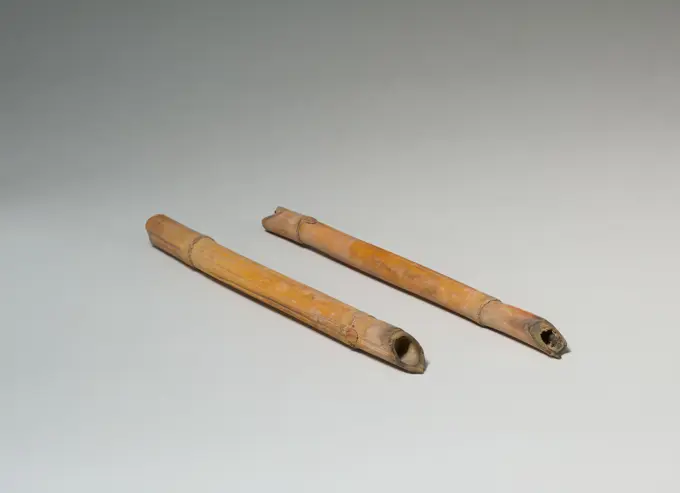
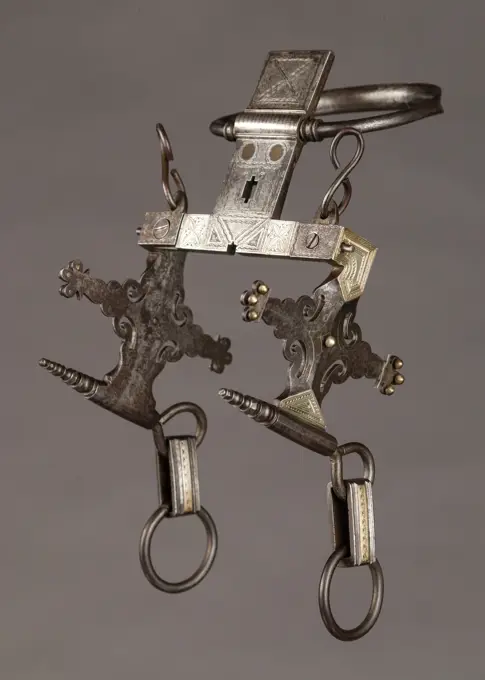
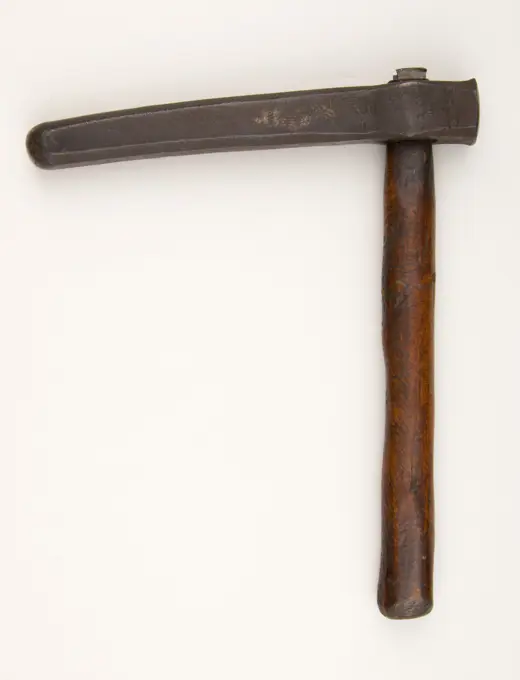
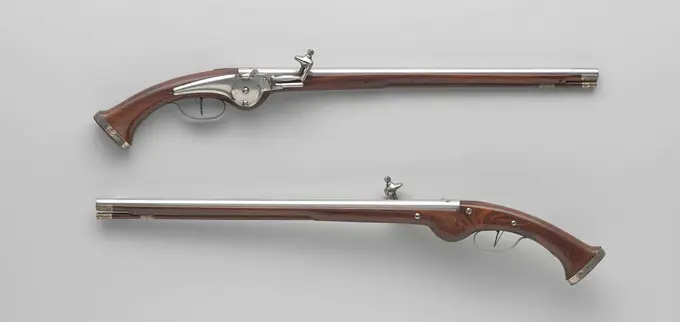
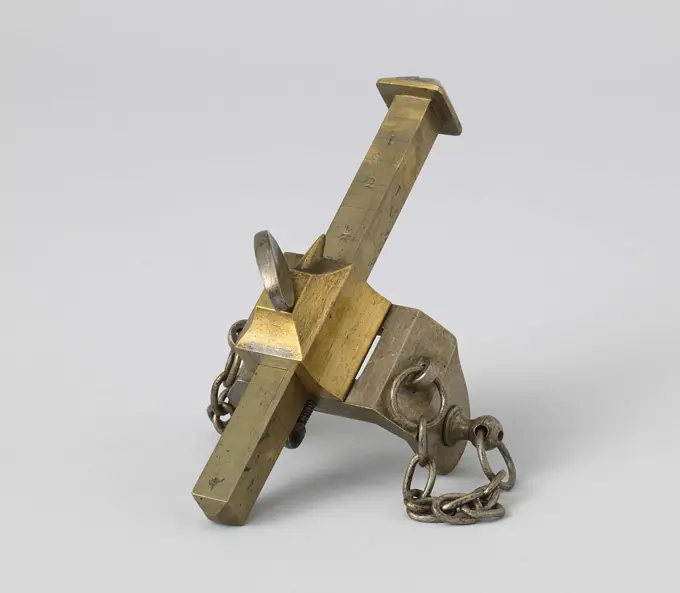
Historical tools like chisel and spear, showcasing their craftsmanship and unique designs, reflecting an antique aesthetic.
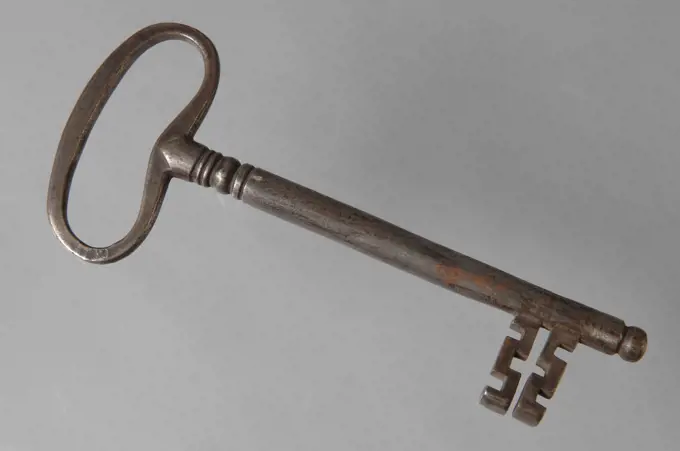
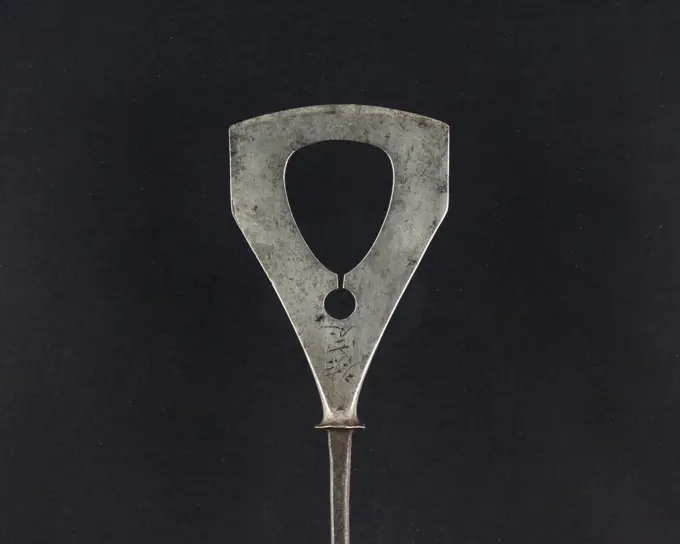
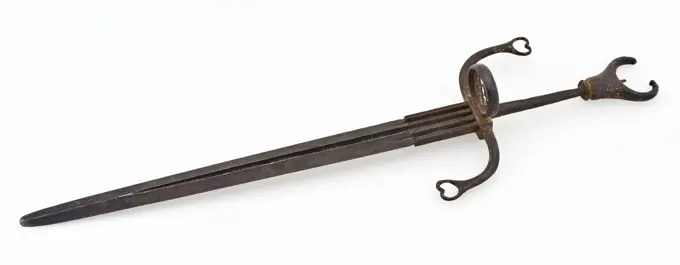
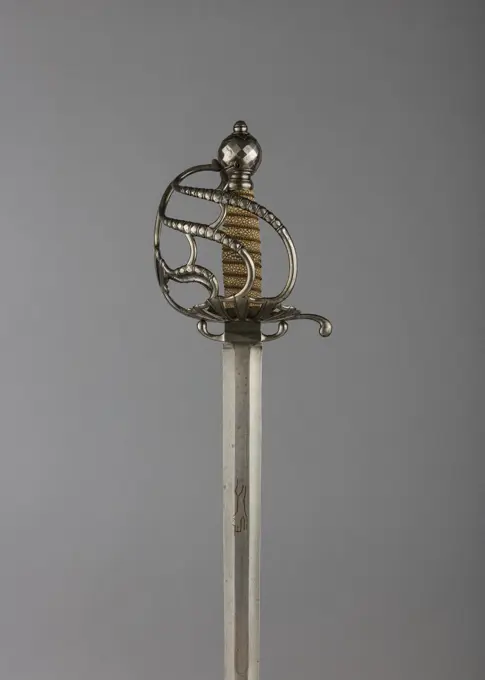
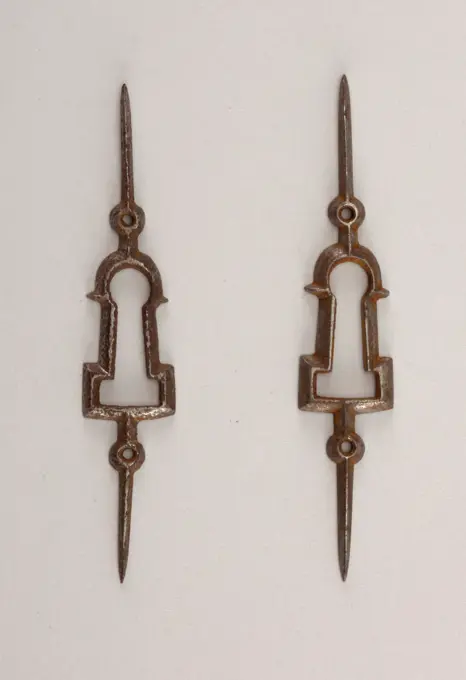
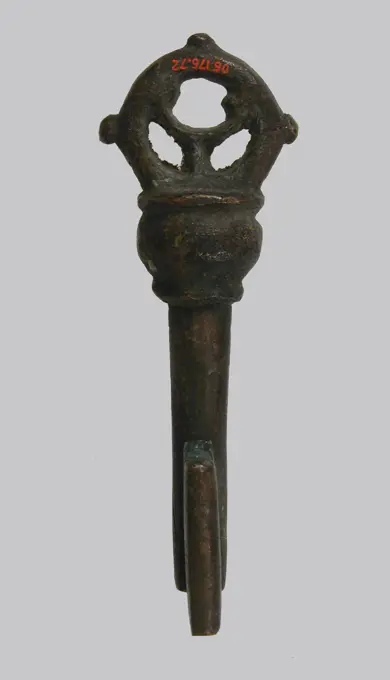
Iron key with elongated eye, solid key handle and cruciform beards in beard, key iron commodity founding iron, hand-forged key with typical elongated and flattened heart-shaped eye (handle) solid key handle (with socket wrench end) Collar consisting of single profile edges cruciform battens (horizontal and vertical) in key beard and asymmetrical keyhole cross-section archeology Rotterdam City triangle Delftsevaart hang-en-sluitwerk The object was excavated and found at the partial reclamation of the Delfsevaart for the purpose of making the lift over the Vaart in the summer of 1928.
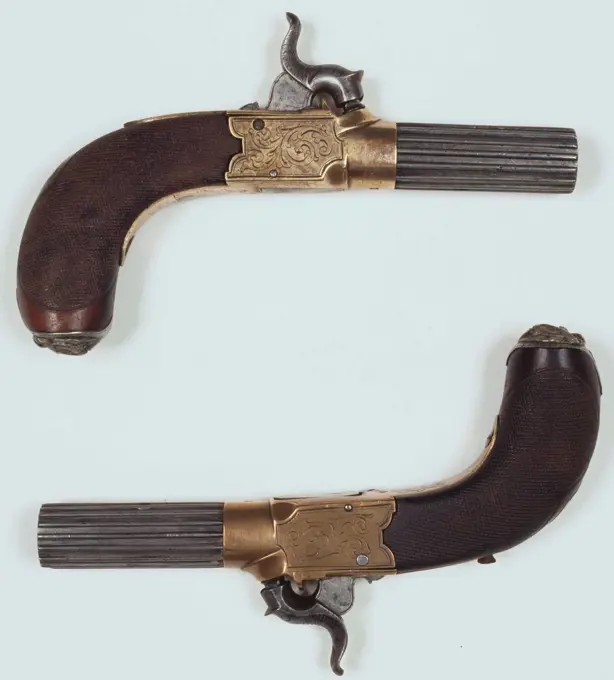
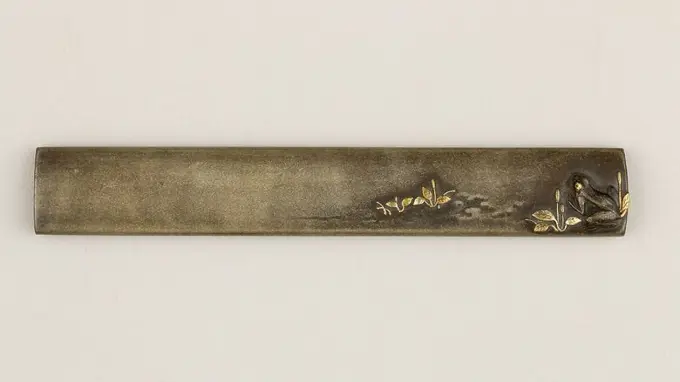
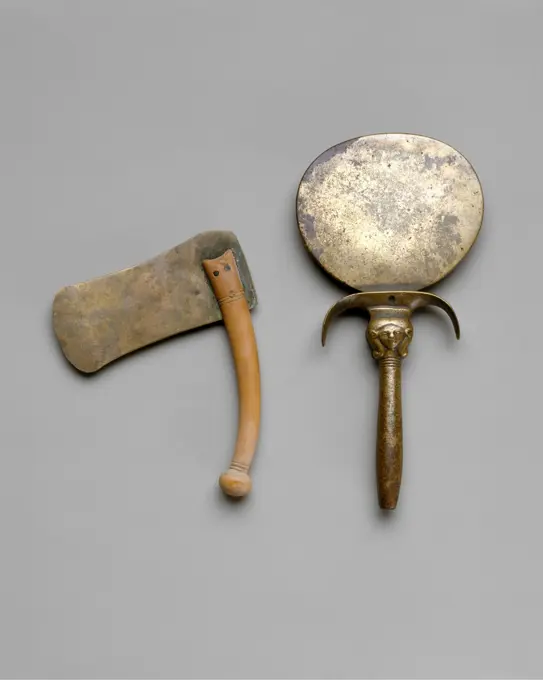
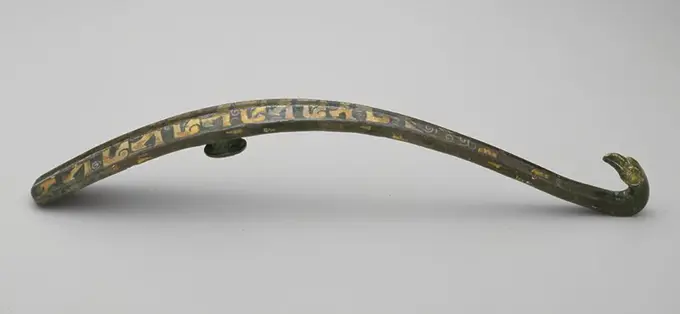
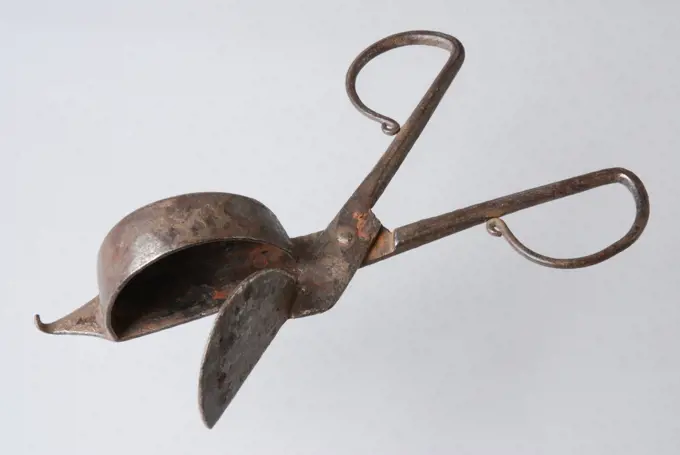
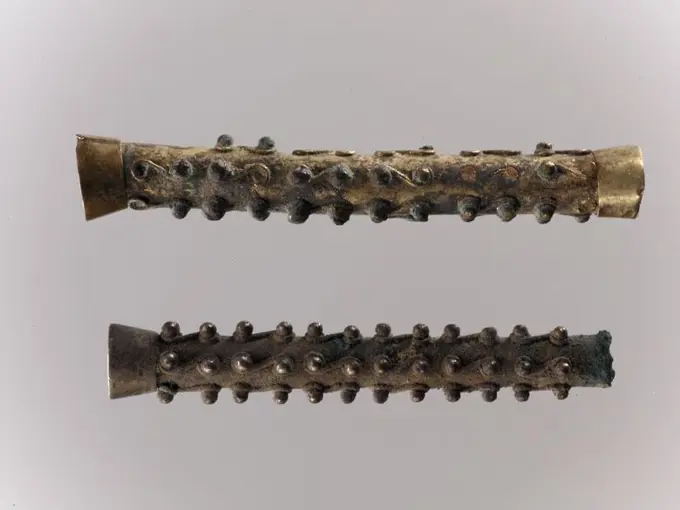
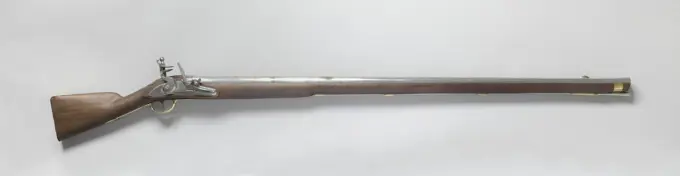
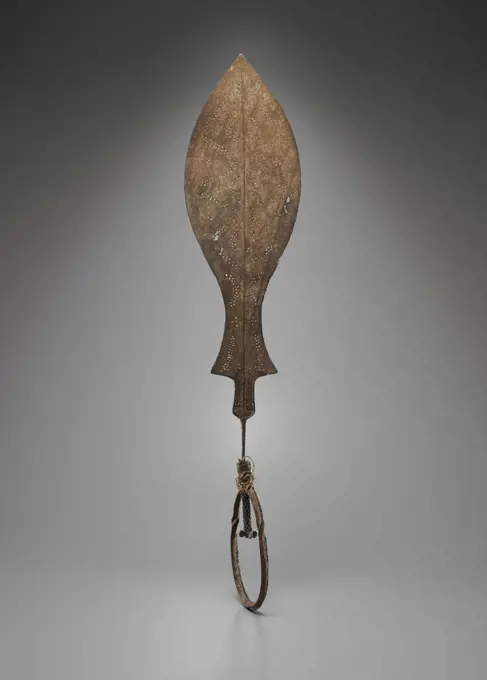
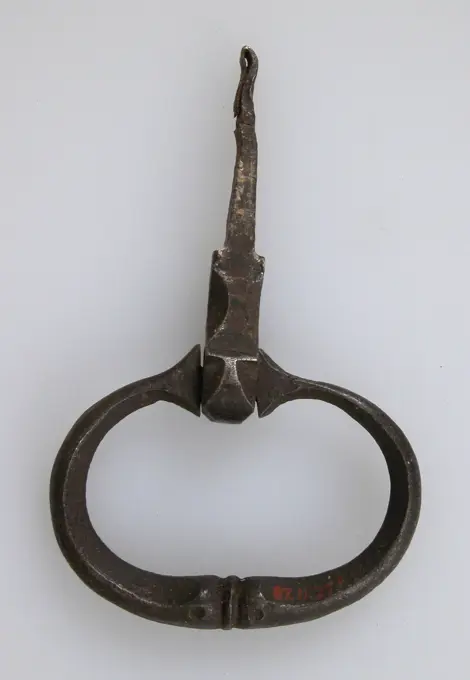
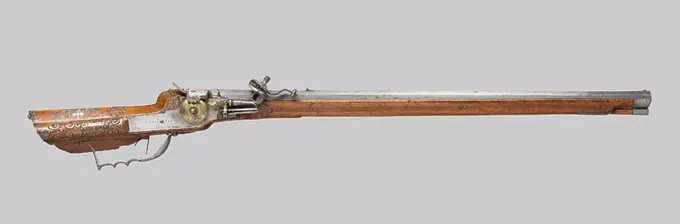
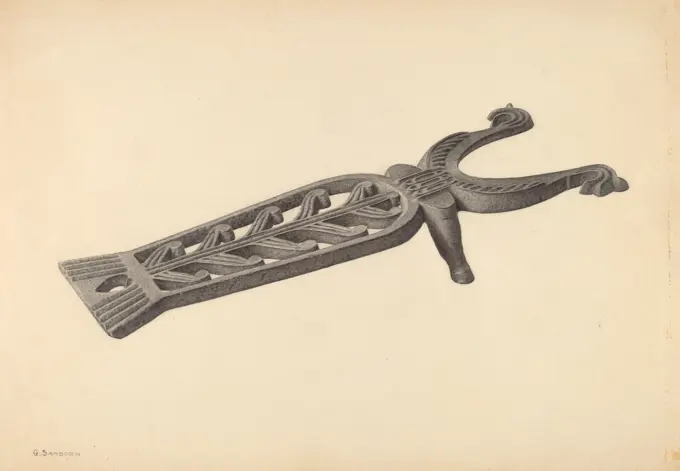
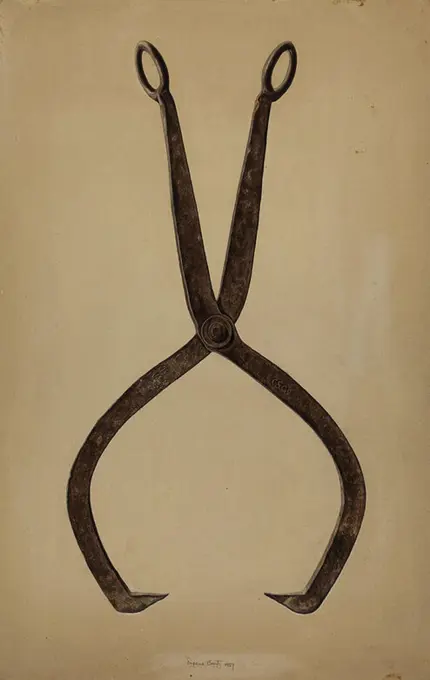
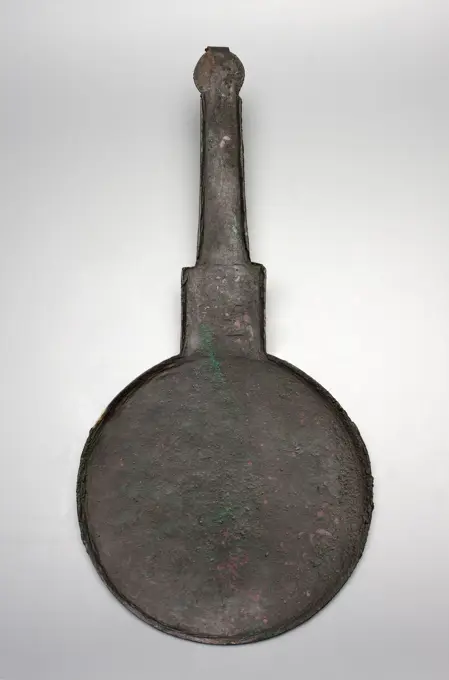
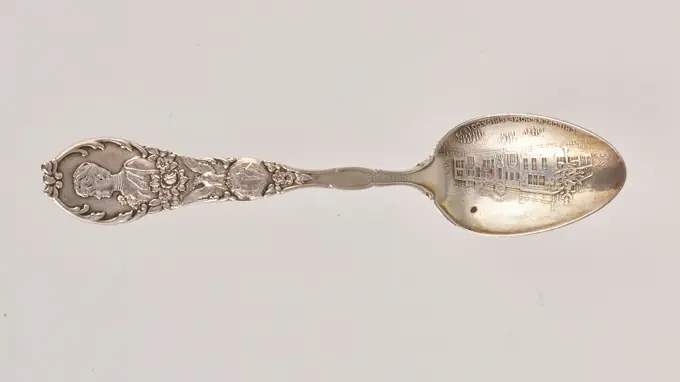
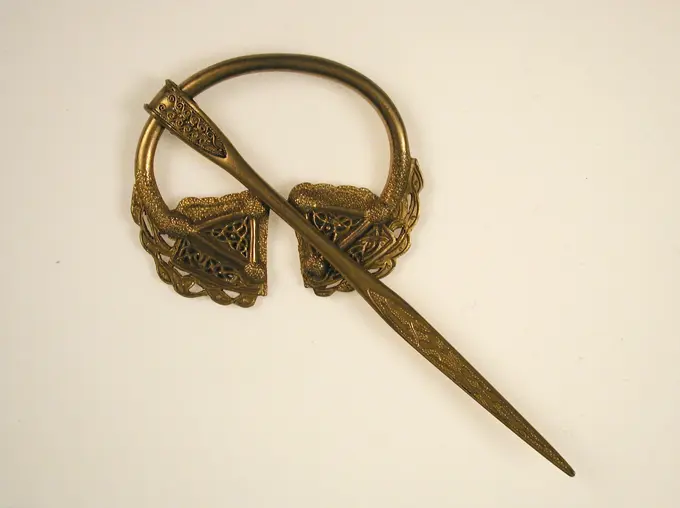
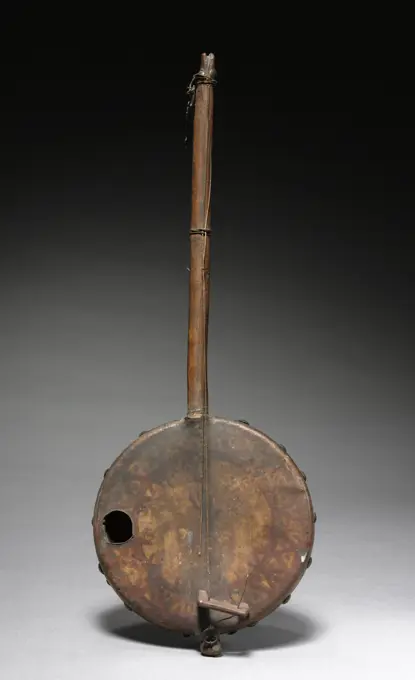
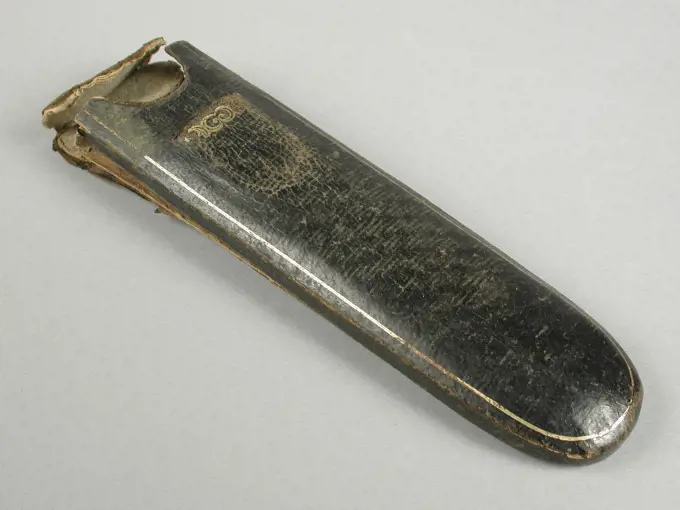
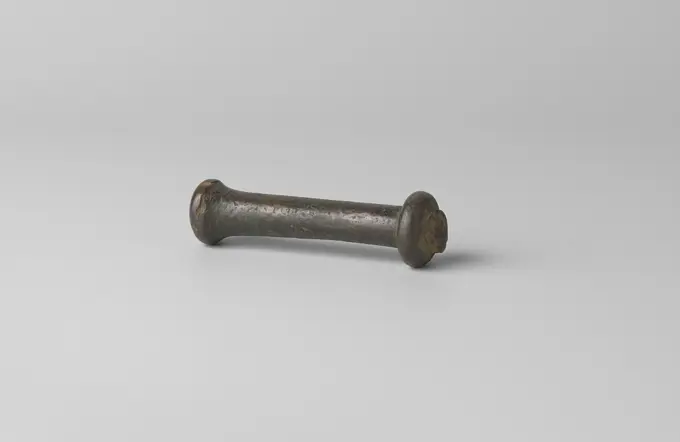
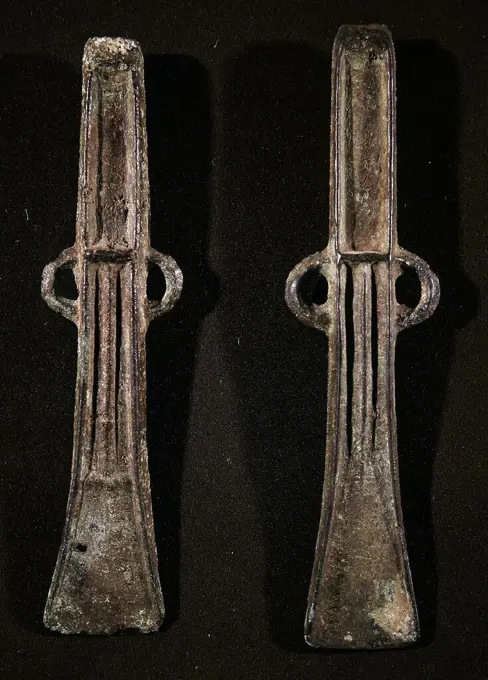
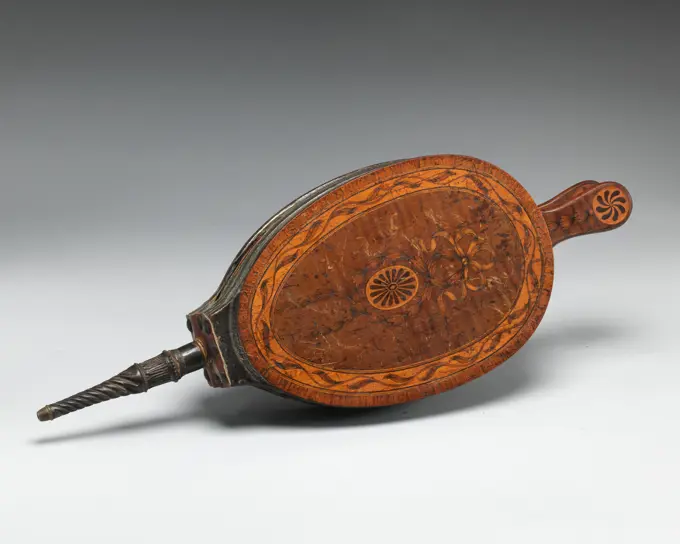
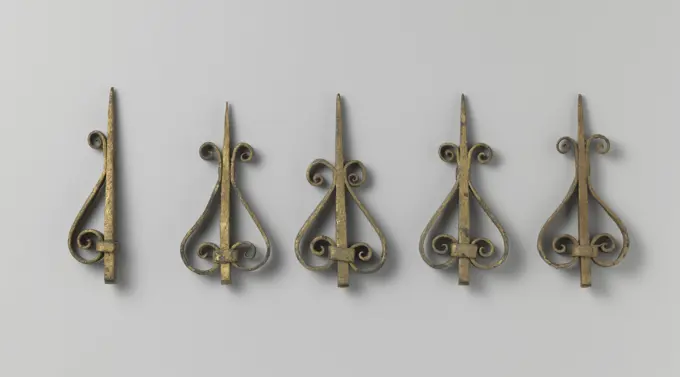
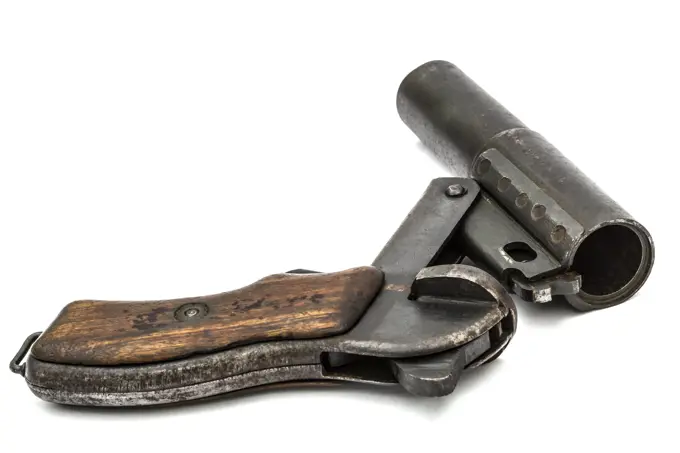
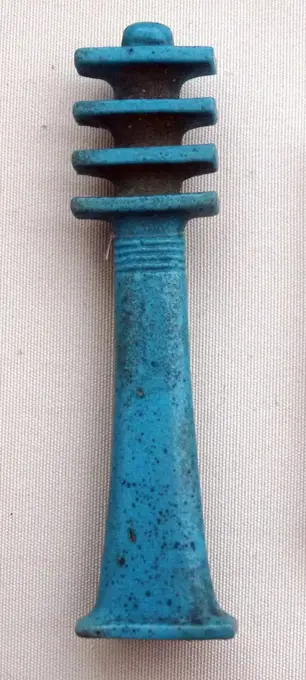
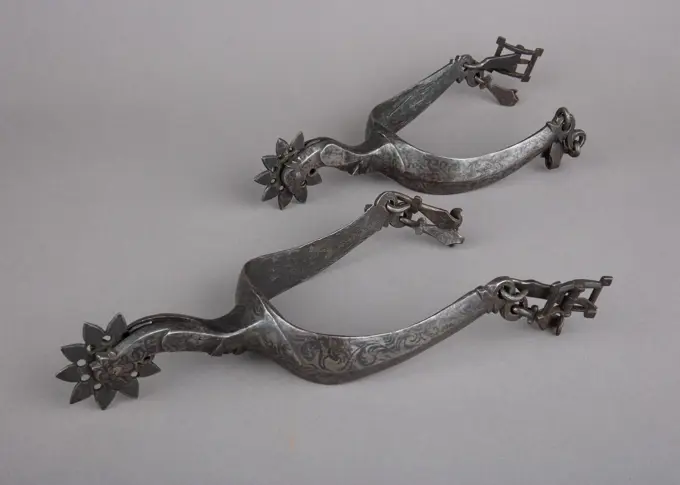
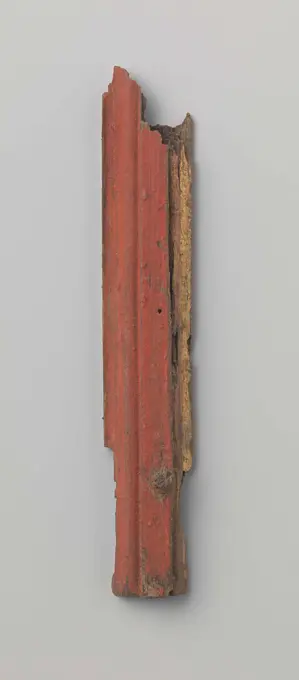
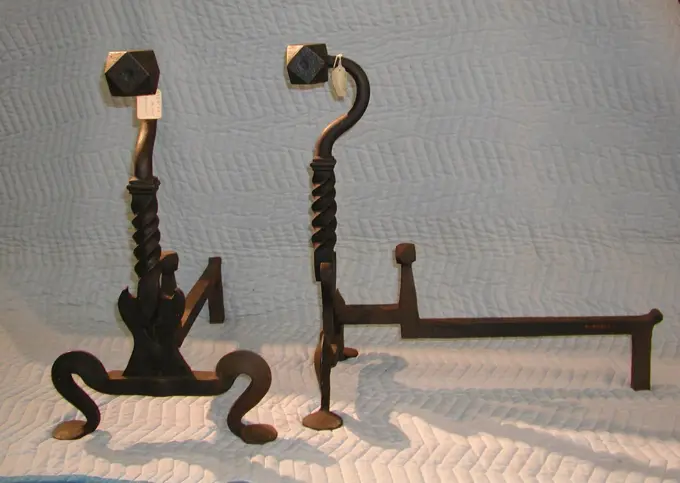
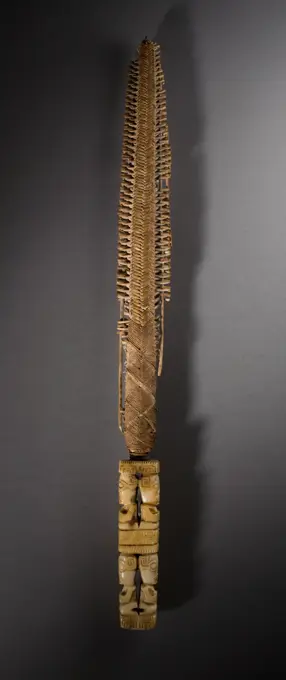
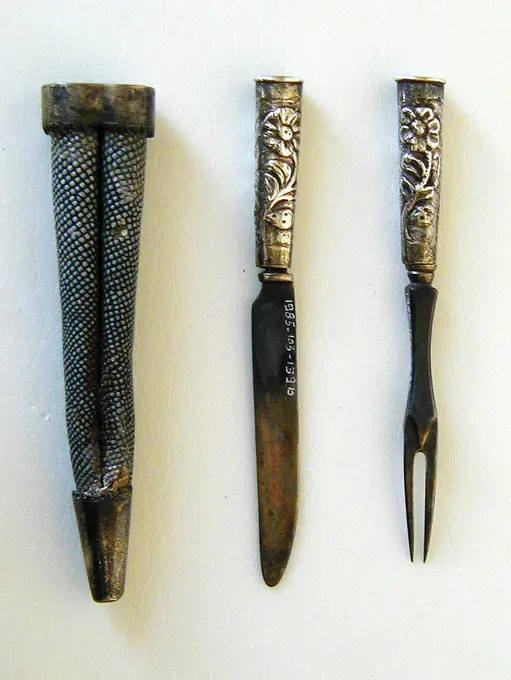
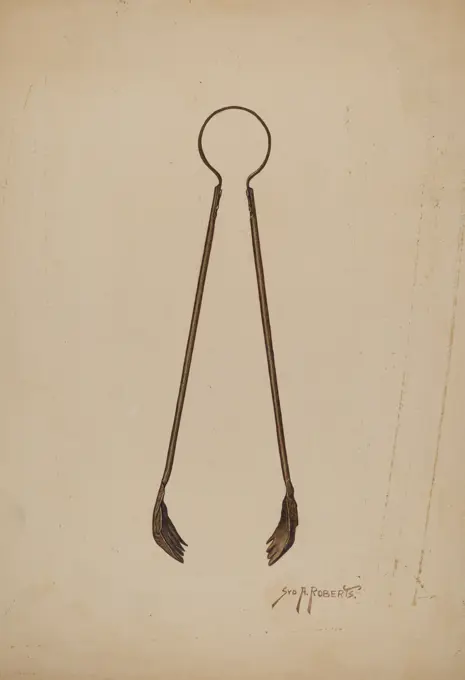
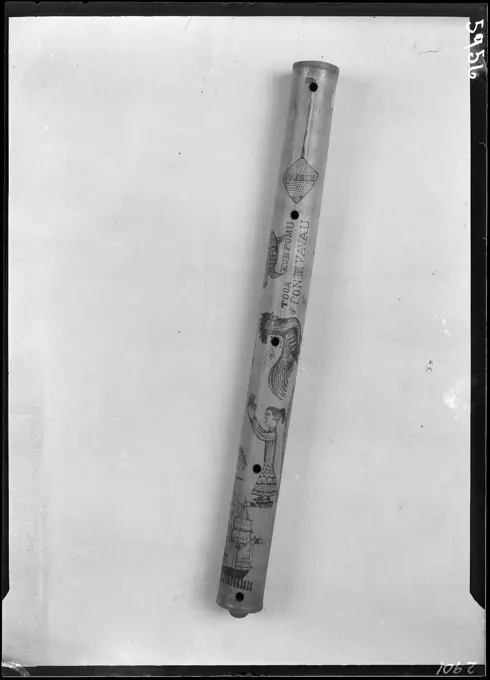
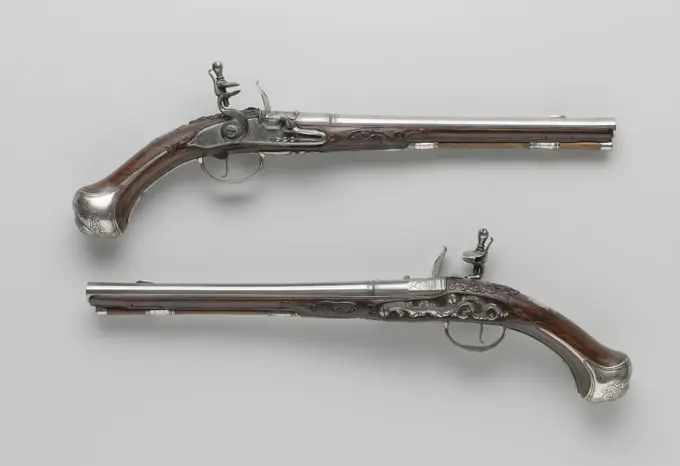
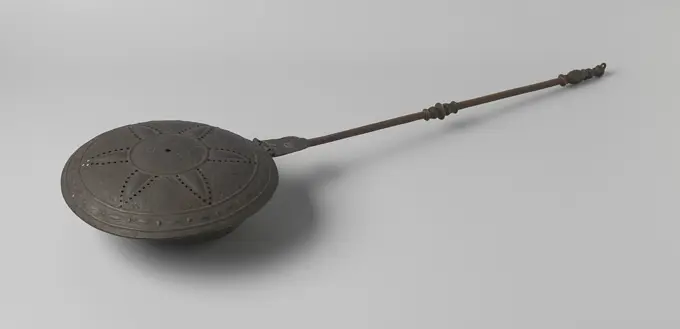
Beddenpan met gegraveerd wapen.The object consists of six parts: the iron stem with the ring, on which the heading bin is riveted, the headren hinge, the heading lid, the two cast ornamental elements on the stem. In the convex cover, the center point of which has been increased to a hole, decorations are punched and beaten with the help of a stamp form and holes in a suspicious star shape. In the middle, a weapon hung on a cord is engraved: 1 three windows 2/1, 2 an eagle. The fields between the star points have a star in a rosette and other motifs indicated by granulated lines. Around it and a correspondingly arranged edge of striker tapered ovals and windows. The edge of the lid is reinforced with iron wire. The profiled decorative element on the stem has a knot in the middle, in the end piece is a vase and a baluster to recognize. The hinge pin and herring are missing,.Percussion gun. Scottish model of a percussion gunner with built-in slot, iron ribbed loop, copper lock plate, wooden flask and white metal flask. The loop is ribbed on the outside and pulled on the inside. The copper lock plate has engraved praise on both sides with the name of the manufacturer on the left. The flask has a diamond pattern of wood and the handle is finely ribbed, the flask on the underside is made of white metal where a lion's head is made of.Arrowhead (Yanone) 18th century Japanese Although today Japanese warriors are renowned most for their swordsmanship, archery, especially from horseback, has been an essential part of samurai warfare and culture for centuries. Arrows were fitted with heads of varying shape according to their intended use in war, the hunt, or target practice. Arrowheads made for use on the battlefield incorporated different designs intended for specialized purposes such as the piercing of armor or to cause maximum damage to horses and unarmored personnel.Large arrowheads, pierced and elaborately chiseled with landscapes, birds, flowers, dragons, and Buddhist divinities, were created to be admired for the beauty of their metalwork and design rather than for use in archery. Such highly elaborate examples may have been made for presentation or as a votive offerings to a shrine.. Arrowhead (Yanone). Japanese. 18th century. Steel. Archery Equipment-ArrowheadsKnife Handle (Kozuka). Culture: Japanese. Dimensions: L. 3 13/16 in. (9.7 cm); W. 9/16 in. (1.4 cm); thickness 1/4 in. (0.6 cm); Wt. 1.2 oz. (34 g). Maker: Iwama Nobuyoshi (Japanese, 1807-1878). Date: 19th century. Museum: Metropolitan Museum of Art, New York, USA.Razor and mirror ca. 1492-1473 B.C. New Kingdom This razor (36.3.69), which had been carefully wrapped in strips of linen, was found in a basket in the tomb of Hatnefer, the mother of Senenmut. The mirror (36.3.13) was found in the same tomb inside the coffin of an unknown woman who was probably a relative of Hatnefer and Senenmut.. Razor and mirror 688624Symbolic key of the city of New Warsaw; Jankowski, Franciszek; 1764 (1764-00-00-1764-00-00);Garment Hook (Daigou). China. Date: 299 BC-100 BC. Dimensions: L. 22.2 cm (8.7 in.). Bronze inlaid with gold and silver. Origin: China. Museum: The Chicago Art Institute, Chicago, USA.Candle snout, muzzle scissors with half round muzzle, candle nippers muzzle scissors tool kit ground find iron metal, forged Iron muzzle scissors Two curved eyes small curl at the ends. Curve lip at the front to guide the brick Half-round trough on the cutting blades archeology Rotterdam City Triangle Groenendaal underground pit evening night illuminate candle muzzles Soil discovery Rotterdam underground pit Groenendaal 1977.Trumpet from the wreck of the East India Flying Heart. Brass Wind instrument. See NG-1986-46-5 and 6.Tool with sophisticated foam blade (common name), -276. Copper alloy. Carnavalet museum, history of Paris.Granulated Tube Amulet. Dimensions: 3.5 cm (1 3/8 in); w. 0.8 cm (5/16 in). Dynasty: Dynasty 18. Reign: reign of Thutmose III. Date: ca. 1479-1425 B.C.. Museum: Metropolitan Museum of Art, New York, USA.Cordlas with a vagina, a nose and a beltFlintlock Wall Piece, anonymous, c. 1825 - c. 1840 musketoon. flintlock gun Fortress rifle or flint shore, front loader. The barrel is not held on the drawers with brackets, but has a small eye on the bottom, through which pens are inserted, which also go straight through the drawer. The rifle has an iron boundary. unknown Laadstok, lock, run: Iron (Metal). Batter: Brass (Alloy). Drawer, Kolf: Wood (Plant Material)CeremonialBlade, 19th to mid-20thcentury, Iron, 38 × 7 × 8 in. (96.52 × 17.78 × 20.32cm), ILE2009.6.93 , Made in Nigeria, Edo, BeninKingdom, 19th-20thcentury, SculptureDoor Handle 15th century German. Door Handle 468798Model of a Rudder with a Double Head, anonymous, c. 1775 - c. 1825 demonstration model Model of a rudder with a long square roser head with two holes for stirring pins. It has seven smoke holes and the stirring hooks and care tire have been scratched. There is a hole in the rudder leaf. Netherlands (possibly) wood (plant material). brass (alloy). copper (metal)Wheellock Rifle. Hans Heller (Possibly), Locksmitih; German. Date: 1665. Dimensions: L. 115.5 cm (45 1/2 in.)Barrel L. 86.8 cm (34 3/16 in.)Caliber .61Wt. 10 lb. 12 oz. Walnut, iron, brass, and steel. Origin: Germany. Museum: The Chicago Art Institute, Chicago, USA.Gordon Sanborn, Bootjack, c 1939 BootjackKnife (England); cut and honed steel, carved wood, cut sheet brass; L x W x D: 27 x 2.5 x 2 cm (10 5/8 x 1 x 13/16 in.); The Robert L. Metzenberg Collection, gift of Eleanor L. Metzenberg; 1985-103-49Lefthander in Dutch style with openwork blade and special handle, lefthander dagger knife stabbing weapon fragment soil founding iron metal, forged Lefthander in Dutch style with over the top 4.5 cm in three lanes cut-away blade. The openwork channel runs through 22.5 cm. The blade is of high quality. The large wackets are ascending at the bottom and hanging at the top and open in puff-leaf form. The parison ring is closed with frame. The handle is open in two inwardly curled horns. The rivet button is missing. Residue of gold-colored finish on the handlebar group to see archeology knife rapier sword decoration status symbol personal equipment defense clothing accessory militariaSpoon. Italy or France, late 17th or early 18th century. Furnishings; Serviceware. SilverPadlock 17th-18th century possibly Southern German. Padlock 191470Key. Key with handle consisting of an octagonal frame in which a medallion with women-bust and garland is located. The border is filled with blue and white, the medallion with white and rose. Above the capital shaped from acanthus leaves is a quadrangle with red and white enamel. Handle from gold-plated copper and enamel, beard and shaft of iron.Broadsword Italian late 17th century-early 18th century View more. Broadsword. Italian. late 17th century-early 18th century. Steel, shagreen. SwordsGoldweight Dagger in Sheath, 19th-20th century, 3 9/16 x 1 1/8 x 11/16 in. (9.05 x 2.86 x 1.75 cm), Brass, Ghana, 19th-20th centuryEscutcheonStone Mason's Chisel. Dimensions: L. 19 cm (7 1/2 in); w. 2.5 cm (1 in). Dynasty: Dynasty 18. Date: ca. 1550-1295 B.C.. Museum: Metropolitan Museum of Art, New York, USA.Oboe, Thomas Coenrat Boekhout, c. 1700 Hobe of palmhout with three silver valves. The third and fourth gap are double. There are two holes in the cup. The original cup is broken in two parts, only half is left. The cup on the oboe has been reconstructed. Marked (easily readable) on the upper and middle part: Kroon / T. Boekhout / Leeuw. Amsterdam boxwood. silver (metal) Hobe of palmhout with three silver valves. The third and fourth gap are double. There are two holes in the cup. The original cup is broken in two parts, only half is left. The cup on the oboe has been reconstructed. Marked (easily readable) on the upper and middle part: Kroon / T. Boekhout / Leeuw. Amsterdam boxwood. silver (metal)Horn-shaped pendant with chain, late 19th century, 9 1/2 x 1 1/2 x 2 1/16 in. (24.13 x 3.81 x 5.24 cm) (pendant only), Ivory, silver, 19th centuryCollection of the Dutch Heidematschappij. Damage by rats. undatedIce Tongs. Dated: 1939. Dimensions: overall: 47.9 x 30.7 cm (18 7/8 x 12 1/16 in.) Original IAD Object: 32" long; 16" wide. Medium: watercolor, graphite, and gouache on paperboard. Museum: National Gallery of Art, Washington DC. Author: Eugene Bartz.Bullet Mold for a Light Artillery Piece 1700-1800 Tyrol. Brass, iron .Mirror;  horse. 4th century BC (490-00-00-500-00-00);Dagger (Katar) 16th century South Indian, Vijayanagara. Dagger (Katar) 31497Children's Home Souvenir Spoon, 1893, Alvin Rol-Ruler Company, Germany, 4 1/8 x 1 5/8 x 7/16 in. (10.48 x 4.13 x 1.11 cm), Sterling silver, 19th centuryDalriada Brooch early 20th century (original dated 12th century) Irish. Dalriada Brooch 463125Spoon probe. Spoon probe 250639 Spoon probe, Silver, 13/16  5 5/8 in. (2.1  14.2 cm). The Metropolitan Museum of Art, New York. Rogers Fund, 1917 (17.230.112)Mandoline, 1900s. Africa, 20th century. Wood, rawhide, upholstery studs, string, metal, and colorant; overall: 19.8 x 7.7 cm (7 13/16 x 3 1/16 in.).Pipe key, c. 1700 - c. 1900 Pipe key with silver handle and key breast; Shaft and beard of iron. Set of 4: BK-KOG-2314-A to -D. The shafts were drilled to the four figures of the card game.  iron (metal). silver (metal) Pipe key with silver handle and key breast; Shaft and beard of iron. Set of 4: BK-KOG-2314-A to -D. The shafts were drilled to the four figures of the card game.  iron (metal). silver (metal)Coating from a knife or short sword sheath, from the Dnepropetrovsk Region, Ukraine. Detail. Goldsmith art. Scythian Civilization, 4th Century BC.Pipe key, c. 1200 - c. 1400 Pipe key with eye above the diamond -shaped handle. The latter encloses open square between four diagonals. Rome bronze (metal) Pipe key with eye above the diamond -shaped handle. The latter encloses open square between four diagonals. Rome bronze (metal)Narrow thin wood spectacle case with black leather with gold-colored edge, spectacle case sleeve holder leather cardboard wood, Very narrow spectacle case The core is thin wood that is covered with thin paper-like black leather print of gold colored line parallel to the edge. The closure is on the short side of the tube by means of flap. The end of it can be inserted into notch on the front. However, part of this flap is missing. At the notch is an ornament shape in gold color printed to save store protectJatagan with the vaginaHarp. Dimensions: L. 113 cm (44 1/2 in); H. 88 cm (34 5/8 in). Dynasty: Dynasty 26-30. Date: 664-332 B.C.. Museum: Metropolitan Museum of Art, New York, USA.Gothic key;  XVIW. (1501-00-00-1600-00-00);Stamper of bronze. Molded pestle of bronze. Weathered breaking into a blunt, slightly full end. A nodus in the middle.Chin band with rosettes for Sjako officer militia, ca. 1830, anonymous, c. 1830  Kinband, from eighteen scaly plates, corrugated, from silver -plated red metal. Top with round metal rosette, rear of this with ring so that leather lace. Attached to brown fabric. Chin tires connected to each other with buckle. Coming from F. Boogaard, Captain 2nd Battalion 3rd Department of Mobile Noord-Hollandse Schutterij. Netherlands iron (metal). leather   North HollandMirror. Dimensions: H. 20.3 cm (8 in). Dynasty: late Dynasty 17 - early Dynasty 18. Date: ca. 1550-1295 B.C.. Museum: Metropolitan Museum of Art, New York, USA.HACHAS DE BRONCE - EDAD DEL BRONCE- 1800 A 1600 a JC - CULTURA DEL ARGAR - FOTO AÑOS 70. Location: ARCHAEOLOGICAL MUSEUM. Pontevedra. SPAIN.Anonymous. Boucle plate. Molded and engraved bronze. 7th century (start). Paris, Carnavalet museum. Bronze mold, serious, orBellows ca. 1790 British. Bellows. British. ca. 1790. Harewood, inlaid with other woods. Woodwork-FurnitureOssenhoorn met koperen beslag.Ossenhoorn with copper fittings. A weapon in the middle of the horn, in which the year 1623 and a circumcision Everzoen is called this ... encourages him. On two such tires under the weapon a inscription.Five broken ornaments of Hek Door, 1600 - 1625 A fence consisting of two doors and two side panels. At the bottom they show a plinth decorated with a double row of heart-shaped composite S-Voluten and some rosettes. Through the plinth, the bars that fill the middle pocket and wear a narrow frieze are set with a row of profiled bulbs. The Frisian is alternately crowned by a long, profiled button, on pedestal and a short, upright tissue rod against which two S-Voluten have been placed. Iron partly gilded. Buyer. Italy iron (metal). copper (metal) gilding A fence consisting of two doors and two side panels. At the bottom they show a plinth decorated with a double row of heart-shaped composite S-Voluten and some rosettes. Through the plinth, the bars that fill the middle pocket and wear a narrow frieze are set with a row of profiled bulbs. The Frisian is alternately crowned by a long, profiled button, on pedestal and a short, upright tissue rod against which two S-Voluten have been placed.Old can opener with wooden handle isolated on white backgroundHook iron. A hook iron, consisting of a vertical round rod and a horizontal flat rod, which includes the first with a round eye and is provided with a turntable. The upper end of the vertical rod and the pivot of the hinge are provided with a twisted iron button.Wooden Shovel. Dated: c. 1938. Dimensions: overall: 38.7 x 24.8 cm (15 1/4 x 9 3/4 in.) Original IAD Object: 40" high. Medium: watercolor and graphite on paper. Museum: National Gallery of Art, Washington DC. Author: Albert Ryder.Key Handle 1st-7th century Roman. Key Handle 462960Pair of Wheellock Pistols 1577 Dresden. Steel .Old signal pistol, flare gun and cartridges, isolated on white background Old signal pistol, flare gun and cartridges, isolated on white background Copyright: xZoonar.com/OleksandrxKostiuchenkox 8897131The Djed-pillar symbolic to both the living and the dead.Knife Handle (Kozuka) with Blade. Culture: Japanese. Dimensions: L. including blade 8 5/8 in. (21.9 cm); L. excluding blade 3 13/16 in. (9.7 cm); W. 9/16 in. (1.4 cm); thickness 3/16 in. (0.5 cm); Wt. 1.3 oz. (36.9 g). Date: ca. 1615-1868. Museum: Metropolitan Museum of Art, New York, USA.Oboe in C. Culture: German. Dimensions: Length 567 mm, Diameter of bell 58 mm, Upper section 237 mm, Lower section 235 mm, Foot 154 mm; Detailed measurements of bore in departmental file.. Maker: Jacob Denner (German, Nürnberg 1681-1735). Date: before 1735.Boxwood, ivory, three brass keys. Denner (1681-1735) is considered to be one of the best oboe makers of his time. Museum: Metropolitan Museum of Art, New York, USA.Side-Blown Trumpet, late 1800s. Equatorial Africa, Cameroon; Fang, 19th century. Elephant ivory; overall: 38 cm (14 15/16 in.).Man in swimsuit posing with discusWooden Spade. Dated: 1938. Dimensions: overall: 46 x 35.8 cm (18 1/8 x 14 1/8 in.). Medium: watercolor and graphite on paper. Museum: National Gallery of Art, Washington DC. Author: Archie Thompson.Spoon whose stem is crowned by a Mary with child, Anonymous, c. 1400 - c. 1600 The cast spoon has a beaten oval container, a handle with a triangular attachment, transferring to a pillar on which Maria with child. West-Europa brass (alloy) casting / striking (metalworking) The cast spoon has a beaten oval container, a handle with a triangular attachment, transferring to a pillar on which Maria with child. West-Europa brass (alloy) casting / striking (metalworking)The tantour is a form of cone-shaped women's headdress similar to the hennin, popular in the Levant during the nineteenth century. Lebanon. Travel to Syria 1875-1878 by Charles Louis Lortet (1836 - 1909) Old 19th century engraving from Le Tour du Monde 1880Wheellock Rifle of Emperor Leopold I. Stock: Johann Georg Maucher; German, Schwäbisch Gmünd, active 1650-1700; Lock and barrel: Michael Has. Date: 1660-1670. Dimensions: L. 104.2 cm (41 in.) Barrel L. 76.7 cm (30 3/16 in.)Wt. 8 lb. 8 oz.Caliber .50. Steel, brass, cherrywood, horn, staghorn. Origin: Gmünd. Museum: The Chicago Art Institute, Chicago, USA.Bodkin; unknown Lurista workshop; VIII - VI century BC ; period of ; period II (-800-00-00-501-00-00);Nassery, Solaiman (Fl. Ca 1890-Ca 1990), Luristan browns, gift (provenance), Iron period III (approx. 800-ok 600 BCModel three-legged fortress buck with a few spindle; With gun. Model of a three-legged fortress buck (Kroikemik) with some pivot and heavy block. Both boxing games, chain and pin are missing. With gun.Flint gun of the battlefield of Waterloo, c. 1800 - in or before 1815 flintlock pistol Flint gun, belonging to torque, with a steel smooth, round loop and flat steel lock (marked). Under, at the front, movable bracket with steel fixed chest of drawers, which is placed wooden drawer in partly disappeared root nuts. Back of the barrel has a ring and tail with screw. Front drawer with copper drawer. Copper screw plate with two steel bolts. Copper tractor bracket (marked). Copper kofap with steel screw. The gun was brought from the battlefield of Waterloo by J.J. Nepveu, 2nd lieutenant at the 6th Hussars Regiment. Great Britain steel (alloy). copper (metal).   WaterlooFACON DE ACERO Y VAINA DE CUERO ARGENTINO. Location: MUSEO DE AMERICA-COLECCION. MADRID. SPANIEN.Pair of Rowel Spurs 17th century German or Spanish The neck of each of these spurs is shaped as a birds body and head. All of the surface, buckles included, is decorated with foliage scrolls using blauätzung (blue etching). This technique consist of completely blueing the surface of the metal by heating it up to a certain temperature, and then etching out the background so the blue motifs would stand out against the white iron. Unfortunately the blueing has turned black with time. Their exceptional proportions indicate they would have been used on large cavalry boots.. Pair of Rowel Spurs. German or Spanish. 17th century. Iron alloy. Equestrian Equipment-SpursRectangular box and its cover (common name), -276. Copper alloy, silver tackle (cover). Carnavalet museum, history of Paris. The cover is decorated with leaping animals (deer).WIen, Austria - May 09, 2025 Scheer Maßschuhe in der Bräunerstrasse, Wien. WIen Wien Austria *** WIen, Austria May 09, 2025 Scheer Maßschuhe in der Bräunerstrasse, Vienna WIen Vienna Austria PUBLICATIONxNOTxINxAUTFragment; (possibly) belonging to the retable of Soest ..Two keys, c. 1600 - c. 1699 Two keys, intersections joined and connected to a cap to attach to a stick. The keys are mounted on a trapezoidal wooden base.  iron (metal). sokkel: wood (plant material) Two keys, intersections joined and connected to a cap to attach to a stick. The keys are mounted on a trapezoidal wooden base.  iron (metal). sokkel: wood (plant material)Key 15th century German The decoration of Gothic iron locks and keys was often elaborate and of the highest standard of workmanship. The motifs were frequently drawn from Gothic architecture, reproducing on a miniature scale complicated tracery patterns and even tiny statuettes. A number of these tiny locks were compound, with some of the mechanisms concealed from view, and required two or even three keys used in sequence to open them. It has been suggested that the greatly expanded use of locks on doors, or coffrets and other types of storage chests was a result of the increasing urbanization of life and the new emphasis on material wealth and private ownership which developed in the late Middle Ages.. Key 468869Loop . A row of round stones.Pair ofAndironsFan Handle. Marquesas Islands (Te Henua 'Enana/Te Fenua 'Enata), circa 1900. Tools and Equipment; handles. Whale ivory and fiberCase (Netherlands), ca. 1730; shark skin, silver; L x W: 10 x 2.2 cm (3 15/16 x 7/8 in.); The Robert L. Metzenberg Collection, gift of Eleanor L. Metzenberg; 1985-103-139-aSugar Tongs,  1806 - 1841Curb Bit. Culture: possibly French. Dimensions: H. 10 in. (25.4 cm); W. 6 3/4 in. (17.1 cm); Wt. 2 lb. 10.1 oz. (1193.5 g). Date: 18th century.This hard bit, with its mouthpiece consisting of non-articulated trumpet canons, was used for carriage horses. In the Encyclopdie of Diderot and D'Alembert, in the section on Eperonniers (spur-makers, published in 1752), this type of bit is called a 'cork-screw bit' (mors  tire-bouchon), because its shanks recall the handle of an 18th-century cork-screw. Museum: Metropolitan Museum of Art, New York, USA.Paul Poffinbarger, Fireplace Tongs, c 1941 Fireplace TongsKrzyż ręczny. unknown, authorTongan Flute - G000712, 1906 - 1926, by James McDonald.Flint gun, Mattis Beckers, After 1703 flintlock pistol Part of a couple. The final plate is engraved with a hen scene and a man with a banner (the images on the two pistols differ slightly from each other), and a signature. The loop is provided with a ring on the back and a second as a transition to the round part; On the back engraved with some praise and a mask; Wing -shaped rearvizier, iron vizier grain. The flask is cut into relief at the chest of drawers on both sides with an eagle attacking a snake -like monster and behind the loop with praise and a martial trophy; The flask hood has a contour of silver thread. The batter of cast and fed silver consists of two faceted loading stokkers, a tractor bracket decorated with tires and a end in the shape of a leaf, an S-shaped screw plate with leaves along the edges and curls with leaves, a white thumb plate framed by praise, and a flask hood with a mask driven in it in the midst of leaf vines; The carrot -knot wooden seams has a silver Key belonging to a brooch with watch, c. 1881 - c. 1900 Key belonging to a brooch with watch. ClockMaker: Switzersweewell: GENER gold (metal). silver (metal) Key belonging to a brooch with watch. ClockMaker: Switzersweewell: GENER gold (metal). silver (metal)Percussion cap muzzle loader used in the 19. th century 15mmSharpened Sticks from Tutankhamun's Embalming Cache ca. 1336-1327 B.C. New Kingdom. Sharpened Sticks from Tutankhamun's Embalming Cache. ca. 1336-1327 B.C.. Reed (). New Kingdom. From Egypt, Upper Egypt, Thebes, Valley of the Kings, Embalming Cache of Tutankhamun (KV 54), Davis/Ayrton excavations, 1907-08. Dynasty 18Ring Bit 19th century Tuareg The shanks and the mouthpiece of this bit are decorated with incised and silver plated ornaments typical of Tuareg jewelry. The Tuareg are a Berber population, mostly nomadic, living in the central Saharan region. Owning a horse in this arid climate was traditionally reserved to wealthy people, for example political and religious chiefs. Indeed, contrary to the livestock, including camels, which can find their food in the wild, horses in these regions need to be fed a special diet by humans, and thus are more expensive to care of. Therefore, horses have a high social value among the Tuareg and are often adorned with expensive and highly decorated horse tack like, this bit.The ring bit is a strong instrument distinguished by the fact that the curb chain is replaced by a ring attached at the top of the mouthpiece, going around the horses lower jaw. The ring would press the sensitive chin of the horse when the reins are pulled. Typical of the Islamic world, rArmorer's Hammer 18th-19th century German or French This hammer is among the 644 pieces that make up the very specialized outillage (set of tools) brought from Paris to New York by the armorer Daniel Tachaux (1857-1928) in 1909, when he was hired to repair and maintain the Museums arms and armor collection. Hammer heads and stakes of many different sizes, shapes, and weights are necessary to create the complex forms of different weapons and pieces of armor. Tachaux trained in Paris under the German armorer Ludwig Klein (about 1830-1882) and inherited his teachers tools, which he combined with his own. The set, possibly the most complete of its kind in existence, was purchased by the Metropolitan Museum in 1912 at the request of the Arms and Armor Department's founding curator Bashford Dean.. Armorer's Hammer 35897Radslotpistool.Part of a couple. The lock is unfromed; The outer wheel has a hook on the bottom and is engraved with a small o. The round loop is stamped at the back of two brands: a crown under a star and the capital H in a cartouche of palm branches under a star; In the bottom it is a not to be deciphered (assemble) Brand and at 96-B probably a T. The incredible flask is made of palisanderhout. On the loop-shaped iron tractor bracket, the batter is made of silver and consists of a drawer cap and a round loading cooker, both engraved with cross flowers, and the tire around the kolf bud engraved with floral drinks; The loading stick is equipped with a silver hood.Poison DartQuiverRapier. Culture: probably Italian. Dimensions: L. 47 5/8 in. (121 cm); L. of blade 41 1/2 in. (105.4 cm); Wt. 1 lb. 12 oz. (794 g). Date: early 17th century. Museum: Metropolitan Museum of Art, New York, USA.Bagnet Pattern 1918 31 with vagina for KB 7.5 mm K 31 Smidt Rubin with a leather frog pattern 1943 Elsener Schwyz, FranzbuobTangent sight. Design or direction that is mounted against the rear of the lock hardener or lock support; It follows that it was only useful for guns with a lock support excellently outside the highest jewelry. The bracket of the design fits the rear end of the lock support and is secured with a locking pin through the lock support. The set-up rod can move back and forth vertically, with different scales for different ammunition or charge to each of the four sides. It can also be set horizontally. The visor on top is pyramid-shaped with grooves through the top. Scale 1: 1.Silver-gilt cup (one of a pair). Culture: Greek, South Italian. Dimensions: H. 2 3/8 in. (6 cm); diameter 5 15/16 in. (15 cm); length including handles 10 1/16 in. (25.5 cm). Date: 4th-3rd century B.C..It is remarkable that these delicate thin-walled cups have survived in reasonably good condition, given that their bowls were hammered from a sheet of silver rather than cast. Museum: Metropolitan Museum of Art, New York, USA.Sword with Scabbard 18th-19th century probably Chinese or Vietnamese. Sword with Scabbard. probably Chinese or Vietnamese. 18th-19th century. Steel, ivory (elephant's tooth), silver, pearl shell, wood. Swords