Antique Tools and Hardware

A variety of historical tools and hardware, including fibulas, nails, and cooking utensils, reflecting craftsmanship from different eras.
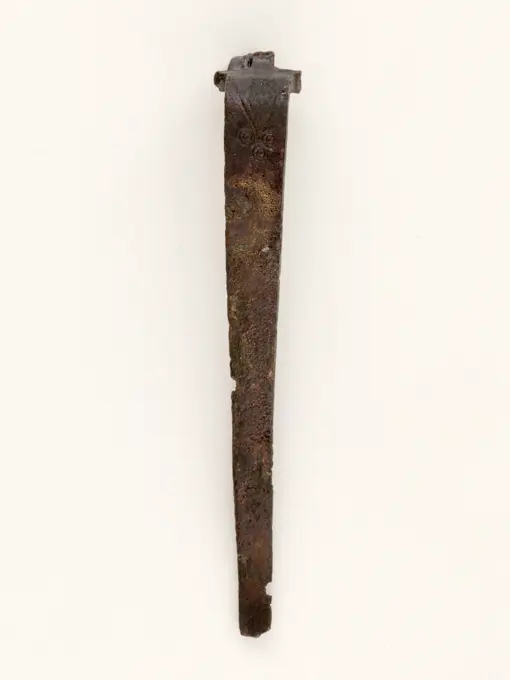
Fibula. Copper alloy. Gallo-Roman. Paris, Carnavalet museum. 51463-4 Staple, copper alloy, attachment, Gallo-Roman time, fibula, Gallo-Roman
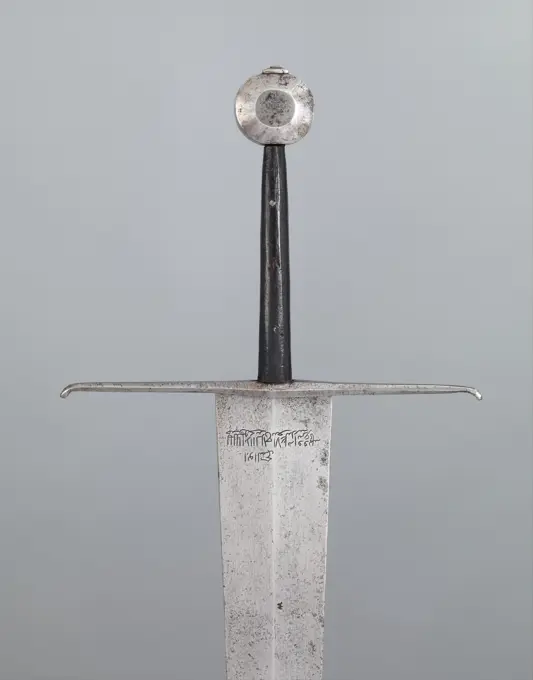
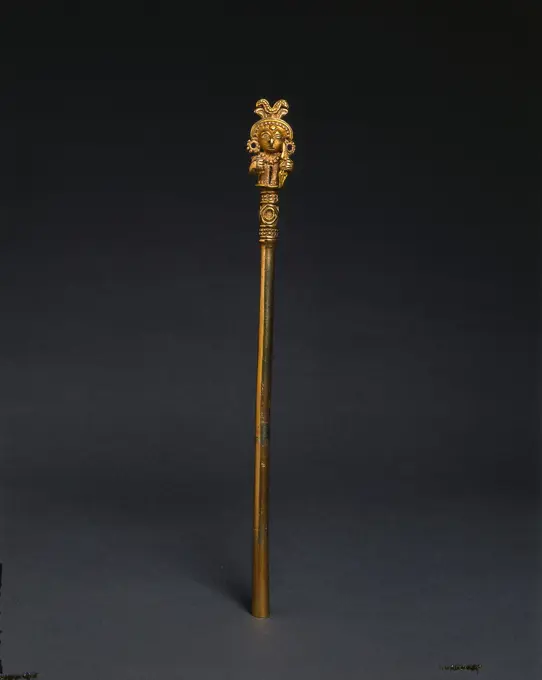
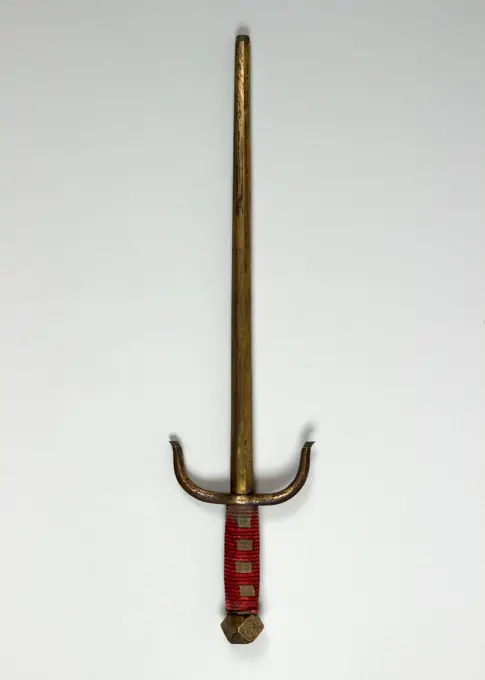
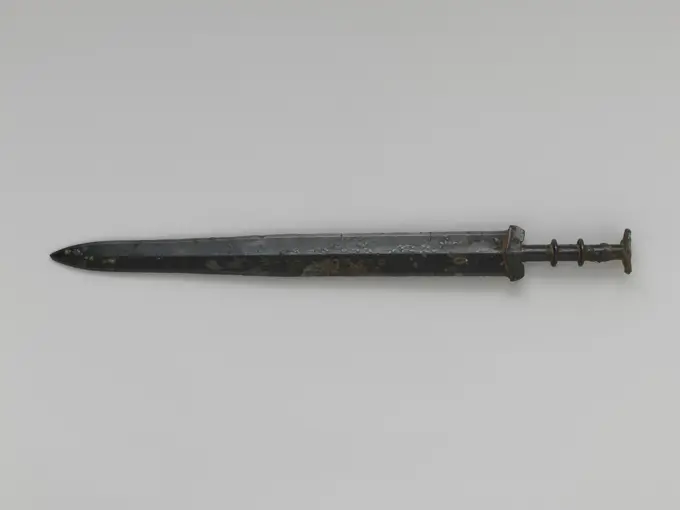
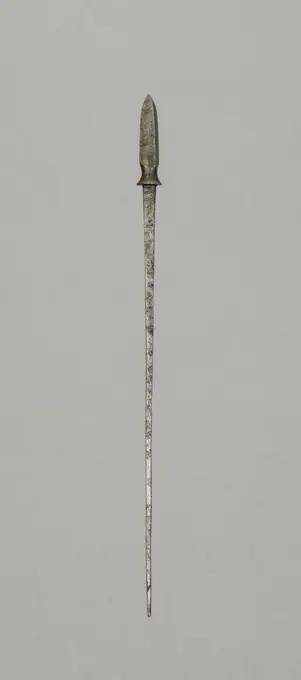
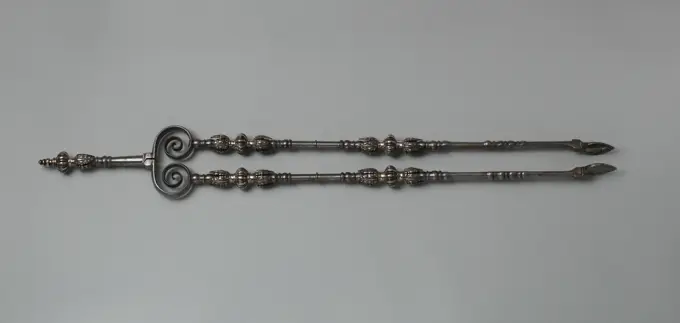
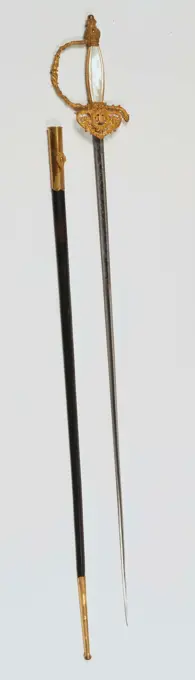
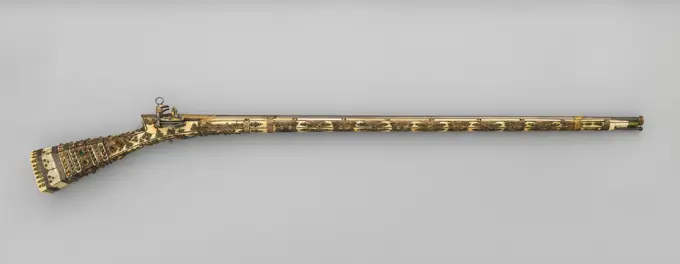
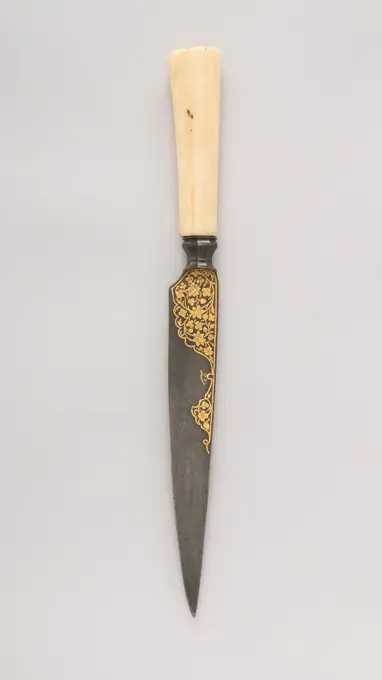
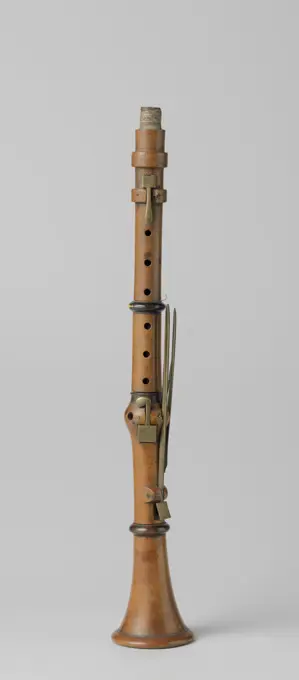
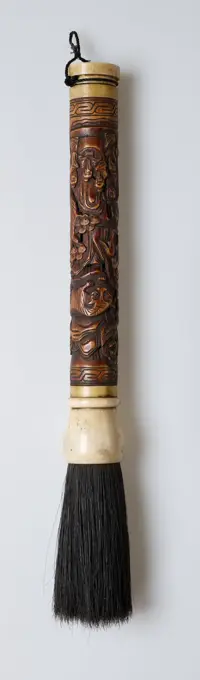
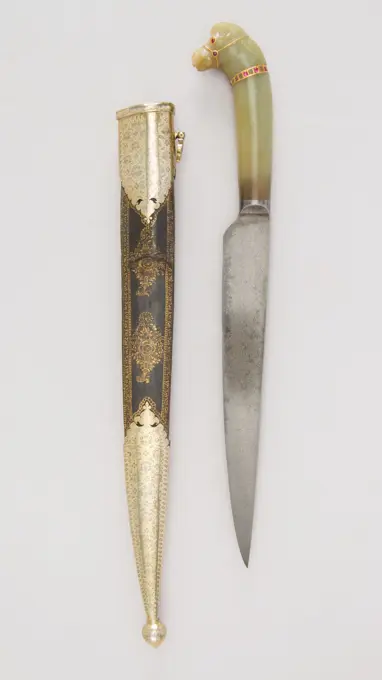
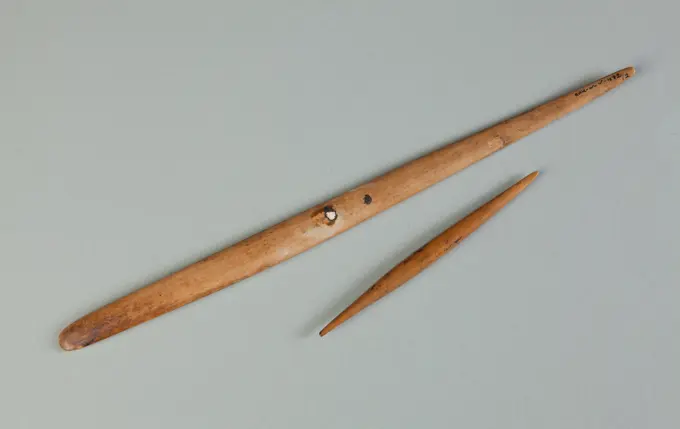
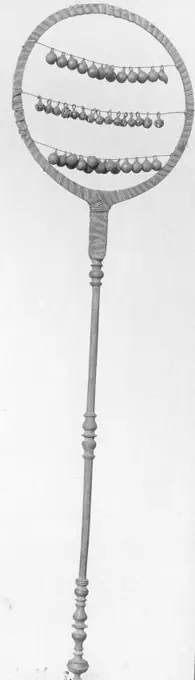
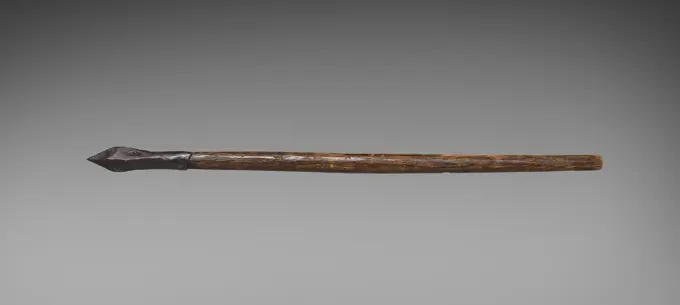
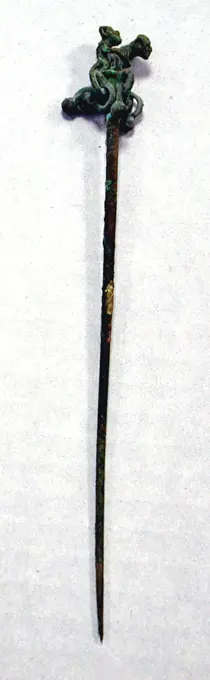
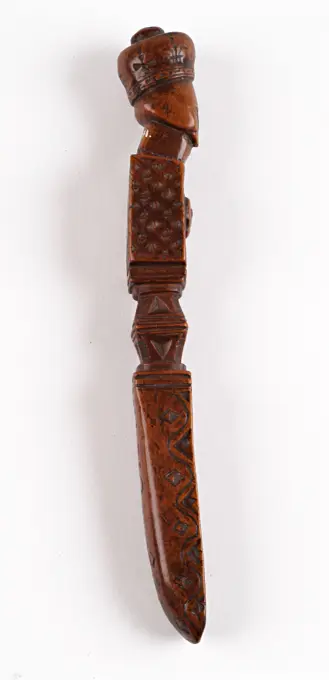
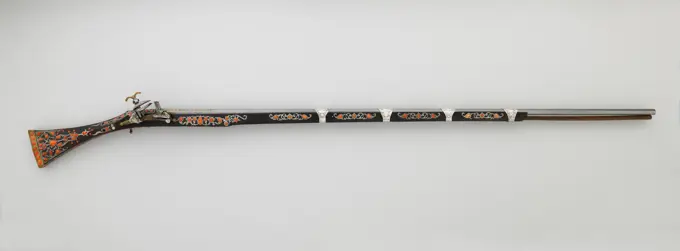
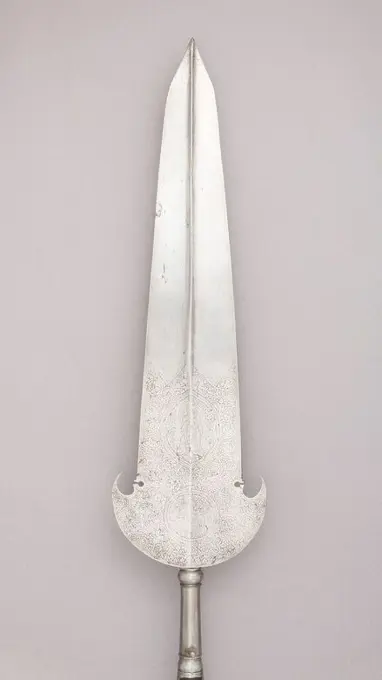
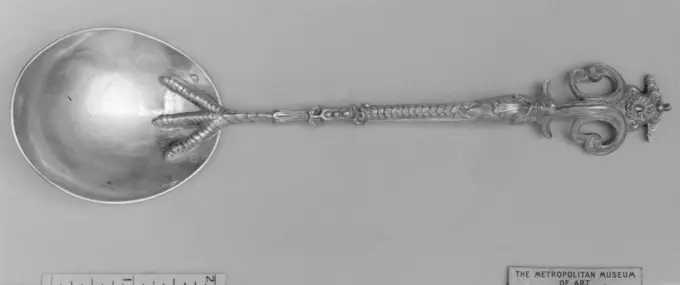
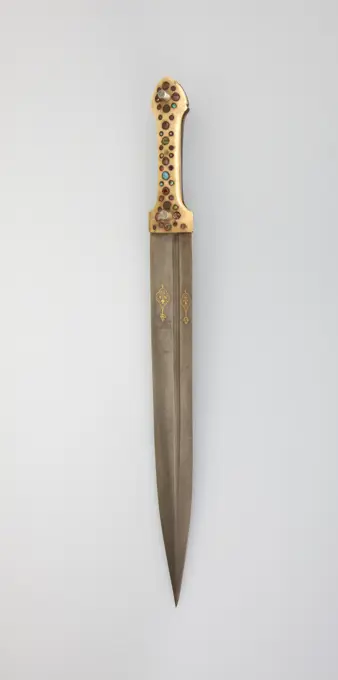
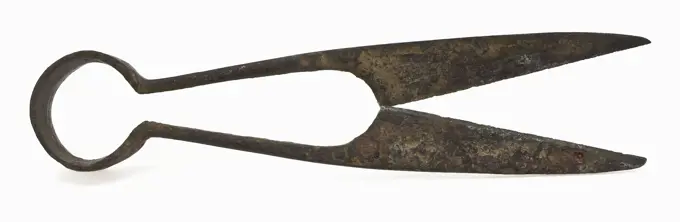
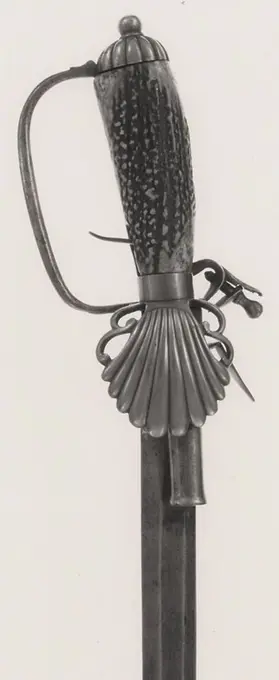
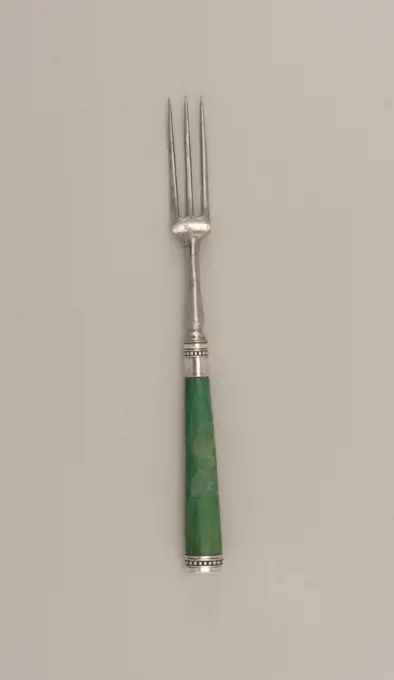
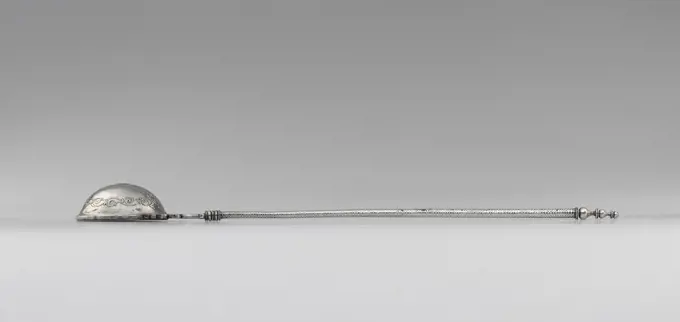
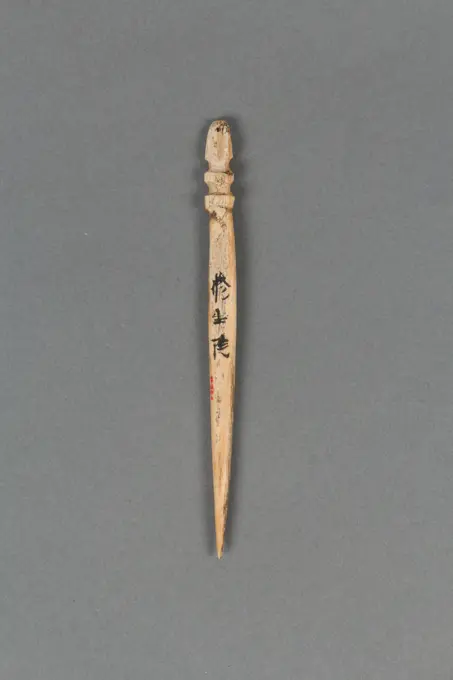
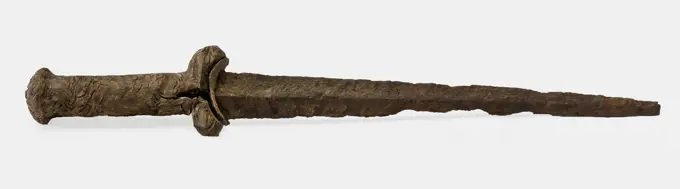
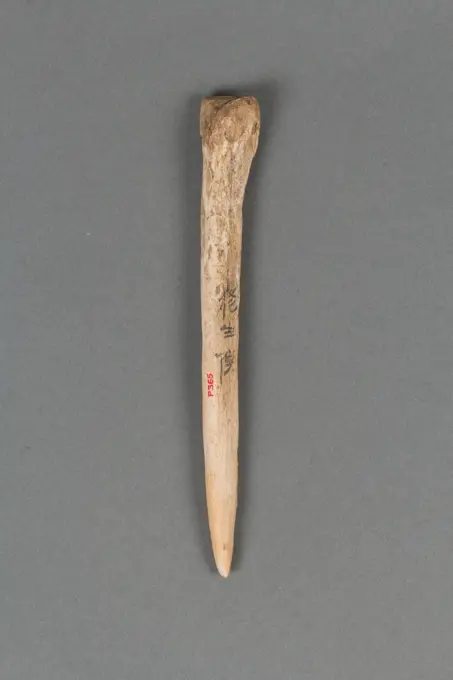
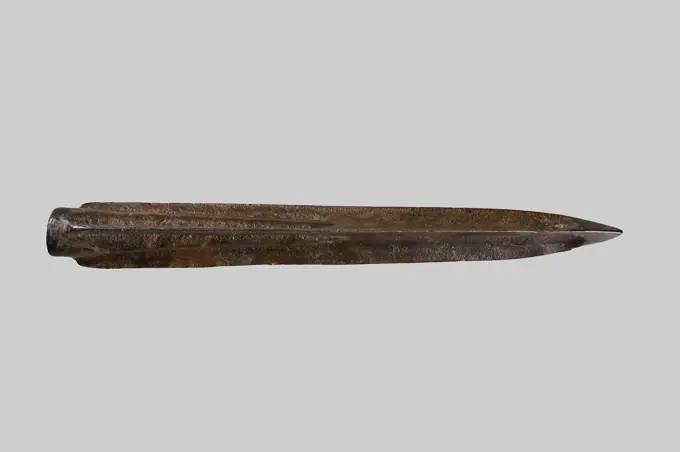
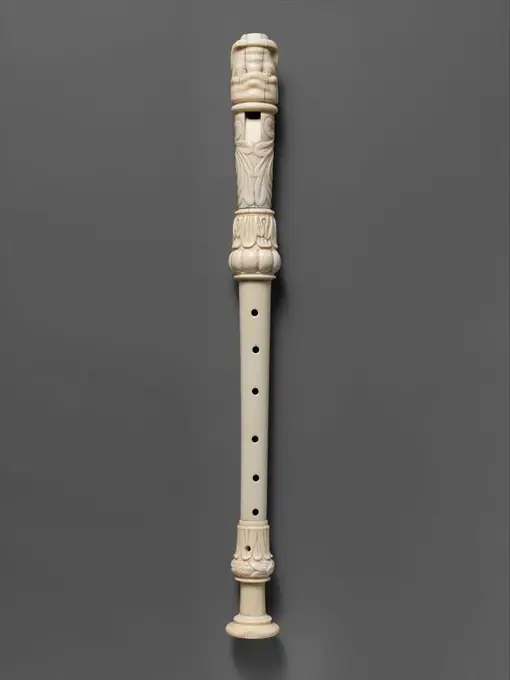
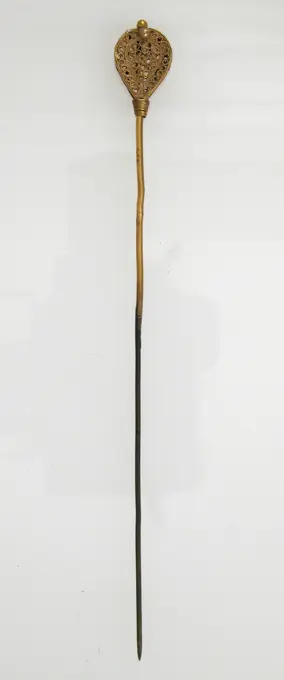
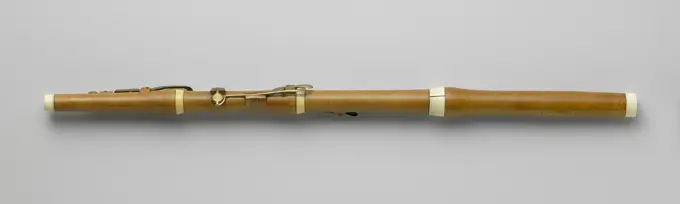
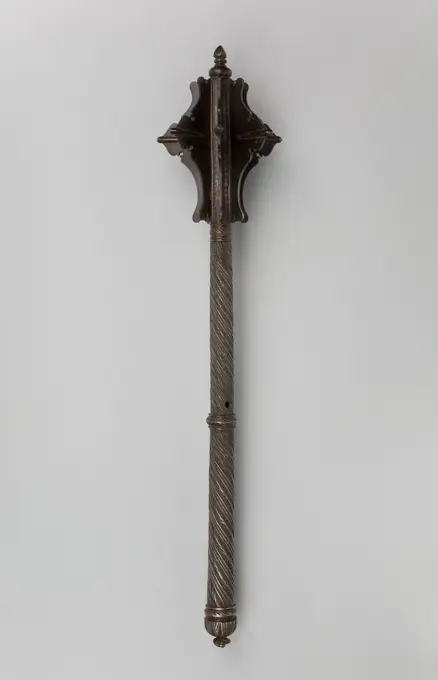
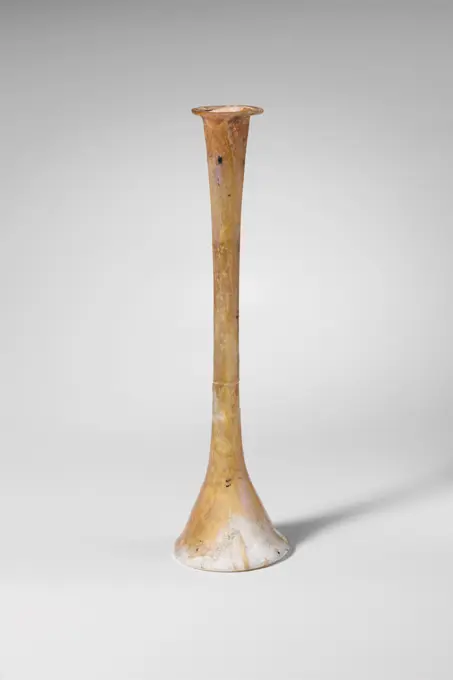
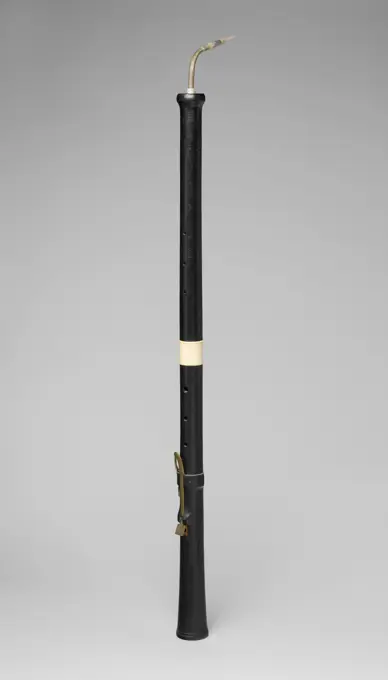
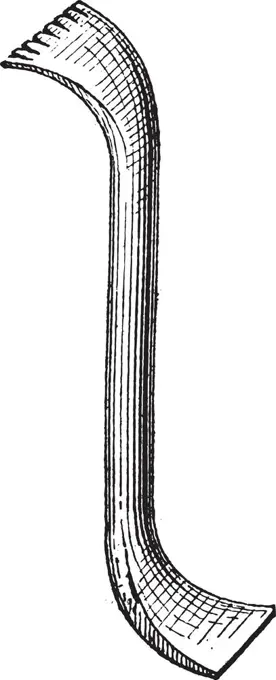
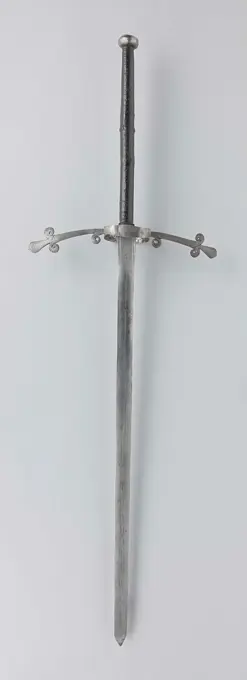
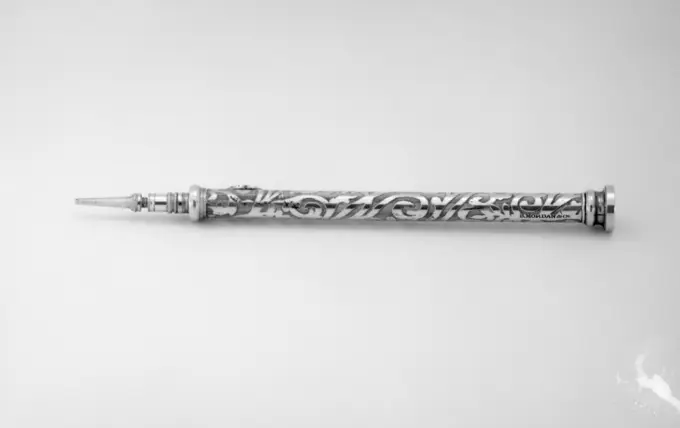
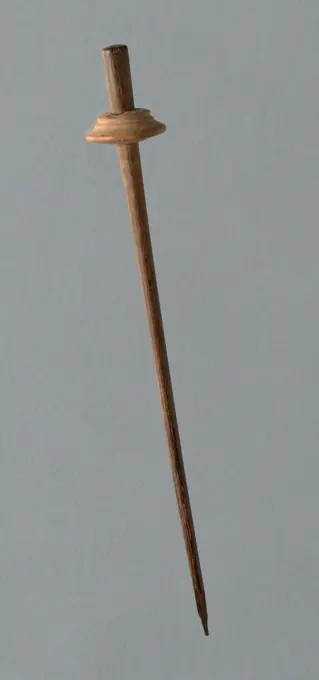
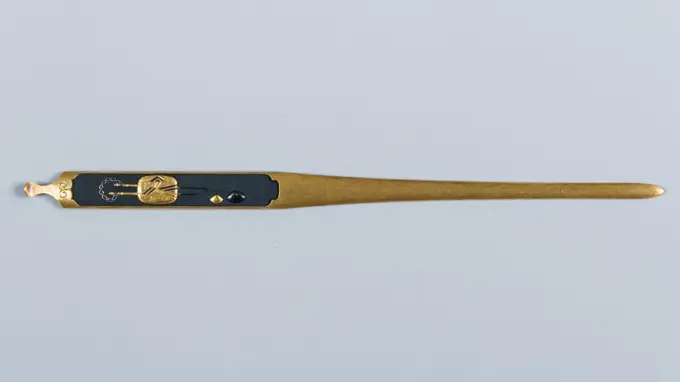
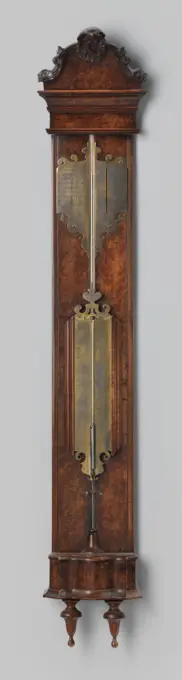
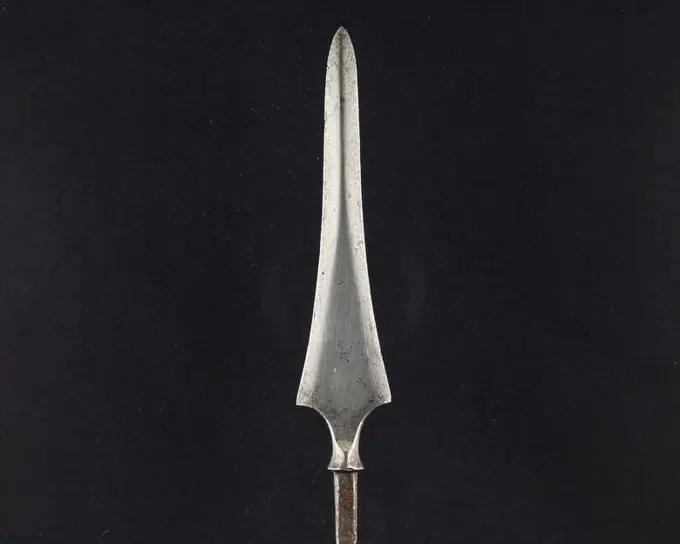
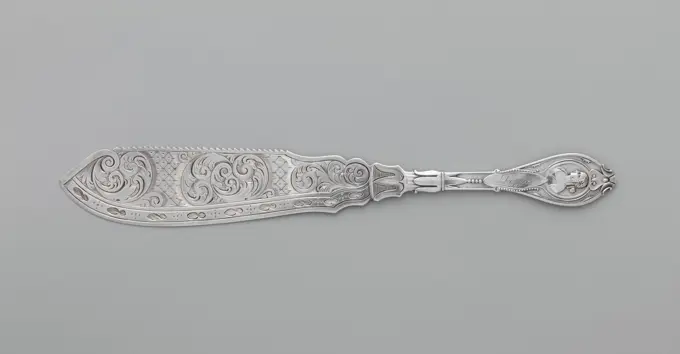
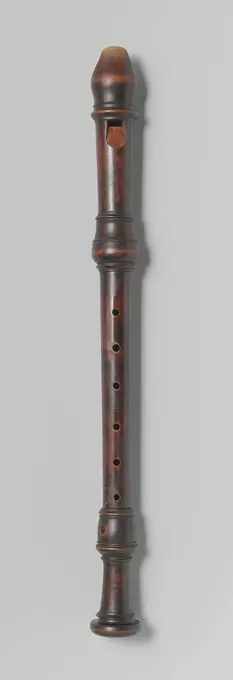
Alto recorder.Altot block, with seven holes from above and one of below. Marked Aardenburg on a banderole, a heart and including a lily.Sword from the Arsenal of Alexandria before 1419 European The Arabic inscription engraved on the blade of this sword indicates that it was part of the large group of European arms and armor once stored in the Mamluk arsenal in Alexandria, Egypt. Many of those pieces were taken as booty in the battles between Muslim and Christian armies in the Near East and Aegean regions; others were sent to the sultan as tribute, possibly by the king of Cyprus.The inscription reads in translation: "Donation of al-Mlik al Mu`ayyad Ab al-Nasr Shaykh to the armory in the frontier city of Alexandria [in the year 822 [A.D. 1419.". Sword from the Arsenal of Alexandria. European. before 1419. Steel, wood. SwordsLime Dipper, c. 1-800. Colombia, Calima region, Yotoco style, 1st-9th Century. Gold; overall: 22.8 cm (9 in.).Mace 18th-19th century Chinese. Mace. Chinese. 18th-19th century. Brass, cord. Shafted WeaponsSword China. Sword 61172Two Samples of Telegraph Cable for Mines, anonymous, 1865 - 1875 telegraph cable. sample Two samples with a core of seven copper wires in a thick insulating layer of a black plastic and paper. unknown copper (metal). paper.Arrow Point, 1700s. Japan, Edo period (1615-1868). Steel; overall: 17.7 cm (6 15/16 in.); head: 3.2 cm (1 1/4 in.).Tongs (part of a set) ca. 1675 British This set of fire tools 68.141.156-.159) was probably made for John Maitland on the occasion of his wedding to the Countess of Dysart. In 1647 Maitland raised an army to rescue Charles I. After the Battle of Worcester, when he was taken prisoner by Commonwealth troops, he was sent to the Tower. After his release (166) he became Prime Minister and Secretary of State. On May 1, 1672, he was created Marquess of March and Duke of Lauderdale, and on June 3 he was installed at Windsor as Knight of the Garter.. Tongs (part of a set). British. ca. 1675. Silver, iron. Metalwork-Silver In CombinationKnife, 19th century, 11 7/8 x 1 1/4 in. (30.2 x 3.2 cm), Wood, metal, United States, 19th centuryDegen in schede en foedraal behorende bij het ambtskostuum van Dr. A.H.J. Lovink.Degen with fire-digging copper hilt, openwork baffle plate with O.A. Garland and the national arm, three-sided iron etched blade with a trench on each side with garland decoration. Signed at the rear 'Frans Pauwels, Cage supplier in' s Gravenhage '. On front bracket: Dragon or Sable branch of braided gold thread that brushes with fire-gulbed iron pear (17-2). In black leather sheath and in brown sheep hand with cord closure.Miquelet Rifle late 18th century Turkish The miquelet is an early and sturdy form of flintlock popular throughout the Ottoman Empire from the seventeenth into the early twentieth century. Several elaborately decorated guns very similar to this example are still preserved in Istanbul, possibly made for the Ottoman Imperial guard.. Miquelet Rifle. Turkish. late 18th century. Steel, wood, ivory, copper alloys, mother-of-pearl, gold, silver, glass paste. Firearms-Guns-MiqueletDagger (Kard) dated A.H. 1220/ A.D. 1805-6 Iranian Daggers of this type, with straight, single-edged blades and guardless hilts, known as kards in Persian, were worn as everyday utility knives. This deluxe example has a blade of crucible (watered”) steel encrusted with gold flowers in relief and inlaid flush in gold with the maker’s name 'Ali Muhammad and the date.. Dagger (Kard) 25007Crossbow Bolt, 1500s-1600s. Germany, 16th-17th century. Wood, leather, steel; average: 37.2 cm (14 5/8 in.).Spoon 19th century European. Spoon 188223Clarinet, Noë Frères, c. 1800 Clarinet in C in three parts, from brown palm wood with five square brass valves and two dark brown rings. Paris wood (plant material). brass (alloy) Clarinet in C in three parts, from brown palm wood with five square brass valves and two dark brown rings. Paris wood (plant material). brass (alloy)Calligraphy brush, late 19th century, 13 × 1 1/2 × 1 1/2 in. (33.02 × 3.81 × 3.81 cm) (without hanging loops), Wood, bone, horse hair, China, 19th century, In Chinese literati culture, the brush, a writing implement, is known as one of the 'four treasures of the study' along with the inkstick, inkstone, and paper. Brush handles are commonly constructed from bamboo, but some brushes have handles of sandalwood, jade, carved bone or ivory, and other precious materials as demonstrated by these examples. During late imperial times, artists catered to the tastes of gentlemen collectors and elaborated brushes with motifs derived from folklore, legends, superstitious beliefs as well as religious subjects from Confucianism, Buddhism, and Daoism.Knife with Sheath 18th-19th century Indian, Mughal. Knife with Sheath 31479Short Sword ca. 5th-2nd century B.C. Vietnamese. Short Sword 25370Detail picture of rails in rail.Double flute (dvojnice), anonymous, c. 1800 - c. 1890 A wooden double whistle also known as Dvojnice. Dalmatia wood (plant material) A wooden double whistle also known as Dvojnice. Dalmatia wood (plant material)Sweight spearhead. Bronze Age. Copper alloy, cast iron. Coming from: Lit de la Seine. Paris, Carnavalet museum. Bronze age, copper alloy, weapon, cast iron, socket lance, tip, protohistory, protohistoricKnife, steel, silver (), Blade has straight-sided upper edge; lower edge tapering up towards to the point. Cast hollow handle of silver (), seamed, in form of St. George slaying the dragon. Base of handle engraved: 'Baiiof c.s 1672...', England, ca. 1672, cutlery, Decorative Arts, KnifeModeling Patulas in Clay Sculptural Sculptures Teofila LenartowiczTrammel 18th century The trammel allowed a cook to adjust the cooking temperature by either raising or lowering vessels hanging above the fire. The tool consists of two permanently joined hooks that slide vertically and lock into place at frequent intervals. The device would be suspended from a lug pole placed high inside the fireplace.. Trammel 8769PIEZAS DE ARMONIO POR DONDE SE PRODUCE EL SONIDO.Rankinkan late 19th century Indian This iron hoop strung with crotal bells is a very rare example of an instrument which aided in the induction of trance.. Rankinkan 500757Crossbow Bolt, 1600s. Germany, 17th century. Wooden shaft, steel head; overall: 36 cm (14 3/16 in.).Ceremonial Knife (Tumi) 12th-15th century Chimú. Ceremonial Knife (Tumi). Chimú. 12th-15th century. Copper (cast). Peru. Metal-ImplementsCarved Boxwood Apple Corer, 1690. Pinto Collection - Purchased from Edward H Pinto, 1965.. Made in England. These small scoops enabled people who had lost their teeth to eat foods such as apples and pears. They have been in use since prehistoric times and must rank as one of the oldest eating utensils in the world. Apple scoops were very personal items and in some areas it was considered bad luck to share one. Most scoops tended to be quite plain and made from animal bone. Elaborate ones, like this, often seemed to be given as love tokens.Dagger (Katar), 1800s. India. Steel with gold damascening; overall: 58.8 cm (23 1/8 in.); blade: 30.8 cm (12 1/8 in.).Forket ,, c. 1699 - c. 1799  Furket or musket fork. The shaft is made of wood and has an iron point as a shoe. Low Countries Fork, shoe: Iron (metal). Shaft: Wood (Plant Material)Dubbelloops flint hunt rifle, Jean Joseph Tomson, c. 1815 - c. 1822 flintlock gun The two locks are mounted on the left and right; So -called French rooster, namely in the form of a comma, engraved with a flower, a fern and a palmet and with a leaf attached to it; The final plate is engraved with a flowerpot and a signature on the judiciary and the place name on the left slot; Stamped on the inside with NM; Two tractors. The two damats and tanned runs are connected by means of hollow ribs; inlaid on the back with gold (); Basculating Loop; The tail of the loop is engraved with praise and flowers and the end has the shape and is engraved like a pineapple; Iron visor grain; Both walks are marked at the bottom with a signature and 44; Two tanned iron loading stickers are soldered on the rib on the underside. The flask consists of half a frontade cut into relief with praise; accentuated gun grip with a dolphin as the bottom, the head of which bite in the handle; For the slot crosslings groClerical sword with a vagina and a slingMiquelet Gun lock and stock dated A.H. 1172/A.D. 1758-59; barrel, 18th century lock and stock, Algerian; barrel, European Coral-inlaid firearms were a specialty of Algerian and Tunisian gunmakers in the eighteenth century. Shaped coral plaques were fitted into a silver framework to create a colorful decoration. The dey of Algiers presented examples to European rulers as part of his nations trade negotiations, and the bey of Tunis presented one to President Thomas Jefferson in 1805. The barrels of these guns are of European manufacture intended for the North African market.. Miquelet Gun 32267Knife with a Standing Tiger on the Handle 7th-6th century B.C. Northeast China. Knife with a Standing Tiger on the Handle. Northeast China. 7th-6th century B.C.. Bronze. MetalworkPartisan. Culture: French. Dimensions: L. 8 ft. 4 1/2 in. (255.1 cm); L. of head 28 1/2 in. (72.4 cm); W. 6 7/8 in. (17.5 cm); Wt. 6 lbs. 9 oz. (2976.7 g). Date: ca. 1600. Museum: Metropolitan Museum of Art, New York, USA.Spoon 19th century German, Hanau. Spoon. German, Hanau. 19th century. Silver gilt. Metalwork-SilverFork with a handle (goat);  18th century (1701-00-00-1800-00-00);Kama kanjarFork (The Netherlands or Flanders); silver; L x W: 17.4 x 1.4 cm (6 7/8 x 9/16 in.); The Robert L. Metzenberg Collection, gift of Eleanor L. Metzenberg; 1985-103-74Captured Ordnance, anonymous, c. 1750 - c. 1850 lilla Lilla, bronze front loader on Mik. The round loop has a trumpet -shaped mouth and the rear section is thicker; In three places the loop with rattan is inserted. The hollow tail for a wooden boundary has largely been demolished. A target button before the Zundgat. The eyes of the mik are completely forged around the taps, so that the piece cannot be lifted out of the mik. Indonesian Archipelago (possibly) bronze (metal). rattan. bamboo forging  IndonesiaBall-headed club -Scarf Pin (France); gold, silver, diamonds, enamel; Overall: 6.7 x 1 cm (2 5/8 x 3/8 in.)Falconer's Horn German 18th centuryBelt Tape, 78 11/16 x 1 3/8 in. (199.87 x 3.49 cm), Cotton, ChinaBone awl. Length 10 cm Diameter 0, 5 cm (12th- 14 th) - Medieval period belonging of the " Burgo de Santiuste Museum" in Alcalá de Henares. (Madrid). SPAIN.Pinch cutter with two pointed blades and round eye, pinch cutter scissor cutting tool soil find iron metal, archeology cutHunting Sword combined with Flintlock Pistol. English. Date: 1725. Dimensions: L. 81.2 cm (32 in.)Blade L. 67.5 cm (26 5/8 in.)Wt. 1 lb. 9 oz. Steel, brass, and horn. Origin: England. Museum: The Chicago Art Institute, Chicago, USA.fork, steel, silver, ivory stained green, Part of a set of knives and forks ((1959-56-1-a/f), where a/d are knives, and e-f are forks)., fork (e,f): tapering, stained green ivory handle with beaded silver cap terminal and ferrule with three prong steel tines., England, late 18th century, cutlery, Decorative Arts, forkCopper alloy spearhead Cypriot ca. 2500-2000 BCE Leaf-shaped blade with a hooked tang. View more. Copper alloy spearhead. Cypriot. ca. 2500-2000 BCE. Bronze. Early Bronze Age. BronzesTraditional wooden pocket knife isolated on a white background. Traditional wooden pocket knife isolated on white backgroundLadle; 50-25 B.C; Silver; 38.9 × 6.8 cm (15 5,16 × 2 11,16 in.)Knife with Sheath. Culture: Philippine, Moro. Dimensions: L. with sheath 19 3/8 in. (49.2 cm); L. without sheath 18 7/8 in. (47.9 cm); L. of blade 14.5 in. (36.8 cm); W. 2 3/4 in. (7 cm); Wt. 14 oz. (396.9 g); Wt. of sheath 5.4 oz. (153.1 g). Date: 18th-19th century. Museum: Metropolitan Museum of Art, New York, USA.Serving Knife 15th-16th century Austrian This serving knife, and its pair (see ac. no. 51.118.3), has been attributed to Hans Sumersperger of Hall, the knifesmith of Maximilian I, at whose splendid court the influence of northern late Gothic and Italian Renaissance met. This masters name appears in the royal accounts of 1492-1498. The brass handles are inlaid with bone, walnut, and carved mother-of-pearl. The steel blades are flat and thinly ground. Although there are no makers marks on either the handles or the blades, the style, design, and iconography connect these knives with other works by Sumersperger. Both these knives are related to hunting knife sets of a Burgundian type that became popular after his marriage to Mary of Burgundy. It is possible that these two serving knives (the broad tongue-shaped blade of one has been repaired) were themselves part of a complete hunting set which would have included two single-edged knives of varied size for skinning and cutting, a more dePeak of iron.peak or iron, soil find.Hairpin Japan The Jmon period is the earliest period in Japanese history, lasting from roughly 14,000 to 300 BCE. Using materials such as bone, antlers, and stone, the Jmon people created not only utilitarian objects, such as harpoons and arrowheads, which supported their hunter-gatherer lifestyle, but also a variety of jewelry and objects used for religious purposes. Hairpins such as this one are relatively common, and may have had a spiritual as well as decorative purpose.. Hairpin. Japan. Bone. Final Jmon period (ca. 1000-300 B.C.). BoneKidney dagger with double-edged blade, kidney dagger dagger knife stab weapon weapon foundations wood iron metal, forged Knife with characteristic shape of the baffle plate in the form of two balls on round metal base. The blade is double-edged and rhombic in cross-section and is suitable for general carving archaeology clogged dagger dagger knife dagger ball dagger decoration status symbol personal equipment defense clothing accessory militariaCosmetic Applicator or Pin. Afghanistan, 3rd century. Jewelry and Adornments; pins. IvoryBone knife handle. Culture: Roman. Dimensions: H.: 2 13/16 in. (7.2 cm). Date: 1st-2nd century A.D..With lion's head. Museum: Metropolitan Museum of Art, New York, USA.Saber 16th-19th century Javanese. Saber. Javanese. 16th-19th century. Horn. Jawa. SwordsBone hairpin ca. 1st century A.D. Roman With plain round knob.. Bone hairpin. Roman. ca. 1st century A.D.. BoneTweezer-Razor Implement. Dimensions: l. 13.3 cm (4 1/4 in). Dynasty: Dynasty 18. Date: ca. 1550-1295 B.C.. Museum: Metropolitan Museum of Art, New York, USA.Harpoon head Japan The Jmon period is the earliest period in Japanese history, lasting from roughly 14,000 to 300 BCE. The Jmon people were primarily hunter-gatherers, hunting land animals and gathering vegetables and nuts on the land as well as hunting and fishing at sea. Harpoon heads such as this one testify to the importance of seafood in the diets of some Jmon communities, especially those close to the sea. Fish bones found at Jmon archaeological sites indicate that the Jmon hunted fish not only close to the shore but also farther out in the open sea, where larger fish could be caught. There is even evidence that the Jmon ate pufferfish, a poisonous fish considered a delicacy in modern Japan.. Harpoon head. Japan. Bone. Final Jmon period (ca. 1000-300 B.C.). BoneGrotto;  1. PO. 1 thous. BC ; New Easyrian period (-1000-00-00--501-00-00);Assyria, arrow caves, newlyasrian period (approx. 1000 - approx. 600 BCE)vintage carpenter hammer isolated over white background, clipping pathKnife (possibly Spain); steel, brass, horn; L x W: 29.8 x 3.1 cm (11 3/4 x 1 1/4 in.); The Robert L. Metzenberg Collection, gift of Eleanor L. Metzenberg; 1985-103-14Architectural Support with a bagpiper 1500-1510 British or French. Architectural Support with a bagpiper 469954Alto Recorder in F. Culture: German. Dimensions: Height: 19 1/8 in. (48.6 cm). Maker: Johann Benedikt Gahn (German, Nuremberg 1674-1711 Nuremberg). Date: ca. 1700.Johann Benedikt Gahn was admitted as master in the Nürnberg wood turners guild in 1698. Specializing in musical instruments he maintained a workshop until his death in 1711. About sixteen recorders and a few oboes of ivory or boxwood have survived. Some of his recorders, like this one, feature a carved decoration with acanthus leaves and a mask, a motive, linked to Nürnberg, and appearing on other instruments by other makers. It occurs on peg boxes of viols and on recorders of the famous Nürnberg woodwind maker, Johann Wilhelm Oberlender the Elder (1681-1763). The alto recorder, one of several members of the recorder family, became the favorite size after 1700 and many chamber pieces were written for it. It was also assigned solo tasks in orchestral works of the period. Museum: Metropolitan Museum of Art, New York, USA.Alto recorder.altotblute, Marked v. Aardenberg.Blade with plate guide and attached handle protector, knife cutlery ground find iron metal, Blade with plate rail and forged handle protector Plaatangel fitted with three holes for fastening boards archeology Rotterdam rail tunnel cutting food Soil discovery: rail tunnel Rotterdam.Hairpin 7th century Frankish. Hairpin 465318 Frankish, Hairpin, 7th century, Gold, Overall: 5 1/16 x 7/16 x 3/16 in. (12.9 x 1.1 x 0.4 cm). The Metropolitan Museum of Art, New York. Gift of J. Pierpont Morgan, 1917 (17.192.249)Fishing rod -Flute.Flute of palm wood with seven valves. Signature: Streiwolf Göttingen.Decorated "Shark" Skin (Kazari-zame) ca. 1800-1850 Japanese This decorated "shark" skin was a highly valued gift in the Edo period, as high quality rayskin, harvested in Indonesia and Thailand, was difficult to obtain owing to Japan's closed door policy. Rayskin was used for sword grips and decorated shark skins of this type were a common gift made within the samurai and daimyo ranks, where the material was especially appreciated.. Decorated "Shark" Skin (Kazari-zame) 32829Mace Made 1545-1555 Germany. Steel and iron .Glass perfume bottle 3rd century A.D. Roman Colorless with greenish tinge.Outsplayed rim, folded unevenly over and in; tall, concave, cylindrical neck, expanding at base to join imperceptibly with small conical body; deep concave bottom.Broken and repaired with holes in lower neck and base of side; bubbles, blowing striations, and black impurities; iridescence and creamy brown weathering.. Glass perfume bottle 249197Flint hunt rifle, Wernand Droogbrood, 1710 - 1715 flintlock gun The lock is equipped with a fire steel track in the form of a dolphin; Checked out in relief with browse vines and the screw of the rooster chiseled as a mask; The lock plate is chiseled with a mask with leaves on the tail and engraved with a signature. The loop is chiseled with praise around a classic warrior; A rib with an inscription runs on top; Stamped with the Wapen van Utrecht. The carrot -knotwood flask is cut with, among other things, praise. The iron fittings, apart from the four partially faceted loading stokkers, is chiseled in relief with figures, and consists of the tractor bracket, an ajour processed screw plate in the form of, among other things, a classic warrior, war trophies and praise, an ajour processed, award -winning thumb plate with a small, unprocessed central shield flanked by naked carriers with leaves, and a flask with a classic warrior and praise; The loading stick has a hood of cow horn. UtrecFruit Knife (France); Designed by F. Nicoud (French, active 1890); silver, steel, mother-of-pearl, gilding; L x W x D: 20 x 1 x 0.8 cm (7 7/8 x 3/8 x 5/16 in.)Vox Humana in F ca. 1800-1825 William Maurice Cahusac British The vox humana is essentially a tenor oboe pitched a fifth deeper than the typical oboe. It flourished in England and southern Italy between the 1730s and about 1810, when the English horn supplanted it. The vox humana features an undecorated straight shape without a flaring bell. In England, it was usually used in double reed bands. This is one of the latest vox humanas made in England.. Vox Humana in F 501711Part of a loom ca. 2030-1640 B.C. Middle Kingdom. Part of a loom. ca. 2030-1640 B.C.. Wood. Middle Kingdom. From Egypt, Upper Egypt, Thebes, Asasif, East of Pabasa, Radim, MMA excavations, 1918-19Price in the form of a goose feather with the year 1730 and the coat of arms of Amsterdam.prevers of Silver in the Form of a Goose Feather, On Which The Cast, Crowned Weapon of Amsterdam, Held by Lions Standing on Two Leaf Volutes of a Culot, Has Been Applied. This includes The Cast Year 1730 Appliqué. The Figure VI is engraved in the shaft.Crowbar, vintage engraved illustration. Dictionary of Words and Things - Larive and Fleury - 1895Two-hander.This two-hander was probably conceived and made as a ceremonial weapon to be carried in civic guard processions. The bearer of such a sword was the captain of arms, a non-commissioned officer responsible for the militia companys arms and armour. These were kept in the city armoury.Clasp Knife (Chaqu). Culture: hilt, Persian; blade, British. Dimensions: L. 8 1/4 in. (21 cm); L. of grip 4 5/8 in. (11.7 cm); W. 1 in. (2.5 cm); Wt. 6.5 oz. (184.3 g). Date: ca. 1825-1900. Museum: Metropolitan Museum of Art, New York, USA.Pencil with eraser and lead holder (part of a set) 1848-49 S. Mordan & Co., England The firm of Nicholls & Plincke was founded by members of the relatively large community of English silversmiths and craftsmen working in Saint Petersburg. After 1840 it was one of the most important retailers of luxury items before Carl Fabergé overshadowed all competitors. Several contemporary Saint Petersburg newspapers praised the high-quality products of the magasin anglais Nicholls & Plincke.According to the donor's family tradition, this rare set with more than fifty items bearing the monogram CMI was "originally made for and used by Colin Macrae Ingersoll 1819-1903, when he accompanied his father, Ralph Isaacs Ingersoll 1788-1872, to the Court of Czar Alexander II of Russia, where the latter served President James Knox Polk 1795-1849 as Minister Plenipotentiary from 1846 to 1848.. The family story has always been that the set and case were made for stagecoach travel in Russia."Plain silWooden Spindle with Ceramic Whorl Made 1000-1476 Peru. Wood .Oboe, Heckel, c. 1850 Hobo palm wood with typical applications: two open rings, eleven valves with 'basket rolls' (to be able to slide easily) and a 'folding valve' B over the back. The third gap is double. The oboe has four ivory rings and a removable stamp. Marked on all parts: Heckel / Biebrich. Biebrich ivory. ebony (wood). silver (metal) Hobo palm wood with typical applications: two open rings, eleven valves with 'basket rolls' (to be able to slide easily) and a 'folding valve' B over the back. The third gap is double. The oboe has four ivory rings and a removable stamp. Marked on all parts: Heckel / Biebrich. Biebrich ivory. ebony (wood). silver (metal)Two-piece bronze mold for spoon, mold casting tool tools kit metal_metal bronze wood iron, cast Two-piece bronze mold for pouring spoon with round bowl and needle as transition to the stem with pied the biche as an end Rotterdam tingieterij tinnegieter tin Meeuws Druy craft Forms come from the originally 18th century Rotterdam tinnegieter J Druy. The large molds that were not signed or dated were the property of the tinker guild and were rented to the small tin caster.Tobacco Pipe, 1700s to mid-1800s. Japan, Edo period (1615-1868). overall: 18.8 cm (7 3/8 in.).Tangent sight. A long set-up rod, consisting of a square iron rod with pyramid-shaped top where grooves run across. A scale has been applied to one side, from 8 to 30: the distance between the numbers is exactly 1 cm. This and NG-MC-1889-29-B both fit in support NG-MC-1374.Parrying Dagger for Pietro Antonio Martinengo, Count of Brescia (recorded 1644-1671). Italian, perhaps Brescia; Blade: probably Spanish. Date: 1650-1675. Dimensions: . Iron. Origin: Italy. Museum: The Chicago Art Institute, Chicago, USA.Set of Sword Fittings (Mitokoromono) 17th century Got Teij (Mitsumasa) Japanese These mitokoromono feature a design of an incense package and tongs for the incense game.. Set of Sword Fittings (Mitokoromono). Japanese. 17th century. Copper-gold alloy (shakud), gold, silverSceptre. Culture: India. Dimensions: H. 24 3/16 in. (61.5 cm); W. 2 11/16 in. ( 6.9 cm). Date: 18th century. Museum: Metropolitan Museum of Art, New York, USA.Barometer / Thermometer Gemerkt Ps. Wast Amsterdam., PS. Wast, 1785 - 1800 Barometer and thermometer on nuthout plate with a sliced head with shell ornament and dolphins. The thermometer is applied in the lower part, over the mercury column of the barometer. The sawn scale plate is made of copper. The mercury is glued with root nut wood, with a sliding lid and it has two legs, so that the instrument can also stand. The instrument was noted: "Ps. Wast Fecit Amsterdam". Northern NetherlandsNetherlands wood (plant material). walnut (hardwood). copper (metal). mercury Barometer and thermometer on nuthout plate with a sliced head with shell ornament and dolphins. The thermometer is applied in the lower part, over the mercury column of the barometer. The sawn scale plate is made of copper. The mercury is glued with root nut wood, with a sliding lid and it has two legs, so that the instrument can also stand. The instrument was noted: "Ps. Wast Fecit Amsterdam". Northern NetherlandsNetherlandsArrowhead (Yanone). Culture: Japanese. Dimensions: L. 10 3/4 in. (27.3 cm); L. of head 4 3/4 in. (12.1 cm); W. 1 in. (2.5 cm); Wt. 1.4 oz. (39.7 g). Date: 18th century. Museum: Metropolitan Museum of Art, New York, USA.Fire iron with copper buttons ..Oboe, Hendrik Richters, c. 1720 Oboe, ebony with ivory edges. Amsterdam ebony (wood). ivory Oboe, ebony with ivory edges. Amsterdam ebony (wood). ivoryCake Saw ca. 1865 Unknown The mid-nineteenth century witnessed an efflorescence of creativity in the American silver industry, fueled by the burgeoning middle classs increasing demand for refined luxury goods. Silversmiths devoted considerable time and creative energy to generating an endless variety of new designs and patterns. During the 1860s and 1870s silver flatware ornamented with portrait medallions inspired by antique coins and cameos enjoyed widespread popularity, with virtually every American silversmith producing their own proprietary "medallion" pattern. Although this cake saw cannot be attributed to a specific silversmith, the maker was clearly skilled and inventive, creating a medallion pattern that substitutes a contemporary figure for the traditional portrait of an ancient god, goddess, or warrior. The scrolling floral and vegetal designs on the blade further contribute to the charm and appeal of this object, a specialized flatware form designed to cut and serve cake..Arrowhead (Yanone) 18th century Japanese Although today Japanese warriors are renowned most for their swordsmanship, archery, especially from horseback, has been an essential part of samurai warfare and culture for centuries. Arrows were fitted with heads of varying shape according to their intended use in war, the hunt, or target practice. Arrowheads made for use on the battlefield incorporated different designs intended for specialized purposes such as the piercing of armor or to cause maximum damage to horses and unarmored personnel.Large arrowheads, pierced and elaborately chiseled with landscapes, birds, flowers, dragons, and Buddhist divinities, were created to be admired for the beauty of their metalwork and design rather than for use in archery. Such highly elaborate examples may have been made for presentation or as a votive offerings to a shrine.. Arrowhead (Yanone). Japanese. 18th century. Steel. Archery Equipment-ArrowheadsWalking-Stick Flageolet in A late 18th or 19th century German Walking-stick instruments of all varieties were popular in the eighteenth and nineteenth centuries. Novelty walking sticks, which might include umbrellas, flasks, guns, musical instruments, or other items were fashionable accessories for gentlemen of all ages. Flutes and violins were the most popular instrument walking sticks. Technical description: Three ebony sections with three horn rings, two nickel-silver rings, brass tip, seven front holes, one thumb hole, one brass key, four vent holes, horn thumb bushing, horn handle.There are the typical two small blow-holes in the horn handle, and two other blow-holes on the opposite side of the handle, plugged. (L. Libin, May 1977).. Walking-Stick Flageolet in A. German. late 18th or 19th century. Wood, brass, horn, nickel-silver. Germany. Aerophone-Whistle Flute-flageolet