Antique Tools and Hardware

A variety of historical tools and hardware, including fibulas, nails, and cooking utensils, reflecting craftsmanship from different eras.
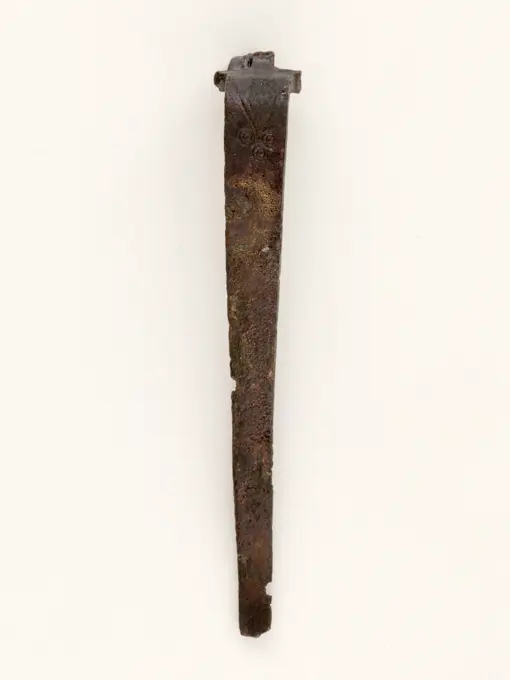
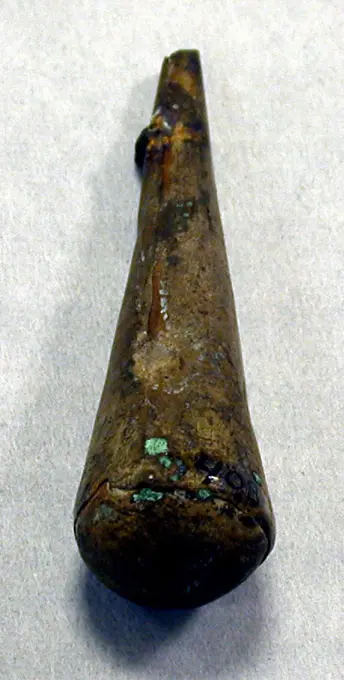
Fibula. Copper alloy. Gallo-Roman. Paris, Carnavalet museum. 51463-4 Staple, copper alloy, attachment, Gallo-Roman time, fibula, Gallo-Roman
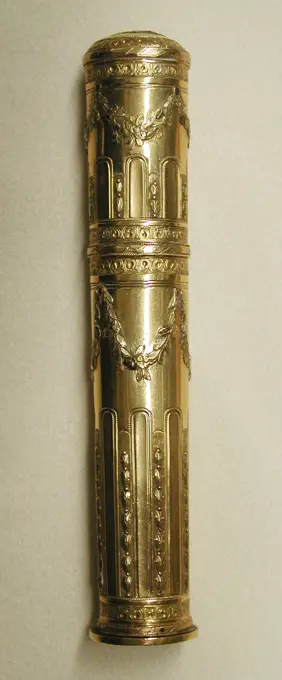
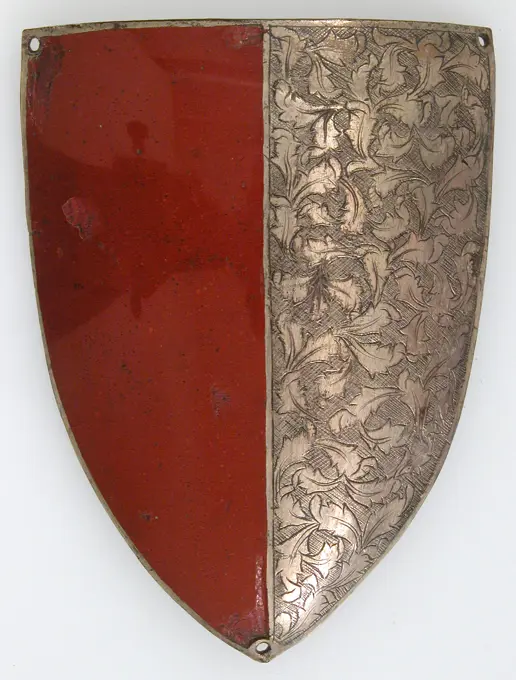
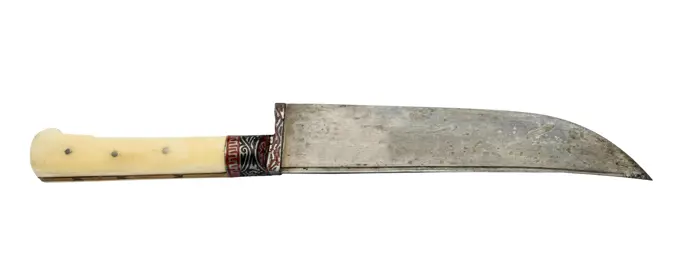
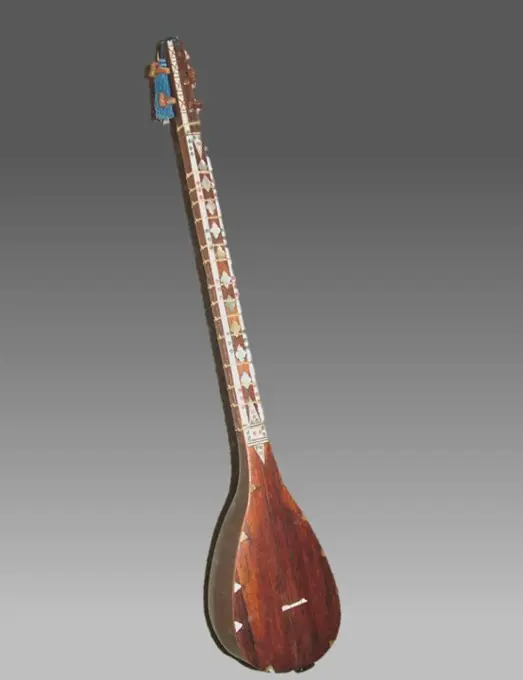
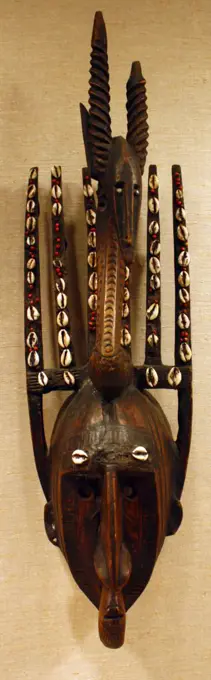
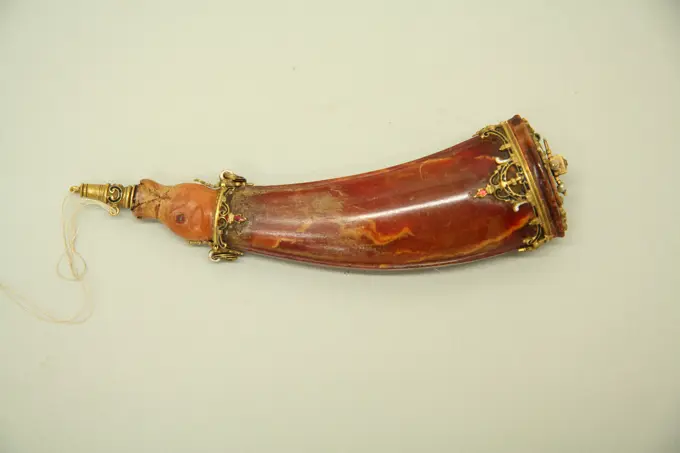
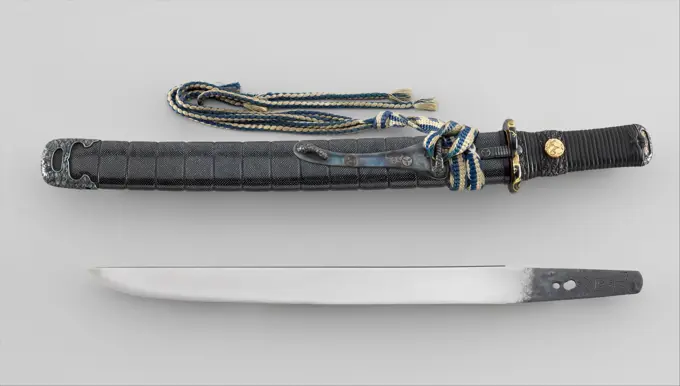
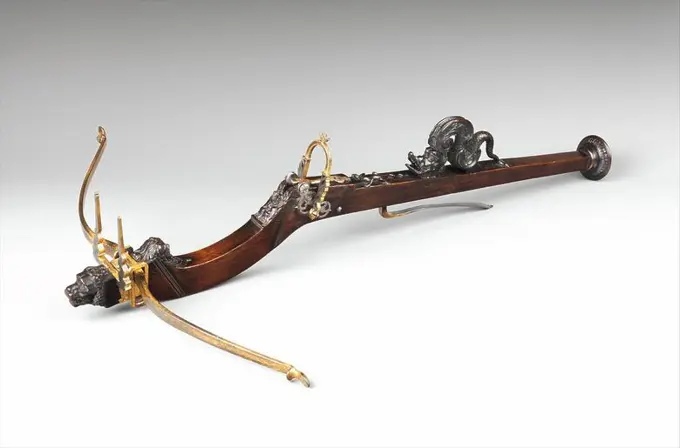
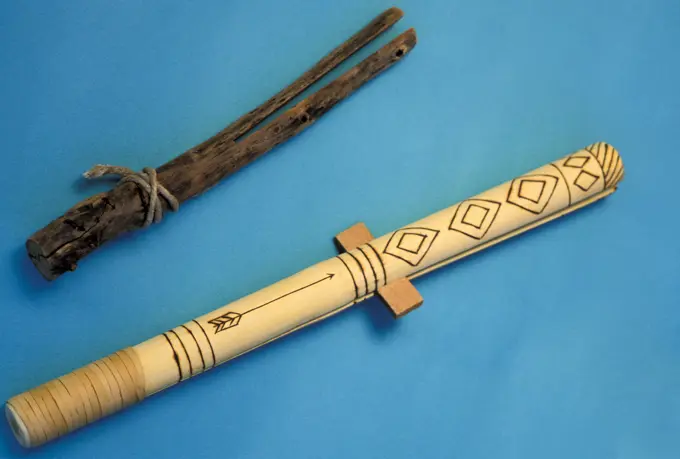
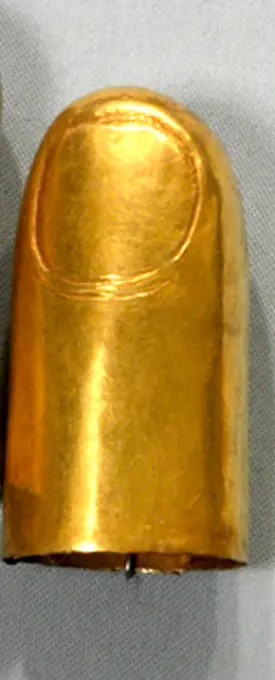
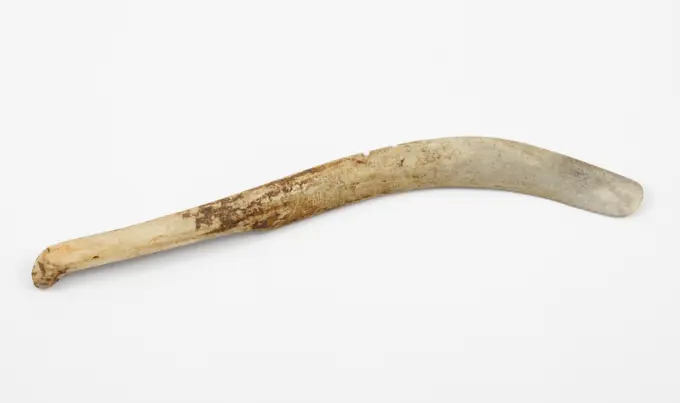
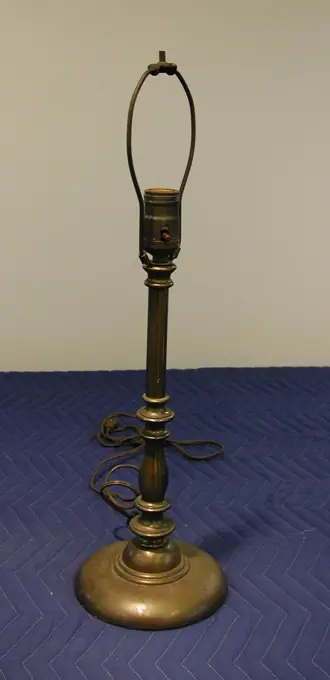
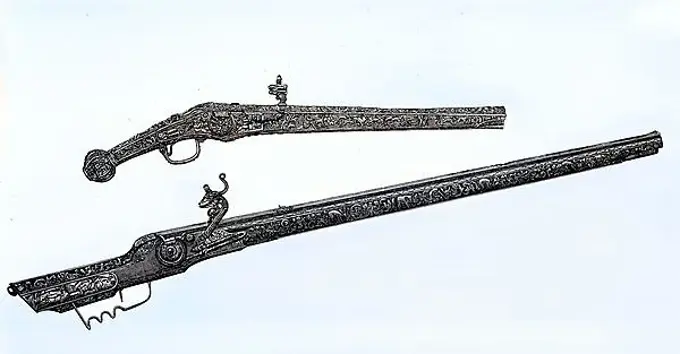
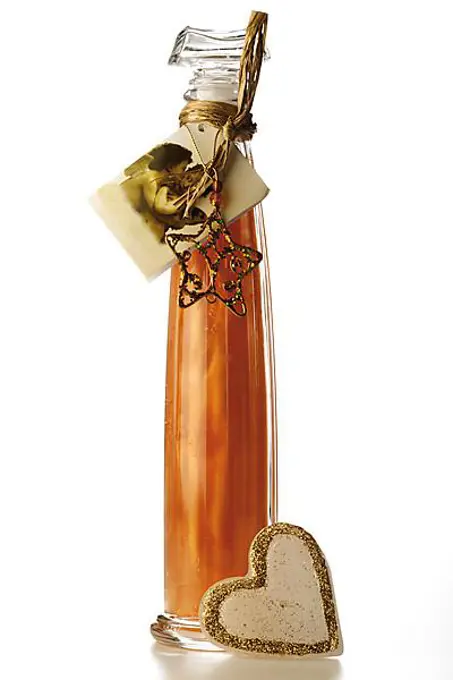
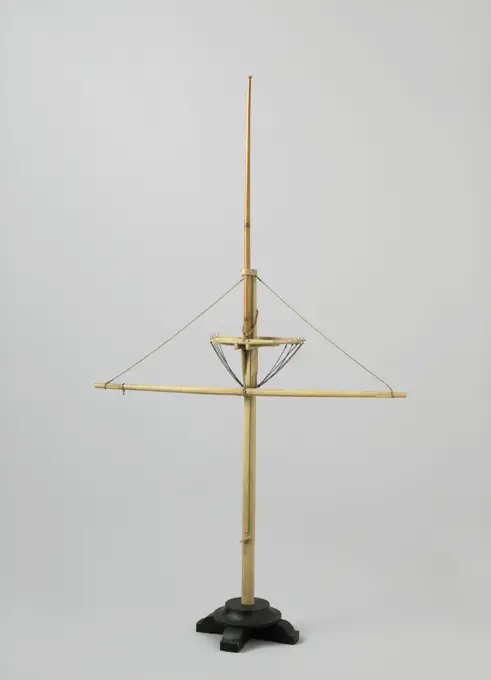
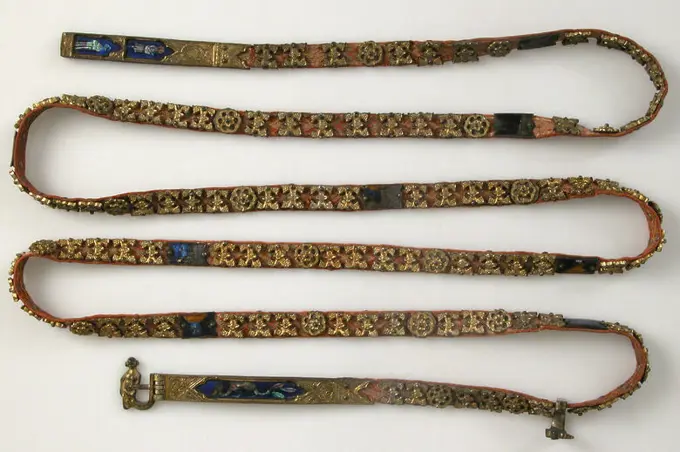
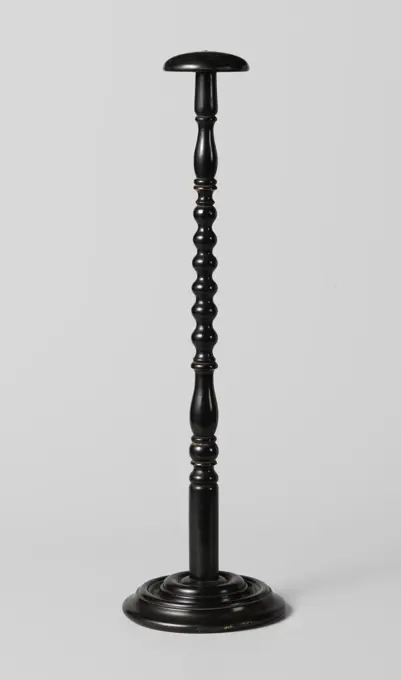
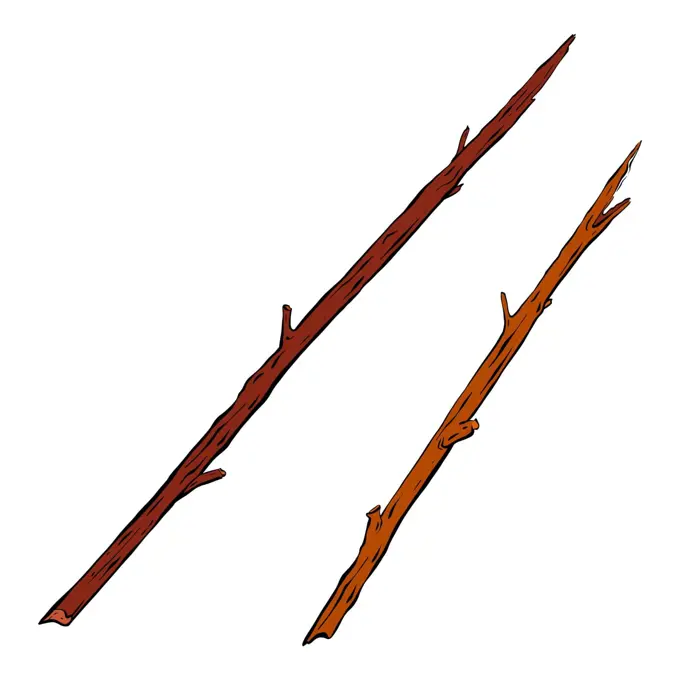
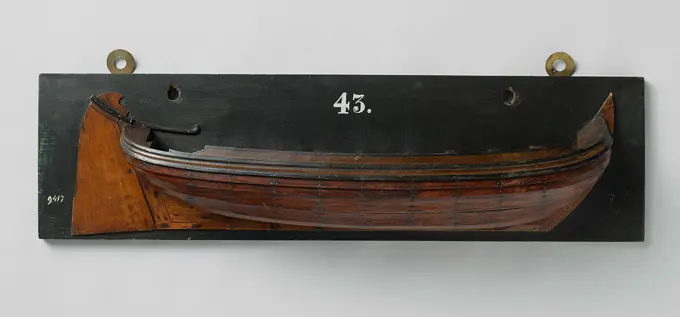
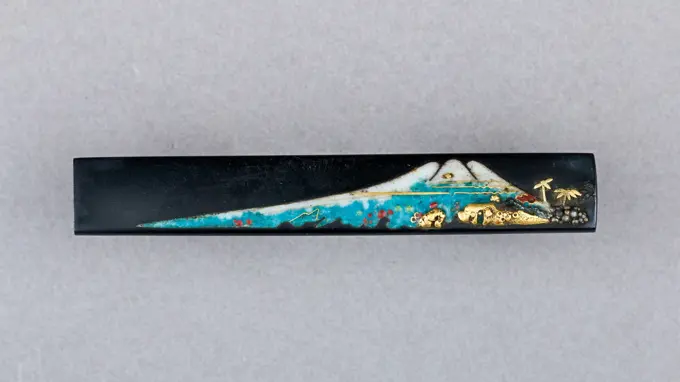
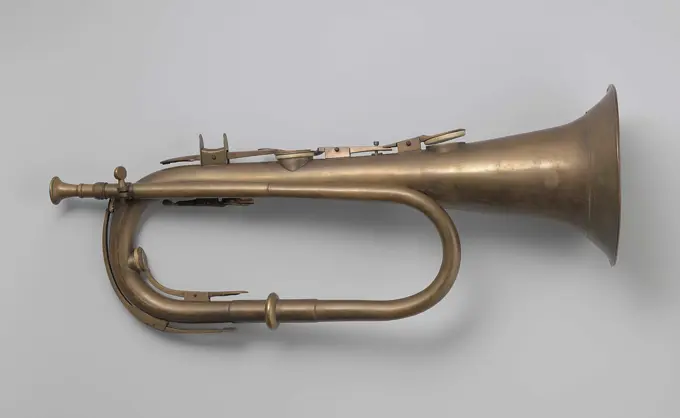
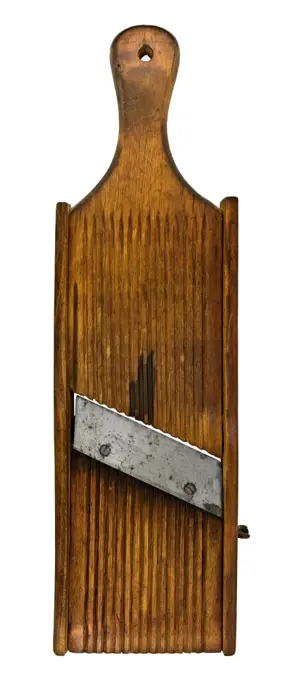
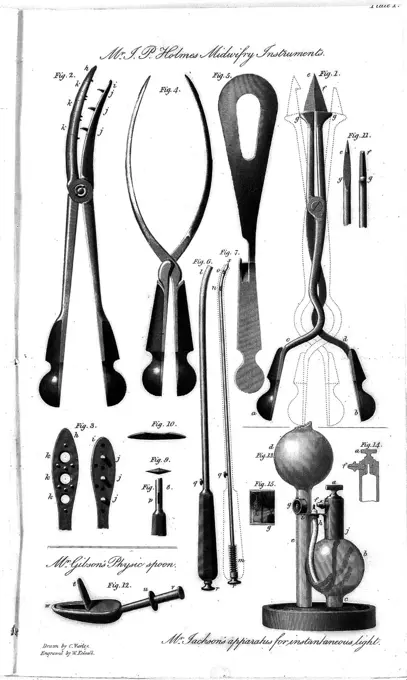
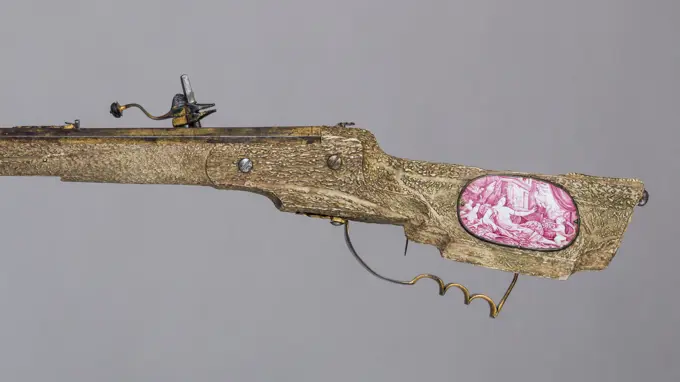
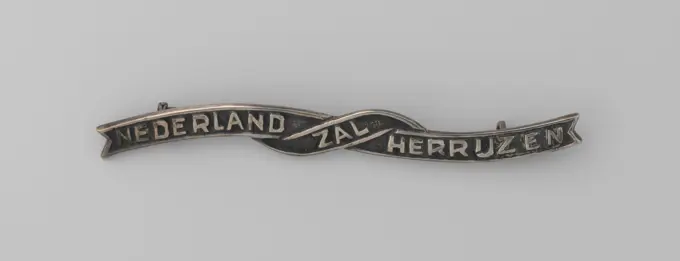
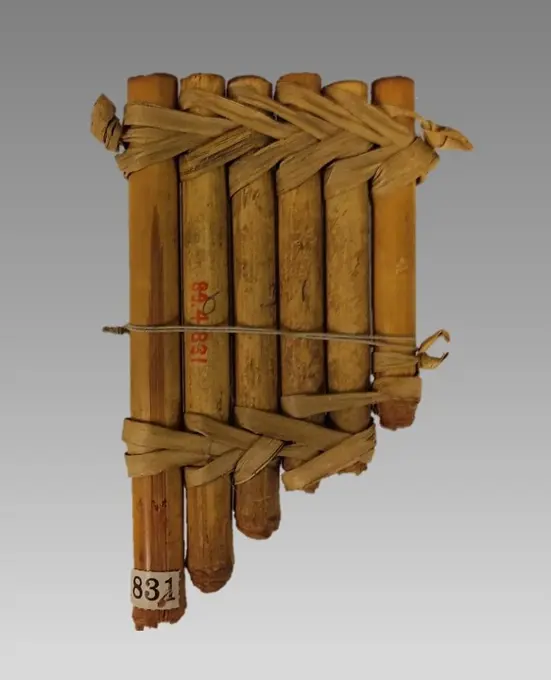
Pachava (panpipes) Melanesian (Pentecost Island, Vanuatuan) late 19th centuryFlask, 18th century, 10 × 2 3/4 × 3 in. (25.4 × 6.99 × 7.62 cm) (with base), Ivory, metal, Sierra Leone, 18th centurySamuel Faigin, Gun, c 1938 GunFly Whisk (Tahiri). Culture: Austral Islanders. Dimensions: W. 5 1/8 x L. 32 in. (13 x 81.3 cm). Date: early to mid-19th century.Artists of the Austral Islands created delicate fly whisks with handles adorned with stylized human figures that likely portray ancestors or other supernatural beings. This work depicts two highly stylized male figures who share a single teardrop-shaped body. The peg-like projections on the foreheads likely represent the ornamental topknots of hair formerly worn by Austral Islands men. As well as being symbols of chiefly status, it is likely that such finely crafted fly whisks also served an important ritual function. Tipped with brushlike bundles of fiber, these artefacts were literally fanned or 'whisked' in bold gestural movements to attract the presence of gods. Several examples retain cut sections of polished pearlshell which rattled and caught the light in a bid to call ancestral gods across from the spiritual realm. Museum: Metropolitan Museum of Art,Hammered Silver Cone Ornament 8th-mid-16th century Peru; north coast (). Hammered Silver Cone Ornament 308987Étui 1771-72 Mathieu Coiny fils In eighteenth-century Europe, Paris led the production of high-quality luxury goods. Parisian goldsmiths made a wide range of small, personal articles such as snuffboxes; étuis to hold sealing wax, tweezers, or utensils for sewing; souvenirs, which contained thin ivory tablets for note taking; and shuttles for knotting lace. Gold snuffboxes and boxes decorated with portrait miniatures were prized and frequently given as royal gifts, often to ambassadors or members of the court in lieu of cash payments for their services. Coveted and admired, these boxes were produced from a variety of materials. The best were skillfully made of gold and embellished with diamonds, enameled decoration, lacquer, and other luxurious materials. By the middle of the century, the taking of snuff had become an entrenched social ritual, and the snuffbox, too, had become an important social prop. Snuffboxes were considered highly fashionable accessories, with some merchants advertBalsamarium. UnknownKnife (Piha Kaetta) with Stylus and Sheath 18th-19th century Sri Lankan. Knife (Piha Kaetta) with Stylus and Sheath 31553Clarinet in E-flat D'Almaine Co. ca. 1840 Thomas DAlmaine (born ca. 1780; died 1866) established DAlmaine & Co. in 1834 as successors to Goulding & DAlmaine. After his retirement in 1847 his nephew Thomas Mackinley took over the business. (Waterhouse, NLI, 80)Overall size: 488Bore: c-hole 11.8; f-hole 11.8.Conical part: 96Technical description: Boxwood with ivory ferrules and brass keywork. Five pieces: mouthpiece, barrel, upper section, lower section, bell. English style long tenon mouthpiece grooved for cord. English style flask shaped barrel. Speaker liner projects ca. 4mm into the bore. Levers for L4, tone-hole and key for R4 mounted in a bell-shaped swelling. Zig-zag F♯3/C♯5 lever guided in a block.L0:   T; speaker.L1:   T; throat A♮.L2:   T. L3:   T.L4:   E3/B♮4; F♯3/C♯5. R1:   T; trill key for throat A-B♮.R2:   T. R3:   T. R4:   T; G♯3/E♭5. Keyhead type: flat round. Keymount type: blocks and swelling. Inscribed on all pieces except for unstamped mouthpiece: crown / "DAlmaineOpium Pipe, 1800s. China, Qing dynasty (1644-1911). Cloisonné enamel and ivory; overall: 57.5 cm (22 5/8 in.).Ornament (ruyi). Culture: China. Dimensions: L. 10 in. (15.4 cm). Date: 18th century. Museum: Metropolitan Museum of Art, New York, USA.Bass Ophicleide in B-flat ca. 1830 possibly German. Bass Ophicleide in B-flat 501671Messenger Badge 15th century South German Before the introduction of regular mail service by governments, letters and messages had to be transported by heralds and trusted messengers employed by feudal lords or city magistrates. These men were identified on their official missions by shield-shaped badges worn on their clothing and displaying the heraldic arms of their employers. In some early examples, these badges were constructed as boxes with lids, probably to store credentials or even small messages on parchment. Many of the badges were made of silver and were often decorated with enamel.. Messenger Badge. South German. 15th century. Copper alloy, silver, enamel. Miscellaneous-BadgesHnyìn late 19th Century Burmese A type of mouth organ, now obsolete, with ten bamboo pipes set in a long-necked gourd. It was once used in Burmese chamber music.. Hnyìn 500842Messenheft from the wreck of the East Indians Hollandia, Anonymous, 1700 - in Or Before 1743  Knife, handle, cylindrical: tapering; id. NG 1979-403H, ferrule, id. NG 1980-27H426. Netherlands wood (plant material)   SecondDomestic object, rounded head pin (common name). Bronze. Carnavalet museum, history of Paris.vintage hand drill isolated on white backgrounduzbek knife pichoq with bone handle isolated handmade uzbek national knife pichoq with bone handle isolated on white background Copyright: xZoonar.com/ValeryxVoennyyx 18787425Čartār late 19th century Uzbek or Tajik The Čartār ('Four-string"), also known as Chartar, is a long-necked lute related to the Persian setar used by Uzbeki and Tajik peoples who share many of the same music traditions.. Čartār 503638Gun Sight, anonymous, c. 1860 - c. 1870 demonstration model. test model Small brass design (rod) or visor, consisting of two vertical rods between which a visor slides up and down. On one side, the rod has a bowl ranging from 4 to 14. It has a trapeza -shaped base, with which it was placed on the core ring by the collar. With a rope on a ring, it was bound to the scenery. The visor belonged to a 9 cm cannon. Netherlands brass (alloy). ropeFace Mask with Antelope (Ndomo society) Mali, Bamana, 19th-20th century. Wood, cowrie shells, seeds, metal, latex.Ancient lantern isolated vector hand drawing illustration in black color on white backgroundPriming Flask late 16th century East Indian (Italian Mountings). Priming Flask. East Indian (Italian Mountings). late 16th century. Amber, gold, enamel, pearls, diamond. Firearms Accessories-Flasks & PrimersBlade and Mounting for a Dagger (Tantō) blade, dated November, 1333; mounting, 19th century Blade inscribed by Uda Kunimitsu Japanese Uda Kunimitsu lived in Uda in Yamato (present-day Nara Prefecture) and later moved to Ecchū (present-day Toyama Prefecture). He is recorded as working in the early to mid-fourteenth century. There were three generations of Kunimitsu swordsmiths who were active from the early fourteenth to the mid-fifteenth century, spanning the late Kamakura period to the mid-Muromachi period. Uda Kunimitsu was the first-generation swordsmith of the family and founder of the Uda School. Although there are a small number of surviving swords signed by Uda Kunimitsu, until the authentication of the inscription on this tantō in 1998 there were no known works by him that were both signed and dated. This tantō, therefore, provides an important foundation for the study of the entire Uda School.The shape of the tantō has a very slight curvature, with proportions that are wider aEngraving of an antique crossbow. Dated 18th CenturySmall Pellet Crossbow, probably for a Woman or Child. Culture: probably Italian. Dimensions: L. 29 1/16 in. (73.8 cm); W 18 3/8 in. (46.6 cm); Wt. 5 lb. 1 oz. (2,304 g). Date: ca. 1575-1650. Museum: Metropolitan Museum of Art, New York, USA.Opium Pipe, 1800s. China, Qing dynasty (1644-1911). Enamel; overall: 53.4 cm (21 in.).Clapper sticks such as these were commonly used by California Indiand tribes, such as the Ohlone, to keep rhythm during traditional songs and dances. (PR)Messen Lifts from the wreck of the East Indians Hollandia, Anonymous, 1700 - in Or Before 1743  Knife, handle, cylindrical: tapering; id. NG 1979-403H, ferrules, id. NG 1980-27H426. Netherlands wood (plant material). copper (metal)   SecondSword with Scabbard 17th century Chinese. Sword with Scabbard 25108Drumsticks, c. 1823 musical instrument. elements (of musical instruments). percussion instrument. stick plate. beater. drumstick Stick plate of brass and drum sticks for Tamboer major. Netherlands copper (metal)Finger stall ca. 1479-1425 B.C. New Kingdom. Finger stall 547657Dagger with Sheath. Culture: Philippine, Mindanao. Dimensions: L. with sheath 11 1/8 in. (28.3 cm); L. without sheath 11 in. (27.9 cm); L. of blade 7 1/2 in. (19.1 cm); W. 1 in. (2.5 cm); Wt. 3.4 oz. (96.4 g); Wt. of sheath 1.4 oz. (39.7 g). Date: 18th-19th century. Museum: Metropolitan Museum of Art, New York, USA.Snow knife -Lampwooden frame for a picture isolated on whiteWeapons of the 17th century in Germany. An arquebus, harquebus, harkbus or hackbut, an early muzzle-loading firearm used in the 15th to 17th centuries, and a pistol, Historic, digitally restored reproduction from a 19th century originalCosmetic bottle, Christmas decorationFlute 180 BCE-500 CE Peru. Bone . NazcaKnife Handle (Kozuka). Culture: Japanese. Dimensions: L. 3 13/16 in. (9.7 cm); W. 9/16 in. (1.4 cm); thickness 3/16 in. (0.5 cm); Wt. 1.1 oz. (31.2 g). Date: ca. 1615-1868. Museum: Metropolitan Museum of Art, New York, USA.Model of a Mast, anonymous, in or after c. 1835 - before 1883 scale model. rigging model Model of a understood with Mars, RA and Vlagstok. The RA is attached to the donkey head with a deposit chain. Netherlands wood (plant material). rope. brass (alloy)Sheath, silver, enamel, Tapered sheath, blue enamel surrounding silver floral pattern, two busts on each side. Silver mount and cap on due tip engraved in floral pattern, small ring on back of sheath., Germany, ca. 1650, cutlery, Decorative Arts, SheathBelt with Profiles of Half-Length Figures. Culture: Italian. Dimensions: 69 x 1 x 11/16 in. (175.3 x 2.5 x 1.7 cm)Other (textile belt width): 1/2 in. (1.2 cm). Date: ca. 1350-1400.Extravagant girdles used to cinch the fall of clothing at the waist were often part of betrothal gifts, dowries, and counter-dowries (given by the groom). One of the stories of Boccaccio's Decameron (1349-52) included girdles, along with rings, as gifts for a new bride. Intact girdles such as this one are rare. It would have been worn under the breasts, pulled through the buckle--here in the form of a curving figure--and then hanging to the ground, its gilt details and enameling catching the light. The enamel technique known as basse taille allows the silver below to shine through the translucent enamels. Museum: Metropolitan Museum of Art, New York, USA.Standard of the branch of the horse Alice that was ridden by the Prince of Orange on 12 August 1831, Anonymous, 1831 stand (support object) Wooden black painted standards consisting of one long and two shorter parts with a wide round pedestal and a narrower round top piece between which a circumcised stake is attached. On the standard is a paper with a wax stamp and a description of the origin of the object. On the above date at Bautersem, the horse was shot by a cannonball. Netherlands wood (plant material)   BoutersemTriple Flageolet in A 1826-30 John Simpson. Triple Flageolet in A. British. 1826-30. wood, brass, ivory, nickel-silver. London, England, United Kingdom. Aerophone-Whistle Flute-flageoletTwo unique wooden sticks, perfect for a variety of craft projects or for creating naturethemed designs. Vector sketch illustration. TourismSugar sifter 19th century Dutch. Sugar sifter 188072Powder Horn of John Mahard John Bush American Dated 1756 This is a rare horn from the French and Indian War, embellished by John Bush, one of the first major engravers of the Lake George School and the only Black American known to have decorated horns.Bush engraved this example while he served in the Massachusetts provincial militia at Fort William Henry on Lake George. Popularized by The Last of the Mohicans, James Fenimore Copper's novel (1826), the fort's siege and its capitulation to the French and their Indigenous allies in 1757 form a particularly grim episode of the War. Although Bush escaped the fate of other occupants of the fort, who were massacred contrary to the terms of the capitulation, he died a prisoner of war shortly thereafter, while he was in French custody. Completed a year prior to the fort's fall, this is the only surviving horn that he is known to have decorated for a fellow militiaman in his company.In eighteenth-century Colonial America it was common practice tHalf model or a boyer.Boided fore ship. Vertical vertical above the end. Flowing is round. Fore ship is quite high ascending and sloping to the sides. Round stern with falling stern (2/5 cm). A straight stir over board with a lump and very wide leaf that lights up sloping at the bottom than the keel. The bottom has a weak V shape, front and rear around ascending. The mountain wood consists of three narrow corridors thicker than the skin corridors, running from the stern to the presence. These three courses are not placed over the songs such as the other corridors of the skin (partly). A seam before and behind ascending. The skin is completely closed with wide skin corridors. The third and fourth skin touch over the seams indicated at the front and stern. The fifth and sixth skin troughs completely over-socks. Above the mountain wood a closed board indicated over a length of 43 cm. Model is mounted on a shelf.Knife Handle (Kozuka) ca. 1615-1868 Japanese A kozuka is a handle of a by-knife that is part of a sword mounting. It is kept in a slot on the reverse of a katana scabbard, often with a matching kōgai (hairdressing tool).. Knife Handle (Kozuka) 25778Valve bugle in c with six valves. Valve bugle with six valves.kitchen knives, isolated on white backgroundHistorical drawing, various old musical instruments, trumscheit, scheitholz and double-scheitholzvintage wooden shredder slicer mandoline type board, clipping pathShadow Puppet (Wayang Kulit) of Gada AstraRicikanAlcázar, Toledo. Panoplia de espadas de la Edad Media, siglos XII-XV.Improved obstetrical instruments of J.P. Holmes.Wheellock Rifle with Spanner, Shot Extracting Tool, and Shooting Patch ca. 1665 Martin Kammerer In very good condition and retaining its companion spanner and original ramrod with detachable barrel-shot extracting tool, this fine wheellock rifle is a rare example of a distinctive class of luxury seventeenth-century sporting firearms that chiefly stood out for the striking adornment of their stocks with unconventional--and sometimes eclectically combined--materials and decorative techniques. The metal components are gilded and predominantly plain, allowing the roughness of the stocks natural staghorn veneer, and the colorfulness of the finely painted enameled oval plaque on the cheek to become more evident. While occasionally used to veneer the stocks of firearms as early as the mid-sixteenth century, natural staghorn veneer only took on a much more exotic character a century later, once a handful of gunmakers began to use it in conjunction with other unconventional or precious materiaTable fork. Culture: Swiss. Dimensions: Length: 4 7/8 in. (12.4 cm). Date: 18th century. Museum: Metropolitan Museum of Art, New York, USA.Weapons used by the Malays of Perak, 1876. 'a.a.: Limbing Spear (of Penaga-wood) and Spear-head sheath; b.b.: Padang and Scabbard, used by Malay Rajahs; c.: Lading, for cutting wood, and sometimes used as a weapon; d.d.: Kriss Panjang and Scabbard; e.e.: Sundong, and Sheath of coal-wood; f.f.: Tumboh Lada and Sheath; g.: Permata, with Sheath of senna-wood; h.h.: Golok and Sheath; i.i. and k.k.: Spear-head and Sheath; l.l.: Kriss, and Sheath, the body of which is of senna-wood, the top of camooning-wood; m.: Lela (small cannon, mounted on block); n.n.: Badik and Sheath. The native weapons shoBuskDecorations baret sewn in two rows on a dress black foundation unknown labelAir purpose insistence No.1 for .50 Browning Miter trailer (Elevator Cradle).Basset Horn in F ca. 1860 Joseph Seidel. Basset Horn in F. German. ca. 1860. Cocus, boxwood, silver, nickel-silver. Mainz, Germany. Aerophone-Reed Vibrated-single reed cylindricalShadow Puppet (Wayang Kulit) ofSonoBrooch 'the Netherlands will rise', c. 1940 - c. 1945 Brooch in the form of a banderole with the text 'the Netherlands will rise' of silver with a low content, with a hook closure. Netherlands silver (metal) Brooch in the form of a banderole with the text 'the Netherlands will rise' of silver with a low content, with a hook closure. Netherlands silver (metal)