Antique Tools and Implements

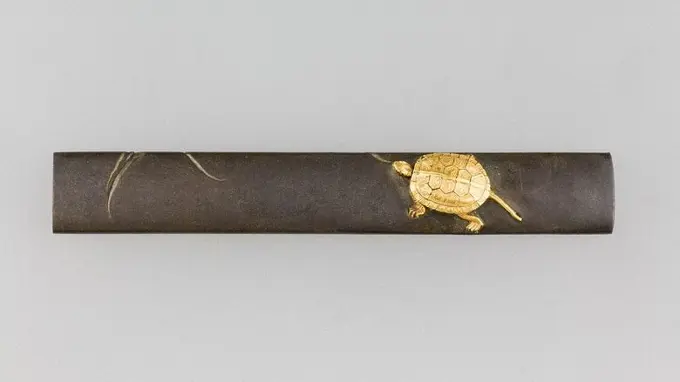
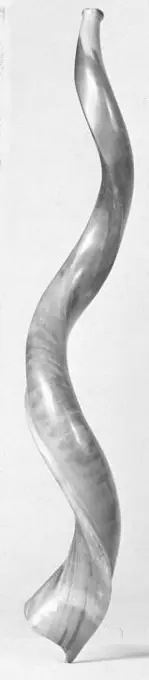
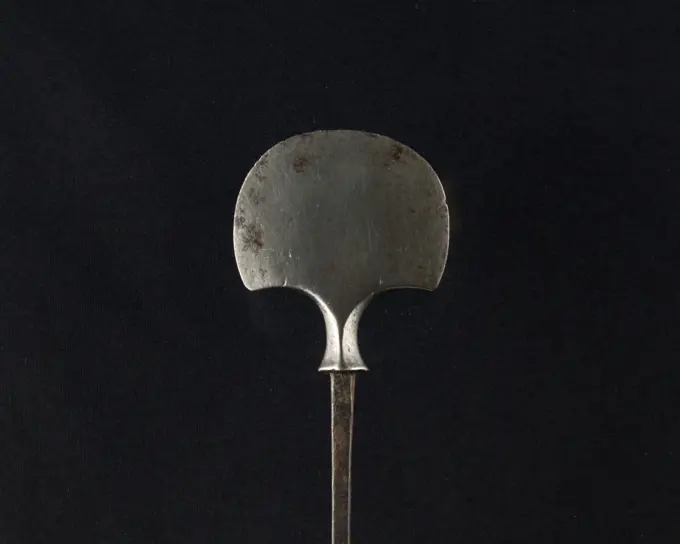
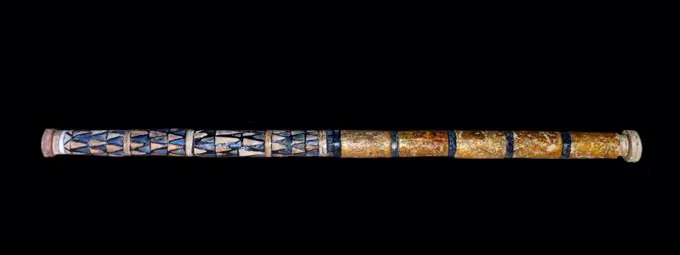
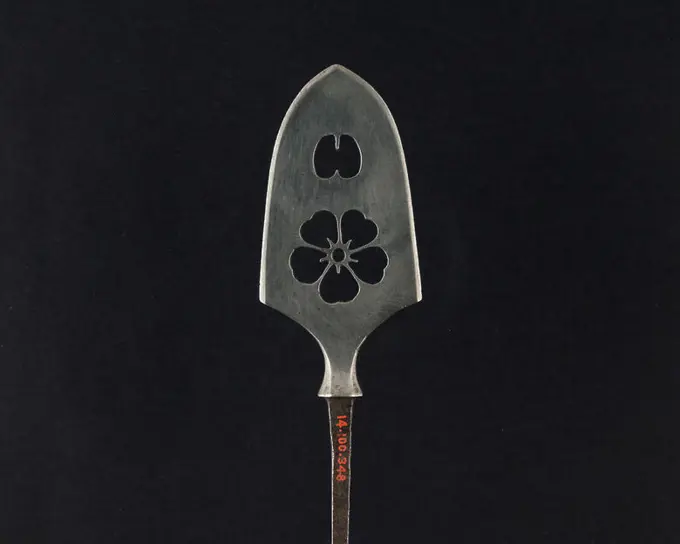
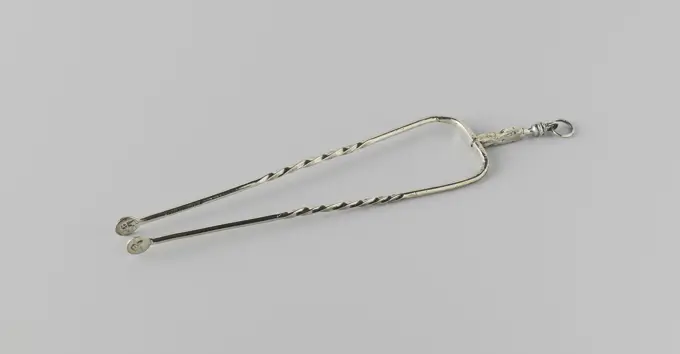
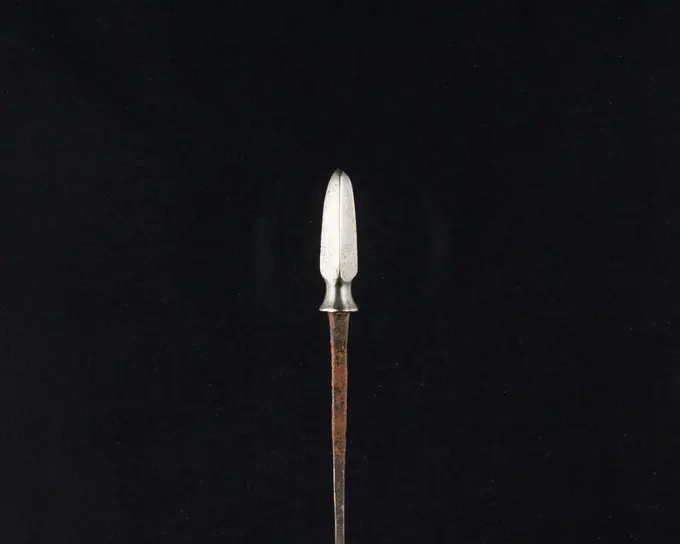
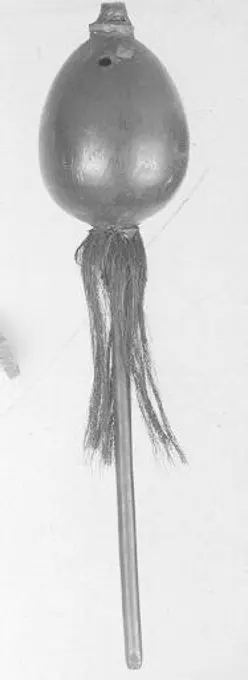
A collection of vintage tools including a cane, tongs, and a staff. Displayed on neutral backgrounds, emphasizing their historical craftsmanship and materials.

Sinclairsabel, anonymous, c. 1600 Sinclair sword Sinclairsabel (precursor of the so -called Solinger Houwer). Owl: Did not hold a grip, ending in a button with three excellent teeth. Pre -bridge and half parent rod, both ending in a trident ornament. Dense, curved bump and thumb. Kling: One -sowing and double -edged (the lower piece) is etched with a running wolf and the name: Iohanni. Marked. Solingen iron (metal) forging / etching
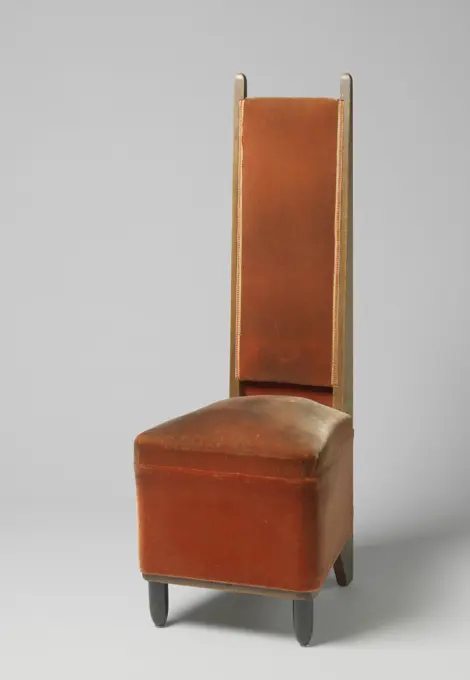
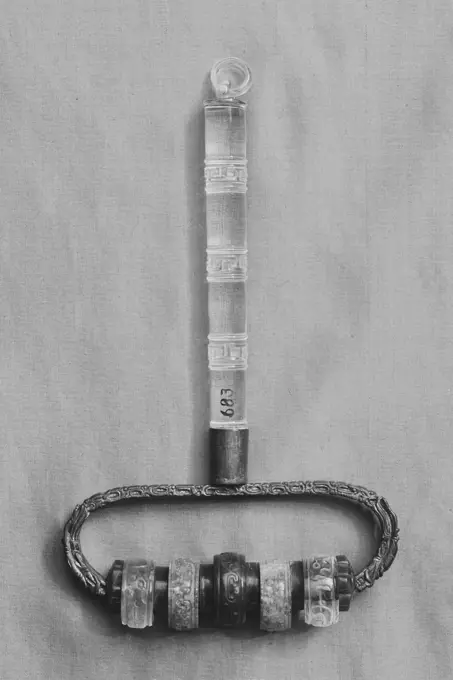
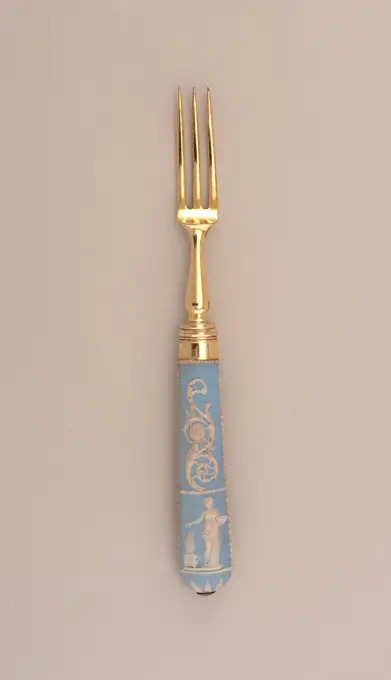
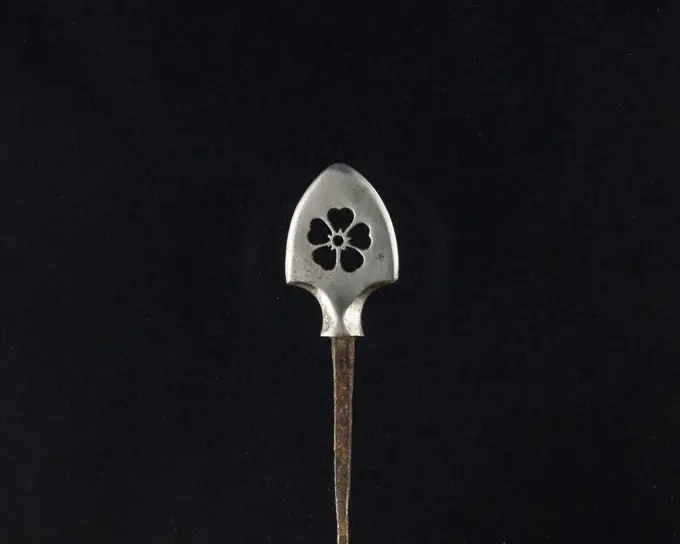
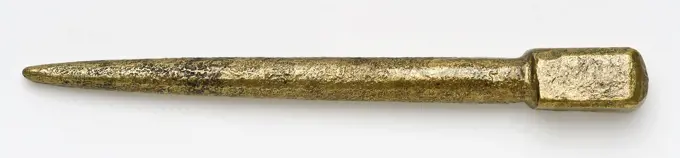
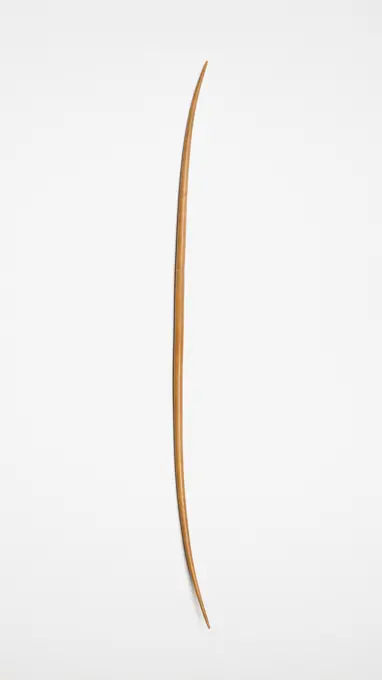
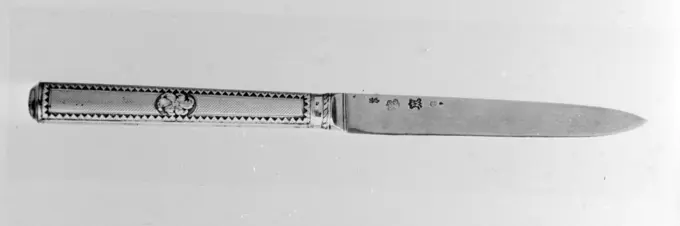
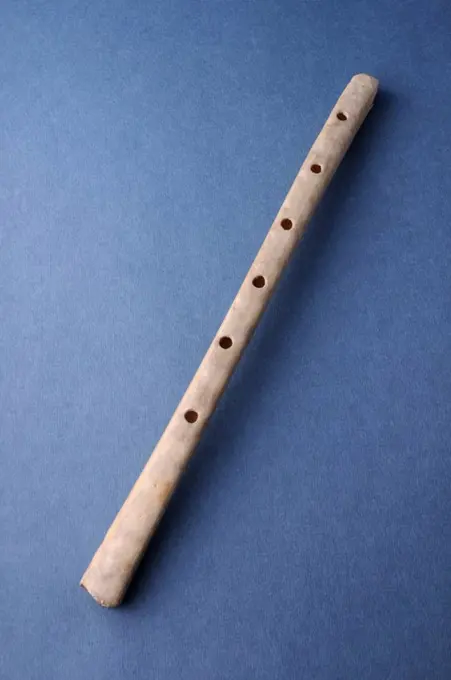
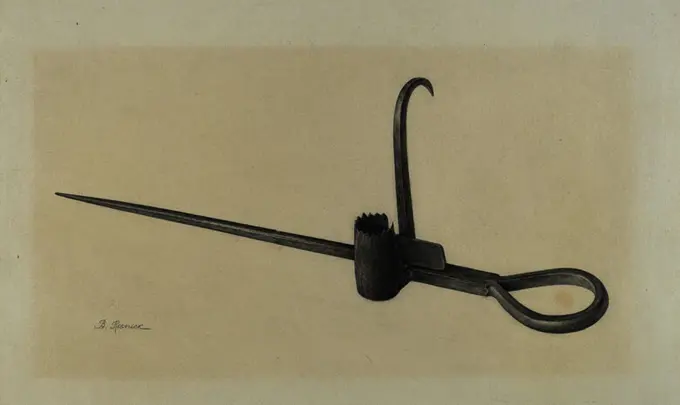
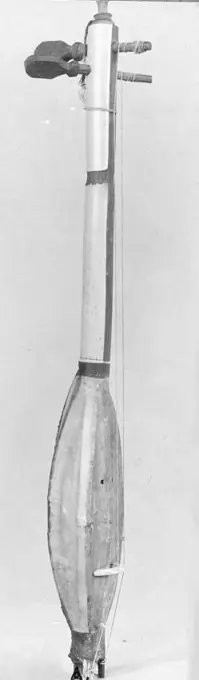
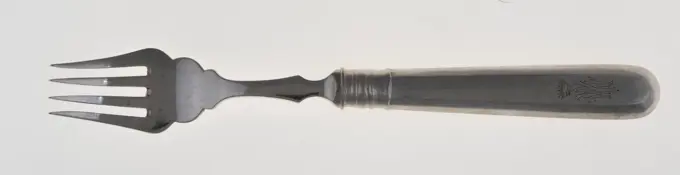
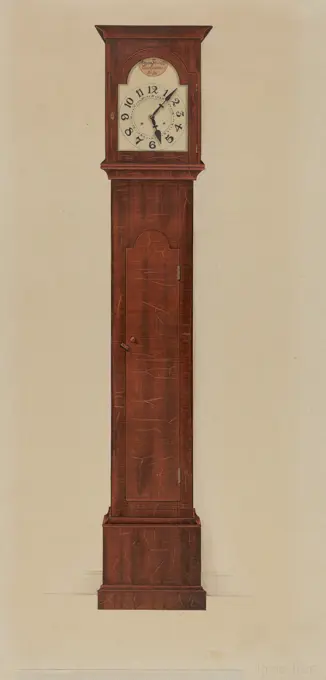
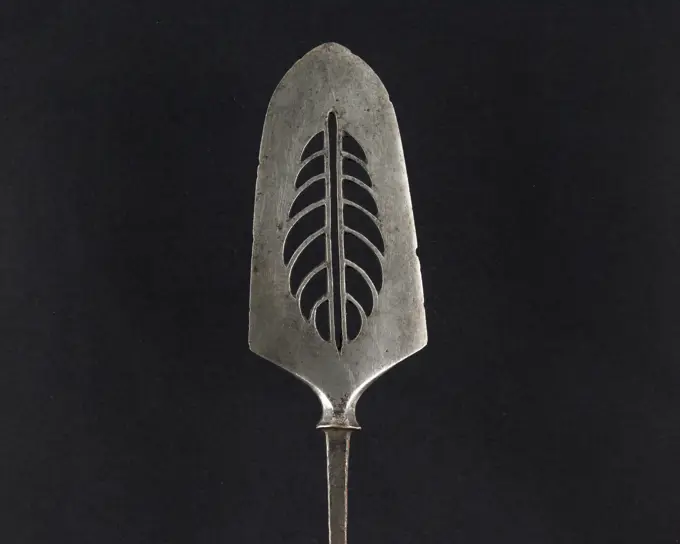
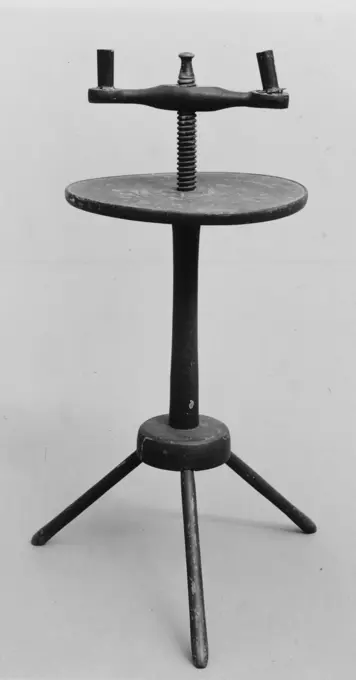
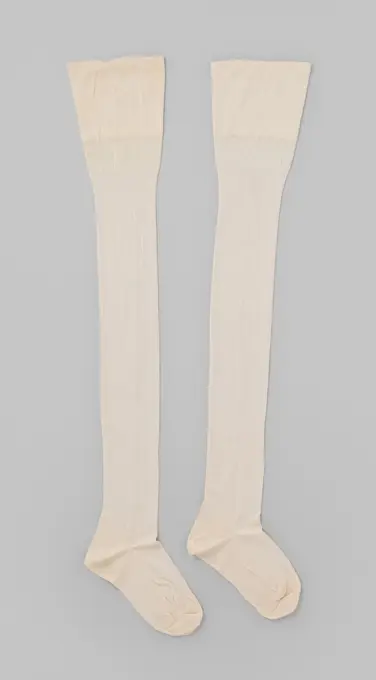
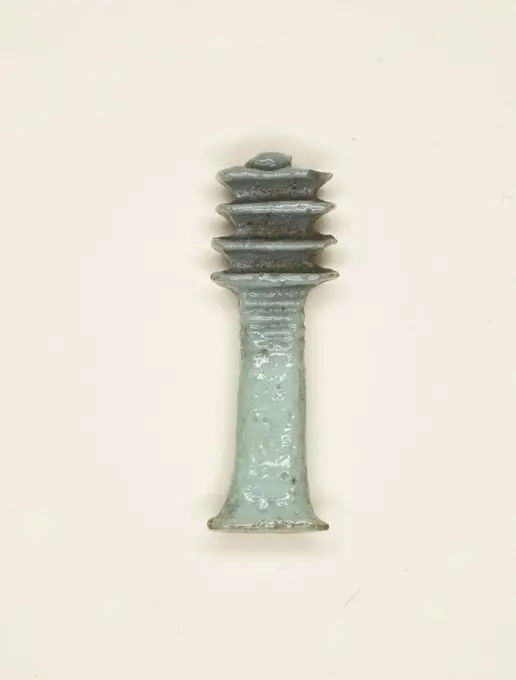
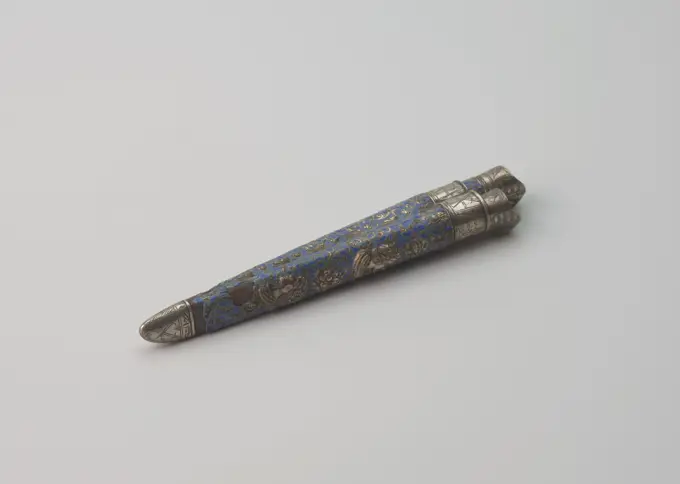
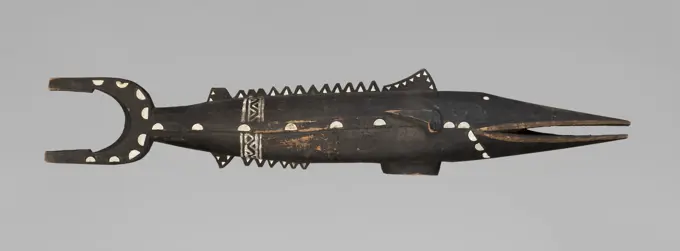
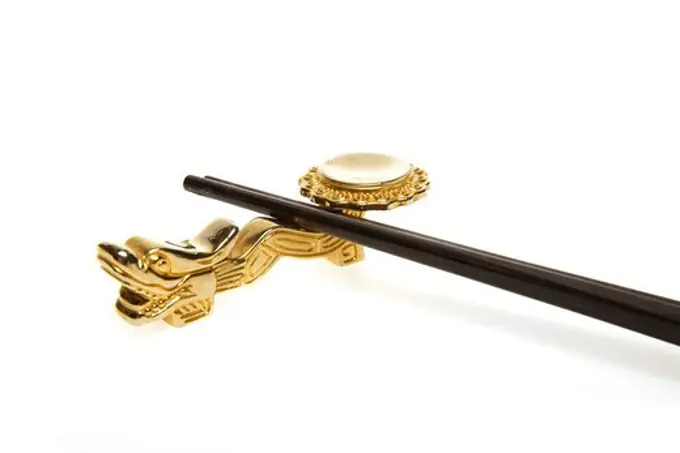
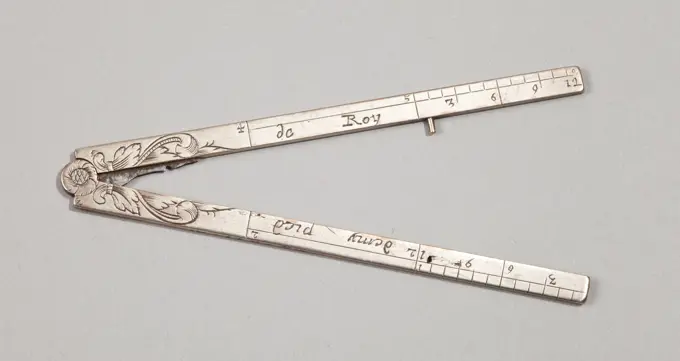
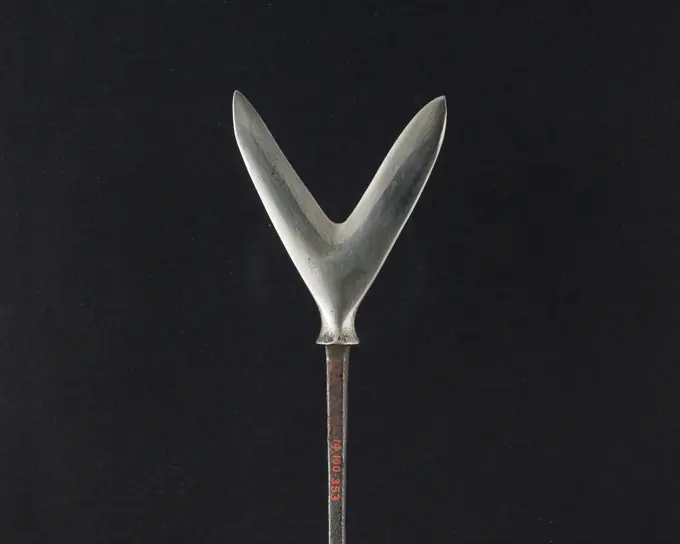
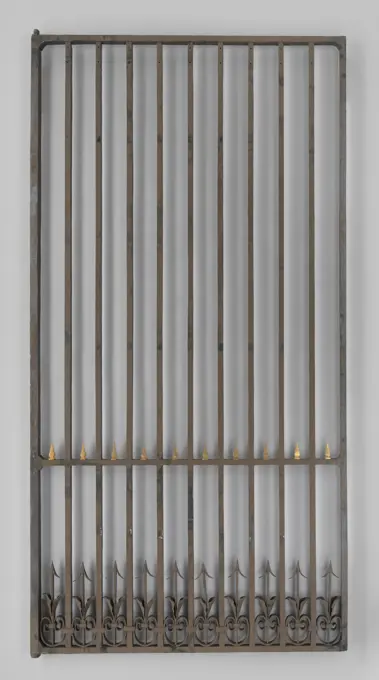
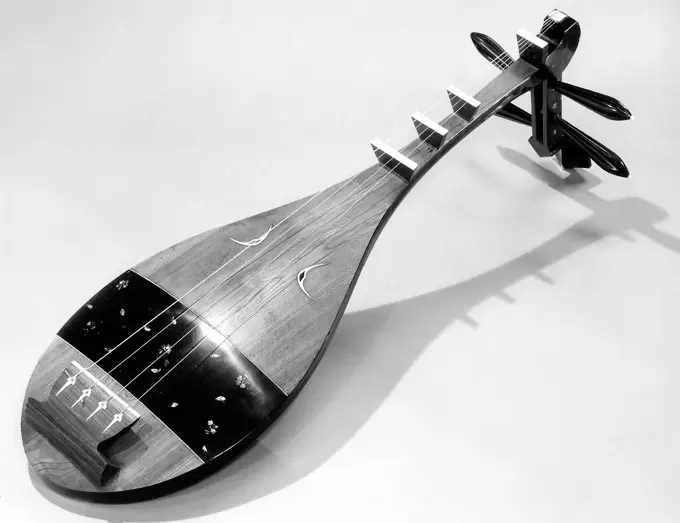
Pin from the wreck of the East India Flying Heart. Copper pin with cup. On.Cosmetic stick () ca. 7th century B.C. () Iran This bent bronze rod was probably originally straight. It was found on the surface at Tepe Nush-i Jan, an Iron Age hilltop site about 60 km sound of Hamadan in western Iran. Nush-i Jan was occupied in the 7th and 6th centuries B.C., and its occupants are generally thought to be the Medes, an Iranian people known from Assyrian, Achaemenid and Biblical sources. Though the textual sources portray them as a powerful empire, archaeological evidence for the Medes has yet to sustain this impression. Rather, they seem to have lived in scattered fortified sites in western and central Iran, without any clear capital. Nush-i Jan, one of the best known of these sites, features two temples, a columned hall, and a fort. Possibly it was used to apply eye makeup.. Cosmetic stick () 326398Leatherworking needle -Clarinet in C Richard Bilton British ca. 1825-50 Richard Bilton claimed himself late apprentice and foreman to Cramer’ and traded from 93 Westminster Bridge Road, London, between 1826 and 1856. (Waterhouse, NLI, 32)Overall size: 583Bore: c-hole 13.4; f-hole 13.6Conical part: 106Technical description: Boxwood with ivory ferrules and brass keywork. Six pieces: mouthpiece, barrel, upper section, middle section for the fingers of the right hand, lower section with keys, bell. Ebony, English socket type mouthpiece grooved for cord. English style tenon-type barrel. Speaker liner projects almost to the centre of the bore. Blocks pinned in order to prevent the wood from cracking. Levers for L4, tone-hole and key for R4 mounted in a bell-shaped swelling. Zig-zag F♯3/C♯5 lever guided in a block.L0:   T; speaker.L1:   T; throat A♮.L2:   T. L3:   T; E♭4/B♭5.L4:   E3/B♮4; F♯3/C♯5. R1:   T; trill key for throat A-B♮. R2:   T; B♮3/F♯5. R3:   T.R4:   T; G♯3/E♭5. Keyhead type: flat round Keymount typeEau-sucrée spoon second half 18th century German or Russian. Eau-sucrée spoon 188226 German or Russian (), Eau-sucre spoon, second half 18th century, Silver, 6 1/2 in. (16.5 cm). The Metropolitan Museum of Art, New York. Gift of Mrs. Samuel P. Avery, 1897 (97.2.202)hammer removing a nailChair with a high back with orange velvet, Klaas van den Berg, c. 1925 Oak chair, partly glued with rosewood, resting on four legs. The short round front legs rejuvenate and are painted black; The hind legs have one beveled side. The high trapezoidal seat is located just above the ground and is completely covered with orange velvet. The high back runs narrower and is caught in two styles that protrude. The back is also covered with orange velvet and is trimmed on the sides with a beige piping. Amsterdam wood (plant material). oak (wood). rosewood (wood). velvet (fabric weave) Oak chair, partly glued with rosewood, resting on four legs. The short round front legs rejuvenate and are painted black; The hind legs have one beveled side. The high trapezoidal seat is located just above the ground and is completely covered with orange velvet. The high back runs narrower and is caught in two styles that protrude. The back is also covered with orange velvet and is trimmed on the sides with a beiMassage implement 18th century China. Massage implement. China. 18th century. Gilt bronze with four rock crystal and seven carnelian rings strung upon an engraved gilt loop ending in dragon's heads; mounted on a crystal handle.. Qing dynasty (1644-1911), Qianlong period (1736-95). MetalworkPi Nai late 19th century Thai Pi nai is sounded by an unusual quadruple reed of Bai tan, a form of palm. Its six holes faciliates a range of twenty-two tones.. Pi Nai 501870colourfull feather of parrotYeah one hundred; Malcz, Karol (1797-1867), Gerlach (Warsaw; 1760-), Silver Products Factory K.F. Malcza (Warsaw; Sreber label; 1828-1864); 1825-52 (1852-00-00-1852-00-00);Flute, I. Deppe, c. 1750 Palmhout flute with ivory mounted, with one valve. Marked: I. Deppe, above which a crown and including a climbing lion. With accompanying leather bag. Netherlands boxwood (hardwood). ivory. silver (metal) Palmhout flute with ivory mounted, with one valve. Marked: I. Deppe, above which a crown and including a climbing lion. With accompanying leather bag. Netherlands boxwood (hardwood). ivory. silver (metal)Fork (England); Made by Wedgwood (United Kingdom); silver, gold, jasper; L x W: 19.8 x 2.1 cm (7 13/16 x 13/16 in.); The Robert L. Metzenberg Collection, gift of Eleanor L. Metzenberg; 1985-103-208Needle Miners - All States. Photographs Relating to National Forests, Resource Management Practices, Personnel, and Cultural and Economic HistoryCrossbow ca. 1600-1625 probably British, possibly London. Crossbow 34071Shirt isolated on the whiteA B CArrowhead (Yanone). Culture: Japanese. Dimensions: L. 4 1/2 in. (11.4 cm); L. of head 1 3/8 in. (3.5 cm); W. 7/8 in. (2.2 cm); Wt. 0.5 oz. (14.2 g). Date: 18th century. Museum: Metropolitan Museum of Art, New York, USA.Oriental poppy (Papaver) isolated on a white backgroundPoem Card (Tanzaku) Box with Flower Bouquet 19th century Style of Shibata Zeshin Japanese. Poem Card (Tanzaku) Box with Flower Bouquet 58350Artillery Officer's Saber wz. 1829, with the vaginaBook closure, locking pin, pin fitting soil found brass metal, cast drawn Locking pin. Pin-shaped Elongated head square section. Single hinge pin that serves as closure of book book archeology Rotterdam Kralingen-Crooswijk Kralingche Bos Read more Kralingse Plas book close adornment Soil discovery: collected in 1972 at the Kralingse Plas from dredging spoil: metal detector finds and sight finds.Tongs ca. 1820 Otto W. Parisen. Tongs. American. ca. 1820. Silver. Made in New York, New York, United StatesFork, Steel, silver, agate, Fork with two pointed tines. Curved shoulders and baluster neck, silver faceted ferrule. Flaring faceted agate handle, small metal pin on top of handle., England, 1675-1700, cutlery, Decorative Arts, ForkA garden brush or broom. Illustration of a sloppy sketch.Bow ca. 2120-1981 B.C. Middle Kingdom. Bow. ca. 2120-1981 B.C.. Wood. Middle Kingdom. From Egypt, Upper Egypt, Thebes, Sheikh Abd el-Qurna, Tomb MMA 806 (M06), sloping passage and burial chamber, MMA excavations, 1913-14. Dynasty 11Knife 1775-76 French, Paris. Knife. French, Paris. 1775-76. Gold. Metalwork-Gold and PlatinumOn a bone flute made of black vultures ( Funeral Rites) 25,7 cm x 1,3 cm ( 5th- 8 th CE ) - Visigoth period, from the "necropolis Afflicted-Villa del Val" - Archaeological site of Complutum in Alcala de Henares (Madrid). SPAIN.Spear 16th-19th century Javanese. Spear 30690Miner's Candlestick. Dated: c. 1939. Dimensions: overall: 22.5 x 34.2 cm (8 7/8 x 13 7/16 in.). Medium: graphite on paper. Museum: National Gallery of Art, Washington DC. Author: Benjamin Resnick.Gunbri late 19th century Syrian. Gunbri 501027Piccolo of palm wood with six holes, mounted with Berlin silver. Piccolo of palm wood with six holes, mounted with Berlin silver. A second attachment in a higher tone is salvaged in one of copper wire braided substant.Fish fork;  1888 (1888-00-00-1888-00-00);Tongs ca. 1800 Ephraim Brasher American. Tongs. American. ca. 1800. Silver. Made in New York, United StatesAnne Ger, Shaker Clock, c 1937 Shaker ClockBaluster first half 18th century British. Baluster. British. first half 18th century. Deal. WoodworkComposition Noneber 3 1923 Wood; brass; varnish; and paint Vasyl Yermilov Ukrainian; 1894-1968Arrowhead (Yanone) 18th century Japanese Although today Japanese warriors are renowned most for their swordsmanship, archery, especially from horseback, has been an essential part of samurai warfare and culture for centuries. Arrows were fitted with heads of varying shape according to their intended use in war, the hunt, or target practice. Arrowheads made for use on the battlefield incorporated different designs intended for specialized purposes such as the piercing of armor or to cause maximum damage to horses and unarmored personnel.Large arrowheads, pierced and elaborately chiseled with landscapes, birds, flowers, dragons, and Buddhist divinities, were created to be admired for the beauty of their metalwork and design rather than for use in archery. Such highly elaborate examples may have been made for presentation or as a votive offerings to a shrine.. Arrowhead (Yanone). Japanese. 18th century. Steel. Archery Equipment-ArrowheadsBlade and Mounting for a Dagger (Tant) blade, mid-late 19th century; mounting mid-late 19th century Japanese A tant is a dagger or blade shorter than 30 cm.. Blade and Mounting for a Dagger (Tant). Japanese. blade, mid-late 19th century; mounting mid-late 19th century. Steel, silver, copper, copper-gold alloy (shakud), gold, rayskin (samé), baleen, lacquer. DaggersCandlestand 1700-1800 American. Candlestand 1165FireScreenFish fork;  1888 (1888-00-00-1888-00-00);Stocking knitted from white silk with a wide cotton board, anonymous, c. 1910 - c. 1920 Stocking, from a pair of white silk. Model: with seam. Cotton board. Square heel. On the toe: 8 1/2. Lille whole: Silk. board: Cotton (textile) knitting / printing Stocking, from a pair of white silk. Model: with seam. Cotton board. Square heel. On the toe: 8 1/2. Lille whole: Silk. board: Cotton (textile) knitting / printingFlute late 19th century Melanesian. Flute. Melanesian. late 19th century. Bamboo. New Guinea. Aerophone-Blow Hole-side-blown flute (transverse)Bourse. GAL1994.217.XKnife Handle (Kozuka). Culture: Japanese. Dimensions: L. 3 13/16 in. (9.7 cm); W. 9/16 in. (1.4 cm); thickness 5/16 in. (0.8 cm); Wt. 1.3 oz. (36.9 g). Date: early 19th century. Museum: Metropolitan Museum of Art, New York, USA.Model of a Rudder for Paddle Steamers, anonymous, c. 1840 - c. 1842 demonstration model Model of a rudder and stern. The helm has a round roser king (Soetermeers version; see NG-MC-219, NG-MC-220 and NG-MC-221) and is a bit shorter than the stern. The head has no hole for a rudder, but a short pin sticks through it. Three wooden stirring and a wooden care band with two eyes. The rudder leaf has sole clamps on the back and bottom. Under the rudder is a rotating lip, which turns in an opening in the rear stern and hinders the rumor rising. Netherlands wood (plant material). brass (alloy)Shofar 19th century Indian. Shofar. Indian. 19th century. Animal horn. Mumbai (Bombay), India. Aerophone-Lip Vibrated-hornArrowhead (Yanone) 18th century Japanese Although today Japanese warriors are renowned most for their swordsmanship, archery, especially from horseback, has been an essential part of samurai warfare and culture for centuries. Arrows were fitted with heads of varying shape according to their intended use in war, the hunt, or target practice. Arrowheads made for use on the battlefield incorporated different designs intended for specialized purposes such as the piercing of armor or to cause maximum damage to horses and unarmored personnel.Large arrowheads, pierced and elaborately chiseled with landscapes, birds, flowers, dragons, and Buddhist divinities, were created to be admired for the beauty of their metalwork and design rather than for use in archery. Such highly elaborate examples may have been made for presentation or as a votive offerings to a shrine.. Arrowhead (Yanone). Japanese. 18th century. Steel. Archery Equipment-ArrowheadsAssyrian sceptre or handle Inlaid with stone and shell with strips of gold foil embossed with cylinder seal designs. found by Leonard Woolley in the largest of the graves in the Royal Cemetery at Ur in southern Iraq circa 2600-2400 BCDrill core of a test borehole on a black fallow, Fuestenfeldbruck, Germany, EuropeOld Lantern Old metal lantern on an isolated studio background Copyright: xZoonar.com/AndreyxSkatx 8602129Shadow Puppet (Wayang Kulit) of Bindi, from the set KyaiDrajatArrowhead (Yanone). Culture: Japanese. Dimensions: L. 9 3/4 in. (24.8 cm); L. of head 2 7/8 in. (7.3 cm); W. 1 1/4 in. (3.2 cm); Wt. 0.9 oz. (25.5 g). Date: 13th-18th century. Museum: Metropolitan Museum of Art, New York, USA.fliegenfänger ** fly catcher 4yz-fu3Amulet of a Djed Pillar. Egyptian. Date: 1070 BC-656 BC. Dimensions: 1.9 × 0.6 × 0.5 cm (3/4 × 1/4 × 3/16 in.). Faience. Origin: Egypt. Museum: The Chicago Art Institute, Chicago, USA. Author: Ancient Egyptian.Salzburg, Austria. Antique children's spinning top toyPendant before 16th century Tairona. Pendant. Tairona. before 16th century. Stone. Colombia. Stone-OrnamentsKnife and fork in Schede with the weapon of Saxen, Anonymous, 1700 - 1725 Geemailled silver sheath. Herein a Geemailled silver fork and knife with silver engraved at the top in the weapon of Saxen.  silver (metal) Geemailled silver sheath. Herein a Geemailled silver fork and knife with silver engraved at the top in the weapon of Saxen.  silver (metal)Transverse Flute in B-flat before 1852 Johann Ziegler. Transverse Flute in B-flat. Austrian. before 1852. Wood, silver, nickel-silver. Vienna, Austria. Aerophone-Blow Hole-side-blown flute (transverse)Shark Reliquary ca. 1900 Solomon Islands This is an extremely rare Solomon Islands shark reliquary carved from a single piece of wood with a hollowed cavity at its center which houses a human skull. They were placed high up in the rafters of the boathouse where the canoes were kept and where men gathered to discuss important community business. Reliquaries such as these are primarily associated with sharks but also incorporate features of the bonito fish (Sarda Chilensis) of the tuna family. The body of this shark-fish hybrid is long and slender, tapering at the head into a long snout with an open mouth. Small fragments of shell inlay in the mouth have now broken off but would have represented teeth. The front pair of fins have broken off and one of the two dorsal fins is also damaged. A series of twelve smaller triangular pinnules run along the length of the back and six underneath the body. These feature inlay of triangular sections of an opaque nacreous shell. Further crescent-shapeweapons armour bulletproof helmet and cuirass German mid 17th century,Close-up of chopsticksFolding measureHardtang, Anonymous, 1732 Heart tongs with a profiled handle with a ring at the end. The middle part of both legs is turned. The fireplace is marked: stk. = Amsterdam, Jrl. = X (1732) and an illegible masters. Amsterdam silver (metal) Heart tongs with a profiled handle with a ring at the end. The middle part of both legs is turned. The fireplace is marked: stk. = Amsterdam, Jrl. = X (1732) and an illegible masters. Amsterdam silver (metal)Close up of two crutches, France, EuropeFue 19th century Japanese. Fue. Japanese. 19th century. Bamboo. Japan. Aerophone-Blow Hole-end-blown flute (vertical)Iron cannon of a pound, anonymous, c. 1800 - c. 1850 cannon Iron front loader. Probably from a merchant ship. More than a meter long. The cannon has surfaced and eroded from the sea in Indonesia.  iron (metal) castingArrowhead (Yanone) 13th-18th century Japanese Although today Japanese warriors are renowned most for their swordsmanship, archery, especially from horseback, has been an essential part of samurai warfare and culture for centuries. Arrows were fitted with heads of varying shape according to their intended use in war, the hunt, or target practice. Arrowheads made for use on the battlefield incorporated different designs intended for specialized purposes such as the piercing of armor or to cause maximum damage to horses and unarmored personnel.Large arrowheads, pierced and elaborately chiseled with landscapes, birds, flowers, dragons, and Buddhist divinities, were created to be admired for the beauty of their metalwork and design rather than for use in archery. Such highly elaborate examples may have been made for presentation or as a votive offerings to a shrine.. Arrowhead (Yanone). Japanese. 13th-18th century. Steel. Archery Equipment-ArrowheadsElectric canopy Automatic electric canopy closed at wall Copyright: xZoonar.com/MarkoxBericx 7055815Bottle 19th century China. Bottle 60609Port, fence of the entrance fence Huize De Voorst, c. 1675 - c. 1700 Wrought iron gate of the entry fence of Huize De Voorst. Warnsveld iron (metal) forging  House De Voorst Wrought iron gate of the entry fence of Huize De Voorst. Warnsveld iron (metal) forging  House De Voorstskis with ski poles isolated on white backgroundSatsuma Biwa (摩琵琶) ca. 1800 Japanese This lute came to Japan in the seventh century. Several types of biwa have been developed to suit different genres and performance styles. Unlike the modern Chinese pipa, the biwa is played with a triangular-shaped plectrum and is held more horizontally. Biwa music includes a repertoire derived from court narrative traditions and others from Buddhist sutra recitation.. Satsuma Biwa (摩琵琶) 503051Metal kitchen fork on a dark textured concrete background. Cutlery Metal kitchen fork on a dark textured concrete background. Cutlery, preparation for dinner Copyright: xZoonar.com/TetianaxChernykovax 21240231Tinsel and metal thread 17th-18th century French. Tinsel and metal thread. French. 17th-18th century. Metal thread. Textiles-TrimmingsMAZA DE PLATA ATRIBUTO DE LOS MACEROS QUE CUSTODIAN A PERSONAS REALES Y DIGNATARIOS DURANTE LAS CEREMONIAS SOLEMNES - SIGLO XIX. Location: SENADO-INTERIOR. MADRID. SPAIN.IV Stand   Souvenir spoon with view of with plaza and fountain European late 19th centuryTree Identification - Oak: White. Photographs Relating to National Forests, Resource Management Practices, Personnel, and Cultural and Economic HistoryNight Signal, anonymous, c. 1860 - c. 1865 instrument The night signal is a kind of wick with a Lonthouder at the end, which is compressed by a ring. Russia wood (plant material). iron (metal)   SiberiaStanding Brush, 19th century, 10 7/16 x 3 in. (26.5 x 7.62 cm), Huang hua-li, natural bristles, China, 19th centuryspool of thread and needle isolated on a white  backgroundHarfe isoliert auf weißem Hintergrund Harp music instrument isolated over white background Copyright: xZoonar.com/IvonnexWierinkx 21398332PaintbrushArrowhead (Yanone). Culture: Japanese. Dimensions: L. 6 5/8 in. (16.8 cm); L. of head 1 1/4 in. (3.2 cm); W. 1/4 in. (0.6 cm); Wt. 0.4 oz. (11.3 g). Date: 18th century. Museum: Metropolitan Museum of Art, New York, USA.Rattle Possibly Indian late 19th century View more. Rattle. Possibly Indian. late 19th century. Wood. India. Idiophone-Shaken-rattleRetro look Tag label Vintage looking Tag or address label with string Copyright: xZoonar.com/ClaudioxDiviziax 5826286Black boots isolated on the white backgroundShadow Puppet (Wayang Kulit) of Badjera DupaRicikanChristian illustration of wooden cross. Happy Easter image. Religious symbol of faith.. Christian illustration of wooden cross. Happy Easter image.Horn late 19th century Tanzanian (Zanzibar) Side-Blown Ivory Horn with figural and geometric decoration.. Horn 501075