Antique Tools and Weapons

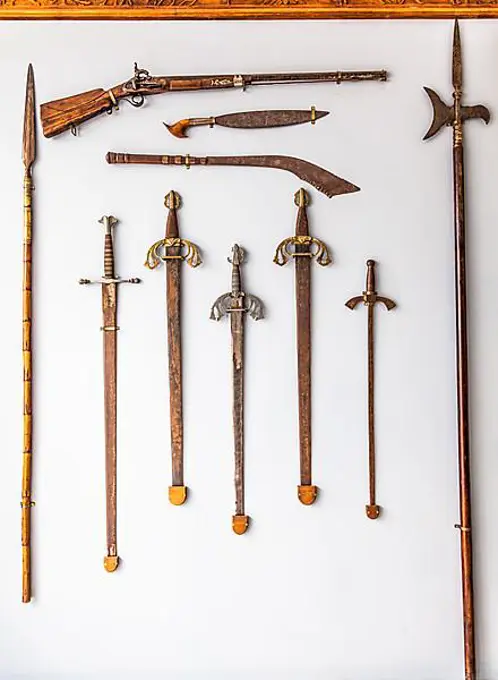
Detailed images of historical tools and ornamental weapons made from wood and metal, showcasing craftsmanship from different eras.
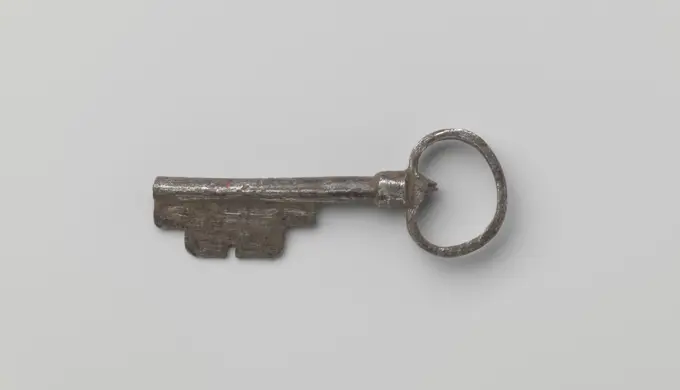
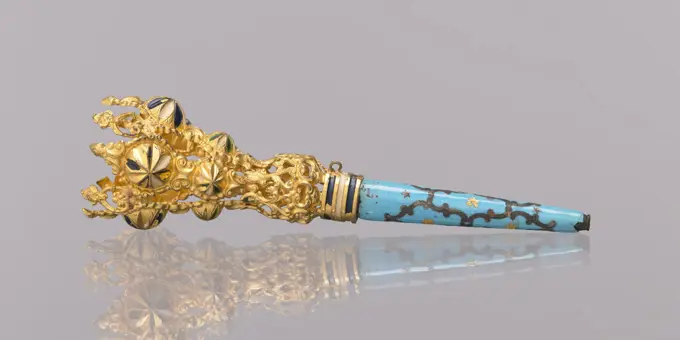
Early Dutch-style ornamental dunes from the end of the seventeenth century, jewelery sword weapon weapon fragment ground find bronze wrought iron metal, cast forged Decorative dangles Heftgroep composed of at least six parts and made of bronze wood and metal wire wound and braided in different ways. In the cast parts decoration relief. The baffle plate is solid and dense. The blade is triangular eroded three-edged archeology knife saber sword decoration status symbol personal equipment defense clothing accessory militaria
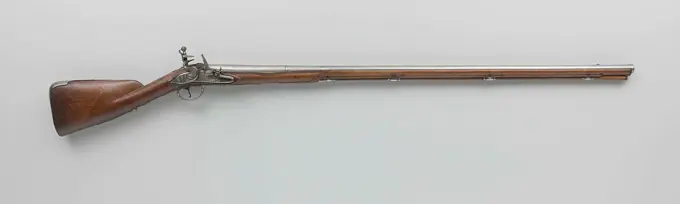
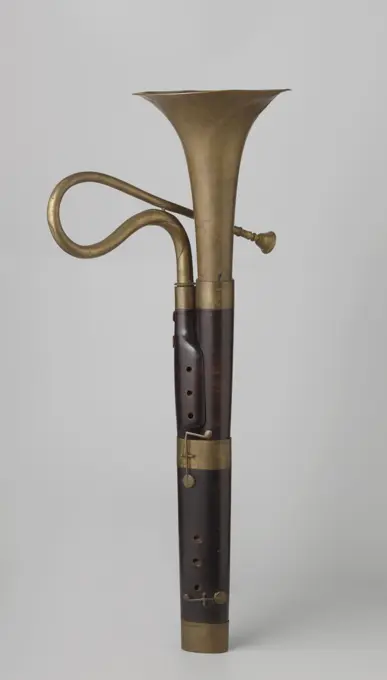
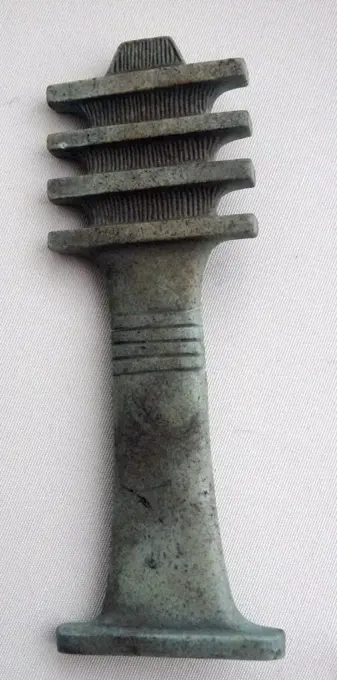
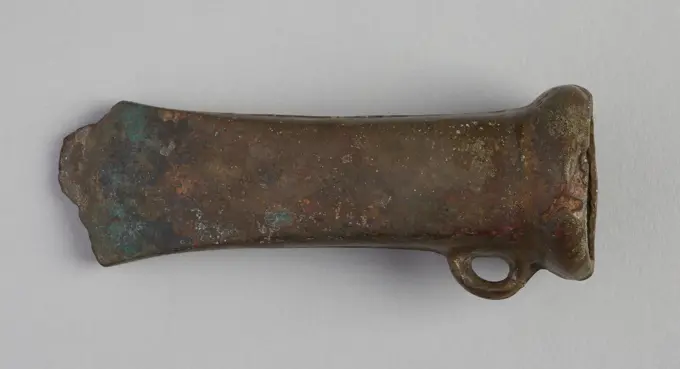
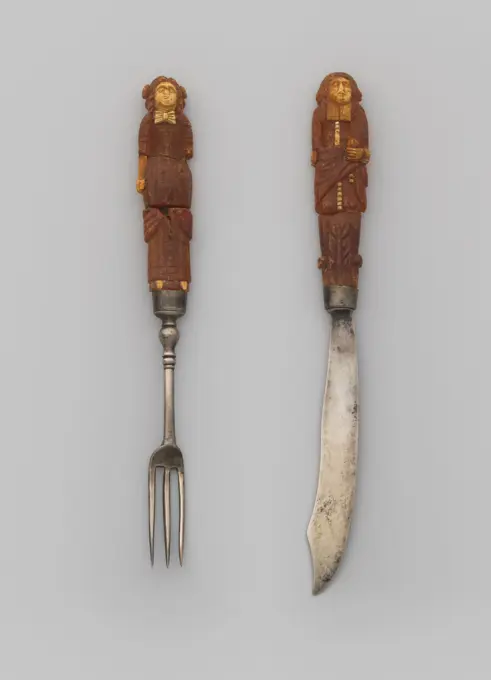
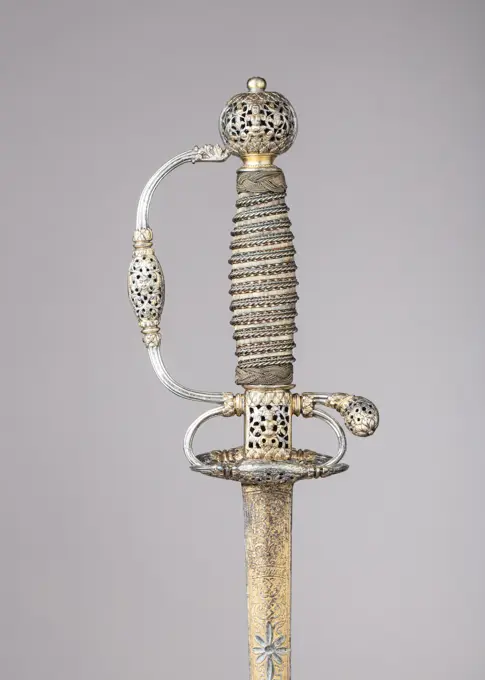
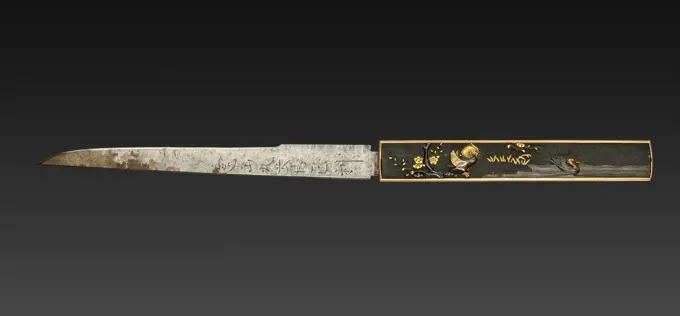
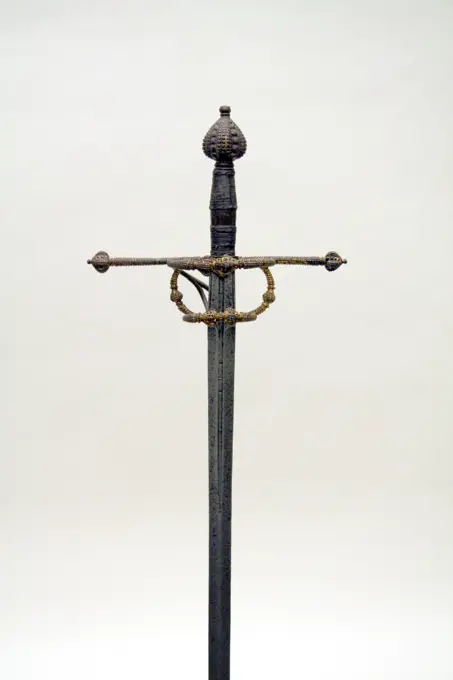
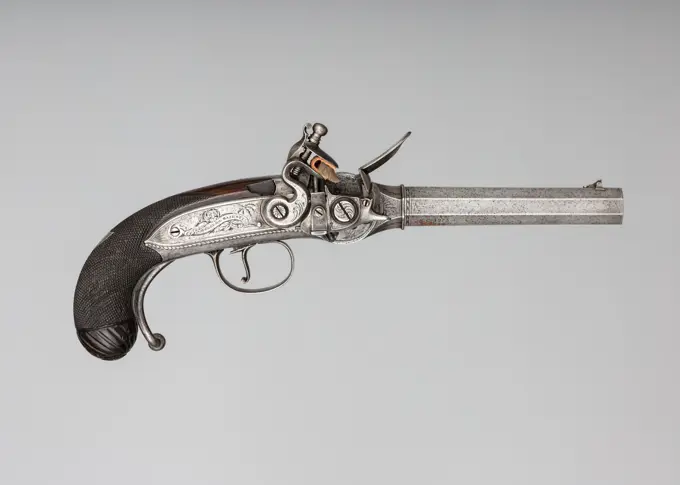
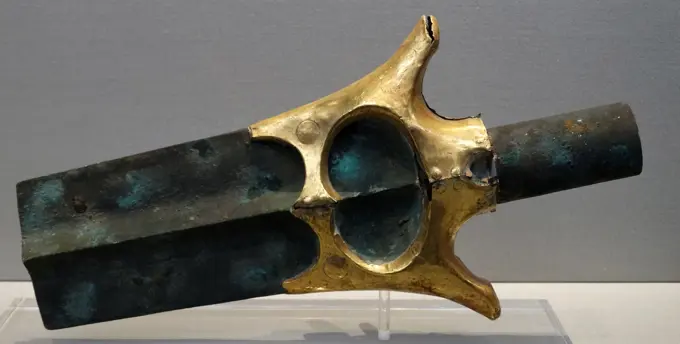
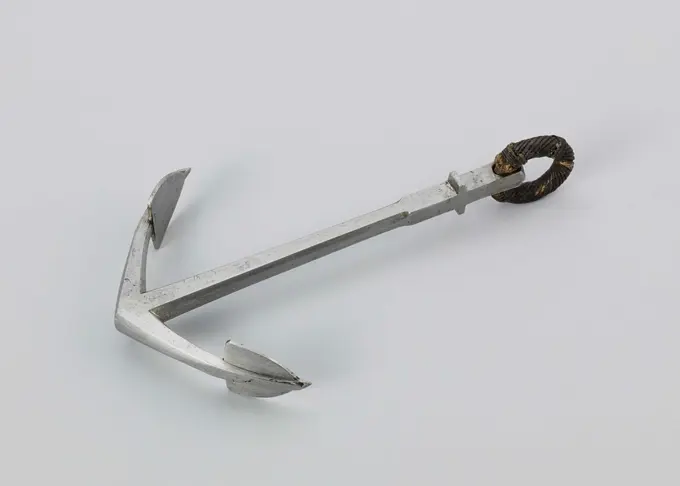
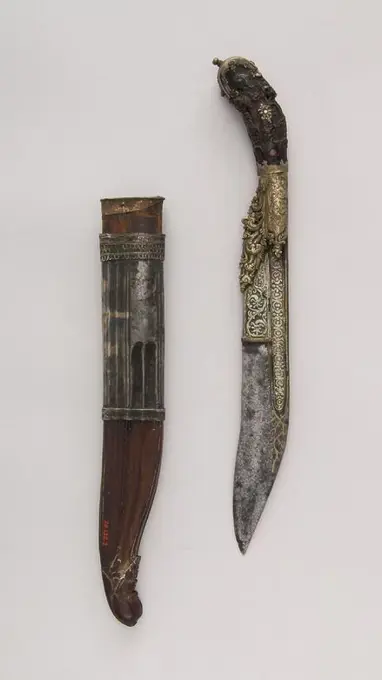
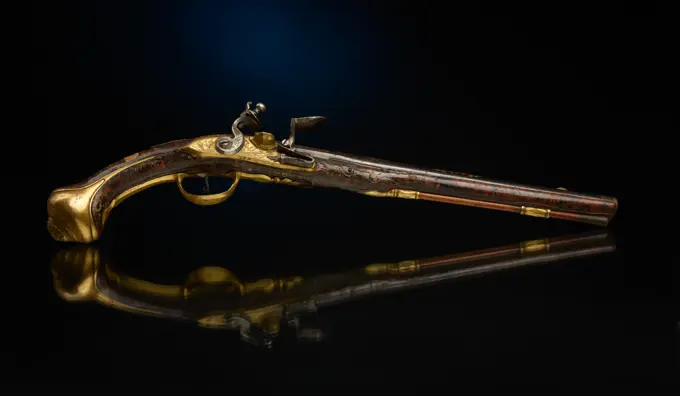
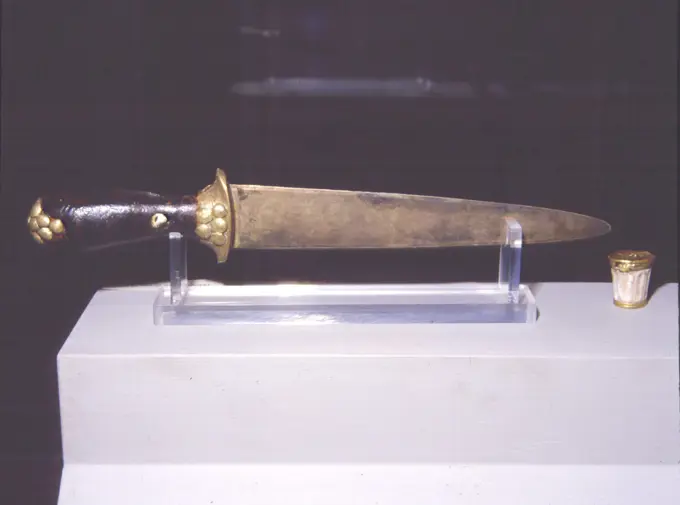
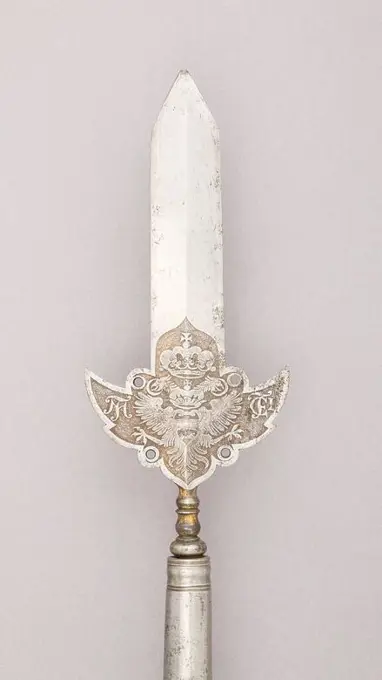
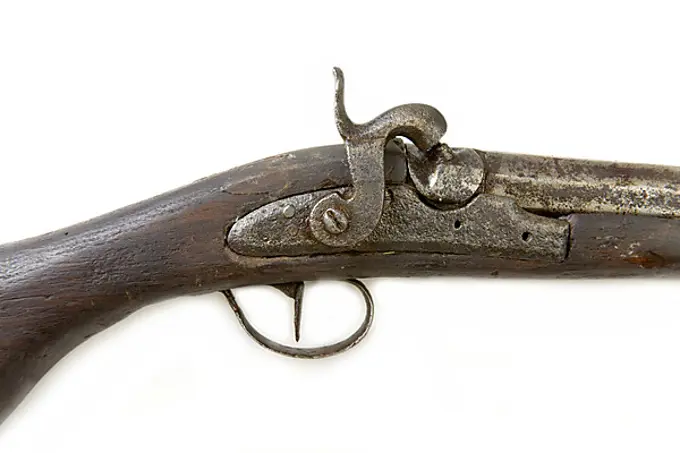
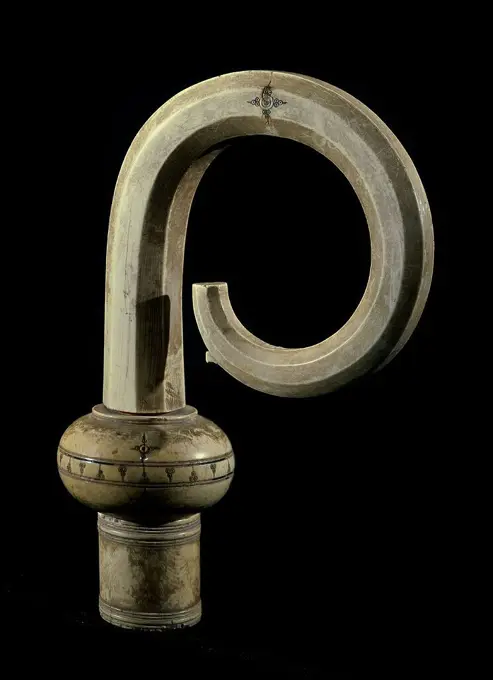
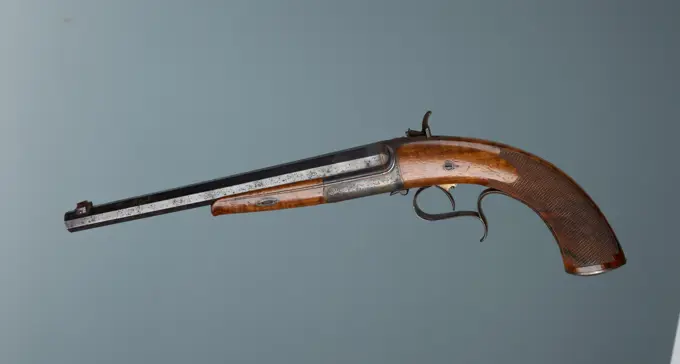
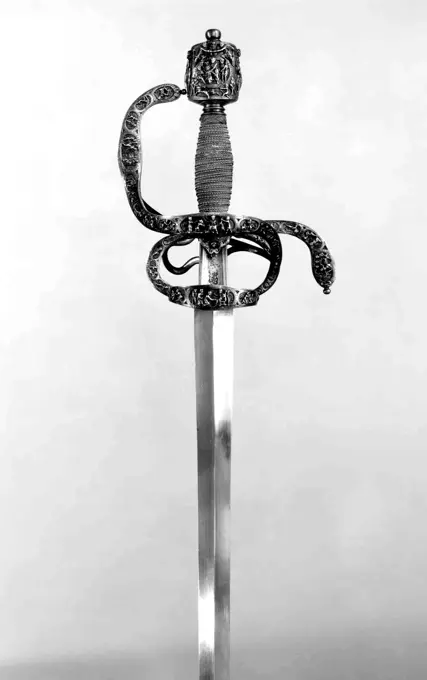
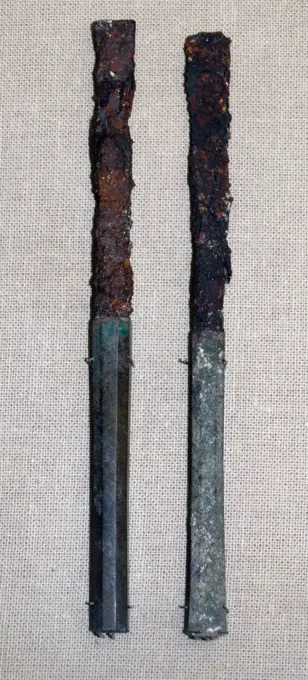
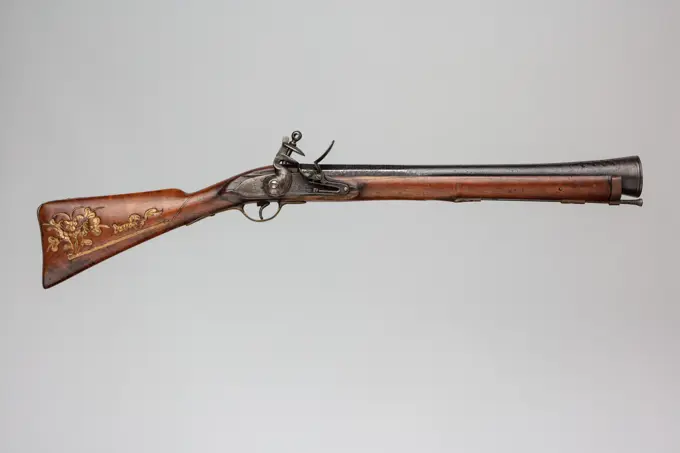
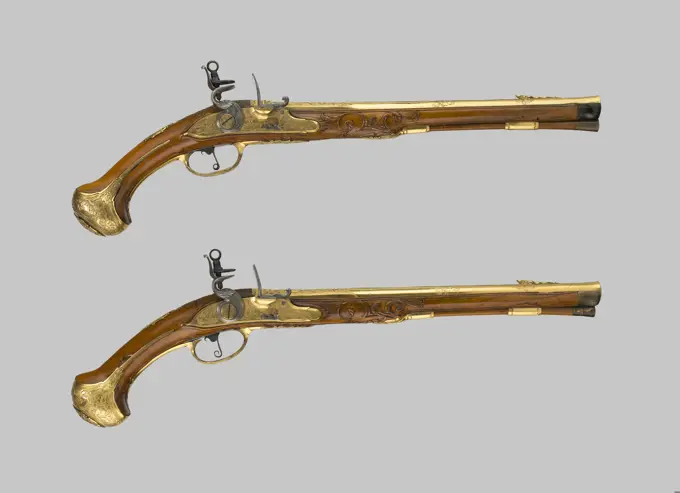
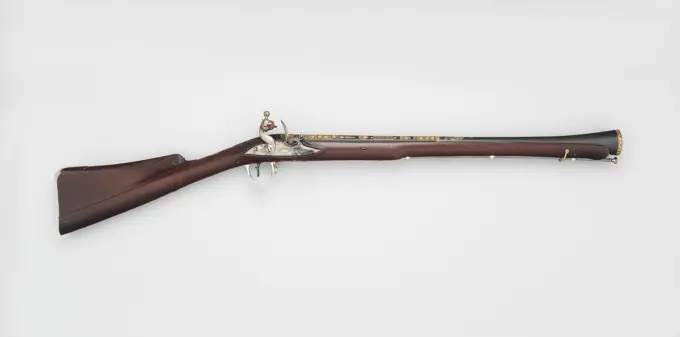
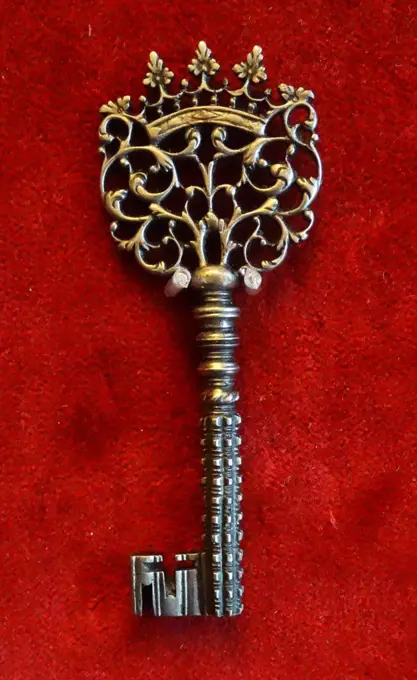
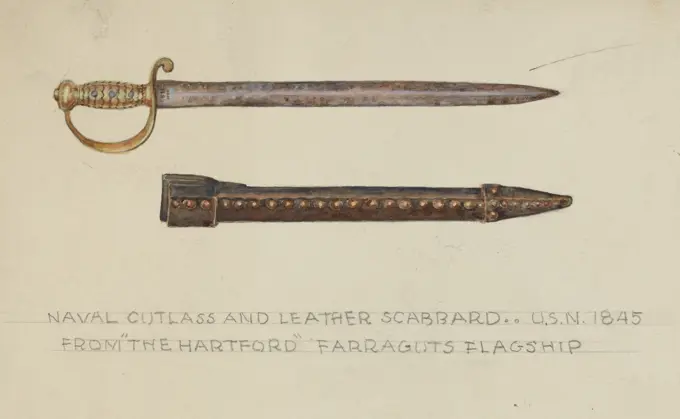
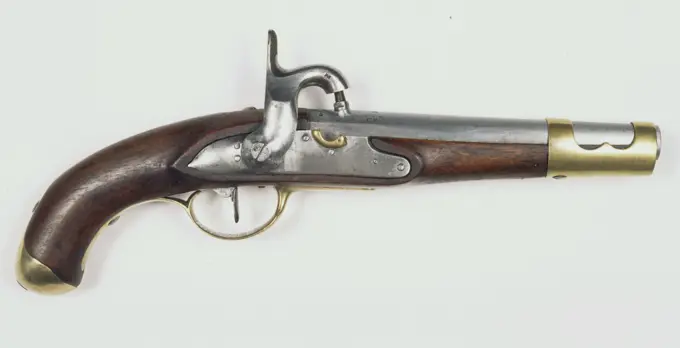
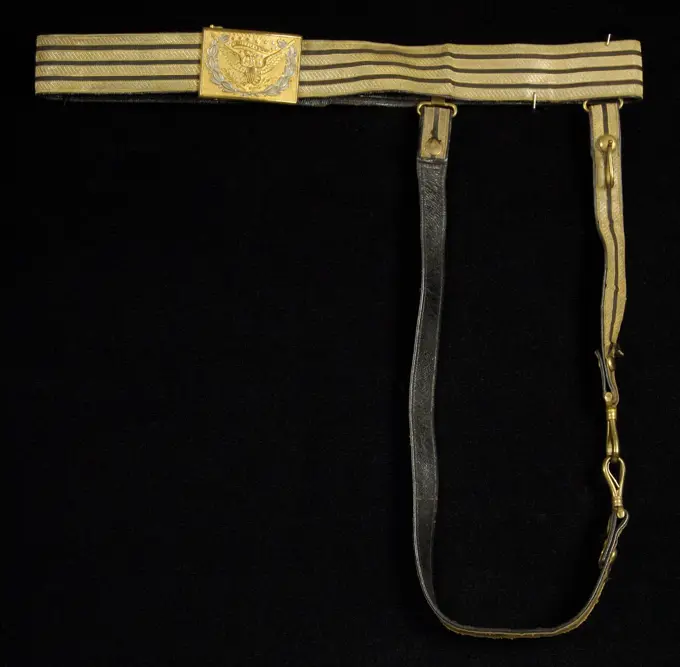
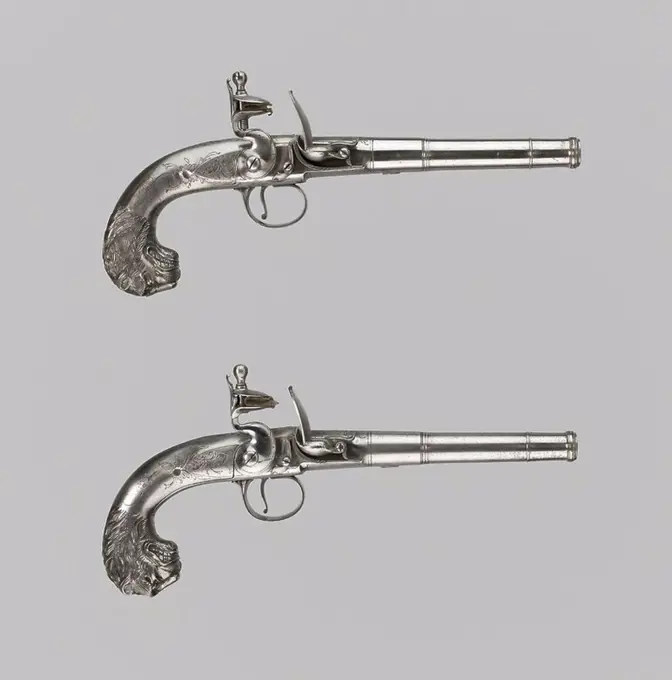
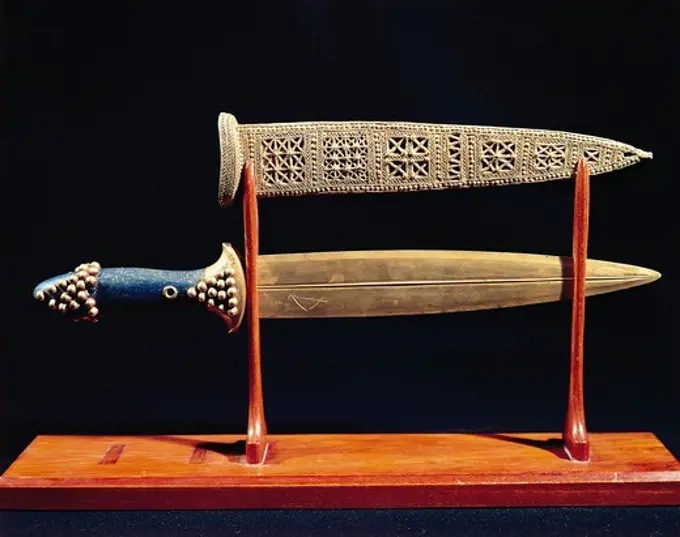
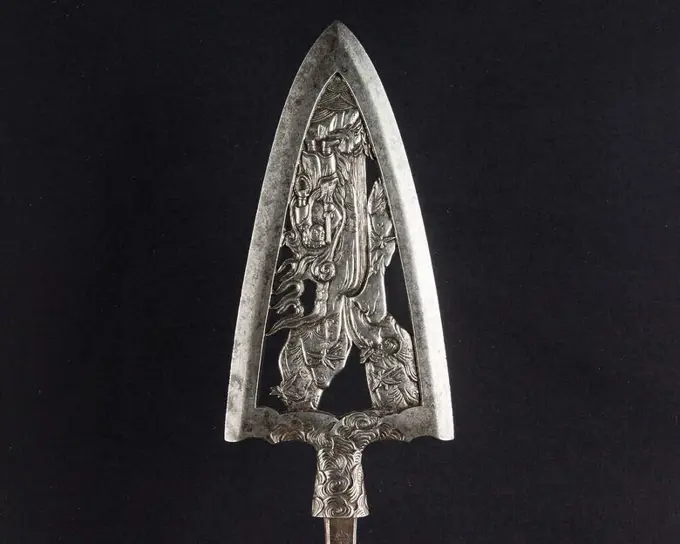
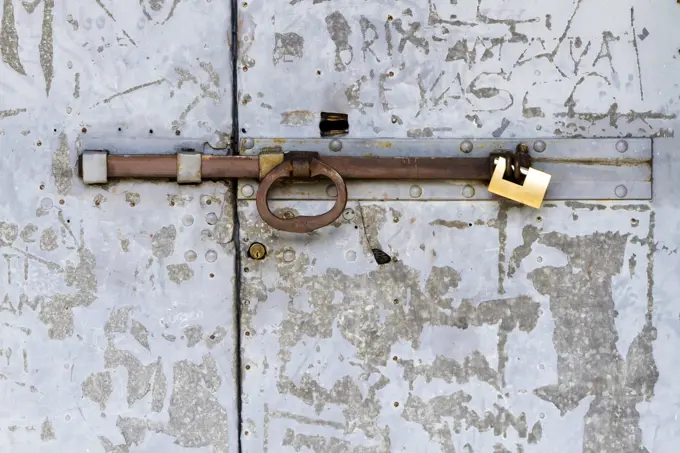
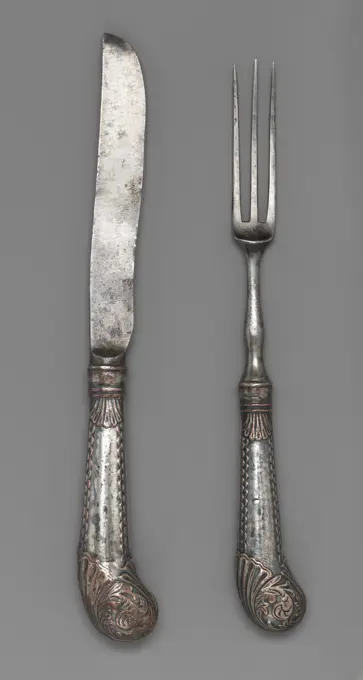
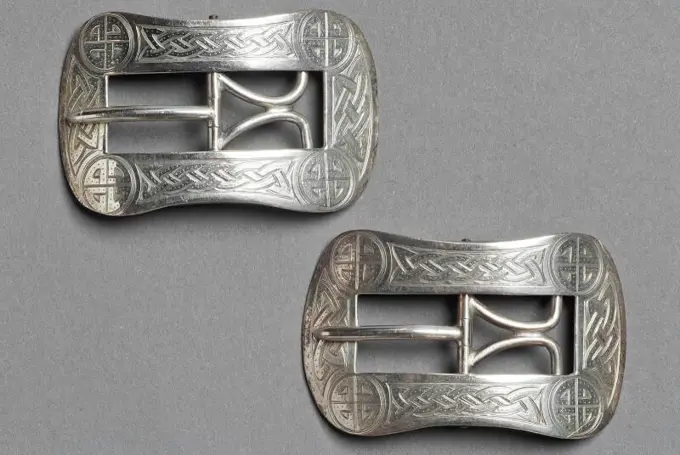
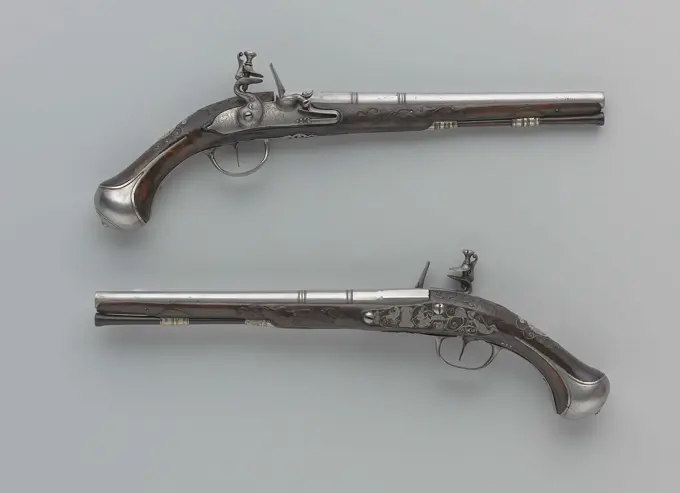
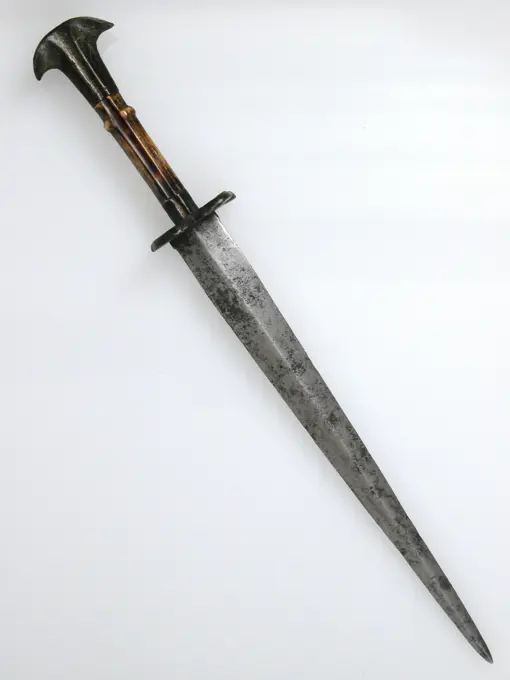
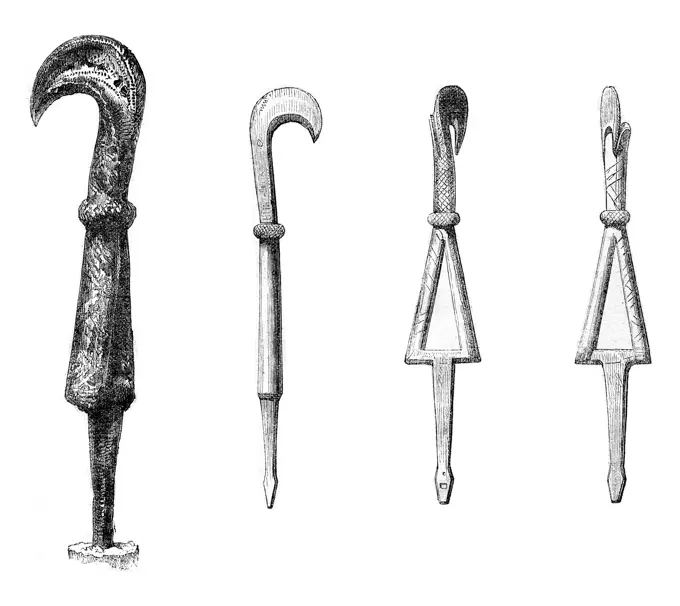
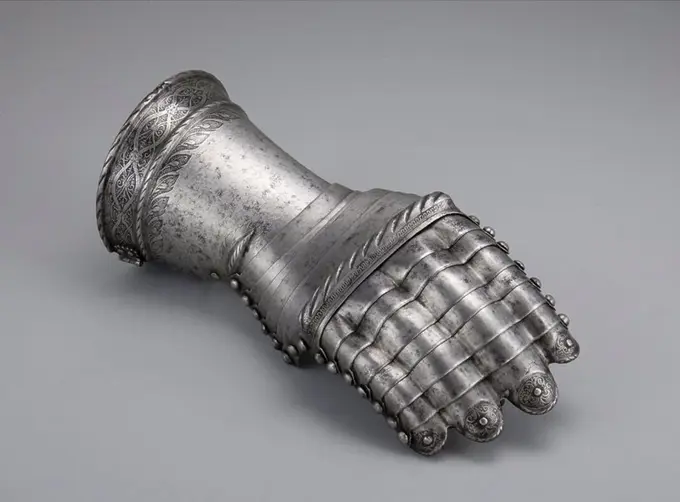
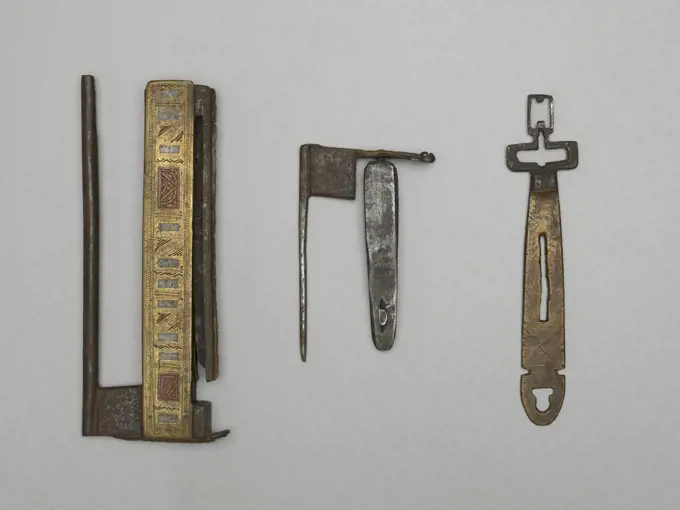
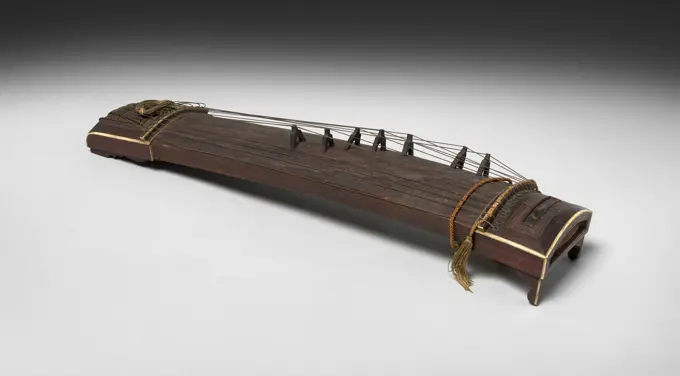
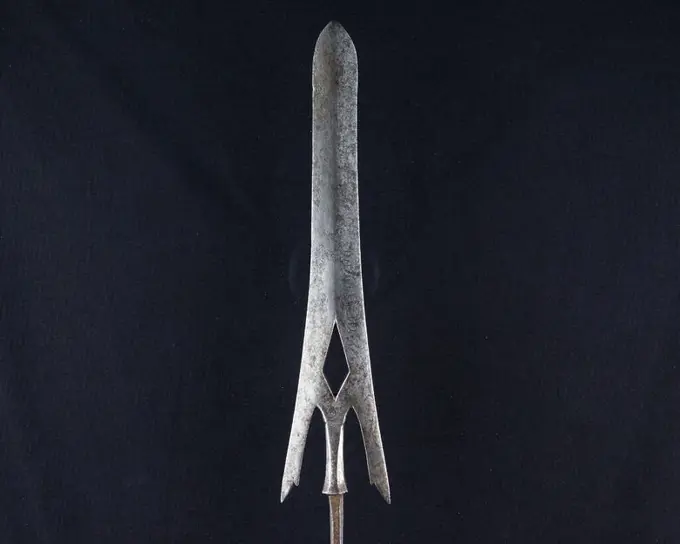
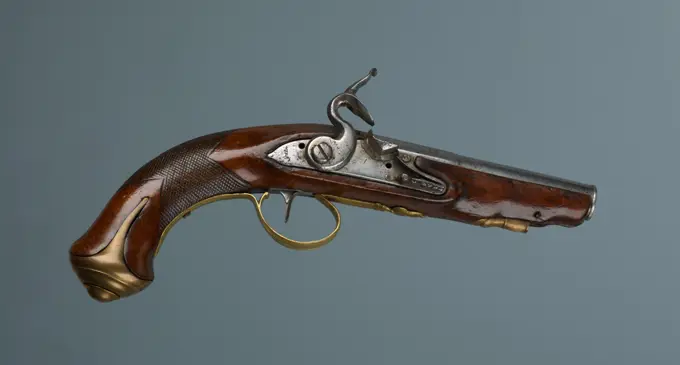
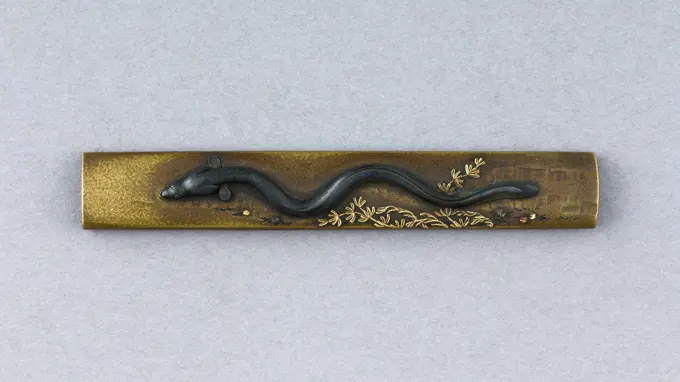
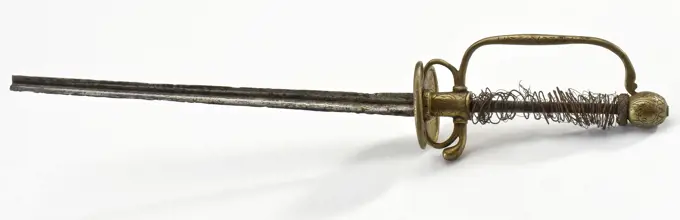
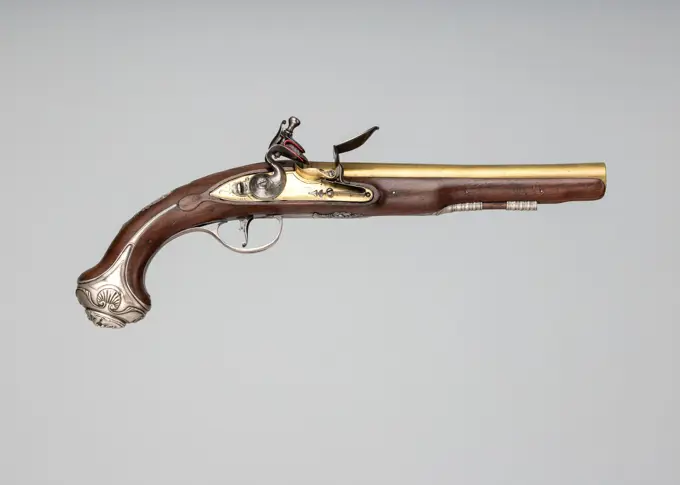
Flintlock Pistol ca. 1771-72 Probably John Hall This pistol features a silver rococo side-plate and and silver pommel adorned with a mask-embellishments typical of many early to mid- 18th century English firearms. Pistols fitted with brass barrels and locks like this one, less costly than those made with steel components, were widely produced in the gunmaking centers of London and Birmingham.. Flintlock Pistol. British, London. ca. 1771-72. Steel, wood (walnut), brass, silver. London. Firearms-Pistols-FlintlockKey; 1909-2-234Russian Bassoon, Gerhard I Hanken & Son, c. 1830 - c. 1850 Russian Fagot in five parts. The thickest two wooden parts are marked 'G. Hanken / Rotterdam '. Thirteen holes, of which Hest 1st, 2nd, 3rd, 7th, 8th, 12th and 13th are provided with dense valves. The thumb of the left hand serves the 1st, 6th and 7th valve, that of the right hand the 3rd ED the 4th. The round, flat, slightly curved valves support on pillars screwed into the wood. The top two valves with indirect transmission mechanism. The cup and the stirring also made of brass. Voting: C. Rotterdam wood (plant material). copper (metal) Russian Fagot in five parts. The thickest two wooden parts are marked 'G. Hanken / Rotterdam '. Thirteen holes, of which Hest 1st, 2nd, 3rd, 7th, 8th, 12th and 13th are provided with dense valves. The thumb of the left hand serves the 1st, 6th and 7th valve, that of the right hand the 3rd ED the 4th. The round, flat, slightly curved valves support on pillars screwed into the wood. The top two Kanjar with a scabbardSABLE DEL GENERAL DON RAFAEL DE RIEGO - 1822. Location: CONGRESO DE LOS DIPUTADOS-OBJETOS. MADRID. SPAIN.The Djed-pillar symbolic to both the living and the dead.Hatche to socket (attributed title). Bronze. Carnavalet museum, history of Paris.Fork with cut handle in the form of a lady, 1600 - 1699 Fork with a sliced handle of amber, representing a lady. Belongs to BK-NM-567. Germany amber (fossil resin) Fork with a sliced handle of amber, representing a lady. Belongs to BK-NM-567. Germany amber (fossil resin)Knife Handle (Kozuka). Culture: Japanese. Dimensions: L. 3 13/16 in. (9.7 cm); W. 9/16 in. (1.4 cm); thickness 3/16 in. (0.5 cm); Wt. 1.2 oz. (34 g). Date: ca. 1615-1868. Museum: Metropolitan Museum of Art, New York, USA.Smallsword hallmarked for 1694-95 French, Paris; blade, German By the early seventeenth century, the rapier, a long slender thrusting sword, began to dominate as the gentlemans weapon of choice. During the course of the century, however, as civilian fencing techniques became more specialized and refined, the rapier developed into a lighter, trimmed-down weapon known by about 1700 as the smallsword. Smallswords, often richly decorated, remained an integral part of a gentlemans wardrobe until the wearing of swords in civilian settings went out of fashion at the end of the eighteenth century, at which time pistols were replacing swords as arms most frequently used in personal duels. The majority of smallsword hilts are made of silver or steel, but many also employ a wide variety of luxurious materials, such as gold, porcelain, and enamel. At their best, smallswords combine the crafts of swordsmith, cutler, and jeweler to create an elegant weapon that was also a wearable work of art.. SmKnife with Handle (Kozuka) with Mandarin Ducks in Plum, 1615-1868. Japan, Edo period (1615-1868).Finnish knife for dressing fish, with a scabbard and a thongHunting rifle Maucher, Johann Michael (1645 1701)Smallsword. Culture: British, probably London. Dimensions: L. 40 in. (101.6 cm); L. of blade 33 1/4 in. (84.5 cm). Date: ca. 1700.This example is notable for its faceted forms, its bold raised moldings, and the pierced foliage at the top of the knuckle-guard, features typical of English smallswords made about 1700. Museum: Metropolitan Museum of Art, New York, USA.Masonic dagger. unknown, authorGun box with flint lock, anonymous, 1750 - 1825 Tander box with square iron section, a bowl for the fungus and lid with stop surface and spring at the front. On the left side of the container a tube for the wick. On the right side of the square part, the strap spring for the rooster, which turns on the right, is bent to the left and is thus with the flint in the middle of the top; tractor with tractor spring. At the front an iron fork for support. Etsleed with leaf motifs and lines. Nutenhouten flask of English gun pump model. Mechanically functioning. Tube for the wick is missing. West-Europa slot: iron (metal). kolf: walnut (hardwood) engraving Tander box with square iron section, a bowl for the fungus and lid with stop surface and spring at the front. On the left side of the container a tube for the wick. On the right side of the square part, the strap spring for the rooster, which turns on the right, is bent to the left and is thus with the flint in the middle of the top; tractor wRapier ca. 1570 Italian The rapier was the principal civilian sidearm throughout the sixteenth and seventeenth centuries. Designed for cut-and-thrust fencing of progressively complex techniques, the rapier is characterized by a double-edged blade with an acute point and an elaborate guard for the hand. The guards, usually of iron or steel, were subject to a variety of embellishment. They were engraved, chiseled, gilded, damascened, and encrusted in gold and silver in keeping with fashionable styles. Unless otherwise noted, the materials, attributions, and dating given here refer to the hilts. Rapier blades, invariably of steel, bear a variety of makers marks denoting their origin in the two principal centers of blademaking, Toledo in Spain and Solingen in Germany.. Rapier. Italian. ca. 1570. Steel, gold, iron, wood. SwordsFlintlock Repeating Pistol with Lorenzoni Action, Bearing the Crests of Vice Admiral Horatio Nelson (1758-1805), with Case and Accessories ca. 1798-99 Harvey Walklate Mortimer Harvey Walklate Mortimer, gunmaker to George III (1730-1820), took special interest in the repeating mechanism thought to have been invented by the Florentine gunmaker Michele Lorenzoni (d. 1733) over one hundred years earlier. Complex internally, the Lorenzoni system allows for up to ten successive shots that fed from a magazine concealed inside the grip. A one-hundred-eighty degree turn of the lever forward and back reloaded, primed, and cocked the pistol. Mortimers Lorenzoni-type firearms, meticulously constructed, reflect his admiration of, and desire to update and refine, a successful design from the past. This particular pistol is believed to have belonged to Vice Admiral Horatio Nelson (1758-1805), whose heraldic insignia are engraved behind the barrel and on the grips escutcheon, and is a rare cased exaDagger made from bronze with gilded attributes, from Circle A, a 16th-century BC royal cemetery, of the Bronze Age citadel of Mycenae in southern Greece. Characteristic of the early phase of the Mycenaean civilizationModel of an Anchor. Model of an anchor consisting of a shaft with a curved arm with anchor hands on the ends. Iron anchor ring with anchoring of gratted rope. The shaft is heavier, the corner between shaft and arms smaller and the hands are wider than usual. The anchor stick is missing. Scale 1:10 (estimation).Stilton cheese service, c. 1890, 9 7/8 x 1 1/4 in. (25.08 x 3.18 cm) (a, cheese scoop), Silver-plated metal, ivory, England, 19th centuryKnife (Piha Kaetta) with Sheath. Culture: Sri Lankan. Dimensions: H. with sheath 11 5/8 in. (29.5 cm); H. without sheath 10 3/4 in. (27.3 cm); H. of blade 6 1/2 in. (16.5 cm); W. 1 9/16 in. (4 cm); D. 1 in. (2.5 cm); Wt. 8.6 oz. (235.3 g); Wt. of sheath 1.7 oz (48.2 g). Date: 18th century. Museum: Metropolitan Museum of Art, New York, USA.Tweezers, Rosewood, silver, glass, brass, mother-of-pearl, silk, and leather, ca. 1875, containers, Decorative Arts, TweezersFlint gun, Jan Bijlaard, c. 1690 flintlock pistol Part of a couple. The lock is easily engraved with edges, a row of buttons and a signature. A rib runs over the barrel; The sight grain is made of iron; Stamped at the bottom with a brand in the shape of a chair () With a crown above it. The flask is cut into relief with curls, among other things. The yielding, previously gilded batter consists of, among other things, an asymmetrical screw plate consisting of leaf vines, a thumb plate of ajour processed leaf vines, branches and dolphins, and a flask button with a mask on the bottom; The loading stick has a hood of cow horn. Rotterdam iron (metal). brass (alloy). gilding (material). horn (animal material) engraving / cutting / gildingGun. Murasada (Japan, early 19th century). Japan, early 19th century. Costumes; Accessories. Iron, woodPistol with a rock castle from a pair unknown labelSpanish sword collection detail, sigle XVIKnife, agate, silver, steel, Sabre-shaped blade with curved upper edge. Plain bolster, silver engraved ferrule with scalloped border. Flaring, faceted agate handle, silver conical mount on top., possibly Scotland, n.d., cutlery, Decorative Arts, KnifeGold knife of Queen Pu-Abi, Ur, 2500 BC. Sumerian. MESOPOTAMIA.Partisan. Culture: German, Saxony. Dimensions: L. 95 in. (241.3 cm); L. of head 23 3/4 in. (60.3 cm); W. 6 5/16 in. (16 cm); Wt. 4 lbs. 4.8 oz. (1950.4 g). Date: ca. 1675. Museum: Metropolitan Museum of Art, New York, USA.Flint gun, Jan Knoop, c. 1619 - c. 1688 flintlock pistol Flint gun, part of Koppel, with iron round slippery loop interrupted by two profile tires, after which the loop runs octagonally. The final plate is made of iron where the name "Ian Knoop" is engraved with "Utrecht" underneath. The flask is made of walnut and has an iron flask hood with an iron plate on the head with a bulge in the middle. A cut floral pattern on the Kolfhals. On the other side of the drawer an iron batter in the form of floral motifs. The tractor bracket is entirely of iron. Under the drawer a wooden cargo in a tube which is the end of iron. The head of the wicker is made of iron. Utrecht Loop, lock plate, Kolfkap, Haan: Iron (Metal). Drawer, Kolf: Wood (Plant Material) engraving  NetherlandsPartisan. Culture: Austrian. Dimensions: L. 87 1/2 in. (222.3 cm); L. of head 17 in. (43.2 cm); W. 4 3/8 in. (11.1 cm); Wt. 3 lbs. 8.3 oz. (1596.1 g). Date: ca. 1750. Museum: Metropolitan Museum of Art, New York, USA.Two-Handed Sword Made 1525-1575 Germany. Steel, leather, and buckram .Percussion cap muzzle loader used in the 19. th century 9mmBACULO DE MARFIL (SIGLO XII). Location: CATEDRAL. RODA DE ISABENA. HUESCA. SPAIN.Spanish sword collection detail, sigle XVISword (Kilij) with Scabbard 19th century Turkish The inscriptions on the sword invoke Allah, the Prophet Muhammad, and Ali. The stones adorning the hilt and scabbard of the sword have talismanic significance. According to scholar Al-Biruni’s eleventh-century manuscript Kitab al- Jamahir (Book of Precious Stones), coral was believed to prevent misfortune and turquoise to avert the evil eye.. Sword (Kilij) with Scabbard. Turkish. 19th century. Steel, wood, turquoise, coral, emerald, gold. SwordsGuarded Dagger (Katar). Culture: Indian, Thanjavur; blade, European. Dimensions: L. 22 1/4 in. (56.5 cm); W. 4 1/2 in. (11.4 cm); Wt. 2 lb. 0.9 oz. (932.7 g). Date: 16th century. Museum: Metropolitan Museum of Art, New York, USA.Gartenkralle - Hand rake on wood Gartenkralle - Hand rake on wood Copyright: xZoonar.com/lantapixx 7261948Pair of Flintlock Pistols. Culture: German, Regensburg. Dimensions: L. 16 3/4 in. (42.6 cm); L. of barrel 11 1/4 in. (28.6 cm); L. of lockplate 4 1/2 in. (11.4 cm); Cal.56 in. (14.2 mm); Wt. 1 lb. 13 oz. (822 g). Gunsmith: Johann Andreas Kuchenreuter (German, Regensburg, 1716-1795). Date: ca. 1760-70.Several generations of the Kuchenreuter family were highly successful gunsmiths whose patrons included the King of Bohemia, Napoleon, and the Tsar of Russia. Johann Andreas and his father Johann Jacob were among the most famous members of this gun-making dynasty. Museum: Metropolitan Museum of Art, New York, USA.dagger Souvenir medieval dagger. An exact copy made of modern materials Copyright: xZoonar.com/ValeryxxSibrikovx 2421203Scribe's Palette, 1400 BC, Scribe's Palette and reed brushes, 1750 BC. EGYPT.Hunting pistol with a slicing needle lock Foesterold saw on wooden background. carpentry tools on a wooden backgroundRapier of Ambrogio Spinola (1569-1630) with Scabbard Chape ca. 1600 Hilt inscribed M. I. F. The hilt is finely decorated with small yet amazingly detailed scenes from the Old Testament, encircled by identifying inscriptions in Latin and French. The hilt is initialed M.I.F. three times by an unidentified medalist or sculptor. Inscribed on the back of the knuckle guard is the name of the owner, Ambrogio Spinola (1569-1630), commander in chief of the Spanish forces in the sourthern Netherlands from 1604 to 1609.. Rapier of Ambrogio Spinola (1569-1630) with Scabbard Chape. Northern European, possibly France. ca. 1600. Steel. SwordsRoman surgical instrument 1st century AD. two bone chiselsPipe key, c. 1400 - c. 1950 Pipe key, more or less engraved.  iron (metal) Pipe key, more or less engraved.  iron (metal)Flintlock Pistol, anonymous, 1825 flintlock pistol Flint front loading gun, the loading stick is missing. The barrel, decorated with crossed anchors, is attached to the drawer with an iron bracket, which in turn is attached to the drawer with a tail. Kolf hood, tractor bracket and pan are made of brass. Simple iron flint lock. Opposite the lock is a bracket on the drawer, with which the gun can be hung on a belt. For the most part, this gun corresponds to the gun for the heavy cavalry M 1820. Netherlands iron (metal). brass (alloy). wood (plant material)   NetherlandsA revolver shotgun, a four leaf with a rock castle David, ArnoldFlintlock Blunderbuss late 18th century and early 19th century British and possibly Sumatran This English blunderbuss features a Tower-marked lock and is said to have been decorated in Aceh, Sumatra. Its stock is incised carved with floral motifs, and the barrel is inlaid with silver wire in geometric patterns and abstract swirls.. Flintlock Blunderbuss. British and possibly Sumatran. late 18th century and early 19th century. Steel, wood (walnut), brass, silver, gold. Aceh, Sumatra. Firearms-Guns-FlintlockPair of Flintlock Holster Pistols Made 1700-1725 Vienna. Though the form of these pistols differs little than that of firearms used for self-defense, the decoration over the lock-plate spring suggests that they were intended for deer hunting. From the late 16th century on, members of the nobility often hunted deer with pistols while giving chase on horseback with a pack of hounds. To successfully aim and fire the pistol while riding within a few yards of the game required much training and skill.. steel, brass, gilding, walnut, and horn .Knife (possibly Scotland); agate, silver, steel; L x W: 21.1 x 2 cm (8 5/16 x 13/16 in.); The Robert L. Metzenberg Collection, gift of Eleanor L. Metzenberg; 1985-103-124Flintlock Blunderbuss dated Mauludi-era 1225/A.D. 1796-97 Indian, Mysore, Srirangapatna This gun comes from the armory of Tipu Sultan, ruler of Mysore, a Muslim state within southern (Hindu) India, from 1782 to 1799. Tipu called himself the Tiger of Mysore” and employed tiger imagery in every aspect of his court. The cock of this flintlock is a tiger’s head and the barrel is damascened in gold with tiger stripes. Manufactured in the capital of Seringapatam and incorporating the latest European technology, Tipu’s firearms were the most distinctive and sophisticated in India at the time.. Flintlock Blunderbuss. Indian, Mysore, Srirangapatna. dated Mauludi-era 1225/A.D. 1796-97. Steel, wood, silver, gold, copper alloy. Srirangapatna, Karnataka. Firearms-Guns-FlintlockSleutel.Key whose oval eye is tilted at the bottom. The shaft has been profiled in the middle.Tubular Bead Mexico. Tubular Bead. Mexico. Jadeite. JadeMirror of silver, decorated with "the dance list of Jan Steen .. Mirror of silver, in the form of a Russian cross. The frame consists of neo-rococo motifs and is awarded by a rocaille cart shower in which and relief a reproduction to the painting by Jan Steen "De Dansles".Pair of Officer's Spurs early 20th century American or British This type of prick spur, here proudly inscribed "Never Rust" on each of them, was commonly used in Britain and the United States in the first quarter of the 20th century, and by the cavalry during World War I. However, the absence on this pair of any "US" or "ENGLAND" stamp indicates that it was not part of a regulation cavalry package and may not have been used in a military context.. Pair of Officer's Spurs. American or British. early 20th century. Brass, tin, leather. Equestrian Equipment-Spurssteel Chamberlain key from the 18th CenturyVuursteen gordelpistool, marine of leger.Flint belt gun or thunderbus gun for navy or army; From set of four belt guns. The haan screw of the lock is pierced and provided with a gap; The lock plate is unprocessed apart from a signature. The loop starts straight and around to narrow a little and then towards the trumpeter wider and oval; The loop is stamped on top with the letters LC under a crown and RD, down with an A. The flask is easily cut and runs out in a solid wooden flask; Opposite the lock is probably the figure 1500 stamped; In the loop cavity an iron spring is attached to prevent the steel loading stick from falling out. In addition to the iron belt hook, the batter is made of selector and includes a lord and a loading cooker.American 20th Century, Cutlass and Leather Scabbard, 1935 1942 Cutlass and Leather ScabbardKnife Handle (Kozuka). Culture: Japanese. Dimensions: L. 3 13/16 in. (9.7 cm); W. 9/16 in. (1.4 cm); thickness 1/4 in. (0.6 cm); Wt. 1.2 oz. (34 g). Date: ca. 1615-1868. Museum: Metropolitan Museum of Art, New York, USA.Percussion army pistool Model M 1815, Anonymous, c. 1815  Percussion army pistool Model M 1815. Smooth, round loop, which turns into the room in a five -sided part. A percussion was taken into the top of the room. Marked on the tail piece of the loop. Marked on the course: is (crown above), gb. K (crown above it) and I (crown above it). Slot: Originally flint battery lock, later adjusted for percussion. The brass powder pan is cut off. Marked: i, s and crown one above the other. Wood: walnut. Batter: brass. At the front of the drawer is an openwork tube, which serves to confirm the loop; Tegenlotplaat; tractor bracket; Kolf hood. West-Europa Lads, bat: Walnut (Hardwood). Pan, tractor bracket, batting hood: brass (alloy). cock, walk, lock plate, tractor: Iron (metal)Herramientas de Mestre d'Aixa, siglo XVIII. Museo de Mataró.Brown Bess Flintlock Musket, c. 1790. Maker: Robert WheelerMilitary belt 1875-80 American. Military belt 173612Pair of Flintlock Turn-Off Pistols. English; London. Date: 1760-1770. Dimensions: L. 30 cm (11 13/16 in.)Barrel L. 17.5 cm (6 7/8 in.)Wt. 2 lb. Caliber .57. Steel, leather, and flint. Origin: London. Museum: The Chicago Art Institute, Chicago, USA.Sumerian civilization. Goldsmith art. Dagger and sheath in gold. From Royal Tombs of UrPair of Flintlock Holster Pistols 1710-1740 Liège. Steel, silver, brass, wood (walnut), and mercury gilding .Bliżej Kultury unknownPorte-bouquet. unknown, authorCeremonial Arrowhead (Yanone). Culture: Japanese. Dimensions: L. 12 3/4 in. (32.4 cm); L. of head 6 in. (15.7 cm); W. 2 3/4 in. (7 cm); Wt. 7.1 oz. (201.3 g). Steel-chiseler: Umetada Motoshige (Japanese, Edo period, died 1675). Date: dated August 1645.Large arrowheads, pierced and elaborately chiseled with landscapes, birds, flowers, dragons, and Buddhist divinities, were created to be admired for the beauty of their metalwork and design rather than for use in archery. This arrowhead is dated 1645 and signed by Umetada Motoshige (died 1675), a member of the Umetada school of swordsmiths, tsuba makers, and iron chiselers. It belongs to a group of more than thirty similarly signed and dated pieces in the Metropolitan Museum's collection (including acc. nos. 32.75.318, .321, .327, .330, .334, .337, .339-.340, .399, .403, .406, .409) that may have been made for presentation or as a votive offering to a shrine. The decoration depicts a landscape witht he Buddhist divinity Fudo Myo-oSchloss und Riegel Schloss und Riegel vor Blechtuer Copyright: xZoonar.com/angetax 5282882Surgical instruments, Italy, 19th centuryBelt buckle, two single leashes with dense eyes, attached to three-eye, belt attachment accessory ground find copper metal, Two single attachment plates with dense eyes attached to three-eye archeology Rotterdam rail tunnel attachment Soil discovery: trajectory rail tunnel Rotterdam.Table knife and fork 18th century possibly German. Table knife and fork. possibly German. 18th century. Steel, silver. Metalwork-SteelPair of Shoe Buckles, William Robb (Aberdeen, Scotland, 1851 - 1927) 1898Knife Handle (Kozuka). Culture: Japanese. Dimensions: L. 3 13/16 in. (9.7 cm); W. 9/16 in. (1.4 cm); thickness 1/4 in. (0.6 cm); Wt. 1.1 oz. (31.2 g). Date: ca. 1615-1868. Museum: Metropolitan Museum of Art, New York, USA.Pair of pistols owned by Maurice of Nassau-Beverweerd. Amsterdam arms dealers were able to deliver large quantities of standard weapons, but they also specialized increasingly in luxury weapons. These pistols were specially made for Maurice of Nassau. A bastard grandson of Prince Maurice, he was a colonel in the army. His initials MNLB are engraved on the lockplate, together with a satyr and dragon.Tinsel and metal thread 17th-18th century French. Tinsel and metal thread 214209Rapier Italian ca. 1490 Rapiers were developed in the late fifteenth century and became steadily more popular throughout the sixteenth century. This example is rare and important for its finely engraved decoration inspired by Middle Eastern ornament.Close-up of old-fashioned keysStringed Instrument late 19th century Arabian. Stringed Instrument 500993Dagger late 15th century French During the Middle Ages and Renaissance, most men and women wore a small knife in a sheath as part of their daily dress and used it as an all-purpose eating utensil and tool. The size this knife, more properly called a dagger, the shape of its hilt, and the presence of a perpendicular ring guard at the base of the hilt, indicate that it was intended primarily as a weapon, both for offense and defense, rather than a utensil. Daggers of this type were used across western Europe from the late fifteenth century to the mid-sixteenth century.. Dagger. French. late 15th century. Steel, bronze, bone. DaggersA pair of pistols with a rock castle From, CarlElements of the order of the horseMuseum Vendome, Crochet Merovingian bronze, vintage engraving. Museum Vendome, Crochet Merovingian bronze, vintage engraved illustration. Magasin Pittoresque 1876. Copyright: xZoonar.com/PatrickxGuenettex 10679872Salt Shovel 1770-1800 Probably Nehemiah Norcross. Salt Shovel. American. 1770-1800. Silver. Made in Boston, Massachusetts, United StatesHalberd early 17th century German. Halberd 34303Italy. Sardinia. Nuragic civilization. Figurine. Archer. Bronze. 9th-8th century BC. From Teti-Abini. Archeological Museum of Cagliari.Mitten Gauntlet for the Right Hand. Southern German, Augsburg. Date: 1530-1550. Dimensions: L. 27.9 cm (11 in.). Steel and leather. Origin: Augsburg. Museum: The Chicago Art Institute, Chicago, USA.Lock withkey, late 17th-18thcentury, Iron, brass, and copper, lock (1a-b): 2 1/4 × 11/16 × 5 1/2 in. (5.7 × 1.8 × 14 cm), Country Niger, Tuareg,Islamic, 17th-18thcentury, HardwareKnife (Germany), ca. 1680; silver, enamel, steel; L x W: 12.5 x 1.7 cm (4 15/16 x 11/16 in.); The Robert L. Metzenberg Collection, gift of Eleanor L. Metzenberg; 1985-103-63-bKoto, early to mid-1800s. Japan, Edo period (1615-1868). overall: 10.8 cm (4 1/4 in.).Arrowhead (Yanone). Culture: Japanese. Dimensions: L. 14 in. (35.6 cm); L. of head 8 9/16 in. (21.7 cm); W. 2 in. (5.1 cm); Wt. 3.9 oz. (110.6 g). Date: 18th century. Museum: Metropolitan Museum of Art, New York, USA.Dubbelloops flint gun, W. Leur, c. 1750 flintlock pistol The gun has two locks, left and right. WL is stamped on the inside of the lock plate; The mechanism has two tractors next to each other, where the right lock is first served. There is a signature between the two next to each other, the grain is made of a loader; The walking is stamped at the bottom with a brand in the shape of a dagger. The flask has cutting work with symmetrical leafs; The frontade is covered with cow horn. The yellow -leaking batter with asymmetrical praise in particular consists of two unadorned loading stokkers, a wide tractor bracket, a flask hood with a lion mask in relief and a loading stick with a hood of cow horn. Rotterdam brass (alloy). horn (animal material) cutting / striking (metalworking) / engravingPocket pistol with a rock castleVuursteenjachtgeweer.The lock is engraved with praise and a signature. The loop has a wider trumple with an iron visor grain and is engraved with a signature in a banderole and below a unclear brand. The walnut flask has simple carving and is narrowed with two fish above a stamped numeric 11. The iron attachment includes four loading bokekers, a plateed screw plate in the shape of two tendrils on either side of a mask, an incredible thumb plate finished in an acanthus sheet , an elongated flask and the wooden loading stick.Alto Saxhorn in B-flat. Culture: French. Dimensions: 26 × 6 1/8 × 11 in. (66 × 15.6 × 27.9 cm). Maker: Attributed to Gautrot aîné (French, Paris active 1845-84). Date: ca. 1900.This instrument was typical of the saxhorn form widely used in military and brass bands in a number of different sizes. It was one of many designs by Sax that Gautrot copied with little alteration. Gautrot was Sax's most formidable rival and patent disputes embroiled them in multiple lawsuits. Museum: Metropolitan Museum of Art, New York, USA.Pistol with a rock castle Gratzl, Johann Adam (fl. ca 1680 1700)Knife Handle (Kozuka) ca. 1615-1868 Japanese A kozuka is a handle of a by-knife that is part of a sword mounting. It is kept in a slot on the reverse of a katana scabbard, often with a matching kōgai (hairdressing tool).. Knife Handle (Kozuka) 34608