Antique Tools and Weapons

Detailed images of historical tools and ornamental weapons made from wood and metal, showcasing craftsmanship from different eras.
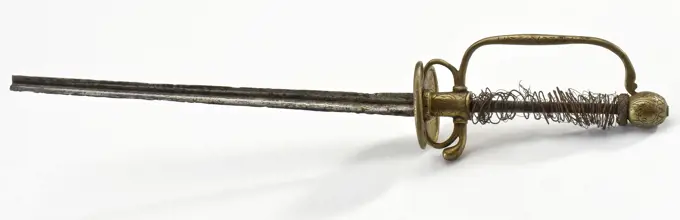
Early Dutch-style ornamental dunes from the end of the seventeenth century, jewelery sword weapon weapon fragment ground find bronze wrought iron metal, cast forged Decorative dangles Heftgroep composed of at least six parts and made of bronze wood and metal wire wound and braided in different ways. In the cast parts decoration relief. The baffle plate is solid and dense. The blade is triangular eroded three-edged archeology knife saber sword decoration status symbol personal equipment defense clothing accessory militaria
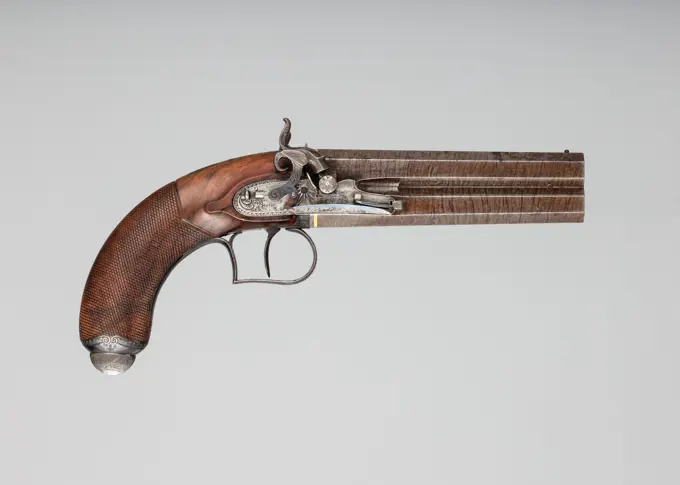
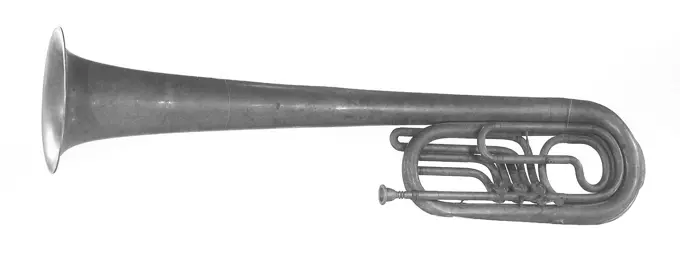
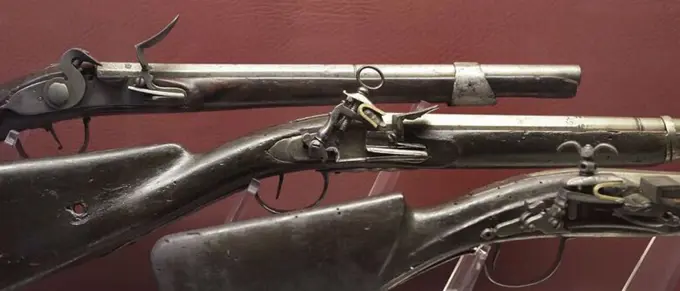
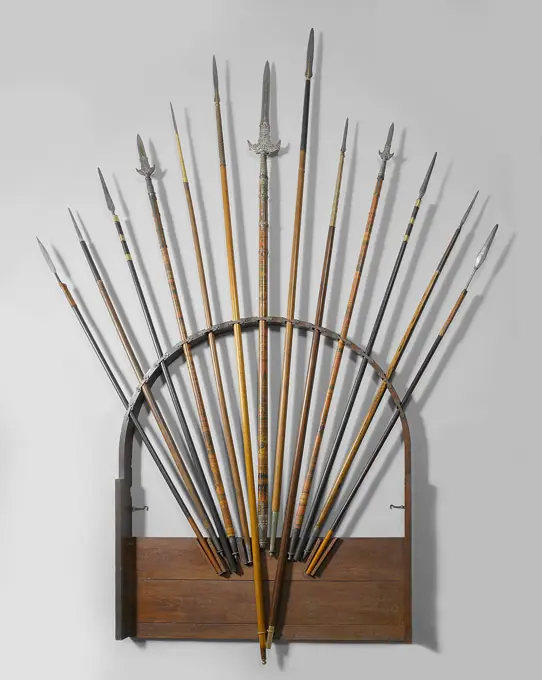
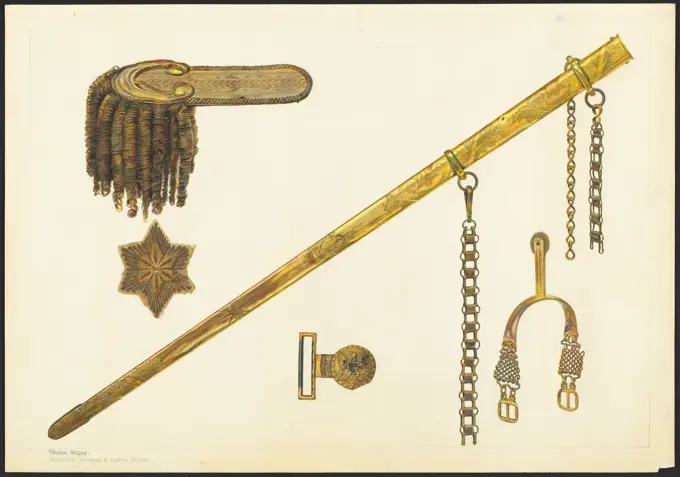
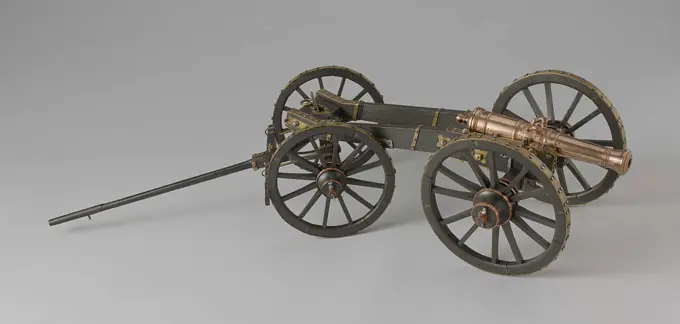
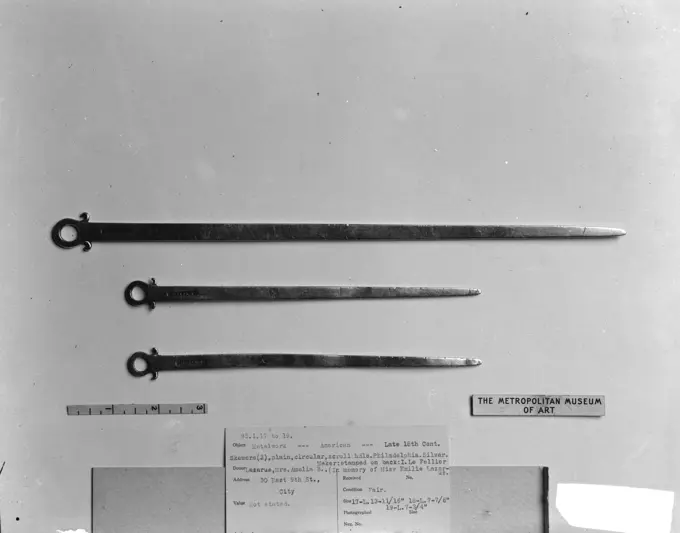
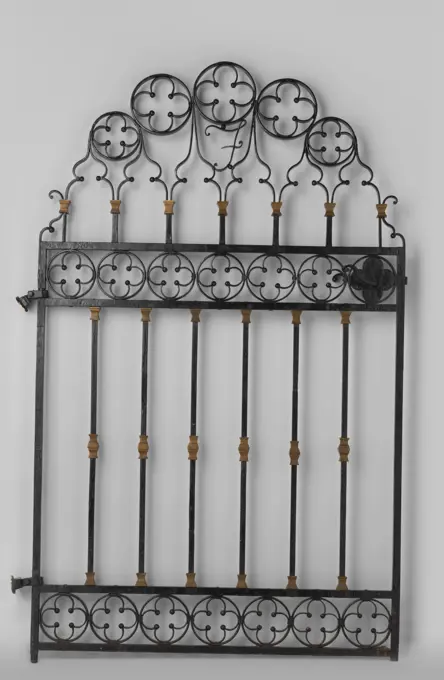
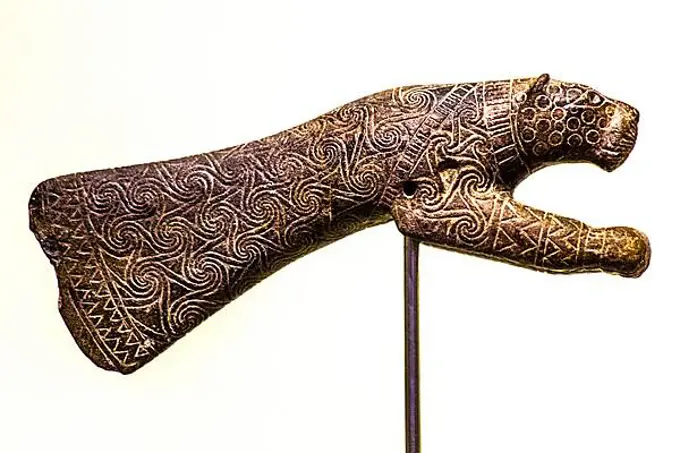
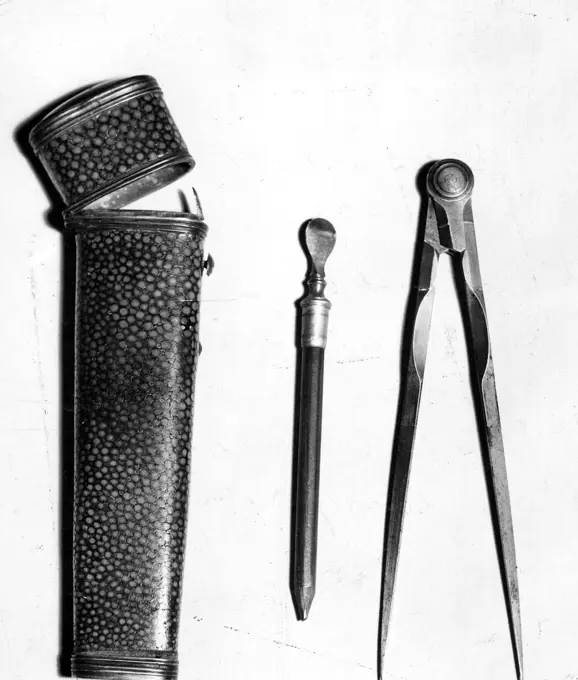
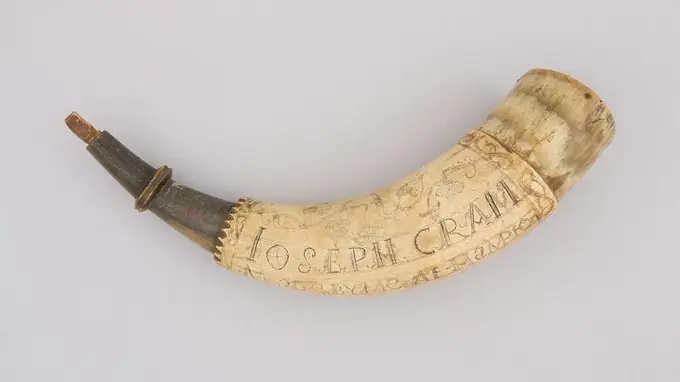
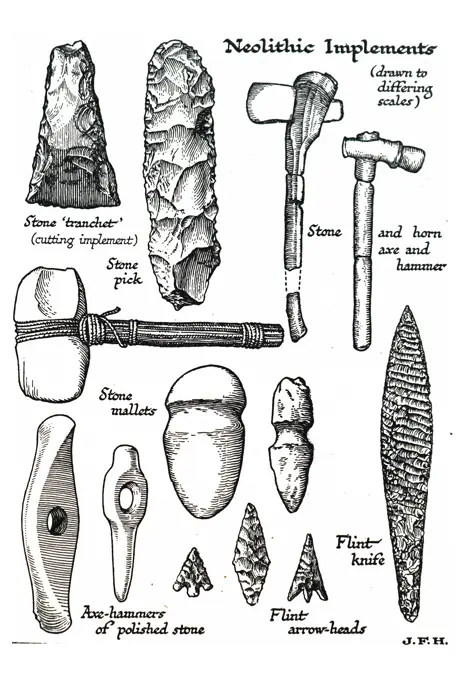
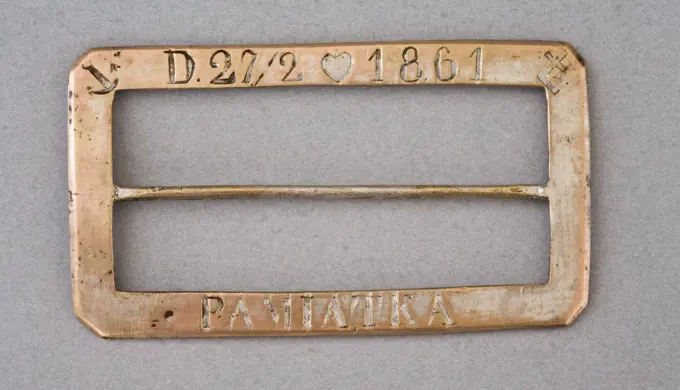
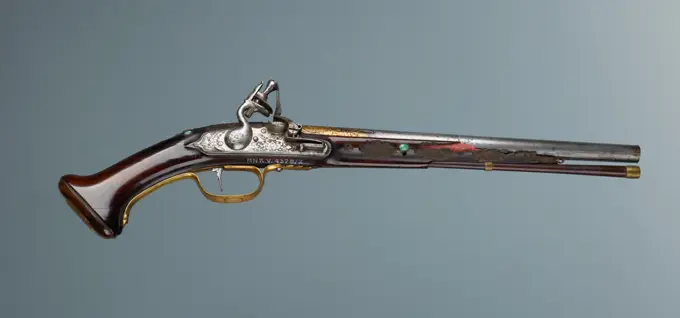
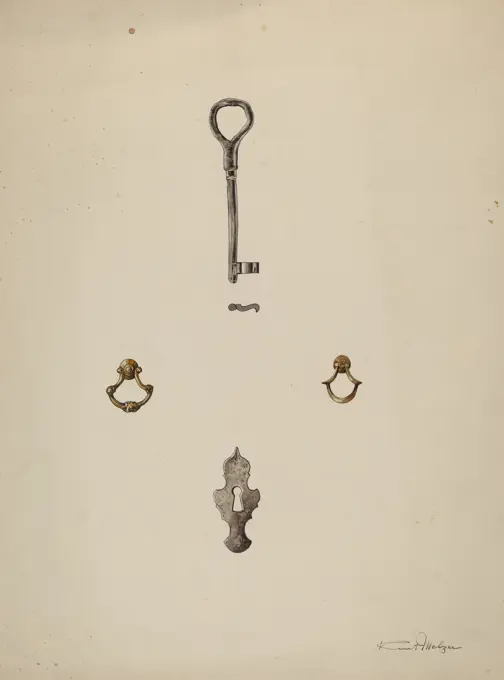
Kurt Melzer, Key Escutcheon Drawer Pull, c 1937 Key-Escutcheon-Drawer PullOver-and-Under Percussion Pistol bearing the Crest of the Polhill Family ca. 1815-1820; converted ca. 1825 Joseph Egg Joseph Egg, one of the preeminent gunmakers in London in the early 19th century, specialized in double-barreled pistols, of which this is a good example. Originally fitted with flintlocks, it was later converted by a different gunsmith to percussion locks, a more advanced mechanism, probably in the 1820s or 1830s. Conversion was a common and economical method of updating a firearm as technology advanced. The crests engraved on the butt cap and grip escutcheon indicate that it belonged to a member of the Polehill family of Sussex and Kent.. Over-and-Under Percussion Pistol bearing the Crest of the Polhill Family. British, London. ca. 1815-1820; converted ca. 1825. Steel, wood (walnut), brass, gold, platinum. London. Firearms-Pistols-PercussionTuba in E-flat mid-19th century American. Tuba in E-flat 503842Firearms. Europe. Flintlock, 17th-18th centuries. Armoury. Grandmaster Palace. Valletta. Malta.Spear Rack of Governor-General J.C. Baud. Most of these spears were presented to J.C. Baud, Governor-General of the Dutch East Indies in 1834. The Java War (1825-1830), a bloody colonial war between the Dutch and the Java princes, cost the lives of 200,000 Javanese and 15,000 Dutchmen. Because unrest remained in parts of Java, Baud went on an inspection tour in 1834. During this journey he received weapons, traditional symbols of power, from localrulers as a token of their (extorted) loyalty to the Dutch government.ESPUELA DE PLATA ARAUCANA. Location: MUSEO DE AMERICA-COLECCION. MADRID. SPAIN.Frank M Keane, Uniform Accessories, 1935 1942 Uniform AccessoriesAbruzzo, Isola del Gran Sasso d'Italia, S. Massimo, Italy, 20th century, photo, photography, EuropeModel van een 3-ponder op affuit met voorwagen.Model of a 3-ponder on affuit with front truck. On the right side of the affit brand a 3 lb. K.M. The right drawer of the front truck is missing.Skewer 1775-1800 John Letelier Sr.. Skewer. American. 1775-1800. Silver. Made in Philadelphia, Pennsylvania, United StatesPercussion army pistool Model M 1815, Anonymous, c. 1815 - c. 1816  Percussion army pistool Model M 1815. Smooth, round loop, which turns into the room in a five -sided part. A percussion was taken into the top of the room. Marked on the course: 1816, is (crown above it). Slot: percussion lock. Marked on the final plate: l (crown above). Wood: walnut. Batter: brass: at the front of the drawer is an openwork sleeve, which serves to confirm the loop; Tegenlotplaat; tractor bracket; Kolf hood. Netherlands Lads, bat: Walnut (Hardwood). Leadband, Tractor Breeding: Brass (Alloy). Batting hood: Brass (Alloy). Walk, lock: Iron (Metal)Hek door with pointed arch croses and the letter F., from Verz. Mannheimer, c. 1800 - c. 1900 Low fence door. With a plinth and a Frisian that is decorated with seven laps in which a four -pass. In the middle pocket quadrangular bars with top and in the middle stamp profiled thickenings. The fence has formed a crowning out of six pointed arches, above which five laps with Vierpas. Under the middle round the letter (f). Iron, Copper thickening. Italy iron (metal). copper (metal) Low fence door. With a plinth and a Frisian that is decorated with seven laps in which a four -pass. In the middle pocket quadrangular bars with top and in the middle stamp profiled thickenings. The fence has formed a crowning out of six pointed arches, above which five laps with Vierpas. Under the middle round the letter (f). Iron, Copper thickening. Italy iron (metal). copper (metal)Sword, Museum, Genoese Fort de Matra, Roman city of Aleria, Corsica, Aleria, Corsica, France, EuropeEnd handle of a sceptre in the shape of a panther (1800-1700 BC), Archaeological Museum with most important finds of the Minoan culture, Heraklion, Crete, Heraklion, Crete, Greece, EuropeFour antique singly charged gun on a brown backgroundStalin articles from museum. Cpt. Cook's beneal case, silver mounted beniel silver ***** ivory rulers. January 5, 1952.Collection of weapons used throughout different periods of timeHalberd with the Arms of the City of Cologne 17th century German. Halberd with the Arms of the City of Cologne 32355Powder Horn. Culture: Colonial American, Hampton Falls, New Hampshire. Dimensions: L. 12 1/2 in. (31.8 cm); Diam. 3 1/4 in. (8.3 cm); Wt. 12.6 oz. (357.2 g). Maker: Joseph Cram. Date: 1764. Museum: Metropolitan Museum of Art, New York, USA.Ancient sabre Ancient sabre. A smart variant of the fighting weapon Copyright: xZoonar.com/ValeryxxSibrikovx 2424008Unknown, Tricolor Flag Flag to pin - Liberation era - having belonged to Huguette Rezeau (attributed title), 1944. Small glass pearls. Metal, fine metal wires. Museum of the Liberation of Paris - General Leclerc Museum - Jean Moulin Museum.Candlestick part French late 18th century View more. Candlestick part. French. late 18th century. Gilt bronze. Metalwork-Gilt BronzeScoop and platter fish fork in a case. Werner i S-ka (Warszawa ; wytwórnia złotnicza ; 1864-1939), goldsmiths companyBurgmote Horns - these beautiful horns of hammered and embossed bronze belong to the Corportations of Canterbury and Dover. The Dover horn was used to call together the Corporation at the order of the Mayor of the town. The minutes of the town proceedings were often headed "At the comyne Horne Blowying" ("Common Horn Blowing"). The horn is still use at some municipal ceremonies. The Cantuerbury horn is recorded for calling meeting from 1376 to 1835.     Date: 1929Engraving depicting Neolithic Implements including a stone tranchet, stone pick, stone and horn axe, flint knife, stone mallets, axe-hammers made from polished stone and flint arrow-heads. Dated 19th CenturyBuckleHarp Lute ca. 1800 Edward Light English. Harp Lute 501655Pistol with a rock castle for steamEngraving of a Smith's Stockless anchor, a device used to connect a vessel to the bed of a body of water to prevent a craft from drifting away. Dated 19th Century