Antique Wooden Chairs

A collection of various antique chairs showcasing intricate designs, upholstery, and craftsmanship from different historical periods.
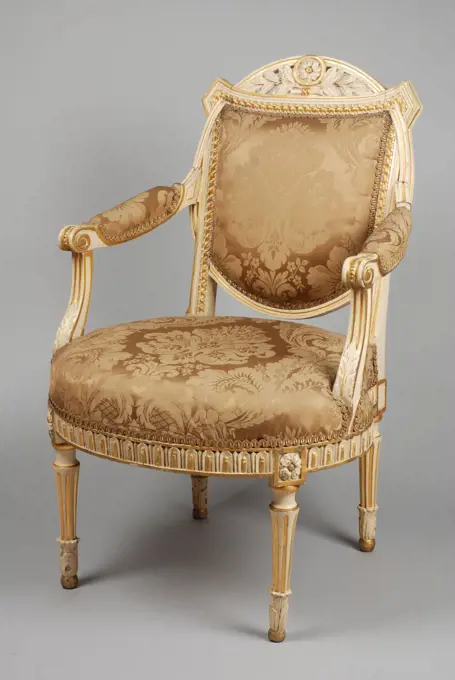
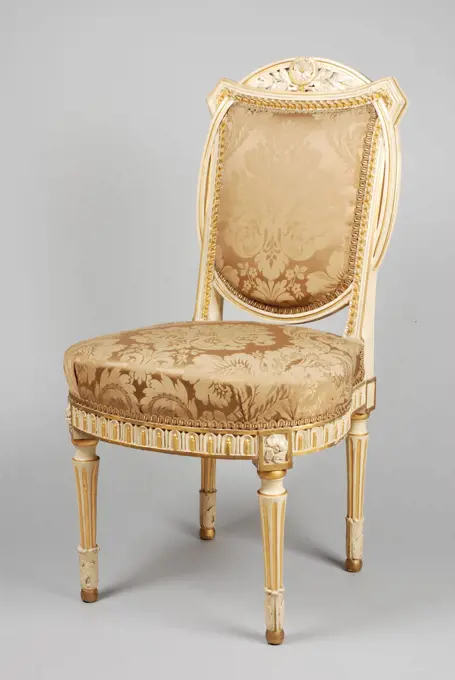
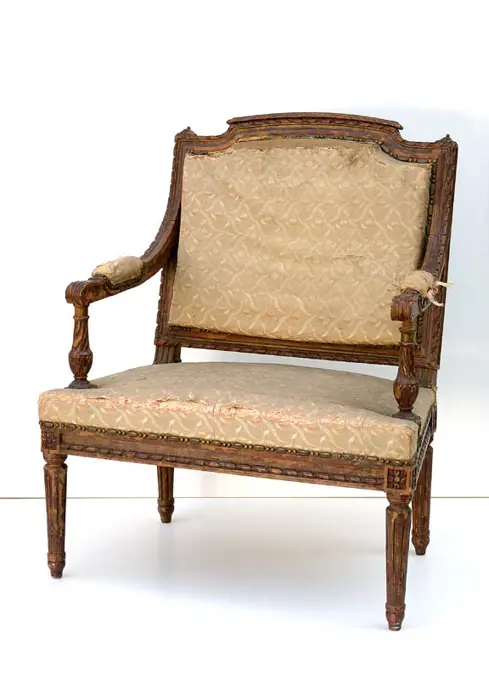
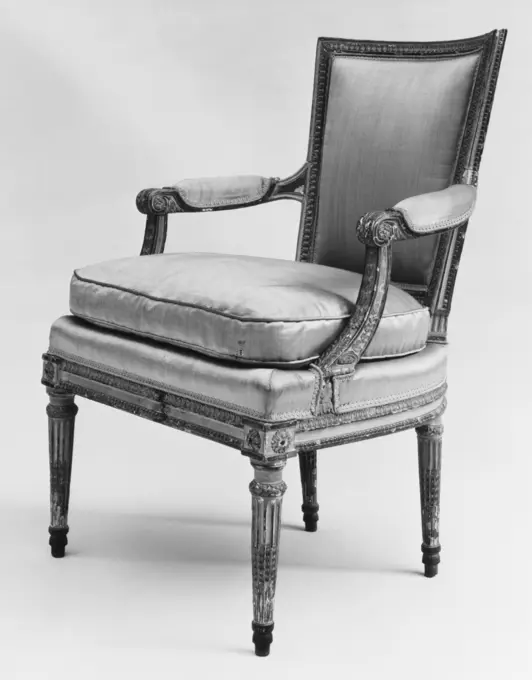
White painted, partly gilded Louis Seize armchair, armchair chair seating furniture interior interior design wood beechwood lacquer gold leaf silk damask, Oval backrest rimmed by rectangular frame brown silk damask covering with passement on seat and back crest with laurel branches and rosette Louis XVI Louis XVI Louis Seize Kralingen-Crooswijk Rubroek Rotterdam Van Rijckevorsel From the estate Rubroec (Rubroek) of the Van Rijckevorsel family.
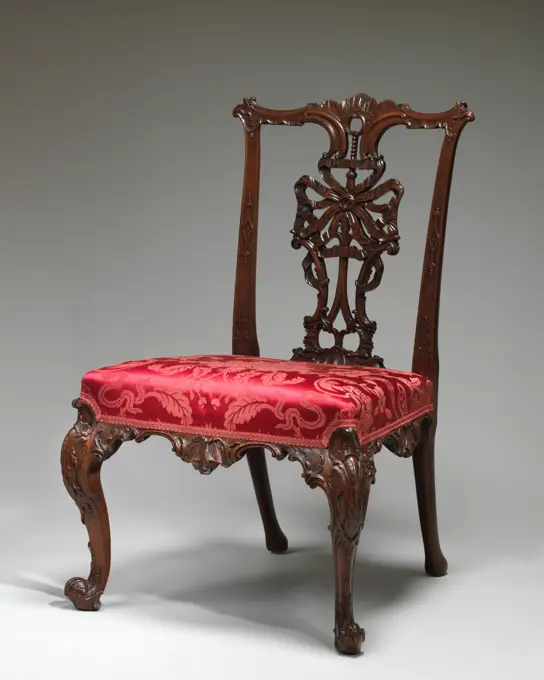
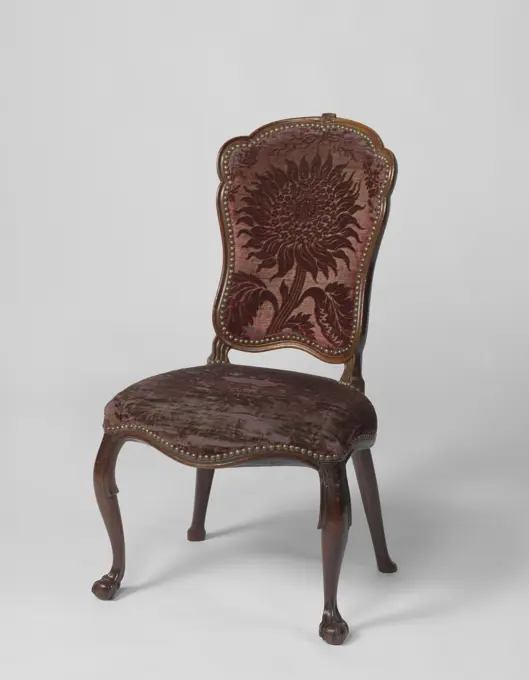
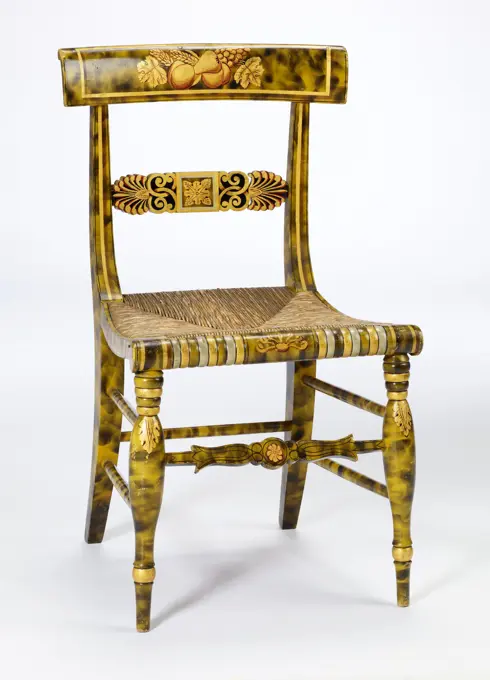
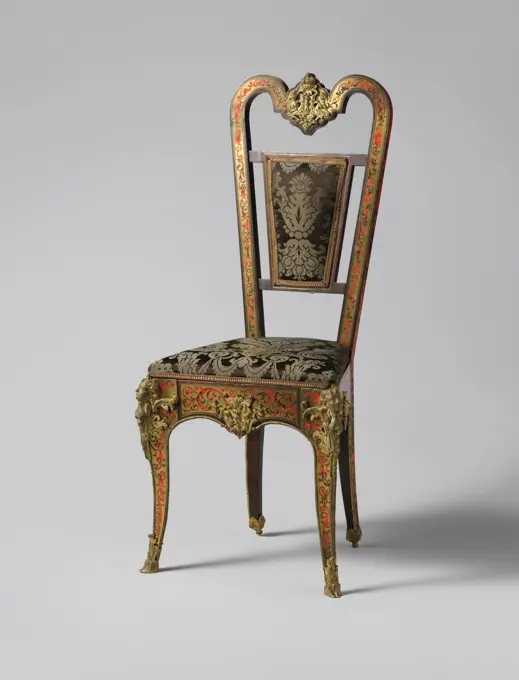
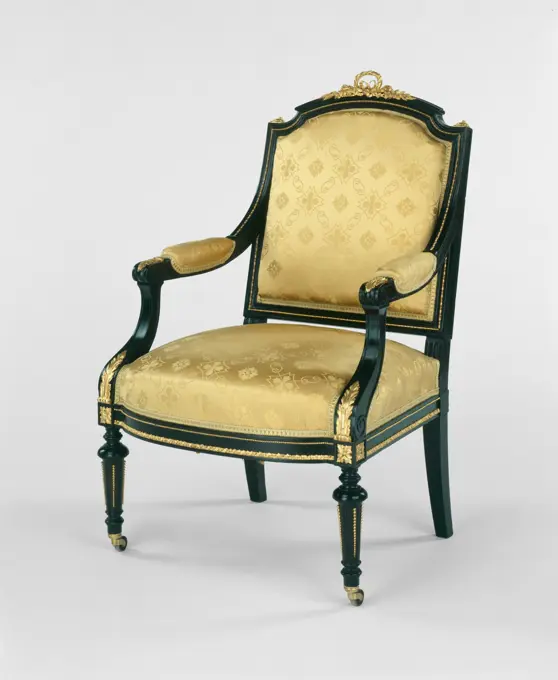
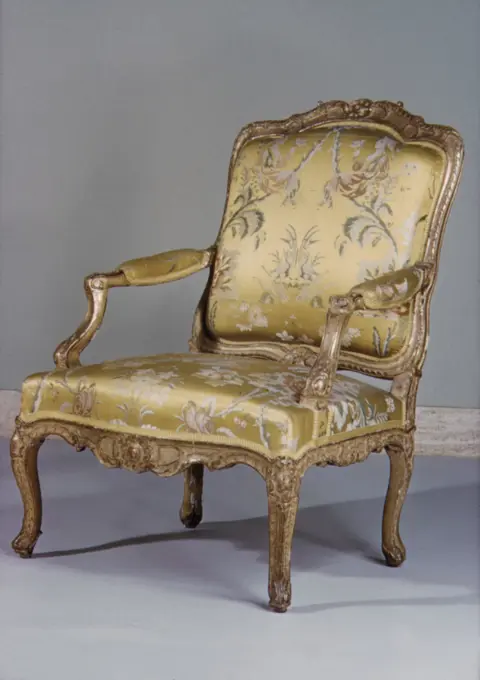
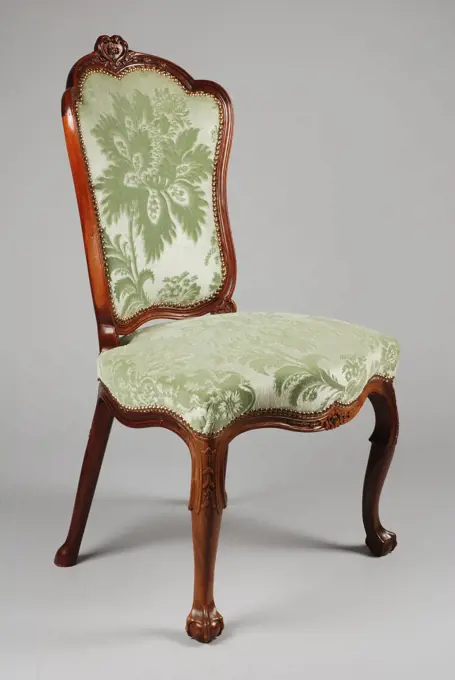
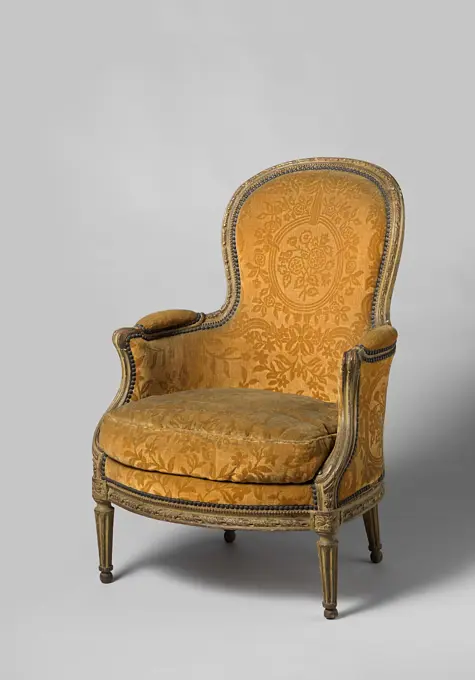
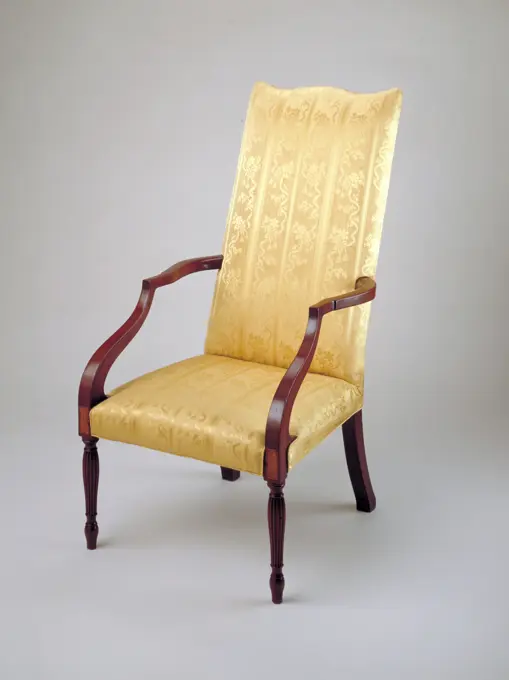
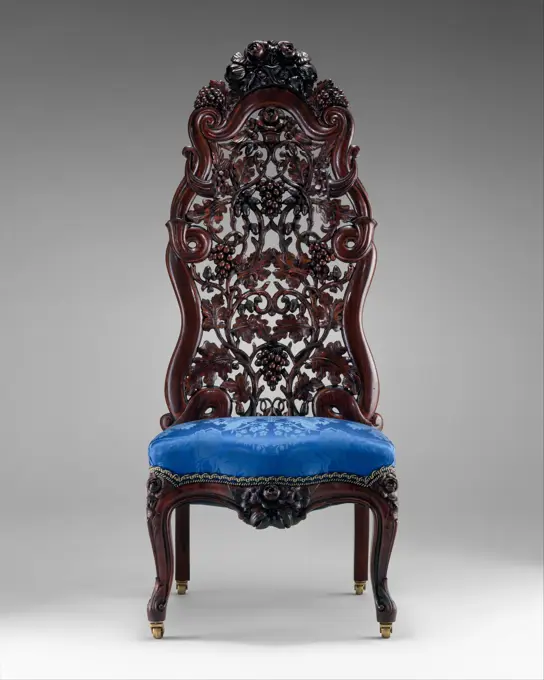
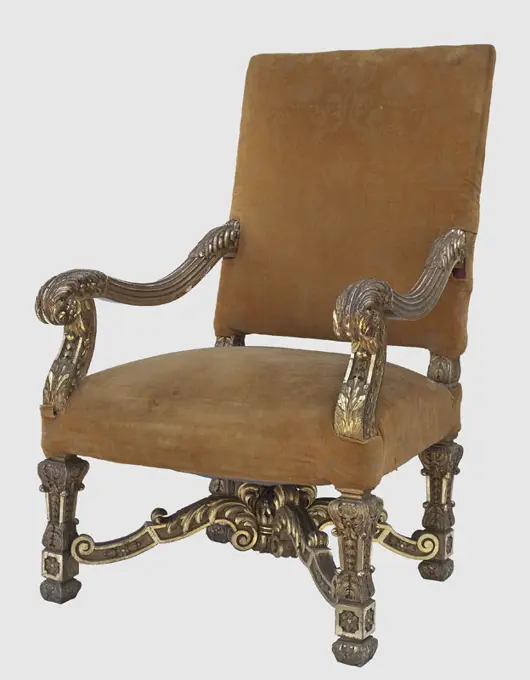
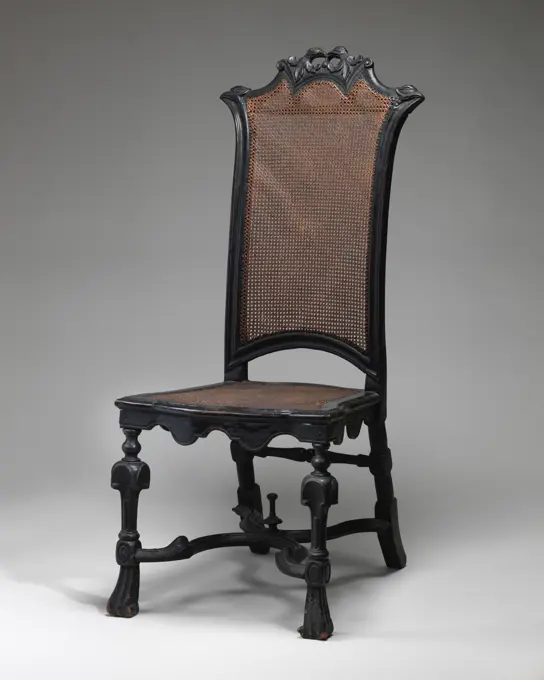
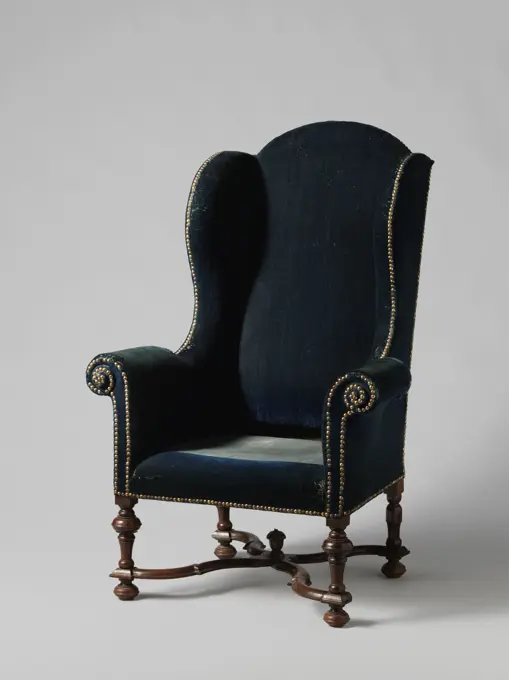
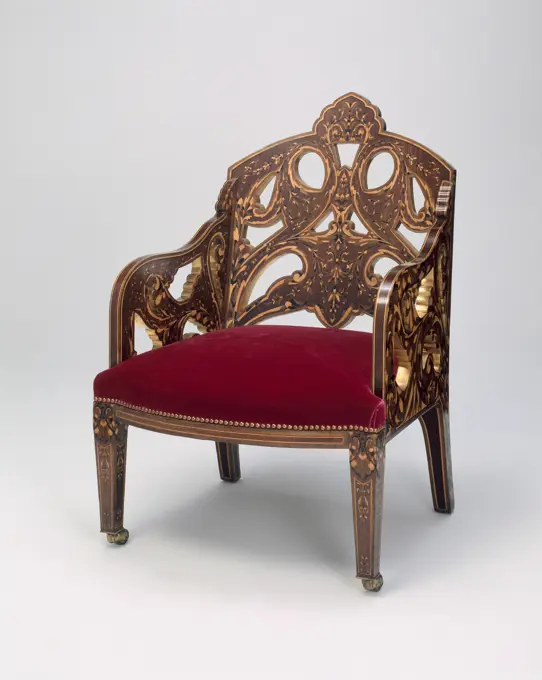
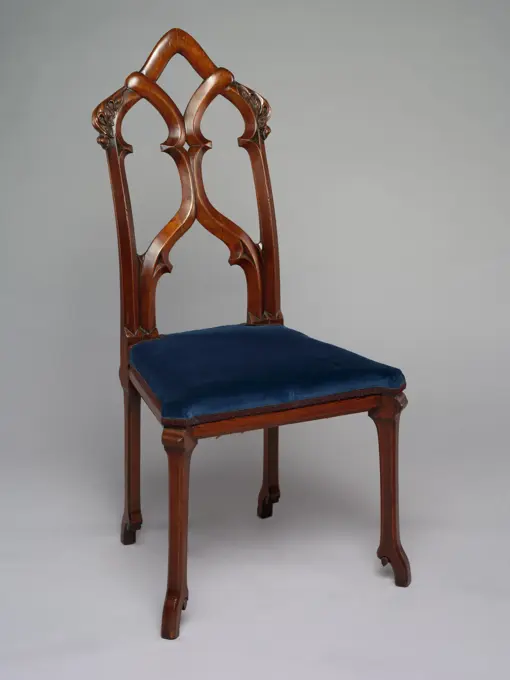
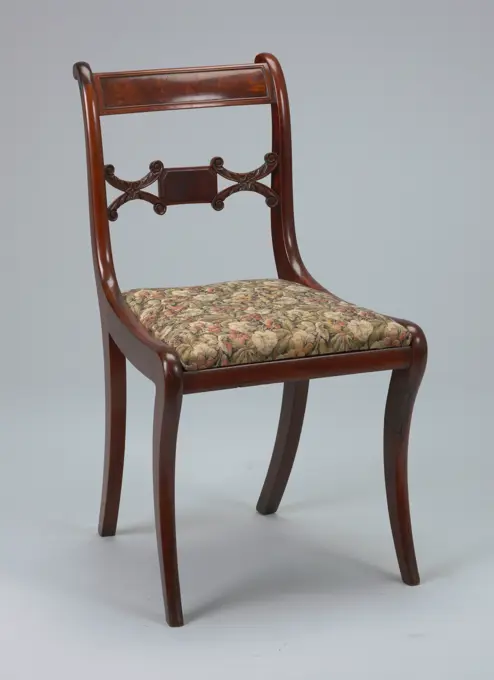
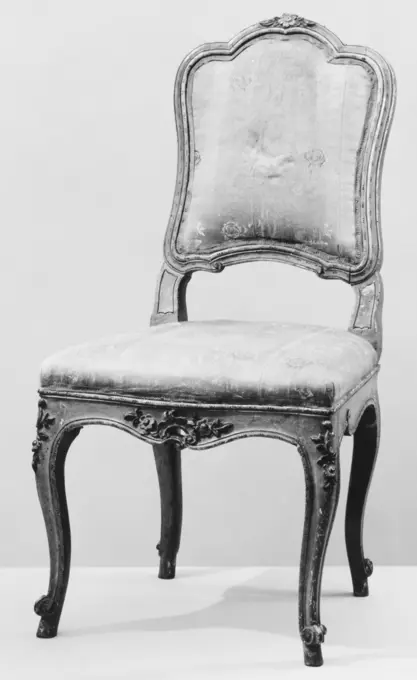
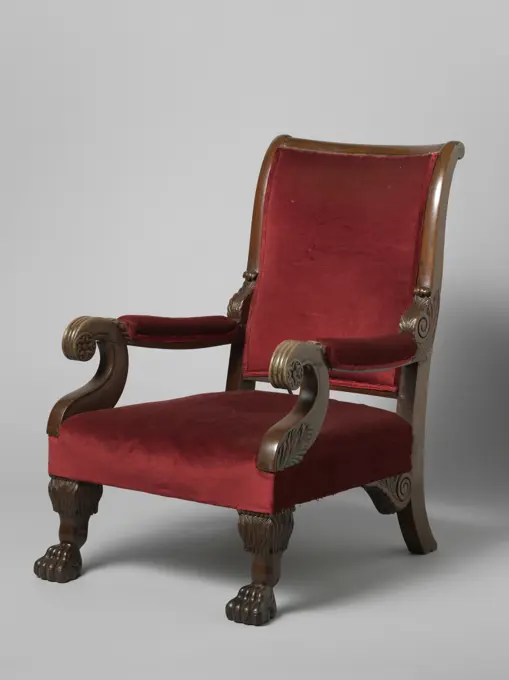
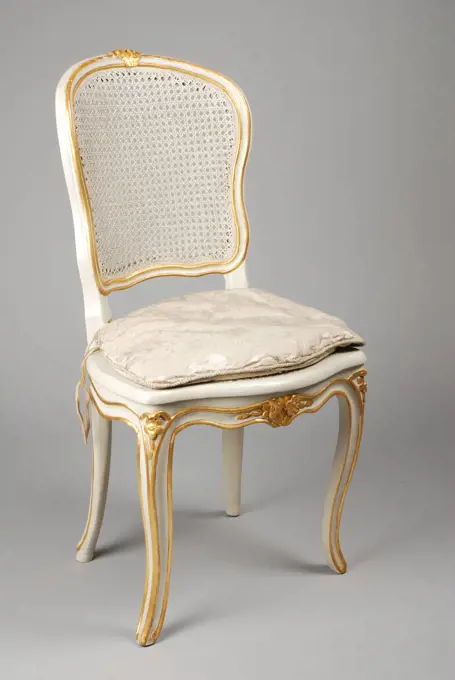
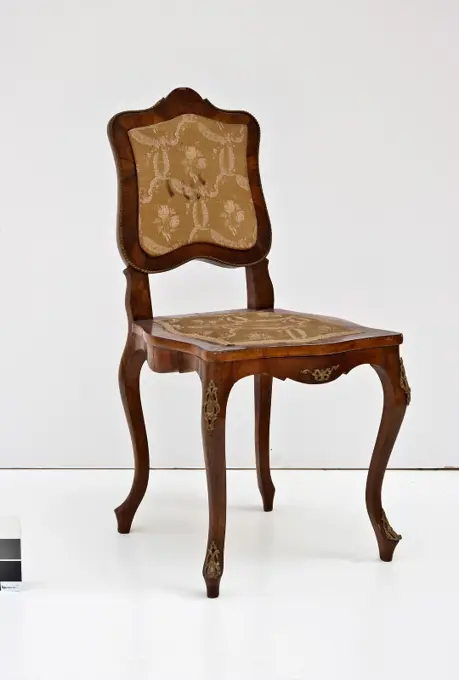
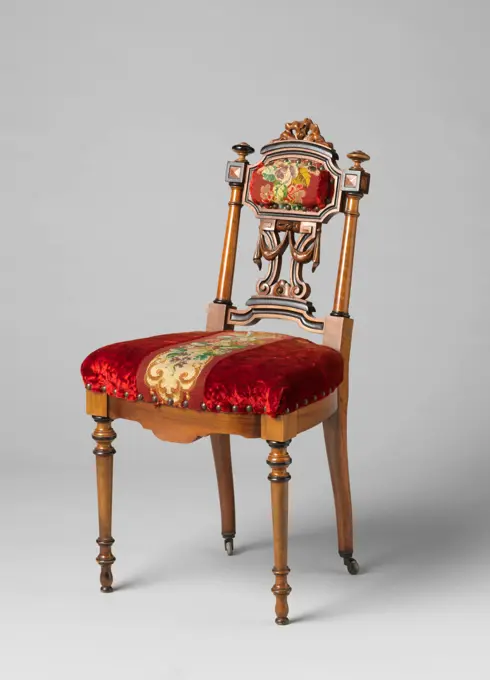
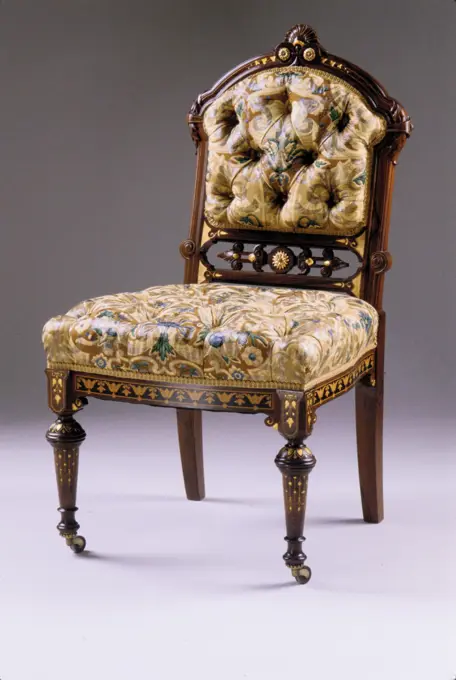
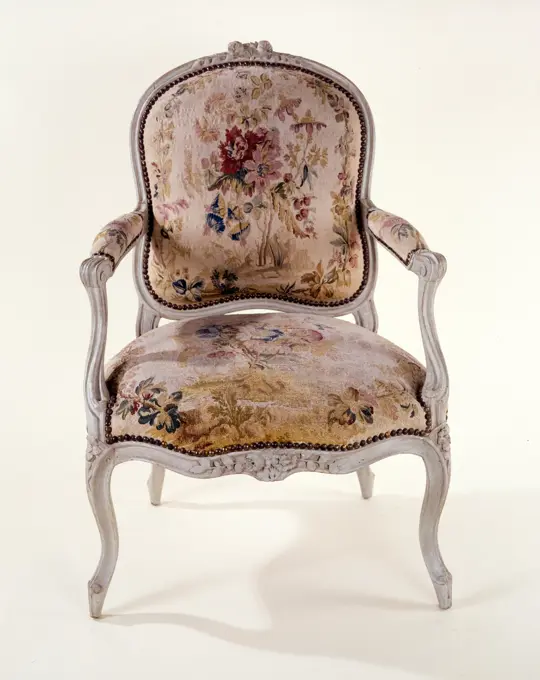
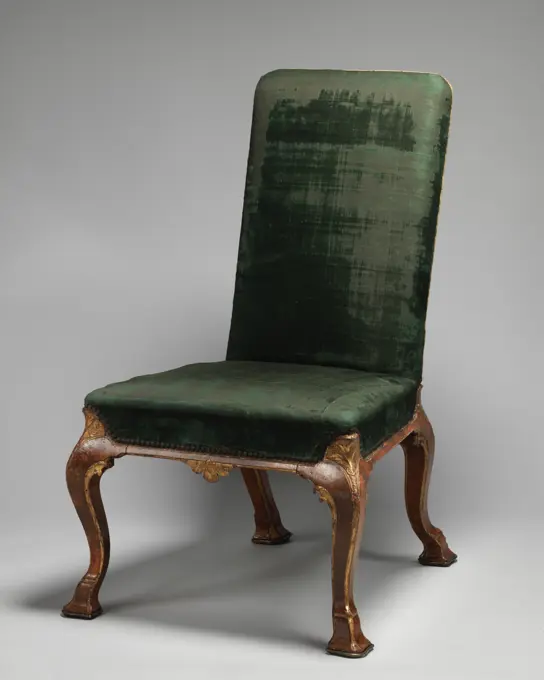
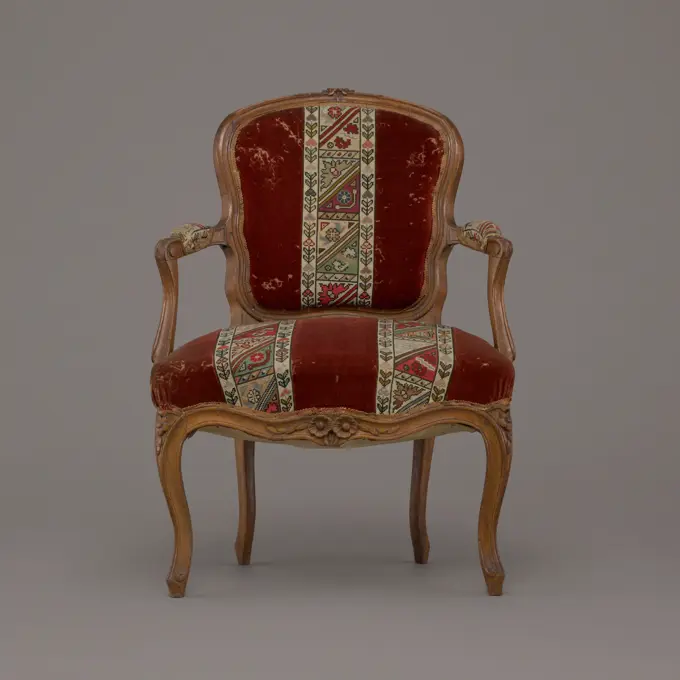
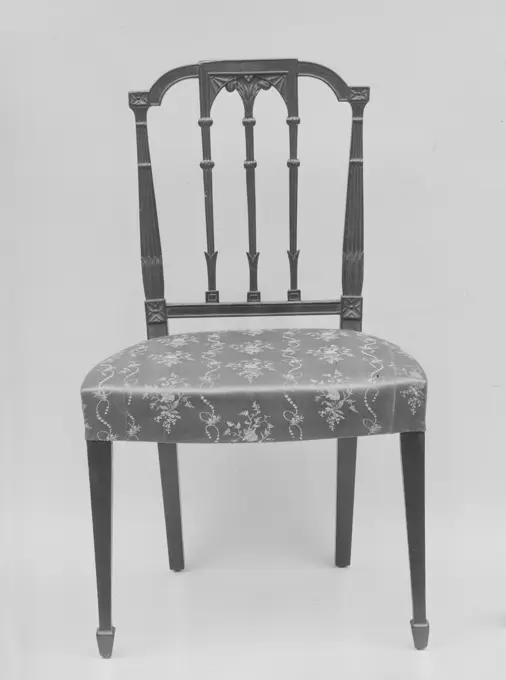
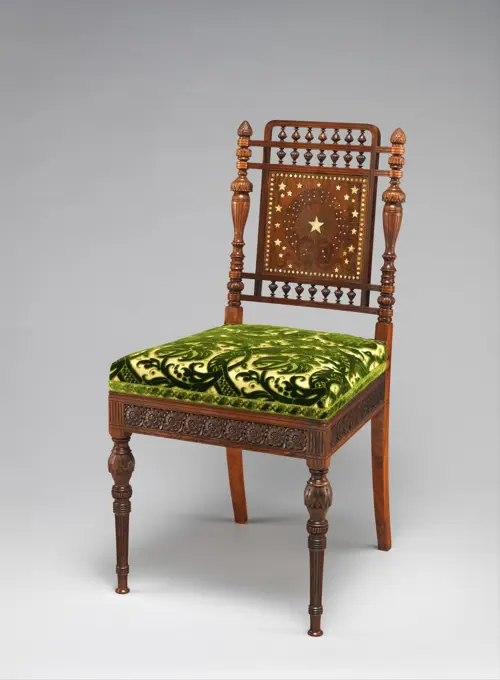
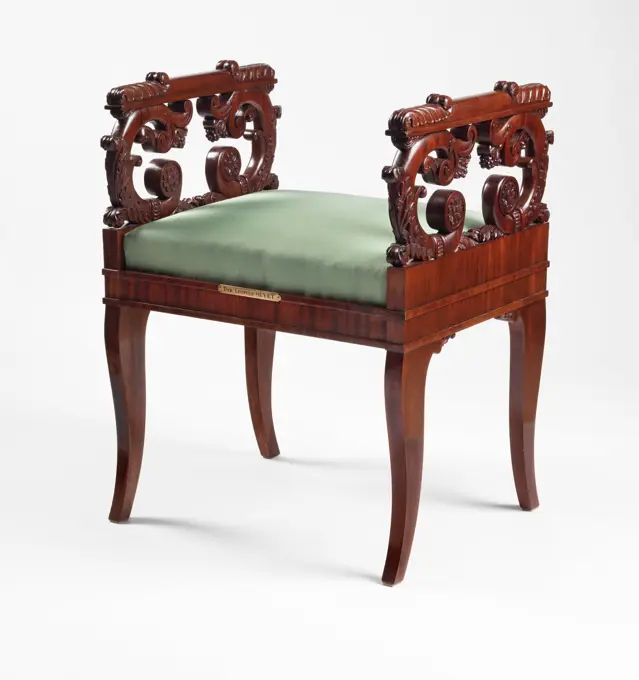
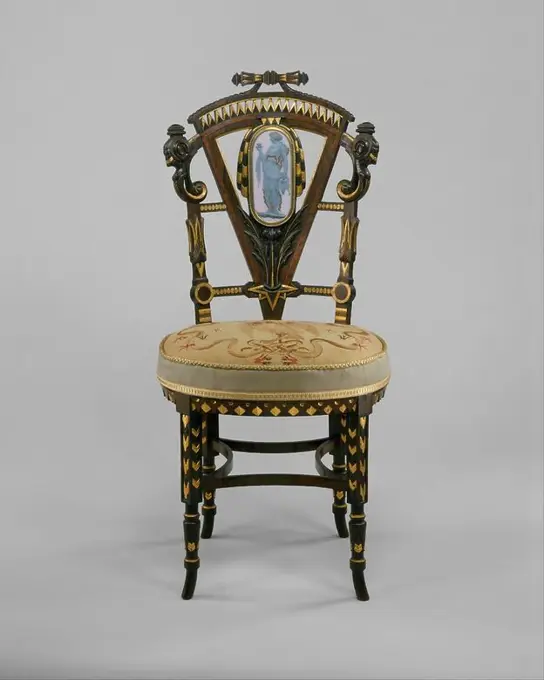
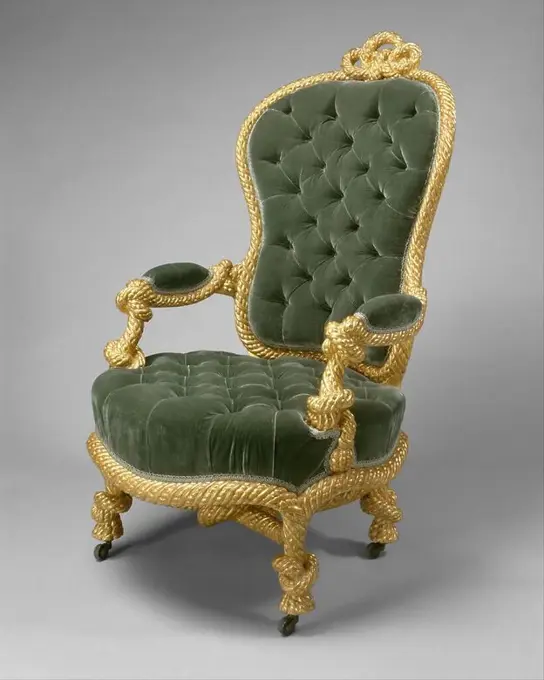
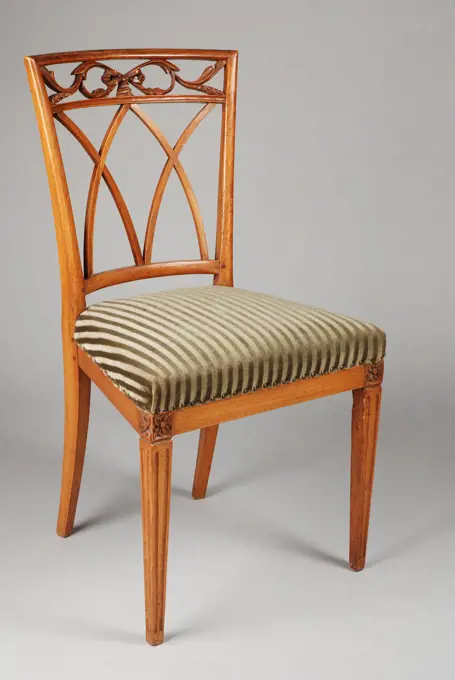
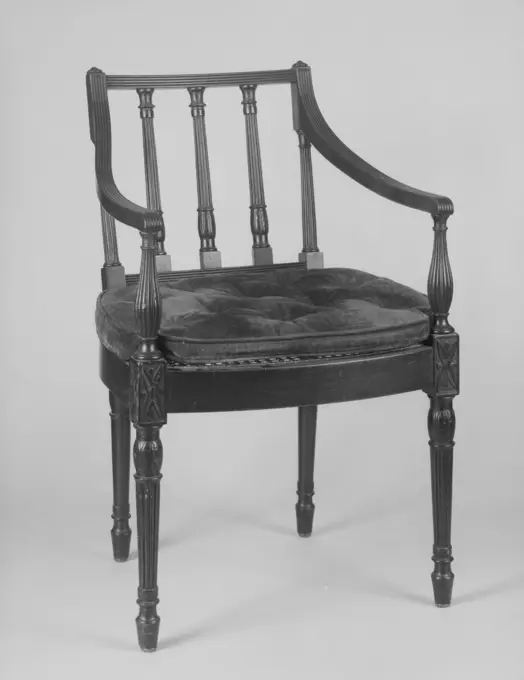
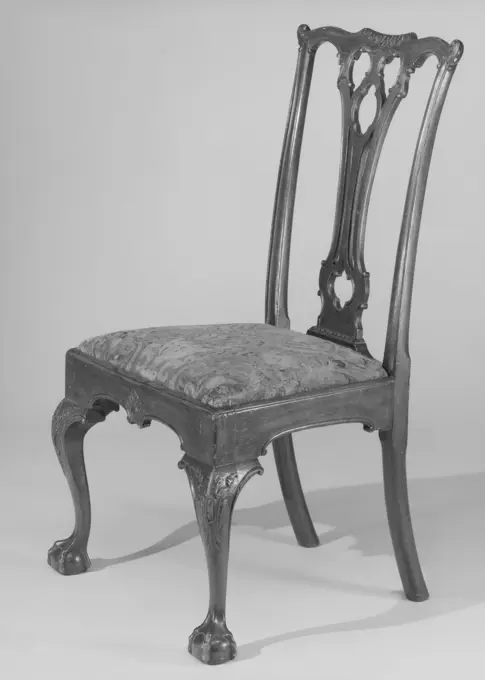
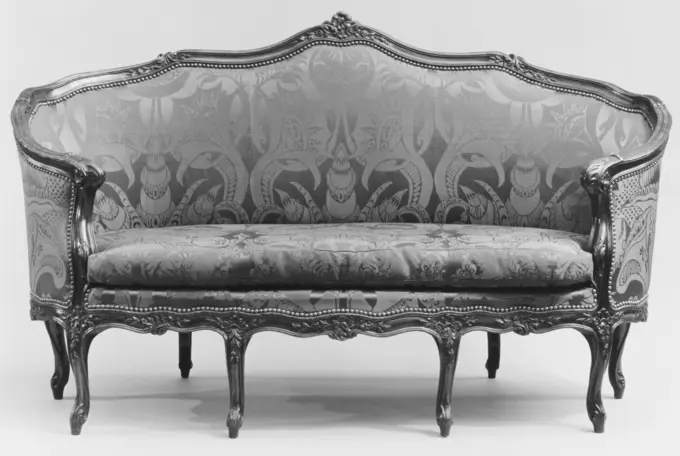
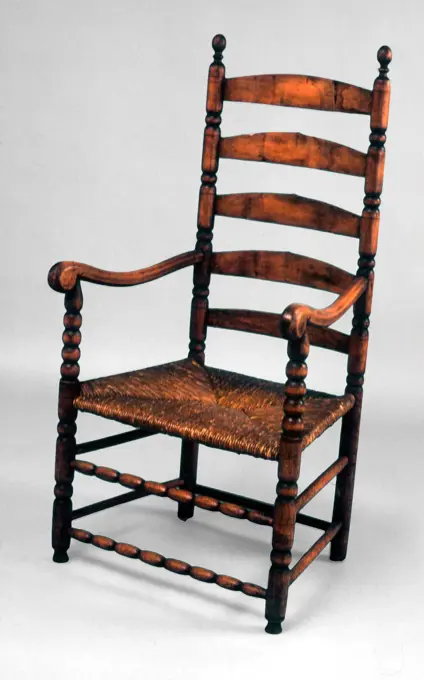
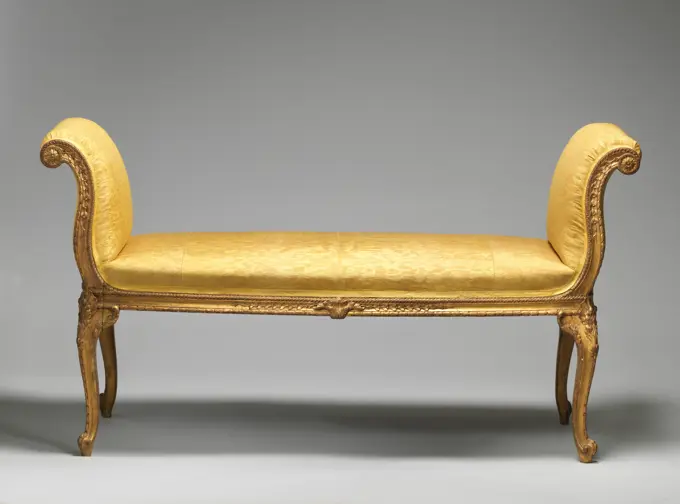
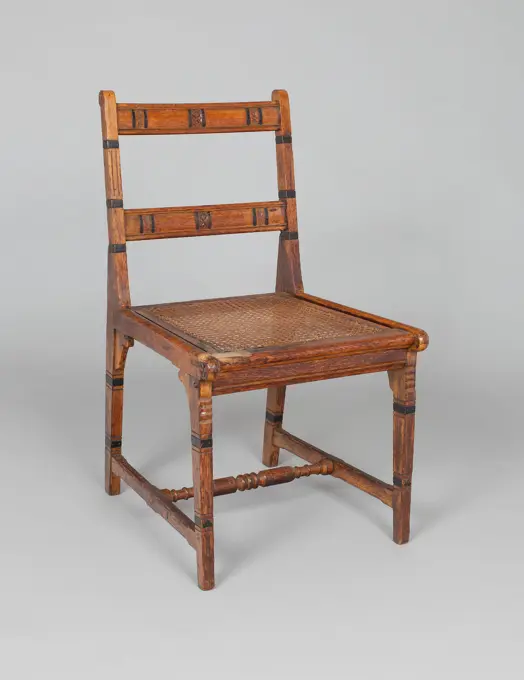
Chair;  1840-1870 (1840-00-00-1870-00-00);gift (provenance)Chair. unknown, authorChair with low arm and side trails and with armrests ending in a groteskop. Chair with low arm and side trails and with armrests ending in a groteskop. Covered with red tripe.Side chair mid-18th century British The design is based on one of several "ribband back chairs" in the first edition of Thomas Chippendale's Gentleman and Cabinet-Maker's Director (1754).. Side chair. British. mid-18th century. Mahogany, modern damask. Woodwork-FurnitureFour chairs. The shape of these chairs was common in the Neo-classical period in the Netherlands. At that time, it was usual for the decoration to be carved on the chair. In the case of these four chairs, however, the decora-tion is carried out in marquetry. This suggests that they were not made by a chairmaker, but rather by a cabinetmaker, who usually made cabinets, com-modes and other such furniture.. This chair combines influences from England and France into a typically Dutch product. The inspiration for the hollow (curved) back, for example, is French, while the use of mahogany is English. The upholstery of moquette (mock velvet) was made in the Netherlands.Stadhoudersstoel, Anonymous, 1768 Stadholder's chair of walnut, gilded and covered with green velvet with silver passement. The chair rests on the cornered S-shaped legs, which turn into the sitting window without interruption. At the foot they are decorated with acanthus leaf, above the swelling with flower branches, as well as the scalloped seating rules. The armrests have pillows, neighborhoods out and end in volutes. The armrest stars are placed backwards, come from the sitting window and cross the armrests. The back window is sculpted on four sides and decorated with flower and leaf branches. Profile lists by small volutes interrupted the furniture in his contour. The chair includes a loose, green velvet cushion with silver passement, and a footstool (BK-AM-25-A-2). The Hague (possibly) wood (plant material). walnut (hardwood). bekleding: velvet (fabric weave). passement: silver thread. gilding (material) gilding Stadholder's chair of walnut, gilded and covered with green velvet wChair, anonymous, c. 1760 - c. 1775 Chair lined with velor d'Utrecht, on which a pressed large sunflower motif. The S-shaped front legs end in a bird claw with ball and are extra profiled over the Welfing. The hind legs neighborhoods in spread stand. The seating rules and the back rules and sills are vaulted. The upper sill of the covered back window is crowned by a small floral pattern. The upholstery is nailed. The hollow bent back window rests on canaly vaulted struts. Netherlands wood (plant material). mahogany (wood). wool. velvet (fabric weave) Chair lined with velor d'Utrecht, on which a pressed large sunflower motif. The S-shaped front legs end in a bird claw with ball and are extra profiled over the Welfing. The hind legs neighborhoods in spread stand. The seating rules and the back rules and sills are vaulted. The upper sill of the covered back window is crowned by a small floral pattern. The upholstery is nailed. The hollow bent back window rests on canaly vaulted struts. NeArmchairWhite painted, partly gilded Louis Seize armchair, armchair chair seating furniture interior interior design wood beechwood lacquer gold leaf silk damask, Oval backrest rimmed by rectangular frame brown silk damask covering with passement on seat and back crest with laurel branches and rosette Louis XVI Louis XVI Louis Seize Kralingen-Crooswijk Rubroek Rotterdam Van Rijckevorsel From the estate Rubroec (Rubroek) of the Van Rijckevorsel family.Side chair, c. 1830, 32 7/8 x 19 x 19 in. (83.5 x 48.26 x 48.26 cm), Painted wood, rush, United States, 19th century, Painted furniture has been popular in America since first settlement. Objects like this painted chair were usually referred to as 'fancy' at the time because of the fanciful patterns and faux finishes used to decorate them. In this fancy chair, wet yellow and green paint was smoke-grained or exposed to the smoke of a candle, resulting in sooty, almost cloudlike shapes. Decorative painters up and down the east coast admired and copied the technique. The decoration of this tour de force chair is enhanced with stenciled and freehand decoration imitating fruit, anthemia, and brass buttons.Armchair. unknown, creatorEbbenfineer chair with Boulle Marqueterie, Anonymous, 1800 - 1900  Ebbenfineer chair with Boulle Marqueterie. The chair is stamped W.  ebony (wood). wood (plant material). brass (alloy). gilding (material). silk gildingSide Chair c 1755-1775 Philadelphia. Mahogany, yellow pine, white pine and Atlantic white cedar . Artist unknownChair;  around 1790 (1785-00-00-1795-00-00);Armchair c 1856-1865 New York City. Ebonized cherry and ormolu . Leon MarcottePair of armchairs ca. 1715-23 French. Pair of armchairs 201600Mahogany rococo chair, chair seating furniture furniture interior design wood mahogany velvet, Seat and backrest covered with light green velvet decorated with carving flowers cogwheels Rotterdam City Triangle Hoogstraat North Oude Noorden Gerard Scholtenstraat Heilige Geesthuis Oudemannenhuis Oude mannenhuis Heiligegeesthuis rococo Object was until 1972 part of the inventory of the Heiligegeesthuis at the Gerard Scholtenstraat From 1898 to 1972 the 'Heiligegeesthuis' was located in this building.Bergère from white painted beech wood.Bergere of white painted beech wood. The furniture is covered, has a loose pillow and tranquility on conical fluted legs, which is square houses with rosettes. The profiled S-shaped armrests go over in the volutes of the armrests. These have cushions and are connected to the round, slightly stretched from the reed back at the starting points. The back window and the seat rules have a stained ornament from narrow acanthus leaf, which is thrilled around a rod. Stamped: A.P. Dupain.Lolling chair, or Martha Washington armchair, c. 1785-1795, 84 x 28 x 13 1/2in. (213.4 x 71.1 x 34.3cm), Mahogany, maple, and ebony inset panels, United States, 18th-19th century, The comfortably angled back and low seat of this chair makes it one of the less rigid seating designs of the 18th century - an ideal chair for lolling, relaxed reclining. An excellent example of the Federal style in Massachusetts, a similar example is thought to have been at Mount Vernon in Vermont, hence it often being referred to as a 'Martha Washington' chair. Outstanding features of the style exhibited by this piece include the maple and ebony decorative inset panels and the feeling of lightness created by the sharply raked back legs, tapered front legs, and graceful curved arms.. Armchair, lined, from white with gray painted beech wood. Above the conical legs are square houses with rosettes, on which the vase-shaped armrest struts rest, which are on square basements. The armrests with cushions end in a cylinder-shaped knob with cannelures and rosette, crafts c-shaped inwards and run with an acanthus leaf over in the detached flushed colonets from the back, which have tuscan capitals. The seat rules and sills show stabble. On the styles vases.Armchair 1801 Attributed to Samuel McIntire This square-back armchair is one of a set of twelve chairs made for the parlor of the Peirce-Nichols house on Federal Street in Salem, Massachusetts. In 1801, the architect Samuel McIntire was commissioned by Jerathamael Peirce, Salem merchant and shipowner, to remodel the parlor. While McIntire, who was charged with the complete decorative program of the house including the interior, relied on Sheraton's published patterns for the design of this armchair; it is possible, being a carver, that he executed the carved bowknots, bellflowers, and punched-snowflake background, one of his favorite details. The design of the chair is derived from plate 33 of Thomas Sheraton's Cabinet-Maker and Upholsterer's Drawing-Book” (London, 1793).. Armchair. American. 1801. Mahogany, birch, white pine. Made in Salem, Massachusetts, United StatesSlipper Chair ca. 1855 John Henry Belter German This chair, intricately carved with grapes on the vine, is a delightfully fanciful example of the Rococo Revival style. Such furniture was described at the time it was made as being in "the modern French style" because it borrowed elements from the eighteenth-century Rococo, such as curvaceous cabriole legs, strong C- and S-curves and scrolls, and the extravagant use of carved naturalistic ornament.. Slipper Chair 7553White painted, partly gilded Louis Seize chair, chair furniture furniture interior design wood beech lacquer gold leaf silk damask, Oval backrest rimmed by rectangular frame brown silk damask cover with passement on seat and back crest with laurel branches and rosette Louis XVI Louis XVI Louis Seize Kralingen-Crooswijk Rubroek Rotterdam Van Rijckevorsel From the estate Rubroec (Rubroek) of the Van Rijckevorsel family.Armchair. unknown, authorSide chair late 17th century British. Side chair. British. late 17th century. Ebonized beech with rattan caning (original to chair). Woodwork-FurnitureArmstoel, anonymous, c. 1700 Arm chair made of walnut, covered with blue velvet. The furniture rests on baluster-shaped legs, which are connected by a flung X-shaped cross. The sides are closed, the armrests curl out. The high back is semi -circle -shaped at the top and has cheeks that come from the armrests. The upholstery is attached with nails with gilded heads, which show a spiral motif at the front of the armresters. Northern NetherlandsNetherlands wood (plant material). walnut (hardwood). velvet (fabric weave) Arm chair made of walnut, covered with blue velvet. The furniture rests on baluster-shaped legs, which are connected by a flung X-shaped cross. The sides are closed, the armrests curl out. The high back is semi -circle -shaped at the top and has cheeks that come from the armrests. The upholstery is attached with nails with gilded heads, which show a spiral motif at the front of the armresters. Northern NetherlandsNetherlands wood (plant material). walnut (hardwood). velvet Armchair (France); Style of Georges Jacob (French, 1739-1814); mahogany, upholstered in nailed leatherArmchair 1867-1870 London. The English designer, architect, and writer Owen Jones (1809ñ1874) introduced non-Western decorative styles into mid-19th-century England with the publication of his influential Grammar of Ornament in 1856. This encyclopedia of decorative motifs through history and across cultures was lavishly illustrated with color plates and influenced the work of many designers in the second half of the 19th century.In his early twenties, Jones traveled to Turkey, Egypt and Spain to study Islamic architecture. This prompted him to publish a series of books on architecture and design, including one devoted to the Alhambra Palace in Spain. Jones advocated looking to nature for inspiration in developing two-dimensional repeating patterns for a range of materials such as wallpapers and textiles, as well as surface patterns for furniture and other three-dimensional decorative arts.This chair was made for Alfred Morrison, a department store tycoon and arts patron. Morrison emploArmchair (Italy); carved fruitwoodDinning chair Elegant decorative dinning chair isolated with clipping path included Copyright: xZoonar.com/Baloncicix 7107880Furniture. Wostenhout chair, covered with black velvet and choppages of tapestry. The piece of furniture has swapped legs that are allocated by an H-shaped cross and an upper sport. The tapestry decoration on the upholstery shows flowers and lilies in green, salmon color, liver color and blue. The lining of the back is yellow damask. The webbing are old. One seat from a series of six (inv.no. BK-KOG-1797-A T / M -F).Side Chair: Gothic Revival Style, c. 1858. Alexander Jackson Davis (American, 1803-1892), William Burns (American, 1805-1867). Wood; overall: 99 x 50.2 x 49.9 cm (39 x 19 3/4 x 19 5/8 in.).Four Armchairs. UnknownChair (USA); Made by John Hewitt (American, 1777-1857); wood (mahogany and poplar), horse hair. Armchair belonging to a set of six armchairs from mahogany with a triangular ground surface, forming a round bench together. Flowered silk coating with passing element. The two overhoeks placed front legs, the hind leg, rules, struts, armrests and the ruling of the backrest are curved, profiled and almost all end in a volute. The armrests close the backrest and shapes a triangular crown that, just like the rule and the swellings of the front legs, shell-shaped acanthus leaves.Children's armchair. unknown, authorArmchair 1868-70 Attributed to John Jelliff American This armchair, one of a pair (see 68.133.2), originally furnished the sitting room, or rear parlor, of the mansion built for Jedediah Wilcox at 816 Broad Street in Meriden, Connecticut. Completed in 1870, the house was heralded as one of the states grandest residences. The rooms en suite rosewood furnishings, which included a sofa (68.133.1), side chairs (68.133.4-.5), an overmantel mirror (68.134.11), and window cornices (68.134.8-.10), are embellished with mother-of-pearl medallions featuring a ladys head in profile and incised and gilded decoration. The suite is attributed to John Jelliff and Co. of Newark, New Jersey, based on a nearly identical armchair in the collection of the Newark Museum of Art and its accompanying bill of sale from the Jelliff firm. Although Jelliff and Co. operated a showroom in Newark, they also retailed their furniture across the country through a variety of regional wholesalers. Wilcox, or perhaps thSide chair 18th century Italian, Piedmont. Side chair 205160Mahogany ribbon back chair, 1906. Artist: Shirley Slocombe.ArmchairBrown Royal classical style Armchair sofa couch in vintage room Beechwood rococo armchair, armchair armchair chair seating furniture interior interior design wood beechwood wool silk brass, Tapisserie show in medallion surrounded by multicolored flowers on Bois-de-Rose fond. Backrest: boy in landscape next to which dead chicken or cock Sitting: bull and two frogs in landscape In the right-hand rear style above the seat by means of stamped stamp around unreadable ink stamp inside on the seat line: P. FORGET JME (JME = jurande des menuisiers ébénistes (guild stamp)) guild rococoArmchair from Djatihout lined with red velor. Armchair from Djatihout lined with red velor. The furniture rests on two front legs in the form of leafy motifs decorated lion pods and two back paws back paws with 'cheeks' in the form of volutes decorated with a leaf. The hind legs go without interruption in the curved styles of the back that curls back on the top and connected by a lower and upper shell. The straight, coated arms are connected to the back by cutting with an acanthus blade-decorated volutes and resting on S-shaped curved, on the outside with a leaf and ending in a ribbed volunt with a rosette on both sides.Settee. unknown, authorArm chair of walnut, covered with green velvet. On the back an attachment with the crowned weapons of Zeeland, Holland and West-Friesland, Anonymous, 1750 Arm chair of walnut, covered with green velvet. The legs are connected by an H-shaped cross. The chair rule is sculpted and decorated with leaf voltuten and a rocailleschelp. The armrest stars are decorated with leaf voltuten, the armrests with a rocaille cartouche and acanthus leaf. The high back has an attachment with the crowned weapons of Zeeland, Holland and W. Friesland. The upholstery is attached with copper nails. Coming from the Hof van Holland, Zeeland and W. Friesland (presidential seat). Northern Netherlands wood (plant material). walnut (hardwood). velvet (fabric weave). copper (metal) Arm chair of walnut, covered with green velvet. The legs are connected by an H-shaped cross. The chair rule is sculpted and decorated with leaf voltuten and a rocailleschelp. The armrest stars are decorated with leaf voltuten, the armrestssidechairArmchair ca. 1690 British. Armchair. British. ca. 1690. Walnut. Woodwork-FurnitureArmchair, one of a pair, c. 1755, 40 x 25 3/4 x 23 3/4 in. (101.6 x 65.41 x 60.33 cm), Mahogany, England, George IIChair. unknown, creatorSideChair. Maker, attributed to: Richard Parkin, c. 1787 - 1861White painted straight rococo chair, chair furniture furniture interior design wood elm paint leaf gold rattan damask, Rattan seat and back cawio legs carving gilded with loose gray damask cushion rococoChair, alternately shiny and dull black painted and decorated with gilded edges and a few gold -colored batter pieces. Covered with orange velvet., Gebroeders Horrix, c. 1865 - c. 1875 Black-painted wooden chair and-convertible, with Oranjerode Trijp and Passement covered and with gilded metal batter. The overhoek-placed stretched S-shaped front legs carry batter with bows and hanging tiflets. The curved profiled pre -line bears a flower pattern in the middle. The openwork, hollow profiled back consists of curved shapes, between which a French lily, an oval and a bouquet; A bow on the top sill. Finish with gilded tires on red bolus. See: BK-1971-257-A and C. Northern Netherlands walnut (hardwood). brass (alloy). gilding (material). bole (clay). wool. gilding Black-painted wooden chair and-convertible, with Oranjerode Trijp and Passement covered and with gilded metal batter. The overhoek-placed stretched S-shaped front legs carry batter with bows and hanging tiflets. The curved profiledStool (Tabouret). unknown, authorArmchair ca. 1770-90 Pierre Brizard. Armchair 195506Armchair 1770-1775 England. Giltwood and modern upholstery . Thomas Chippendale, IBergère, halcionet, c. 1750 Bergère van Beukenhout, covered with chinoiseries in Petit Point. The chair has a loose pillow and rest on S-shaped legs, which turn into the scalloped seating rules. The front legs, pregnancy rule and upper sill carry stabbed leaf and floral motifs. The semicircular sitting window is sculpted at the front; The back window is run. The armrests, the struts and the styles of the back window are S-shaped. Profile lists accentuate the contours. One chair is noticed: "Falconet". France wood (plant material). beech (wood). textile materials embroidering Bergère van Beukenhout, covered with chinoiseries in Petit Point. The chair has a loose pillow and rest on S-shaped legs, which turn into the scalloped seating rules. The front legs, pregnancy rule and upper sill carry stabbed leaf and floral motifs. The semicircular sitting window is sculpted at the front; The back window is run. The armrests, the struts and the styles of the back window are S-shaped. Profile listSide chair, 1800-1900, Lambert Hitchcock, American, Hitchcocksville Riverton, Connecticut, est. 1818, 35-5/16 x 17-3/4 x 17 in. (89.7 x 45.1 x 43.2 cm), Wood, rush, pigment, United States, 19th-20th centuryArmchair in Neo-Rococo style of Djatihout with sitting of reeds. Djatihout's armchair, sitting and pear-shaped backrest stretched with reeds. In neo-rococo style, with S-shaped bent front legs and scalloped rule, all cut with floral motifs, strongly bent out, arms built out of two volutes, a cut-away back with loose side styles and a crowning of a large flower in the middle of leaf volutes .Eikhout chair, covered with brown leather with a flower in the middle of the seat and a branch on the back, Alexander Jacobus Kropholler, 1907 Chair, part of a pair of oak wood with straight legs with beveled corners, a square seat covered with brown leather with a stamped stylized flower in the middle, in the back a brown leather panel with a stamped stylized branch. Amsterdam, Vogel Gebroeders, 1907, designed by A.J. Kropholler with the cooperation of M. Kropholler and J.F. Steel, the leather upholstery to design by S. Jessurum de Mesquita. Made for Mr. Romijn. Amsterdam oak (wood). leather Chair, part of a pair of oak wood with straight legs with beveled corners, a square seat covered with brown leather with a stamped stylized flower in the middle, in the back a brown leather panel with a stamped stylized branch. Amsterdam, Vogel Gebroeders, 1907, designed by A.J. Kropholler with the cooperation of M. Kropholler and J.F. Steel, the leather upholstery to design by S. Jessurum de MesqArmstoel, Carel Adolph Lion Cachet, c. 1915 - c. 1925 Armchair Netherlands oak (wood). tin (metal). leather. wool. brass (alloy) Armchair Netherlands oak (wood). tin (metal). leather. wool. brass (alloy)Chair, covered with Trijp and Tapisserie, Anonymous, 1850 - 1875 Chair, covered with pinkode Trijp, belongs to a Bonheur du Jour (BK-1975-13), but is tighter in construction and previously reminds us of the Louis XVIE style. Netherlands elm (wood). oak (wood). mahogany (wood). velvet (fabric weave) tapestry Chair, covered with pinkode Trijp, belongs to a Bonheur du Jour (BK-1975-13), but is tighter in construction and previously reminds us of the Louis XVIE style. Netherlands elm (wood). oak (wood). mahogany (wood). velvet (fabric weave) tapestryBergère, halcionet, c. 1750 Bergère van Beukenhout, covered with chinoiseries in Petit Point. The chair has a loose pillow and rest on S-shaped legs, which turn into the scalloped seating rules. The front legs, the rule and upper sill wear stabbed leaf and floral motifs. The semicircular sitting window is sculpted at the front; The back window is run. The armrests, the struts and the styles of the back window are S-shaped. Profile lists accentuate the contours. One chair is noticed: "Falconet". France wood (plant material). beech (wood). textile materials embroidering Bergère van Beukenhout, covered with chinoiseries in Petit Point. The chair has a loose pillow and rest on S-shaped legs, which turn into the scalloped seating rules. The front legs, the rule and upper sill wear stabbed leaf and floral motifs. The semicircular sitting window is sculpted at the front; The back window is run. The armrests, the struts and the styles of the back window are S-shaped. Profile lists accentuate tSide chair 1860-70 Herter Brothers. Side chair 14970Chair, anonymous, c. 1620 - c. 1650 Chair of Rosherman wood. The furniture has a covered seat and tranquility on legs that show house and section and are connected by four accolade -shaped scallops and four top sports with a toothlist. The backstyles are decorated with stabbed braid tire and, alternating, a palmet or rosette. The back has two sports with arcs, worn by Ebben Balusters. The upper sport is decorated with Hanekoppen, fruit races and a cherub and is crowned by three ebb vases. Netherlands wood (plant material). rosewood (wood). ebony (wood) Chair of Rosherman wood. The furniture has a covered seat and tranquility on legs that show house and section and are connected by four accolade -shaped scallops and four top sports with a toothlist. The backstyles are decorated with stabbed braid tire and, alternating, a palmet or rosette. The back has two sports with arcs, worn by Ebben Balusters. The upper sport is decorated with Hanekoppen, fruit races and a cherub and is crowned by Papier-mché side chair ca. 1830-60 British (). Papier-mché side chair 461532Armchair Made 1768 England. This chair is part of a suite of furniture commissioned by the celebrated actor David Garrick and his wife Eva Marie for their home in Hampton, about 15 miles outside London. It is likely that the prominent architect and designer Robert Adam introduced Garrick to its maker, Thomas Chippendale.A 1768 invoice from Chippendale to the Garricks lists ì8 French Arm Chairs very neatly Carvíd & painted Blue & white Ö coveríd with your own Blue Damask.î Though the paintedóas opposed to giltófinish on the chair reflects the rustic setting of a country villa, it was nevertheless one of the most luxurious items of furniture in the house.. Painted oak, modern upholstery . Thomas Chippendale, IJean-Baptiste Lelarge (1743-1802). Archair at the Queen in carved beech and painted in white, Beauvais tapestry with large bouquets of flowers on a creamy background (overview on a light background), around 1765-1770. Paris, Cognacq-Jay museum. Armchair at the Queen, Fleur, Cream background, Grand Bouquet, Hetre sculpt, Manufacture de Beauvais, furniture, white paint, Louis XV style, tapestry, 18th century, wood, furnitureArm chair, part of a divan de Milieu, Gebroeders Horrix, c. 1852 Arm chair belonging to a set of six arm chairs of mahogany with a triangular base, together forming a round sofa. Blared silk upholstery with passement. The two front legs, the hind legs, rules, struts, armrests and the crowning of the backrest, are bent, profiled and almost all end in a volute. The armresters close the backrest arch -shaped and form a triangular crown that, just like the front line and the swellings of the front legs, exhibits shell -shaped acanthus leaves. The Hague wood (plant material). mahogany (wood). silk Arm chair belonging to a set of six arm chairs of mahogany with a triangular base, together forming a round sofa. Blared silk upholstery with passement. The two front legs, the hind legs, rules, struts, armrests and the crowning of the backrest, are bent, profiled and almost all end in a volute. The armresters close the backrest arch -shaped and form a triangular crown that, just like the front liSide chair (one of a pair) ca. 1715 Attributed to Richard Roberts British These chairs are part of a large set that included two settees and one winged easy chair, stools, and side chairs, supplied to Sir Robert Walpole, later first Earl of Orford (1676-1745), for Houghton Hall, Norfolk. The attribution to Richard Roberts is based on an account of a considerable debt owed by Walpole in 1729 to a "Thomas Roberts." Thomas Roberts, carver and joiner to the royal household, worked in London under the sign of The Royal Chair until his death in 1714. He was succeeded by Richard Roberts, presumably his son, who was active at the time that Walpole redecorated Houghton Hall.. Side chair (one of a pair). British. ca. 1715. Beech and oak veneered with burl walnut, parcel-gilt; covered in silk velvet. Woodwork-FurnitureArmchair used by President Paul Kruger, anonymous, in or before 1900  Arm chair, covered with toes. The flat armrests rest on the front legs, which, like the backstyles and sports, are turned. High back. This chair was used by President Paul Kruger, the President of the Transvaalsche Republic, taken in 1900 on his departure from Lorenço Marquez, and used on board the H.M. Panterschip 'Gelderland' on a trip to Marseille.  ash (wood). maple (wood). poplar (wood). beech (wood)   South Africa. MarseilleArmchair;  around 1760 (1750-00-00-1770-00-00);Side Chair 1795-1810 American. Side Chair. American. 1795-1810. Mahogany, ash, cherry. Made in New York, New York, United StatesSide chair 1879 Herter Brothers William H. Vanderbilt, son of Cornelius Commodore” Vanderbilt, inherited a vast fortune and a lucrative transport business, which he expanded exponentially, becoming one of the wealthiest men in America. In 1879, to mark his elevated social and economic status, he built a mansion that spanned an entire city block on Fifth Avenue, between Fifty-First and Fifty-Second Streets. He commissioned Herter Brothers, one of the premier cabinetmaking firms in New York City, to decorate and furnish his home. In devising distinct decorative schemes for each room of the mansion, Herter Brothers drew inspiration from a wide range of historical styles and utilized expensive, exotic materials. Vanderbilt’s library was conceived as a masculine, solemn, and quiet space to house antique works of art and bound volumes. The woodwork and furnishings were rosewood carved in a Renaissance style and inlaid with brass and mother-of-pearl swags utilizing a graduated pearl motif, rbrown Royal Vintage retro style Chair with lampWindow seat. unknown, creatorChair;  around 1880 (1875-00-00-1885-00-00);Side Chair. Culture: American. Dimensions: 37 1/8 x 18 x 18 in. (94.3 x 45.7 x 45.7 cm). Maker: Attributed to Pottier and Stymus Manufacturing Company (active ca. 1859-1910). Date: ca. 1875. Museum: Metropolitan Museum of Art, New York, USA.Armchair (part of a set) first quarter 18th century French. Armchair (part of a set) 238016Chair ca. 1750 British. Chair. British. ca. 1750. Mahogany. Woodwork-FurnitureArmchair, Anonymous, 1775 - 1800. Chairs of this type, with a rectangular upholstered seat and back, were found throughout Europe and virtually everywhere were called Spanish chairs’, after the source of the original model. They were made in all kinds of wood and in various sizes, some soberly decorated, others more lavishly ornamented.Armchair. Culture: French, probably Paris. Dimensions: 45 3/8 x 26 1/2 x 24 3/4 in. (115.3 x 67.3 x 62.9 cm). Maker: Manner of A. M. E. Fournier (French, active after 1850). Date: ca. 1860.With its deeply tufted back and seat, this innovative and amusing armchair epitomizes the desire for originality and variety combined with a concern for comfort that was charactersitic of the Second Empire. Seat furniture carved in this manner is generally associated with the Parisian upholsterer A.M.E. Fournier, who supplied at least one rope stool, now at the Musée National du Chteau de Compiègne. Museum: Metropolitan Museum of Art, New York, USA.Side chair (one of a pair) ca. 1735-40 British. Side chair (one of a pair). British. ca. 1735-40. Mahogany. Woodwork-FurnitureChair of green painted beech wood, stretched with cane, s-shaped legs, scalloped rules and carving of flower and leafwork. Chair of green painted beech wood. The furniture is stretched with cane and rests on overhoeks placed S-shaped legs, which in an acanthus sheet end and proceed in the seats without interruption. Flower branches have been applied to the swellings of front legs and in the middle of the front seat. The back window has stretched S-shaped styles and a scalloped upper and merge. The upper spray also shows flower branches in the middle. The seat is stamped in on the rear seat: "F.LEROY".Armchair c 1840-1860 New York. Oak . Artist unknownDecor chair Elegant decorative dinning chair isolated with clipping path included Copyright: xZoonar.com/Baloncicix 7120154Eggshade Louis Seize chair, chair furniture furniture interior design wood elmwood velvet, Egreen Louis Seize chair with curved bars in the back of the hood intersecting spike with spikes as ends green striped (new) velor upholstery on the front legs corner rosettes Louis XVI Louis XVI Louis SeizeChild's Armchair 1690-1710 United States. Maple . Artist unknownSquare-back armchair 1800-1810 American This chair and a matching one in the collection (1971.17.1) are from a set that descended in the family of the architectural historian Henry-Russell Hitchcock (1903-1987). A number of documented chairs similar to these examples were made by Ephraim Haines (active 1790-1811) and Henry Connelly (1770-1826) of Philadelphia.. Square-back armchair 264Side chair 1760-90 American. Side chair 1626Settee (canapé en corbeille) ca. 1750 Italian, Genoa. Settee (canapé en corbeille) 205307Chair, Anonymous, 1700 - 1750 Chair of cherry wood with mats seat. The legs, the five sports and the H-shaped cross are turned. The corner styles of the back are column -finished with thickening at the bottom; The houses have been completed. The lower and upper sill are symmetrically sawn out, as well as the center track, which is flanked by two profiled styles and shows a lily in an oval in the middle section. Vases have been applied as a crowning styles. Northern NetherlandsNetherlands wood (plant material). cherry (wood) Chair of cherry wood with mats seat. The legs, the five sports and the H-shaped cross are turned. The corner styles of the back are column -finished with thickening at the bottom; The houses have been completed. The lower and upper sill are symmetrically sawn out, as well as the center track, which is flanked by two profiled styles and shows a lily in an oval in the middle section. Vases have been applied as a crowning styles. Northern NetherlandsNetherlands wood (pArmchairLollingchairArmchair. unknown, authorWindow seat (one of a pair) (part of a set) ca. 1770-80 British These stools are part of a set with two armchairs and a settee in the French taste supplied to Edward Morant for Brockenhurst Park, Hampshire.. Window seat (one of a pair) (part of a set). British. ca. 1770-80. Wood. Woodwork-FurnitureMahogany sofa, 1906. Artist: Shirley Slocombe.Set of twelve chairs (5 armchairs, 7 side chairs). UnknownDining Room chair 1876 Chicago. Oak and cane . Peter Bonnett Wight