Antique Wooden Chairs

A collection of ornate wooden chairs showcasing intricate designs, upholstery, and historic craftsmanship from various periods and styles.

Chair, Anonymous, 1700 - 1750 Chair of cherry wood with mats seat. The legs and eight sports are turned. The corner styles of the back are column -shaped articulated with thickening in the middle. The lower and upper sill are symmetrically sawn out, as well as the middle track that shows an open heart as a middle part and both styles on either side. Vases have been applied as a crowning styles. Northern NetherlandsNetherlands wood (plant material). cherry (wood) Chair of cherry wood with mats seat. The legs and eight sports are turned. The corner styles of the back are column -shaped articulated with thickening in the middle. The lower and upper sill are symmetrically sawn out, as well as the middle track that shows an open heart as a middle part and both styles on either side. Vases have been applied as a crowning styles. Northern NetherlandsNetherlands wood (plant material). cherry (wood)
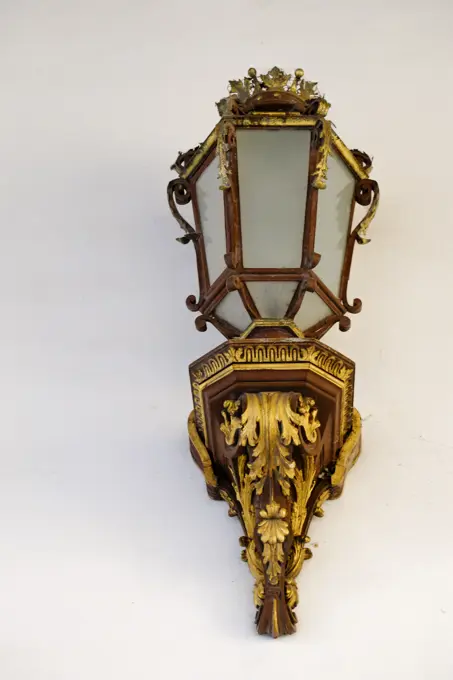
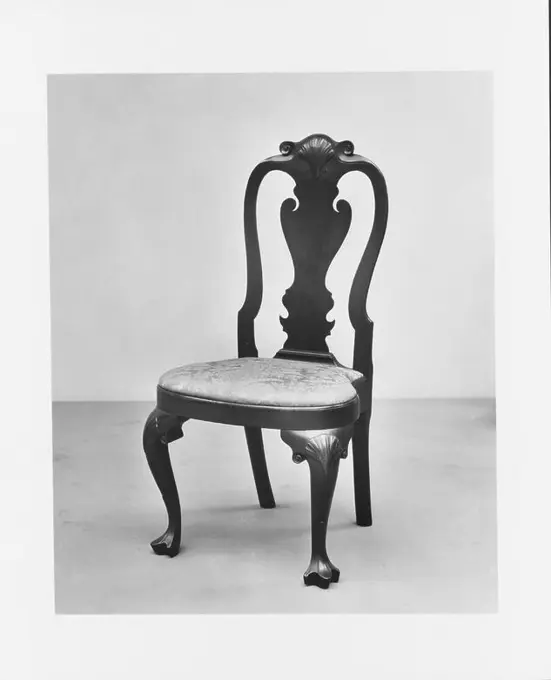
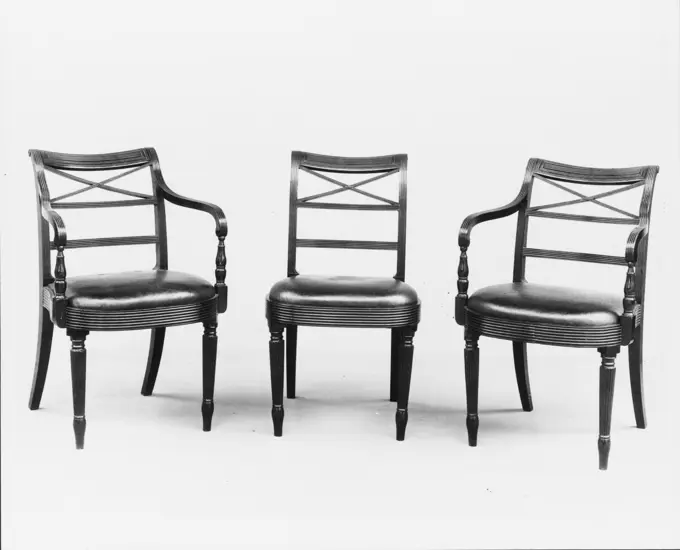
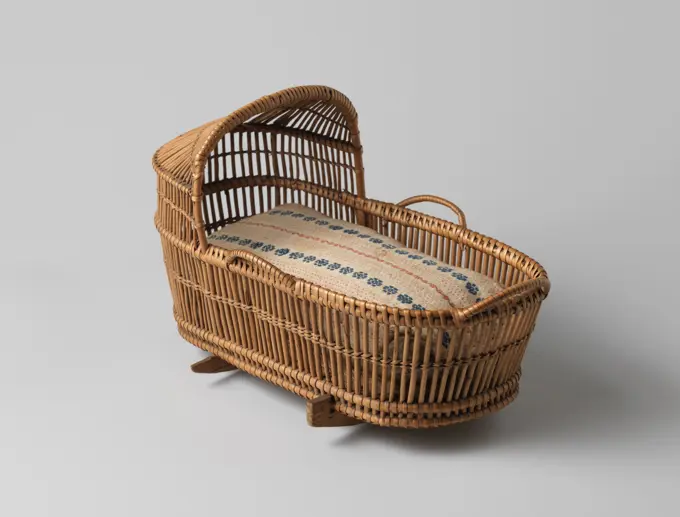
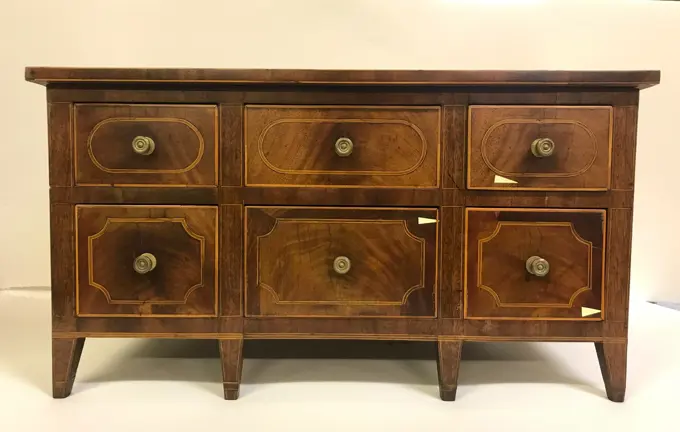
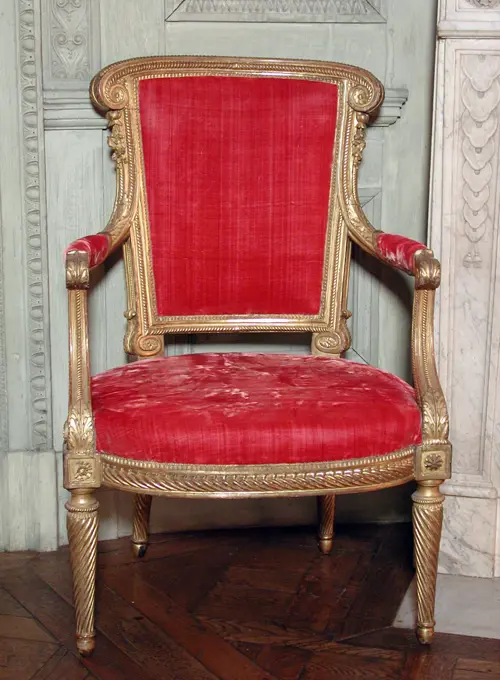
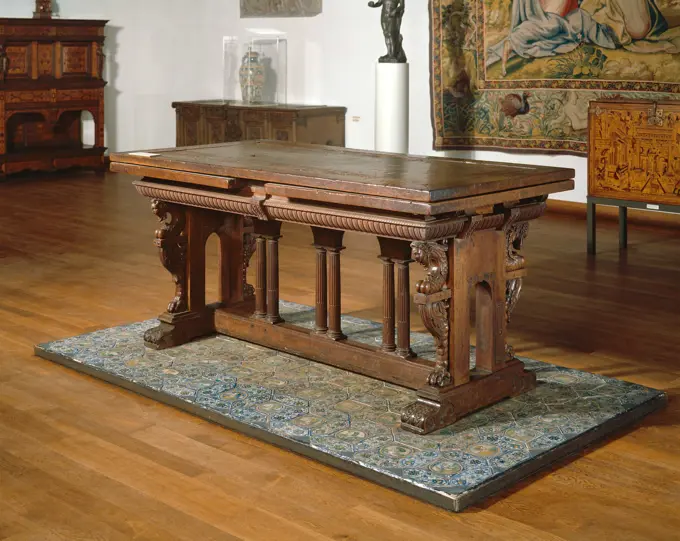
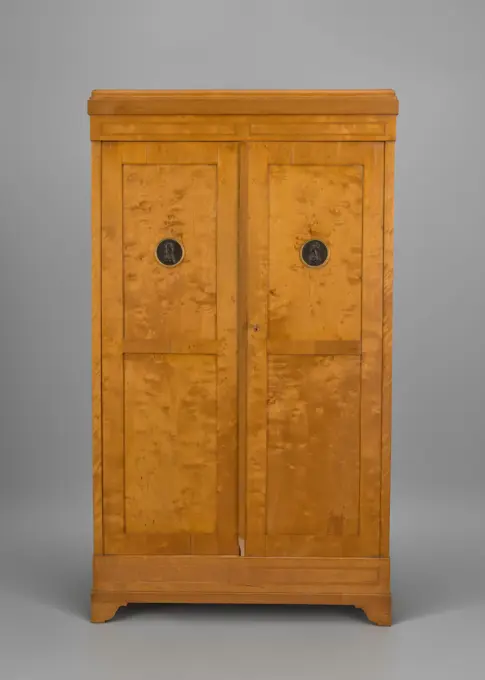
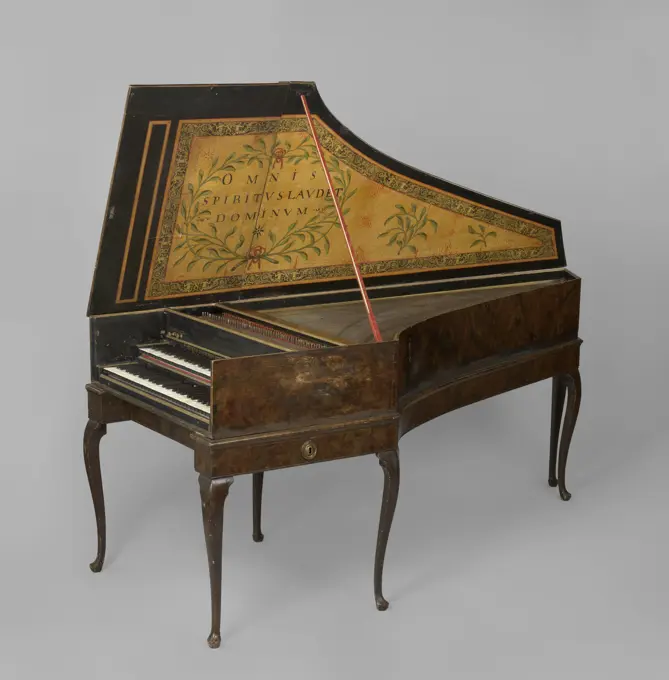
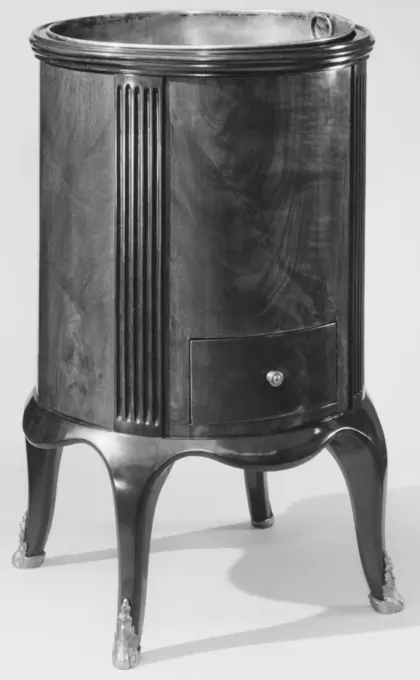
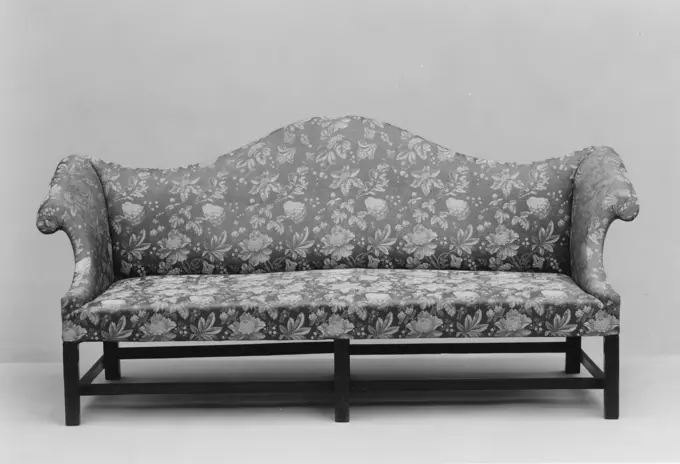
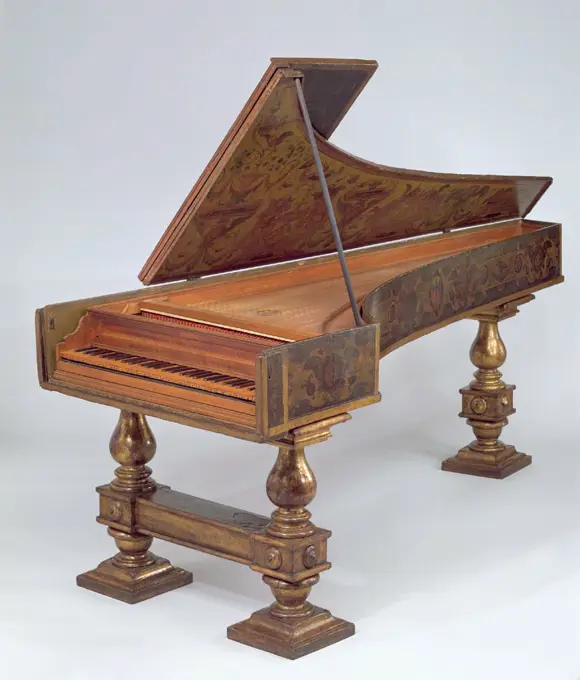
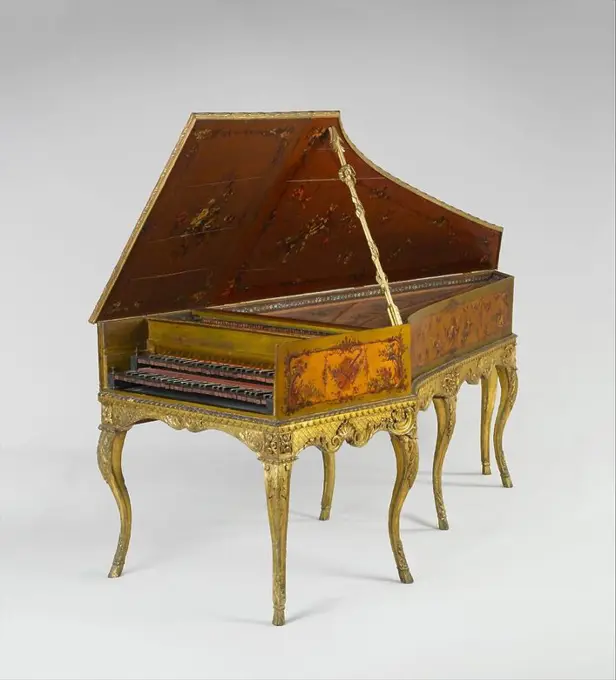
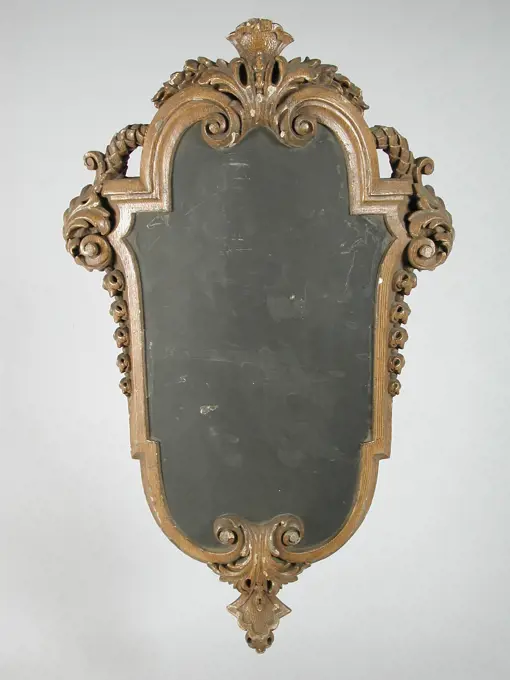
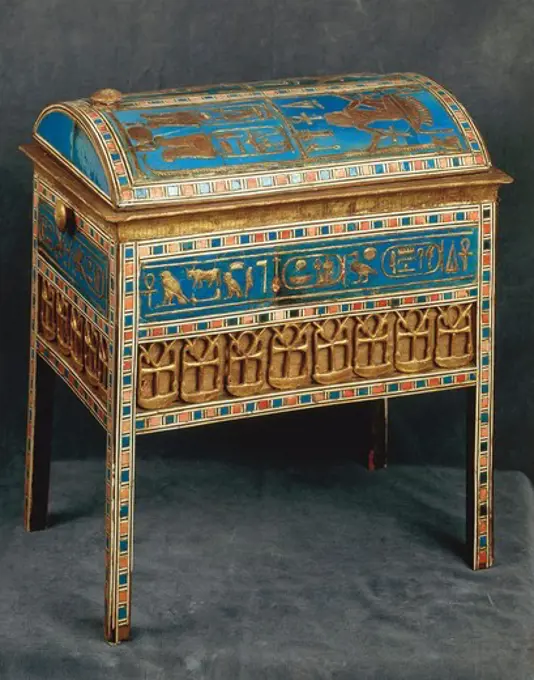
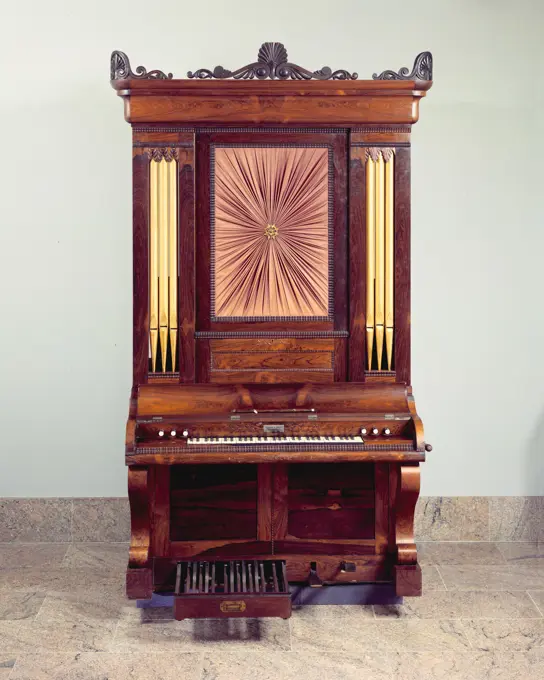
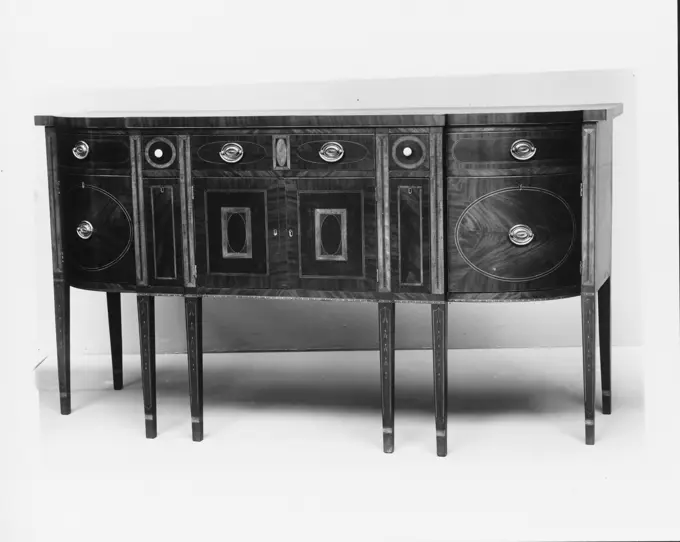
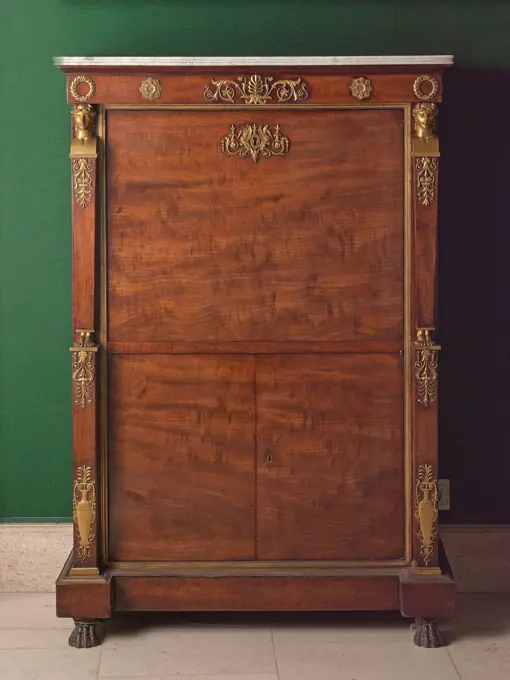
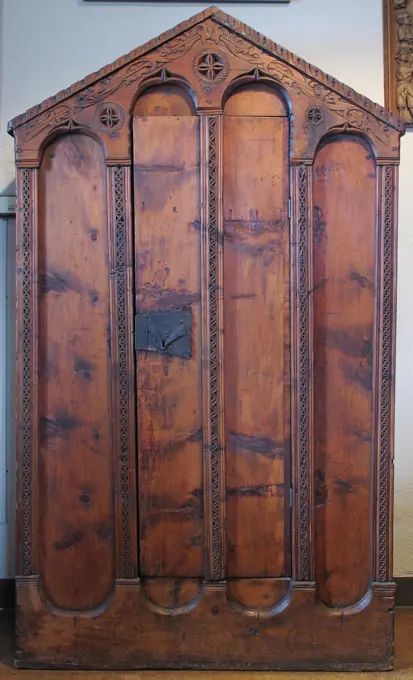
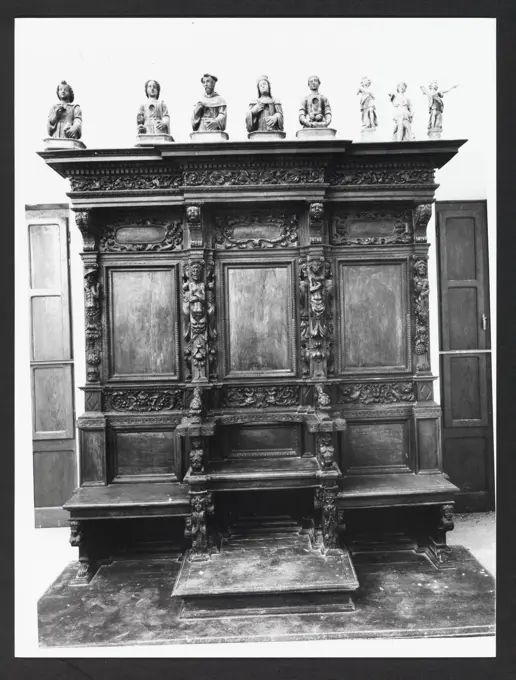
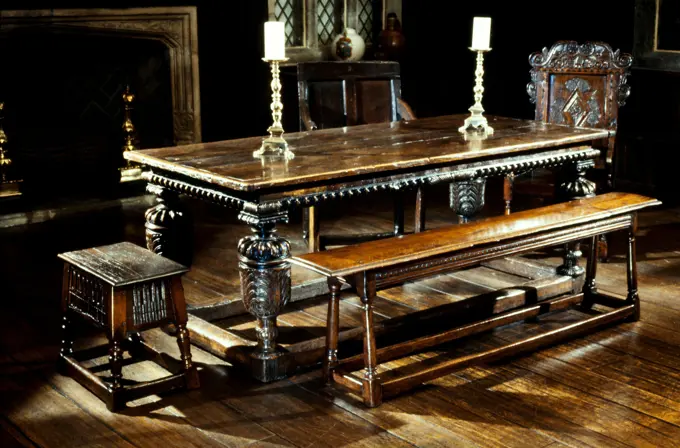
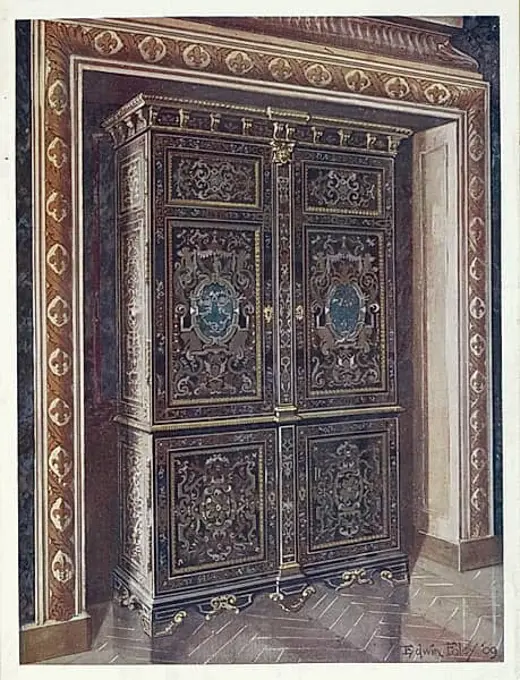
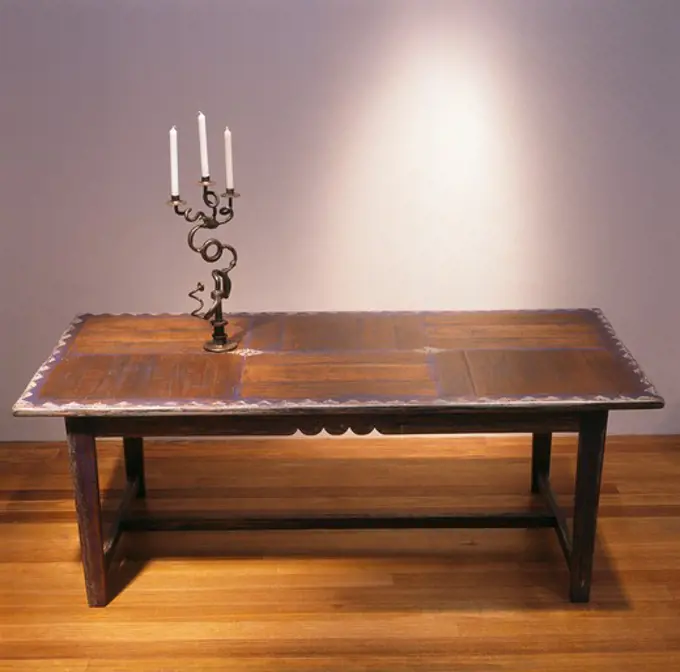
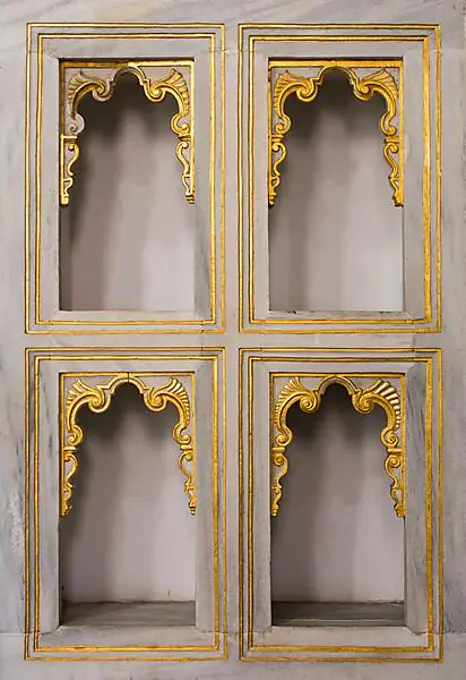
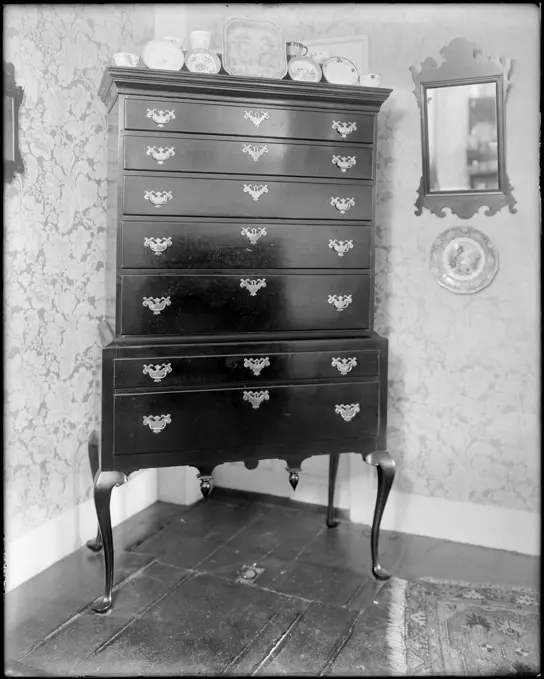
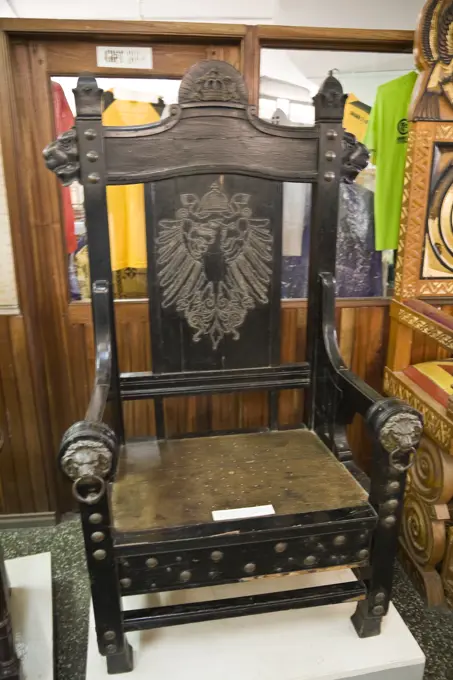
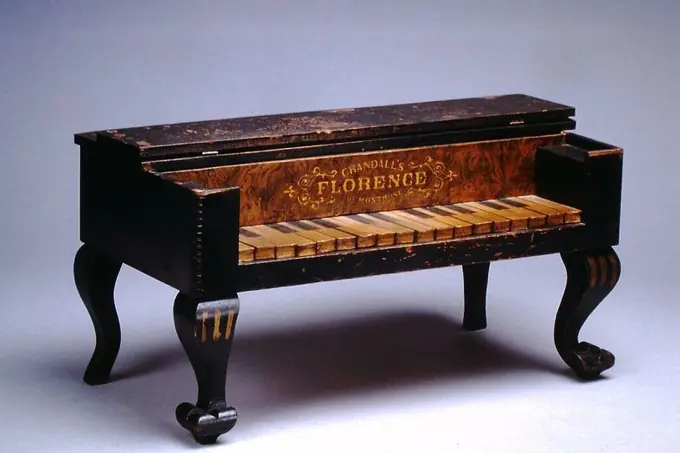
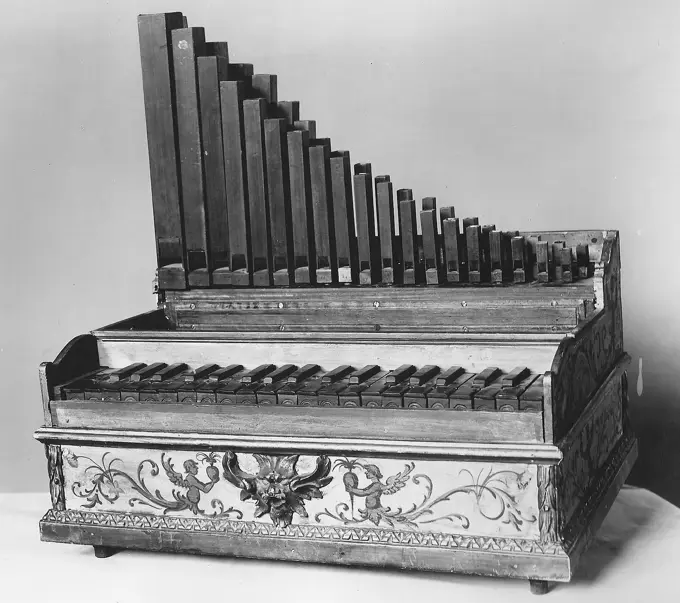
Dressing table. Culture: American. Dimensions: 29 3/4 x 33 3/4 x 20 5/8 in. (75.6 x 85.7 x 52.4 cm). Date: 1730-60.In the 1730s, Boston cabinetmakers transformed the traditional flat-top, turned-leg William and Mary-style high chest into the scroll-top, cabriole-leg Queen Anne version. The best examples of this uniquely American design, such as this dressing table and its related high chest (10.125.62), have carved and gilded shells and delicate inlaid compass stars on the pediment and case sides. Museum: Metropolitan Museum of Art, New York, USA.Vienna, Austria. Lamp from the 1800'sOld vintage leather classic armchair isolated on white backgroundSide Chair. Culture: American. Dimensions: 42 1/4 x 21 x 19 1/2 in. (107.3 x 53.3 x 49.5 cm). Date: 1740-60. Museum: Metropolitan Museum of Art, New York, USA.Folding Bedstead. Culture: American. Dimensions: 77 1/2 x 52 3/4 x 76 in. (196.9 x 134 x 193 cm). Date: 1740-90. Museum: Metropolitan Museum of Art, New York, USA.Armchair 1800-1815 American. Armchair 180Crib in the form of a basket, with mattress, anonymous, c. 1400 - c. 1950 Crib in the form of a basket, with mattress. Netherlands .. cotton (textile) Crib in the form of a basket, with mattress. Netherlands .. cotton (textile)Figurine and a candlestick holder on a chestAsia, Jordan, Madaba. Handicraft Center, inlaid wood table. (Editorial Usage Only)SideboardCompound Wheel And Axle. Model of a wind axle, incomplete. It stands on a small table-shaped pedestal and consists of a double disk axle, on two piles. The disc has two grooves of different diameter, in which fixed eyes are arranged for the hoist. The rest of the model is missing.Cabinet Decorated with Episodes from the Parable of the Prodigal Son, Frans Francken (III), c. 1640 Kunst cabinet luminated with ebony on an oak core. The doors wear cornise lists, as well as the sides. There is a storage space in the deck. Iron handles on the sides. Open the cupboard shows a middle portion of Tuscan colonets and a main frame with silver balusters. Four drawers on either side of the porch, above and one below. The inside of the doors, the drawers, the porch door and the hood are painted with scenes derived from the parable of the lost son.  wood (plant material). oak (wood). ebony (wood). iron (metal). silver (metal). ivory. glass Kunst cabinet luminated with ebony on an oak core. The doors wear cornise lists, as well as the sides. There is a storage space in the deck. Iron handles on the sides. Open the cupboard shows a middle portion of Tuscan colonets and a main frame with silver balusters. Four drawers on either side of the porch, above and one below. The inside ofMiniature sideboard or chest ofdrawersBrightArmchair (part of a set) ca. 1780-90 Georges Jacob French Part of a larger set of seat furniture, these elegant armchairs with a concave back, are so-called fauteuils en cabriolet. Their frames are stamped on the underside I-B, which is believed to be an alternate mark for Georges Jacob (master 1765-1814), one of the most successful chair makers of eighteenth-century France, who supplied beds and seat furniture to the crown.Epitomizing neoclassicism, the chairs have tapering and spirally fluted legs, and frames carved with rosettes, acanthus leaves, and twisted rope ornament. The unusual scrolled top rail of the back makes a reference to the capital of the Ionic order, one of the three canonic orders of classical architecture.. Armchair (part of a set) 198953Lectern in the wooden choir, by Enrico de Galli, 1564, presbytery of the Collegiate church of St Stephen, Vimercate, Lombardy, Italy, 11th-12th century.. Wanging table from walnut with pull leaves. Two porches built on tugs, flanked by broken harpies, wear oak table window, which has a quarter round table with balms. The tugs are connected by a footstel, on which an ordinance of three coupled Tuscan colonnets with four arches. The harpies have women masks and breasts and a scalyed neck. The flat tire is decorated with ebony caps. Included bodies in Acanthus sheet, ending in zone claws.Wardrobe;  XXW. (1901-00-00-2000-00-00);Harpsichord, Petrus Johannes Couchet, 1669 Klavecimbel with a colored sounding board painted with flowers, fruits and birds. De Rosette carries the initials J.C. And introduces a woman in a sitting position that plays a harp. The clavecimbel has two claviers one above the other with white and black keys. Two registers on the left, one for the unison and one for the lute. On the right two registers, one for the unison and one for the Octaaf. On the inside of the wrapper there is a flower gui lands: Omnis Spiritus Laudet Dominum. Enlargement around 1775. Antwerp poplar (wood). spruce (wood). ivory. ebony (wood). brass (alloy). iron (metal) Klavecimbel with a colored sounding board painted with flowers, fruits and birds. De Rosette carries the initials J.C. And introduces a woman in a sitting position that plays a harp. The clavecimbel has two claviers one above the other with white and black keys. Two registers on the left, one for the unison and one for the lute. On the right two registClose-up of a maple and walnut sideboard, ItalySaung-Gauk 19th century Burmese. Saung-Gauk 500916Wine cooler ca. 1780-90 Joseph Gegenbach, called Canabas. Wine cooler 204704Sofa 1760-90 American. Sofa. American. 1760-90. Wood. Probably made in Philadelphia, Pennsylvania, United StatesChair with blue upholstery and straight back with open edited middle style. Chair of mahogany with a straight back, straight openwork middle style and tight tapered legs. The loose seat is covered with blue silk damask.Queen Elizabeth's Virginal. This musical instrument is sitting on a stand and is believed to have belonged to Queen Elizabeth due to her Royal Arms appearing on one side of the keyboard.CONSOLA FERNANDINA DE MADERA DE CAOBA CON TAPA DE MARMOL ROSA - 1820. Location: MUSEO DEL ROMANTICISMO-OBJETOS VARIOS. MADRID. SPAIN.Harpsichord 1666 Girolamo Zenti Italian This large cypress instrument has two sets of unison strings, and, like most Italian harpsichords, can be removed from its outer painted case. An inscription explains that the instrument was restored in 1755 by Giovanni Ferrini, who replaced Bartolomeo Cristofori as Medici court harpsichord maker. Ferrini extended the range of its keyboard to the present GG-c'''. This harpsichord is one of only two that can be firmly attributed to Zenti.Technical description: Inner-outer case construction, inner case and soundboard of cypress, outer case of painted deal, on three heavy turned legs, legs and outer case may not be original; present compass is AA-f3, original was GG, AA-c3, compass was enlarged in 18th century by shifting original keyboard to the left, adding new keys at the treble end, and by moving the nut and bridge to retain the approximate original scaling as much as possible (see measurements); boxwood naturals with boxwood arcades, black-staiHarpsichord. Culture: French. Dimensions: L. 238.7 cm, W. 90.1 cm, D. 26.5 cm, 3-octave span 47.2 cm,Sounding lengths (longer of pair, far plucking points):8 '4'GG179.1 (17.1) cm97.2 (12.8) cmc236.8 (9.0) cm17.1 (7.1) cme314.3 (5.7) cm7.5 (4.9) cm. Maker: Louis Bellot (Paris, active 1717-1759). Date: 1742.This harpsichord has two sets of unison strings and one set of octave strings. One of the unisons is played from the upper keyboard, and the second unison and the octave are played from the lower keyboard. Pushing the upper keyboard inward couples the keyboards so that all three strings may be played from the lower keyboard. In addition, strings may be played from the three rows of jacks. There is a register that mutes the lower keyboard unison strings by means of small pads of buff leather. Museum: Metropolitan Museum of Art, New York, USA.libre. Location: -Sin documentar.Chantboard in wooden frame with carved ornaments, psalmbord information form woodcarving sculpture footage wood paint, Chalkboard with ornamented wooded list Remonstrantse church schuilkerk remonstrant Rotterdam City center Stadsdriehoek Vissersdijk Originating from Remonstrantse kerk on the Visserschdijk Demolished in 1907.High Chest of Drawers 1730-50 American. High Chest of Drawers 4291Screen with allegorical figures and grotesques. unknown c. 1575-1625 Tapestry Dimensions: H 6'7.75" x W 1'11.75" Tapestry Materials/Techniques: unknown Culture: Flemish Weaving Center: unknown Ownership History: French & Co. received from Mrs. Philip Corbin, received 8/6/1943; returned 9/21/1944.COMEDOR-MUEBLE VITRINA. Location: MUSEO DEL ROMANTICISMO-OBJETOS VARIOS. MADRID. SPANIEN.Cabinet. Culture: French, Paris. Dimensions: 74 1/2 × 66 × 23 in. (189.2 × 167.6 × 58.4 cm). Date: ca. 1645, with extensive later alterations.This imposing cabinet on stand belonged at one time to George Gordon Meade (1815-1872), the American Civil War general who led the Union troops to victory at the Battle of Gettysburg. Largely veneered with lustrous ebony, the architectural piece bears eloquent testimony to the importance to the European economy of overseas trade. In the seventeenth century, for the first time, tropical timber and other exotic materials became available in quantity to European cabinetmakers, who prospered as they set new fashions in furniture. Since imported wood was still a costly commodity in mid-seventeenthcentury France, the unknown cabinetmaker carefully layered the nearly black veneer on the cabinet's superstructure to minimize the amount of ebony needed. Furthermore, he used blackened, so-called ebonized, pearwood for the lower part, which was, after all, Vintage classical style Sofa bedJewel case of Tuya from ThebesChest-on-chestFigurine and a vase on a chestPipe Organ ca. 1850 Richard M. Ferris American The chamber organ is a moderately-sized piped organ. It typically has a single manual, a limited number of stops, and a limited pedalboard or no pedals at all. It is generally intended for use in small chapels, in homes, or other intimate rooms. As it is capable of long sustained tones, it is sometimes preferable to harpsichord as a continuo instrument in chamber ensembles. Such instruments might also be used in small churches, like those found in small towns and villages throughouth the United States in the nineteenth century. Chamber organs were largely usurped by reed organs after the middle of the century. Richard Ferris was born in New York City in 1818 and began an apprenticeship at the age of 12 with the builder Hall & Erben. In 1840, he established his own workshop, first located on Fulton Street in Manhattan. In 1857, he went into partnership with his half-brother L. U. Stuart and the firm became Richard Ferris & Co. Ferris died iDaybed.The carving of this bed includes a profusion of fleursde-lis, the heraldic emblem of the French royal family. This exceptionally large piece of furniture was perhaps made for one of the royal princes or princesses. It was probably meant to be used as a daybed. No other piece of furniture of this design and size is known.Writing desk, by Piedmont Work, 18th Century, inlaid marbles and gilded metal. Italy: Piemonte: Turin: Royal Palace. Whole artwork. Writing desk drawers top marbles volutes yellowLazio Roma Frascati Episcopal Palace49. Hutzel, Max 1960-1990 Exterior views of the castle, formerly called Rocca, that is now the Episcopal Palace. Interior views of dining room and living room, along with paintings and frescoes. Antiquities: Assorted Roman and Etruscan antiquities in the courtyard, including two sarcophagi, statues, stele, an urn, busts. General Notes: There were two sets of prints made from the same set of negatives. One set is labelled Episcopio and the other Vescovado; they have now been integrated into a single numerical sequence. German-born photographer and scholar Max Hutzel (1911-1988) photographed in Italy from the early 1960s until his death. The result of this project, referred to by Hutzel as Foto Arte Minore, is thorough documentation of art historical development in Italy up to the 18th century, including objects of the Etruscans and the Romans, as well as early Medieval, Romanesque, Gothic, Renaissance and Baroque monuments. Images are organized by geoAltar Caisse. Bin consisting of chapelous niche and a layer of bottom with cut-away fries. NIS on the front bounded with two columns with capital on which Pinnacles embed that acclage the boom with above window racing. Rear wall with gothic windows separated by columns with capitals on which rib violence.Sideboard Table 1790-1800 American. Sideboard Table. American. 1790-1800. Mahogany, satinwood, pine. Made in Baltimore, Maryland, United StatesCharles-Joseph Lemarchand. Secretary. Oak, mahogany, around 1810. Paris, Carnavalet museum. 50265-5 Mahogany, oak, furniture, secretary, chest of drawers, furnitureChest 15th century Austrian. Chest. Austrian. 15th century. Pine. Made in Hallein, Tyrol, Austria. Woodwork-FurnitureAbruzzo L'Aquila Sulmona Museo Civico9. Hutzel, Max 1960-1990 Museo Civico Treasures: these objects (Tesoro del Pio Istituto della SS. Annunziata and Tesoro della Cattedrale) are now housed in the security vault of a bank, not in the Museo Civico, as noted in Hutzel's photo campaign notes of August 1984. Views of the treasures include: a silver processional cross (14th century); gold, silver and enamel chalice (13th century), gold and silver crosier with sculpted figures depicting the Annunciation (13th century), a silver and gold reliquary with glass (13th century), a silver diadem (13th century), and a box-like silver and gold reliquary (15th century). German-born photographer and scholar Max Hutzel (1911-1988) photographed in Italy from the early 1960s until his death. The result of this project, referred to by Hutzel as Foto Arte Minore, is thorough documentation of art historical development in Italy up to the 18th century, including objects of the Etruscans and the Romans, as welChair in Chinese traditional styleTable, c. 1580-1600, 31 1/2 x 81 1/2 x 36 1/2 in. (80.01 x 207.01 x 92.71 cm), Oak, England, 16th-17th centuryReproduction of a wooden bed with silver-plated bronze decorations, from The Houses and Monuments of Pompeii, by Fausto and Felice Niccolini, Volume II, General Descriptions, Plate XXXV, 1854-1896.Child's chair from the Staussen era (1860-1930), CP Nel Museum of the History of Ostriches, Oudtshoorn, South Africa, Western Cape, AfricaWall Mirror, c. 1720. France. Carved and gilded wood; overall: 243.8 x 143.5 cm (96 x 56 1/2 in.).Tabernacle Door 15th century Spanish. Tabernacle Door 466302SILLON DEL CARDENAL CISNEROS. Location: CONVENTO DE LAS JUANAS. Alcalá de Henares. MADRID. SPAIN.Brown wooden children cradle brown wooden children cradle copyright: xzoonar.com/DR.XNORBERBERTXLANGEX 14208854Furniture around the turn of the century 1900, Cabinet in ebony with inlays of engraved brass and white metal (1910, 1911), Armoire in ebony with inlays of engraved brass and white metal (1910, 1911) .jpgBackgrounds and textures: very old wooden cabinet with drawers. Wooden cabinet with drawersCandelabra on old wooden table on wooden hall floorDoll's Pram, undated .Cabinet door, Anonymous, c. 1550 - c. 1600 Two cupboard doors made of walnut (presumably from the upper half of a cupboard). The doors are, within a profiled window, decorated in flat relief with medallions surrounded by rolling work, decorated with allegorical figures that depict the smell and feeling (). Up and below the medallions are presented by allegorical figures the four elements. France walnut (hardwood) Two cupboard doors made of walnut (presumably from the upper half of a cupboard). The doors are, within a profiled window, decorated in flat relief with medallions surrounded by rolling work, decorated with allegorical figures that depict the smell and feeling (). Up and below the medallions are presented by allegorical figures the four elements. France walnut (hardwood)Library table, c. 1800, Thomas Hope, English, (born Amsterdam), 1769-1831, 33 x 55 3/4 x 37 3/4 in. (83.82 x 141.61 x 95.89 cm), Painted and gilt wood with canvas top, England, 18th-19th centuryBannister-back side chair, c. 1720, 47 1/8 x 25in. (119.7 x 63.5cm), Maple, oak, and chestnut with rush seat, United States, 18th centuryOttoman marble carving art in detailLuncheon in honor of the Prime Minister of Australia Robert Gordon Menzies, 1:12PM. View of a flower arrangement in the Red Room of the White House, Washington, D.C., set up for a luncheon in honor of Prime Minister of Australia, Robert Gordon Menzies.Objects, furniture, highboy, Eddy house, Kingston, RI , Houses, Interiors, Clothes chests. Frank Cousins Glass Plate Negatives CollectionRVD / Royal House photo collection. Tray. Receive a gift from the state visit to the Antilles. zd}Africa, West Africa, Ghana, Accra. Chair of state of the last German governor of Togoland taken over and placed in Christiansborg Castle, Accra during the 1914-1918 War at the National Museum of Ghana.Toy Square Piano. Culture: American. Dimensions: Width across lid: 51.5 cm. (20.25 in.)Diameter: 25.5 cm. (10.6 in.)Height without lid: 24.9 cm. (9.8 in.). Maker: Charles Martin Crandall (American. Montrose, Pennsylvania 1833-1905 Waverly, New York). Date: ca. 1860-80. Museum: Metropolitan Museum of Art, New York, USA.Furniture around the turn of the century 1900, A cabinet of oak and walnut, with ebony panels and columns, inlaid with rosewood and ivory engraved (1911), A cabinet of oak and walnut, with ebony panels and columns, inlaid with rosewood and ivory engraved (1911) .Russia, St Petersburg, Royal Carriage Exhibited At The Hermitage MuseumPortative Organ late 19th century Probably by Leopoldo Franciolini Italian The portative organ is the smallest member of the organ family and generally has a single rank of flue pipes. As its name suggests, it is intended to be easily moved. This portative organ is a product of the Leopoldo Franciolini workshop in Florence, Italy during the last part of the 19th century. Franciolini was a renowned musical instrument dealer who misrepresented many of his items as much older than they actually were. He was known for selling some very nice items, some which were partially authentic, and some which were complete fabrications. This organ does contain some older elements including possibly the keyboard, but was mostly a product of the late nineteenth century.Technical description: Rectangular mahogany base holding keyboard and mechanism, with 1 rank of pipes mounted in 2 rows on top behind keyboard; base painted blue with gilt designs of flowers and angels, with gilt moldings, resting on 4 fClassic chair and still life of living room accessoiries in silver