Antique Wooden Furniture

Collection of beautifully crafted wooden furniture pieces, including a chest and cupboard, showcasing intricate carvings and rich materials from British and Northern Netherlands cultures.

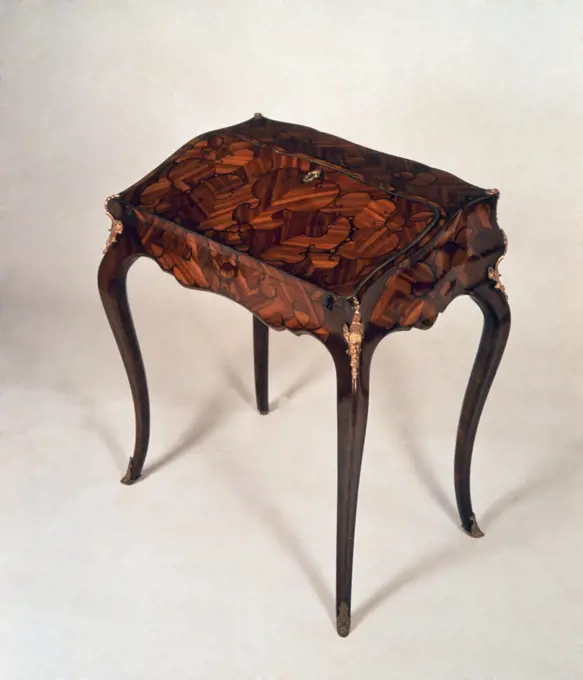
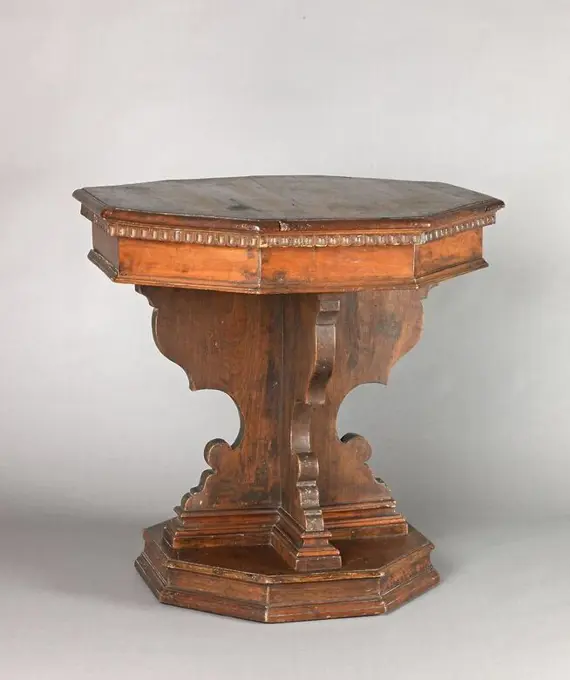
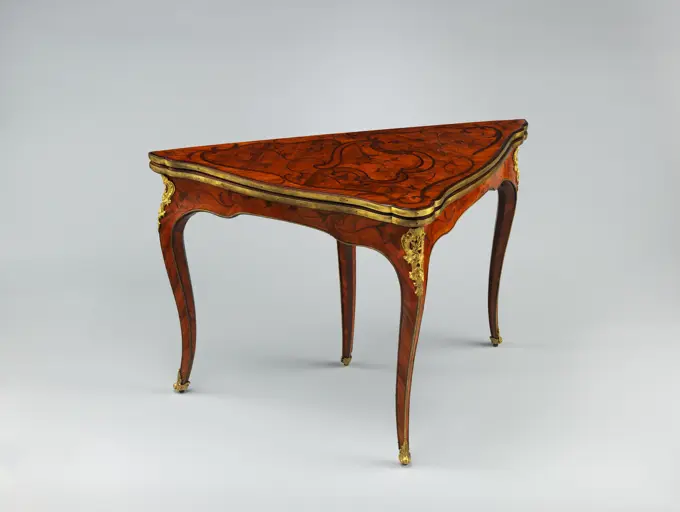
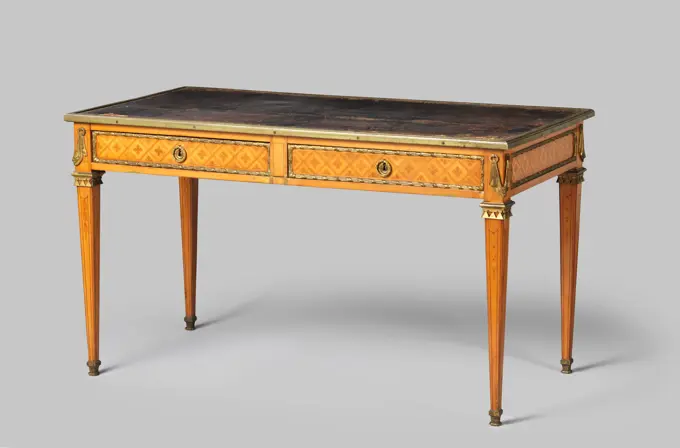
Table; Giuseppe Maggiolini, Italian, 1738 - 1814; Italy, Europe; late 18th century; Walnut and rare wood veneer; Object: H:  84 x W:  110 x D:  74 cm (2 ft. 9 1/16 in. x 3 ft. 7 5/16 in. x 2 ft. 5 1/8 in.)
Table; Giuseppe Maggiolini, Italian, 1738 - 1814; Italy, Europe; late 18th century; Walnut and rare wood veneer; Object: H: 84 x W: 110 x D: 74 cm (2 ft. 9 1/16 in. x 3 ft. 7 5/16 in. x 2 ft. 5 1/8 in.)
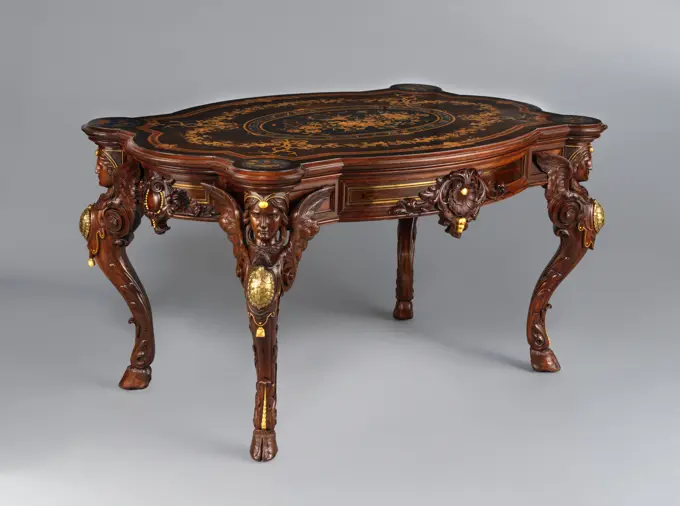
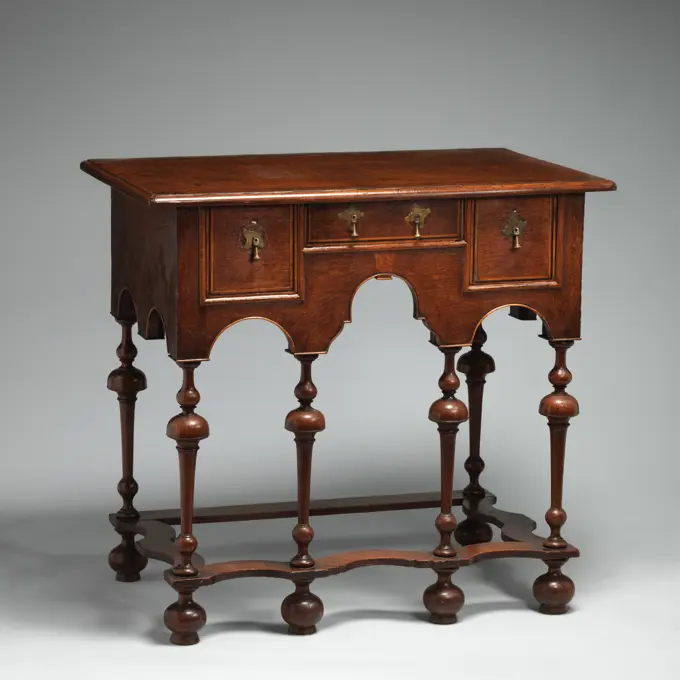
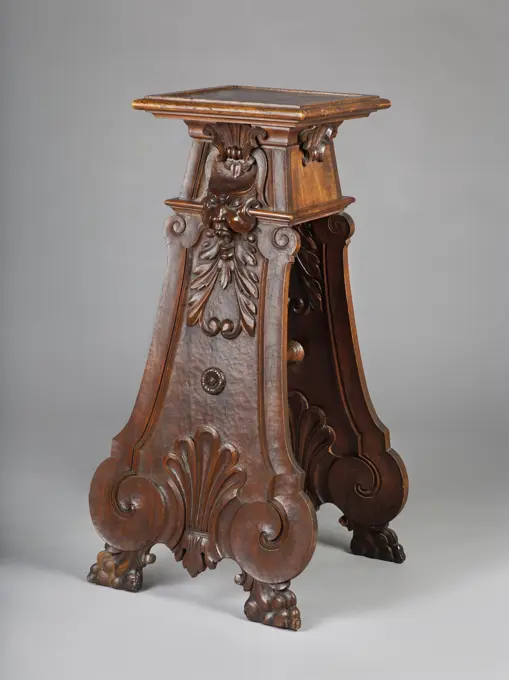
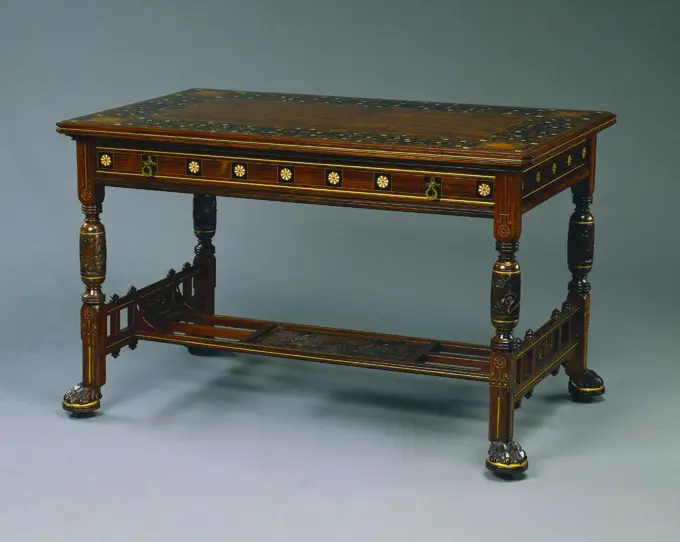
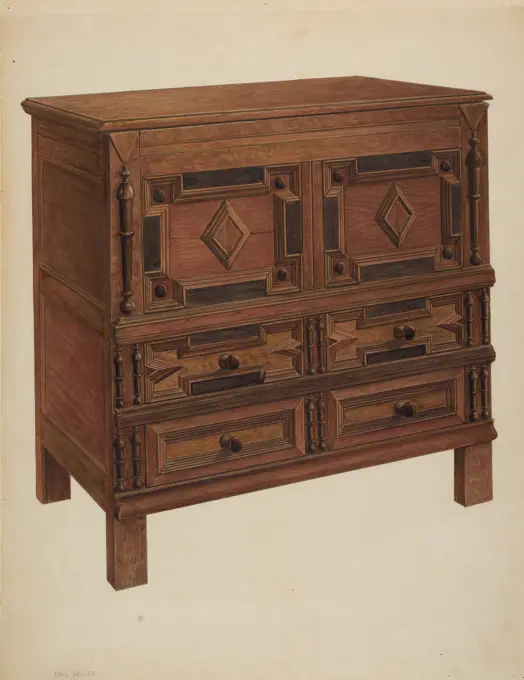
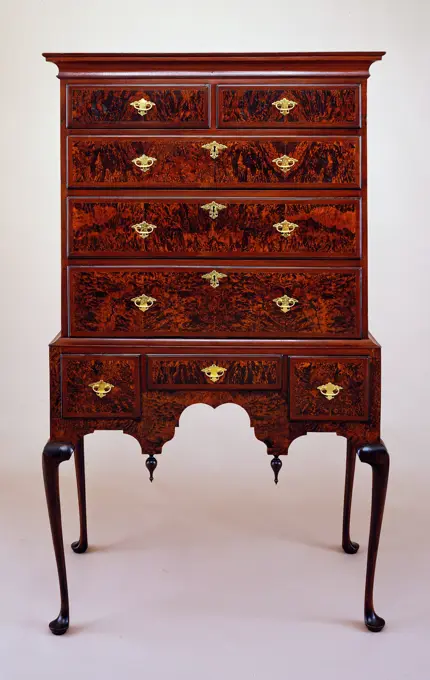
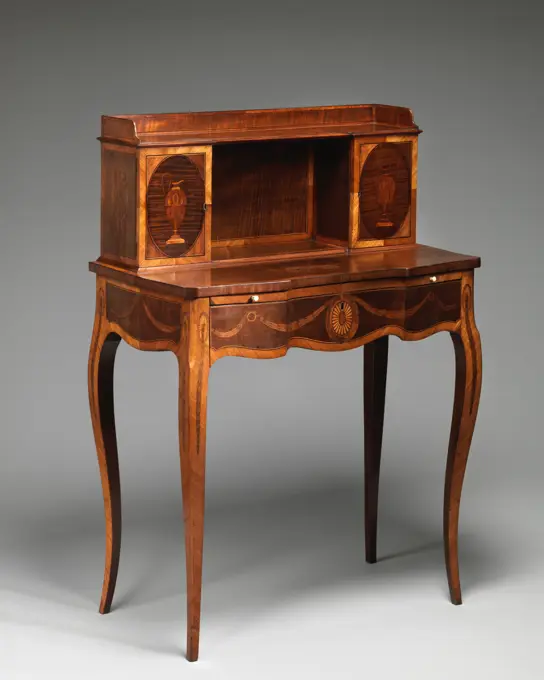
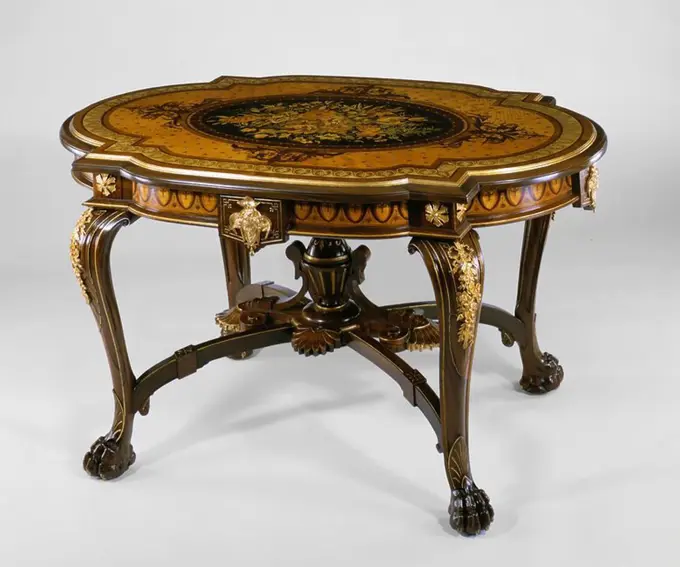
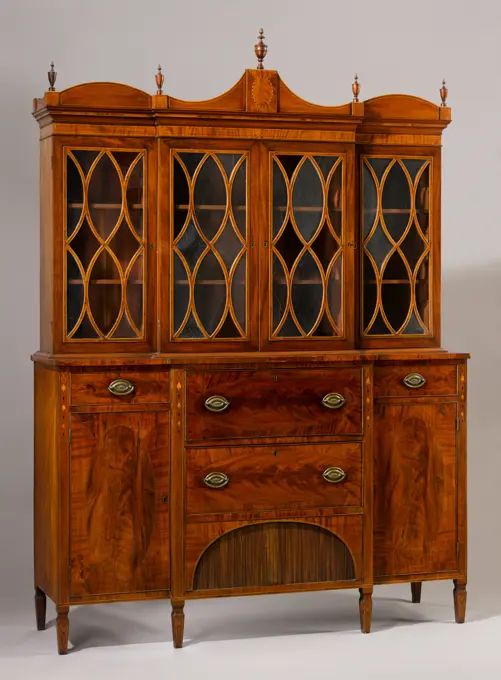
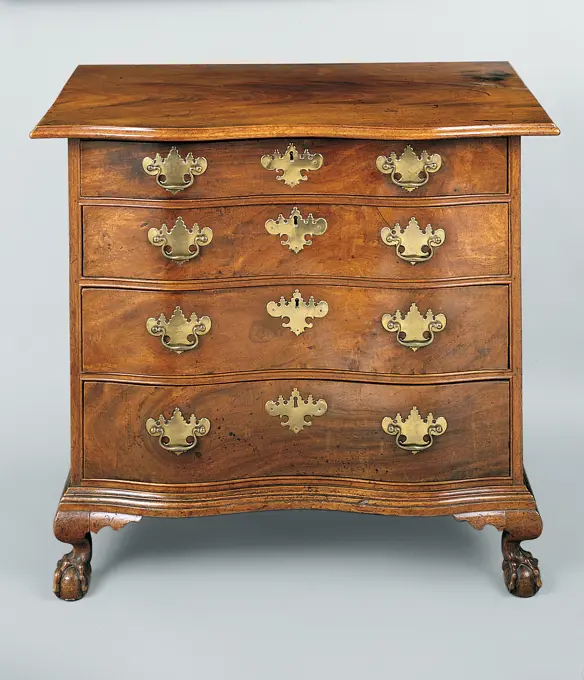
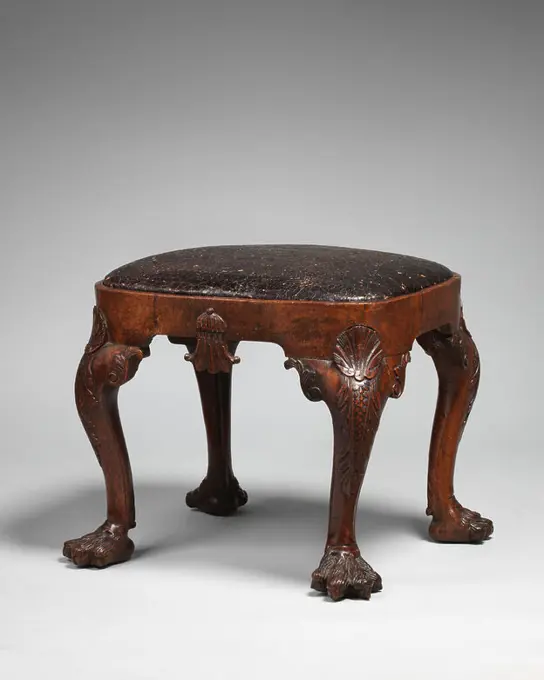
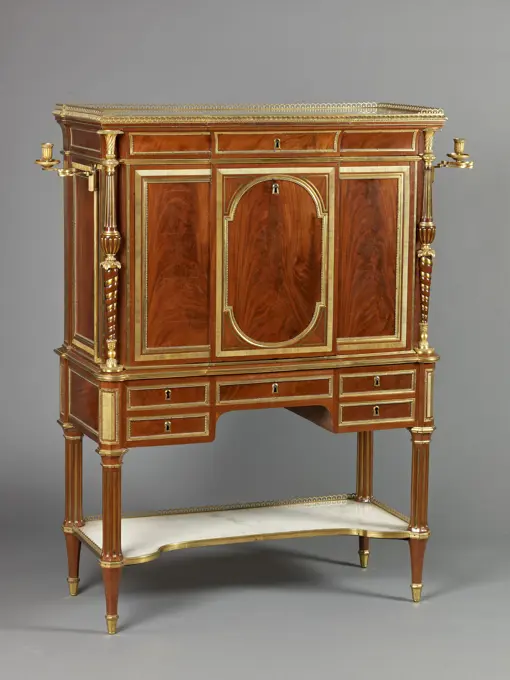
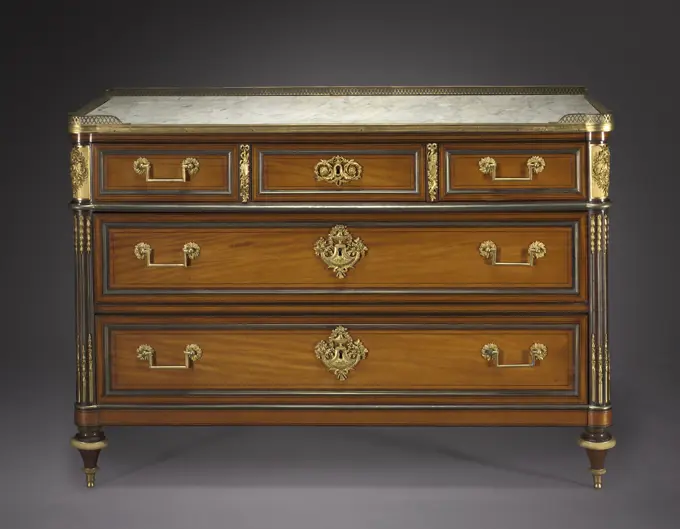
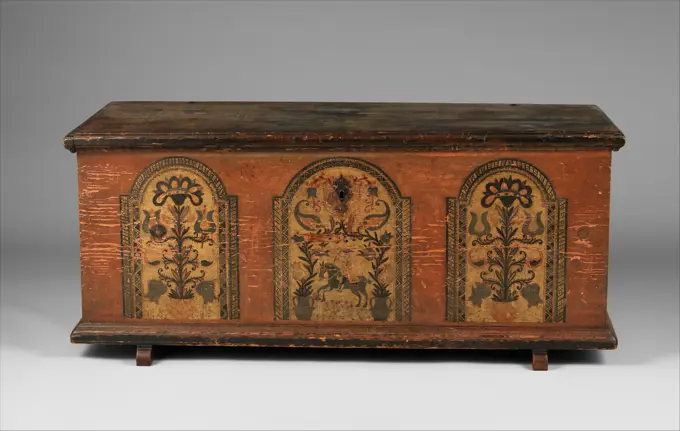
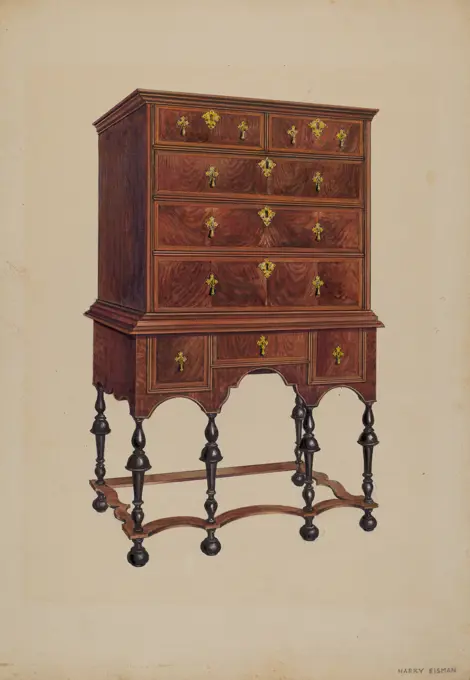
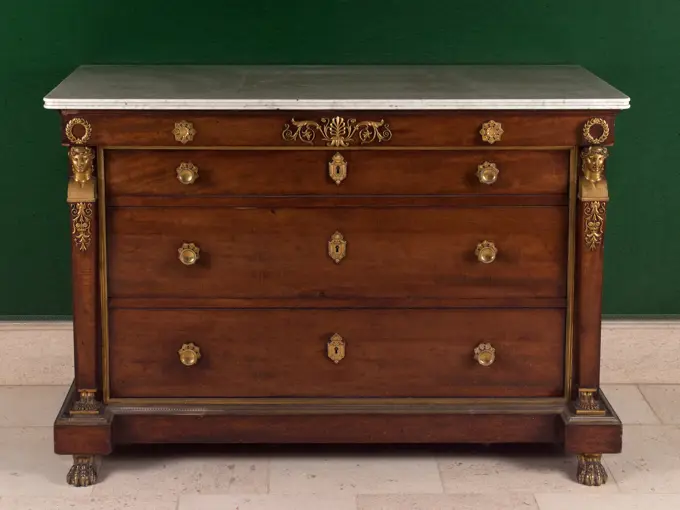
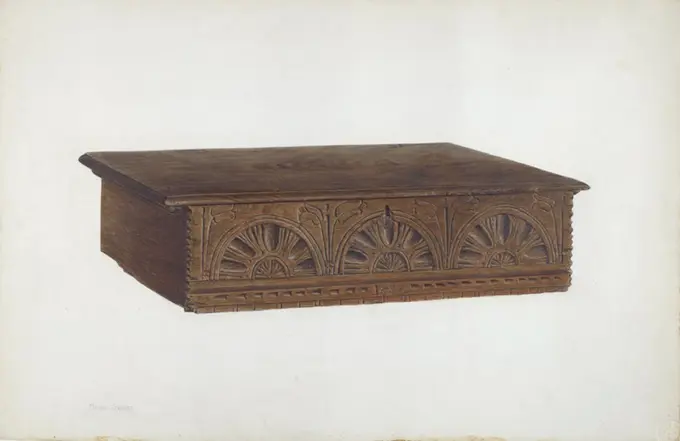
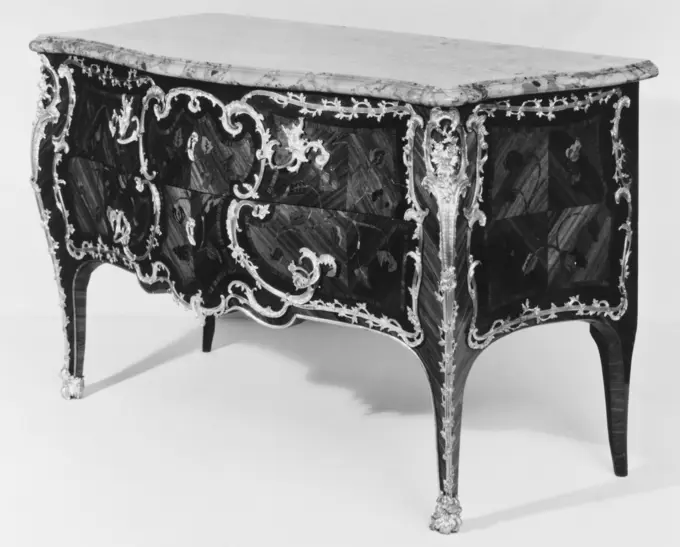
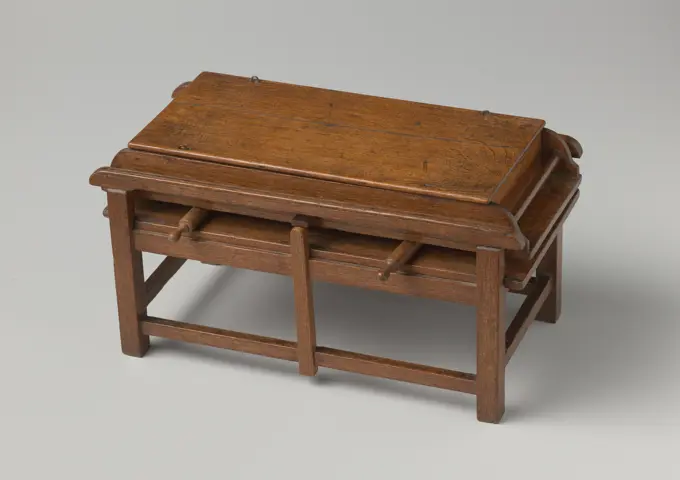
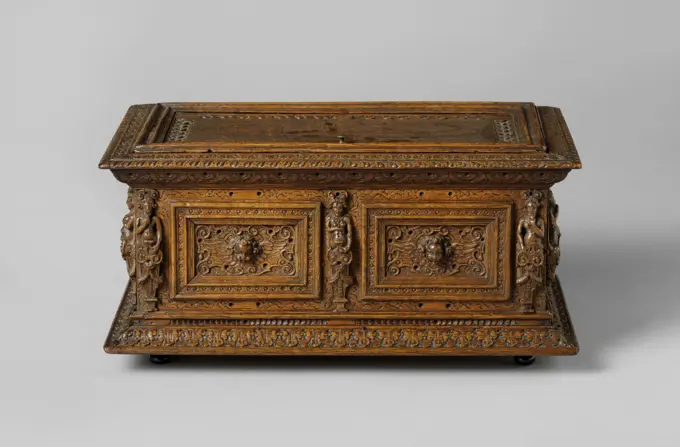
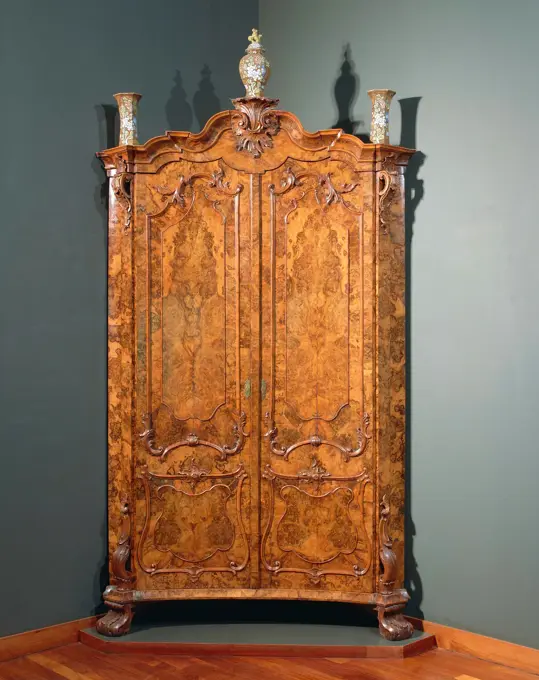
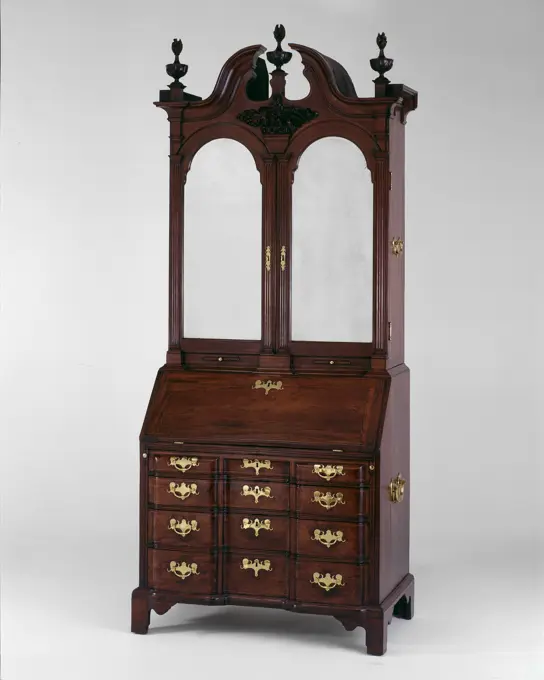
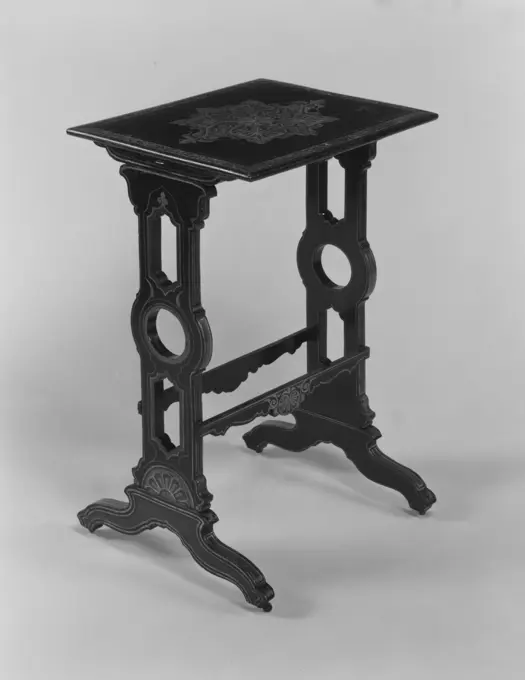
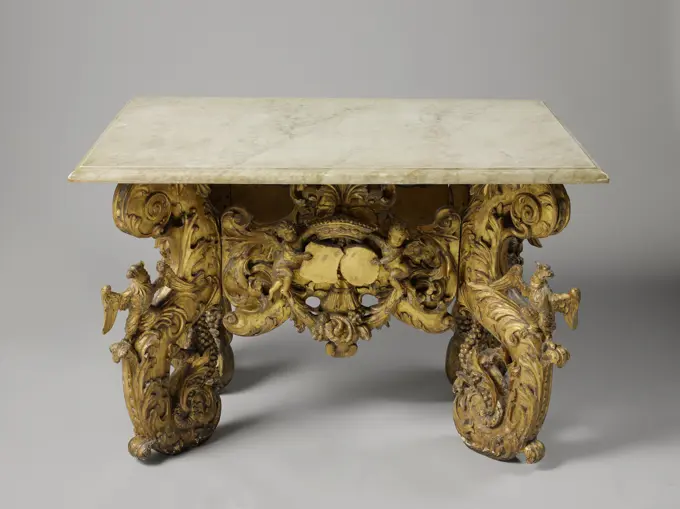
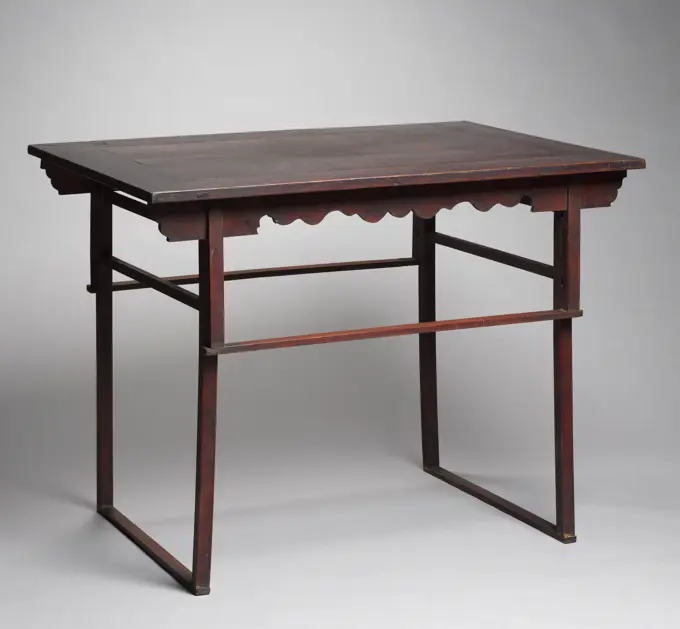
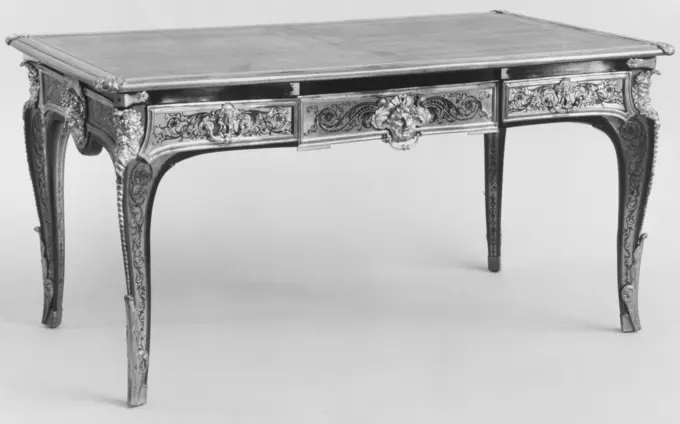
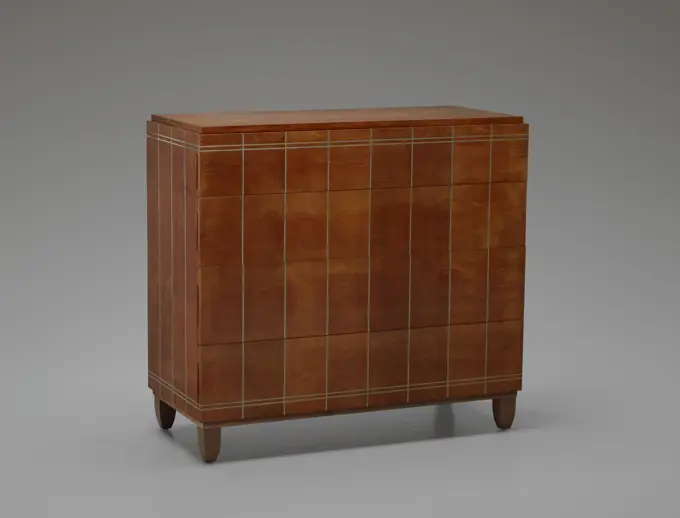
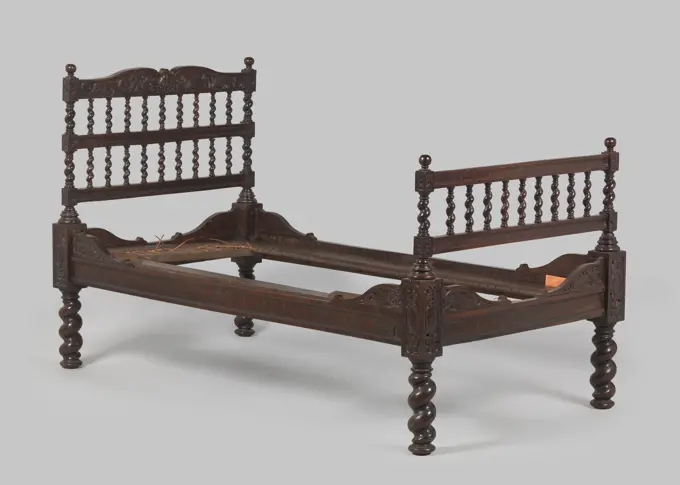
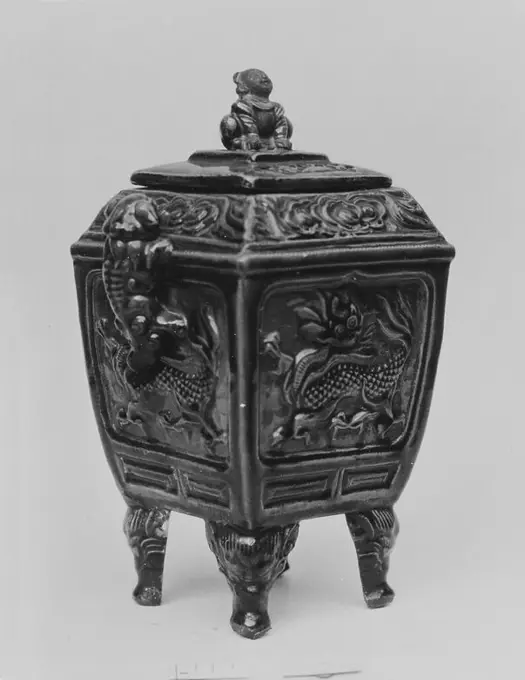
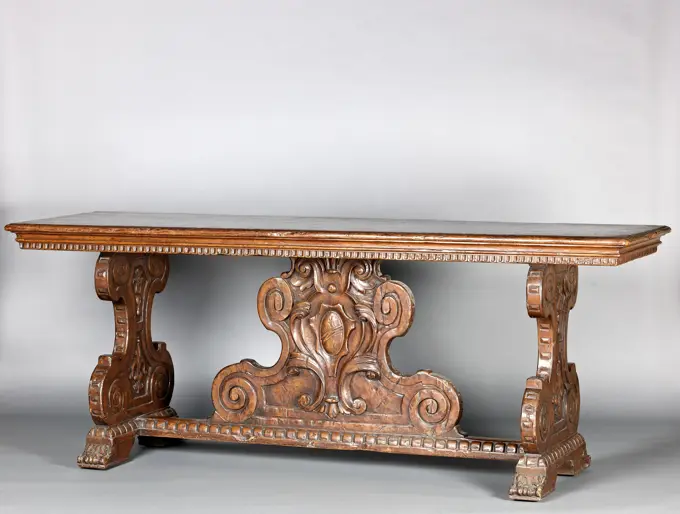
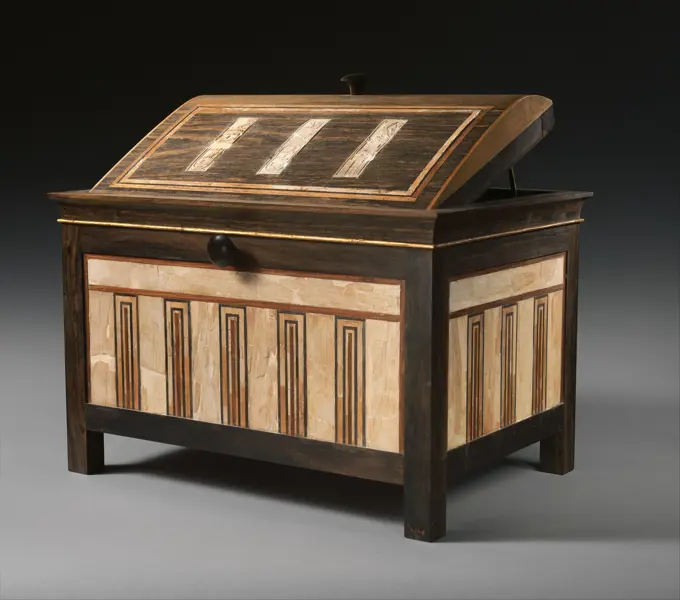
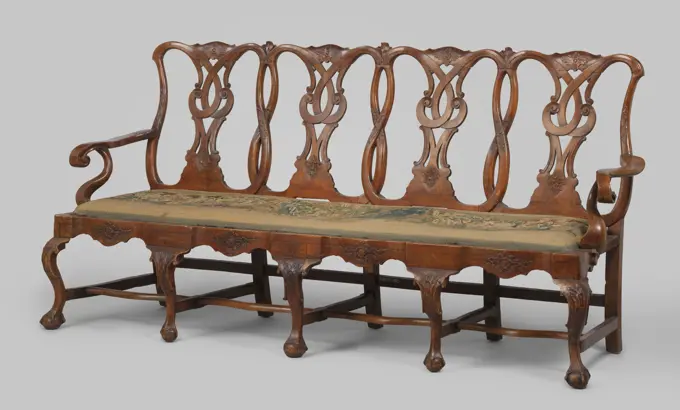
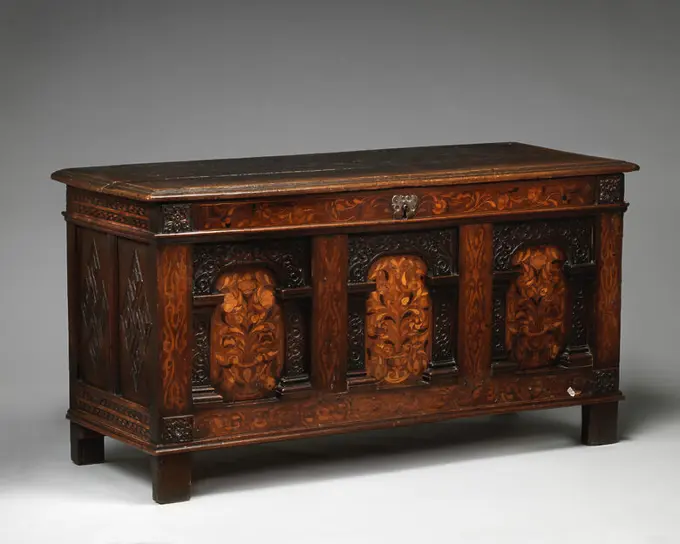
Chest. Culture: British. Dimensions: Overall: 29 × 55 1/2 × 21 in. (73.7 × 141 × 53.3 cm). Date: ca. 1600. Museum: Metropolitan Museum of Art, New York, USA.Cupboard with two doors with cushion panels and tendrils, anonymous, 1650 - 1700 Cabinet of Rosewood and Ebony, with two doors. The doors carry cushion panels with tendrils and robber frames. At the bottom is a drawer. The corner styles also show cut tendrils. The overhanging roof list has a crest in the middle. The cupboard rests on ball legs. Northern Netherlands wood (plant material). rosewood (wood). ebony (wood). oak (wood) Cabinet of Rosewood and Ebony, with two doors. The doors carry cushion panels with tendrils and robber frames. At the bottom is a drawer. The corner styles also show cut tendrils. The overhanging roof list has a crest in the middle. The cupboard rests on ball legs. Northern Netherlands wood (plant material). rosewood (wood). ebony (wood). oak (wood)Table; Giuseppe Maggiolini, Italian, 1738 - 1814; Italy, Europe; late 18th century; Walnut and rare wood veneer; Object: H:  84 x W:  110 x D:  74 cm (2 ft. 9 1/16 in. x 3 ft. 7 5/16 in. x 2 ft. 5 1/8 in.)Center table Gustave Herter German (Stuttgart, principality of Württemberg) ca. 1860 German-born and trained Gustave Herter produced this extraordinary center table around the time he established his own furniture and decorating firm at 547 Broadway. The robustly carved figural legs and bold, curvaceous form reflect Herters European training and sensibilities. The tables delicate marquetry top, which may have been imported from Paris, speaks to the prevailing taste for French style among American patrons. Simultaneously, the four enigmatic and exoticized Native American female forms with gilded turtle breastplates suggest a desire to explore and formulate a national iconography. View more. Center table. American. ca. 1860. Rosewood, rosewood veneer, maple, burled wood, ash (secondary wood), brass, and scagliola. Made in New York, New York, United StatesDressing Table c 1755-1790 Maryland. Mahogany, yellow pine, yellow poplar, and Atlantic white cedar . Artist unknownTable ca. 1800 American. Table. American. ca. 1800. White pine. Made in New York, United StatesGentlemans secretary 1800-1810 Attributed to Nehemiah Adams One of only about a dozen known examples attributed to Nehemiah Adams, this piece shows great unity of design, achieved through the rhythmic use of ellipses—a favorite Neoclassical shape—in the panels of the cabinet base. The ellipses are echoed in the muntins (the strips dividing the individual panes of glass) of the glazed upper bookcase doors. The form of this gentleman's secretary-and-bookcase is derived from plate 52 of Thomas Sheraton's "The Cabinet-Maker and Upholsterer's Drawing Book" (London, 1793). Listen to experts illuminate this artwork's story Listen Play or pause #3845. Gentleman's secretary Supported by Bloomberg Philanthropies We're sorry, the transcript for this audio track is not available at this time. We are working to make it available as soon as possible.. Gentlemans secretary 3153Cabinet, divided into top and bottom cabinet. Decorated with reliefs of birth, circumcision, three kings, baptism, the flight to Egypt and the temptation. Year 1659, anonymous, 1659 Eikhout cabinet, divided into top and bottom cabinet. The styles are decorated with ionic half -columns with festons. The upper cabinet has decorated two doors with reliefs, on the left birth, on the right the circumcision. The doors of the base cabinet are each decorated with two reliefs: on the left of Epiphany and baptism, right the flight to Egypt and the temptation. The Middelladeefries shows hunting scenes. The Frisian shows performances with ships, seahorses, tritons and nymphs. Dated on drawer: Anno 1659. Netherlands wood (plant material). oak (wood) Eikhout cabinet, divided into top and bottom cabinet. The styles are decorated with ionic half -columns with festons. The upper cabinet has decorated two doors with reliefs, on the left birth, on the right the circumcision. The doors of the base cabinetTable ca. 1690 British. Table. British. ca. 1690. Oak. Woodwork-FurnitureBox. Culture: American. Dimensions: 9 x 26 1/2 x 15 in. (22.9 x 67.3 x 38.1 cm). Date: 1675-1700. Museum: Metropolitan Museum of Art, New York, USA.Chest. unknown, creatorSecretary puts marquetry in Lakpanelen, Anonymous, 1780 Secretary with Marqueterie on oak core. The front legs with batter are placed overhoeks. The corner styles above it wear a round paint panel in the midst of black pipes; At the top. The front fields wear paint panels on a bow, surrounded by angular frames, fields with a diamond pattern and a double, braided strap braided in the corners. The fields on the sides each carry two paint panels, most round. Top cabinet with leaf; base cabinet with doors and angular sill with paint panel. Upright edge. Northern Netherlands wood (plant material). oak (wood). rosewood (wood). maple (wood). purpleheart (wood). ebony (wood). olive (wood). mahogany (wood). leather. bronze (metal) lacquering / gilding Secretary with Marqueterie on oak core. The front legs with batter are placed overhoeks. The corner styles above it wear a round paint panel in the midst of black pipes; At the top. The front fields wear paint panels on a bow, surrounded by angulaPedestal;  End of the 19th century (1880-00-00-1900-00-00);Szwarc, Szymon (1884-197.), Szwarc, Szymon (1884-197.)-collection, mascarons, renaissance (style), plant decoration, animal pawsCenter Table, c. 1875. Herter Brothers (American). Rosewood inlaid with other woods and bone; overall: 76.5 x 122 x 76.2 cm (30 1/8 x 48 1/16 x 30 in.).TableCharles Squires and Harry Eisman, Chest with Two Drawers, c 1939 Chest with Two DrawersChina Table. Attributed to Robert Harrold (England, active 1765-1792). United States, New Hampshire, Portsmouth, 1765-1775. Furnishings; Furniture. Mahogany, pine, and mapleTable withDrawerLouis XV Bureau De Dame Antiques Private Collection Oval Table with FallingLeavesHigh Chest of Drawers, c. 1735, 65 x 37 1/2 x 21 in. (165.1 x 95.25 x 53.34 cm), Burl maple veneer, walnut herrringbone inlay, maple, white pine, and brass (handles), United States, 18th century, This high chest of drawers is an early and well conceived example of the Queen Anne style in American furniture. Because of the sophistication of its proportions and the sensitive handling of the legs, it is likely that this high chest was made in Boston, which was the style center of the American colonies from the first settlement until the 1730s and 1740s. The object also comes with a history of descent in the Kimbell family of Ipswich, Massachusetts.Bureau, three -part, with a returning middle part, accentuated by Schuingeplaatste styles with bronze lion claws. Glued with several types of wood., Anonymous, 1750 - 1800 Bureau LUMMED WITH MULTHOP WOODS ON OAKEN CORE. From the three -part desk, the middle part deviates back, accentuated by styles. There are gilded bronze lions claws under all the shit styles. Decoration schedule: on the drawers ongoing dog motif; A braid pattern on the three doors; octagonal fields on the walls; On the leaf a diamond pattern, all filled with leaf rosettes. Central leaf motif: large rosette surrounded by circles and large braid. Outlines with Greek edges. Northern Netherlands wood (plant material). oak (wood). rosewood (wood). maple (wood). purpleheart (wood). satinwood (wood). copper (metal). bronze (metal) gilding Bureau LUMMED WITH MULTHOP WOODS ON OAKEN CORE. From the three -part desk, the middle part deviates back, accentuated by styles. There are gilded bronze lions claws under all the shit stylTable glued with rosewood on oak core with leaves and draft sheets in Marqueterie, Anonymous, 1650 - 1699 Table glued with rosewood on an oak core and with solid rosewood legs. The legs are articulated vase-shaped and connected by a double Y-shaped cross. The cross is deposited by Ebben Robbellists at the top. The houses and the rules show low cushion panels with rosewood mirrors inside ebben Robbellists. The furniture has two draft sheets, which, like the large leaf, are decorated in marquetery of rosewood and pink wood (). Northern Netherlands wood (plant material). oak (wood). rosewood (wood). ebony (wood). rosewood (wood) Table glued with rosewood on an oak core and with solid rosewood legs. The legs are articulated vase-shaped and connected by a double Y-shaped cross. The cross is deposited by Ebben Robbellists at the top. The houses and the rules show low cushion panels with rosewood mirrors inside ebben Robbellists. The furniture has two draft sheets, which, like the large leaf,Desk (bonheur du jour) ca. 1770-80 Probably Thomas Chippendale British. Desk (bonheur du jour). British. ca. 1770-80. Harewood, rosewood, ebony, boxwood, satiné, purple-heart, mahogany. Woodwork-FurnitureCenter Table. Marquetry top by Joseph Cremer; Active 1836-1878, Paris, France; Table by unknown artist, New York. Date: 1857-1867. Dimensions: 137.2 × 91.4 × 74.6 cm (54 × 36 × 29 3/8 in.). Rosewood, maple, tulip poplar, white pine, and mother-of-pearl. Origin: Paris. Museum: The Chicago Art Institute, Chicago, USA.Chest of drawers ca. 1750 Attributed to William Vile British. Chest of drawers. British. ca. 1750. Pine veneered with mahogany; gilt bronze. Woodwork-FurnitureAttributed to Nehemiah Adams, Secretary, 1800-1810, mahogany with inlay.DeskChest of drawers 1770-80 American This deceptively simple chest is an excellent example of a common form. The shapes and proportions are in harmony, the wood is the best mahogany, and the brasses are big and bold. Every part is original, and the piece retains its old surface, with a warm, golden brown patina. The graceful, serpentine front and crisply curved brackets of the feet reflect the lightness and playfulness of the Rococo.. Chest of drawers. American. 1770-80. Mahogany, white pine. (none assigned) New England, United StatesStool. Culture: British. Dimensions: Overall: 17 × 20 × 17 3/4 in. (43.2 × 50.8 × 45.1 cm). Date: ca. 1715. Museum: Metropolitan Museum of Art, New York, USA.High Chest of Drawers 1750-90 American There is no other Newport high chest with four clawand-ball feet with open talons and carving on all four knees. The design is a refinement of the Boston Queen Anne-style high chest: scrolls and shells in the skirt provide a sense of gracefulness and lift, while raised panels at the top harmonize with the shape of the hood. Note the plum pudding” figure of the carefully chosen mahogany drawer fronts.. High Chest of Drawers. American. 1750-90. Mahogany, chestnut. Made in Newport, Rhode Island, United StatesSecretary (secrétaire à abattant) ca. 1780-90 Attributed to Adam Weisweiler. Secretary (secrétaire à abattant) 461013Folding table. Culture: American. Dimensions: 27 1/2 x 36 3/8 x 35 3/8 in. (69.9 x 92.4 x 89.9 cm). Date: 1680-85.The heavy balusters and applied bosses on this table may indicate that it was produced en suite with a matching cupboard, since such bold decorative elements were more commonly found on that form. The polygonal frame has a two-part, hinged circular top that opens and rests on the pivot support, or gate. The present grain-painted surface is not original and may date to the eighteenth century. Museum: Metropolitan Museum of Art, New York, USA.Buffet cupboard, Anonymous, 1800 Buffet cupboard with two doors, above which two drawers, with brass lists. At the front, the corner styles placed overhoeks consist of Hermen with gilded bronze heads and feet, placed rejuvenating legs on bobbins. Trekkers in the form of lion heads with rings have been applied to the magazines. Foldable leaf. Northern Netherlands (possibly)Netherlands (possibly) wood (plant material). brass (alloy). mahogany (wood). oak (wood). bronze (metal) gilding Buffet cupboard with two doors, above which two drawers, with brass lists. At the front, the corner styles placed overhoeks consist of Hermen with gilded bronze heads and feet, placed rejuvenating legs on bobbins. Trekkers in the form of lion heads with rings have been applied to the magazines. Foldable leaf. Northern Netherlands (possibly)Netherlands (possibly) wood (plant material). brass (alloy). mahogany (wood). oak (wood). bronze (metal) gildingChest of Drawers (Commode), c. 1775-1792. Attributed to Claude-Charles Saunier (French, 1735-1807), mounts in the style of Pierre Joseph Désiré Gouthière (French, 1732-1813/14). Oak, coralwood, mahogany veneer, marble top, gilt bronze mounts; overall: 90.8 x 131.5 x 59.7 cm (35 3/4 x 51 3/4 x 23 1/2 in.).Commode and two cupboards, anonymous, c. 1770 - c. 1790 Estate cabinet, glued with different woods and equipped with gilded copper batter and a gray-white-veined marble leaf. The hull stands on a loose frame with square legs that rest on metal feet. The central panel on the door has a marquetera string of a vase with palm branches tied together on either side. On the sides of the cabinet, simple, hanging trophes of a arrow sleeve and a torch have been applied. The plank in the cupboard has a swinging in the middle. Netherlands oak (wood). rosewood (wood). rosewood (wood). purpleheart (wood). locust. maple (wood). copper (metal). gilding (material). stain (coating) gilding Estate cabinet, glued with different woods and equipped with gilded copper batter and a gray-white-veined marble leaf. The hull stands on a loose frame with square legs that rest on metal feet. The central panel on the door has a marquetera string of a vase with palm branches tied together on either side. On the sidesTable of Coromandelhout with a rectangular with linoleum inlaid, Carel Adolph Lion Cachet, 1920 Table of Coromandelhout with a rectangular leaf inlaid with linoleum. The chassis rests on an H-shaped cross with concave, side rules resting on basements. The leaf is supported by square colonets, between which wide middle styles are placed, which are connected to the height of the height by a rule. Between the cross and the rule there is a style with two standeties bucked; Under and top flanked by jumping standenboks. Snakes on the table rule and middle styles. Northern Netherlands wood (plant material).. plywood Table of Coromandelhout with a rectangular leaf inlaid with linoleum. The chassis rests on an H-shaped cross with concave, side rules resting on basements. The leaf is supported by square colonets, between which wide middle styles are placed, which are connected to the height of the height by a rule. Between the cross and the rule there is a style with two standeties bucked; UnderJoint Stool. American; American. Date: 1680-1710. Dimensions: 48.2 × 38.7 × 24.8 cm (19 × 15 1/4 × 9 3/4 in.). Maple and pine. Origin: United States. Museum: The Chicago Art Institute, Chicago, USA.Small octagonal table. Culture: Italian or American. Dimensions: H. 80 cm, W. 81.5 cm, D. 81.5 cm. Date: early 20th century (). Museum: Metropolitan Museum of Art, New York, USA.Table. unknown, creatorTable in an oval shape with an open -worked leaf motif, Theo Nieuwenhuis, c. 1900 Table of Coromandel and Mahogany in an oval form. Under the table top is a wall contained in two profiled styles where three profiled legs are attached to the bottom on each side on which the table rests. These legs are placed diagonally and bent. At the top of the style there are three curved and profiled struts that carry the table top. The wall between the styles consists of a panel that is open in a symmetrical motif of leaves, which is contained on the top and bottom in a wide rule. The bottom line is profiled and below that is a lower sill that protrudes to the two outer legs. The oval -shaped table top with a wavy lines and a profiled edge has a wide strap on the underside that follows the shape of the table top above it. Amsterdam mahogany (wood). Table of Coromandel and Mahogany in an oval form. Under the table top is a wall contained in two profiled styles where three profiled legs are attached Folding card table (table de jeu brisée en angle) ca. 1755-65 Attributed to Bernard II van Risenburgh In mentioning cards, I ought to observe, that.. the French learn to play not barely for amusement, but also with a view to advantage; and, indeed, you seldom meet with a native of France, whether male or female, who is not a complete gamester, well versed in all the subtleties and finesses of the art.— Tobias Smollett, Travels through France and ItalyAs gaming was the principal indoor diversion of eighteenth-century France, a variety of tables was created, often for specific games like three-handed ombre or tri, piquet, or brelan. A description of one example in Lazare Duvaux’s account book suggests that this elegant folding table was used for quadrille. On August 9, 1753, the dealer sold a solid mahogany quadrille table "I" (folding on the diagonal), embellished with gilt bronze, and lined with cloth, to Madame de Pompadour for 85 livres.1When closed, the Museum’s table has a triaSmall table. unknown, creatorPrie-Dieu 1759 Turin. As the foremost Italian cabinetmaker of the 18th century, Pietro Piffetti was in the service of the royal House of Savoy for over 40 years. This prie-dieuóa kneeling bench used at home for personal devotionówas most likely made for the youngest son of King Carl Emmanuel III of Sardinia, for use in the Palace of Venaria, the familyís hunting lodge outside Turin. A door in the center of the prie-dieu conceals a small cabinet for a rosary and prayer books, and the drawer at the base would have held a padded kneeler. The interior of the cabinet retains its original pink paint; popular in the mid-18th century, the color pink did not yet have the feminine associations it does today.Piffettiís works are remarkable for their technical skill. The surface of this prie-dieu is made up of thin pieces (veneers) of boxwood and ebony assembled to form an intricate geometric patternóa technique known as parquetry.. Boxwood and ebony . Pietro PiffettiÉtagere. unknown, creatorWriting table ca. 1790 David Roentgen The initials CA under the ducal crown indicate that this elegant writing table was among the pieces of furniture Grand Duke Karl August von Sachsen Weimar-Eisenach (1757-1828), acquired from David Roentgen for his ducal palace which was rebuilt after the disastrous fire of 1774. Roentgen made a series of trips to Weimar in 1797-98 where he met the duke and sold him some of his inventory to furnish the new Residenz Schloss.. Writing table. German, Neuwied am Rhein. ca. 1790. Mahogany, gilt bronze. Woodwork-FurnitureCupboard, anonymous, 1607 Estate cupboard with ionic capitals. The two doors show two corned panels with stabbed cartouches in the middle pieces. The roof consoles are decorated with a men's head, a women's head and monster heads. The middle console is wearing the year 1607 on a cartouche. The furniture rests on corned bobbins. Netherlands wood (plant material). oak (wood) Estate cupboard with ionic capitals. The two doors show two corned panels with stabbed cartouches in the middle pieces. The roof consoles are decorated with a men's head, a women's head and monster heads. The middle console is wearing the year 1607 on a cartouche. The furniture rests on corned bobbins. Netherlands wood (plant material). oak (wood)Dower Chest 1700-1800 American. Dower Chest 3396Bureau Mazarin desk. unknown, contractorChiffonnière (chest of drawers) with seven drawers and leaf of white marble, Bernard Molitor, c. 1790 - c. 1795 Chiffonnière (chest of drawers) of oak, glued with mahogany, batter of copper, white marble leaf. The rectangular furniture has seven -placed large drawers with deepened fields, surrounded by copper profiles, and rectangular copper tractors. It has round, scanned styles on the front corners and scanned pilasters on the rear corners. The rest on toll -shaped legs. Under the upper drawer it is articulated by a circular profile. The angle styles above this profile are provided with copper plates with a decoration of horizontal lines and geometric motifs; The pilasters are not channeled at this height. The sides each show three deepened fields Paris oak (wood). mahogany (wood). copper (metal). blad: marble (rock) Chiffonnière (chest of drawers) of oak, glued with mahogany, batter of copper, white marble leaf. The rectangular furniture has seven -placed large drawers with deepenedTable. Table decorated with marquetery of pink, rosewood and olijvehout and other types of wood, ivory and gold-plated bronze. The round table rests on three S-shaped legs, at the bottom with rocaille batter, which passes into styles and divide the rules into three fields. The field on the front forms a door and shows a seated woman with sheep; The other two fields show landscapes with trees and houses, with pearl windows. The leaf, with a gold-plated bronze edge with gallery, is decorated with ruins.Canterano Luis XVI. Siglo XVIII. Museo Maricel de Mar, Sitges. Barcelona.Box;  approx. 1600 (1580-00-00-1620-00-00);New Testament (Bible), Passion (iconogr.), Crucifixion of Jesus Christ (iconogr.), Angels, Evangelists Symbols (iconogr.), SaintsAnonymous. Box in the shape of Renaissance cabinet; Decor of flowers and landscapes on a black background. Lacquer. Museum of Fine Arts of the City of Paris, Petit Palais. Renaissance cabinet, box, flower decor, black background, lacquer object, landscapeHarry Eisman, Highboy, c 1936 HighboyChest. Culture: American. Dimensions: 26 x 48 1/2 x 22 in. (66 x 123.2 x 55.9 cm). Date: 1675-1700. Museum: Metropolitan Museum of Art, New York, USA.Sideboard isolated on white frontal view of a sideboard with turned legs on white background copyright: xzoonar.com/andyxnowackx 6664265Rear wall of so-called Rosendaelbed. Back wall of pine, lined with velvet, belonging to Rosendaelbed.Wine cooler. Culture: British. Dimensions: Overall: 27 1/2 × 32 × 24 1/2 in. (69.9 × 81.3 × 62.2 cm). Date: ca. 1770-80. Museum: Metropolitan Museum of Art, New York, USA.Charles-Joseph Lemarchand. Convenient . Oak, conifer, mahogany, around 1810. Paris, Carnavalet museum. 50572-2 Mahogany, oak, conifre, gilding, furniture, chest of drawers, furnitureWriting table with two drawers and with leather leaf with gold stamps. Copper ornaments. Legs with clocks in Marqueterie. Completely glued with different types of wood., Anonymous, 1780 Writing table glued with satin wood on an oak core. The conical, in diameter square legs, show clocks in Marqueterie; At the top with an outstanding crown with copper triangles, placed under an excellent edge. The two drawers of the front line are trimmed with a copper edge of wounds and decorated with a diamond pattern with four -leaf rosettes. Round tractors. On the corners a drapery, made by a ring. Leaf with copper edge and brown leather, decorated with gold stamps. France wood (plant material). oak (wood). satinwood (wood). holly (wood). maple (wood). copper (metal). leather Writing table glued with satin wood on an oak core. The conical, in diameter square legs, show clocks in Marqueterie; At the top with an outstanding crown with copper triangles, placed under an excellent edge. The two drawers oCAJONERA CARLES IV. SIGLO XVIII.. COLECCIÓN PRIVADA.Pedestal. unknown, authorDesk Box. Dated: c. 1940. Dimensions: overall: 37.1 x 57.4 cm (14 5/8 x 22 5/8 in.). Medium: watercolor, graphite, and pen and ink on paperboard. Museum: National Gallery of Art, Washington DC. Author: Henry Granet.Commode (one of a pair) ca. 1755 Jacques Dubois French A descendant of a family of French ébénistes, Jacques Dubois, may have been trained in the workshop of his half-brother, Nöel Gérard, a successful Parisian ébéniste and dealer during the 1720s and 1730s. Dubois did not become a master cabinetmaker until he was forty-eight years old, relatively late in his career. The inventory drawn up following his death in 1764 reveals a sizable workshop set up with twelve workbenches and the presence of a large range of luxury furniture decorated with Asian lacquer or floral marquetry, as well as a large stock of gilt-bronze mounts.Executed in the Rococo style, this pair of commodes has a serpentine bombé front and slightly splayed serpentine sides. The front is treated as a single unit - without a horizontal division between the two drawers (sans traverse) - and is veneered with quartered tulipwood inlaid with trailing sprays of stylized flowers and leaves. A purplewood border foreshadows the pBuilt-in cupboard front. unknown, creatorSpirit case with bottles and glasses ca. 1793 British. Spirit case with bottles and glasses. British. ca. 1793. Satinwood veneer, inlaid with tulip and other woods; glass. Woodwork-FurnitureMangel of oak. Mangel of oak weighted with 2 lead plates. Children's toysJean-François OEBEN (1721-1763). "Mechanical table". Built in oak, amaranth veneer, polychrome wood marquetry (ebony, boxwood, lemon maker, holly, spine-vinette, violet wood) on a background of holly, golden bronzes, leather. Around 1760. Paris, Cognacq-Jay museum. Paris, Cognacq-Jay museum. 123782-9Chest, decorated on the corners with hermatlants; Within the Omcaren Cartouches in which Cherubs, Anonymous, 1600 - 1650 Eakhout box. The front board and the sides wear hermatlants on the corners, a Hermcaryatide and surroundings, within which fillings of cartouche ornament are applied with cherubs in the middle. The profiled cornice is decorated with circle palms; The deck window has two decorated frames, in which the lid in a insert list, decorated with a scaly stitch, closes. A leaf edge around the middle section. Ojief -shaped base with acanthus leaf. Backboard in two compartments with diamond -shaped cornissions. Northern Netherlands wood (plant material). oak (wood). ebony (wood) Eakhout box. The front board and the sides wear hermatlants on the corners, a Hermcaryatide and surroundings, within which fillings of cartouche ornament are applied with cherubs in the middle. The profiled cornice is decorated with circle palms; The deck window has two decorated frames, in which the lidCenterTable. Corner cupboard glued with root nut wood on oak core. The across corner styles placed above and under consoles with seedill motifs. Console-shaped legs with acanthus sheet. The two doors of the light in the front vaulted front exhibit two fields, within which profile lists, are defined with profiled lists with skater motifs. The roof-refreshed corner styles has a angular curved cornice and a stained crove with seediller motif; The hood offers space for a fifty cabinet set.Desk 1760-90 American. Desk 3129Desk and Bookcase c 1750-1770 Boston. This desk and bookcase is closely related to English furniture of the late 17th and early 18th centuries. The naturalistic carving on the top of the bookcase section recalls English architectural carvings of the seventeenth century. Almost all brass fittings on 18th-century American furniture were imported from England or Europe. The original and distinctive brass hardware on this piece, however, may have been made in Boston by one of the few brass foundries known to operate in the colonies.. Mahogany, red oak, and white pine . Artist unknownBox Desk. Dated: c. 1938. Dimensions: overall: 45.5 x 37 cm (17 15/16 x 14 9/16 in.) Original IAD Object: 32"high; 25 3/4"long; 16"deep. Medium: watercolor, colored pencil, and graphite on paperboard. Museum: National Gallery of Art, Washington DC. Author: Leo Drozdoff.Card Table 1790-1804 Stephen Goddard. Card Table 1440Small table. unknown, authorKist, c. 1620  Amsterdam wood (plant material)  Amsterdam wood (plant material)Nesting Table 1860-70 American. Nesting Table 8103Table, anonymous, 1650 - 1675 Table of gilded lindenhout with S-shaped legs placed overhoek, decorated with carving from Acanthus leaf, from which fruit bunches appear. There are four eagles on the curves of the legs. The legs are connected by a rule at the rear at the level of the upper swelling. The front rule, in the midst of symmetrically placed acanthus leaves, shows a cartouche of Acanthus leaf with an alliance weapon held in the middle, held by two putti. Marbled leaf. Northern NetherlandsNetherlands wood (plant material). linden. plywood. gilding (material). paint (coating) gilding Table of gilded lindenhout with S-shaped legs placed overhoek, decorated with carving from Acanthus leaf, from which fruit bunches appear. There are four eagles on the curves of the legs. The legs are connected by a rule at the rear at the level of the upper swelling. The front rule, in the midst of symmetrically placed acanthus leaves, shows a cartouche of Acanthus leaf with an alliance weapon held MESA BARROCA. Location: ACADEMIA DE SAN FERNANDO-MOBILIARIO. MADRID. SPAIN.Folding Table (Che-Sang) for Memorial Service, 1900s. Korea, Joseon dynasty (1392-1910). Pine nut wood; overall: 97.5 x 116 x 82.5 cm (38 3/8 x 45 11/16 x 32 1/2 in.).Coffee table, E.G.C. SCHUBAD, c. 1920  Netherlands oak (wood). rosewood (wood). plywood. glass  Netherlands oak (wood). rosewood (wood). plywood. glassDressingtableChest ofdrawersCabinet, Pierre Gole (attributed to), c. 1655 - c. 1660 Cabinet, glued with marquetery of different woods and partially green colored ivory in a stock of turtle. The cabinet with drawers rests on six legs. The fronts of the drawers and the sides and the top of the cabinet show flower branches; Flower vases are shown on skirting boards on the oval middle fields of the sides. Paris wood (plant material). pine (wood). walnut (hardwood). bone (material). ebony (wood). yew (wood). holly (wood). maple (wood). ivory. bronze (metal). gilding (material) Cabinet, glued with marquetery of different woods and partially green colored ivory in a stock of turtle. The cabinet with drawers rests on six legs. The fronts of the drawers and the sides and the top of the cabinet show flower branches; Flower vases are shown on skirting boards on the oval middle fields of the sides. Paris wood (plant material). pine (wood). walnut (hardwood). bone (material). ebony (wood). yew (wood). holly (wood). maple (wooPa. German Dower Chest. Dated: c. 1936. Dimensions: overall: 27.7 x 38 cm (10 7/8 x 14 15/16 in.) Original IAD Object: 21 1/2" high; 15 3/4" wide; 23 3/4" deep. Medium: watercolor and graphite on paper. Museum: National Gallery of Art, Washington DC. Author: Bernard Krieger.Side table ca. 1774-92 Georges Jacob French. Side table. French, Paris. ca. 1774-92. Carved and gilded walnut, marble top. Woodwork-FurnitureAnonymous. Applique table. Oak, around 1730. Paris, Carnavalet museum. Chene, furniture, wall lamp, furnitureDesk early 18th century French. Desk 204453Chest ofDrawers.  Designer Harry Eduard Snohr, American, born Denmark, 1896-1968Retailer: Lord & Taylor, American, founded 1826Table of Notenhout, Anonymous, 1500 - 1600 Nutenhout table, on four legs with rectangular cross-section, connected by top and lower lines with profiled corner supports. Under the leaf, which has under two clamps, there is a drawer with a panel inside a profiled window and with a copper button in the middle. Italy wood (plant material). walnut (hardwood). maple (wood). copper (metal) Nutenhout table, on four legs with rectangular cross-section, connected by top and lower lines with profiled corner supports. Under the leaf, which has under two clamps, there is a drawer with a panel inside a profiled window and with a copper button in the middle. Italy wood (plant material). walnut (hardwood). maple (wood). copper (metal)Charles Henning, Chest of Drawers, c 1938 Chest of DrawersBed made of wood with twisted legs and with styles decorated with dolphins and acanthus leaves, anonymous, 1690 - 1700 Bed of Djati () Wood, resting on twisted legs. The corner styles, which end in buttons at the top, are partly taped and partly made up of houses and turning. These houses are decorated with sculpted rosettes and cartouches with volutes and leaf work. The headboard is composed of a double, the lower foot end of a single row of donated columns between profiled rules. In the inner corners of the bottom rules and the styles of these two ends there are sculpted filling pieces with an S-shaped course that end in volutes and are decorated with dolphins. The scalloped upper rule of the headboard is crowned with symmetrical sculpture with acanthus leaf fillets and dolphins. The profiled side rules of the bed have similar corner pieces with dolphins on both ends as the bottom rules of head and foot end. Indonesia ironwood Bed of Djati () Wood, resting on twisted legs. The cornerFront of the grade wardrobe;  around 1762 (1760-00-00-1765-00-00);Rusiecki-Ursyn, Stanisław (1862-1944), Rusiecki-Ursyn, Stanisław (1862-1944)-collection, baroque (style), gift (provenance), flowers, rococo (style), vases with flowers, ribbon-core (ornament )Censer with cover. Culture: Japan. Dimensions: H. 8 in. (20.3 cm); W. 5 5/16 in. (13.5 cm). Date: 1800. Museum: Metropolitan Museum of Art, New York, USA.Rectangular table early 20th century Italian or American (United States). Rectangular table 460498Inlaid box for cosmetic vessels of Sithathoryunet ca. 1887-1813 B.C. Middle Kingdom This reconstructed box is smaller and its original form less secure. The sides are embellished with a niche pattern that is also found in palace architecture. On the lid are three rectangular panels containing the names of King Amenemhat III that most likely originally belonged to another box. The difficulty in reconstructing these boxes indicates the damage done by the water that periodically flooded Sithathoryunets tomb.. Inlaid box for cosmetic vessels of Sithathoryunet 545522Mesa de marquetería. Luis XIV.. Siglo XIX. Museo Balaguer. Vilanova i la Geltrú. Barcelona.Sofa, anonymous, c. 1700 - c. 1800 Canapé van Notenhout. The five square hind legs are placed backwards and the front corner legs are placed overhoeks; The five front legs with ball and claw are S-shaped. The legs and the corrugated chair rule show leaf work. The cross window has a corrugated cross rule. The flat curved armrests end in volutes and rest on stocky-shaped struts. The back consists of four openwork connecting pieces in braid tape motif, separated by braided styles, decorated with leaf work. Seat with tapisserie. Germany (possibly) wood (plant material). walnut (hardwood). textile materials tapestry Canapé van Notenhout. The five square hind legs are placed backwards and the front corner legs are placed overhoeks; The five front legs with ball and claw are S-shaped. The legs and the corrugated chair rule show leaf work. The cross window has a corrugated cross rule. The flat curved armrests end in volutes and rest on stocky-shaped struts. The back consists of four openwork c