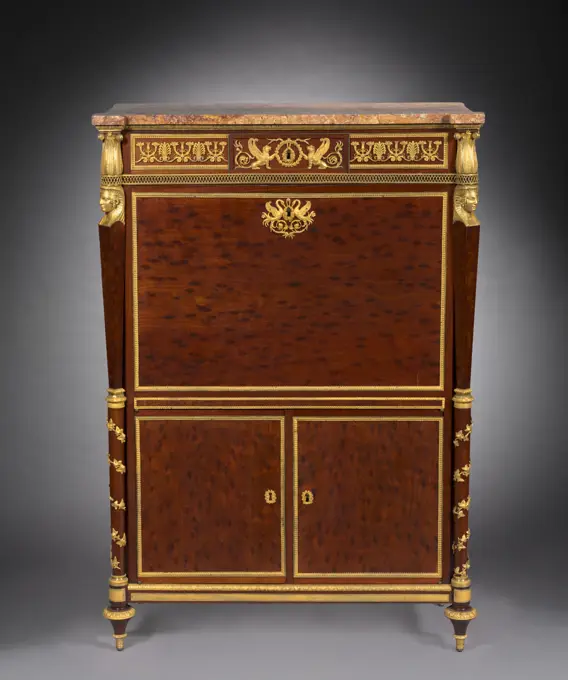
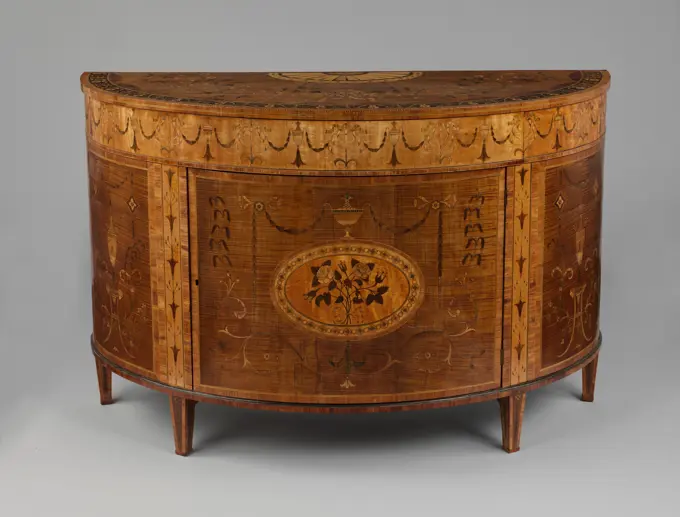
Antique Wooden Furniture

A collection of vintage wooden furniture pieces, including tables, cabinets, and chests, showcasing intricate carvings and classic design motifs.
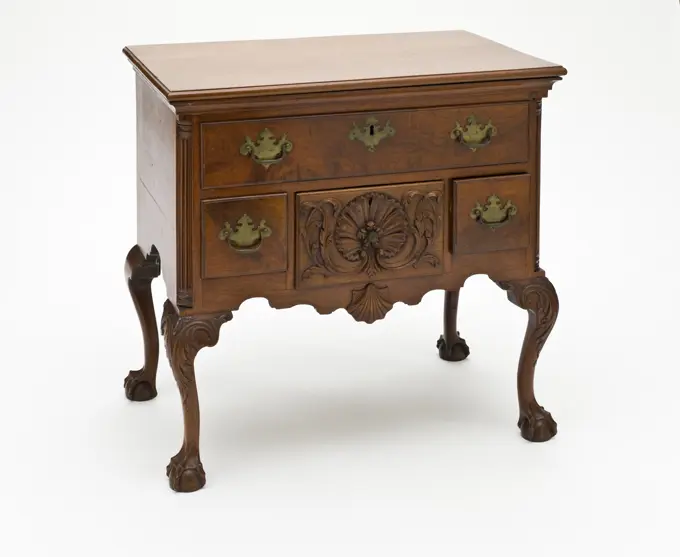
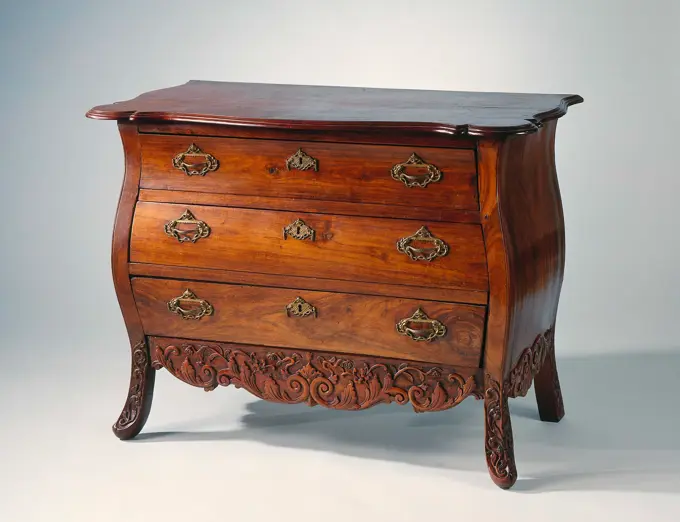
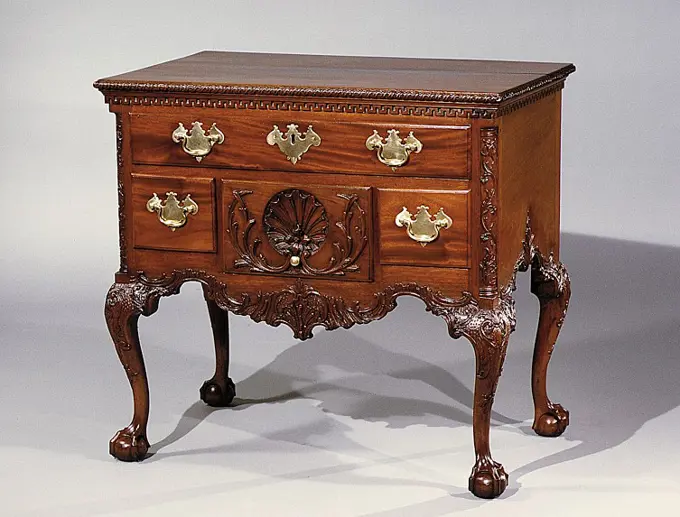
Dressing Table with Rococo Carving
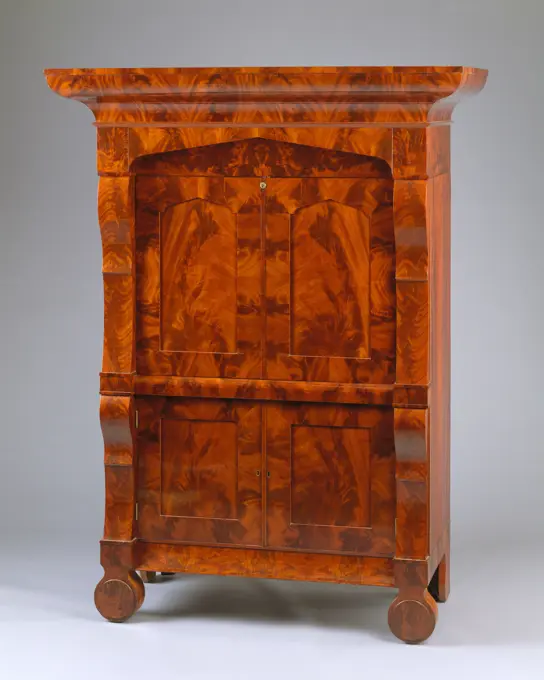
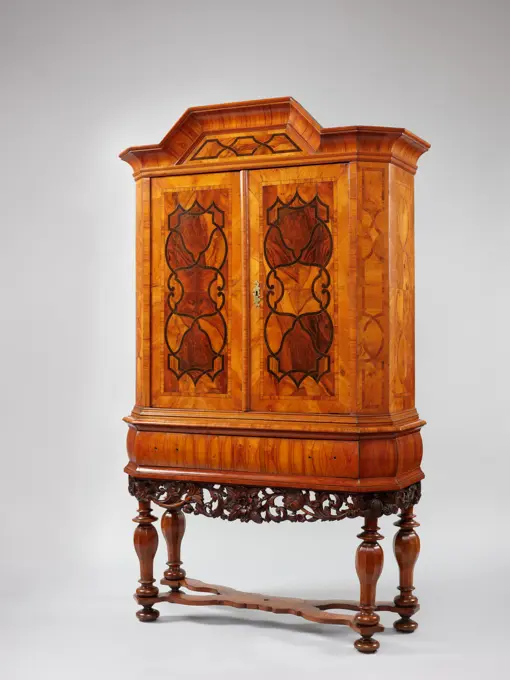
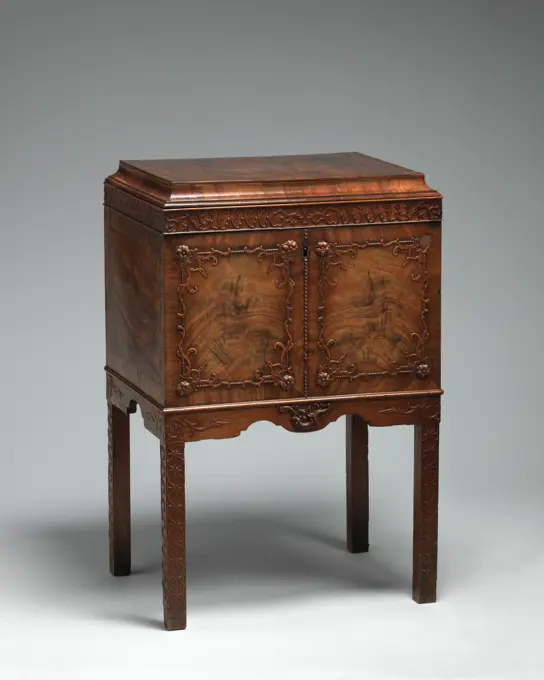
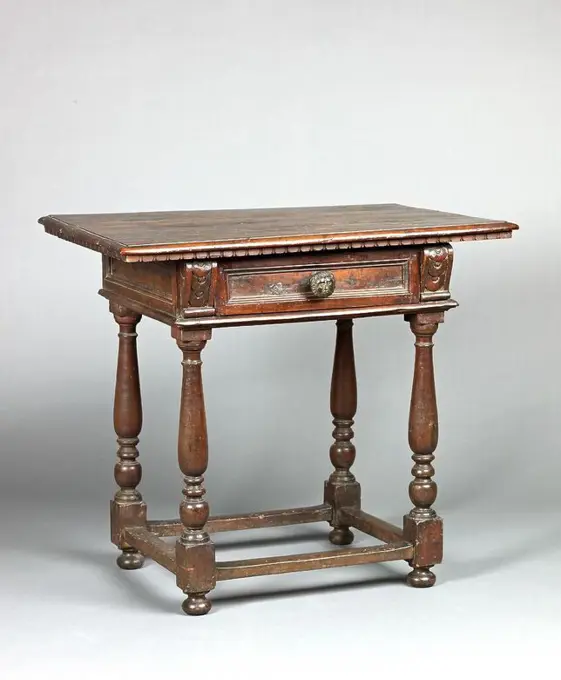
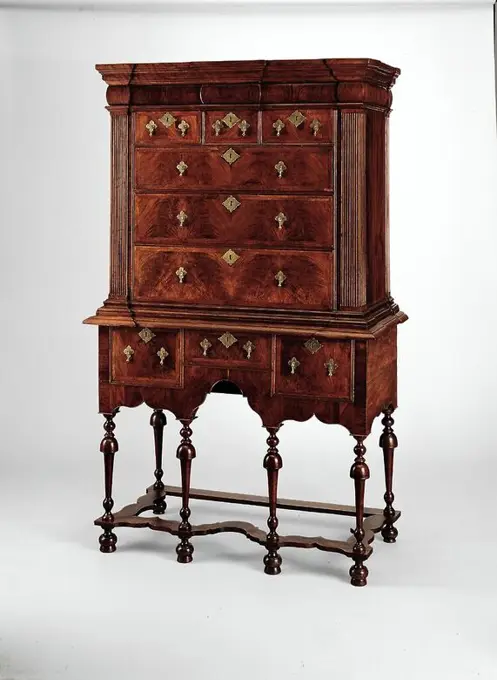
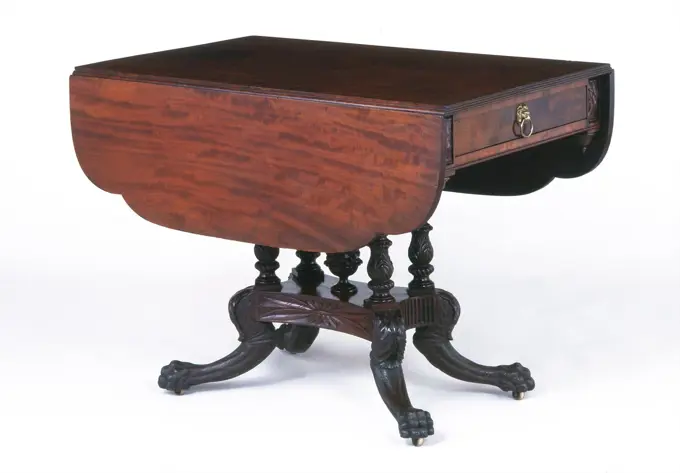
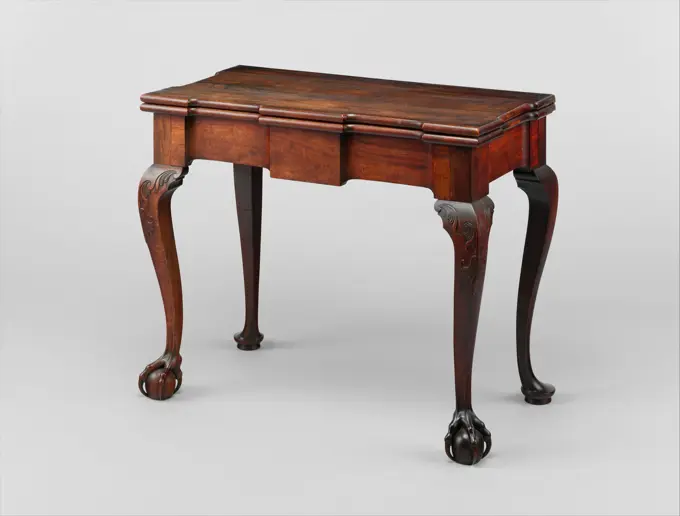
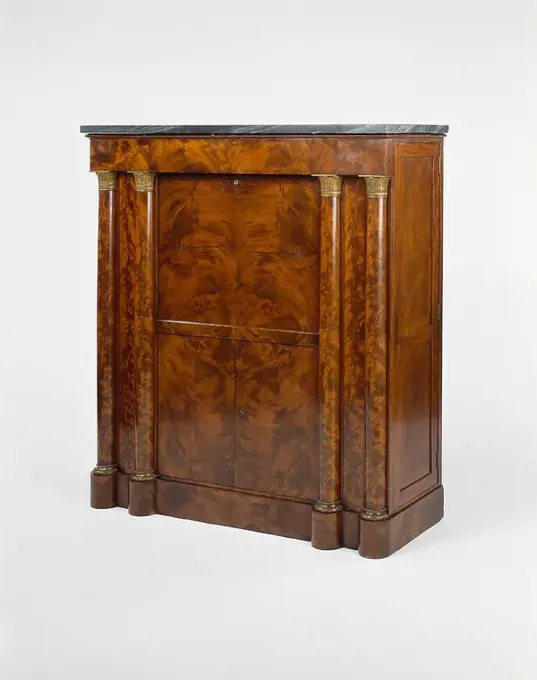
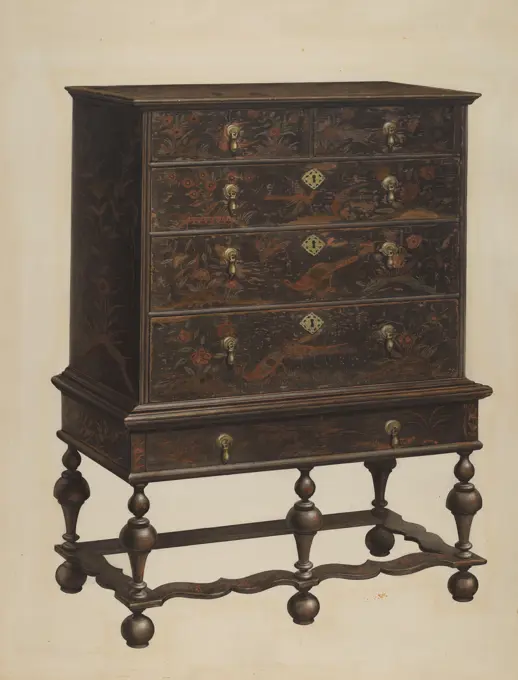
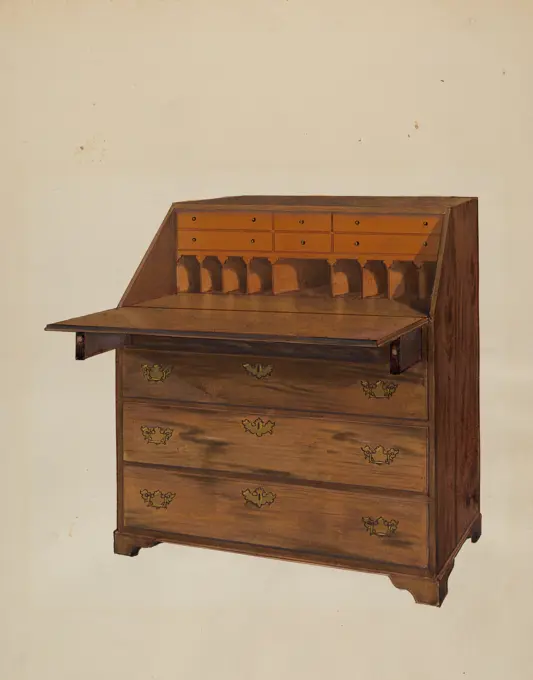
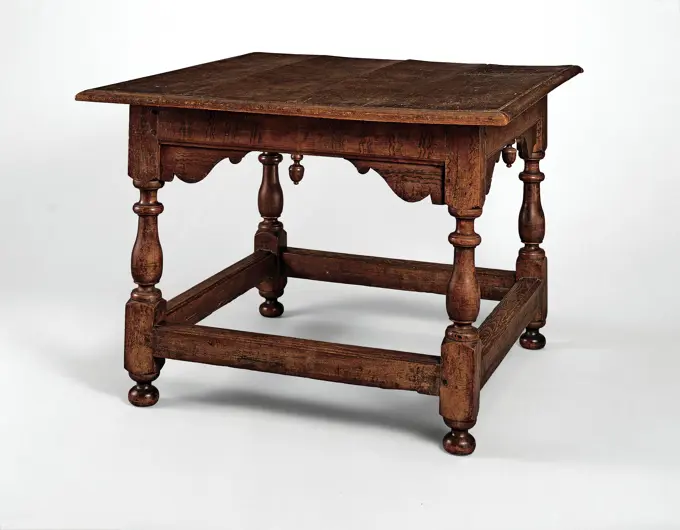
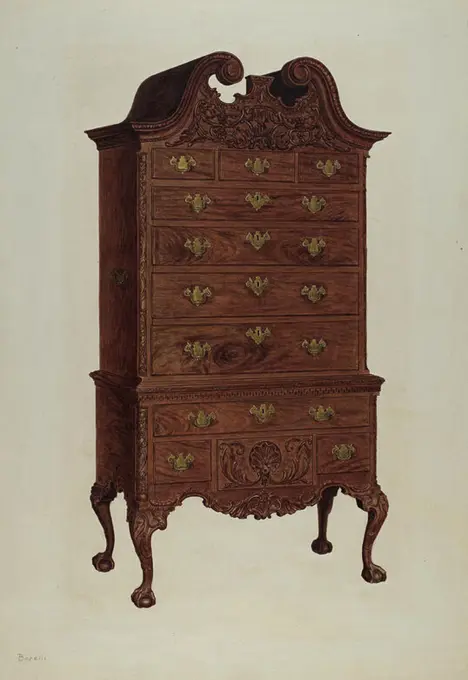
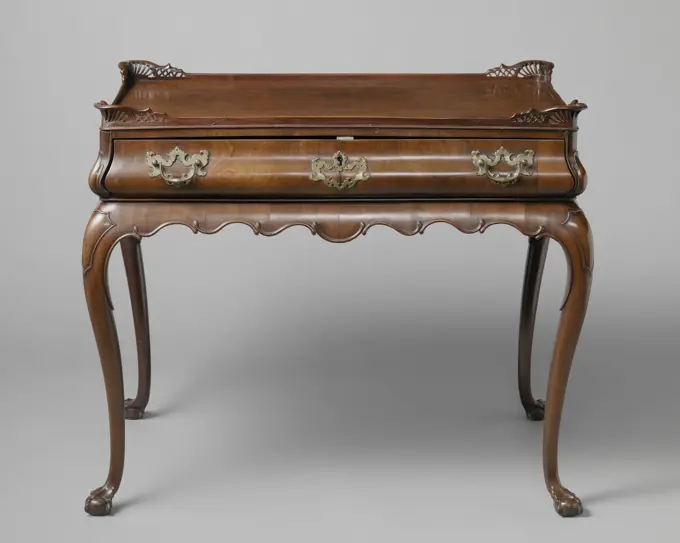
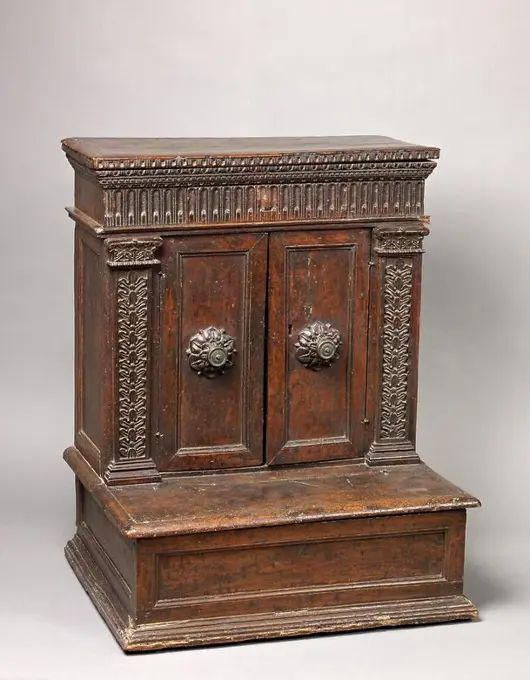
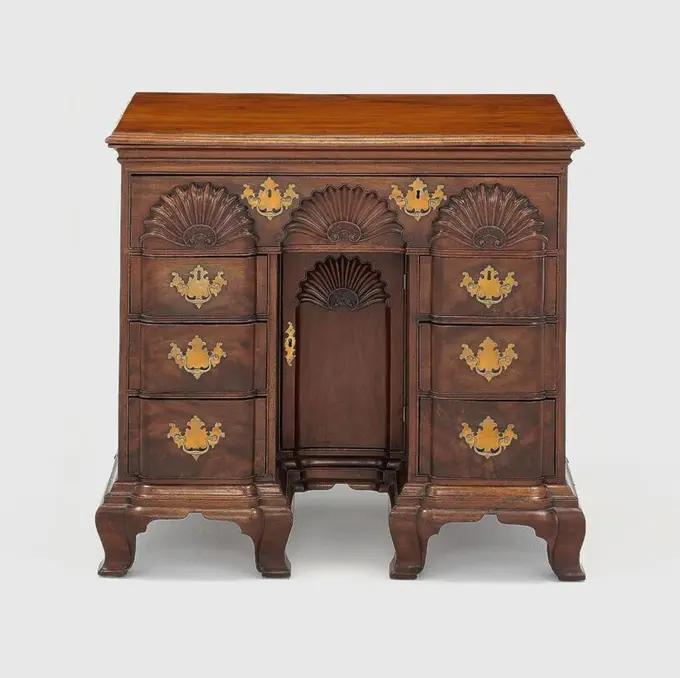
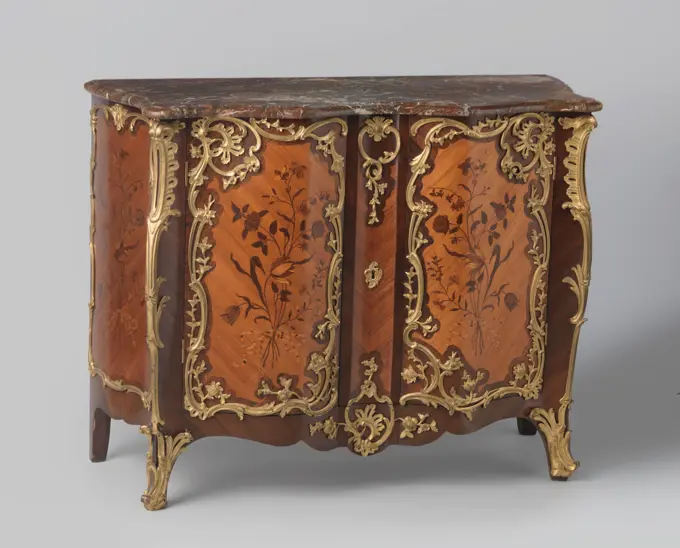
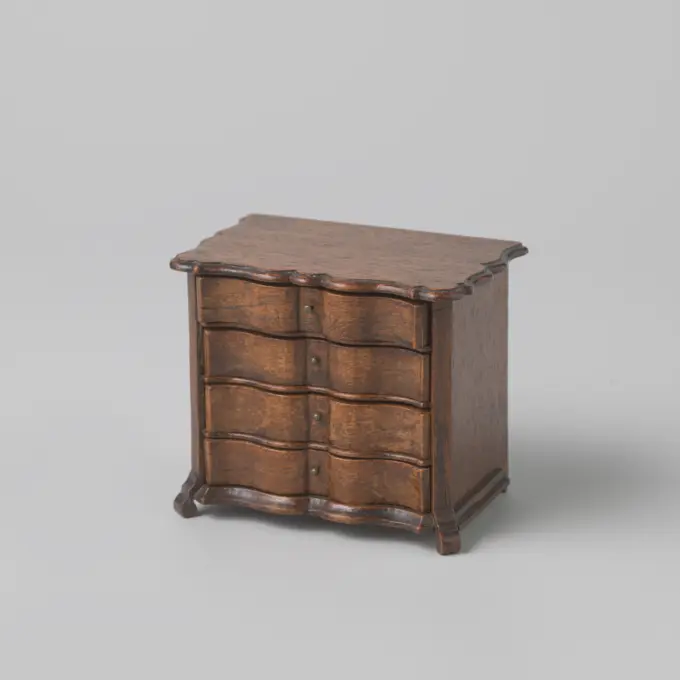
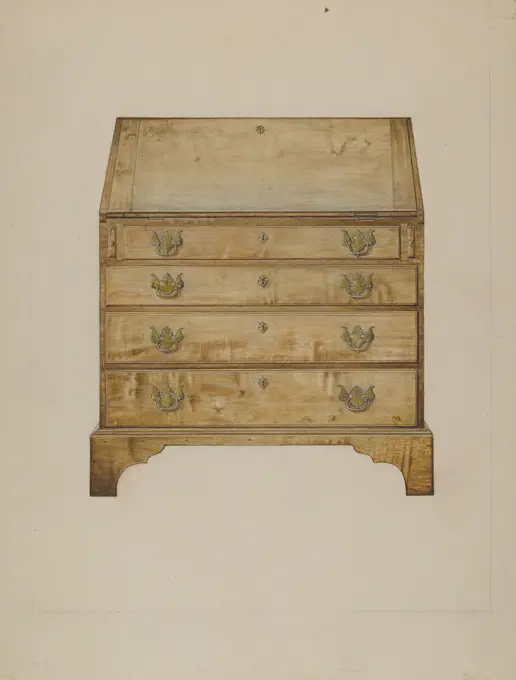
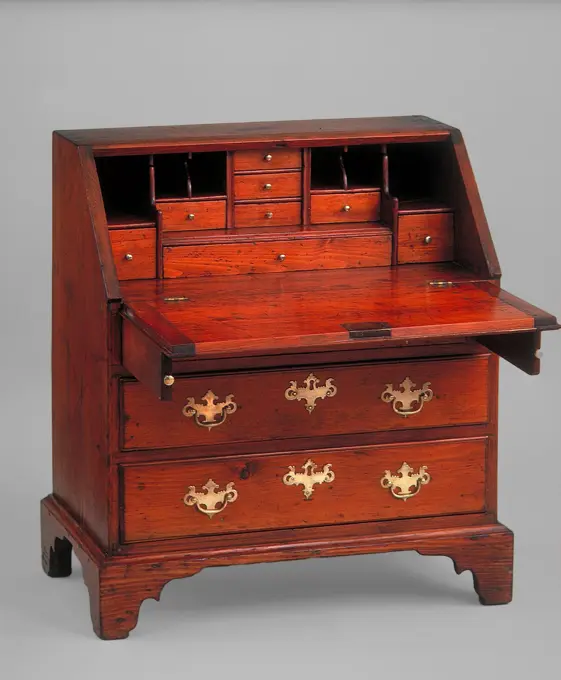
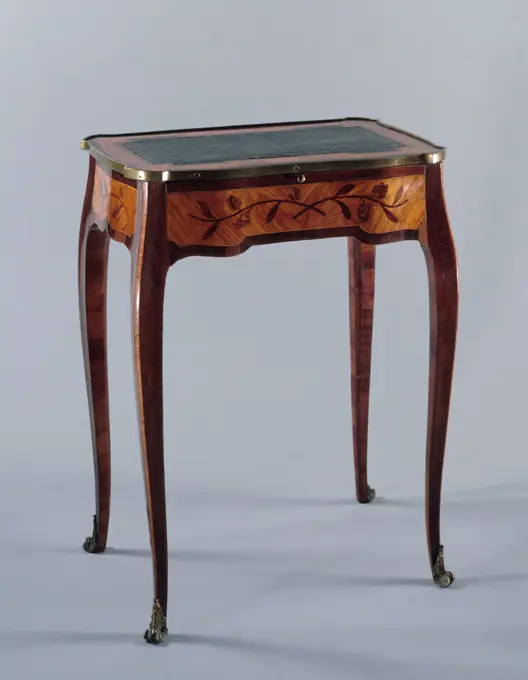
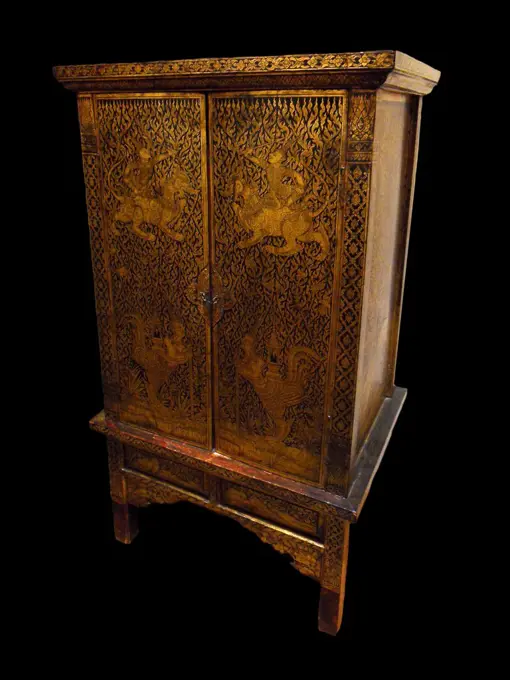
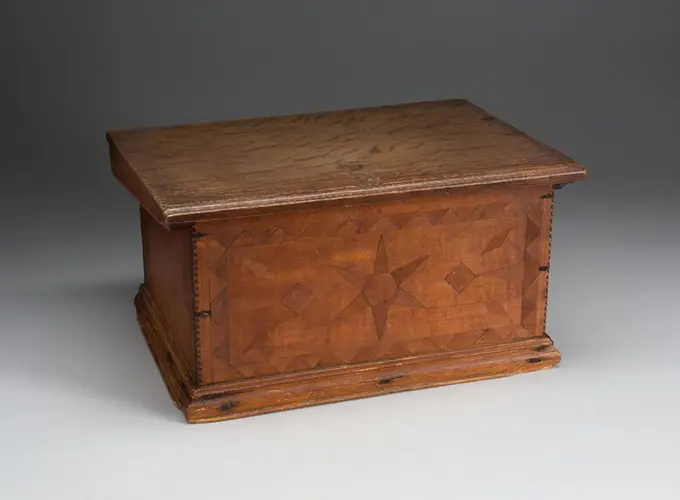
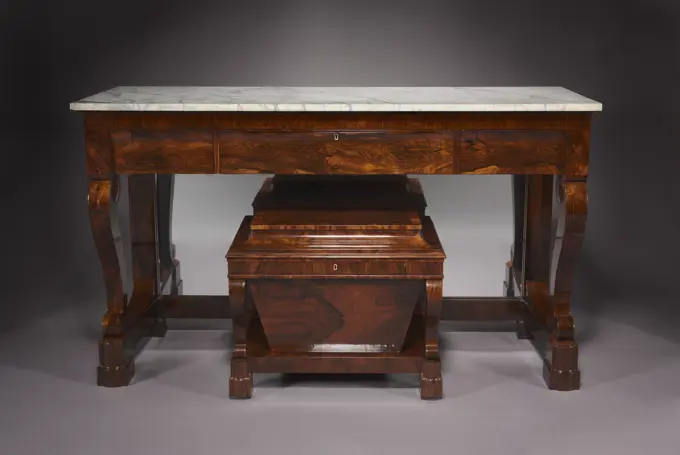
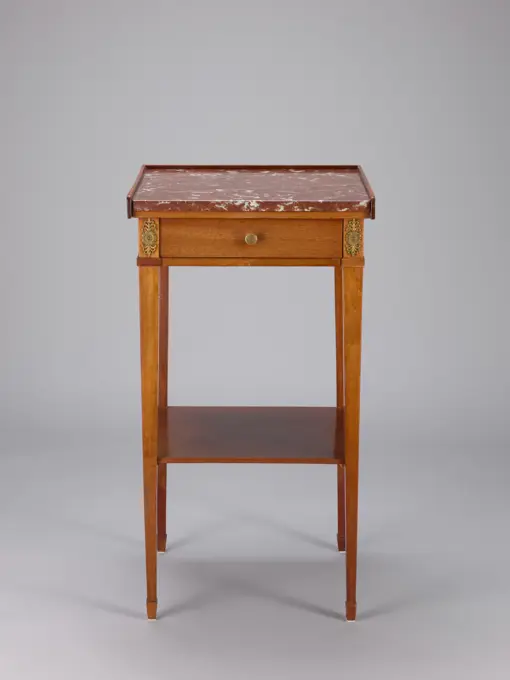
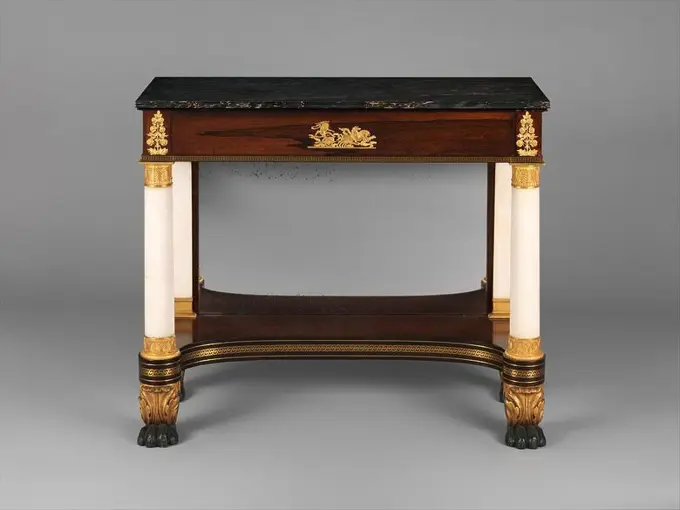
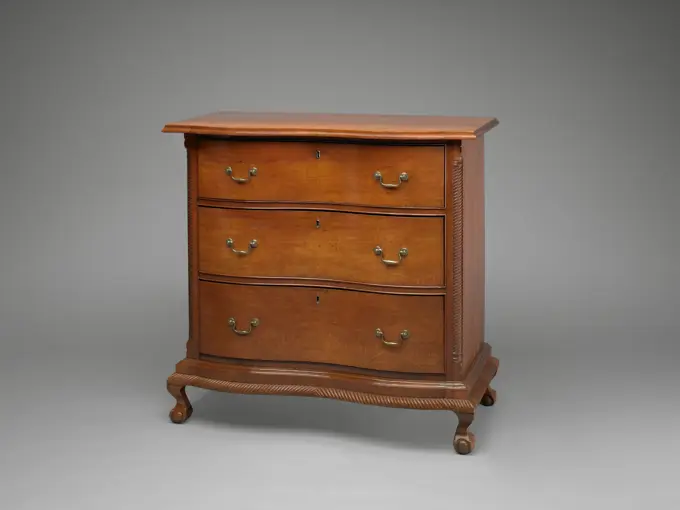
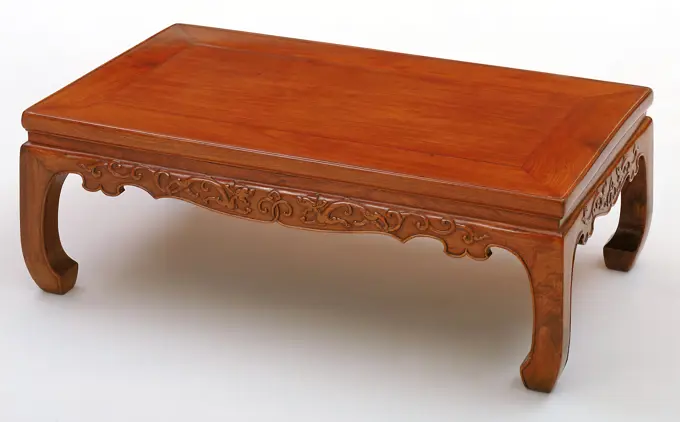
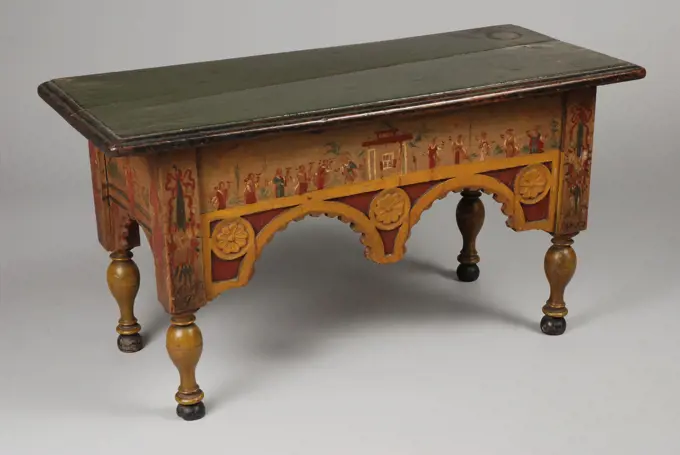
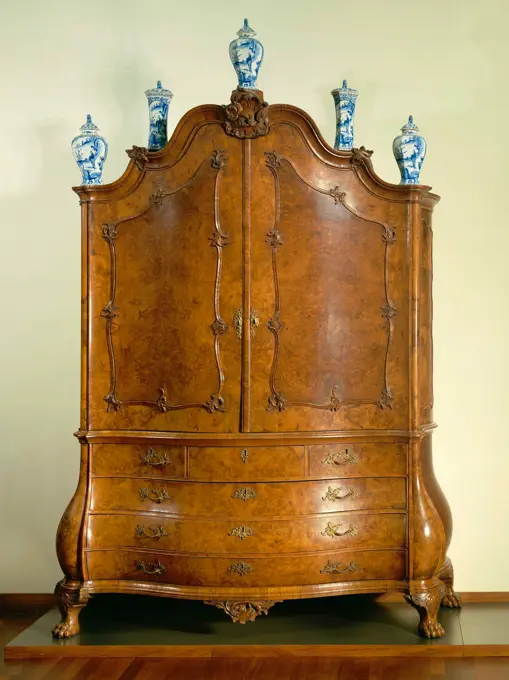
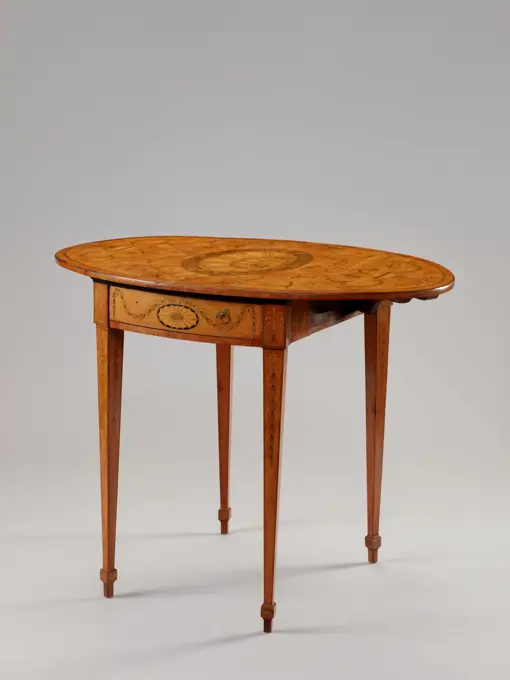
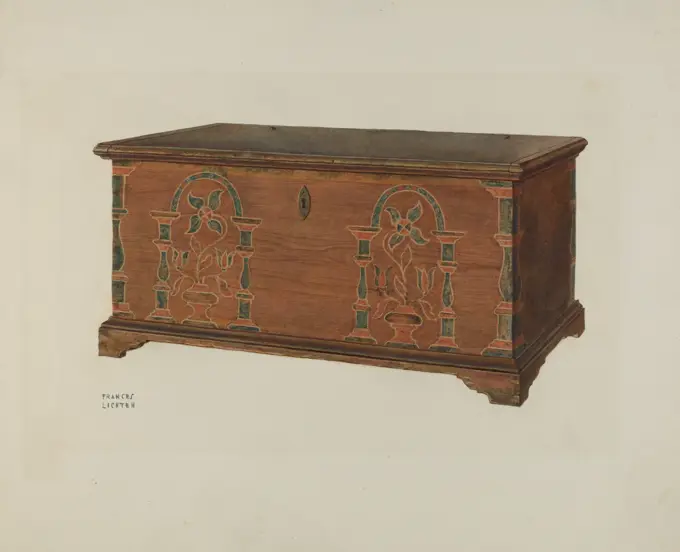
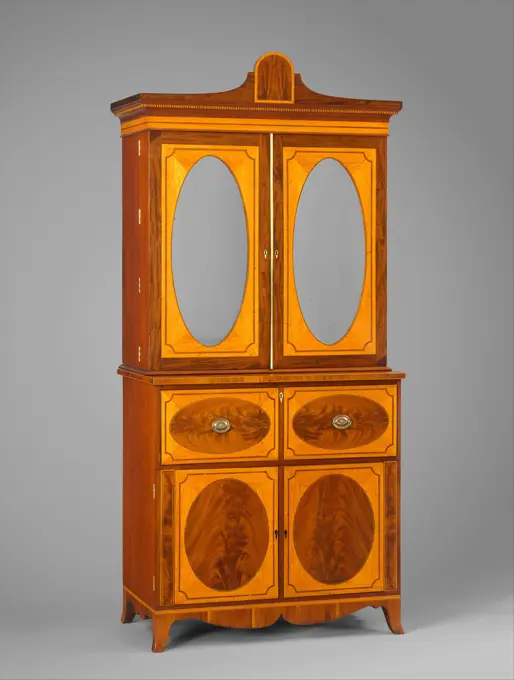
Payment table. Pay table from oak. The legs with vase-shaped sections are connected to the houses at the bottom by profiled sports. The coffin topper carries flat cushion panels. The rule is on the corner styles and in the middle of the two panels decorated with a pattern of cannelures; A braid band motif is applied above and on the panels. At the bottom of the rules is a tooth list.. Frame with three drawers. With brassChest. Dated: c. 1937. Dimensions: overall: 29.2 x 36.7 cm (11 1/2 x 14 7/16 in.) Original IAD Object: 27 1/2"high; 3'7"long; 19"wide. Medium: watercolor, colored pencil, and graphite on paperboard. Museum: National Gallery of Art, Washington DC. Author: Charles Squires.WorktableCabinet. Jan van Mekeren was probably the most important Amsterdam cabinetmaker in the late 17th century. He specialized in floral marquetry, of which this cabinet is a spectacular example. The doors resemble large paintings in wood. The flowers were made separately and then combined into lavish bouquets. The cabinets sober, flat design does not draw attention away fromthe decoration.Fall-front Secretary 1833-ca. 1841 American. Fall-front Secretary. American. 1833-ca. 1841. Mahogany veneer, mahogany, ebonized wood, pine, poplar, cherry, white oak, brass, leather, mirror glass. Made in United StatesWardrobe (stollenschrank);  2. W. 18th century (1725-00-00-1750-00-00);Cabinet (cellaret) ca. 1760 British. Cabinet (cellaret). British. ca. 1760. Mahogany. Woodwork-FurnitureDressing Table with Rococo CarvingHadley Chest. Dated: c. 1936. Dimensions: overall: 28.2 x 22.9 cm (11 1/8 x 9 in.) Original IAD Object: 3'8 1/2". Medium: watercolor, colored pencil, pen and ink and heightening on paper. Museum: National Gallery of Art, Washington DC. Author: Victor F. Muollo.Small table. Culture: Italian. Dimensions: H. 79 cm, W. 58.5 cm,D. 59 cm. Date: 17th century, partly, with later replacements and additions. Museum: Metropolitan Museum of Art, New York, USA.Two -door cross -foot cabinet, anonymous, c. 1690 - c. 1710 Cross -foot cabinet Lushed with walnut on an oak core; loose frame with drawer on four legs, decorated with a narrow and wide tors; The legs are connected to a corrugated cross and rest on ball legs. The pre -rule forms the cover sheet of a sliding drawer, constructed from one continuous piece of Eeikenhout in which the two side bulkheads are glued. Amsterdam oak (wood). walnut (hardwood). copper (metal) Cross -foot cabinet Lushed with walnut on an oak core; loose frame with drawer on four legs, decorated with a narrow and wide tors; The legs are connected to a corrugated cross and rest on ball legs. The pre -rule forms the cover sheet of a sliding drawer, constructed from one continuous piece of Eeikenhout in which the two side bulkheads are glued. Amsterdam oak (wood). walnut (hardwood). copper (metal)High Chest of Drawers. Culture: American. Dimensions: 69 3/4 x 43 3/8 x 21 in. (177.2 x 110.1 x 53.3 cm). Date: 1715-30.The high chest of drawers was introduced to the colonies in the 1690s and became the primary form of case furniture in the William and Mary style. This imposing piece, with its bold, fluted pilasters on the front and sides and dramatic projections in the entablature at the top and mid-moldings, was strongly influenced by classical architecture as set forth in the books of Andrea Palladio (1508-1580) and introduced in England by the architect Inigo Jones (1573-1652). It may have belonged to Edward Holyoke (b. 1689), who served as president of Harvard College from 1737 to 1769. Museum: Metropolitan Museum of Art, New York, USA.Hundred to write;  1780-1790 (1780-00-00-1790-00-00);Cabinet 1600-1699 Germany. Walnut; gilt mounts .Serving Table ca. 1830 American. Serving Table 7384Table Top Cupboard: Gui, 1500s. China, Ming dynasty (1368-1644). Rosewood (huanghuali); overall: 83.8 x 43.2 cm (33 x 17 in.).Pillar-and-Claw PembrokeTableLouis Annino, Court Cupboard, c 1936 Court CupboardCourt Cupboard. Dated: c. 1940. Dimensions: overall: 60.7 x 50.8 cm (23 7/8 x 20 in.) Original IAD Object: 55 1/2" high, 49 1/2" wide; 21" deep. Medium: watercolor, pen and ink, and graphite on paperboard. Museum: National Gallery of Art, Washington DC. Author: Leo Drozdoff.Card Table 1760-90 Attributed to John Goddard On this exquisite exemplar of a Newport cabriole-leg card table, the various elements of the skirt board are in perfect proportion and equilibrium, the curves of the legs are altogether satisfying, and the carved birds talons grasping the ball feet appear alive. This is poetry in wood, something only John Goddard, of all the Newport makers, could on occasion achieve.. Card Table 1430Secrétaire à abattant. American; Boston, Massachusetts. Date: 1820-1825. Dimensions: 145.4 × 133 48.4 cm (57 1/4 × 52 3/8 × 19 1/6 in.). Mahogany, mahogany veneer, pine, black marble, ormolu, and brass. Origin: Boston. Museum: The Chicago Art Institute, Chicago, USA.Traveling table (table de voyage or table pliante). Culture: French. Dimensions: 28 1/2 x 33 1/4 x 19 3/4 in. (72.4 x 84.5 x 50.2cm); Depth (when fully extended): 58 1/4 in. (148cm). Date: ca. 1700-1720.The Chteau de Saint-Cloud, near Paris, belonged to the ducs d'Orléans until 1785. In the estate inventory of the furnishings in the rooms of Duchesse Élisabeth Charlotte (1652-1722), called Madame, sister-in-law of Louis XIV, there is mentioned a carved writing desk made of walnut on pieds de biche (doe's feet). The French term could be taken literally, because zoomorphic feet for furniture was a very fashionable conceit in the seventeenth century. But the term could also refer to the slim, stylized S-curved legs of late Louis XIV and early Régence style that suggest the sweetly elegant stance of the deer. This leg shape, seen also on the Museum's table, appeared about 1700 at the latest-certainly not in the Rococo period, as has long been maintained.1This refined and ingeniously cSheraton card table, c. 1790, 29 1/2 x 37 1/2 x 37 1/2in. (74.9 x 95.2 x 95.2cm), Mahogany, satinwood, United States, SheratonSideboard;  around 1750 (1740-00-00-1760-00-00);M Rosenshield von Paulin, Highboy, 1940 HighboyChurch (Souvenir of Tadeusz Kościuszko)Fred Weiss, Desk, c 1936 DeskTable 1680-1710 American The square table is heavy and foursquare in the earlier seventeenth-century style, but it is also made of maple and has updated baluster turnings. Its apron and legs are enlivened by paint in imitation of the graining of expensive and exotic wood veneers.. Table 8069Highboy. Dated: c. 1938. Dimensions: overall: 55.6 x 40.4 cm (21 7/8 x 15 7/8 in.) Original IAD Object: none given. Medium: watercolor, colored pencil, and graphite on paperboard. Museum: National Gallery of Art, Washington DC. Author: Francis Borelli.Tea table, anonymous, c. 1750 - c. 1775 Mahogany tea table. The four stretched S-shaped legs with ball and claw run into the table rule. A shield -shaped decoration has been applied to the swelling. The sawn-out table rule is trimmed at the bottom with a succession of profiled S-Motives stretched. The space with the drawer is bombarded. The drawer has a symmetrically sawn -out copper lock plate and two similar tractors. The leaf has a raised edge with an ajour window and fan-shaped decoration on the corners. Netherlands wood (plant material). oak (wood). mahogany (wood). copper (metal) Mahogany tea table. The four stretched S-shaped legs with ball and claw run into the table rule. A shield -shaped decoration has been applied to the swelling. The sawn-out table rule is trimmed at the bottom with a succession of profiled S-Motives stretched. The space with the drawer is bombarded. The drawer has a symmetrically sawn -out copper lock plate and two similar tractors. The leaf has a raised ePrie Dieu (Prayer desk). Culture: Italian. Dimensions: H. 91.5 cm, W. 72.8 cm, D. 57.5 cm. Date: second half 16th century (mostly late). Museum: Metropolitan Museum of Art, New York, USA.Leo Drozdoff, Box Desk, c 1938 Box DeskTable of Oak, Anonymous, 1640 - 1660 Table of oak, decorated with ebony, on four legs that show houses and wide constricted vase-shaped sections, connected by a Y-shaped cross. The support pieces are open. The rules have chain schaals. The houses have crib screws from copper on the short sides. The furniture has two draft sheets; The top has ebben tires in the shape of a rectangle, within which a window. Northern NetherlandsNetherlands wood (plant material). oak (wood). ebony (wood) Table of oak, decorated with ebony, on four legs that show houses and wide constricted vase-shaped sections, connected by a Y-shaped cross. The support pieces are open. The rules have chain schaals. The houses have crib screws from copper on the short sides. The furniture has two draft sheets; The top has ebben tires in the shape of a rectangle, within which a window. Northern NetherlandsNetherlands wood (plant material). oak (wood). ebony (wood)Children's cabinet of oak. Under two large ones two small drawers. 3 small drawers within the doorsDressingtableKettle Stand. Culture: American. Dimensions: 29 1/4 x 22 1/8 x 15 1/2 in. (74.3 x 56.2 x 39.4 cm). Maker: Attributed to the Workshop of Duncan Phyfe (1770-1854). Date: 1810-20. Museum: Metropolitan Museum of Art, New York, USA.Bureau Table. Attributed to John Townsend; American, 1732-1809; Newport, Rhode Island. Date: 1765-1775. Dimensions: 86.6 × 93.4 × 58 cm (34 1/8 × 36 3/4 × 20 in.). Mahogany, chestnut, and tulip poplar. Origin: Newport. Museum: The Chicago Art Institute, Chicago, USA.High Chest with Scrolled Pediment and Shell CarvingWriting cabinet. unknown, creatorHenry Meyers, Desk, 1935 1942 DeskCupboard, low model, decorated with marqueterie and bronze batter, boucher, 1750 Cabinet decorated with marquetery of rosewood and pink wood and other types of wood on oak core. The S-shaped legs are placed overhoeks and carry batter. The front consists of two curved doors, between which a hold middle style, and, like the vaulted sides, has panels in Marqueterie within asymmetrically gilt bronze batter. The panels are decorated with bouquets tied together. Stamped: BVRB JME (perhaps boucher); Property brand under marble leaf. See: BK-16679-B. France wood (plant material). oak (wood). rosewood (wood). pine (wood). boxwood. rosewood (wood). bronze (metal). marble (rock) gilding Cabinet decorated with marquetery of rosewood and pink wood and other types of wood on oak core. The S-shaped legs are placed overhoeks and carry batter. The front consists of two curved doors, between which a hold middle style, and, like the vaulted sides, has panels in Marqueterie within asymmetrically gilt bronWinechestCoin cabinet. Culture: British. Dimensions: 51 × 13 1/2 × 11 1/4 in. (129.5 × 34.3 × 28.6 cm). Date: ca. 1750. Museum: Metropolitan Museum of Art, New York, USA.Coffer. unknown, creatorCabinet;  around 1750 (1740-00-00-1760-00-00);DressingtableChest of drawers. Chapter in miniature of walnut with four drawers and a shult top. The front corner styles are placed overhangs. The front is corrugated and the tractors are confirmed in the middle of the drawers. The baselice is also corrugated at the front.Robert Birrell, Writing Desk, 1935 1942 Writing DeskHigh chest of drawers 1755-90 American Immigrant craftsmen in Philadelphia produced the most elaborate and richly carved of all colonial American furniture. This high chest, with its powerful stance and ambitious ornamentation, is a worthy monument to the Philadelphia school.. High chest of drawers 4283Roll-top Desk. Dated: 1941. Dimensions: overall: 49.9 x 40 cm (19 5/8 x 15 3/4 in.) Original IAD Object: 28 3/4"high; 35 5/8"wide; 22 7/8"deep. Medium: watercolor, color pencil, and graphite on paperboard. Museum: National Gallery of Art, Washington DC. Author: M. Rosenshield-von-Paulin.Escritoire;  around 1750 (1740-00-00-1760-00-00);Childs deskCollectors cabinet, anonymous, c. 1675 - c. 1685 Kunst cabinet Lushed with Note and Wortelnutenhout on an oak core. The two doors, like the side walls, are marked with eight -pointed stars and hexags, executed in oyster pieces. Open the furniture shows fourteen brads of cedar wood around a middle compartment with doors. The courses and the lines of the drawers are decorated with mirrors on which sea fighting and in the doors and amor doors. Behind the central doors a mirror knowledge, including a sidewalk and flanked through house facades in Marketerie. Netherlands wood (plant material). oak (wood). walnut (hardwood). ebony (wood). rosewood (wood). rosewood (wood). glass. ivory. gilding (material). amalgam gilding / engraving Kunst cabinet Lushed with Note and Wortelnutenhout on an oak core. The two doors, like the side walls, are marked with eight -pointed stars and hexags, executed in oyster pieces. Open the furniture shows fourteen brads of cedar wood around a middle compartment witDresser;  4. W. 19th century (1876-00-00-1900-00-00);Plant decorations, convertible legs, rocaille (ornament), rococo (style)Table to write. Placing of rosewood, holly, amaranth and ebony, violet wood, brass, gilded bronze. 1780. Paris, Carnavalet museum. Amaranth, violet wood, bronze gilded, ebene, holly fillet, brass, marker, furniture, rosewood plating, writing table, 18th 18th 18th 18th 18th 18th century, furnitureJoint Stool 1700-1725 American. Joint Stool 4547Attributed to Léonard Boudin (1735-1807). "Writing table in oak, marquetry with a belt decorated with branches, leather top, golden bronzes (overview closed on a light background). Wood, bronze and leather, 1770. Paris, Cognacq-Jay museum. 35087-10 Branchage, bronze gilded, belt, oak, leather, decor, Louis XV time, Marquetry, Furniture, Write Table, Wood, FurnitureTable 1700-1730 American. Table 8054Table;  End of the 18th century (1780-00-00-1800-00-00);Writing desk or cabinet, mid 19th century from Thailand (Siam), Chakri dynasty (Ratanakosin Era) (1782-20th century). Made from gilded, lacquer on teakPlate, Anonymous, 1750 Table decorated with marqueterie of pink and rosewood on oak core. The symmetrically sawn -out cheeks are sculpted on the underside and connected by a sport. The leaf has round corners, a raised edge at the rear and sides and is scored at the front in the middle. The midfield of the magazine can be brought to Lessenaarstand. The side fields open like doors with hinges for a storage space; These three fields show a pattern with round corners on four sides. France wood (plant material). oak (wood). rosewood (wood). rosewood (wood) Table decorated with marqueterie of pink and rosewood on oak core. The symmetrically sawn -out cheeks are sculpted on the underside and connected by a sport. The leaf has round corners, a raised edge at the rear and sides and is scored at the front in the middle. The midfield of the magazine can be brought to Lessenaarstand. The side fields open like doors with hinges for a storage space; These three fields show a pattern with round corneBox. America; Connecticut. Date: 1670-1700. Dimensions: 16.8 × 33.3 × 24.1 cm (6 5/8 × 13 1/8 × 9 1/2 in.). Oak and maple. Origin: Connecticut. Museum: The Chicago Art Institute, Chicago, USA.Sideboard and Cellarette, c. 1840. Duncan Phyfe and Son (American, 1768-1854). Chiefly rosewood veneer with pine and poplar secondary woods; This sideboard and cellarette would have graced a 19th-century room. Notice the keyholes on the drawers of both pieces. Expensive silver utensils were stored in the sideboard and wine was kept under lock and key in the cellarette.Arthur Johnson, Chest On Chest, c 1938 Chest-On-ChestChest, early 18th century, 29 x 48 x 23 in. (73.7 x 121.9 x 58.4 cm), Oak, England, 18th centuryChest 1675-1700 American. Chest 1990Dressing table 1760-90 American. Dressing table 3425Small table. unknown, creatorPier Table in the Neo-Classical Taste. Artist: Attributed to Duncan Phyfe (1770-1854). Culture: American. Dimensions: 36 9/16 × 42 × 20 1/4 in. (92.9 × 106.7 × 51.4 cm). Date: 1815-25. Museum: Metropolitan Museum of Art, New York, USA.Bureau. .Tea chest ca. 1780 British. Tea chest. British. ca. 1780. Mahogany and satinwood veneer, parcel gilt and inset with marble. Woodwork-Furniture. Coffin of dogwood wood. Drawings in East Indian ink are arranged on the front and sides and on the lid. The front shows four putti in the middle of leaf refinements, interspersed by rosettes within profiled circles and the lid shows two eagles in flight on either side of a tree. The edge of the lid, as well as the sides, wears a branch motif in East Indian ink. Left at half height the coffin has a box.Shaker Cabinet. Dated: c. 1937. Dimensions: overall: 30.6 x 24.2 cm (12 1/16 x 9 1/2 in.). Medium: watercolor, graphite, pen and ink, and gouache on paperboard. Museum: National Gallery of Art, Washington DC. Author: Irving I. Smith.Four-Column Pedestal Card Table with Pineapple FinialBureau Lijmed with mahogany and resting on lion's legs of bronze that turn into winged lion heads. With drawers, extendable writing sheet, valve and leaf of marble., Jacob (furniture maker), 1836 - 1847 Bureau LUMMED WITH MAHONYHOUT, resting on bronze lion's legs, which turn into bronze winged lion heads. The desk contains two side drawers and a center drawer, an extendable writing sheet, curved valve, three drawers and a marble cover sheet from the bottom to the top; The same layout at the back with feetlads and a flat midfield. The furniture is lavishly decorated with gilded bronze handles, buttons, decorative edges and batter and key plates with classicist motifs. Paris wood (plant material). oak (wood). mahogany (wood). bronze (metal). leather. marble (rock). velvet (fabric weave) gilding Bureau LUMMED WITH MAHONYHOUT, resting on bronze lion's legs, which turn into bronze winged lion heads. The desk contains two side drawers and a center drawer, an extendable writing sheet, curved Desk and taboeret of oak and pine, glued with mahogany and decorated with batter of gilded bronze, Jacob (furniture maker), 1836 - 1847 Bureau and taboeret of oak and pine, glued with mahogany and decorated with batter of gilded bronze. Paris wood (plant material). oak (wood). pine (wood). mahogany (wood). bronze (metal). leather. marble (rock). beech (wood). velvet (fabric weave) gilding Bureau and taboeret of oak and pine, glued with mahogany and decorated with batter of gilded bronze. Paris wood (plant material). oak (wood). pine (wood). mahogany (wood). bronze (metal). leather. marble (rock). beech (wood). velvet (fabric weave) gildingTable with legs in the form of Tuscan columns with houses, connected by a double Y-shaped cross and resting on bulbs. Glued with rosewood and ebony, anonymous, c. 1650 - c. 1675 Table glued with rosewood and ebony on oak core, resting on legs in the form of Tuscan columns with houses, connected by a double Y-shaped cross. The table is on bulbs. The houses are decorated with cushions inside Robbellists. The support pieces with offspring are broken S-shaped. A list of braid mat motif and Robbell list runs under the rule. The quarter -round rule has a drawer at the front. The leaf, with Robbellists around, is glued in a geometric pattern. Netherlands wood (plant material). oak (wood). rosewood (wood). ebony (wood) Table glued with rosewood and ebony on oak core, resting on legs in the form of Tuscan columns with houses, connected by a double Y-shaped cross. The table is on bulbs. The houses are decorated with cushions inside Robbellists. The support pieces with offspring are broken S-shapChest ofdrawers.   Maker: Bates How, American, born 1776Table. Table decorated with marquetery of pink and rosewood on oak core. The symmetrically cut-out cheeks are scalloped at the bottom and connected by a sport. The leaf has round corners, a raised edge on back and sides and is screwed in the front in the middle. Midfield of the leaf can be brought into lessons. The side fields open like doors with hinges for a storage room; These three fields exhibit one to four sides scalloped pattern with round corners.Commode. UnknownMargery Parish, Spanish Southwest Hutch Table, c 1939 Spanish Southwest Hutch TableKang Table (kangzhou), 17th century, 11 3/4 x 35 3/4 x 20 1/4 in. (29.85 x 90.81 x 51.44 cm), Huanghuali, China, 17th centuryOak bed, sofa furniture furniture interior design wood oak wood paint textiles 42,0, Twisted legs and bows in bottom polychrome painted with allegorical and biblical representations with matching green cushion Performances: on front of legs: AKJ: R vp and, K No. 172. Erasmus Foundation Rotterdam Bible Religion Justitia Hope Long-term loan Erasmus Foundation.. Oak cabinet glued with carrot nut wood. The base cabinet has vaulted surfaces and three drawers over the width, above which a desk is between two narrow drawers. The corner styles and decorated claw legs are placed overhangs. The panel on the two top doors has a profile list with seedill motifs, which rises at the top to the center. Rounded corner styles and basic panels on the sides. The hood consists of S and C-shaped decorated vultuts and a Scroceahouse shell as a crest. Place for cabinet set.Charles Henning, Tea Table, 1940 Tea TableCommode and two cupboards. These three pieces of furniture were made in the French style, which was emulated in all large Dutch cities in the third quarter of the 17th century. This is evident from their form, the marquetry ornamentation, the gilded mounts and the marble tops. The marquetry vases are taken from French prints and the mounts were probably cast from French examples. This ensemble is exceptionally elaborate by Dutch standards.Chest. Dated: 1935/1942. Dimensions: overall: 42.3 x 55.7 cm (16 5/8 x 21 15/16 in.) Original IAD Object: 53" long; 33" high; 24" deep. Medium: watercolor and graphite on paper. Museum: National Gallery of Art, Washington DC. Author: Carl Strehlau.Chest of Drawers. Dated: c. 1939. Dimensions: overall: 40.1 x 53.8 cm (15 13/16 x 21 3/16 in.) Original IAD Object: 34 1/4"high; 37 1/4"wide, top; 20 13/16"deep.. Medium: watercolor, colored pencil, and pen and ink on paperboard. Museum: National Gallery of Art, Washington DC. Author: Ferdinand Cartier.Table;  End of the 18th century (1780-00-00-1800-00-00);Frances Lichten, Pa German Dower Chest, 1935 1942 Pa. German Dower ChestDesk and Bookcase 1805-10 John Davey John Davey inscribed his name seven times on the drawers of this desk and bookcase; the signature of his son John Davey Jr., who at the time was undoubtedly still serving his apprenticeship, appears twice. Another pencil inscription reads C. J. Ewing / Media,” for Charles J. Ewing, who owned the piece in the mid-nineteenth century.. Desk and Bookcase. American. 1805-10. Mahogany, satinwood veneer with white pine,yellow poplar. Made in Philadelphia, Pennsylvania, United StatesStool ca. 1715 British. Stool. British. ca. 1715. Walnut and walnut veneer. Woodwork-FurnitureSecretary (Secrétaire), c. 1800. Attributed to Bernard Molitor (French, 1755-1833). Mahogany on oak carcass, ormolu mounts, marble top; overall: 144.6 x 103.5 x 46.1 cm (56 15/16 x 40 3/4 x 18 1/8 in.).Gang bank on cheeks. Decorated with C and S-Voluten, Vase, Masks with Acanthus Voluten, Parrots, Knorren and Floral Motives., Anonymous, 1700- 1725 furniture Eakhout, sculpted, resting on cheeks, which are extended above the seat and turn into C-shaped armrests. The open-worked back has a vase in the increased middle section, in the midst of broken S-Voluten. The top of the back runs into the side cheeks with C-volutes. The middle section shows masks with acanthus volutes and parrots on either side. The session with the edge of the grinding grinds. The scalloped support line and sloring legs are decorated with floral motifs. Northern Netherlands wood (plant material). oak (wood)George V Vezolles, Shaker Cupboard, c 1938 Shaker CupboardManuel G Runyan, Tailor's Bench, c 1938 Tailor's BenchHighboy. Dated: c. 1938. Dimensions: overall: 60.1 x 45.7 cm (23 11/16 x 18 in.) Original IAD Object: 91 1/2"high; 46 3/4"w; 24 1/4"deep. Medium: watercolor, colored pencil, and graphite on paperboard. Museum: National Gallery of Art, Washington DC. Author: Elisabeth Fulda.Commode (one of a pair) ca. 1780 Attributed to William Moore Moore trained in the London form of John Mayhew and William Ince (act. 1759-1804) before setting up business in Dublin, where he continued the Mayhew and Ince Neoclassical style of finely engraved marquetry.. Commode (one of a pair) 202578CardTable