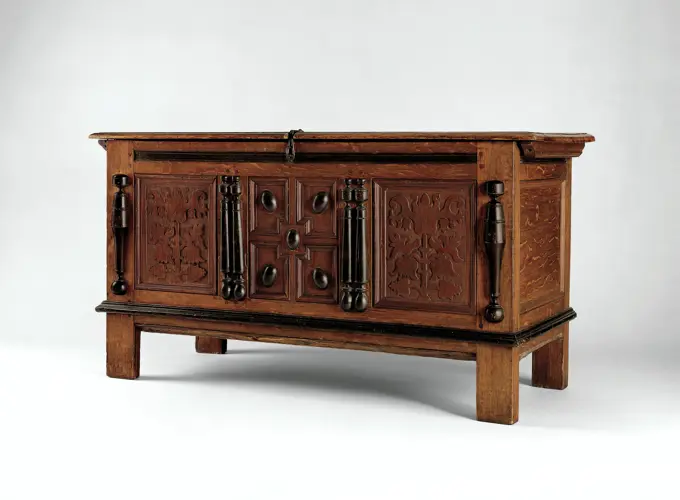
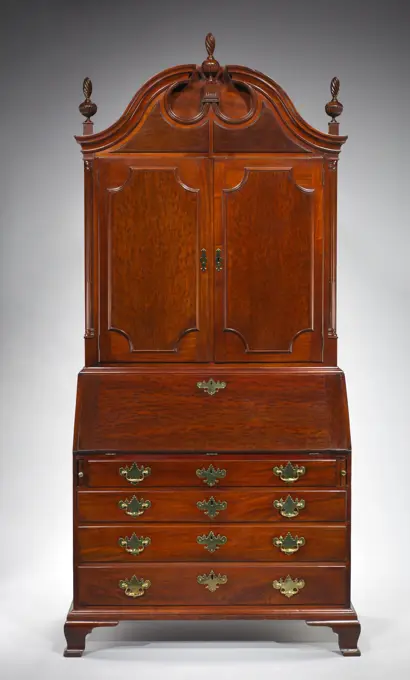
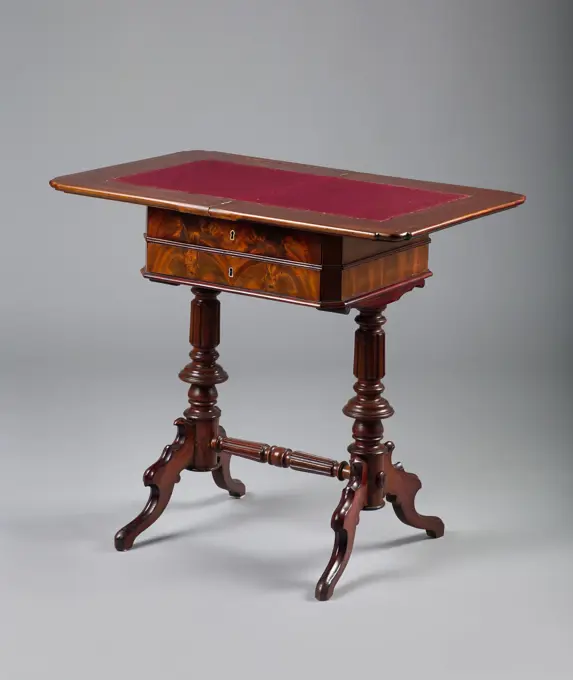
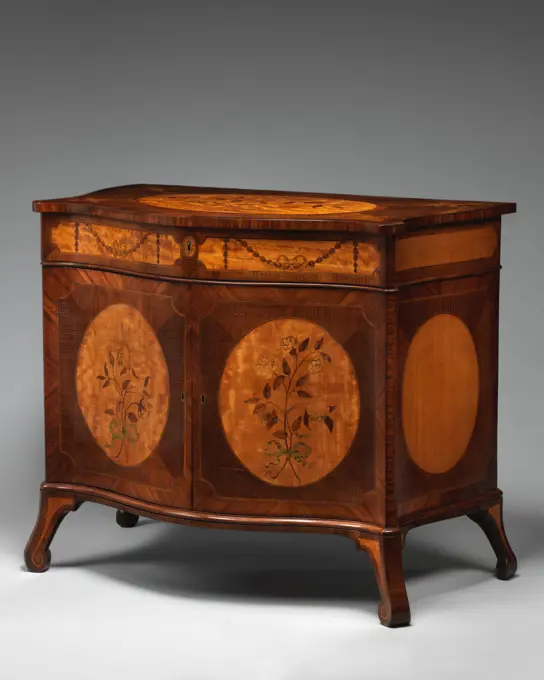
Antique Wooden Tables

Collection of various styles of antique wooden tables featuring intricate designs and craftsmanship, showcasing oak, walnut, and decorative elements.

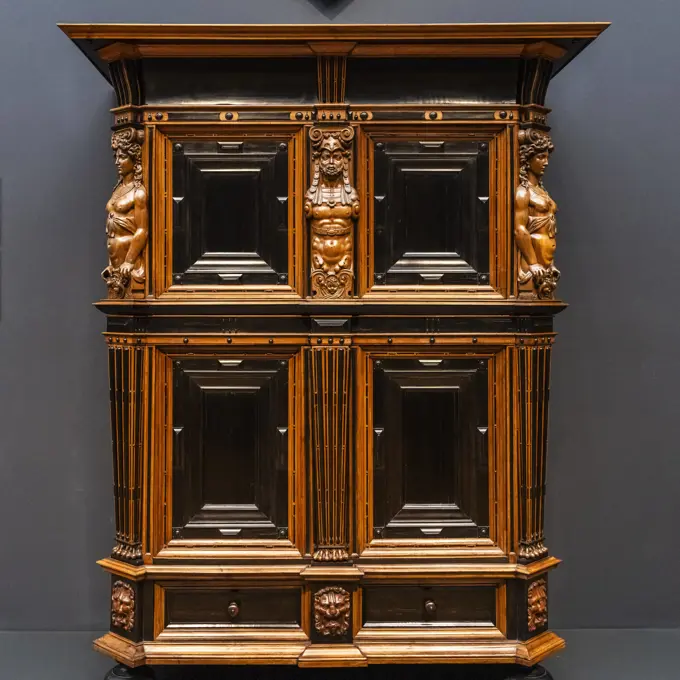
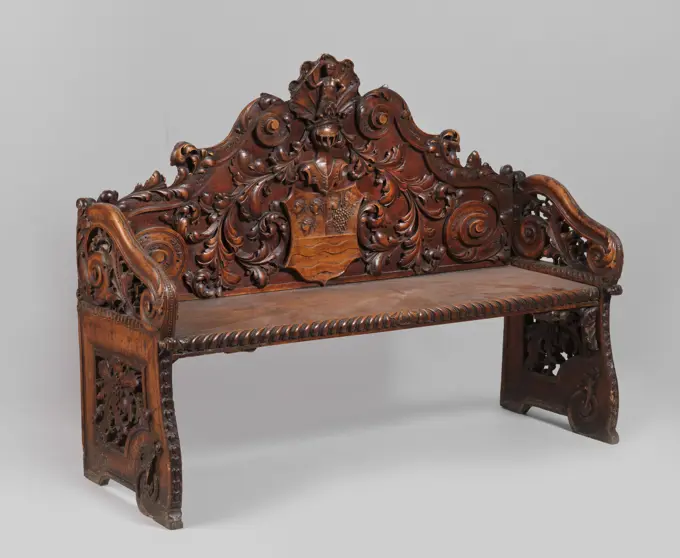
Cupboard with two panel doors, c. 1600 - c. 1625 Eikhout cupboard, consisting of a frame with five legs, a cupboard area with two doors and a hood. The three block -shaped front legs rest on a profiled base and are connected by openwork claw pieces in rolling forms. The cabinet is articulated by three -tied Doric pilasters, which are on the front legs and which are connected at the top by a double braid work band. The sides and the doors are constructed as a profiled framework with panels inside. The hood is articulated at the front and the sides by canaly styles, within which lying panels with profiles. The profiled cornice is decorated with a tooth list. The cabinet contains three shelves. Netherlands oak (wood) Eikhout cupboard, consisting of a frame with five legs, a cupboard area with two doors and a hood. The three block -shaped front legs rest on a profiled base and are connected by openwork claw pieces in rolling forms. The cabinet is articulated by three -tied Doric pilasters,
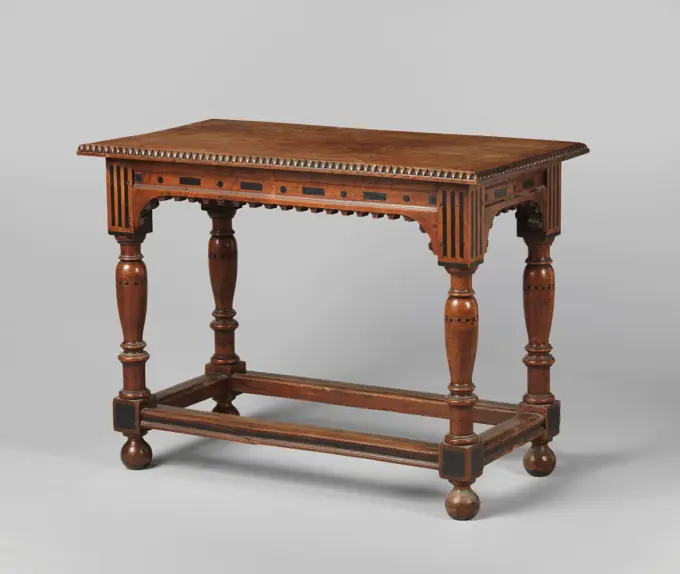
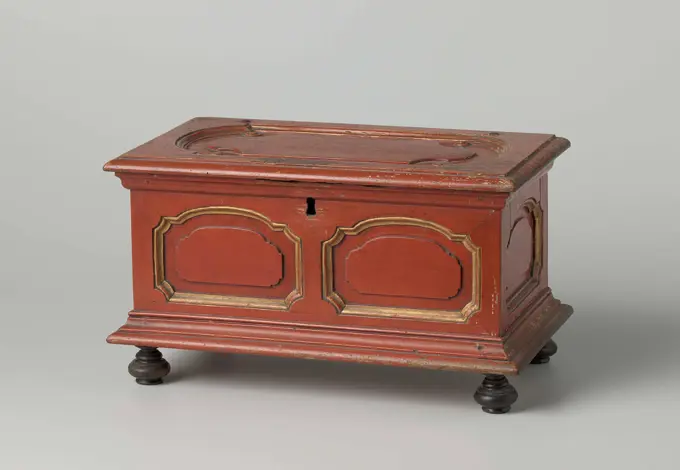
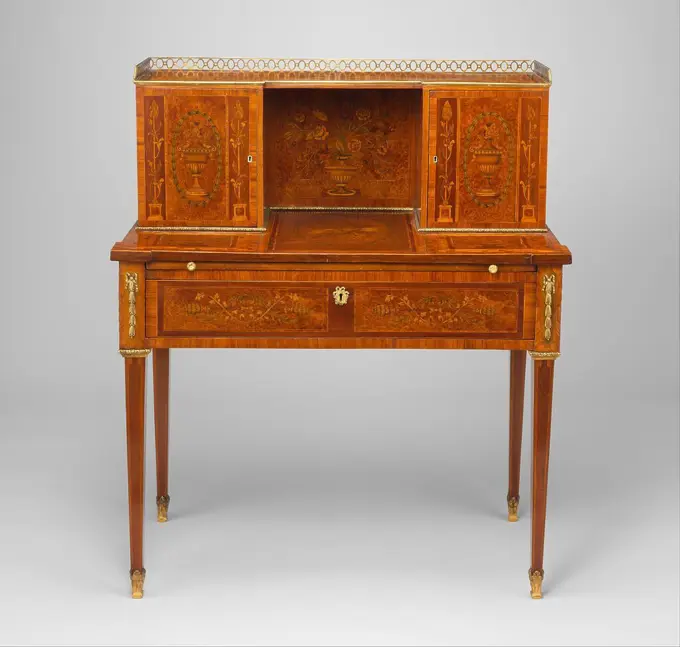
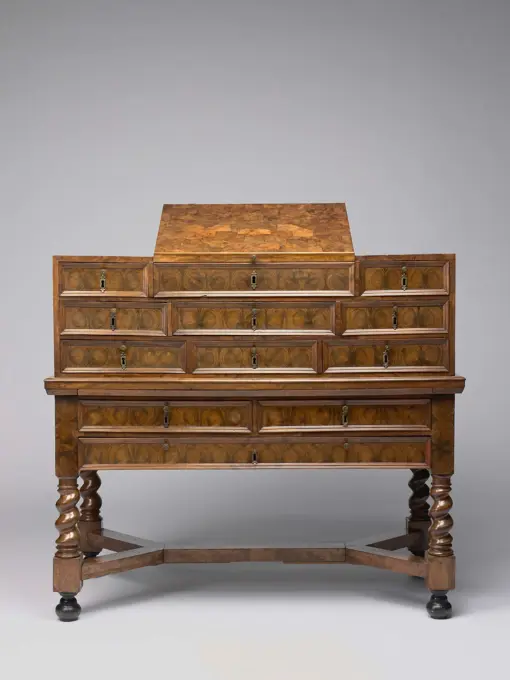
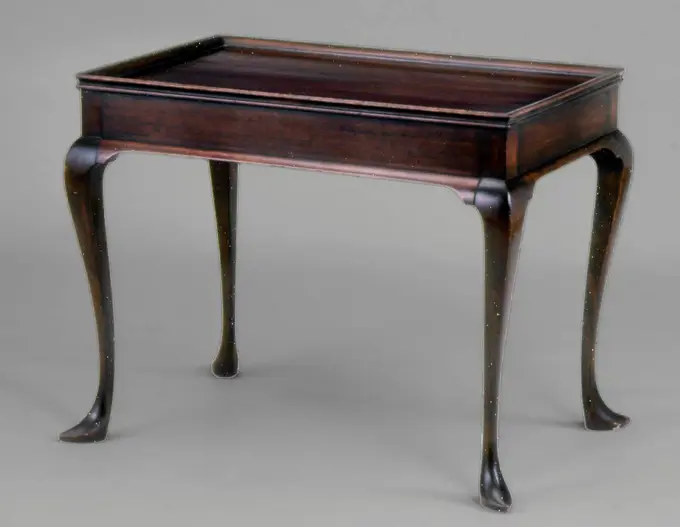
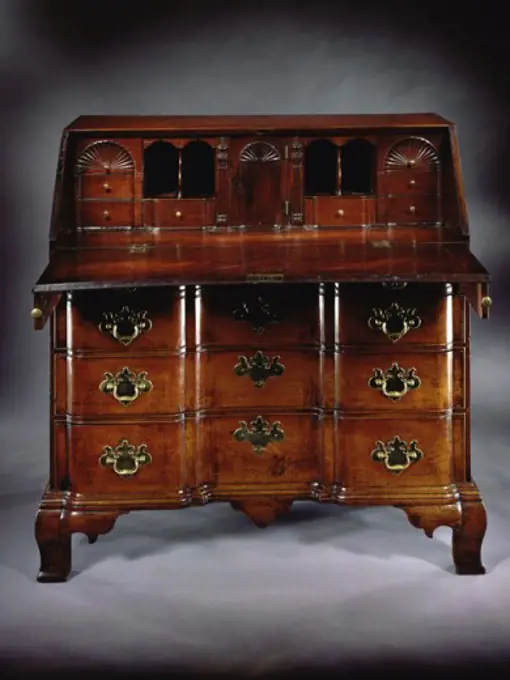
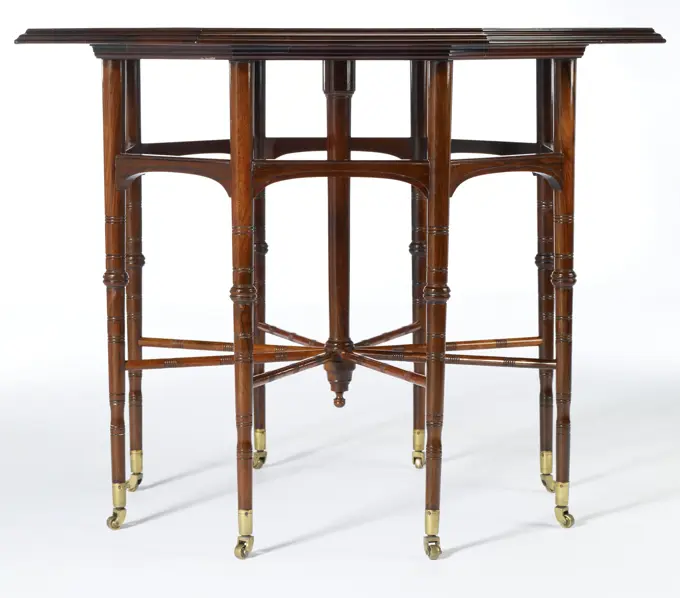
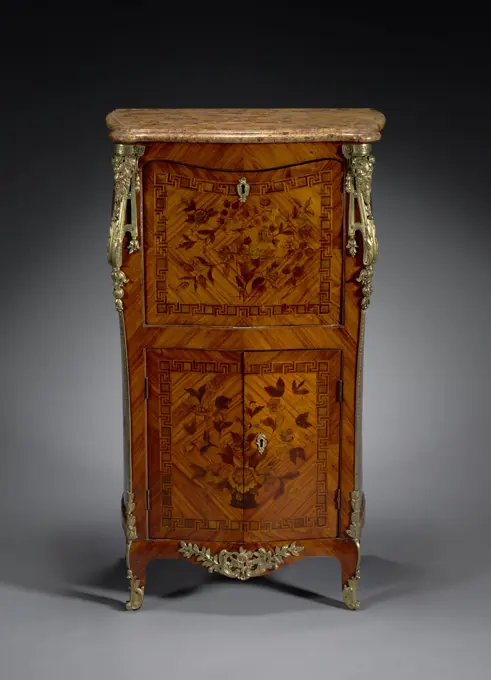
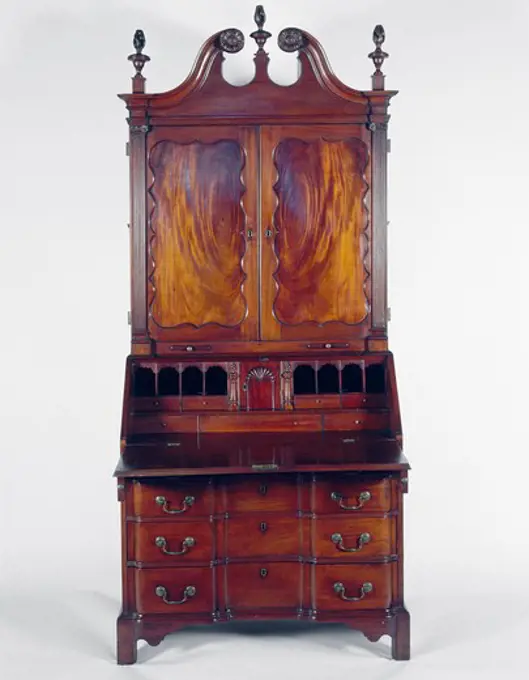
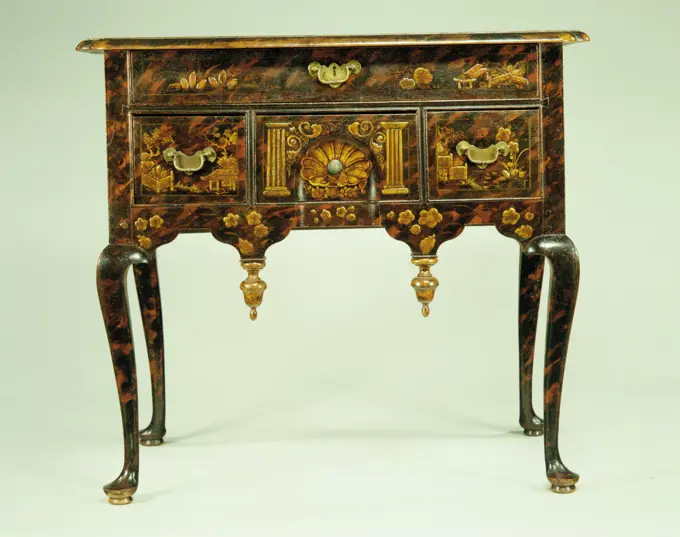
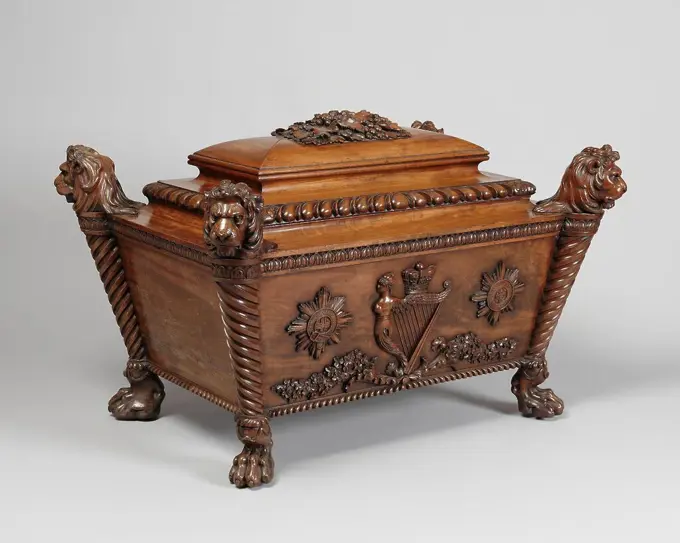
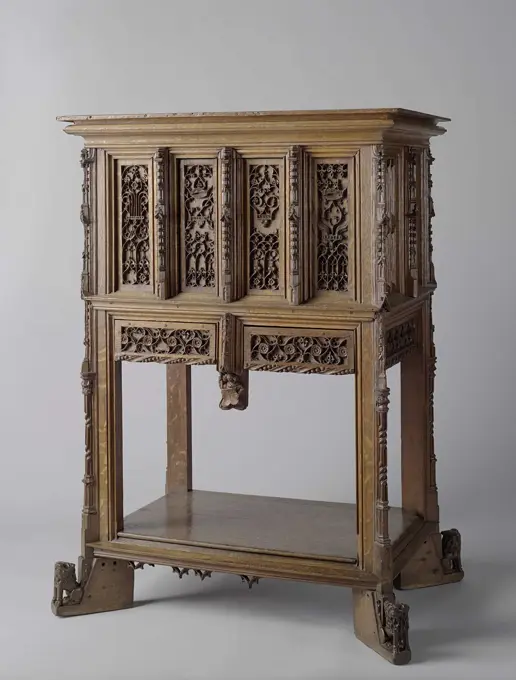
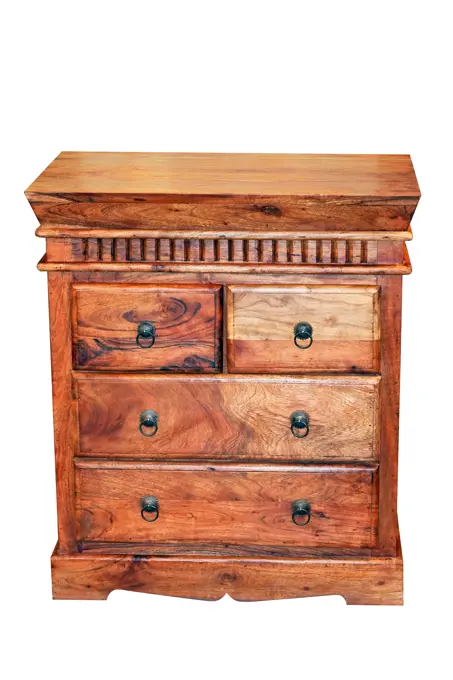
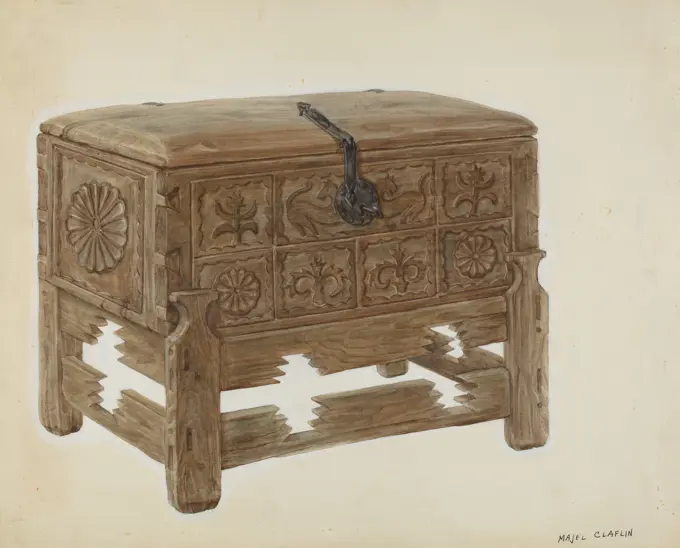
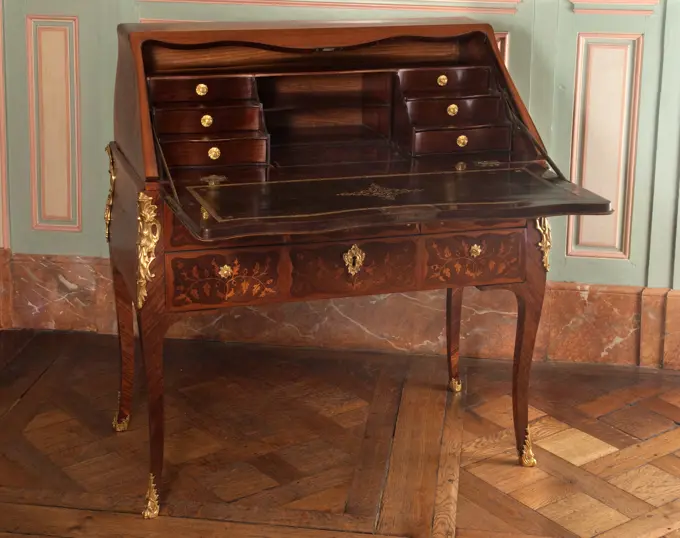
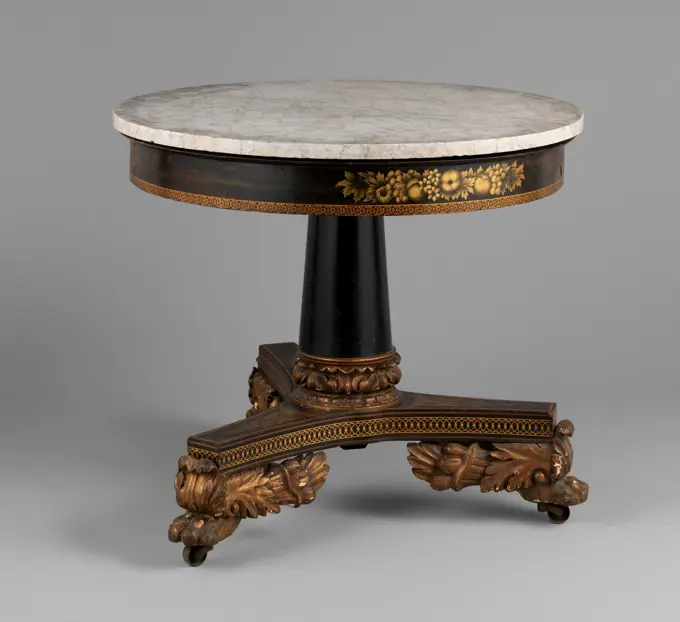
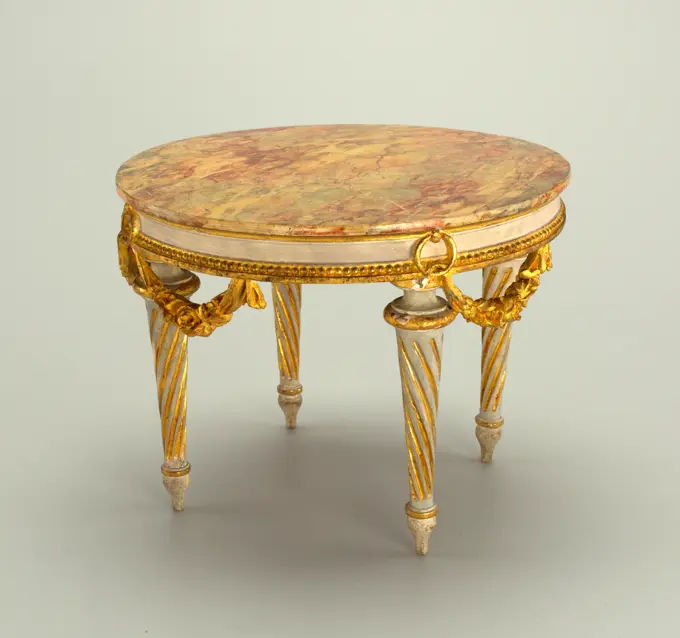
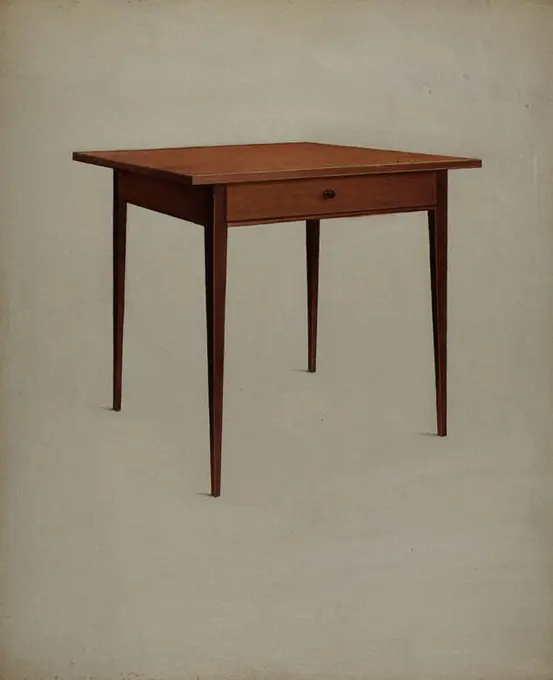
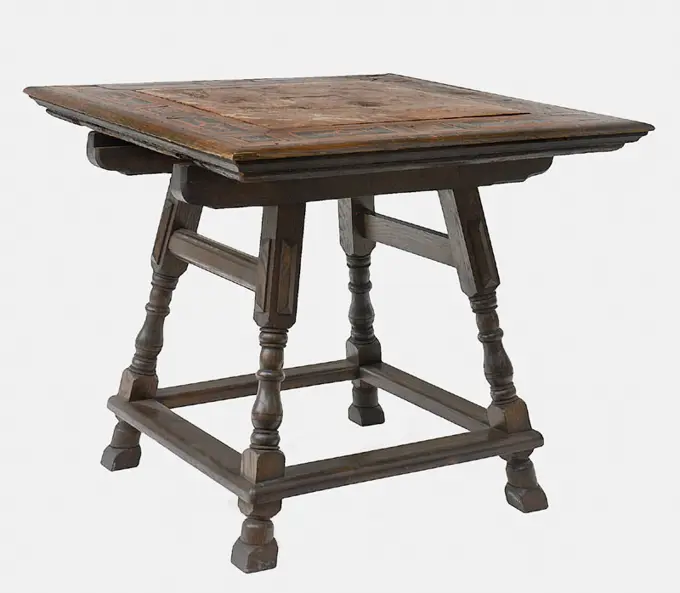
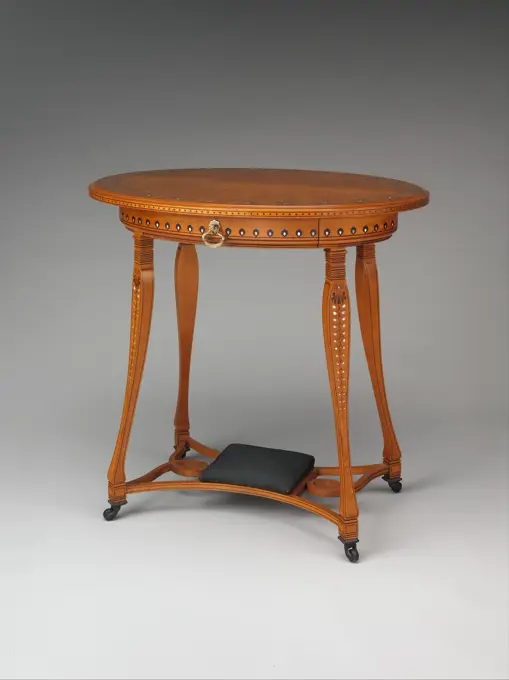
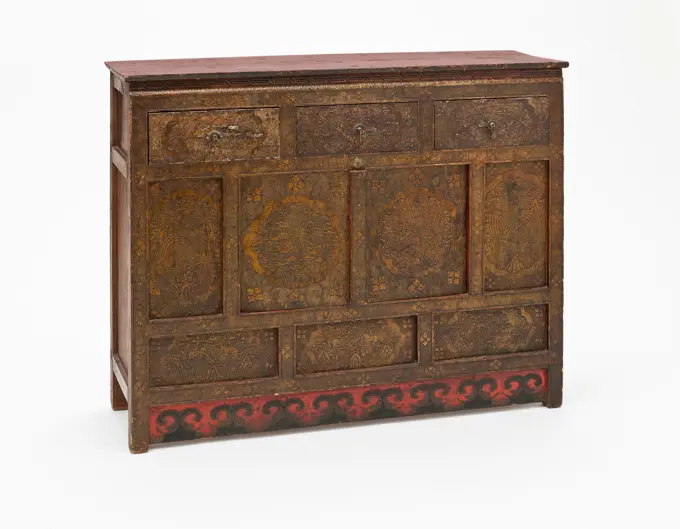
Table on two legs. Table of oak, on two legs.Table with vase -shaped legs, connected by bottom rules, anonymous, 1640 - 1660 Table of nuthout on legs with vase -shaped sections and houses and connected by bottom rules. The top line has a hold toothlist, which follows with round support pieces. The rules are delayed and, like the houses and the swellings of the legs, decorated with cannelures and tires of Ebony. The magazine has a bead list. Northern NetherlandsNetherlands wood (plant material). walnut (hardwood). ebony (wood) Table of nuthout on legs with vase -shaped sections and houses and connected by bottom rules. The top line has a hold toothlist, which follows with round support pieces. The rules are delayed and, like the houses and the swellings of the legs, decorated with cannelures and tires of Ebony. The magazine has a bead list. Northern NetherlandsNetherlands wood (plant material). walnut (hardwood). ebony (wood)Dressing Table. Culture: American. Dimensions: 27 1/2 x 27 1/2 x 18 1/2 in. (69.9 x 69.9 x 47 cm). Date: 1700-1730. Museum: Metropolitan Museum of Art, New York, USA.Dressing Table. American; Philadelphia, Pennsylvania. Date: 1700-1735. Dimensions: 73.7 × 86. 4 × 54.6 cm (29 × 34 × 21 1/2 in.). Walnut with Southern yellow pine, white pine, and white cedar. Origin: Philadelphia. Museum: The Chicago Art Institute, Chicago, USA.Cupboard with two panel doors, c. 1600 - c. 1625 Eikhout cupboard, consisting of a frame with five legs, a cupboard area with two doors and a hood. The three block -shaped front legs rest on a profiled base and are connected by openwork claw pieces in rolling forms. The cabinet is articulated by three -tied Doric pilasters, which are on the front legs and which are connected at the top by a double braid work band. The sides and the doors are constructed as a profiled framework with panels inside. The hood is articulated at the front and the sides by canaly styles, within which lying panels with profiles. The profiled cornice is decorated with a tooth list. The cabinet contains three shelves. Netherlands oak (wood) Eikhout cupboard, consisting of a frame with five legs, a cupboard area with two doors and a hood. The three block -shaped front legs rest on a profiled base and are connected by openwork claw pieces in rolling forms. The cabinet is articulated by three -tied Doric pilasters,Dressing table 1760-90 American. Dressing table. American. 1760-90. Mahogany. Made in Philadelphia, Pennsylvania, United StatesConsole table. Mohr, Jan (fl. ca 1825-1850), joinerHundred GIE;  4. W. XVII century (1675-00-00-1700-00-00);Casket of oak, red and gold painted. Casket of oak, red and gold painted. The cavoidal profiled plinth rests on four profiled balls. The front plate shows two, the side boards one panel with profiled scalloped sides. The rear plate shows and rectangular profiled panel. The lid shows a rectangular range with scalloped short sides within a profiled list. All expressions and panels exhibit uniform surfaces. The cornice has an ogive profile. Internally cut-out copper cleats.Desk (bonheur du jour). Culture: British. Dimensions: 41 5/16 × 34 7/8 × 18 5/8 in. (104.9 × 88.6 × 47.3 cm). Date: ca. 1780-90.The idea for this type, with a raised partition in the back, was conceived in Franec about 1750. Extensively used by lady letterwriters, it received the coquettish name bonheur-du-jour. The plain, elegant lines of this example are set off by exceptionally fine, characteristically English marquetry. Museum: Metropolitan Museum of Art, New York, USA.Pier table, c. 1820, 36 5/8 x 36 5/8 x 17 5/8 in. (93.03 x 93.03 x 44.77 cm), Painted cherry, maple, poplar, United States, 19th century, This pier table, a rare example of early 19th-century Massachusetts or New York painted furntiure, combines a simple neoclassical furniture form with elaborate Chinese-style gold and black surface decoration. During the 18th and early 19th centuries, American cabinetmakers imitated lacquer imported from China and Japan by combining European painting techniques with designs taken from Asian sources, called chinoiserie. Books on painted furniture detailed methods to achieve simulations of lacquered surfaces and also illustrated designs incorporating Asian figures and landscapes.. Reader of oak, glued with nut root wood and olive wood, resting on a chassis with cherted legs. The superstructure is equipped with a number of drawers. In a protruding part at the top is located under a sloping-placed folding army with a marker-decorated storage space with loading.High chest of drawers 1695-1720 American or British The type of leg seen on this high chest was likely derived from the spiral columns of European Baroque architecture. Spiral twisted legs, a rarity in American furniture, can sometimes be found on high chests and tables made in New York.. High chest of drawers. American or British. 1695-1720. Sweet gum, yellow poplar, yellow pine, white oak. Possibly made in Long Island, New York, United States; Possibly made in New York, New York, United StatesSideboard with four drawers in the middle, after which two doors with medallions with a sliced fruit basket surrounded with black piping, anonymous, c. 1900 - c. 1925 Sideboard made of fruit wood. The hexagonal sideboard has beveled corners at the front and rest on eight high legs, four of which are at the front, two on the corners and two at the rear. The twisted high legs, with a brass cover at the bottom, widely width up and have a black painted band at the top. Five sides, except the rear, consist of a framework with a panel surrounded by a black painted piping. The front contains two doors with four drawers in between of which all edges are trimmed with a black painted piping. In the middle of the doors there is a medallion within which a sliced fruit basket. There is a black painted piping around it in a diamond shape. The drawers contain brass rings as handles. On the top of the dresser a gray -veined marble leaf is laid in.  fruitwood. oak (wood). brass (alloy). marble (rock) SOctagonal tabletop. Octagonal, unforeseen and unprofiled leaves. Belongs to a chassis consisting of three cheek slots, ending in claws (BK-15391-1).. Table cabinet, glued with rosewood and ebony on an oak core. The styles are decorated with festans. Both doors have ojy-shaped profiled pillows. On the backs, a shell is made with a festoon in the swing, bazing blowing angels and in the middle. On the cornice in the middle a cartouche and a cartouche with angel figures on the corners. The chassis has two drawers and legs in the form of Tuscan columns. Bulbs twisted under the legs.Sideboard. Culture: American. Dimensions: 39-1/2 x 70 x 29 in. (100.3 x 177.8 x 73.7 cm). Former Attribution: Nathan Lombard. Date: 1795-1800. Museum: Metropolitan Museum of Art, New York, USA.Sofa Table c 1836-1846 New York City. Rosewood, ash and pine . J. & J.W. MeeksTeatableFrank Wenger, Lowboy, c 1939 LowboyHigh Chest ofDrawersDining table. Culture: British. Dimensions: Overall: 28 1/4 × 62 3/4 × 13 ft. 4 in. (71.8 × 159.4 × 406.4 cm). Date: ca. 1770-80. Museum: Metropolitan Museum of Art, New York, USA.Chippendale Open Desk Antique FurnitureCupboard. Maker, possibly by: Nathaniel Stone, 1649-1709Commode and two cupboards. These three pieces of furniture were made in the French style, which was emulated in all large Dutch cities in the third quarter of the 17th century. This is evident from their form, the marquetry ornamentation, the gilded mounts and the marble tops. The m rquetry vases are taken from French prints and the mounts were probably cast from French examples. This ensemble is exceptionally elaborate by Dutch standards.Cupboard. Maker, attributed to: Peter Blin, American, born England, died 1725Table withDrawerWall table made of gold-plated oak with red damaged marble top. Wall table made of gold-plated oak. The overhoeks placy resting on hooves and existence, as well as the X-shaped cross, from volutes, decorated with acanthus leaves and bells cords; At the intersection a rosette in Hexagon. The table rules show a women's head on checkered fond at the front between acanthus leaves and flour branches, and aside a palm with acanthus leaves. The table has a red damaged marble top with a profiled edge on the front and the sides.Chest 1675-1700 American. Chest 1993Desk and Bookcase, c. 1780-95. Attributed to John Townsend (American, 1732-1809). "Plum pudding" mahogany, red cedar, chestnut, white pine, brass; overall: 240 x 108 x 64.8 cm (94 1/2 x 42 1/2 x 25 1/2 in.).High chest of drawers. Culture: American. Dimensions: 62 1/2 x 39 1/4 x 21 3/4 in. (158.8 x 99.7 x 55.2 cm). Date: 1700-1730.A new form introduced with the William and Mary style, the high chest of drawers was a prestigious addition to the early-eighteenth-century home. The scalloped skirt, curved stretchers, and six turned legs on this chest bring lightness and movement to the form. The large, smooth surfaces of the drawer fronts of the upper and lower cases were achieved by abandoning the panel-and-frame tradition in favor of dovetailed-board construction--a technique created by the new craft of cabinetmaking. Dramatic surface decoration, accomplished here by bordering the richly figured walnut-veneered drawer fronts with a herringbone pattern, is characteristic of furniture dating from the 1690s to the 1730s. Museum: Metropolitan Museum of Art, New York, USA.Table to play and needlework;  1880-1900 (1880-00-00-1900-00-00);Fuglewicz, Joanna (1909-2008), Fuglewicz, Joanna (1909-2008)-collection, gift (provenance), eclecticism (style), games, tricksOctagonal Library Table. Attributed to Richard Hicks Bridgens; English, 1785-1846; Made by Edward Holmes Baldock; English, 1777-1845; London, England. Date: 1835-1845. Dimensions: 74.9 x 137.2 x 148.6 cm (30 x 54 x 58 1/2 in.). Ebony, boxwood, kingwood, mahogany, satinwood, pine, cedar, chestnut, tulipwood, and various stained and shaded woods, with ivory, pearl-shell, copper and brass inlay; the carcass of the top and of the drawer linings is mahogany; the carcass of the base pedestal is pine; replacement leather. Origin: London. Museum: The Chicago Art Institute, Chicago, USA.Center Table 1852 Boston. Cast iron and marble . Bryent, Walter (Designer)Cabinet. Culture: American. Dimensions: 96 x 42 x 20 in. (243.8 x 106.7 x 50.8 cm). Maker: Attributed to Daniel Pabst (1826-1910). Date: ca. 1877-80.This Modern Gothic cabinet superbly demonstrates the influence of British reform theory on American design in the late nineteenth century. In form and decoration, it is indebted to the British architect Bruce J. Talbert, whose book "Gothic Forms Applied to Furniture, Metal Work, and Decoration for Domestic Purposes" (Birmingham, 1867; Boston, 1873) was influential in this country. A kinship with the work of the Philadelphia architect Frank Furness is also evident in the overall form of the cabinet, the verticality and shingled "roof" of which somewhat resemble Furness's bank buildings of the 1870s. The reverse-painted ribbed-glass panels are of a type Furness began to use on buildings as architectural decoration in 1876. Their stylized floral motif recalls the geometric plant forms of Christopher Dresser, a leading English ornamentist of Commode ca. 1770-80 British. Commode. British. ca. 1770-80. Pine carcase, harewood veneer crossbanded with rosewood, inlay of various fruitwoods. Woodwork-FurnitureTable glued with walnut, inlaid with various types of wood and ivory, anonymous, c. 1740 - c. 1760 Table glued with walnut, inlaid with various types of wood. The rectangular leaf shows a vase with flowers, framed by horns of abundance, round and s-shaped tires. This whole is contained in a double rectangular tire list, within which sculpted fields with fine Acanthus ranks on the corners and on the middle of the long sides. The rule also marked contains a drawer and has corner styles, which fluently turn into the S-shaped curved, overhoeks placed legs, which end as a heel joint (hooves). Netherlands (possibly)Germany (possibly) wood (plant material). walnut (hardwood). ivory inlay (process) Table glued with walnut, inlaid with various types of wood. The rectangular leaf shows a vase with flowers, framed by horns of abundance, round and s-shaped tires. This whole is contained in a double rectangular tire list, within which sculpted fields with fine Acanthus ranks on the corners and on tWorktable, Soft maple, maple veneer; eastern white pine (frame rails, drawer front and bottom), yellow-poplar (drawer sides, back, runners, and bead moldings), 29 3/4 × 16 5/16 × 14 7/8 in. (75.5 × 41.5 × 37.8cm), Possibly made in New York, New Yorkor possibly made in Albany, New York, American, 19thcentury, FurnitureOctagonal table, 1880, E. W. (Edward William) Godwin; Maker: Collinson & Lock, English, 1833-1886, 29 x 36 1/2 x 36 1/2 in. (73.66 x 92.71 x 92.71 cm), Rosewood, gilded brass, England, 19th centuryChest ofDrawers. Manufacturer (brasses): Thomas Hands and William Jenkins, 1795-1805Fall-front Secretary, c. 1765- 1775. Attributed to Leonard Boudin (French, 1735-1804). Wood marquetry, gilt bronze mounts, marble; overall: 106.4 x 61 x 37.5 cm (41 7/8 x 24 x 14 3/4 in.).American Chippendale Block Front Secretary (Open) Antiques Hugh Ryan, Hepplewhite Drop Leaf Table, c 1942 Hepplewhite Drop Leaf TableDressing table 1747 American Both this dressing table and its matching high chest (10.125.58) are remarkably well preserved, with their tortoiseshell backgroundscreated by streaking lampblack onto a vermillion ground. The painted decoration, which includes a fantastical dragon and winged swans pulling a chariot with a shell-shaped back, is noticeably different from that on the suite of japanned furniture owned by the Pickman family of Salem (40.37.1, .2, .4).. Dressing table. American. 1747. Japanned maple, white pine. Made in Boston, Massachusetts, United StatesWine Cooler. Mack, Williams, and Gibton; Irish, 1811-1829; after a design by Francis Johnston; Irish, 1760-1829; Dublin, Ireland. Date: 1816-1826. Dimensions: 106.7 × 64.8 × 76.2 cm (42 × 25 1/2 × 30 in.). Mahogany, lead lining and brass hardware. Origin: Ireland. Museum: The Chicago Art Institute, USA.Cabinet ca. 1877-80 Attributed to Daniel Pabst American This Modern Gothic cabinet superbly demonstrates the influence of British reform theory on American design in the late nineteenth century. In form and decoration, it is indebted to the British architect Bruce J. Talbert, whose book "Gothic Forms Applied to Furniture, Metal Work, and Decoration for Domestic Purposes" (Birmingham, 1867; Boston, 1873) was influential in this country. A kinship with the work of the Philadelphia architect Frank Furness is also evident in the overall form of the cabinet, the verticality and shingled "roof" of which somewhat resemble Furness's bank buildings of the 1870s. The reverse-painted ribbed-glass panels are of a type Furness began to use on buildings as architectural decoration in 1876. Their stylized floral motif recalls the geometric plant forms of Christopher Dresser, a leading English ornamentist of the period who visited the Centennial Exhibition in Philadelphia in 1876 and whose published dMechanical Reading, Writing, and Toilette Table. Jean-François Oeben (French, born Germany, 1721 - 1763, master 1761)Pembroketable. Maker, possibly by: John A. Shaw, 1735-1839Jardiniere. unknown, authorLouis Annino, Card Table, c 1936 Card TableCoroland wood table with a rectangular linoleum inlaid leaf. Coroland wood table with a rectangular sheet inlaid with linoleum. The chassis rests on an H-shaped cross with concave, on basements resting side rules. The leaf is worn by square colonets, between which wide middle styles are placed, which are connected to three-height by a line. Between the cross and the rule there is a style with two degreesy bokks; Upper and above flanked by jumping clarks. Hoses on the table rule and middle styles.Side Table 1715-1725 England. Carved and gilt gesso on wood .Isadore Goldberg, Table, 1941 TablePier Table 1800-1810 American. Pier Table. American. 1800-1810. Mahogany and mahogany, maple, casuarina, holly and ebony veneers. Made in Salem, Massachusetts, United States. This cabinet would have held a militia companys valuables, such as drinking cups and guild chains. The imperial crown and the lily on the front panels pay homage to the sovereign, Emperor Charles V. Richly decorated and well preserved, this Gothic-style cabinet is considered one of the finest pieces of 16th-century furniture in the world.Wooden drawer Oriental style wooden drawers isolated on white Copyright: xZoonar.com/Baloncicix 14274402Isadore Goldberg, Desk, 1935 1942 DeskSet of DiningTablesMajel G Claflin, Casa en Mesita or Chest on Stand, c 1939 Casa en Mesita or Chest on StandJacques-Philippe Carel. Sloping secretary. Oak, conifer, satin plating, around 1750. Paris, Carnavalet museum. 50265-4 Chene, conifre, furniture, open, satin plating, sloping secretary, chest of drawers, furnitureDesk (bonheur du jour). Culture: French, Paris and Sèvres. Decorator: Plaques decorated by Antoine-Toussaint Cornailles (French, active 1755-1800); and Nicquet (French, active 1764-92). Dimensions: Overall: 32 1/4 × 26 1/4 × 15 3/4 in. (81.9 × 66.7 × 40 cm). Factory: Porcelain plaques by Sèvres Manufactory (French, 1740-present). Maker: Martin Carlin (French, near Freiburg im Breisgau ca. 1730-1785 Paris). Date: ca. 1770.The presence of the maker's stamp, dealer's inscription, and porcelain plaques constituting a separate series are the three features that significantly distinguish this from a related desk (1982.60.54) in the Linsky collection. Inscriptions on furniture ordered by Simon-Philippe Poirier are not uncommon, although this is the only desk in the group with this type of inscription. As Bellaigue has noted, the inscription presumably gives instructions to the silversmith or supplier of writing materials to whom the empty container was sent to be fitted with metal accessoriesStool. North European. Date: 1400-1500. Dimensions: 53.3 × 44.5 cm (21 × 17 1/2 in.). Oak. Origin: Europe. Museum: The Chicago Art Institute, Chicago, USA.DeskGate-legged Table. Dated: c. 1936. Dimensions: overall: 21.8 x 22.9 cm (8 9/16 x 9 in.) Original IAD Object: 26"high. See data sheet.. Medium: watercolor, colored pencil, gouache, and graphite on paper. Museum: National Gallery of Art, Washington DC. Author: GEORGE NELSON.Center Table American 1825-30table Miniature; France; wood, carved, painted, gildedHigh chest. Culture: American. Dimensions: 70 1/4 × 39 × 21 3/8 in. (178.4 × 99.1 × 54.3 cm). Maker: Christopher Townsend (1701-1773). Date: 1748. Museum: Metropolitan Museum of Art, New York, USA.Card Table 1740-60 American The form of this table is most unusual. The table top is in two pieces: one a drop leaf, the other lifting up to provide access to a storage well, presumably for storing card-playing accoutrements. While it is possible for the entire top to be vertical, the lack of any device to support the upper half in an upright position shows that the table was not intended to be stored in a corner. The table is unquestionably from Rhode Island, not only because of its Newport provenance, but also because of its unmistakable Newport features, especially the use of dense, purple-hued mahogany and maple as a secondary wood.. Card Table. American. 1740-60. Mahogany, maple, white pine. Made in Newport, Rhode Island, United StatesShaker Table. Dated: c. 1937. Dimensions: overall: 27.9 x 22.8 cm (11 x 9 in.) Original IAD Object: 26 1/2" high; 17" deep; 25" wide. Medium: watercolor and graphite on paperboard. Museum: National Gallery of Art, Washington DC. Author: Winslow Rich.ornamental Cupboard ornamental Cupboard, 1630-1640, oak and Walnut, veneered with ebony, Amsterdam, Netherlands Copyright: xZoonar.com/Tolox 21697179Bankers table. unknown, contractorDesk andbookcaseCardtableCard Table 1810-19 Attributed to Charles-Honoré Lannuier Although it does not bear Lannuiers label, this table is nearly identical to six pairs of tables and three single tables that do. It demonstrates Lannuiers skillful combination of French influences. The gilded, winged caryatid and the hocked animal legs are reminiscent of illustrations in Pierre de La Mésangères "Collection de meubles et objets de gout" (1802-35), which includes motifs often found in Lannuiers work.. Card Table 1444Kast, anonymous, c. 1550 - c. 1600 Low wardrobe of walnut with poplar wood interior. The styles carry rejuvenating pilasters, rest on volutes, and are crowned with a cartouche with coat of arms of the minerbettis with shell and draperies. The doors have a wooden disc with a bronze button in the middle. Tuscan columns are on the corners. The main frame with two drawers in decorated with cartouches and consoles. The cupboard is on lion claws that include half balls. The unadorned sides have support documents. Tuscan wood (plant material). walnut (hardwood). poplar (wood). bronze (metal) Low wardrobe of walnut with poplar wood interior. The styles carry rejuvenating pilasters, rest on volutes, and are crowned with a cartouche with coat of arms of the minerbettis with shell and draperies. The doors have a wooden disc with a bronze button in the middle. Tuscan columns are on the corners. The main frame with two drawers in decorated with cartouches and consoles. The cupboard is on lion clawsDesk and Bookcase. Culture: American. Dimensions: 91 x 72 x 19 1/8 in. (231.1 x 182.9 x 48.6 cm). Date: ca. 1811.This H-shaped desk and bookcase may be the most unusual example of high-style furniture produced in the Federal period. Its design was inspired by the "Sister's Cylinder Bookcase," plate 38 in Thomas Sheraton's "Cabinet Dictionary" (London, 1803), but the maker substituted a rectangular fall-front desk between the two pedestals for Sheraton's cylindrical one. The decorative details are characteristic of fine Baltimore furniture. The double-line inlay spiraling down the turned legs can be found on at least one other piece of Baltimore furniture. The inscription refers to the date when Roswell Lyman Colt married Margaret Oliver, one of the four daughters of Robert Oliver, a millionaire merchant of Baltimore. Museum: Metropolitan Museum of Art, New York, USA.StoolDressing table 1881-82 George A. Schastey In 1881, Arabella Worsham, then-mistress of railroad magnate Collis P. Huntington, hired George A. Schastey & Co. to decorate her townhouse at 4 West Fifty-Fourth Street in New York City. The resulting artistic interiors would have been considered the height of cosmopolitan style in the early 1880s and were emblematic of Worshams quest to fashion her identity as a wealthy, prominent woman of taste. When Worsham married Huntington in 1884, she sold the house, fully furnished, to John D. and Laura Spelman Rockefeller, who made few subsequent changes to the decorations. Following Mr. Rockefellers death, the house was demolished in 1938, yet some furnishings, large-scale architectural elements, and three interiors were preserved, and the rooms were donated to local museums by John D. Rockefeller Jr. This dressing table of satinwood and purpleheart is part of the suite (2009.226.2-.4) that furnished Worshams elaborately decorated dressing room, oSideboardRolltop writing desk. unknown, creatorCabinetGuéridon with round column on three curved legs, table furniture interior design mahogany oak rosewood ebony maple wood, Guéridon with round mahogany column on three curved legs around oak leaf veneered with mahogany and rosewood and bouquet around the edge of the block motif ebony and maple wood.Gangbank, anonymous, 1700 - 1725 Gang bank of Lindehout with seat, at the front with grinding list, Van Kenenhout, resting up above the seat continued cheeks with open -worked sculpted acanthus voluten and at the top with hold armrests. The open -worked back has a coat of arms as a middle section (with three -part division in fields on which three Moror heads, a grape paw with wine leaf and the bottom of water) with a helmet sign (half -moror figure with an arrow in your hand). On either side the back has symmetrical acanthus fillets. Northern Netherlands wood (plant material). walnut (hardwood). softwood Gang bank of Lindehout with seat, at the front with grinding list, Van Kenenhout, resting up above the seat continued cheeks with open -worked sculpted acanthus voluten and at the top with hold armrests. The open -worked back has a coat of arms as a middle section (with three -part division in fields on which three Moror heads, a grape paw with wine leaf and the bottom of water) with Sideboard, part of a paneling, furniture house legrand, 1900 - 1905 Sideboard, part of a paneling, executed in walnut, oak, rosewood and brass. Netherlands walnut (hardwood). oak (wood). rosewood (wood). brass (alloy) Sideboard, part of a paneling, executed in walnut, oak, rosewood and brass. Netherlands walnut (hardwood). oak (wood). rosewood (wood). brass (alloy)Sideboard (USA); mahogany, white pine, tulip, poplar, box (inlay), brass (pulls); Bequest of Mrs. John Innes Kane; 1926-37-244-a/hChest with Drawer. Dated: c. 1937. Dimensions: overall: 27.9 x 22.7 cm (11 x 8 15/16 in.). Medium: watercolor and graphite on paperboard. Museum: National Gallery of Art, Washington DC. Author: Alfred H. Smith.Szafka. unknown, craftsmanAnonymous / 'Console Table'. 1750 - 1800. Wood, Caliza de Ereño. Museum: Museo del Prado, Madrid, España.ornamental Cupboard, 1630-1640, oak and Walnut, veneered with ebony, Amsterdam, Netherlands.Corner Cupboard; Bernard II van Risenburgh (French, after 1696 - about 1766, master before 1730); Japan; about 1740; Oak and maple veneered with amaranth, cherry, and sycamore maple, set with panels of black Japanese lacquer on Japanese arborvitae and painted with vernis Martin; gilt-bronze mounts; sarrancolin marble top; 99.4 x 88.3 x 61.3 cm (39 1,8 x 34 3,4 x 24 1,8 in.). Square table of oak resting on an open trunk and a diagonally placed cross base. The ends of the cross base are located under the corners of the table top and end in crocodile heads. The open strain consists of four corner styles that are connected to both above and bottom of intermediate rules. Between the styles a middle style depends on the bent walls connected to both angle styles by means of the underside. Both the styles and the rules contain sliced naturalistic motifs. The square table top consists of an upper and bottom. The underlay is connected to the strain by means of a six-armed cross. Two sides of the underlay have a ledge between which the top falls. The top is inlaid across the middle with black dots. The four corners end in sliced animal heads.Dressing Table. Culture: American. Dimensions: 30 5/8 x 35 7/8 x 20 5/8 in. (77.8 x 91.1 x 52.4 cm). Date: 1755-90. Museum: Metropolitan Museum of Art, New York, USA.Table with oval leaf and round baluster trunk. Oval table with an oak leaf with sloping edge on a round baluster stem from maple wood () On three curved legs.DeskCabinet. Date/Period: Ca. 1880. Furniture- Case Furniture and Boxes. Maple, bird's-eye maple, oak or chestnut, stamped and gilt paper, with gilding, inlay, and carved decoration; original brass pulls and key. Height: 1,333.50 mm (52.50 in); Width: 1,847.80 mm (72.74 in). Author: HERTER BROTHERS.Lesser with rectangular leaves on octagonal, baluster -shaped tribe, anonymous, c. 1700 Lesser of hardwood with a rectangular smooth leaf with a raised edge. The baluster -shaped trunk is octagonal and relies on a profiled, curved tripod. Amsterdam (possibly) . Lesser of hardwood with a rectangular smooth leaf with a raised edge. The baluster -shaped trunk is octagonal and relies on a profiled, curved tripod. Amsterdam (possibly) .High Chest ofDrawersLorenz Rothkranz, Kas, c 1938 KasGuilford Painted Chest. Dated: c. 1936. Dimensions: overall: 24.4 x 34.4 cm (9 5/8 x 13 9/16 in.) Original IAD Object: 42"long; 43"high; 19"wide. Medium: watercolor, gouache, and pen and ink on paper. Museum: National Gallery of Art, Washington DC. Author: Martin Partyka.Architect's Table. United States, Pennsylvania, Philadelphia, circa 1795. Furnishings; Furniture. Mahogany, tulip poplar