Antique Wooden Tables

Collection of various styles of antique wooden tables featuring intricate designs and craftsmanship, showcasing oak, walnut, and decorative elements.

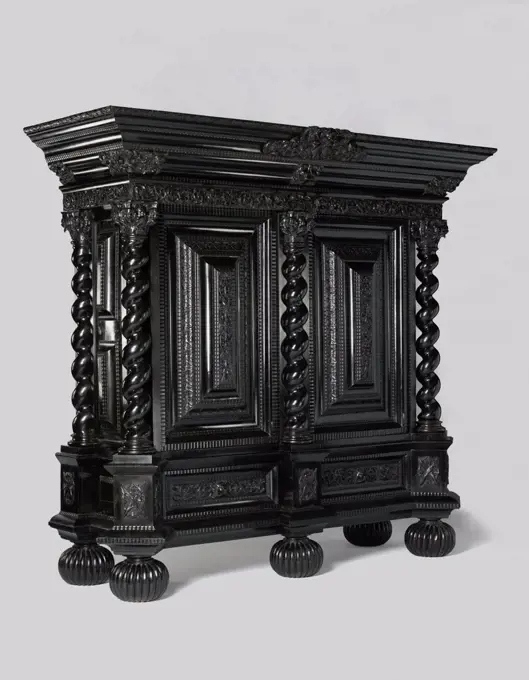
Cupboard with two panel doors, c. 1600 - c. 1625 Eikhout cupboard, consisting of a frame with five legs, a cupboard area with two doors and a hood. The three block -shaped front legs rest on a profiled base and are connected by openwork claw pieces in rolling forms. The cabinet is articulated by three -tied Doric pilasters, which are on the front legs and which are connected at the top by a double braid work band. The sides and the doors are constructed as a profiled framework with panels inside. The hood is articulated at the front and the sides by canaly styles, within which lying panels with profiles. The profiled cornice is decorated with a tooth list. The cabinet contains three shelves. Netherlands oak (wood) Eikhout cupboard, consisting of a frame with five legs, a cupboard area with two doors and a hood. The three block -shaped front legs rest on a profiled base and are connected by openwork claw pieces in rolling forms. The cabinet is articulated by three -tied Doric pilasters,
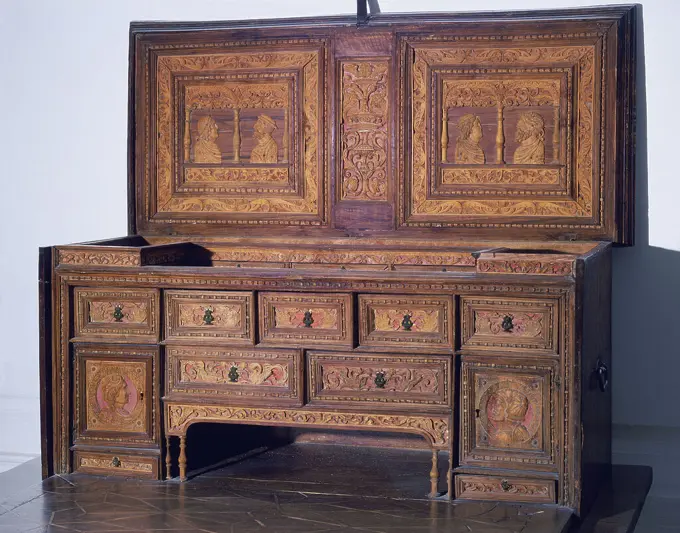
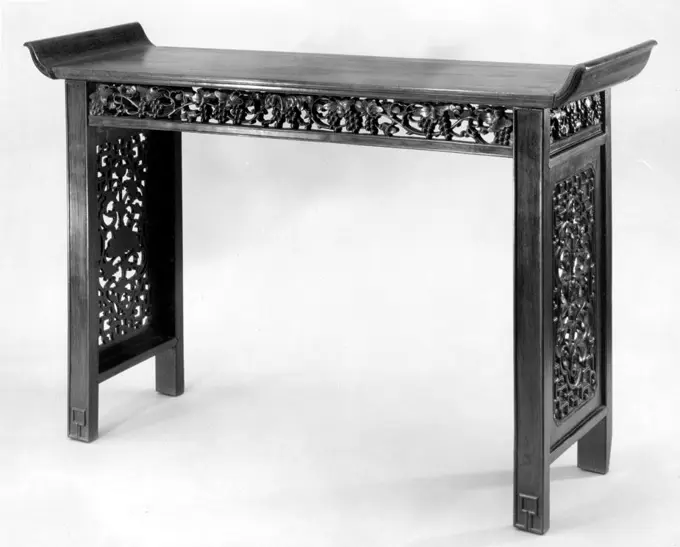
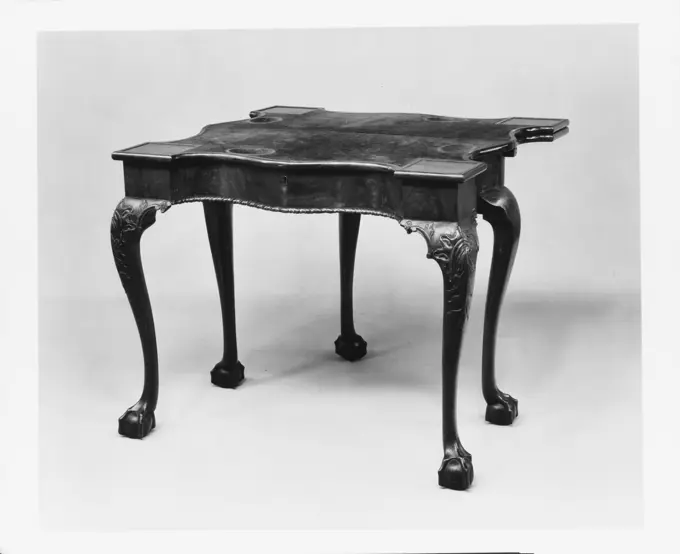
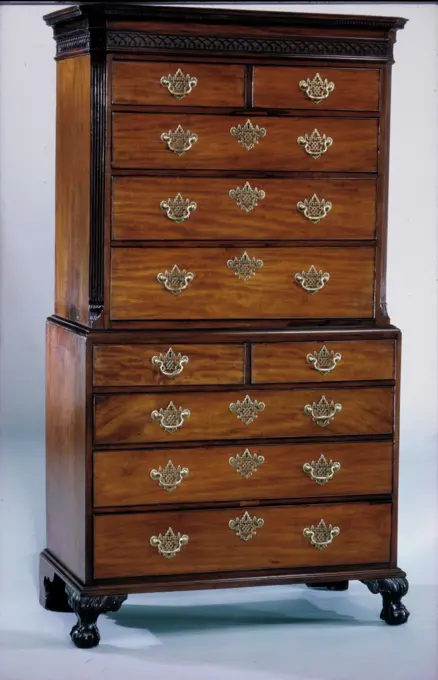
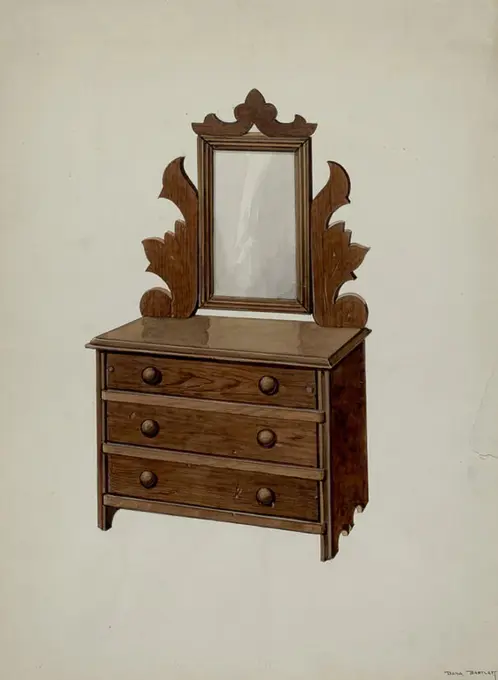
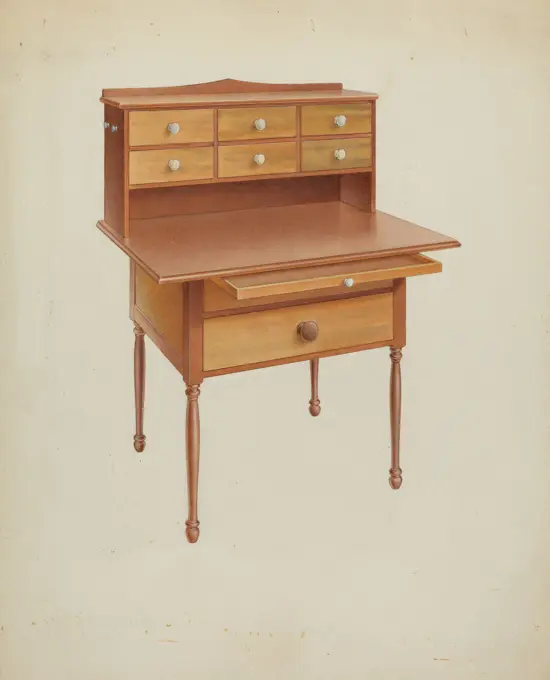
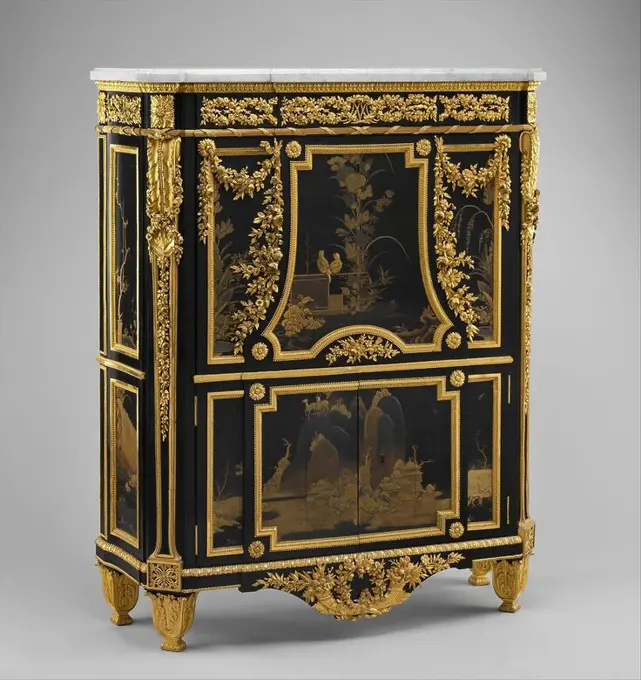
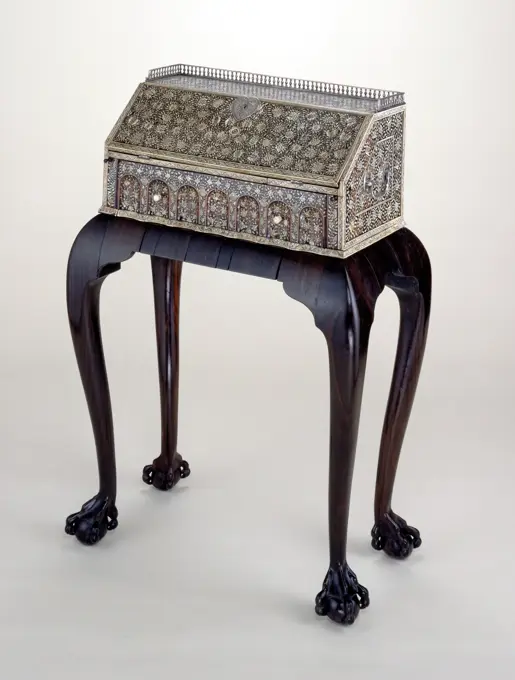
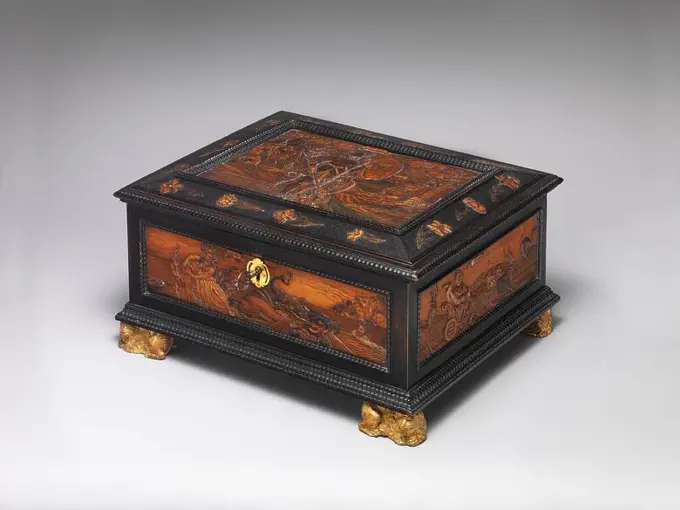
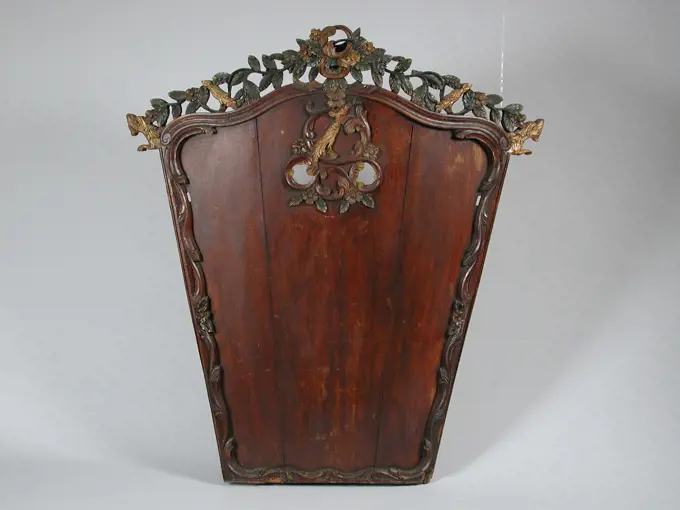
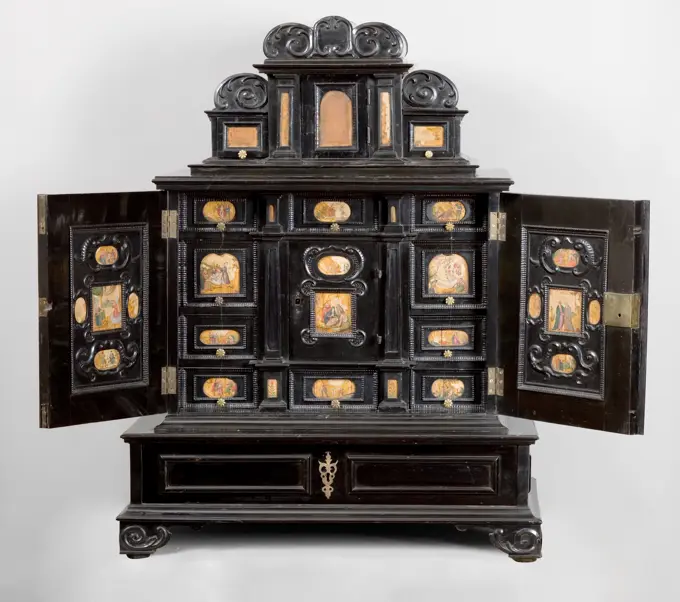
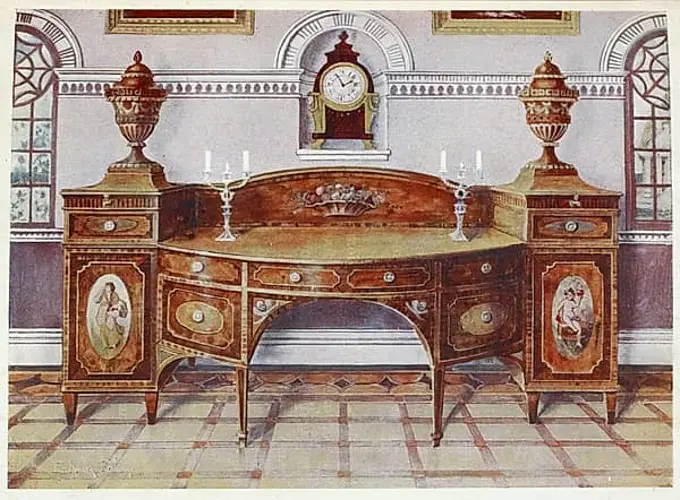
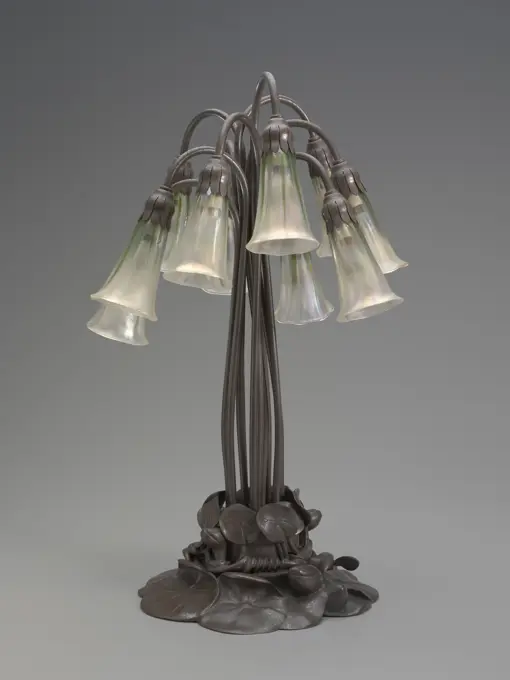
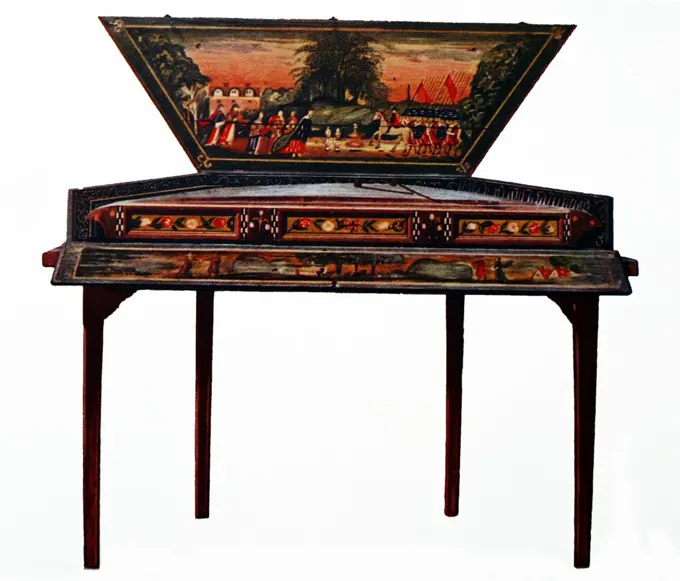
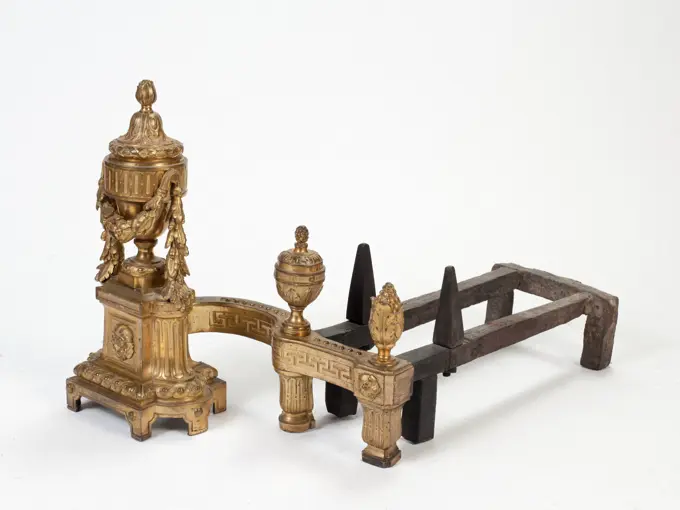
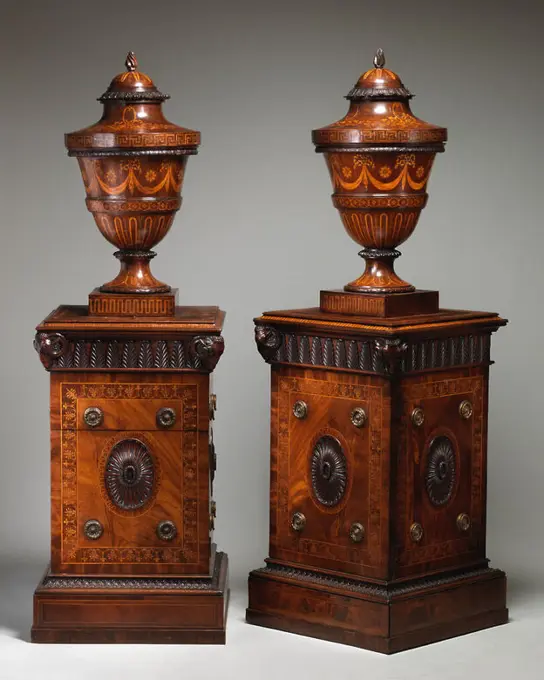
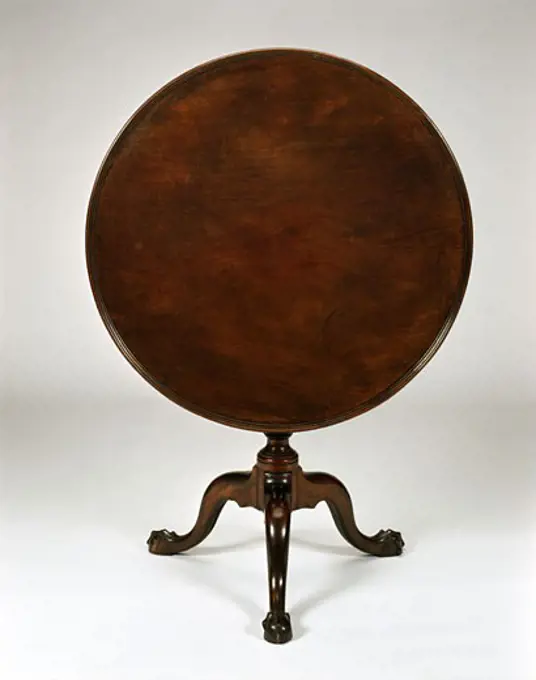
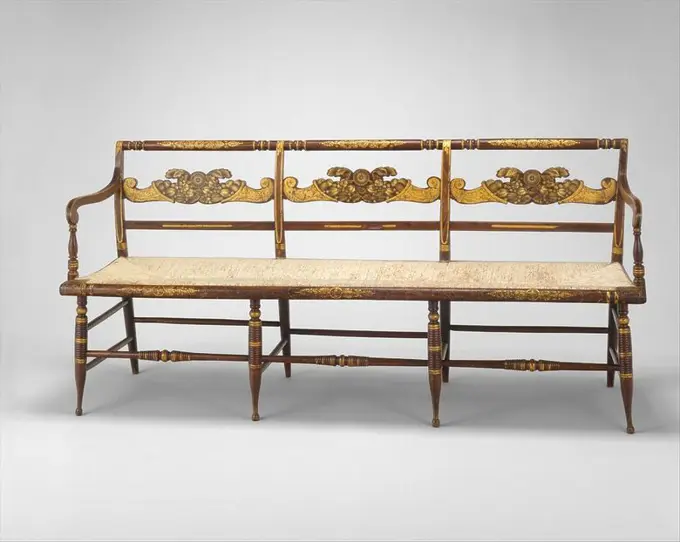
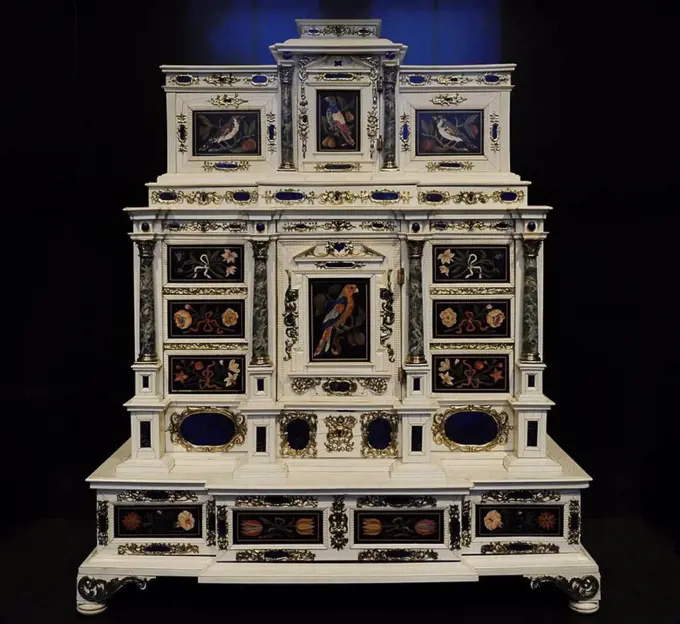
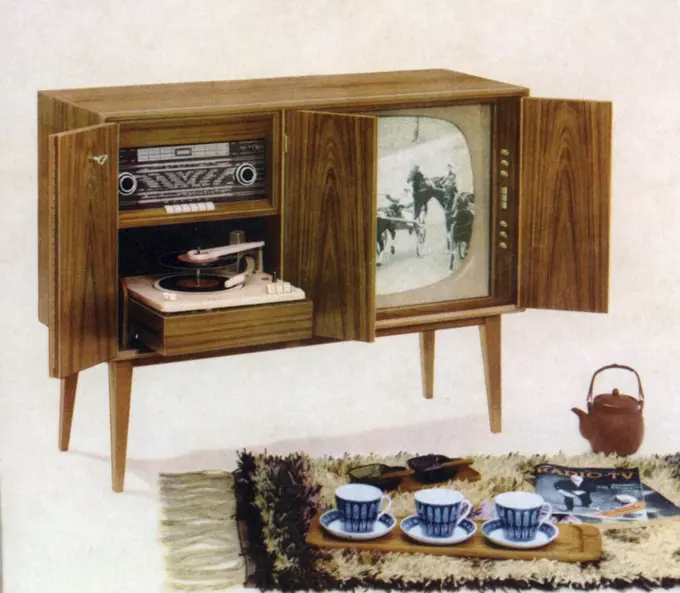
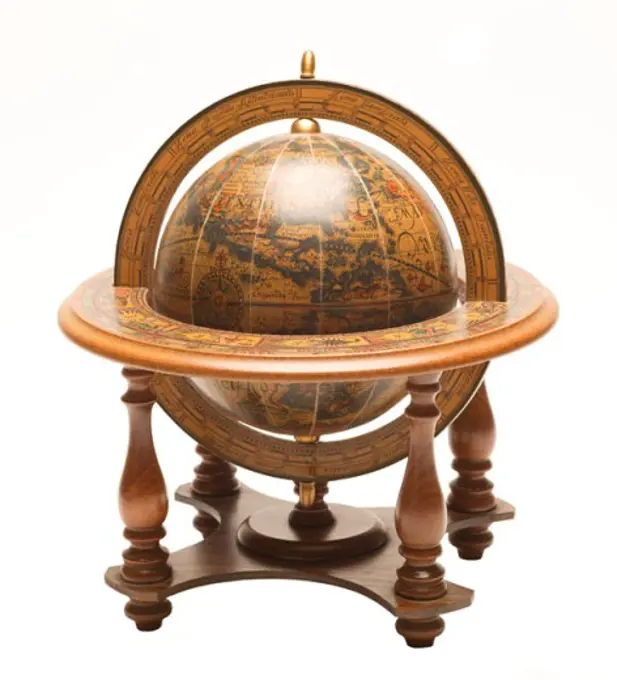
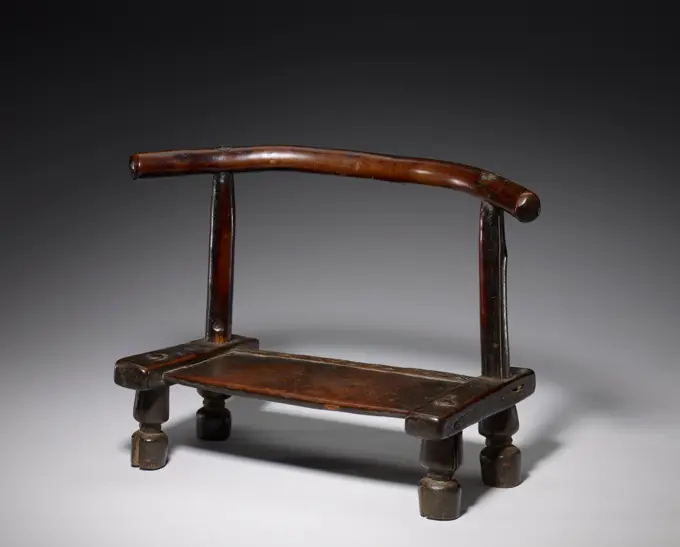
Low chair/stool, 12 x 17 5/8 x 8 7/8 in. (30.48 x 44.77 x 22.54 cm), Wood, LiberiaFurniture, Anonymous, 1700 - 1800 Washbasin in miniature of rosewood, resting on four legs, with two trays and a shelf. One drawer is missing. Northern Netherlands (possibly)Netherlands (possibly) wood (plant material). rosewood (wood) Washbasin in miniature of rosewood, resting on four legs, with two trays and a shelf. One drawer is missing. Northern Netherlands (possibly)Netherlands (possibly) wood (plant material). rosewood (wood)Bonheur du Jour with three mirror windows. Windows and cabinet decorated with rank ornament of leaf and flower arrangements., Anonymous, 1785 - 1815 Glass cupboard, so -called Bonheur du Jour. On three sides, the cupboard has mirror windows in flat frames that, like the scalloped hood, show a continuous rank ornament of leaf and flower arrangements. The chassis has a drawer, support pieces, four slender ball legs and a "double fork cross". The window, the cross and the support pieces are decorated as the styles and sills of the cupboard. The signs and the rear shot were later covered with purple velvet. Indonesia wood (plant material). glass. velvet (fabric weave) Glass cupboard, so -called Bonheur du Jour. On three sides, the cupboard has mirror windows in flat frames that, like the scalloped hood, show a continuous rank ornament of leaf and flower arrangements. The chassis has a drawer, support pieces, four slender ball legs and a "double fork cross". The window, the cross and the suBARGUEÑO O ESCRITORIO DE NOGAL Y BOL - SIGLO XVI/XVII. Location: BANCO EXTERIOR-COLECCION. MADRID. SPAIN.A Urite furniture;  19th/20th century (1891-00-00-1910-00-00);Toeplitz-Mrozowska, Jadwiga (1880-1966), Toeplitz-Mrozowska, Jadwiga (1880-1966)-collection, gift (provenance), Indian (culture), South Asian (culture), Indian artChest withdrawersCard Table 1800-1810 American. Card Table. American. 1800-1810. Mahogany, satinwood. Made in Boston, Massachusetts, United StatesTable China Qing dynasty (1644-1911) View more. Table. China. Wood. Qing dynasty (1644-1911). FurnitureFireplace of the rosewood and violet wood, partially gilt, inlaid with lapis lazuli and covered with yellow Jaquard tissue., Theo Nieuwenhuis, 1899 Fireplace screen of rosewood and violet wood, partially gilded, inlaid with Lapis Lazuli and covered with yellow Jaquard tissue. The rectangular screen rests on double bobbin -shaped legs and is open with leaf vines and berries. Two sunflowers with hearts of Lapis Lazuli have been cut in the middle of the cap rule. Signed with monogram TN and dated 1899. Amsterdam, Fa. E.J. Van Wisselingh & Co, 1899. Maker: Amsterdammaker: Helmond rosewood (wood). kingwood (wood). lapis lazuli (rock). plywood. cotton (textile) jacquard Fireplace screen of rosewood and violet wood, partially gilded, inlaid with Lapis Lazuli and covered with yellow Jaquard tissue. The rectangular screen rests on double bobbin -shaped legs and is open with leaf vines and berries. Two sunflowers with hearts of Lapis Lazuli have been cut in the middle of the cap rule. Signed witCard and backgammon table 1760-90 American The upper playing surface of this rare tripletop gaming table is inlaid with patterns of backgammon and chess boards; the lower one is lined with baize for playing cards. Otherwise, the table is characteristic of a small group of New York card tables with bold serpentine fronts.. Card and backgammon table. American. 1760-90. Mahogany, mahogany veneer, rosewood and satinwood inlays, beech, tulip poplar. Made in New York, New York, United StatesGlass harmonics;  around 1800 (1795-00-00-1805-00-00);Chest-on-chest 1760-90 American Until its acquisition by the Museum, this chest remained in the great landholding Van Rensselaer family of Albany, New York. Note the wide cornice, canted-and-fluted corners, front claw feet with carved knees, and ogee-bracket rear feetall typical of New York furniture design.. Chest-on-chest 2027Doll's Dresser. Dated: c. 1937. Dimensions: overall: 35.7 x 26.3 cm (14 1/16 x 10 3/8 in.) Original IAD Object: 18 3/4" high; 10 1/4" wide; 5 3/8" deep. Medium: watercolor, pen and ink, and graphite on paper. Museum: National Gallery of Art, Washington DC. Author: Dana Bartlett.Alfred H Smith, Shaker Sewing Table, c 1938 Shaker Sewing TableCupboard with three doors on top of each other and with carved lilies, anonymous, c. 1400 - c. 1500 Oak cupboard with iron batter, three doors one above the other. Lelien, carved above.  wood (plant material). iron (metal) Oak cupboard with iron batter, three doors one above the other. Lelien, carved above.  wood (plant material). iron (metal)Card Table c 1815-1824 Philadelphia. Mahogany, maple veneer, oak, ormolu mounts, and ivory . Artist unknownDrop-front secretary (secrétaire à abattant). This secretary -a writing desk with a lockable front panel -is decorated with 17th-century Japanese lacquerwork taken from old chests or cabinets. Parisian dealers in luxury goods, such as Dominique Daguerre, bought the costly lacquerwork and had new pieces of furniture made in which it was incorporated.Ernest A Towers, Jr, Dining Room Table, c 1942 Dining Room TableDrop-front secretary (Secrétaire en armoire). Culture: French, Paris. Dimensions: Overall: 57 × 43 × 16 in. (144.8 × 109.2 × 40.6 cm);Length (key): 3 5/8 in. (9.2 cm). Maker: Jean Henri Riesener (French, Gladbeck, North Rhine-Westphalia 1734-1806 Paris). Date: 1783.Jean-Henri Riesener created this splendid secretary and commode for Marie-Antoinette in 1783. They were commissioned for the queen's Grand Cabinet Intérieur at Versailles, where she kept the collection of Japanese lacquer boxes she had inherited from her mother, Empress Maria Theresa (1717 - 1780) of Austria. So that their surface decoration would harmonize with that of the boxes, choice fragments of seventeenth-century Japanese lacquer were reused as veneer for these pieces of royal furniture. The shiny black and gold lacquer and lustrous ebony form a striking background for the exceptionally beautiful gilt-bronze mounts (see detail page 102). Consisting of swags and interlaced garlands of naturalistic flowers, these jeweChimneypiece ca. 1800 probably Scottish. Chimneypiece. probably Scottish. ca. 1800. Deal and composition. WoodworkCorner Cupboard (Encoignure).Wellington Blewett, Bishop Hill  Chest, 1939 Bishop Hill: ChestSecretary ca. 1800-1820 British or Irish. Secretary. British or Irish. ca. 1800-1820. Pine carcase, veneered with satinwood, sycamore and rosewood; mahogany drawer linings; gilt-bronze mounts. Woodwork-FurnitureWriting desk on stand, c. 1725-1750, 35 1/2 x 25 x 14 1/2 in. (90.17 x 63.5 x 36.83 cm), Desk: Rosewood, ivory inlaid with lac and silver; Stand: Ebony and other wood, India, 18th century, This desks Indian makers used British pattern books as a guide. These forms suited their elite British market, including colonial officials.Sardine box - Toronto Silver Plate Company Toronto Silver Plate CompanyTable with Snow LionsCasket with allegories of the Four Elements. Culture: Czech, Chêb (Bohemian, Eger). Dimensions: Overall: H. 8 11/16 x W. 16 5/16 x D. 13 in. (22.1 x 41.4 x 33 cm). Maker: Attributed to Adam Eck (1604-1664). Date: ca. 1650. Museum: Metropolitan Museum of Art, New York, USA.Draw-top table 19th century School of Hugues Sambin French. Draw-top table. French. 19th century. Walnut. Woodwork-FurnitureCar plate, painted wooden rear crate of farm wagon with carved birds and leaves, rear crate component wood paint, cart car wagon transportFrench press 1810-15 American Although similar to an English wardrobe, this specific form is called a French press” in the New York City book of prices for cabinetwork of 1810, a publication that set the wages for journeyman furniture makers. Behind the beautifully veneered doors are two sets of three sliding trays separated by two tiers of drawers. In contrast, a wardrobe was divided into an upper section with cupboard doors and a lower section with three drawers.. French press 4793Nesting Table ca. 1820 Chinese, for American market. Nesting Table. Chinese, for American market. ca. 1820. Lacquered wood. Made in ChinaStoolBasketDesk.  Designer Donald Deskey, American, 1894-1989Maker, workshop of Probably: Schmieg, Hungate and Kotzian, Inc., American, 1924-1933  Maker: Eagle Lock Co.Retailer: Deskey-Vollmer, Inc., American, 1927-1931John W Kelleher, Tailoress' Table, 1938 Tailoress' TableStand. Pietro Piffetti (Italy, Turin, 1700-1770). Italy, Turin, circa 1740. Furnishings; Accessories. Ivory, mother-of-pearl, ebony, holly wood, rosewood, other exotic woods. Display cabinet from mahogany consisting of a middle part and two shouting pentagonal side bars resting on slender high legs. The middle part consists of a lower case with two doors and above a tray and a recycling cupboard with two high windows and a frieze. The recovery side parts, which are lower than the middle part, consist of a door with a high window above and are flanked by obliquely placed narrow parts that consist of a panel with a high window above. At the rear of the side parts is a raised rule. The styles, all protruding, the doors and the fries contain sliced floral motifs partly inlaid with dots of ivory. Behind the windows is white vainage. The cabinet contains brass attachment in the form of hinges and key plates.Sideboard. unknown, author, Manufacture nationale de porcelaine de Sevres (1756-), factoryTableCupboard, Anonymous, c. 1650 - c. 1675Martin Partyka, Blanket Chest  Front View, c 1936 Blanket Chest - Front ViewSideboard, Kunsthandel E.J. van Wisselingh, c. 1902 Buffet cupboard of Coromandelhout consisting of a substructure with sloping sides, a recovering intervention and a hood. The substructure is divided into five sections that are separated from each other by styles with cut half -columns. The three mid -parts each contain two doors with a drawer above it. The two other parts form the beveled corners and contain a panel with a drawer above it. The doors consist of panels with cut crowned coats of arms and two lions in the midst of leaf vines. Each weapon sign is different and is inlaid with palm wood. The panels on the beveled corners contain cut flower vines. The drawers are inlaid with ivory and palm wood and, as well as the doors, contain copper fittings consisting of key plates and handles in the form of masks and predators. In the recurring intermediate construction, four display cabinets that are separated from each other are through styles with sculpted half -columns and figures. John Garay, Table, c 1953 TableAlfred H Smith, Table, 1937 TableDesk. Culture: American. Dimensions: 45 1/2 x 27 x 19 1/2 in. (115.6 x 68.6 x 49.5 cm). Maker: Attributed to R. J. Horner and Company. Date: ca. 1885. Museum: Metropolitan Museum of Art, New York, USA.Drop-leaf Pembroke Table 1810-20 American. Drop-leaf Pembroke Table. American. 1810-20. Mahogany, gilt brass, tulip poplar, white pine. Made in New York, New York, United StatesChest, wood, walnut, Spain, 17th century, furniture, Decorative Arts, ChestFurniture around the turn of the century 1900, Painted and inlaid satinwood sideboard, Mahogany bracket clock (1910, 1911) .jpgTableLamp. Designer Louis Comfort Tiffany, American, 1848-1933 Manufacturer: Tiffany Studios, American, 1890-1932Dulcimer. The name is derived from the Spanish 'Dulcemele'. The Dulcimer is a variety of the psaltery and boasts the same relationship to it that the pianoforte does to the spinet.Glazed displaycase;  II.Sugar bowl GODET, Jean JacquesTable Screen with Stand (stand), 1644-1911. China, Qing dynasty (1644-1911). Carved wood; overall: 29.8 x 24.4 cm (11 3/4 x 9 5/8 in.); stand: 18.9 x 27.4 x 13 cm (7 7/16 x 10 13/16 x 5 1/8 in.).Terracotta larnax (chest-shaped coffin). Culture: Minoan. Dimensions: Overall with lid 40 x 18 x 42 1/4 in. (101.6 x 45.7 x 107.3 cm)H. of body 30 1/2 in. (77.5 cm)H. of lid 9 1/2 in. (24.1 cm). Date: mid-13th century B.C..The larnax was the standard type of coffin in Crete from the early fourteenth century to the twelfth century B.C. The structure with recessed panels on each side suggests a wooden prototype, and recent scholarship has identified Egyptian chests as the probable models. The decoration on each side consists of geometric and vegetal ornaments well represented on contemporary pottery. The larnax stands at the beginning of an impressive series of large-scale funerary monuments in the Greek and Roman collection. Museum: Metropolitan Museum of Art, New York, USA.Fire. Chenet. Chiseled and gilded bronze. 1785. Paris, Carnavalet museum. Bronze chisel, cheminee, chenet, dore, gilding, 18th 18th 18th 18th 18th 18th 18th century, fireCasket for toilet and sewing utensilsStool, one of a pair, 17th century, 20 x 19 x 15 3/8in. (50.8 x 48.3 x 39.1cm), Huang hua-li, China, 17th centuryModel For A Rood Screen (England); carved, gilt and polychrome (traces) oak, wrought ironMUEBLE ADORNADO CON MARQUETERIAS - SIGLO XIX - MODERNISMO. Author: GASPAR HOMAR (1870-1853). Location: PRIVATE COLLECTION. Barcelona. SPAIN.Antoni Gaudi lectern. Cathedral of Palma de Mallorca.Card Table. Culture: American. Dimensions: 28 1/4 x 34 x 35 3/4 in. (71.8 x 86.4 x 90.8 cm). Date: ca. 1800. Museum: Metropolitan Museum of Art, New York, USA.Drop-leaf Dining Table 1755-90 American. Drop-leaf Dining Table 3174Firescreen. unknown, creatorFolding Table 1508 French. Folding Table 467708Przeszo Przyszoci unknownCoffer mid-17th century Dutch In contrast to the severe black exterior, the interior is more colorful and has several surprising components. The inside of the lid is embellished with an alabaster plaque painted with a monochrome landscape scene. The tiers of drawers and the central compartment are decorated with painted alabaster as well. Inside the central compartment is a mirrored five-sided recess with a tiled floor known as a perspectiefje (literally, "little perspective"), which held a small, treasured object that could be admired from all sides in the mirrors.. Coffer 206343Pair of urns and pedestals. Culture: British. Designer: In the style of Robert Adam (British, Kirkcaldy, Scotland 1728-1792 London). Dimensions: .1a): H 19-5/8 in. (49.8 cm), H. of base 9-5/8 in. (24.4 cm); 1b): H. 10-7/8 in. (27.6 cm), Diam. 15-5/8 in. (39.7 cm); .1c): H. 36-1/4 in. (92.1 cm); .2a): H. 20-3/16 in. (51.3 cm), base H. 9-5/8 in. (24.4 cm); .2b): H. 10-3/4 in. (27.3 cm), Diam. 15-3/8 in. (39.1 cm); .2c): H. 36-1/2 in. (92.7 cm). Date: ca. 1780 with latter additions. Museum: Metropolitan Museum of Art, New York, USA.Console table ca. 1760 German. Console table 205726Wooden piece furniture interiorCup 18th century China. Cup 41884Chippendale Carved Mahogany Tilt-Top Table ca. 1770 Antique Furniture Settee. Culture: American. Dimensions: 33 3/8 x 72 x 22 1/2 in. (84.8 x 182.9 x 57.2 cm). Maker: Attributed to Lambert Hitchcock (1795-1852). Date: 1825-30. Museum: Metropolitan Museum of Art, New York, USA.Recessed-leg Altar Table, 16th-18th century, Huang-hua-li hardwood, China, 16th-18th century, Throughout China, long side tables with everted ends were often placed against the back walls of reception halls and temples where they were used in a ceremonial context. These altar tables could be set with ancestral tablets, Buddhist or Taoist images, and a variety of ritual utensils including censers, candlesticks, flower vases, and offering plates. Sometimes called 'wall tables,' they could also serve a variety of secular functions throughout the household, including the display of precious objects.Cabinet, c. 1660-1670. Augsburg. Rijskmuseum. Amsterdam. Holland.Shaker Trestle Dining Table. Dated: 1935/1942. Dimensions: overall: 22.7 x 27.9 cm (8 15/16 x 11 in.). Medium: watercolor and graphite on paperboard. Museum: National Gallery of Art, Washington DC. Author: Anne Ger.Chandelier ca. 1750-60 British or Dutch. Chandelier 200651Television in the early 1960s. The swedish televison manufacturer Dux Radio and a commercial ad for their most exclusive model. A combined television, gramophone and radio in one unit a price of 2475 sek. Sweden 1960A globePantry filled with vintage dishware