Antiquities And Artifacts

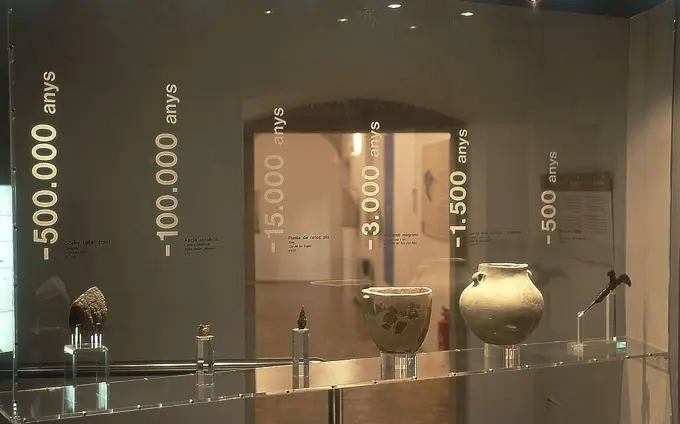
A collection of historical artifacts including pottery, metal tools, and clay fragments showcasing unique designs and materials from different ancient cultures.
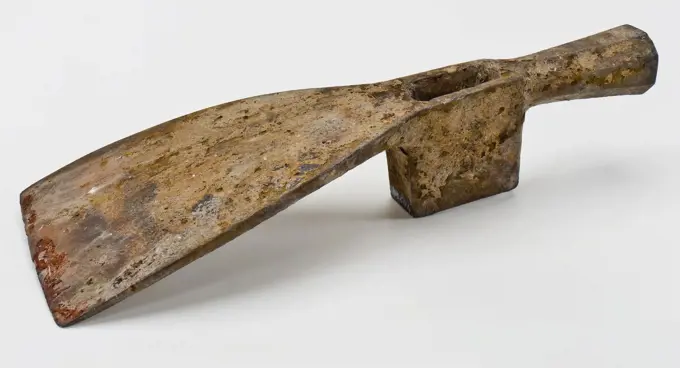
Tiller with hammerhead, octagonal, drawbar tool equipment soil find iron metal, forged Drawbar with slightly curved chopping blade and conical hammer head octagonal in cross section. Pretty sharp cutting edge. broad leaf and narrow head. Tube with rectangular hole for the seat of the stalk archeology Rotterdam City triangle Oudehaven yard construction woodworking carpenter craft shipbuilding archaeological find in the soil Oude Haven Rotterdam.
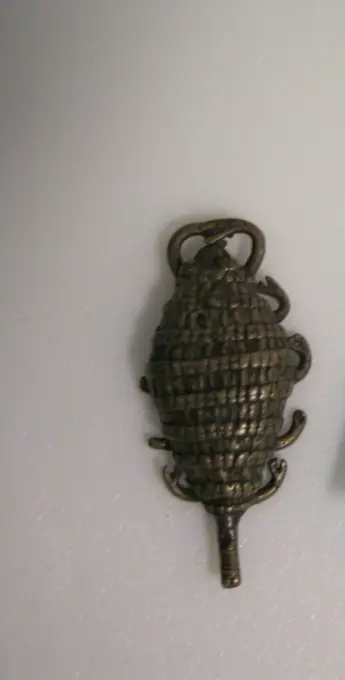
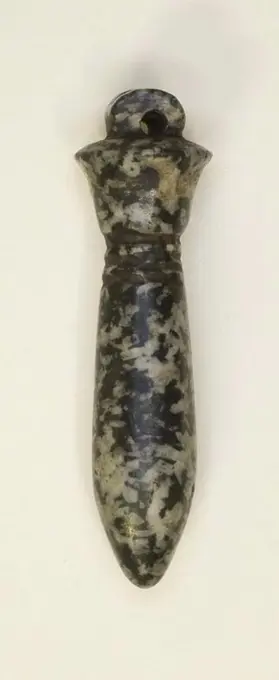
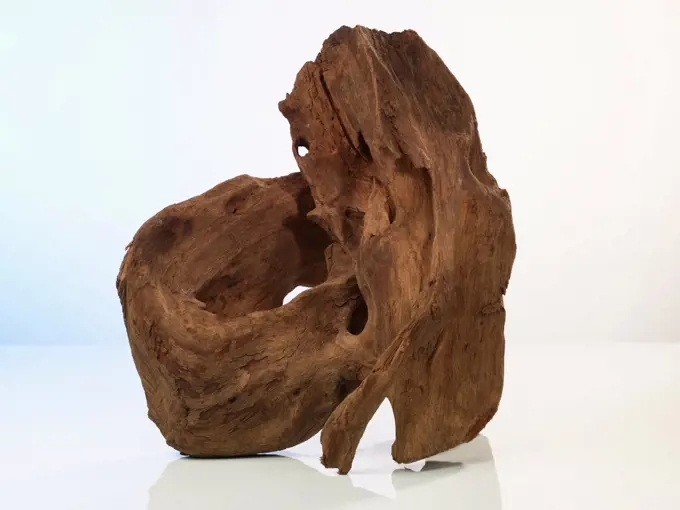
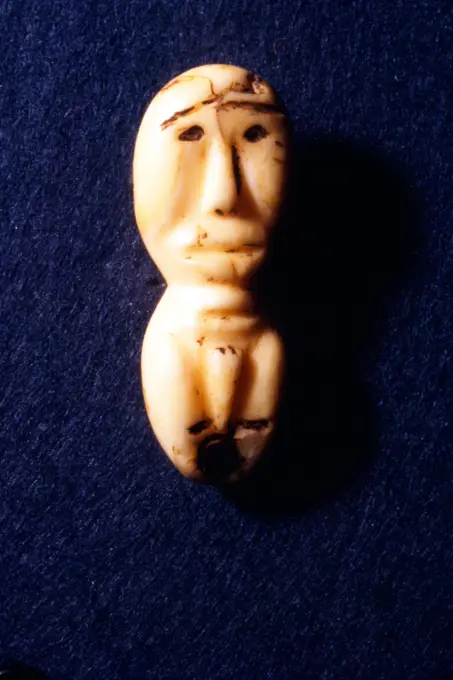
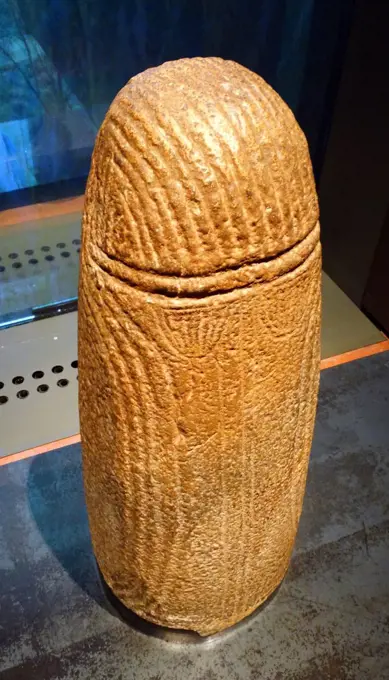
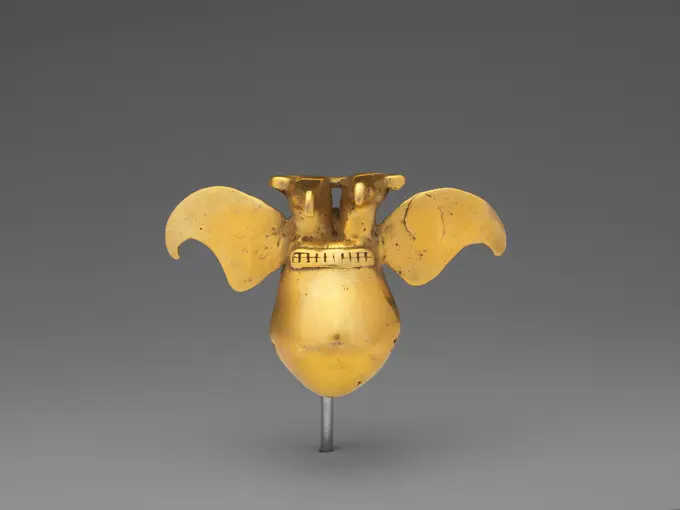
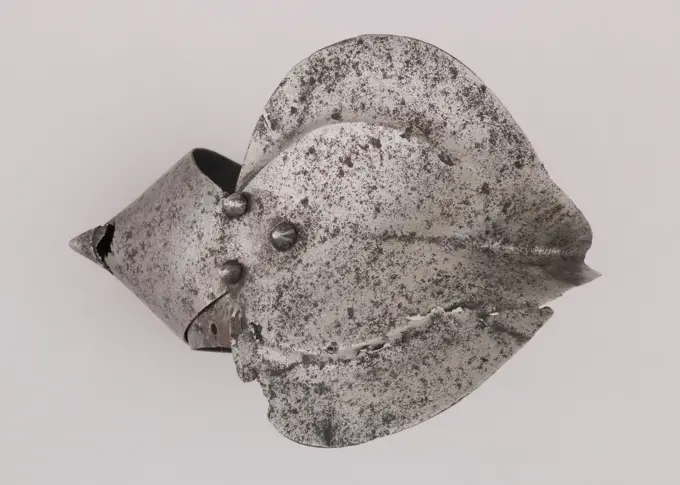
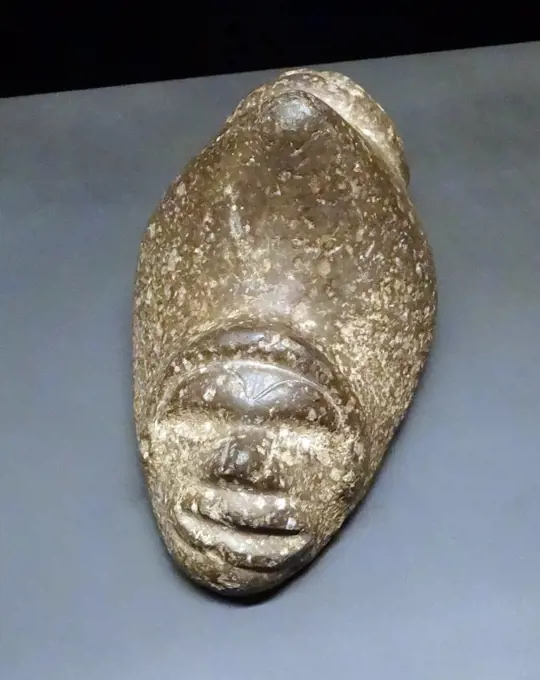
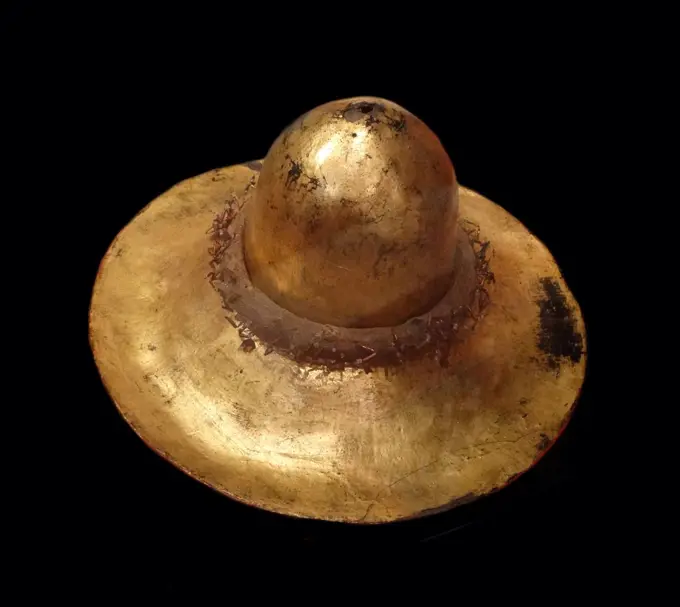
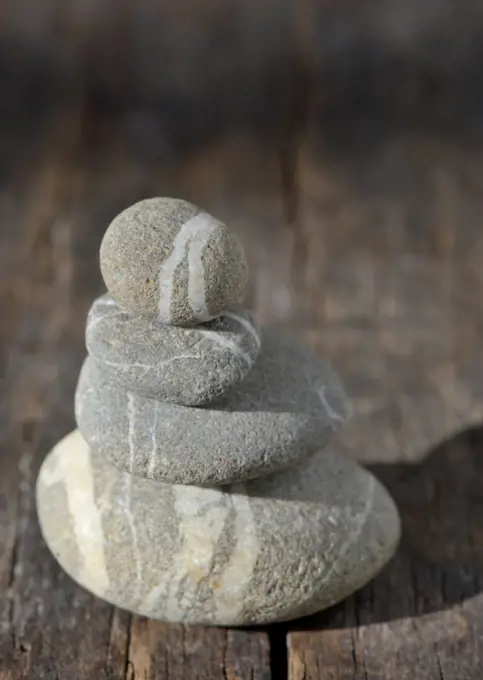
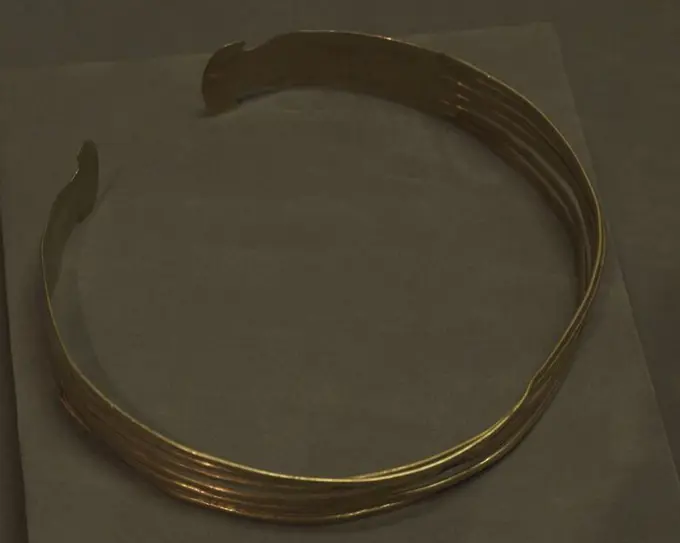
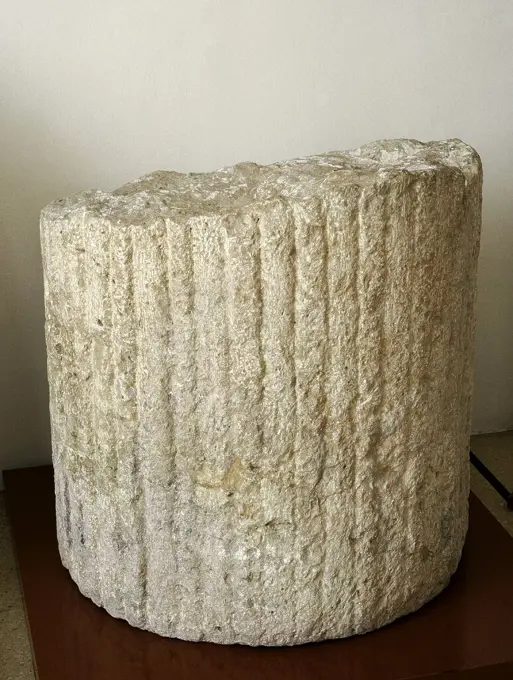
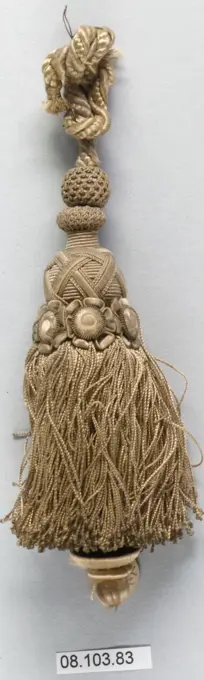
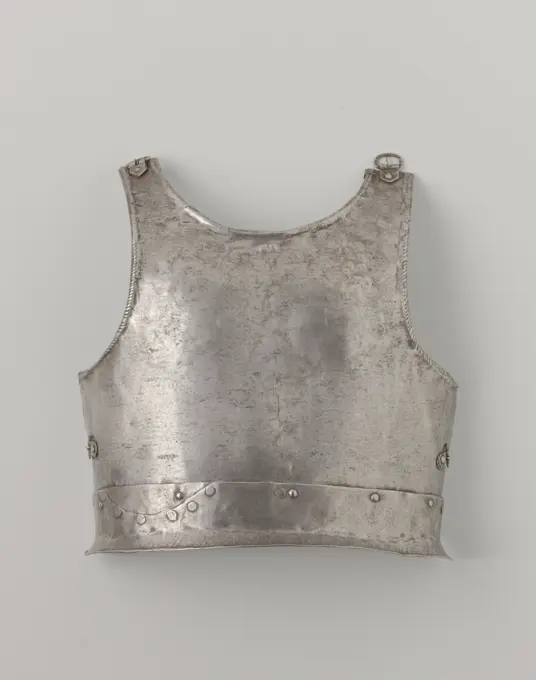
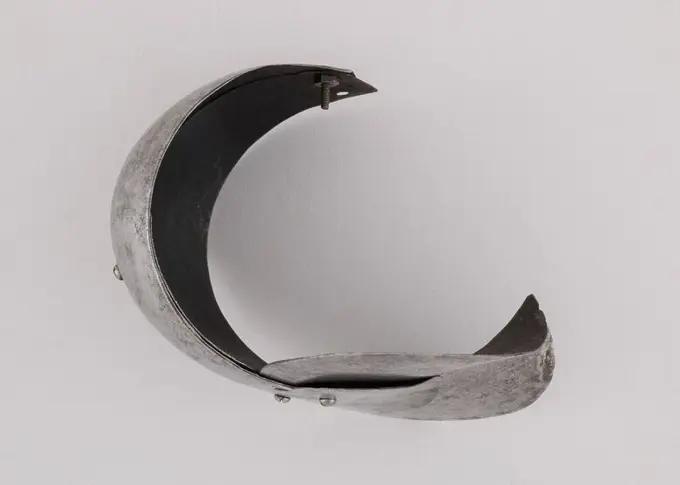
Priest's Hat Made 1890-1900 Japan. Priestís hats in a form similar to this resplendent example from the late 19th century are still worn today. The pattern of the fabric consists of two slightly different peony blossoms framed within scrolling vines and leaves. The use of deluxe kinran fabric, consisting of gilt-paper strips and silk, and the incorporation of a lining of purple, a color used only by high-ranking Buddhist officials, suggest that this hat belonged to a priest of high rank.. Silk and gilt-paper strip; plain weave with secondary binding warps and supplementary patterning wefts .Fragment of red earthenware piggy bank, the snout, piggy bank piggy bank holder earth discovery ceramic earthenware glaze lead glaze, hand turned hand shaped glazed baked Fragment of red earthenware piggy bank. Eyes consist of two pierced holes. On the nose two holes and two stripes archeology Rotterdam City Center Stadsdriehoek Schielandshuis waste saving child change money Soil discovery: Schielandshuis during restoration.Goldweight Scorpion, 19th-20th century, 3/8 x 1 x 2 in. (0.95 x 2.54 x 5.08 cm), Brass, Ghana, 19th-20th centuryAmulet of a Papyrus Column. Egyptian. Date: 1070 BC-656 BC. Dimensions: H. 3.5 cm (1 3/8 in.); diam. 1 cm (3/8 in.). Stone. Origin: Egypt. Museum: The Chicago Art Institute, Chicago, USA. Author: Ancient Egyptian.cauldron, Monographic Museum of Pollentia, Alcudia, Mallorca, Balearic Islands, Spain.Turf root on white backgroundEskimo Carving Artist: Unknown.Fragment of a Cup 9th century. Fragment of a Cup 447648Górny i dolny fragment kapitelu zrekonstruowany do pełnej formy.. warsztat nubijski, workshoputiles de cocina, Museo arqueologico Son Fornes, sala de época talayótica (1300-123 a. C.), Montuiri, Comarca de Es Pla, Mallorca, Spain.Sandstone monolith, a geological feature consisting of a single massive stone or rock, with carvings from Mali, West Africa. Dated 280 AD.Cicada on Folded Lotus LeafDouble-Headed Eagle Bell 11th-16th century Veraguas Avian pendants cast in gold, called águilas (eagles) by the invading Spanish, were symbols of mythological power in the region now known as Veraguas, Panama. Leaders in the Caribbean region widely exchanged such pendants and wore them to emulate the natural prowess of birds of prey. The supernatural birds have fanciful, hybrid features such as neck ornaments, elaborate crests, and other protuberancesthat complicate the identification of a recognizable species. The sound effects made by the pendants were important: some birds have bells for eyes, while others have bell chambers for bodies. In ceremonies the audience could have heard a ruler before they saw him or her.. Double-Headed Eagle Bell. Veraguas. 11th-16th century. Gold (cast). PanamaNaczynie w kształcie byka. unknown, authorElephant Ivory Oliphant from Egypt. Dated 11th CenturyElbow Defense (Couter) ca. 1430-40 Italian This is part of a large find of medieval armor discovered in 1840 in the ruins of the fortress of Chalcis, on the Greek island of Euboea (then a Venetian colony called Negroponte). The fortress had been captured and destroyed by the Turks in 1470. Now divided largely between the Ethnological Museum, Athens, and The Metropolitan Museum of Art, the Chalcis hoard contains many rare and unusual elements of fourteenth- and fifteenth-century armor. Of particular importance are the variety of headpieces and the many fragments of brigandines (armor for the torso constructed of small plates riveted to layers of fabric), some of which retain portions of their original velvet covering. The Chalcis armor provides a unique picture of the armament used in the Aegean, one of the easternmost military outposts of the Venetian empire.. Elbow Defense (Couter) 23183Male Haniwa Head, c. 500-600. Japan, Kofun period (c. AD 300-710). Earthenware with ocher wash; overall: 28 cm (11 in.).Minature figurine, 1500 BCE, 1 5/8 in. (4.1 cm), Earthenware, Mexico, Pre-ClassicSpeelhuisensning from Thailand worth a Fuang, 1760-1871 ,, 1760 - 1871 coin Round porcelain playing house pencil, which is also used as a mint. Front: between two branches two Chinese characters. Rail side: two Chinese characters.  porcelainWeaponry`s gladiator. Greva.Pointed stone from the Taíno culture. Created by the Arawak people, the indigenous peoples of the Caribbean. Dated 16th CenturyTraditional Mexican Patterned Ceramic Day of the Dead Skull Sculpture. Traditional Mexican Patterned Ceramic Day of the Dead SkullBead; Panticapaeum (Kerch), Crimea; perhaps 9th - 10th century; Glass; 2.3 x 2 cm (7,8 x 13,16 in.)Statuette of the god Osiris. Late Period. 26th dynasty. 664-525 BC. Shale and gold. Depicted standing, with mummified body and wearing the Atef Crown. Calouste Gulbenkian Museum. Lisbon, Portugal.Haifischzahn Zahn vom Hai Copyright: xZoonar.com/Terricx 909979Júpiter, , marmol, siglo II d. C. , El Arrabal, Museo de la Romanización, Calahorra, La Rioja , Spain, Europe.Early black-figure Attic skyphos-krater depicting Prometheus chained to a high post. Hercules, picture opposite him, readies his bow to shoot an arrow at the eagle.Amulet of the God Thoth Holding an Offering Table ( ) 664 BCE-332 BCE Egypt. Faience . Ancient EgyptianBronze Figure of a Lepidotus Fish  c. 712-332 B.C.  Roman Art Hammered Silver Rattle Beaker 8th-mid-16th century Peru; north coast (). Hammered Silver Rattle Beaker 309016Silver Flagon. Dated 17th CenturyGallonJar.   Maker: Henry Swopes Pottery, American, ca. 1850-1886Weight, before 1921. Colombia. Pottery; diameter: 11.5 cm (4 1/2 in.); overall: 3.9 cm (1 9/16 in.).Stone Oil Lamp 9th-10th century The carving of utensils and other objects from soft stones is is an extremely ancient tradition in the Near East. Steatite and other related talcs (the English word is of Persian origin) are easy to carve, relatively strong and non-brittle, and are impervious to fire. Many of medieval Nishapur's stone utensils demonstrate a high degree of artistic merit, despite having been fashioned from a lowly material and serving a utilitarian function. These pieces often have powerfully sculptural forms with silhouettes that take the form of beautiful two-dimensional patterns. This footed lamp of gray "Mashhad" stone is cubic in shape, with the sides deeply carved into panels leaving a thin-walled interior. The carved panels that also form the legs of the lamp on the four corners, are Y-shaped in cross-section and create ornamental leaf and trefoil forms around the bowl.. Stone Oil Lamp 454757BOTIJO DE BODA - CERAMICA SIN VIDRIAR. Location: ALFARERIA. Ocaña. Toledo. SPAIN.Steps ornament. Jade, China, IV-Iie s. av. Paris, Cernuschi museum. Asian art, Chinese art, Asian civilization, Chinese civilization, JadeMinister ceremonial hat with gold lacquer, Burma. Dated 1860Cow amulet ca. 3000 B.C. (). Cow amulet 324827'Votive Plaque with a Representation of Standing Buddha'. Siam (now Thailand). Bangkok art, 19th century. Dimensions: h. 8 cm. Museum: State Hermitage, St. Petersburg.Standing draped woman (kore) late 6th-early 5th century B.C. Etruscan Draped female (kore) in two pieces.. Standing draped woman (kore). Etruscan. late 6th-early 5th century B.C.. Amber. Late Archaic. Miscellaneous-AmberFresh Sole Fish Solea Solea Against White BackgroundGoat and eagle head, bronze, Roman period, Evora Museum, Evora, Alentejo, Portugal, Europe.A beautiful fresh orange pumpkin is cylindrical in shape against a dark concrete background. Harvesting. A beautiful fresh orange pumpkin against a dark concrete backgroundStones pyramid on wooden symbolizing zen, harmony, balanceTurbot on a work surfaceTreasure of Cicere. Ca. 2000 BC. Chalcolithic-Bronze Age. Gold. Cylindrical collar with parallel bands cut in a flat gold sheet. From Santa Comba, La Corua province, Galicia, Spain. Archaeological and History Museum (San Anton Castle). A Corua, Galicia, Spain.. Tea cup from stoneware, covered with a white sludge and a gray glaze. On the outside wall five unidentified ingrangled characters and decorative tires. On the bottom a band with stylized flowers. The budget decoration is filled with a white sludge (Mishima technique). Old label on the bottom with 'W705'. Satsuma.Tektite glass on cotton'Lamb on an Altar'. Roman Work after the Hellenistic Models. Dimensions: height: 28,4 cm. Museum: State Hermitage, St. Petersburg.Fragment of column. 1st-2nd century AD. Local stone. Tarragona. Spain. National Archaeological Museum. Tarragona. Spain.Water drip for diluting ink unknownTassel French 19th century View more. Tassel. French. 19th century. Silk. Textiles-Trimmingsidol, late neolithic, 4000-3000 BC, Evora museum, Evora, Alentejo, Portugal, Europe.Mannequin wooden hand, horns with fingersBottle in the Shape of a Date. Roman; Levant or Syria. Date: 101 AD-200 AD. Dimensions: H. 8 cm (3 1/8 in.); diam. 3.8 cm (1 3/8 in.). Glass, mold-blown technique. Origin: Syria. Museum: The Chicago Art Institute, Chicago, USA. Author: ANCIENT ROMAN.Amulet of a Cross. Byzantine. Date: 300 AD-400 AD. Dimensions: 2 × 1.5 × .5 cm (3-4 × 9/16 × 3/16 in.). Glass. Origin: Egypt. Museum: The Chicago Art Institute, Chicago, USA.Back plate of Kuras, 1499 - 1699  Back plate of Kuras, Iron, Blank, the arm and neck exitings as well as the lower edge of the lumbar strip of high-quality tilted around. Two iron buckles on both sides of the neck cut. Two iron buckles on the underside of both arm cutings. The lumbar strip has been clank on the back plate, the left side is lapped. The inside of the back plate is painted black. Europe whole: Iron (metal)Magical figure of captive ca. 1981-1650 B.C. Middle Kingdom. Magical figure of captive. ca. 1981-1650 B.C.. Travertine (Egyptian alabaster). Middle Kingdom. From Egypt, Memphite Region, Lisht North, cemetery south of pyramid (location not recorded), Pit 485, MMA excavations, 1913-14. Dynasty 12-13Escutcheon of lock 1740-60 German. Escutcheon of lock 186878 German, Escutcheon of lock, 174060, Iron, 8  3 1/2 in. (20.3  8.9 cm). The Metropolitan Museum of Art, New York. Gift of Henry G. Marquand, 1887 (87.11.242)Elbow Defense (Couter). Culture: Italian. Dimensions: H. 5 1/4 in. (13.3 cm); W. 4 3/4 in. (12.1 cm); D. 5 1/2 in. (14 cm); Wt. 7.5 oz. (212.6 g). Date: ca. 1430-40. Museum: Metropolitan Museum of Art, New York, USA.INDUSTRIA LITICA Y CERAMICA PREHISTORICA. Location: MUSEO DE HISTORIA DE LA CIUDAD. GERONA. SPAIN.Life Buoy, H.W. Burman, 1870 - 1885 life-saving equipment Large oval floating belt, made of textile grumbled with a wooden framework and cork and straw. Two cables run parallel between the extremes of the oval, and two boards run over the cables to which a net is attached. This net is closed under with a cone -shaped float, which hangs down with the point. In the net a man can stand with his feet on the flat side of the cone -shaped float. This life belt was called "Kangaroo Life Buoy" by the inventor. Flemington (Australia) wood (plant material). iron (metal). textile materials. leather. rope. cork (bark).Carved stamp, late 18th-19th century, Unknown Japanese, 1 5/16 × 3 × 3 in. (3.33 × 7.62 × 7.62 cm), Wood, Japan, 18th-19th centuryOjime 19th century Japan. Ojime. Japan. 19th century. Edo period (1615-1868). OjimeMoai statue Ahu Ko Te riku, the only topknotted and eyeballed Moai on the Island, illuminated at sunrise, Rapa Nui Easter Island, UNESCO World Heritag...Bronze skull, Johannis cemetery, Nuremberg, Franconia, Bavaria, Germany, EuropeCOSTA RICA, SAN JOSE, NATIONAL MUSEUM, INTERIOR, PRE-COLUMBIA JADE JEWELRYCABEZA DEL DIPYLON PARTE POSTERIOR - CABEZA DE KOUROS - 610 AC. Location: MUSEO ARQUEOLOGICO-ESCULTURA. ATHENS. GREECE.Old soccer ball in the pavement yard