Artifacts from Ancient Cultures

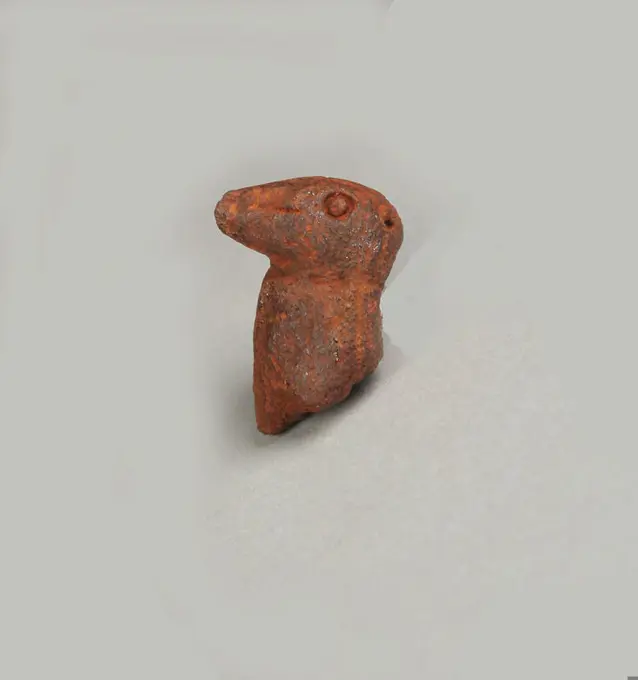
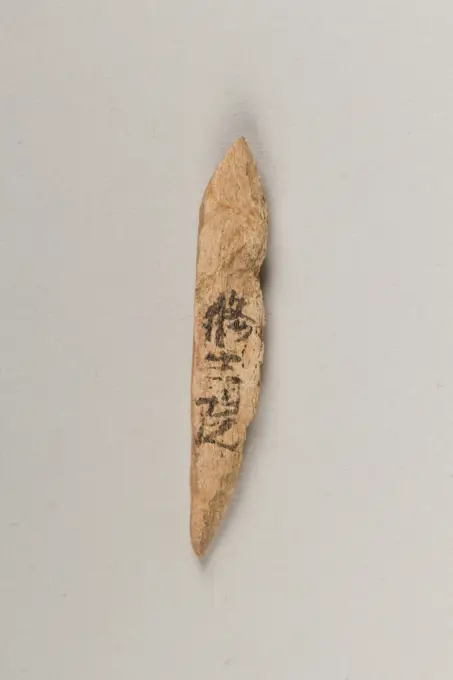
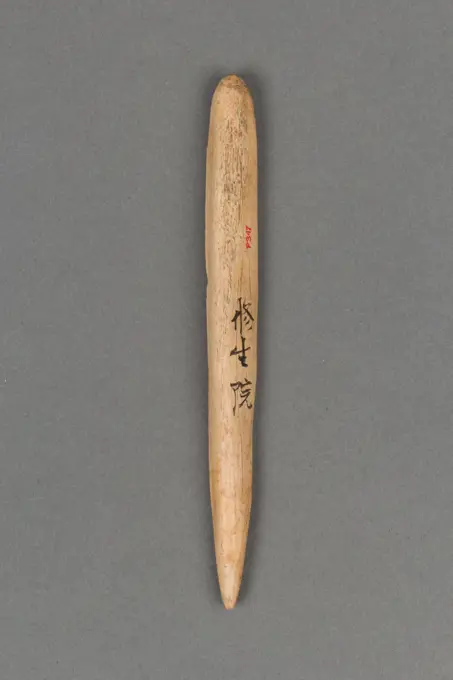
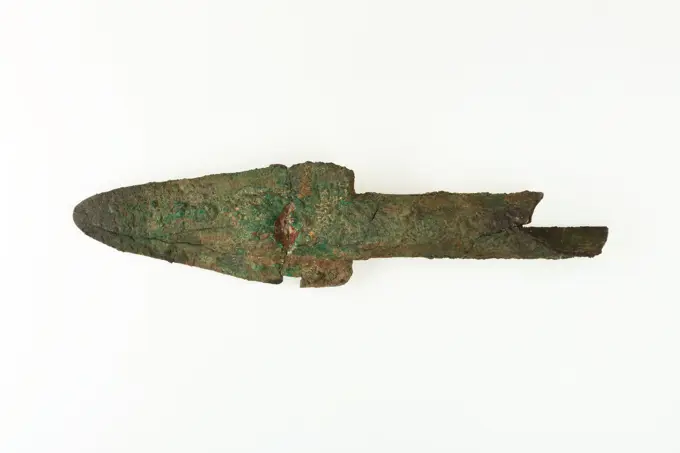
An array of ancient tools and decorative items including arrowheads, harpoons, and door knockers from different historical periods and regions.

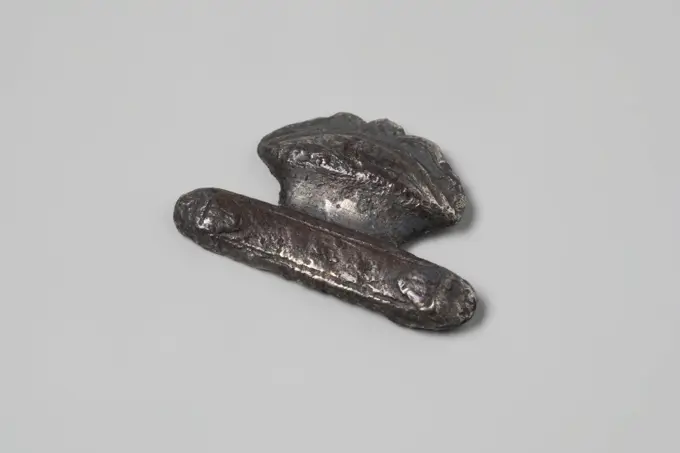
Can from the wreck of the East Indians Hollandia, Anonymous, 1700 - in or before 1743  Jug, id. 76-10H66, squashed, handle on lid missing, marks id. 76-10H66. Netherlands tin (metal)   Second
Can from the wreck of the East Indians Hollandia, Anonymous, 1700 - in or before 1743 Jug, id. 76-10H66, squashed, handle on lid missing, marks id. 76-10H66. Netherlands tin (metal) Second
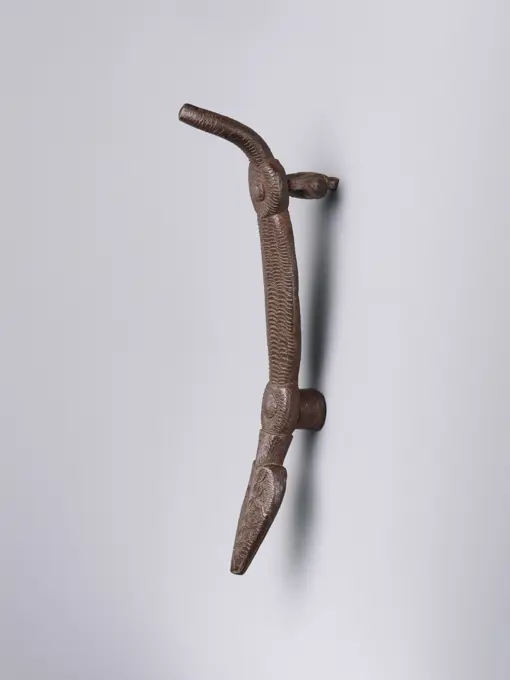
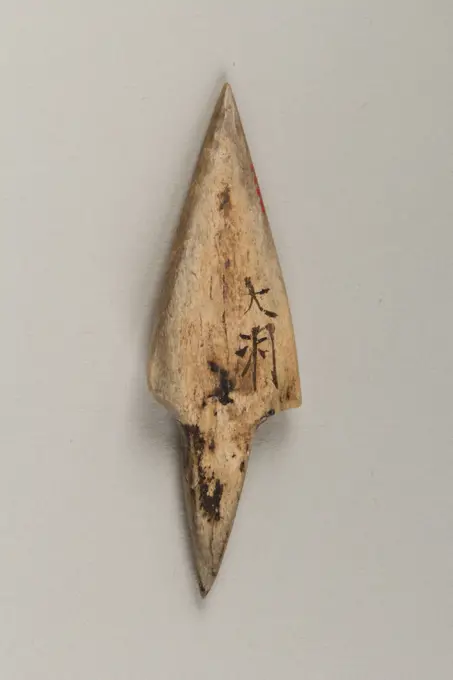
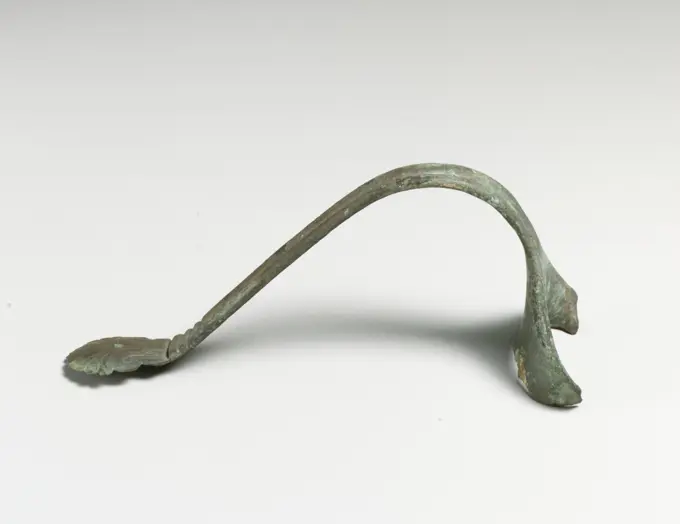
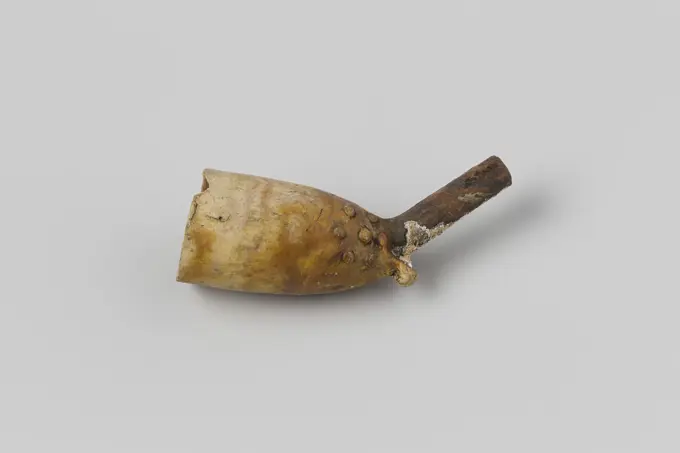
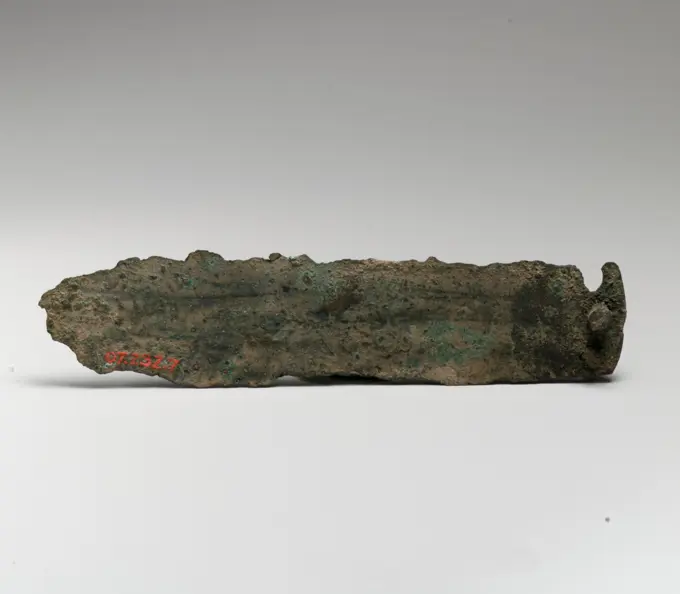
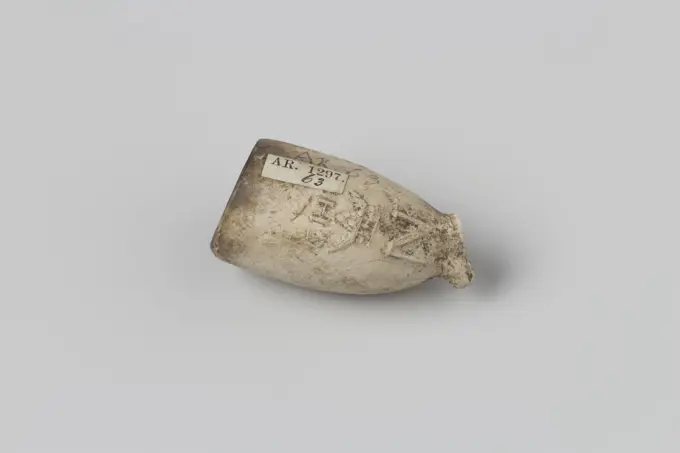
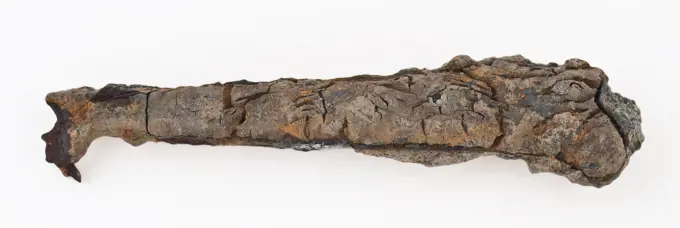
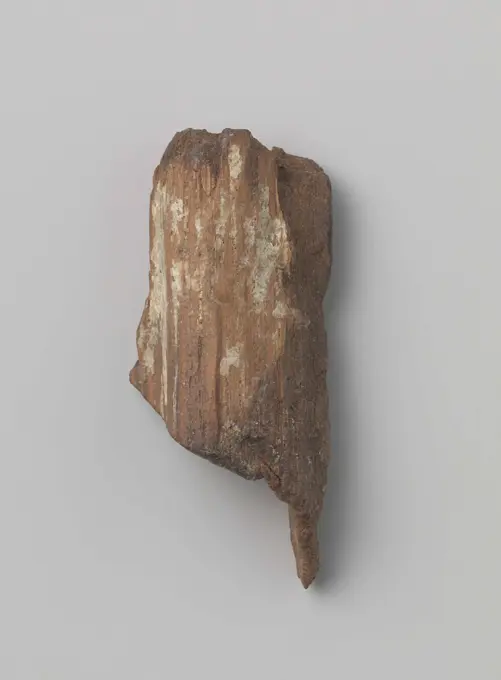
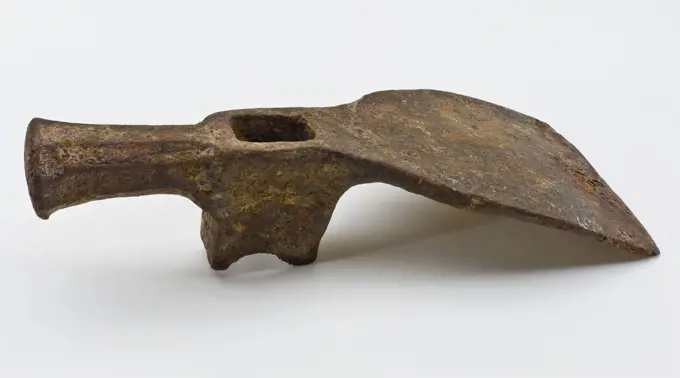
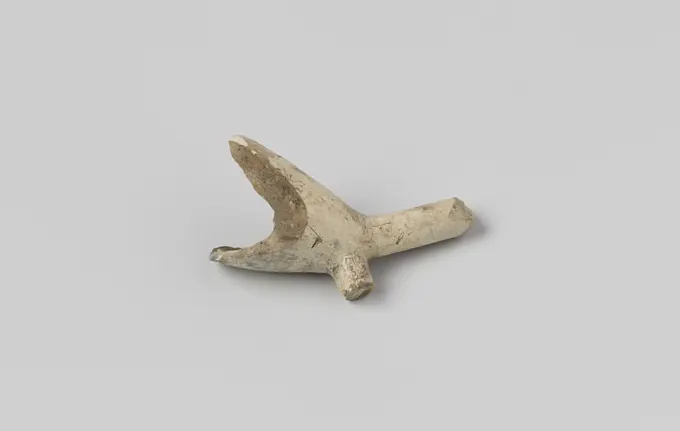
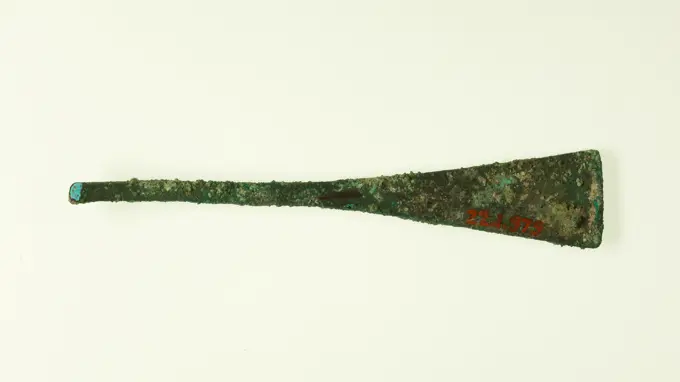
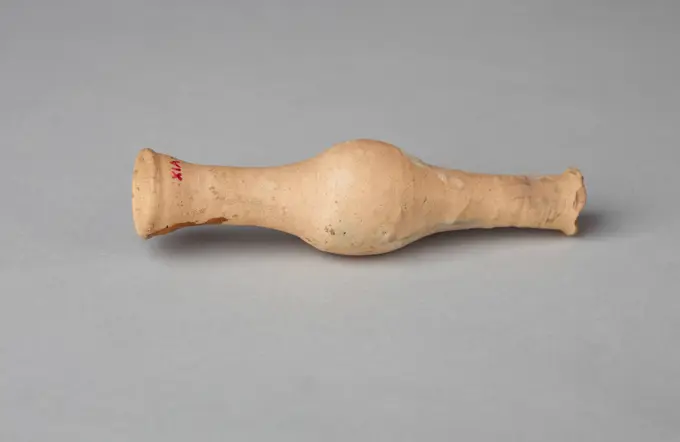
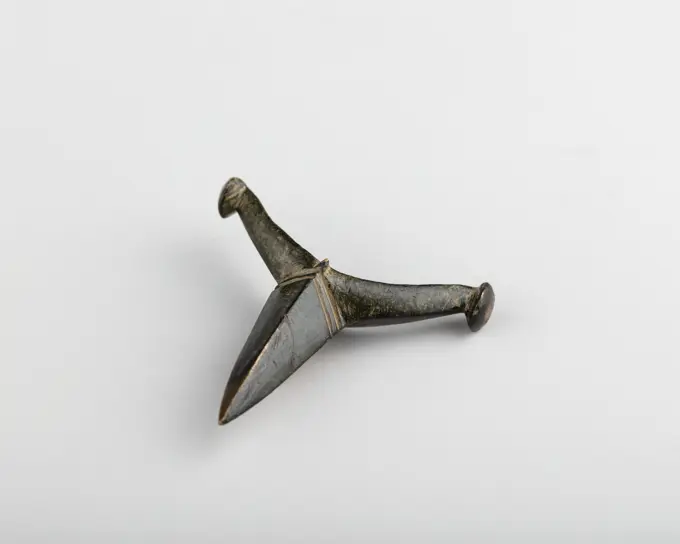
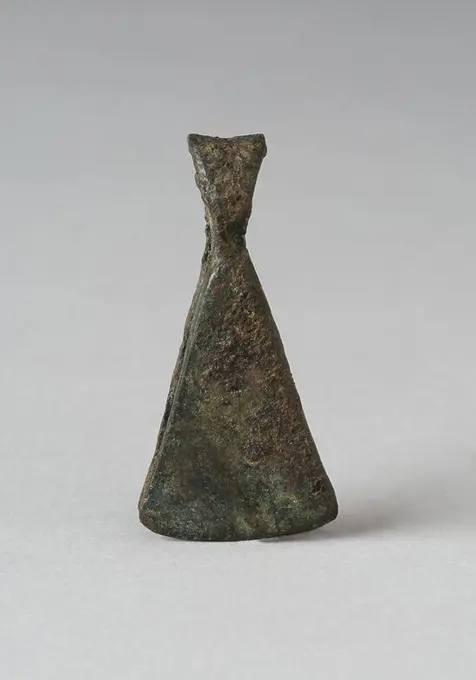
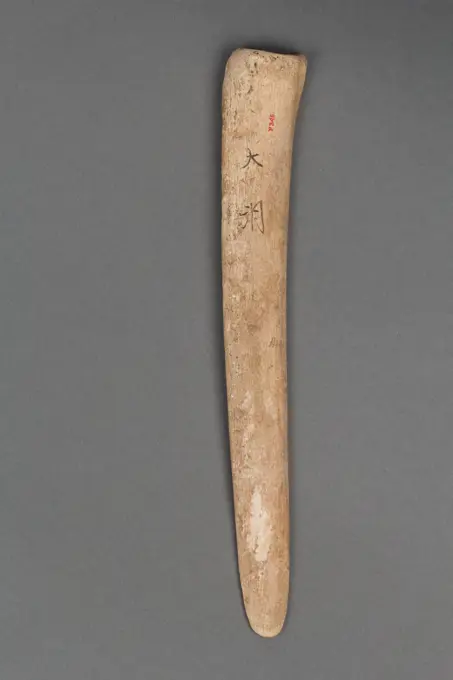
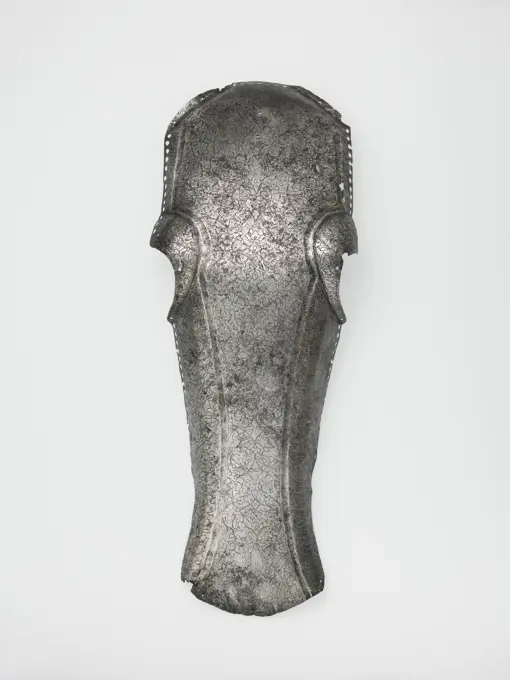
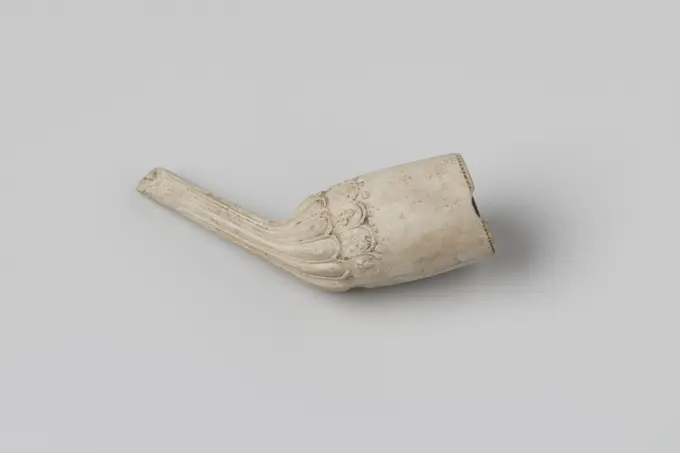
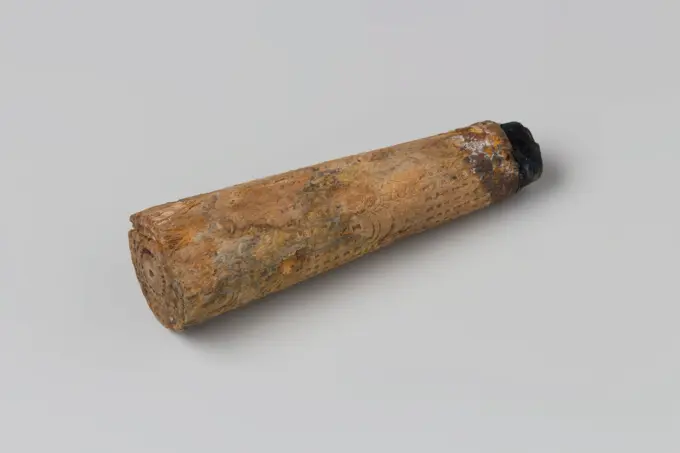
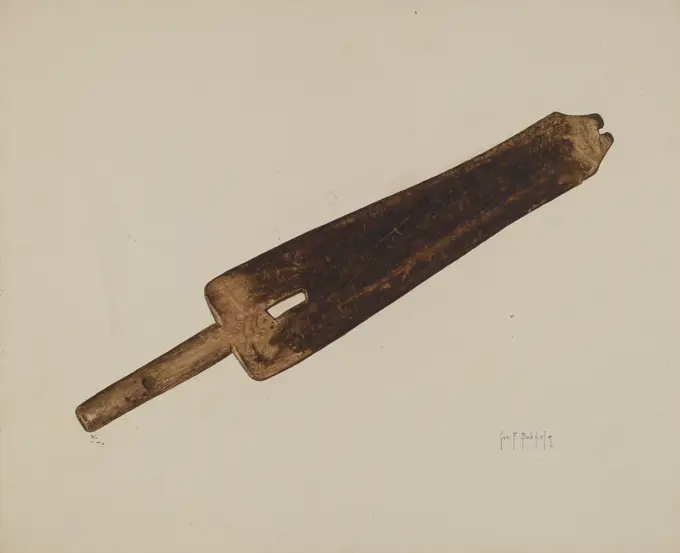
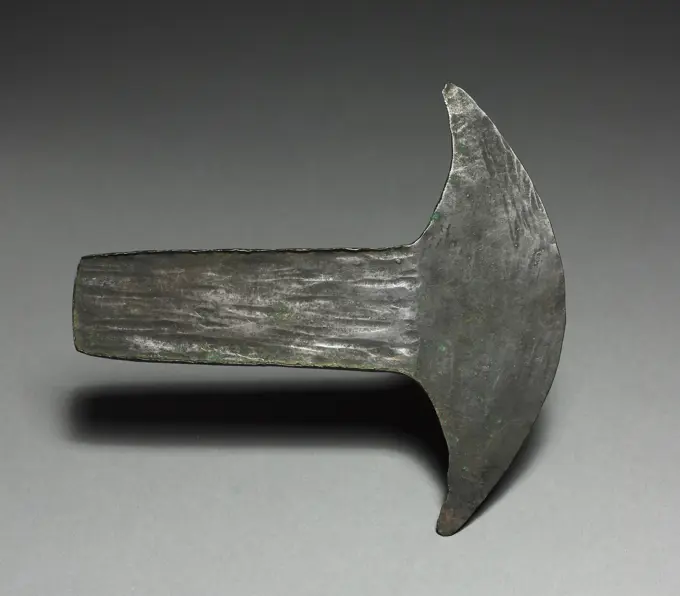
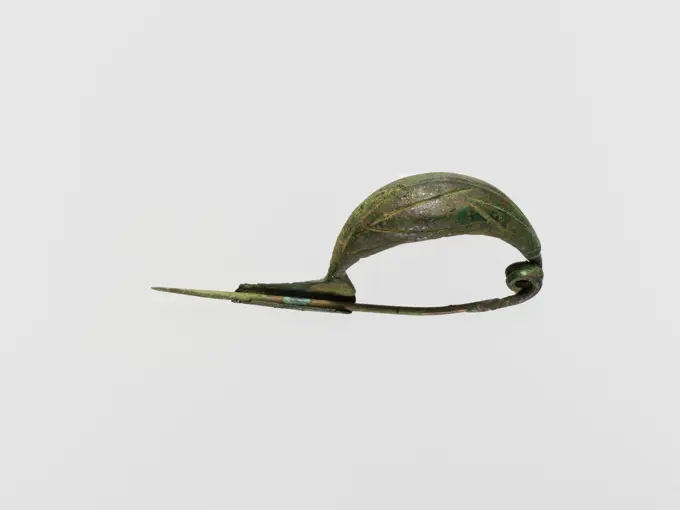
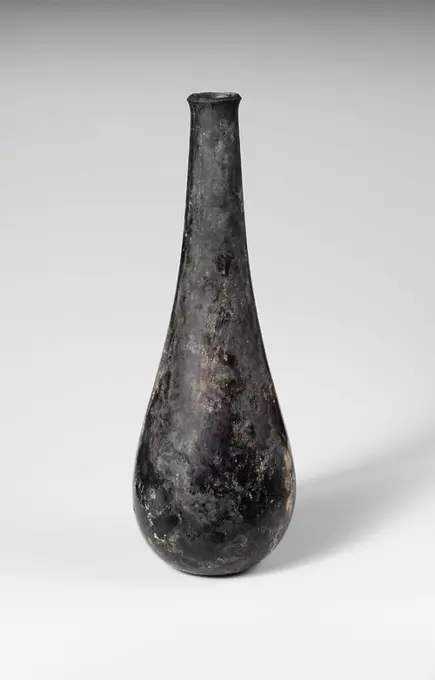
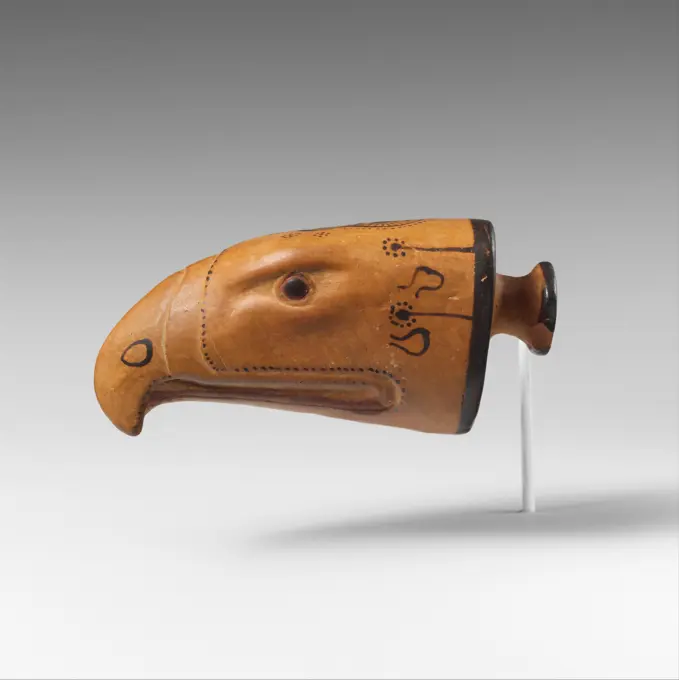
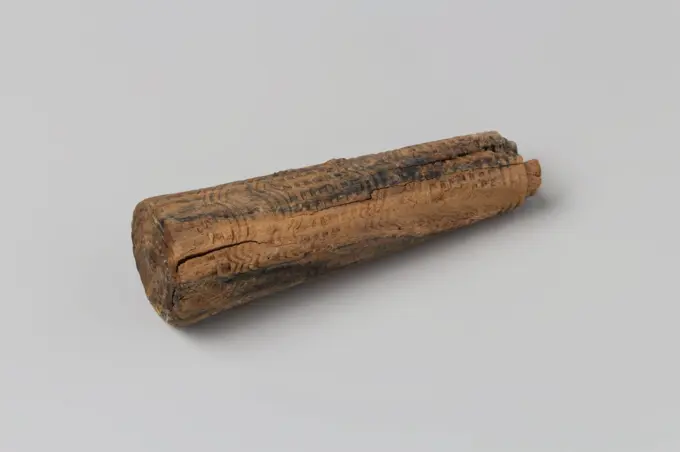
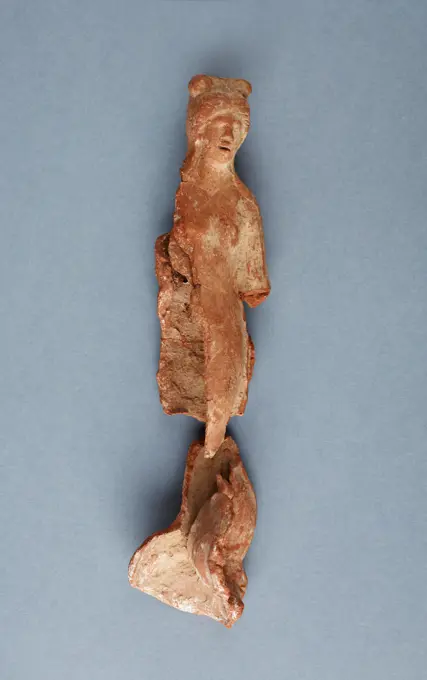
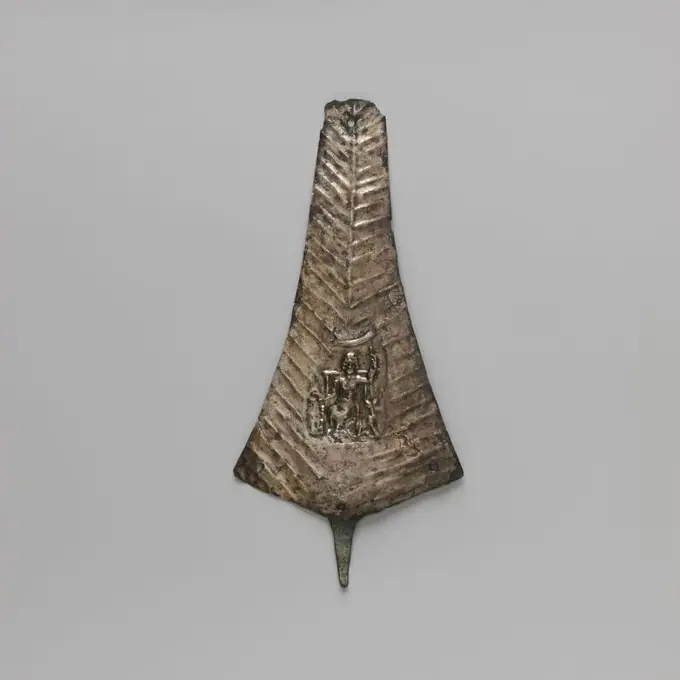
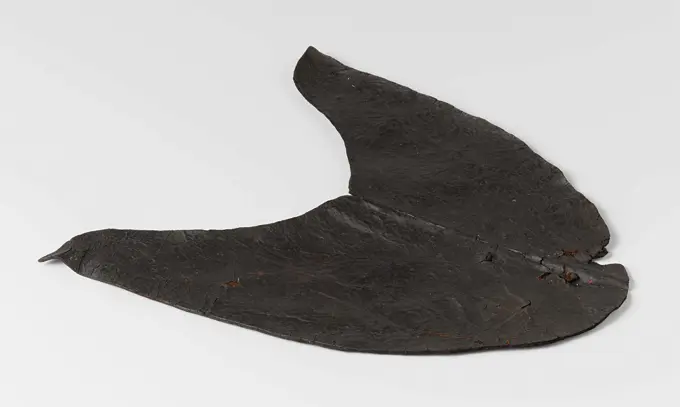
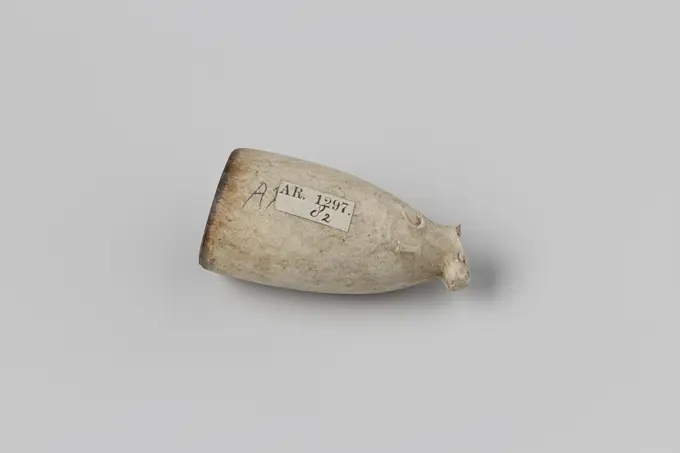
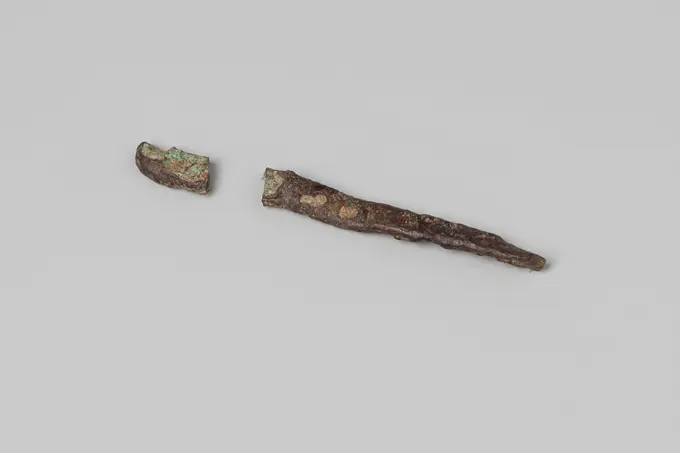
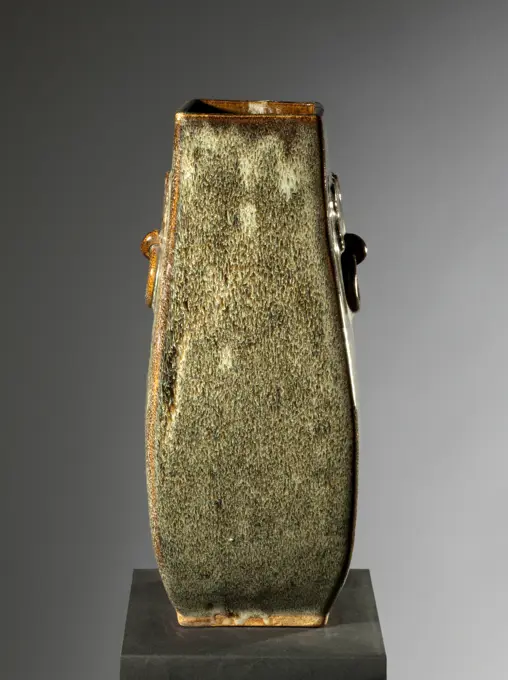
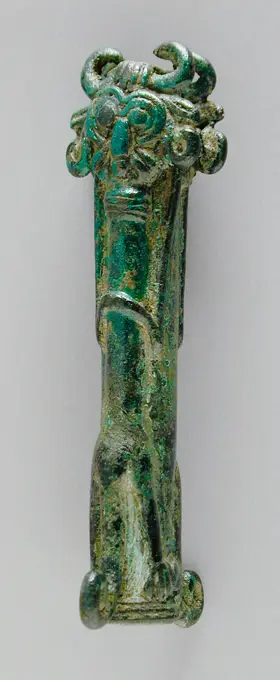
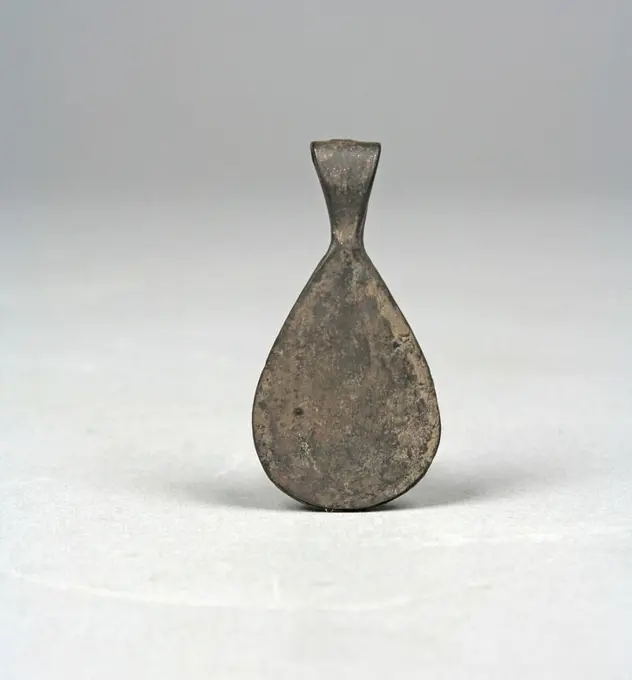
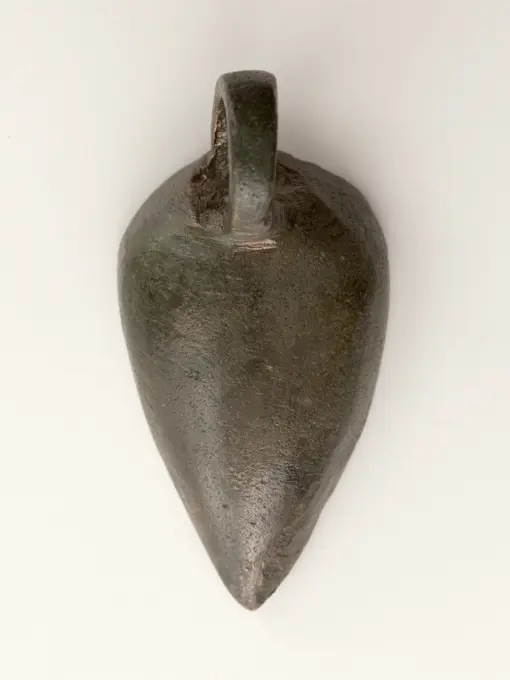
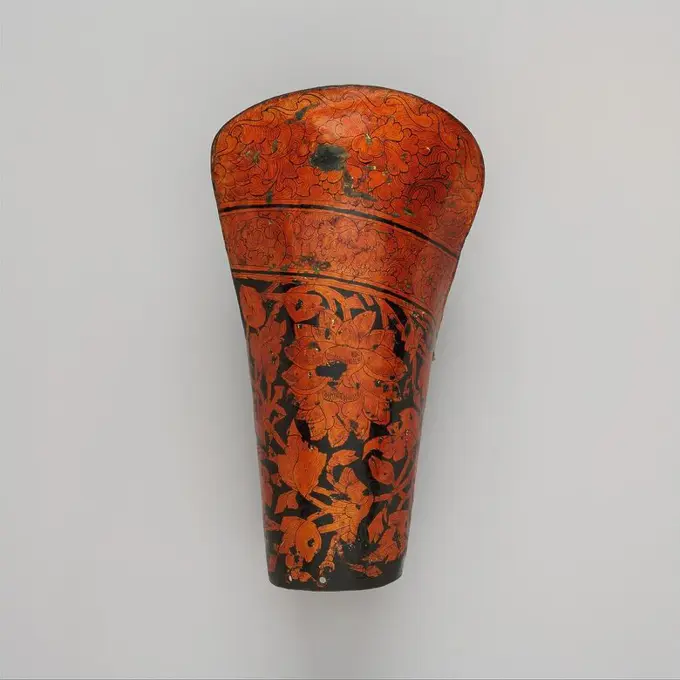
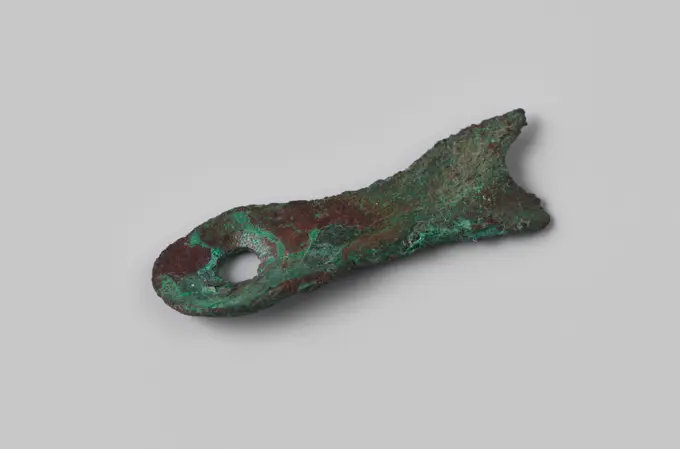
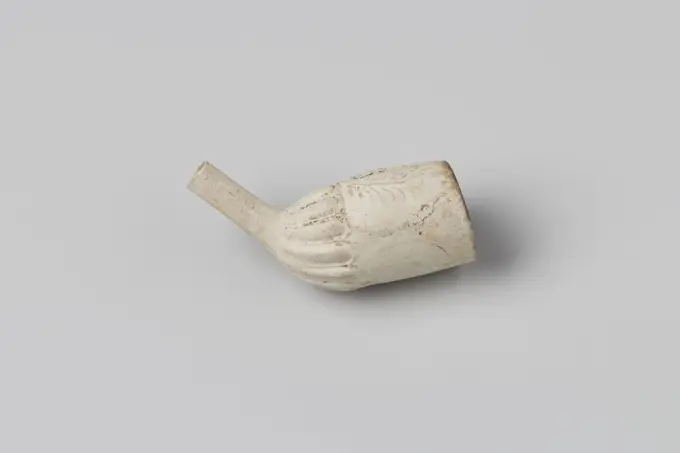
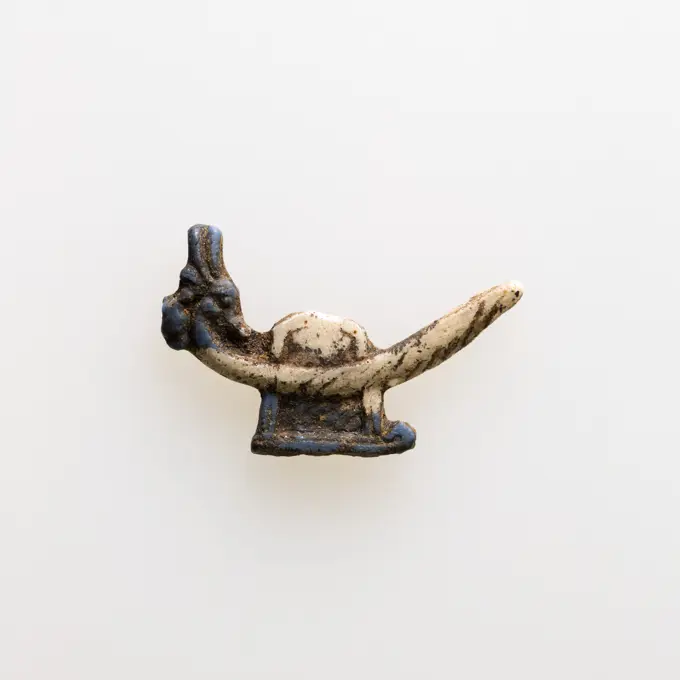
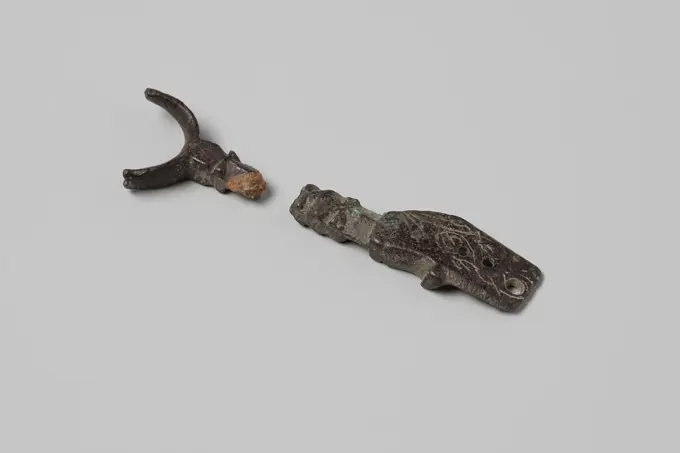
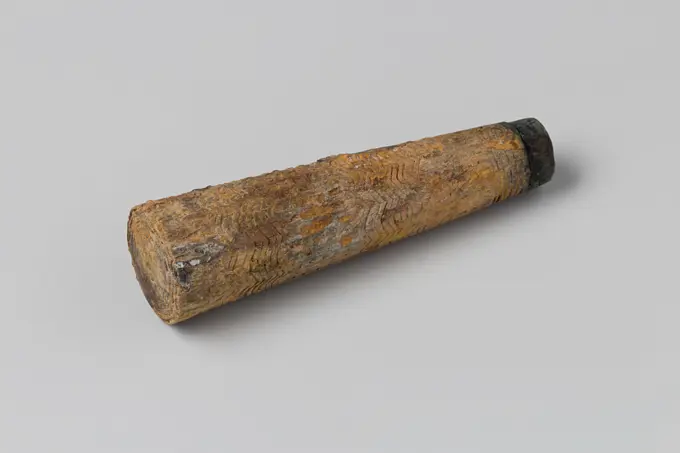
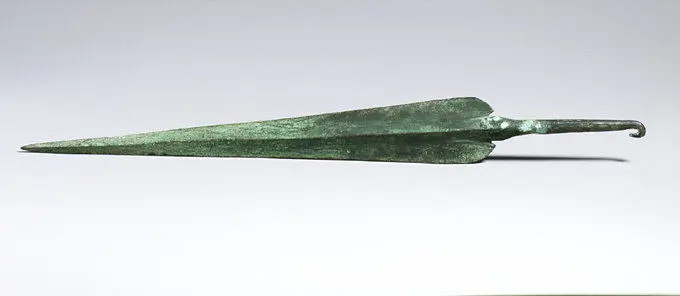
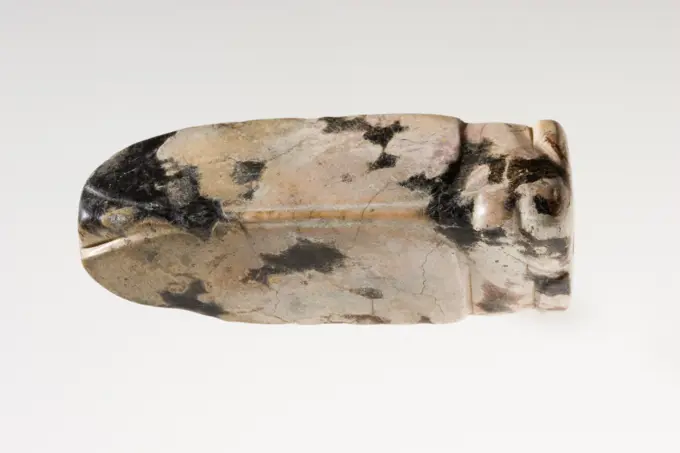
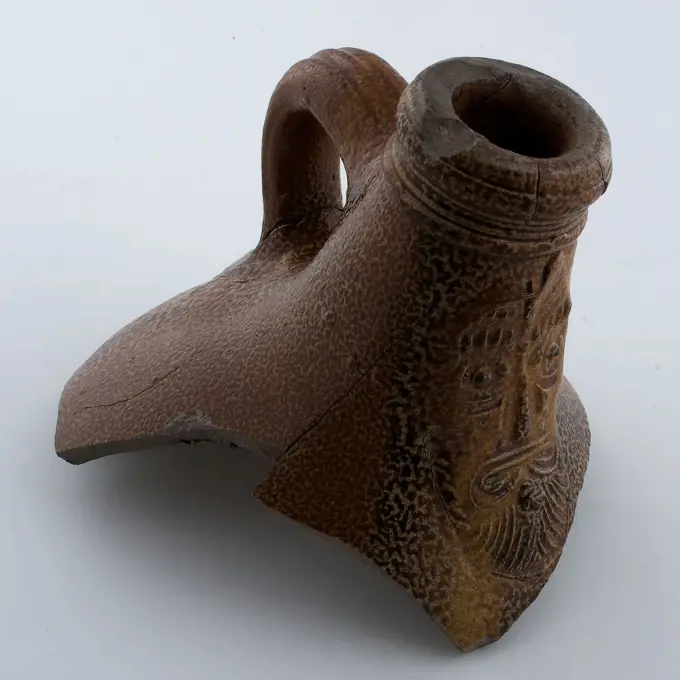
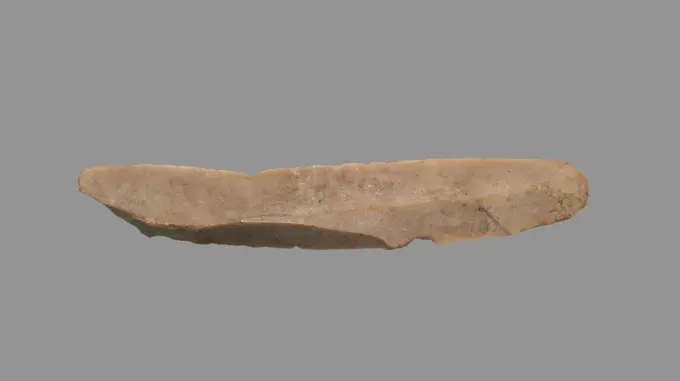
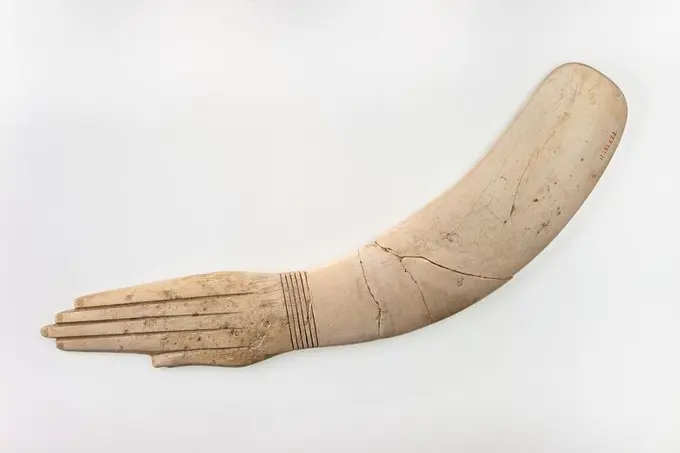
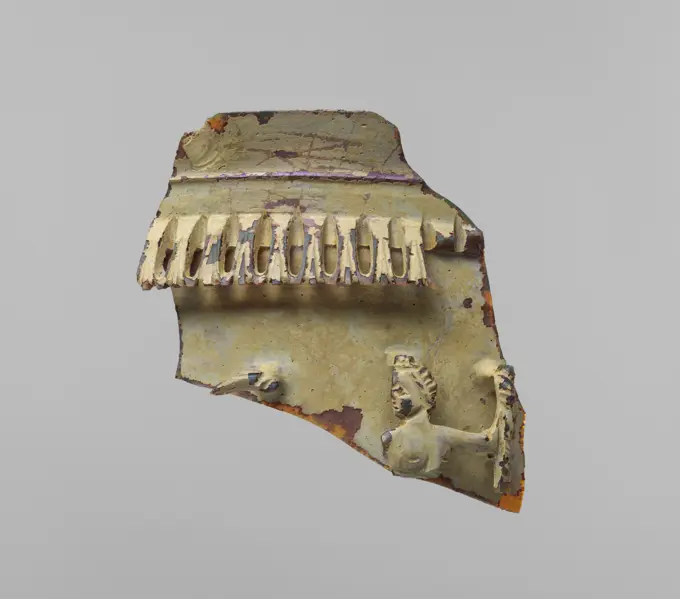
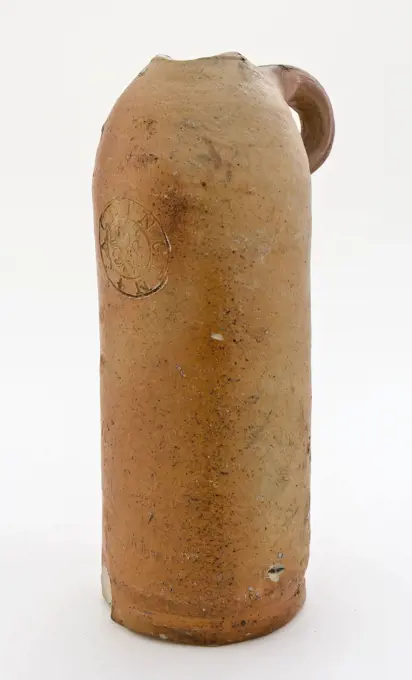
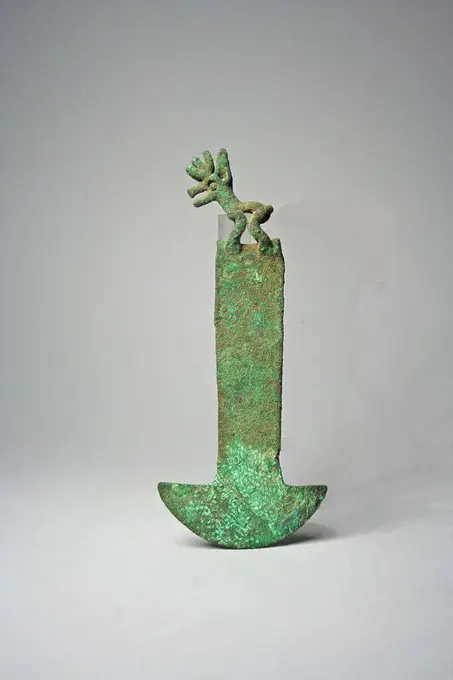
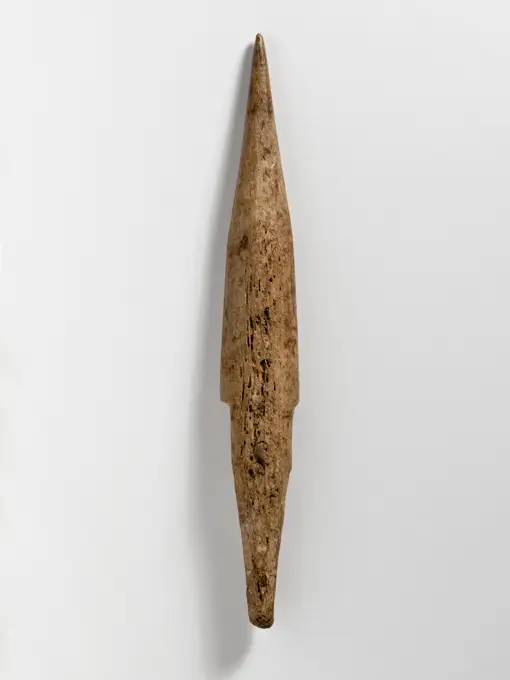
Arrow point ". OS. Dynasty of Shang (1765 - 1122 BC), China. Paris, Cernuschi museum. 101270-24 Asian art, Chinese art, extreme-East art, Shang dynasty, prehistoric time, Shang time, bone, prehistory, prehistoryDoor knocker in the shape of a crocodile-like creature 15th or 16th century Spanish The later Middle Ages was practically a second Iron Age, producing vast quantities of armor, weaponry and all manner of functional objects from nails to elaborate strap work hinges, ornate locks and household tools. A highly specialized craft, the best ironsmiths took pride in bringing decorative refinement to their works often elaborating surfaces that could not be seen and transfiguring the functional into the figural. These door knockers are fine examples of the wit, humor, and skill the best ironsmiths could bring to their products.This door knocker is in the shape of a crocodile-like creature with a long elevated tail (the end broken off) and an elongated snout. The attachment tang, riveted through the hips and striker, riveted through the shoulders, replace the legs. The surface is textured with a series of parallel chisel marks.. Door knocker in the shape of a crocodile-like creature. Spanish. 15Harpoon head Japan The Jōmon period is the earliest period in Japanese history, lasting from roughly 14,000 to 300 BCE. The Jōmon people were primarily hunter-gatherers, hunting land animals and gathering vegetables and nuts on the land as well as hunting and fishing at sea. Harpoon heads such as this one testify to the importance of seafood in the diets of some Jōmon communities, especially those close to the sea. Fish bones found at Jōmon archaeological sites indicate that the Jōmon hunted fish not only close to the shore but also farther out in the open sea, where larger fish could be caught. There is even evidence that the Jōmon ate pufferfish, a poisonous fish considered a delicacy in modern Japan.. Harpoon head 62289Musketmaat with ears, without bottom and cap. Musketmaat with ears, without bottom and cap.Arrowhead Japan The Jōmon period is the earliest period in Japanese history, lasting from roughly 14,000 to 300 BCE. The Jōmon people were primarily hunter-gatherers, using arrowheads such as this one to hunt a variety of land animals. Archaeological evidence indicates that the Jōmon hunted over 60 species of mammal throughout the Japanese archipelago, including tanuki (Japanese raccoon dogs) and monkeys, both of which would likely be considered unpalatable in contemporary Japanese society.. Arrowhead 62280Powder Charge Case of a Musketeer's Bandolier 1575-1650 Europe. Wood .Handle of a jug 6th-5th century B.C. Cypriot. Handle of a jug 244336Fragment of a shoe from the wreck of the East India Flying Heart. The brown piece leather is elongated and curls up a tip. It was probably part of a shoe (lower edge). In some places it discolored orange or green.Knife lift from the wreck of the East India Hollandia. Knife-Handle, Straight-Sided: tapering; Hexagonal faceted, straight ends.Can from the wreck of the East Indians Hollandia, Anonymous, 1700 - in or before 1743  Jug, id. 76-10H66, squashed, handle on lid missing, marks id. 76-10H66. Netherlands tin (metal)   SecondPijpenkop with piece of stem from the wreck of the East Indieschief Hollandia. Pipe, Bowl, Bowlmark: Seven Dots; No HSM.Bronze arrowhead ca. 1600-1050 B.C. Cypriot Flat leaf-shaped blade, midrib and a long four-sided tang.. Bronze arrowhead. Cypriot. ca. 1600-1050 B.C.. Bronze. Late Bronze Age. BronzesIron clapper , bell clock clock sound fragment fragment, bulb 11.0 Iron clapper Top of hanging ring Under two clapper balls clock communication soundBronze knife ca. 1600-1450 B.C. Minoan Slightly rounded base with three rivet holes, in two of which the rivets are still preserved.. Bronze knife. Minoan. ca. 1600-1450 B.C.. Bronze. Late Minoan I. BronzesGauntlet for the Right Hand Made 1560-1600 France. Steel .Fragment Pijpenkop, Gerrit Hollands/Hollander and widow Debora de Ruyter, 1750 - 1790 Fragment piping head with a crown and the letters g h l and n. Of the excavations on the Hofstede Arentsburg 1827-1831 under the supervision of Professor Reuvens. Schoonhoven pipe clay Fragment piping head with a crown and the letters g h l and n. Of the excavations on the Hofstede Arentsburg 1827-1831 under the supervision of Professor Reuvens. Schoonhoven pipe clayExcerpt human skull from the wreck of the East Indians Hollandia, 1700 - in Or Before 1743  Human remains: bones; fragm of parietale (part of skull).  bone (material)   SecondBlade of table knife from the clay, has knife cutlery ground find iron wood metal, archeology Rotterdam City Triangle Groenendaal cutting food table dinner cutlery Soil discovery: GroenendaalBronze fittings consisting of a button with a scalloped edge on a stem. Bronze fittings consisting of a button with a scalloped edge on a stem.Ear Ornament, 200-550. Peru, Moche, 3rd-6th century. Incised bone; overall: 13 x 2 cm (5 1/8 x 13/16 in.).Bronze arrowhead Cypriot ca. 1600-1050 BCE Three-edged blade with a tubular socket.Fragment of a tobacco pipe., Anonymous, c. 1600 - c. 1699 A fragment of a small white tobacco pipe. Marked: wp. Note: burned out.  pipe clay A fragment of a small white tobacco pipe. Marked: wp. Note: burned out.  pipe clayModel of an offering table ca. 1981-1640 B.C. Middle Kingdom. Model of an offering table. ca. 1981-1640 B.C.. Green faience. Middle Kingdom. From Egypt, Memphite Region, Lisht North, cemetery south of pyramid south of House A1:4, Pit 898, MMA excavations, 1920-21. Dynasty 12-13Naviform fibula, era of the Tène (attributed title). Bronze. Carnavalet museum, history of Paris.Fragment; (possibly) belonging to the Retable of Soest. .Carpenter's drawbar with drawbar on one side and hammer on the other side, carpenter drawbar drawbar tool equipment soil find iron metal, forged drawbar Wide, slightly curved top. Protruding hammer head with octagonal cross-section. Thin tube for seat stalk Marked at the bottom of the coat leaf underside of the leaf: T in circular cartouche archeology Rotterdam rail tunnel wood working craft carpenter shipbuilding Soil discovery: rail tunnel Rotterdam.Fragment blowjob from the wreck of the East India Hollandia.Pipe, Bowl, Healmar: Fish, Flounder; Fragm, 1HSM1.Tweezer fragment ca. 1295-1070 B.C. New Kingdom, Ramesside. Tweezer fragment 568382FOREIGN OLDPrick Spur 2nd-1st century B.C. Celtic This small spur was secured at the back of the foot by the means of leather straps attached to the terminals buttons.In high antiquity, spurs were not used in pairs, but rather as a single accessory attached to only one of the feet, usually on the left. The first pairs are recorded in some Greek regions in the late 2nd century B.C. They were used, as they are today, for directing a horse to move forwards. The prick spur was the first type of spur to be invented, and it consists of a goad or prick, more or less pointed, connected to side arms or a heel plate. The earliest spurs were probably simple thorns attached at the back of the heel or ankle, before they began to be made out of metal.. Prick Spur. Celtic. 2nd-1st century B.C.. Copper alloy (bronze). Equestrian Equipment-SpursTriangular-shaped Tweezers. Probably Chimú; North coast, Peru. Date: 1000-1400. Dimensions: H. 4.5 cm (1 3/4 in.). Copper alloy. Origin: Peru. Museum: The Chicago Art Institute, Chicago, USA.Fibula, boat-shaped type 6th-4th century B.C. Italic The bow is hollow and closed, decorated on its two ends with incised lines.. Fibula, boat-shaped type 246337Arrowheads, needles, hooks and harpoons Japan These implementsan arrowhead, fishhooks, needle, and harpoonwere skillfully carved from bone, a material worked by Japanese artisans since Paleolithic times. They were found in the Obara Shell Mound at Ofunato Bay in Iwate Prefecture. According to information gleaned from shell mounds, or middens, the people of the J?mon period relied on a variety of strategies to obtain food. The large number of fishhooks, fashioned with and without barbs, together with the rich array of marine remains found in these rubbish heaps since very early times indicate that some fifty species of fish and shellfish constituted an essential dietary staple. Toggle-head harpoons, a later innovation, facilitated the hunting of sea mammals. Attaching a line to the toggle allowed the hunter to draw in his prey once the toggle had broken away from the harpoon shaft. Further evidence gathered from these refuse dumps suggests that the J?mon people also relied heavily on Inlay n.d.a.. Inlay. n.d.a.. Stone, gray. Mesopotamia, NippurMessenheft from the wreck of the East Indians Hollandia, Anonymous, 1700 - in Or Before 1743  Knife, handle, cylindrical: tapering; id. NG 1979-403H, ferrules id. NG 1980-27H426. Netherlands wood (plant material)   SecondShaffron (Horse's Head Defense) 16th century Iranian The surface is engraved with symmetrical floral arabesques. It is likely that this piece originally would have been part of an entire garniture for man and horse.. Shaffron (Horse's Head Defense) 23335Cast of a Bird Head. Culture: Lapita people. Dimensions: H. 1 1/2 x W. 7/8 x D. 1 1/16 in. (3.8 x 2.2 x 2.7 cm). Date: mid-20th century. Museum: Metropolitan Museum of Art, New York, USA.Harpoon head Japan The Jōmon period is the earliest period in Japanese history, lasting from roughly 14,000 to 300 BCE. The Jōmon people were primarily hunter-gatherers, hunting land animals and gathering vegetables and nuts on the land as well as hunting and fishing at sea. Harpoon heads such as this one testify to the importance of seafood in the diets of some Jōmon communities, especially those close to the sea. Fish bones found at Jōmon archaeological sites indicate that the Jōmon hunted fish not only close to the shore but also farther out in the open sea, where larger fish could be caught. There is even evidence that the Jōmon ate pufferfish, a poisonous fish considered a delicacy in modern Japan.. Harpoon head 62266Endui or part of wood, covered with brown leather, presumably for storing a spoon and knife, anonymous, c. 1575 - c. 1600 Endui or part of wood, covered with brown leather, with pressed and cut arabesks, a swan, a vase and a maskaron applied. White chamois leather on the inside. From below colored paper; Red arabesks on white soil. The Foedraal has judged by the form probably served to store a spoon and knife.  wood (plant material). leather. chamois (animal material). paper cutting Endui or part of wood, covered with brown leather, with pressed and cut arabesks, a swan, a vase and a maskaron applied. White chamois leather on the inside. From below colored paper; Red arabesks on white soil. The Foedraal has judged by the form probably served to store a spoon and knife.  wood (plant material). leather. chamois (animal material). paper cuttingHarpoon head Japan The Jmon period is the earliest period in Japanese history, lasting from roughly 14,000 to 300 BCE. The Jmon people were primarily hunter-gatherers, hunting land animals and gathering vegetables and nuts on the land as well as hunting and fishing at sea. Harpoon heads such as this one testify to the importance of seafood in the diets of some Jmon communities, especially those close to the sea. Fish bones found at Jmon archaeological sites indicate that the Jmon hunted fish not only close to the shore but also farther out in the open sea, where larger fish could be caught. There is even evidence that the Jmon ate pufferfish, a poisonous fish considered a delicacy in modern Japan.. Harpoon head. Japan. Bone. Final Jmon period (ca. 1000-300 B.C.). BoneSteel van Fork or Spoon from the wreck of the East Indians Hollandia, Anonymous, 1700 - in or before 1743 spoon Cutlery, fragment: stem of fork or spoon; (1)fragm, end, eroded, sim. NG 1980-27H1089/1291 ( -1.1./-4.1.), no marks legible.  silver (metal)   SecondA woman of women;  Hellenistic or Roman period (0-00-00-0-00-00);Daszewski, Wiktor A. (1936-), Daszewski, Wiktor A. (1936-)-collection, gift (provenance)Concretion with wood fragments from the wreck of the East Indians Hollandia, 1700 - in Or Before 1743 concretionary stone Parts of artefacts; eroded fragments: materials; lump, containing fragm of wood. Netherlands concretionary stone. wood (plant material)   SecondLeather case for a pistol PIRMETFragment pin from the wreck of the East Indieschief Hollandia. Tools and Instruments, Sewing and Sailmaking, PIN; Fragm or Shaft With Bow, ID. NG 1980-27H3265.Spearhead ca. 1850-1640 B.C. Middle Kingdom. Spearhead 545714Fragment Tobacco Pipe, Jan Nieuwveld, 1740 - 1780 Fragment tobacco pipe with grunts (floral -leaving motif) in outline, ending at the top in arcs in which alternating stiled floals and lilies and a row of flowers above the arches. Of the excavations on the Hofstede Arentsburg 1827-1831 under the supervision of Professor Reuvens. Gouda pipe clay Fragment tobacco pipe with grunts (floral -leaving motif) in outline, ending at the top in arcs in which alternating stiled floals and lilies and a row of flowers above the arches. Of the excavations on the Hofstede Arentsburg 1827-1831 under the supervision of Professor Reuvens. Gouda pipe clayMessenheft from the wreck of the East Indians Hollandia, Anonymous, 1700 - in Or Before 1743  Knife, handle, cylindrical: tapering; id. NG 1979-403H, ferrule, id. NG 1980-27H426. Netherlands wood (plant material). copper (metal)   SecondGeorge Bobholz, Hide Stretcher, c 1938 Hide StretcherKnife 1st-5th century Moche. Knife 308730France, reconstruction of a reindeer horn tool carved into the shape of a bird, from Le Mas d'AzilAxe-shaped Implement, 1200-1519. Mexico, Oaxaca, Mixtec. Cast and hammered copper; overall: 15.5 x 14.5 cm (6 1/8 x 5 11/16 in.).Vase; glass, pale amberCorner fittings from the wreck of the East Indians Hollandia, Anonymous, 1700 - in Or Before 1743  Corner-fitting; fragm, id. NG 1980-27H801: 1 half. Netherlands copper (metal)   SecondLeft Arm Defense (Vambrace) ca. 1380-1400 Italian Fine armor of this period was often fitted with decorative trim of brass along the edges. This vambrace is one of the few pieces that have survived with their original brass borders intact.. Left Arm Defense (Vambrace). Italian. ca. 1380-1400. Steel, copper alloy. Armor Parts-Arms & ShouldersPaddle Doll ca. 2030-1981 B.C. Middle Kingdom This paddle doll” was found in Tomb MMA 818 along with another fragmentary example of the same type. Like most of these objects, the figure had a keyhole shaped torso; it once likely had rudimentary arms, but these are now missing. Nipples are painted on the chest, a broad collar is drawn around the neck, and a geometrically patterned garment covers the body above a large pubic triangle. This doll also has three tattoos representing birds painted on its torso, two on the front below the garment and one on the back. The head was originally made of black pitch. For more on paddle dolls, see 15.10.90 and 31.3.35a, b.. Paddle Doll 556673Bronze sanguisuga-type fibula (safety pin) 710-675 B.C. Etruscan The bow is hollow and open on its underside. Its upper surface is decorated with incised lines. The head is formed by a spiral of two turns.. Bronze sanguisuga-type fibula (safety pin) 246363Glass bottle. Culture: Roman. Dimensions: Overall: 8 in. (20.3 cm)Diam.: 2 7/8 x 7/8 in. (7.3 x 2.2 cm). Date: ca. 4th-5th century A.D..Translucent deep purple.Slightly everted rim, with beveled outer lip; tall, cylindrical neck, expanding downwards and joining imperceptibly with piriform body; slightly concave bottom.Intact; dulling, pitting, and streaky iridescent weathering. Museum: Metropolitan Museum of Art, New York, USA.Fragment Pijpenkop from the wreck of the East Indians Hollandia, Anonymous, 1700 - in Or Before 1743  1 pipe head. Netherlands pipe clay   SecondTerracotta aryballos in the form of an eagle's head ca. late 7th -early 6th century B.C. Greek, Rhodian Though known from all parts of Greece, their production is particularly associated with Rhodes and eastern Greece. They served as containers for scented oil, and perhaps also for medicinal preparations. This aryballos in the form of an eagle's head is rare, as only about a dozen examples are known.. Terracotta aryballos in the form of an eagle's head 257817Chisel (). Egypt, Middle Kingdom - Late Period (1991 - 323 BCE). Arms and Armor. BronzeMessenheft from the wreck of the East Indians Hollandia, Anonymous, 1700 - in Or Before 1743  Knife, handle, cylindrical: tapering; id. NG 1979-403H, ferrules id. NG 1980-27H426. Netherlands wood (plant material)   SecondMessenheft from the wreck of the East Indians Hollandia, 1700 - in or before 1743  Knife, handle, cylindrical: tapering; id. NG 1979-403H, ferrules, id. NG 1980-27H426. Netherlands wood (plant material)   SecondAnonymous. Underwear: bottom, opening foot and puppet, openwork patterns, coulissoir. Knitting white cotton thread, sewing, days, between 1850 and 1899. Galliera, fashion museum of the city of Paris. 79126-15 Feminine, female lingerie, woman mode, pair of stockings, underlying, 19th XIXth 19th 19th 19th 19th centuryFragment of a FigurineSilver votive plaque. Culture: Roman. Dimensions: H. 7 3/4 in. (19.7 cm). Date: late 2nd-3rd century A.D..Similar votives, made of thin sheets of silver, cut and impressed to look like leaves or feathers, are known from many different provinces of the Roman Empire. They were pinned up in temples or shrines as votives to a variety of deities, who are usually named in a dedication. This example, however, is uninscribed, but the seated god can be identified as Pluto, God of the Underworld, because he is accompanied by the three-headed guard dog Cerberus. Museum: Metropolitan Museum of Art, New York, USA.Piece Leather, presumably in the form of a not yet prepared roar shoe. Leather, Russian Presumably the piece has a leather the form of a not yet prepared early shoe, a trip clog.Fragments Pipes heads from the wreck of the East India Hollandia. Pipe, Bowl, Healmar: Crowned 82; Fragment, no HSM.Fragment pipe head. Fragment pipe head. Of the excavations at the Hofstede Arentsburg 1827-1831 under the supervision of professor Reuvens.Fragments buyer from the wreck of the East Indieschief Hollandia. Parts or artifacts; eroded fragments: Materials; Copper.Vase. GRASS. Par musée musée malée. 78839-17 Asian art, Chinese art, gres, container, vaseDecorated Tube. Iran, Luristan, Luristan bronzes, circa 1000-650 B.C.. Sculpture. Bronze, castOrnament (). Ornament () 243870Ornament belonging to a wind vane, c. 1600 - c. 1699 An iron bottom belonging to a wind vane, with a deer like Vaan, the rod is decorated with two baskets of forged iron leaves.  iron (metal) An iron bottom belonging to a wind vane, with a deer like Vaan, the rod is decorated with two baskets of forged iron leaves.  iron (metal)Medical Pipe; Eastern Mediterranean; 4th - 6th century; Glass; 12.3 cm (4 13,16 in.)Tweezers. Culture: Peruvian; central coast. Dimensions: Overall: 7/8 x 1 3/4 in. (2.21 x 4.45 cm)Other: 7/8 in. (2.21 cm). Date: before 15th century. Museum: Metropolitan Museum of Art, New York, USA.Trumpet ca. 1000 Mochica. Trumpet. Mochica. ca. 1000. clay. Pre-Columbian. Mochica, North Coast, Peru. Aerophone-Lip Vibrated-trumpet / trombonePendant. Copper alloy. Gallo-Roman. Paris, Carnavalet museum. 51465-16 Copper alloy, jewel, Gallo-Roman, Gallo-Roman, pendantForearm Guard for the Left Arm. Culture: Tibetan or Mongolian. Dimensions: L. 12 1/4 in. (31.1 cm). Date: possibly 15th-16th century.The ornament on this arm guard is very similar to that seen on Tibetan horse armor, but it is larger in scale and its style is bolder. Like other arm guards of this type, its decoration consists of gold leaf covered with an orange-toned shellac and painted with a black pigment, with a clear shellac glaze overall. All known examples of Tibetan forearm guards appear to be for the left arm, suggesting that they were never made in pairs but were used on the left arm only. There are two basic types. One has applied iron struts, like those on Tibetan shields and furniture, often with ornamental piercings. The second type, shown here, has no applied iron fittings. Instead, the leather surface is entirely covered with varnished and gilded decoration. The same style and technique of decoration is also found on Tibetan bow cases and quivers. Museum: Metropolitan MExcerpt of copper from the wreck of the East Indians Hollandia, 1700 - in or before 1743 fragment Varied parts or fragments, strips and strip-shaped fragments; fragm. Netherlands copper (metal)   SecondCeramic figurine of a cat, isolated on white background Ceramic figurine of a cat, isolated on white background Copyright: xZoonar.com/OleksandrxKostiuchenkox 9777905Fragment Tobacco Pipe, Anonymous, 1750 - 1785 Fragment tobacco pipe with twelve grunts with outlines (floral -sainted motif) and a coat of arms with lion, surrounded by flower branches. Of the excavations on the Hofstede Arentsburg 1827-1831 under the supervision of Professor Reuvens. Schoonhoven (Possible) pipe clay Fragment tobacco pipe with twelve grunts with outlines (floral -sainted motif) and a coat of arms with lion, surrounded by flower branches. Of the excavations on the Hofstede Arentsburg 1827-1831 under the supervision of Professor Reuvens. Schoonhoven (Possible) pipe clayHenu barque amulet 400-30 BC Ptolemaic Period Starting in the later Late Period and continuing through the Ptolemaic Period, a type of glass amulet cast by pressing the glass into a shallow open mold appears. The back was left rough, and the amulets may look ragged because glass overflowed the mold around the edges. The earlier amulets are monochrome, bi- or multicolor amulets supplement the repertoire during the Ptolemaic Period. Some of the amulets can be specifically tied to spells of the Book of the Dead - for example, acc. no. 17.194.2526 - and most are clearly funerary amulets, presumably meant to be wrapped between the bandages of the mummy where the presence of the amulet would do its job irrespective of its degree of finish.. Henu barque amulet. 400-30 BC. Glass. Ptolemaic Period. From EgyptFragments pins from the wreck of the East India Hollandia. Tools and Instruments, Sewing and Sailmaking, PIN; Fragm, Shaft With Blade-Mount and Bow, ID. NG 1980-27H3265.Knife lift from the wreck of the East Indiesman Hollandia.knife, Handle, Cylindrical: tapering; ID. NG 1979-403H, Ferrule, ID. NG 1980-27H426.terracotta basesherdDecorative batter from the wreck of the East Indies Hollandia, Anonymous, 1700 - in or Before 1743  Fitting, decorative fitting or fragment; eroded: shell motif, semicircular, lobed outline, oblong transverse lower panel with relieved triangular motifs at each end, concave underneath, decoration motif ass. NG 1980-27H2163. Netherlands silver (metal)   SecondHandle -shaped ornament (common name). Cernuschi Museum, Asia Museum of Asia in the city of Paris.Copper alloy spearhead ca. 2500-2000 B.C. Cypriot Tin, which had to be imported to Cyprus, was not commonly alloyed with copper to form bronze in Cyprus until the Middle Bronze Age.. Copper alloy spearhead 244149Corpse Plug. China, Han dynasty, 206 B.C.-A.D.220. Tools and Equipment; plugs. Abraded jadeNeck fragment of Bartmann jug, also called Bellarmine jug, mourning mask on the shoulder, Bartmann juggeruik tableware holder soil find ceramic stoneware glaze salt glaze, hand turned stamped molded glazed baked Fragment of beard jug. Mask with pouting mouth On the chin twisted braided knot in the beard brown and gray glazed glaze. Gray shard Partially torn off profile rings around the neck edge. Drawn sausage ear archeology Rotterdam City center Stadsdriehoek Oostplein underground pit uitheems pottery import store transport packaging donate beer wine Soil discovery underground works Oostplein separate find Rotterdam.Sickle Blade, 1980-1801 BC. Egypt, Middle Kingdom, Dynasty 12. Flint; overall: 5 cm (1 15/16 in.).Clapper. Dimensions: L. 21.4 cm (8 7/16 in.); W. 3.7 cm (1 7/16 in.); Th. 0.8 cm (5/16 in.). Dynasty: Dynasty 12, late-13. Date: ca. 1850-1750 B.C..Clappers are among the earliest percussion instruments in ancient Egypt. This clapper is shaped like a forearm and hand; a bracelet adorns the wrist. Clappers were used in all activities featuring music or singing, such as banquets, funerary processions, and rituals. Museum: Metropolitan Museum of Art, New York, USA.SpoonGlass cage cup fragment late 3rd-4th century A.D. Roman Translucent honey brown, appearing olive green in reflected light.Flaring rim, with tapering lip; convex curving side to body; five bridges support the high relief decoration on the body.On exterior, a single raised horizontal line below rim; an openwork band at top of side, comprising a frieze of vertical darts, of which eleven are preserved intact or in part, flaring out and downwards, each with upward V-shaped cut decoration; on main part of body, figural decoration, attached by slender bridges, of which only the upper part of one figure survives: at right, a standing male, identified as a satyr but possibly Dionysos, with head turned in profile to left, bare upper chest, and left arm outstretched and holding a long staff or thrysos; at left, small part of unidentifiable object or figure.Part of rim, broken on sides and below, with weathered edges; creamy weathering covering most of surfaces, some surface pitting of pinprick buBronze sword hilt, Arabic style, 10-13th cent. Seville. SPAIN.Stoneware mineral water pitcher, cylindrical with round shoulder, sausage ear and short neck, mineral pitcher pitcher product packaging container soil find ceramic stoneware glaze salt glaze approx., hand turned glazed baked Stoneware mineral pitchers cylindrical with round shoulder short neck and sausage ear. Stand area with traces of deduction and soul. Glazed. Marked under the ear and marked on the front with medallion Medallion in the medallion: FACHINGEN in the midfield left clawing lion archeology Rotterdam Kralingen-Crooswijk Struisenburg Oostmaaslaan Boslaan Buizengat advertising indigenous pottery import drinking water drinking medicine packaging Soil discovery: Buizengat Oostmaaslaan Boslaan Rotterdam an old landfill of urban waste.Fragment Messenheft from the wreck of the East Indians Hollandia, Anonymous, 1700 - in or before 1743  Knife, handle, cylindrical: tapering; id. NG 1979-403H, ferrules id. NG 1980-27H426. Netherlands wood (plant material)   SecondCeremonial Knife (Tumi). Culture: Inca (). Dimensions: Height 6-1/8 in. (15.5 cm). Date: 15th-16th century. Museum: Metropolitan Museum of Art, New York, USA.Comb 6th century Frankish. Comb 465430 Frankish, Comb, 6th century, Bone, iron pins, Overall: 6 1/2 x 1 3/4 x 11/16 in. (16.5 x 4.5 x 1.7 cm). The Metropolitan Museum of Art, New York. Gift of J. Pierpont Morgan, 1917 (17.193.123)