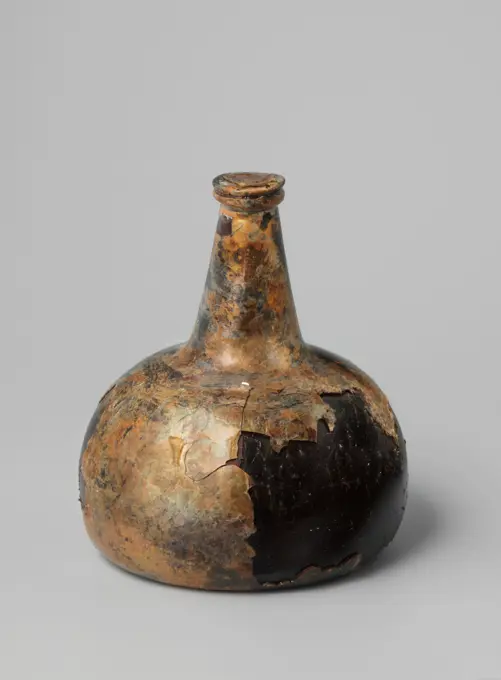
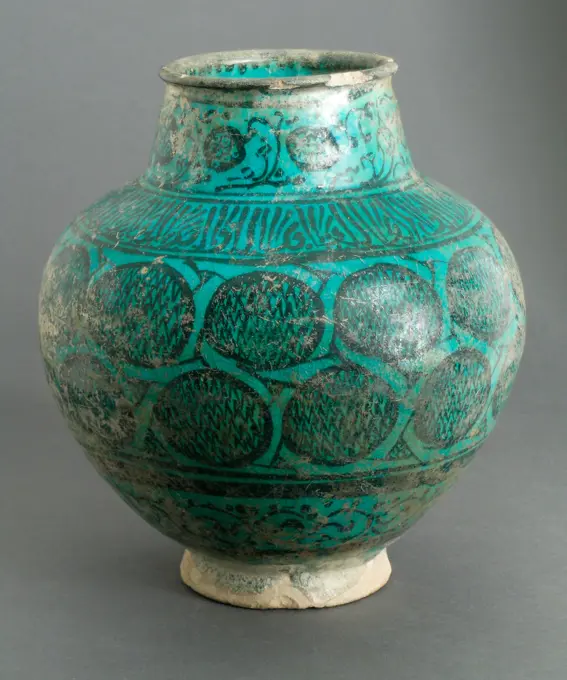
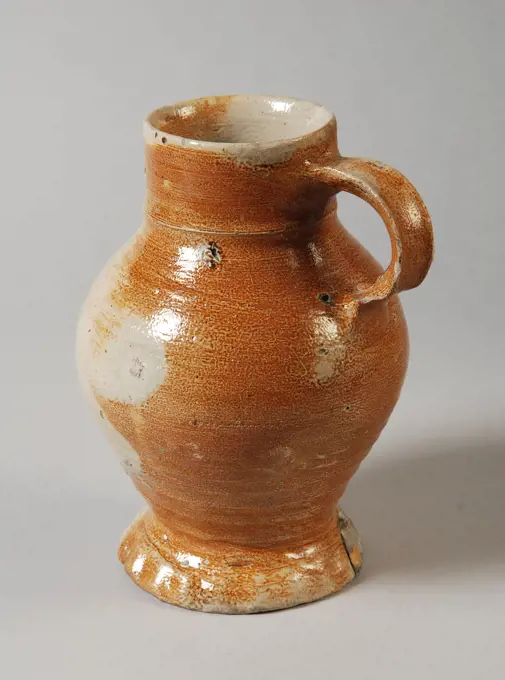
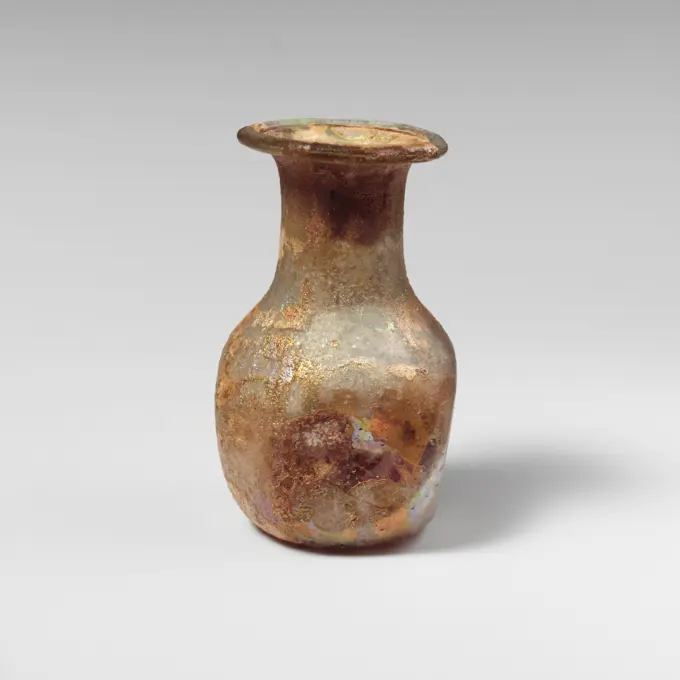
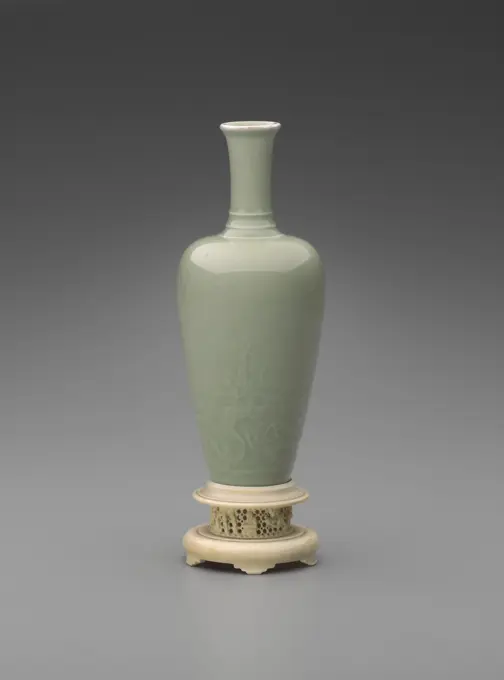
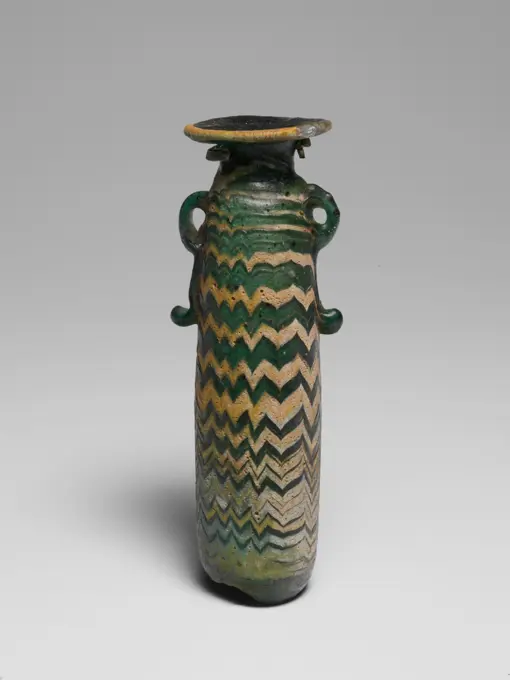
Artisan Glassware

Historic glass vases and jars from the Roman era to late 19th century, featuring unique shapes, textures, and color variations, showcasing craftsmanship and artistry.

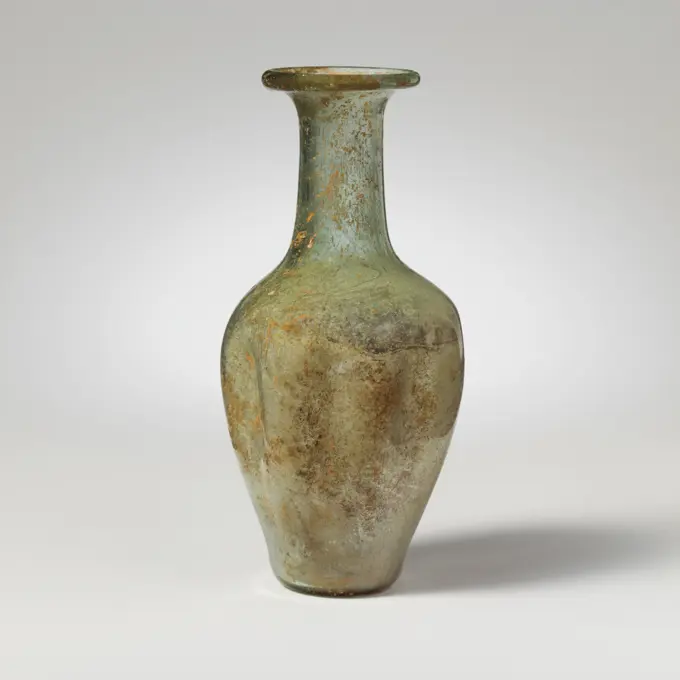
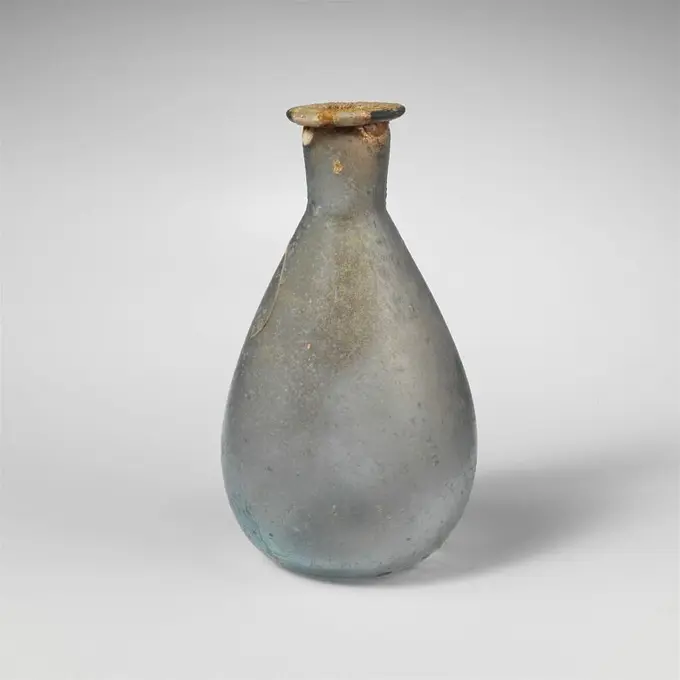
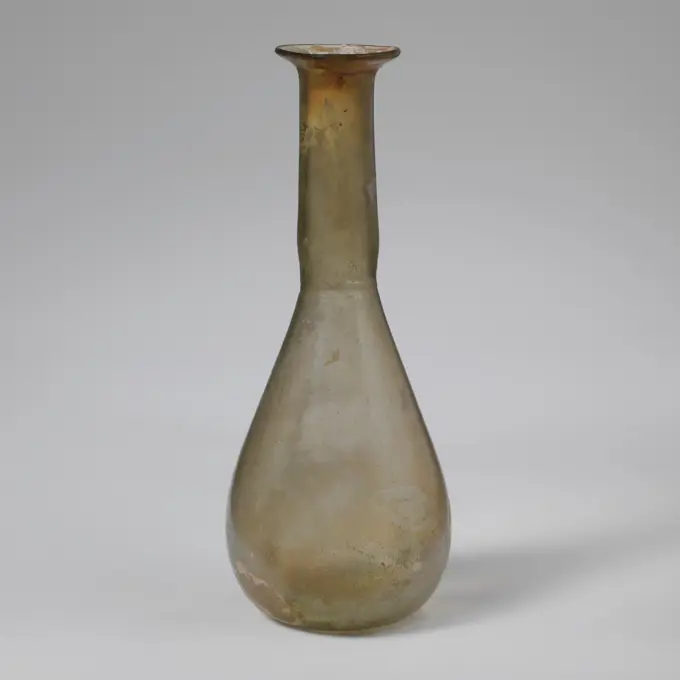
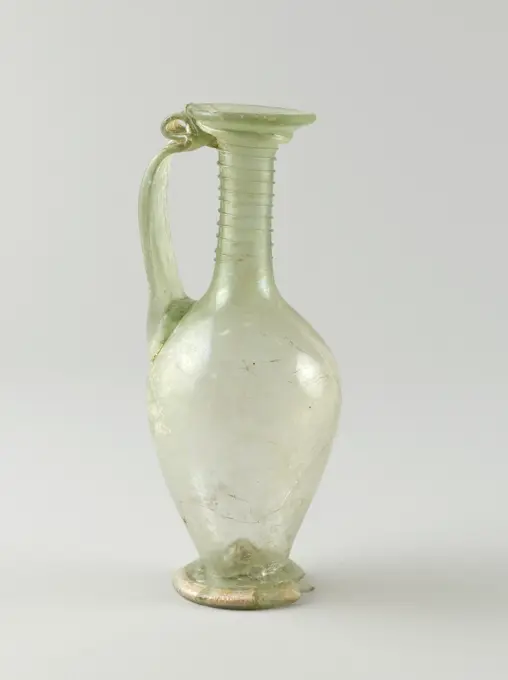
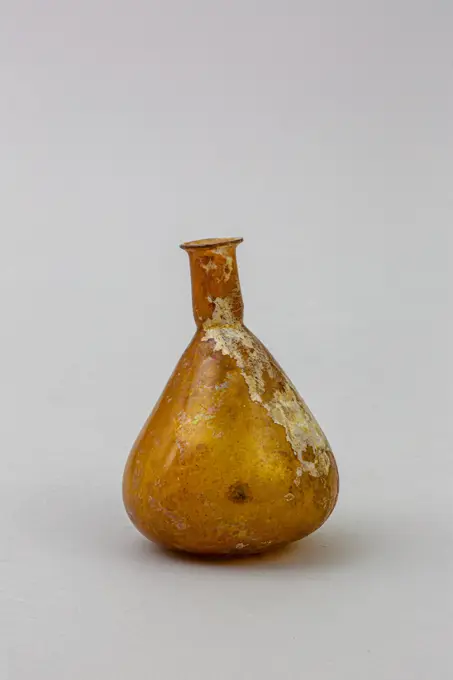
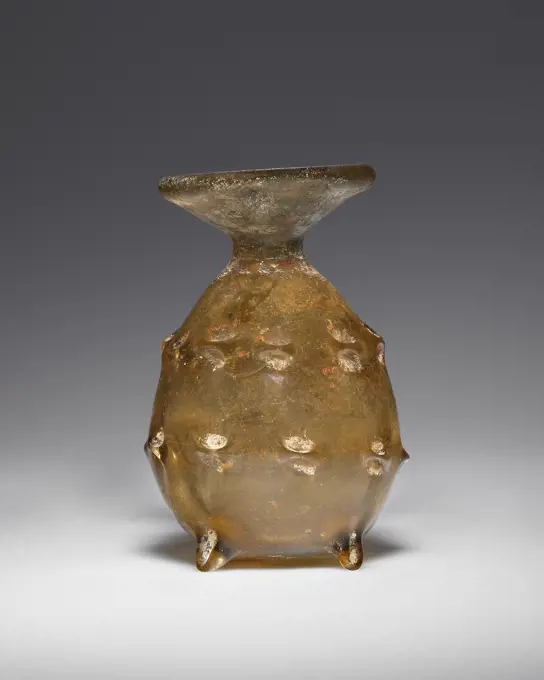
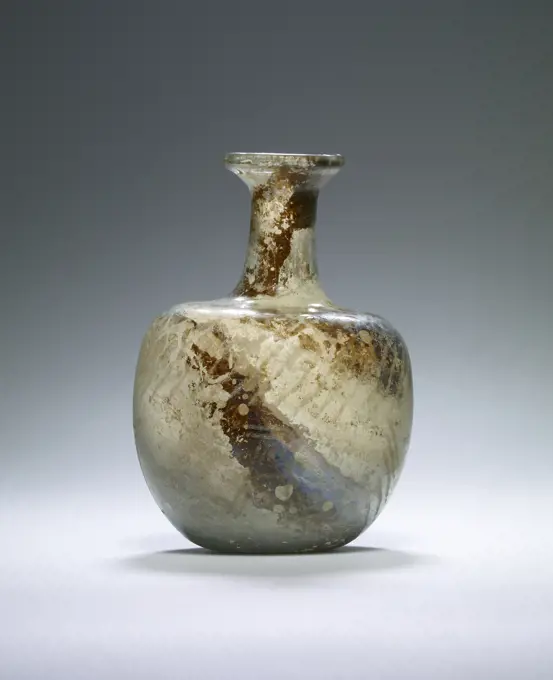
Flask; Eastern Mediterranean; 3rd - 4th century; Glass; 9.7 cm (3 13,16 in.)
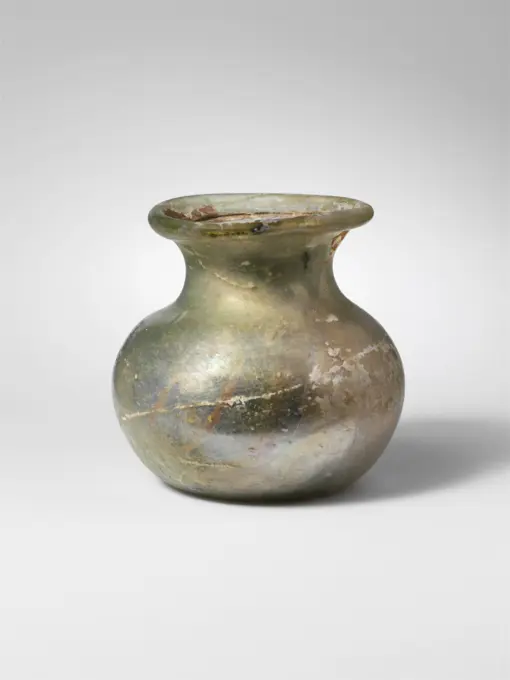
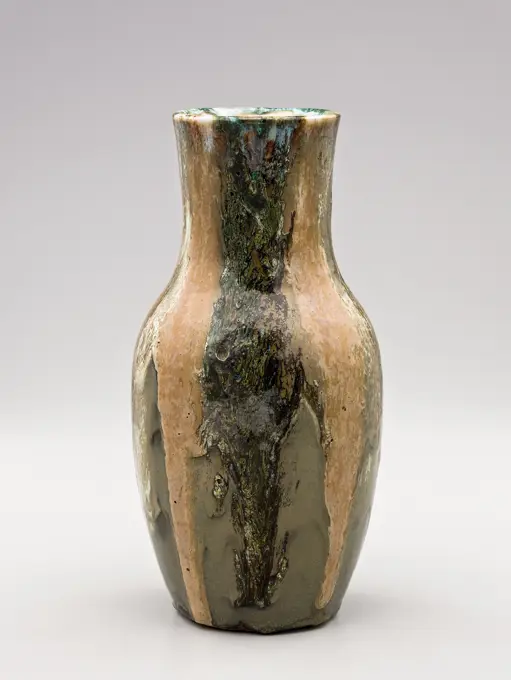
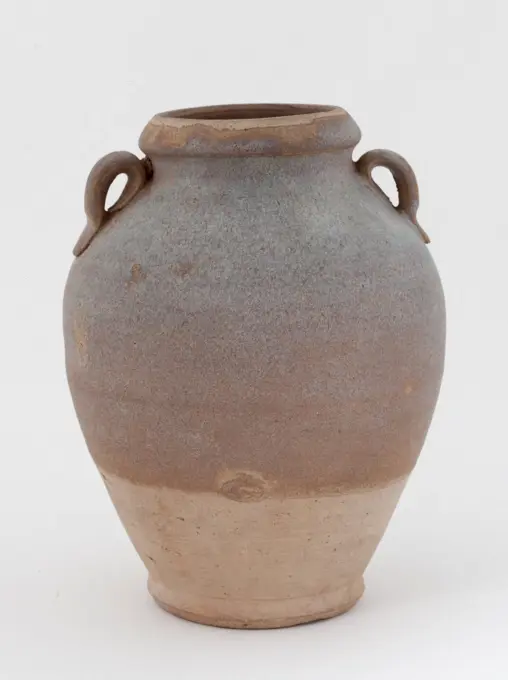
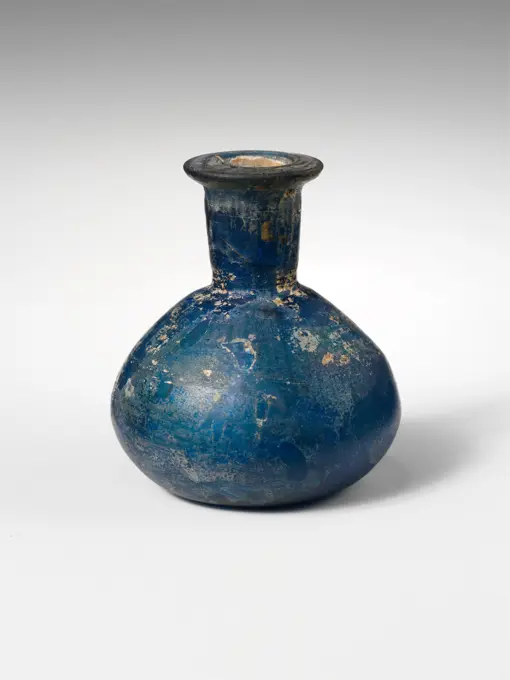
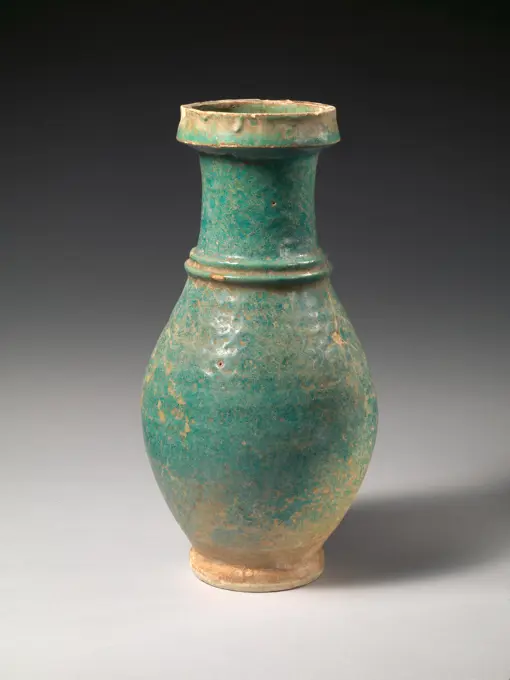
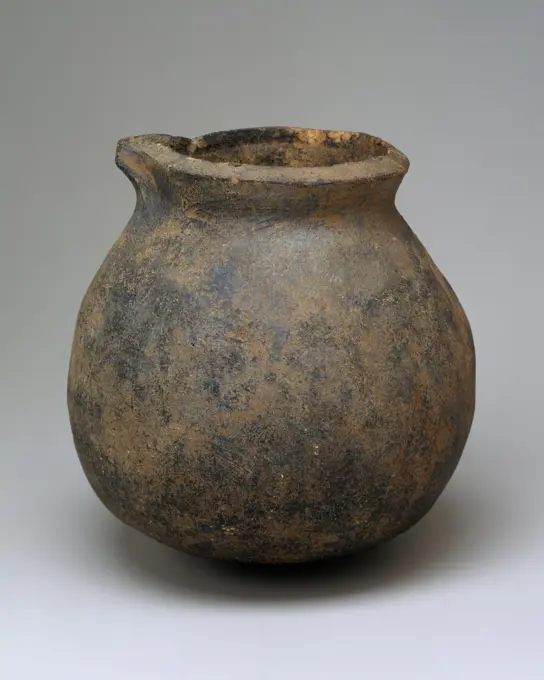
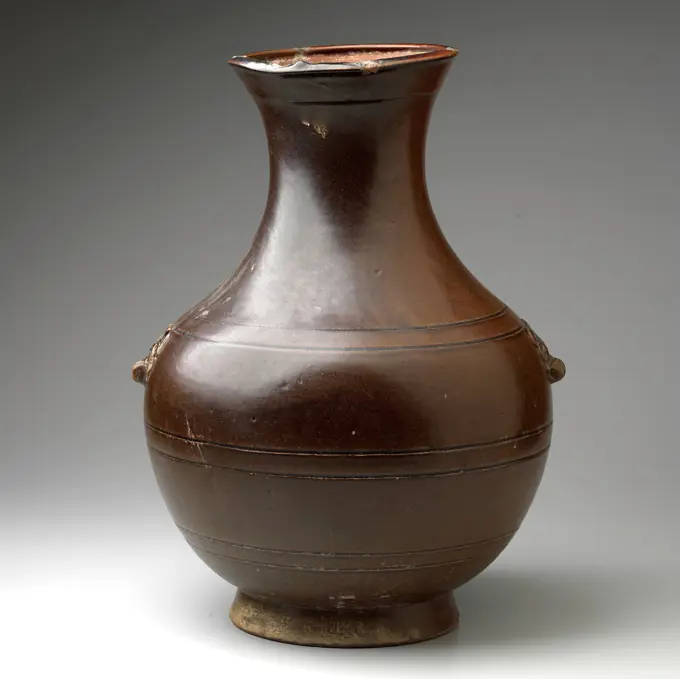
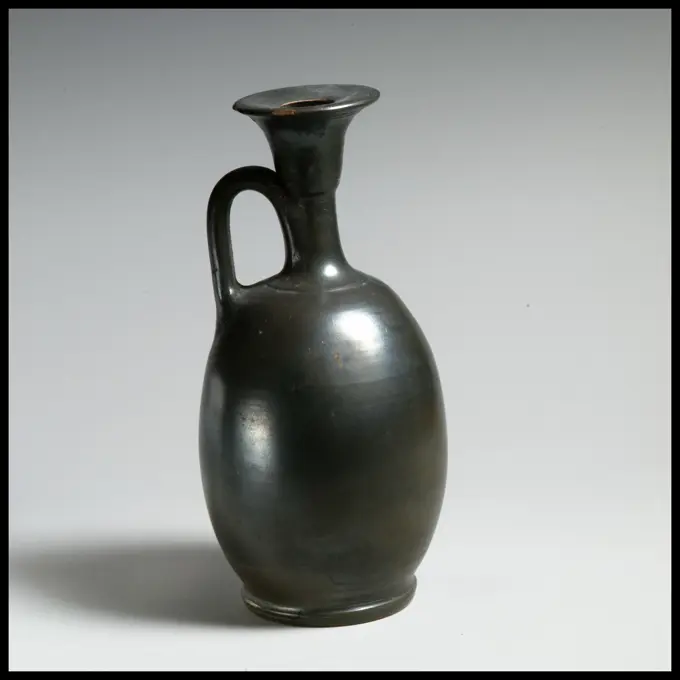
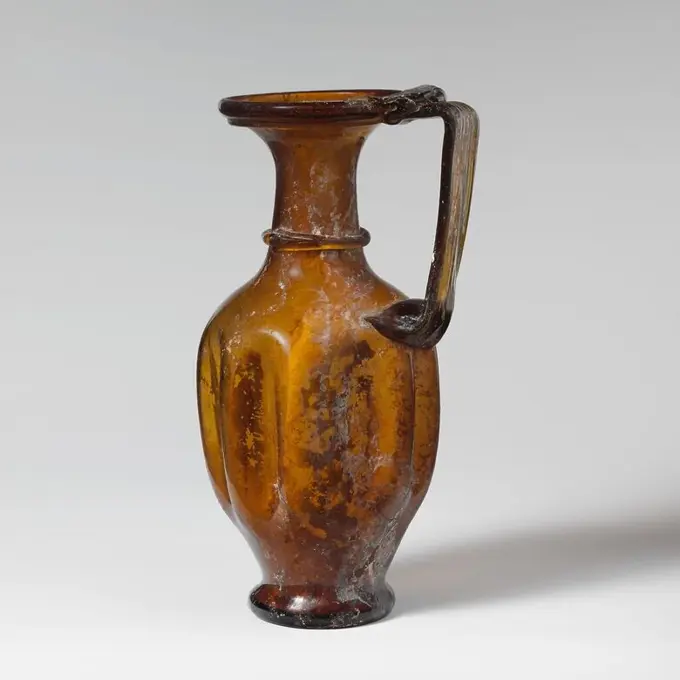
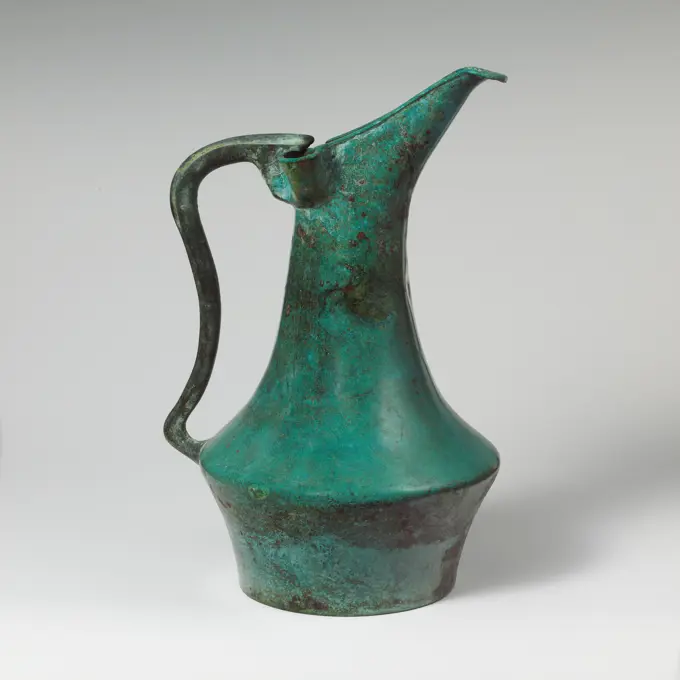
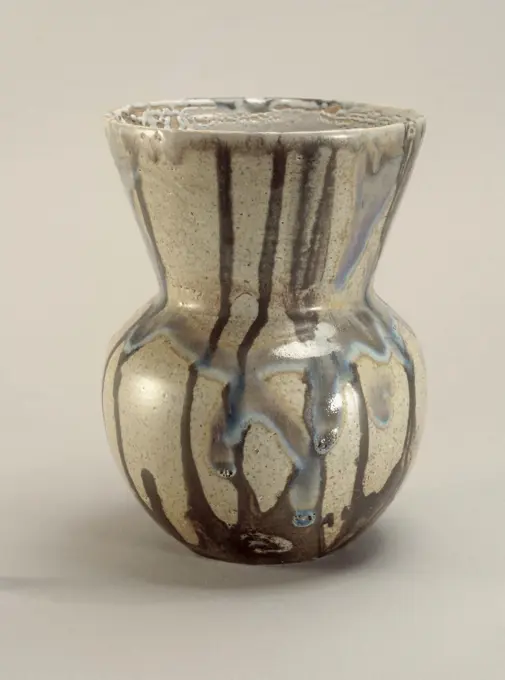
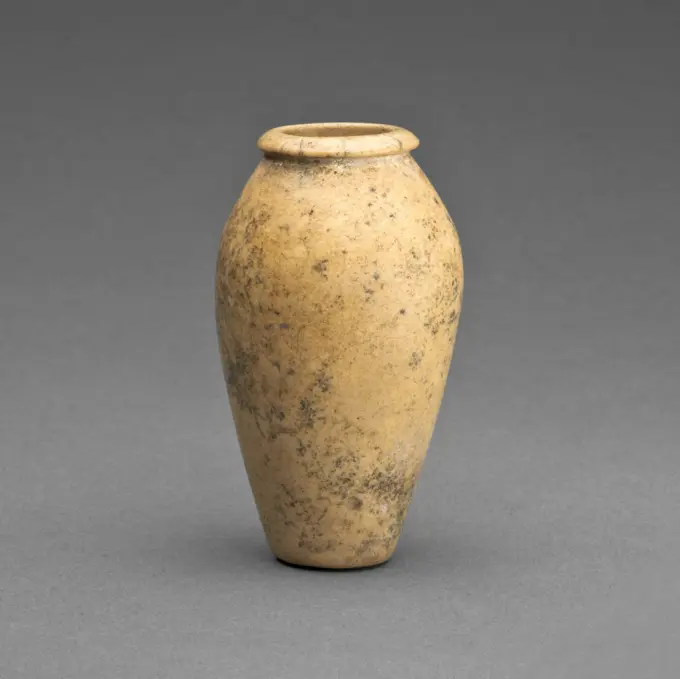
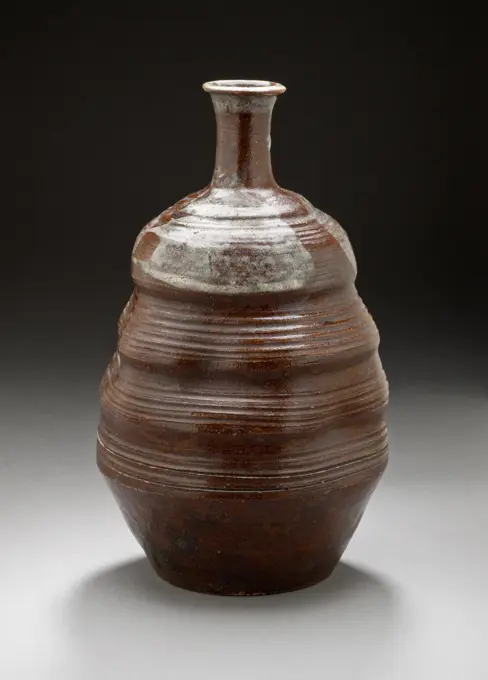
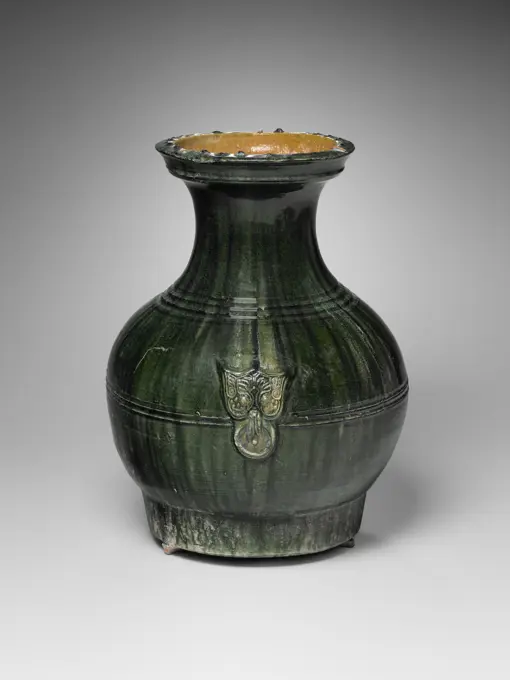
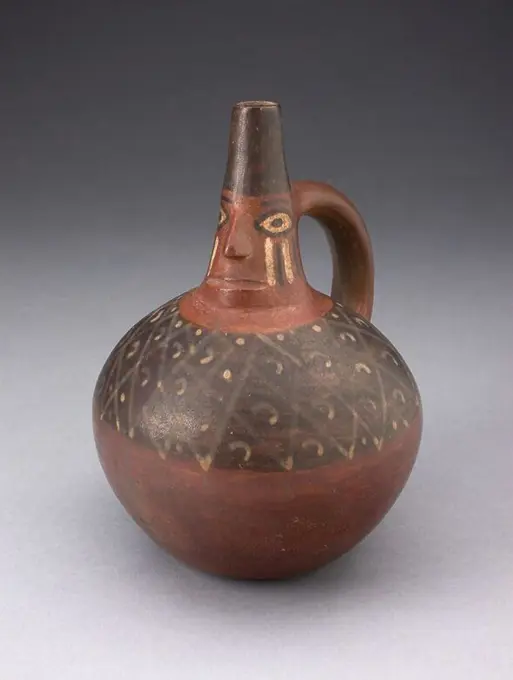
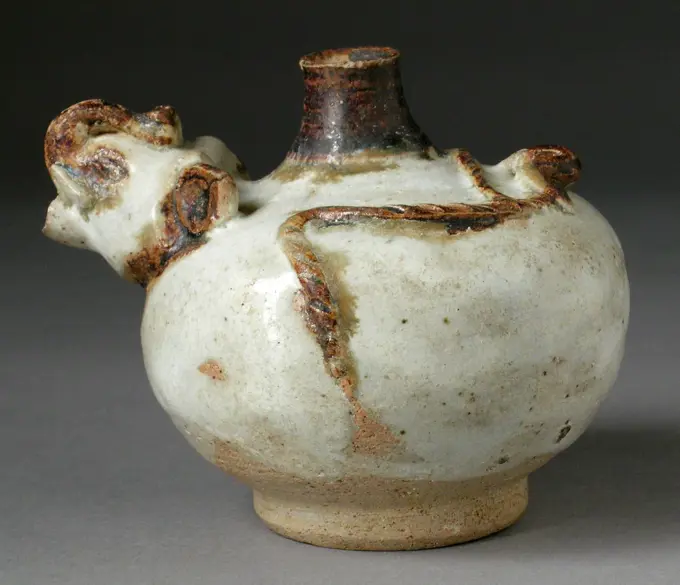
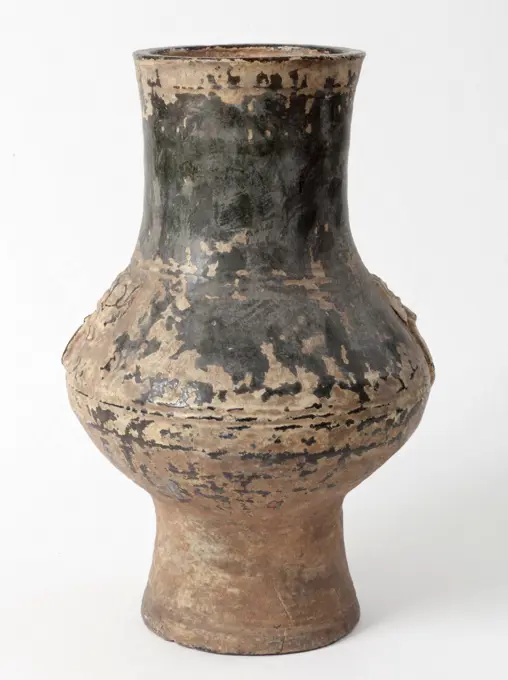
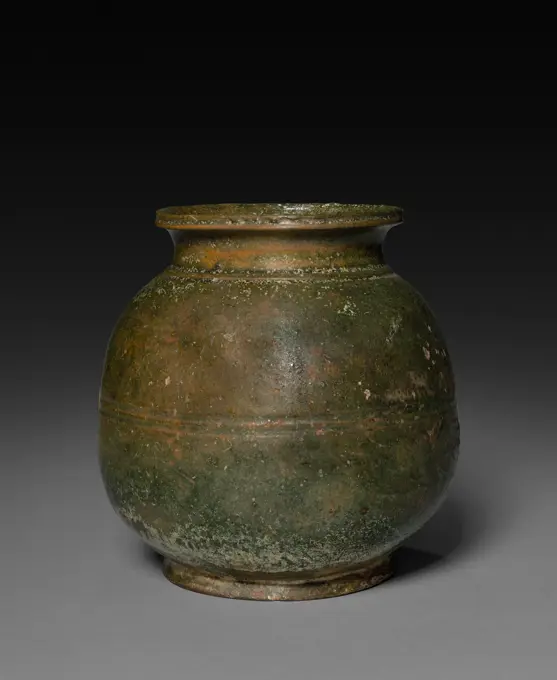
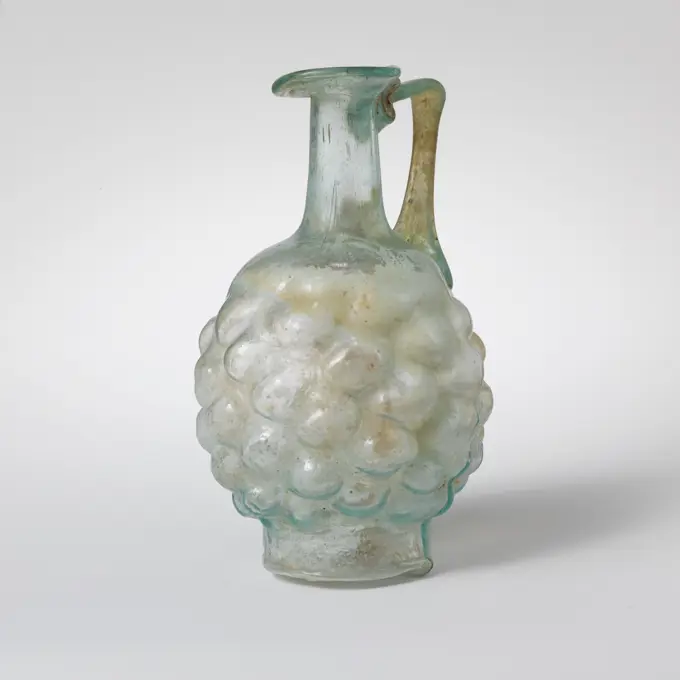
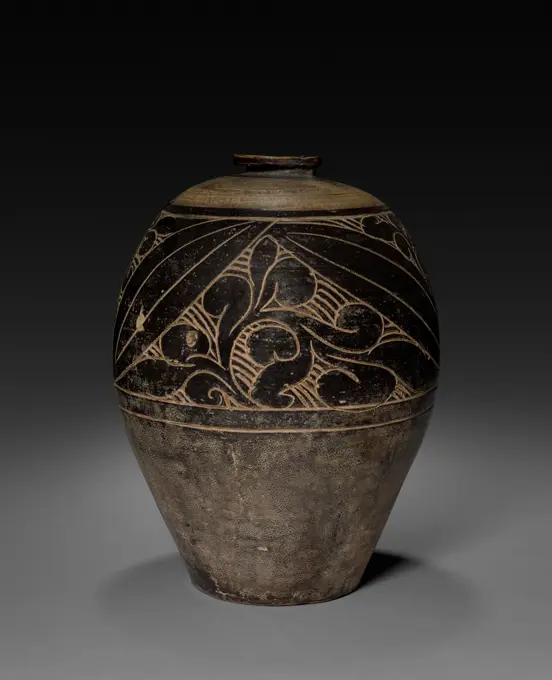
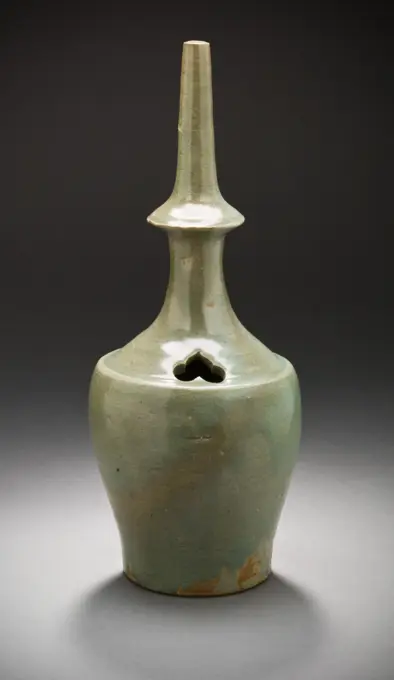
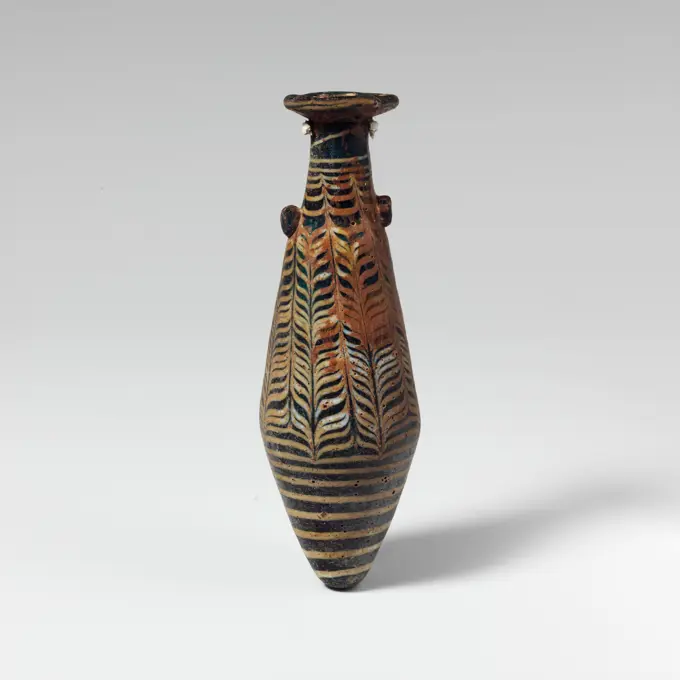
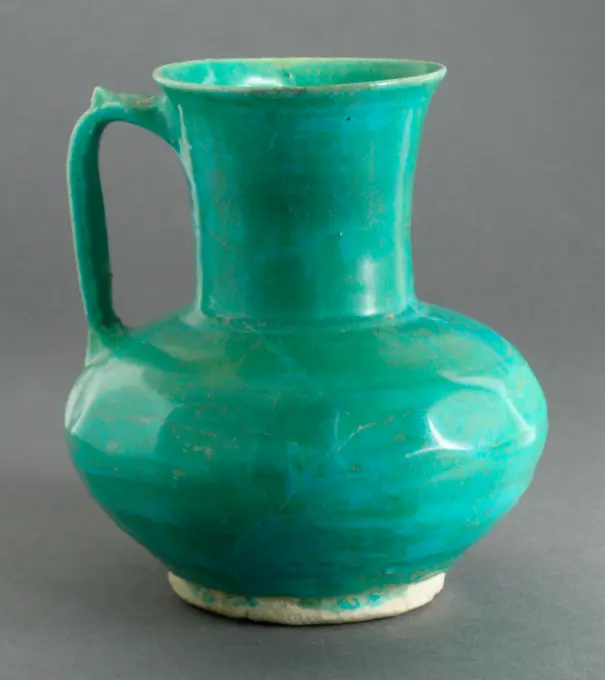
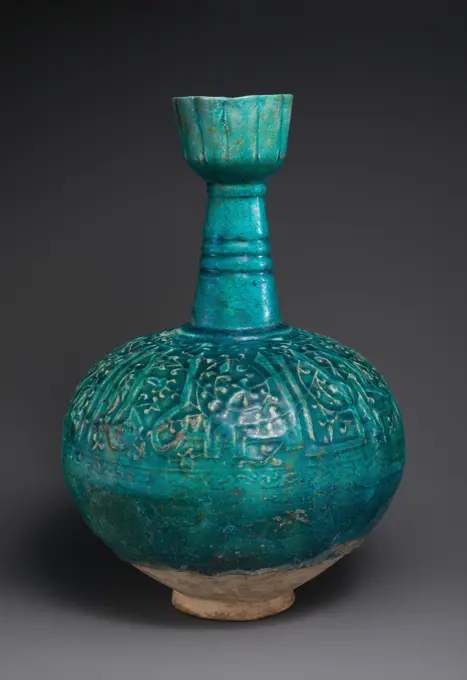
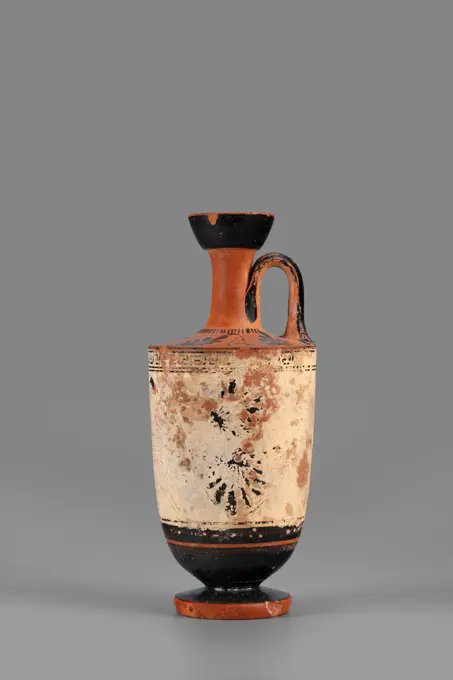
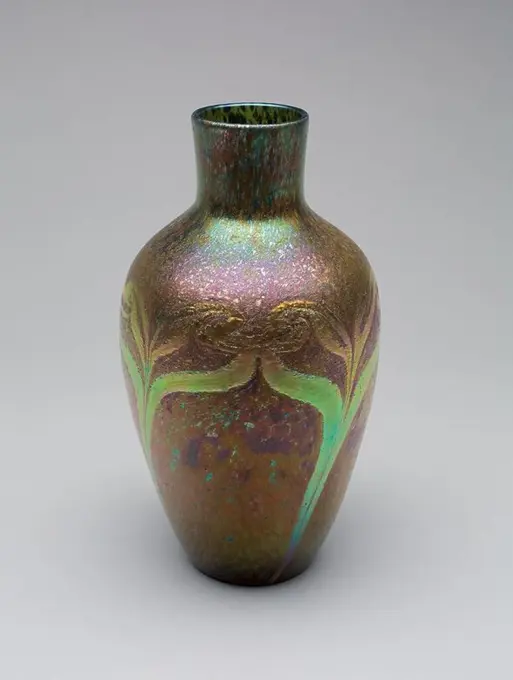
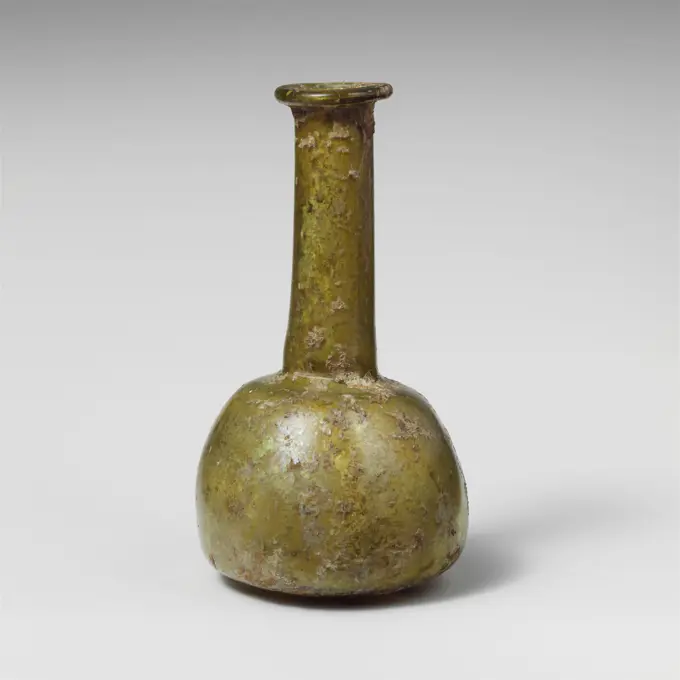
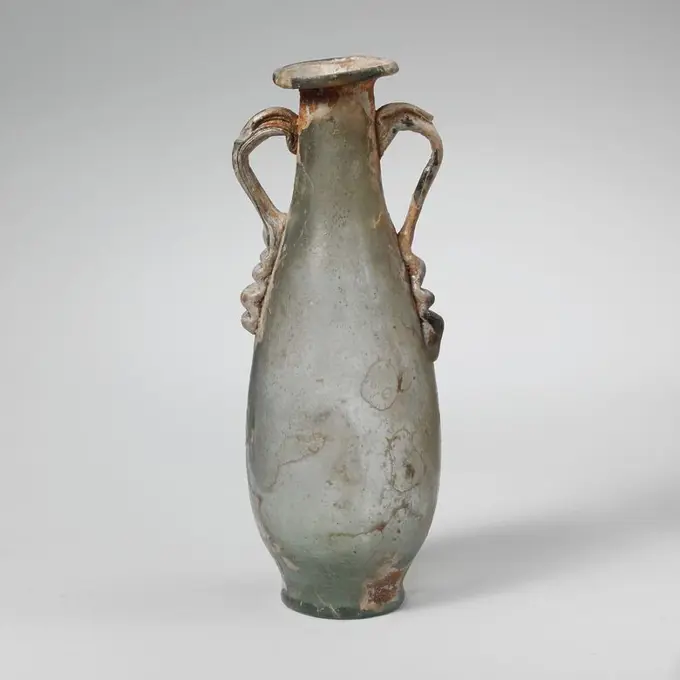
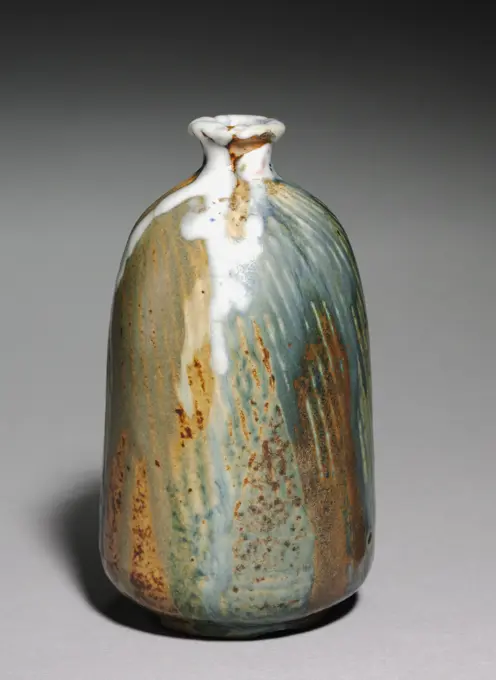
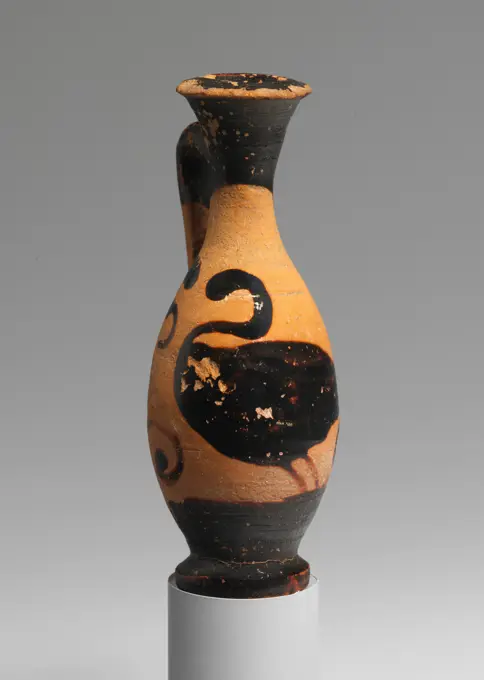
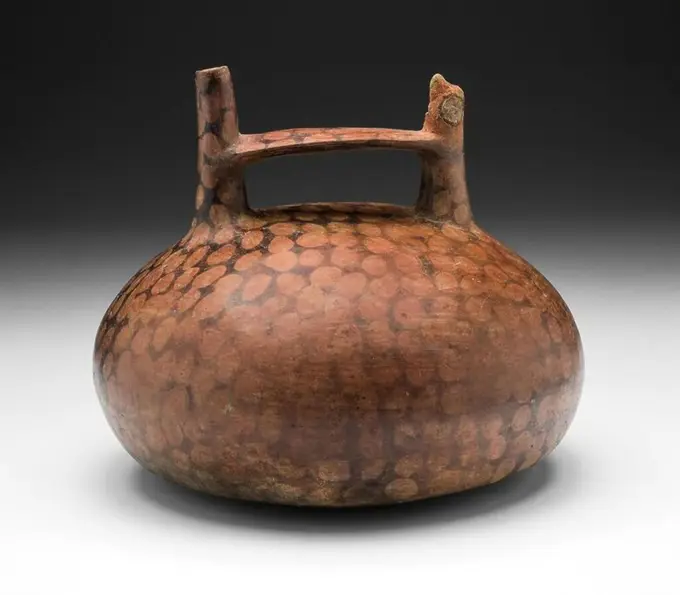
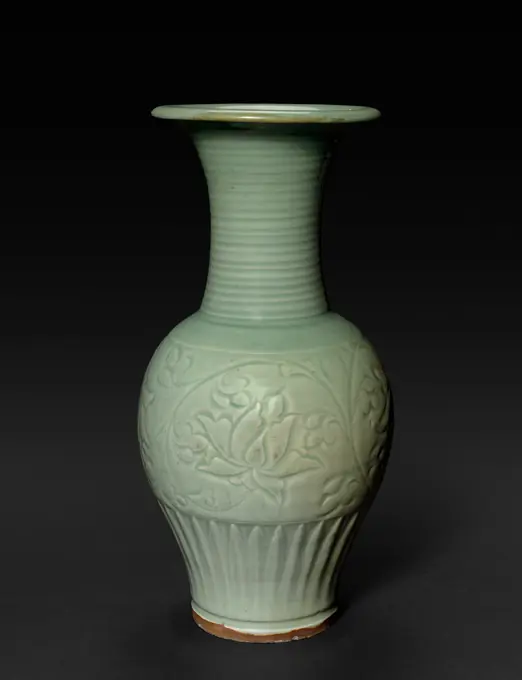
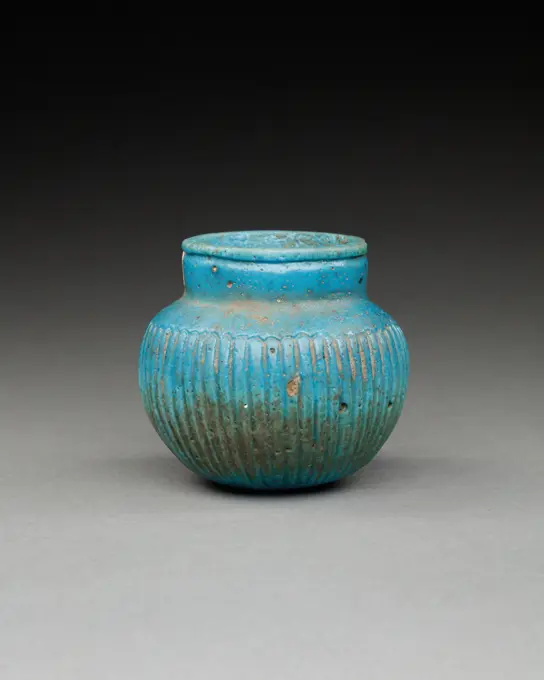
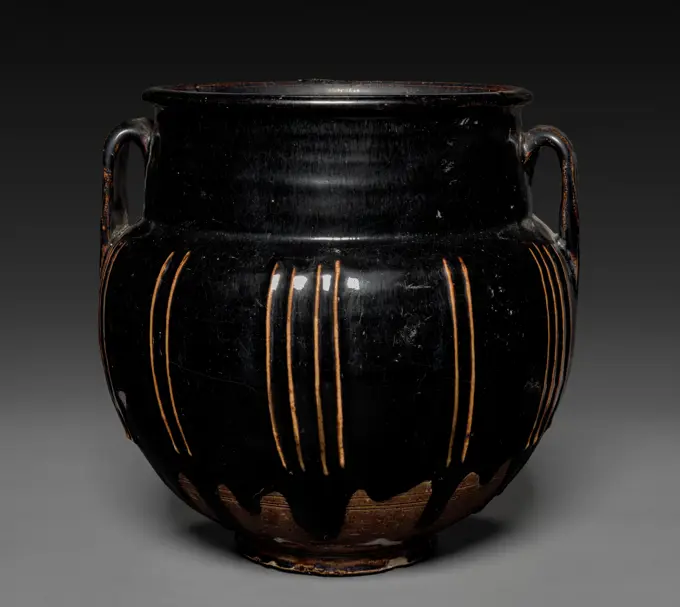
Glass flask 2nd-3rd century A.D. Roman Translucent light blue green.Rounded rim, folded out, over, and in, and beveled inner lip; flaring mouth; cylindrical, slightly concave; broad, sloping shoulder; bulbous body, with sides tapering downward and with seven elongated indents; round, pushed-in bottom, with traces of pontil scar.Intact; pinprick and larger bubbles; faint weathering and iridescence, with some patches of soil encrustation.. Glass flask 239804Glass jar ca. 2nd-4th century A.D. Roman Translucent pale green.Tubular rim, folded out, over, and flattened into side of flaring mouth; short, concave neck; squat, globular body; pushed-in bottom with traces of pontil scar.Intact; many bubbles, some large, and blowing striations; iridescence and small patches of weathering on exterior, thick brown weathering and brilliant iridescence on interior.. Glass jar 245234Glass bottle. Culture: Roman. Dimensions: H.: 4 7/8 in. (12.4 cm)Diam.: 2 7/8 x 1 1/2 in. (7.3 x 3.8 cm). Date: ca. 4th-5th century A.D..Translucent green with yellow tinge.Rounded rim, folded in and pressed into side of funnel-shaped mouth; cylindrical neck, expanding downwards; sloping shoulder; conical body with concave side; pushed-in bottom with off-center kick and large pontil scar.Lower two-thirds of body inflated in dip mold, forming twenty-six vertical indents with round tops and tapering downwards.Intact; many bubbles and blowing striations; some pitting, slight weathering, and faint iridescence on exterior, creamy white weathering and iridescence on interior. Museum: Metropolitan Museum of Art, New York, USA.Vase ca. 1896-1908 Dedham Pottery Steeped in ceramics from birth, Hugh C. Robertson pursued his craft with fierce devotion and a passion for experimentation. From a family of trained English ceramists, he honed his skills in New Jersey before settling in Massachusetts as one of the founders of Chelsea Keramic Art Works and later, Dedham Pottery. Robertsons lifelong explorations in glazes, particularly their color and texture, make him one of the key figures of American art pottery at the turn of the twentieth century.From Chelsea to Dedham, Robertson continued to pursue his passion for innovation, employing the grayish-white stoneware used for Dedhams dinnerware to throw simple forms covered with bold combinations of colored and textured glazes. Dedham Potterys vases are larger, thicker, and heavier than their Chelsea predecessors, and simple, solid forms predominate. On this example, Robertson applied several glazes of different colors. In 1898 a writer for the magazine Arts for AmJar ". Terracotta coated with a milky brown cover. China, Tang Dynasty (618-907). Paris, Cernuschi museum. Anse, Chinese art, Chinese Ceramic, container, Tang dynasty, extended shape, jar, container, terracottaGlass perfume bottle. Culture: Roman. Dimensions: Overall: 2 13/16 in. (7.1 cm)Diam.: 2 3/4 x 3/4 in. (7 x 1.9 cm). Date: 1st century A.D..Translucent light blue green.Slanting rim folded out, over, and in, forming slight constriction to mouth; short cylindrical neck, tapering downwards and with slight tooled indent around base; ovoid body; slightly concave bottom.Complete, but with cracks in rim, neck, and upper part of body; pinprick and a few larger bubbles; pitting and dulling on exterior, and patches of iridescent weathering on rim and interior. Museum: Metropolitan Museum of Art, New York, USA.Glass perfume bottle 1st half of 1st century A.D. Roman Translucent medium blue.Everted, horizontal rim with angular outer lip; cylindrical neck, tapering downward, with slight horizontal indent around base; squat globular body; flat bottom.Intact, but internal and one surface crack on interior of neck; dulling, pitting, and creamy, iridescent weathering.Horizontal rotary grinding marks on exterior.. Glass perfume bottle 245413Jar ca. 6th-7th century A.D. Sasanian A green-blue glaze covers the jars exterior and its interior is coated with bitumen. Two concentric bands encircle the neck. Ceramics glazed in green, blue-green, and yellow were produced in Mesopotamia and southwest Iran during the Sasanian period. The dating of Sasanian pottery is complicated due to the lack of examples from controlled excavations at Sasanian sites, however, in contrast to ceramics produced during the Islamic period, glazes cover Sasanian vessels uniformly and additional designs are not defined through the use of differently colored glazes.. Jar. Sasanian. ca. 6th-7th century A.D.. Ceramic, glaze, bitumen. Sasanian. MesopotamiaJug 12th-13th century German. Jug. German. 12th-13th century. Earthenware, unglazed. Made in Middle Rhineland (), Germany. Ceramics-PotteryFlask; Eastern Mediterranean; 3rd - 4th century; Glass; 9.7 cm (3 13,16 in.)Ovoid covered jar with four moulded monster heads, anonymous, c. 618 - c. 907 Egg -shaped lid pot of earthenware with a short neck and flat edge, partially covered with a yellow glaze. A modeled monster head on the shoulder. The lower part of the abdomen and the underside are unglazed. Old label on the wall with 'Br. Jeltes no. 22 '. China earthenware. glaze vitrification Egg -shaped lid pot of earthenware with a short neck and flat edge, partially covered with a yellow glaze. A modeled monster head on the shoulder. The lower part of the abdomen and the underside are unglazed. Old label on the wall with 'Br. Jeltes no. 22 '. China earthenware. glaze vitrificationOvoid covered jar with four moulded monster heads, anonymous, c. 618 - c. 907 Egg -shaped lid pot of earthenware with a short neck and flat edge, partially covered with a yellow glaze. The lid has a flat button. Lid has been broken. China earthenware. glaze vitrification Egg -shaped lid pot of earthenware with a short neck and flat edge, partially covered with a yellow glaze. The lid has a flat button. Lid has been broken. China earthenware. glaze vitrificationMastoid (Drinking Cup) 500 BCE-480 BCE Athens. This drinking cup depicts Heraklesís fight with the Cretan Bull, represented twice in the continuous frieze around the vase; there is a long dotted vine or ivy branch above. The hero stoops low to grasp the bull by one horn, forcing it to its knees. Behind him, as if suspended in the branch, is his cloak and his sword in its scabbard. To the left of one scene crouches a figure with a cloak around one arm and a club (presumably Iolaos with Heraklesís club), while to the left of the second version of the scene is a striding Athena, arm outstretched and covered with her snake-lined aegis - she wears a helmet and carries a spear.. terracotta, decorated in the black-figure technique . Ancient GreekHu Storage Jar, 2nd century BCE, 18 1/8 x 12 3/4 x 13 1/2 in. (46.04 x 32.39 x 34.29 cm), Earthenware with brown glaze, China, 2nd century BCE, This large storage vessel is a classic Han dynasty shape. It is derived from a bronze form and even imitates the molded mash ring handles found on bronze prototypes. The brown glaze is one of the new lead glaze colors introduced during Han. It, as well as green and yellow, became popular in low-fired earthenware such as this.Italy, Liguria region, urn from pre-Roman Chiavari necropolisPot and fragment of a jar of gray earth .. pot and fragment of a pot of slightly gray earth, at the foot three a five legs. Belongs to pots and fragments with Invnr. BK-NM-1693 T / M BK-NM-1697.Ovoid sake bottle with a yellow glaze and brown marks, anonymous, c. 1750 - c. 1850 Egg -shaped sake blade of stoneware with dented walls, covered with a yellow glaze and painted in brown. Four brown spots on the belly. Old label on the bottom with 'W504'. Japan stoneware. glaze vitrification Egg -shaped sake blade of stoneware with dented walls, covered with a yellow glaze and painted in brown. Four brown spots on the belly. Old label on the bottom with 'W504'. Japan stoneware. glaze vitrificationFooted Jar 1600 BCE-1050 BCE China. Burnished gray earthenware with carved and incised decoration .Pot 4th century B.C.-4th century A.D. Coptic. Pot. Coptic. 4th century B.C.-4th century A.D.. Earthenware, slip decoration. Made in Kharga Oasis, Byzantine Egypt. CeramicsTerracotta lekythos (oil flask) 4th century B.C. Greek, South Italian, Campanian Black glaze lekythos without decoration.. Terracotta lekythos (oil flask) 254408 Greek, South Italian, Campanian, Terracotta lekythos (oil flask), 4th century B.C., Terracotta, H. 7 3/8 in. (18.8 cm). The Metropolitan Museum of Art, New York. Rogers Fund, 1941 (41.162.237)Vase, c. 1400 - c. 1950 Vase of red -baking earthenware with remains of lead glaze (splash glaze).  earthenware Vase of red -baking earthenware with remains of lead glaze (splash glaze).  earthenwareGlass cup 2nd-3rd century A.D. Roman Colorless with pale greenish tinge.Knocked-off, uneven rim; slightly bulging collar below rim; sides expanding downward, then angled in to join convex bottom, flattened at center.Band of two faint wheel-cut lines on body above angle.Intact, except for weathered chip in rim; some bubbles; dulling, deep pitting, and brilliant iridescent weathering.. Glass cup 239834Glass jug with indented body. Culture: Roman. Dimensions: H. 6 5/16 in. (16 cm). Date: 4th-5th century A.D..Translucent honey brown; handle and trails in same color.Rim folded over and in; flaring mouth; cylindrical neck, flaring slightly at base; sloping shoulder; cylindrical body with slightly convex side, then turned inwards to thick base, made by folding; low kick in bottom, with pontil scar at center; broad strap handle applied as a thick pad to edge of shoulder, drawn up and slightly outwards, then turned in horizontally, trailed onto edge of rim, and flattened by tooling above.On body, nine deep vertical indents; one trail wound 1½ times around underside of mouth; another trail wound once horizontally around lower neck.Intact; some large and elongated bubbles; faint weathering and iridescence on exterior, some soil encrustation, weathering, and iridescence on interior. Museum: Metropolitan Museum of Art, New York, USA.Glass amphoriskos (perfume flask) Roman 1st century CE Translucent reddish purple; handles in colorless glass with a smoky green tinge.Tubular rim, folded out, over, and in, and flattened into flaring mouth; tall cylindrical neck; ovoid body; low cylindrical base, with flat but uneven bottom; two small rod handle attached in a claw pad to top of body, drawn up, round, and in, and pressed onto middle part of neck. One prominent continuous mold seam down neck, around body, and across bottom.On body, frieze of twenty-two widely-spaced, downturned rounded ribs on upper body ( twelve on one side, ten on the other) and twenty-four upturned rounded ribs on lower body; between them two horizontal raised lines.Complete, but broken and repaired around rim and top of neck; few bubbles; dulling and iridescence, with one patch of deep pitting and brillaint iridescence on body, on exterior, some weathering and iridescence on interior. View more. Glass amphoriskos (perfume flask). Roman. 1st century Bronze bowl and oinochoe (jug) late 6th-early 5th century B.C. Etruscan The jug is said to have been found together with the bowl, 21.88.125. The bowl preserves the imprint of the base of the jug.. Bronze bowl and oinochoe (jug) 251119 Etruscan, Bronze bowl and oinochoe (jug), late 6thearly 5th century B.C., Bronze, H. 9 7/16 in. (24 cm). The Metropolitan Museum of Art, New York. Rogers Fund, 1921 (21.88.126)Jean Carriès (1855-1894). "Jar". Enameled sandstone. Museum of Fine Arts of the City of Paris, Petit Palais. 24204-11 Ceramic, gres emaille, potJar 2707 BCE-2219 BCE Egypt. Stone . Ancient EgyptianSake Bottle of Irregular Silhouette. Japan, Edo period, late 17th-early 18th century. Ceramics. Koishiwara ware; stoneware with iron glaze and rice straw ash dripJar(hu)Wine bottle from the wreck of the East Indies Hollandia, Anonymous, 1700 - in or before 1743  Wine bottle. The stool is in the bottle. Wine Bottle, Continental Production, Onion-Shaped, Mouth Missing; (1) (16h, belly 15d, base 10.7d), CS-Kick-up. Netherlands .   SecondJug. Small jug of stoneware without decoration.Single Spout Bottle with Modeled Face on Neck. Tiwanaku- Wari; South coast Peru or northern Bolivia. Date: 700 AD-1000. Dimensions: 14.6 x 11.8 cm (5 3/4 x 4 5/8 in.). Ceramic and pigment. Origin: Peru. Museum: The Chicago Art Institute, Chicago, USA.Jar. Roman; Levant or Syria. Date: 101 AD-400 AD. Dimensions: H. 9.2 cm (3 5/8 in.); diam. 8.3 cm (3 1/4 in.). Glass, blown technique. Origin: Syria. Museum: The Chicago Art Institute, Chicago, USA. Author: ANCIENT ROMAN.Holy Water Container (Kendi) in the Form of an Elephant. Thailand, Sawankhalok, 16th century. Furnishings; Accessories. Wheel-thrown and molded stoneware with cream slip, underglaze brown painted decoration, and clear glazeWall vase. Sandstone clothed with an opalescent blue cover. Paris, Cernuschi museum. 78841-18 Asian art, container, vaseVase Hu ". Terracotta with green lead glaze. Han dynasty (206 BC-220 AD). Paris, Cernuschi museum. Chinese art, Chinese ceramic, container, han dynasty, han time, container, terracotta, humEwer withKnotGlass perfume bottle 1st century A.D. Roman Translucent pale yellow green.Plain, rounded rim; flaring mouth; cylindrical neck, expanding slightly downward and with tooling grooves around base; elongated conical body with convex sides; slightly concave bottom.Intact; a few bubbles and black impurities; patches of dulling and weathering; iridescence.. Glass perfume bottle 239643Glass flask. Culture: Roman. Dimensions: 4 3/16 in. (10.6 cm)Other: 2 3/4 in. (7 cm)Diam. of rim: 2 3/4 in. (6.9 cm). Date: mid-3rd-4th century A.D..Colorless.Rim folded round and in; wide, funnel-shaped mouth; short, concave neck; globular body; pushed-in bottom.Intact; many bubbles; heavily pitted with severe iridescent weathering. Museum: Metropolitan Museum of Art, New York, USA.Ovoid Jar 'Tradescant' With Lotus Scrolls in Relief. Egg-shaped pot of stoneware with a wide neck and spreading edge, covered with a green and yellow glaze. Lotus drinks applicated on the wall and shoulder. A relationship with raised leaf motifs around the foot. Six C-shaped ears on the shoulder. Glaze releases in some places. "Tradescant Jar".MiniatureBottleJar with Cover, 206 BC - AD 220. China, Han dynasty (202 BC-AD 220). Glazed earthenware; diameter: 20.3 cm (8 in.).Bottle, c. 1250-1499, 11 1/4 x 8 in. (28.58 x 20.32 cm), Clay, pigments, United States, 13th-15th centuryBaluster vase. Gifted 1897 by the artistGlass jug in the form of a pine cone 2nd half of the 1st century A.D. Roman Translucent blue green; handle in same color.Misshapen thick, everted rim with fire-rounded lip, half turned downwards, half flaring upwards; cylindrical neck expanding downwards; plain, convex shoulder; globular body; tall circular base, with slightly concave, uneven bottom; strap handle attached to shoulder and top of body, drawn up and out, then turned in at an acute angle, and trailed on to underside of rim and top of neck. One continuous mold seam around body and across bottom, extending to shoulder and forming a slight ridge across bottom.Body shaped in the form of a pine cone with interlocking domed scales, arranged in diagonal rows.Complete, but two holes in outer edge of base; pinprick bubbles, with some large elongated bubbles in neck; patches of dulling and faint iridescence on exterior, some creamy weathering and brilliant iridescence on interior.. Glass jug in the form of a pine cone 245380Jar: Cizhou Ware, 1271-1368. China, Yuan dynasty (1271-1368). Glazed grayish-buff stoneware with incised decoration and underglaze slip application; overall: 34.9 cm (13 3/4 in.).Ovoid bottle. Gallo-Roman. Glass. Paris, Carnavalet museum. Ovole bottle, Gallo-Roman, Gallo-Roman time, container, glass, archeological vestigeKundika Bottle. Korea, Goryeo Dynasty, 918-1392, 12th century. Tools and Equipment; sprinklers. Wheel-thrown stoneware with celadon glazeGlass alabastron (perfume bottle) 2nd-mid-1st century B.C. Greek, Eastern Mediterranean Translucent deep turquoise blue, with handles in same color; trail in opaque white.Moderately broad rim-disk, sloping inward, with projecting jagged inner edge to neck; slender cylindrical neck, expanding downwards; straight-sided fusiform body expanding downward, then tapering in to pointed bottom; two lug handles applied over trail at top of body.Trail attached near bottom, drawn up in a spiral to point of carination, tooled into a close-set feather pattern around side, arranged in uneven panels of alternating eight upward and seven downward strokes, then tooled into a narrow band of festoons, and wound round again in spiral ending on outer lip of rim. Intact; dulling, pitting, faint iridescence, and patches of thick brown weathering.. Glass alabastron (perfume bottle) 245760Jar. Thomas Truxton Kendrick; American, 1803-1878; Hollis Center, Maine. Date: 1830-1850. Dimensions: h. 23.2 cm (9 1/8 in.). Earthenware. Origin: Maine. Museum: The Chicago Art Institute, Chicago, USA.Ewer. Iran (), 11th-12th century. Ceramics. Fritware, tooled, carved and glazedBottle late 11th-early 12th century. Bottle 451200Wine bottle with wine from the wreck of the East Indians' t Vliegend Hart ,, 1700 - 1735 wine Uivid wine bottle of green glass filled with red (port) wine, closed with a cork. The thread that the cork had to keep on the bottle has disappeared. Netherlands glass. wineJar. Syria, second half of 13th century. Ceramics. Fritware, underglaze-paintedStoneware beer jug on pinched foot, brown gray glaze, pot jug pitcher holder earthenware stoneware ceramic stoneware icing salt enamel, h neck 4.0 hand-turned glazed fried Jug with ear Wide unprofiled neck ovoid body on pinched foot . Blurred rings on the underbelly. Gray shard. brown gray glazed archeology import pottery packaging drink pouring beer Rotterdam education Academy of Fine Arts and Technical Sciences Cool Coolvest Dijkzigt G.J. de Jonghweg City Triangle Blaak Academy of Fine Arts and Technical Sciences Rotterdam.Glass perfume bottle 2nd-3rd century A.D. Roman Small perfume bottleColorless with pale greenish tinge.Rim folded out, over, and in; flaring mouth; concave, cylindrical neck; sloping shoulder with rounded corners; roughly squared body with indented sides; pushed-in bottom with kick.Intact; many pinprick bubbles; pitting and brilliant iridescence, with some dulling and creamy weathering.. Glass perfume bottle 239773PedestaledJarBulbous bottle, 'hammer', bottle holder bottomfound glass, free blown and shaped glass application Bulky bottle in clear green glass. Pontil mark under wide, raised bottom Body with light widened ascending wall to convex shoulders and rejuvenated long (h 8.0 cm) neck with imposed all-round sharp glass thread and dilated lip archaeology packagingPottery pot on stand, baluster shape, used in the sugar industry, sugar bowl pot holder soil find ceramic earthenware glaze lead glaze, opening 7.5 hand turned glazed baked Pottery pot on stand ring. Baluster shape with round shoulder and narrow neck opening. Protruding thick neck edge vague coarse spindles. Red shard internal glazed Sugar cones made easy archeology indigenous earthenware sugar confectionery sugar industryGlass perfume bottle Roman 1st century CE Translucent brownish yellow.Everted, rounded rim; cylindrical neck with tooling indent around base; conical body; uneven bottom with off-center hollow.Complete, but crack in body; pinprick bubbles; dulling, slight pitting, and iridescent weathering. View more. Glass perfume bottle. Roman. 1st century CE. Glass; blown. Early Imperial. GlassJug. Roman. Date: 50 AD-150 AD. Dimensions: 8.4 × 8.7 × 7.4 cm (3 1/4 × 3 3/8 × 2 7/8 in.). Glass, blown technique. Origin: Ancient Mediterranean. Museum: The Chicago Art Institute, Chicago, USA.Bottle, 13th-14th century, 10-9/16 x 6-1/2 x 6-1/2 in. (26.8 x 16.5 x 16.5 cm), Stoneware with 'cut-glaze' floral decoration, China, 13th-14th century, This beautifully proportioned pear-shaped bottle displays an elegant floral design achieved with the so-called 'cut-glaze' technique. This design was produced by cutting and scraping away the glaze and applying wax or oil to the exposed body areas before firing. The incisions combined with the resist successfully confined the glaze to the desired areas.Białogrunded lease; Painter of a lease with Yale (approx. 470-450 BC); 5th century BC (-500-00-00--401-00-00);Działyńska, Działyński, Greece, Izabela (1830-1899), Izabela Elżbieta née Czartoryski (1830-1899)-Ko, Izabela Elżbieta née Czartoryski (1830-1899)-collection, Jan (1829-1880), classic period, dancerBottle with spherical body, anonymous, c. 1500 - c. 1700 Deeply inserted soul, spherical body, transfer in a light concave neck with a flat -protruding edge. Northwest Europe glass glassblowing Deeply inserted soul, spherical body, transfer in a light concave neck with a flat -protruding edge. Northwest Europe glass glassblowingVase. Tiffany Glass and Decorating Company; American, 1892-1902; Corona, New York. Date: 1899. Dimensions: 23.8 × 7 × 5.4 cm (9 3/8 × 2 3/4 × 2 1/8 in.). Glass. Origin: United States. Museum: The Chicago Art Institute, Chicago, USA. Author: LOUIS COMFORT TIFFANY.Glass perfume bottle 2nd-3rd century A.D. Roman Translucent yellow green.Tubular rim folded out, over, and in, flattened on top; cylindrical neck, expanding downwards, with tooling marks around base; narrow horizontal shoulder; bulbous body; convex bottom.Intact; pinprick bubbles; patches of limy encrustation and iridescent weathering, with thicker soil encrustation on interior of neck.. Glass perfume bottle. Roman. 2nd-3rd century A.D.. Glass; blown. Mid Imperial. GlassGlass two-handled bottle. Culture: Roman. Dimensions: 4 15/16 in. (12.5 cm)Other: 1 11/16 in. (4.2 cm)Diam. of rim: 1 1/8 in. (2.9 cm)Diam. of foot: 1 1/8 in. (2.9 cm). Date: 2nd-3rd century A.D..Translucent blue green; handles in same color.Rim folded out, round, and in, with beveled outer edge; flaring, lob-sided mouth; short, funnel-shaped neck, expanding downward to join imperceptibly with slender bulbous body; integral, thick, slightly everted base ring; uneven, concave bottom; rod handle applied to shoulder in long, crimped pads, drawn up and round, pressed on to neck and trailed off back along top of handles.Intact; pinprick bubbles; dulling, pitting, and iridescence, with areas of creamy weathering and encrustation. Museum: Metropolitan Museum of Art, New York, USA.Vase, c. 1890. Jean Carriès (French, 1855-1894). Stoneware; diameter: 7.8 cm (3 1/16 in.); overall: 14.1 cm (5 9/16 in.).Terracotta toy lekythos (oil flask) with a swan 4th century B.C. Greek, South Italian, Campanian On belly, a swan.. Terracotta toy lekythos (oil flask) with a swan 254406 Greek, South Italian, Campanian, Terracotta toy lekythos (oil flask) with a swan, 4th century B.C., Terracotta, H. 4 1/8 in. (10.5 cm). The Metropolitan Museum of Art, New York. Rogers Fund, 1941 (41.162.235)Sake Bottle with Horizontal Line Design. Japan, Edo period (1615-1868), late 18th-early 19th century. Ceramics. Hoshino ware; stoneware with amber-tone iron glazePottery pot on stand, baluster shape, was used in the sugar industry, sugar bowl pot holder soil find ceramic earthenware glaze lead glaze, hand-turned glazed earthenware pot on stand. Baluster shape with round shoulder and narrow neck opening. Thick and round protruding neck edge Smooth finished hard baked earthenware Red shard internally glazed one long glaze over the entire height. In it sugar cones were made archeology indigenous pottery sugar confectionery craft sugar industryNegative-Painted Spotted Vessel with Bird-Head Spout. Paracas; Juan Pablo area, Ica Valley, south coast, Peru. Date: 650 BC-150 BC. Dimensions: 14.3 × 16.5 cm (5 5/8 × 6 1/2 in.). Ceramic and pigment. Origin: Peru. Museum: The Chicago Art Institute, Chicago, USA.Jug with floral scrolls, anonymous, c. 1650 - c. 1749 Can of stoneware on a high base with a spherical body and narrow, long neck with a pinched spout. The C-shaped ear is attached to the neck and shoulder. On the neck a profile and some entry lines on the foot. Partly covered with cobalt blue and mangangan purple. The front of the Kan Two courses with a flowering plant consisting of breached tifles saved in a purple background. The flowers are printed, imposed and colored with blue. Westerwald. Lahntal stoneware. glaze. cobalt (mineral). manganese oxide vitrification Can of stoneware on a high base with a spherical body and narrow, long neck with a pinched spout. The C-shaped ear is attached to the neck and shoulder. On the neck a profile and some entry lines on the foot. Partly covered with cobalt blue and mangangan purple. The front of the Kan Two courses with a flowering plant consisting of breached tifles saved in a purple background. The flowers are printed, imposed and colored wGlass flask mid-3rd-4th century A.D. Roman Colorless.Rim folded round and in; wide, funnel-shaped mouth; short, concave neck; globular body; pushed-in bottom.Intact; many bubbles; heavily pitted with severe iridescent weathering.. Glass flask 239616Jug with Handles 11th-12th century. Jug with Handles 449497Vase: Celadon Ware, 1368-1644. China, Ming dynasty (1368-1644). Stoneware; overall: 43.8 cm (17 1/4 in.).Bottle 18th-19th century This bottle is typical of the objects that were displayed in open niches in reception rooms of Ottoman-period upper-class Syrian homes. Bottle. 18th-19th century. Glass; blown; tooled on the pontil. Attributed to Turkey. GlassVase ca. 1900 Henri-Léon Charles Robalbhen French. Vase. ca. 1900. Stoneware. Ceramics-PotteryFaience Ribbed Jar ca. 1550-1070 B.C. New Kingdom This small globular jar is made from Egyptian faience, a ceramic material associating a siliceous paste with an alkaline glaze, here of a characteristic turquoise blue. The ribbed pattern brings to mind similar a decoration found on metal vessels produced during the New Kingdom. Although this example is not very common, two comparable jars were found near a burial by a Belgian archaeological mission working in Elkab in 1999 that were dated to the New Kingdom or the Third Intermediate Period.. Faience Ribbed Jar. ca. 1550-1070 B.C.. Faience. New Kingdom. From EgyptLarge green-glazedamphoraVase, c. 1910. Auguste Delaherche (French, 1857-1940). Stoneware; diameter: 6.9 cm (2 11/16 in.); overall: 16.7 cm (6 9/16 in.).Sprinkler Flask; Roman Empire; 3rd - 4th century; Glass; 7 x 4.8 cm (2 3,4 x 1 7,8 in.)Jar with Handles and Vertical Ribs, 1271-1368. China, Yuan dynasty (1271-1368). Glazed stoneware, Cizhou ware; overall: 24 x 24.5 cm (9 7/16 x 9 5/8 in.).Small stoneware jug with band ear and tail, ball-shaped model, jug holder soil find ceramic stoneware clay engobe glaze salt glaze, hand turned glazed baked Stoneware jug gray shard brown engobe and brindled salt glaze sausage ear with short tail pull marks on the underside. Small and ball-shaped model archeology Rotterdam Westzeedijk import pottery oil packaging store Soil discovery during excavation work at number 50 on the Westzeedijk in Rotterdam.Conical ointmentGlass perfume bottle 2nd-3rd century A.D. Roman, Cypriot Translucent pale bluish green.Tubular rim unevenly folded out, over and in; cylindrical neck expanding slightly downward, with horizontal tooling groove around base; squat, bulbous body; slightly concave base.Intact; many bubbles; pitting and iridescent weathering.. Glass perfume bottle 239587Reliquary First three quarters of the 1st century() Pakistan (ancient region of Gandhara). Reliquary. Pakistan (ancient region of Gandhara). First three quarters of the 1st century(). Schist. SculptureSnuff Bottle, 1644-1911. China, Qing dynasty (1644-1911). Glass; overall: 7.7 cm (3 1/16 in.).Flask; Eastern Mediterranean; 3rd - 4th century; Glass; 10.5 cm (4 1,8 in.)Glass hexagonal jar with basket handle. Culture: Roman, Syrian. Dimensions: H. without handle 5 1/16 in. (12.9 cm)H. with handle 8 15/16 in. (22.7 cm). Date: 6th-early 7th century A.D..Translucent pale blue green, with same color handle.Outsplayed rim folded outward, over, and inward; broad, funnel-shaped neck; narrow, sloping shoulder; hexagonal body, with slightly convex vertical edges, tapering downwards, with slightly impressed side panels; pushed-in bottom, with central pontil scar; rod handle, applied in a pad to top of one panel on body, drawn up and outward, then tooled in horizontally onto outer edge of rim, drawn back outward and then curved up and tooled into a triangular basket handle, then dropped onto edge of rim and down onto top of body above edge of one panel, and finally trailed off, with trail extending to apex of basket handle.On body, six elongated rectangular panels, flanked with prominent vertical ribbed edges and decorated with matching pairs of three differFlask. UnknownBowl with a pseudo-inscription on the shoulder, anonymous, c. 1100 - c. 1299 Come from quartz fritry decorated with pseudo-script in relief and covered with a transparent turquoise alternal laze. Iran earthenware. glaze vitrification Come from quartz fritry decorated with pseudo-script in relief and covered with a transparent turquoise alternal laze. Iran earthenware. glaze vitrificationJug. UnknownVase 19th century China. Vase 40604Vase with ornamental borders and lion heads with ring handles, anonymous, c. 1800 - c. 1900 Vase of porcelain with high, spreading base, spherical body and wide, flared neck, covered with a monochrome white, cracked glaze. Different bronze -colored tires on the vase; On the foot a band with hanging, pointed leaf motifs, around the foot a band with 'Taotie' masks, on the shoulder a meander band and one with Ruyi motifs, around the edge also a band with Ruyi motifs; On the neck two modeled lion heads with ring -shaped ears. On the bottom a stamped, unidentified brand. Monochrome. China porcelain. glaze. bronze paint painting / vitrification Vase of porcelain with high, spreading base, spherical body and wide, flared neck, covered with a monochrome white, cracked glaze. Different bronze -colored tires on the vase; On the foot a band with hanging, pointed leaf motifs, around the foot a band with 'Taotie' masks, on the shoulder a meander band and one with Ruyi motifs, around the edge also aVase with a Dragon andWavesGlass alabastron (perfume bottle) 5th century B.C. Greek, Eastern Mediterranean Translucent turquoise green, with handles in same color; trails in opaque yellow and opaque turquoise blue.Broad horizontal rim-disk; cylindrical neck; narrow rounded shoulder; straight-sided cylindrical body, curving in at bottom; two large vertical ring handles with knobbed tails, applied over trail decoration.Yellow and urquoise trails, mixed together, attached at edge of rim-disk; other yellow and turquoise trails applied to top of body under neck and rim-disk; both wound in a spiral around body, at first as horizontal lines, then tooled into a close-set zigzag pattern with alternate upward and downward strokes.Broken around lower body, bottom missing, and parts of trails completely weathered, leaving only indentation in body; dulling, pitting, and whitish weathering with slight iridescence.. Glass alabastron (perfume bottle). Greek, Eastern Mediterranean. 5th century B.C.. Glass; core-formed, Group I. Glass ribbed bowl mid-1st century A.D. Roman Translucent purple; trail in opaque white.Plain, vertical rim; short concave neck; globular body curving in to flat bottom.One trail wound around rim; another trail wound spirally three times around neck; a third trail applied on bottom and wound spirally nine times up body; sides tooled into fifteen irregular, vertical ribs.Intact, except for two weathered chips in rim; pitting of surface bubbles and creamy iridescent weathering, especially on trails.Violet, with white enamel decoration.. Glass ribbed bowl 245391Glass jug 3rd-4th century A.D. Roman Translucent deep turquoise blue; handle, trail, and base ring in semi-opaque yellowish white; opaque brick red streaks in rim.Rim, folded over and in, and smoothed into side of flaring mouth; cylindrical neck, expanding downwards and joining imperceptibly with bulbous body, tapering to applied base ring; small, pushed-in bottom with pontil scar; three-ribbed strap handle attached with long, downward fins at edges to upper body, drawn up and outwards in a curve, then turned in and trailed onto underside of mouth over trail decoration, with a hollow loop above, and ending on lip of rim.Trail wound horizontally 1½ times around underside of mouth, then dropped in a fine trail down neck, and then wound horizontally once in a thicker trail around lower neck.Intact, but some small internal cracks in body; many bubbles and a few inclusions; dulling, pitting, faint iridescence, and some soil encrustation, with two loose balls of soil inside.. Glass jug 2456Terracotta skyphos (deep drinking cup) 6th century B.C. Lydian Red ware with horizontal bands of white.. Terracotta skyphos (deep drinking cup) 249080