Artistic Animal Sculptures

Unique zoomorphic vases and figurines crafted from various materials, showcasing intricate designs and historical artistic styles from different cultures.
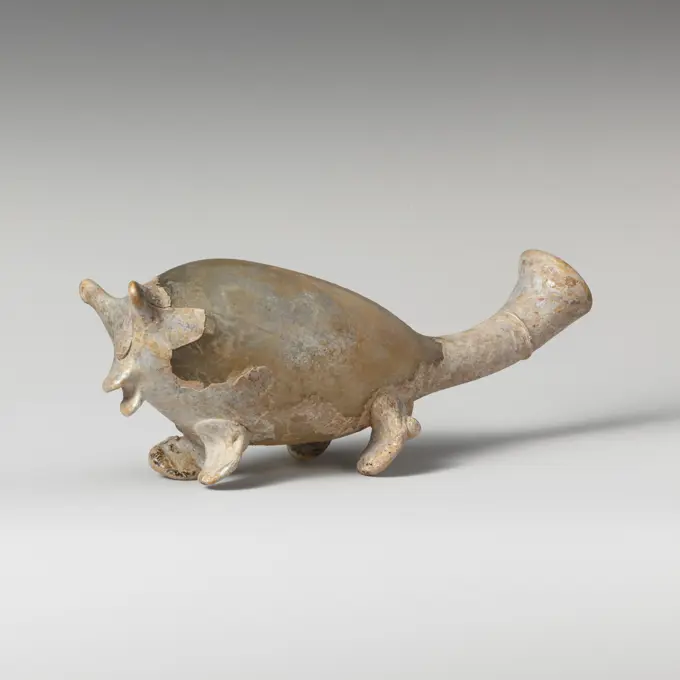
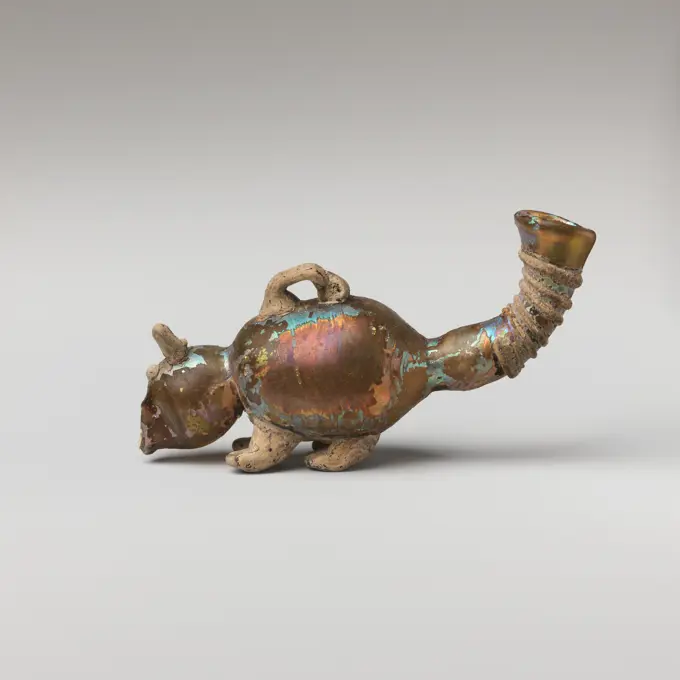
Glass bottle in the shape of an animal ca. 3rd century A.D. Roman Colorless with yellowish tinge; trail and applied feet in same glass.Thick rim, folded over and in, with flattened upper lip; tubular neck, turned upwards; elongated ovoid body; pontil pad on bottom between ears and mouth; four broad pads applied in pairs on underside of body, tooled and pinched to look like feet.Single trail wound once around neck; around bottom, side pinched out to form two ears and projecting mouth.Intact; many pinprick bubbles and blowing striations; dulling, pitting, thick creamy weathering, and iridescence.The animal is probably to be identified as a mouse.. Glass bottle in the shape of an animal 256724
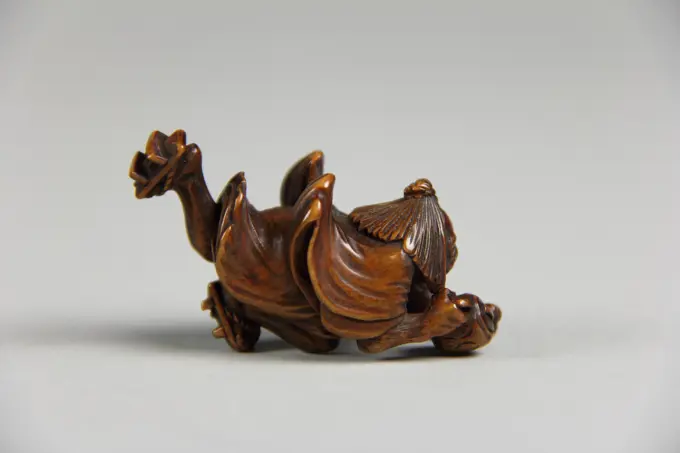
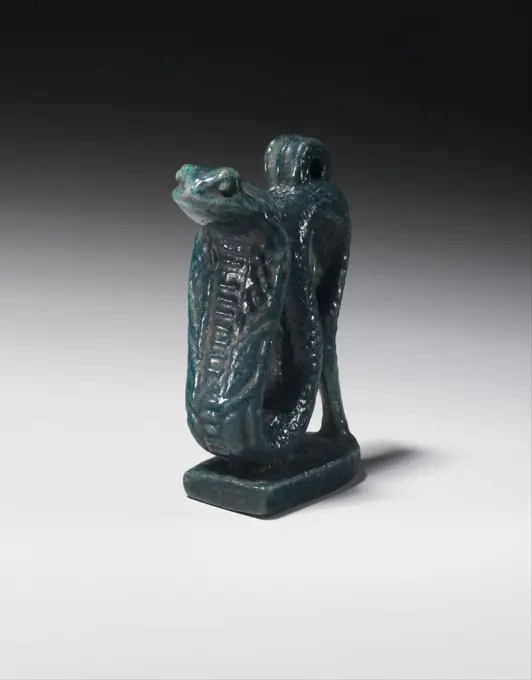
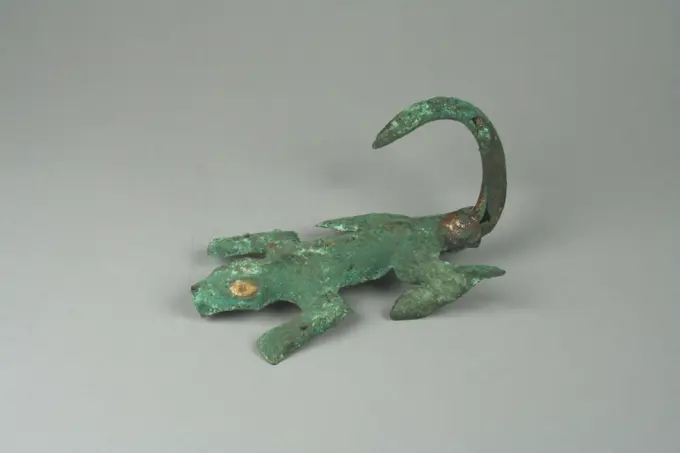
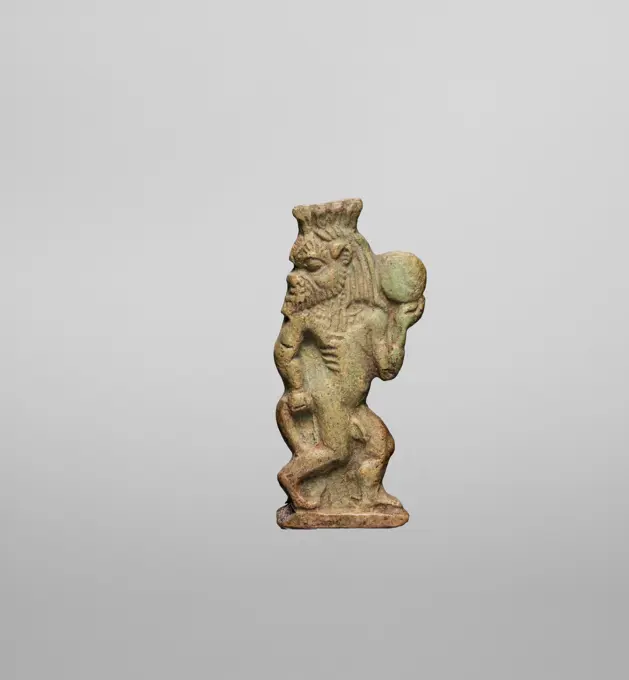
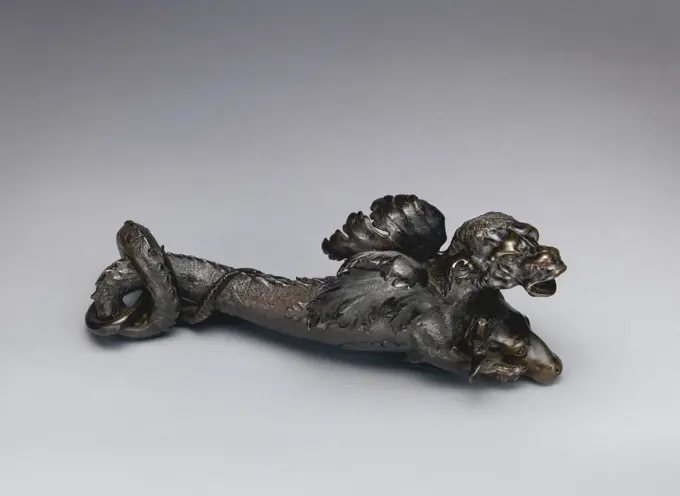
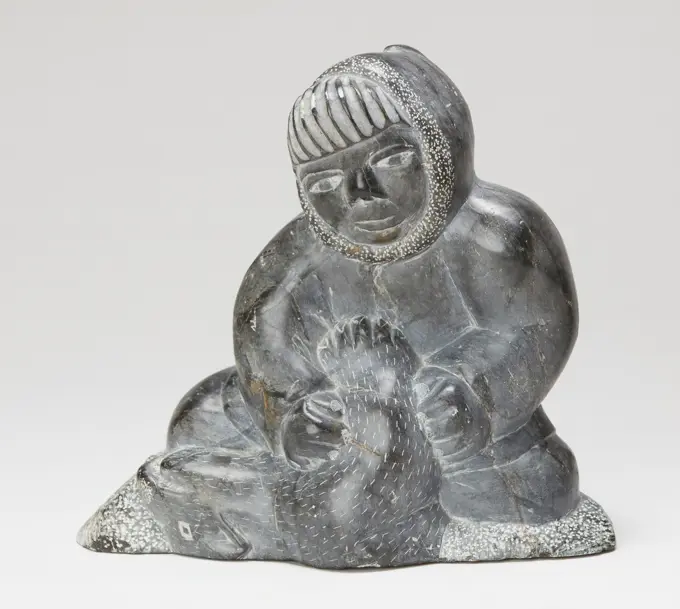
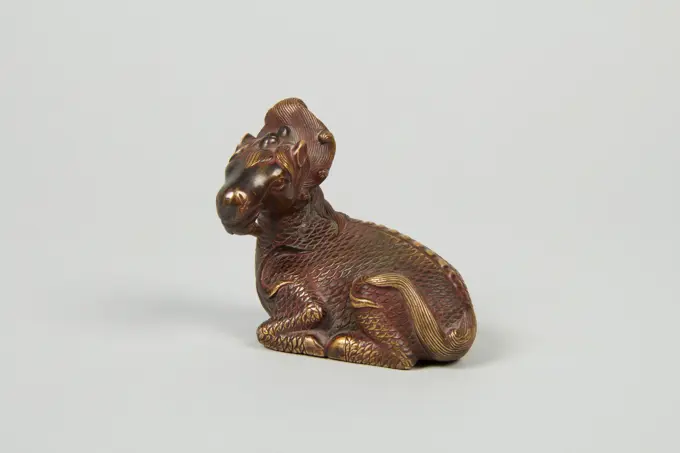
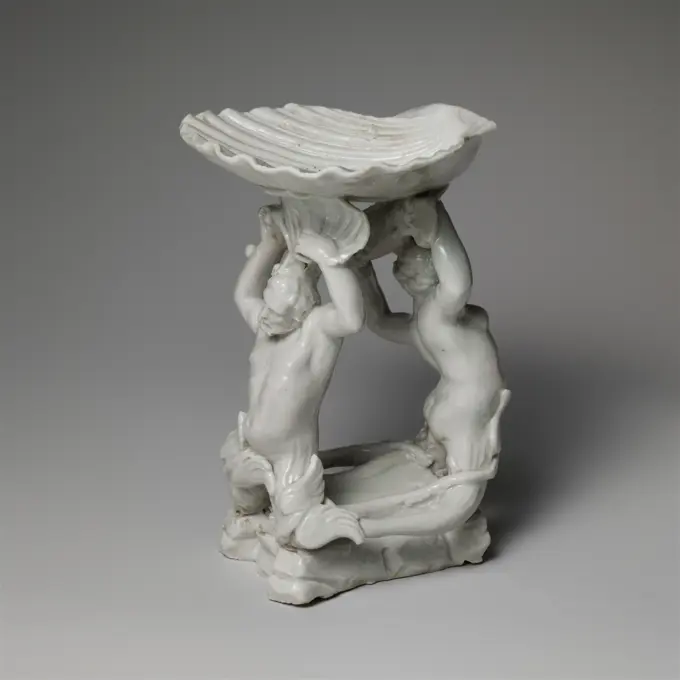
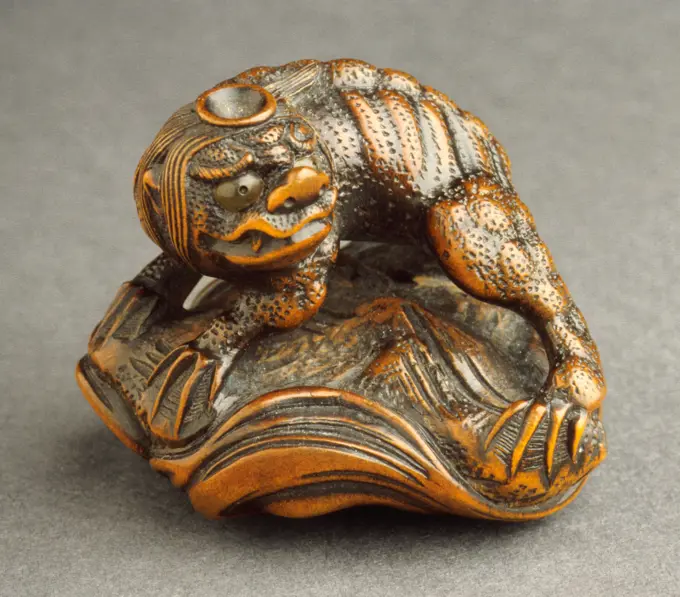
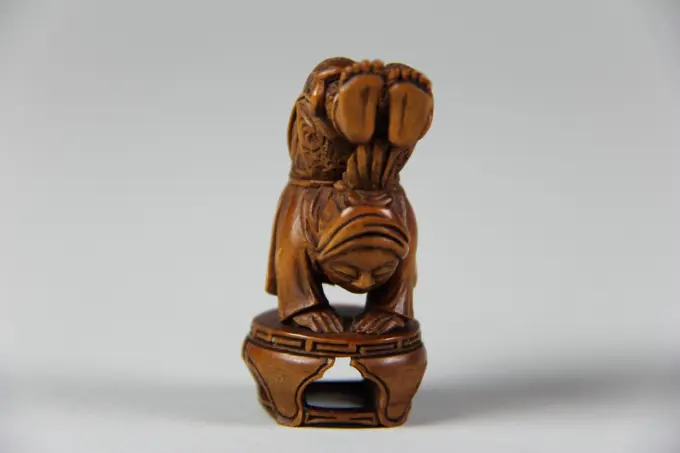
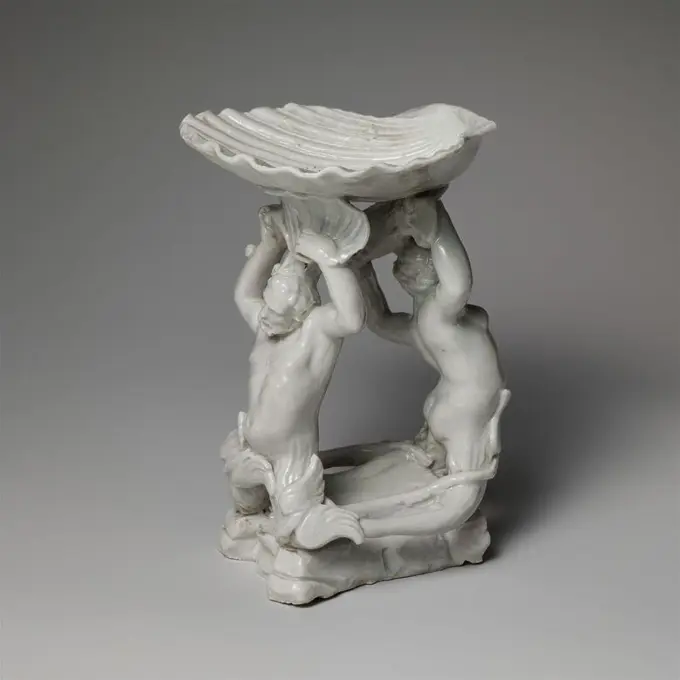
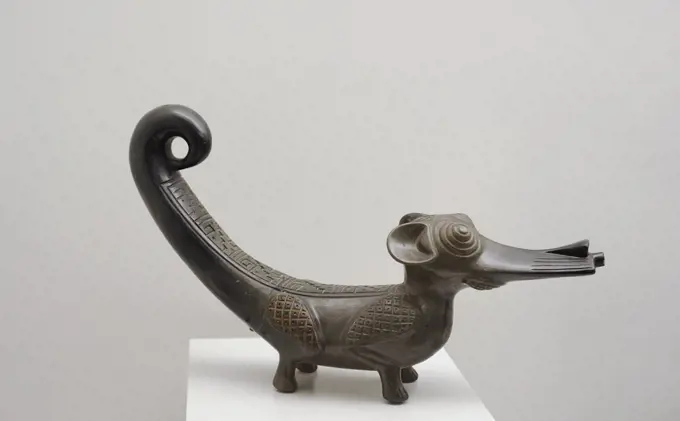
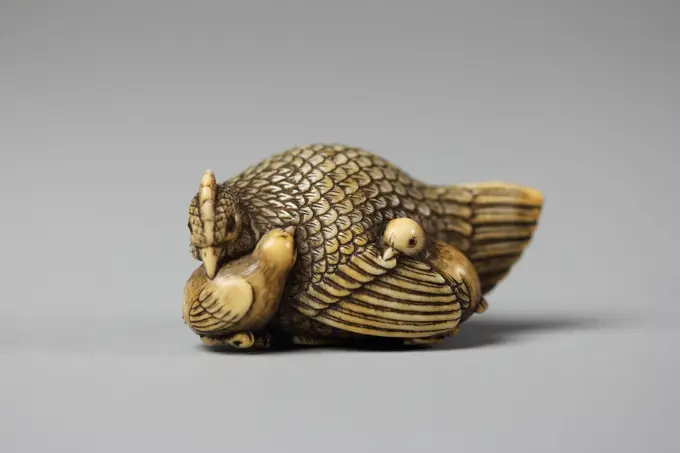
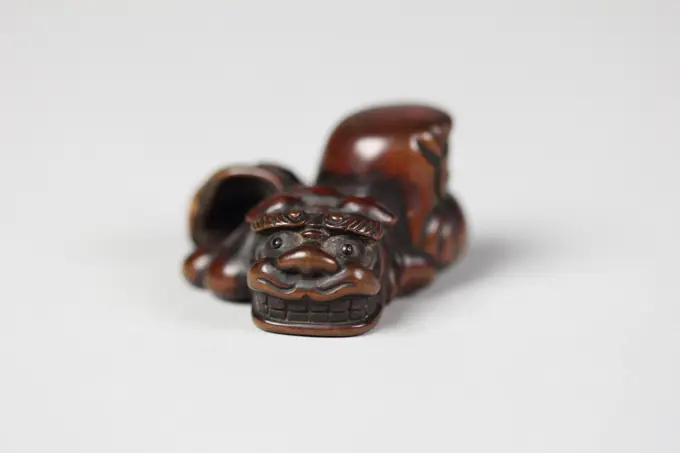
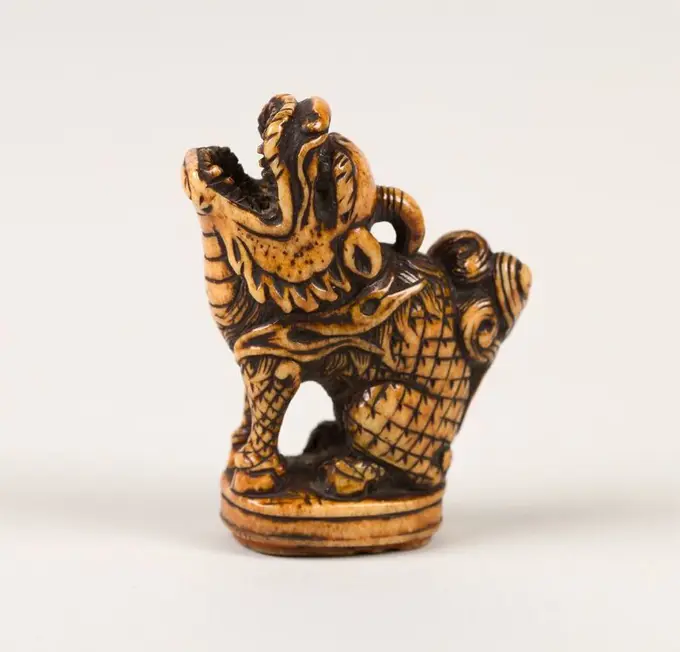
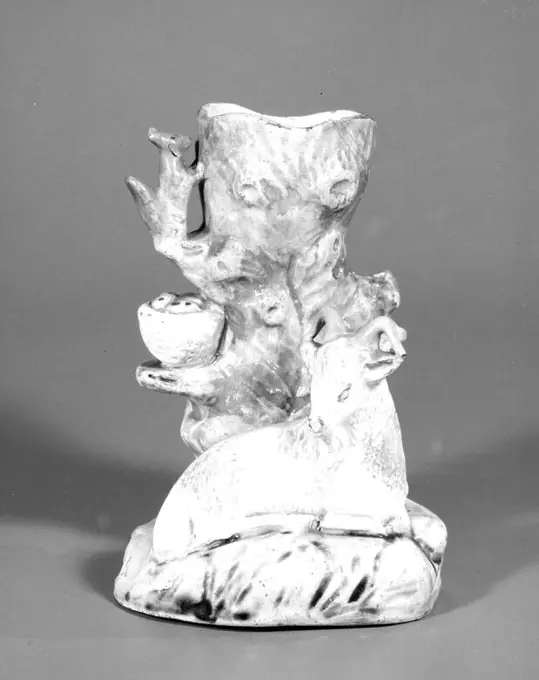
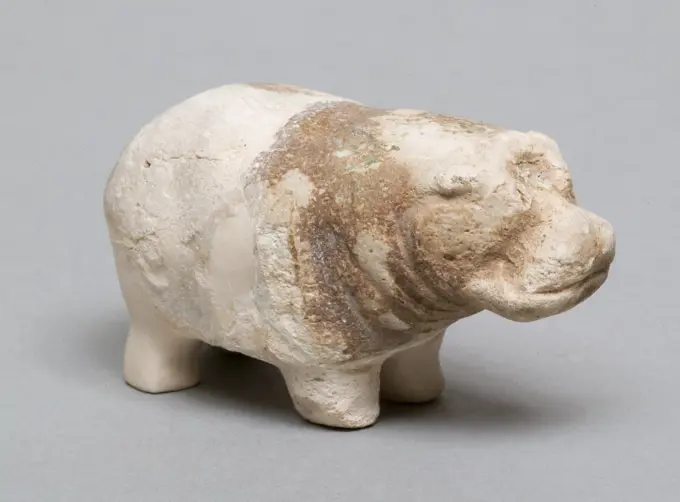
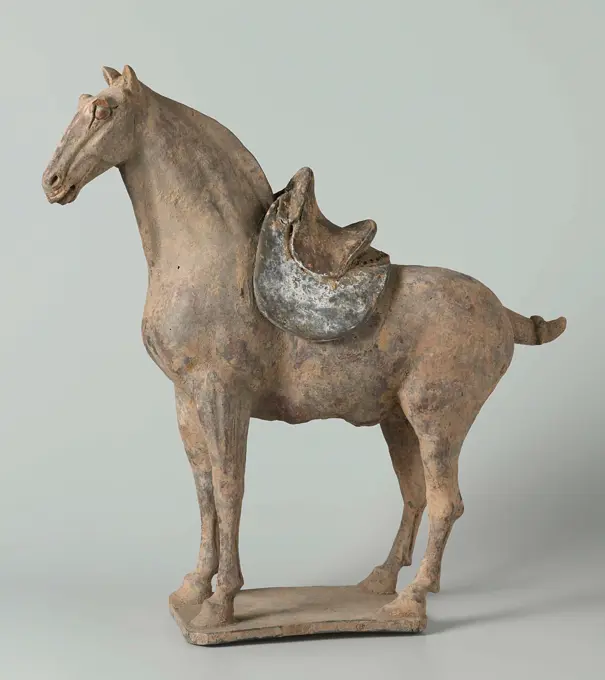
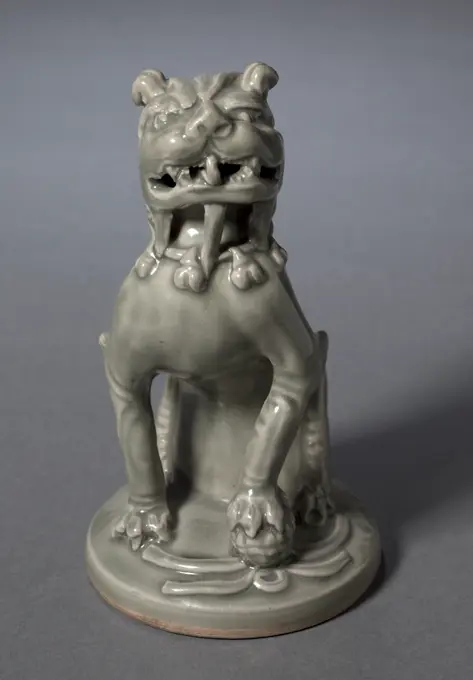
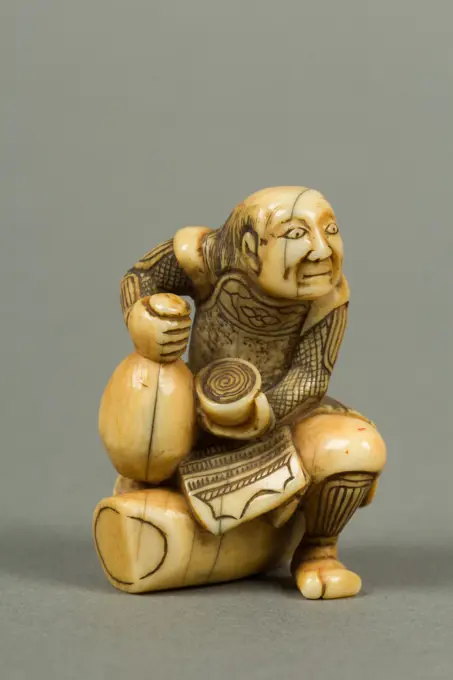
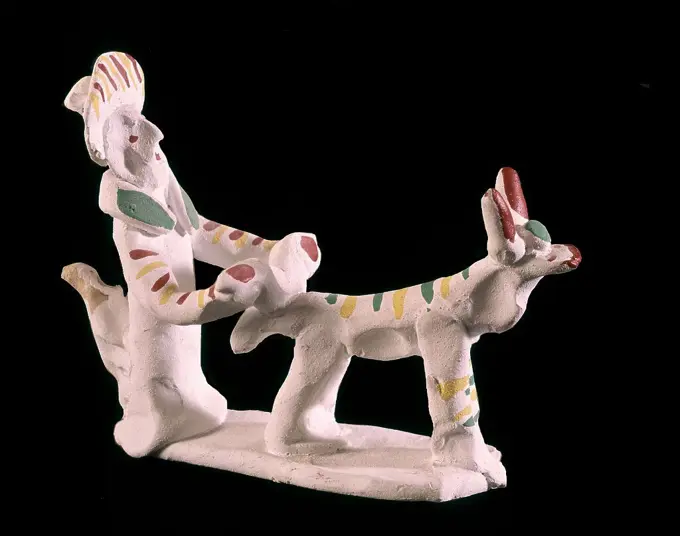
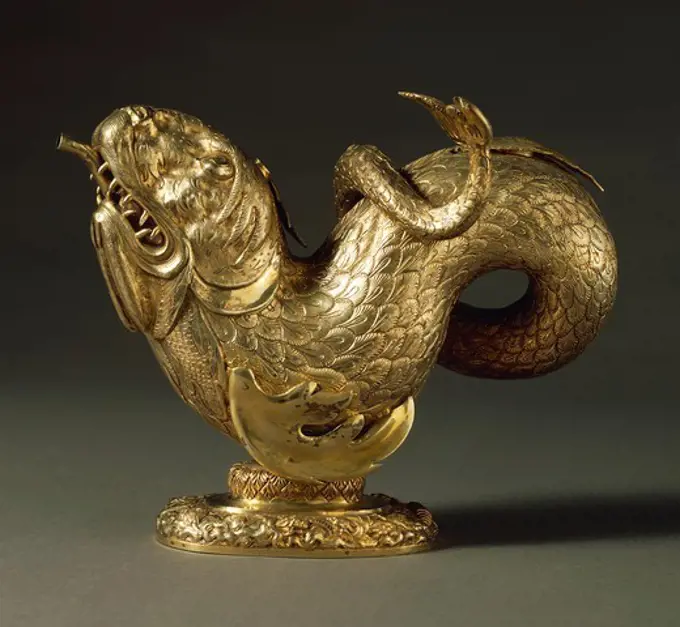
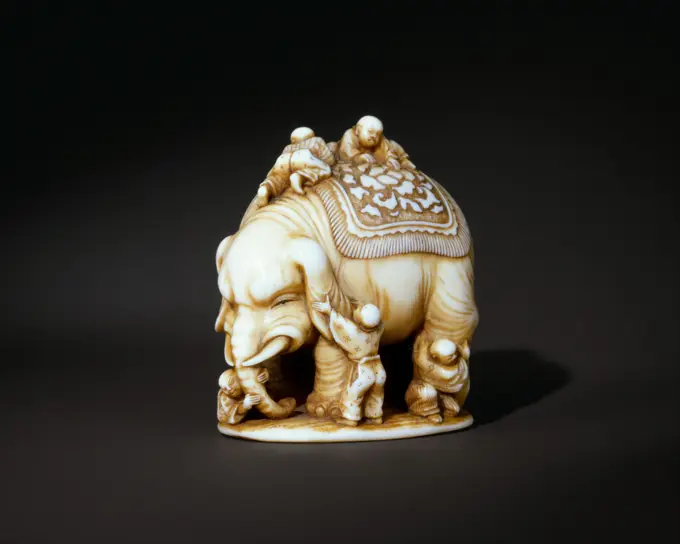
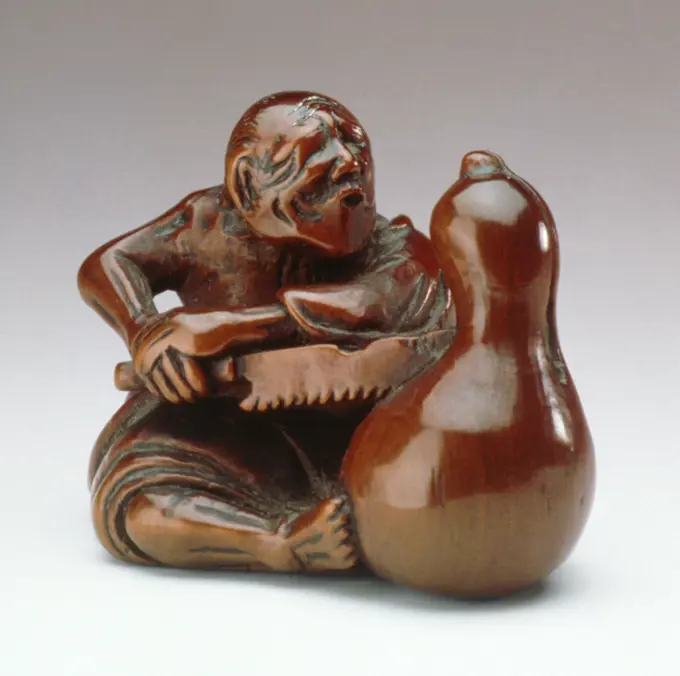
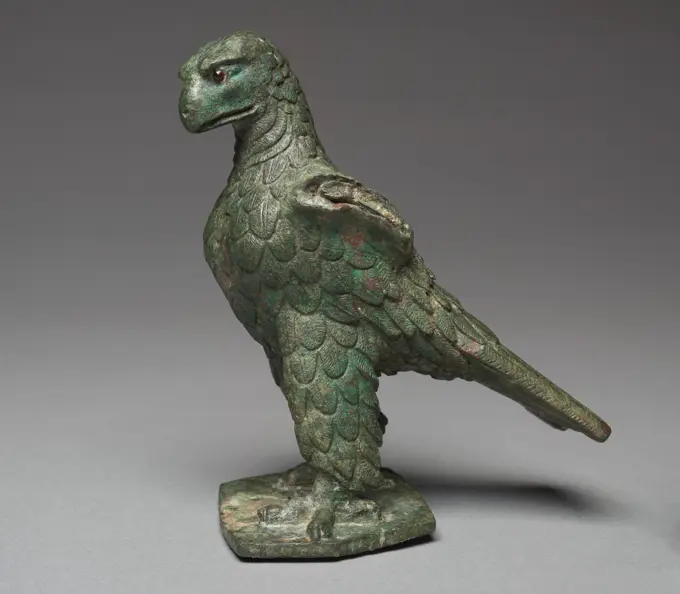
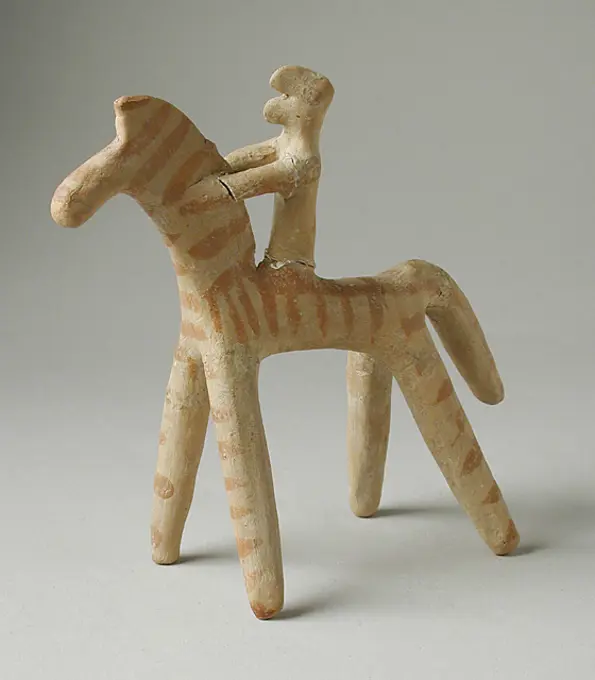
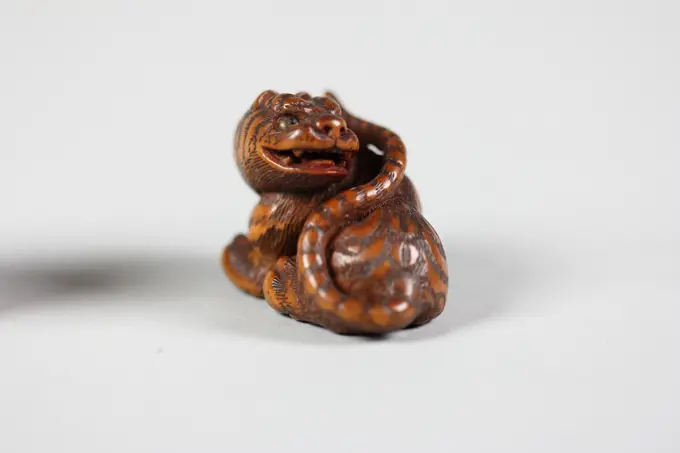
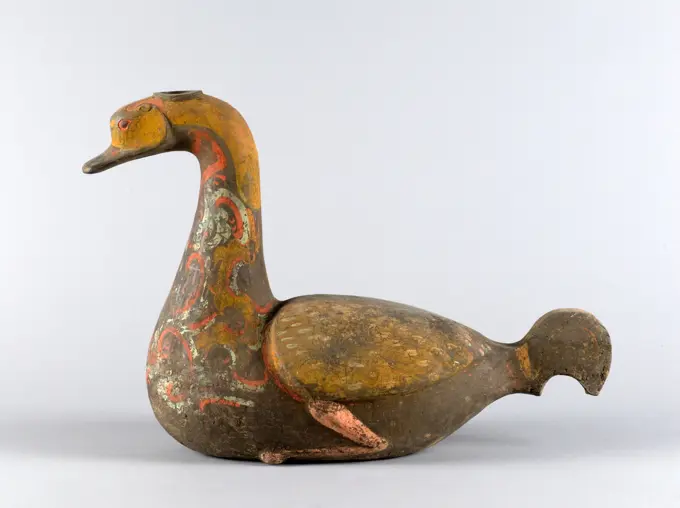
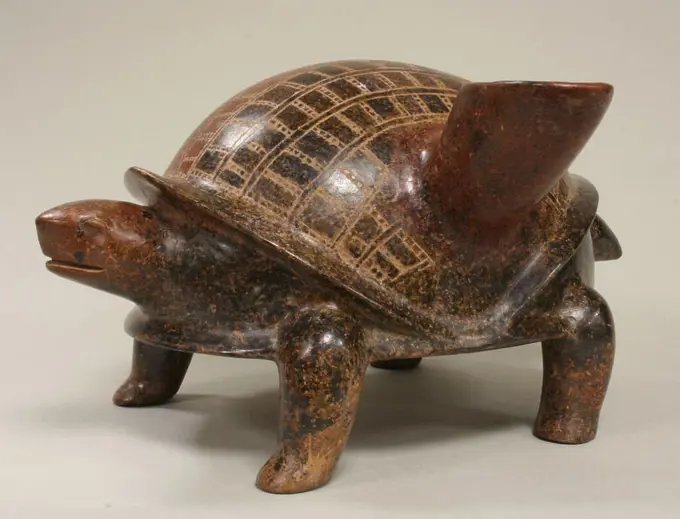
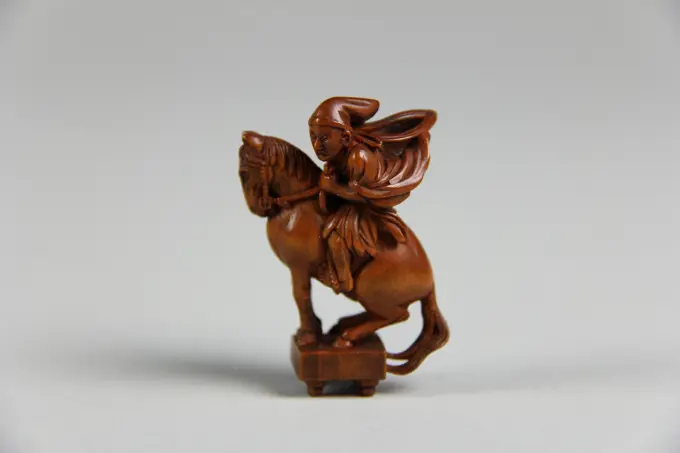
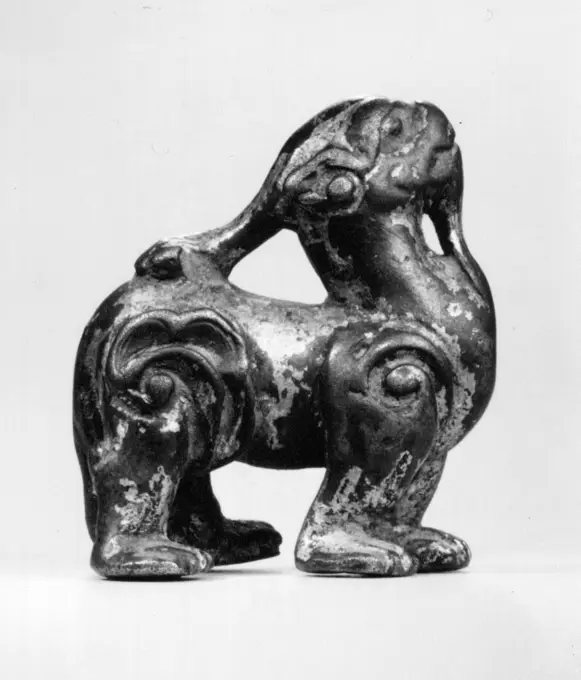
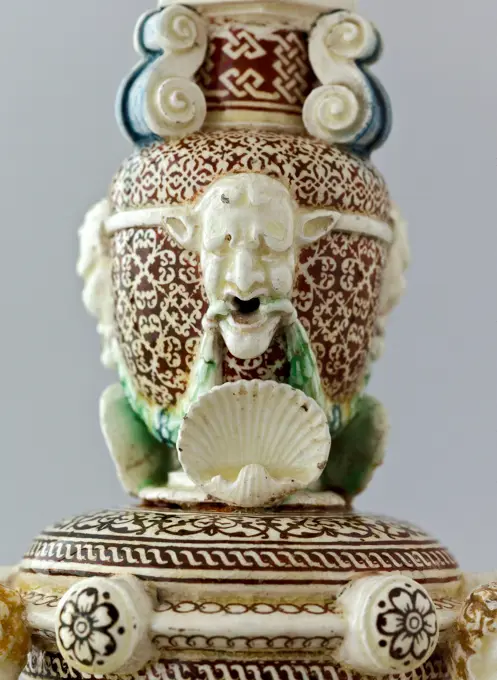
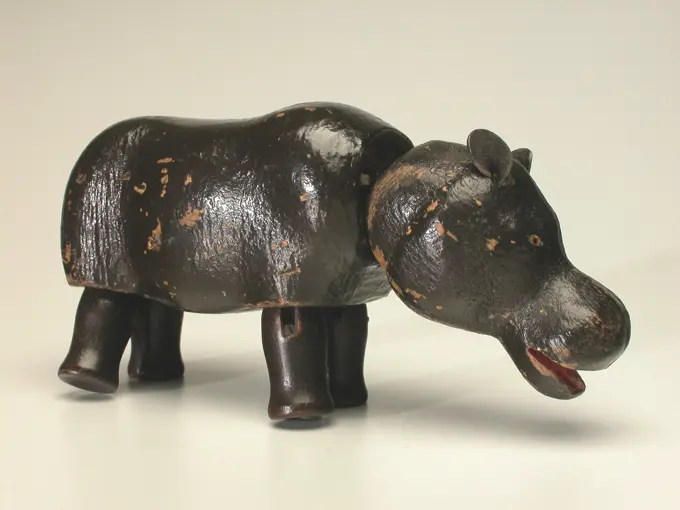
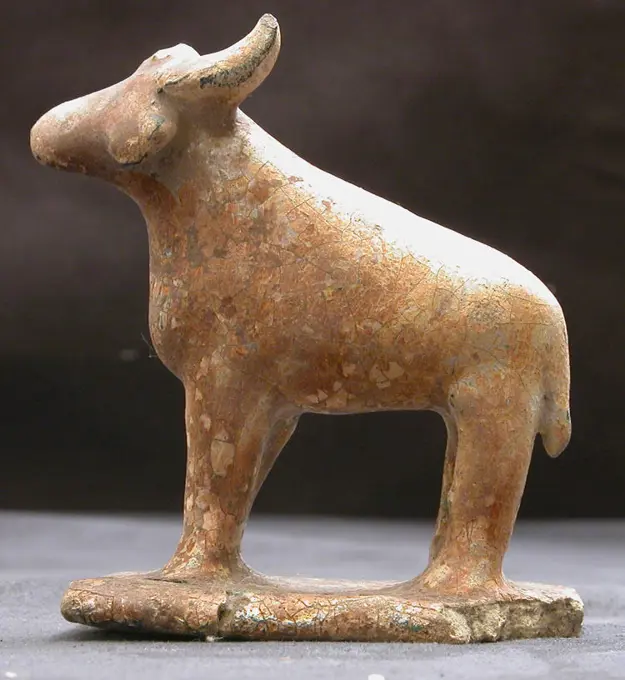
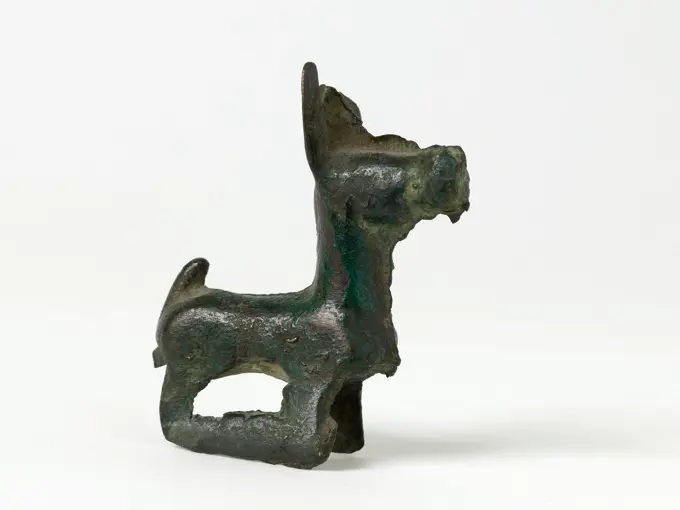
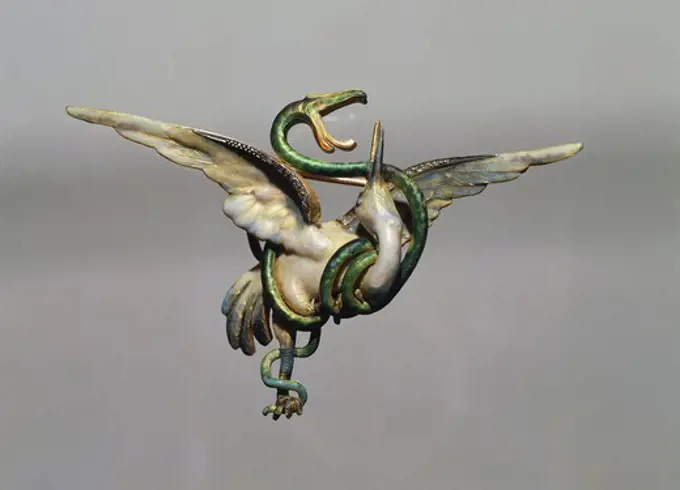
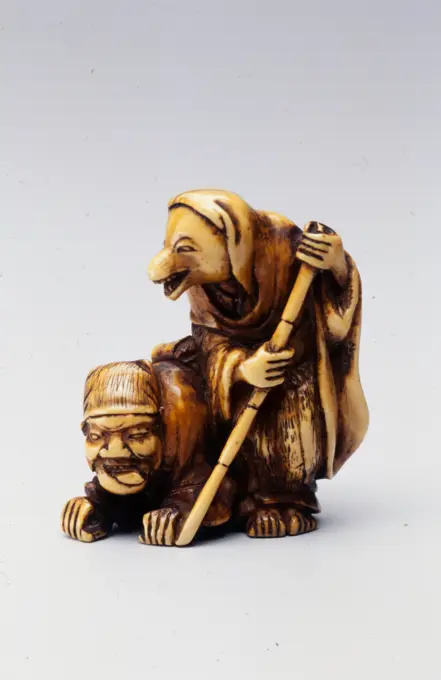
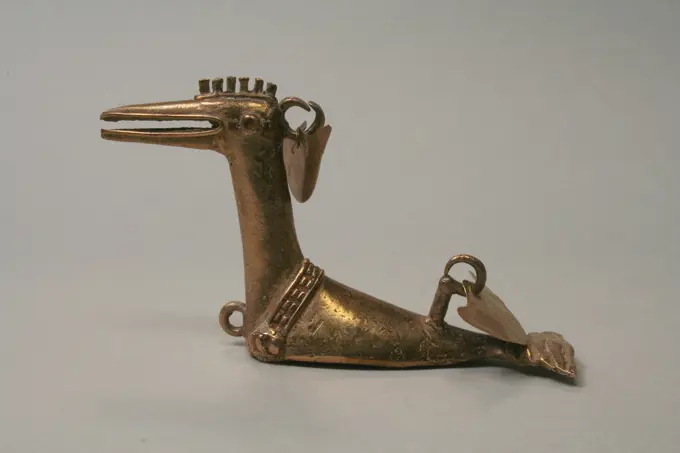
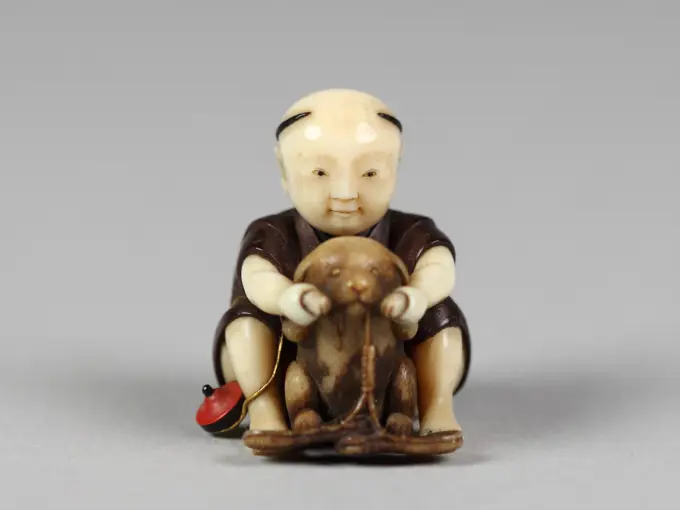
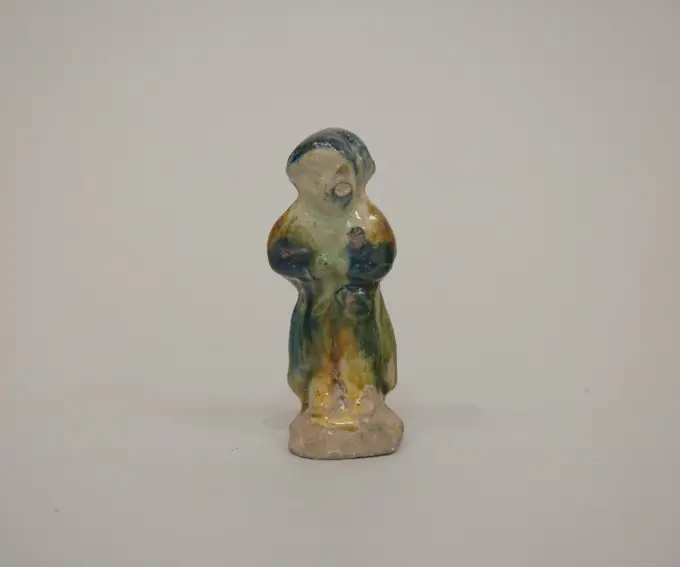
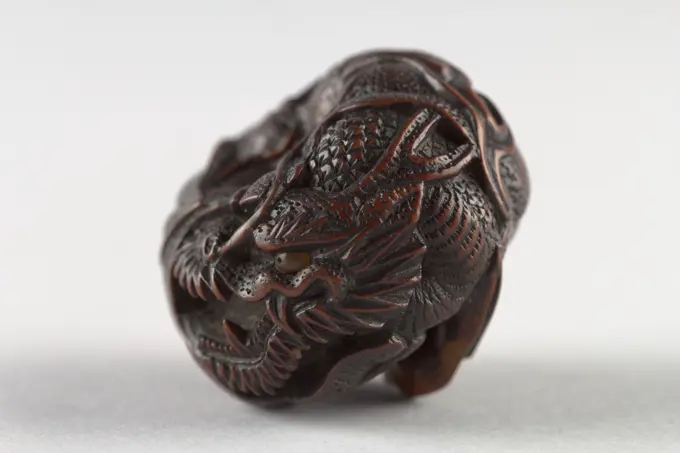
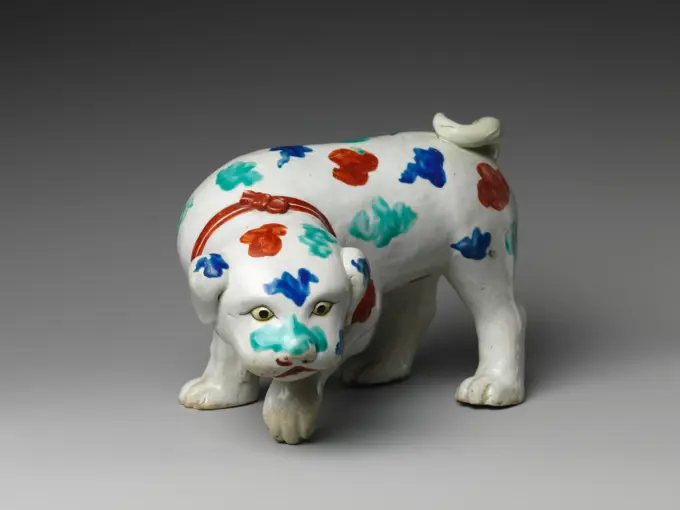
Vase zoomorphic. Bronze. China. Paris, Cernuschi museum. 70002-15 Chinese art, bronze, double, bird, vase zoomorphicBulldog 18th century British, Staffordshire. Bulldog. British, Staffordshire. 18th century. Salt-glazed stoneware. Ceramics-PotteryGlass bottle in the shape of an animal ca. 3rd century A.D. Roman Colorless with yellowish tinge; trail and applied feet in same glass.Thick rim, folded over and in, with flattened upper lip; tubular neck, turned upwards; elongated ovoid body; pontil pad on bottom between ears and mouth; four broad pads applied in pairs on underside of body, tooled and pinched to look like feet.Single trail wound once around neck; around bottom, side pinched out to form two ears and projecting mouth.Intact; many pinprick bubbles and blowing striations; dulling, pitting, thick creamy weathering, and iridescence.The animal is probably to be identified as a mouse.. Glass bottle in the shape of an animal 256724Netsuke 19th century Japan. Netsuke 59287Seal, 18th Century or later. China, Qing dynasty (1644-1911). Jade ;Cobra Amulet 1070-332 B.C. Third Intermediate Period-Late Period The amulet depicts a cobra with a broadened hood and shows very nicely the details of the snakes body. A loop for suspension is at the top.. Cobra Amulet 550931Animal Ornament 6th-7th century Moche (Loma Negra). Animal Ornament. Moche (Loma Negra). 6th-7th century. Gilded copper, shell. Peru. Metal-OrnamentsGlass bottle in the shape of an animal ca. 3rd century A.D. Roman Translucent pale yellow green; handle, applied bits, and trail of uncertain color.Vessel shaped to resemble a quadruped. Rounded, thickened rim with slightly outsplayed lip; tubular neck that curves down and round with tooling indent at base; sloping shoulder; small cylindrical body, tooled in to form separate globular section for head; thick irregular bottom, tooled out to form mouth; small squared loop handle applied to side of body.Trail wound seven times in a spiral around neck; four short legs with pinched feet applied to body; two long applied bits on head for ears, and two small blobs for eyes. Handle on animal's back for suspension.One section of trail on neck, one ear, and part of mouth missing, all with weathered breaks; dulling, pitting, and iridescence on body, with thick creamy iridescent weathering on applied handle, bits, and trail.Considerable time and effort have been taken to transform this utilitarian Amulet - tańczący bóg Bes. unknown, authorDoor knocker ca. 1530-40 Italian, probably Padua The collections of the Rijksmuseum, Amsterdam and of the Cleveland Museum of Art each contain related door knockers that present a leafy devil clutching the head of an ox. This apparently unique variant is in the form of a dog-headed monster with foliate wings, a more fish-like body, and a more sinuously curled tail. These door knockers are conventionally attributed to Riccio, but their opulent workmanship, especially impressive in the delineation of scales all over the body of the present example, could as easily be Venetian, and slightly later in date.James D. Draper, 1984. Door knocker. Italian, probably Padua. ca. 1530-40. Bronze, with dark brown patina. Sculpture-Bronze7 1/2 x 7 13/16 x 4 1/2 in. (19.05 x 19.84 x 11.43 cm), Grey soapstone, CanadaFigurine of a panther or leopard, probably from avessel. .FAELDERY. Liggering Fabeldier, Versiede in today- a basal religios an arabes. Light Grjsg Address Jade. On hoeses sock.Paperweight in the form of a Qilin 15th century China The Qilin is a mythical creature thought to appear when a sage ruler comes to the throne. This exquisitely cast bronze example served as an auspicious ornament or paperweight on a Chinese scholars desk. The creature looks back to its proper left and reclines with all four feet tucked under its body. Its head features a beard, a central horn, and a flame like flowing mane—characteristics shared by early Ming dynasty depictions of dragons. The animals dense scales and ribbon like flames emanating from its upper legs are also attributes of Ming images of mythical animals. The surface of the bronze bears traces of red pigment, probably cinnabar, which was believed to have the magic property of warding off evils.. Paperweight in the form of a Qilin. China. 15th century. Bronze. Ming dynasty (1368-1644). MetalworkHorse figurine ca. 600-480 B.C. Cypriot The handmade and solid horse originally was part of a horse-and-rider figurine in the Kourion style.. Horse figurine 241324Worship;  19th century (1801-00-00-1900-00-00);Bonbon dish 1750-55 Doccia Porcelain Manufactory Italian. Bonbon dish 189024 Factory: Doccia manufactory, Bonbon dish, 175055, Hard-paste porcelain, Height: 6 1/4 in. (15.9 cm). The Metropolitan Museum of Art, New York. Rogers Fund, 1906 (06.385)Aquamanile in the Form of a Gourd with aHuman Head 19th century German. Aquamanile in the Form of a Gourd with aHuman Head. German. 19th century. Bronze; quaternary copper alloy (62.8% copper, 18.3% lead; 11.9% zinc, 7% tin); with a thin layer of dark patina.. Metalwork-BronzeKappa, the Water Imp, on Rock. Naitō Toyomasa (Japan, 1773-1856). Japan, first half of 19th century. Costumes; Accessories. Wood with inlaysNetsuke of Acrobat 19th century Japan. Netsuke of Acrobat 59301Wall support for Paintings Tang, 1885 - 1899  Wall support for painting tongs. Casted in two halves in the form of an open lion's pussy, ending in oak leaves on a profiled plinth, with supported supports of uneven length. Traces of gilding are still present on the object.  cast iron castingBonbon dish. Culture: Italian, Florence. Dimensions: Height: 6 1/4 in. (15.9 cm). Factory: Doccia Porcelain Manufactory (Italian, 1737-1896). Date: 1750-55. Museum: Metropolitan Museum of Art, New York, USA.Cayman shaped container. Ceramics. Chimu-Inca. Late Horizon (1400-1533 AD). Cuzco, Peru. South America. Museum of the Americas. Madrid, Spain. Rosary bead early 16th century German This medallion shows the Virgin and Child on one side and a fashionably dressed saint on the other. The holes on top and bottom indicate that it was designed for a metal setting that would have allowed it to be strung. In form it closely resembles the medallion beads strung on the Rosary nearby.. Rosary bead 196591Figure of a Dromedary 12th-13th century. Figure of a Dromedary 451810Tomb figures of horses and camels. These figures were once painted and equipped with reins and bridles of wood and fabric or leather. They were placed in tombs, to accompany the deceased in the afterlife. From the riders headgear and faces, it is evident that they originated in western Asia rather than China. Their presence in the tomb of a highranking member of Chinese society reflects flourishing international contacts in the period.Acrobat. Japan, 18th century. Costumes; Accessories. Wood with inlaysNetsuke of Hen and Two Small Chicks 18th-19th century Japan. Netsuke of Hen and Two Small Chicks. Japan. 18th-19th century. Ivory. Edo (1615-1868) or Meiji period (1868-1912). NetsukeCapitel of the vault service  presbytery, Basilica Assumption of the Virgin Mary (Mariacki), KrakówNetsuke of Three Masks 19th century Japan. Netsuke of Three Masks. Japan. 19th century. Wood. Edo (1615-1868) or Meiji period (1868-1912). NetsukeBuckle (Horse). Russia, Siberia, early 1st millennium B.C.. Costumes; Accessories. BronzeNetsuke and Seal in form of a Qilin. Culture: Japan. Dimensions: H. 2 1/2 in. (6.4 cm); W. 2 in. (5.1 cm); D. 1 in. (2.5 cm). Date: 19th century. Museum: Metropolitan Museum of Art, New York, USA.Bough Vase. Culture: British (American market). Dimensions: H. 5 1/16 in. (12.9 cm); Diam. 3 9/16 in. (9 cm). Date: 1775-1800. Museum: Metropolitan Museum of Art, New York, USA.Head of Hathor ca. 1981-1640 B.C. Middle Kingdom. Head of Hathor. ca. 1981-1640 B.C.. Pottery. Middle Kingdom. From Egypt, Memphite Region, Lisht North, Cemetery, debris, MMA excavations, 1906-07. Dynasty 12-13Hippopotamus ca. 1800-1600 B.C. Middle Kingdom-Second Intermediate Period. Hippopotamus. ca. 1800-1600 B.C.. Faience. Middle Kingdom-Second Intermediate Period. From Egypt, Memphite Region, Lisht North, cemetery south of pyramid, between Houses A1:2 & A2:4, Pit 333, MMA excavations, 1913-14. Dynasty 13-2nd Intermediate PeriodFrog Whistle 7th-9th century Veracruz. Frog Whistle. Veracruz. 7th-9th century. Ceramic. Mexico, Mesoamerica, Veracruz. Ceramics-Musical InstrumentsTomb figures of horses and camels. These figures were once painted and equipped with reins and bridles of wood and fabric or leather. They were placed in tombs, to accompany the deceased in the afterlife. From the riders headgear and faces, it is evident that they originated in western Asia rather than China. Their presence in the tomb of a highranking member of Chinese society reflects flourishing international contacts in the period.Stirrup Spout Bottle with Reclining Llama 1st-6th century Moche. Stirrup Spout Bottle with Reclining Llama 314695Fragment of the grave brass;  2. PO. 5th century (451-00-00-500-00-00);Incense Burner Top in the Shape of a Lion, 1100s. China, Shaanxi province, Northern Song dynasty (960-1127). Green-glazed porcelaneous stoneware, Yaozhou ware; overall: 18.1 cm (7 1/8 in.).Pair of bronze statuettes of a lion and a double-headed lion ca. 550-500 B.C. Etruscan These three solid-cast lions are said to have been found together. Certainly they are closely related both in style and technique of manufacture. They likely ornamented a larger object, perhaps a brazier, which was almost certainly made of iron, since fragments of iron plate and several iron rivets remain attached to the bronze lions.. Pair of bronze statuettes of a lion and a double-headed lion 255951Netsuke of Man Sitting on a Log holding a Bottle and a Cup 19th century Japan. Netsuke of Man Sitting on a Log holding a Bottle and a Cup. Japan. 19th century. Ivory. Edo (1615-1868) or Meiji period (1868-1912). NetsukeCrab 6th-7th century Moche (Loma Negra). Crab 314484Statuette of the Apis Bull 1069 BCE-664 BCE Egypt. Bronze . Ancient EgyptianSculpture in the form of a lying lion., C. 1400 - c. 1950 Sculpture in the form of a lying lion.  . Sculpture in the form of a lying lion.  .Weight to weigh opium. A "opium" weight in the form of a fabulous with duck-like head, standing on a quadrangular pedestal (poured into one piece).PITO DE ARCILLA (SIURELL) BAÑADO EN CAL Y PINTADO - FIGURA DE ANCIANO Y PERRO. Location: ALFARERIA. SA CABANETA-MARRATXI. MALLORCA. SPAIN.Silversmith's art, Germany, 17th century. Silver water ewer in shape of sea animal, around 1600. From Augsburg.Blind Men and the Elephant 19th century Japan This netsuke is a witty rendition of a Japanese allegory on truth and interpretation. A group of six blind men endeavor to describe an elephant, however their attempts are thwarted as none of them are able to describe the entire animal.. Blind Men and the Elephant 60194Chinese Lion. Japan, 19th century. Costumes; Accessories. Wood (with lacquer added later)Man with Hangover Sawing Sake Gourd. Miwa (school of) (Japan, late 18th-19th century). Japan, late 18th-early 19th century. Costumes; Accessories. WoodBox for an animal mummy surmounted by a coiled, rearing snake 664-30 B.C. Late Period-Ptolemaic Period. Box for an animal mummy surmounted by a coiled, rearing snake. 664-30 B.C.. Cupreous metal. Late Period-Ptolemaic Period. From EgyptImperial Eagle, 100 BC-AD 100. Probably Syria, Roman, 1st Century BC-1st Century. Bronze with garnet inlays; overall: 12.1 x 6.9 x 9.7 cm (4 3/4 x 2 11/16 x 3 13/16 in.).Nikon 990 Digital CaptureMirror decoration;  1. PO. 5th century BC (-500-00-00--451-00-00);Jade figurine of lion, Chinese ArtChess business concept, leader teamwork & successOilLampTiger 18th century Mink Japanese. Tiger. Mink (Japanese, ca. 1735-1816). Japan. 18th century. Wood. Edo period (1615-1868). NetsukeGoose. Terracotta with traces of polychromy. China, west han. Paris, Cernuschi museum. DYNASTIE HAN OUEST, FIGURINE FUNERAIRE, FUNERARY FIGURINE, Goose, MINGQI, MINGQIS, OIE, PARTLY POLYCHROMED, POLYCHROME, TERRACOTTA, TERRE CUITE, TRACE POLYCHROMIE, WESTERN HAN DYNASTY, Wildlife, animalTurtle Vessel. Culture: Colima. Dimensions: H. 7 3/4 x L. 13 5/8 in. (19.7 x 34.6 cm). Date: 200 B.C.-A.D. 300. Museum: Metropolitan Museum of Art, New York, USA.Candlestick in the form of a Putto (see also 1975.1.1374, .1376, .1377) ca. 1600 or later Italian, Venice. Candlestick in the form of a Putto (see also 1975.1.1374, .1376, .1377). Italian, Venice. ca. 1600 or later. Bronze (Copper alloy with a dull patina verying from a reddish to olive green color).. MetalworkBird on tree trunk from Faience, Anonymous, c. 1750 - c. 1780 Bird on Faience tree trunk. Multicolored painted. Delft . Bird on Faience tree trunk. Multicolored painted. Delft .Netsuke of Equestrian Figure 19th century Japan. Netsuke of Equestrian Figure. Japan. 19th century. Wood. Edo (1615-1868) or Meiji period (1868-1912). NetsukeMountFemale Head. UnknownBird Pendant, 1100-771 BCE, 3 5/16 x 2 x 1/4 in. (8.41 x 5.08 x 0.56 cm), Highly calcified jade with little remnant of the original grey-green color, China, 11th-8th century BCEPeahen (one of a pair) ca. 1760 Bow Porcelain Factory British. Peahen (one of a pair) 203562Snarling Feline Bottle 4th-7th century Moche. Snarling Feline Bottle 309446Pair of rams, anonymous, c. 1800 - c. 1900 Image of porcelain, covered with a turquoise glaze. The horizontal ram has two horns, goatee and long mane, the head is turned to the right. Image has been broken. Monochrome. China porcelain. glaze. vitrification Image of porcelain, covered with a turquoise glaze. The horizontal ram has two horns, goatee and long mane, the head is turned to the right. Image has been broken. Monochrome. China porcelain. glaze. vitrificationRecumbent Animal on Grater or Scraper, 700-500 BC. Greece or Asia Minor, 8th-6th Century BC. Bronze with iron grating plate; overall: 4.1 cm (1 5/8 in.); base: 7.6 x 4.3 cm (3 x 1 11/16 in.).Lead figure of a lion. Culture: Greek, Laconian. Dimensions: Length: 1 3/4 in. (4.4 cm). Date: 6th-5th century B.C..Small flat votive figurines of cast lead have been found in great quantities at the ancient sanctuaries of Laconia; over one hundred thousand, dating from the seventh century B.C. to the Classical period, were dedicated to the goddess Artemis Orthia in Sparta. Museum: Metropolitan Museum of Art, New York, USA.Cup 19th century Scythian. Cup 463216Bronze floral element. Culture: Etruscan. Dimensions: H.: 4 15/16 in. (12.6 cm). Date: ca. 550-500 B.C..Originally, this object probably formed the top of an elaborate incense burner. Museum: Metropolitan Museum of Art, New York, USA.Limestone hand holding a pyxis and a branch of leaves 3rd-1st century B.C. Cypriot Holding incense box and ear of corn.. Limestone hand holding a pyxis and a branch of leaves 242257Chimera (Bixie) 3rd-6th century China. Chimera (Bixie) 61525Candlestick, workshop of Saint-Porchaire ". Ceramic, kaolinic clay; decor by stamping (inlaid of colored land with iron oxide) or by molding of elements in relief, transparent glaze lead. 1550. Museum of fine arts of The city of Paris, Petit Palais. 72452-2 Kaolinic clay, ceramic, candlestick, shell, shell, decor, detail, element relief, stamping, transparent glacide, inlays, molding, ear, iron oxide, lead, colored earth, head, faceFigure of a seated Guanyin with child, anonymous, c. 1800 - c. 1899 Image of porcelain on a pedestal, painted on biscuit in green, yellow, eggplant and black. A sitting Guanyin with a child on her lap; Her robe is decorated with flower branches with a band with loose flowers at the bottom on a speckled, green soil. Email sur biscuit with family distance colors. China porcelain. glaze. painting / vitrification Image of porcelain on a pedestal, painted on biscuit in green, yellow, eggplant and black. A sitting Guanyin with a child on her lap; Her robe is decorated with flower branches with a band with loose flowers at the bottom on a speckled, green soil. Email sur biscuit with family distance colors. China porcelain. glaze. painting / vitrificationBes Amulet, 1567-525 BCE, 1 x 1/2in. (2.5 x 1.3cm), carnelian, Egypt, 16th-6th century BCEToy animal - Schoenhut (1872-1935) Schoenhut (1872-1935)Figurine of a Bovine 12th century The relatively simple and unadorned style of Syrian figurines, as well as their often iridized and whitened glaze, could not be improved” by early twentieth-century restorers. Objects like this figurine did not meet the taste of collectors to the same extent as the more extravagant Iranian works (whether medieval or modern). As a result, fewer Syrian figurines are present in today’s collections and displays, and their cultural background needs more research.. Figurine of a Bovine 448426Animal aulop. Ordos. Hen. Paris, Museum Causori. 35406-10 Bronze, han dynasty, gallop, hetao, meridional Mongolia, ordos, prehistory, prehistoric, animal. Outdate of a stage player, which holds a mask with a heavy grimace in his hands sitting with a knee. The player is virtually bald. He has a wide collar for his neck and a bow hanging on his back. The player wears a spotted garment and has two holes in his back, where a cord has been through.Mandarin Duck. Japan, late 18th-early 19th century. Costumes; Accessories. Bronze with gildingGoldsmith's art, 20th century. Enamelled gold brooch shaped as stork and snake, around 1900.Netsuke fox woman and man, early 19th century, Unknown Japanese, 1 3/4 x 1 3/16 x 1in. (4.4 x 3 x 2.5cm), Ivory, Japan, 19th centuryAnonymous. "Anse de Vase". Metal, golden silver. Museum of Fine Arts of the City of Paris, Petit Palais. 99931-17 ANTIQUITE, ARGENT DORE, Metal, antiqueBird Pendant 300 B.C.-A.D.700 Early Quimbaya Technical note: Optical microscopy and XRF conducted in 2017. This pendant in the shape of a bird was primarily produced through lost wax casting. Made of an alloy of gold, it depicts a stylized bird with identifying features of a head, neck, body, and tail. The lower areas of the bird, its abdomen and limbs, are not shown. Depicting the bird in this way suggests that it is "posada en agua" ("at rest in water"), as Pérez de Barradas (1966, 106) inferred for a similar avian pendant. All of the design features of this pendant were originally made in the wax except for the two crescent-shaped danglers, which were made separately from hammered sheet and added after casting. The underside of the bird reveals that the object was open-back-cast (see image 2). A ceramic-charcoal core that gave the object its basic shape was enclosed in wax, but one side (the underside) was left exposed. When the ceramic investment was built around the wax model, iNetsuke of Boy Playing with a Dog 19th century Japan. Netsuke of Boy Playing with a Dog. Japan. 19th century. Wood and ivory. Edo (1615-1868) or Meiji period (1868-1912). NetsukeMinature standing figure 8th century China. Minature standing figure. China. 8th century. Earthenware with polychrome glaze (Sancai ware). Tang dynasty (618-907). Tomb PotteryNetsuke 18th-19th century Japan. Netsuke. Japan. 18th-19th century. Wood. Edo (1615-1868) or Meiji period (1868-1912). NetsukeBetty Fuerst, Dragon and Serpent Weather Vane, c 1938 Dragon and Serpent Weather VaneTerracotta rhyton (vase for libations or drinking) late 4th-early 3rd century B.C. Greek, South Italian, Apulian The rhyton is in the form of a horse's head. The original polychrome decoration is lost.. Terracotta rhyton (vase for libations or drinking) 250570Bronze statuette of a horse ca. 2nd century A.D. Roman The fine delineation of the horses musculature, the expressive rendering of its lively movements, and the accurate depiction of the ornate saddle cloth mark this statuette as both a work of high craftsmanship and a historically significant piece that represents an important subject. It was probably made as an equestrian statuette of a Roman emperor or victorious general, and it took similar representations of Alexander the Great as its model.. Bronze statuette of a horse. Roman. ca. 2nd century A.D.. Bronze. Mid-Imperial. BronzesDonkey figurine ca. 600-480 B.C. Cypriot The solid, handmade donkey carries panniers. The right foreleg, part of the tail, most of the harness bands, and the greater part of the ears are missing.. Donkey figurine 241366Seiōbo: Queen Mother of the West. Japan, 18th century. Costumes; Accessories. Ivory with staining, sumi, inlaysVulture amulet ca. 2110-2030 B.C. Old Kingdom-First Intermediate Period. Vulture amulet. ca. 2110-2030 B.C.. Ivory. Old Kingdom-First Intermediate Period. From Egypt. Dynasty 8-11Dog late 17th century Japan. Dog. Japan. late 17th century. Porcelain with overglaze enamels (Hizen ware, Kakiemon type). Edo period (1615-1868). CeramicsBelt Hook in the Shape of an Ungulate 5th century B.C. Northwest China. Belt Hook in the Shape of an Ungulate 59477