Artistic Bowls and Ceramics

A collection of uniquely designed bowls in various styles, featuring diverse glazes and artistic decorations from different cultures and periods.

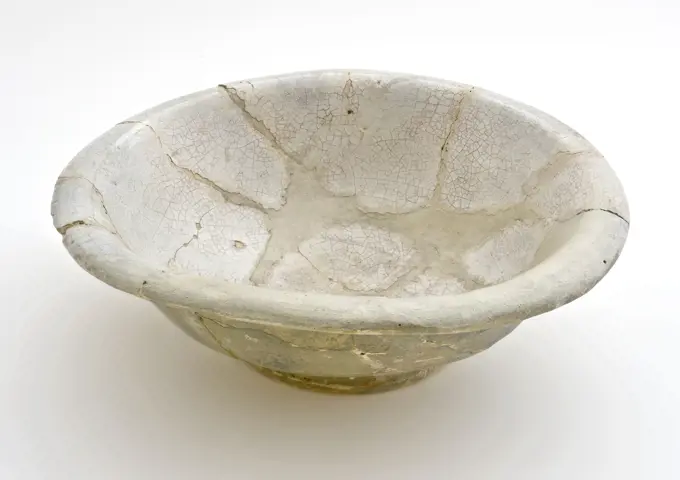
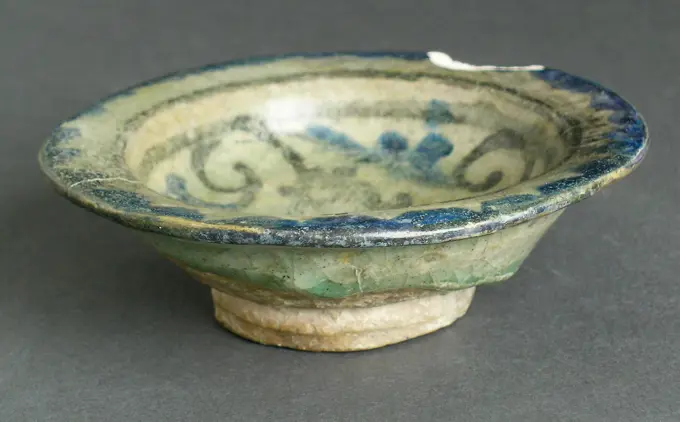
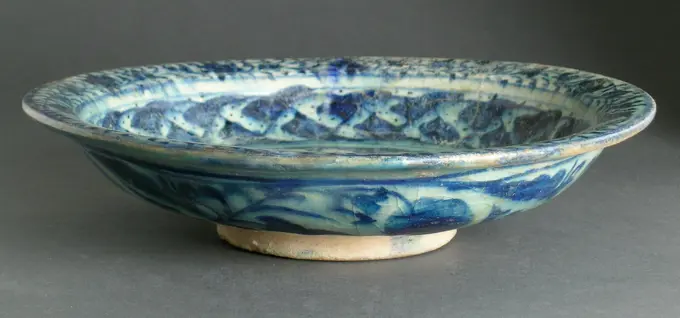
Bowl, anonymous, c. 1175 - c. 1224 White beige bowl of very fine earthenware (quartz fritry). Low, hollow foot. Right outstanding wall. A lead glaze layer is applied directly to the shard, which only leaves the foot uncovered. Decoration is applied in three ways; In the first place, a medallion with flower vines and a circle are engraved in the shard in two places on the inside. These drags are filled with enamel, causing them to stand dark against the background. In addition, gaps were drilled through the shard in the drags. Because these holes are filled with glaze, they are somewhat transparent. Finally, blue lead glaze is applied on the inside in three places, under the glaze. Iran earthenware. glaze. cobalt (mineral) engraving / painting / vitrification White beige bowl of very fine earthenware (quartz fritry). Low, hollow foot. Right outstanding wall. A lead glaze layer is applied directly to the shard, which only leaves the foot uncovered. Decoration is applied in three ways; In
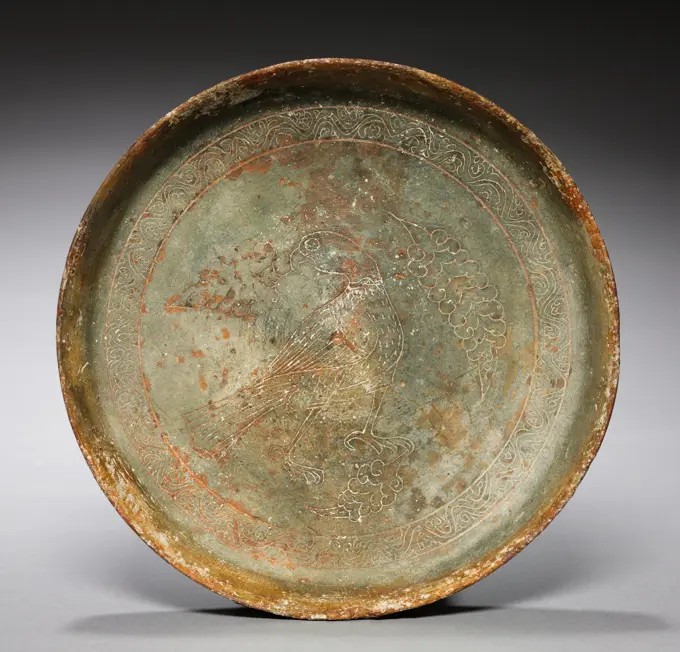
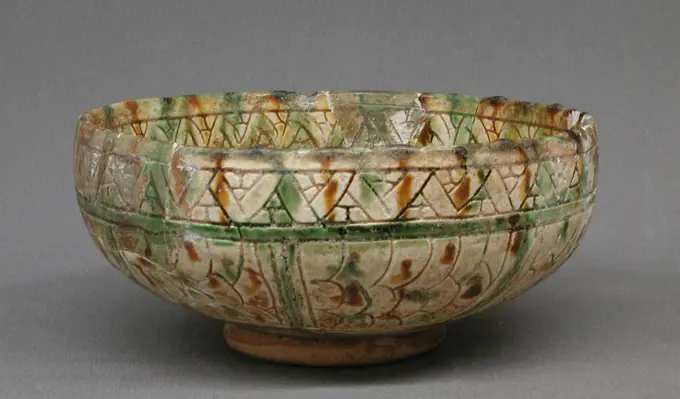
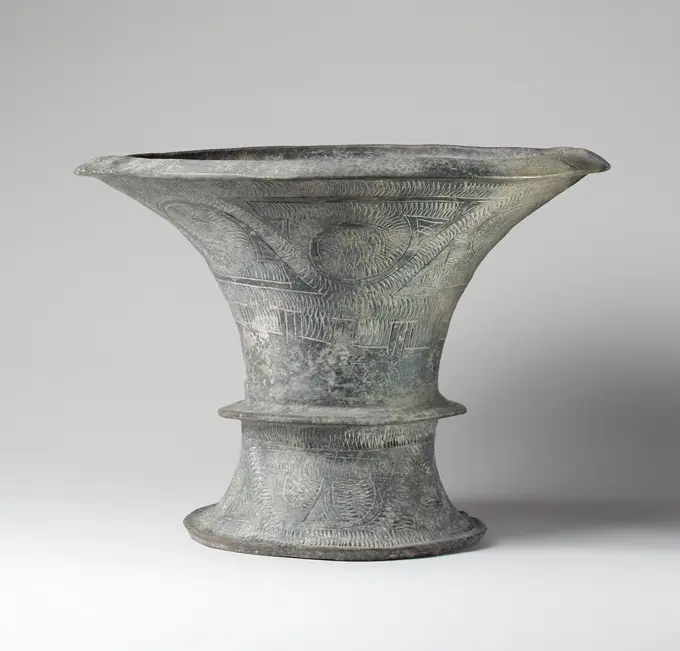
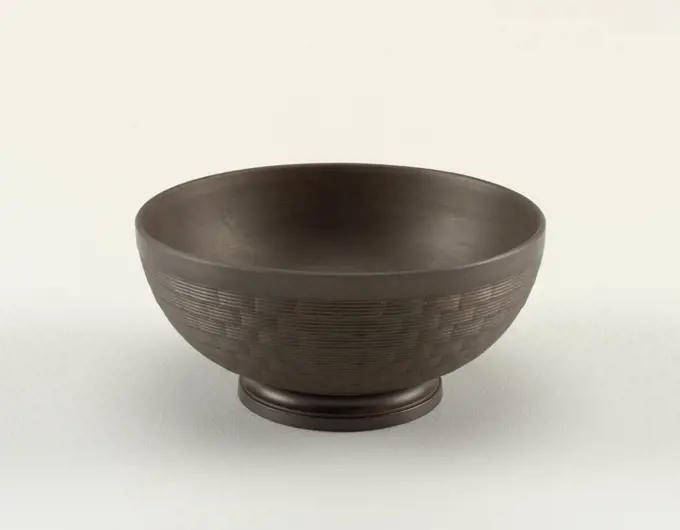
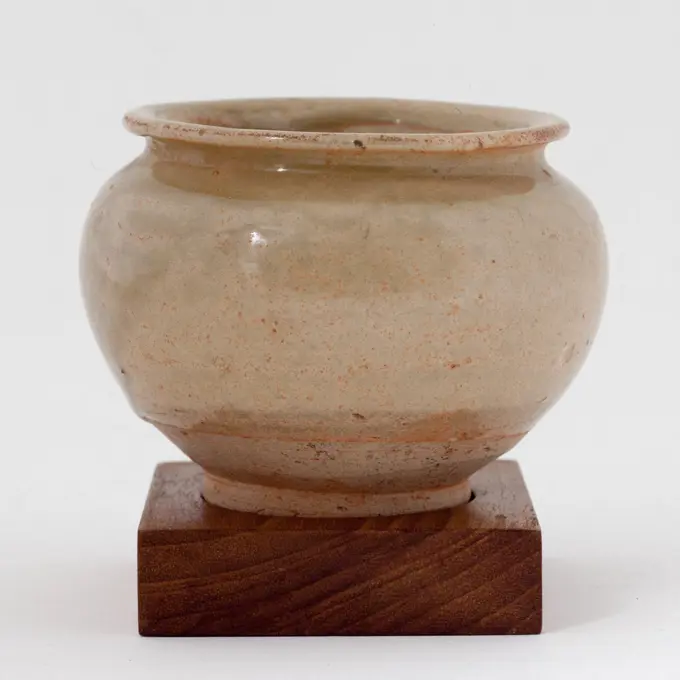
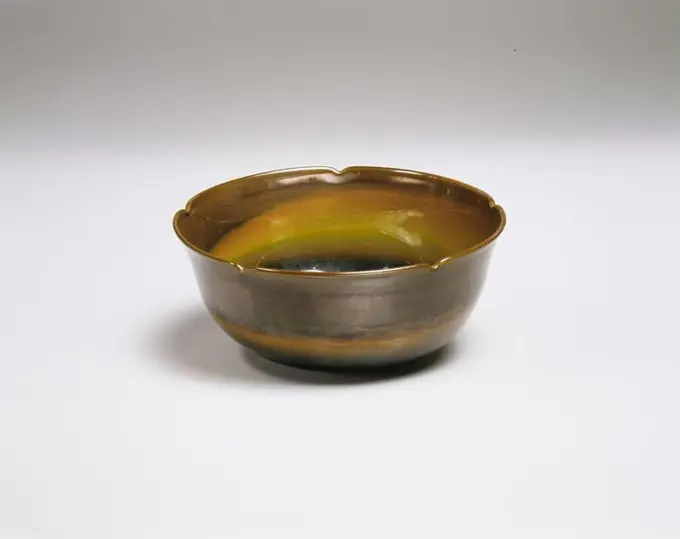
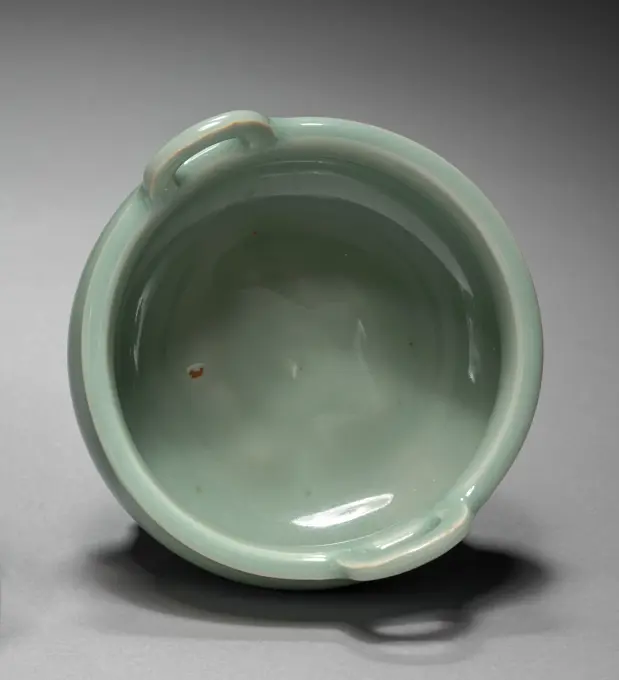
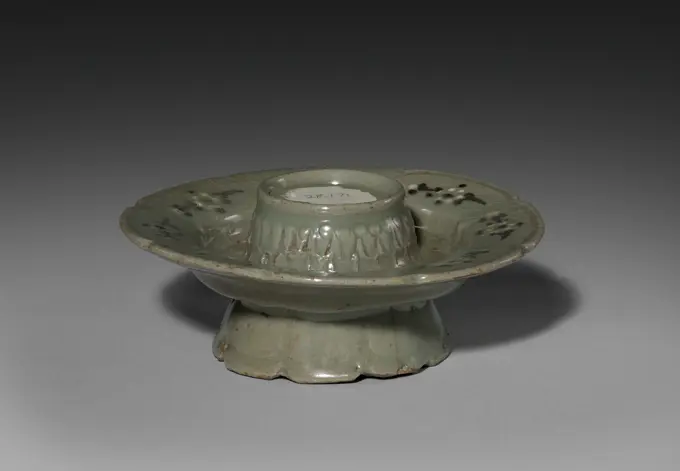
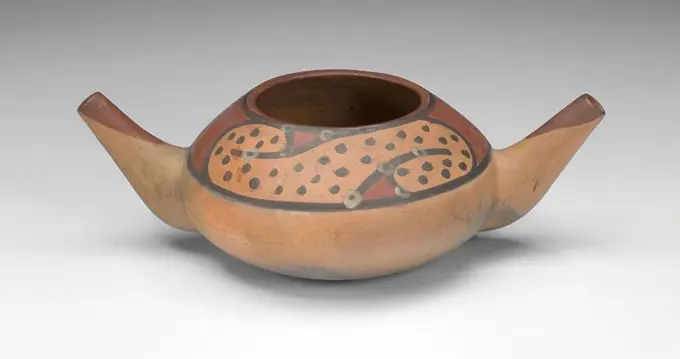
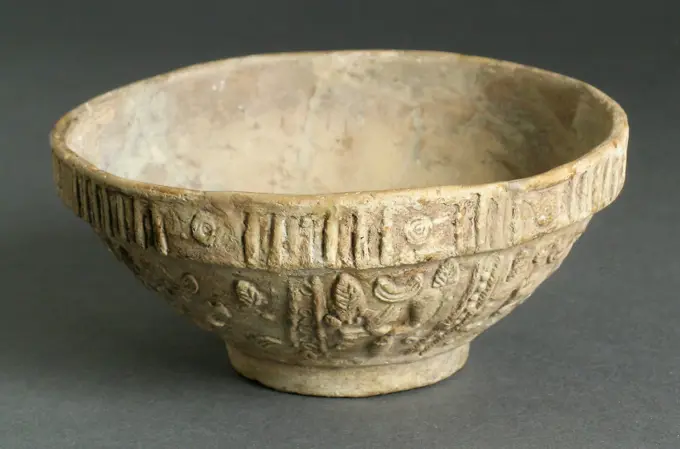
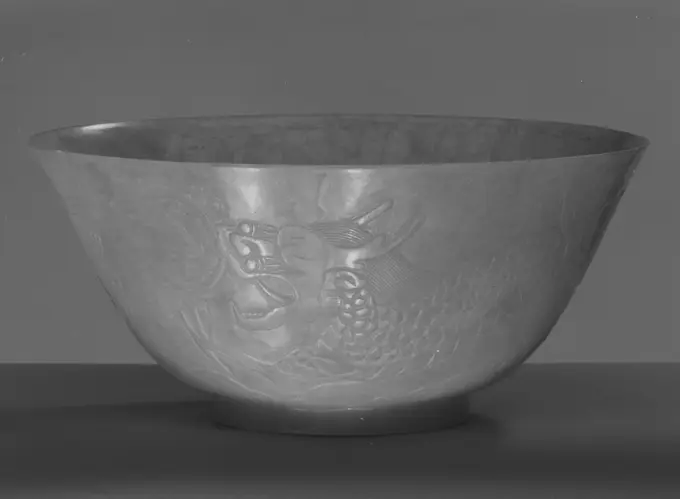
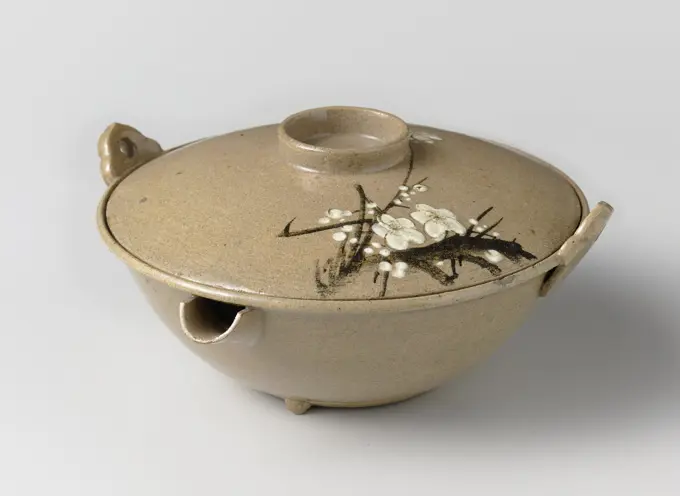
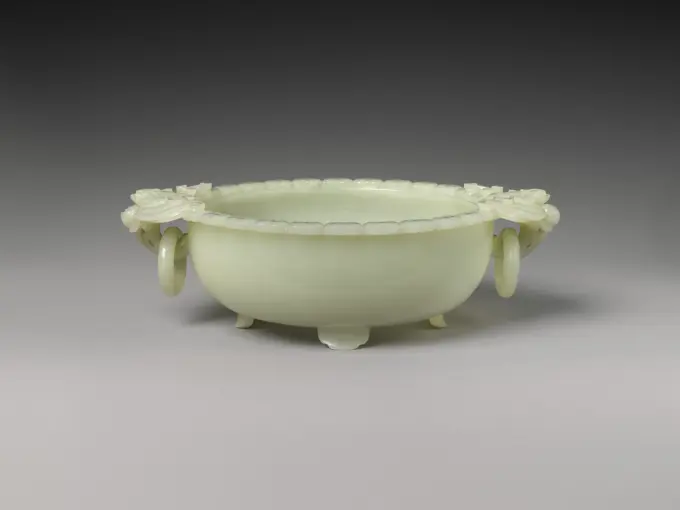
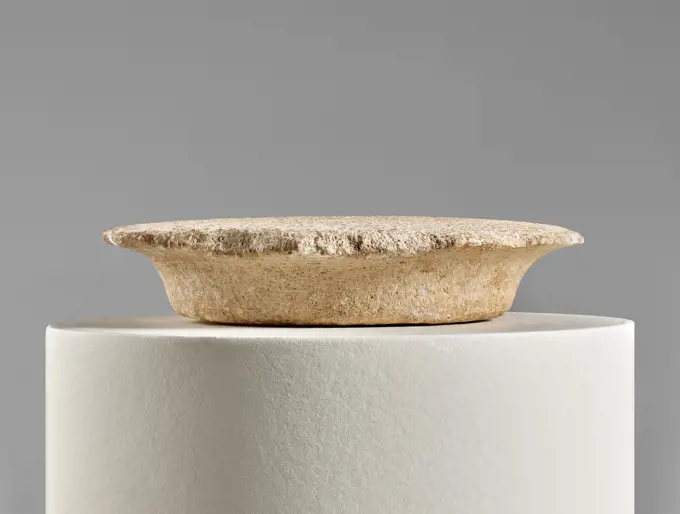
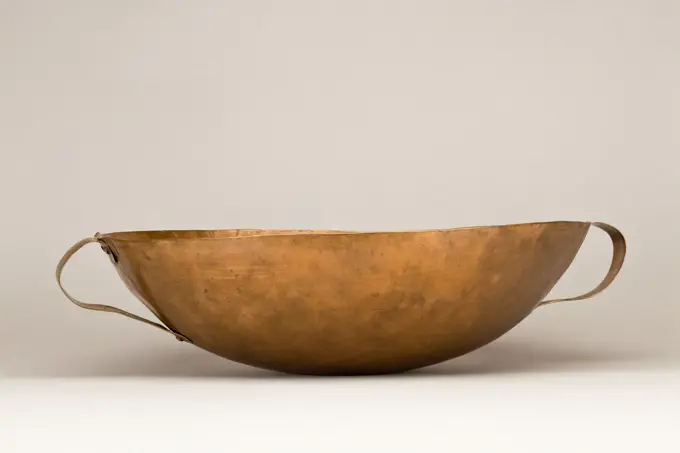
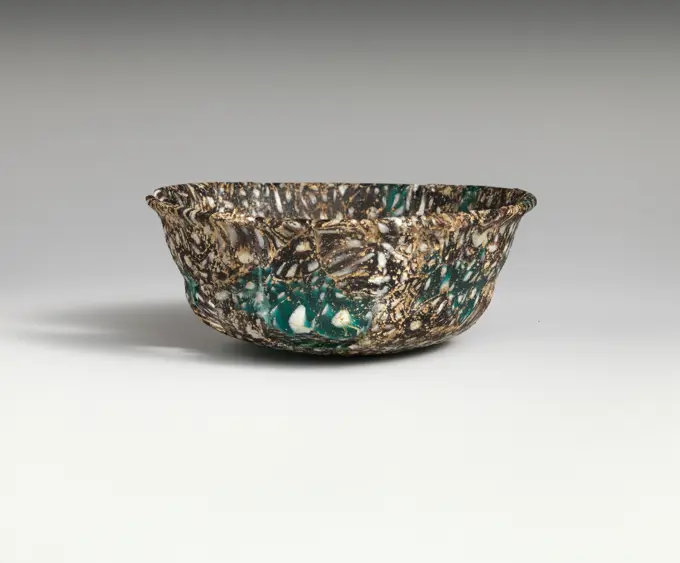
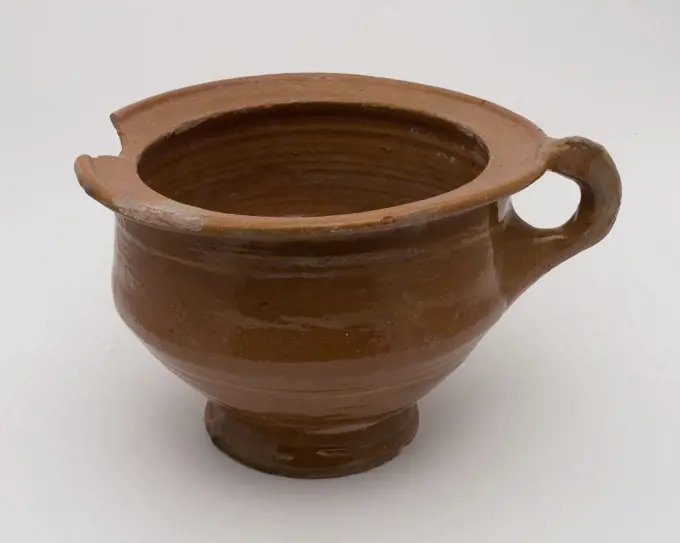
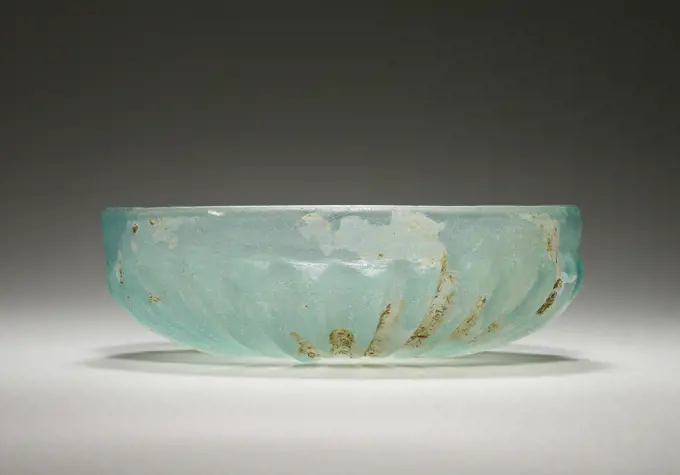
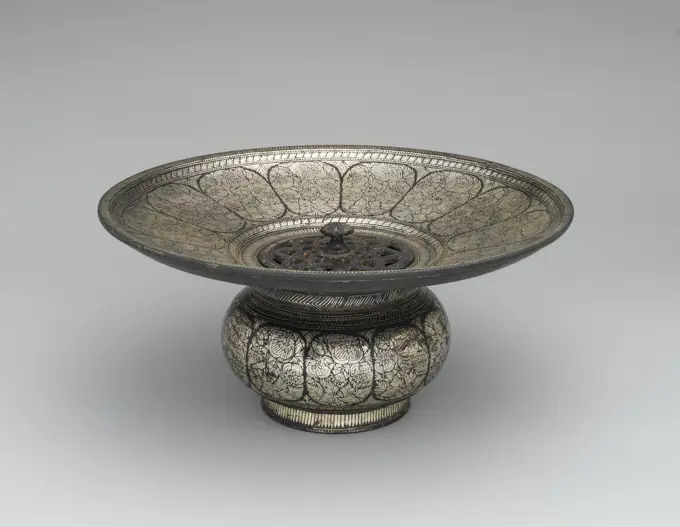
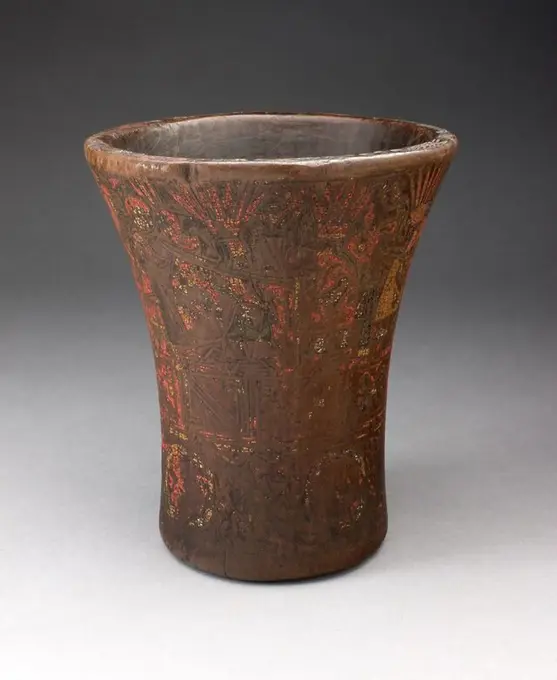
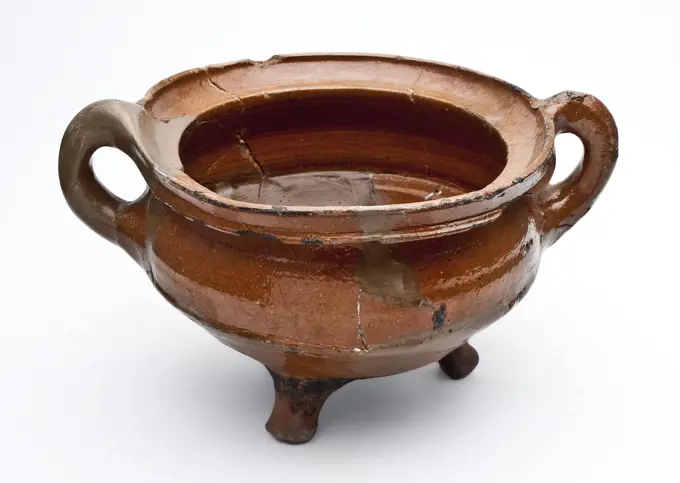
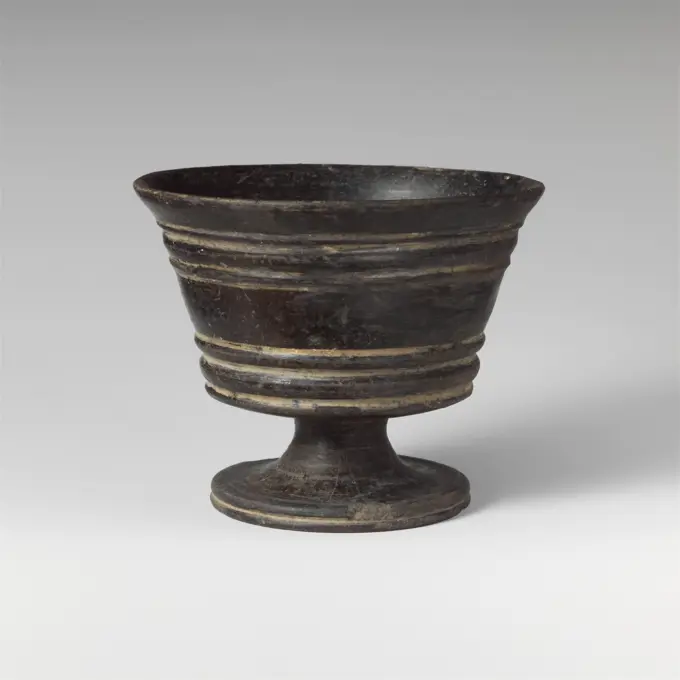
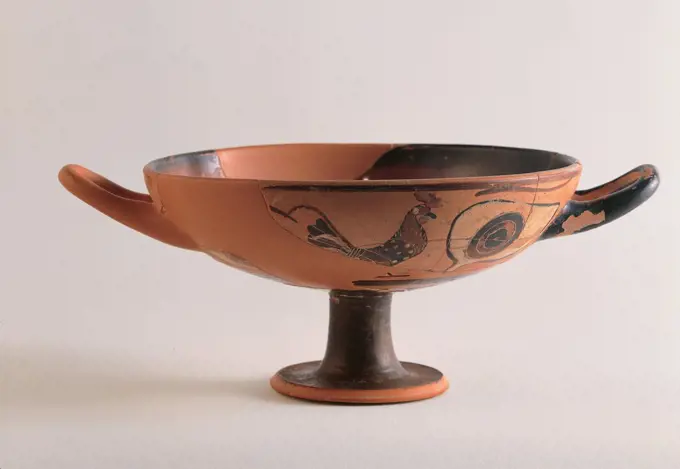
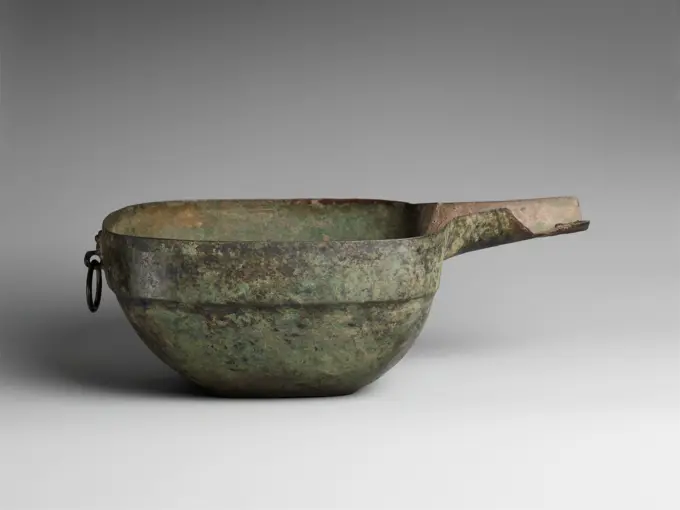
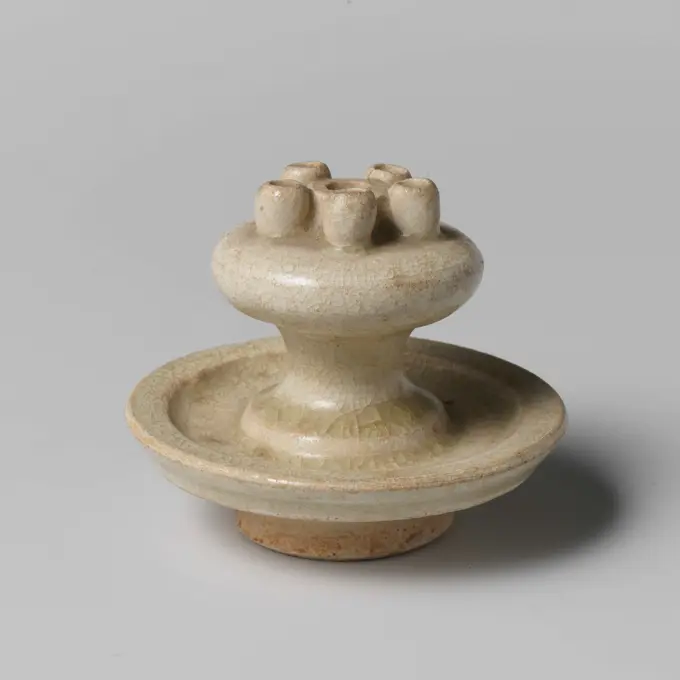
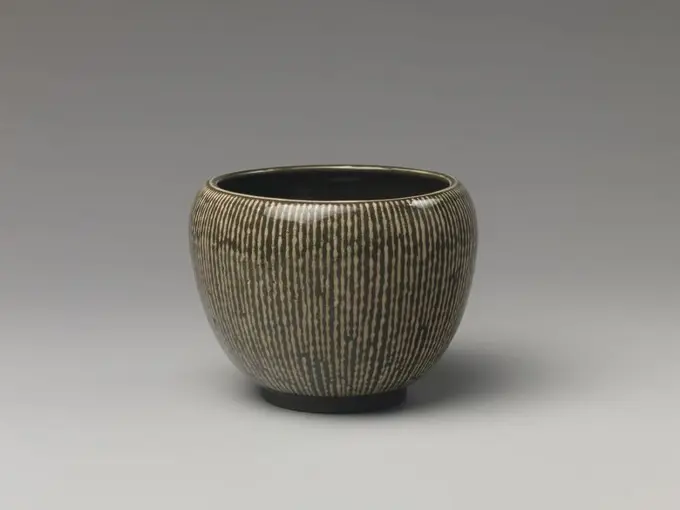
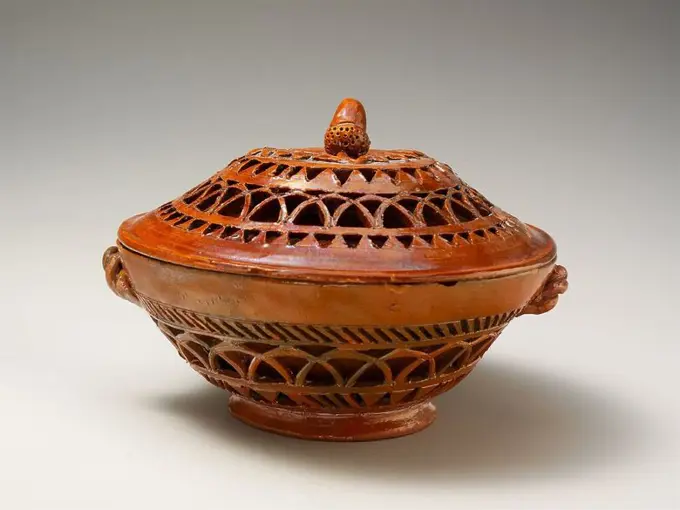
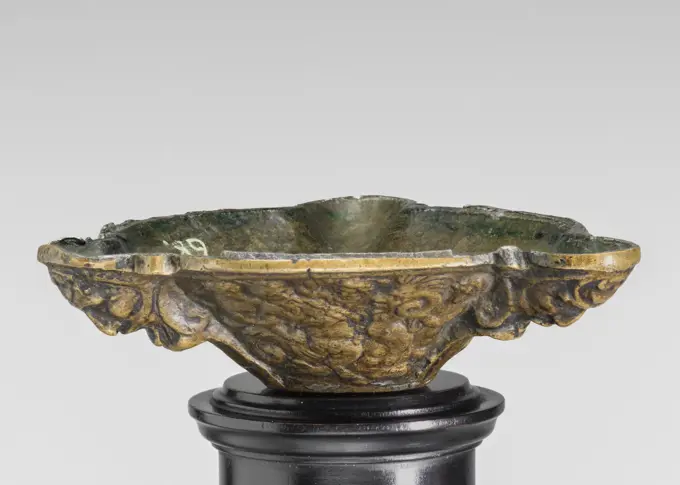
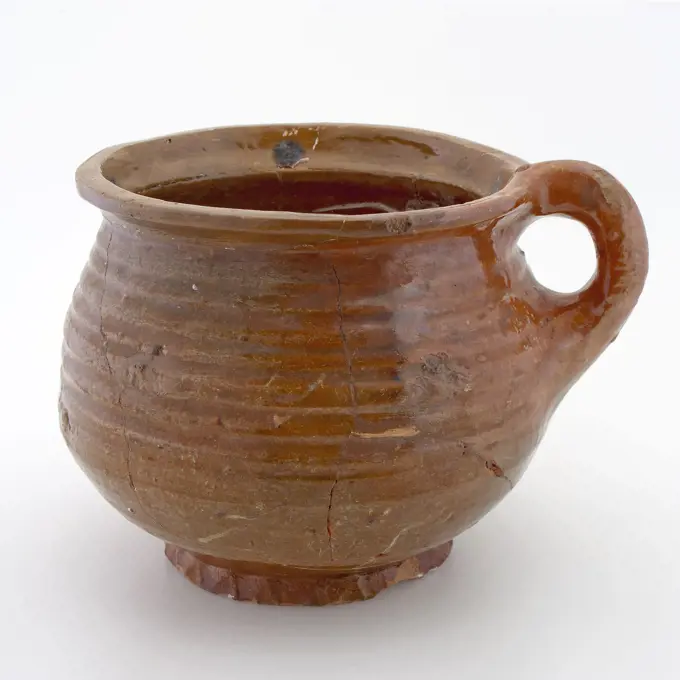
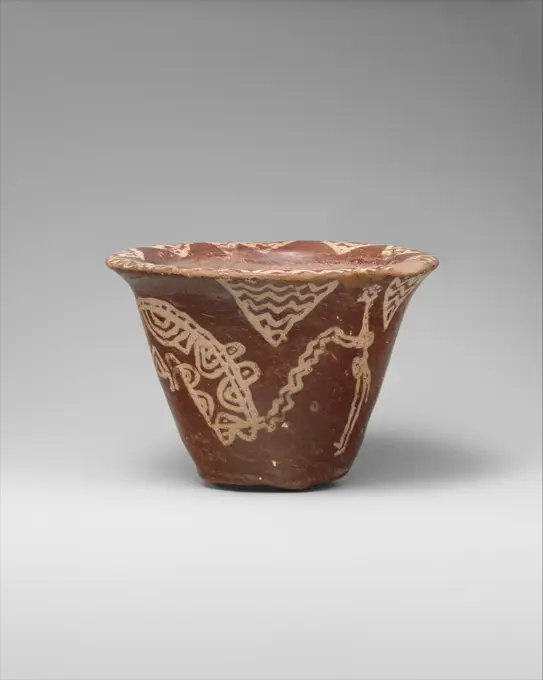
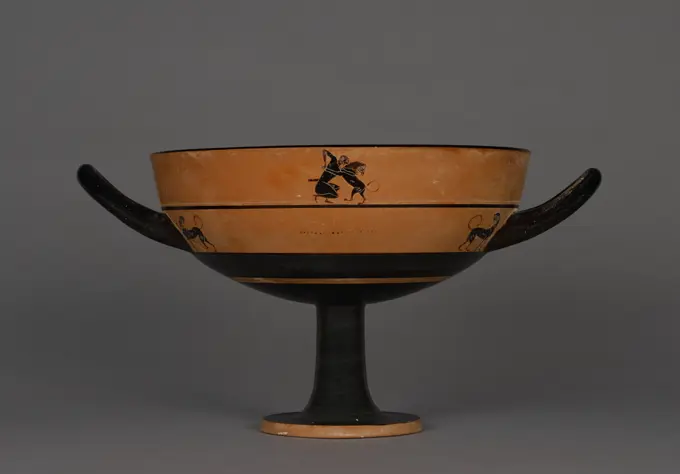
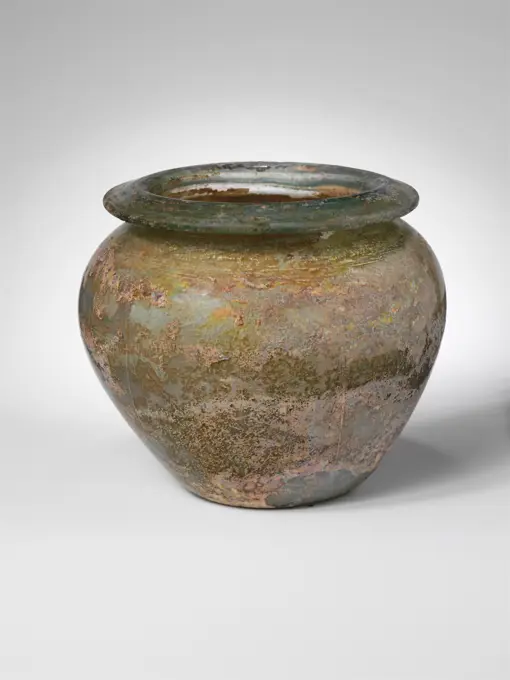
Glass jar mid-1st-2nd century A.D. Roman Colorless with pale blue tinge.Uneven sloping rim, with rounded tubular edge, folded out, down, round, up, and in, forming collar around neck; ovoid body; deep concave bottom.Complete, but one large crack in side with area of repair; pinprick bubbles; pitting and brilliant iridescent weathering on exterior, creamy brown weathering on interior.. Glass jar 245174Bowl ca. 3500-3300 B.C.. Bowl 326494Incised Painted Bowl 5th-2nd century B.C. Paracas. Incised Painted Bowl 308635Polychrome Bowl. Santo Domingo, Kiua polychrome; Santo Domingo Pueblo, New Mexico, United States. Date: 1880-1900. Dimensions: 26.7 × 49.5 cm (10 1/2 × 19 1/2 in.). Ceramic and pigment. Origin: New Mexico. Museum: The Chicago Art Institute, Chicago, USA.Vase with Incised and Impressed Designs 3600-1000 B.C. Thailand (Ban Chiang) Ban Chiang on the Khorat Plateau in northwest Thailand, one of the most famous archaeological sites in the country, is noted for the production of a wide range of technologically and aesthetically sophisticated ceramics dating from the third millennium B.C. to the third century A.D. As a result, similar works, of unknown provenance, are often attributed to this site. It is possible, however, that many such items were made at related but less well known centers on the plateau or elsewhere in mainland Southeast Asia.This striking beaker-shaped vessel is typical of works attributed to the earliest phases at Ban Chiang. It was formed in two pieces: a large open-mouthed container with a rounded base that is placed into a shorter pedestal with a broad foot. A prominent flange conceals the seams where the two sections are joined. Covering the entire surface of the vessel, exuberant curvilinear forms were first inciseDish ca. 550-450 B.C. Italic-Native, South Italian (Daunian). Dish 255218 Italic-Native, South Italian (Daunian), Dish, ca. 550450 B.C., Terracotta, H. 3.99 cm. Diameter 13.9 cm.. The Metropolitan Museum of Art, New York. Purchase, 1966 (66.11.8)Glass cup. Culture: Roman. Dimensions: Height: 2 3/8in. (6.1cm)Diam.: 3 3/8 x 2 7/8 in. (8.6 x 7.3 cm). Date: 2nd-3rd century A.D..Uncertain, probably colorless with pale blue green tinge.Knocked-off, uneven rim; slightly bulging collar below rim; sides expanding downward, then angled in to join bottom with uneven pushed-in center.A single wheel-abraded horizontal line around neck below collar and a band of faint lines on body above angle.Intact; many pinprick bubbles; dulling, deep pitting, and brilliant iridescent weathering on exterior; thick creamy weathering on interior.Stands aslant on base. Museum: Metropolitan Museum of Art, New York, USA.Undecorated painted bowl with flared sides 6th-3rd century B.C. () Paracas. Undecorated painted bowl with flared sides. Paracas. 6th-3rd century B.C. (). Ceramic, pigment. Peru. Ceramics-ContainersBowl 12th-13th century. Bowl. 12th-13th century. Earthenware; glazed. Attributed to Iran. CeramicsBowl 960 CE-1279 China. Stoneware with black glaze and iron-brown splashes .Tea cup. unknown, craftsmanCup. UnknownJar China. Jar. China. Porcelain. Ming dynasty (1368-1644). CeramicsCylindrical jar ca. 2750-2649 B.C. Early Dynastic Period. Cylindrical jar. ca. 2750-2649 B.C.. Travertine (Egyptian alabaster). Early Dynastic Period. From Egypt, Memphite Region, Saqqara, Tomb 2322, Egyptian Antiquities Service/Quibell excavations, 1910-11. Dynasty 2, second halfGlobular jar. Dimensions: H. 11.1 cm (4 3/8 in.); Diam. 15.7 cm (6 3/16 in.). Dynasty: Dynasty 2, second half. Date: ca. 2750-2649 B.C.. Museum: Metropolitan Museum of Art, New York, USA.Bowl. Culture: Coptic. Dimensions: Overall: 2 5/16 x 3 5/8 in. (5.8 x 9.2 cm). Date: 4th-7th century. Museum: Metropolitan Museum of Art, New York, USA.Tea bowl stand late 13th-14th century China Vessels such as this example were used mainly for upscale drinking parties or special occasions. Precious metal wares, such as gold and silver, often shared a design language with contemporaneous ceramic and lacquer wares.. Tea bowl stand. China. late 13th-14th century. Silver with chased and punched decoration and gilding. Southern Song (1127-1279)-Yuan (1271-1368) dynasty. MetalworkBowl. Byzantine, 11th - 13th century. Furnishings; Serviceware. CeramicBowl with a green glaze, anonymous, c. 1400 - c. 1950 Come from stoneware, covered with a green, craqueled glaze. Celadon. Korea (possibly) stoneware. glaze vitrification Come from stoneware, covered with a green, craqueled glaze. Celadon. Korea (possibly) stoneware. glaze vitrificationWhite majolica bowl on stand ring with curled edge, bowl crockery holder soil find ceramic earthenware glaze tin glaze lead glaze, hand turned fried glazed fried Deep majolica bowl white glaze stand ring outwards curved edge light turns outside. underside of lead glaze with slightly greenish tint. Colored crackle in glaze layer. Wood-baked archeology Valckensteyn Poortugaal Albrandswaard native earthenware crockery serving utensils tableware serving food Soil discovery: castle Valckensteyn in Poortugaal now Albrandswaard.Bowl withouthandleWaste Bowl, Wedgwood, English, established 1759, stoneware (Black Basalt), Circular, on raised foot, sides have basket-weave texture, inside smooth., late 18th century, ceramics, Decorative Arts, bowl, bowlSpittoon -Small pottery cooking pot decorated with yellow strings, on three legs, cooking pot crockery holder kitchen utensils earthenware ceramics earthenware glaze lead glaze h 6,3, hand turned decorated glazed fried lemon cord Three legs convex bottom Lid edge and schenklip. However, small size is used. Yellow sludge outside: band of undulating lines archeology Rotterdam railway tunnel indigenous earthenware kitchen child serving food Soil discovery: rail tunnel Rotterdam.Bottom of large glazed pot, Spanish pottery, pot holder soil find ceramic earthenware clay engobe glaze lead glaze w 21,3, inch turned hand-glazed baked Bottom of an earthenware pot on stand surface Externally fully luwicated with light engobe and largely glazed Coarse turnstiles inside Green spots in glaze lead glaze with copper oxide . Remnants of the attachment of two ears Extremely hard baked earthenware red shard archeology Rotterdam City center Stadsdriehoek Oudehaven indigenous pottery import store store transport archaeological find in the soil Oude Haven Rotterdam.Glass ribbed bowl mid-1st century A.D. Roman Translucent blue; trail in opaque white.Outsplayed rim, with cracked off and ground lip; short concave neck; globular body curving in to shallow convex bottom.Trail applied as a large blob and wound spirally on bottom and then up side to neck; side tooled into seventeen irregular, vertical or slanting ribs.Intact, but parts of trail missing through weathering; many bubbles, some large; pitting of surface bubbles, dulling, iridescence, and patches of creamy weathering, especially around ribs.Bright blue bowl with white thread decoration, vertical ribs.. Glass ribbed bowl 245672Tripod bowl ca. 2000-1600 B.C. Iran This round bowl stands on three legs. It is made of a buff clay, with painted brown geometric decoration. It was found in a grave at Kamterlan II, a mound in Luristan in the Zagros Mountains of western Iran. Although it had been a settlement in the late third millennium B.C., by the second millennium the site had become a cemetery. It is difficult to say what purpose this bowl served, or even to determine whether it was a special funerary item or an object of everyday use.It is often thought that the inhabitants of Luristan in this period were pastoral nomads, who moved with their herds from the high valleys of the Zagros during the summer to lowland pastures in the winter. This theory arises from the dearth of evidence for settlements, and the occurrence of isolated cemetery sites. At the same time, the infrastructure necessary for bronze working, an important industry in Luristan, suggests that some sedentary settlements must have existed. In all lLarge cut (common name). Sandstone with brown-black decoration under cover. Cernuschi Museum, Asia Museum of Asia in the city of Paris.BowlJar and its base ". Beige terracotta, Céladon covered; Bois. China, Tang dynasty (618-907). Paris, Cernuschi museum. Chinese art, Chinese ceramic, container, tang dynasty, round shape, jar, container, base, terracottaBowl. Culture: American. Designer: Designed by Louis Comfort Tiffany (American, New York 1848-1933 New York). Dimensions: H. 2 1/4 in. (5.7 cm); Diam. 5 1/8 in. (13 cm). Maker: Tiffany Glass and Decorating Company (American, 1892-1902). Date: 1893-96. Museum: Metropolitan Museum of Art, New York, USA.Incense Burner (lid), late 1800s. Japan, Meiji period (1868-1912). Gilded bronze; diameter of mouth: 14.6 cm (5 3/4 in.); overall: 12.4 cm (4 7/8 in.). This incense burner emulates Chinese porcelain in its glaze and form. A number of prominent Meiji-period ceramicists explored classical Chinese forms and glazes even as they also produced stoneware with Japanese-style glazes.Dish ca. 550-500 B.C. Etruscan Shallow dish with foot; no decoration.. Dish. Etruscan. ca. 550-500 B.C.. Terracotta; bucchero pesante. Archaic. VasesSeif Yohei I made both blue and white porcelains after Ming dynasty (1368-1644) Chinese wares fired in the kilns at Jingdezhen for export. He also made colorful stoneware in the style of his teacher, Nin’ami Dhachi (Takahashi Dhachi II) (1783-1855). Nesting Dish with Scattered Pine Needles and Maple Leaves, c. 1844-57. Seifū Yohei I (Japanese, 1801-1861). One of a pair of side dishes; stoneware with underglaze blue and iron oxide, white slip, and overglaze color enamel (Kyoto ware); outer dish: 7.5 x 15.3 x 12.7 cm (2 15/16 x 6 x 5 in.).Saucer, 1100s. Korea, Goryeo period (918-1392). Celadon ware with inlaid white and black slip decoration; diameter: 14 cm (5 1/2 in.); overall: 6.4 cm (2 1/2 in.). This celadon wine cup is inlaid with a chrysanthemum pattern that reflects Koreans enjoyment of both the poem "Drinking Wine" and the blessings of longevity associated with the Double Nine Festival. The flower design on the saucer is less delicate than the cup, as the cup and saucer were originally from different sets; they were later paired together after each lost its mate.Plate in the Form of a Chrysanthemum, 1700s-1800s. China, Qing dynasty (1644-1911). Jade; diameter: 11.1 cm (4 3/8 in.); overall: 2 cm (13/16 in.).Deep Plate with Hawk and Foliage, 1100s. Byzantium, 12th century. Sgraffito earthenware; diameter: 3.9 x 22.3 cm (1 9/16 x 8 3/4 in.).Bowl first half 16th century Northern Italian. Bowl. Northern Italian. first half 16th century. Lead-glazed earthenware. Ceramics-PotteryBowl of Grapes ca. 1479-1458 B.C. New Kingdom. Bowl of Grapes. ca. 1479-1458 B.C.. Pottery. New Kingdom. From Egypt, Upper Egypt, Thebes, Deir el-Bahri, Tomb of Senenmut (TT 353), Foundation deposit, MMA excavations, 1926-27. Dynasty 18Bowl China. Bowl 48114Bowl China. Bowl 48109Lotus Bowl Vietnam 14th century View more. Lotus Bowl. Vietnam. 14th century. High-fired ceramics with green glaze. CeramicsBowl 1st-7th century Calima (Yotoco). Bowl 309937Bowl. Syria, 13th century. Ceramics. Fritware, underglaze-paintedSmall Double Spout Bowl with Repeated Curving Motif. Possibly Lima or Maranga; Central coast, Peru. Date: 450 AD-750 AD. Dimensions: 6.4 x 20 cm (2 1/2 x 7 7/8 in.). Ceramic and pigment. Origin: Peruvian Central Coast. Museum: The Chicago Art Institute, Chicago, USA.Cooking rebuilding. Blue decor sandstone under cover. Cernuschi Museum, Asia Museum of Asia in the city of Paris.Shallow Dish, c. 2726-2647 BC. Egypt, Saqqara, Old Kingdom, Dynasty 2, reign of Nynetjer or later. Travertine; diameter: 35.9 cm (14 1/8 in.); overall: 8 cm (3 1/8 in.).Glass dish. Culture: Roman. Dimensions: H.: 1 7/8 in. (4.8 cm)Diam.: 6 5/8 x 3 5/8 in. (16.8 x 9.2 cm). Date: 4th century A.D..Colorless with slight blue tinge.Slightly everted, rounded, vertical rim; short, concave side to body, then turned in to tall, tubular, integral base ring; almost flat bottom, thickened at center and with central pontil scar.Intact; blowing striations but few bubbles; some dulling and patches of creamy weathering with iridescence. Museum: Metropolitan Museum of Art, New York, USA.Bowl. Iraq, Iran, or Syria, 7th-first half of 8th century. Ceramics. Earthenware, molded, applied, and incised decorationCup Korea. Cup. Korea. Clay. Goryeo dynasty (918-1392). CeramicsBowl late 19th century China. Bowl. China. late 19th century. Jadeite. JadeSeif Yohei II excelled as a painter, as evidenced by his floral and landscape designs. His works were selected as the best among Kyoto ceramics shown to jurists from Europe and the US, thus paving the way for international recognition of the studio in the late 1800s. Sake Cup with Auspicious Flora, c. 1860-78. Seifū Yohei II (Japanese, 1844-1878). One of a pair of sake cups; porcelain with underglaze blue;Cup. Culture: Etruscan. Dimensions: Overall: 2 11/16in. (6.8cm)Other (height with handle): 2 11/16in. (6.8cm). Date: early 7th century B.C..Reddish-brown with loop handle; no decoration. Museum: Metropolitan Museum of Art, New York, USA.Covered bowl with prunus spray and spout, anonymous, c. 1800 - c. 1825 Lid bowl of stoneware with a semicircular spout under the edge, three small feet and two applicated ears, painted on the glaze in black and a white sludge. A prunus branch on the lid. The ears with bred ranks. Three prenes on the bottom. Japan stoneware. glaze. engraving / painting / vitrification Lid bowl of stoneware with a semicircular spout under the edge, three small feet and two applicated ears, painted on the glaze in black and a white sludge. A prunus branch on the lid. The ears with bred ranks. Three prenes on the bottom. Japan stoneware. glaze. engraving / painting / vitrificationBowl with handles China. Bowl with handles. China. Nephrite, white with very light greenish tint. Qing dynasty (1644-1911), Qianlong period (1736-95). JadeSpherical Pyxis Lid; Cyclades, Greece; 2700 - 2200 B.C; Marble; 6.3 cm (2 1,2 in.)Glass ribbed bowl. Culture: Roman. Dimensions: H.: 2 3/8 in. (6 cm)Diam.: 3 in. (7.6 cm). Date: mid-1st century A.D..Translucent deep purple; trail in opaque white.Outsplayed rim, with cracked off and ground lip; short concave neck; globular body curving in to flat, thick bottom with slight kick on interior.Trail applied as a large irregular blob and wound spirally on bottom and then up side to neck; side tooled into twenty slender, vertical ribs.Intact, but parts of trail on body missing through weathering; some large and pinprick bubbles; some pitting, dulling, and faint iridescence.With enamel decoration and vertical threads on body. Museum: Metropolitan Museum of Art, New York, USA.Incised Painted Bowl with Feline Faces 5th-2nd century B.C. Paracas. Incised Painted Bowl with Feline Faces 308601Basin ca. 1550-1458 B.C. New Kingdom. Basin. ca. 1550-1458 B.C.. Bronze or copper alloy. New Kingdom. From Egypt, Upper Egypt, Thebes, Asasif, Courtyard CC 41, Pit 3, Chamber C x, Beside coffin, MMA excavations, 1915-16. Dynasty 18, earlyMosaic glass bowl late 1st century B.C.-early 1st century A.D. Roman Translucent purple, translucent turquoise blue, and opaque white.Outsplayed rounded rim; slightly convex sloping side above horizontal indent, then curving in to bottom.Composite mosaic pattern formed from irregular sections of two canes: one in a purple ground with white dots; the other in turquoise blue with white dots.On exterior, circular groove cut in bottom.Broken and repaired with several large holes; dulling, pitting, and faint iridescent weathering.. Mosaic glass bowl 250728 Roman, Mosaic glass bowl, late 1st century B.C.early 1st century A.D., Glass, H.: 1 11/16 in. (4.3 cm) Diam.: 3 5/8 in. (9.2 cm). The Metropolitan Museum of Art, New York. Purchase, 1919 (19.57.1)Bowl. Syria, 15th century. Ceramics. Fritware, underglaze-paintedJar or bowl, anonymous, c. 1500 - c. 1899 pot. bowl Small pot or bowl of stoneware at the surface with a cylindrical body, slightly narrowing at the foot. Germany (possibly) stoneware. glaze vitrificationElm Bowl, 1954. Made by George Lailey of Bucklebury Common, Berkshire.. Pinto Collection - Purchased from Edward H Pinto, 1965.. This elm wood bowl was made by George Lailey of Bucklebury Common, Berkshire in 1954. George Lailey was one of the last pole lathe workers to earn a living from making domestic utensils in England. This bowl was one of his last pieces which he made in 1954 when he was 85 years old. Although woods such as sycamore and beech were popular amongst wood turners, George Lailey preferred to use elm, which was in plentiful supply at that time. The outbreak of Dutch elm disease in the 1970s was a catastrophe for the English Elm. Only a handful of large elm trees have survived and it is now commonly. found only as a small tree in hedgerows.Pottery chamber pot, easy to use on stand, with narrow foot and standing ear, pot holder sanitary soil found ceramic earthenware glaze lead glaze, hand-turned glazed baked Large earthenware chamber pot on stand. Red shard entirely glazed except the bottom of the bottom. Faint yellow stripe in glaze Double conical shape with almost straight side wall. Wide neck opening and narrow foot. Flat slightly slanted top edge. Standing bandoor above the edge excellent archeology indigenous pottery drains night sleeping room hygieneBowl ca. late 8th-7th century B.C. Israelite. Bowl 323168Terracotta stemmed dish 6th century B.C. Lydian Shallow bowl on high foot, decorated with concentric circles in black.. Terracotta stemmed dish. Lydian. 6th century B.C.. Terracotta. Archaic. VasesRibbed Bowl; Eastern Mediterranean or Italy; 1st century B.C; Glass; 3.9 x 12.8 cm (1 9,16 x 5 1,16 in.)Basin 19th century. Basin. 19th century. Zinc alloy; cast, engraved, inlaid with silver (bidri ware). Attributed to India, Deccan, Bidar. MetalProbably New England Glass Works, Salt, c. 1818-30, colorless lead glass.Bowl with Rattles and Serpent Design. Northern Guatemala or Southeastern Mexico, Maya, 250-550 CE. Ceramics. Slip-painted ceramic with post-fire pigmentDrinking Vessel (Kero) with Floral and Animal Motifs. Colonial Inca; South coast or southern highlands, Peru. Date: 1450-1532. Dimensions: 17.5 x 14.6 cm (6 7/8 x 5 3/4 in.). Wood and pigment. Origin: Peru. Museum: The Chicago Art Institute, Chicago, USA.Bowl Korea. Bowl. Korea. Silver. Goryeo dynasty (918-1392). MetalworkPottery cooking pot on three legs, two ears, wide model with lead glaze, grape cooking pot tableware holder kitchen utensils earthenware ceramics earthenware glaze lead glaze, hand turned set pinched glazed baked Pottery cooking pot on three legs Two standing sausage tower Wide model double conical body. Round bottom Lid edge top edge with collar on the outside. Almost completely glazed except the bottom of the bottom archeology Capelle aan den IJssel House in Capelle castle indigenous pottery food preparation kitchen cooking Soil discovery: House 1612-1797 Capelle aan den IJssel.Terracotta chalice 6th century B.C. Etruscan The chalice is a characteristic Etruscan shape that, in an early type of the seventh century B.C., had caryatid figures supporting the bowl. Even without these embellishments, the chalice was produced in a considerable variety of forms. This example is articulated with horizontal lines in low relief. Additional examples are exhibited in the Etruscan Gallery on the Mezzanine.. Terracotta chalice 244847Eye kylix, ceramic,Cup; Eastern Mediterranean; 1st century; Glass; 5.7 cm (2 1,4 in.)Water ewer (Yi) China. Water ewer (Yi) 61051Cooler with a godrewrory and a hollow egg list, on three claw legs. The object consists of a truck, three legs and two handles driven out of one plate, which are made of the same material. They are equipped with a driven and punched decor. The feet have the shape of claw legs. The container has a substantially flat bottom and a somewhat convexed sections between two narrowly upright sections up to the escaping wall. DEZED is divided into two by a rib as cord: the lower convex part is decorated with a godrinklist, the upper straight part by a hollow egg mold. The narrow upright parts upper and top are decorated with a set of points and half circles. The wide edge has a driven and punched zigzag decor against a background of circles and is probably reinforced with iron wire all around. The handles, which have the shape of a curl, which are riveted with red copper nails on the bin have a corresponding decoration of points and semicires, indicating in the middle on one handle in and on the. A standard of stoneware with six containers for incense, partially covered with a gray-green glaze. Above the base a scale with a leg in the center with a flat, ring-shaped thickening at the top. On the thickening an edge with an opening; Five holders around this edge. Bottom unglazed. A label with Chinese characters on the underside. Celdadon (Yue).Censer. Culture: Japan. Dimensions: H. 3 1/4 in. (8.3 cm); Diam. of rim 4 3/8 in. (11.1 cm); Diam. of foot 2 1/4 in. (5.7 cm). Date: 19th century.This small censer, now missing its original lid, is thinly potted and cleanly executed, with a streamlined design. Vertical lines with undulating contours are inlaid across the exterior at fairly evenly spaced intervals. Museum: Metropolitan Museum of Art, New York, USA.Covered bowl. Culture: American. Dimensions: H. 7 in. (17.8 cm); Diam. 10 1/2 in. (26.7 cm). Maker: Probably David Haring (1801-1871). Date: ca. 1830-40.This double-walled covered bowl features decorative piercing on its outer wall. It may reference more refined pierced creamware examples by the Leeds Pottery in England. This piece, one of the largest known in the technique, would have been extremely difficult to make. Museum: Metropolitan Museum of Art, New York, USA.Anonymous Artist after Andrea Briosco, called Riccio, Lamp, Lower Portion, c 1800 1899 Lamp, Lower PortionEarthenware roompo, ball model on slightly pinched stand, fully glazed, pot holder sanitary earthenware ceramic earthenware glaze lead glaze, hand-turned baked Pottery roompo ball model on slightly pinched stand ring fully glazed Vertical sausage ear. Wireways on the outside Restoration is repainted again damaged by expressing cigarettes on the upper edge archeology Rotterdam Spangen castle indigenous pottery room bedroom drainage hygiene Soil discovery: Spangen Spaanse Polder Rotterdam.White cross-lined ware bowl illustrating a hippo hunt ca. 3700-3450 B.C. Predynastic, late Naqada I-early Naqada II A hippo hunt is underway on the exterior of this beautifully preserved bowl. The man wears hunting gear, that is, a penis-sheath and an animals tail, and holds two cords attached to harpoons now embedded in the face of the large hippo that faces him. A second smaller hippo, behind the first, shares the same fate. For the rest of Egyptian history, hippo hunts were incorporated into certain rituals and myths, most of which revolved around securing the kings power.Hippopotami are dangerous animals, and the Egyptians knew how easily a lightweight boat could be over turned and the occupants left to face a massive, angry animal. By 3700 B.C., the ancient Egyptians represented the hippo in scenes on ceramic vessels that show the animals being controlled by either humans or the environment.. White cross-lined ware bowl illustrating a hippo hunt 547275Attic Black-Figure Lip Cup. Attributed to the Workshop of the Phrynos Painter (Greek (Attic), active 560 - 540 B.C.)Bowl. UnknownOne of a Pair of Bowls with Textile-Like Pattern 180 BCE-500 CE Peru. Ceramic and pigment . NazcaCup 19th century China. Cup 43207Jean Mayodon (1893-1967). Cut. Earthenware. Museum of Fine Arts of the City of Paris, Petit Palais. Cup, Faience Sevres, Numero 361Decorated bowl;  I-III century; Meroic period (1-00-00-300-00-00);Lotos, message (provenance), ureusze, rescue excavations, IV Qatract (Sudan), frogsSaucer. Culture: Japan. Dimensions: Diam. 4 3/4 in. (12.1 cm). Date: 19th century. Museum: Metropolitan Museum of Art, New York, USA.Cup with décor of triangle petals 13th-14th century China. Cup with décor of triangle petals 48142Terracotta dish 5th century B.C. Greek, Attic Vases with painted decoration represent the most complex products of Athenian potters and painters. In addition, they produced pottery without any embellishment or with a glaze that turned a rich glossy black in firing. During the fifth century B.C., black-glazed wares were produced in many shapes, often with beautiful articulation.. Terracotta dish 254322 Greek, Attic, Terracotta dish, 5th century B.C., Terracotta, H. 15/16 in. (2.3 cm); diameter 3 1/16 in. (7.7 cm). The Metropolitan Museum of Art, New York. Rogers Fund, 1941 (41.162.151)Fragment lydionu. unknown, authorOld vintage copper bowl handmade isolated on whiteTeacup from Teacups with Chinese Landscapes, c. 1915-40. Seifū Yohei IV (Japanese, 1872-1951). One from a set of eleven teacups; porcelain with underglaze blue; overall: 4 x 6.6 cm (1 9/16 x 2 5/8 in.).Bowl. Culture: China. Dimensions: H. 2 1/4 in. (5.7 cm); Diam. 4 5/8 in. (11.7 cm). Date: late 18th century. Museum: Metropolitan Museum of Art, New York, USA.Steel bowl on the foot of twisted wood, anonymous, c. 1675 - c. 1700 Steelkom with a short handle on foot, turned from Esdoornhout. Amsterdam maple (wood) Steelkom with a short handle on foot, turned from Esdoornhout. Amsterdam maple (wood)Splash Glass Carchesium(Krater)Bowl, early 1200s. Iran, Kashan, Seljuq period of Iran (1037-1194). Earthenware with underglaze-painted and incised design; overall: 9.5 x 20.7 cm (3 3/4 x 8 1/8 in.).