Artistic Bowls and Ceramics

A collection of uniquely designed bowls in various styles, featuring diverse glazes and artistic decorations from different cultures and periods.

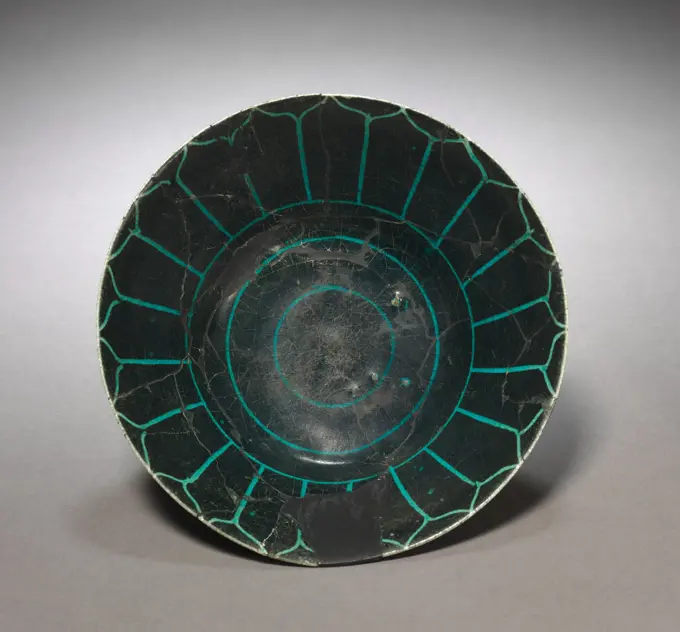
Bowl, anonymous, c. 1175 - c. 1224 White beige bowl of very fine earthenware (quartz fritry). Low, hollow foot. Right outstanding wall. A lead glaze layer is applied directly to the shard, which only leaves the foot uncovered. Decoration is applied in three ways; In the first place, a medallion with flower vines and a circle are engraved in the shard in two places on the inside. These drags are filled with enamel, causing them to stand dark against the background. In addition, gaps were drilled through the shard in the drags. Because these holes are filled with glaze, they are somewhat transparent. Finally, blue lead glaze is applied on the inside in three places, under the glaze. Iran earthenware. glaze. cobalt (mineral) engraving / painting / vitrification White beige bowl of very fine earthenware (quartz fritry). Low, hollow foot. Right outstanding wall. A lead glaze layer is applied directly to the shard, which only leaves the foot uncovered. Decoration is applied in three ways; In
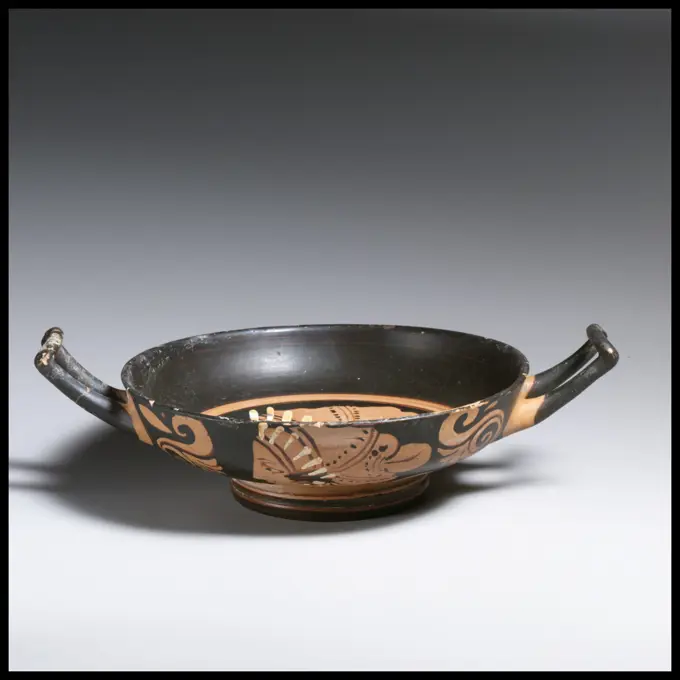
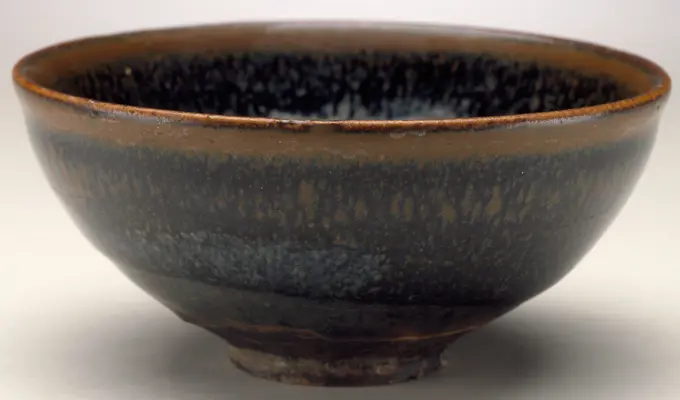
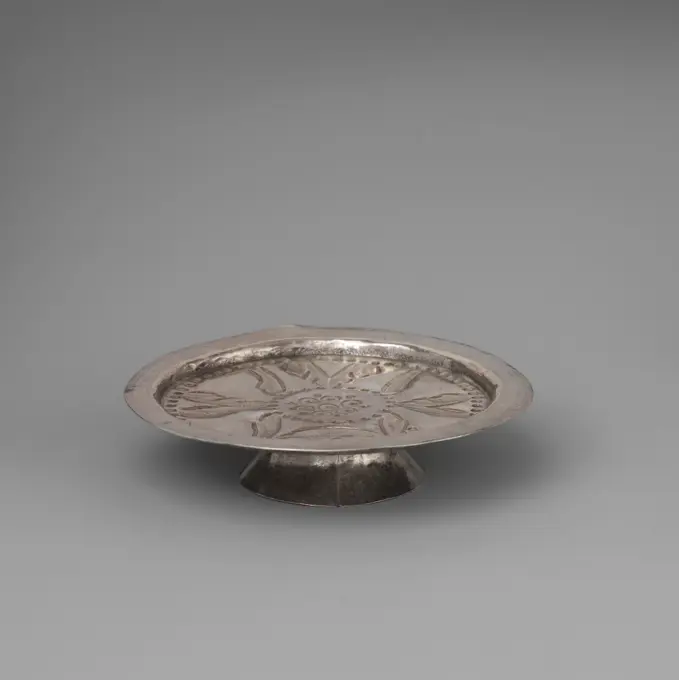
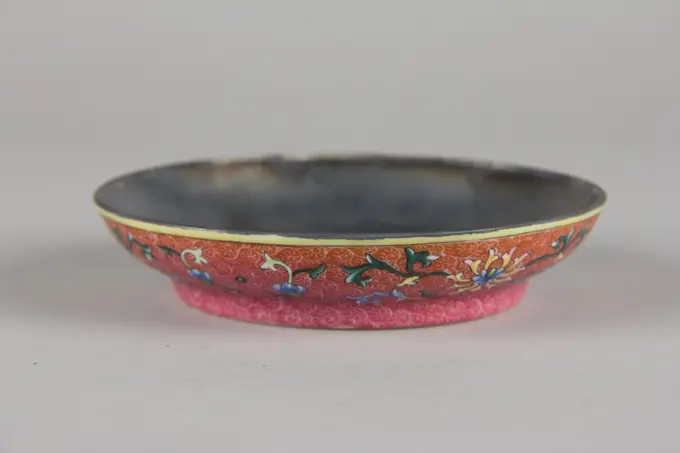
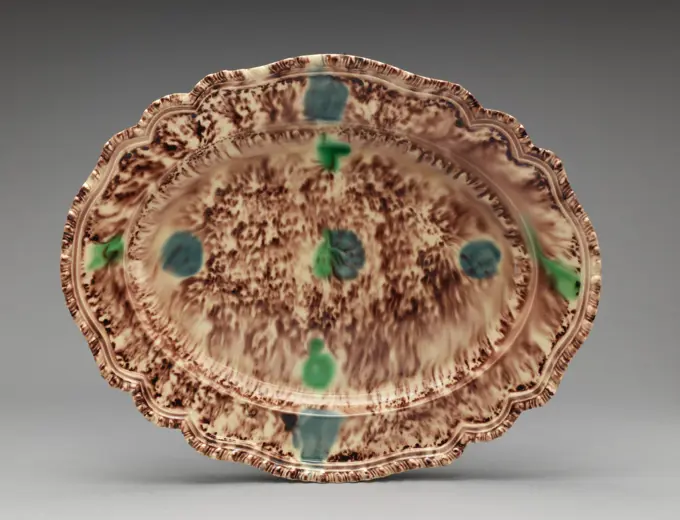
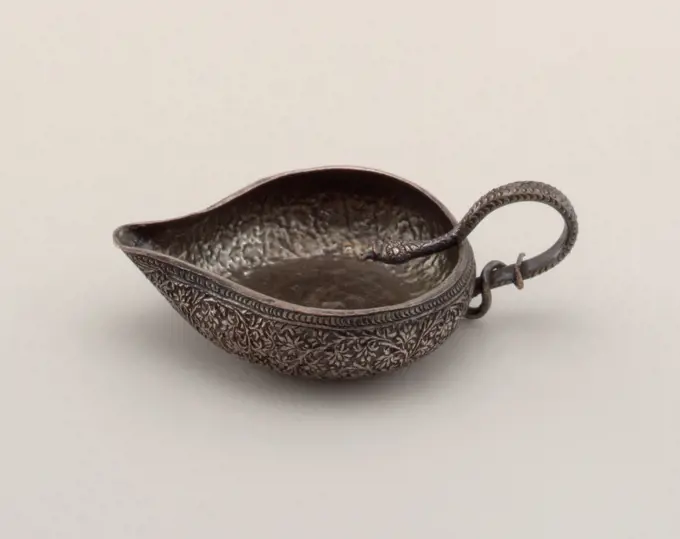
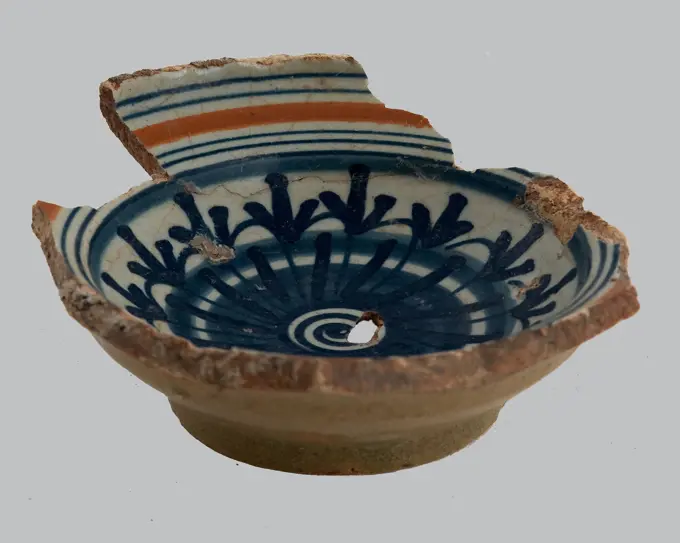
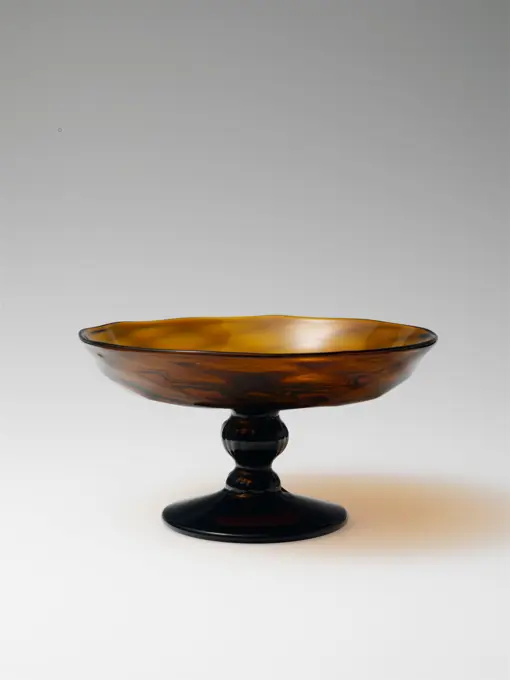
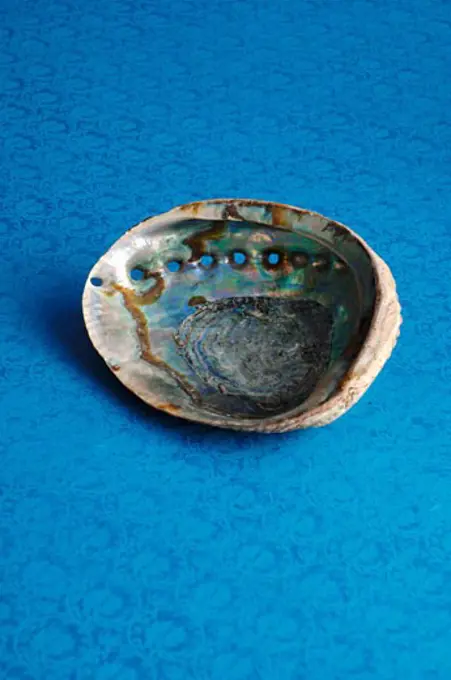
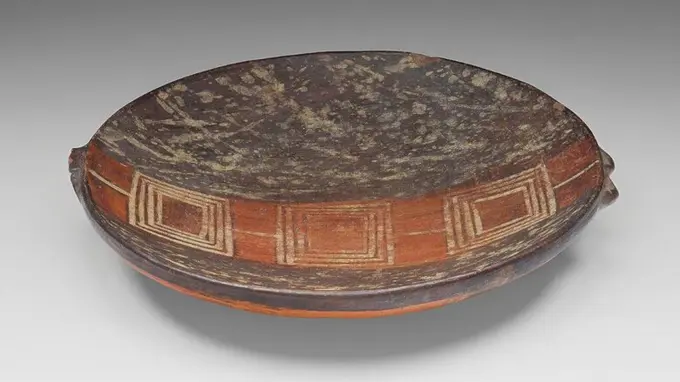
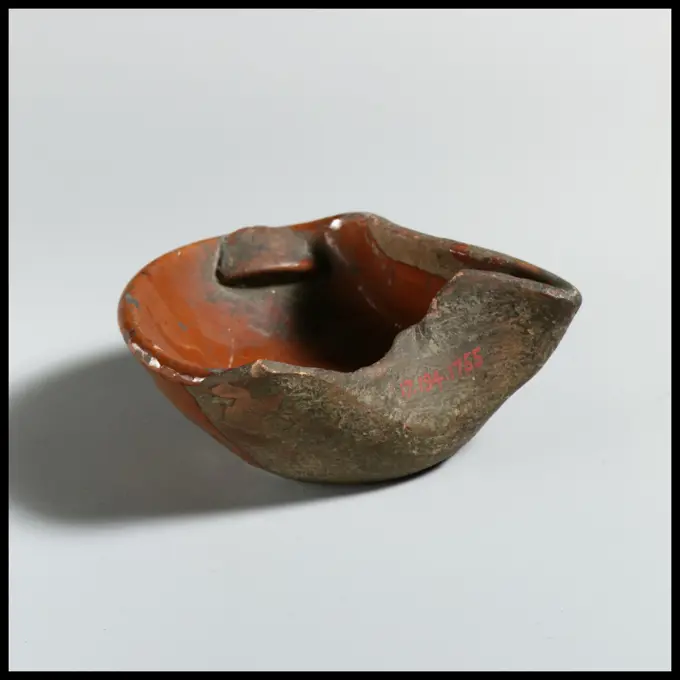
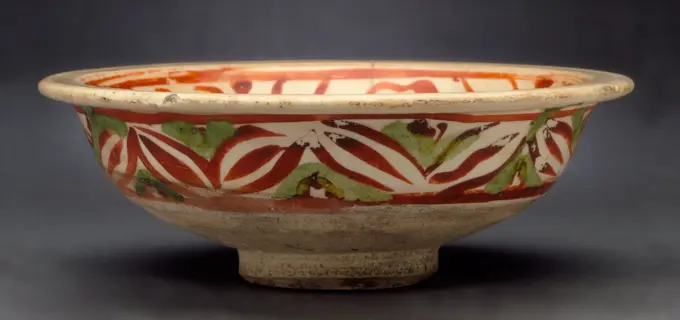
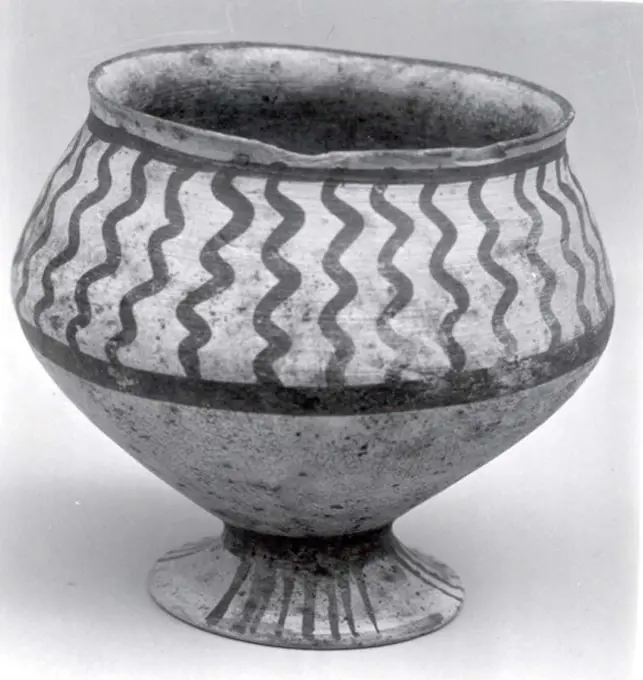
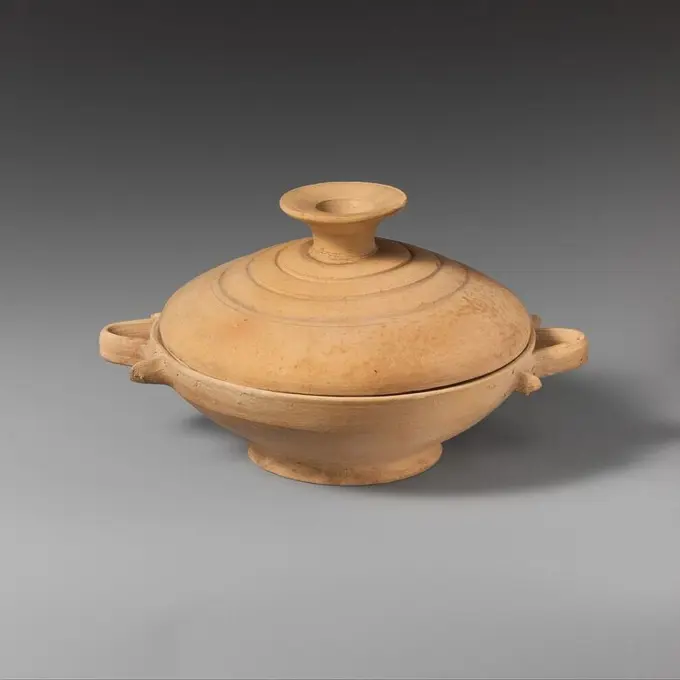
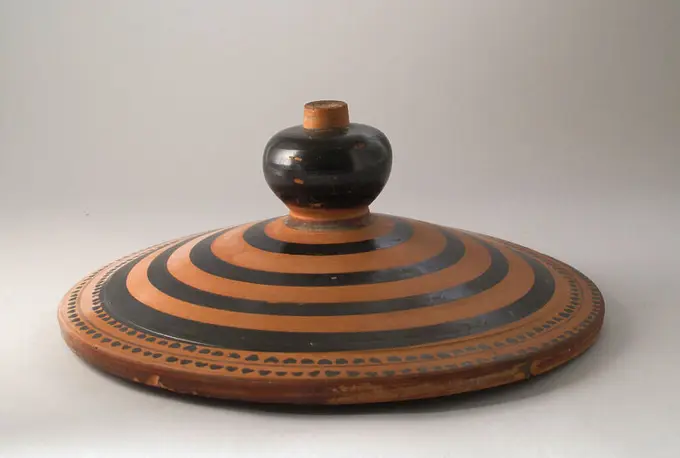
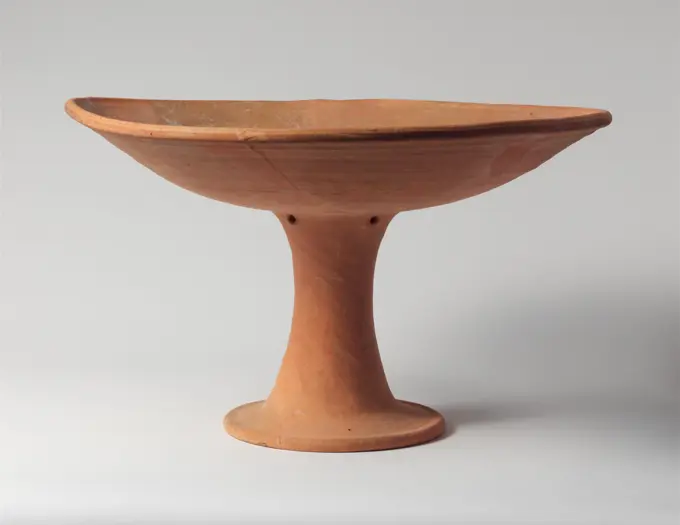
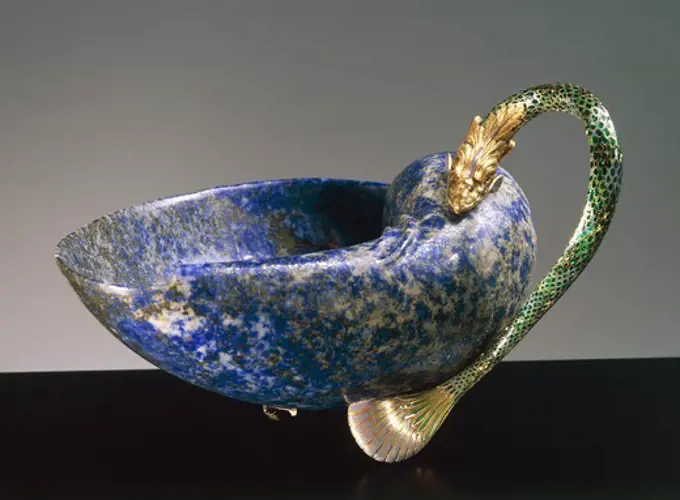
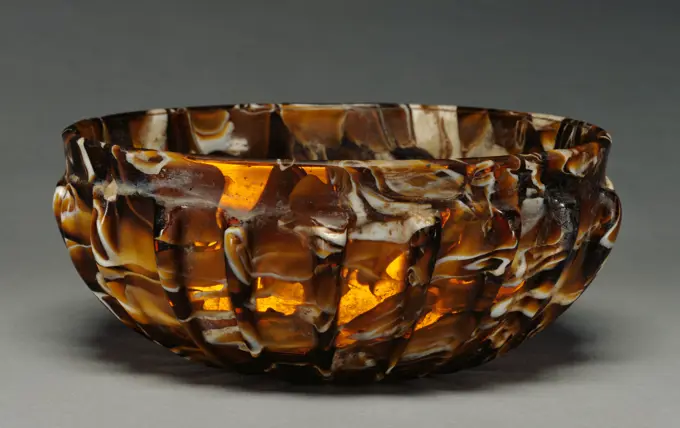
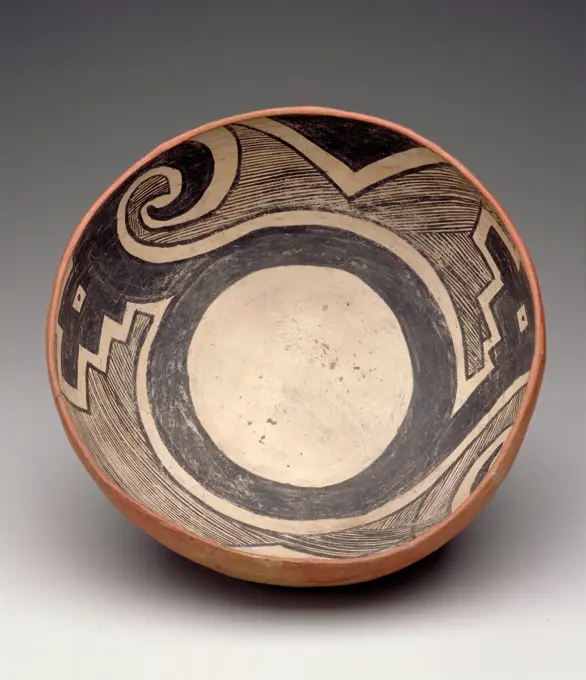
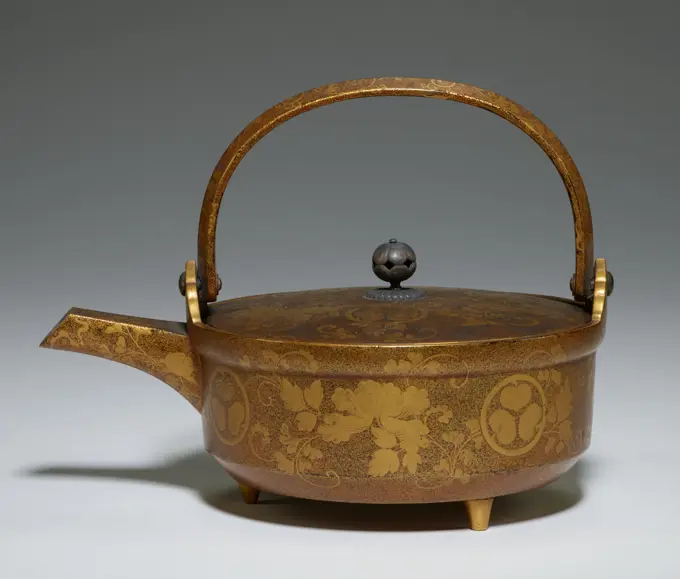
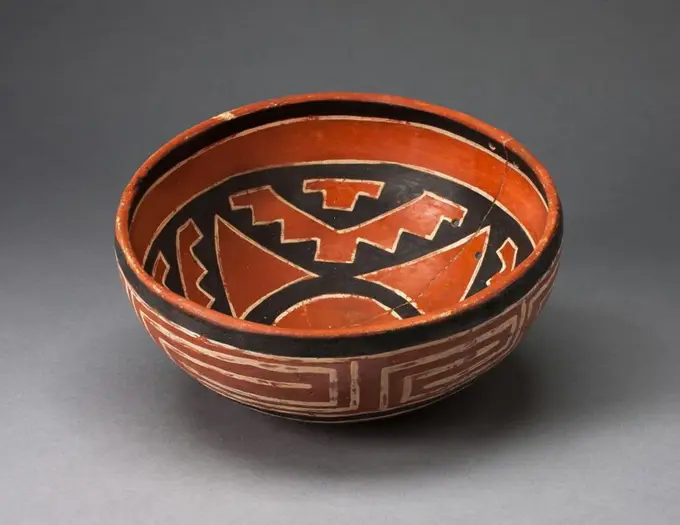
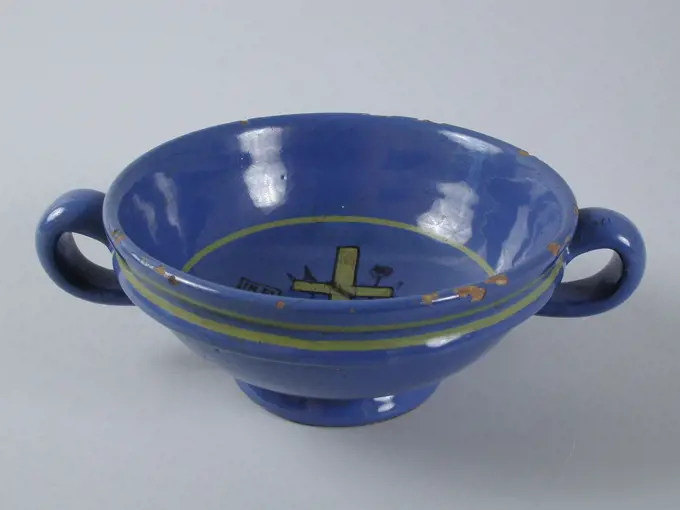
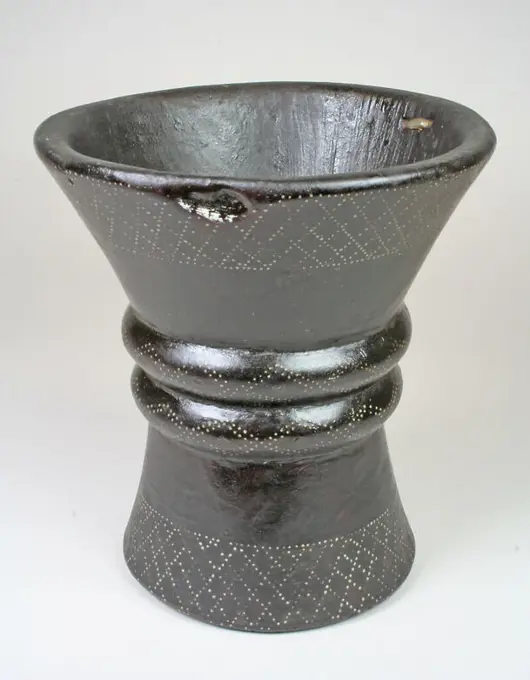
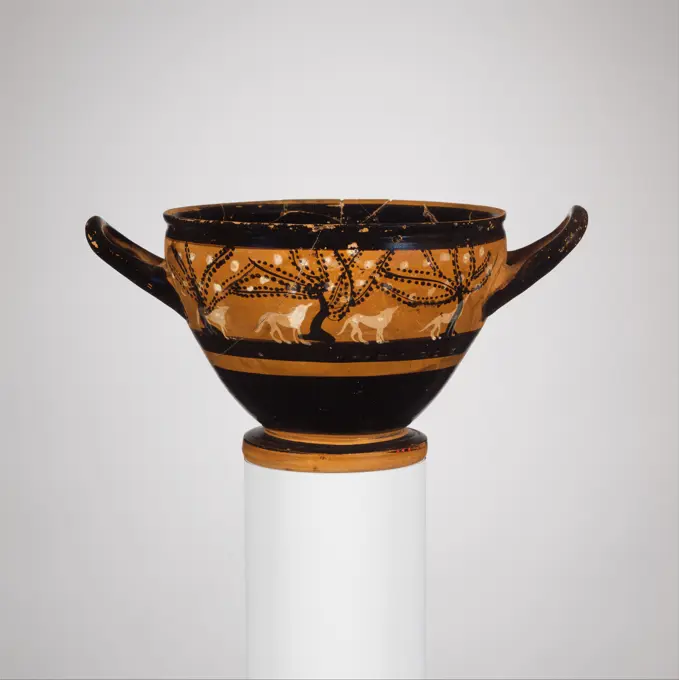
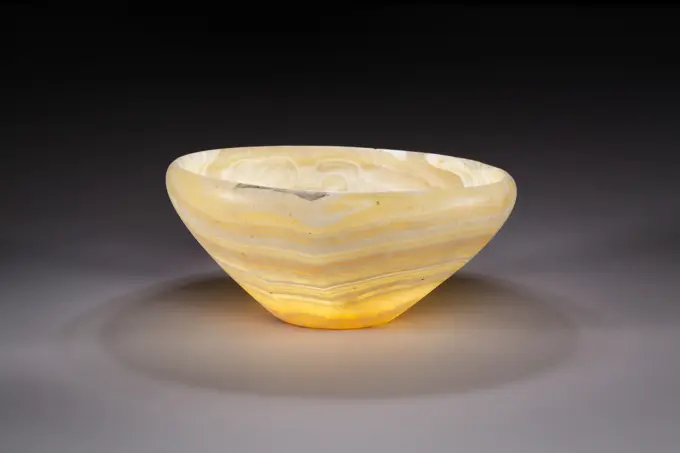
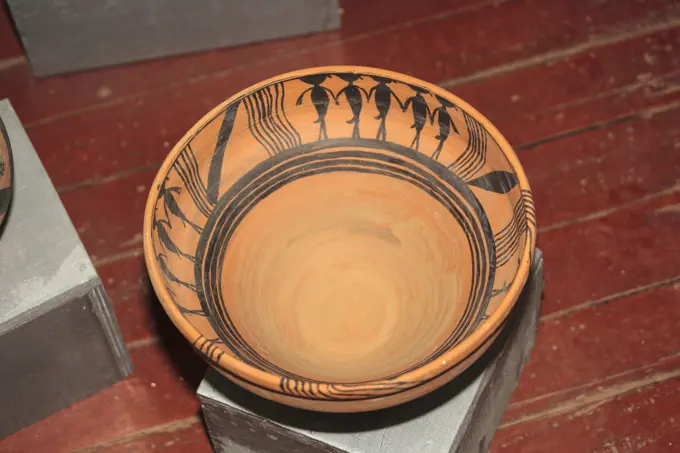
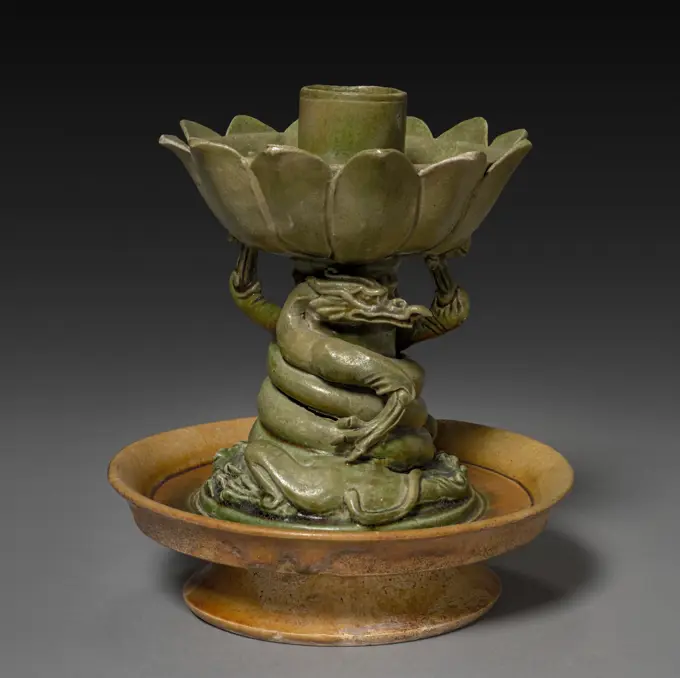
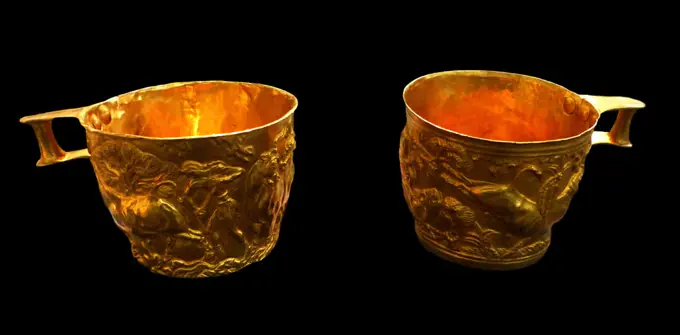
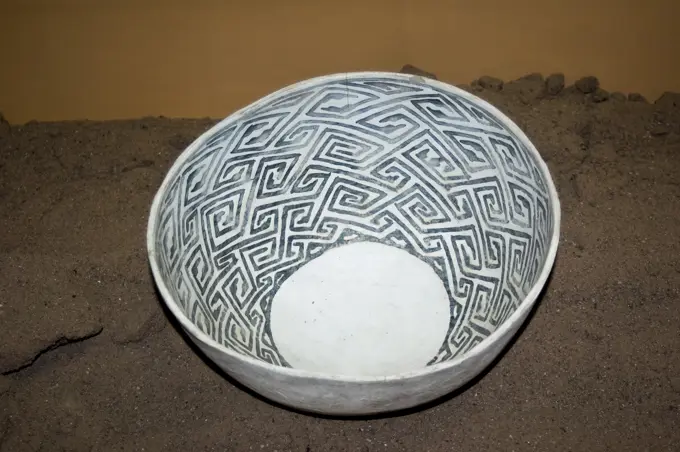
Bowl 12th-9th century B.C. Olmec. Bowl 310446Bowl. Hawaiian Islands, circa late 18th to early 19th century. Furnishings; Serviceware. WoodPlato romano procedente del yacimiento arqueológico de Can Modolell, siglo I. Can Serra Museu de Mataró.Vase (Germany); Attributed to Ludwig Wierthaler (German); copper; Overall: 15.7 x 17 diameter cm (6 3/16 x 6 11/16 in.)Bowl with Leaf Calyx Ornament. UnknownBowl 13th-14th century China. Bowl. China. 13th-14th century. Stoneware with tortoiseshell glaze (Jizhou ware). Southern Song (1127-1279)-Yuan (1271-1368) dynasty. CeramicsDish, 1723-35. China, Jiangxi province, Jingdezhen kilns, Qing dynasty (1644-1911), Yongzheng mark and reign (1723-35). Porcelain with café-au-lait glaze; diameter: 17 cm (6 11/16 in.); overall: 3.5 cm (1 3/8 in.).Terracotta stemless kylix (drinking cup) ca. 330-300 B.C. Attributed to the St. Antimo Group Interior, head of a woman wearing a diadem and a saccos. Exterior, A and B, head of a woman.. Terracotta stemless kylix (drinking cup) 255134 : Attributed to the St. Antimo Group, Terracotta stemless kylix (drinking cup), ca. 330300 B.C., Terracotta, H. with handles 3 1/4 in. (8.3 cm); width 11 in. (28 cm); diameter 8 1/16 in. (20.4 cm). The Metropolitan Museum of Art, New York. Purchase, Mrs. Helen H. Mertens Gift, 1962 (62.11.13)CAZUELA CON DOS ASAS Y VIDRIADA. Location: ALFARERIA. VALL DE UXO. Castellón. SPAIN.Tea Bowl (Chawan) with Oil Spot Pattern. China, Henan Province, Jin dynasty, 1127-1234. Furnishings; Serviceware. Northern Black ware, wheel-thrown stoneware with mottled black glazeMiniature stand 1691/92 George Manjoy British. Miniature stand. British, London. 1691/92. Silver. Metalwork-Silver-MiniatureBowl in the Shape of a Paulownia Leaf second half of the 19th century Nin'ami Dhachi (Takahashi Dhachi II). Bowl in the Shape of a Paulownia Leaf. Nin'ami Dhachi (Takahashi Dhachi II) (Japanese, 1783-1855). Japan. second half of the 19th century. Stoneware with polychrome glazes (Kyoto ware). Meiji period (1868-1912). CeramicsSaucer first half of the 19th century China. Saucer 47753Tureen stand ca. 1760 Thomas Whieldon factory, Stoke-on-Trent, Fenton Vivian, Staffordshire These pieces (see covered tureen 67.191.1a, b) illustrate a notable aspect of Whieldons inventive and prolific production - the creation of fine earthenwares based on contemporary silver models in dimension, form, and decoration.. Tureen stand. British, Staffordshire. ca. 1760. Tortoiseshell ware. Thomas Whieldon factory, Stoke-on-Trent, Fenton Vivian, Staffordshire. Ceramics-PotteryOil lamp, Raised, repoussé, chased silver, Circular shape with pinched spout and handle in form of snake., probably Lucknow, India, ca. 1880, metalwork, Decorative Arts, Oil lampMiniature punch bowl (part of a set). Culture: British, London. Dimensions: 5/8 × 1 3/4 in. (1.6 × 4.4 cm). Maker: David Clayton (British, active 1689). Date: late 17th-early 18th century. Museum: Metropolitan Museum of Art, New York, USA.Fragment of majolica salt scale, rosette in the mirror, along the flag lines in orange and blue, salt barrel tableware holder soil find ceramic pottery tin glaze glaze, hand turned fried glazed painted fried Small majolica dish on shallow stand ring. Salt bowl or salt barrel Bottom lead glaze Blue rosette in the mirror line décor along the flag in orange and blue Two prints in the mirror archeology Rotterdam City center Stadsdriehoek New port earthenware salt condiment serve serving table Soil discovery Rotterdam Nieuwe Haven 2nd cesspool 22-08-1980Compote 1815-35 American. Compote 2186Abalone shellGlass beaker. Culture: Roman. Dimensions: Height: 2 3/4in. (7cm)Diam.: 3 1/16 in. (7.8 cm). Date: 2nd-3rd century A.D..Colorless with pale blue green tinge.Thickened, rounded, vertical rim; slightly convex vertical sides, then turned in to flattish bottom.Intact; pinprick and a few larger bubbles and blowing striations; dulling, pitting, and brilliant iridescence, with limy encrustation and creamy weathering on interior. Museum: Metropolitan Museum of Art, New York, USA.Glass Bowl. Dimensions: H. 4 3/16 in. (10.7 cm)Max. Diam. 6 in. (15.3 cm). Date: late 10th-early 11th century.The shape, size, and decoration of this bowl demonstrate an affinity between luster-painted glass and ceramic lusterware. The division of the vessel walls into panels and the stylized palmette-tree motifs frequently appear on luster-painted bowls made in Fatimid Egypt. The Arabic inscription around the rim, in angular kufic script, has not yet been deciphered. Museum: Metropolitan Museum of Art, New York, USA.Miniature Tray with Geometric Pattern. Inca; South coast or southern highlands, Peru. Date: 1450-1532. Dimensions: 3.5 × 18.1 cm (1 3/8 × 7 1/8 in.). Ceramic and pigment. Origin: Peru, southern. Museum: The Chicago Art Institute, Chicago, USA.Lamp, saucer-shaped ca. A.D. 1-300 Roman. Lamp, saucer-shaped 250229 Roman, Lamp, saucer-shaped, ca. A.D. 1300, Terracotta, 1 3/8  3 1/8  3 1/4 in. (3.5  8  8.2 cm). The Metropolitan Museum of Art, New York. Gift of J. Pierpont Morgan, 1917 (17.194.1755)Bowl (Wan) with Red Plum Spray. China, Henan Province, Late Jin dynasty or early Yuan dynasty, about 1200-1300. Furnishings; Serviceware. Cizhou ware type, wheel-thrown stoneware with white glaze and painted overglaze enamel decorationBowl, 1736-95. China, Qing dynasty (1644-1911), Qianlong mark and reign (1736-95). Jade; diameter: 16.4 cm (6 7/16 in.).Jelly mold ca. 1750 British, Staffordshire. Jelly mold 197650Bowl (France); Francois-Emile Décorchemont (1880 - 1971); glassBowl, anonymous, c. 960 - c. 1279 Come from stoneware with six times lobed edge, covered with a transparent glaze with a light blue tint. The bottom inside the foot ring unggestive. Qingbai. China stoneware. glaze vitrification Come from stoneware with six times lobed edge, covered with a transparent glaze with a light blue tint. The bottom inside the foot ring unggestive. Qingbai. China stoneware. glaze vitrificationCup ca. 3980-3865 B.C. Iran This biconical cup has a bulging body, a wide mouth, a slightly flaring rim, and a small foot. It is made of a buff clay, with brown decorations, namely wavy vertical lines on the upper part of the vessel and straight radial lines on the foot. Wheel lines on the interior indicate it was made on a potters wheel.This cup was excavated at Tepe Hissar, near the modern city of Damghan in northern Iran. Tepe Hissar was primarily an agricultural settlement, though much of the evidence for plant cultivation dates to later periods, with buildings made of mudbrick or simply mud walls. This cup belongs to the Hissar IC/IIA period, dating to ca. 3980-3865 B.C. on the basis of radiocarbon dating. During this period there was a lively and technically proficient ceramic industry at the site, producing well-formed vessels decorated with geometric designs and stylized images of ibexes, gazelles and birds. But it is not known what these vessels were used for.. Cup 323709Terracotta lekanis (dish) with lid. Culture: Greek, Attic. Dimensions: width 7 1/4in. (18.5cm). Date: 5th century B.C..This lekanis is unusual for being unglazed, though it is precisely potted. The piece belonged to Raymond Duncan, brother of Isidora Duncan. Museum: Metropolitan Museum of Art, New York, USA.Lid of a neck-amphora. Culture: Greek, Attic. Dimensions: 3 1/8in. (8cm)Other: 8in. (20.3cm). Date: 6th century B.C.. Museum: Metropolitan Museum of Art, New York, USA.Terracotta stemmed dish 6th century B.C. Lydian Familiarly known as fruit stands, this type of stemmed dish is well attested at Sardis, particularly in the Archaic period.. Terracotta stemmed dish. Lydian. 6th century B.C.. Terracotta. Archaic. VasesCup (common name). Covered covered. Cernuschi Museum, Asia Museum of Asia in the city of Paris.Plate, late 1500s. Japan, Momoyama period (1573-1615). Stoneware with natural glaze and hidasuki (fire-mark decoration) patterns (Bizen ware); diameter: 45.4 cm (17 7/8 in.); overall: 10.4 cm (4 1/8 in.).CUENCO PINTADO EN AZULES Y VIDRIADO. Location: ALFARERIA. ALBOX. Almería. SPAIN.Bowl. Culture: China. Dimensions: H. 2 1/4 in. (5.7 cm); Diam. 4 1/8 in. (10.5 cm); Diam. of foot 1 3/4 in. (4.4 cm). Museum: Metropolitan Museum of Art, New York, USA.Empty plastic, ceramics bowl.Muslim begging bag, Kashkul, 20th century, copper, Kabul, Afghanistan, Anthropology National Museum, Madrid, Spain.Terracotta skyphos (deep drinking cup) ca. 520-510 B.C. Attributed to or near Psiax Obverse, satyr with wineskinReverse, warrior in Scythian dress. Terracotta skyphos (deep drinking cup) 255831Goldsmith's art, Italy, 16th century. Giovanni Battista Cervi (1532 -1586), enamelled gold and lapis lazuli cup, cm. 8x15Bowl Depicting Rows Containing Repeated Geometric Motifs Made 180 BCE-500 CE Nazca Valley. Ceramic and pigment . NazcaEmpty wooden plate, knife, fork and cutting board Empty wooden plate, knife, fork and cutting board set on textured concrete background Copyright: xZoonar.com/TetianaxChernykovax 21413676Ribbed Bowl. UnknownBowl possibly 16th century or later Italian, Venice (Murano). Bowl. Italian, Venice (Murano). possibly 16th century or later. Glass. GlassBronze handled basin with three feet ca. 550 B.C. Etruscan Flat rounded rim and three feet ending in paws.. Bronze handled basin with three feet 247023Bowl 18th century Korea. Bowl. Korea. 18th century. Pottery. Joseon dynasty (1392-1910). CeramicsAnnealed clay pot with a cover for cooking and prolonged storage of hot dishes. Isolated on white backgroundBowl (Gila style), c. 1300, 4 3/8 x 10 1/4 in. (11.11 x 26.04 cm), Ceramic, pigment, United States, 13th-14th centuryDish Made 150 BCE-50 BCE Eastern Mediterranean Region. This luminous bowl was made using the laborious and time-consuming composition-cast mosaic glass technique. The particular combination of colors and patterns suggests that this lovely dish was created in the Eastern Mediterranean, a region that grew wealthy from trade with Asian cultures. The town homes and country houses of the local elite boasted beautifully frescoed walls, colorful mosaic floors, and lush, private gardens embellished with decorative sculptures for the sumptuous alfresco banquets that were a favorite evening pastime. This delicate mosaic glass dish was likely made to adorn a splendidly set dinner table alongside other exquisitely wrought platters, bowls, and goblets.. Glass, mosaic glass technique . Ancient GreekEwer (katakuchi), 17th century, Unknown Japanese, 3 x 5 3/4 x 5 3/4 in. (7.62 x 14.61 x 14.61 cm), Black lacquer with sprinkled gold, Japan, 17th century, During the course of a formal tea meal (kaiseki), the host may offer his guests sake, an alcoholic beverage made from rice. This is a more intimate procedure than the serving of a bowl of tea, with the host leaving his mat and moving from guest to guest in order to pour sake directly into their lacquered cups. This splendid ewer is decorated with the three-leaf hollyhock crest of the Tokugawa family, which ruled Japan from 1600 to 1868.Porringer 1725-45 John Edwards. Porringer 6684Polychrome Bowl with Geometric Star Motif on Interior and Interloking Scroll on Exterio. Cibola, Four Mile Polychrome; Cibola region, east-central Arizona, United States. Date: 1300-1400. Dimensions: Diam. 21.6 cm (8 1/2 in.). Ceramic and pigment. Origin: Arizona. Museum: The Chicago Art Institute, Chicago, USA.Antike Keramiken Ancient ceramics, Arkeologi Museoa, Aqueologico museum, Bilbao, Bizkaia, Basque Country, Spain Copyright: xZoonar.com/Tolox 22845653Earthenware pap bowl, blue glazed, yellow cross with Arma Christi, papkom bowl crockery holder soil find ceramic earthenware glaze tin glaze, hand turned baked 2x painted glazed earthenware pap bowl red shard blue tin glaze with painting in yellow and black entirely glazed two upright ears stand ring inscription INRI archeology eat drink devotion religion catholicismKero. Culture: Quechua. Dimensions: H. 8 5/8 in. (21.9 cm). Date: early 17th century. Museum: Metropolitan Museum of Art, New York, USA.Saltcellar 1820-40 Boston & Sandwich Glass Company. Saltcellar. American. 1820-40. Blown molded lead blue glass. Made in Sandwich, Massachusetts, United StatesAnonymous, presentation cup (usual name), 1200. Sandstone white paste, gray-perleus covered; Relief decor, incised and openwork. Cernuschi Museum, Asia Museum of Asia in the city of Paris. Floral decorTerracotta skyphos (deep drinking cup) ca. 500 B.C. Greek, Attic Dogs among fruit treesScenes of rural life do not figure prominently in the iconography of Attic vases. This exception is engaging in its simplicity. Executed at a time when the red-figure technique had loosened the manner of drawing, the dogs were painted in added white directly onto the reserved clay surface.. Terracotta skyphos (deep drinking cup) 254190 Greek, Attic, Terracotta skyphos (deep drinking cup), ca. 500 B.C., Terracotta, H. 4 in. (10.2 cm); diameter 5 7/16 in. (13.8 cm); width with handles 7 15/16 in. (20.1 cm). The Metropolitan Museum of Art, New York. Rogers Fund, 1941 (41.162.23)Bowl 7th-6th millennium B.C.. Bowl 327128Lozenge-Shaped Tray 14th century China Simple lacquer objects comprising a wood base covered with black or brown lacquer were used widely during the thirteenth and fourteenth centuries.. Lozenge-Shaped Tray. China. 14th century. Brown lacquer. Yuan dynasty (1271-1368). LacquerBowl ca. 2750-2649 B.C. Early Dynastic Period. Bowl. ca. 2750-2649 B.C.. Travertine (Egyptian alabaster). Early Dynastic Period. From Egypt, Memphite Region, Saqqara, Tomb 2322, Egyptian Antiquities Service/Quibell excavations, 1910-11. Dynasty 2, second halfDish (usual name), 1615. Sandstone coated with polychrome enamels. Cernuschi Museum, Asia Museum of Asia in the city of Paris.Africa, Gambia, Banjul. Traditional painted ceramic bowl.Gabbro mace head ca. 2500-1900 B.C. Cypriot Spherical with a hole through the center.. Gabbro mace head. Cypriot. ca. 2500-1900 B.C.. Gabbro. Early Bronze Age. Miscellaneous-StoneBowl, 1100s. Iran, Rayy (), Seljuk Period. Earthenware with underglaze-painted and incised design; overall: 9.2 x 21 cm (3 5/8 x 8 1/4 in.); diameter of foot: 8 cm (3 1/8 in.).closed ceramic pot from black unglazed clay closed ceramic pot from black unglazed clay isolated on white background Copyright: xZoonar.com/ValeryxVoennyyx 8880490Footed Cup with Falconer. Culture: Byzantine. Dimensions: Overall: 4 7/16 x 5 3/8 in. (11.3 x 13.7 cm)diam. of foot: 2 11/16 in. (6.9 cm). Date: 15th century.In this freely drawn design a man holds two lures used in the training of falcons; below them two birds appear. Contemporary travelers' accounts describe large hunting parties living for months in tents in the countryside. Laws regulating the ownership of birds of prey further attest to the popularity of hawking on medieval Cyprus. Museum: Metropolitan Museum of Art, New York, USA.Vessel with Two Handles(Situla)Empty ceramic round plate on dark textured concrete background. Cutlery, preparation for dinnerShallow Bowl with Inscription. Egypt, 2nd Dynasty (circa 2850 - 2687 BCE). Furnishings; Serviceware. SlateLamp Stand with Coiling Dragons and Lotus Design, 581-907. China, Sui dynasty (581-618) to early Tang dynasty (618-907). Glazed earthenware, sancai (three-color ware); height: 22.8 cm (9 in.).Set of old ceramic pot - kitchen retro equipment of cooking isolated on white background. Panoramic collage. Wide photo with free space for text.Gold cups with rich spiral decoration, found in Shaft Grave V, Grave Circle A, Mycenae. 1600-1500 BC.National Archaeological Museum, Athens.Vase. Dimensions: H. 5 5/16 in. (13.5 cm)Diam. 6 3/16 in. (15.7 cm). Date: 12th century. Museum: Metropolitan Museum of Art, New York, USA.Attic Black-Figure Lip Cup; Athens, Greece; about 530 B.C; Terracotta; 14.3 × 21.1 cm (5 5,8 × 8 5,16 in.)Wild Chinese Jujube Date Wood bowl isolated on white backgroundCup. Culture: China. Dimensions: H. 1 5/8 in. (4.1 cm); W. 2 1/8 in. (5.4 cm). Date: first half of the 19th century. Museum: Metropolitan Museum of Art, New York, USA.Bowl, 1800-1850. Wedgwood Factory (British). Black basalt ware with applied decorations in white jasper; diameter: 15.6 cm (6 1/8 in.); overall: 7 cm (2 3/4 in.).Hopi ancestors, known to scientists as the Anasazi, made pottery such as this black on white designs on this clay bowl. Walnut Canyon National Monument museum, ArizonaAntiqueBronze basin with six legs. Culture: Late Villanovan and Etruscan. Dimensions: H. 9 in. (22.8 cm)diameter 12 1/4 in. (31.2 cm). Date: legs: ca. 700-650 B.C.; handled basin: 6th century B.C..Such basins, decorated with abstract horsemen and birds, are especially common at Vetulonia, a probable site of manufacture. Most examples have only three legs and a basin without handles. Because the six legs on this piece are of two distinct types, it is likely that the object is really a pastiche composed of disparate ancient elements: two sets of solid-cast legs from about 700-650 B.C. and a handled basin from the sixth century B.C. Museum: Metropolitan Museum of Art, New York, USA.Trail of the Ancients - Pottery at Edge of the Cedars State Park and Museum. The painted pottery bowl, beakers, and cup featured here are typical of the pottery found at the Edge of the Cedars State Park and Museum. Location: Cedars State Park and Museum, Trail of Ancients, Utah (37.632° N 109.490° W)