Artistic Containers

Elegant decorative items including porcelain and enameled vessels, featuring rich colors and intricate patterns that highlight craftsmanship from different eras.

Semi-Cylindrical Bulb Pot, Royal Worcester, English, established 1751, porcelain, vitreous enamel, gold, Semi-cylindrical, on four ball feet. Straight-sided back undecorated; bowed front divided into three panels, by pilaster strips. Rectangular reserve in each panel, containing flowers. Cover with three cup-shaped rings around openings, and four circular piercings., England, ca. 1795, ceramics, Decorative Arts, bulb pot, bulb pot
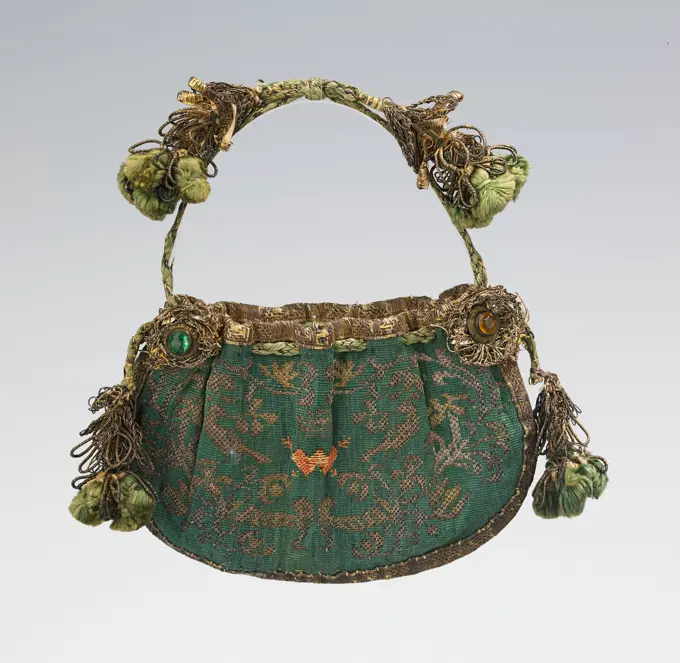
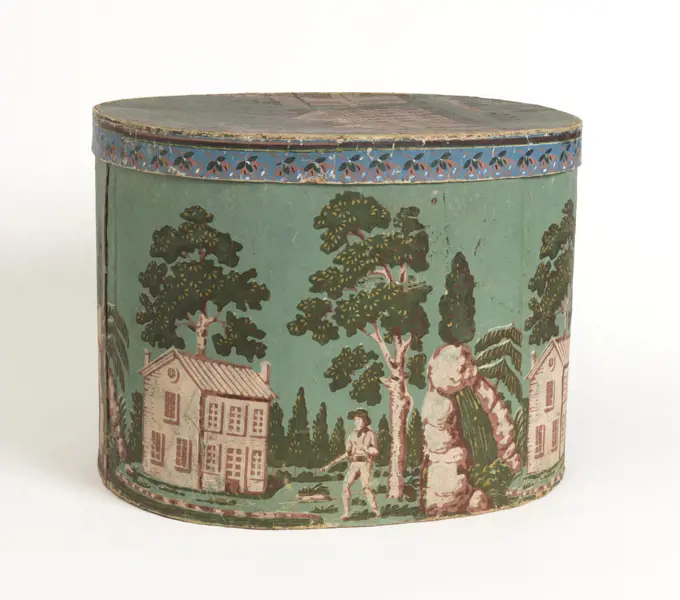
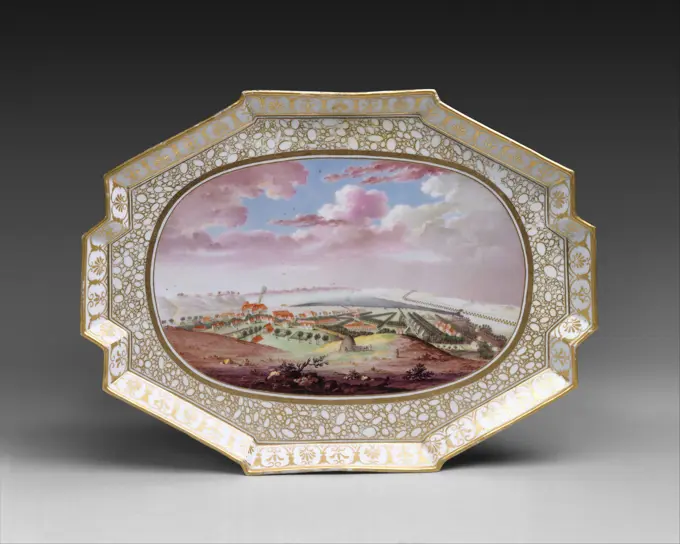
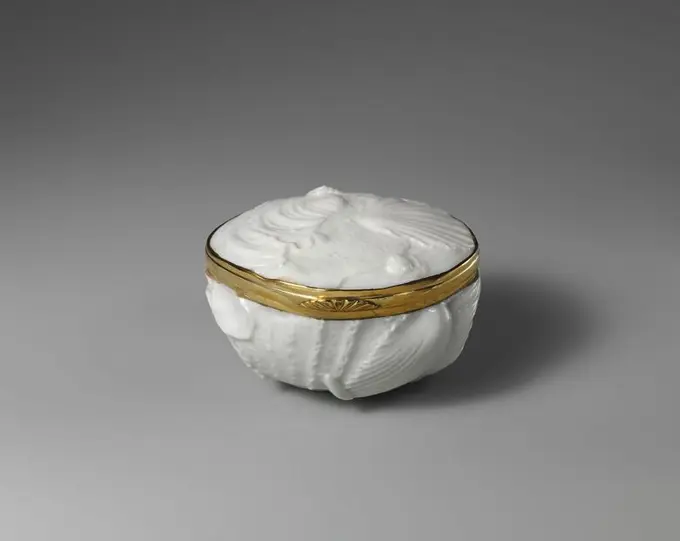
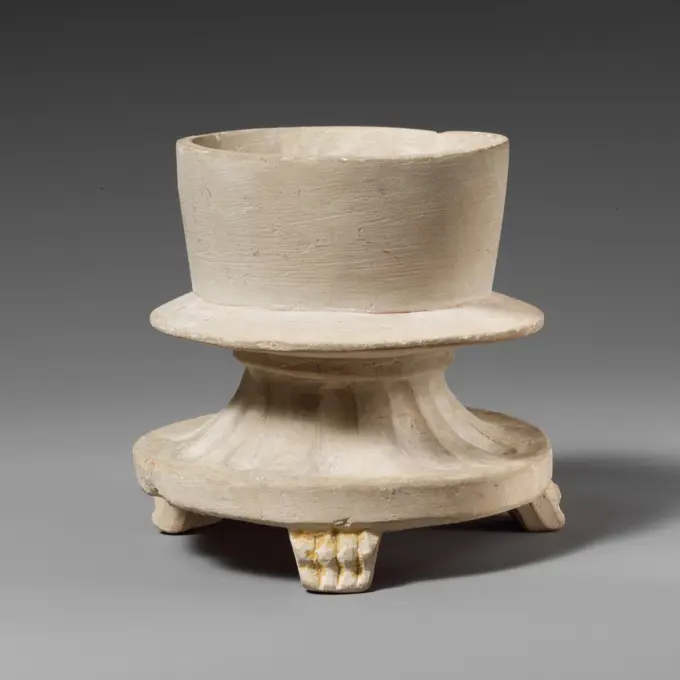
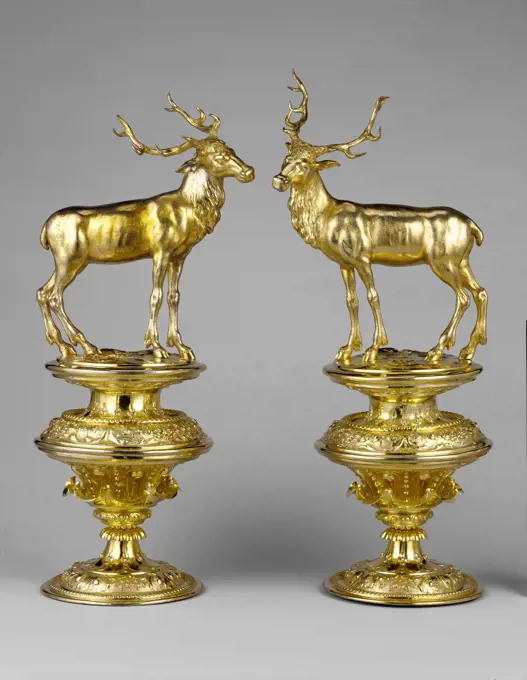
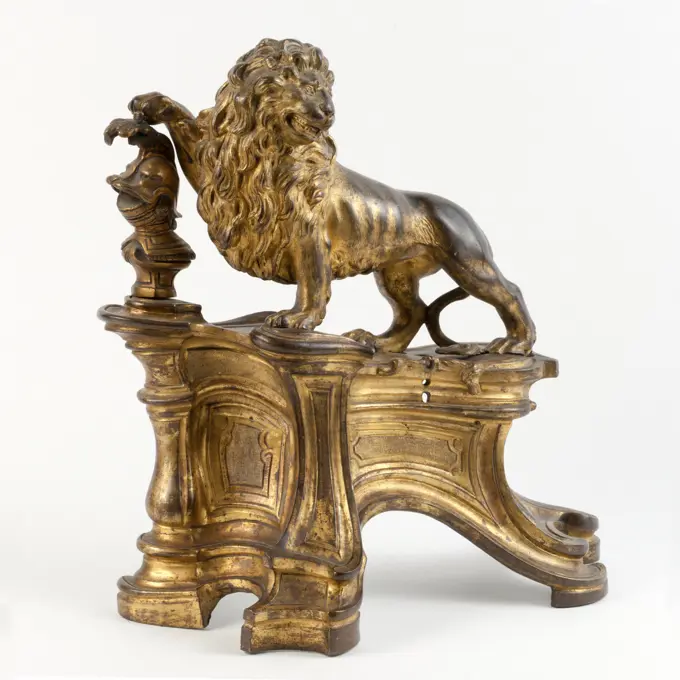
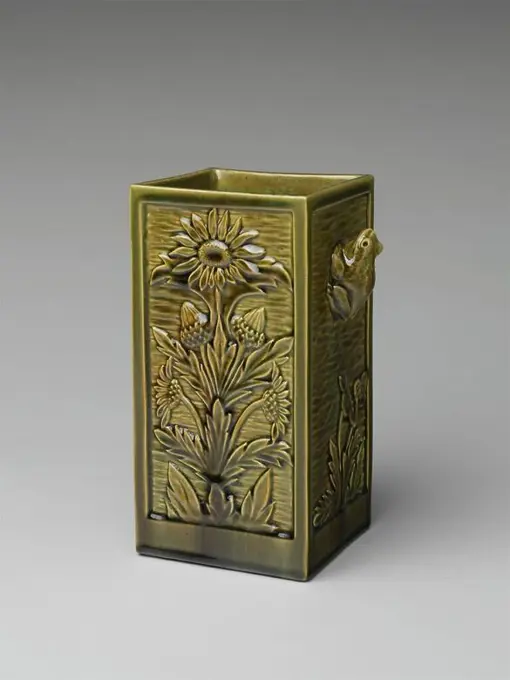
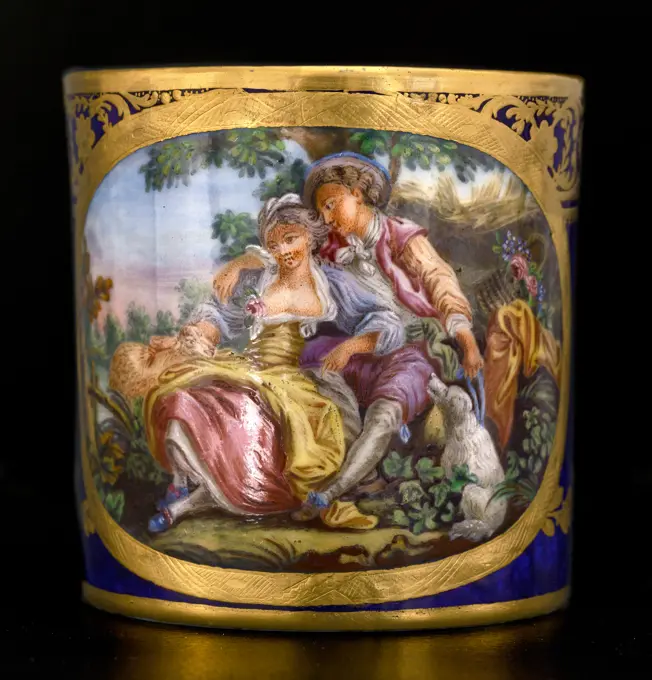
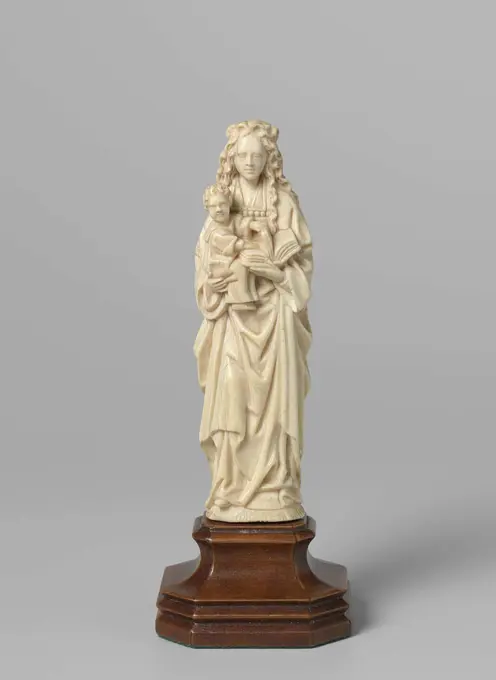
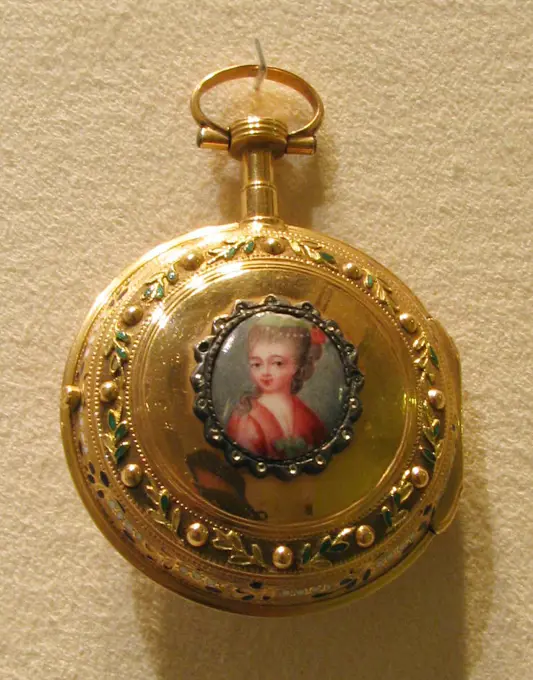
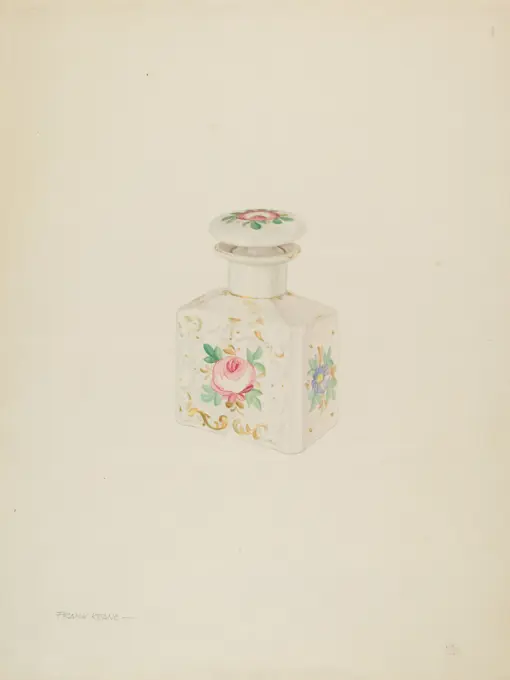
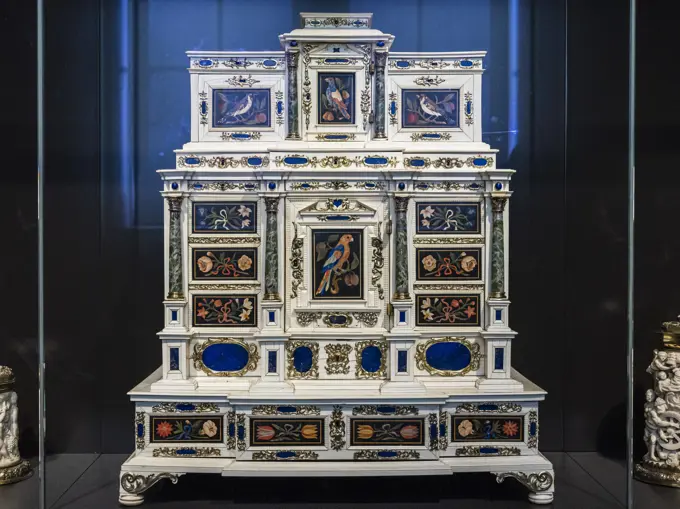
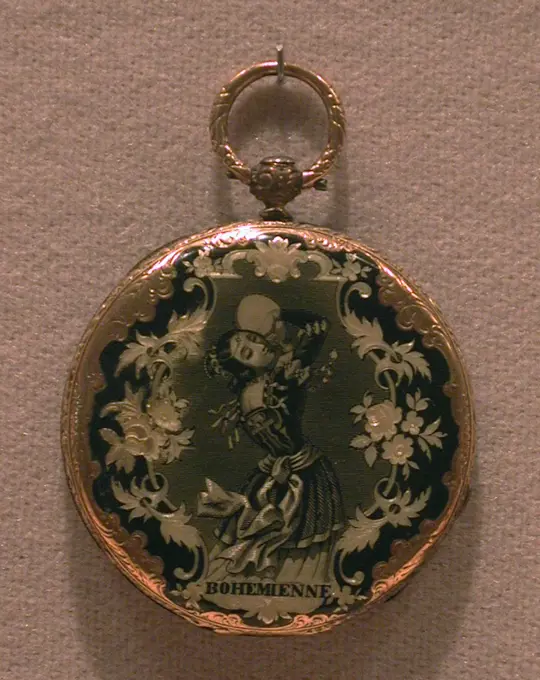
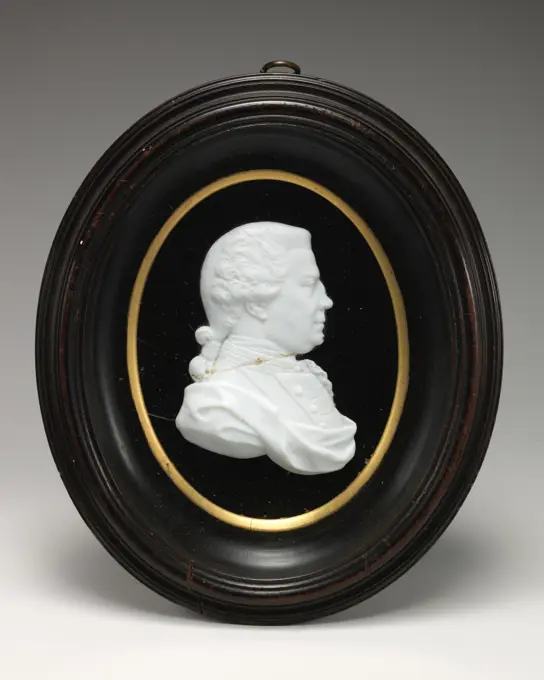
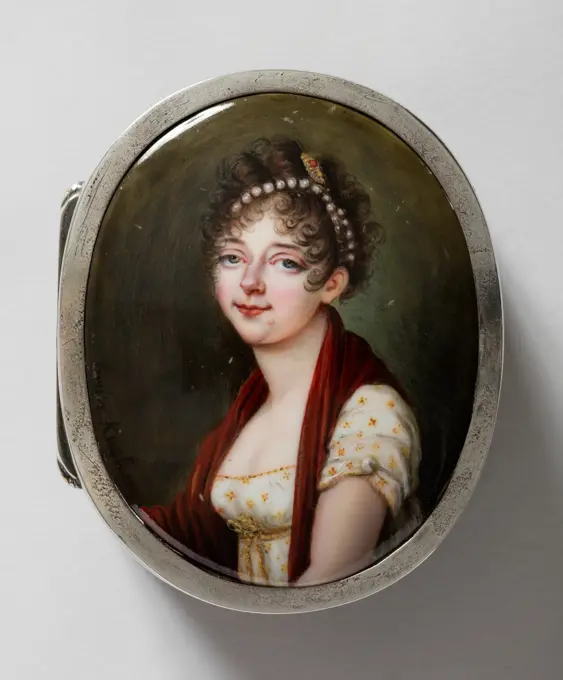
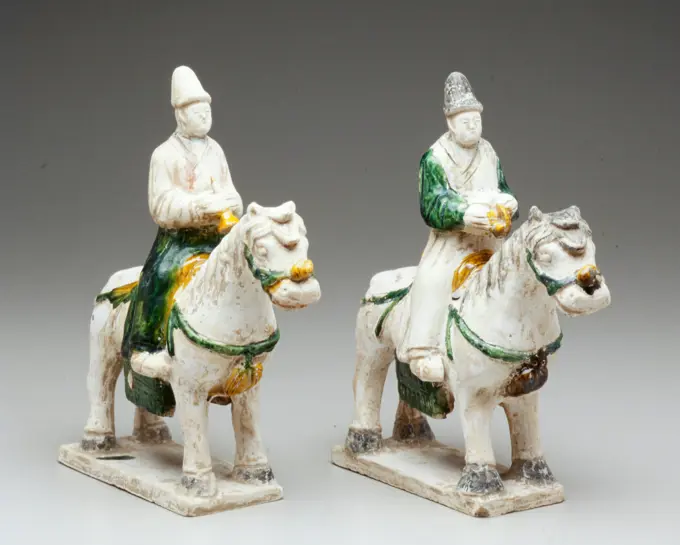
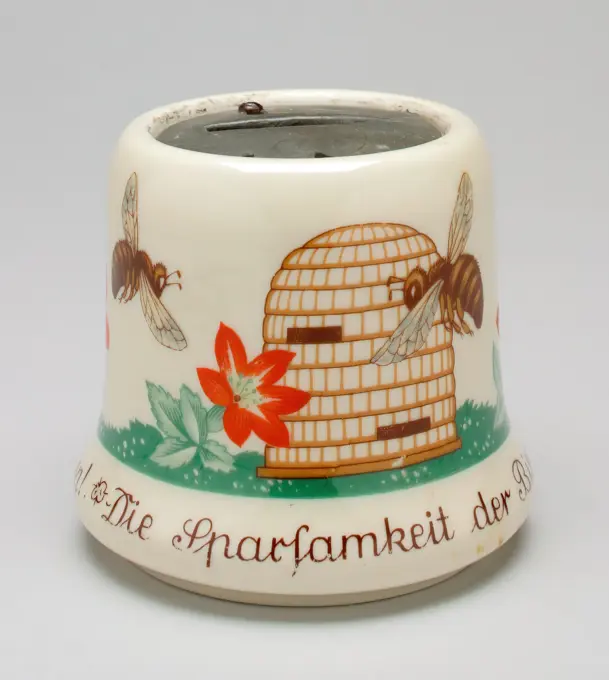
Snuffbox ca. 1760 Meissen Manufactory German. Snuffbox 206586Teacup with a portrait miniature. Koenigliche Porzellan Manufaktur - KPM (Berlin ; 1763-1918), manufacture, unknown, painterPurse, Medium: silk and metallic embroidery on silk foundation Technique: embroidered on plain weave foundation, Flat bag of white silk taffeta, embroidered on both sides with colored silks and metal threads; front, basket of flowers; back, flower spray with bird. Trimmed with narrow gold lace. Blue silk cord at top; covered tassels at corners., France or Italy, late 18th-early 19th century, costume & accessories, PurseBandbox And Lid, Old US Capitol; USA; block-printed paper on pasteboard supportHorse of Faience, Anonymous, c. 1760 - c. 1790 Animal figure of Faience, representing a horse. Multicolored painted. Delft . Animal figure of Faience, representing a horse. Multicolored painted. Delft .Vial with cork. Horodnica (1807-1914)Purse fourth quarter 17th century European. Purse 156865Bandbox, Block printed on handmade paper, pasteboard support, Landscape with trees, houses and figure of a man. Next to the house a rock outcropping contains a waterfall. Dark green, red and pink on green field. Cover with unidentified chapel and buildings., USA, 1830-45, Wallcoverings, BandboxBox Carel Rabenhaupt, Anonymous, 1820 - 1840 box Rectangular copper box, covered with black lacquer and inlaid with mother -of -pearl chrysanthemums and other flowers. On the lid in an oval the portrait of a man (carel rabenhaupt) hip piece three -quarters to the left. Long curly hair, harness and jabot. On the inside of the lid the signature of Rabenhaupt in gold. Japan (possibly) copper (metal). lacquer (coating). mother of pearl sawing / lacquering / inlay (process) historical personsTray 1780-90 Royal Porcelain Manufactory Danish The gift of the Hans Syz Collection in 1995 endowed the Museum with nearly three hundred examples of European and Asian ceramics meticulously acquired by Swiss-born collector Dr. Syz (1894-1991) to chart the migration of models and patterns from East to West. Documenting a continuous process of influence and adaptation, these pieces provide a discriminating review of the nuances of stylistic change resulting from three centuries of trade.. Tray 208493Coffer 1875-1895 Russia. Malachite, gilt bronze, steel, and velvet .Snuffbox. Culture: Italian, Naples. Dimensions: Width: 3 3/16 in. (8.1 cm). Factory: Capodimonte Porcelain Factory (Italian, 1740/43-1759). Modeler: Giuseppe Gricci (Italian, ca. 1700-1770). Date: ca. 1745-50. Museum: Metropolitan Museum of Art, New York, USA.Limestone incense burner on three legs 330 B.C.-A.D. 300 Cypriot The three feet, in the shape of lions paws, support a circular base decorated with concave tongues.. Limestone incense burner on three legs 244039Tile National Garncarska school in the churchPortrait of an unknown young man, Willem Cornelis van Dijk (Possible), 1851 - 1900 locket. photograph. postage stamp   paper. cardboard. metal. glass albumen print historical persons. youth, adolescentHat Badge Representing Prudence; France; 1550 - 1560; Gold, enamel (white, blue, red and black), chalcedony, and glass in the form of a table-cut diamond; 5.7 cm (2 1,4 in.)High head of porcelain painted with Christ's figure. Too high, richly gold-plated head resting on three claws is painted at the front with the figure of Christ at the last supper. Seen in Halve, Christ is dressed in a red robe with blue cloak. On the table-covered table is a blue bowl with bread and a chalice with wine. The background is dark brown. The inside of the head is also gilt. On the bottom a few circles in gold on white ground. The ear protrudes high above the head and shows a rosette.Pair of Stags; Johann Ludwig Biller the Elder (German, 1656 - 1732); Germany; about 1680-1700; Silver gilt; 63.5 × 28.6 × 21.6 cm (25 × 11 1,4 × 8 1,2 in.)Anonymous. Fire. Chiseled and gilded bronze. 1750. Paris, Carnavalet museum. Furniture, furnitureVase. Culture: American. Dimensions: H. 7 1/2 (19.1 cm); Diam. 3 3/4 in. (9.5 cm). Maker: Chelsea Keramic Art Works (1872-1889). Date: 1876-80. Museum: Metropolitan Museum of Art, New York, USA.Watch. Culture: Dutch, The Hague movement with French, Paris case. Dimensions: Diameter (case): 2 1/4 in. (5.7 cm); Diameter (back plate): 1 15/16 in. (4.9 cm). Enameler: Painted enamel possibly by Henri Toutin (French, 1614-1684); Raised enamel possibly by I. Josias Belle (French, 1624-1695). Maker: Watchmaker: Johannes van Ceulen (Dutch, active 1675-1715). Date: ca. 1676-80.There was great demand for enamel watches among wealthy Dutch patrons; however, in the seventeenth century, nearly all enamelers who worked on watchcases were French or Swiss. Enameled cases were therefore imported empty to be fitted with Dutch movements, like this early balance spring watch. The scene on the cover, the Old Testament story of Elijah and Rebecca at the well, is almost certainly French in origin. Museum: Metropolitan Museum of Art, New York, USA.Chalcedony portrait bust of a young woman. Culture: Roman. Dimensions: H. 3 9/16 in. (9 cm). Date: ca. A.D. 130-140.The woman's hairstyle closely resembles that found on life-sized marble portraits of Roman matrons of the period, who closely followed the fashions of the imperial court. Museum: Metropolitan Museum of Art, New York, USA.BrushPotButton (Haiti); Attributed to Agostino Brunias (Italian, ca. 1730-1796); Made for Toussaint L'Ouverture; gouache paint on ivory verre fixé (affixed to) glass, ivory (backing), gilt metalChabry fils (active from 1765 to 1787). Litron cup and saucer. Porcelain, 1780. Paris, Cognacq-Jay museum. 79874-16 Art Menager, character, porcelain, Litron cup, dishes, 18th 18th 18th 18th 18th 18th 18th century. Until a few decades ago it was not known that ivory statuettes had ever been carved in the Low Countries. Since then, quite a few have surfaced, their shape and style betraying their origins in these regions. The floral wreath in the Virgins hair is one such characteristic Netherlandish motif. This statuette probably stood in a small domestic altar.Over robe (uchikake) with mandarin orange branches and books Japan late 18th-first half 19th century This elegant wedding garment, a white uchikake with auspicious, ever-green mandarin-oranges (tachibana) and scattered books, was originally part of a set of three robes, the two others being black and red respectively, with the same decoration, made for a wealthy merchant-class bride. For the wedding ceremony, the bride was dressed in a white ensemble, but later she changed into richly embroidered white, red, and black uchikake, worn in sequence, and was officially introduced to the grooms family during the celebratory banquet. This example has a white figured satin-weave ground with stylized paired-phoenix roundels, while the open books are mainly in silk embroidery and gold thread couching. The title slips are either lost or were not depicted, but typically it was The Tale of Genji and other classics, or poetry anthologies referenced on these wedding garments. Details of the mandarin-Pair of Plates. Chamberlain's Factory (England, Worcester, 1788-1852). England, circa 1804-1811. Furnishings; Serviceware. Porcelain, gildingWatch ca. 1766 Watchmaker: Jean Antoine Lépine Lépine was appointed clockmaker (Horloger du Roy) to Louis XV (1710-1774) probably about the end of 1765 or the beginning of 1766, and he included the appointment in his signature until about 1790 or 1792, when revolutionary activity in France made a mention of the monarch impolitic, if not dangerous. In the period leading up to the Revolution, his watches became famous for their slim eleganceand increasingly inventive technology. The Museums watch is a simpler product of the 1760s, displaying Lépines effort to decrease the space between the plates of the movement while still allowing room for the verge escapement.. Watch. French, Paris. ca. 1766. Case: gold, partly enameled and set with diamonds; Dial: enamel. HorologyFrank M Keane, Potpourri Jar, c 1940 Potpourri JarAusburg Cabinet Ausburg Cabinet, 16th century, Amsterdam, Netherlands Copyright: xZoonar.com/BartomeuxBalaguerxRotgerx 21697267Sugar bowl in the shape of a woman at a basket. Porcelain sugar bowl, in the form of a woman with a bowl with a basket with lid on a ground with leaves. Woman wears a skirt, violet with flower branches in black and gold and a red striped headscarf around the hair. She has an apple in the left hand. A branch with multicolored flowers is applied to the lid and the wall of the basket. The image has been marked.Soldier with a Gun 1700-1799 France. Glass; lampwork (verre de Nevers), metal armature .Prudence 1780-1790 Burslem. Stoneware (jasperware) . Wedgwood Manufactory (Manufacturer)Watch 1840-55 Watchmaker: Firm of Sandoz, Ami, et Fils. Watch 195614Augustus, Admiral Viscount Keppel (1725-1786) ca. 1780 James Tassie British, Scottish. Augustus, Admiral Viscount Keppel (1725-1786). James Tassie (British, Glasgow, Scotland 1735-1799 London). British, London. ca. 1780. Glass paste. GlassCouple Drinking Chocolate ca. 1744 Johann Joachim Kändler German The popularity of tea, coffee, and hot chocolate in eighteenth-century Europe is reflected in the prominence with which these beverages are depicted in porcelain figural groups. On this example, a couple drinks hot chocolate, as indicated by the chocolate potrecognizable by the small hole in the lidon the table. It is similar to a full-scale Meissen chocolate pot in the Museum's collection (see 42.205.136a, b). They drink from tall handleless beakers, a form of cup used for chocolate and coffee.. Couple Drinking Chocolate 207203Cylindrical vase; Hy Ycka, Jadwiga (1856-1922), Manufaktura Majoliki in Nieborów (Nieborów; label; 1881-1899); 1881-1886 (1881-00-00-1886-00-00);Box with portrait of a lady Box; France; silver, enamelEquestrian Figure for Wedding Procession, 16th-17th century, 10 7/8 x 4 1/8 x 9 3/4in. (27.6 x 10.5 x 24.8cm), Ceramic, China, 16th-17th centuryPortrait of a Girl With Hurdy Gurdy, Anonymous  Beehive' still bank, c. 1904, Heinrich & Co., Selb, Germany, est. 1904, 2 7/8 x 3 1/8 x 3 1/8 in. (7.3 x 7.94 x 7.94 cm), Ceramic, pigment, metal, Germany, 19th-20th centuryButton ca. 1820 French. Button 114366Organ Bank, Cat and Dog' mechanical bank, c. 1882, Kyser & Rex Company, Philadelphia, c. 1879-1898, 7 1/4 x 5 3/8 x 4 in. (18.42 x 13.65 x 10.16 cm), Iron, pigment, 19th century