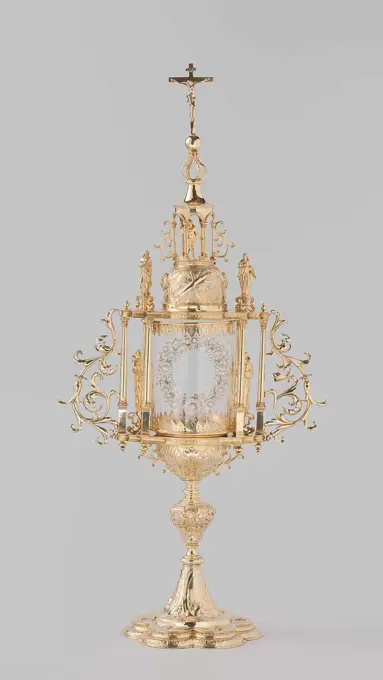
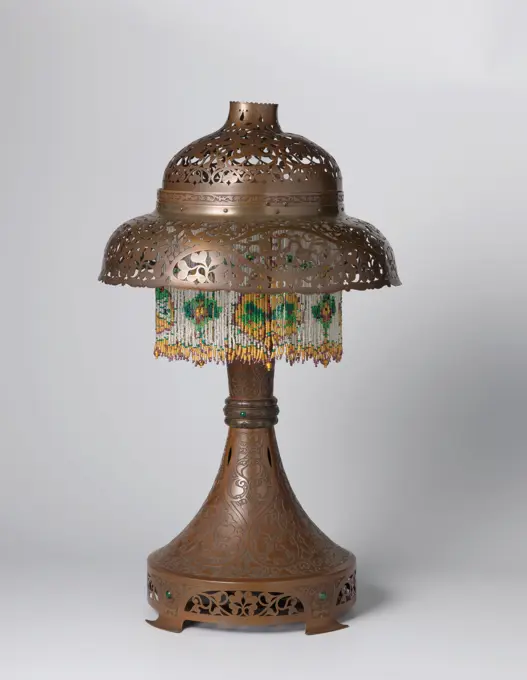
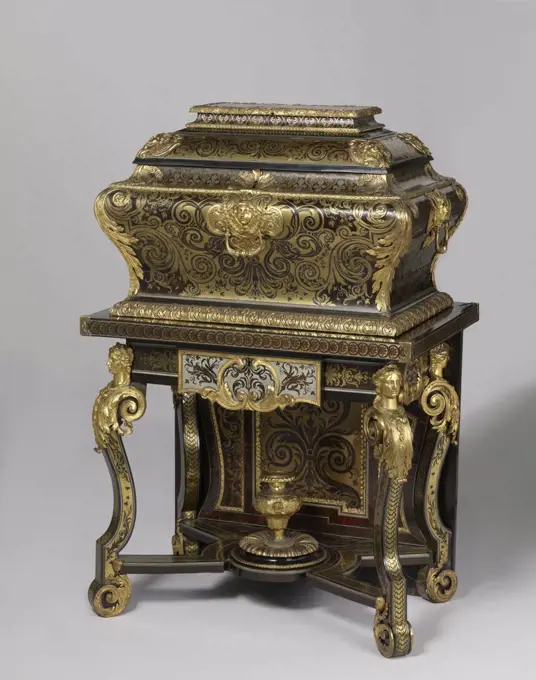
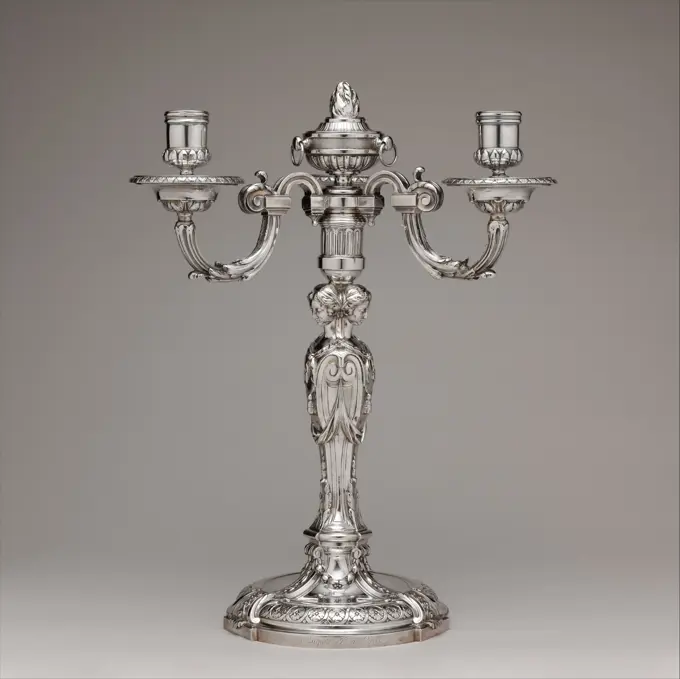
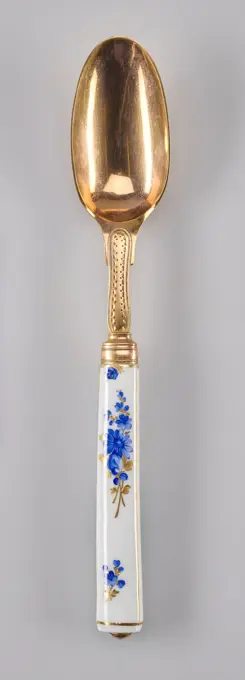
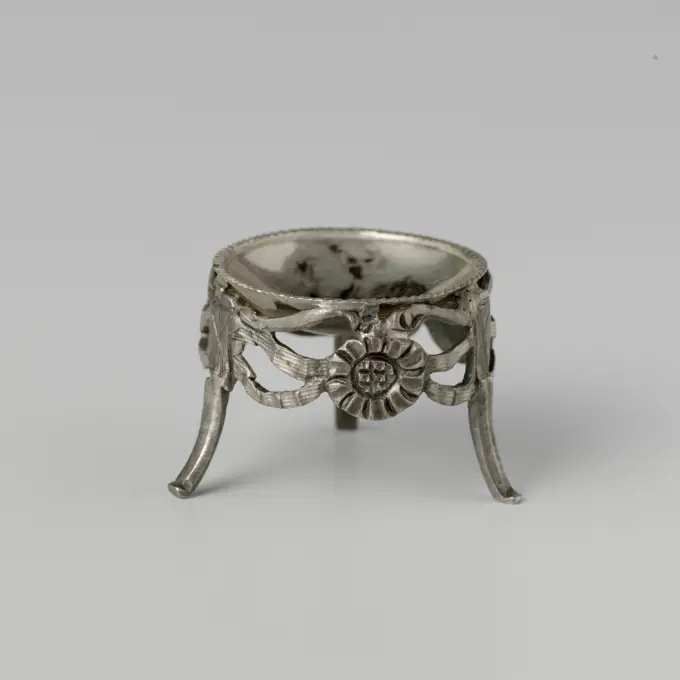
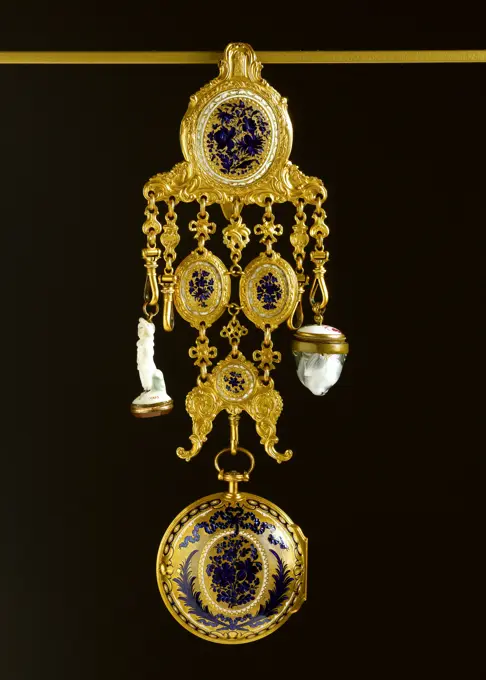
Artistic Decorative Objects

Collection of ornate decorative objects including gilded vessels and chairs, showcasing intricate craftsmanship and historical styles.

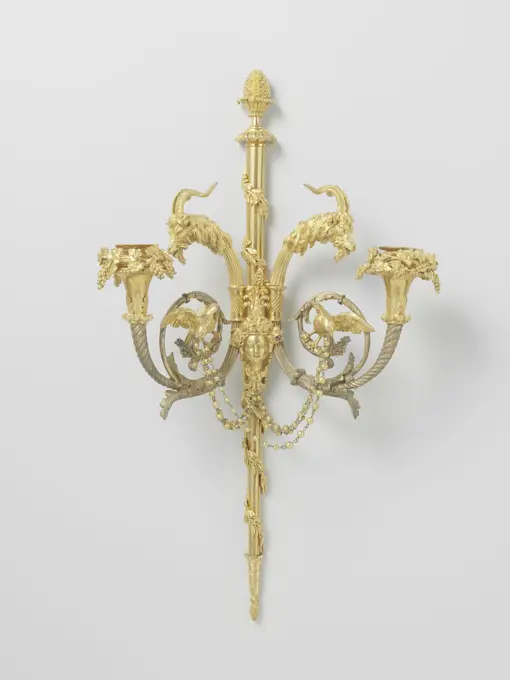
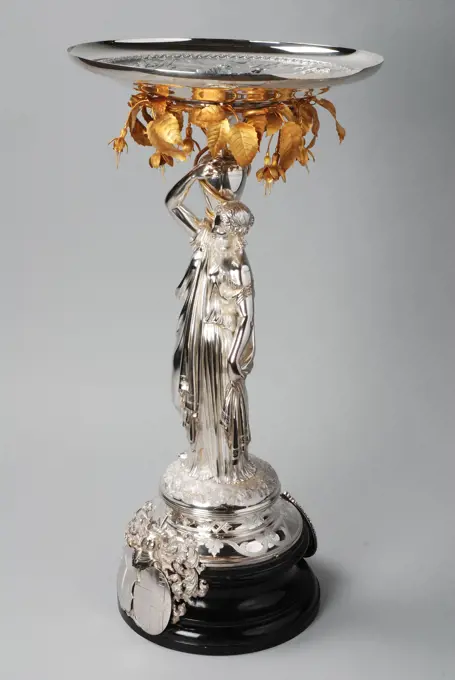
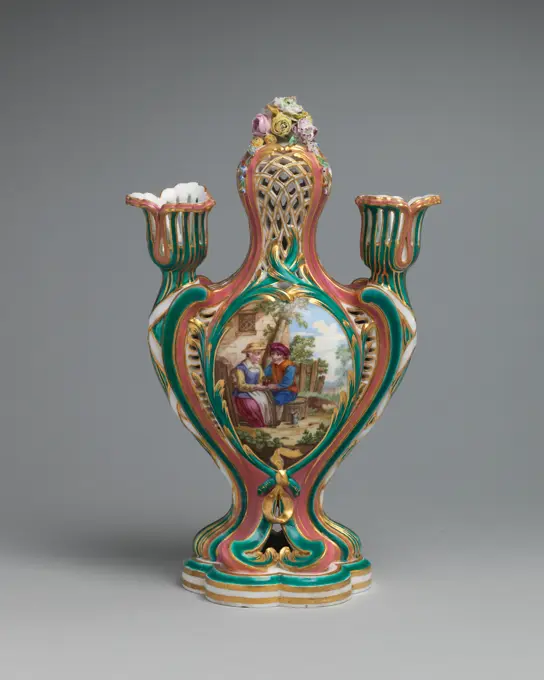
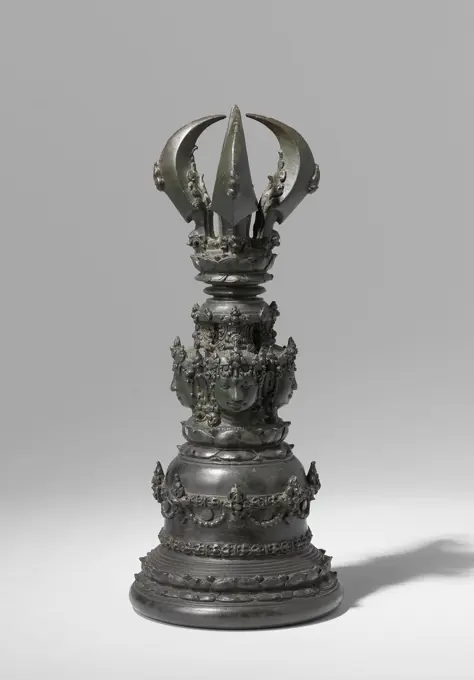
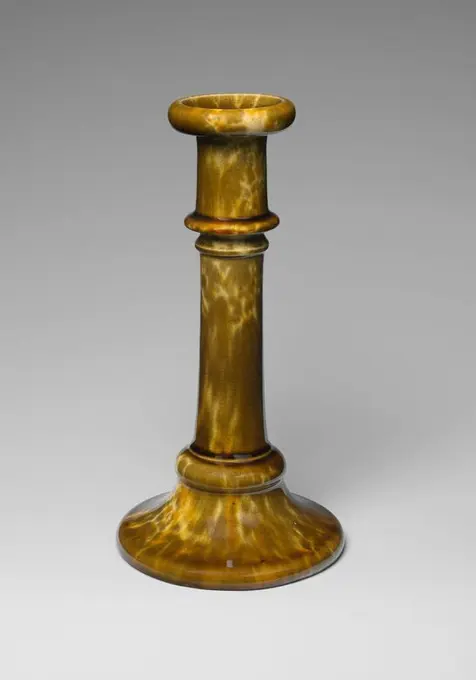
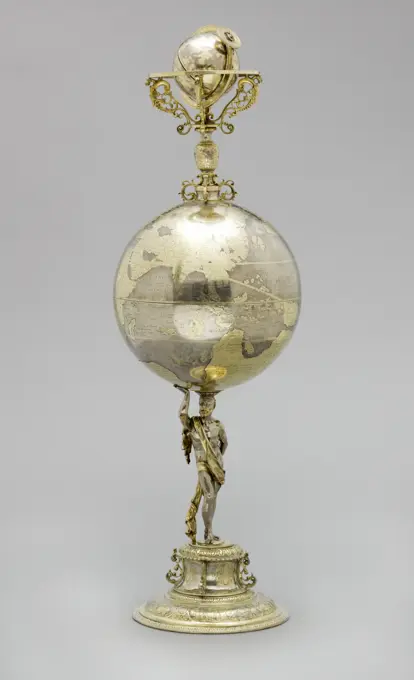
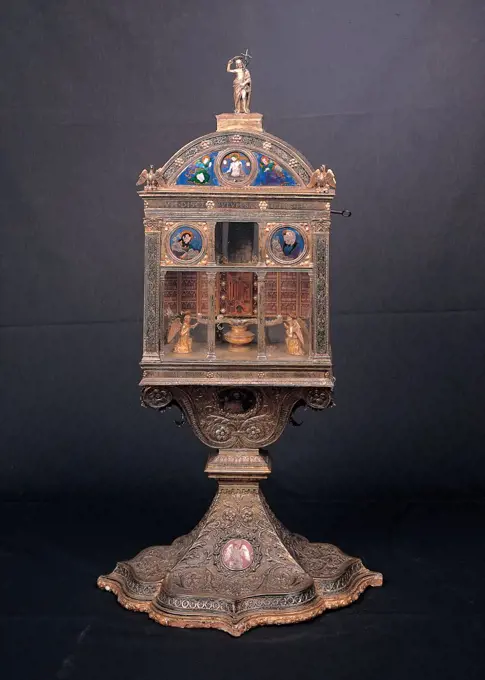
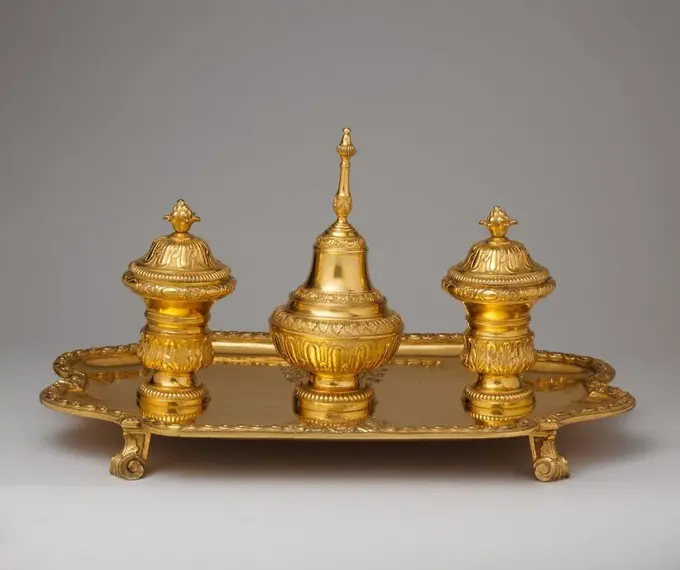
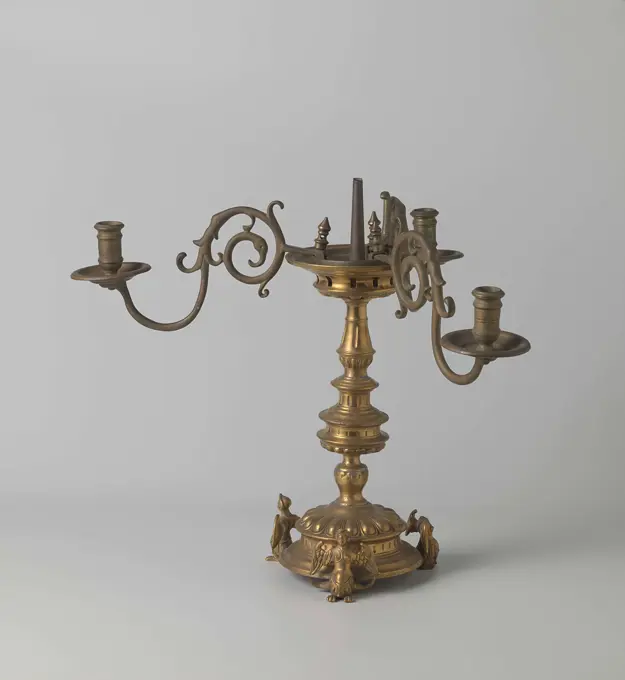
Sabbathlamp, unknown, 1700 - 1800 The object consists of the following cast parts: the handle, the trunk, the oil box, the drip can, the four arms, the four decorative elements. The handle has a cloverleaf -shaped eye at the top. The profiled downwards, narrowing trunk is chalice -shaped, then has a position ring with four holes and four notches (to fix the arms and the decorative elements) and is then profiled spherical three times. The eight -pointed star -shaped oil box, which has a smashed ornament at the bottom around the eye, is attached to the trunk with a bayonet closure. On the eye hangs with a hook the profiled rod with the drip tray, in which the sign of an angel's head has been smashed on the edge. The S-shaped arms end up to the trunk in a curl and turn outside into a flat mounting part, in which the bulb and hollow rounds are screwed to the base of hung holders on the profiled round fat catchers. The four decorative elements consist of stylized flowers, two by two. Nuremb
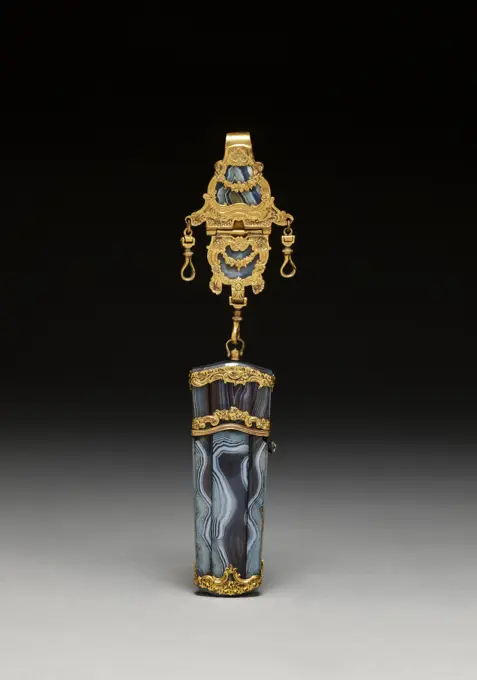
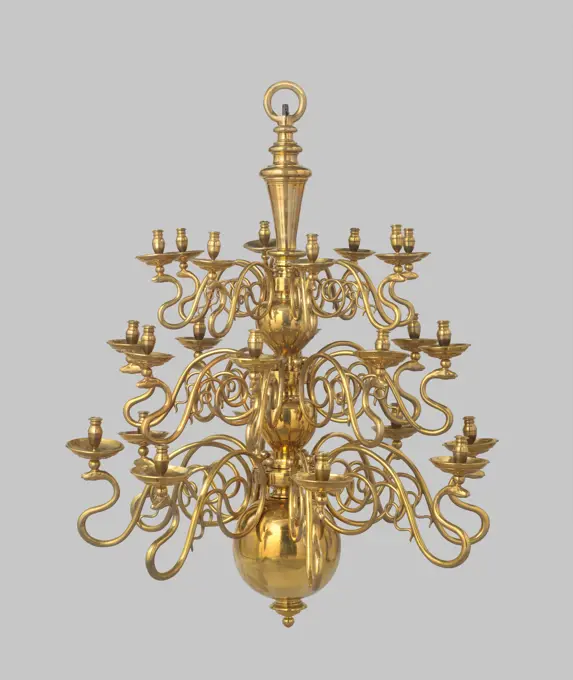
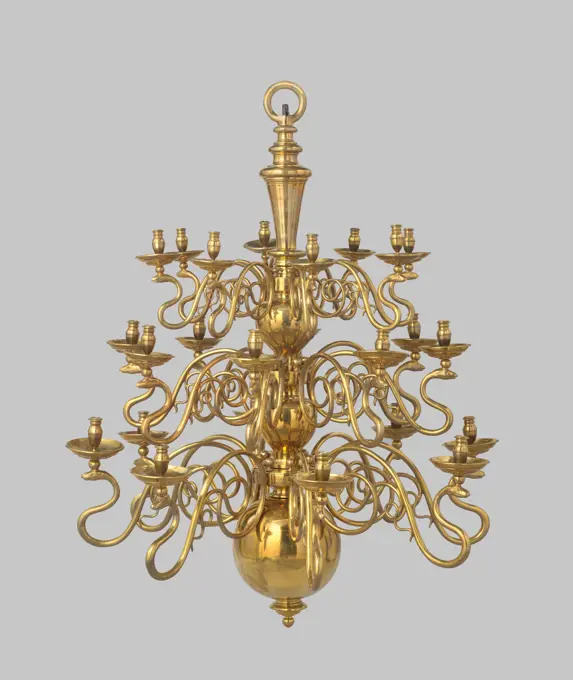
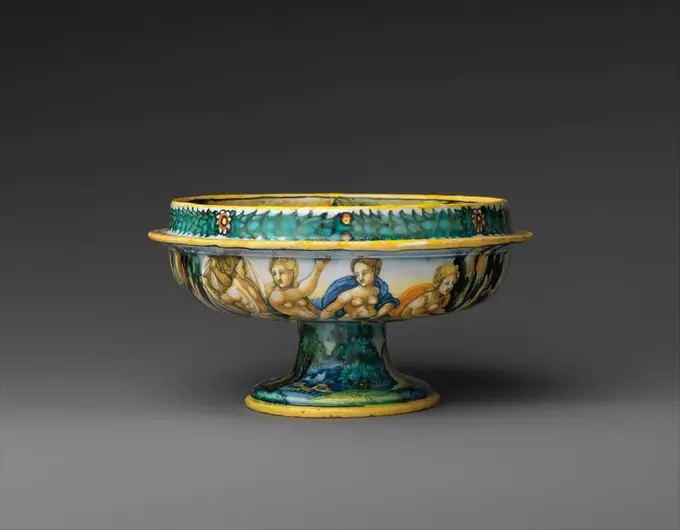
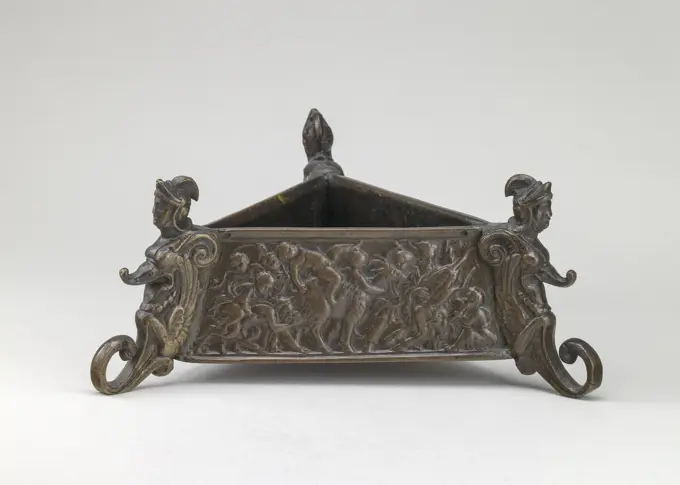
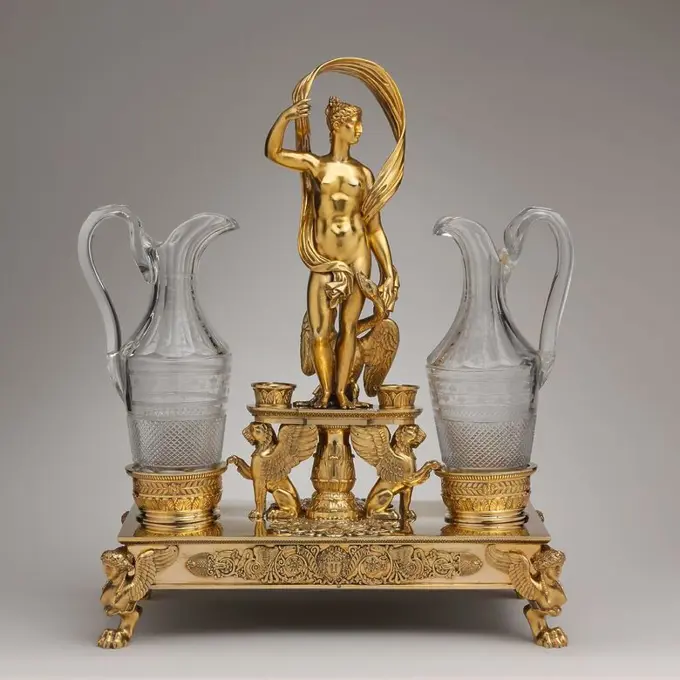
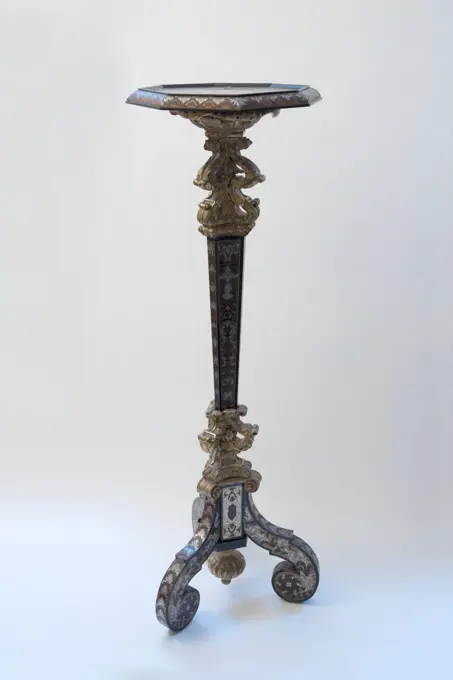
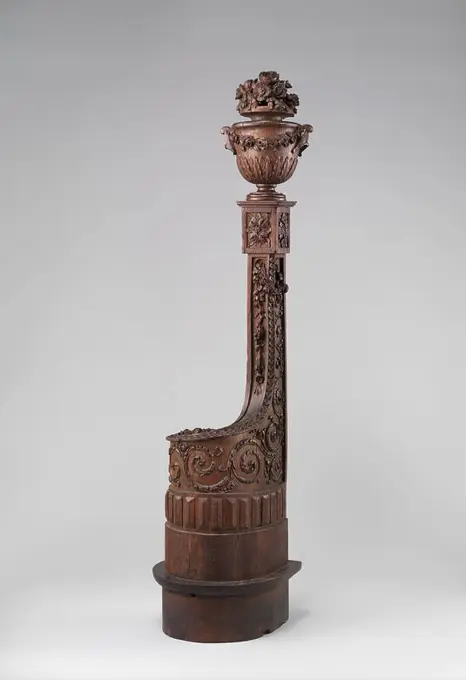
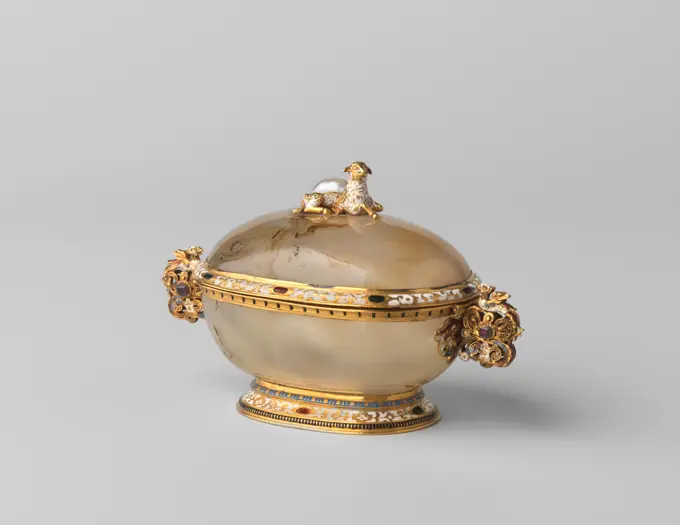
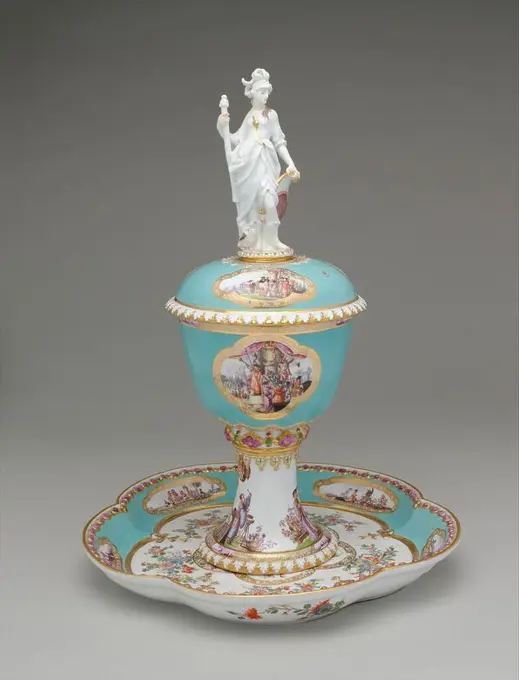
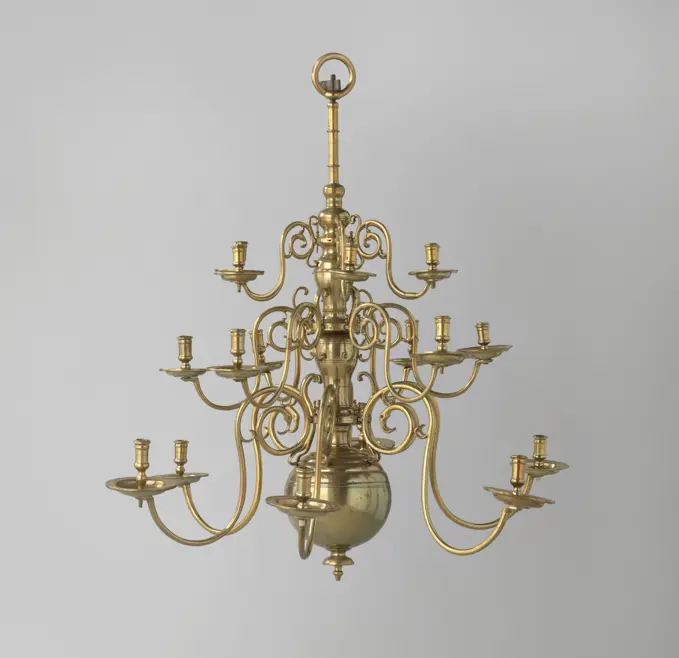
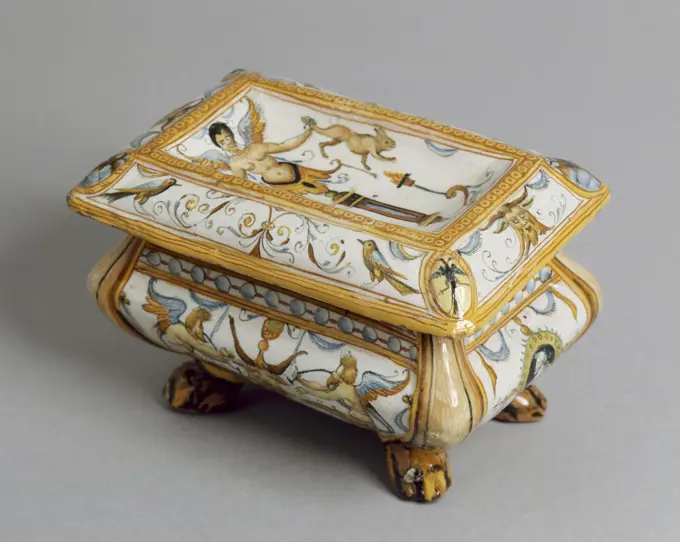
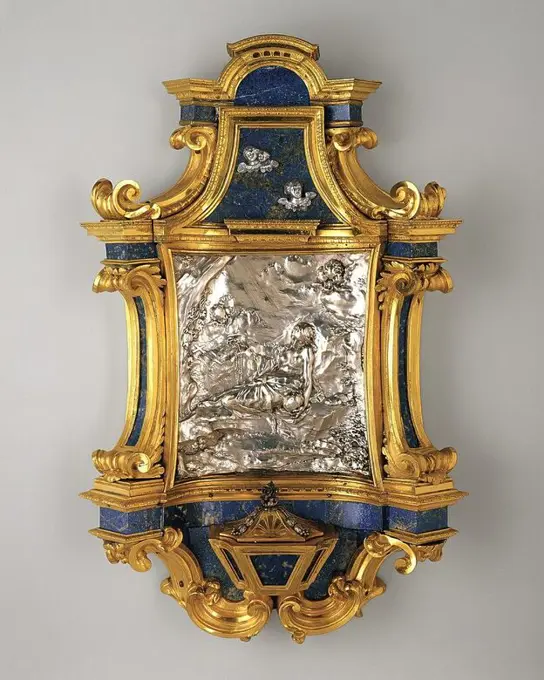
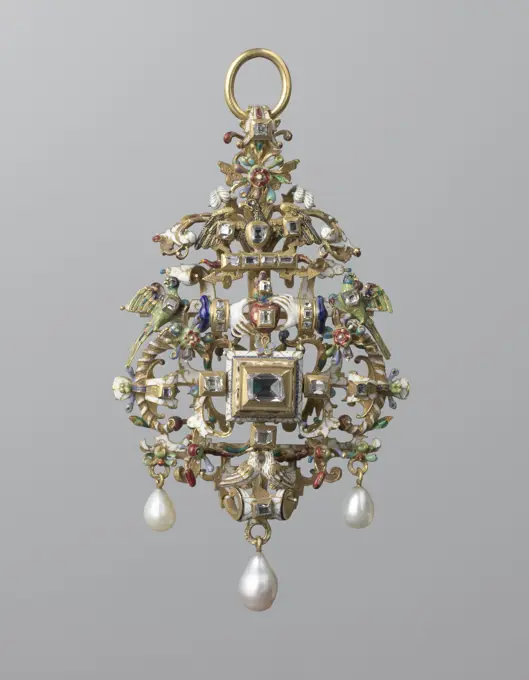
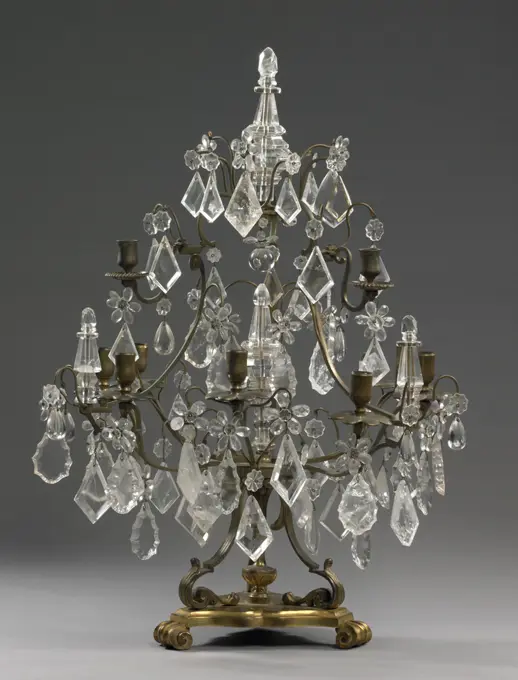
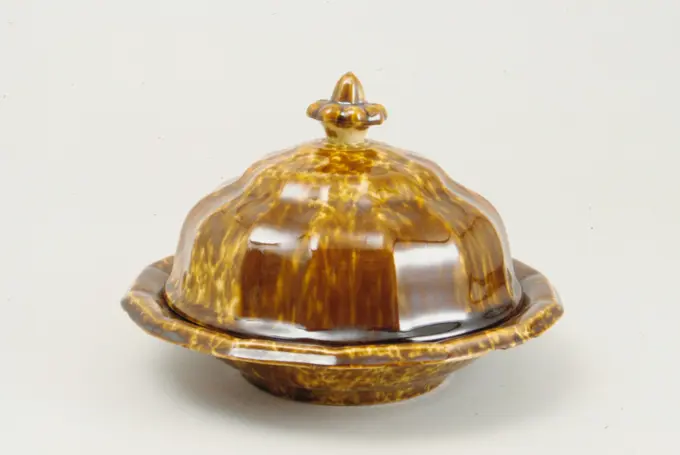
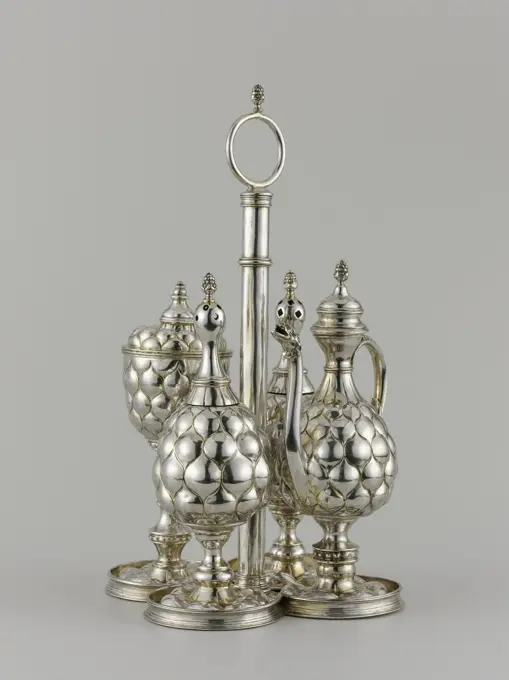
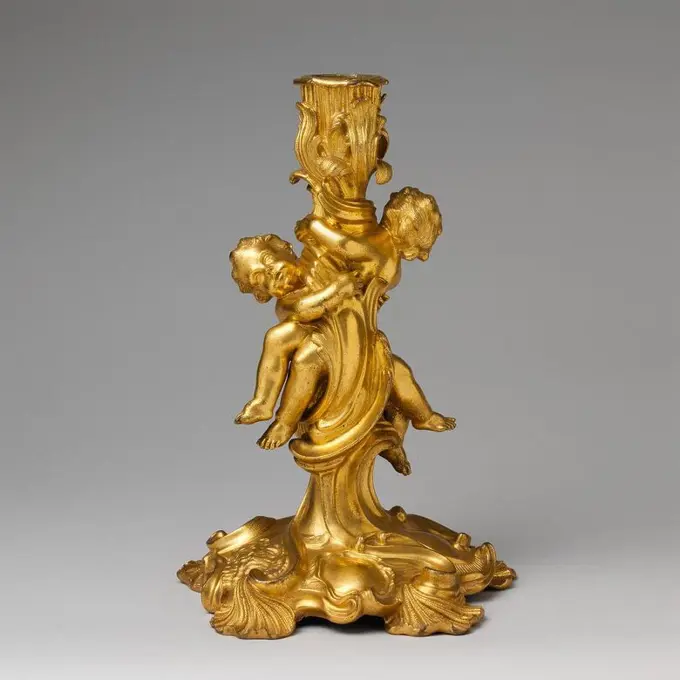
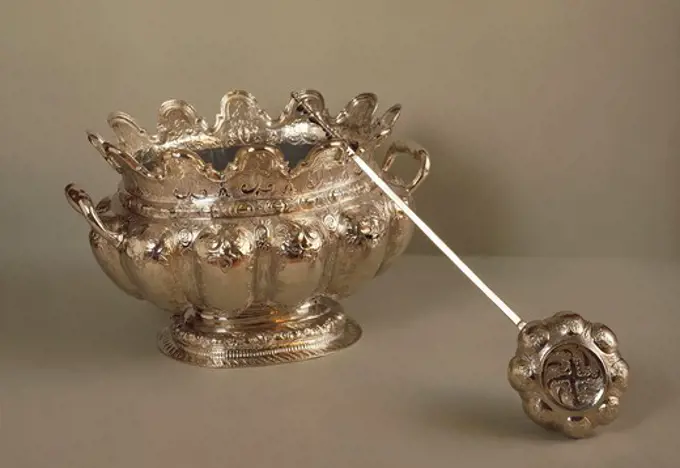
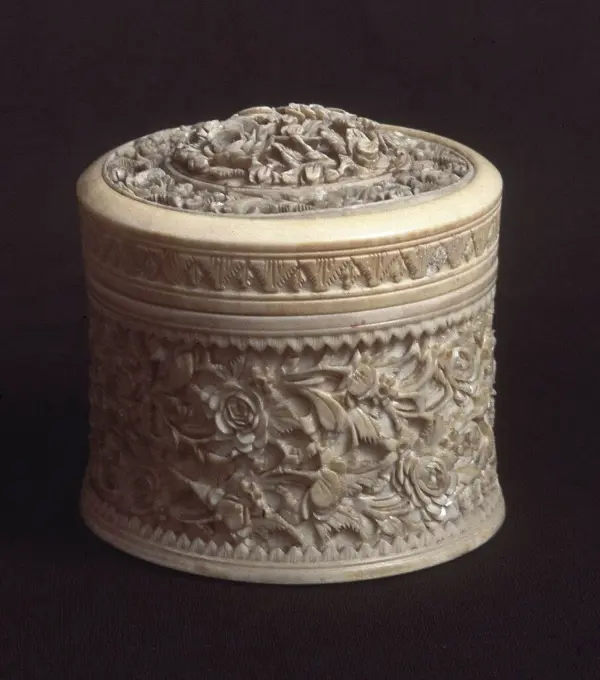
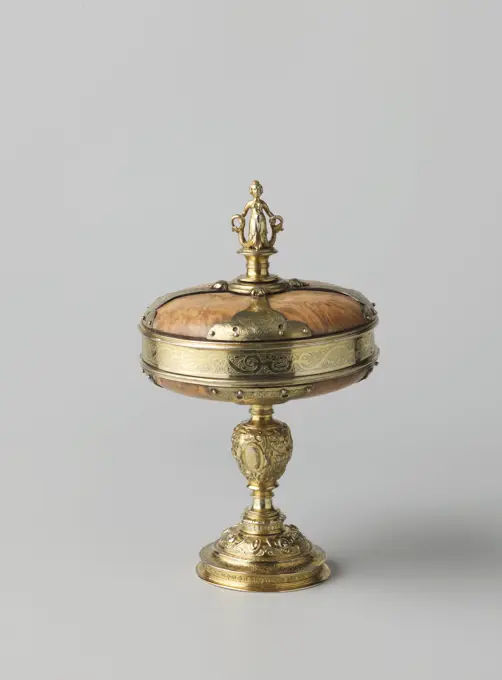
Bokaal van Wortelhout with frame of gilded silver, anonymous, 1550 - 1600 Bokaal with lid, carrot wood and frame of gilded silver, decorated with Renaissance ornament. Nuremberg silver (metal). gilding (material). gilding Bokaal with lid, carrot wood and frame of gilded silver, decorated with Renaissance ornament. Nuremberg silver (metal). gilding (material). gildingSgabello, Chair of Notenhout, Anonymous, 1550 - 1600 Chair of Notenhout, with front and rear board placed in spread. The front board shows two dolphins in low relief, with their heads resting on the floor and tied together at the neck. Their tails end in Voluten and they flank a roller-cartouche with coat of arms. The back shows a roller-cartouche with coat of arms, on which an animal claw, flanked by S-Voluten. To crown a leaf edge, S-Voluten and a reverse palmet. See also BK-15380. Italy wood (plant material). walnut (hardwood) Chair of Notenhout, with front and rear board placed in spread. The front board shows two dolphins in low relief, with their heads resting on the floor and tied together at the neck. Their tails end in Voluten and they flank a roller-cartouche with coat of arms. The back shows a roller-cartouche with coat of arms, on which an animal claw, flanked by S-Voluten. To crown a leaf edge, S-Voluten and a reverse palmet. See also BK-15380. Italy wood (plant material).Scent Bottle, c. 1775 (). France, 18th century. Glass mounted in gold; overall: 7 x 2.9 cm (2 3/4 x 1 1/8 in.).Torchère van Gilded Lindenhout, c. 1600 - c. 1699 Torchère from Gilded Lindenhout. On three rays -placed claw legs is the three -hand base, which is decorated on the corners with kinked volutes and on each of the areas with a medallion. On this is a triangular cover plate with faint concave sides, on which the shaft exists, which consists of the following sections; A cup -shaped part with a serrated edge, a reverse pomegranate, a disk, an acanthus button, from which a tutited canneted column shaft, which ends in four rings of different diameters, while the third and fourth are decorated with pearl edge. Above the round deck disc, in which a square pen. Italy wood (plant material). linden. gilding (material) gilding Torchère from Gilded Lindenhout. On three rays -placed claw legs is the three -hand base, which is decorated on the corners with kinked volutes and on each of the areas with a medallion. On this is a triangular cover plate with faint concave sides, on which the shaft exists,ALFABEGUER O ALBAHAQUERO - S XX. Location: ALFARERIA. SPAIN.Galvanoplastic reproduction of a jar with lid with scenes related to hunting, fa. Elkington & Co., after 1863 - Before 1878 Galvanoplastic reproduction of a jar with lid, with ties with engraved scenes with topics related to hunting interspersed with ties with rolling work in relief; A vase with flowers forms the crown of the lid. London copper (metal). silver (metal) gilding Galvanoplastic reproduction of a jar with lid, with ties with engraved scenes with topics related to hunting interspersed with ties with rolling work in relief; A vase with flowers forms the crown of the lid. London copper (metal). silver (metal) gildingTobacco spot, round, decorated with imposed garlands and medallions, with loose lid, Wouterus Verschuur (silversmith), 1791 The round tobacco spot has a loose lid and rest on three cast legs in the shape of a bird claw on a sphere. The legs are attached to an openwork edge of oval connected by rosettes along the underside of the body, closed at the top and bottom by a pearl edge. The body is slightly constricted from below and vaulted above it. It has decorated a low straight mouth edge with a pearl list. It is driven all around with a bay garland, which is attached to a ring on both sides where a straight pendulum depends, and is included on the front and rear above a medallion hung on a bow. The cast medallions show allegorical female figures, one with a cross, the other with an anchor, respectively imagining the faith and hope. The lid has a flat outer edge, decorated in glossy stitch with a tire with two flinged ribbons with rosettes, between golf with points decorated edges. InsidCandle holder. Golden, twisted round candlestick on a vaulted foot. The edge of the foot is scalloped. The trunk is baluster-shaped. The candle holder is smooth and the fat catcher has the shape of a six-leaf flower. The candlestick is labeled: STK. = Amsterdam, JRL. = W (1781) and MT. = Jan Bronnet.Sabbathlamp, unknown, 1700 - 1800 The object consists of the following cast parts: the handle, the trunk, the oil box, the drip can, the four arms, the four decorative elements. The handle has a cloverleaf -shaped eye at the top. The profiled downwards, narrowing trunk is chalice -shaped, then has a position ring with four holes and four notches (to fix the arms and the decorative elements) and is then profiled spherical three times. The eight -pointed star -shaped oil box, which has a smashed ornament at the bottom around the eye, is attached to the trunk with a bayonet closure. On the eye hangs with a hook the profiled rod with the drip tray, in which the sign of an angel's head has been smashed on the edge. The S-shaped arms end up to the trunk in a curl and turn outside into a flat mounting part, in which the bulb and hollow rounds are screwed to the base of hung holders on the profiled round fat catchers. The four decorative elements consist of stylized flowers, two by two. NurembFrench 16th Century, probably Saint Porchaire (Deux Sevres), or Paris region, Cup on high foot with the royal arms of France crowned, c 1540 1560 French 16th Century, probably Saint-Porchaire (Deux-Sevres), or Paris region, Cup on high foot with the royal arms of France crowned, c. 1540/1560, lead-glazed fine earthenware, Widener Collection 1942.9.351Cup with cover 19th century, after 1730-40 original After an original by Johann Ludwig Biller This electrotype is after an eighteenth-century original (1730-40) at the Winter Palace, St. Petersburg, at the time of reproduction. It belongs to a toilet service made for and presented to the Empress Anna Ivanovna.. Cup with cover 186512Candlestand (one of a pair) ca. 1780-90 British Before the introduction of the Argand oil lamp in 1784 and of later technological innovations such as gas and electric lighting, the artificial illumination of the domestic interior depended largely on candles, made either of rendered animal fat (tallow) or of less smoky and better-smelling beeswax.1 Given the high cost especially of the wax kind, few candles were used on a daily basis, and once daylight faded the houses were dimly lit. Only at formal entertainments, such as important dinners and balls, would multiple candles-placed in magnificent chandeliers and girandoles-burn in the reception rooms. In addition to these hanging or mounted sources of light, candelabra and candlesticks would be brought in to brighten these rooms, especially in areas that would otherwise remain dark. They might be arranged on tables and mantelpieces and were often placed on tall movable candlestands with flat tops, also known as torchères. During the miArm of a candle crown in two heights, Anonymous, 1890 - 1910 The arm has an S-shape, ending out in a snake head and on the other end in bird heads. The arm is decorated with curls there. Screws have been applied in the protrusion on the candle holder, the arm or at the end of the connecting rod. In the middle the arm also has a stylized animal head. This is the third arm of the lower position ring, numbered with the number 3. Netherlands brass (alloy) casting The arm has an S-shape, ending out in a snake head and on the other end in bird heads. The arm is decorated with curls there. Screws have been applied in the protrusion on the candle holder, the arm or at the end of the connecting rod. In the middle the arm also has a stylized animal head. This is the third arm of the lower position ring, numbered with the number 3. Netherlands brass (alloy) castingPair of wall lights, anonymous, c. 1780 - c. 1785 Gilt bronze wall arm. The staff -shaped trunk is wounded by leaf vines and carries a pomegranate and standing acanthus leaf at the bottom; A women's head in the middle. The trunk is crowned by leaf ornaments and a pomegranate. The two C-shaped scanned and twisted arms wear a ram head at the top and end in a vase-shaped candle holder, contained in acanthus leaves, with grape vines. A second volute on the inside of the arms comprises a bird with a hanging chain in the mouth. Paris bronze (metal). gilding (material) gilding Gilt bronze wall arm. The staff -shaped trunk is wounded by leaf vines and carries a pomegranate and standing acanthus leaf at the bottom; A women's head in the middle. The trunk is crowned by leaf ornaments and a pomegranate. The two C-shaped scanned and twisted arms wear a ram head at the top and end in a vase-shaped candle holder, contained in acanthus leaves, with grape vines. A second volute on the inside of the arChandelier. Culture: Netherlandish. Dimensions: H. 102 cm, L. of upper branch 35.5 cm, L. of lower branch 37.5 cm. Date: 18th century. Museum: Metropolitan Museum of Art, New York, USA.Copón, siglo XV. Catedral de Santa Tecla de Tarragona.Fa. Van Kempen, Silver centerpiece, female figure on ebony base, carrying silver bowl: Minerva with the nine muses, table holder silver ebony wood gold metal, Silver female figure on ebony pedestal carrying silver plate Aan de Heer Mayor J.F. Hoffman and Vrouwe .J. van der Pot 2 August 1815-1865 Rotterdam heraldry Hoffman Hoffmann Van der Pot jubilee party mayor memorial celebrate marriage mythologyPotpourri vase with candleholders (pot-pourri à bobêche) (one of a pair) 1760 Sèvres Manufactory French These potpourri vases with candleholders reflect the quest for innovation that characterizes so much of the Sèvres factorys production of the 1760s. The vases could have been used as potpourris (the scent of petals inside could waft through the panels of pierced trelliswork at the top), and the two flanking candle sockets allowed them also to serve as candelabra, yet it seems probable that they were primarily intended for decoration. Both the unusual and complex form and the dual ground colors of pink and green made them completely unlike anything being produced elsewhere on the Continent or in Britain at this time.As mentioned earlier, the English businessman Thomas Bentley disliked some of the models he saw at the Sèvres factory when he visited there in 1776, and he enlarged on the topic in his journal: “They have an immense number of ornamental vases, highly enriched with enamel Two Hand Bells, anonymous, c. 800 - c. 900 Priestebel, awarded by a Vajra. The bell consists of three parts: the bell -shaped bell, the handle with the four faces and the top in the form of a Vajra. Middle Java bronze (metal) casting Priestebel, awarded by a Vajra. The bell consists of three parts: the bell -shaped bell, the handle with the four faces and the top in the form of a Vajra. Middle Java bronze (metal) castingCandlestick. Culture: American. Dimensions: H. 8 1/8 in. (20.6 cm). Date: 1830-70. Museum: Metropolitan Museum of Art, New York, USA.Globe Cup. Abraham Gessner (Switzerland, Zurich, 1552-1613). Switzerland, circa 1600. Furnishings; Serviceware. Silver, parcel-giltVase of Longevity (kalasha) with Buddha Amitabha. Nepal. Date: 1601-1700. Dimensions: H. 76 cm (29 7/8 in.); Diam. 34 cm (13 3/8 in.). Gilded copper inlaid with semiprecious stones, with brass elements. Origin: Nepal. Museum: The Chicago Art Institute, Chicago, USA.Arm with candle holder of candle crown of two heights with eight arms each, c. 1525 - c. 1550 Candle arm belonging to a candle crown of two heights with maria figure at the top. The arm is bent twice and is decorated with four grapes bunches and five vine leaves. The round fat catcher is decorated with fish bladder motifs at the bottom and has an excellent edge of cross flowers towards the middle, which masks the placement on the arm. The candle holder is six -flat, opened, placed on three vertical styles, transferring to a threaded protrusion. This is the second arm of the upper ring, numbered with 3 round points. The candle holder is unnumbered. Southern Netherlands brass (alloy) casting  Barneveld Candle arm belonging to a candle crown of two heights with maria figure at the top. The arm is bent twice and is decorated with four grapes bunches and five vine leaves. The round fat catcher is decorated with fish bladder motifs at the bottom and has an excellent edge of cross flowers towArm with candle holder of candle crown of two heights with eight arms each, c. 1525 - c. 1550 Candle arm belonging to a candle crown of two heights with maria figure at the top. The arm is bent twice and is decorated with four grapes bunches and five vine leaves. The round fat catcher is decorated with fish bladder motifs at the bottom and has an excellent edge of cross flowers towards the middle, which masks the placement on the arm. The candle holder is six -flat, opened, placed on three vertical styles, transferring to a threaded protrusion. This is the fifth arm of the upper ring, numbered with 5 round points. The candle holder is numbered with 5 horizontal notches. Southern Netherlands brass (alloy) casting  Barneveld Candle arm belonging to a candle crown of two heights with maria figure at the top. The arm is bent twice and is decorated with four grapes bunches and five vine leaves. The round fat catcher is decorated with fish bladder motifs at the bottom and has an excellent edPair of candelabra, Johannes Schiotling, 1772 The candelabers consist of a candlestick, round in diameter, and an attachment with three arms. The foot rests on the right -wing base. A ojief profile decorated with acanthus leaves and above it a bol profile decorated with phases surrounded a flat plate, on which eight with acanthus leaves are jet -wise with acanthus leaves. They wear a hollow -white rosette built from acanthus leaves, which is crowned by a smooth band. Above that, the columnar trunk rises, with a sphere vaulted base, a scanned shaft and a Corinthian capital, which serves as a candle holder. This fits the attachment, which consists of three S-shaped, scanned arms, which spring from a core made up of different leaf wreaths with a crown in the form of the heart of the Acanthus plant. Leaf fillets also swing from this core, which bend along the lower and top of the first part of the arms. The arms each end up again in wreaths of Acanthus leaves, above which the candle holderReliquary of the Libretto, by Paolo di Giovanni Sogliani, 1500 - 1501, 16th Century, partially gilded and enameled silver. Italy: Tuscany: Florence: Opera di Santa Maria del Fiore Museum. Whole artwork. Reliquary colors foot gold silver enamels case crowning statue Jesus Christ ResurrectedInkstand. Culture: French. Dimensions: 16 3/4 × 11 in. (42.5 × 27.9 cm). Date: ca. 1730. Museum: Metropolitan Museum of Art, New York, USA.Pair of models of perfume burners 18th century French. Pair of models of perfume burners 189648 French, Pair of models of perfume burners, 18th century, Painted and gilded wood, Height (each): 10 1/2 in. (26.7 cm). The Metropolitan Museum of Art, New York. Gift of J. Pierpont Morgan, 1906 (07.225.385a, b)Standing Lamp with a Cross on a Pricket Stand 5th century Byzantine Standing lamps decorated with crosses and supported on footed bases were common in the early Byzantine world. Bishop Theodoret of Cyrrhus in Syria (d. ca. 466) described Saint Symeon Stylites, who lived atop a column, as this dazzling lamp, [who as if placed on a lampstand, has sent out rays in all directions likes the sun.”. Standing Lamp with a Cross on a Pricket Stand 468573Spittoon. Kwispoor with gold-plated foot and a trumpet-shaped mouth and a black lacquered convex belly decorated with three cartouches in relief, representing pagodas and a figure in a boat amid a traditional Chinese landscape with trees, birds and a butterfly. The inside of the mouth is engraved with fruit, flowers and birds.Monstrans van het Maagdenhuis.Cylinder monstrans of gold-plated silver, at six-spectable base. On top of a globe with cross.Twilight with ajour motifs, Theo Nieuwenhuis, in or before c. 1914 The lamp has been compiled from many parts. These are provided with etched and meticulous or cut out rank or not included in the hood). They have a round stain ring placed on four feet, a tribe that rejuvenates itself from the stand ring to the middle with three vertical ribs, two in -depicted connecting pieces for the parts of the hood or incorporated or incorporated parts of the hood. Where these come together is also a volant of small glass beads, in which, among other things, butterflies and dragonflies can be recognized. This Volant must be attached to the electric lamp to be attached to a bayonet closure. A few green stones or glass pieces are mounted in the stand ring and trunk. Amsterdam copper (metal). glass etching / sawing The lamp has been compiled from many parts. These are provided with etched and meticulous or cut out rank or not included in the hood). They have a round stain ring placed on four feet, a tTwo toilet caskets, André-Charles Boulle, c. 1685 - c. 1690Candelabrum (one of a pair) 1767-68 Robert Joseph Auguste French Robert-Joseph Auguste was one of the leading Parisian silversmiths working in the Neoclassical style in the latter half of the eighteenth century. In 1778, he received the title of Silversmith to the King, and in 1784 was granted lodgings in the Louvre, a privilege bestowed upon only the most favored craftsmen. He gained an international clientele, providing silver to the courts of Portugal, Denmark, Russia, Sweden, and England.These candelabra (see also 48.187.390a, b) date to an early point in Auguste's career, and they reflect a robust and architectural Neoclassicism in their style. The Neoclassicism of the last two decades of the eighteenth century was often characterized by a highly refined and restrained elegance, with spare decoration. The emerging Neoclassical style of the 1760s usually employed bolder and more sculptural motifs drawn from classical architecture, as can be seen in these candelabra.. Candelabrum (oChatelaine and Case (Étui), c. 1770. England, 18th century. Gray agate mounted in gilt metal; overall: 18.1 cm (7 1/8 in.). Luxurious personal objects were an essential part of a privileged wardrobe during the 1700s and early 1800s, emphasizing their owners refinement and wealth. Especially popular were étuis, small ornamented cases containing miniature sewing, writing, or grooming implements that hung at a womans waist from an ornate clasp, known as a chatelaine. Despite its glittering surface, this small expensive set disguised a system based on the labor and suffering of enslaved or indentured people, whether in gold and stone mines or the shop where it was made.Arm of a candle crown in three heights, Anonymous, 1717 chandelier The S-shaped arm is equipped with a ridge on the tribe side to secure it with a pin in the stand ring. At the trunk, the arm is decorated at the end and to the center with two stylized dolphin heads and with curls, the shape of which is derived from the lobe ornament. To the outside, the arm ends in a thickening, in which a hole provided with a thread is applied to attach the candle holder to the fat catcher. The arm is cast using the same model as the other arms of the wreath. The candle holder is cylinder -shaped with profiled excellent edge and with a baluster foot, which turns into a threaded end, in which the center hole at the bottom. The fat catcher is deepened once at the top to the middle. At the bottom it is profiled around the hole in the somewhat spherical center and the edge is ribbed. The fat catcher has been cast using the same model as the other fat catchers of this wreath. The pin is equipped with a vasArm of a candle crown in three heights, Anonymous, 1625 - 1650 The arm is provided with a ridge on the tribe side, in which a hole is applied to secure them with a pin in the stand rings. The S-shaped arm has the shape of a hose with a tail-wrinkled tail and outside a lifted head with a round button on it, in which the hole provided for a thread is applied to confirm the candle holders with the fat catchers. The arm is cast using the same model as the other arms of the wreath. The round candle holder is vase -shaped with a profiled rib. At the top she has two holid profile, and a protruding edge and at the bottom of a foot consisting of two holy -round profiles. The foot runs out in a rejuvenating screw end with a center hole. The convex fat catcher is smooth at the top and has fish bladder -like godrons and a rib at the bottom. The fat catcher is cast using the same model as the other fat catchers of the wreath. The pins are decorated with convex buttons. This is the fourth arm of theArm of a candle crown in three heights, Anonymous, 1625 - 1650 The arm is provided with a ridge on the tribe side, in which a hole is applied to secure them with a pin in the stand rings. The S-shaped arm has the shape of a hose with a tail-wrinkled tail and outside a lifted head with a round button on it, in which the hole provided for a thread is applied to confirm the candle holders with the fat catchers. The arm is cast using the same model as the other arms of the wreath. The round candle holder is vase -shaped with a profiled rib. At the top she has two holid profile, and a protruding edge and at the bottom of a foot consisting of two holy -round profiles. The foot runs out in a rejuvenating screw end with a center hole. The convex fat catcher is smooth at the top and has fish bladder -like godrons and a rib at the bottom. The fat catcher is cast using the same model as the other fat catchers of the wreath. The pins are decorated with convex buttons. This is the eighth arm of thePapier Maché Copy of A Chinese Helmet Probably theatrical 18th-19th century Chinese. Papier Maché Copy of A Chinese Helmet Probably theatrical. Chinese. 18th-19th century. HelmetsBowl from a birth set with birth scene and Diana and Actaeon. Artist: Perhaps the "Milan Marsyas" Painter; In collaboration with Fra Xanto Avelli da Rovigo (ca. 1486-1582). Culture: Italian, Urbino. Dimensions: Overall: 3 3/4 × 7 1/8 in. (9.5 × 18.1 cm). Date: ca. 1530-32.This footed bowl originally formed the base of a birth set--a series of nesting bowls and dishes celebrating childbirth. Only when the set was disassembled would the domestic image on its interior be revealed. Here, a new mother appears in her bedchamber together with her infant and two companions. The exterior decoration depicts the unfortunate hunter Actaeon, who was turned into a stag by the goddess Diana. Museum: Metropolitan Museum of Art, New York, USA.Follower of Andrea Briosco, called Riccio, A Sand Box (Triangular), c 1525 1540 A Sand-Box (Triangular)Cruet frame (one of a pair). Culture: French, Paris. Dimensions: 15 3/16 × 12 in. (38.6 × 30.5 cm). Maker: Jean-Baptiste-Claude Odiot (French, 1763-1850). Date: ca. 1817. Museum: Metropolitan Museum of Art, New York, USA.Lidded ewer. The body of this bizarre ewer features Auricular-style decoration, that is, fluid earlobe-like forms flowing into one another as though someone has stirred a syrupy substance with a wooden spoon. Emerging from this mixture is all manner of terrifying part-human and part-animal creatures. Adam van Vianen made this ewer in memory of his brother Paulus van Vianen, whohad died in 1613.Anonymous. "Guéridon". Building: oak; Placing: ebony, scales, brass, tin; Golden bronze. 1700. Paris, Carnavalet museum. 100627-26 Guidon, furniture, furnitureNewel post. Culture: French. Dimensions: Overall (confirmed): 64 x 14 1/2 x 14 in. (162.6 x 36.8 x 35.6 cm). Date: 18th century. Museum: Metropolitan Museum of Art, New York, USA.Couples bowl of translucent agate, oval, mounted with enamelled gold and baroque pearl, anonymous, 1575 - 1600 Couples bowl of translucent agate, oval, mounted with enamelled gold and baroque pearl. Foot and lid edge show gold motifs on white stock. On the lid a lamb of gold and white with a baroque pearl as a back. Two enamelled enamelled golden ears, crowned by a winged dragon. The frame changed between 1911 and 1914. Germany agate (chalcedony). gold (metal). Couples bowl of translucent agate, oval, mounted with enamelled gold and baroque pearl. Foot and lid edge show gold motifs on white stock. On the lid a lamb of gold and white with a baroque pearl as a back. Two enamelled enamelled golden ears, crowned by a winged dragon. The frame changed between 1911 and 1914. Germany agate (chalcedony). gold (metal).Tripot Covered Bowl Shaped Like An Ancient Ritual Vessel. Cover bowl of porcelain on three legs and with two ears, covered with a monochrome green, gray glaze. The bowl is covered with geometric motifs and 'taotie' masks in relief; a sample head on the legs; undeglaze. A ear broken off. Monochromes.Two Candelabra, Koninklijke Utrechtsche Fabriek van Zilverwerken by C.J. Desire, 1888 - 1890 Silver Candle Bear, Torsted Model in Louis XV style, with ten as long, curled leaves designed arms on which candle holders rest. Utrecht silver (metal) Silver Candle Bear, Torsted Model in Louis XV style, with ten as long, curled leaves designed arms on which candle holders rest. Utrecht silver (metal)TESORO-BACULO DEL OBISPO MUGICA-1925. Location: CATEDRAL-MUSEO DIOCESANO. Pamplona. NAVARRA. SPAIN. SAN MIGUEL.Lekanis (bowl on the fee) decorated with the g Jellyfish and charms of cupids;  1. PO. III century BC (-300-00-00--250-00-00);Działyńska, Izabela (1830-1899), Działyński, Jan (1829-1880), Greau-collectionMiniature candlestick 18th century British. Miniature candlestick. British. 18th century. Silver. Metalwork-Silver-MiniatureTorch ". Crushed and gilded bronze. 18th century. Paris, Carnavalet museum. 72593-31 Candle holder, candle, bronze chisel, gold, torch, character, 18th centuryStanding cup with cover and stand. Culture: German, Meissen. Dimensions: Overall, cup: 15 1/2 x 6 1/4 in. (39.4 x 15.9 cm); Overall, stand: 1 1/2 x 11 1/2 in. (3.8 x 29.2 cm). Factory: Meissen Manufactory (German, 1710-present). Modeler: Johann Joachim Kändler (German, Fischbach 1706-1775 Meissen). Date: ca. 1735.Commissioned by Augustus the Strong, Elector of Saxony and King of Poland, to commemorate the state visit to Dresden in January 1728 of the king and queen of Prussia, parents of Frederick the Great. The queen's initials, SD for Sophie-Dorothea, are three times displayed. The larger finial figure of Athena is closely related to a silver statuette in the Electoral collections at Dresden, made by Philipp Kuesel of Augsburg before 1700. The turquoise ground has reserves with gold-lace borders painted by Heroldt with colorful chinoiserie figures in idyllic landscapes. This splendid cup illustrates that interesting phase of early Meissen production when the compelling influence of Gold necklace and pendant from Greece, Crete, Knossos, tomb 2Arm with candle holder of candle crown of three heights, c. 1675 - c. 1725 Candle belonging to a brass candle crown of three heights. The S-shaped arm has a curl and turns outside into the flat thickening with a screw hole. The candle holder is secured with the fat catcher. The fat catcher is ribbed at the bottom of the opening and also has twice two grooved rings. The cylindrical candle holder, who has a profiled excellent edge, two grooved rings and a thickening at the bottom, turns into a baluster with the end with a flat underside at the bottom. This is the sixth arm of the lower position ring, unnumbered. The pin, to attach the arm to the stand ring, has a baluster shape. Southern Netherlands (possibly) brass (alloy) casting Candle belonging to a brass candle crown of three heights. The S-shaped arm has a curl and turns outside into the flat thickening with a screw hole. The candle holder is secured with the fat catcher. The fat catcher is ribbed at the bottom of the opening and aVase or lamp 19th century Italian, Venice (Murano). Vase or lamp. Italian, Venice (Murano). 19th century. Glass. GlassClock. Nieborów (manufaktura majoliki ; 1881-1899), factoryLidded cup. unknown, craftsmanLamp and Stand, 400s. Byzantium, early Byzantine period, 5th century. Bronze; overall: 34.8 x 13.5 cm (13 11/16 x 5 5/16 in.).Basket And Divider (Netherlands); silverPatanazzi (Atelier des). Saltary, Italian majolica of Urbino, between 1580 and 1590 (overview). Museum of Fine Arts of the City of Paris, Petit Palais. 27008-7 Love, ceramic, woman, Italy, rabbit, Italian majolica urbino, nudite, bird, renaissance, saliere, dishes, nakedHoly-water stoup with relief of Mary of Egypt. Artist: Relief after a composition by Benedetto Luti (Italian, Florence 1666-1724 Rome). Culture: Italian, Rome. Dimensions: Overall: 23 3/4 × 14 3/8 × 4 1/2 in. (60.3 × 36.5 × 11.4 cm). Maker: Giovanni Giardini (Italian, Forlì 1646-1722 Rome). Date: ca. 1702.The goldsmith and designer Giovanni Giardini made this object for Pope Clement XI (r. 1700-1712), who presented it to Giovanni Battista Borghese, King Philip V of Spain's ambassador to the Holy See. Later, it was part of the collection of the Princes of Thurn and Taxis in Sankt Emmeram Castle in Regensburg, Germany. Giardini's prized devotional objects were intended for private use or for small, intimate chapels. Their technical perfection is such that they outshine many fine works made in Rome during the same period. The combination of the light catching gilded metal and the lapis lazuli with its myriad flecks of sparkling golden pyrites has a mesmerizing effect. Lapis lazuli symbolPendant with connected hands, anonymous, c. 1580 - c. 1600 Pendant, bridal gift, of gold, email, pearls and diamonds. In the middle a large diamond around which two hands. Southern Germany gold (metal). diamond (mineral). pearl Pendant, bridal gift, of gold, email, pearls and diamonds. In the middle a large diamond around which two hands. Southern Germany gold (metal). diamond (mineral). pearlGirandole. UnknownCovered Butter Dish 1849 United States Pottery Company. Covered Butter Dish. American. 1849. Mottled brown earthenware. Made in Bennington, Vermont, United StatesChalice Central European mid-15th century This is one of two Gothic chalices formerly in the collections of Baron Nathaniel de Rothschild in Vienna and Thomas F. Flannery in Chicago. Salgo prized these works because most similar vessels are still part of ecclesiastical treasuries. Repairs to and replacements on this object were inevitable due to its age and the delicacy of the enamel and other fragile materials. A fall may have damaged the upper part, including the gilded pierced border above the basket as well as the cup, which no longer fits tidily. A Hungarian mark dating from 1800 to 1828 could have been made by a proud goldsmith who restored the chalice. View more. Chalice. Central European. mid-15th century. Silver, partly gilded, glass, semiprecious stonesHolder of spice service in the form of a leaf with screw -up handle, Anthonie Grill (attributed to), 1642 Holder in the form of a leaf with a four -pass as a basic shape with a slight curve inside each circle on which one of the barrels or spreaders fits. The leaf is enclosed by a raised profiled edge. A high column rises from the center of the leaf that is equipped with profiled tires on the lower and top and just below. The column is crowned by a standing ring on which a button is placed in the shape of a pineal. Amsterdam silver (metal). gilding (material) casting / gilding Holder in the form of a leaf with a four -pass as a basic shape with a slight curve inside each circle on which one of the barrels or spreaders fits. The leaf is enclosed by a raised profiled edge. A high column rises from the center of the leaf that is equipped with profiled tires on the lower and top and just below. The column is crowned by a standing ring on which a button is placed in the shape of a pineal. APair of candlesticks. Culture: French. Designer: Attributed to Juste Aurèle Meissonnier (French, Turin 1695-1750 Paris). Dimensions: Each H. 10 1/4 in. (26 cm.); Diam. 6 3/4 in. (17.1 cm.). Date: ca. 1745.A 1728 design for a candlestick by Juste-Aurèle Meissonnier (1695-1750) incorporated a pair of entwined children in its twisted stem. The three drawings for this model were engraved by Louis Desplaces (1682-1739). This highly sculptural model proved to be very fashionable and was executed, with variations, in gilt bronze and in porcelain. Museum: Metropolitan Museum of Art, New York, USA.Autumn (one of a pair). Artist: Nicholas Sébastien Adam the Younger (French, 1705-1778). Culture: French, Paris or Versailles. Designer: Ange Jacques Gabriel (French, Paris 1698-1782 Paris). Dimensions: Overall (confirmed): 69 3/4 × 52 1/2 in., 3640 lb. (177.2 × 133.4 cm, 1651.1 kg). Date: 1745-47.This vase, along with its mate by Jean-Baptiste Pigalle, was part of a set of four designed for the royal Chteau de Choisy by the architect Ange-Jacques Gabriel. None of the vases, however, was ever sent to Choisy. The Museum's pair was given by Louis XV to the marquis de Marigny, the marquise de Pompadour's brother, who placed them in his own chteau at Ménars, where they remained until the beginning of this century. The other pair, decorated with the attributes of Spring, was made by Jacques Verbeckt and is divided between the Musée du Louvre in Paris and the chteau at Malmaison. Museum: Metropolitan Museum of Art, New York, USA.Box 1830-70 American. Box 915Fanggu vase;  19th century (1801-00-00-1900-00-00);Ewer 19th century Italian, Venice (Murano). Ewer. Italian, Venice (Murano). 19th century. Glass. GlassSilversmith's art, Italy, 18th century. Double-handled silver punch bowl with ladle.BOTE DE PINCELES CHINO EN MARFIL. Location: PRIVATE COLLECTION. MADRID. SPAIN.Ivory ovaken basket with lid. Oval basket on four modeled feet and with a flattened convex lid with lid knob in the shape of a cut-away ball with two inner balls. The lid consists of a central oval surrounded by twelve openwork fields with lotus drinks in which scalloped fields with floral hearts and fine tunes, clamped between radial ribs with Swastika motif. In the wall also twelve opened fields with openwork geometric motifs on which scalloped fields with lotus drinks. On the ribs tooth and bamboo motif.Ritual Censer 15th-16th century Tibet Tibetan metalsmiths were especially renowned for working in iron, typically with intricate openwork designs heightened with inlaid precious metals. Here gold was applied to the foliate lotus design with intertwined dragons and damascened to create the key and lozenge bands on the rims.. Ritual Censer 39399Goldsmith's art, Germany, 16th century. Enamelled gold set with pearls, diamonds and rubies pendant in shape of a boat with couple and musicians aboard, 1570, mm. 75x73.5OBELISCO RELIQUIAS DE S JULIAN PLATA S XVI. Location: CONVENTO DE LAS CLARISAS / MUSEO DE ARTE SACRO. MONFORTE DE LEMOS. LUGO. SPAIN.Anonymous, funeral jar (usual name), 1200. Cernuschi museum, Asia Museum of Asia in the city of Paris. Cover surmounted by a bird. Upper part decorated with a row of small moving characters. On the presence of a coiled dragon, a solar disc, a snake and a turtle.Kandelaar, part of an ensemble, Hoeker & Zoon company, 1891 Silver candlestick, part of an ensemble Amsterdam silver (metal) Silver candlestick, part of an ensemble Amsterdam silver (metal)Pedestal Clock. UnknownSnuffbox 1733-34 Daniel Govaers (or Gouers) French In eighteenth-century Europe, Paris led the production of high-quality luxury goods. Parisian goldsmiths made a wide range of small, personal articles such as snuffboxes; étuis to hold sealing wax, tweezers, or utensils for sewing; souvenirs, which contained thin ivory tablets for note taking; and shuttles for knotting lace. Gold snuffboxes and boxes decorated with portrait miniatures were prized and frequently given as royal gifts, often to ambassadors or members of the court in lieu of cash payments for their services. Coveted and admired, these boxes were produced from a variety of materials. The best were skillfully made of gold and embellished with diamonds, enameled decoration, lacquer, and other luxurious materials. By the middle of the century, the taking of snuff had become an entrenched social ritual, and the snuffbox, too, had become an important social prop. Snuffboxes were considered highly fashionable accessories, with soSalt vessel belonging to a spice service. Salt barrel, belonging to a spice service. The salt barrel rests on a six-spectable foot on which a stack is of a knerr edge between two mirroring vase forms, a baluster, a vase form and a knerr edge, respectively. Above it elevates the half egg-shaped body that is decorated with drip-shaped bulges. These motifs also adorn the removable lid. The fairly flat outer part thereof drops a little to the middle to further elevate in a multi-profiled button. The salt barrel has a fixed inner container whose congulation is still in good condition.Two candelabra. These porcelain swans are small versions of the famous large porcelain birds from the Meissen porcelain factory. From 1749 onwards, the successful Paris dealer Lazare Duvaux had several pairs of similar swans fashioned into candelabra. This pair may have come from his shop.Rimmonim (Torah finial) (one of a pair), 18 9/16 x 4 x 4 in. (47.15 x 10.16 x 10.16 cm) (without mount), SilverScent Bottle And Lid; enameled and gilt glassGarniture Of Jardinière And Urns (France); enamel, gilt bronzeCandlestick on three legs in the form of Sirens. The three legs, the foot, the trunk, the fat catcher and the candle pin are poured separately. The legs have the form of sirens. The profiled base is decorated on top of graces. The stem consists of a reverse baluster decorated with leaf motifs, a middle part, which is decorated with grinders and cannelures and has three sections, and a baluster, which is also partially decorated at the bottom with graces and has cannelures above it. The fat catcher is also equipped with grains at the bottom, has twelve openings in the wall in the form of standing rectangles and a profiled cut-out edge. The grooves of the lathe can be seen at the bottom of the candlesticks. The cavity in the bottom of the strain has remained visible, a narrower piece is used in the strain under the vase and the pin has been reconnected. The candlestick has attachments with a pin and a fat catcher in the middle and three arms with candle holder that are manufactured in thAlabastron, vessel used for holding perfumes, Etruscan civilization, 7th century b.c.Silversmith's Art, Italy 19th century. Silver candlesticks with fluted sterns.Fountain in the form of a vase, c. 1699 - c. 1799 Fountain of lead in the form of a vase with a loose button in rocaille form.  lead (metal) Fountain of lead in the form of a vase with a loose button in rocaille form.  lead (metal)Stove ca. 1810 American. Stove 7920Abruzzo, Isola del Gran Sasso d'Italia, S. Massimo, Italy, 20th century, photo, photography, EuropeRelicario de Abdó i Senén, siglo XV. Museo de Historia de Barcelona.Turban helmetSpoon, from a flatware dessert service, 18th century, Meissen Porcelain Factory, Meissen, Germany, est. 1710, Hard paste porcelain, gilt metal, Germany, 18th centuryPair of vases (vases à perles or vases à panneaux). The classicizing shape of the vases was probably designed by the renowned sculptor Falconet, whose statue of Cupid is on view in this gallery. The vases owe their name to the simulated pearls’ and raised panels with painted scenes. They may have formed a set with the vase ballon also displayed here, even though the green colour of the ground differs considerably.Earring, 1800s. Burma. Silver gilt; diameter: 3 cm (1 3/16 in.).Zoutvat, anonymous, c. 1775 - c. 1800 Salt barrel on three legs bent out. Between the legs is an openwork edge consisting of flowers and ribbons. The salt barrel is not marked. An identical salt vessel belongs to the salt barrel. Amsterdam silver (metal) Salt barrel on three legs bent out. Between the legs is an openwork edge consisting of flowers and ribbons. The salt barrel is not marked. An identical salt vessel belongs to the salt barrel. Amsterdam silver (metal)John Ellicott (1706-1772). Gold châtelaine with floral patterns in translucent blue enamel. London (England), 2nd half of the 18th century, around 1773. Paris, Cognacq-Jay museum. 39251-9 Chatelaine, blue email, watchmaking, floral motif, gold, small goldsmith, watch support, translucent