Artistic Decorative Objects

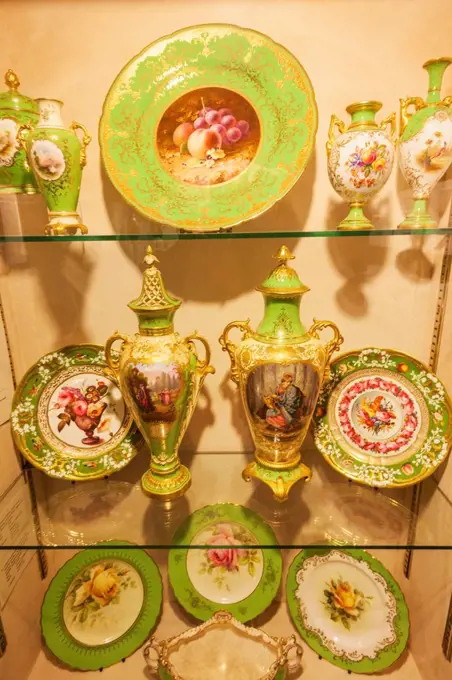
Collection of ornate decorative objects including gilded vessels and chairs, showcasing intricate craftsmanship and historical styles.

Sabbathlamp, unknown, 1700 - 1800 The object consists of the following cast parts: the handle, the trunk, the oil box, the drip can, the four arms, the four decorative elements. The handle has a cloverleaf -shaped eye at the top. The profiled downwards, narrowing trunk is chalice -shaped, then has a position ring with four holes and four notches (to fix the arms and the decorative elements) and is then profiled spherical three times. The eight -pointed star -shaped oil box, which has a smashed ornament at the bottom around the eye, is attached to the trunk with a bayonet closure. On the eye hangs with a hook the profiled rod with the drip tray, in which the sign of an angel's head has been smashed on the edge. The S-shaped arms end up to the trunk in a curl and turn outside into a flat mounting part, in which the bulb and hollow rounds are screwed to the base of hung holders on the profiled round fat catchers. The four decorative elements consist of stylized flowers, two by two. Nuremb
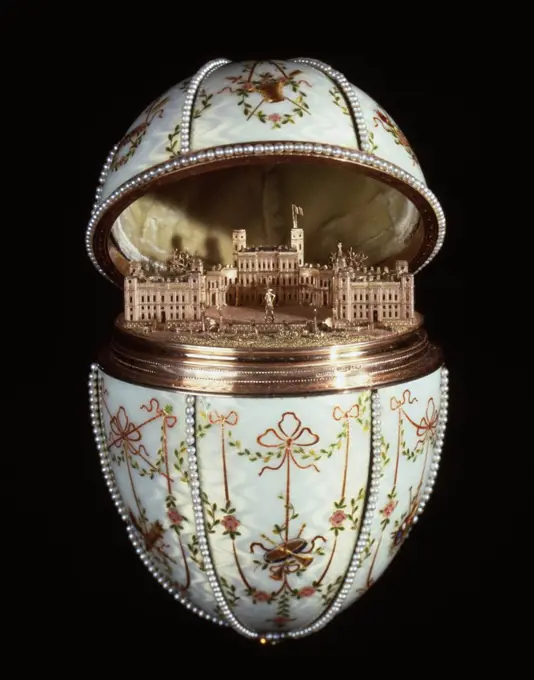
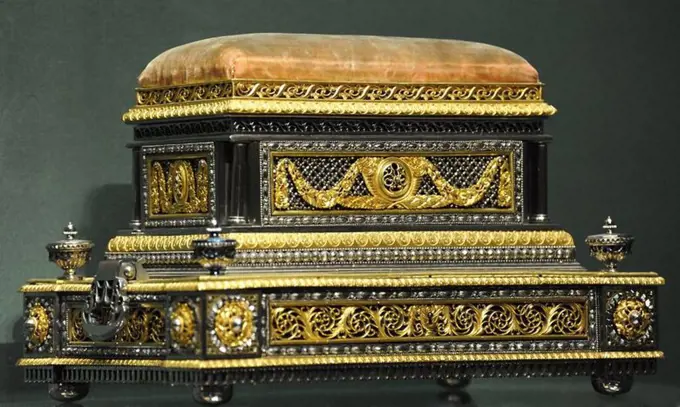
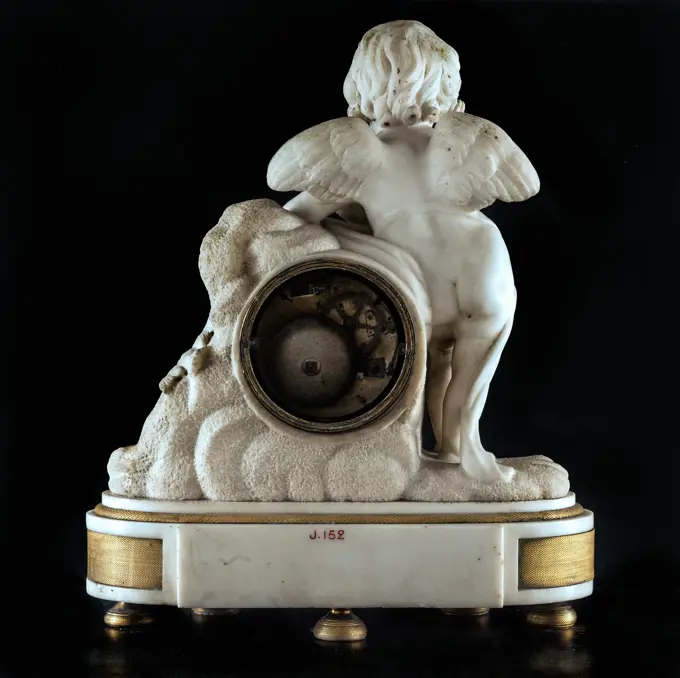
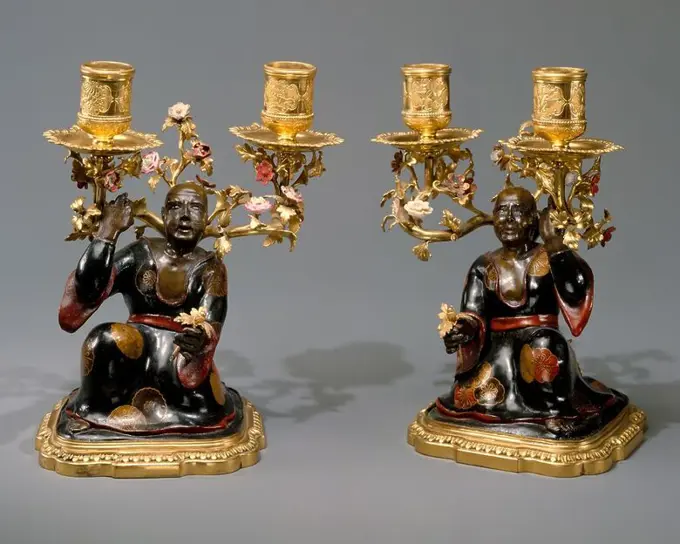
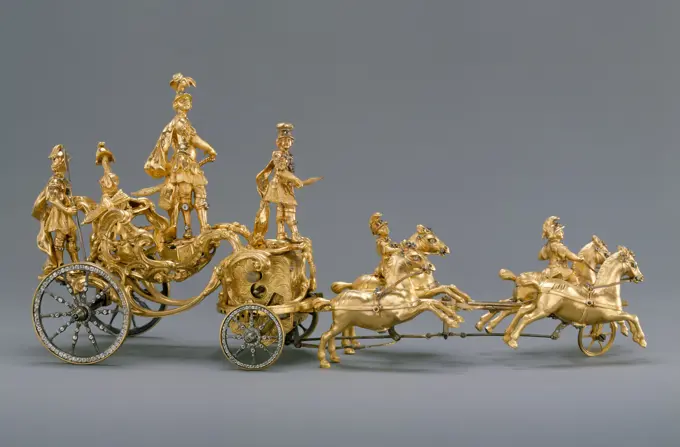
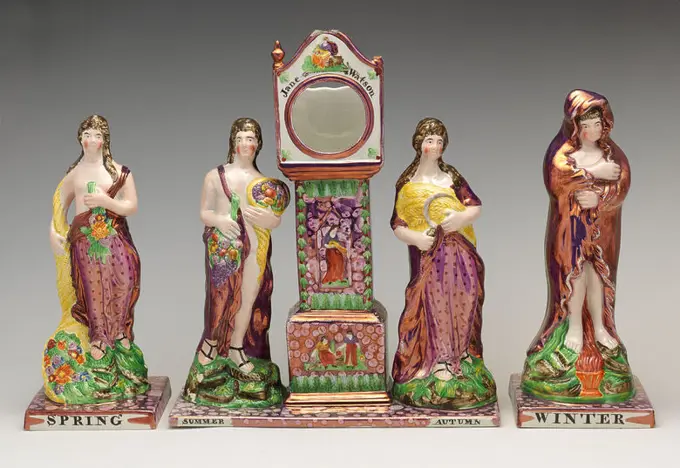
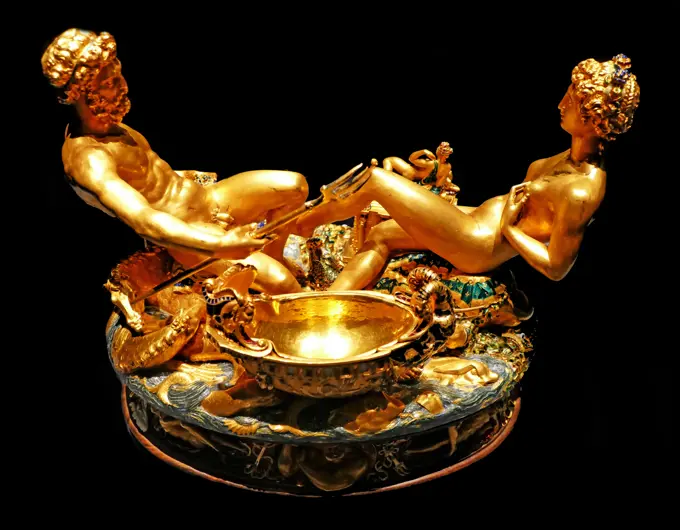
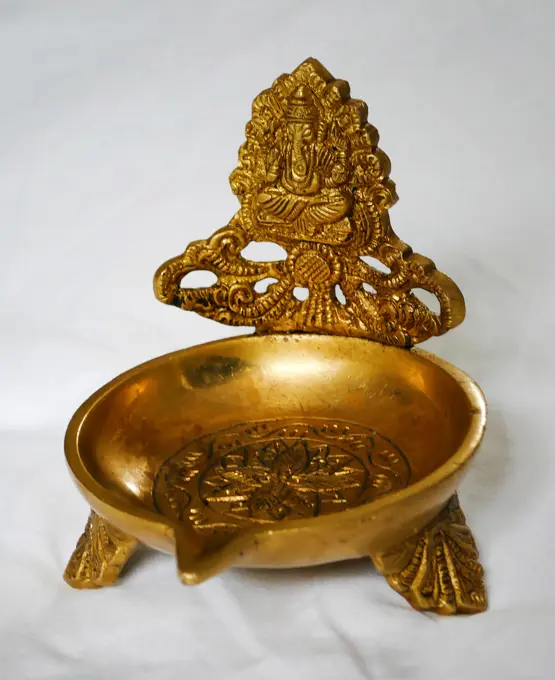
Traditional style, Brass, incense dish with a Ganesha motif, Indian 21st centuryDecorative Easter egg by Michail Pershin, Enamel on gold, Art Nouveau, 1901, 19th century, Usa, Baltimore, Walters Art Museum, 12,7x9,1Imperial and Royal Porcelain Manufactory Vienna, Cup and Saucer, saucer: 1800; cup: 1803, hard-paste porcelain.State vases in the upper round hall, vestibule and dining room, Charlottenburg Palace, Berlin, Germany, EuropeBliżej Kultury unknownBox. Steel, bronze; polishing, chasing, faceting, carving, silver damascening, gilding. Russia, Tula. Second half of the 18th century. The State Hermitage Museum. Saint Petersburg. Russia.SilverFibula, ca. 323 B.C.-A.D.256, Silver and glass, 5 × 8.8 cm (1 15/16 × 3 7/16in.), Yale-French Excavations atDura-Europos, Excavated in Dura-Europos, Syria, Syrian,Dura-Europos, Greco-Roman orParthian, JewelryEngland, Shropshire, Ironbridge, Coleport China Museum, Display of Historical Coleport ChinawareAnonymous. Pendulum. Marble, gilded bronze, 1770-1785. Paris, Cognacq-Jay museum. 79737-28 Angel, decorative art, bronze gilded, back, marble, mechanism, pendulum, 18th 18th 18th 18th 18th 18th 18th centurySpoon (USA); Manufactured by Gorham Manufacturing Company (United States); silver, gold (gilt); L x W: 11.5 x 2.5 cm (4 1/2 x 1 in.)Pair of candelabra. Culture: French. Dimensions: Height (each): 6 3/4 in. (17.1 cm). Maker: Porcelain flowers by Meissen Manufactory (German, 1710-present). Date: ca. 1740-45. Museum: Metropolitan Museum of Art, New York, USA.Inkpot with lid, fa. Ash. Bonebakker and Son, 1862 The silver, flattened spherical lid is decorated at the top with C-volutes, rocailles, foam edges and flowers and crowned by a pigeon socketed on a vineyard with a ganzever pen in the mouth. Amsterdam silver (metal). glass The silver, flattened spherical lid is decorated at the top with C-volutes, rocailles, foam edges and flowers and crowned by a pigeon socketed on a vineyard with a ganzever pen in the mouth. Amsterdam silver (metal). glassAutomaton in the Form of a Triumphal Chariot Drawn by Four Horses ca. 1760-70 British A spring-driven device above the right front wheel activates that wheel and two shafts beneath the horses, propelling the chariot forward and causing each pair of horses to bob back and forth. As the shafts are jointed, the chariot can be steered by turning the lead horses to the right or left.Automata of this type are in character with those made by James Cox, and, while the workmanship of this piece is from a different hand, its accomplished style is quite compatible with that of Cox's automaton of 1766 (see 1982.60.137). A variant model of this automaton was formerly in the Foy collection (sold at Parke-Bernet, New York, May 22-23, 1959, lot 645) and included, in place of the military trophy resting on the seat of the chariot, a watch signed by the London watchmaker James Upjohn (working 1760-ca. 1779). Two somewhat similar carriage automataone drive by horses, the other pulled by flying dovesareChimneypiece consisting of three pieces. Culture: British, Sunderland. Dimensions: Gr. H. of clockcase 11 7/8 in. (30.2 cm);H. of Spring 8 1/2 in. (21.6 cm);H. of Winter 9 in. (22.9 cm). Factory: Dixon Austin and Co.. Date: 1820-26. Museum: Metropolitan Museum of Art, New York, USA.Photograph of the Cellini Salt Cellar (Saliera), a part-enamelled gold table sculpture, by Benvenuto Cellini. It was completed in 1543 for Francis I of France, from models that had been prepared many years earlier for Cardinal Ippolito d'Este. The Cellini Salt Cellar depicts a male figure representing the sea and a female figure that represents the earth. Benvenuto Cellini (1500-1571) an Italian goldsmith, sculptor, draftsman, solider, musician, and artist. Dated 16th CenturyGermany, Bavaria, Munich, Bavarian National Museum, Celestial Globe by Vincenzo Coronelli dated 1692