Artistic Metal Objects

A selection of beautifully detailed metal artifacts, including daggers, locks, and decorative pieces, representing historical craftsmanship.

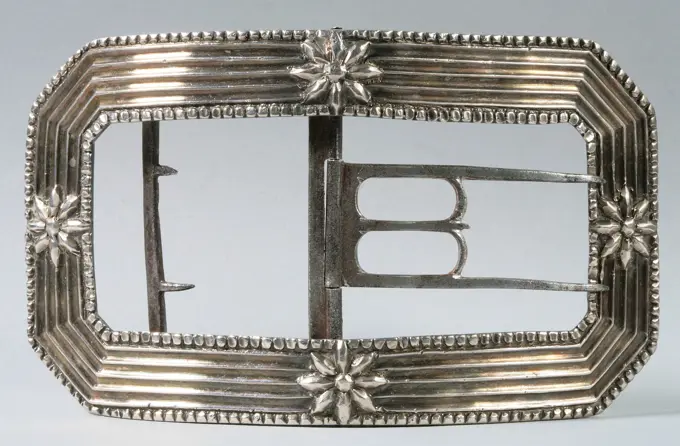
Book lock with ornament, Carel Koekebakker, 1753 Church book lock of silver, with ornament. Marked: Posthoorn Haarlem silver (metal) Church book lock of silver, with ornament. Marked: Posthoorn Haarlem silver (metal)
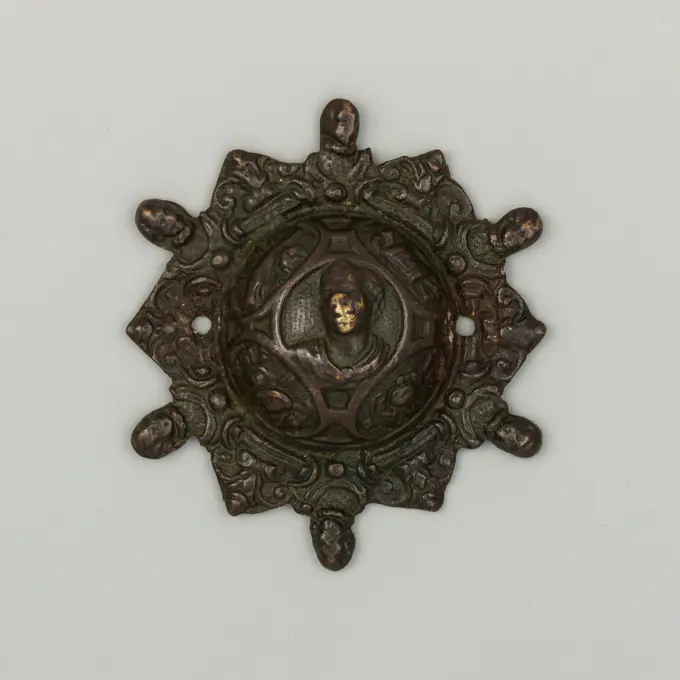
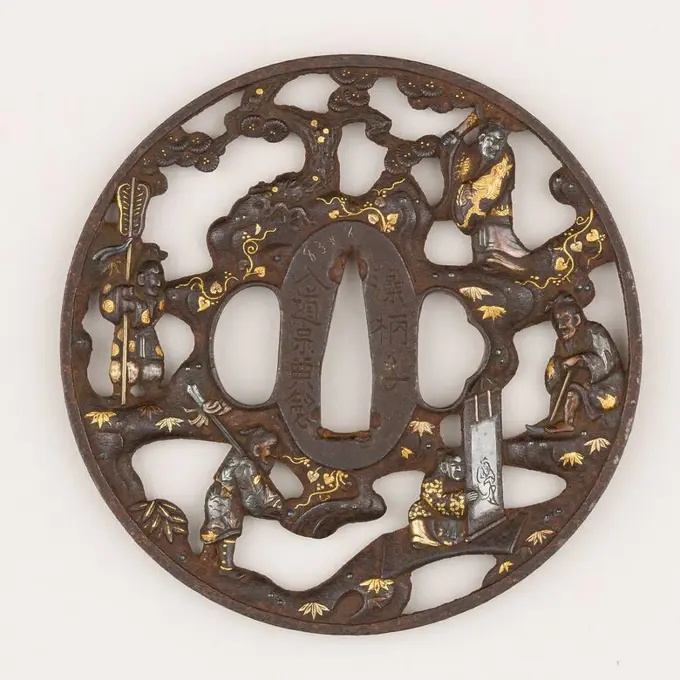
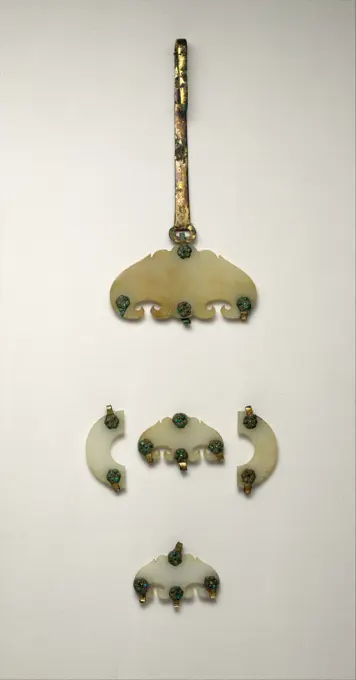
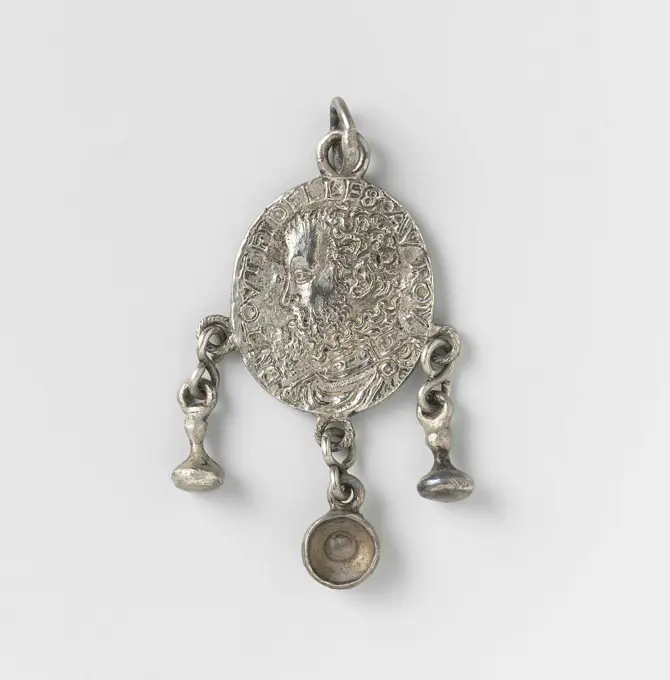
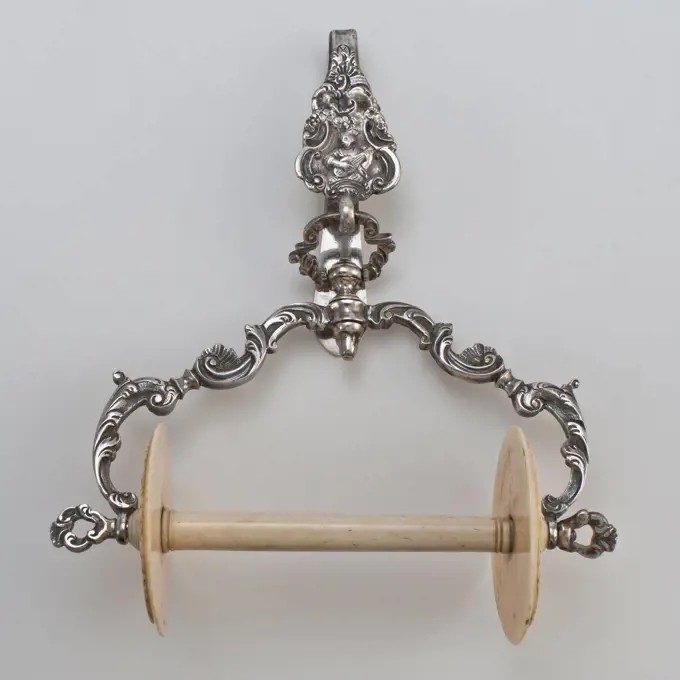
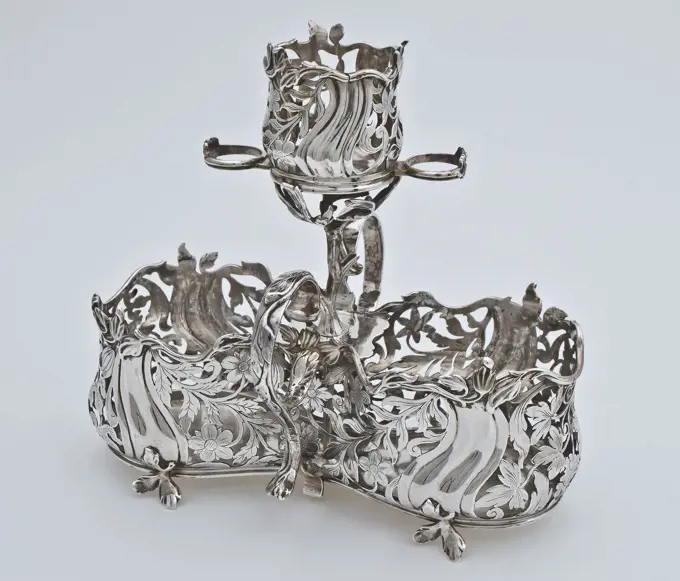
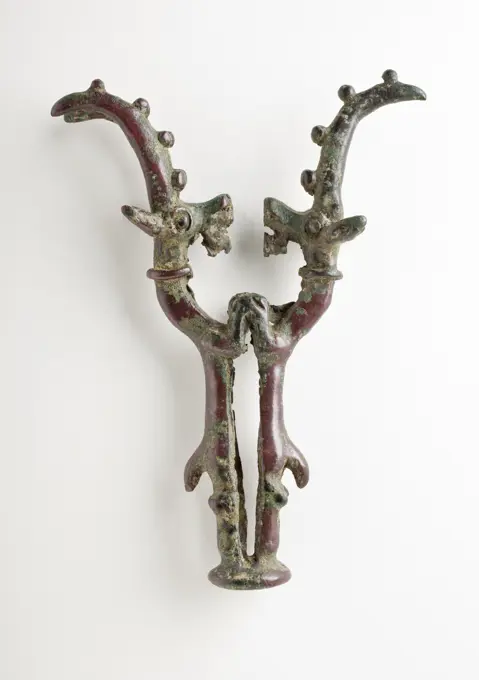
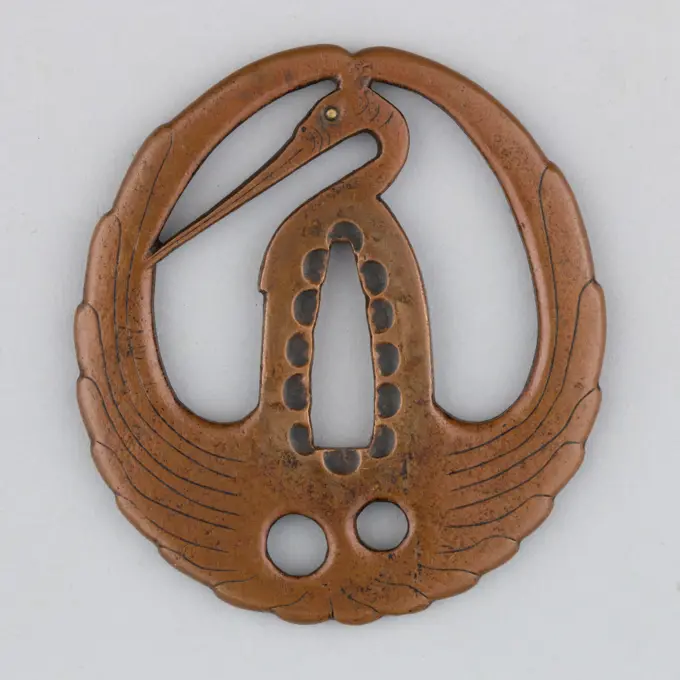
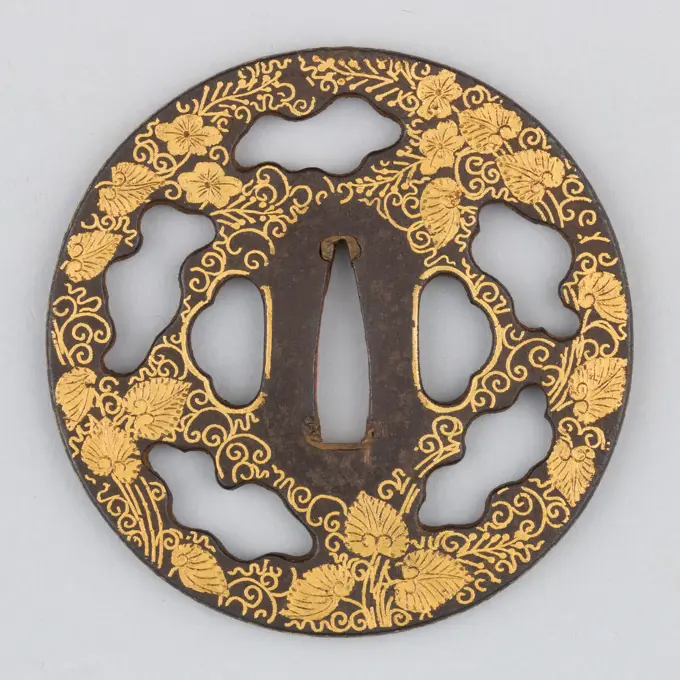
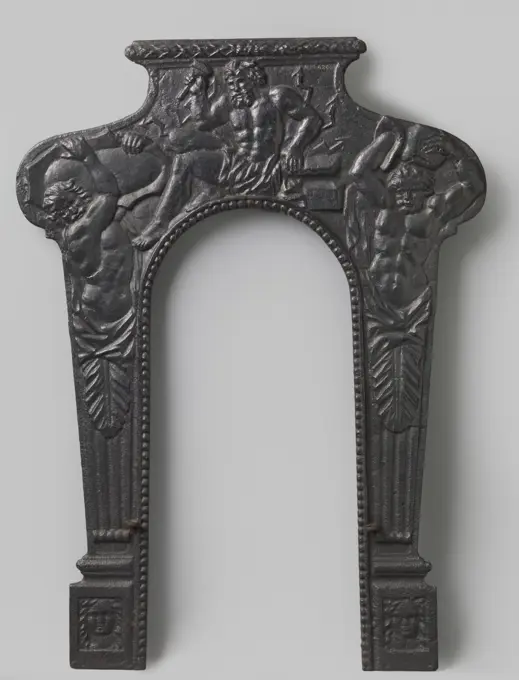
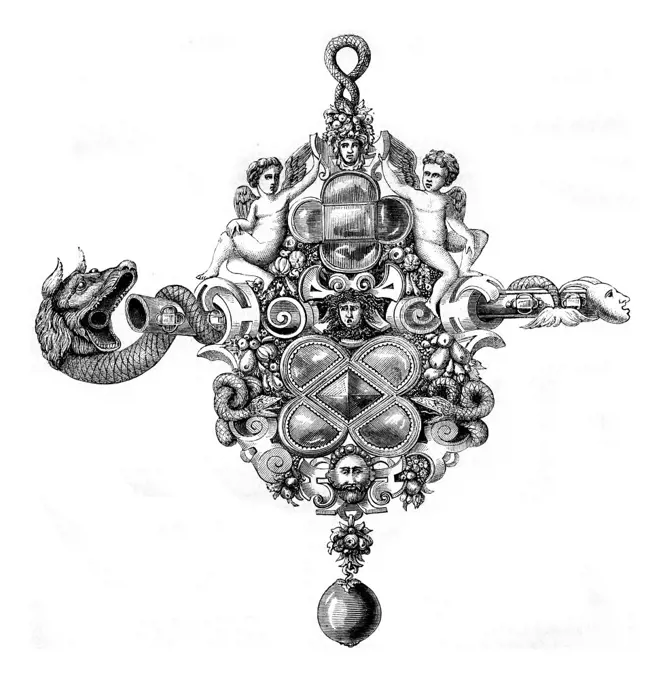
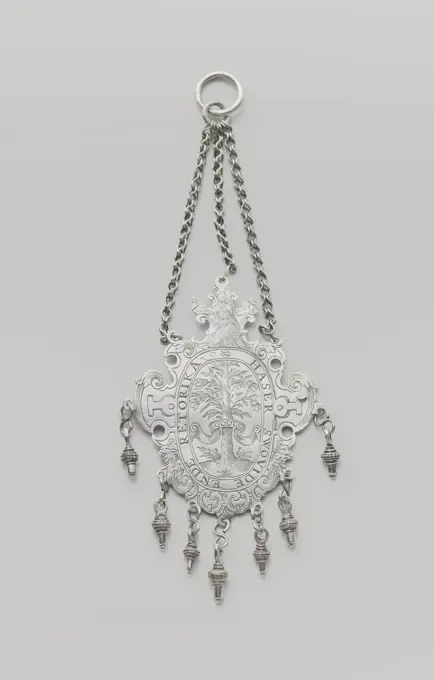
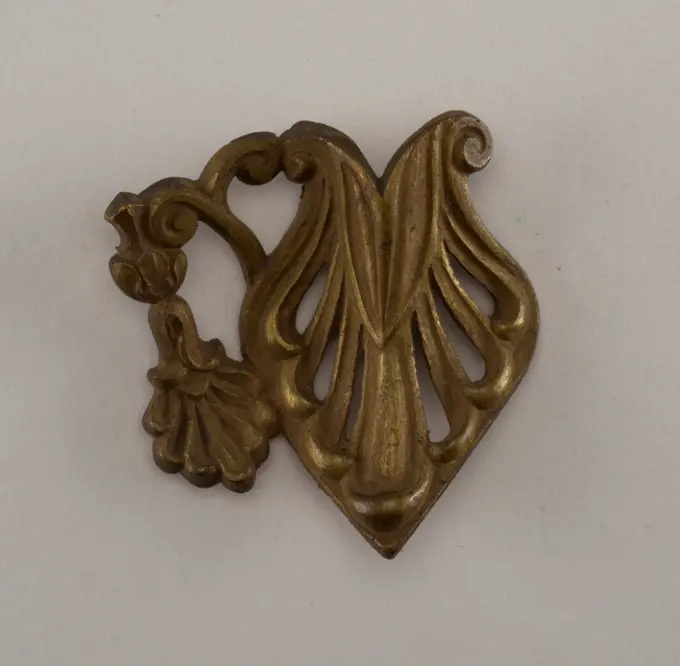
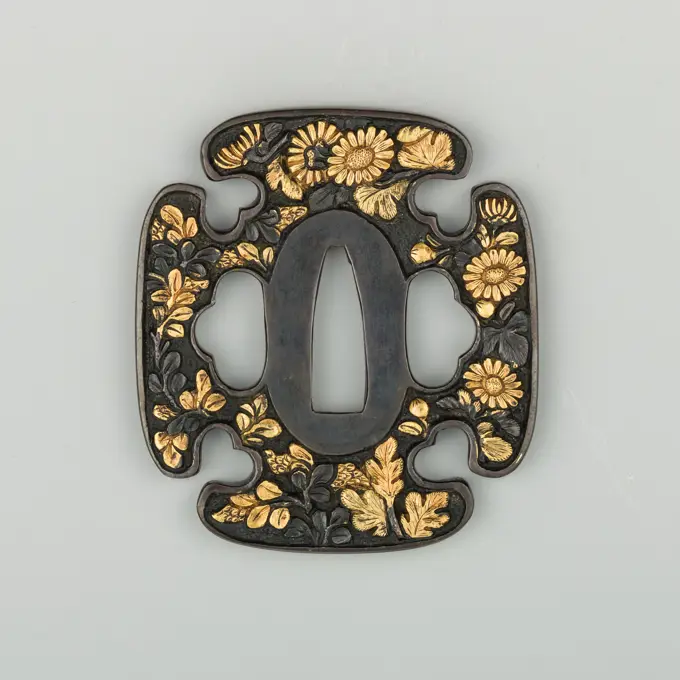
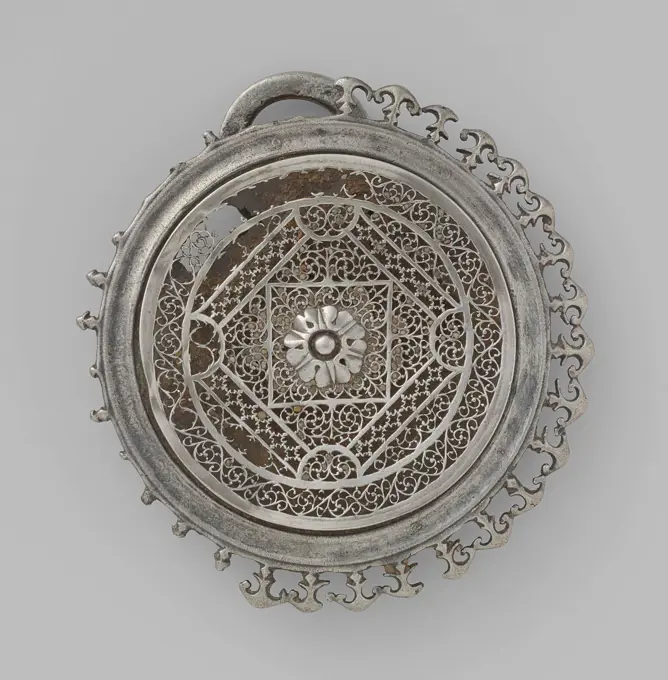
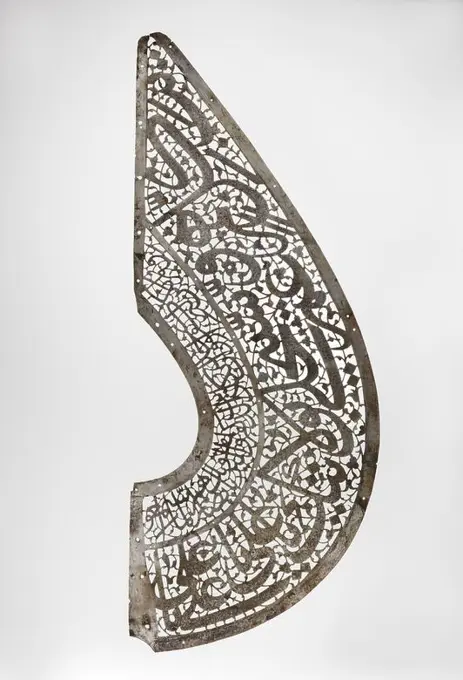
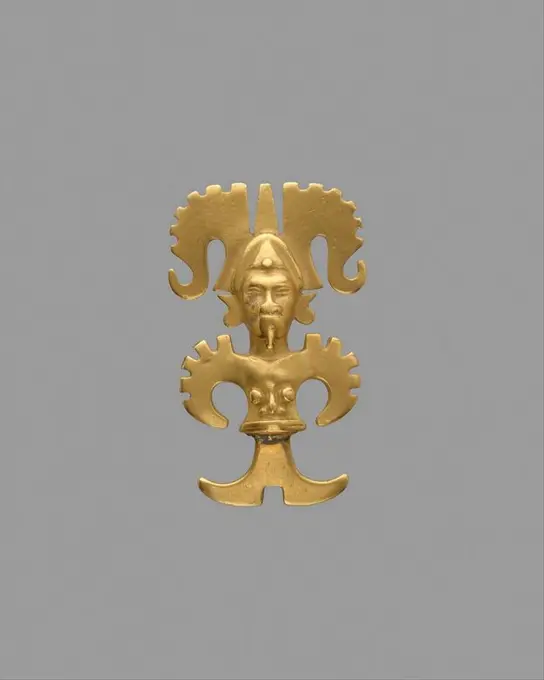
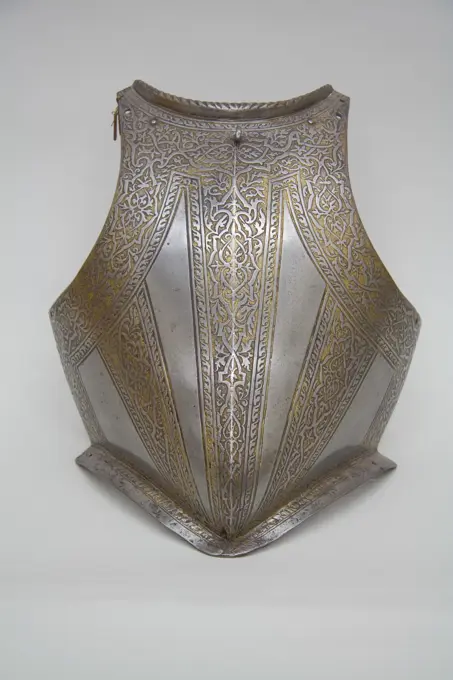
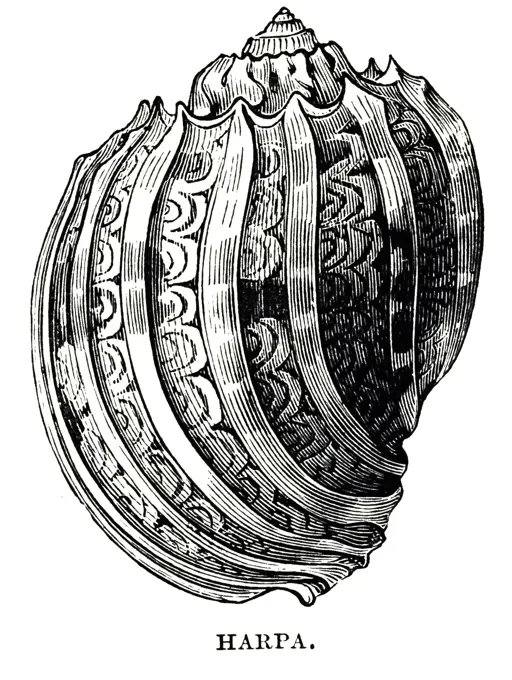
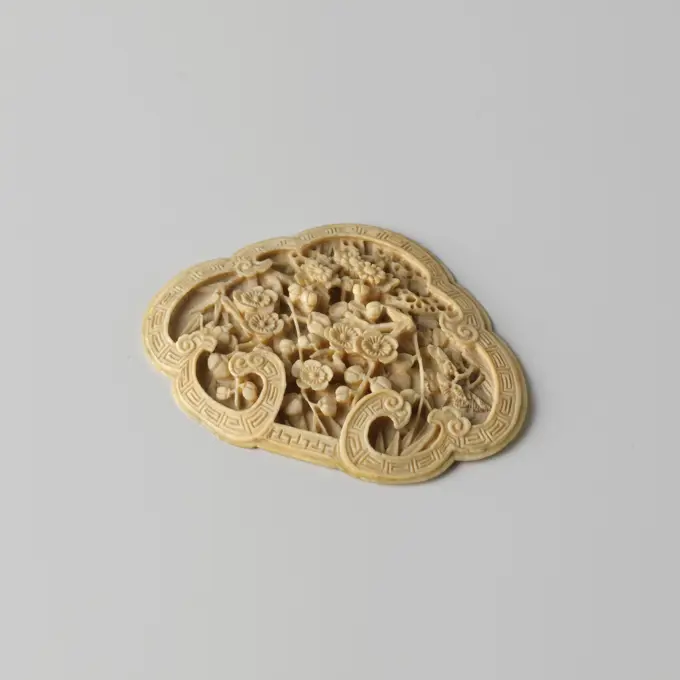
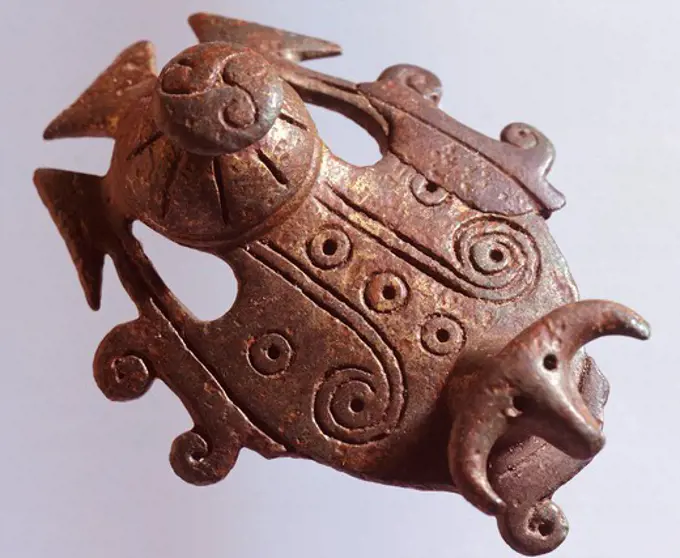
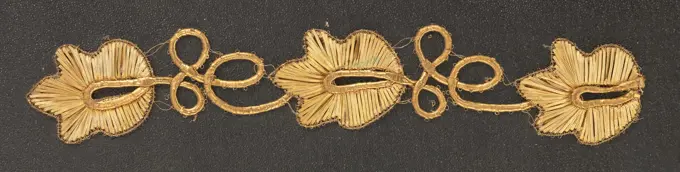
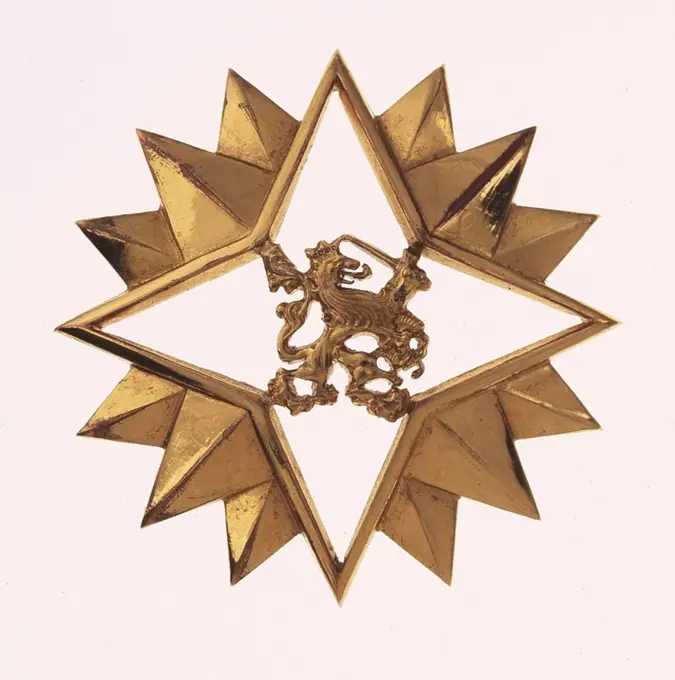
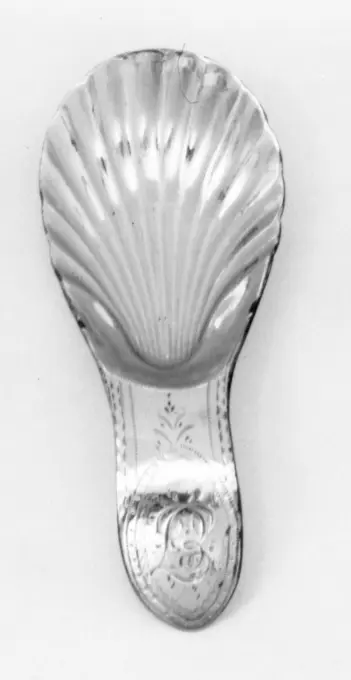
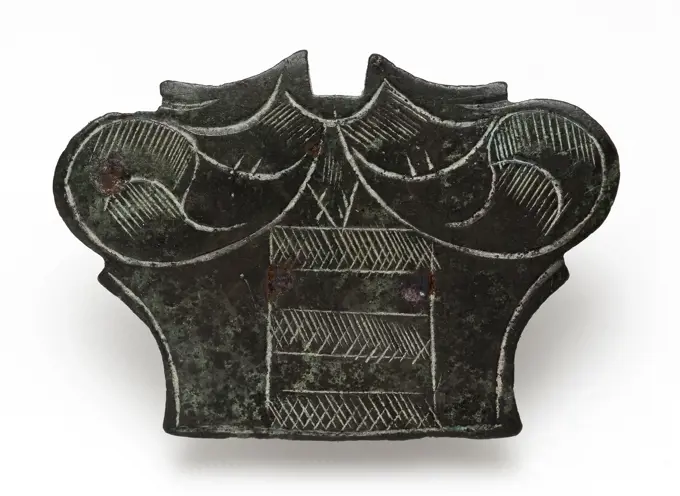
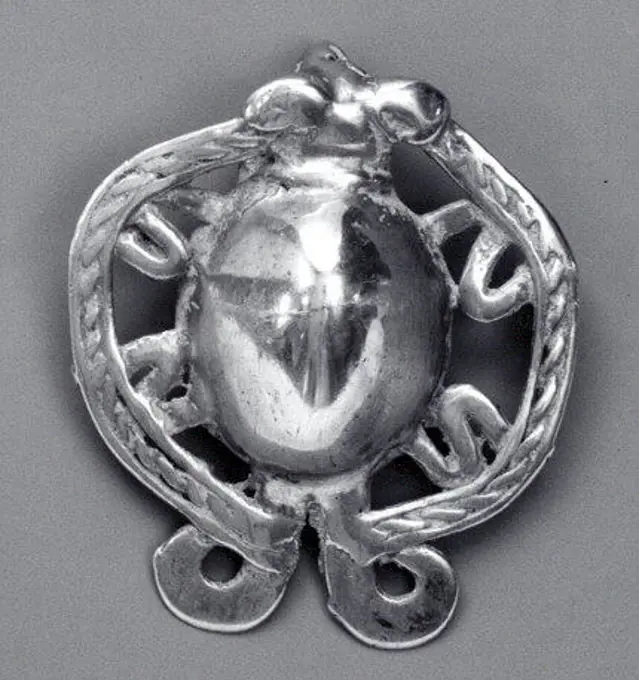
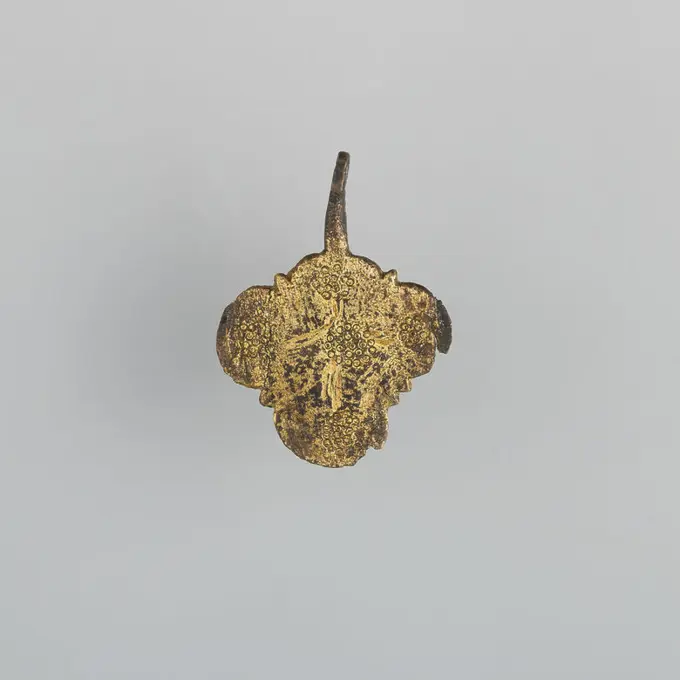
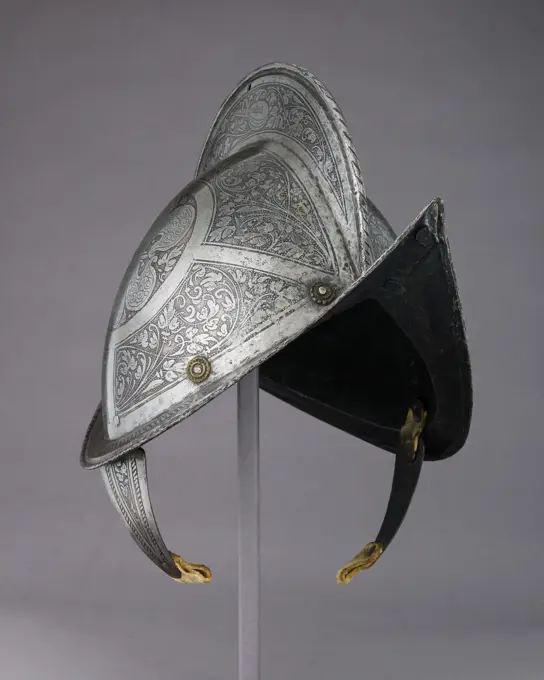
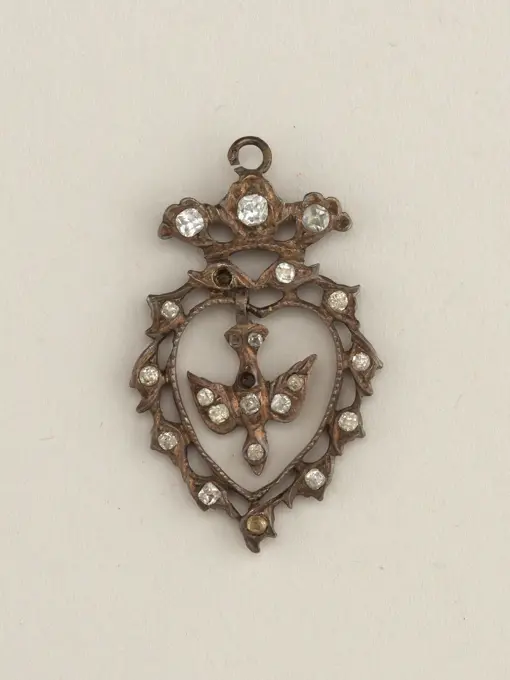
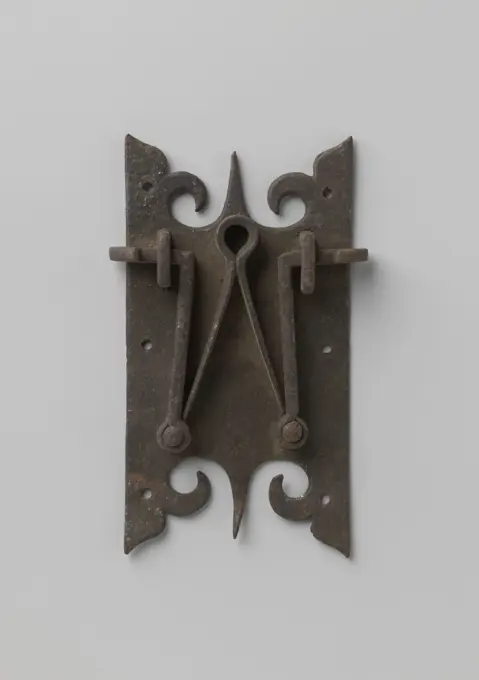
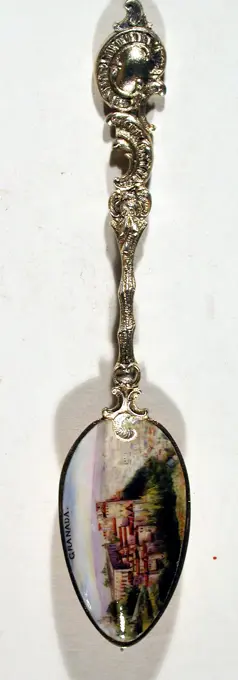
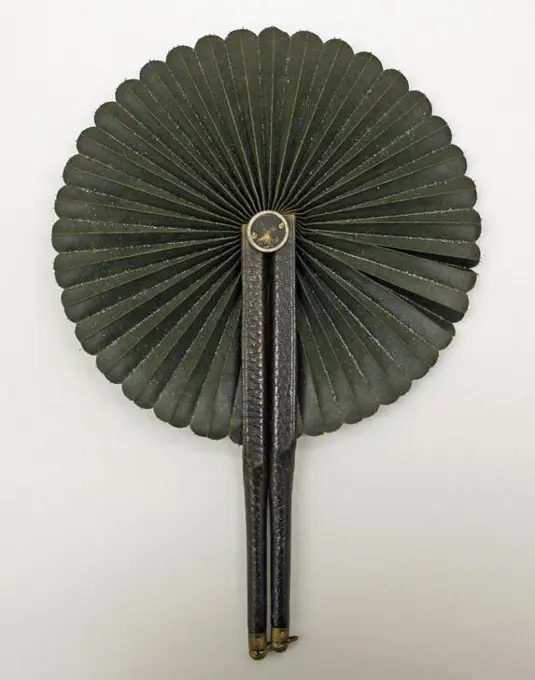
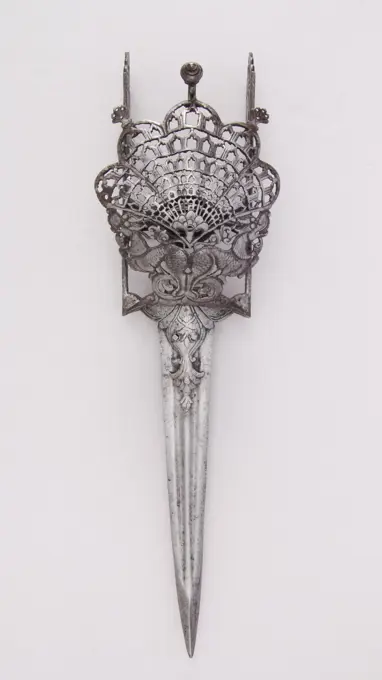
Guarded Dagger (Katar) 17th century Indian, Thanjavur. Guarded Dagger (Katar) 31415Book lock with ornament, Carel Koekebakker, 1753 Church book lock of silver, with ornament. Marked: Posthoorn Haarlem silver (metal) Church book lock of silver, with ornament. Marked: Posthoorn Haarlem silver (metal)Luckenbooth brooch -Bit Boss late 16th - early 17th century North Italian The center of this bit boss displays a human bust, circled by a rim adorned with six projections in the shape of human busts wearing 16th-century ruff collar and a Roman-style mantle. This repeated figure is likely to be King Philip II of Spain, represented as such in several portraits made by Leone and Pompeo Leoni. Because of his short beard, this portrait seems to have been more particularly inspired by the medal made in 1549 by Leone Leoni when Philip, still a prince, visited his German and Flemish territories for the first time, as well as from his portrait painted by Antonis Mor in 1557.. Bit Boss. North Italian. late 16th - early 17th century. Copper alloy. Equestrian Equipment-BitsSword Guard (Tsuba). Culture: Japanese. Dimensions: Diam. 3 9/16 in. (9 cm); thickness 3/16 in. (0.5 cm); Wt. 4.7 oz. (133.2 g). Date: ca. 1615-1868. Museum: Metropolitan Museum of Art, New York, USA.MountArm of a candle crown, anonymous, 1475 - 1500 Candle arm that corresponds to the candle arms belonging to a candle crown of three heights with Maria Chapel in the middle. The arm is bent twice and has five leaves. A fat catcher with candle holder can be placed at the end. The arm is provided with a small, engraved French lily on the candle crown side. Northern Netherlands (possibly) brass (alloy) casting Candle arm that corresponds to the candle arms belonging to a candle crown of three heights with Maria Chapel in the middle. The arm is bent twice and has five leaves. A fat catcher with candle holder can be placed at the end. The arm is provided with a small, engraved French lily on the candle crown side. Northern Netherlands (possibly) brass (alloy) castingMount; bronze (gilt)Sword Guard (Tsuba) ca. 1615-1868 Japanese A tsuba is a sword guard and part of a sword mounting. It is mounted between the swords blade and grip to protect the users hands.. Sword Guard (Tsuba) 34425Handmirror. Designer Otto Leigh Manufacturer: Unger Brothers, American, 1872-1919Assemblage of pendants early 8th century China This reconstruction of a composite jade pendant represents a type originally suspended from a womans belt, as confirmed by depictions in Tang murals and stone engravings.. Assemblage of pendants 39805Geuzenpennegen with a leech and gourds. Geuzenpenning with calf and gourds, silver oval medal with wearing eye and carrying ring. On one side the portrait of a man (Philip II), profile to the left, on the other side two clocked hands around which a double base bag. On either side a baleo base on eight-shaped link, under a wearing eye with begging bile on ditto. Front peripheral: and tow fidelles av roy. Stirring inscription: ivsqves a porter la besace.Silversmith: Rudolph Sondag, Silver ball holder with clip and ivory coil, tangle holder holder silver ivory, cast Hook on ring on back of hook small tube obliquely attached (for needle) ring is attached to short profiled handle that pierces bracket in the middle round bent bracket ivory coil back hook (debossed) knitting musicSilversmith: Anthony Huijs, Silver oil and vinegar set, oil_and_azijnstel bottle holder silver, sawn cast Two round bowls separated by smooth connecting piece at the top edge two transversely placed c-volute-shaped ears in curl flared, removable leaf branch (bottom and piercing the connecting piece) on which small tulip-shaped tray with small ring, on both sides serves four legs in the form of inserted leaves bottom (debossed) HuysMountLinstock ca. 1600 Italian. Linstock 25915Vine Pattern Salad Fork, c. 1872-80. Tiffany & Co. (American, New York, est. 1837). Silver; overall: 26.1 cm (10 1/4 in.).Pilgrim's Badge 14th-16th century French. Pilgrim's Badge. French. 14th-16th century. Lead. Metalwork-LeadMountHarness Ornament with Raptors and Carnivores late 5th-4th century B.C. Bulgaria. Harness Ornament with Raptors and Carnivores 60799Standard Finial. Iran, Luristan, Luristan bronzes, circa 1350-800 B.C.. Architecture; Architectural Elements. BronzePendant ca. 1620-30 Northern European. Pendant. Northern European. ca. 1620-30. Gold, enamel, ruby, diamonds, pearlsNecklace Beads 2nd-6th century Moche. Necklace Beads 309956Sword Guard (Tsuba) 16th-17th century Japanese A tsuba is a sword guard and part of a sword mounting. It is mounted between the swords blade and grip to protect the users hands.. Sword Guard (Tsuba) 30002Sword Guard (Tsuba) 17th century Japanese A tsuba is a sword guard and part of a sword mounting. It is mounted between the swords blade and grip to protect the users hands.. Sword Guard (Tsuba) 29977Salt cellarCast Iron Plate For Calling the fireplace, with Vulcanus, Anonymous, 1650 - 1700 Plate of cast iron, part of the fireplace construction. The opening is bordered with an egg list. The pilasters are decorated with a cup in a square frame at the bottom, ribs above it and a leaf motif, above which on either side a men's bust that lifts slightly. In between, Vulcanus was seated with hammer and lightning bolts, as a crown. Germany (possibly) iron (metal) casting Plate of cast iron, part of the fireplace construction. The opening is bordered with an egg list. The pilasters are decorated with a cup in a square frame at the bottom, ribs above it and a leaf motif, above which on either side a men's bust that lifts slightly. In between, Vulcanus was seated with hammer and lightning bolts, as a crown. Germany (possibly) iron (metal) castingA whistle of the sixteenth century, vintage engraved illustration. Magasin Pittoresque 1857.Pair of Bit Bosses first half 17th century probably Netherlandish Bit bosses were ornamental elements decorating both sides of a horse bit. These circular bit bosses are adorned with a domed faceted center and a serrated rim. This object belongs to a large group of bosses featuring a series of rims and centers combined in different ways. The exact center of production of these bosses is still unclear. If the motifs used are Italian, the scale of the production and the process of combining a series of rims and center recalls contemporary German practices. Some of them, however, are identical or very similar to bosses seen in several early 17th-century Netherlandish paintings, a likely origin for the manufacture of these objects.. Pair of Bit Bosses. probably Netherlandish. first half 17th century. Copper alloy. Equestrian Equipment-BitsPrayer snoot, caught in silver tires with leaf rosettes, anonymous, 1500 - 1549 Prayer snoot, caught in silver tires with leaf rosettes. A rotating spindle runs through the main axis, around which a parchment leaf is wrapped, described with the ten commandments. Northern Netherlands silver (metal). nut (plant material) Prayer snoot, caught in silver tires with leaf rosettes. A rotating spindle runs through the main axis, around which a parchment leaf is wrapped, described with the ten commandments. Northern Netherlands silver (metal). nut (plant material)Tray on legs; Harper, Robert (Fl. 1853-1869), Harper & Son (London; company Z 1860/61 (1860-00-00-1861-00-00);Application;  18th century (1701-00-00-1800-00-00);Mordant dated 1620 German. Mordant. German. dated 1620. Steel. Miscellaneous-Buckles & OrnamentBlazoen van de Rederijkerskamer in Hazerswoude, Bartholomeus Willemsz. Dolendo (attributed to), 1600 - 1625 Silver carrier from the Rederijkerskamer in Hazerswoude. Seven acorns hang on the cartoe -shaped shield. At the front an engraved tree around which a banderolle; At the rear the resurrection of Christ. silversmith: Leidensilversmith: Northern Netherlands silver (metal) gilding  Hazerswoude Silver carrier from the Rederijkerskamer in Hazerswoude. Seven acorns hang on the cartoe -shaped shield. At the front an engraved tree around which a banderolle; At the rear the resurrection of Christ. silversmith: Leidensilversmith: Northern Netherlands silver (metal) gilding  HazerswoudeHandle and escutcheon with latch 18th century Anonymous. Handle and escutcheon with latch. Spanish. 18th century. Iron, brass and copper. Metalwork-IronSmallsword Carrier. Possibly English. Date: 1660-1700. Dimensions: Overall. Steel. Origin: Spain. Museum: The Chicago Art Institute, Chicago, USA.Door handle late 15th century German. Door handle 468786Pendant in the form of a Dragon, 480-221 BCE, 8 5/8 x 4 x 1/4 in. (21.91 x 10.16 x 0.56 cm), Mottled green jade with black-brown markings, China, 5th-3rd century BCERaster of iron. An iron beaten grid. A portion of the handle is missing.MountSpoon (Sweden); silver; L x W x D: 22.3 x 5.3 x 3.6 cm (8 3/4 x 2 1/16 x 1 7/16 in.)Loop.Abruzzo, Alba Fucens, General views, Italy, 20th century, photo, photography, EuropePendant 15th-17th century European. Pendant. European. 15th-17th century. Bronze, patina. Miscellaneous-Buckles & OrnamentMountSword Guard (Tsuba) 18th century Japanese A tsuba is a sword guard and part of a sword mounting. It is mounted between the swords blade and grip to protect the users hands.. Sword Guard (Tsuba) 642611Sword Guard (Tsuba) late 17th-early 18th century Mino school This sword guard (tsuba), embellished with crisply carved flowers highlighted in gold, is unsigned but can be assuredly assigned to the Mino school, whose sword furniture is distinguished by deep, sharp chiseling.. Sword Guard (Tsuba). Japanese. late 17th-early 18th century. Copper-gold alloy (probably shakud), gold. Sword Furniture-TsubaChoirant closure. Agrach van Silver. Possible from a priest mantle. Rounded with an outer edge of fleurons. Covered with a loose alone in the middle-mounted plate with a driven flower in the middle. Further decorated with ornament work in a Filigree.Schiavona handlePlate and Nail 15th-16th century European. Plate and Nail. European. 15th-16th century. Iron. Metalwork-IronFragment of a Standard ('alam). Dimensions: Gr. H. 9 1/2 in. (24.2 cm)Gr. L. 23 3/4 in. (60.3 cm). Date: 17th century.This fragment is the right half of a pear-shaped steel standard which would have been originally framed by a twisted steel cord ending in a pair of outward-facing dragon heads. The form echoes one of the many types depicted in battle paintings from the sixteenth century royal manuscript of the Shahnama of Shah Tahmasp. Standards from this period have pierced scrolling vegetal designs and talismanic inscriptions. Here, the inscriptions are Shi'i in tone and include the Nad-i Aliyyun, a prayer calling on Imam Ali for protection against harm, as well as Qur'anic verses from suras 112 (The Sincerity) and 68 (The Pen). In Shi'i communities such standards were also carried in Muharram processions commemorating the martyrdom of Imam Husain, the third Shi'ite Imam, at the battle of Kerbala in 680 A.D. Museum: Metropolitan Museum of Art, New York, USA.Saucer with a crowned monogram and foliate scrolls, anonymous, c. 1725 - c. 1749 Sharp of porcelain dish, painted on the glaze in red, black and gold. China porcelain. glaze. gold (metal) painting / gilding / vitrification Sharp of porcelain dish, painted on the glaze in red, black and gold. China porcelain. glaze. gold (metal) painting / gilding / vitrificationFragment, Medium: linen Technique: needle lace, Fragment in a pattern of a curving leaf with a small round bud., Venice, Italy, 17th century, lace, FragmentSlotlaplaat, Anonymous, 1500 - 1525 Open worked lock plate made of iron iron. In basic shape rectangular, decorated with intertwined leaf and rank motifs. At the bottom left a man with a kind of coat of arms in front of himself, in which the keyhole is applied. In the two upper corners, fruits on a scanned leaf.  iron (metal). tin (metal) engraving Open worked lock plate made of iron iron. In basic shape rectangular, decorated with intertwined leaf and rank motifs. At the bottom left a man with a kind of coat of arms in front of himself, in which the keyhole is applied. In the two upper corners, fruits on a scanned leaf.  iron (metal). tin (metal) engravingTobacco Pouch 19th century Japan. Tobacco Pouch 58491Overresion of Gold, c. 1045 - c. 1500  Java gold (metal) casting  Java gold (metal) castingINCIENSARIO.Newell Post. UnknownBuckle;  3 exercise of the 19th century (1801-00-00-1900-00-00);Snake-form belt buckle Buckle; France; silver gilt, glassTorque, 18 3/4 x 15 x 2 1/2 in. (47.63 x 38.1 x 6.35 cm) (including pendants), Silver, ChinaDisruption Brooch,  1845Stylized Figure Pendant. Culture: International or Initial Style. Dimensions: H. 2 5/16 in. (5.9 cm). Date: 5th-10th century. Museum: Metropolitan Museum of Art, New York, USA.Baluster with Panel designed for the Schlesinger and Mayer Store (now Carson, Pirie, Scott and Company), 1899-1904. George Grant Elmslie (American, 1871-1952). Cast iron; overall: 89.2 x 25.1 cm (35 1/8 x 9 7/8 in.).Breastplate from an Armor of Francesco Maria II della Rovere (1548-1631), Duke of Urbino ca. 1570 Italian, probably Milan This breastplate belongs to an armor made for Francesco Maria II della Rovere (1548-1631), duke of Urbino from 1574. The armor is represented in a portrait of the prince painted by Federico Barocci soon after Francesco Maria returned to Urbino following his participation in the destruction of the Turkish fleet at the battle of Lepanto in October 1571. It is not known if Francesco Maria wore this armor during the battle or if he had it made afterward to celebrate his role in this historic victory.The heavy weight of the breastplate suggests that it was intended for battlefield use. The Barocci portrait depicts the prince wearing an infantry armor, which includes an open-faced helmet (burgonet) and a shield. However, the breastplate has a turning-pin at the top for the attachment of a reinforcing breastplate fitted for a lance-rest (now in the Musée de l'Armée, Paris)An engraving depicting a Harpa, a genus of large predatory sea snails, marine gastropod molluscs in the family Harpidae. Dated 19th centuryTorque, 10 x 9 1/2 x 1/2 in. (25.4 x 24.13 x 1.27 cm), Silver, ChinaSilver loop. GAL 1990-148-23 Polylobé punch.Hair pin, 7 x 2 1/4 x 1/2 in. (17.78 x 5.72 x 1.27 cm), Silver, ChinaTheodolite D'Amery, LeonardIvory plate, cut in the shape of a shell, anonymous, 1800 - 1850 Plate with a scalloped edge with a meander band; Inside in relief a representation of Prunus, Bamboo and (very small) pine with a rock. China ivory cutting Plate with a scalloped edge with a meander band; Inside in relief a representation of Prunus, Bamboo and (very small) pine with a rock. China ivory cuttingAttachment from horses harnesses, bronze, from Sofronievo, Vratsa Region, Bulgaria. Thracian Civilization, 6th Century BC.Fragment goudgalon.Fragment gold galon, decorated with garlands with flowers and a branch with leaves and flowers.Pair of Sword-Grip Ornaments (Menuki) early-mid-17th century Japanese Menuki are a pair of ornamental sword fittings attached to either side of a sword hilt.. Pair of Sword-Grip Ornaments (Menuki). Japanese. early-mid-17th century. Gold. Sword Furniture-MenukiUnknown, Abzeichen für Angestellte und arbeiter Bei der Wehrmacht (insignia for employee and worker with the German armed forces) (title awarded), 1939. Aluminum, brass rod. General Leclerc Museum of the Liberation of Paris - Jean Moulin Museum.Bronze Medal  isolated on white backgroundOstrich egg found in Ottoman made mosques in IstanbulSilversmith's Model (USA), mid-19th century; ivoryFathers; Unknown, Germany; 18th century (1701-00-00-1800-00-00);Frog Pendant 10th-16th century Darien. Frog Pendant 310275Keyhole Escutcheon; gilt brassThe 'Golden Sun' (Distinguishing sign for General Staff Competence).Torque, 10 3/4 x 10 1/2 x 1 in. (27.31 x 26.67 x 2.54 cm), Silver, ChinaHexagonal dish. Culture: Hungarian, Transylvania. Dimensions: Diameter: 9 9/16 in. (24.3 cm). Date: 1696.The center of each dish in this set (acc. nos. 2010.110.42-49) bears an engraved laurel wreath encircling a coat of arms. Small differences in these arms could be the result of different masters working quickly to complete what was probably a much larger set for a wedding that was fast approaching. The bold blossoms in the six corners symbolize both the wish for abundance throughout marriage and the transitory glories of earthly existence. Salgo acquired two of these dishes at a later date from the others, but all eight pieces belonged to the same set of fourteen dishes that were once part of the Andrssy treasury.LiteratureEuropean Silver. Sale cat., Sotheby's, Geneva, November 15, 1983, p. 19, no. 53.European Silver. Sale cat., Sotheby's, Geneva, November 14, 1984, n.p., no. 34.Judit H. Kolba. Hungarian Silver: The Nicolas M. Salgo Collection. London, 199Sword Guard (Tsuba) 17th-18th century Japanese A tsuba is a sword guard and part of a sword mounting. It is mounted between the swords blade and grip to protect the users hands.. Sword Guard (Tsuba) 29929Edmund Gouldsmith, Caddy Spoon, 1795/96, silver.Decorated fittings with hook at the bottom, ornamental fitting fittings closure soil find brass bronze metal, cast engraved Piece of fittings with incised decoration reverse three pins with convex head and rectangle (possibly part of closure) archeology Rotterdam railway tunnel clothe closing clothing belt Soil discovery: trajectory rail tunnel Rotterdam.Clasp.  Maker: John David, Jr., American, active ca. 1785-1811Turtle Pendant 10th-16th century Chiriqui. Turtle Pendant 313117Badge (probably from Horse Harness). Culture: Spanish (). Dimensions: H. 2 3/8 in. (6 cm); W. 1 3/4 in. (4.4 cm); Wt. 0.5 oz. (14.2 g). Date: 14th century. Museum: Metropolitan Museum of Art, New York, USA.Morion ca. 1570 German. Morion 34278Teardrop-Shaped Incense Burner (Cintanmani) 1127-1279 China. Jizhou-type ware; stoneware with olive-brown glaze and openwork decoration .Pendant (France); silver, paste diamonds; Overall: 4 x 2.2 cm (1 9/16 x 7/8 in.); 1931-82-9Double cut, c. 1400 - c. 1950 A double cut (unit).  iron (metal) A double cut (unit).  iron (metal)Nappy - Crown Diamond Glass Company Limited, 1890-1902 Diamond Glass Company Limited, 1890-1902Bliżej Kultury Raszka, Jan (1871 1945)Souvenir spoon with view of La Alhambra overlooking Granada European late 19th centuryTorque, 10 1/2 x 10 x 3/4 in. (26.67 x 25.4 x 1.91 cm), Silver, ChinaMourning fan 19th century probably American. Mourning fan 120415EarOrnament