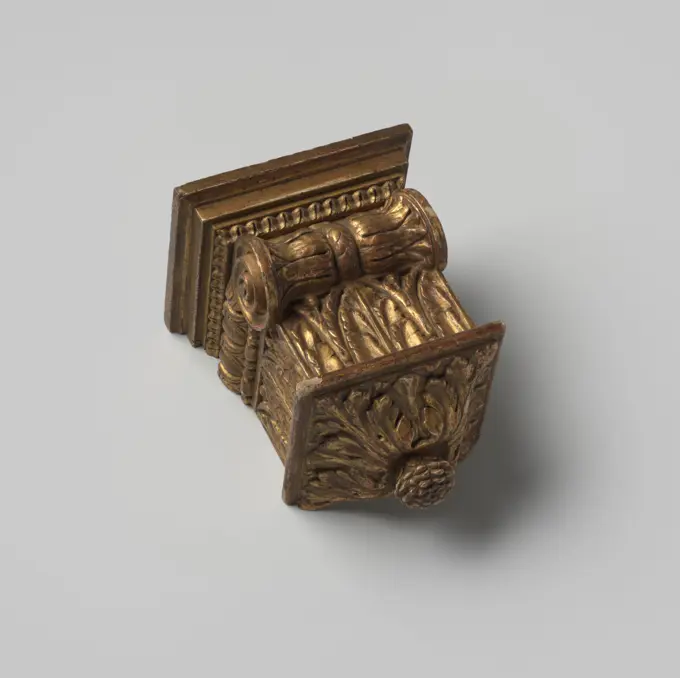
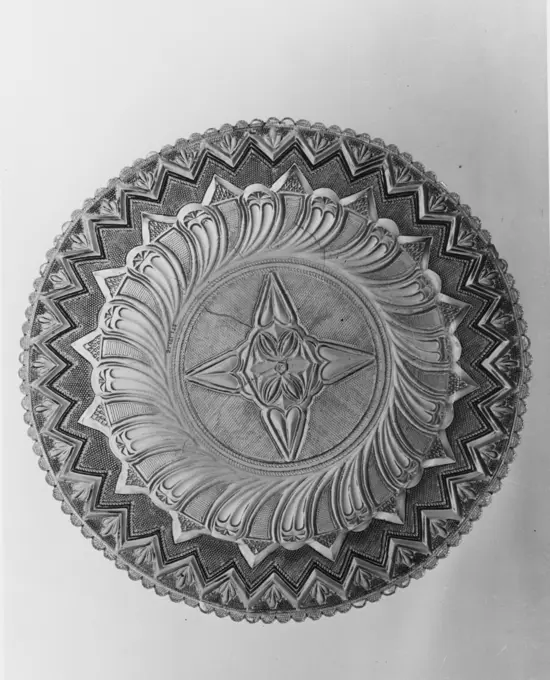
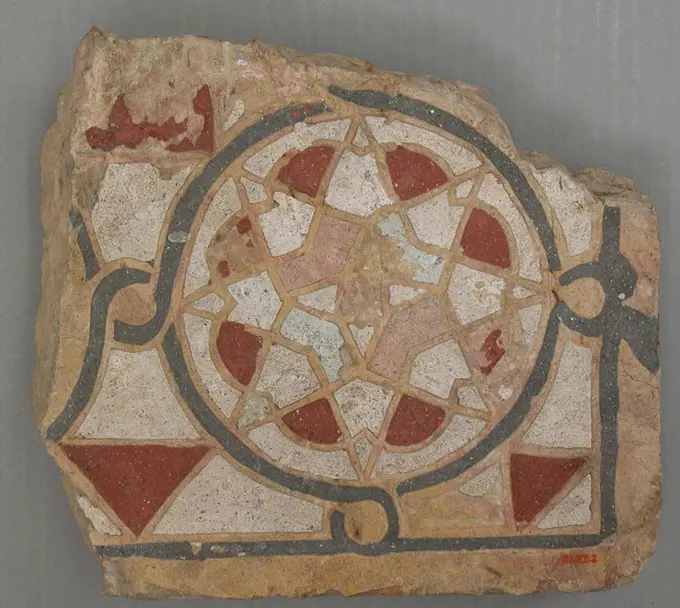
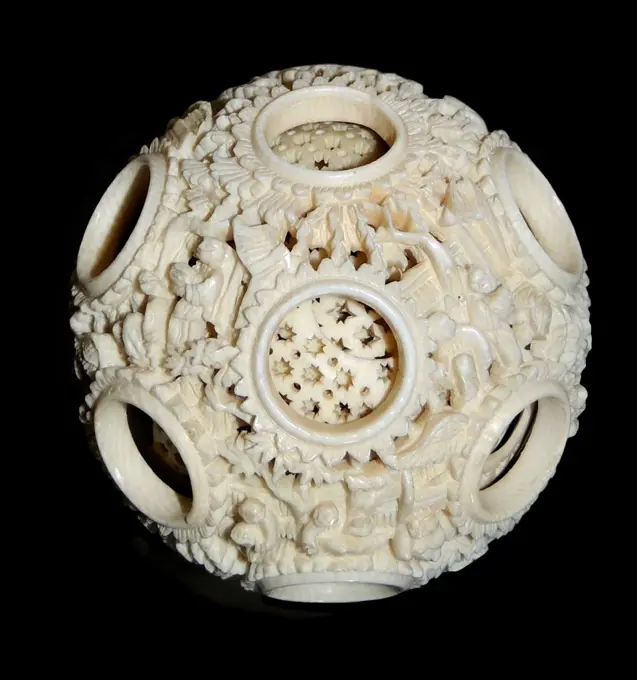
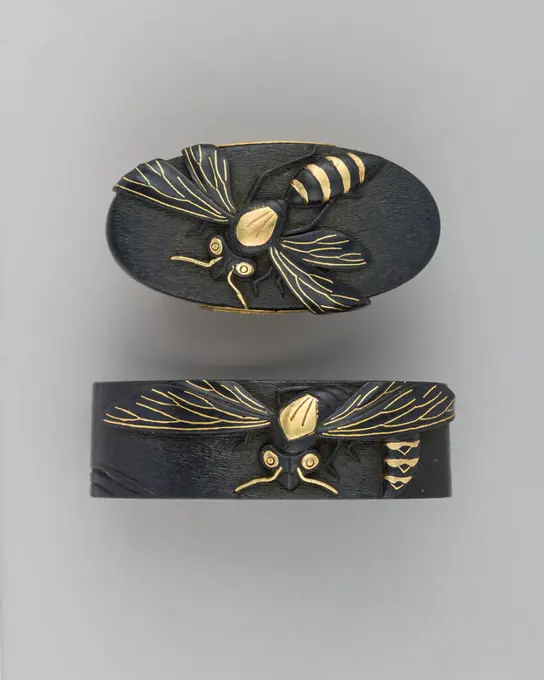
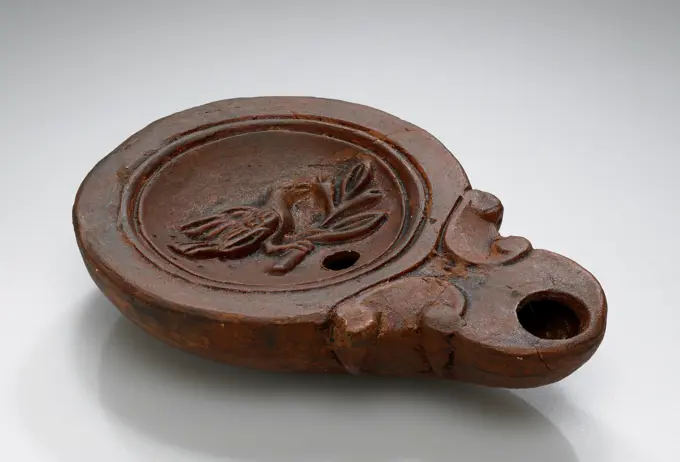
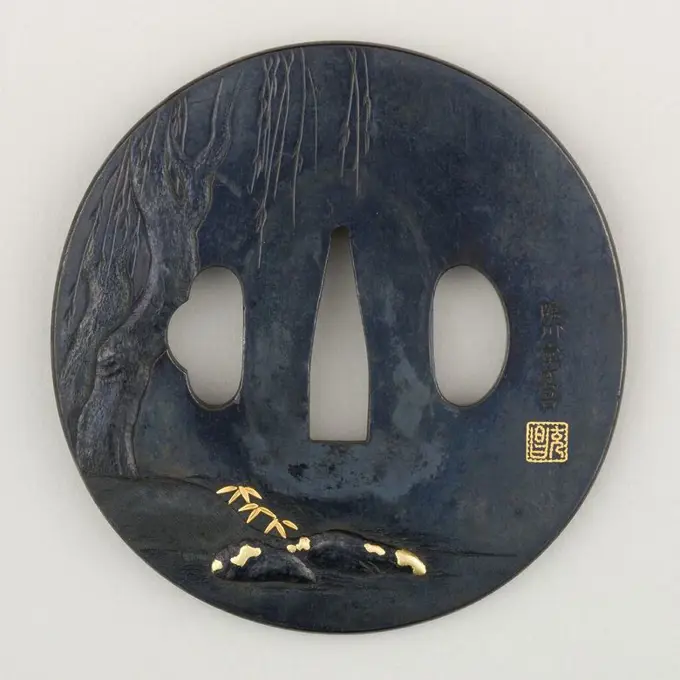
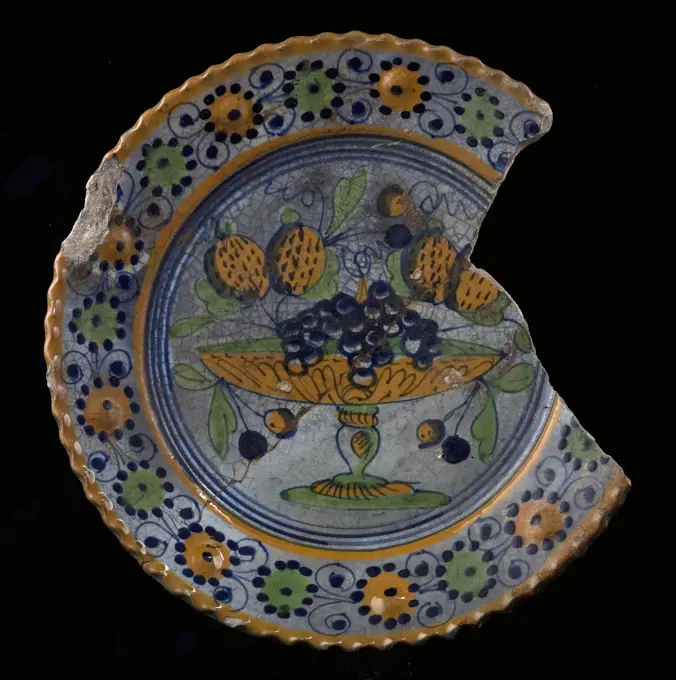
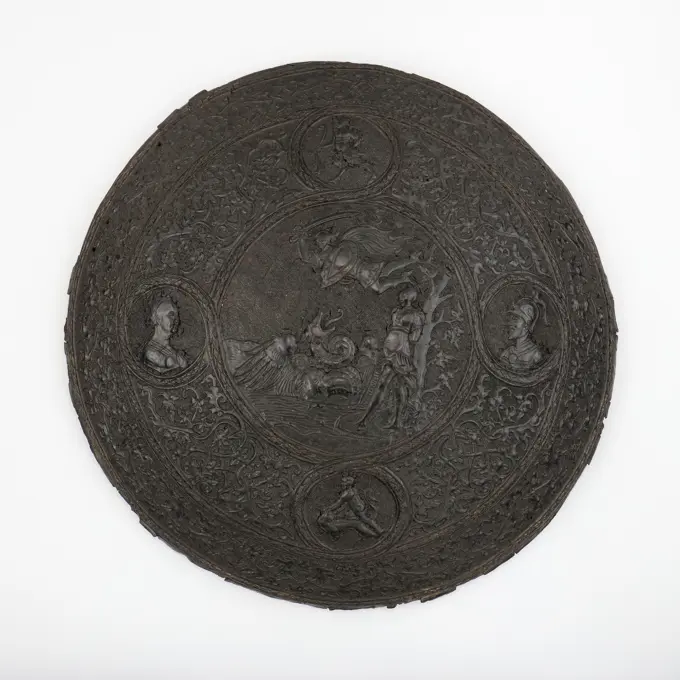
Artistic Sword Guards and Shields

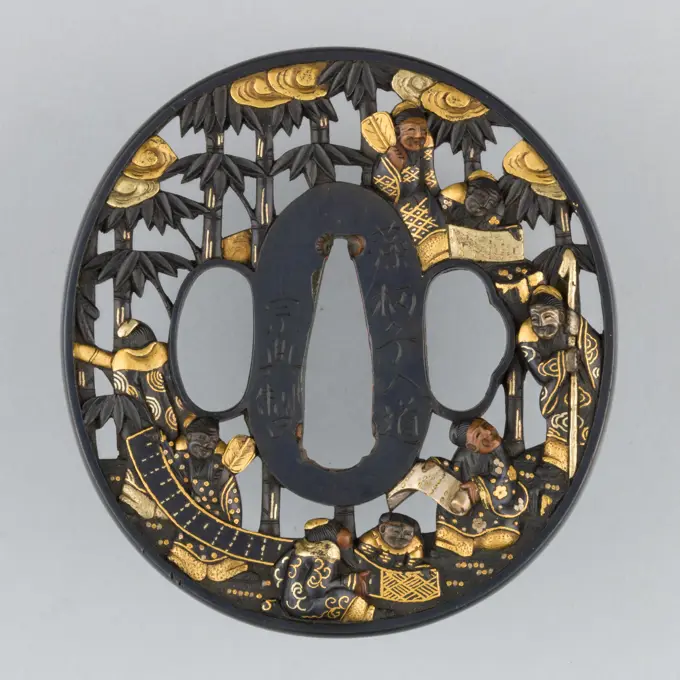
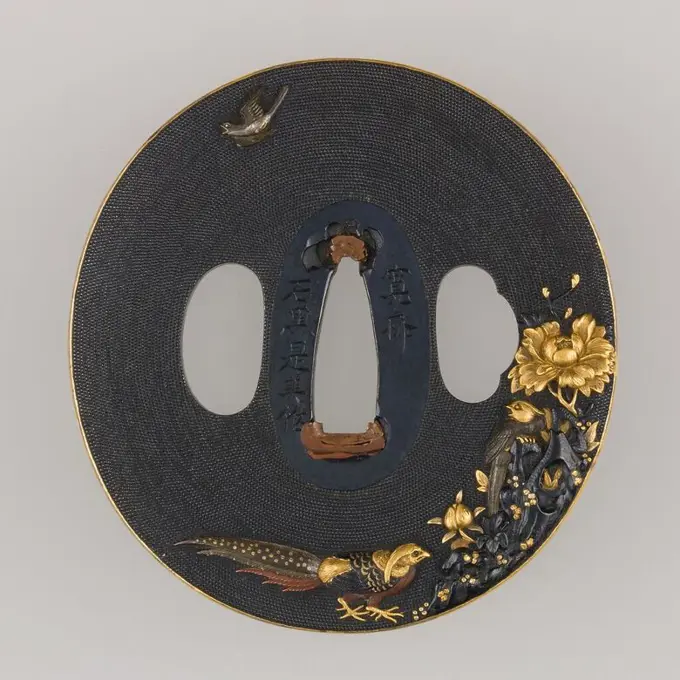
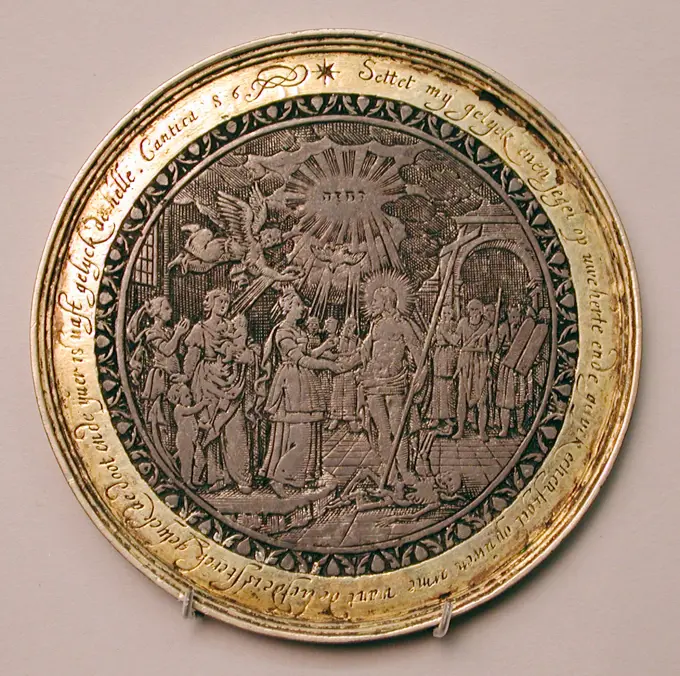
Decorative sword guards and shields, featuring intricate motifs and inscriptions that illustrate craftsmanship and cultural heritage.

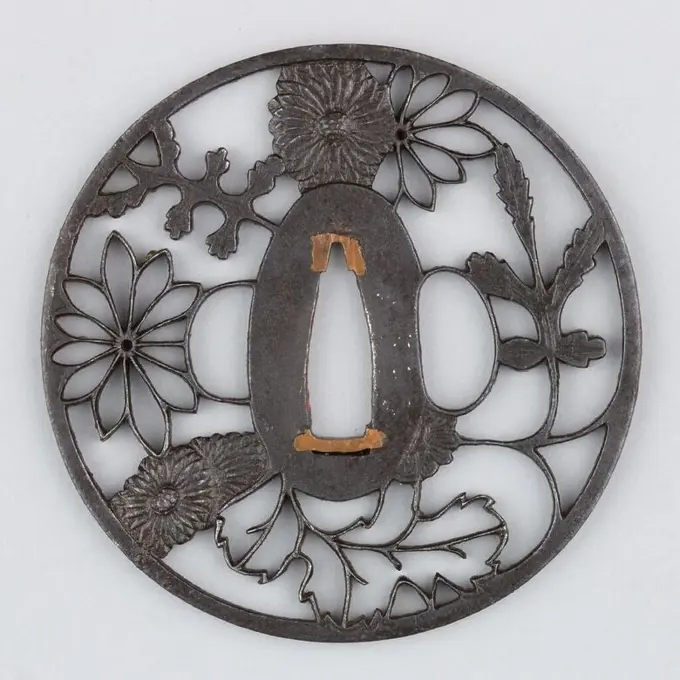
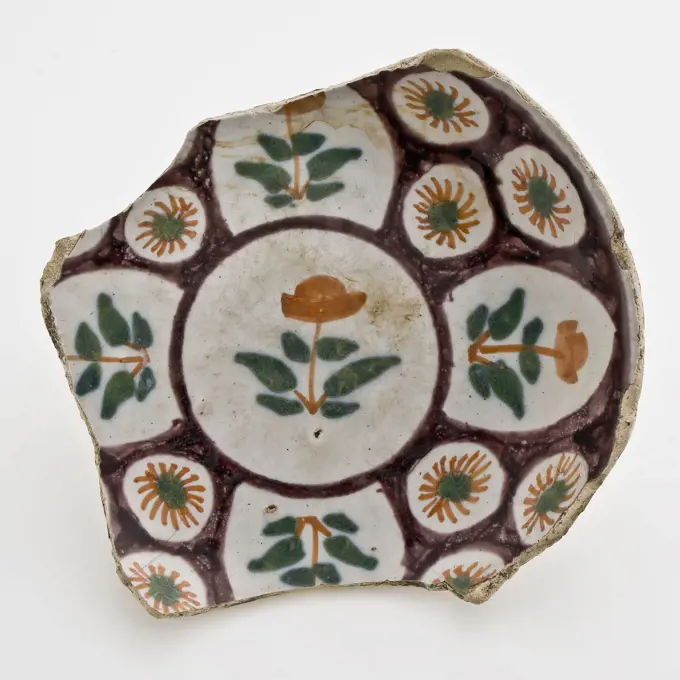
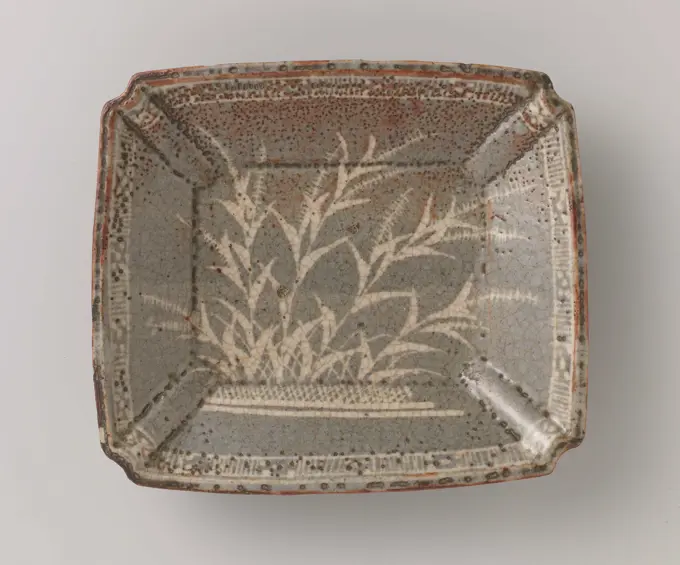
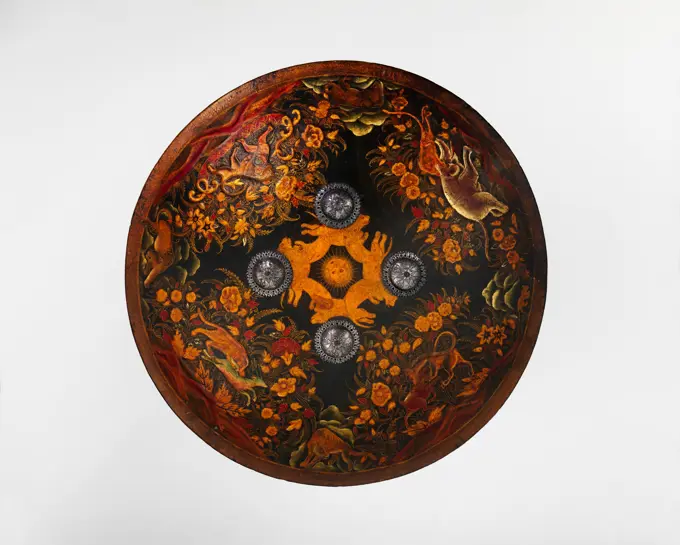
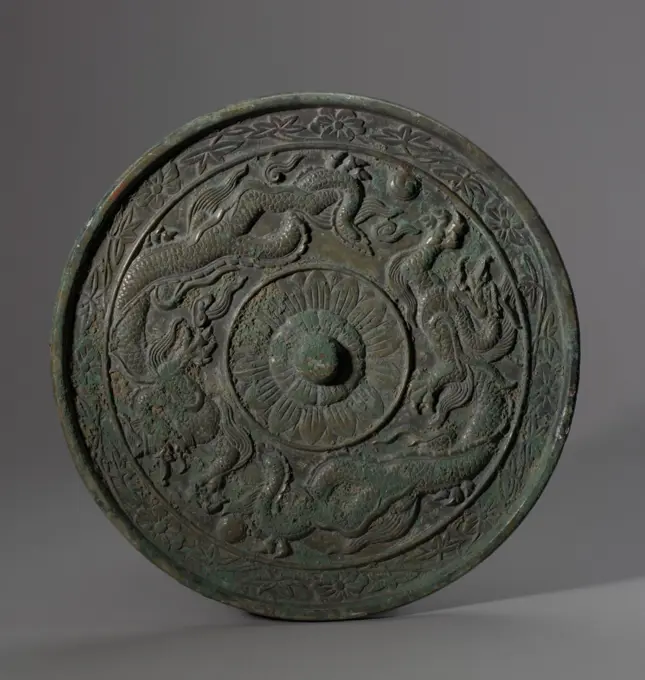
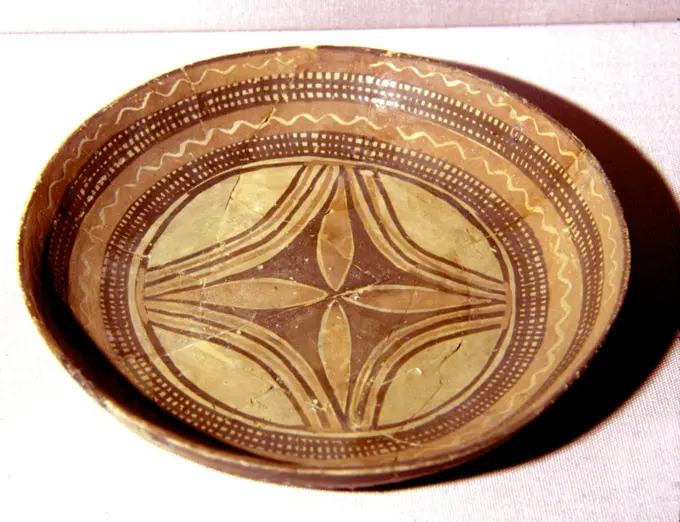
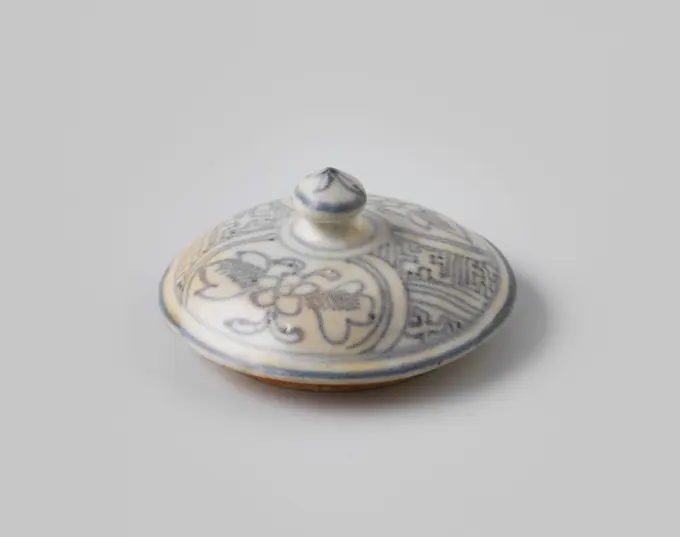
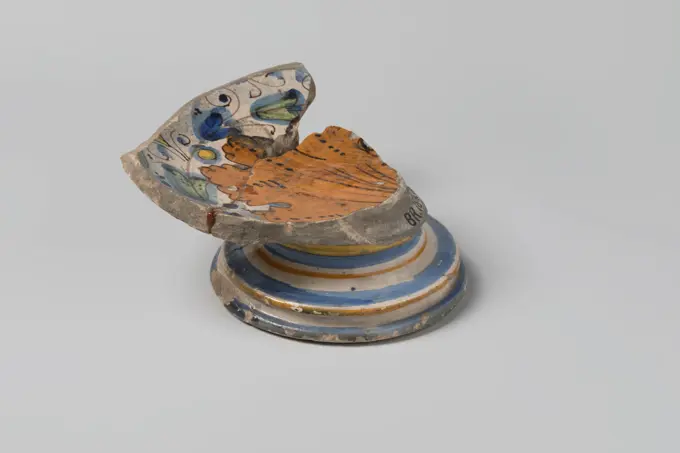
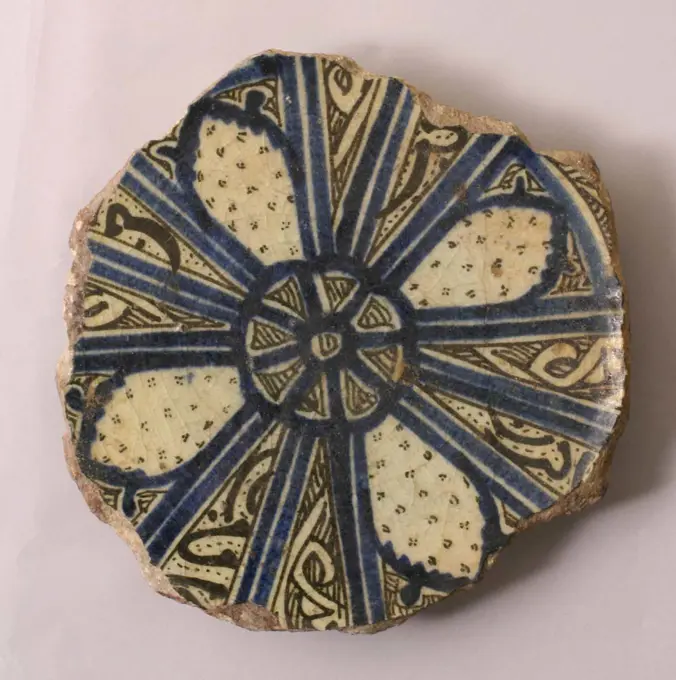
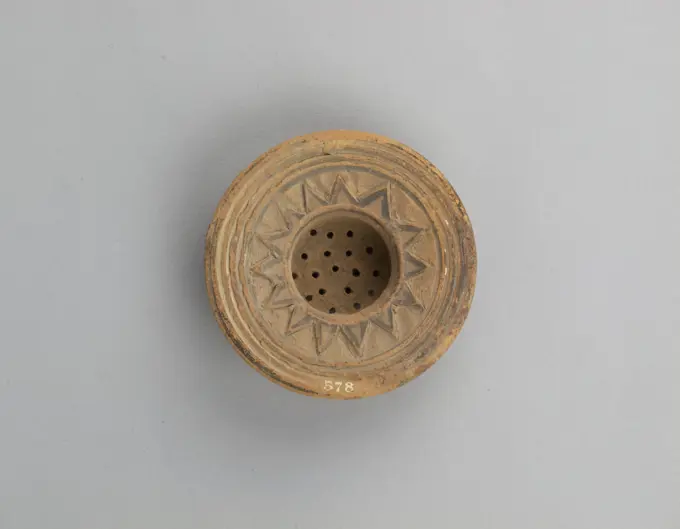
Werra dish, mirror decor with three fishes, light yellow and green glaze, edge decor bows and circles, dish crockery holder soil find ceramics earthenware glaze lead glaze clay, hand turned decorated glazed baked small cord sgraffito Red earthenware bowl on stand surface Slightly curved side wall thick and vertical dish edge In the mirror three fish. Edge decor with bows and circles. Short lines on the top of the saucer edge. Part enamel layer shows black spots archeology Rotterdam serving decorate serving food archaeological find in the soil Rotterdam 1940.
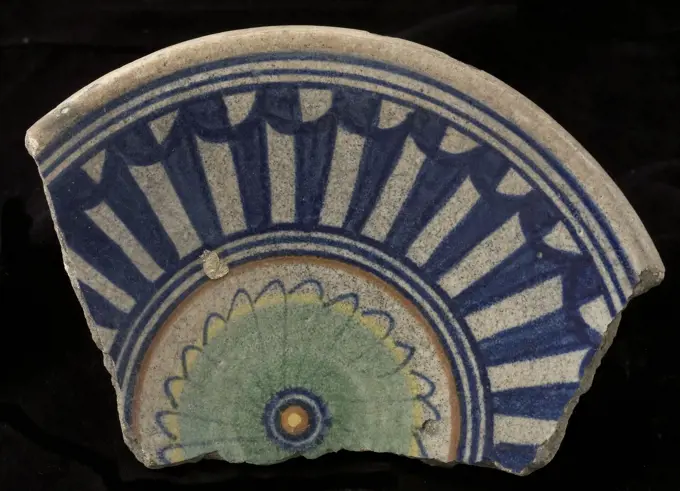
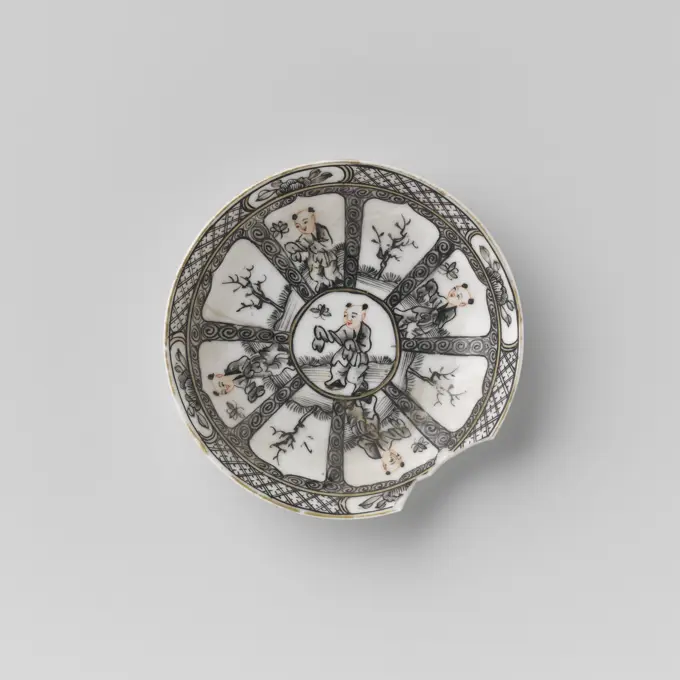
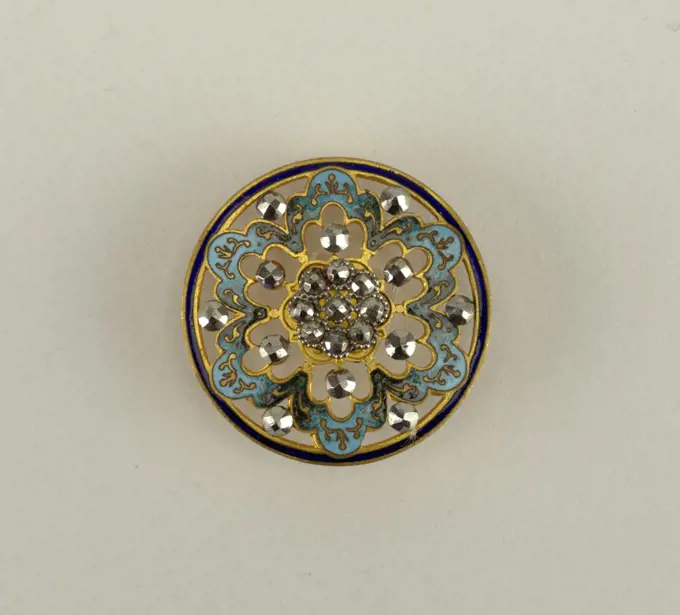
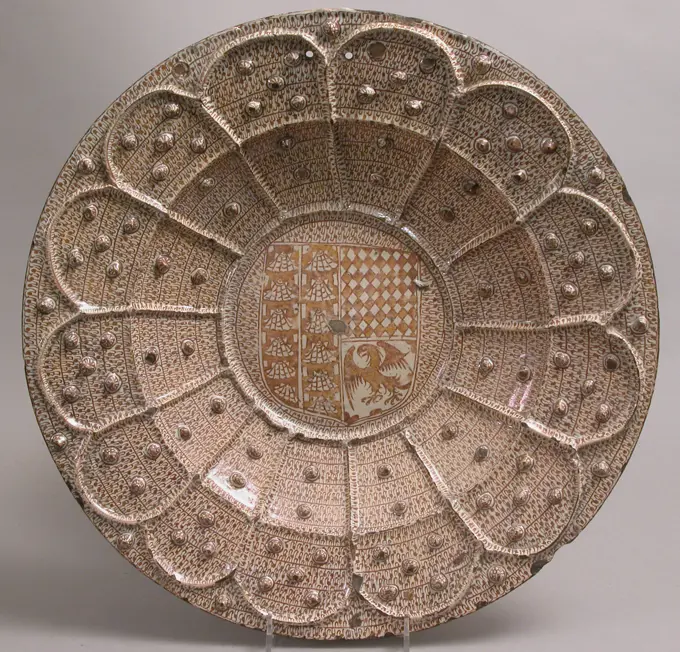
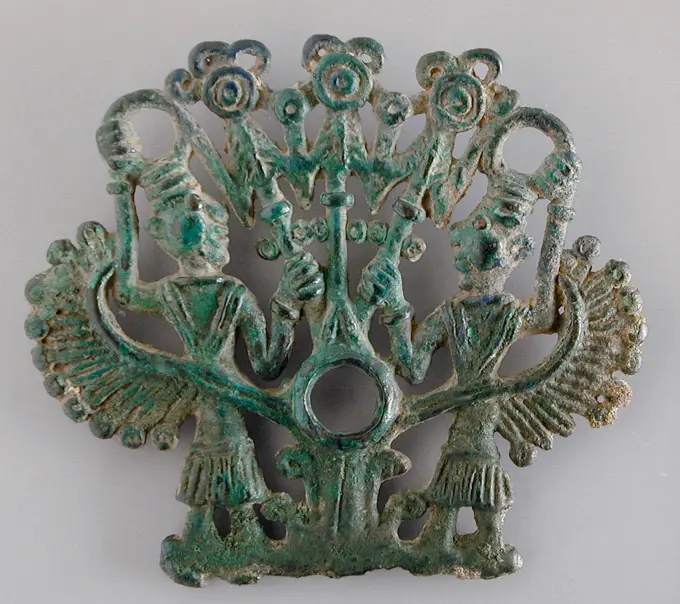
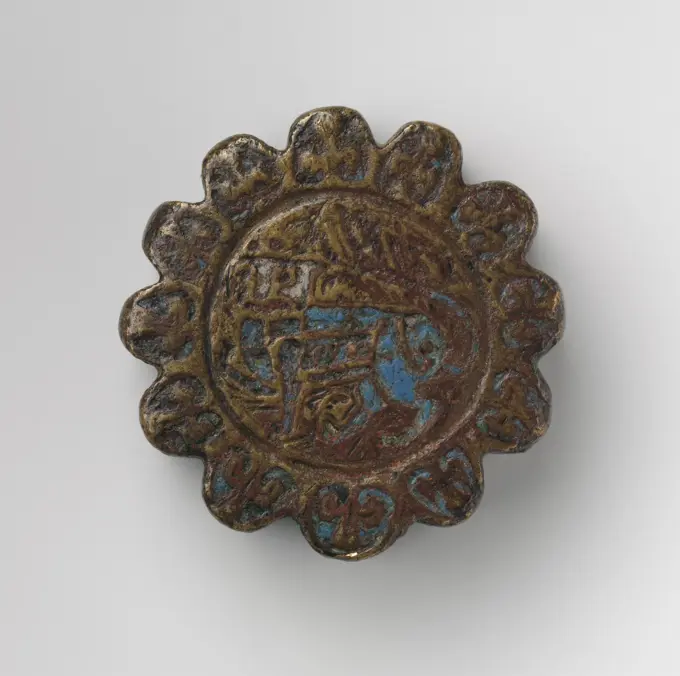
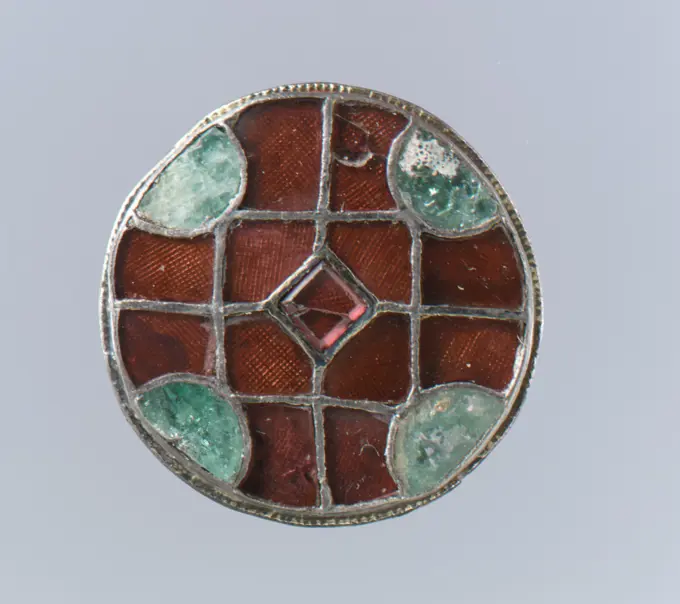
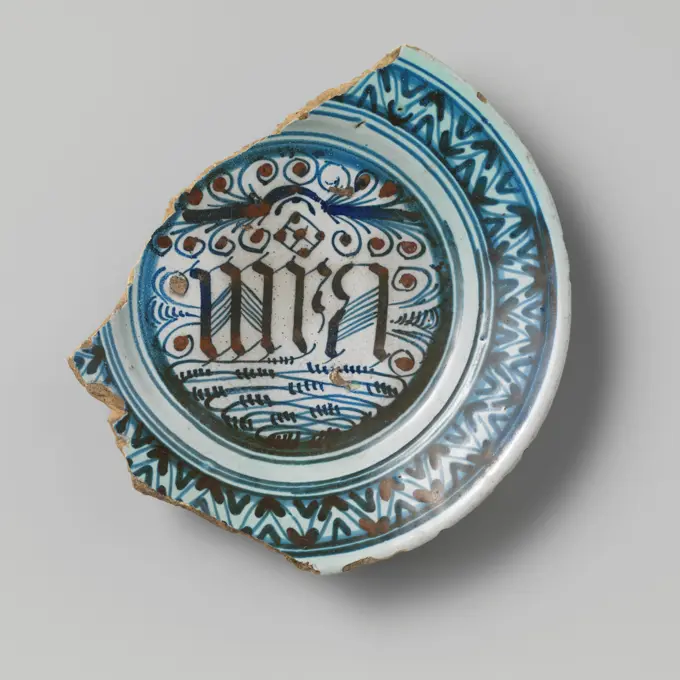
Plate of earthenware, with lead glaze on the underside and tinglaze on the top, and in blue among other things the letters omega m a, damaged, anonymous, 1500 - 1799   earthenware. lead glaze. tin glaze   earthenware. lead glaze. tin glazeDish, Gerloff Brouwer (attributed to), 1661 The round bowl rests on a stand ring and has a wide edge, made up of eight knots with soft tissue-like driven frames in which mask-like motifs. The knots are alternately driven with flowers and putti with flowers. From the middle of the clock the first kner shows a putto with a branch with three tulips, the second a sunflower, irises, a venus shoe, a carnation and lisse, the third a putto with different types of garden senior, the fourth a standing rose, the fifth A putto with Tuinanjers, the sixth a lily and a garden anemoon, the seventh a putto with two trumpet narcisses and an incomparabilis (daffodil), and the eighth one stem with naval and lilies. Extremely finely stipped insects have been incorporated in the highly increased shows. A man and a woman are driven in midfield, who are braiding a flower wreath together. They are seated in a mountainous landscape. Amsterdam silver (metal) The round bowl rests on a stand ring and has a wide edRoundel 6th-7th century. Roundel 444334top view of vintage indian brass plate isolated top view of vintage indian handcrafted embossed brass plate isolated on white background handmade made in the middle of the 20th century Copyright: xZoonar.com/ValeryxVoennyyx 15511737Bowl with Leaf DecorationPolychrome plate, 17th century.Fragment of the majolica dish, polychrome, in the middle rosette, surrounded by geometrical patterns, plate crockery holder soil find ceramic earthenware glaze, baked underside covered with sparing lead glaze green tinted where it is thickly applied Polychrome Yellow shard Italian decor archeology Italy adorn servingLentoid engraved seal. UnknownBowl 9th century. Bowl. 9th century. Earthenware; underglazed painted with polychrome pigments with incised decoration under monochrome transparent glaze. Excavated in Iran, Nishapur. CeramicsSchotel with a boy and a butterfly in a landscape, anonymous, c. 1725 - c. 1749 Porcelain dish, painted on the glaze in red, black and gold. On the flat of the dish a medallion with a boy and a butterfly in a landscape; Around the medallion eight petal comparts with alternating the young in the landscape and a tree; between the curls; On the edge a tire with servetwork interspersed with a flower in a cartouche. Dish has been broken. Encre de Chine. China porcelain. glaze. gold (metal) painting / gilding / vitrification Porcelain dish, painted on the glaze in red, black and gold. On the flat of the dish a medallion with a boy and a butterfly in a landscape; Around the medallion eight petal comparts with alternating the young in the landscape and a tree; between the curls; On the edge a tire with servetwork interspersed with a flower in a cartouche. Dish has been broken. Encre de Chine. China porcelain. glaze. gold (metal) painting / gilding / vitrificationSix CupPlates. Maker, probably by: Boston and Sandwich Glass Works, American, 1826-88Button, Brass, steel, colored enamel, Button of brass, cut-out design with ornaments of steel and enamel. -a: central ornament of cut-steel surrounded by six-lobed figure in blue enamel with brass decoration. Brass shank., late 19th century, costume & accessories, Decorative Arts, ButtonFragment of the 'shroud of Guido van Lusignan', Anonymous, c. 1175 - c. 1225 Fragment of yellow and black silk with repeating pattern of Fleurs de Lis and Zigzag bands, alternating in positive and negative colors. Arabic letters in the zigzag tires. Incomplete report. Stuck to cardboard. Syria (possibly) ketting en inslag: silk. double weave Fragment of yellow and black silk with repeating pattern of Fleurs de Lis and Zigzag bands, alternating in positive and negative colors. Arabic letters in the zigzag tires. Incomplete report. Stuck to cardboard. Syria (possibly) ketting en inslag: silk. double weaveDish (coppa umbonata) ca. 1530 Italian, Gubbio. Dish (coppa umbonata) 460251Plate on the foot (Coppa); Montelupo (ceramic family; Ca 1400-); 2. PO. 16th century (1560-00-00-1580-00-00);Szwarc, Szymon (1884-197.) - collection, A Quartieri decorations, purchase (provenance), animalsDish with Heraldic Shield 1470-1500 Spanish Toward the end of the fifteenth century, Valencian potters created new forms, modeled after contemporary metalwork, with raised studs and ribbing. These objects were often embellished with an overall dot-and-stalk pattern, which served as a field surrounding a family crest.. Dish with Heraldic Shield 463686Sword Guard (Tsuba). Culture: Japanese. Dimensions: H. 2 7/8 in. (7.3 cm); W. 2 11/16 in. (6.8 cm); thickness 3/16 in. (0.5 cm); Wt. 4.6 oz. (130.4 g). Date: 19th century. Museum: Metropolitan Museum of Art, New York, USA.Dish;  19th century (1801-00-00-1900-00-00);Jelec (Tsuba); Tsuchiya, Yasuchika (1670-1744), Tsuchiya; 1. PO. 18th century (1701-00-00-1750-00-00);Dish 19th century. Dish 445288Cheekpiece from a Horse Bit. Iran, Luristan, Luristan bronzes, circa 1000-650 B.C.. Tools and Equipment; horse trappings. Bronze, castRound Dagger Pommel with Scalloped Edges 12th-13th century French The pommel of a sword or dagger acts as a counterweight to give the weapon proper balance, and keeps the grip and guard securely in place. Pommels are often decorated with simple ornament or with religious or political symbols, or with the coat of arms of a particular nobleman or family. The decoration of this pommel includes the fleur-de-lis and heraldic lions or leopards, probably representing France and England.. Round Dagger Pommel with Scalloped Edges 34099Italy, Florence, Golden and enamel buckles and fly-shaped broochDisk Brooch 6th century Frankish Garnets, worked in the cloisonné technique, featured prominently in the luxury jewelry of the Franks. Jewelers would solder small compartments arranged in geometric patterns onto the surface of a metal disk. In those cells, or cloisons, they would place a textured piece of gold foil, which would show through the thin translucent garnet that would then be set on top.. Disk Brooch 464828 Frankish, Disk Brooch, 6th century, Silver, garnets; gilt with patterned foil backings, emeralds; silver back with gilt, beaded edge; no spring/pin extant, Overall: 1 1/16 x 3/8 in. (2.7 x 0.9 cm). The Metropolitan Museum of Art, New York. Gift of J. Pierpont Morgan, 1917 (17.191.137)Sword Guard (Tsuba). Culture: Japanese. Dimensions: H. 2 3/4 in. (7 cm); W. 2 1/2 in. (6.4 cm); thickness 3/16 in. (0.5 cm); Wt. 4.4 oz. (124.7 g). Date: ca. 1615-1868. Museum: Metropolitan Museum of Art, New York, USA.Belt Plaque with Confronted Bovines 2nd-1st century B.C. North China. Belt Plaque with Confronted Bovines 59529Dish bottom. unknown, craftsmanSword Guard (Tsuba). Culture: Japanese. Dimensions: Diam. 3 1/8 in. (7.9 cm); thickness 1/8 in. (0.3 cm); Wt. 2 oz. (56.7 g). Fittings maker: Attributed to the Hagi school (Japanese). Date: 16th century.This tsuba features an openwork design of chrysanthemums. Museum: Metropolitan Museum of Art, New York, USA.PERIODO IBERICO. ESPAÑA. PLATO IBERICO realizado en torno y decorado con peces en pintura rojiza. Procedente del poblado de Hoya de Santa Ana (Albacete). Museo de Albacete. Castilla-La Mancha.Spindle Whorl, 700s - 900s. Iran, early Islamic period, 8th - 10th century. Bone, incised; overall: 1.3 x 1.9 x 1.9 cm (1/2 x 3/4 x 3/4 in.).Black-Figure Kylix; Attributed to Hunt Painter, Greek (Lakonian), active 565 - 530 B.C.; Sparta, Greece, Europe; about 540 B.C.; Terracotta; Object: H: 8.8 x W (handles): 17 x Diam. (bowl): 11.7 cm (3 7/16 x 6 11/16 x 4 5/8 in.)Faience dish with polychrome decor on white fond, small size, flowers in purple frame, plate dish crockery holder soil find ceramics pottery glaze tin glaze, hand-turned baked decorated glazed fried Small faience dish on thin stand ring Belong to tea service Yellow shard entirely covered with tin glaze. Polychrome decor of flowers in green and orange in round or oval purple frame Cook-inscribed archeology Valckensteyn Poortugaal Albrandswaard native earthenware served tea drinking tea serving archaeological find in the soil Poortugaal ValckensteynSquare Mirror with Floral and Coin Motifs, early 900s-early 1100s. China, Liao dynasty (916-1125) - Song dynasty (960-1279). Bronze; overall: 0.5 x 10.5 cm (3/16 x 4 1/8 in.); rim: 0.3 cm (1/8 in.).Tsuba; iron, goldWall plate with rosette and vegetative motifs, N.V. Haagsche Plateel Factory Rozenburg, 1887 Pottery wall plate, with ribbed edge and multicolored painted with an edge of yellow cartouches around a mainly blue rosette. Various vegetative motifs in the cartouches. Original label of Rozenburg, Lange Poten 39, La Haye. The Hague earthenware Pottery wall plate, with ribbed edge and multicolored painted with an edge of yellow cartouches around a mainly blue rosette. Various vegetative motifs in the cartouches. Original label of Rozenburg, Lange Poten 39, La Haye. The Hague earthenwareWatch ca. 1770-80 Case maker: Attributed to Christian Gottlieb Stiehl This watchcase displays a technique of setting hardstones in gold that is usually associated with Johann Christian Neuber (1736-1808) of Dresden, although it was probably inspired by enameled gold watchcases made in Paris a few years earlier. Stiehl, who held appointments to Augustus the Strong, King of Poland and Elector of Saxony (1670-1733), and his successor, Augustus III (1696-1763), is known for his floral designs, which are freer and less geometric than Neubers. The movement may also have been made in Dresden. P.J. Marperger, author of Horologiographia (Dresden, 1723), a book on the watch and clock market in Germany, wrote that “some important people.. simply cannot appreciate anything that does not come from France or England.” He advocated a heavy tax on foreign clocks and watches in addition to allowing accredited (meaning German) clockmakers to engrave London or Geneva on their dials.. Watch 194158Plate. Possibly Paulus Öham; German, 1634-1671; Germany, Nuremberg. Date: 1655-1665. Dimensions: 0.8 x 19.7 cm (1/3 x 7 3/4 in.). Pewter. Origin: Nuremberg. Museum: The Chicago Art Institute, Chicago, USA.Sword Guard (Tsuba). Culture: Japanese. Dimensions: H. 2 11/16 in. (6.8 cm); W. 2 9/16 in. (6.5 cm); thickness 1/8 in. (0.3 cm); Wt. 3.7 oz. (104.9 g). Date: ca. 1615-1868. Museum: Metropolitan Museum of Art, New York, USA.Dish with Two Dragons in Relief: Longquan Ware, 14th Century. China, Zhejiang province, Yuan dynasty (1271-1368). Glazed porcelain with unglazed molded decoration; diameter: 16.5 cm (6 1/2 in.).Fragment white earthenware bowl with white ground and manganese bird with green accents, bowl bowl earthenware ceramics pottery glaze, hand turned decorated glazed fried Deep bowl or bowl on flat stand. White shard internally glazed Earthenware scraped with crushed red earthenware Dove in the mirror. brushed in manganese colored with blue and green in feather decor. Yellow fond archeology indigenous pottery import food decorate serve serveSword Guard (Tsuba) possibly 18th century Japanese A tsuba is a sword guard and part of a sword mounting. It is mounted between the swords blade and grip to protect the users hands.. Sword Guard (Tsuba) 33412Bowl 9th century. Bowl 449415Dish 1720 Japan. Dish. Japan. 1720. White porcelain decorated with blue under the glaze, iron red and gold, with colored enamels (Arita ware). Edo period (1615-1868). CeramicsBox withChrysanthemumsCup And Saucer With Fish Between Water Plants. Cup and saucer of porcelain with ribbed wall and lobed edge, painted in underglaze blue and on the glaze blue, red, green, yellow, eggplant, black and gold. The outside of the cup with four fish between aquatic plants, the edge with a ruyi-motif belt; On the bottom a fish and the inside with four fish in iron red, the edge with a ruyi motif. The flat of the dish with a larger fish between aquatic plants, further the same decoration as on the head. Both marked on the bottom with 'yù', jade, in a double circle. Famille Verte.Dish ca. 1770-80 British, probably Staffordshire This creamware dish speaks to the strong place of tradition within the fast changing ceramic technologies of eighteenth-century England. Although the form and decoration of the dish are typical of the salt-glaze stoneware made in the Staffordshire region until the 1760s, this example is made of creamware, a refined white earthenware that only gained popularity in the second half of the eighteenth century. Even as Staffordshire potteries experimented with new ceramic bodies, they continued to adopt older models and decorative motifs well into the nineteenth century.. Dish. British, probably Staffordshire. ca. 1770-80. Creamware. Ceramics-PotteryLobed Mirror with Eight Blossoms, 700s. China, Tang dynasty (618-907). Bronze; diameter: 24.5 cm (9 5/8 in.); overall: 0.9 cm (3/8 in.); rim: 0.7 cm (1/4 in.).. Rectangular scale of stoneware with steeped corners and standing on four short feet, covered with a white sludge and a green glaze. On the flat a group of plants from a group of plants (grasshalms); The inner edge with a band with stripes and dots. The budget decoration is filled with a white sludge (Mishima technique). Two old labels on the bottom with 'Shino Ware, So Called Shino-Sotan. About 1600. Probably the Work of Captured Korean Potters / V. Transactions yes [Panese Society, 1934-35 'and' See also Morse / BL. 191 and pl. XVIII / Shino Sotan, 1530 '. Shino (Nezumi Shino).Nose Ornament with Serpents and Long-necked Birds, c. 100-300. Peru, North Coast, Moche culture (50-800), Early Intermediate Period (AD 0-700). Gold alloy and silver; overall: 7.6 x 13.9 cm (3 x 5 1/2 in.).Shield (Dhàl) ca. 1800 Indian, probably Rajastan Ornately decorated shields of this type appear to come from the Hindu-ruled areas of Rajastan in central India. Listen to experts illuminate this artwork's story Listen Play or pause #827. Kids: Shield Supported by Bloomberg Philanthropies We're sorry, the transcript for this audio track is not available at this time. We are working to make it available as soon as possible.. Shield (Dhàl). Indian, probably Rajastan. ca. 1800. Leather, lacquer, gold leaf, silver. probably Rajastan. ShieldsMirror decorated with dragons 11th-12th century Korea. Mirror decorated with dragons 49618Halaf plate from Arpachiya. 5500-5000 BC. MESOPOTAMIA.Lid of a winepot of Chinese porcelain from the wreck of the Dutch East Indiaman Witte Leeuw, anonymous, before 1613 lid Cover of teapot or Wijnkan from V.O.C. ship the 'Witte Leeuw'. Jingdezhen bone china (material)   Sint-HelenaSword Guard (Tsuba). Culture: Japanese. Dimensions: H. 2 7/8 in. (7.3 cm); W. 2 3/4 in. (7 cm); thickness 3/16 in. (0.5 cm); Wt. 4.7 oz. (133.2 g). Date: 18th century. Museum: Metropolitan Museum of Art, New York, USA.Sharf of a dish with pottery base, with lead glaze on the bottom and on the top of tinglaze with a multicolored decoration, damaged, anonymous, 1500 - 1799   earthenware. tin glaze. lead glaze   earthenware. tin glaze. lead glazePlaque from an Arch of a Reliquary Shrine. German; Rhineland. Date: 1151-1200. Dimensions: 5.4 × 11 cm (2 1/8 × 4 5/16 in.). Gilt copper, champlevé enamel. Origin: Rhineland. Museum: The Chicago Art Institute, Chicago, USA.Portable Compass Sundial. Germany. Date: 1623. Dimensions: 6 x 5.7 cm (2 3/8 x 2 1/4 in.). Brass. Origin: Germany. Museum: The Chicago Art Institute, USA.Tribute of French wounded to Ms. Rreamgo, 1870-1871 (dummy title) Tribute of the French wounded to Ms. Rreamgo, 1870-1871. Metal, 1871.Fragment 14th century. Fragment 446323Dish with hexagonal vignettes with animals. Dish of porcelain, decorated in gold, red, blue and green and with hexagonal vignettes with animals.Sword Guard (Tsuba) ca. 1615-1868 Japanese A tsuba is a sword guard and part of a sword mounting. It is mounted between the swords blade and grip to protect the users hands.. Sword Guard (Tsuba). Japanese. ca. 1615-1868. Copper-silver alloy (shibuichi), silver, gold, copper-gold alloy (shakud?). Sword Furniture-TsubaStrainer 750-480 B.C. Cypriot With hole surrounded by a zigzag circle in relief.. Strainer. Cypriot. 750-480 B.C.. Terracotta. Cypro-Archaic . Vases. Star-shaped tile of quartz frying, painted in underglaze blue, green-blue and gold luster with a text in Persian or Arabic script on the edge and in the middle floral.Plate ca. 1800-1825 Mexican. Plate 5947Sword Guard (Tsuba) first third 18th century Japanese A tsuba is a sword guard and part of a sword mounting. It is mounted between the swords blade and grip to protect the users hands.. Sword Guard (Tsuba). Japanese. first third 18th century. Copper-gold alloy (shakud?), gold, copper, silver. Sword Furniture-TsubaCup (from a set of eight) China. Cup (from a set of eight) 46879Badge or Harness Pendant 14th century Spanish Heraldry, or coat-of-arms, were vitally important in Europe throughout the Middle Ages and the Renaissance. Heraldic emblems were used to identify noble families, cities, regions, and even countries. In addition to being displayed on shields and flags, heraldry was incorporated into architectural decoration on the interior and the exterior of buildings, on furniture, works of art, clothing, and horse equipment. Harness pendants, like this example, would have been attached to a headstall, bridle, or other straps making up the tack of a horse ridden by a nobleman or noblewoman, or a member of their household. Many harness pendants also have decoration that is simply ornamental, or have symbols that are not specifically heraldic in nature.. Badge or Harness Pendant. Spanish. 14th century. Copper. Miscellaneous-BadgesBoat-Shaped Dish. Iran, 225-650 A.D.. Furnishings; Serviceware. SilverSword Guard (Tsuba). Culture: Japanese. Dimensions: H. 2 7/8 in. (7.3 cm); W. 2 3/4 in. (7 cm); thickness 5/16 in. (0.8 cm); Wt. 4.5 oz. (127.6 g). Maker: Ishiguro Koreyoshi (Japanese, active 19th century). Date: 1840-60. Museum: Metropolitan Museum of Art, New York, USA.Wedding medallion 17th century Dutch. Wedding medallion 202384Console of oak and palmhout, Robé Paris, c. 1400 - c. 1499 Console of Eike and Palmhout. The body is a cube, in relief circumcised with acanthus leaf and ending in a capital of the Ionian order, decorated with leaf work and a large egg list, including a pearl list. The cube is on a protruding base, which shows tapered acanthus leaves on the underside, ending in a hanging pomegranate. The Abacus consists of three sections, the lower of which is decorated with a cumamotive. Italy (possibly) wood (plant material). oak (wood). boxwood Console of Eike and Palmhout. The body is a cube, in relief circumcised with acanthus leaf and ending in a capital of the Ionian order, decorated with leaf work and a large egg list, including a pearl list. The cube is on a protruding base, which shows tapered acanthus leaves on the underside, ending in a hanging pomegranate. The Abacus consists of three sections, the lower of which is decorated with a cumamotive. Italy (possibly) wood (plant material). oak (Plate , Plates Tableware. The Massachusetts WPA Federal Art Project Photograph CollectionDish 1830-40. Dish 3270Tile 12th-14th century. Tile 447369Tsuba  two flowers of chrysanthemums and leaves Kimi, schools and shoamiArt arabe : mobilier de soultan Mohammed ben Qalaoûn : flambeau et plateau d'alcarazas. Prisse d'Avennes, 1807-1879. Prisse d'Avennes, 1807-1879. Prints, Drawings. 1877. The Miriam and Ira D. Wallach Division of Art, Prints and Photographs: Art & Architecture Collection. Architecture, Islamic, Architecture , Egypt , Cairo, Art , Egypt , Cairo, Art, Islamic, Islamic decoration and ornament, Candlesticks, Decorative arts, Islamic, Nsir Muhammad ibn Qalwûn, Sultn of Egypt and Syria, 1285-1341 , Associated objectsMuseum of Cluny, Basin of the ewer, vintage engraving. Museum of Cluny, Basin of the ewer, vintage engraved illustration. Magasin Pittoresque 1852. Copyright: xZoonar.com/PatrickxGuenettex 10673635Walnut Savonarola Chair with Letters A.G. Dated: c. 1520/1540. Dimensions: overall: 67 x 102.3 x 63.5 cm (26 3/8 x 40 1/4 x 25 in.). Medium: walnut. Museum: National Gallery of Art, Washington DC. Author: Italian 16th Century.Carved ivory ball, composed of 12 freely moveable concentric spheres. Qing dynasty, 19th century AD. During this period the craftsmen were obsessed with exploring their technical limits and ivory provided a particularly suitable medium for this.Sword-Hilt Collar and Pommel (Fuchigashira). Culture: Japanese. Dimensions: Fuchi (a); H. 1 1/2 in. (3.8 cm); Wt. 0.9 oz. (25.5 g); kashira (b); H. 1 3/8 in. (3.5 cm); Wt. 0.5 oz. (14.2 g). Date: last half 18th century. Museum: Metropolitan Museum of Art, New York, USA.Lamp. UnknownSword Guard (Tsuba). Culture: Japanese. Dimensions: H. 3 in. (7.6 cm); W. 2 3/4 in. (7 cm); thickness 1/4 in. (0.6 cm); Wt. 6.1 oz. (172.9 g). Date: 1776. Museum: Metropolitan Museum of Art, New York, USA.Bowl 12th century. Bowl 448268Majolica dish with polka dot, polychrome decor, fruit bowl, dish plate tableware holder soil find ceramic earthenware glaze tin glaze lead glaze, hand turned fried glazed decorated fried Dish on stand ring with raised edge. Shoulder on the transition from mirror to flag Noppen- and golfrand. Yellow shard bottom of lead glaze Top with polychrome fruit bowl on stand foot in the mirror. On the flag orange on the studs and green bulbs in between the egret decor Craquelé. Discolored by staying in the soil. Op baked archeology indigenous pottery decorate serve serving food tablePlate. Culture: China. Dimensions: Diam. 5 7/8 in. (14.9 cm). Museum: Metropolitan Museum of Art, New York, USA.Albert Levone, Pa German Tobacco Bowl w Lid, c 1936 Pa. German Tobacco Bowl w/ LidCircular ornamental design with Roman numerals 1-12 and 13-24 in reverse as on a dial. 1501 - 1600. Anonymous. Prints. The Miriam and Ira D. Wallach Division of Art, Prints and Photographs: Print CollectionHearing stone with lion's head in profiled diamond, c. 1575 - c. 1625 Hearing stone with a representation of Leeuwenkop in Lauwerkrans, placed in profiled diamond, which motif repeated itself in the half windows on the sides. The Hale windows at the top and bottom are filled with half medallions with star motif. Southern Netherlands earthenware Hearing stone with a representation of Leeuwenkop in Lauwerkrans, placed in profiled diamond, which motif repeated itself in the half windows on the sides. The Hale windows at the top and bottom are filled with half medallions with star motif. Southern Netherlands earthenwareBowl with Inscription, "Sovereignty is God's". Dimensions: H. 3 3/4 in. (9.5 cm)Diam. 12 in. (30.5 cm). Date: late 9th-early 10th century.One of the most common phrases found on Nishapur objects is al-mulk li-allah, or "Sovereignty is God's." Here, the letters are given a stately, elongated form and, unusually, are oriented toward the interior of the bowl. Museum: Metropolitan Museum of Art, New York, USA.Sword Guard (Tsuba) with Ox, c. 1615-1868. Japan, possibly Edo period (1615-1868). Iron; diameter: 7 cm (2 3/4 in.).Circle of Francesco Francia, Ornament in Hexagonal Shape, c 1480 1510 Ornament in Hexagonal ShapeFaience plate, blue on white, laurel wreath with eight-pointed star, dish plate tableware holder earth discovery ceramic earthenware glaze tin glaze, total, Cookery archeologyMedallion possibly German 19th century View more. Medallion. possibly German. 19th century. Glass. Glass-PaintedShaffron (Horse's Head Defense) ca. 1600 French This shaffron matches one of the best-preserved French armors dating from the reign of Henry IV (1589-1610). It demonstrates the French preference for completely gilt armors. A saddle, now in the Musée de l'Armée, Paris, also matches the armor.. Shaffron (Horse's Head Defense). French. ca. 1600. Steel, gold, textile. Equestrian Equipment-ShaffronsMedallion. Eastern Mediterranean, Roman, 400-390 B.C.. Jewelry and Adornments; medals. GoldPendule met art deco-ornament, G.H. Lantman, 1929 The pendulum has a cupboard of red copper, on which a wooden bottom and two wooden pedestals are mounted. The cabinet is composed of a foot edge, the front with the dial, the mounted middle part and the back with a round door. The front has a round dial, where the hour figures against red email come out. The edge has driven art deco ornament. The hands are made of yellow copper. In the right side of the foot edge, the signature was put: G.H. Lantman. 1929. Amsterdam copper (metal). brass (alloy). wood (plant material) The pendulum has a cupboard of red copper, on which a wooden bottom and two wooden pedestals are mounted. The cabinet is composed of a foot edge, the front with the dial, the mounted middle part and the back with a round door. The front has a round dial, where the hour figures against red email come out. The edge has driven art deco ornament. The hands are made of yellow copper. In the right side of the foot edge, the signCarnavalet Museum, Medals CollectionAppendages 19th century China. Appendages 704792-Euro-Gedenkmuenze Karl der Grosse, Deutschland 2 Euro commemorative coin Charlemagne, Germany BLWS707693 *** 2 Euro Commemorative coins Karl the Grosse, Germany 2 Euro Commemorative Coin Charlemagne, Germany BLWS707693 Copyright: xblickwinkel/E.xTeisterxEmbossed Shield Italian ca. 1560 This shiled is formed of a circular base of wood, convex in section, and covered on both sides with black leather embossed in low relief and tooled. The decoration on the front is organized into three fields consisting of two concentric bands enclosing a large circular center, each band framed with a laurel wreath. The center area contains a scene of the hero Perseus rescuing the maiden Andromeda from the dragon (Ovid, Metamorphoses, IV). Above Perseus are the letters S L. The wreath surrounding the center field extends out to the next concentric band in four loops which form medallions depicting a satyr holding a trumpet (above), Hercules and the Nemean lion (below), and two bust-length profile figures of a man in armor and a woman (at the right and left sides respectively). Between the medallions and in the outermost band the space is filled with entrwined foliate strapwork.The decoration on the inside of the shield is organized into a large circular