Artistic Textile Fragments

Historical textile fragments showcasing intricate designs and craftsmanship in silk and linen, reflecting cultural and artistic heritage.

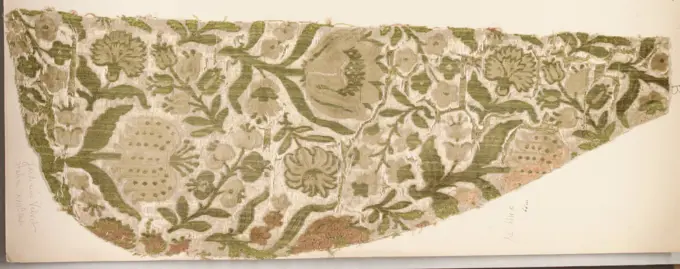
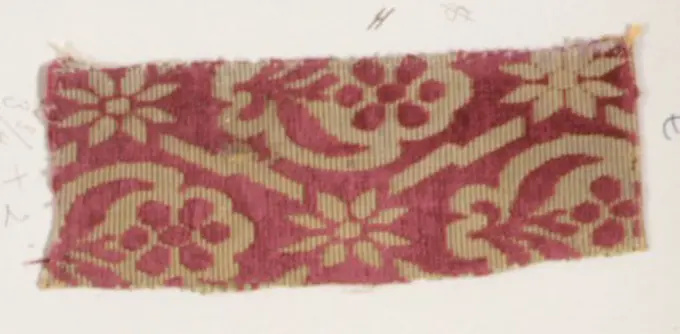
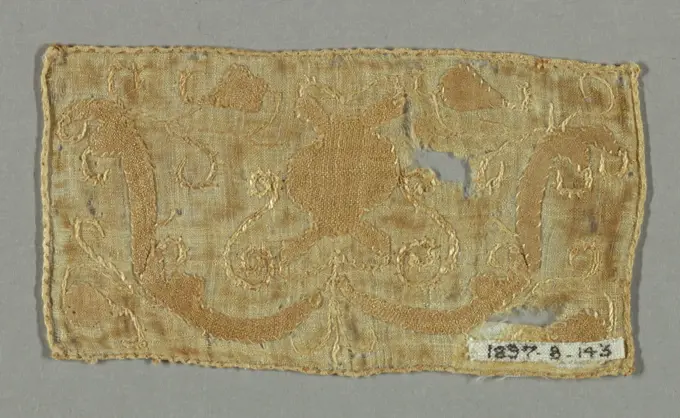
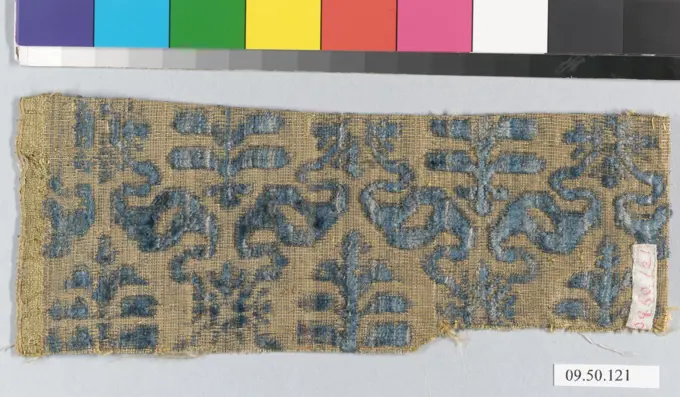
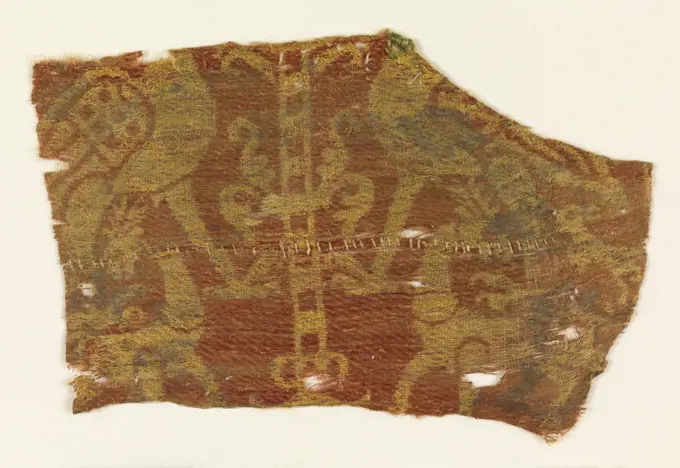
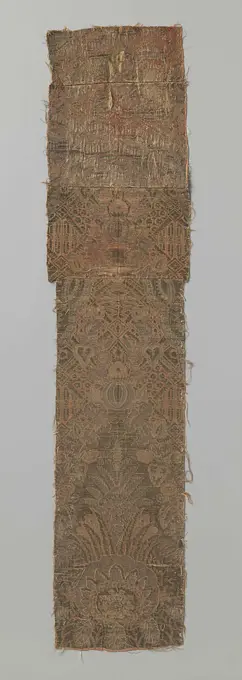
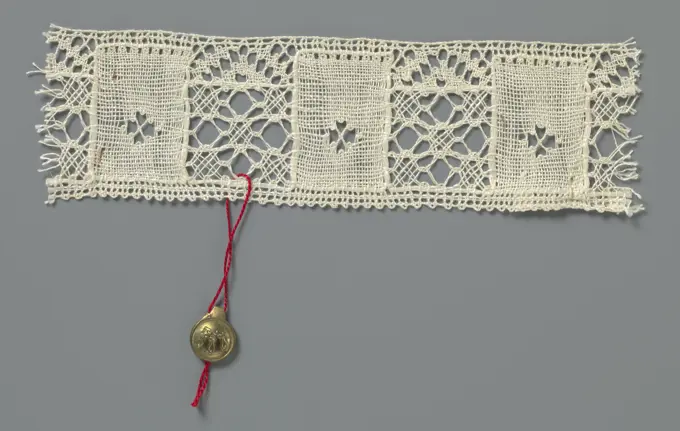
Fragment, Medium: silk, metallic Technique: supplementary warps forming raised pile in a plain weave foundation (velvet) with supplementary wefts, Leaf and pinecone() motif in tan and gold., 17th century, woven textiles, Fragment
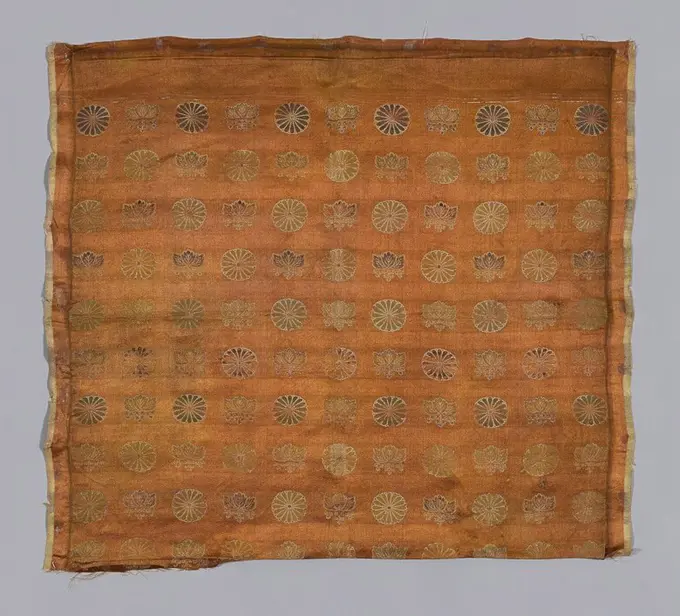
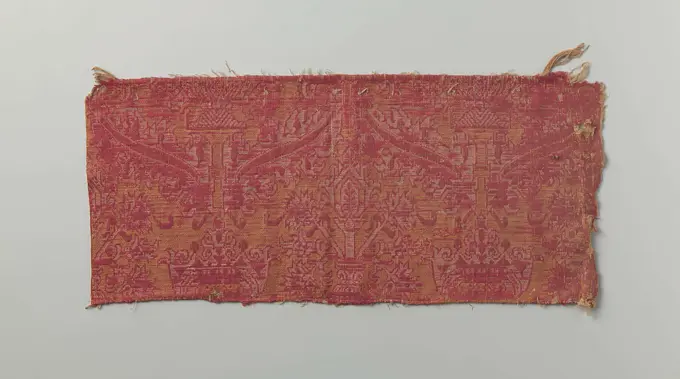
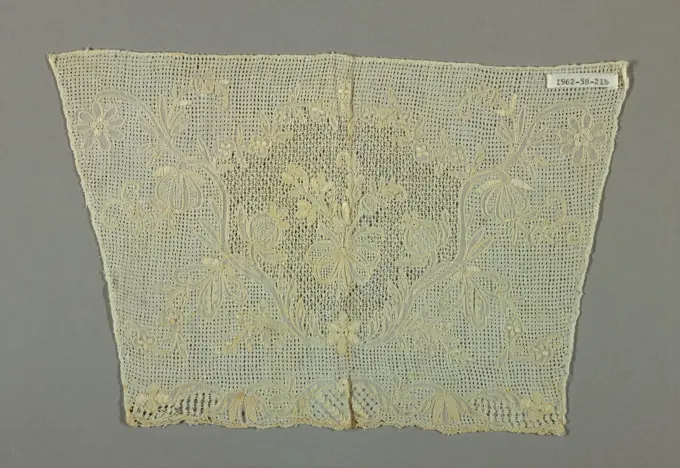
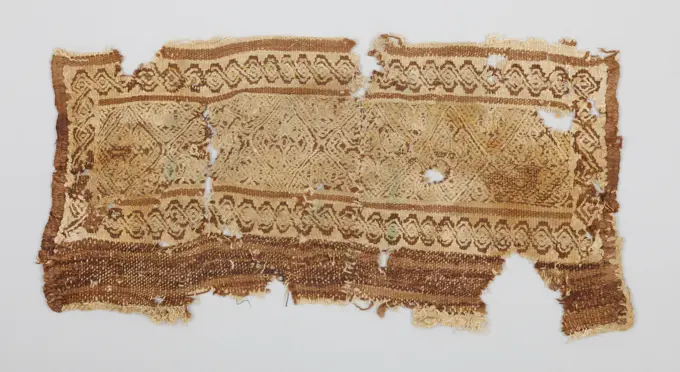
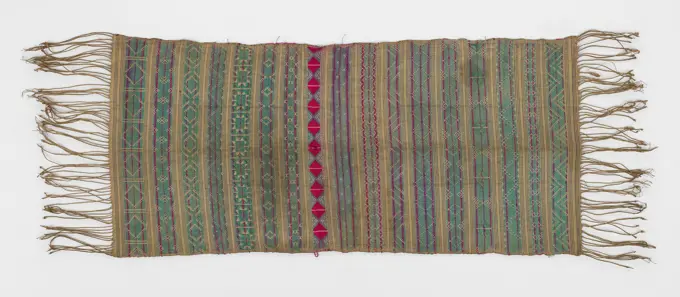
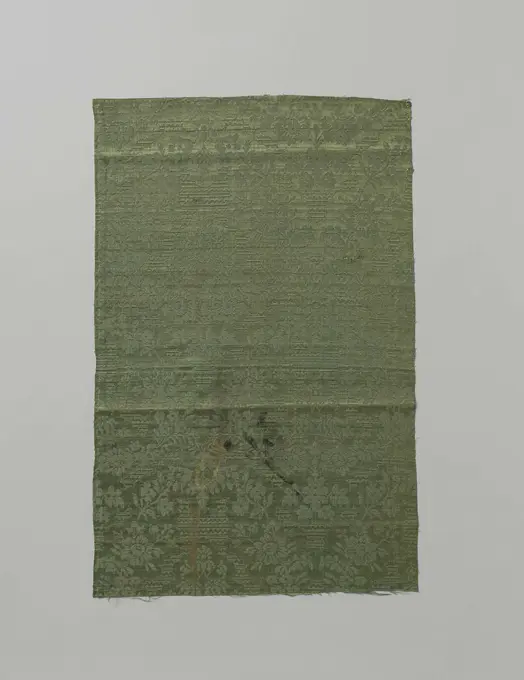
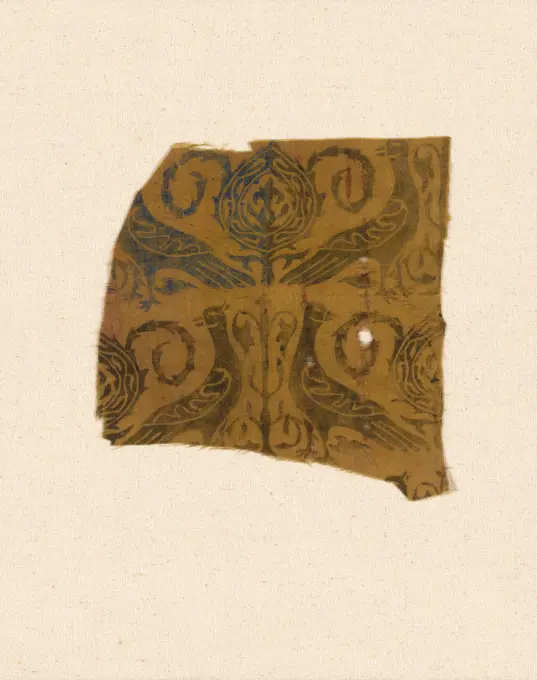
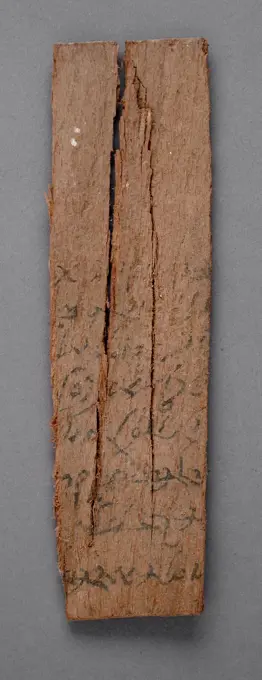
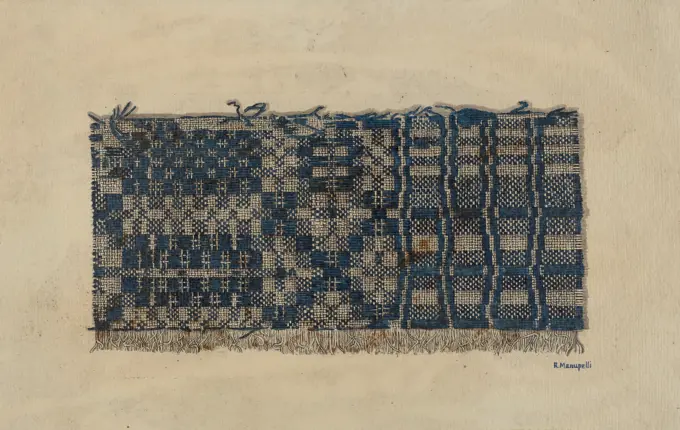
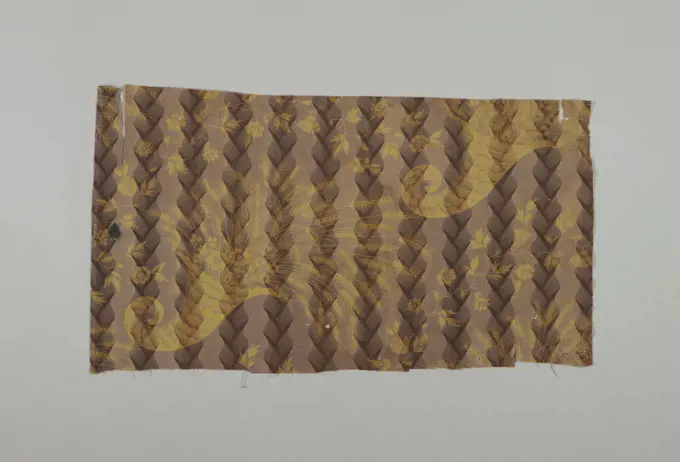
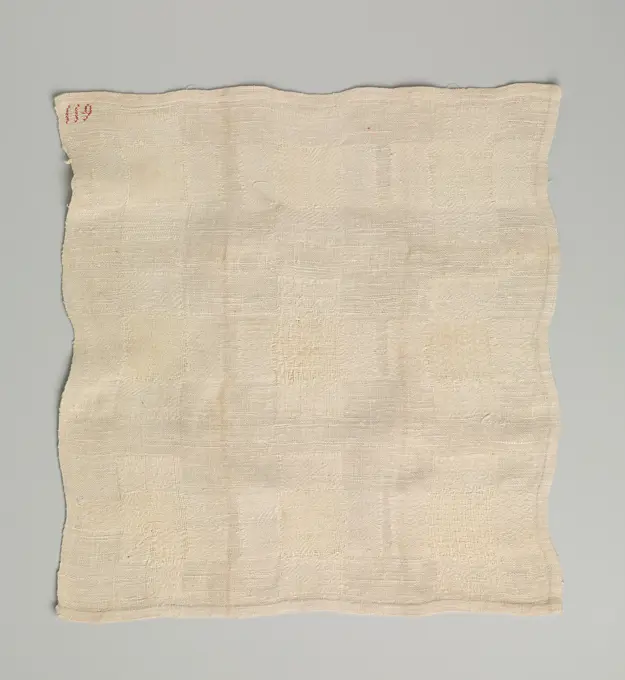
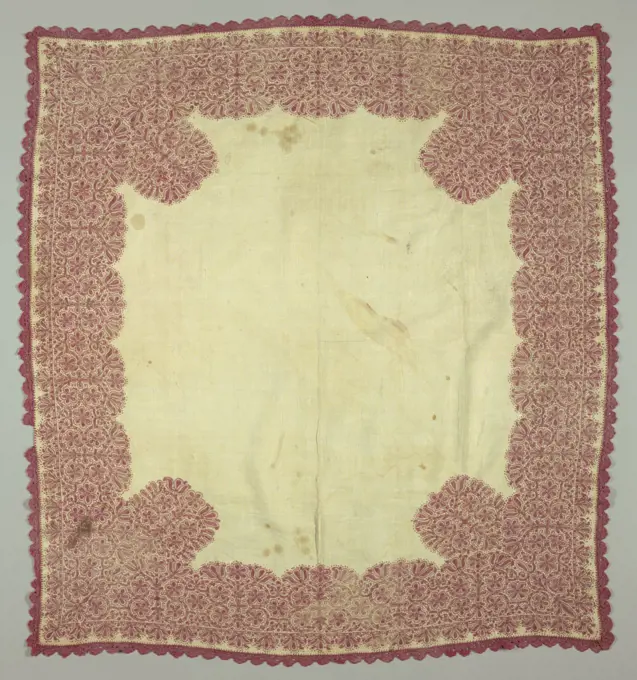
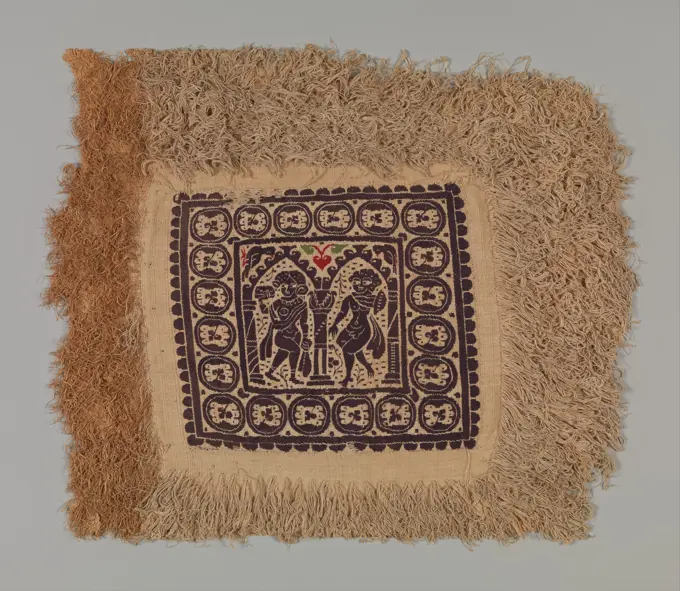
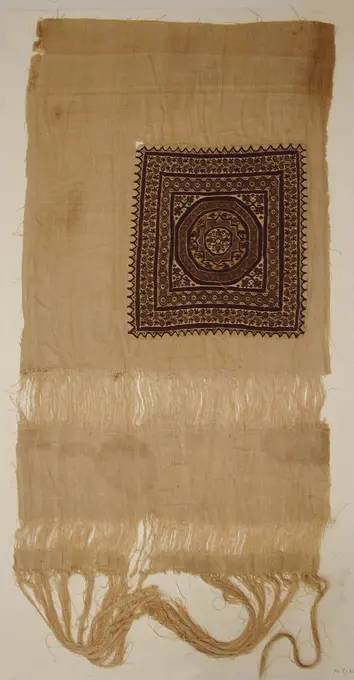
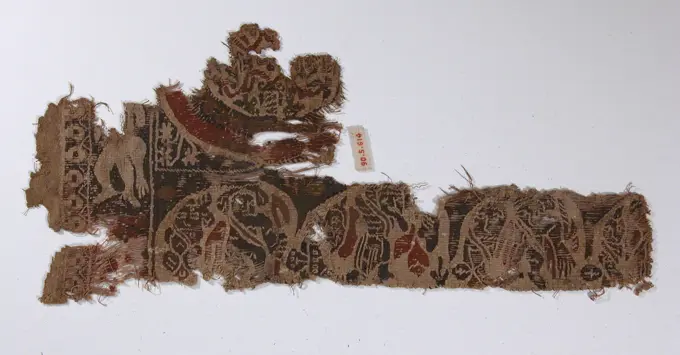
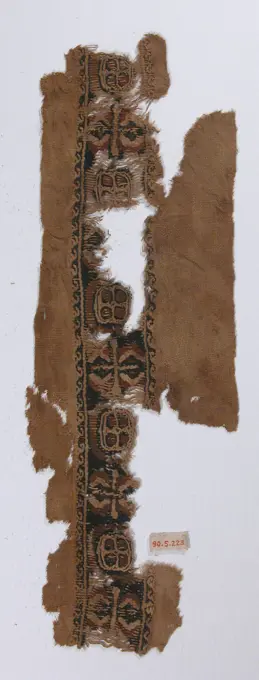
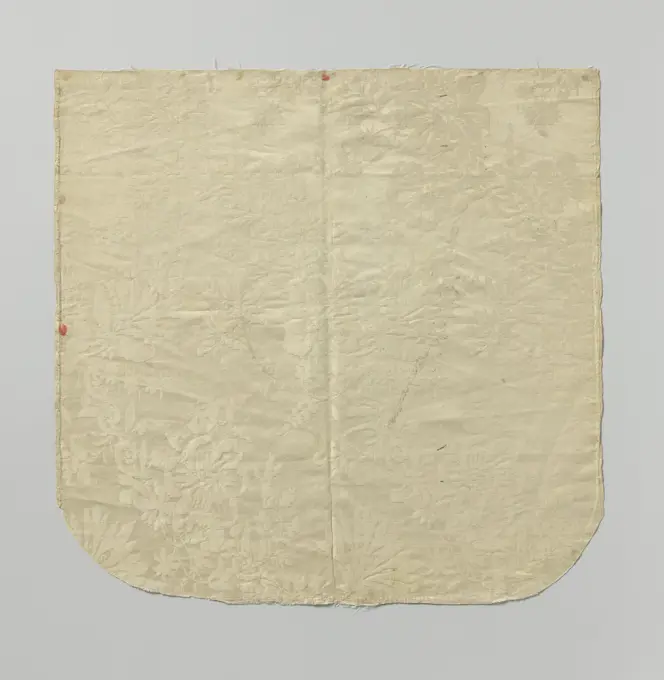
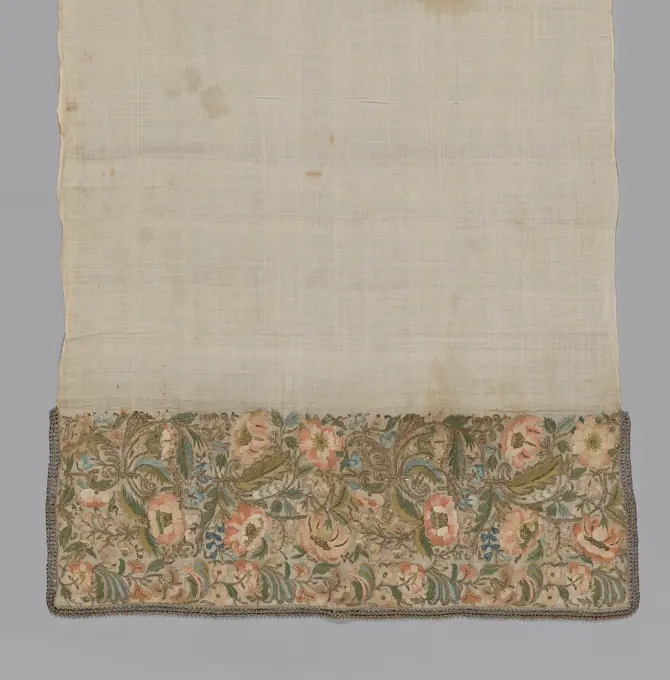
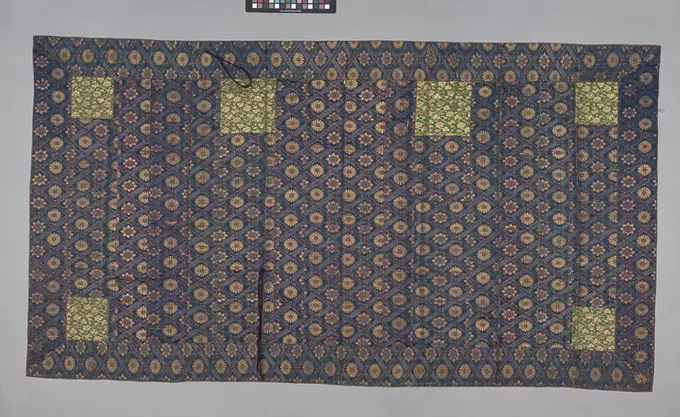
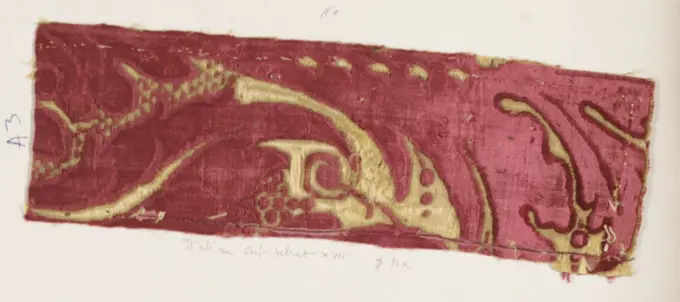
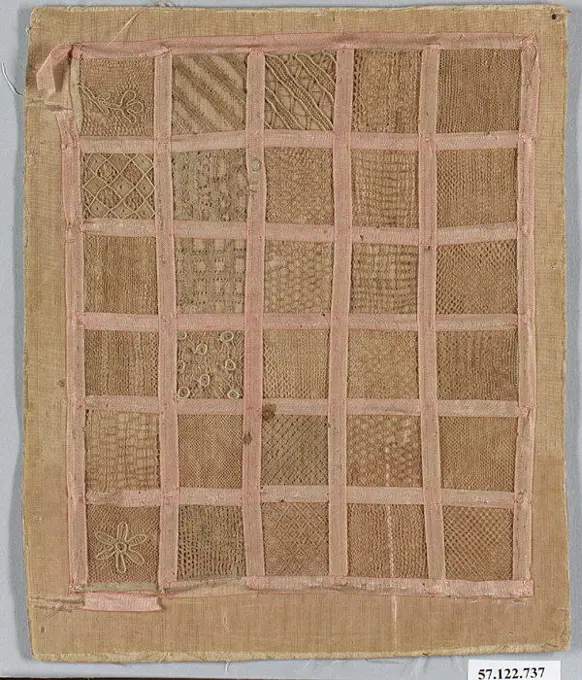
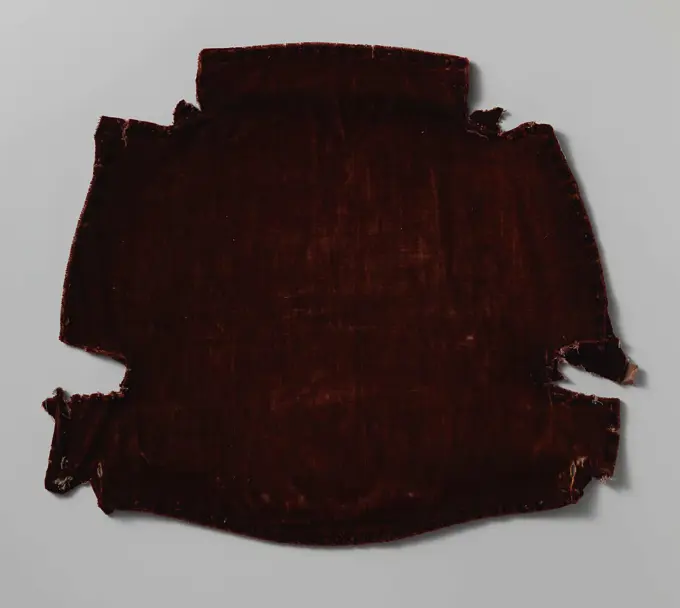
Fragment, Medium: silk, metallic Technique: supplementary warps forming raised pile in a plain weave foundation (velvet) with supplementary wefts, Leaf and pinecone() motif in tan and gold., 17th century, woven textiles, FragmentFragment 17th century Italian. Fragment 230182Coif Made 1601-1625 England. Linen, plain weave; cut and drawn work in antique hem, double-rowed openwork, interlocking lace, overcast, and satin stitches; darned and overcast bars; darned and woven wheels; darned squares; woven picots; embroidered with silk and linen in bullion, satin and square chain stitches; buttonhole wheels and eyelet holes; edged with buttonhole loops .Length of Velvet, 1600s. Italy, 17th century. Velvet; silk; overall: 254 x 50.2 cm (100 x 19 3/4 in.).Uchishiki (Altar Cloth). Japan. Date: 1775-1800. Dimensions: 63.2 x 69.9 cm (24 7/8 x 27 1/2 in.). Fancy compound satin. Origin: Japan. Museum: The Chicago Art Institute, Chicago, USA.Fragment late 16th century Italian. Fragment 230525Women's non -circle;  beginning of the 20th century (1901-00-00-1910-00-00);gift (provenance), collarWaist Wrapper(Sarung)Fragment 17th century Italian. Fragment 230044Fragment zijdeweefsel.Fragment of dark red silk with pattern of pomegranates enclosed by spiral rails, formed by leafwork filled tape work.Woman's Coif (England); linen, silver thread; Bequest of Richard Cranch Greenleaf in memory of his mother, Adeline Emma Greenleaf; 1962-53-6Fragment rode en gele brocatel met gestileerde bloemmotieven.Fragment with pattern of stylized flower pots between which sampling band work. Colors red and yellow.Fragment (Italy); Bequest of Marian Hague; 1971-50-212Excerpt red and yellow brocatel with stylized floral motifs, anonymous, 1500 - 1599 Fragment with pattern of stylized flower pots between which diagonally hanging tire work. Colors red and yellow. Spain Ketting an element: Silk. Entry: Linen (Material) broach Fragment with pattern of stylized flower pots between which diagonally hanging tire work. Colors red and yellow. Spain Ketting an element: Silk. Entry: Linen (Material) broachTextile, Medium:wool Technique: tapestry weave and soumak, Wide band showing lions in octangonal medallions with border of latticework. Maroon design on a tan ground., Egypt, 6th-7th century, woven textiles, TextileCuffs; cotton on linenFragment, Medium: linen Technique: applique and embroidery, Light brown rectangular fragment with a central geometrical form surrounded by scrolling bands., Belgium or France, early 17th century, embroidery & stitching, FragmentTextile Fragment 5th-6th century Coptic. Textile Fragment 475226Fragment 16th century Italian. Fragment 230548Textile Fragment, undetermined Inca/Moquegua. , 600-1532. Camelid fiber, 5 3/4 × 10 1/2 in. (14.6 × 26.7 cm).   Arts of the Americas 600-1532Fragment of a Russian sash Earthly, Dani OFragment, Medium: silk Technique: complementary weft 2/1 twill, Concentric lozenge diaper in dark blue and rose., Spain, 13th century, woven textiles, FragmentFragment silk tissue of a seat cover., C. 1805 Fragment yellow silk tissue, from a seat cover. The pattern has pink palmets and arabesks on a yellow ground. The fragment is part of thirteen fragments with invnr. BK-1992-18-A to BK-1992-18-M. France silk Fragment yellow silk tissue, from a seat cover. The pattern has pink palmets and arabesks on a yellow ground. The fragment is part of thirteen fragments with invnr. BK-1992-18-A to BK-1992-18-M. France silkA fragment of Coptic fabric unknownSquare, Medium: linen warp, linen and wool wefts Technique: plain weave with discontinuous wefts (tapestry); open slits, supplementary weft wrapping, Square of purple tapestry cut from its linen foundation. Geometric pattern based on interlocking circles., 4th-5th century, woven textiles, SquarePiece 16th-17th century Italian. Piece 215522Handkerchief (USA); cottonHead Scarf, 33 x 11 1/2 in. (83.82 x 29.21 cm), Cotton, metallic threads, ChinaFragment green silk damest. A fragment of green damask. The symmetrical pattern has flower branches and leaves between which pagodane motifs and irregular striped geometric figures.Fragment Made 1860 Central Europe. Silk, plain weave; block printed .White Linen Piece, c. 1800. America, Connecticut, early 19th Century. Linen; average: 48.3 x 45.1 cm (19 x 17 3/4 in.).Fragment late 17th century Italian. Fragment 230046Fragment of a Wood with Greek Inscription. Egypt, 305 - 301 BCE. Fragments. WoodLength of Lace. Italy, late 16th to early 17th century. Textiles; textile lengths. Linen Reticello needle laceTowel Made 1701-1725 Turkey. Embroidered .Towel, 17th-18th century, 20 1/2 x 16 3/8 in. (52.07 x 41.58 cm) (open), Linen; embroidery, Greek Islands, 17th-18th centuryRaymond Manupelli, Homespun Wool, c 1938 Homespun WoolTissue fragments. 12th-13th centuries. Diocesan Museum. La Seu d'Urgell. Catalonia. Spain.Fragment veelkleurig zijde lampas.Fragment white silk tissue with a pattern of garlands, flowers and chinese houses. Note: Self side; 0.9 cm, inserted piece is not correct.Fragment, Medium: silk Technique: complementary weft 3/1 twill, Confronted birds and gazelles in yellow and red., possibly Sicily, Italy, 13th century, woven textiles, FragmentTextile, Medium: cotton Technique: printed by engraved roller, Two fragments with brown ground showing a striped pattern of curved columner design in dark brown, over printed in yellow, in a pattern of cornucopia and wheat., England, 1850-99, printed, dyed & painted textiles, TextileTextile Fragment. Turkey, 15th-16th century. Textiles; fragments. Silk satin with silk and metallic-thread supplementary weft patterningSampler, Medium: cotton, glass beads Technique: embroidered on plain weave, Sampler of white cotton with embroidery of polychrome glass beads. Twelve different border motifs. Five different floral designs in center of panel., Mexico, early 19th century, embroidery & stitching, SamplerIntermediate installation of cream -white machine side with pattern of circles, on cardboard, c. 1925 Intermediate base of cream -white machine side with pattern of circles, on cardboard. Nijmegen cardboard Intermediate base of cream -white machine side with pattern of circles, on cardboard. Nijmegen cardboardStop steak from cotton on linen. Stop steak from cotton on linen. The embroidery consists of nine stops in various stitches. At the top left the piece is marked: 119.CoverSquare, Medium: silk on linen Technique: buttonhole and seed stitches on plain weave, Embroidered pattern of tightly compacted scrolling vines and flowers in red silk on a ground of white linen. Pattern forms a border around the edge of the square with additional ornament in each corner. Square has a border of bobbin lace in the same silk as the embroidery., Italy, 17th century, embroidery & stitching, SquareFragment late 19th century China. Fragment 69918Textile Fragment 5th-6th century. Textile Fragment 444217Fragment. Central Europe. Date: 1860. Dimensions: 13.7 × 13 cm (5 3/8 × 5 1/8 in.). Silk, plain weave; block printed. Origin: Central Europe. Museum: The Chicago Art Institute, Chicago, USA.Textile Fragment 4th century The looped weft borders surrounding the central composition of dancing figures give this piece a three-dimensional quality. The accentuated length of the loops allows for a close examination of these threads and how they were spun. We have learned there is great variation in the diameter of the threads.. Textile Fragment 443368Band (China); silk on cotton; Bequest of Marian Hague; 1971-50-151Apron of edge embroidery on tulle with medallions for a zaans suit. Intended edge embroidery: Lierse lace or limerick side (tamboo work on machine tulle). Rectangular model with a spreading pattern of twigs. Along the lower edge, a wide pattern of a repeating composition with ascending and oblique lines. The partly symmetrical composition consists of three flattened oval flowers or consoles, from which it rises straight upwards. Among the middle console is a circular medallion, filled with a diamond pattern and surrounded by a laurel wreath. The other two consoles are diagonally under the middle with which they are connected to rosette flowers with a floral drink. Between the consecutive compositions, a rosette flower is clamped between two loose round medallions. Along the slight sloping edge a pattern of lying s-volutes of pearl necklace and feathered leaves, scrolling round medallions filled with a pattern of sloping lines.Fragment (Italy); silk and gilded parchment wrapped around linen core; Warp x Weft: 14 x 17.8 cm (5 1/2 in. x 7 in.)Shirt front, Medium: silk on linen Technique: embroidered, Fragment of a shirt front with an embroidered yoke of small, multicolored geometric patterning., Egypt, 13th century, embroidery & stitching, Shirt frontFragment of a Sleeve 4th-5th century. Fragment of a Sleeve 443874Fragment of a Sleeve 3rd-4th century. Fragment of a Sleeve 443888Fragment, Medium: silk Technique: supplementary warp forming raised pile in plain weave foundation (velvet), then embossed., Worn red plain velvet stamped (embossed) with pattern of broken scrolls and leaf motifs., 17th century, woven textiles, FragmentTextile Fragment 3rd-4th century. Textile Fragment 444359Textile Fragment ca. 1700. Textile Fragment. ca. 1700. Silk and metallic thread. Country of Origin India. TextilesTextile Fragment 4th century. Textile Fragment 444093. Elongated scarf of wool and silk with an unmedged natural mirror, a wide border with ten upwards to the right curled botas between which floral motifs, framed by two narrow tires with fine leaves. In addition, smaller botas, interspersed with leaf motifs. Along the long side a narrow-saggered band with small blue and yellow flowers.Fragment Made 1000-1476 Peru. .Fragment of a Tunic 5th-6th century. Fragment of a Tunic. 5th-6th century. Wool, linen; plain weave, tapestry weave. Attributed to Egypt. TextilesSampler (Germany); linen embroidery on linen foundationFragment; silk; Warp x Weft: 15.9 x 35.2 cm (6 1/4 x 13 7/8 in.)Fragment of r Coffee tunics; Egyptian workshop; VII-IX century (601-00-00-900-00-00);Piece 17th century Japan. Piece 71133Tkanina koptyjska. warsztat egipski, workshopFragment white silk dam mast with pattern of flower vines and showers, anonymous, c. 1750 - c. 1775 Fragment white sides damask with a pattern of parallel flower garlands with loose showers between them. Netherlands silk damask Fragment white sides damask with a pattern of parallel flower garlands with loose showers between them. Netherlands silk damaskTrimming; cotton; 44.5 x 87 cm (17 1/2 x 34 1/4 in. ); 1969-147-1Fragment (Egypt); warp; s-spun z-twist linen. weft; s-spun linen, s-spun woolsTextile, early 1600s. Italy, early 17th century. Velvet; overall: 66 x 27.9 cm (26 x 11 in.).Fragment (Border) Made 1501-1600 Italy. Linen, needle lace work on a plain weave cut and drawn threadgrid; glass beads; embroidered in double hem and overcast stitches .Towel or Napkin Made 1850-1900 Turkey. Embroidered in silk . AnonymousFragments from a Hanging (), 800s - 900s. Egypt, late Abbasid - early Tulunid period, 9th - 10th century. Tabby weave with inwoven tapestry ornament, linen and wool; overall: 25.7 x 18 cm (10 1/8 x 7 1/16 in.).Fragment of Coptic fabric unknownFragment of a Tunic 5th-6th century. Fragment of a Tunic 443773Priest's Robe (Shichijo). Culture: Japan. Dimensions: 45 x 81 in. (114.30 x 205.74 cm). Museum: Metropolitan Museum of Art, New York, USA.Embroidered Pillow Case, 19th century. Morocco, Salé, 19th century. Embroidery: silk on cotton tabby ground; average: 54 x 39.4 cm (21 1/4 x 15 1/2 in.).Fragment, Medium: silk, metallic, linen Technique: complementary weft 2/1 twill, Eight-pointed star made by interlaced squares on a beige and bronze background. Fleur de lis at star points and flower at center., Spain, 15th-17th century, woven textiles, FragmentFragment 17th century Italian. Fragment 230064Piece 17th-19th century China or Japan. Piece. China or Japan. 17th-19th century. Silk, metallic thread. Textiles-WovenTextile, Medium: linen, silk Technique: chain stitch embroidery on plain weave, Fragment of linen with large eight-pointed floral rosette in silk chain stitch, with orange outline and with dark blue petals and center outlined within this. Set close to border of double row of dark blue chain-stitch. Plain selvage turned under this and hand-hemmed., Egypt, 12th-13th century, embroidery & stitching, TextileTissue fragment with loops tissue and studs. Natural tissue fragment. The largest portion of the plane is filled with a geometric pattern of squares and meanders formed by a loop tissue in dark purple wool and natural linen. Below a stripe pattern of strips long loops interspersed with short loops in dark purple wool and natural linen with a running dog motif within two lines. The wide strip on the right side also consists of long loops.Fragments of embroidery unknownFragment 9th century. Fragment 445198Fragment zijdelampas.Fragment (4) of silk tissue with gold and silver wire, with a pattern of large flowers.Cushion, Medium: silk, metal Technique: embroidered, Small rectangular cushion of deep rose satin embroidered in flat gold, gold thread and sequins. Tassels of metallic thread at the corners. Conventionalized floral motifs at corners., France or Italy, 17th century, embroidery & stitching, CushionGallon;  2. PO. 18th century (1751-00-00-1800-00-00);Trimming, Medium: cotton Technique: knotting (macramé) using square knots, half knots, double half hitches and a chain of half hitches., Long panel with a horizontal repeat of triangles made up of knots and open spaces., late 19th century, knotted, knitted and crocheted textiles, TrimmingStrip bobbin with church window or "Kyrkfönster", Anonymous, c. 1800 - c. 1899 Strip of natural -colored side, Swedish side. The strip is attached to a light blue cardboard with pins, with four other strips. At the top of the cardboard is "Wadstena. Sweden." Written and under the strip is "Church Windows. (Kyrfönster.)". The repeating pattern consists of two standing rectangles. One rectangle is made in linen battle with a rosette -shaped recess. The other rectangle is filled with a decorative soil with a pattern in which a diamond-shaped rosette is made with above it two zigzag arches in linen battle, which are connected by crossing pairs. There are contours made with wire bundles around the rectangles. The top and bottom of the strip are straight. On the strip hangs a red thread with a gold -colored seal on which three spools are depicted on one side and on the other side a monogram with a V and an Ö (vadstena Östergötland). Vadstena linen (material) bobbin lace / Swedish lace Strip Belt fragment 17th century Peruvian. Belt fragment 17704Piece of fabric. unknown, authorStockings 16th century Italian. Stockings. Italian. 16th century. linen, silk and metal threadKleed van rood zijden fluweel met een satijnen voering..A dress of red silk velvet, composed of eight pieces, some of which with traces of stitching. On three sides lined by dark tinted gold-galon. Red Satin lining.Top of embroidered pall unknownSampler 19th century German. Sampler 228660Chair covers of red velvet. Chair covers of red velvet. The covering is made for a seat seat.Textile Fragment, undetermined Chimú. Textile Fragment, undetermined, 1000-1532. Cotton, 1 3/16 x 3 15/16 in. (3 x 10 cm).   Arts of the Americas 1000-1532