Artistic Textile Fragments

Historical textile fragments showcasing intricate designs and craftsmanship in silk and linen, reflecting cultural and artistic heritage.

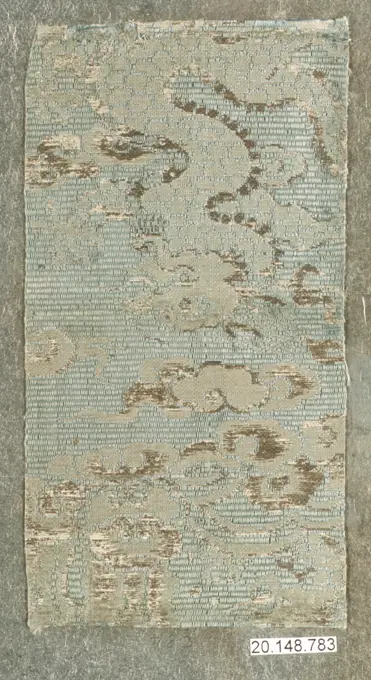
Fragment, Medium: silk, metallic Technique: supplementary warps forming raised pile in a plain weave foundation (velvet) with supplementary wefts, Leaf and pinecone() motif in tan and gold., 17th century, woven textiles, Fragment
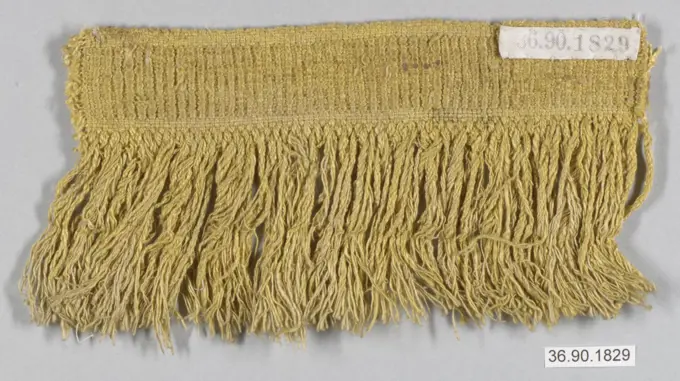
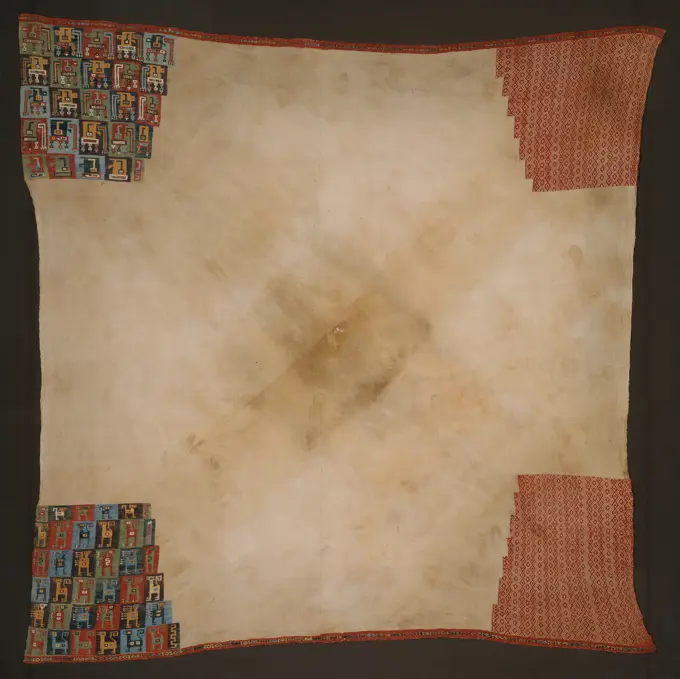
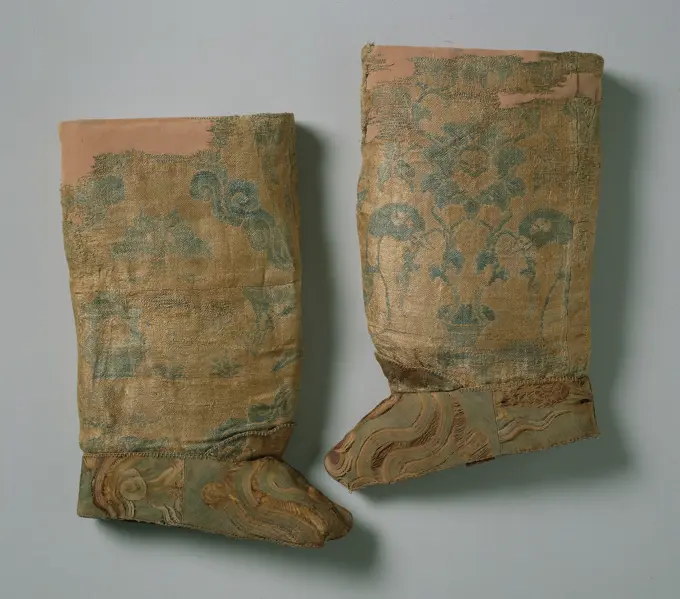
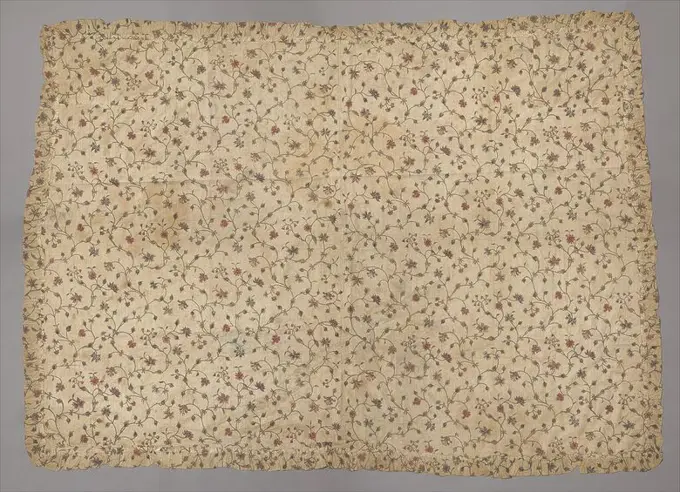
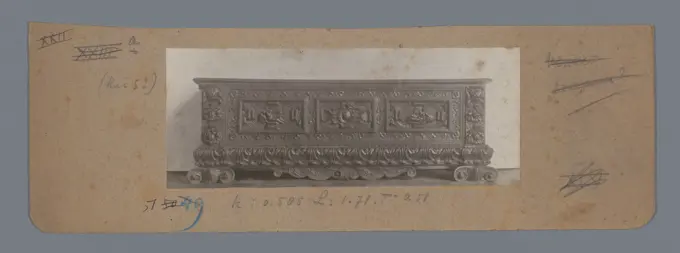
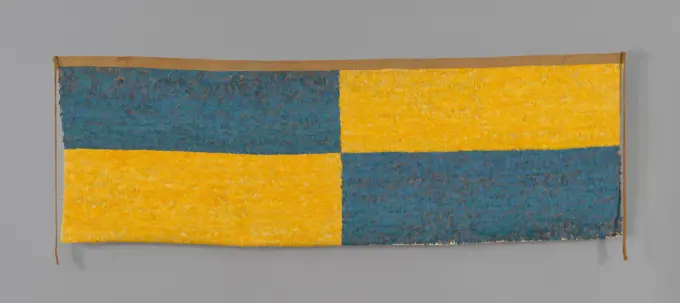
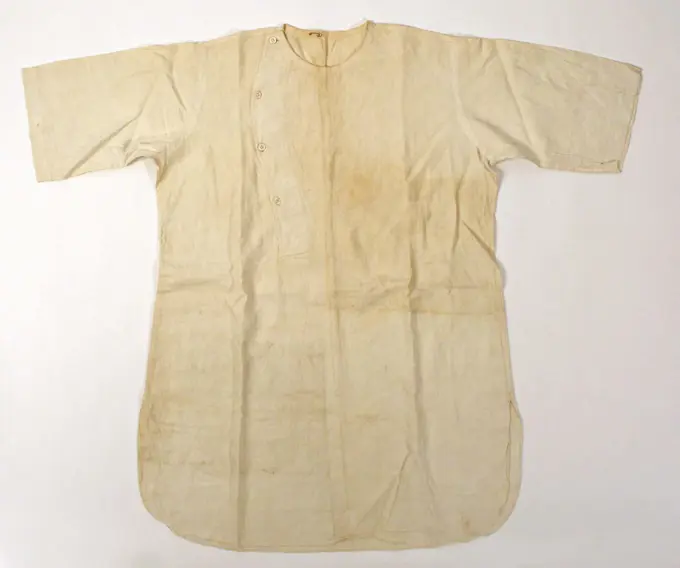
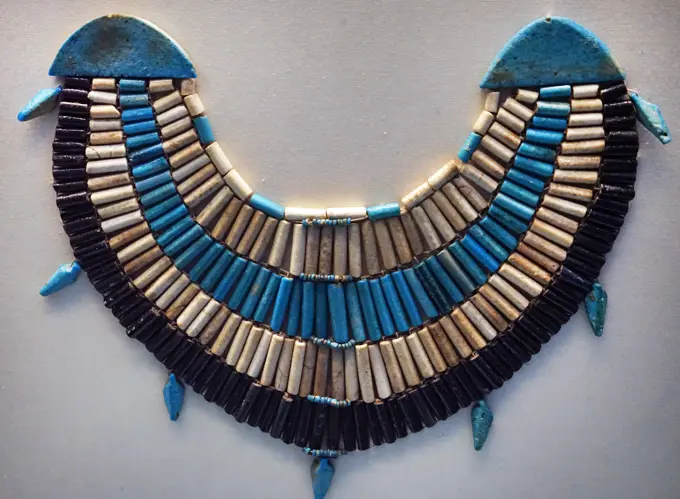
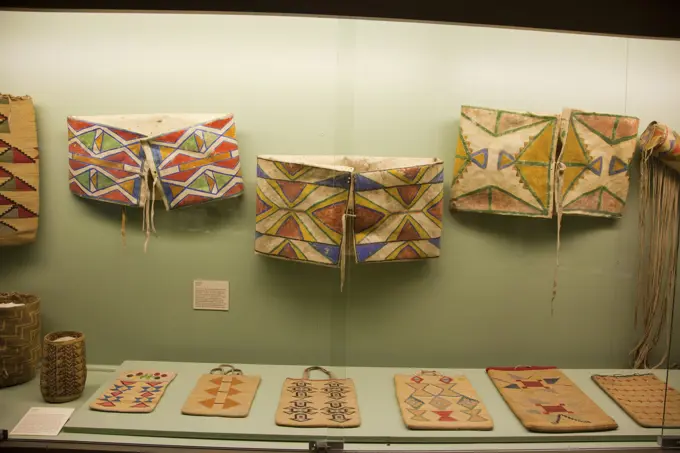
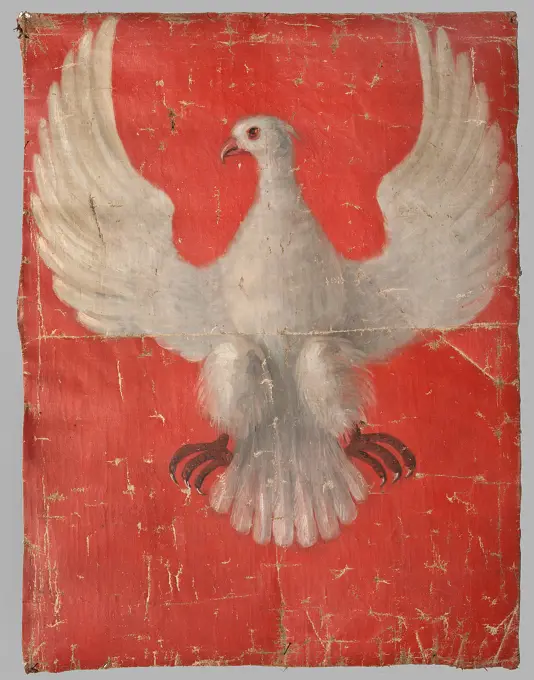
Bodice ca. 1860 American or European. Bodice 108131Conciliate belt;  18th century (1701-00-00-1800-00-00);Cowrie Shell Girdle, Lion Bracelets, Bracelets with the Name of Amenemhat III, and Anklets of Princess Sithathoryunet Middle Kingdom ca. 1887-1813 B.C. Along with the pectoral, these bracelets, anklets, and girdle seem to have belonged to a set of formal jewelry that may have been worn during a special rite. Although the objects share a color scheme, variations in manufacture suggest they were accumulated over time. All the pieces were reconstructed from loose elements found scattered around Sithathoryunets decayed boxes. The bracelets are inlaid with the name of King Amenemhat III. The girdle, whose shells have erotic associations, was worn around the hips. Each contains small pellets that would have made a soft sound when the woman walked or danced. View more. Cowrie Shell Girdle, Lion Bracelets, Bracelets with the Name of Amenemhat III, and Anklets of Princess Sithathoryunet. ca. 1887-1813 B.C.. Gold, carnelian, turquoise, feldspar, pellets of copper-silver alloy. Middle Kingdom. FrTrimming (France); silk and metal; 1907-30-7Vessel fragment ca. 1390-1353 B.C. New Kingdom. Vessel fragment. ca. 1390-1353 B.C.. Pottery, paint. New Kingdom. From Egypt, Upper Egypt, Thebes, Malqata, Palace of Amenhotep III. Dynasty 18Waist Cloth from the model or a 74-gun ship of the line. Switching red cotton slippers with white piping.Baby carrier, 45 5/16 x 17 1/4 in. (115.09 x 43.82 cm), Cotton, silk, wool, velvet, sequins, metallic bands; needlework, ChinaFringe early 18th century French. Fringe 224916Carrying Cloth or Shawl. Peru, South Coast, Wari, 600-850. Costumes. Camelid fiber and cotton plain weave with supplementary weft patterning borders of complementary weft weave and weft-faced plain weaveFragment silk tissue of a chair covering, c. 1805 Fragment yellow silk tissue, from a seat cover. The pattern has pink palmets and arabesks on a yellow ground. The fragment is part of thirteen fragments with invnr. BK-1992-18-A to BK-1992-18-M. France silk Fragment yellow silk tissue, from a seat cover. The pattern has pink palmets and arabesks on a yellow ground. The fragment is part of thirteen fragments with invnr. BK-1992-18-A to BK-1992-18-M. France silkQanun. Culture: Turkish. Dimensions: D. 3 11/16 × L. 38 1/16 × W. 15 1/2 in. (9.3 × 96.6 × 39.4 cm). Date: 19th century.Although the term qanun(kanun) appears in the thirteenth century, the trapezoidal plucked zither (psaltery) used today probably originated in Egypt or Syria during the 18th century. Today it is distributed throughout the Middle East, North Africa and parts of Asia. The adjustable levers on the oblique side (player's left), called mandal ("that which supports") in Turkish and orabe ("carriage") in Arabic, raise the pitch of each triple course of gut or nylon strings. This permits the player to use several tones, often shown as scales, that satisfy a makam (a melodic pattern combined with stock phrases and ornaments). The bridge supporting the strings is placed upon a belly ("wajh") traditionally made of fishskin. Placed on a small table the kanun's 72 strings, grouped in 24 courses, are plucked with metal plectra attached to the player's index fingers. Modern kanuns aPair of Boots, 1000 - 1125. China, Northern, Liao dynasty (907-1125). Compound twill, silk; tapestry, silk and gold; tabby, silk; gauze, silk; silk batting; leather; overall: 34.9 x 25 cm (13 3/4 x 9 13/16 in.). The fabric and tailoring of garments have always defined social status. For these boots, different outer fabrics were used: a patterned silk for the leg portion, and tapestry (kesi) for the foot. Since both were considered luxury fabrics, they were pieced together from remnants too precious to discard. Consequently, the silk pattern was not used in relation to the form of the boot, as seen in some other imperial boots. By contrast, these boots would have been made for a court official, not a member of the imperial family. The patterned silk was woven with geese flanking a vase of flowers on a stand and surrounded by cloud scrolls. The Chinese motif of flowers arranged in a vase was adopted by the Liao during the 11th century and indicates an 11th- or early 12th-century date foFROPLE;  18th century (1701-00-00-1800-00-00);Coverlet. Culture: Indian, for European market. Dimensions: L. 76 x W. 57 3/4 inches (193.0 x 146.7 cm)2 3/4 inch (ruffle on all sides)7.0 cm. Date: 18th century. Museum: Metropolitan Museum of Art, New York, USA.Handkerchief, Medium: piña (pineapple) fiber, cotton Technique: embroidered, Square handkerchief with a border of drawn work and corners decorated in a vine motif. Hemmed edges., Philippines, 1800-1850, embroidery & stitching, HandkerchiefCase decorated with two female figures and a cartouche (presumably) in the Rijksmuseum in Amsterdam, c. 1875 - c. 1900 photograph  Rijksmuseum Amsterdam photographic support  chest, coffer. ornament ~ cartoucheTextile Fragment 5th-6th century. Textile Fragment 444265Feathered Panel A.D. 600-900 Wari The discovery of an ancient burial or ceremonial site in the upriver region of the Churunga Valley, in far south Peru, received little attention in the turbulent world of 1943. Decades later, it would take two generations of Andean scholars to painstakingly piece together the puzzling story of this discovery, which included the largest and most spectacular find of Precolumbian Peruvian feather work to date.Protected from decay by being rolled, placed into large ceramic jars, and buried in the arid soil, the cache included an estimated ninety-six panels, each densely covered with tens of thousands of small glossy macaw body feathers, primarily from the blue and yellow macaw (Ara ararauna). Although these panels were found in the dry western foothills of the Andes, the birds home is the Amazonian rainforest, far to the east. The effort required to secure such a mind-bogglingly large supply of either feathers or live birds suggests that colorful feathersFringe 18th century () European. Fringe 225127Fragments (Egypt); cotton; Warp x Weft (a): 43.2 x 66 cm (17 x 26 in.) Warp x Weft (b): 30.8 x 14 cm (12 1/8 x 5 1/2 in.) Warp x Weft (c): 20.3 x 17.8 cm (8 x 7 in.); 1948-107-1-a/cIberian decorative plate for belt clasp, silver and gold, Huelva Museum, Huelva, Andalusia, Spain.DETALLE DEL CINTO DEL INFANTE FERNANDO DE LA CERDA S XIII. Location: MONASTERIO DE LAS HUELGAS-MUSEO DE RICAS TELAS. BURGOS. SPAIN.Fragment; silk, metallicFringe (Spain); silkCombInterestive, off -white, with a wavy line and light blue flowers, Gustav Schnitzler, c. 1920 Intermediate base, off -white, with a wavy line and light blue flowers. NijmegenFrance (possibly) . Intermediate base, off -white, with a wavy line and light blue flowers. NijmegenFrance (possibly) .Pajamas 1890 American. Pajamas 91604Piece 17th century China. Piece 71772Dance Blanket with Diving Whale and Raven Motifs. Chilkat Tlingit; Southeastern Alaska, United States. Date: 1880-1900. Dimensions: 176.1 x 138.5 cm (69 1/4 x 54 1/2 in.). Wool and bark, dovetail and single interlocking, discontinuous weft, alternate pair weft twining; extended float twining, eccentric weft twining, and three-strand weft twining; main warp cut fringe; edges of twill oblique interlacing terminating in cut fringe; additional knotted fringe. Origin: Northwest Coast. Museum: The Chicago Art Institute, Chicago, USA.Textile Fragment 5th century. Textile Fragment 443734Four empty vintage tin signs on a white background Four empty vintage tin signs on a white background Copyright: xZoonar.com/BorisxZerwannx 16119730Fes, Morocco. Hand loomed Berber rugs. Work in progressWoman's Robe with "Longevity" Medallions. Culture: China. Dimensions: Overall: 56 1/2 x 57 in. (143.5 x 144.8 cm). Date: 19th century.This robe, when worn with a matching dark blue coat (also in the Museum's collection), would have been appropriate formal wear for the wife of a nobleman or official on auspicious occasions such as birthdays. Each of the medallions combines the character for longevity (shou) with a pair of swastikas (wan), denoting ten thousand years. Museum: Metropolitan Museum of Art, New York, USA.Panel with Rabbits amid Clouds. Culture: China. Dimensions: 40 1/2 x 33 1/2 in. (102.9 x 85.1 cm). Date: late 16th-early 17th century.The rabbits running among clouds are intended to symbolize the moon, which is inhabited by rabbits in Chinese tradition. Richly brocaded with gold thread, this textile is both luxurious and auspicious. A similar length of gauze was found at Dangling, the mausoleum of the emperor Wanli (r. 1573-1620) in suburban Beijing, and it seems likely that this piece dates from the same period. Museum: Metropolitan Museum of Art, New York, USA.Dakota Native American War Shield Artist: UnknownSampler, Ramoncita Pita, Medium: silk embroidery on cotton foundation Technique: embroidered in cross, four-sided cross, and running stitches on plain weave foundation, Alphabets, floral and geometric pattern bands, and spot motifs of animals embroidered in red with small touches of green and purple on a natural ground., Mexico, 1861-1862, embroidery & stitching, SamplerKneeling mat with bats on swastika-fret ground China. Kneeling mat with bats on swastika-fret ground 69867Broad collar of faience beads from Deir el-Bahri. Dated 2000 BCUSA, Washington, Columbia River Gorge National Scenic Area, Maryhill Museum, Native American Indian rawhide containersOne -sided penalty;  1863 (1863-00-00-1863-00-00);gift (provenance), pennant