Artistic Tsuba Designs

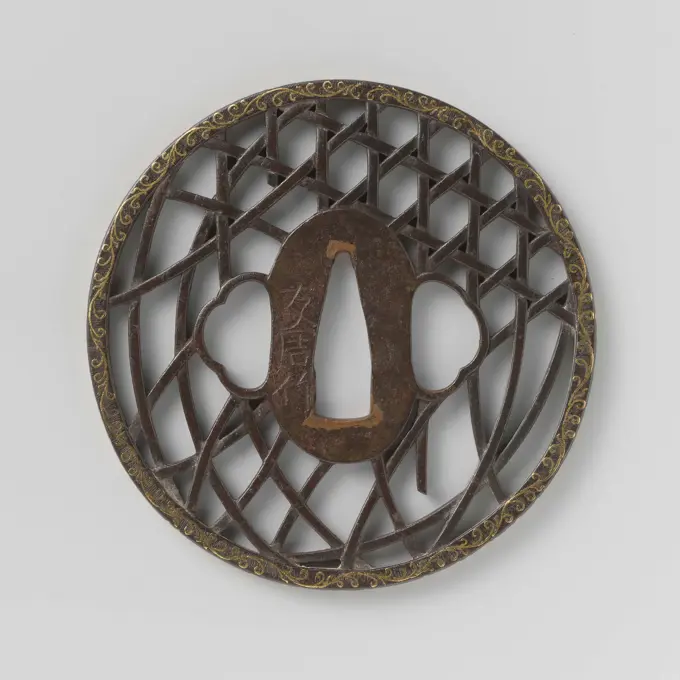
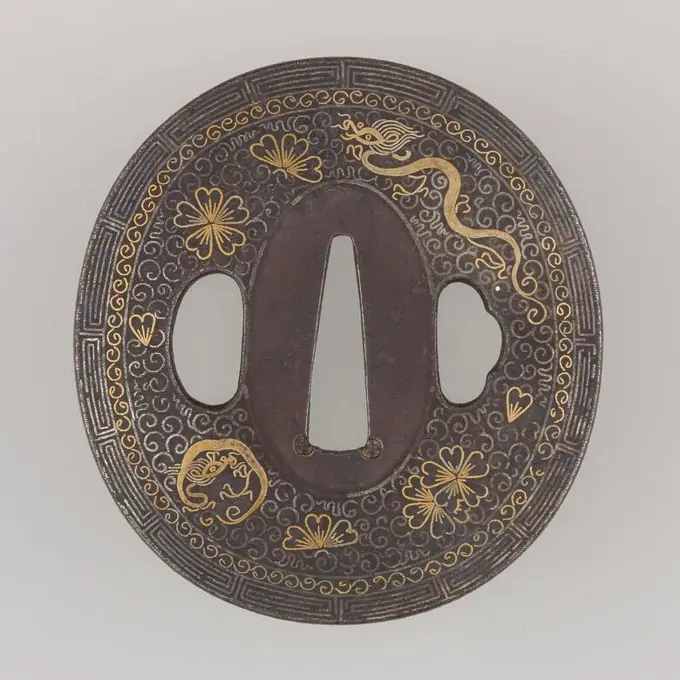
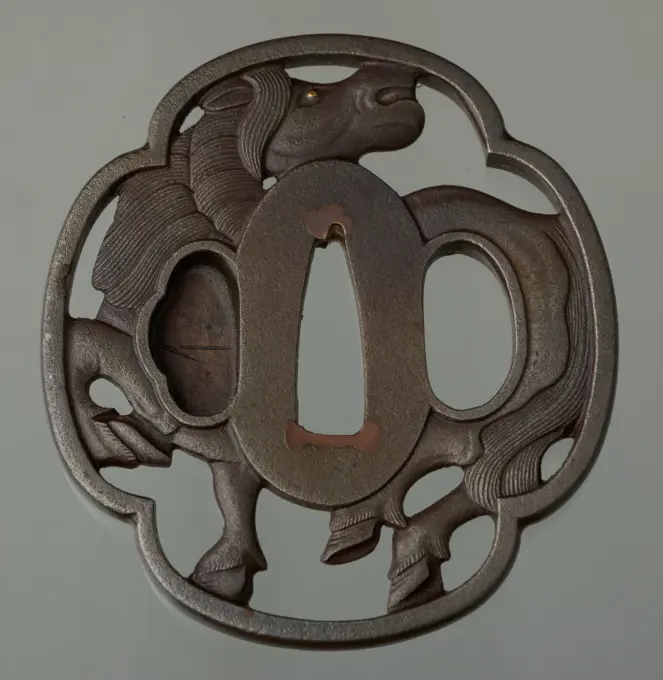
Intricate sword guards featuring detailed designs and motifs, exemplifying traditional craftsmanship and artistic expression.

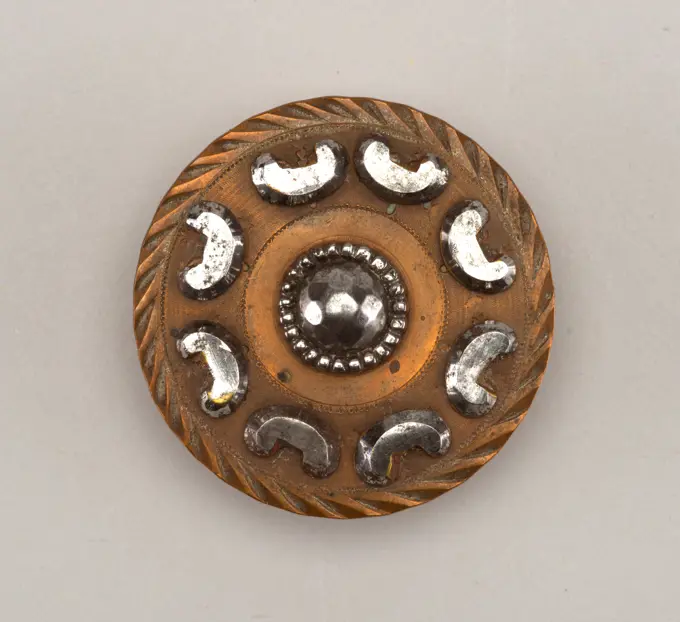
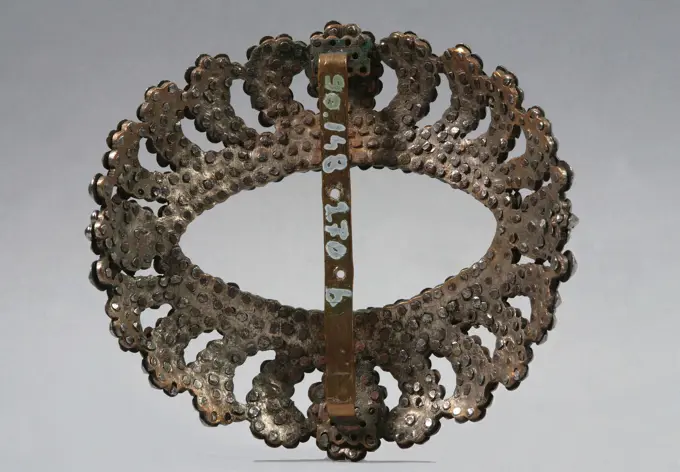
Button, Copper, steel beads, England, USA, 18th-19th century, costume & accessories, Decorative Arts, Button
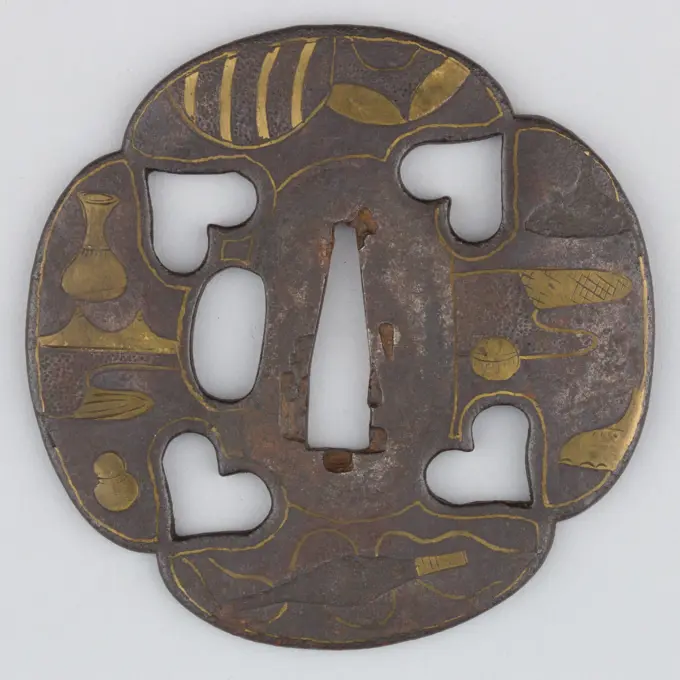
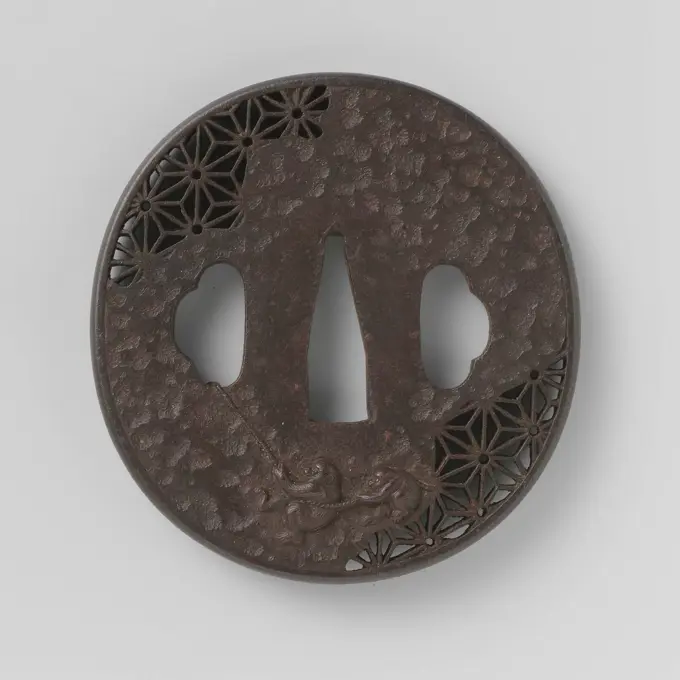
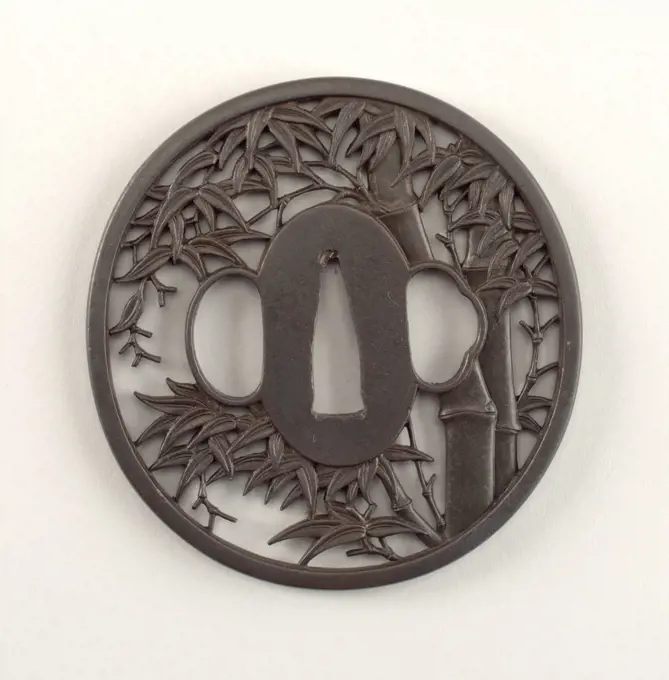
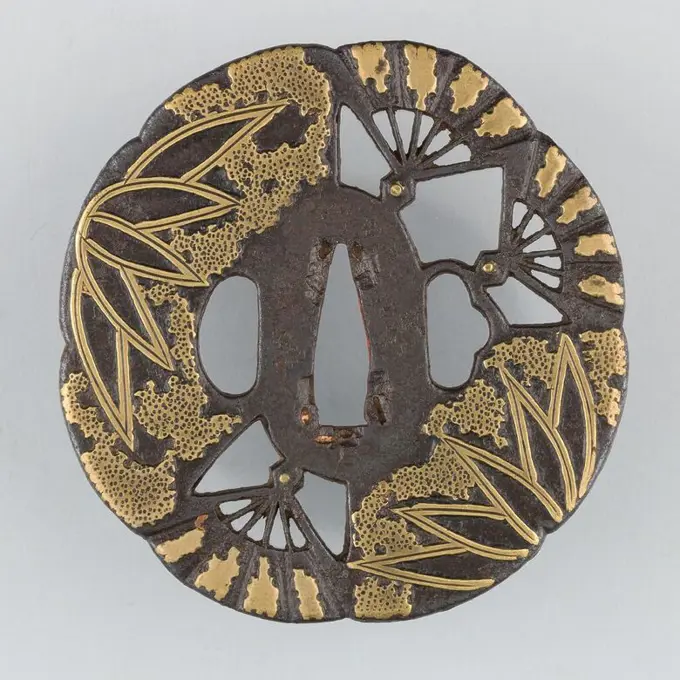
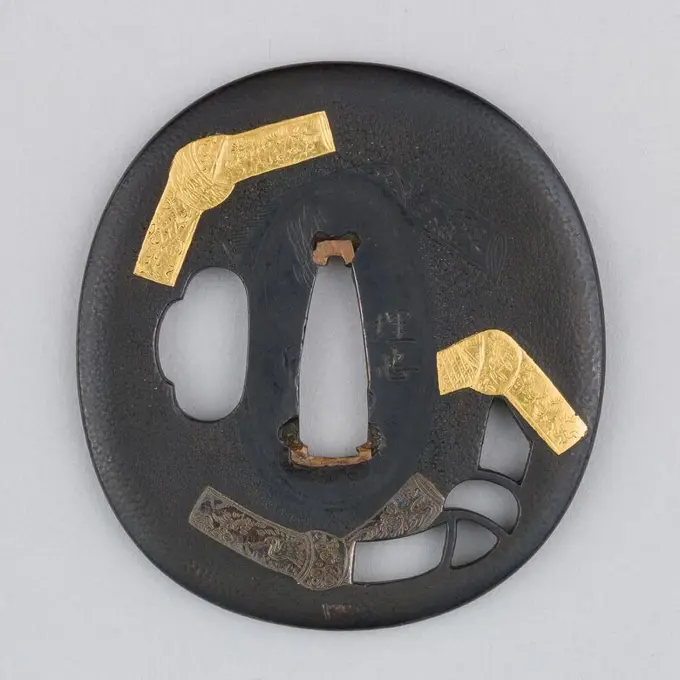
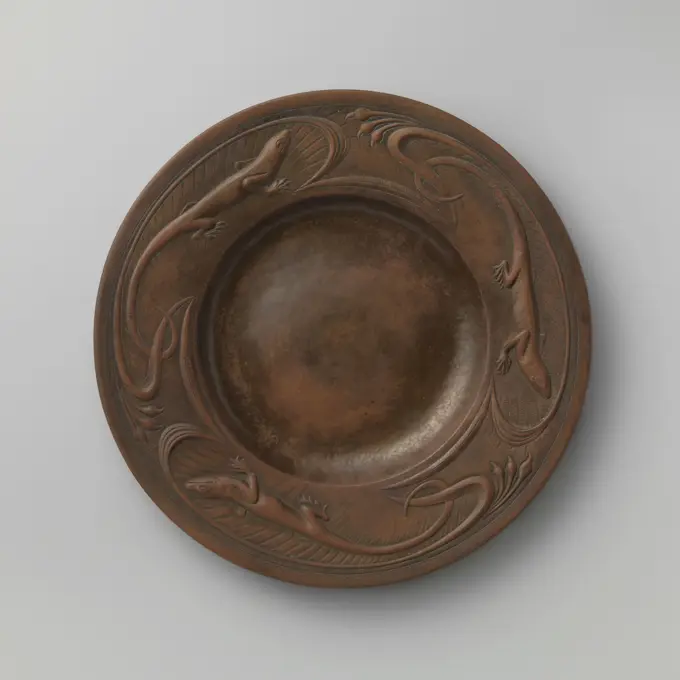
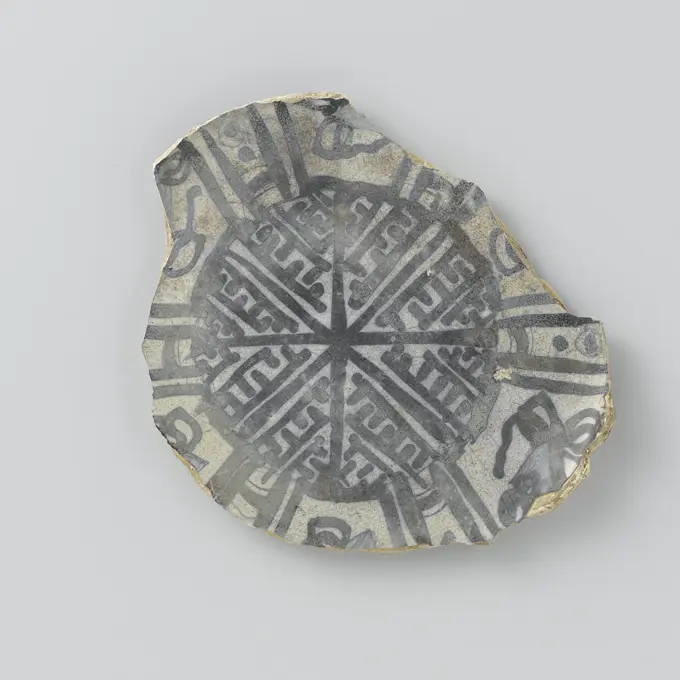
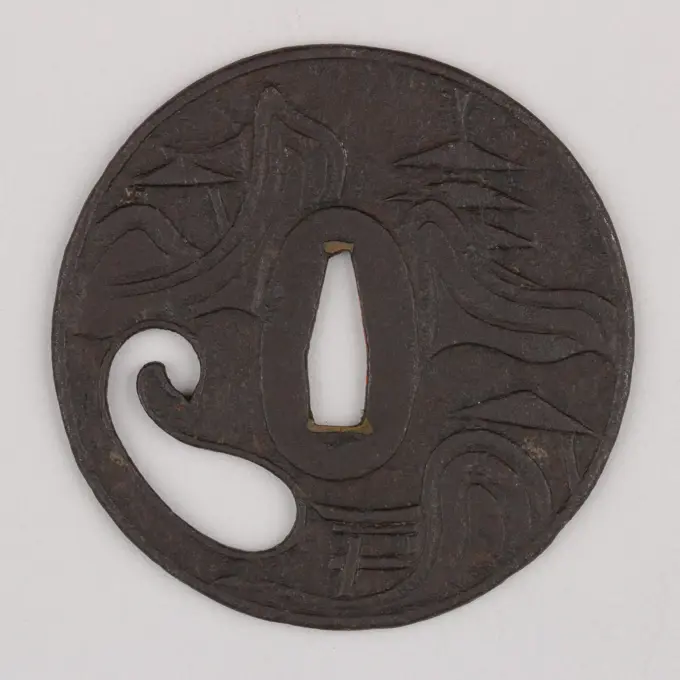
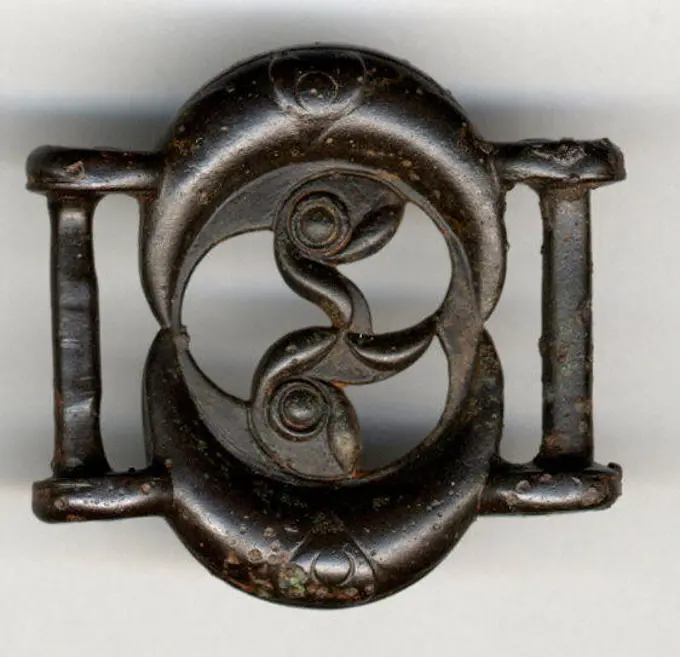
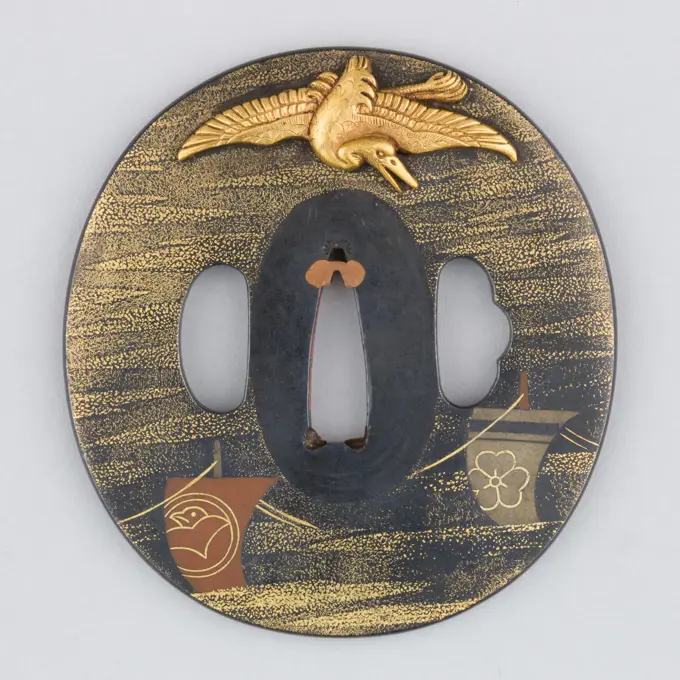
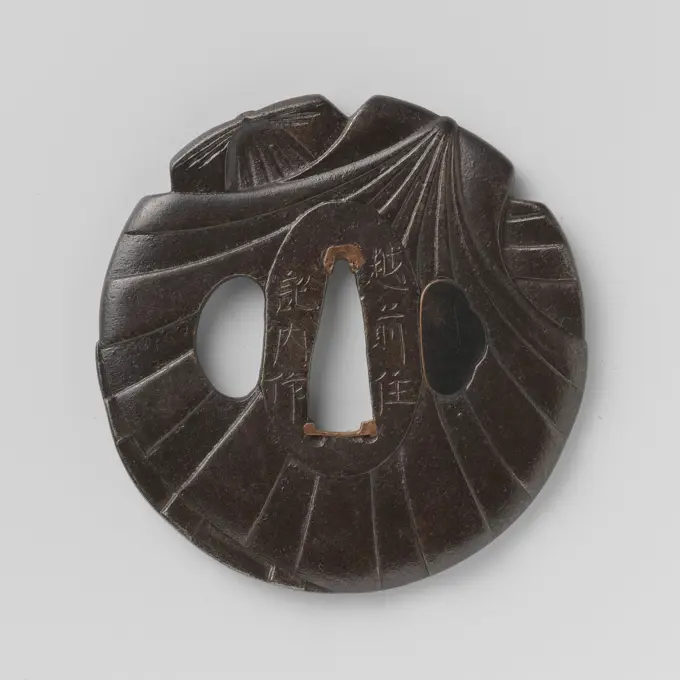
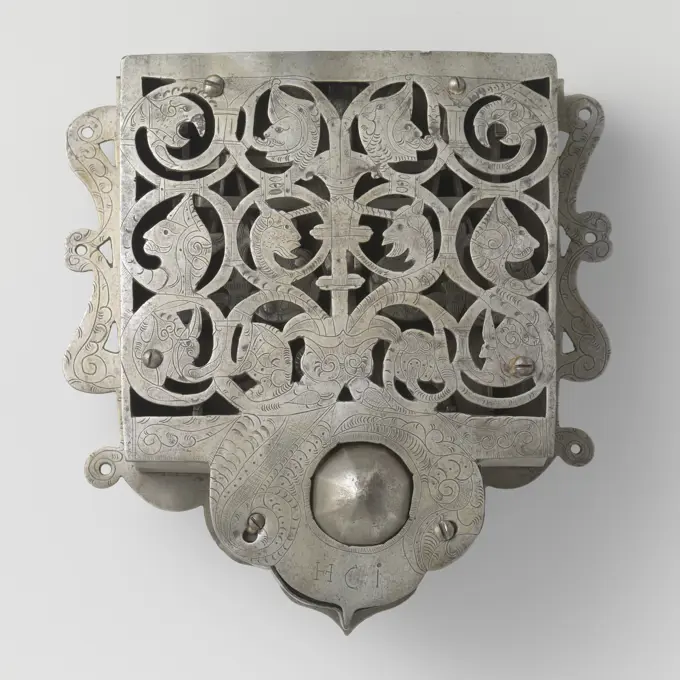
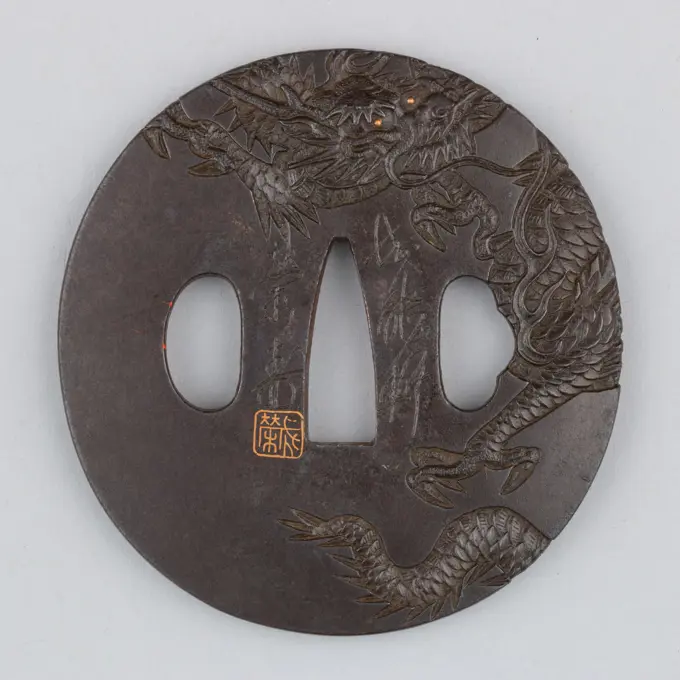
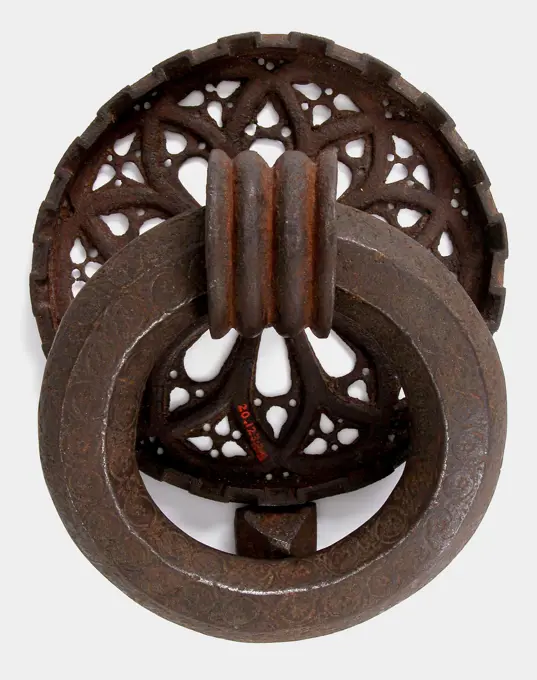
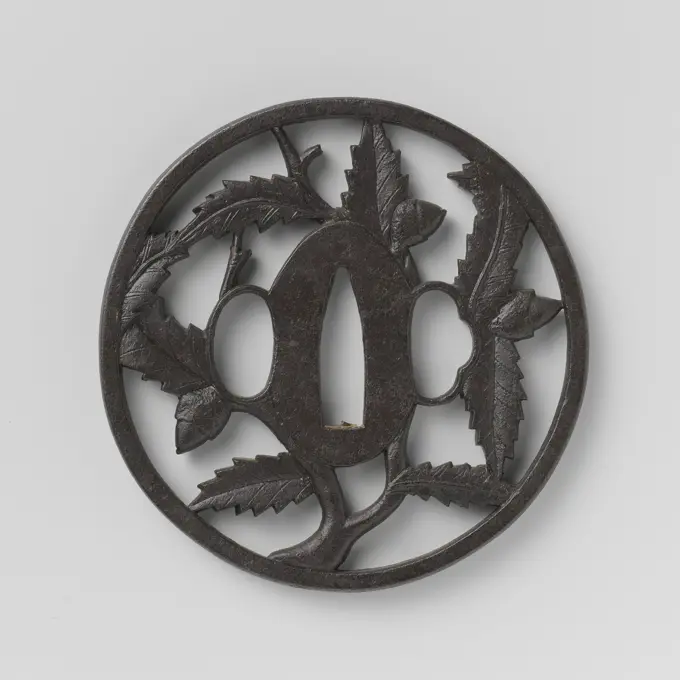
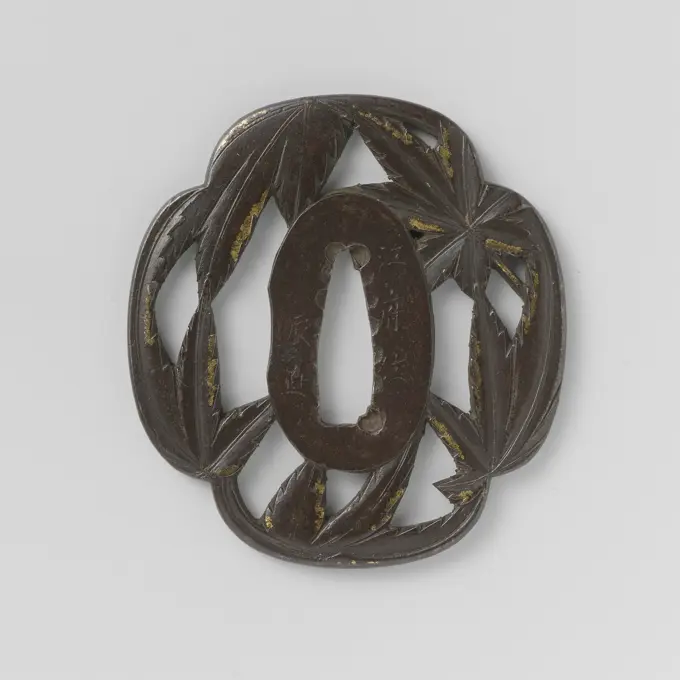
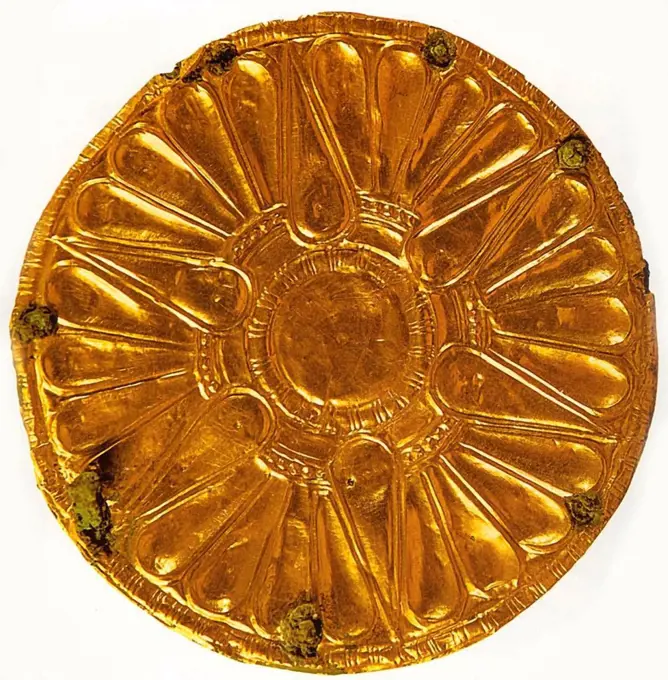
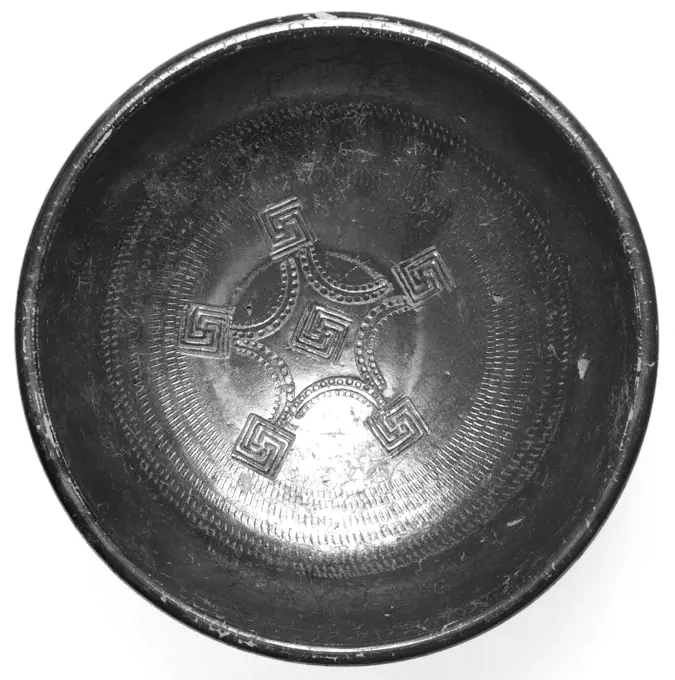
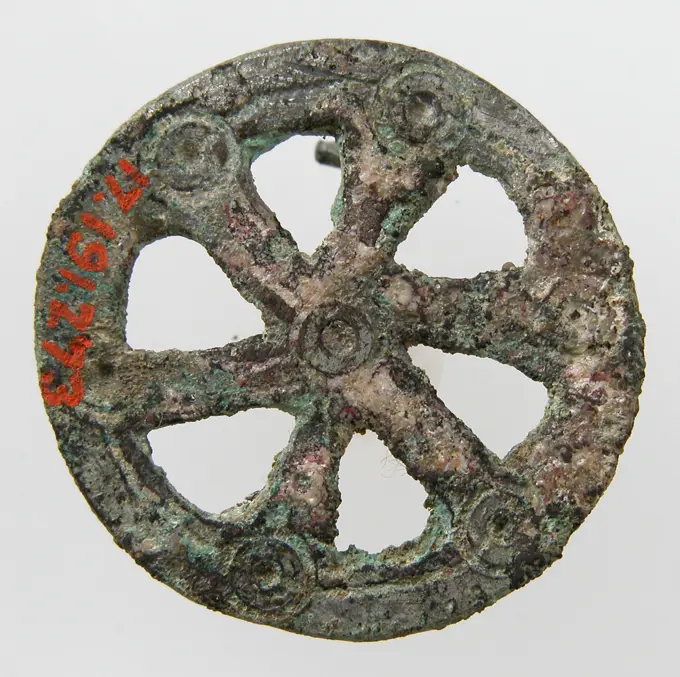
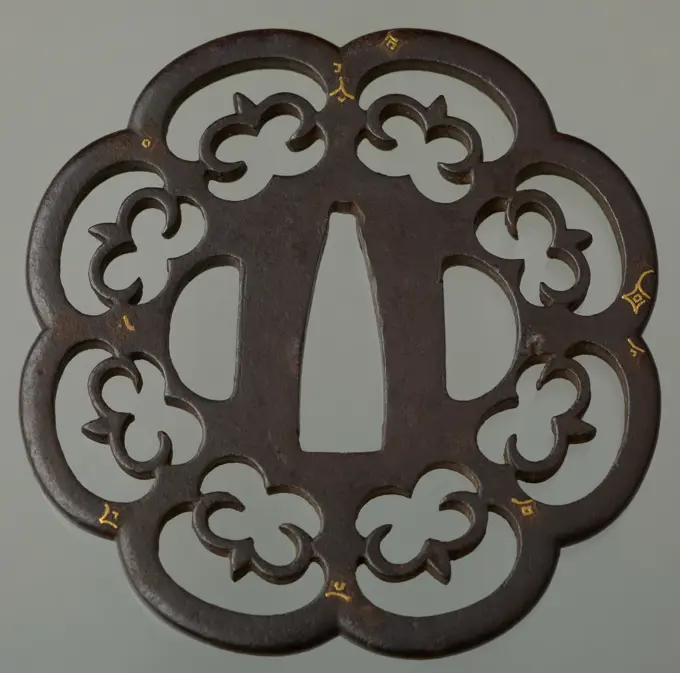
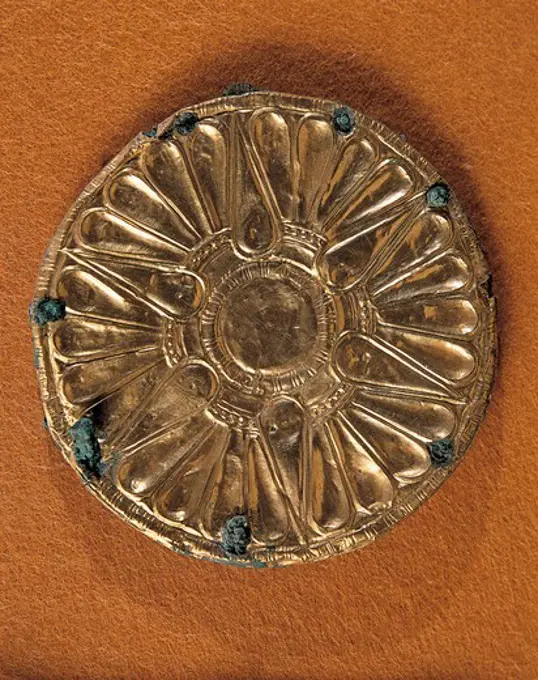
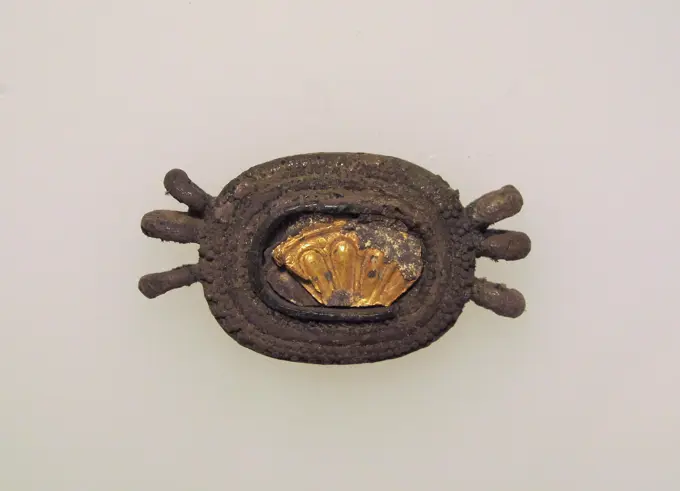
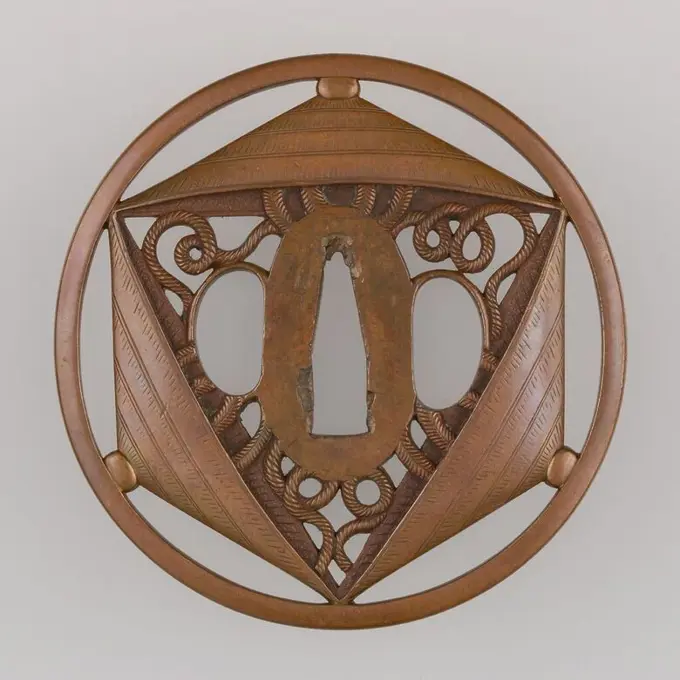
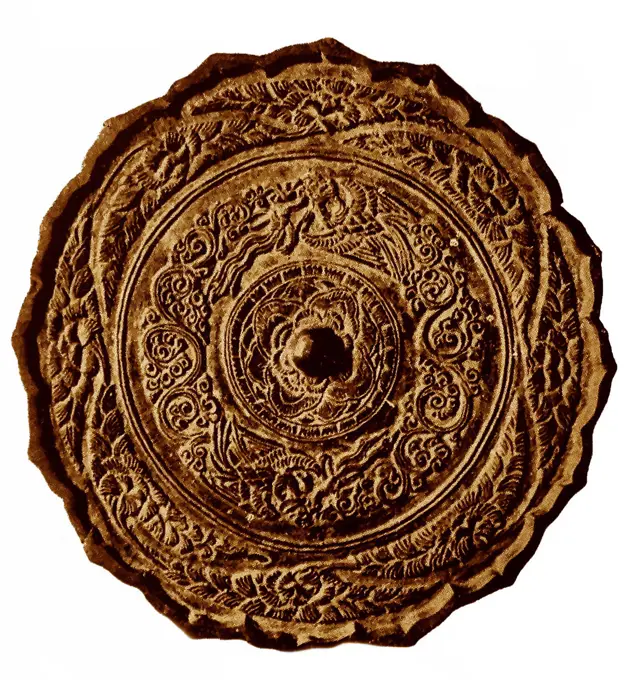
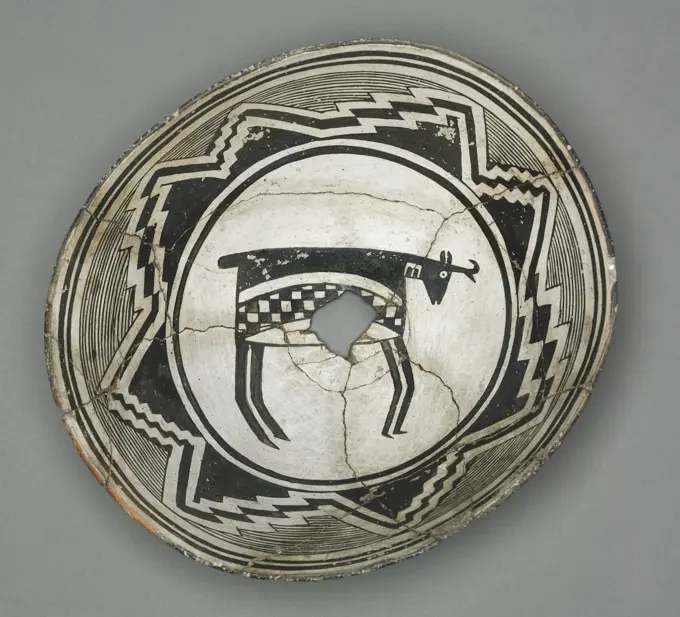
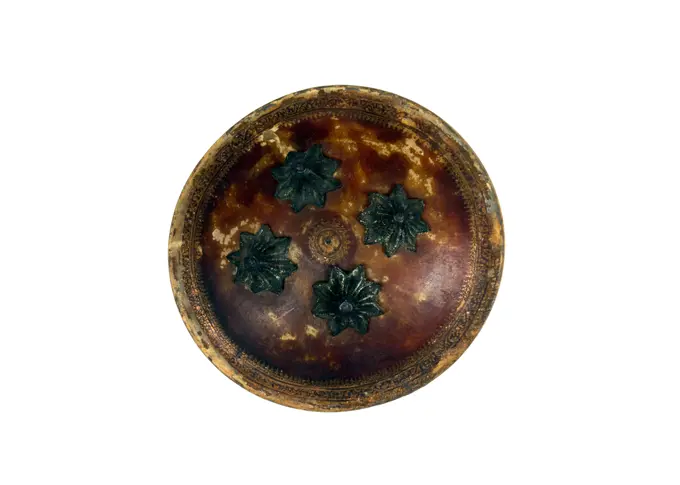
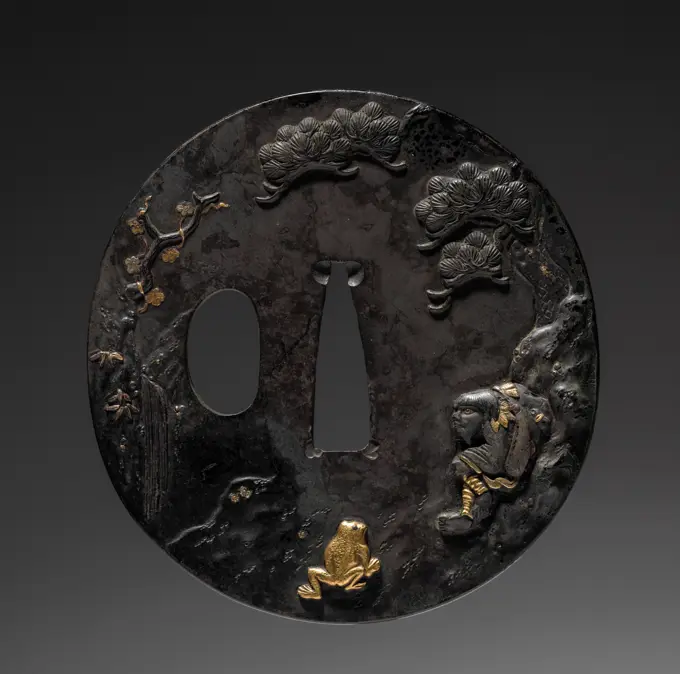
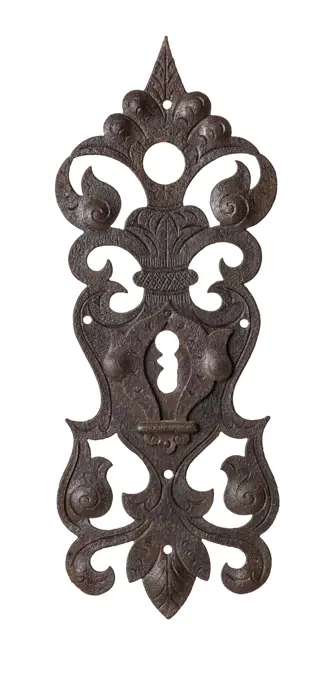
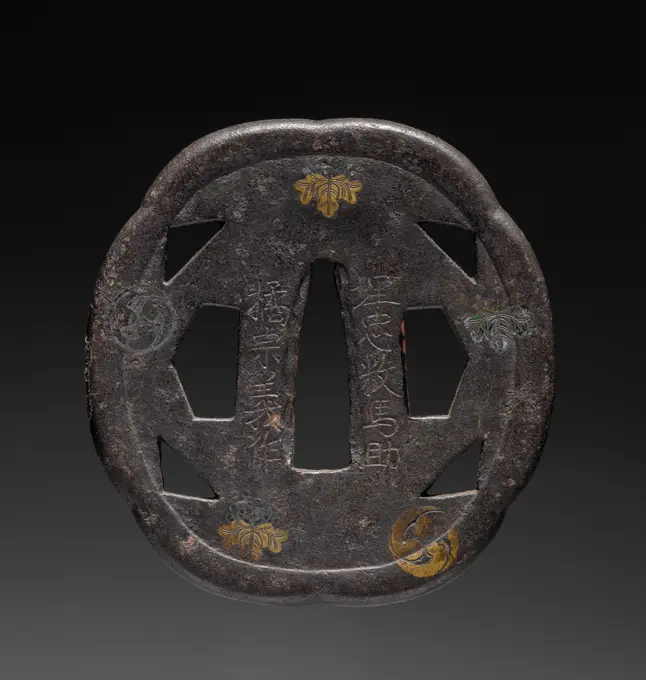
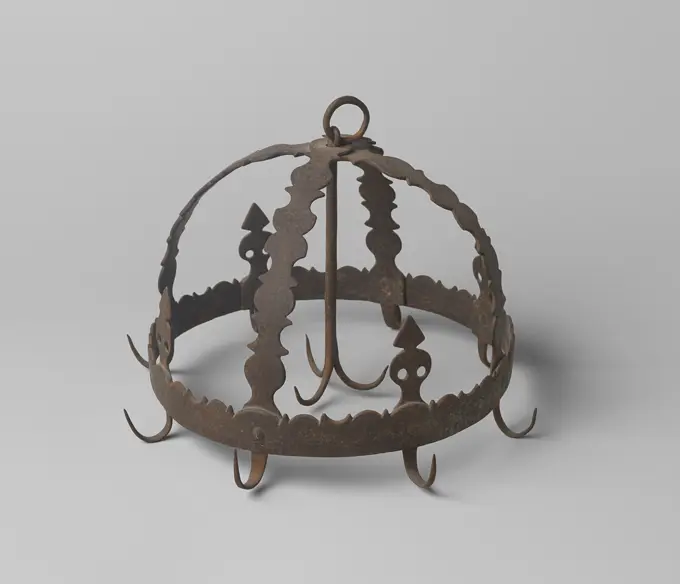
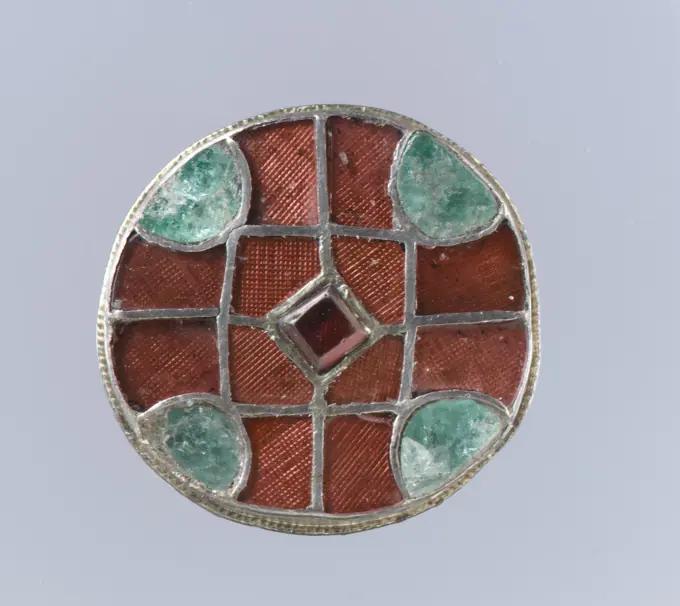
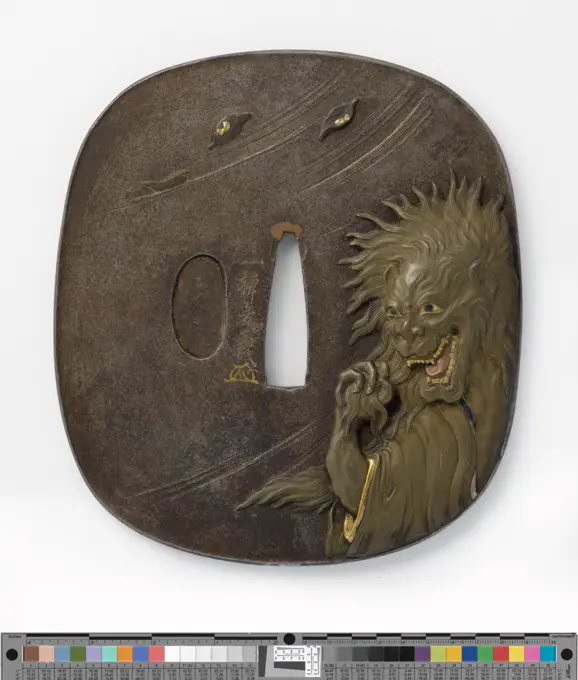
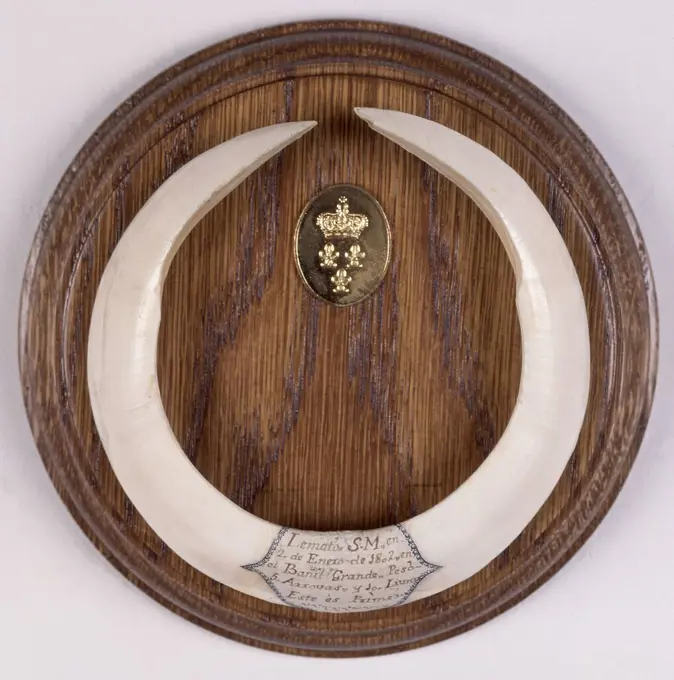
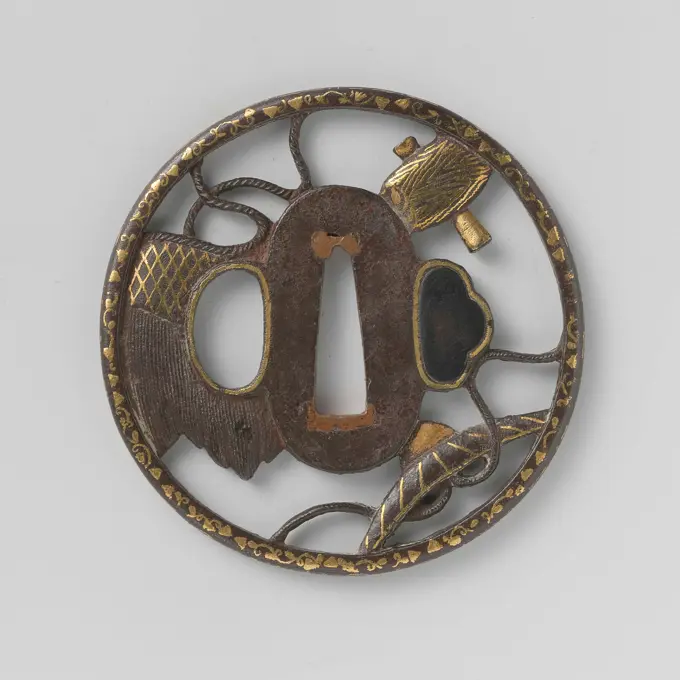
. Round Tsuba with in a positive silhouette and raised relief three of Daikoku valuables: the hat and the cloak of the invisibility and the hammer, all with gold Nunome-Zogan; The Kogai-Hitu-Ana is filled with shakudo.Hand guard, anonymous (possibly), 1600 - 1900 Almost round tsuba with an openwork decoration of horses, riders and large gourds; Details in gold nunome-zogan and copper; The Ryo-Hitsu are filled with Shakudo. Japanvietnam iron (metal). copper (metal). gold (metal) Almost round tsuba with an openwork decoration of horses, riders and large gourds; Details in gold nunome-zogan and copper; The Ryo-Hitsu are filled with Shakudo. Japanvietnam iron (metal). copper (metal). gold (metal)Batter of tinned iron door knocker, decorated with leaf motifs. Fittings for a door knocker of tinned iron. In the middle square opening. They four closed C-volutes with four three-blades in between.Bit Boss late 16th - first half 17th century possibly Netherlandish Bit bosses were ornamental elements decorating both sides of a horse bit. The central part of this boss is adorned with scallop shells and volutes, while its rim displays a frieze of other scallops flanked by grotesque winged monsters.. Bit Boss. possibly Netherlandish. late 16th - first half 17th century. Copper alloy, gold. Equestrian Equipment-BitsSword Guard (Tsuba) 16th century Japanese This tsuba features an openwork design of stylized butterflies, in negative silhouette. It is made in the so-called katchūshi (armor-maker's) style.. Sword Guard (Tsuba) 24627Sword Guard (Tsuba) 18th century Japanese A tsuba is a sword guard and part of a sword mounting. It is mounted between the swords blade and grip to protect the users hands.. Sword Guard (Tsuba) 26229Button, Copper, steel beads, England, USA, 18th-19th century, costume & accessories, Decorative Arts, ButtonSword Guard (Tsuba) 18th century Japanese A tsuba is a sword guard and part of a sword mounting. It is mounted between the swords blade and grip to protect the users hands.. Sword Guard (Tsuba) 642463Bit Boss late 17th - early 18th century European Bit bosses were ornamental elements decorating both sides of a horse bit. This type of boss, with a classical decoration featuring scrolls and flowers circled by a leaf garland, was very popular in Western Europe around 1700.. Bit Boss. European. late 17th - early 18th century. Copper alloy, gold. Equestrian Equipment-Bits. Oval tsuba with two fields with openwork decoration in positive silhouette of star patterns; On both sides in raised relief tuning monkeys, where the rope runs through one of the Ryo-Hitsu; Signed "Hishu Yagami Ju Mitsuhiro".Tsuba, Iron, Circular form with openwork decoration of bamboo foliage and trees surrounding three openings in center for sword and two fittings., Japan, 1772-80, metalwork, Decorative Arts, TsubaTsuba type kinko  hare and waves unknownBuckle 16th-17th century North French. Buckle. North French. 16th-17th century. Bronze. Miscellaneous-Buckles & OrnamentButton (possibly USA); copper, steel beadsSword Guard (Tsuba). Culture: Japanese. Dimensions: H. 3 1/2 in. (8.9 cm); W. 3 3/8 in. (8.6 cm); thickness 3/16 in. (0.5 cm); Wt. 5.6 oz. (158.8 g). Date: 17th century. Museum: Metropolitan Museum of Art, New York, USA.Model for batter, anonymous, c. 1750 - c. 1775 Red -buyer model for a molding shape of batter. The show shows tulips and other flowers and is contained in a rococo ornament, formed by two large, outward-looking C-Voluten. The whole is surrounded by an oval ring. Amsterdam copper (metal) cutting Red -buyer model for a molding shape of batter. The show shows tulips and other flowers and is contained in a rococo ornament, formed by two large, outward-looking C-Voluten. The whole is surrounded by an oval ring. Amsterdam copper (metal) cuttingSword Guard (Tsuba). Culture: Japanese. Dimensions: H. 2 5/8 in. (6.7 cm); W. 2 1/2 in. (6.4 cm); thickness 3/16 in. (0.5 cm); Wt. 3.9 oz. (110.6 g). Date: 17th century. Museum: Metropolitan Museum of Art, New York, USA.Bit Boss first half 17th century probably Netherlandish The domed center of this ornamental boss is adorned with radiating ribs in openwork, circled by a rim composed of a frieze of palmettes.This object belongs to a large group of bosses using a series of rims and centers combined in different ways. The exact center of production of these bosses is still unclear. If the motifs used are Italian, the scale of the production and the process of combining a series of rims and center recalls contemporary German practices. Some of them, however, are identical or very similar to bosses seen in several early 17th-century Netherlandish paintings, a likely origin for the manufacture of these objects.. Bit Boss. probably Netherlandish. first half 17th century. Copper alloy. Equestrian Equipment-BitsScale with three salamanders or lizards on the edge, G. Dikkers & Co, c. 1910 The driven scale has a wide edge on which a driven decoration is applied in relief, consisting of a salamander or lizard surrounded by a stylized leaf with three buttons or fruits. This motif has been repeated three times. The surface of this decoration has been processed nuanced with different punch stamps. At the back is an eye soldered to attach to the wall. Hengelo copper (metal) soldering The driven scale has a wide edge on which a driven decoration is applied in relief, consisting of a salamander or lizard surrounded by a stylized leaf with three buttons or fruits. This motif has been repeated three times. The surface of this decoration has been processed nuanced with different punch stamps. At the back is an eye soldered to attach to the wall. Hengelo copper (metal) solderingBatter of a mission tire. Ten fitting parts of a mission tape, from brass. The ten parts are cut from copper plate, driven, engraved and sponately edited. A copper button with seven facets is riveted on each of them. They are equipped with holes on the corners or along the edge to be able to turn nails, with which they were constituted on the book band. Four corner pieces have a rear edged on two sides. The remaining four have that only at the top or bottom (these were placed against the back of the book). Two sides have been deposited with an open edge of cross flowers from each corner piece. The field in the middle is taken by three-dialed tendrils. The ornament on the middle parts exists on the corners from a plant with three leaves and two flowers in a pot. The four parts in between are taken by fantasy decreases.Sword Guard (Tsuba) 17th century Japanese A tsuba is a sword guard and part of a sword mounting. It is mounted between the swords blade and grip to protect the users hands.. Sword Guard (Tsuba) 29984Dish, fragment, painted with geometric motif and Wan-Li edge., Anonymous, c. 1650 - c. 1690 Soil of a dish of blue painted faience, painted with a geometric motif on the flat, surrounded by a Wan-Li edge. The fragment is a soil find from Delft. Delft earthenware. tin glaze.   Delft Soil of a dish of blue painted faience, painted with a geometric motif on the flat, surrounded by a Wan-Li edge. The fragment is a soil find from Delft. Delft earthenware. tin glaze.   DelftSword Guard (Tsuba) early 17th century Japanese A tsuba is a sword guard and part of a sword mounting. It is mounted between the swords blade and grip to protect the users hands.. Sword Guard (Tsuba) 35197. Tsuba in the form of three aubergines; Signed "Kofu Ju Toshinaga".Decorative door boss and nail, Wrought iron, Square type, pierced and embossed with wrought lines. Quadrant leaf design based on old examples. Leaves defined with parallel lines. Square, domed nail head on a square shank., Spain, 15th-17th century, metalwork, Decorative Arts, Decorative door boss and nailDecorative Door Boss And Nail; wrought ironAttachment for a Strap 100-300 Roman or Celtic With sinuous, asymmetrical designs and swirling arrangements of commas, circles, and fan shapes, this varied group of objects conveys the pervasiveness of a Celtic aesthetic in the Empire's western provinces in the first centuries a.d.. Attachment for a Strap. Roman or Celtic. 100-300. Copper alloy. Metalwork-Copper alloySword Guard (Tsuba) ca. 1615-1868 Japanese A tsuba is a sword guard and part of a sword mounting. It is mounted between the swords blade and grip to protect the users hands.. Sword Guard (Tsuba) 34424Hand guard, 1600 - 1800 Round tsuba, in the form of a shell, the two halves shifted slightly in relation to each other. Fukui iron (metal). copper (metal). Round tsuba, in the form of a shell, the two halves shifted slightly in relation to each other. Fukui iron (metal). copper (metal).Hand guard, anonymous, 1600 - 1699 Almost round tsuba in the form of a wheel; On the edge a decoration in relief of stylized tiflets and leaves. Japan iron (metal). silver (metal) Almost round tsuba in the form of a wheel; On the edge a decoration in relief of stylized tiflets and leaves. Japan iron (metal). silver (metal)Bead. Culture: Roman. Dimensions: Diam.: 1 9/16 x 7/8 in. (4 x 2.2 cm). Museum: Metropolitan Museum of Art, New York, USA.Pendant 15th-17th century European. Pendant. European. 15th-17th century. Bronze. Miscellaneous-Buckles & OrnamentCarnavalet museum, medal collection Musical trophy law mainly composed of brass, two boxes and a partition; Smooth field reverse.Sword Guard (Tsuba) 15th century Japanese A tsuba is a sword guard and part of a sword mounting. It is mounted between the swords blade and grip to protect the users hands.. Sword Guard (Tsuba). Japanese. 15th century. Iron, gold, copper. Sword Furniture-TsubaDrachma; Firuz (459-484); 459-484 (459-00-00-484-00-00);Slot with ajour cut out and engraved wrapper, anonymous    engraving    engravingSword Guard (Tsuba) late 18th century Japanese A tsuba is a sword guard and part of a sword mounting. It is mounted between the swords blade and grip to protect the users hands.. Sword Guard (Tsuba) 29970Sword Guard (Tsuba) late 17th century Japanese A tsuba is a sword guard and part of a sword mounting. It is mounted between the swords blade and grip to protect the users hands.. Sword Guard (Tsuba) 34950Jelec (Tsuba); Enjusai Kanri, Tsuchiya; 18th century (1700-00-00-1800-00-00);Sword Guard, late 1600s. Japan, Edo period (1615-1868). Iron (Kaneie type); average: 8 x 8.6 cm (3 1/8 x 3 3/8 in.).Sword Guard (Tsuba) 18th century Japanese A tsuba is a sword guard and part of a sword mounting. It is mounted between the swords blade and grip to protect the users hands.. Sword Guard (Tsuba) 34928Sword Guard (Tsuba). Culture: Japanese. Dimensions: H. 3 1/2 in. (8.9 cm); W. 2 1/4 in. (5.7 cm); thickness 5/16 in. (0.8 cm); Wt. 7.6 oz. (215.5 g). Date: ca. 1615-1868. Museum: Metropolitan Museum of Art, New York, USA.Ring, Post 16th century Spanish. Ring, Post 466303Sword Guard (Tsuba) ca. 1615-1868 Japanese A tsuba is a sword guard and part of a sword mounting. It is mounted between the swords blade and grip to protect the users hands.. Sword Guard (Tsuba) 34485Peace of Munster, S.M. Boxhorn, 1648 history medal Silver medal. Front: seven female figures with coat of arms dancing to hat with inscription inside laurel wreath. Reverse: inscription inside laurel wreath. Dresden silver (metal) striking (metalworking)  Münster. North Rhine-WestphaliaSword Guard (Tsuba). Culture: Japanese. Dimensions: H. 2 7/8 in. (7.3 cm); W. 2 3/4 in. (7 cm). Date: 18th century. Museum: Metropolitan Museum of Art, New York, USA.Sword Guard (Tsuba). Culture: Japanese. Dimensions: H. 3 1/8 in. (7.9 cm); W. 3 in. (7.6 cm); thickness 3/16 in. (0.5 cm); Wt. 4.5 oz. (127.6 g). Date: ca. 1615-1868. Museum: Metropolitan Museum of Art, New York, USA.Sword Guard (Tsuba). Culture: Japanese. Dimensions: H. 3 1/4 in. (8.3 cm); W. 3 in. (7.6 cm); thickness 3/16 in. (0.5 cm); Wt. 6.4 oz. (181.4 g). Date: late 17th century. Museum: Metropolitan Museum of Art, New York, USA.Hand guard, 1600 - 1800 Round, openwork Tsuba, in the form of branches with six oak leaves and three acorns. Fukui iron (metal) Round, openwork Tsuba, in the form of branches with six oak leaves and three acorns. Fukui iron (metal)Sword Guard (Tsuba) ca. 1615-1868 Japanese A tsuba is a sword guard and part of a sword mounting. It is mounted between the swords blade and grip to protect the users hands.. Sword Guard (Tsuba) 33482Hand Guard, Tokinao, 1700 - 1900 Mokko-shaped tsuba, openwork, made up of leaves with some details in gold (Nunome-Zogan); Signed "koju ju tokinao". Japan iron (metal). gold (metal) Mokko-shaped tsuba, openwork, made up of leaves with some details in gold (Nunome-Zogan); Signed "koju ju tokinao". Japan iron (metal). gold (metal)Ancient jewelry by anonymous artist, gold, 6th century BC, Greece, Delphi, Delphi Archaeological museum. Mokko-shaped tsuba with wide elevated edge; Within this edge there are three locimanges and a spider and a grasshopper on a braided mat at the front in Iro. Signed "Iwamoto Konkan".Cut-away metal flower ornament, batter, ornament batter soil found tin metal h 0,2, cast Openwork piece with an embossed side and flat reverse side. In the form of flower surrounded by leaves circular piece of laid-on metal on the reverse archeology Rotterdam rail tunnel adornment Soil discovery: trajectory Rotterdam rail tunnel.Decorative Door Boss And Nail; wrought ironCampanian Black Bowl; Campania, South Italy, Europe; 323 - 31 B.C; Terracotta; 6.8 x 17.6 cm (2 11,16 x 6 15,16 in.)Disk Brooch 6th century Frankish. Disk Brooch 465231 Frankish, Disk Brooch, 6th century, Copper alloy, glass paste, Overall: 15/16 x 9/16 in. (2.4 x 1.4 cm). The Metropolitan Museum of Art, New York. Gift of J. Pierpont Morgan, 1917 (17.192.170)Sword Guard (Tsuba) 18th or early 19th century Japanese A tsuba is a sword guard and part of a sword mounting. It is mounted between the swords blade and grip to protect the users hands.. Sword Guard (Tsuba) 35146Decorative Door Boss And Nail; steel-plated iron. Mokko-shaped tsuba, cut-away, made up of leaves with some details in gold (Nunome-Zogan); Signed "Koju Ju Tokinao".Flat Circular Openwork Ornament from a Belt 100-300 Roman. Flat Circular Openwork Ornament from a Belt 464980 Roman, Flat Circular Openwork Ornament from a Belt, 100300, Silvered Copper alloy, Overall: 15/16 x 1/4 in. (2.4 x 0.7 cm). The Metropolitan Museum of Art, New York. Gift of J. Pierpont Morgan, 1917 (17.191.273)Priming Flask Made for Prince-Elector August I of Saxony (ruled 1553-86). Culture: German, probably Saxony. Dimensions: H. 5 1/6 in. (13.5 cm); Diam. 3 1/2 in. (9 cm); Wt. 9 oz. (258 g). Date: ca. 1575.This finely worked flask was made by a specialist iron-chiseler for Prince-Elector August I of Saxony (ruled 1553-86). It bears his monogram AA (combining his initials with his wife's, Anna of Denmark), and the arms of Saxony and Denmark. in the center is a depiction of the Sacrifice of Isaac, after a 1571 woodcut by Jost Amman (1539-1591). Museum: Metropolitan Museum of Art, New York, USA.CDK Unknown, school, hayashiEmbossed gold foil mounted on bronzeMount; bronzeBead, control plaque Cypriot. Bead, control plaque 242701Sword Guard (Tsuba). Culture: Japanese. Dimensions: Diam. 3 1/8 in. (7.9 cm); thickness 5/16 in. (0.8 cm); Wt. 5.3 oz. (150.3 g). Date: 18th century. Museum: Metropolitan Museum of Art, New York, USA.Loop.. Round Tsuba with a partially completed braid in star shape in a positive silhouette; The edge is decorated with stylized golden tendrils in Nunome-Zogan; Signed "Goshu Hagi Ju Kawaji Gonnojo Tomokane Saku".Bowl decorated with horned animals ca. 5500-4000 B.C. Like much of the pottery from Iran in the Chalcolithic Period (ca. 5500-3000 B.C.), this piece is very skillfully made, with thin walls of very uniform thickness. Parallels with similar pottery excavated at the site of Tepe Sialk near Kashan allow it to be dated to 5000-4000 B.C. The bowl has been burnished to a glossy shine, a process in which a vessel that has dried to leather-like hardness is rubbed with a stone or bone tool in order to make the surface less permeable to liquids. This process may have been primarily functional, but the care and effort placed on the shaping and decoration of the bowl suggests that the aesthetic effects of the gleaming surface were also important. While the outside surface of the bowl is a uniform red color, the inside has been decorated with painted concentric circles connected by eight hatched zig-zag patterns arranged like the spokes of a wheel. Above the uppermost circle, four stylized ibexes w. Oval tsuba with the stylized character "Kotobuki" in a positive silhouette (long life); Signed "Kofu Ju Masanori".Tags Entitling Official to Commandeer Two Horses. Korea, Joseon (1392-1910), 1731. Sculpture. Cast bronzeDoor beater., 1400 - 1500 An iron door beater with plate. Coming from the D. van der Kellen collection.  iron (metal) An iron door beater with plate. Coming from the D. van der Kellen collection.  iron (metal)Sword Guard (Tsuba). Culture: Japanese. Dimensions: H. 2 5/8 in. (6.7 cm); W. 2 1/2 in. (6.4 cm); thickness 3/16 in. (0.5 cm); Wt. 3.8 oz. (107.7 g). Date: probably late 18th-early 19th century. Museum: Metropolitan Museum of Art, New York, USA.Four Eyes of the God Horus (Wedjat) Amulet 1070 BCE-656 BCE Egypt. Referred to as wedjat, these amulets represent a human eye enhanced or combined with the characteristic markings of a falcon, and refer to the god Horus. Made in many variations for over 3,000 years, they convey wholeness and health.. Faience . Ancient EgyptianWall Facing (Netherlands); tin-glazed earthenware, underglaze; 5 tiles tall, various wideCDK unknownPolygonal. From Koryeo Dynasty (918-1392). Bronze Mirror from 10th~14th century Koryeo Dynasty, KoreaSword Guard (Tsuba) ca. 1615-1868 Japanese A tsuba is a sword guard and part of a sword mounting. It is mounted between the swords blade and grip to protect the users hands.. Sword Guard (Tsuba) 34498Bowl with Pronghorn Antelope and Geometric Design, c. 1000-1150. Southwest, Mogollon, Mimbres, Pre-Contact Period, 11th-12th century. Earthenware; diameter: 31.2 cm (12 5/16 in.); overall: 12.5 x 32 cm (4 15/16 x 12 5/8 in.).Shield (Dhàl) 19th century Indian. Shield (Dhàl). Indian. 19th century. Hide, copper alloy, hide, gold. ShieldsFragments of a bedstead from "The House of Alva", Warmoesstraat Amsterdam, Anonymous, 1600 - 1650 Three fragments belonging to a bedstead. A semi -circular profiled part on which140 is written, a rectangular plank and a fragment of a paneling. Northern NetherlandsNetherlands wood (plant material). oak (wood). rosewood (wood). ebony (wood) Three fragments belonging to a bedstead. A semi -circular profiled part on which140 is written, a rectangular plank and a fragment of a paneling. Northern NetherlandsNetherlands wood (plant material). oak (wood). rosewood (wood). ebony (wood)Sword Guard, mid-1800s. Yoshimitsu (Japanese). Iron; diameter: 6.8 cm (2 11/16 in.).Slot with decorated plate .. lock with decorated plate.Scarab Belt Buckle,  c.1905Glass Fragment 12th century French. Glass Fragment 467175vintage wall decoration house vintage flower wall decoration architecture detail Copyright: xZoonar.com/tudorxantonelxadrianx 6625188Antique door plate on a white background Antique door plate on a white background Copyright: xZoonar.com/BorisxZerwannx 8745158Sword Guard (Tsuba) with Family Crests, c. 1615-1868. Japan, possibly Edo period (1615-1868). Iron; overall: 6.4 x 6.1 cm (2 1/2 x 2 3/8 in.).Meat wreath of iron. Meat wreath of iron.Small round bracelet (title awarded). Copper alloy. Carnavalet museum, history of Paris.Brooch -Disk Brooch 6th century Frankish Garnets, worked in the cloisonné technique, featured prominently in the luxury jewelry of the Franks. Jewelers would solder small compartments arranged in geometric patterns onto the surface of a metal disk. In those cells, or cloisons, they would place a textured piece of gold foil, which would show through the thin translucent garnet that would then be set on top.. Disk Brooch 464843 Frankish, Disk Brooch, 6th century, Silver-gilt cells, side strip, and beaded edging; garnets with deep-punched, standard foil backings; emerald; silver back with posts for spring and pin; no spring/pin extant, Overall: 1 1/16 x 3/8 in. (2.7 x 1 cm). The Metropolitan Museum of Art, New York. Gift of J. Pierpont Morgan, 1917 (17.191.150)Casket. unknown, craftsmanFragment of a Round Applique with Eight-Ponted Star. UnknownTsuba with Demon Design. Japan, Edo period, 1615-1868. Arms and Armor; tsuba. Iron, copper alloy (), and goldTROFEO DE JABALI-LO MATO S.M. CARLOS IV EN 1802 EN EL BAÑIL GRANDE. Location: PALACIO REAL-MUSEO DE CAZA. Riofrío. SEGOVIA. SPAIN.Mount; 1904-21-12-a,bSword Guard (Tsuba) possibly 17th century Japanese A tsuba is a sword guard and part of a sword mounting. It is mounted between the swords blade and grip to protect the users hands.. Sword Guard (Tsuba) 33411Sword Guard (Tsuba) ca. 1475 Japanese A tsuba is a sword guard and part of a sword mounting. It is mounted between the swords blade and grip to protect the users hands.. Sword Guard (Tsuba) 33384