Blue and White Porcelain

A collection of historical blue and white porcelain bowls and dishes featuring intricate floral designs from various Chinese and Vietnamese dynasties.

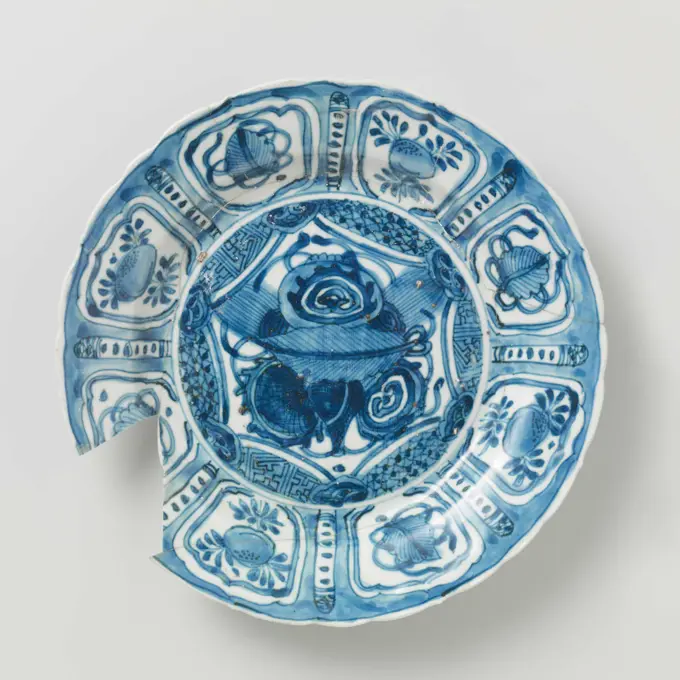
Fragment majolica dish, blue on white, flower vase and bird in Chinese style, dish tableware holder soil find ceramics pottery glaze, Op princes fried Deep dish bowl shaped soul archeology food decorate serving China
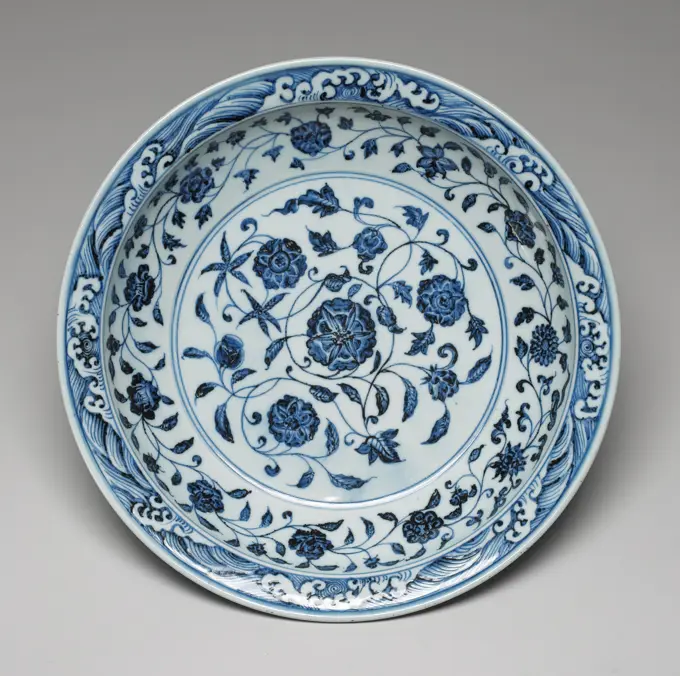
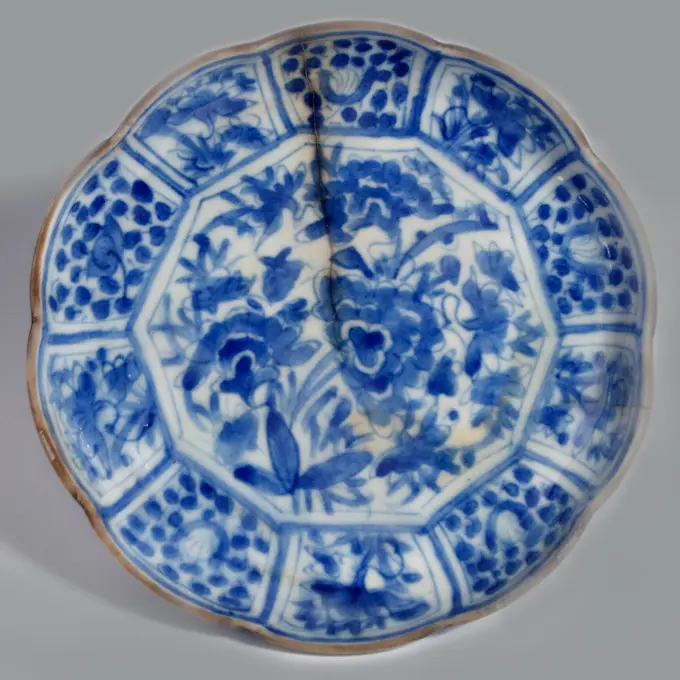
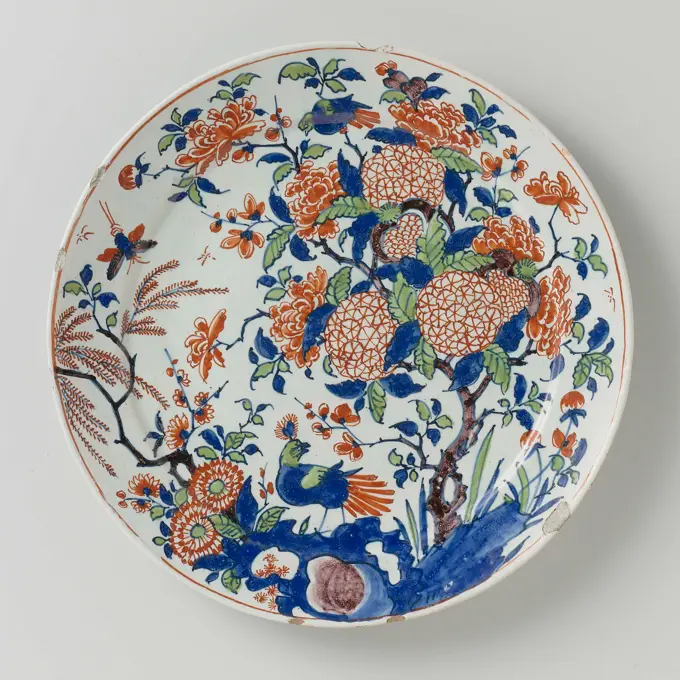
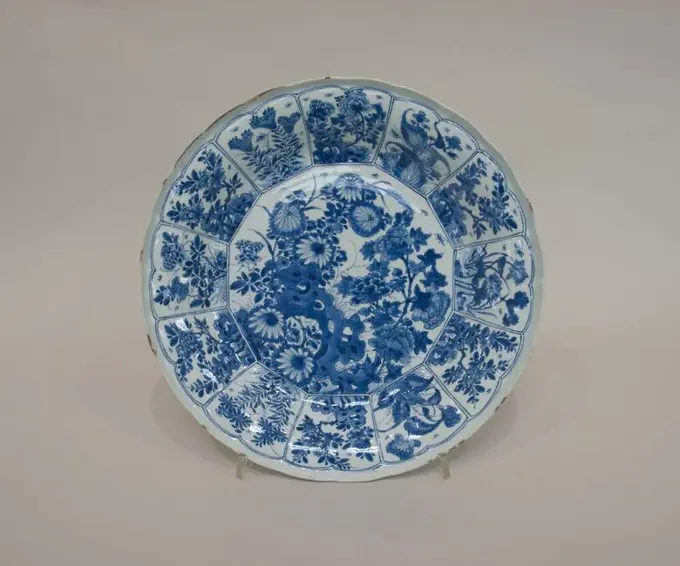
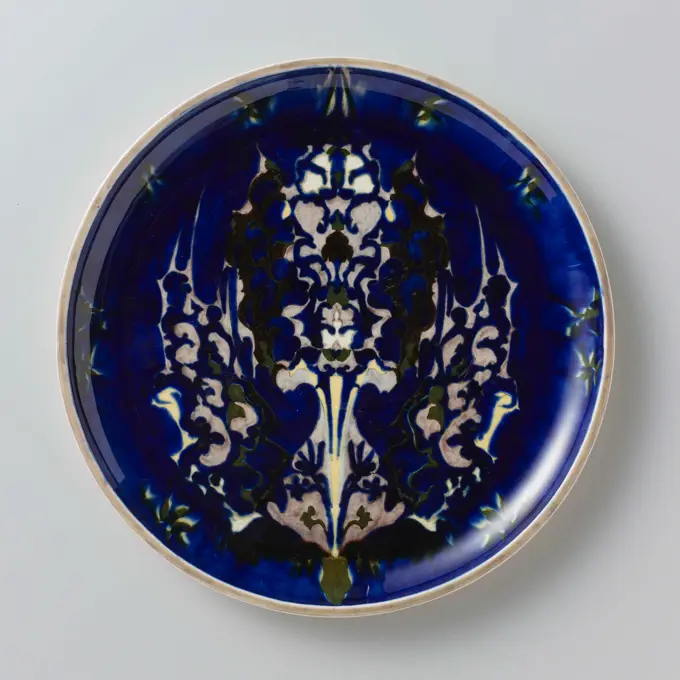
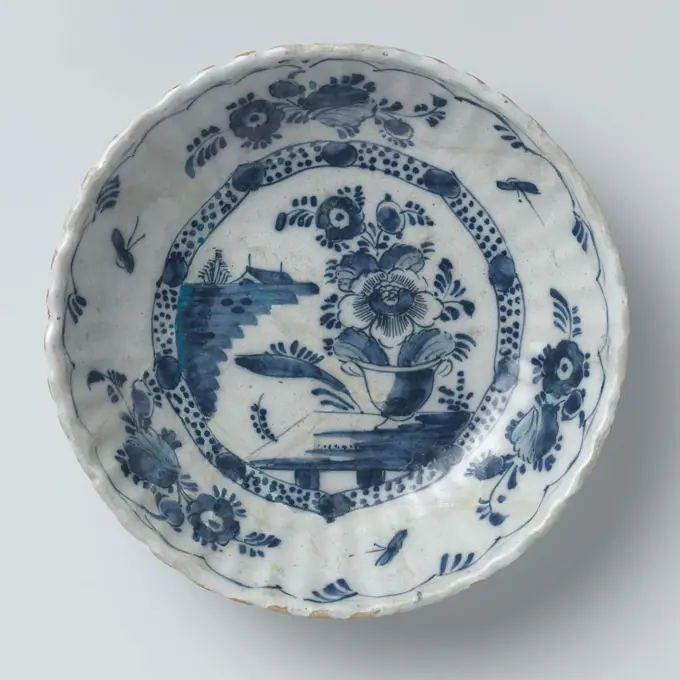
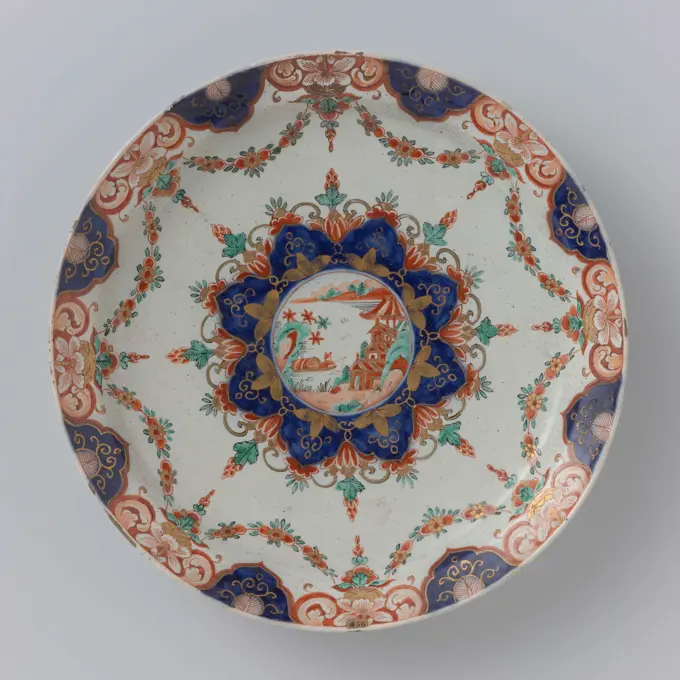
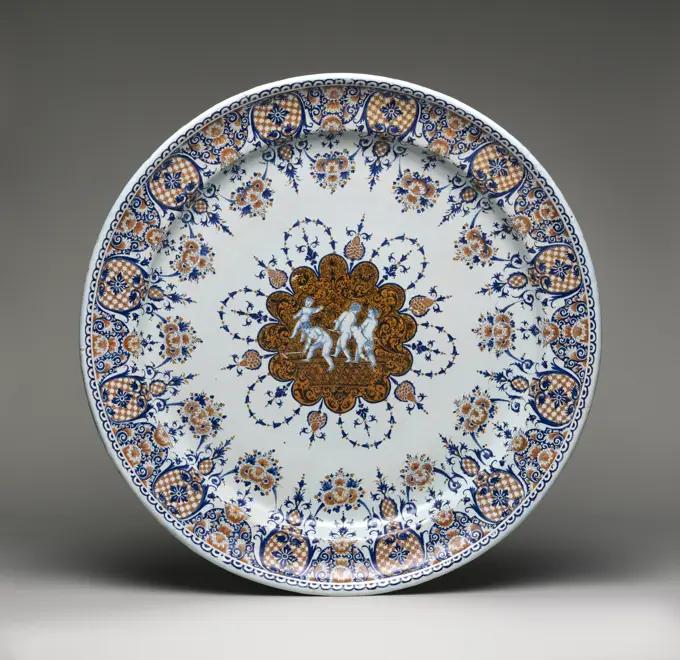
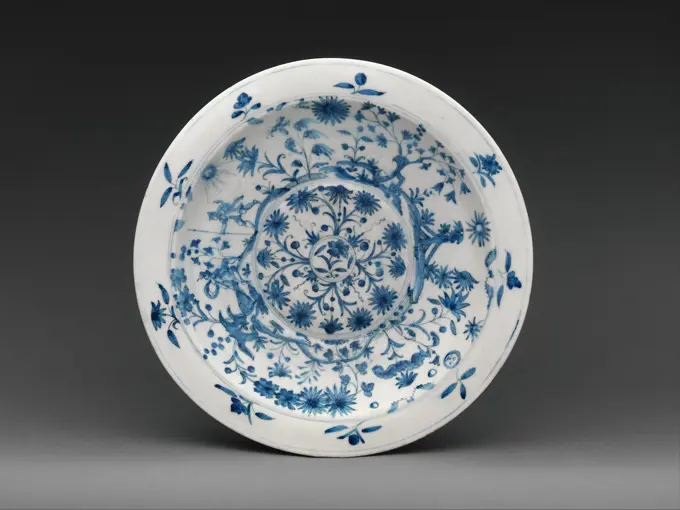
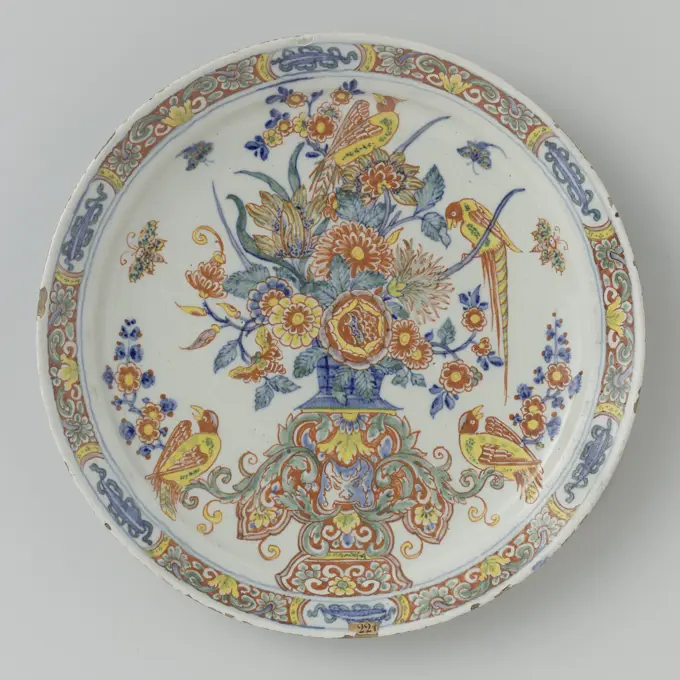
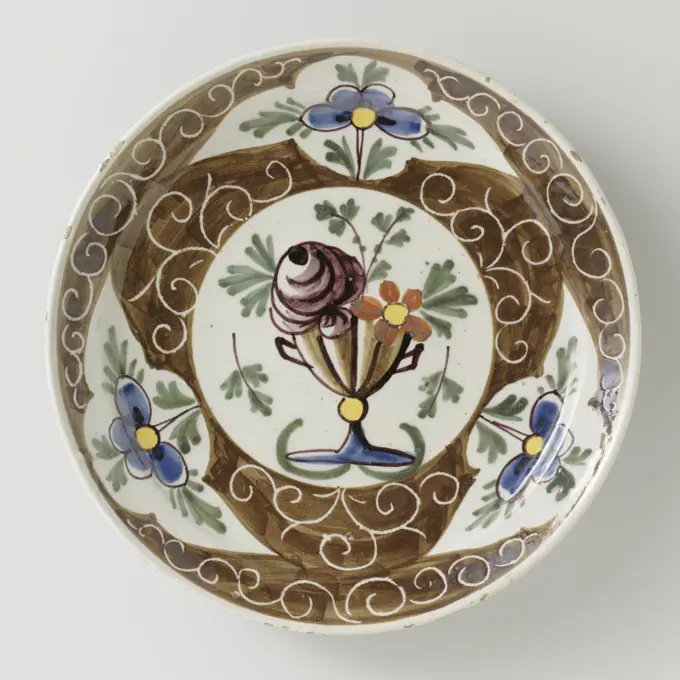
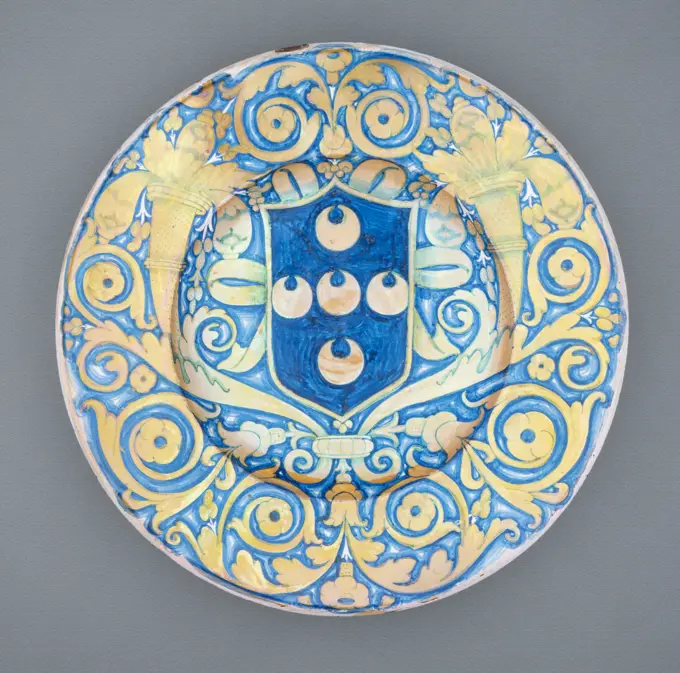
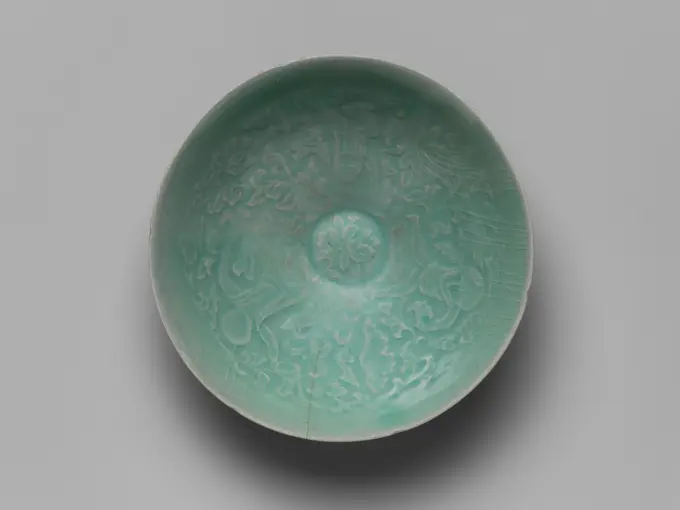
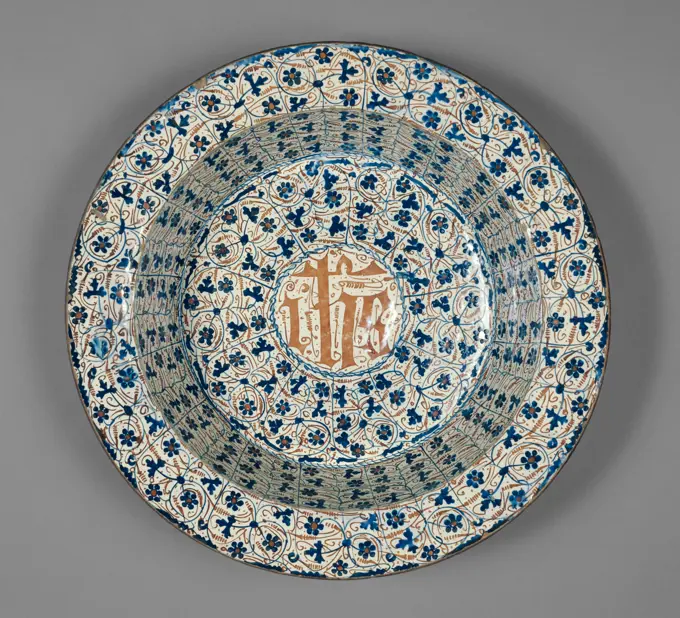
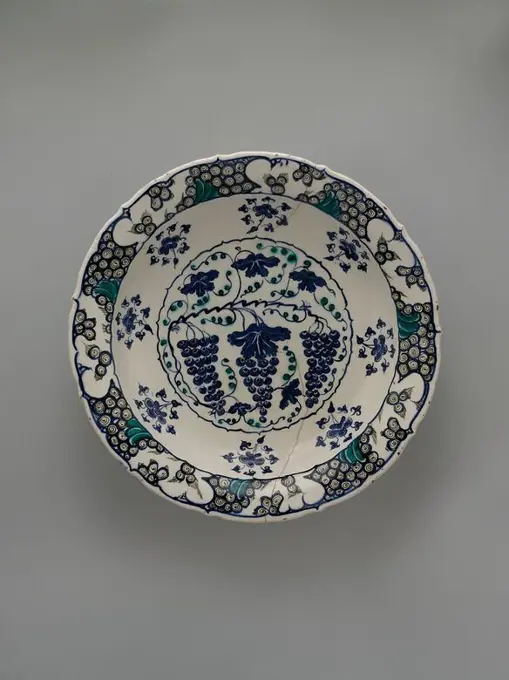
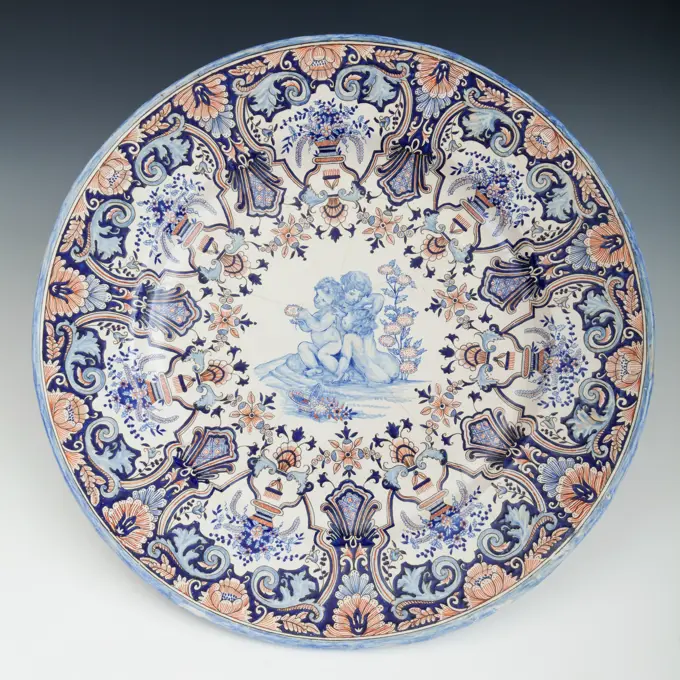
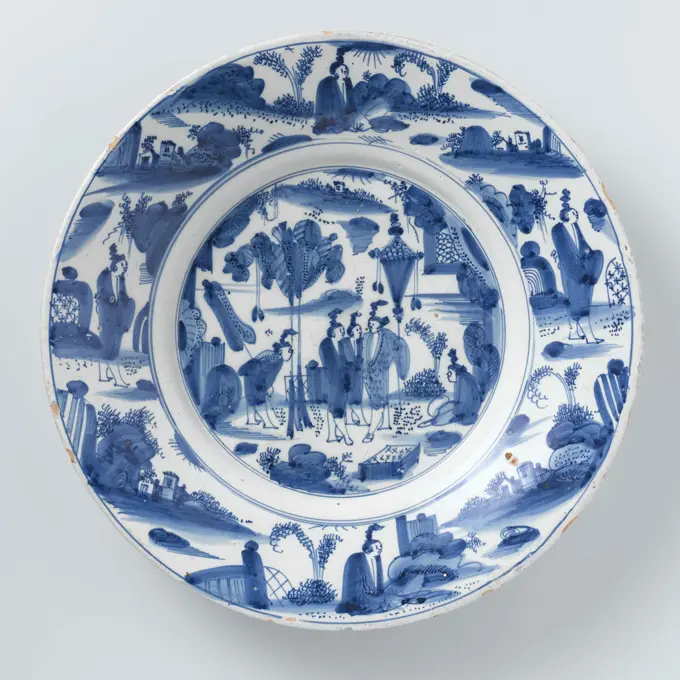
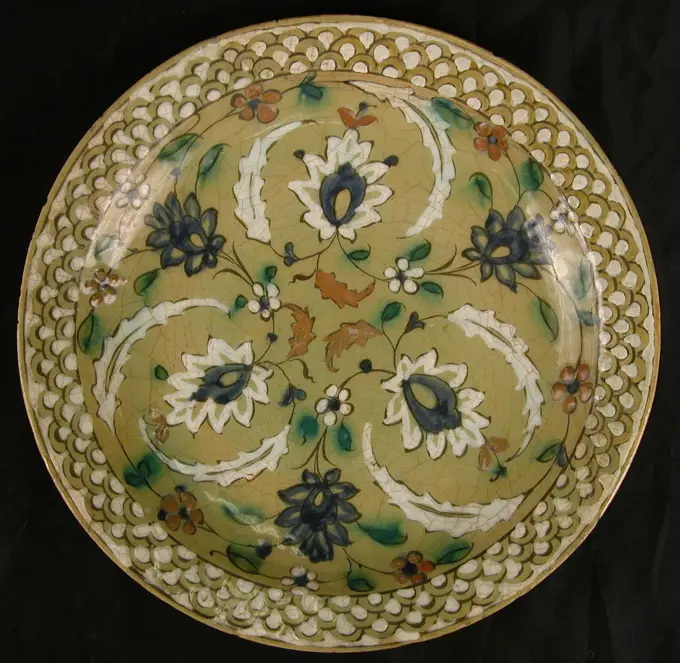
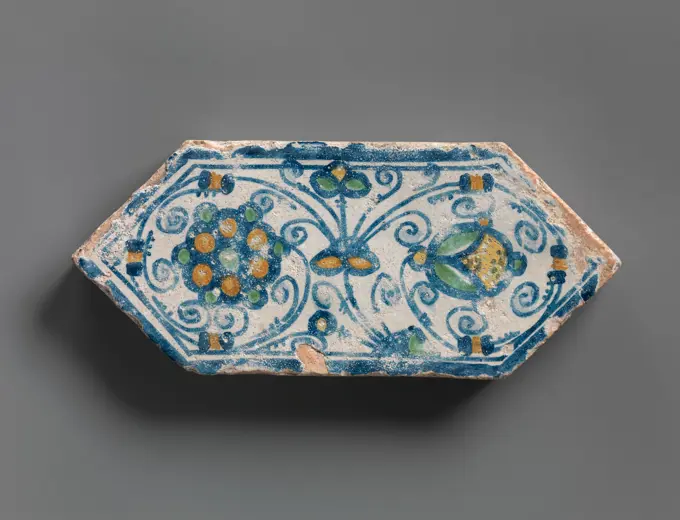
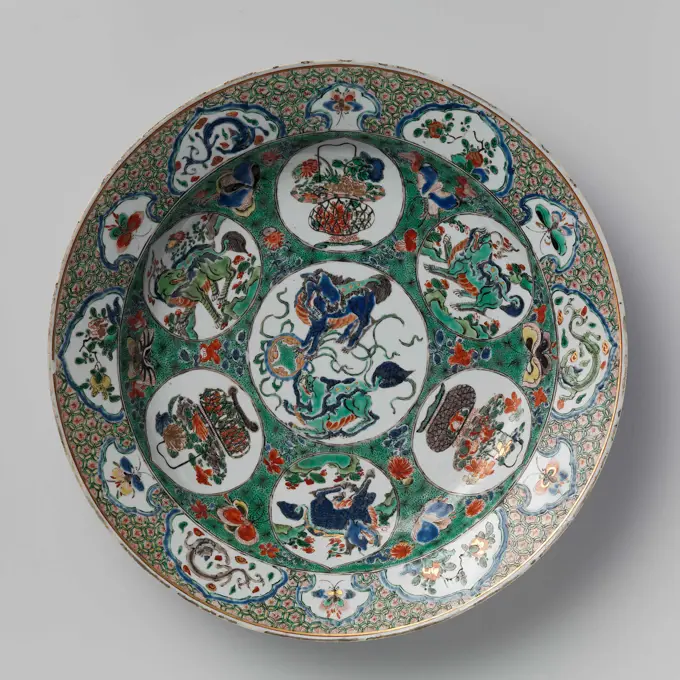
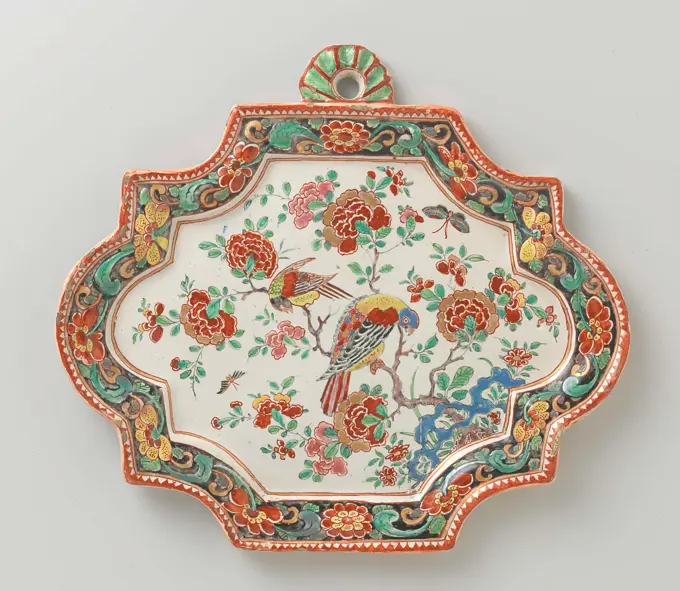
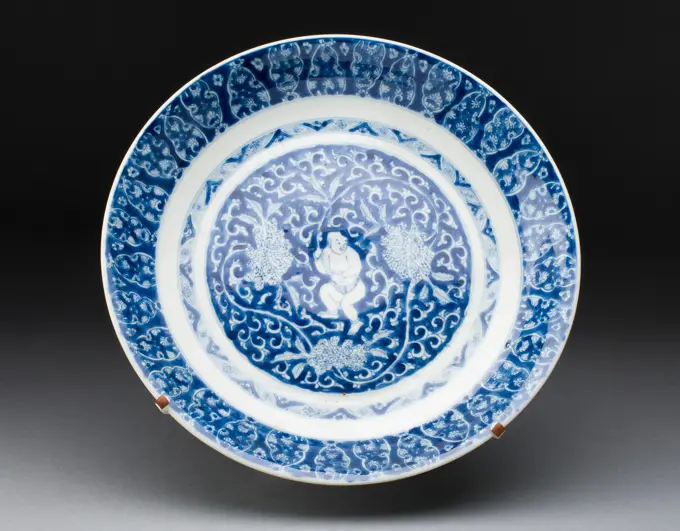
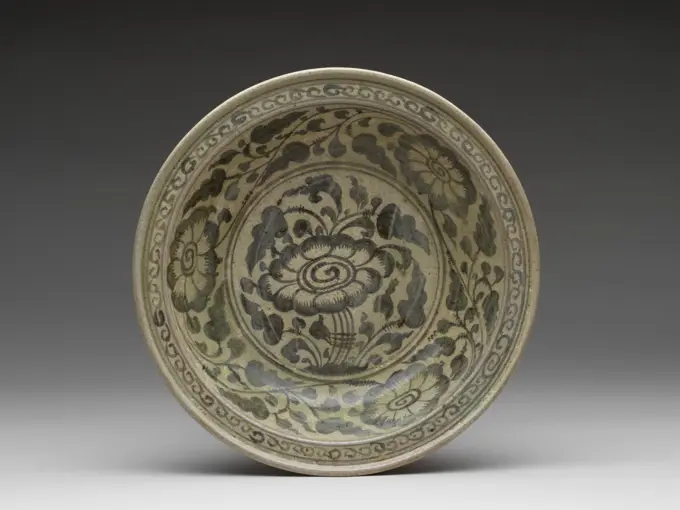
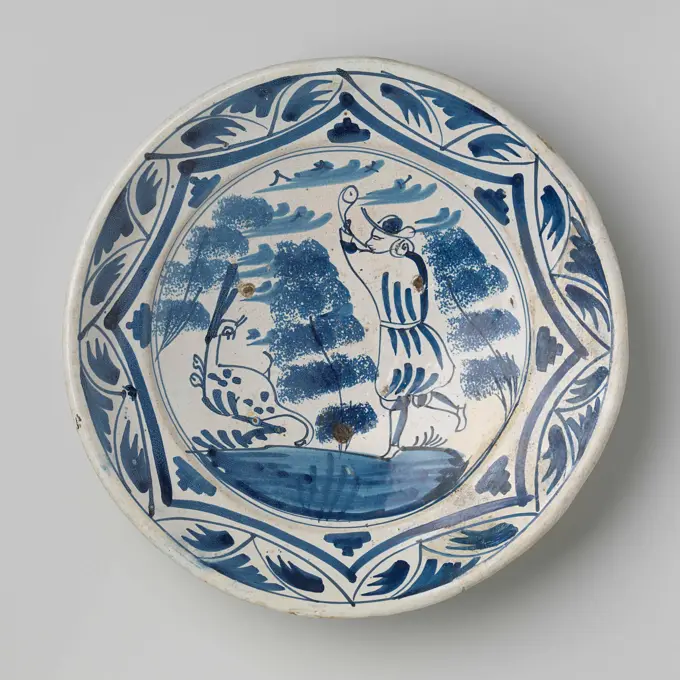
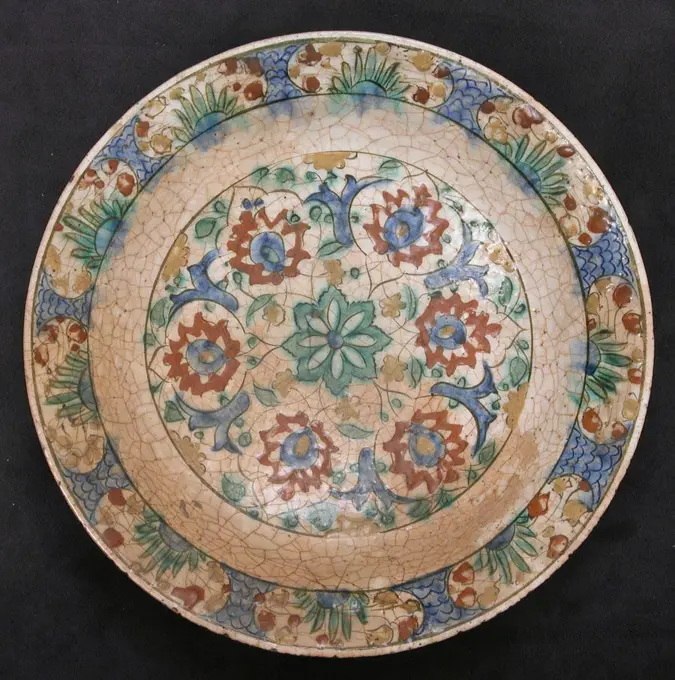
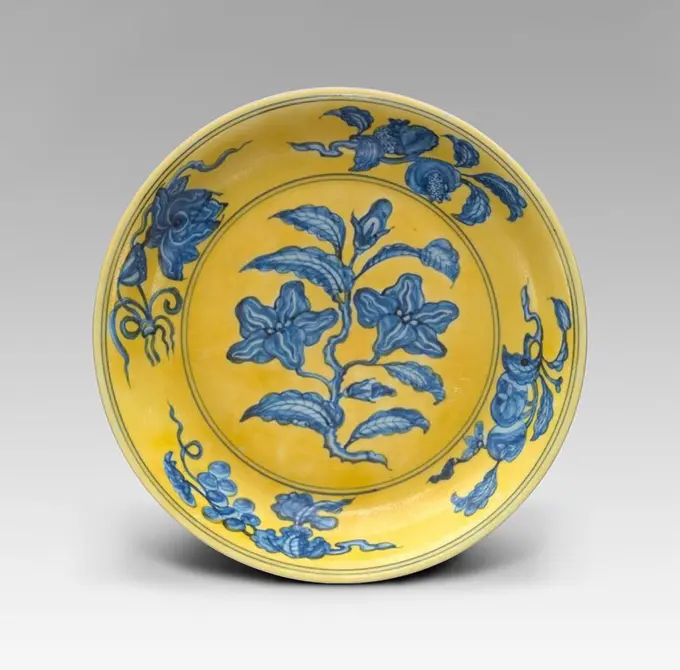
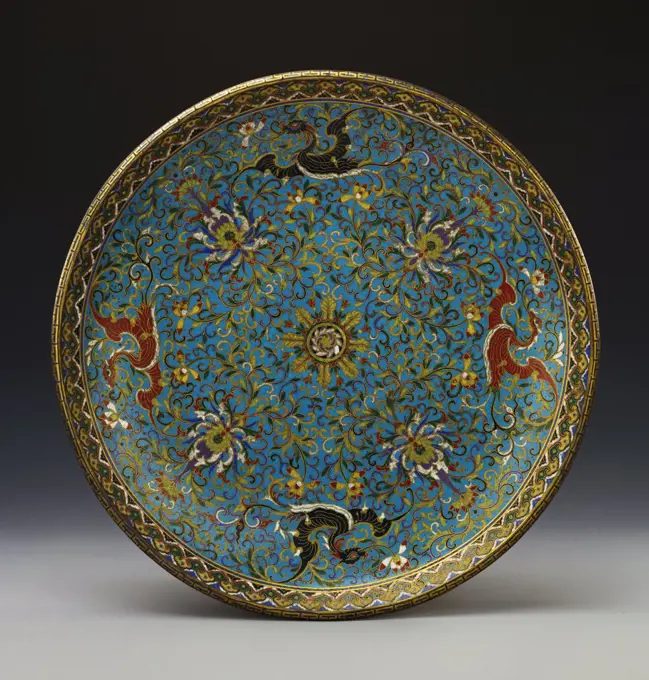
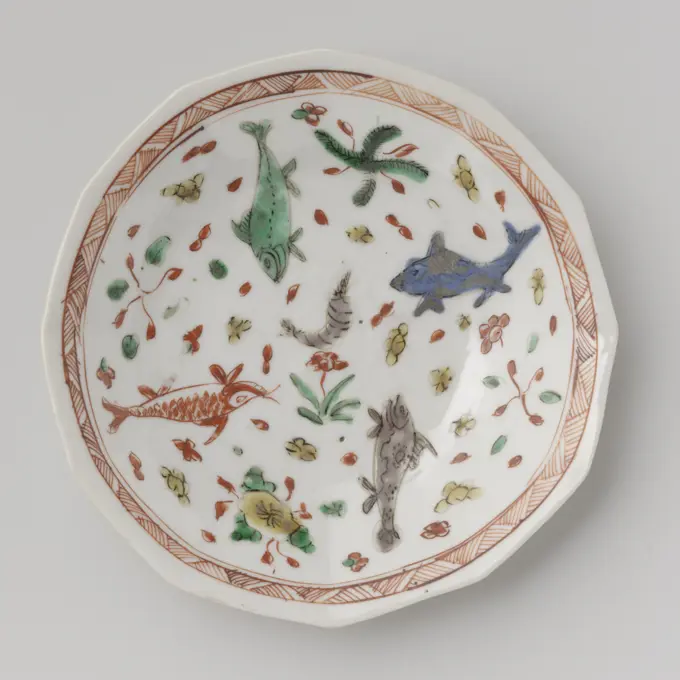
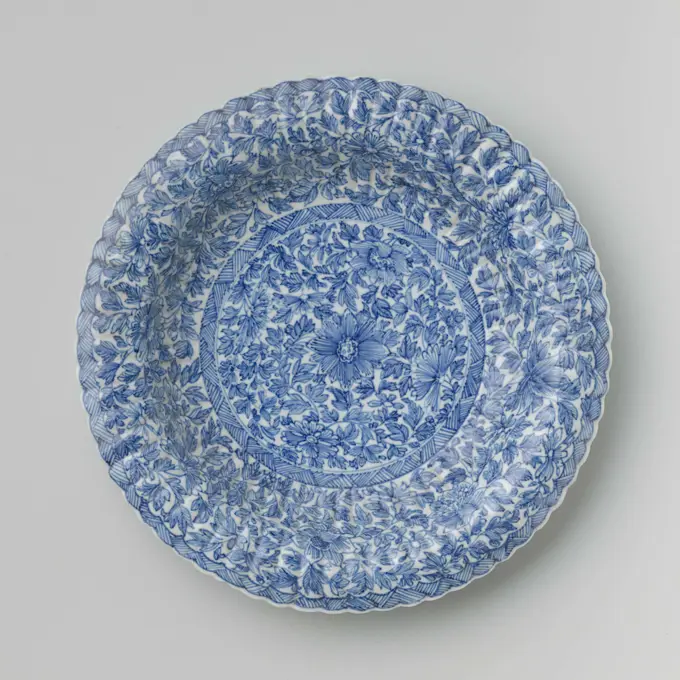
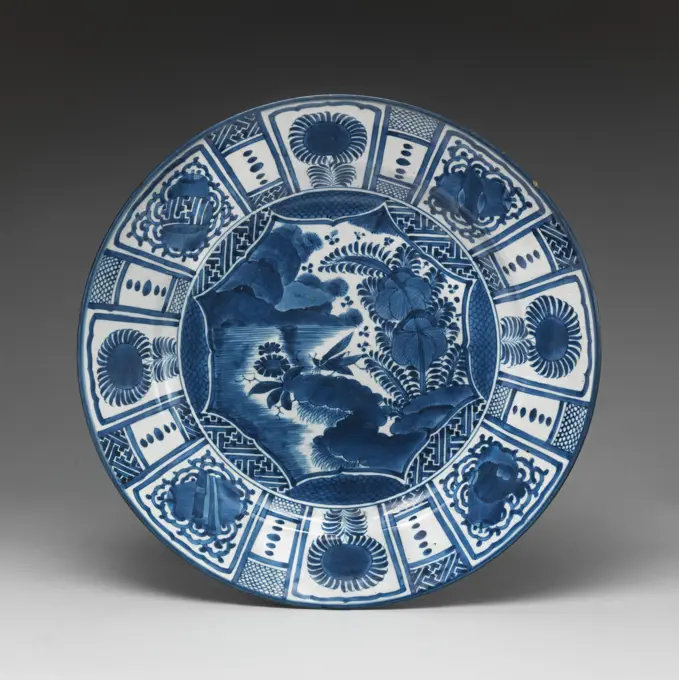
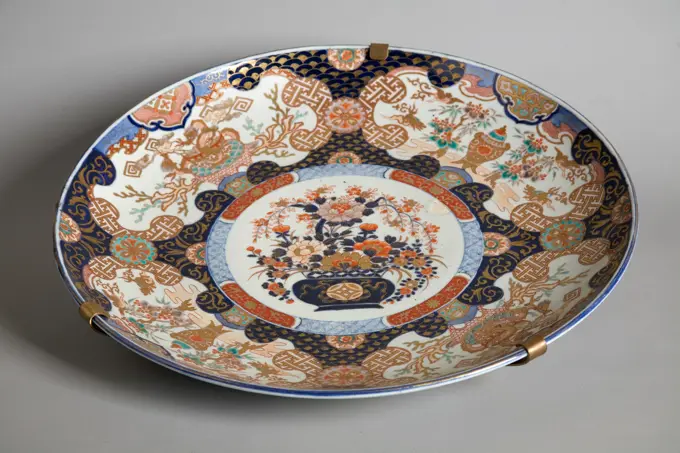
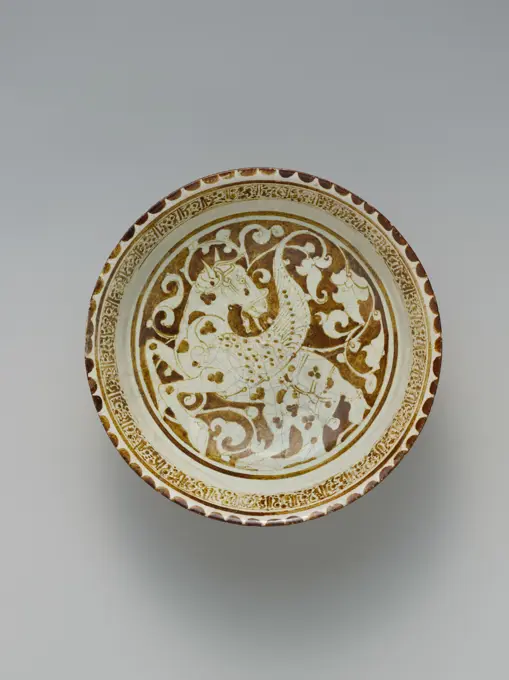
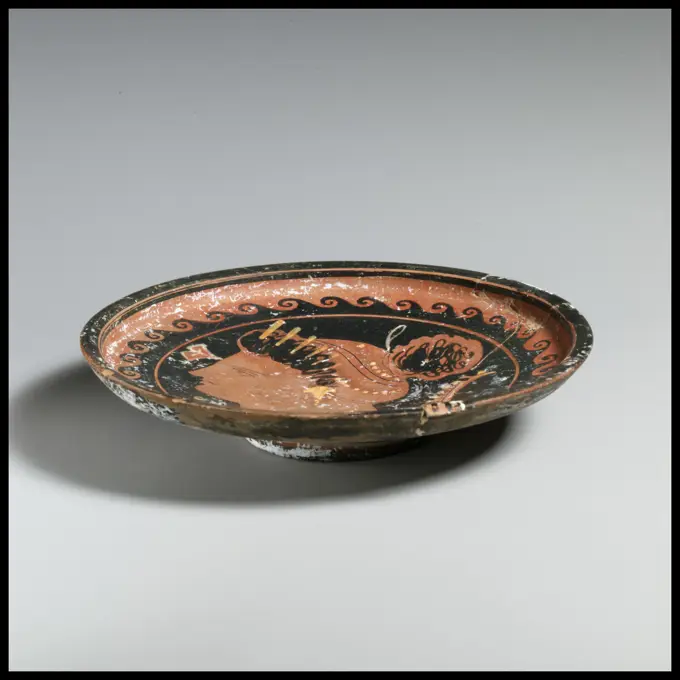
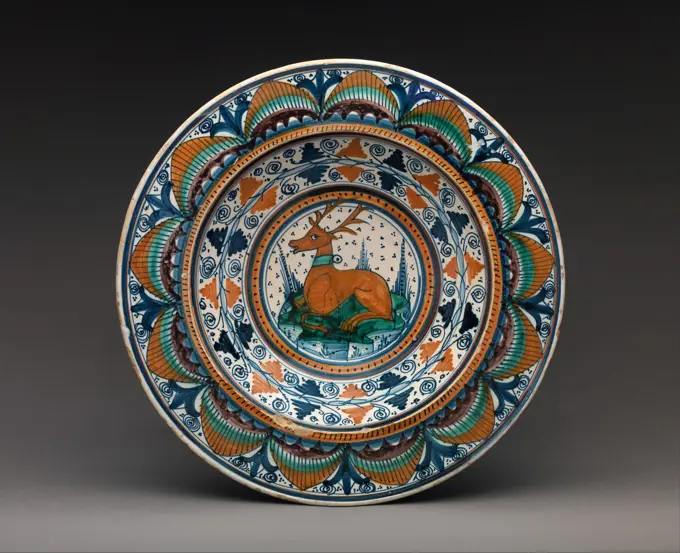
Bowl (Wan) with Lotus Petals (Lianzi) and Floral Scrolls. China, Jiangxi Province, Jingdezhen, Chinese, Early Ming dynasty, about 1368-1450. Furnishings; Serviceware. Wheel-thrown porcelain with blue painted decoration under clear glazeImperial Deep Dish, 1403-1425, 2 7/8 x 16 1/4 x 16 1/4 in. (7.3 x 41.28 x 41.28 cm), Porcelain with cobalt blue decoration under a clear glaze, China, 15th century, While the earliest Chinese blue-and-white ware was made for the fourteenth century Persian market, this classic dish exemplifies the transition in early Ming towards the true recognition and wide appreciation of blue-and-white porcelain by the Chinese court and scholar class. The aesthetic preference in early fifteenth century ceramics was for a pure white, fine porcelain body acting as a bright ground to brilliant cobalt blue designs protected under a hard, clear glaze. The painted designs were continuous around the form; wave patterns on the rim, with twining flowers around the cavetto, the exterior, and in the center creating a beautifully elegant, unified composition.Dish with floral scrolls, anonymous, c. 1400 - c. 1499 Porcelain saucer, painted in under -glaze blue. On the flat a stylized lotus with leaves in a double circle; Around a band with leaves. On the wall a band with flower vines; The inner edge with a band with curl. On the outer wall a band with leaf motifs with curl. Red -brown is painted within the foot ring and the edge is unglazed. Blue White. Vietnam porcelain. glaze. cobalt (mineral) painting / vitrification Porcelain saucer, painted in under -glaze blue. On the flat a stylized lotus with leaves in a double circle; Around a band with leaves. On the wall a band with flower vines; The inner edge with a band with curl. On the outer wall a band with leaf motifs with curl. Red -brown is painted within the foot ring and the edge is unglazed. Blue White. Vietnam porcelain. glaze. cobalt (mineral) painting / vitrificationDinner plate - Inconnu / UnknownDish, the Lampetkan, c. 1740 - c. 1790  Round dish of blue -painted faience, with a scalloped edge and decorated with the heron pattern. The dish is marked: LP can Delft Fabr. Six identical dishes with invnrs belong to the dish. BK-NM-13284-A, BK-NM-13284-B, BK-NM-13284-C, BK-NM-13284-D, BK-NM-13284-F and BK-NM-13284-G. Delft earthenware. tin glaze.A plate;  18th century (1701-00-00-1800-00-00);ceramics, gift (provenance), Persian (culture), plant (ornament), art of IslamSaucer with rooster late 18th century China. Saucer with rooster. China. late 18th century. Porcelain painted in overglaze polychrome enamels (Jingdezhen ware). Qing dynasty (1644-1911). CeramicsFragment majolica dish, blue on white, flower vase and bird in Chinese style, dish tableware holder soil find ceramics pottery glaze, Op princes fried Deep dish bowl shaped soul archeology food decorate serving ChinaDish from v.o.c.-ship the 'white lion'. Dish from v.o.c.-ship the 'white lion', 100%% present. The bowl is flat with an almost straight wall. The foot ring is low and faceted on one side. The bowl is made of a good quality clay and has few impurities. The soil is convex, has radial ridges and oven sand has been found on it. The glaze is blue tinted and thin with cracks and pinholes. The flat of the interior is decorated with blooming lotus plants with a duck below.. Plate, round, made of pottery, on the front and back with white tining acid. Front over the whole plate painted multicolored with flowers, plant and bird. Four tendrils on the back. Signature: Roos.Faience plate, the Lampetkan, c. 1760 - c. 1790 Fowence board. Multicolored painted with so -called peaweveer motif. Marked lpkan Delft . Fowence board. Multicolored painted with so -called peaweveer motif. Marked lpkan Delft .Basket, anonymous, c. 1680 - c. 1690 Basket of Faience with a chinoiserie decoration Delft . Basket of Faience with a chinoiserie decoration Delft .Soup plate - Davenport DavenportDish of Faïence, the Greek A, c. 1690 - c. 1700 Faïence saucer. Blue painted. Delft . Faïence saucer. Blue painted. Delft .Dish. Culture: China. Dimensions: H. 2 1/2 in. (6.4 cm); Diam. of rim: 14 3/8 in. (36.5 cm); Diam. of foot: 8 in. (20.3 cm). Museum: Metropolitan Museum of Art, New York, USA.Plate from v.O.c.-ship the 'white lion'. Plate from v.o.c.-ship the 'white lion', 96%% present.Bowl; Frankfurt am Main (ceramic family; 1700-); early 18th century (1700-00-00-1720-00-00);. Pottery wall plate, painted in purple, green, yellow and blue with a three-part symmetrical vegetative ornament on dark blue fond. The edge in light purple. In the foot ring one suspension hole.. Plate of Faïence. Painted multi-colored with a basket with flowers. Rank with tendrils and Chinese motifs.. Dish, Ribbed, Painted on the bottom in blue with a flowerpot on a table.Dish early 17th century. Dish 444996Dish (piatto) ca. 1525-30 Italian, probably Castel Durante. Dish (piatto) 460198. Plate of Faïence. Multicolored painted with a Chinese water landscape and Lambrequins, in Imari colors.Plateau ca. 1725 After a design by Jacques Stella French The scene of children playing is taken from an engraving entitled "Le Batonet et la Charrue" by Claudine Bouzonnet Stella (1636-1697), after a design by Jacques Stella (1596-1657). The engraving was one of fifty-two devoted to the games and pastimes of childhood ("Jeux et plaisirs de l'enfance") published in Paris in 1657.. Plateau. After an engraving by Claudine Bouzonnet Stella (French, Lyons 1636-1697 Paris). French, Rouen. ca. 1725. Faience (tin-glazed earthenware). Ceramics-PotteryDish ca. 1575-87 Medici Porcelain Manufactory The porcelain made at the Medici workshops in Florence was the first to be produced in Europe. Francesco I deMedici (1541-1587) established a ceramic workshop in the 1560s with the intention of imitation Chinese blue-and-white porcelain. It took approximately ten years of experimentation before the workshop could manufacture the type of porcelain known as soft-paste. While so-called Medici porcelain lacks the ingredients that comprise hard-paste porcelain as made by the Chinese the Medici potters were able to craft a fine white ceramic body with cobalt decoration that represented an outstanding technical achievement for its time. Technically difficult and expensive to make, Medici porcelain was produced in very small quantities, and manufacture is believed to have ceased, or at least significantly diminished with the death of Francesco in 1587. Only fifty-nine pieces of Medici porcelain are known to have survive, of which one-tenth reside Saucer With Stylized Flowers and Precious Objects. Dish of porcelain with lobby edge, painted in underglaze blue. On the flat a rosette with a flower in a circle in the center, from the flower four lines with a flower in reserve at the end, on the circle branches in reserve; Changed with three lines on the edge styled flower drinks; The back with four valuables (pearl, diamond, music stone, role). Marked on the underside with the four-character mark of Emperor Yongzheng () In a double circle. A crack in the edge. Blue White.Toy plate - William Ridgway & Company, 1830-1854 William Ridgway & Company, 1830-1854Dish with (mythological) animals, flower baskets and flowering plants, anonymous, c. 1700 - c. 1724 Porcelain dish, painted on the glaze in blue, red, green, yellow, eggplant, black and gold. The flat is covered with flower branches and butterflies against a black -stable green background. It saved a medallion with two shishi (lion dog) and one of the valuables (coin). This medallion is surrounded by six medallions with alternately a flower basket or a shishi in a landscape. On the edge of servetwork with different cartouches with a butterfly, flowering plant or chilong (polled dragon) alternately. The rear with a flower branch three times. Marked on the underside with a mushroom (lingzhi) in a double circle. Famle Verte. China porcelain. glaze. gold (metal) painting / gilding / vitrification Porcelain dish, painted on the glaze in blue, red, green, yellow, eggplant, black and gold. The flat is covered with flower branches and butterflies against a black -stable green background. It saPlate, painted with a basket with flowers, anonymous, c. 1710 - c. 1730 Faïence board. Multicolored painted with a basket with flowers. Rand with tifles and Chinese motifs Delft . Faïence board. Multicolored painted with a basket with flowers. Rand with tifles and Chinese motifs Delft .Bord van faience, anonymous, c. 1780 - c. 1820 plate (dishes) Fowence plate multicolored painted with a vase with flowers and a decorated edge. Delft .Plate, with a few figures in a garden, Nicolaas Antoine Bosch, c. 1853 - c. 1867 Plate of pottery with blue transfer decor. On the flat some figures in a garden. The edge with four cartouches in which two figures in a garden. Between the cartouches garlands of flowers, volutes and leaf work. Maastricht . Plate of pottery with blue transfer decor. On the flat some figures in a garden. The edge with four cartouches in which two figures in a garden. Between the cartouches garlands of flowers, volutes and leaf work. Maastricht .Brush washer. unknown, craftsmanDish With Two Hoo-Birds near Flowering Plants. Dish of porcelain, painted in underglaze blue. On the flat a hay bird on a rock and one flying in blooming plants (aster, pomegranate). The inner wall is divided into six compartments with alternating a pomegranate branch and a boating; The courses are separated by a flower drink. The outer wall with a continuous rank. Three preen on the bottom. The performance is following the Chinese squirrch porcelain. Arita, blue-white.Dish with blue flowers. Dish of pottery with liquefy transfer decor, round, decorated with flowers.Plate, painted with a compilation of Chinese motifs, the initials we and the year 1709, De Metaale Pot, 1709 Fowence board, multi -colored painted with a compilation of Chinese motifs, the initials we and the year 1709. Delft . Fowence board, multi -colored painted with a compilation of Chinese motifs, the initials we and the year 1709. Delft .. Dish of Faience. Blue painted with a fantasy tree.Charger with the Arms of the Piccolomini Family. Italy, Deruta, circa 1530. Furnishings; Serviceware. Tin-glazed earthenware (maiolica)Bowl with Two Boys and Lotuses early 12th century Korea Ceramics with green glazes were the only high-fired wares produced in Korea during the Goryeo dynasty. The tradition of such high-fired green-glazed wares was first introduced from China around the tenth century. However, by the middle of the twelfth, Korean potters had developed distinctive traditions with shapes and designs that reflect native taste. These Korean wares were extolled in contemporaneous Chinese writings as having the radiance of jade and the clarity of water.. Bowl with Two Boys and Lotuses. Korea. early 12th century. Stoneware with mold-impressed decoration under celadon glaze. Goryeo dynasty (918-1392). CeramicsA plate;  18th century (1701-00-00-1800-00-00);Hispano-Moresque Basin. UnknownPlate with Grapes. Dimensions: H. 2 7/8 in. (7.3 cm)Diam. 14 1/4 in. (36.2 cm). Date: ca. 1570.Lacking the clay necessary for the production of porcelain, potters in Turkey (and elsewhere in the Middle East) created stonepaste bodies that included clay and quartz to mimic the appearance of porcelain. The cluster of grapes in the center of this dish was inspired by fifteenth-century Chinese ceramics, which were first collected in Turkey in the sixteenth century. Museum: Metropolitan Museum of Art, New York, USA.Dish HeavenlyRound Covered Box with Medallions, 1522-66. China, Jiangxi province, Jingdezhen kilns, Ming dynasty (1368-1644), Jiajing mark and reign (1522-66). Porcelain with underglaze blue decoration; diameter: 5.8 cm (2 5/16 in.); overall: 3.4 cm (1 5/16 in.).Saucer with a snake pattern on a dark blue background unknownDish 17th century. Dish 444475Serving plate - A. Elliott Josiah Wedgwood & Sons, 1780-1895 Josiah Wedgwood & Sons, 1780-1895. Round dish of blue painted faience, with on the flat four standing figures and a seated. Landscapes, two standing and two seated figures are painted on the edge.. Round dish of multicolored faience painted. On the flat is a vase with flowers and on the edge are five flowers painted in the colors blue, purple, yellow, red and green.Crespina plate;  1535-1540 (1501-00-00-1600-00-00);Dish with Floral Designs on an Olive Background 16th-17th century This dish is a member of a group of ceramics known as Kubachi ware. Named for a village in the Caucasus where this pottery was discovered in quantity, Kubachi wares are now thought to have actually been produced in Tabriz. An uneven application of the glaze has resulted in a surface-wide crackle, a typical characteristic of the Kubachi wares.This dish shows a distinct debt to Iznik pottery demonstrated in the colors used, the fish-scale pattern on the border, and especially the pomegranate and saz-leaf vegetal forms in the central section. The position of Tabriz in northwestern Iran made it vulnerable to Ottoman attack, but also accessible to receiving Ottoman styles and techniques... Dish with Floral Designs on an Olive Background 451437Plate, 15th century, 2 x 10 in. (5.08 x 25.4 cm), Stoneware with green on white glaze decoration, Myanmar (Burma), 15th century. Round dish of blue painted faience. On the flat is a circle painted within which flour rinks. Six courses were painted on the edge framed by leaves and within which a flower branch. The dish has been marked and belongs to two identical copies with Invnr. BK-14968-B and BK-14968-C.Tile ca. 1530 Flemish, probably Antwerp This tiles ornament is similar to that found on a pair of maiolica storage jars in the Museum's collection (41.100.271, .272). The painted decoration can be compared with tiles made in the 1530s in the Antwerp workshop of the Italian-born Guido Andries (Guido di Luca Savini, or Guido di Savino), who came from Castel Durante and settled in Antwerp about 1508.. Tile. Flemish, probably Antwerp. ca. 1530. Maiolica (tin-glazed earthenware). Ceramics-PotteryDish With Lotus Scrolls, Flowering Plants and Flower Sprays. Dish of porcelain, painted in underglaze blue and on the glaze red and gold. On the flat a rosette of lotus drinks, the wall with a tire napkin with a flower interrupted by flowering plants (lotus) in a cartouche. Two piping branches on the wall and two prunus brackets with a book. A chip in the edge. Chinese Imari.Dish With (Mythological) Animals, Flower Baskets and Flowering Plants. Dish of porcelain, painted on the glaze in blue, red, green, yellow, eggplant, black and gold. The flat is covered with flower branches and butterflies against a black drained green background. Herein a medallion with two shishi (lion dog) and one of the valuables (coin). This medallion is surrounded by six medallions with alternating a flower basket or a shishi in a landscape. On the edge napkin work with different cartouches shaped in it with alternating a butterfly, flowering plant or chilong (corneless dragon). The rear with three times a flower branch. Marked on the bottom with a mushroom (Lingzhi) in a double circle. Famille Verte.. attributed to De Porceleyne Byl (Justus Brouwer) Delft, ca. 1740-1770tin-glazed earthenware (faience)Lid from v.o.c.-ship the 'white lion'. Lid from v.o.c.-ship the 'white lion', 50%% present.Dish with birds and a butterfly near rocks and flowering plants, anonymous, c. 1650 - c. 1700 Porcelain dish with a wide edge, painted in underlaze blue. On the flat two flying birds and a butterfly; Two more birds on a rock surrounded by flowering plants. The wall and edge is divided into alternately wide and narrow compartments with flower areas and happiness symbols. The outer wall with three flower branches. Marked on the underside with a seal brand. Decoration following the Chinese squatter porcelain. Three prenes on the falls. Blue White. Japan porcelain. glaze. cobalt (mineral) painting / vitrification Porcelain dish with a wide edge, painted in underlaze blue. On the flat two flying birds and a butterfly; Two more birds on a rock surrounded by flowering plants. The wall and edge is divided into alternately wide and narrow compartments with flower areas and happiness symbols. The outer wall with three flower branches. Marked on the underside with a seal brand. Decoration followiExcerpt deep plate from v.o.c.-ship De 'Witte Leeuw', Anonymous, Before 1613 plate (dishes) Fragment deep plate from V.O.C. ship De 'Witte Leeuw', 50 present. Jingdezhen bone china (material)   Sint-HelenaSaucer with panels in The Shape of a Flowerhead Filled with Flower Sprays. Dish of porcelain with raised wall and flat edge, painted in underglaze blue. On the flat a medallion surrounded by flower leaf-shaped compartments; The medallion is filled with a flower branch, rock and insect, in the leaf-shaped compartments each time a flower branch (bamboo, chrysanthemum, prunus, pine, etc.); on the edge flower branches; The back with two flower branches and a peach roof. Marked on the bottom with an artemisia leaf in a double circle. Blue White.Plaque.Plate Made 1662-1722 China. Hard-paste porcelain with underglaze blue decoration .Bowl with peony design North Central Thailand, Si Satchanalai, Ko Noi 15th-16th century This deep bowl is a handsome example of the characteristic iron-decoration stoneware ceramics produced at the Si Satchanalai kilns in north-central Thailand. The central design shows a stemmed flower in bloom surrounded by flourishes of leaves. An extended version of the same motif appears as a continuous design in the cavetto with a cloud-chain border on the rim. The painted décor is in an iron-rich solution beneath a clear glaze, tinged green by the presence of iron. In its fluid brushwork painting, the design emulates Chinese blue-and white porcelains of the later fifteenth century. View more. Bowl with peony design. North Central Thailand, Si Satchanalai, Ko Noi. 15th-16th century. Stoneware with iron-underglaze painted décor. CeramicsDish of blue painted majolica. Round dish of blue painted majolica. A landscape is painted on the flat in which a man-running man, blowing on a horn. An animal is running in front of the man. Eight segment arcs are painted on the edge and stylized leaves.Dish 17th century. Dish 451436Dish 17th centuryHot water plate, c. 1805, 8 1/2 in. (21.59 cm), Porcelain, China, 19th centuryDish with Floral and Fruit Sprays ("Gardenia Dish"). China. Date: 1488-1505. Dimensions: Diam: 25.6 cm (10 1/8 in.). Porcelain painted in underglaze blue and overglaze yellow enamel. Origin: . Museum: The Chicago Art Institute, Chicago, USA.Serving plate - Inconnu / UnknownHexagonal Tile 15th century The design of this tile was strongly influenced by Chinese models, in both composition and color. The Egyptian taste for blue-and-white botanical designs was filtered through Iranian versions from the Ilkhanid period (1256-1353). It is known that Iranian artists moved westward at the beginning of the fifteenth century.A Large Cloisonne Enamel Dish. The Interior Decorated with Pairs of Red and Black Dragon-Headed Phoenix Divided by Lotus Blooms. Qianlong. 42cm diam.Dish With a Flower Vase, Feng Huangs, Shishi and Birds. Dish of porcelain, painted in underglaze blue and on the glaze red, black and gold. On the flat a double medallion with a flower vase with chrysanthemums and peonies. The wall and edge are divided into four compartments with two shishi (lion dog) in a landscape, two birds on a branch of a prunus tree and twice a ruyi-shaped cartouche with a fenghuang against a blue background with floral drinks. The dish is caught in a metal frame. Probably a European (French) Imitation of the Japanese Imari.Plate With Flower Sprays and Figures in an interior and in a Landscape. Porcelain plate, painted in underglaze blue. On the flat one raised medallion in the center with six people in an interior to a table; Four times a flower branch (Prunus, Peony, Lotus, Chrysanthemum). The edge with a continuous landscape with scholars and their servants; The back of the edge with flower drinks. The back of the wall with four times a flower branch (prunus, peony, lotus, chrysanthemum). Some chips in the edge. Blue White.Platter, c. 1650-1680. Nevers Factory (French). Faience; overall: 4.5 x 30.5 x 25.4 cm (1 3/4 x 12 x 10 in.).Plate With Flower Sprays and Figures in an interior and in a Landscape. Porcelain plate, painted in underglaze blue. On the flat one raised medallion in the center with six people in an interior to a table; four times a flower branch (prunus, peony, lotus, chrysanthemum); the edge with a continuous landscape with scholars and their servants; the back of the edge with flower drinks; The back of the wall with four times a flower branch (prunus, peony, lotus, chrysanthemum). Some chips in the edge. Blue White.Przeszo Przyszoci unknownPlate ca. 1825-ca. 1836 Joseph Stubbs. Plate 6199Dammer decor cup, Italian Majolic of Montelupo, 16th century (face) ". Museum of Fine Arts of the city of Paris, Petit Palais. 26972-12 Cup, Decor Damier, Decoration, Face, Italian Majolic, Montelupo, various objectDish;  19th century (1801-00-00-1900-00-00);Charger plate (ôzara). unknown, craftsman. This dish is decorated with a monochrome blue glaze in which representations of flowers and tendrils have been painted in white slip. It was made in South China, where small porcelain kilns produced robust dishes and vessels that were particularly popular in Southeast Asia. In the17th century small amounts of this ware also reached the Netherlands and Japan.Twelve-sided saucer with prawn, fish and water plants, anonymous, c. 1700 - c. 1724 Twelve-cornered dish of porcelain, decorated in underly glaze blue, with café-au-lait glaze and on the glaze blue, red, green, yellow, eggplant and black. On the flat in the center a shrimp surrounded by four fish and aquatic plants, the edge with zigzag work; The outside is covered with a cafe-au-lait-colored glaze with four plants in enamel. Marked on the underside with three characters in red enamel in a double circle in underlaze blue. Famle distance with a brown glaze. China porcelain. glaze. cobalt (mineral) painting / vitrification Twelve-cornered dish of porcelain, decorated in underly glaze blue, with café-au-lait glaze and on the glaze blue, red, green, yellow, eggplant and black. On the flat in the center a shrimp surrounded by four fish and aquatic plants, the edge with zigzag work; The outside is covered with a cafe-au-lait-colored glaze with four plants in enamel. Marked on the underside wDish with nine -lobe edge of blue painted faience, anonymous, c. 1690 - c. 1740 Dish of blue painted faience. The edge is nine -lobed. The lobes are outlined. Flowers and sprinkling flowers are painted on the flat and within the lobes. Delft earthenware. tin glaze. Dish of blue painted faience. The edge is nine -lobed. The lobes are outlined. Flowers and sprinkling flowers are painted on the flat and within the lobes. Delft earthenware. tin glaze.Plate. unknown, craftsmanDessert plate KlösterlePlate with Fluted Sides and Continuous Flower Pattern. Porcelain plate with ribbed wall and scalloped edge, painted in underglaze blue. On the flat flower drinks in a medallion with a band arceing; the wall with floral drinks and a band with arrearing; The back with four lotus plants. Marked on the bottom with a diamond in a double circle. Two chips and a crack in the edge. Blue White.Dish ca. 1670 Japanese, for European market The gift of the Hans Syz Collection in 1995 endowed the Museum with nearly three hundred examples of European and Asian ceramics meticulously acquired by Swiss-born collector Dr. Syz (1894-1991) to chart the migration of models and patterns from East to West. Documenting a continuous process of influence and adaptation, these pieces provide a discriminating review of the nuances of stylistic change resulting from three centuries of trade.. Dish. Japanese, for European market. ca. 1670. Hard-paste porcelain. Ceramics-Porcelain-ExportPlatter (container), XVII Century, Ceramic (earthenware decorated with metallic reflections, central umbo and the figure of a fish that rests on the back of a bull, surrounded by heart-shaped leaves and border of the ungla (nail)), of Manises or Valencia (Valencia), Diameter: 40,3 cm. Museum: Museo Fundación Francisco Godia, Barcelona, Cataluña, España.Fragment majolica dish, blue on white, heraldic image, helmeted escutcheon with diagonal division, above dark, under light with flora, plate dish crockery holder soil find ceramics pottery glaze, archeology heraldry adorn servingDishPlate unknownSaucer-dish with hunting scene, Lotus Scrolls and auspicious Symbols. Scale of porcelain with round, ribbed wall and scalloped edge, painted in underglaze blue. On the flat a hunting scene with two armed riders with a dog in a landscape, jagging on an animal; the edge with a linked band of lotus drinks with Ruyi motif, between the eight lucky symbols (chakra, shell, parasol, canopy, lotus, vase, fish, infinite knot); The back with sixteen loose flower branches. Marked on the underside with the six character mark of Emperor Chenghua in a double circle. Blue White.Saucer-dish with a flower spray in a medallion, anonymous, c. 1300 - c. 1499 Porcelain scale, painted in undermglaze blue. On the flat a stylized flower branch in a double medallion. The glaze is crawl; The underside is unglazed. Found on Sulawesi. Blue White. China porcelain. glaze. cobalt (mineral) painting / vitrification Porcelain scale, painted in undermglaze blue. On the flat a stylized flower branch in a double medallion. The glaze is crawl; The underside is unglazed. Found on Sulawesi. Blue White. China porcelain. glaze. cobalt (mineral) painting / vitrificationplate , 16th century, Can Pont i Vic, Museu de Mallorca, Palma, Majorca, Spain.Plate with Scholar and Attendant in Garden 1662-1722 China. Porcelain painted in underglaze blue .Dish with double -headed eagle and year 1607, Anonymous, 1607 Round dish of lead glaze pottery, on three shell -shaped legs. The dish is decorated in white sludge, with equal birds on the flat two. A tree branch is painted under the birds, including the year 1607. Above the birds, a hanging pomegranate with a flower branch with leaves on the left and right is painted. Rosettes were alternated by S-shaped motifs on the edge. The dish is covered with local green -tinted lead glaze. Holland earthenware. lead glaze Round dish of lead glaze pottery, on three shell -shaped legs. The dish is decorated in white sludge, with equal birds on the flat two. A tree branch is painted under the birds, including the year 1607. Above the birds, a hanging pomegranate with a flower branch with leaves on the left and right is painted. Rosettes were alternated by S-shaped motifs on the edge. The dish is covered with local green -tinted lead glaze. Holland earthenware. lead glazeLuster Bowl with Winged Horse late 12th century In the twelfth century, potters emigrating from Egypt or Syria introduced lusterpainted ceramics to Iran. Consequently, early luster production in Iran shares characteristics with lusterwares made in Fatimid Egypt. The monumental quality of this bowl’s design, the largescale winged horse reserved in white against a clearly distinguished luster ground, and the festooned border all demonstrate this connection.. Luster Bowl with Winged Horse. late 12th century. Stonepaste; luster-painted on opaque monochrome glaze. Made in Iran. CeramicsTerracotta plate ca. 350-325 B.C. Compared to the Painter of Bari 1180 Head of a woman.. Terracotta plate 255165 : Compared to the Painter of Bari 1180, Terracotta plate, ca. 350325 B.C., Terracotta, diameter 6 3/4in. (17.2cm). The Metropolitan Museum of Art, New York. Rogers Fund, 1964 (64.11.9)Dish with the 'three friends of winter', anonymous, c. 1800 - c. 1850 Porcelain saucer with round wall, painted in underly glaze blue. The front with a large pain and prunus tree with bamboo branches at the trunk (the three friends of the winter). The outer wall with pain branches. 14 prenes on the bottom. A crack in the wall. Blue White. Japan porcelain. glaze. cobalt (mineral) painting / vitrification Porcelain saucer with round wall, painted in underly glaze blue. The front with a large pain and prunus tree with bamboo branches at the trunk (the three friends of the winter). The outer wall with pain branches. 14 prenes on the bottom. A crack in the wall. Blue White. Japan porcelain. glaze. cobalt (mineral) painting / vitrificationPlate with stag resting ca. 1490-1500 Italian, Montelupo Maiolica from Montelupo, a town to the north-west of Florence, often included imitations of Spanish (Valencian) lusterware motifs, as seen in the foliage surrounding the resting stag.. Plate with stag resting 199741