Blue and White Porcelain Vases

A collection of elegantly shaped porcelain vases and jars, featuring intricate blue underglaze designs of flowers, landscapes, and scholars, showcasing classic craftsmanship.

Gu-shaped vase with figures in a landscape and flower sprays, anonymous, c. 1680 - c. 1720 GU-shaped vase of porcelain with a round thickening in the middle, painted in underlaze blue. The decoration is threefold: two sitting scholars around the foot in a landscape with a servant; flower branches on the thickening; On the neck four people in a landscape with a horse, one of them offers a sword. Garnated on the underside with a leaf in a double circle. Blue White. China porcelain. glaze. cobalt (mineral) painting / vitrification GU-shaped vase of porcelain with a round thickening in the middle, painted in underlaze blue. The decoration is threefold: two sitting scholars around the foot in a landscape with a servant; flower branches on the thickening; On the neck four people in a landscape with a horse, one of them offers a sword. Garnated on the underside with a leaf in a double circle. Blue White. China porcelain. glaze. cobalt (mineral) painting / vitrification
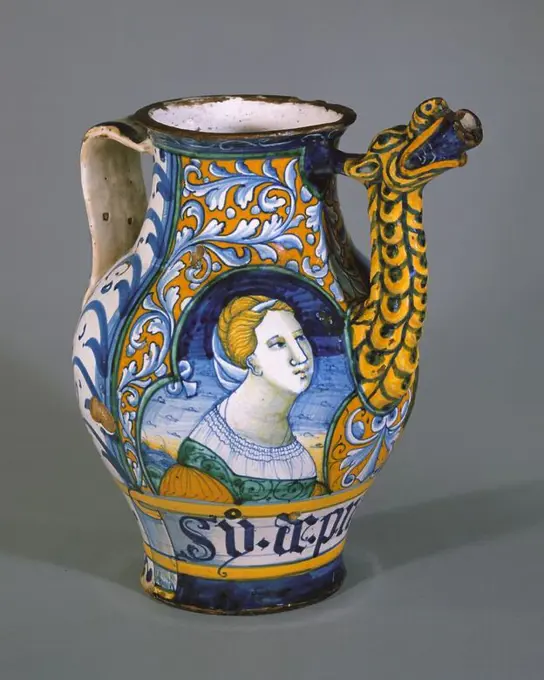
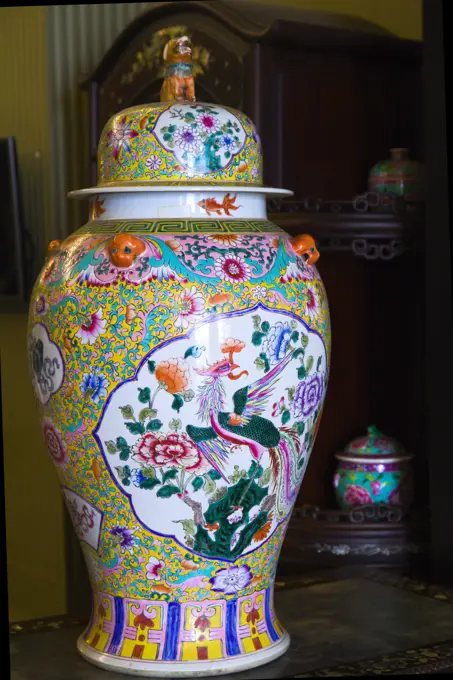
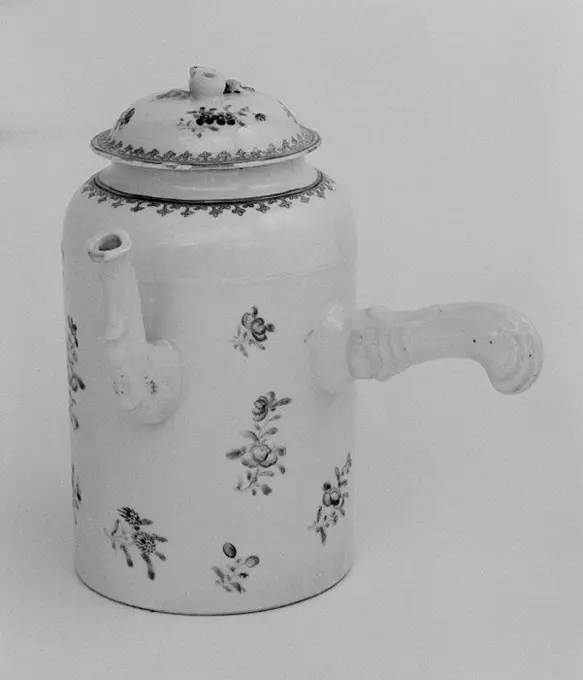
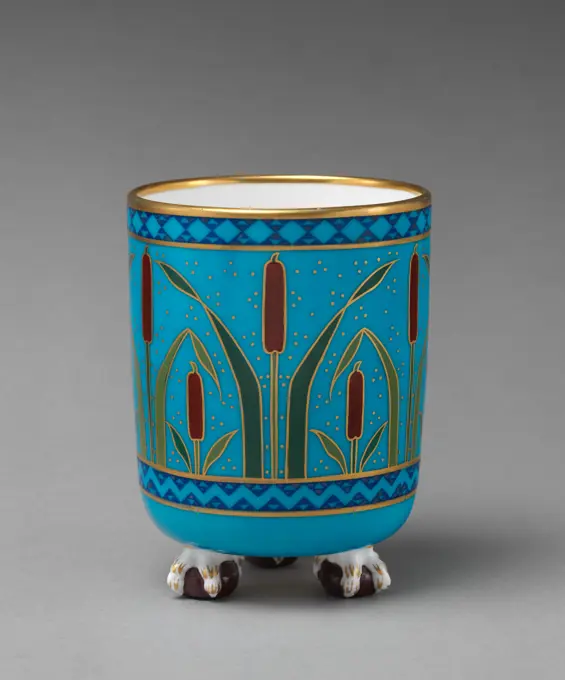
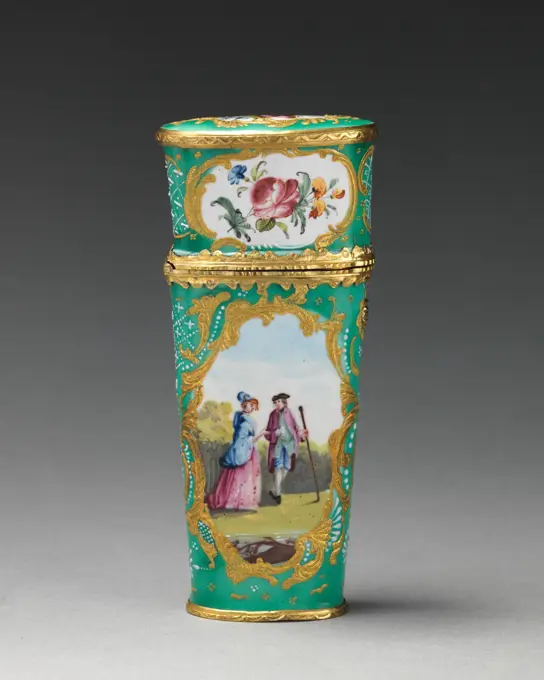
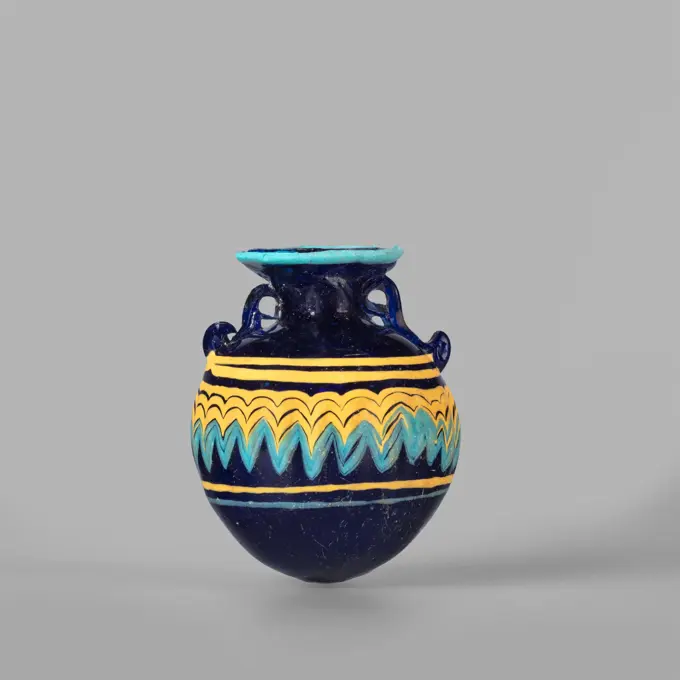
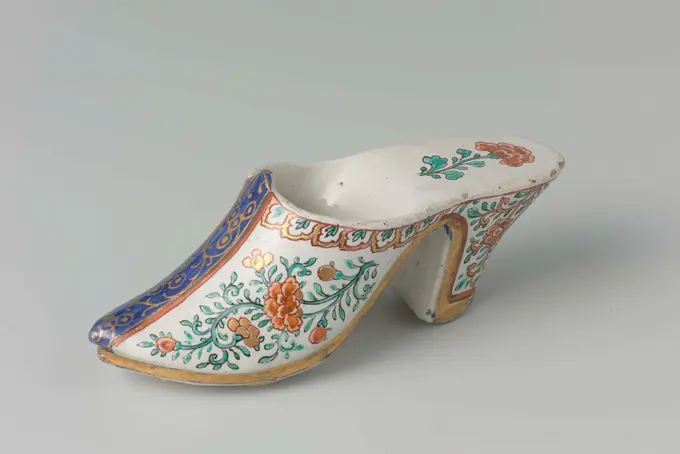
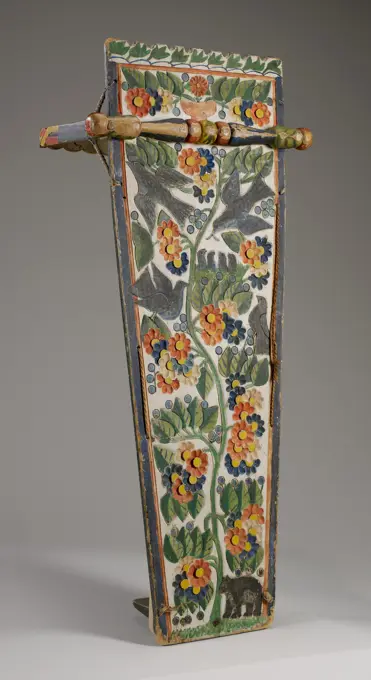
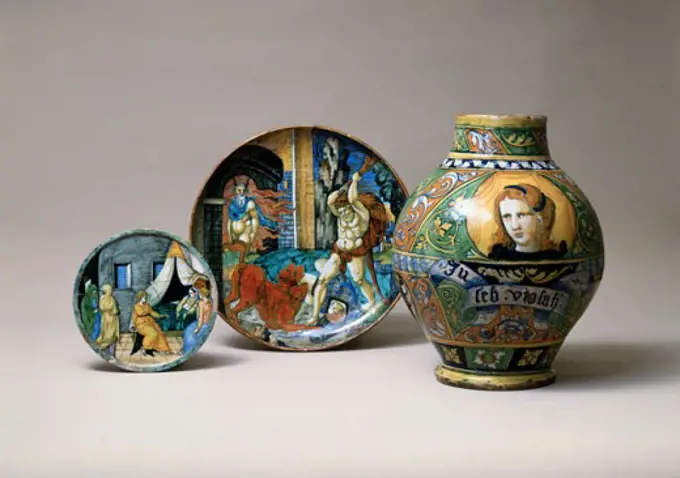
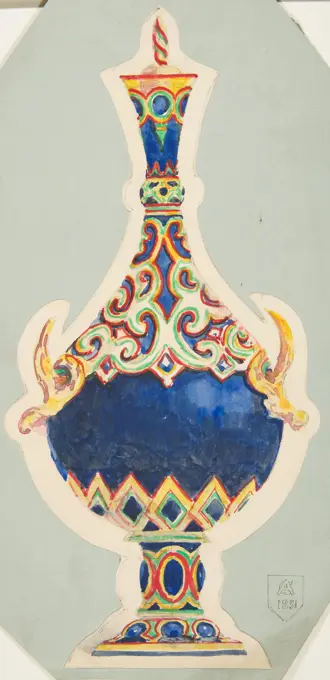
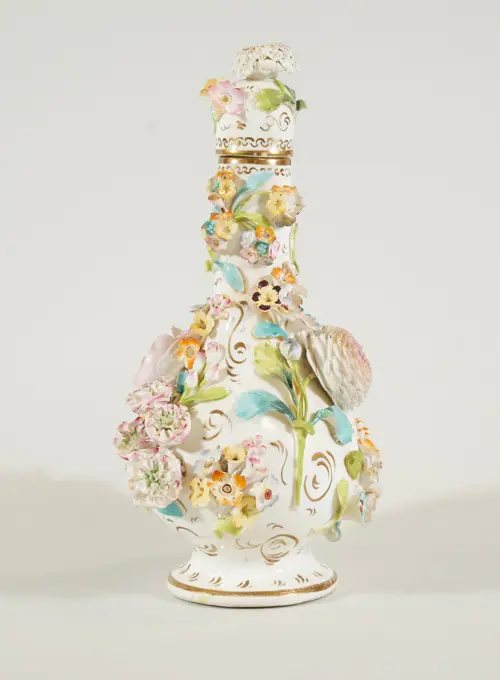
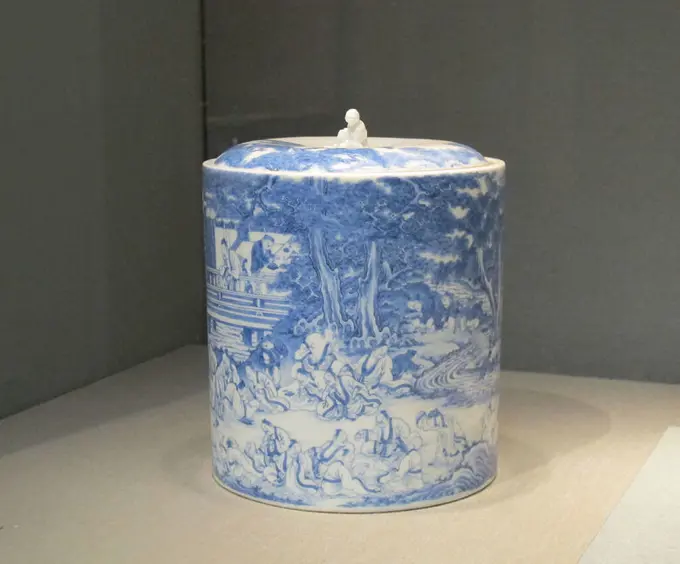
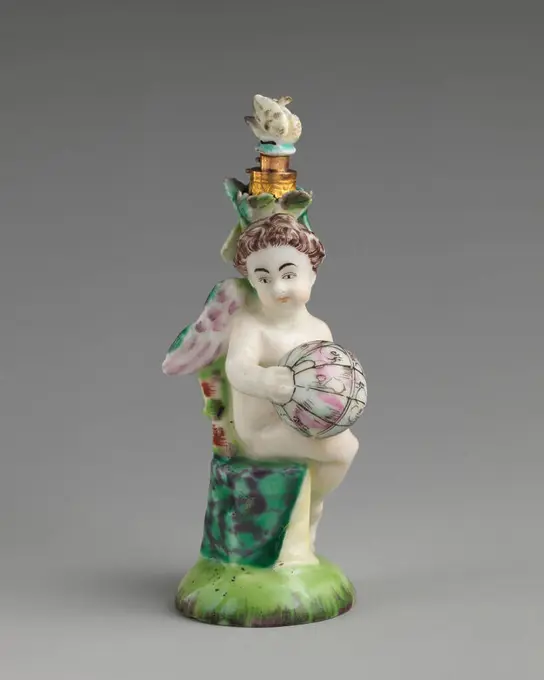
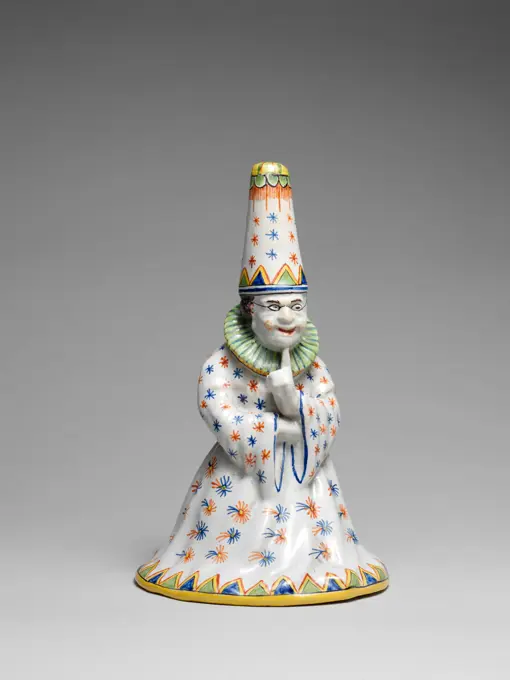
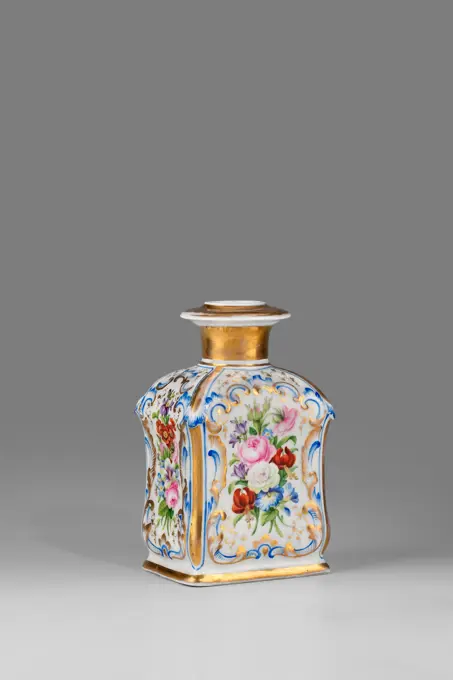
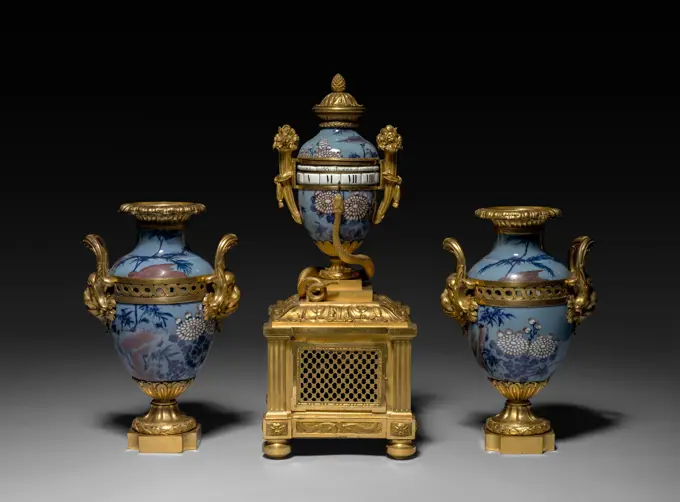
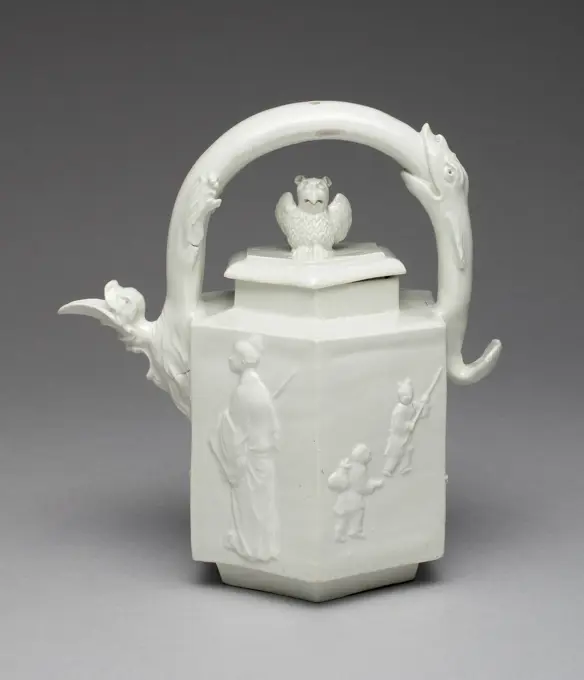
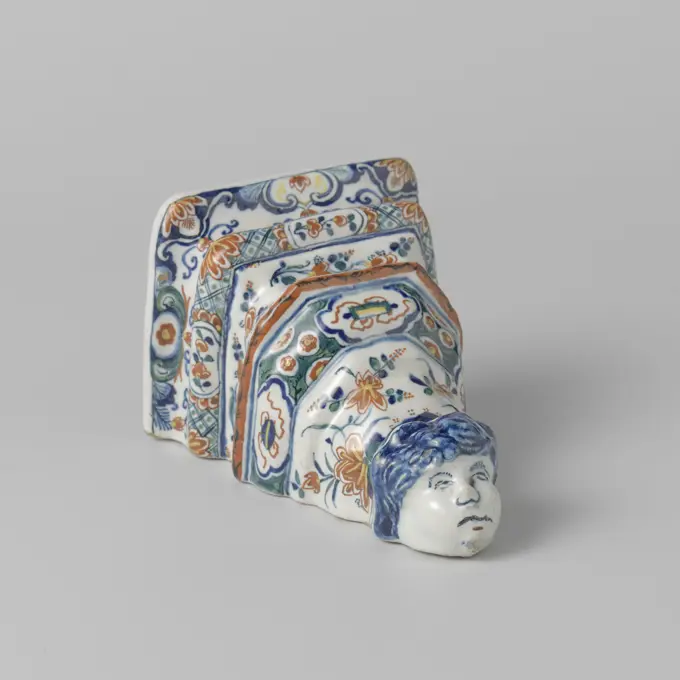
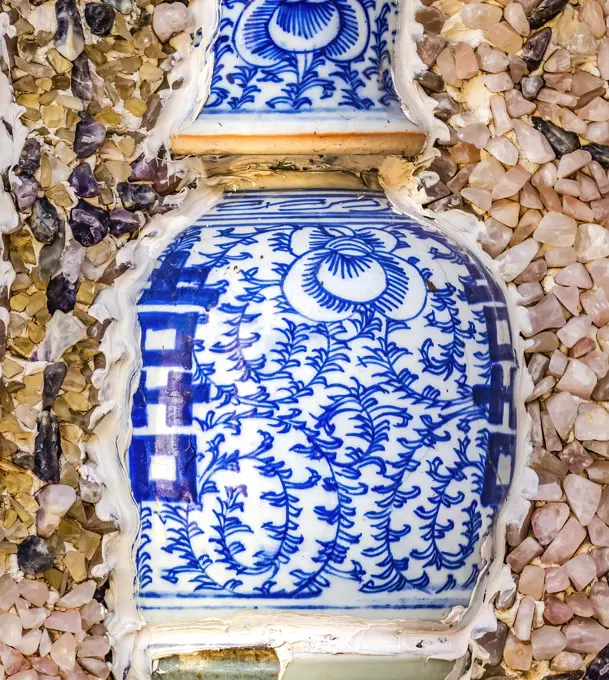
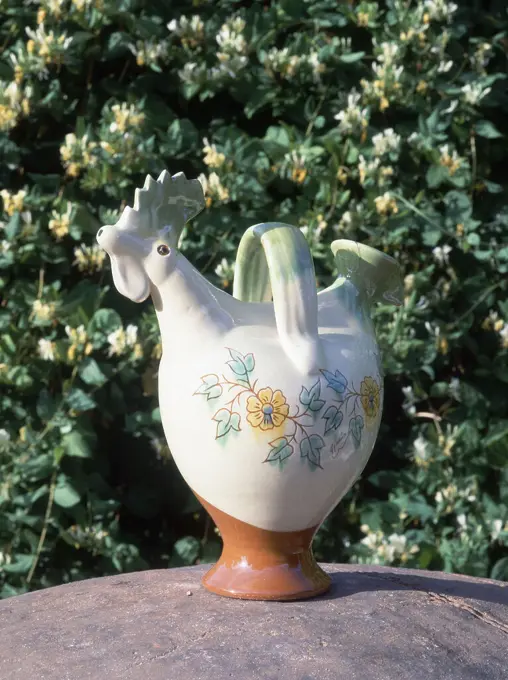
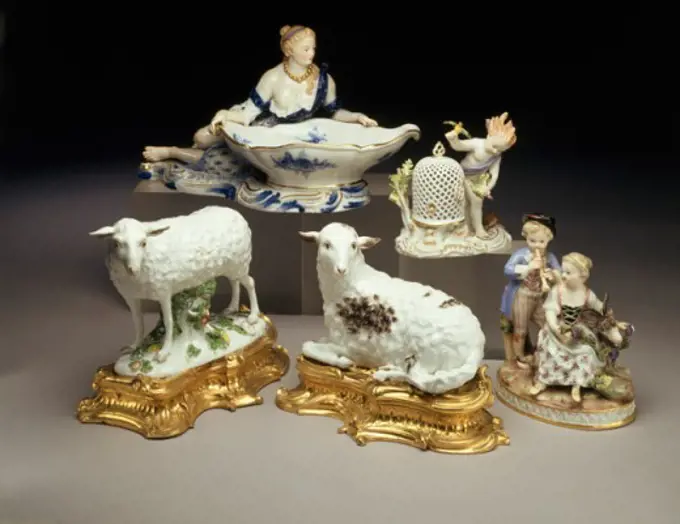
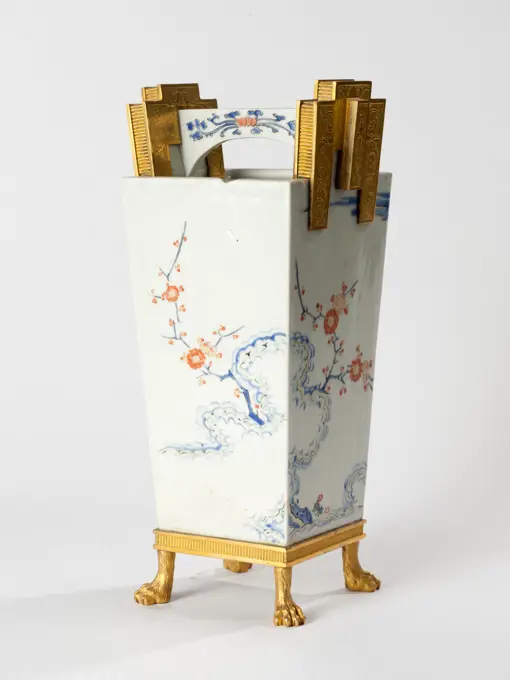
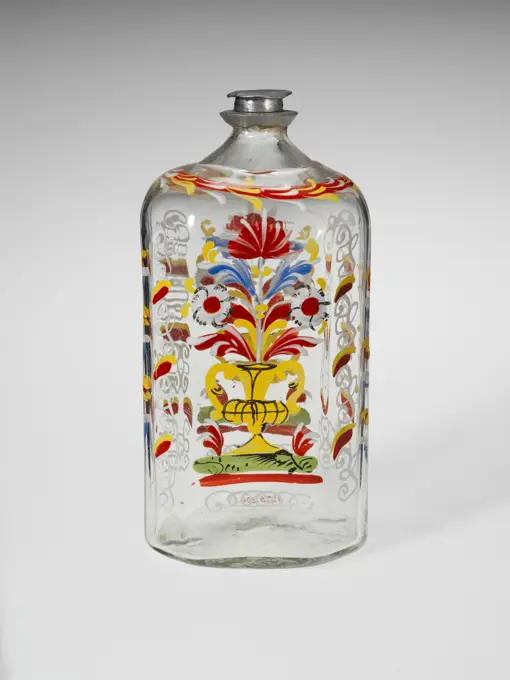
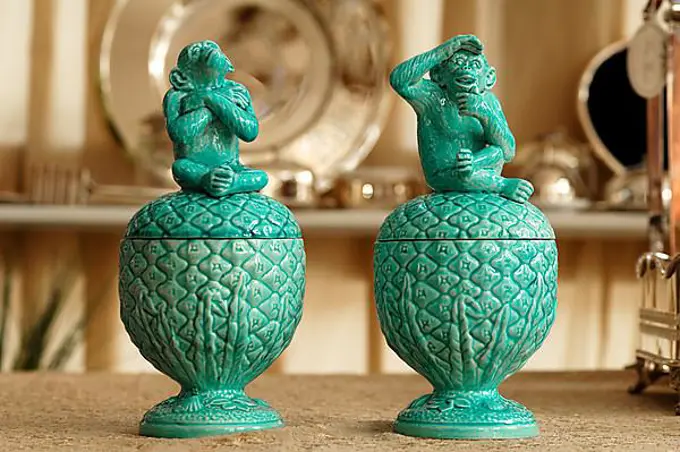
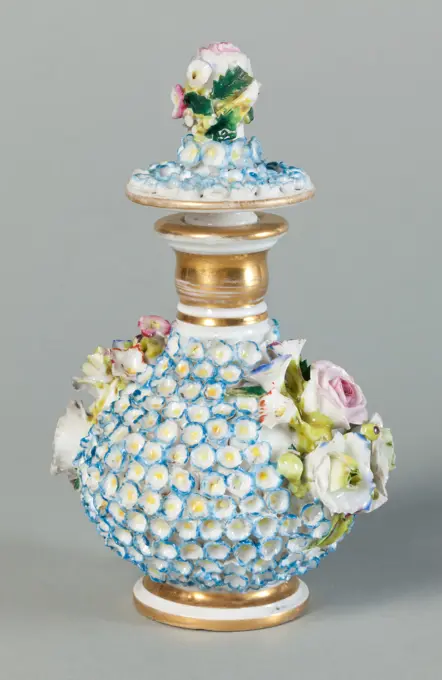
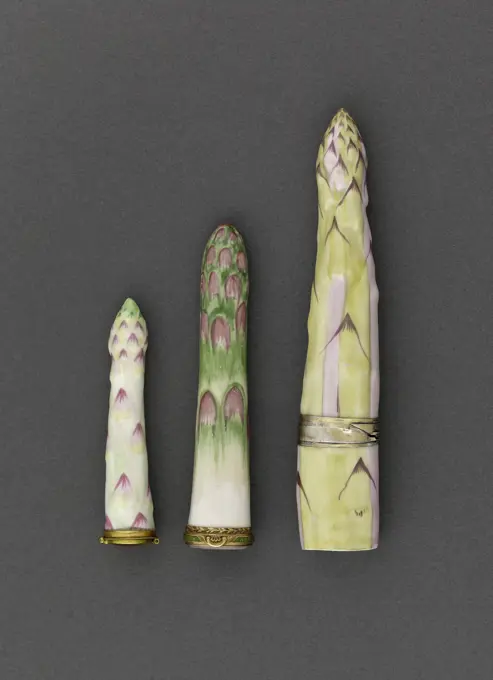
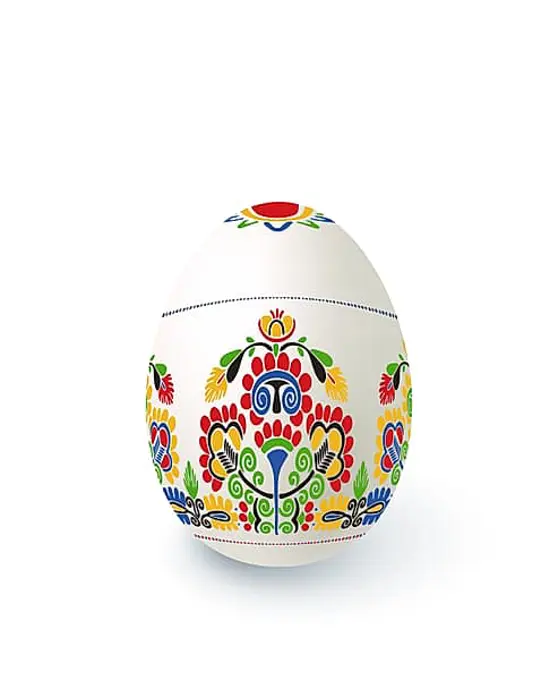
Cylindrical Vase With Flower Sprays and Scrolls in Shaped Panels. Cylindrical vase of porcelain with a wide, slightly spreading neck, painted on the glaze in blue, red, green, yellow, eggplant, black and gold. On the wall loose flower branches. Around the foot and on the shoulder a band with scalloped cartouches or lambrequins with flower branches and drinks. On the shoulder the band is interrupted by four lobed cartouches with a flower branch. The neck with flower branches. Imari.Apothecary jar (orciuolo). Culture: Italian, Castelli. Dimensions: Height: 9 13/16 in. (24.9 cm). Date: ca. 1520. Museum: Metropolitan Museum of Art, New York, USA.Lidded tea caddy. Meissener Porzellan ManufakturMeissen, c. 1730-1735painted decoration: Germany, c. 1735-1750hard-paste porcelain. Bekervase from faience, painted in blue with cartouches in which scenes from the faience company and a shoemaker. The caption at the first scene reads: D 'Opkapper is his plight to droog // and fade. // soo can enjoy the oven of everything // kind. The caption at the shoemaker lute: Drop leather with wood and rope full of art // on a attached // Word Onsen Gangh serves streets // house and away. Two flat heart-shaped cartouches at the top both cartouches on the top. In the first cartouche, two boys packing porcelain under the supervision of a lady and a gentleman, with the caption: weed packing // don't let it scrupt. In the damaged, second cartouche, only parts of the caption are readable: and ... Delfs Poorcelin // ... and color and earth // ... Rein // ... Versorghtine by // ... Packing it // ... all of the none // unmpathy. The spaces between the carouches are filled with flower festins. The inside painted with: Anno 1693-12 / 11 ... Se Pals-Count.Vase with a lid Mi Nia (Meissen)Malaysia, Melaka, Malacca, Hotel Puri, tourism, traditional architecture,Snuff bottle with theatrical scene. Culture: China. Dimensions: 3 1/2 x 1 3/8 in. (8.9 x 3.5 cm). Date: late 19th century. Museum: Metropolitan Museum of Art, New York, USA.Chocolate pot with cover ca. 1760-70 Chinese, for European market. Chocolate pot with cover 201044Cylindrical vase with cattail motif 1860s Minton(s) Minton was the most important ceramics factory during the Victorian period and began exhibiting products at the first Great Exhibition of 1851. Founded in 1793 by Thomas Minton at Stoke-on-Trent, the firm initially specialized in transferware pottery before expanding under the ownership of Thomass son Herbert Minton, beginning in 1836. Under the ownership of Colin Minton Campbell, who succeeded his uncle in 1858, the factory became recognized as a specialist producer of Aesthetics movement porcelain, which were inspired by a rich array of exotic and eclectic decorative motifs. Listen to experts illuminate this artwork's story Listen Play or pause #418. Christopher Dresser and the Birth of Industrial Design 00:00 / 02:32 Supported by Bloomberg Philanthropies We're sorry, the transcript for this audio track is not available at this time. We are working to make it available as soon as possible.. Cylindrical vase with cattail motif. BritVanity case ca. 1760-1800 British, Staffordshire. Vanity case. British, Staffordshire. ca. 1760-1800. Enameled copper. EnamelsAryballs spherical; Egyptian workshop; VI-IV century BC (-600-00-00--301-00-00);Ant., Froehner, V.Pair or Mules. Milding of Faïence. Multicolored painted with flower ornament.Cradleboard, c.1850-1880, 32 1/4 x 13 1/4 x 14 1/4 in. (81.92 x 33.66 x 36.2 cm), Wood, pigment, string, United States, 19th century, The Kahnawake (Mohawk) of the Haudenosaunee (Iroquois Confederacy) create cradleboards from large planks of wood to which they attach protective bows that go over the child's head. Some examples have footrests to provide additional support. The backs are decorated with elaborate painted carvings. In the 17th century, the Kahnawake lived in an area surrounded by French-Canadian settlers, whose folk art influenced traditional Kahnawake art. Some scholars believe that the carving of some cradleboards was created by French-Canadian folk artists, but the iconography has a consistent theme related to the Kanien'gehaga traditional worldview. There is usually a carved flowering tree that may reference the Sky World; the tree often has a mother bird feeding her young and represents the relationship between the cosmos and the Kahnawake people.Artifacts at the El Born Cultural and Memorial Centre archeological site and museum, Barcelona, Spain. (Editorial Use Only)Majolica Plates & Jar 16th C. Italy Antiques State Hermitage Museum, St. Petersburg, Russia Design for a Vase with Lid ca. 1851 Anonymous, French, 19th century French. Design for a Vase with Lid 356058Vase, one of a pair, c. 1800, 11 1/2in. (29.2cm), Porcelain, England, 18th-19th centurySpirit Keg in the shape of a dutchman sitting astride a barrel. DOP in the form of a head for gin jar of porcelain, painted in underglaze blue. Blue White.Water Jar with Poetry Gathering at the Orchid Pavilion. Culture: Japan. Dimensions: H. 6 1/4 in. (15.9 cm); Diam. 7 1/2 in. (19.1 cm). Date: late 18th century. Museum: Metropolitan Museum of Art, New York, USA.Cupid with globe. Culture: British, London. Dimensions: 3 1/4 × 1 1/2 in. (8.3 × 3.8 cm). Maker: Saint James's Factory (British, ca. 1748/49-1760). Date: ca. 1760. Museum: Metropolitan Museum of Art, New York, USA.Handbell late 19th century French. Handbell. French. late 19th century. Ceramic, brass. France. Idiophone-Struck-bell-clapperFlower vase. Tiefenfurt, Parowa (fabryka porcelany ; 1808-1944), factoryGarniture Set (one clock and 2 vases), 1736-1770. Chinese hard-paste porcelain, gilt bronze, enameled metal; The fascination with Chinese porcelain among aristocratic circles increased during the reign of Louis XV. In reaction to the perceived excesses of elaborate naturalistic ornament of the 1750s, mount makers increasingly turned to neoclassical designs, known as Goût Grec (Greek taste) in the 1760s and 1770s. These beautifully chased gilt-bronze mounts feature classical Greco-Roman motifs such as lion masks, acanthus and laurel leaves, and pilasters.Bandbox. Dated: c. 1939. Dimensions: overall: 29.7 x 40.6 cm (11 11/16 x 16 in.) Original IAD Object: 11 7/8" high; 19 1/2" long; 15 1/2" wide. Medium: watercolor, graphite, and gouache on paperboard. Museum: National Gallery of Art, Washington DC. Author: Joseph Rothenberg.Candlestick (one of a pair) 1872 Minton(s) Minton was the most important ceramics factory during the Victorian period and began exhibiting products at the first Great Exhibition of 1851. Founded in 1793 by Thomas Minton at Stoke-on-Trent, the firm initially specialized in transferware pottery before expanding under the ownership of Thomass son Herbert Minton, beginning in 1836. Under the ownership of Colin Minton Campbell, who succeeded his uncle in 1858, the factory became recognized as a specialist producer of Aesthetics movement porcelain, which were inspired by a rich array of exotic and eclectic decorative motifs.. Candlestick (one of a pair). British, Stoke-on-Trent, Staffordshire. 1872. Bone china with enamel decoration and gilding. Ceramics-PorcelainTea caddy, anonymous, c. 1785 - c. 1795 Cylindrical tea lever of hard baked pottery, with a transfer under the glaze. The top of the bus is arched and has a narrow, short cylindrical neck. The lid is missing. The transfer has the presentation of the freedom -timbered with attributes and the inscription "For Freedom and Fatherland" in Zwart. Leeds earthenware Cylindrical tea lever of hard baked pottery, with a transfer under the glaze. The top of the bus is arched and has a narrow, short cylindrical neck. The lid is missing. The transfer has the presentation of the freedom -timbered with attributes and the inscription "For Freedom and Fatherland" in Zwart. Leeds earthenwareTeapot 1715-1725 Vienna. Hard-paste porcelain . Du Paquier Porcelain Manufactory (Manufacturer)Paper-cutting of blue and white porcelainConsole of multi -colored Faïence, Anonymous, c. 1720 - c. 1740 Console of Faïence. Multicolored painted and a human head on the bottom. Delft . Console of Faïence. Multicolored painted and a human head on the bottom. Delft .Box and lid, Jean-Baptiste Réveillon, French, 1725-1811, Block-printed paper on pasteboard support, Box covered with Réveillon wallpaper, featuring arabesque printed on light blue ground on cover, with narrow border running around edges. Bottom and inside are covered with French invoices., France, 1780-1785, Wallcoverings, Box and lidColorful Ancient Blue White vase Porcelain China House, Tianjin, China. House decorated with ancient Chinese vases, bowls and ceramic chips. The blue and white Vases from the Yuan Dynasty (1271-1368) and Ming Dynasty (1368-1644).unknown, work, Four-cornered jar, 19th century, porcelain, arts and crafts, height 34 cmBOTIJO ESMALTADO EN FORMA DE GALLINA CON DECORACION VEGETAL-S XX ARTE POPULAR. Location: ALFARERIA. SALVATIERRA DE LOS BARROS. Badajoz. SPAIN.Tea Caddy. Cylindrical tea bus from hard-baked pottery, with a transfer under the glaze. The top of the bus is vaulted and has a narrow, short cylindrical neck. The lid is missing. In black, the transfer has the performance of the freedom fall with attributes and the inscription "for freedom and homeland".Collection of Meissen Porcelain Figurines Antique-Decorative ArtsCopy of a Portland Vase, with White Jasper, ornamented with blue jasper dip, applied reliefs and moulded decoration, Wedgewood. Dated 1877Incense Burner 1825-1835 Staffordshire. Glazed earthenware with polychrome enamel decoration . Staffordshire PotteriesAnonymous. "Quadrangular vase with Korean decor". Porcelain. 1776-1800. Paris, Carnavalet museum. 101430-3Frosted glass snuffbox decorated with cherry-coloured friezes, cut glass snuffbox with painted interior, glass snuffbox in imitation black marble flecked with gold from Beijing, China. Chinese Civilisation, 17th-17th century, 19th ceentury, 19th century.Bottle 1763-74 Possibly Sebastian Witmer. Bottle 633Close-up of blue and white porcelain jarsPharmacist spot with text: Cons. Rosar. Rub .. pharmacist spot with a landscape and text in blue: Cons. Rosar. RUB.Two green porcelain containers with monkey figures on the lid, Villa & Ambiente, Im Weller 28, Nuremberg, Middle Franconia, Bavaria Germany, EuropeContainer with a traffic jam Small, JacobGerman anonymous. Asparagus -shaped stretches. Porcelain. 18th century. Paris, Cognacq-Jay museum. 56642-3 Asparagus, Etui, PorcelainPrzeszo Przyszoci unknownFloral motif painted Easter egg over white background, vector illustrationFloral motif painted Easter egg over white background, vector illustration