Brass Decorative Ornaments

Intricate brass mounts and ornaments featuring floral and decorative designs. Includes historical artifacts showcasing craftsmanship from different cultures.

Snail Shell, Brass, with evidence of silver plating, In the form of a snail shell, with raised scroll work and gadrooning on sides, decorative cartouche at top near lid, decorative shell motif on lid, which flips open at wider, flat end, hinged at center, c-scrolls below. Worn hatch marks on back possibly intended as striker., late 19th century, containers, Decorative Arts, Matchsafe, Matchsafe
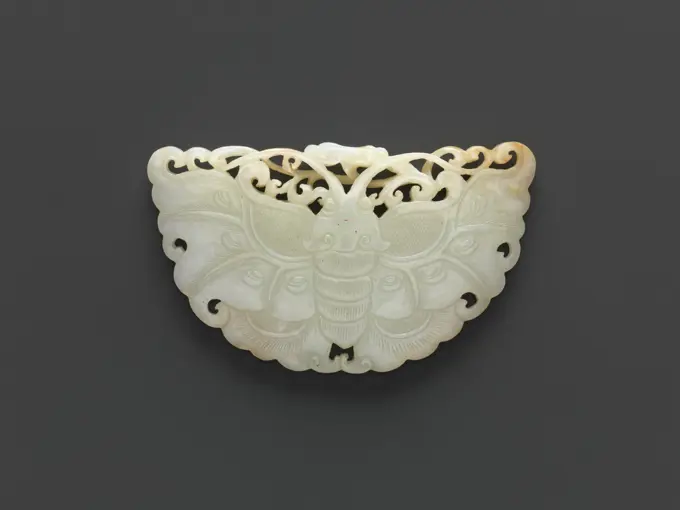
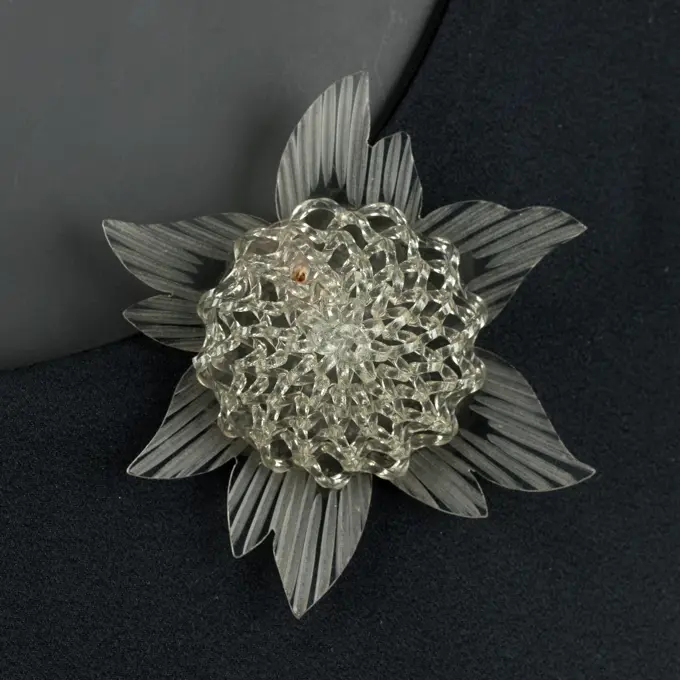
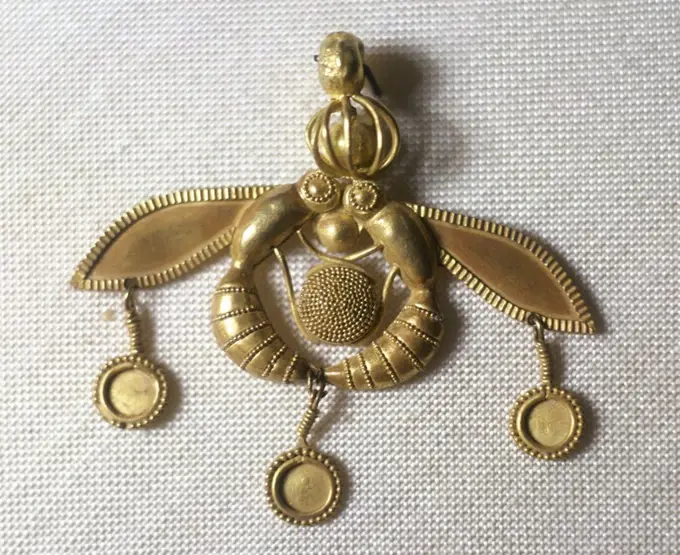
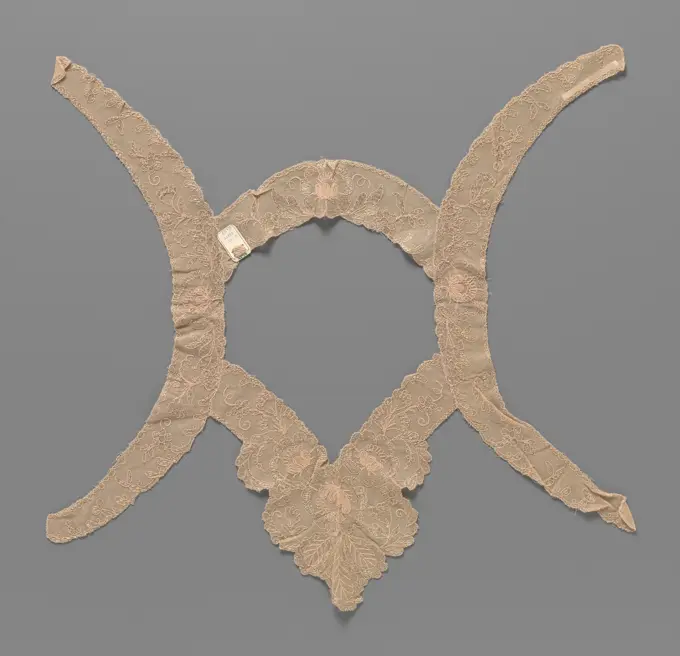
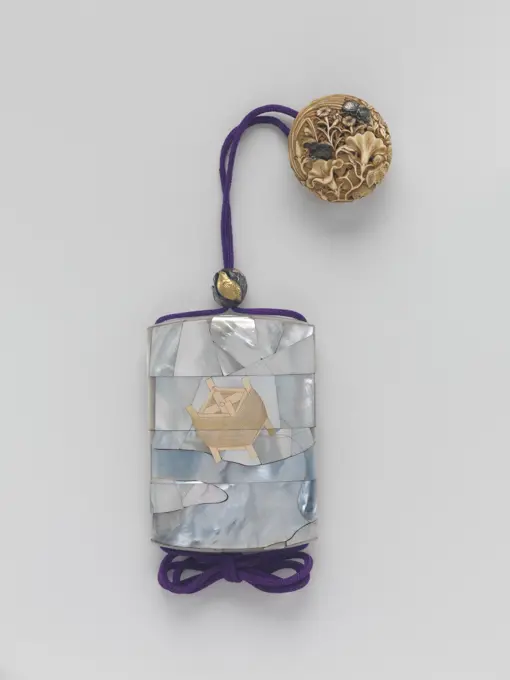
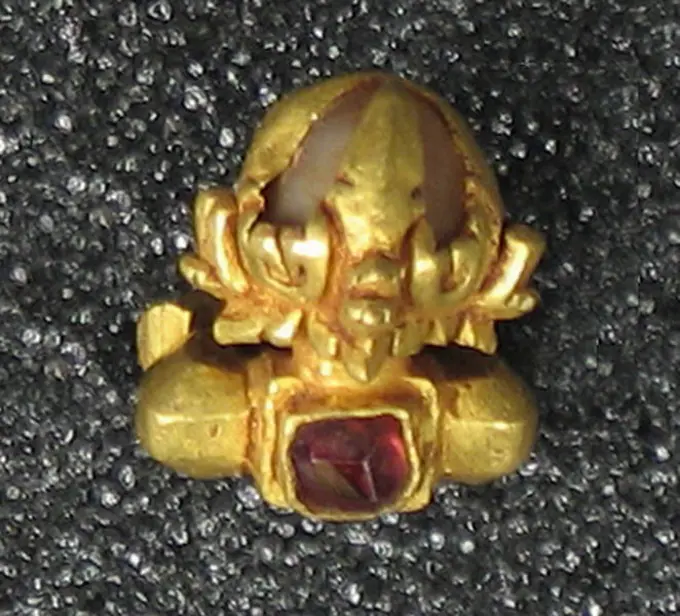
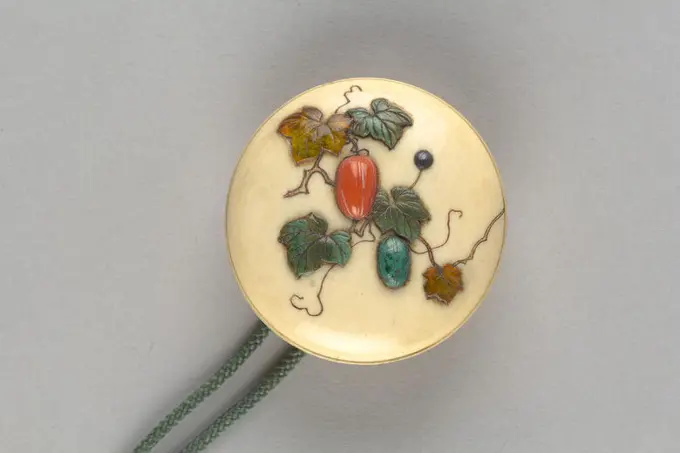
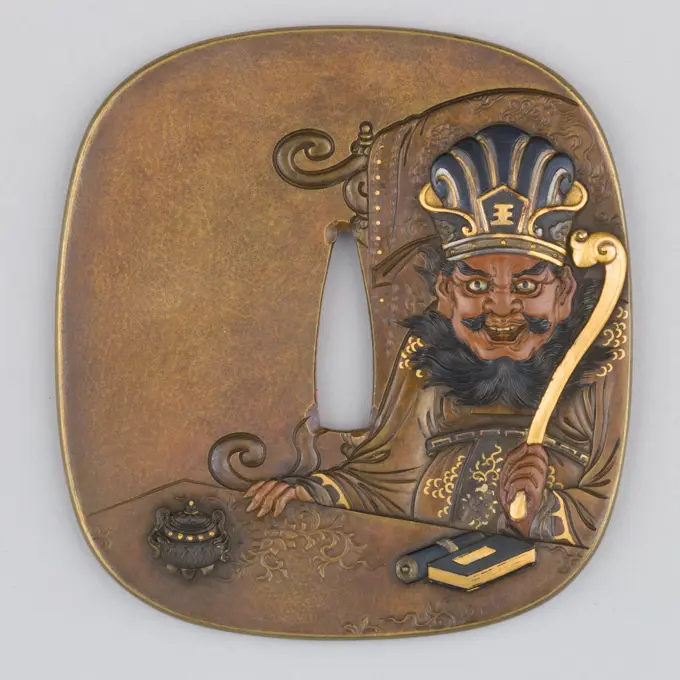
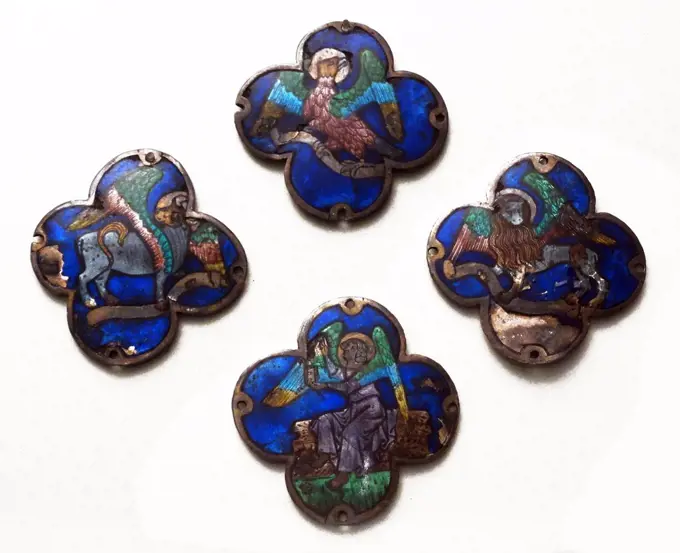
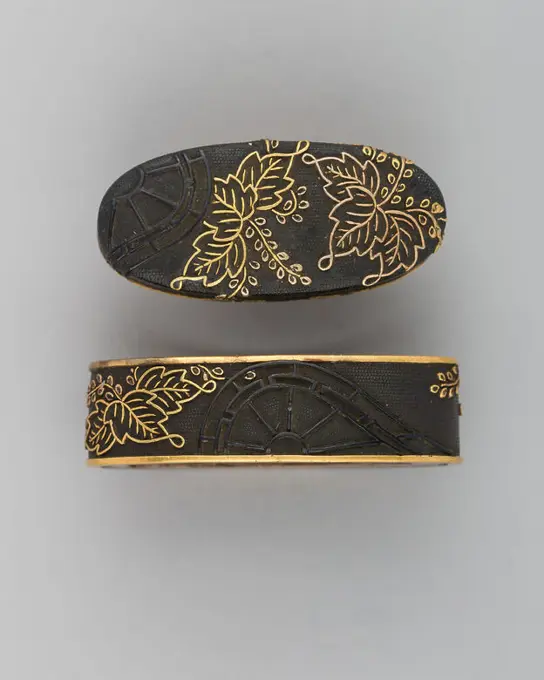
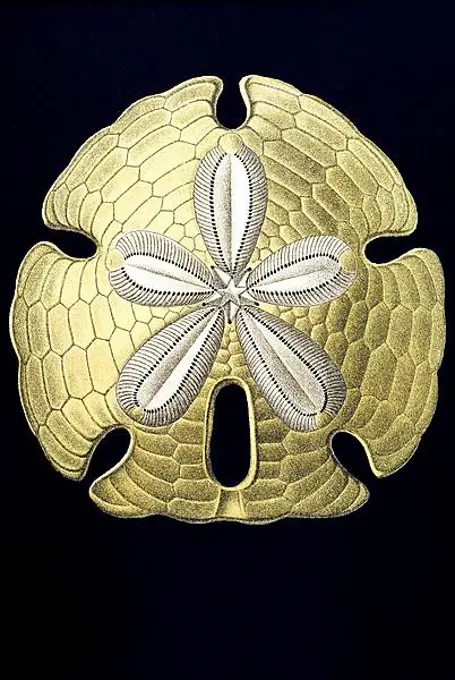
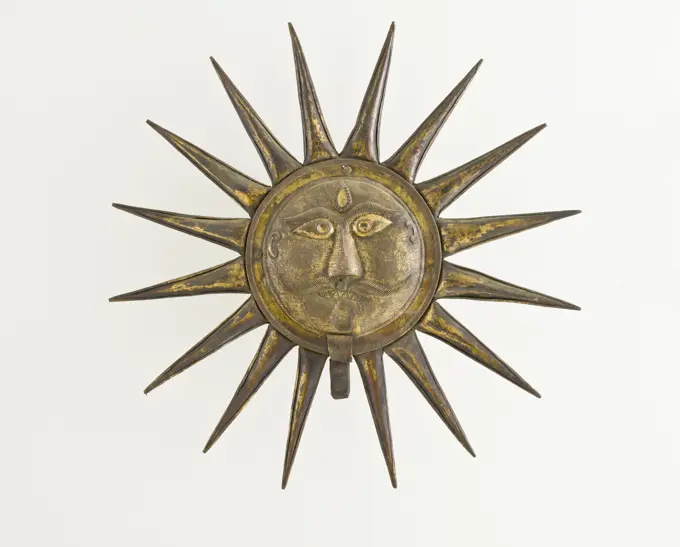
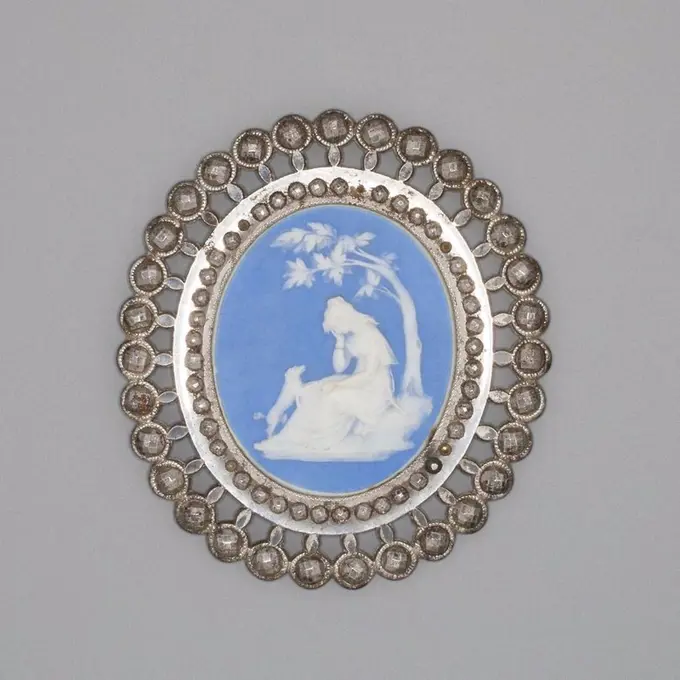
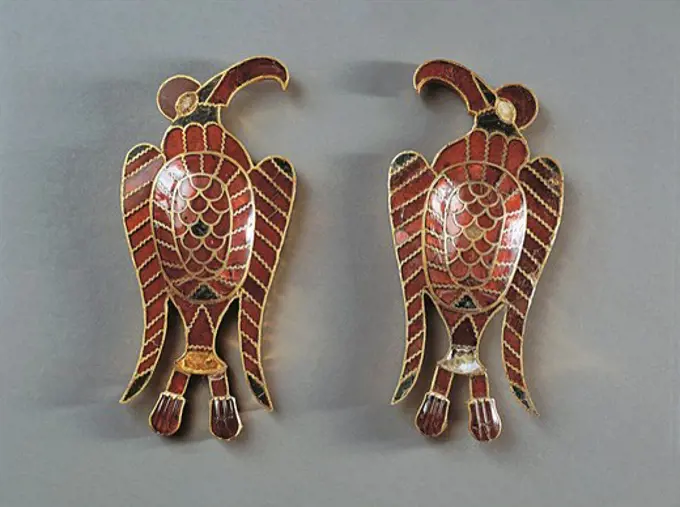
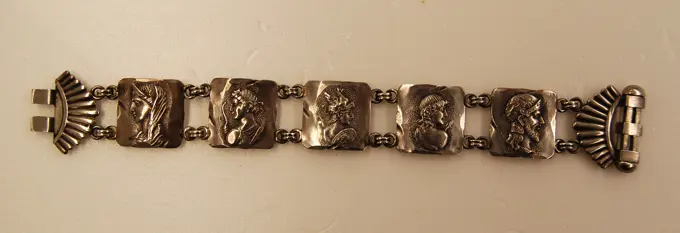
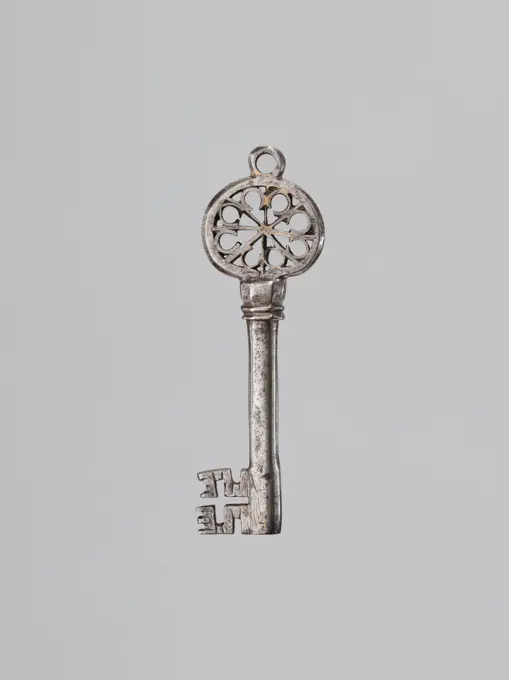
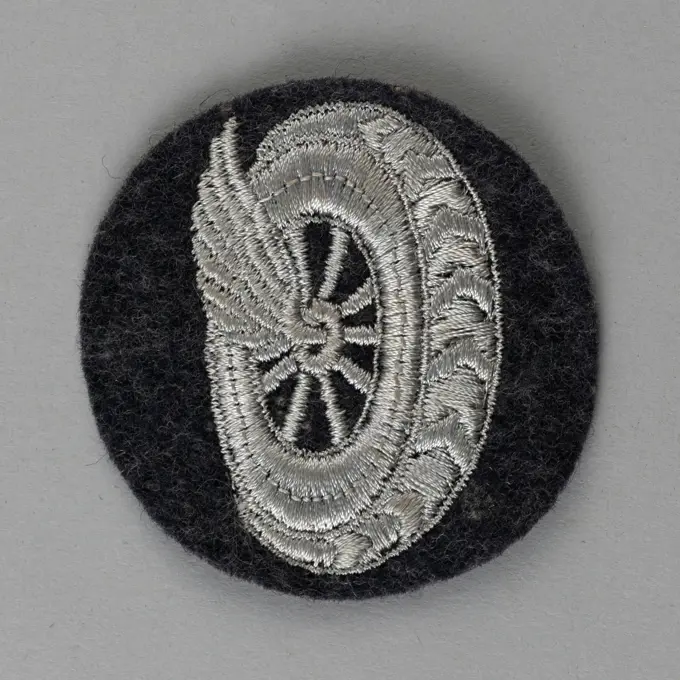
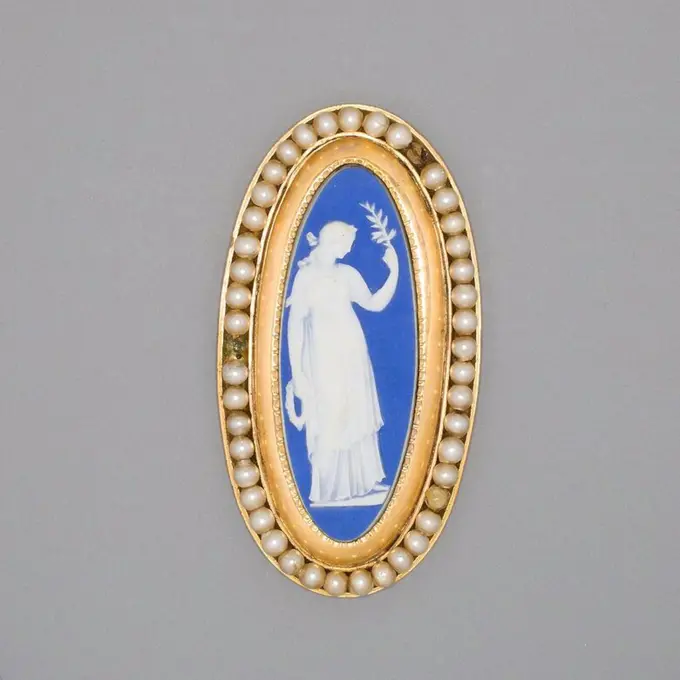
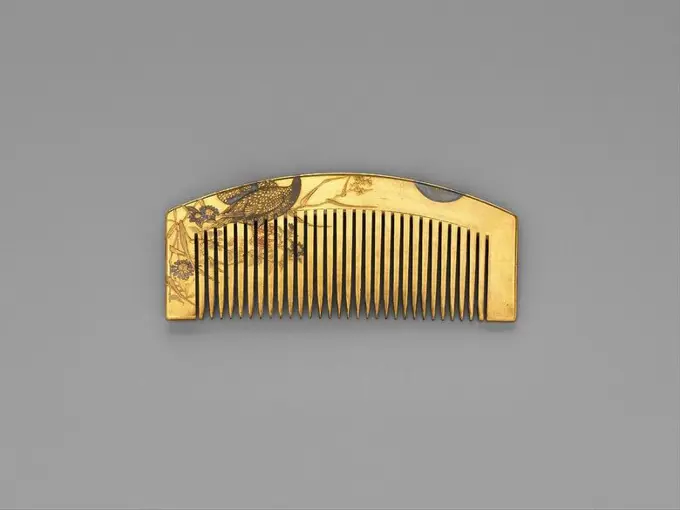
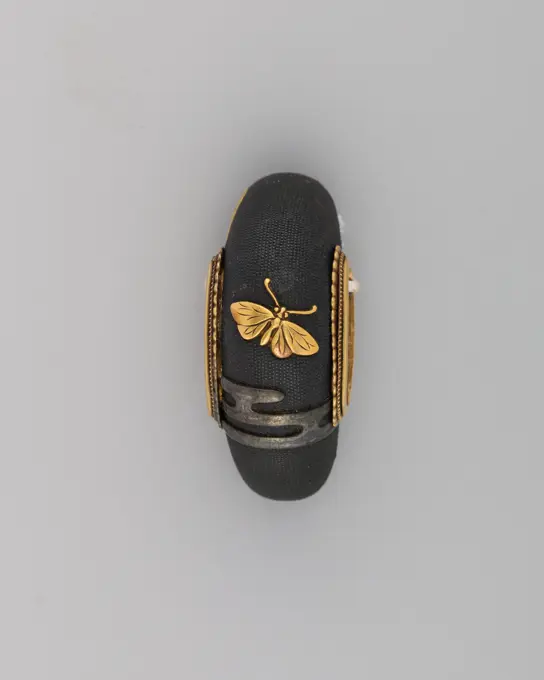
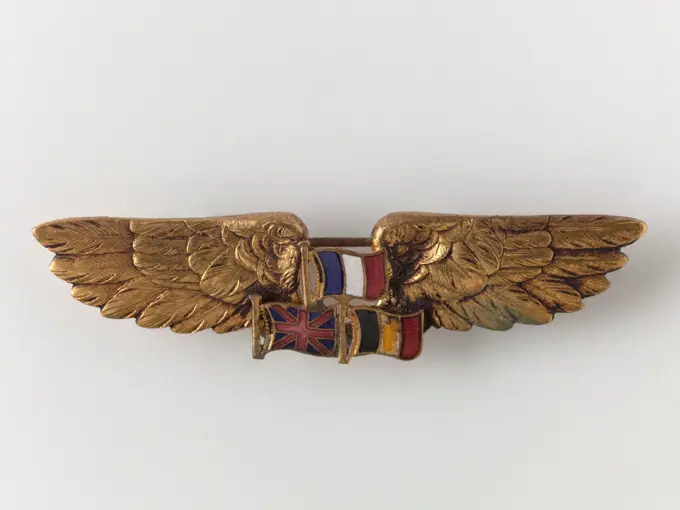
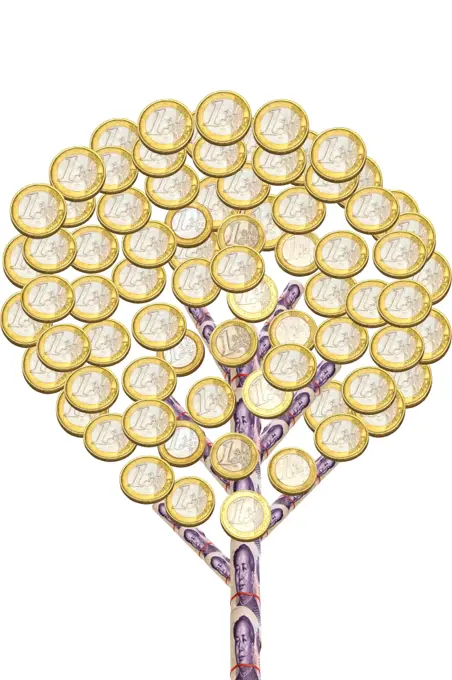
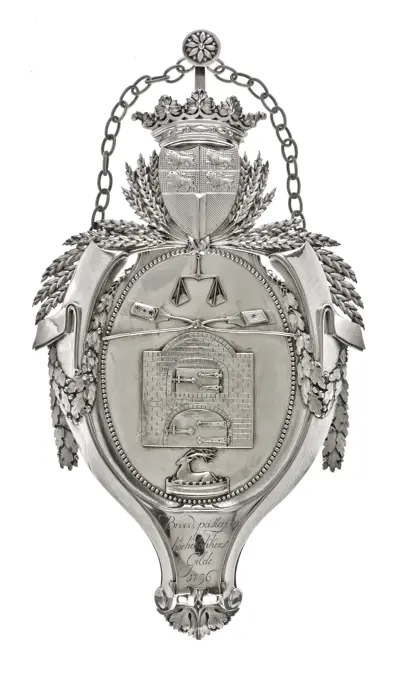
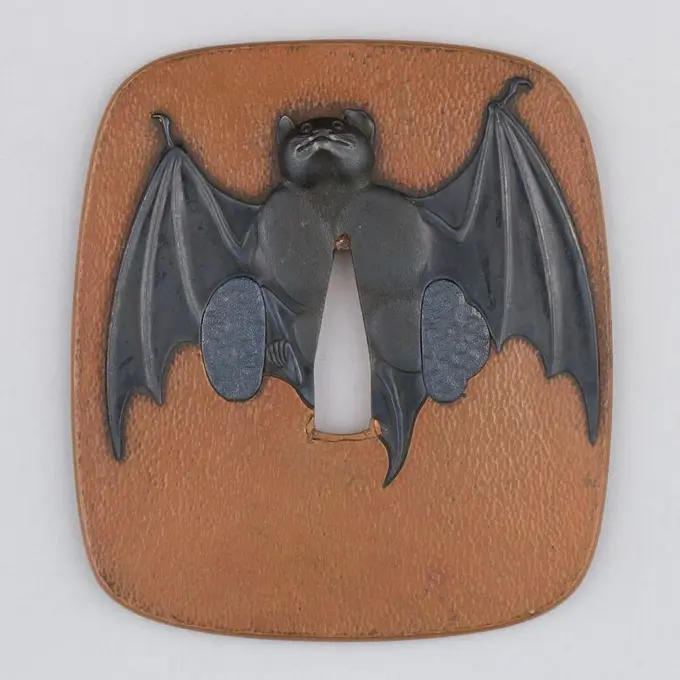
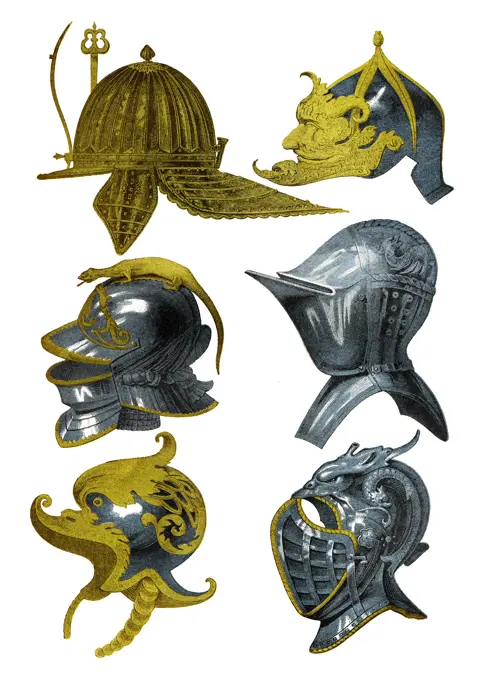
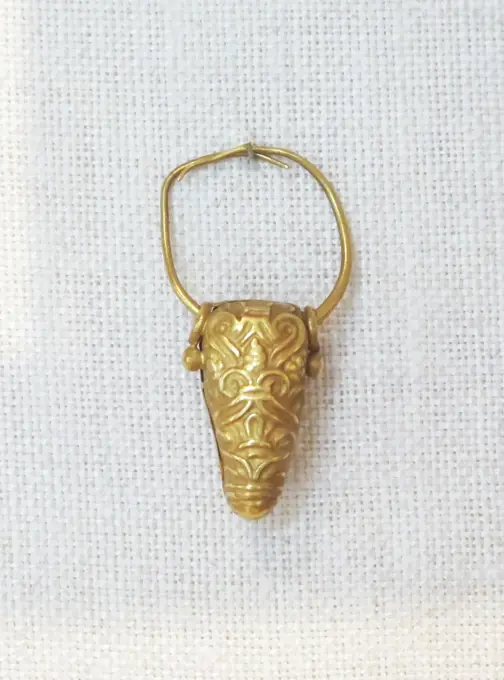
Gold pendant in the form of a bull's head ca. 1400-1050 B.C. Cypriot Most of the raw materials for Cypriot jewelry came from the East. Gold became plentiful in the Late Bronze Age, when Syria and Egypt were the primary sources. These earrings are a Cypriot creation, an ornament in the form of a bull's head.. Gold pendant in the form of a bull's head. Cypriot. ca. 1400-1050 B.C.. Gold. Late Bronze Age. Gold and SilverScarab. Dimensions: L. 1.7 × W. 1.1 × D. 0.7 cm (11/16 × 7/16 × 1/4 in.). Dynasty: Dynasty 18. Date: ca. 1550-1295 B.C..The base of this scarab has been inscribed with a lotus flower and two buds. Museum: Metropolitan Museum of Art, New York, USA.Cord Knob (Kurigata) 19th century Japanese. Cord Knob (Kurigata). Japanese. 19th century. Copper-gold alloy (shakud?), gold, silver, copper-silver alloy (shibuichi). Sword Furniture-Fuchi-KashiraBurial board of Laurentius de Blau, Anonymous, 1674 - 1887  Diamond -shaped weapon board on one angle, blacklist with golden edge. Presentation: On a black background an olive -green shield on which a golden cow head and two golden acorns. Above the shield a crown with pearl edge, on either side a gold wing with five feathers. Painted under a piece of curled paper, on which inscription: Laurentius de Blau Lieutenant of a comp.ie on foot, shot by a hover of cowel in front of the Graeff, the 3rd Octob. J674 Atatis 25. Netherlands wood (plant material). iron (metal). oil paint (paint)   GraveStar of the Order of the White Eagle after Francis Stanisław Kostka Czapski to the Order of the White Eagle given on July 3, 1762 Unknown ManufakturaMount (France), early 19th century; gilt bronzeRectangular panel rectangular box in bluish gray enameled gold, adorned with gold bas-reliefs in children's games. Jean-Baptiste June (master in 1769). 1783-1784. Paris, Cognacq-Jay museum. 36968-4 Bas-reliefs, rectangular box, child game, art object, gold gray gray emaille, orfevrery, pan cutFemale FigureOrnamentButterfly 17th century China The butterfly is usually associated with joy and weddings, but as its name (hudie) is a pun for "age seventy to eighty," it is also a symbol for longevity.. Butterfly. China. 17th century. Jade (nephrite). Ming dynasty (1368-1644). JadeClip ". Transparent synthetic material partly openwork. 1930s. Galliera, fashion museum of the city of Paris. 74720-20 Fashion accessory, jewelry, pin, clip, flower, haute couture, female mode, vegetal pattern, plastic, plexiglass, synthetics, transparentARTE MINOICO. GRECIA. JOYA DE LAS ABEJAS (h.1500 a.C.). Joya de oro que figura dos abejas que sorben una gota de miel, realizada según la técnica del granulado. Se considera vinculada con el culto a los muertos ya que las abejas simbolizan la primavera y la creación de la vida. Pieza procedente de Jrisolacos. Museo Arqueológico de Heraklio. Creta.Jabot of mixed side with predominantly symmetrical pattern with a sling of daisies where nozzle long leafy branches hang down and down five medallions and two large leaves between three large daisies. Jabot of natural mixed side - climbing side in combination with a very limited number of needle lace stand - Brussels Duchesse. Oval-shaped with a pentagonal part at the bottom. Mostly symmetrical pattern with a horseshoe shaped pendulum from daisies where nozzle long leaf branches are attached to a few C-Volutes. In the field between the pendulum with daisies, an a-symmetrical flower branch with bunches of rosette flowers and daisies and large incised leaves are located. In the pentagonal part at the bottom is a flower branch with three rosette flowers and below a row of five medallions. The shelters below are formed by the two leaves between the three large daisies. The tubular edge with fine scallops along the top and two long sides are formed by jointed daisies. With the exception of Inrō with Tanabata Story of the Weaver and the Herdboy active first half of the19th century Nomura Kyūkoku Japanese One of the relatively large pieces of mother-of-pearl that comprise the surface of this inro was colored with gold and incised to create an image of a silk winder, identifying the imagery as a representation of the Milky Way. The winder refers to the Weaver Star, who is tragically separated by the Milky Way from her lover, the Cowherd Star. The two are allowed to meet only once a year, a union that is the basis for Tanabata, or the Star Festival, in Japan, held annually between July 7 and August 7. Over time, this festival has been conflated with Obon, a celebration of one's ancestors.. Inrō with Tanabata Story of the Weaver and the Herdboy 58628Gold earrings from Thessalonki (Greece). Goldsmith art, Greek Civilization, 4th Century BC.Brochette van Gold with Diamant and recycled wedding ring, c. 1960 Brochette of gold with two diamonds eight side, two pastes and one faceted diamond and recycled wedding ring with a bullet closure. Central an oak leaf on which six diamonds, this leaf is wedged into the wedding ring that has been transformed into a heart. Netherlands gold (metal). diamond (mineral). sawing / faceting Brochette of gold with two diamonds eight side, two pastes and one faceted diamond and recycled wedding ring with a bullet closure. Central an oak leaf on which six diamonds, this leaf is wedged into the wedding ring that has been transformed into a heart. Netherlands gold (metal). diamond (mineral). sawing / facetingPair of Sword-Grip Ornaments (Menuki) 18th century Japanese Menuki are a pair of ornamental sword fittings attached to either side of a sword hilt.. Pair of Sword-Grip Ornaments (Menuki). Japanese. 18th century. Copper-gold alloy (shakud), gold. Sword Furniture-MenukiPair of Sword-Grip Ornaments (Menuki). Culture: Japanese. Dimensions: L. of each 1 7/8 in. (4.8 cm); Wt. of each 0.3 oz. (8.5 g). Date: 18th century. Museum: Metropolitan Museum of Art, New York, USA.Textile Ornament 14th-15th century Chimú. Textile Ornament 308758Cast Earring with Ruby 8th-12th century Indonesia (Central Java). Cast Earring with Ruby 64429Netsuke of Squash and Vines. Culture: Japan. Dimensions: H. 5/8 in. (1.6 cm); Diam. 1 5/8 in. (4.1 cm). Date: 19th century. Museum: Metropolitan Museum of Art, New York, USA.Rooster's Head Matchsafe; plated brass, glass; 5.2 x 5.9 x 1.8 cm (2 1/16 x 2 5/16 x 11/16 in. )Sword Guard (Tsuba) ca. 1615-1868 Japanese A tsuba is a sword guard and part of a sword mounting. It is mounted between the swords blade and grip to protect the users hands.. Sword Guard (Tsuba) 34400Glass striped mosaic bowl fragment. Culture: Roman, probably Italian. Dimensions: 1 1/4 × 1 1/2 × 1/8 in. (3.1 × 3.8 × 0.3 cm)Estimatd diameter 3 9/16 in. (9 cm). Date: late 1st century B.C.-early 1st century A.D..Translucent cobalt blue partially appearing green, opaque yellow, white, and red, and colorless.Vertical rim, slightly beveled inward; convex curving side, tapering gently towards bottom.Striped mosaic pattern formed from lengths of two canes laid side by side in parallel rows and separated from one another by single lengths of a colorless network cane wound with a double spiral thread: one composite cane comprising a central red length encasing white streaks, flanked by cobalt blue stripes; the other with a central yellow length flanked by blue stripes encasing yellow; parts of another cane appear on both side edges, comprising colorless and blue encasing white stripes. A colorless network cane wound spirally with a single yellow thread is attached as a rim.Polished extSword Guard (Tsuba) ca. 1615-1868 Japanese A tsuba is a sword guard and part of a sword mounting. It is mounted between the swords blade and grip to protect the users hands.. Sword Guard (Tsuba) 34413Retro styled decorative key in a heart shaped bowlSword Guard (Tsuba) ca. 1615-1868 Japanese A tsuba is a sword guard and part of a sword mounting. It is mounted between the swords blade and grip to protect the users hands.. Sword Guard (Tsuba) 34494Symbols of the Four Evangelists. Created from engraved silver and translucent enamels. Dated 15th CenturyOwl's Head, Plated brass, glass, In the form of an owl's head, with stylized feathers on front and reverse, long narrow beak, yellow glass eyes. Top of head to upright, tufted feathers above brow line, serves as lid. Lid hinged on reverse. Link attached to upper right side. Striker on bottom., Europe, late 19th century, containers, Decorative Arts, Matchsafe, MatchsafeSword-Hilt Collar and Pommel (Fuchigashira). Culture: Japanese. Dimensions: Fuchi (a); H. 1 1/2 in. (3.8 cm); Wt. 0.7 oz. (19.8 g); kashira (b); H. 1 3/8 in. (3.5 cm); Wt. 0.4 oz. (11.3 g). Date: 18th century. Museum: Metropolitan Museum of Art, New York, USA.Ornament China. Ornament 60857Pair of Sword-Grip Ornaments (Menuki) 18th century Japanese Menuki are a pair of ornamental sword fittings attached to either side of a sword hilt.. Pair of Sword-Grip Ornaments (Menuki). Japanese. 18th century. Copper-gold alloy (shakud), gold. Sword Furniture-MenukiHistoric illustration, Sea Urchin (Echinoidea), tablet 30, Ernst Haeckel, Kunstformen der Natur, "Artforms of Nature"Sword-Hilt Collar and Pommel (Fuchigashira). Culture: Japanese. Dimensions: Fuchi (a); H. 1 1/2 in. (3.8 cm); Wt. 1 oz. (28.3 g); kashira (b); H. 1 3/8 in. (3.5 cm); Wt. 0.4 oz. (11.3 g). Date: ca. 1615-1868. Museum: Metropolitan Museum of Art, New York, USA.Personified Sun Emblem. India, Rajasthan, Mewar, circa 1900. Copper alloy repoussé with gildingMedallion with Woman and Dog. Wedgwood Manufactory; England, founded 1759. Date: 1775-1799. Dimensions: 7.8 × 7.0 × 0.8 cm (3 1/16 × 2 3/4 × 5/16 in.). Stoneware (jasperware). Origin: Burslem. Museum: The Chicago Art Institute, Chicago, USA.Arched EarOrnamentRomania, Apahida, Eagle shaped buckle, gold and gems from the Omharus treasure, found in 1969Reconnaissance badge for a cap of technical branches of the Polish Legions"Benevolent and Protective Order of Elks" Matchsafe; Manufactured by Simons Bros. & Company; USA; silver, enamel; 6.1 x 4 x 1.7 cm (2 3/8 x 1 9/16 x 11/16 in. )Bracelet ca. 1880 George W. Shiebler & Co. This silver link bracelet is composed of five square panels, each stamped with a unique classical head profile in low relief. The profiles are finely delineated against a stippled background, and the bodies of the panels are given an irregular hammered finish. Panels are joined by two rows of oval-shaped, double links. Both ends of the bracelet terminate in a fluted fan-shape element and double tongue-clasp closure. George W. Shiebler and Company was a highly innovative and influential New York City firm that produced a diverse array of artistic silver wares and jewelry in the late nineteenth and early twentieth centuries. During the later years of the nineteenth century a passion arose in both Europe and America for jewelry inspired by ancient coins, and this necklace is one example of the Shiebler firm's interpretation of that trend. An 1892 Jewelers' Circular and Horological Review” article on the Shiebler firm described this "curio medallKey;  XVI W (1501-00-00-1600-00-00);War 1939-1945. Luftwaffe specialty badge (car vehicles). General Leclerc Museum of Hauteclocque and the Liberation of Paris, Jean Moulin Museum. 75312-25 German army, air army, war 1939-1945 39-45, military badge, distinctive mark, object, winged wheel, second world war, symbolFood Section of the Central Citizens' Committee of the Capital City of WarsawRing with Rectangular Bezel, Wavy Line 8th-12th century Indonesia (Central Java). Ring with Rectangular Bezel, Wavy Line 64309Medallion with Peace. Wedgwood Manufactory; England, founded 1759. Date: 1775-1799. Dimensions: 6.4 × 2.4 × 0.4 cm (2 1/2 × 15/16 × 1/8 in.)Frame: 8.1 × 3.8 cm (3 3/16 × 1 1/2 in.). Stoneware (jasperware). Origin: Burslem. Museum: The Chicago Art Institute, Chicago, USA.Gold figurine Gold deer statue isolated with clipping path included Copyright: xZoonar.com/Baloncicix 7292447Large warranty silver money loop for departments; Unidentified master's punch (see three points in pyramid, a star); trace of an erased hallmark.Lacquer Comb with Geese and Autumn Grasses. Culture: Japan. Dimensions: L. 3 5/16 in. (8.4 cm); Gr. W. 1 3/8 in. (3.5 cm). Date: second half of the 19th century. Museum: Metropolitan Museum of Art, New York, USA.Medal 1818 American. Medal. American. 1818. Silver. Probably made in Portland, Maine, United StatesHair brooch, designed by Piero della Francesca, used on the Angel with the Green Robe, Brera Madonna, House of Piero della Francesca, Casa di Piero della Francesca, Sansepolcro, Tuscany, Italy, EuropeCord Knob (Kurigata) 19th century Japanese. Cord Knob (Kurigata). Japanese. 19th century. Copper-gold alloy (shakud?), gold. Sword FurnitureMermaid's Badge  the Warsaw coat of arms from the shoulder strap of the civic guard leaders of the Capital City of WarsawWar 1939-1945. Pin with Franco-Britannico-Belgian flags winged. Enamelled metal. 1944-1945. General Leclerc Museum of Hauteclocque and the Liberation of Paris, Jean Moulin Museum. Pin, war 1939-1945, war 39-45, Second World WarAnonymous. "Kraftfahrraute" 1st model, qualified driver of the NSKK ". Metal. 1931-1945. General Leclerc Museum of Hauteclocque and the Liberation of Paris, Jean Moulin Museum. 158813-9Commemorative badge of the graduate of the Junior High School Mikołaj Rej in WarsawRotated to right, Dom Perignon Logo under LVMH, Organization, LogoOjime 19th century Japan. Ojime. Japan. 19th century. Edo period (1615-1868). OjimeMoney tree isolated on white backgroundSilversmith: Abraham de Lange, Silver shield with bread pie, and Koekebakkersgilde 1796, coat of arms information form silver, driven chased engraved Oval shield chain with hook on which rosette backside (debossed) Rotterdam heraldry wood- Pastei- and Koekebakkersgilde guildSword Guard (Tsuba). Culture: Japanese. Dimensions: H. 3 1/2 in. (8.9 cm); W. 3 in. (7.6 cm); thickness 5/16 in. (0.8 cm); Wt. 7.5 oz. (212.6 g). Date: ca. 1615-1868. Museum: Metropolitan Museum of Art, New York, USA.Fish with Glass Eye Matchsafe; silver; 3.3 x 8.8 x 1.4 cm (1 5/16 x 3 7/16 x 9/16 in. )3d render of globe in Montenegro flag for icon or symbol.Saint James way shell golden metal on streets soil stone floorIllustration set black gold-framed labels - vectorMinoan gold pendant with two bees and a honeycomb, 18th century BC. Artist: UnknownPair of earrings, Carved tortoiseshell, gold, Tortoiseshell pendant earrings. Each earring composed of vertical post from which hangs a stylized tulip, and round pendant surrounded by circular framing., ca. 1890, jewelry, Decorative Arts, Pair of earringsDA-SC-85-04255. Country: UnknownFemale figure 16th-18th century Colonial (). Female figure 307446Paperweight 1825-1850 France. Glass . Clichy GlasshouseHelmets of the Middle Ages Helmets of the Middle Ages Copyright: xZoonar.com/Heinz-DieterxFalkensteinx 21665219Bliżej Kultury Gontarczyk, Wiktor