Bronze and Silver Artifacts

Elegant bronze and silver artifacts, including vases and ceremonial items, showcasing intricate details and cultural motifs from historical eras.

Silversmith: Laurens Andrieszoon, Silver cup, engraved with flower and rank ornaments and at the bottom three birds, cup drinking utensils tableware holder silver, hammered engraved Cylindrical upwards widening. Foot: stand ring profiled with seven rings bottom bottom (debossed) Rotterdam drink Long-term loan G.Ph. Verhagen-Stichting purchase for the Museum Rotterdam.
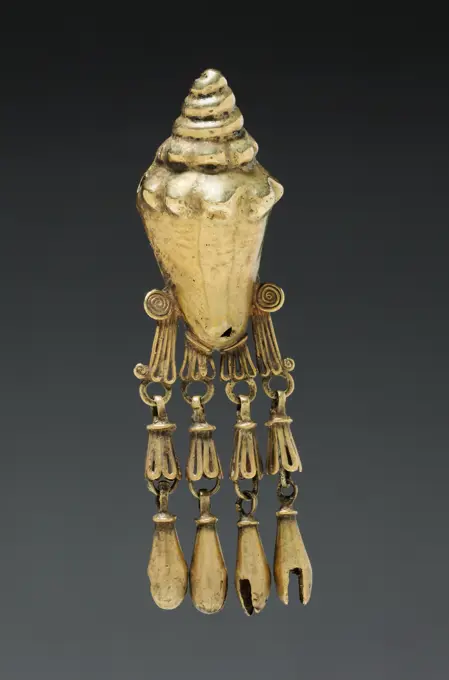
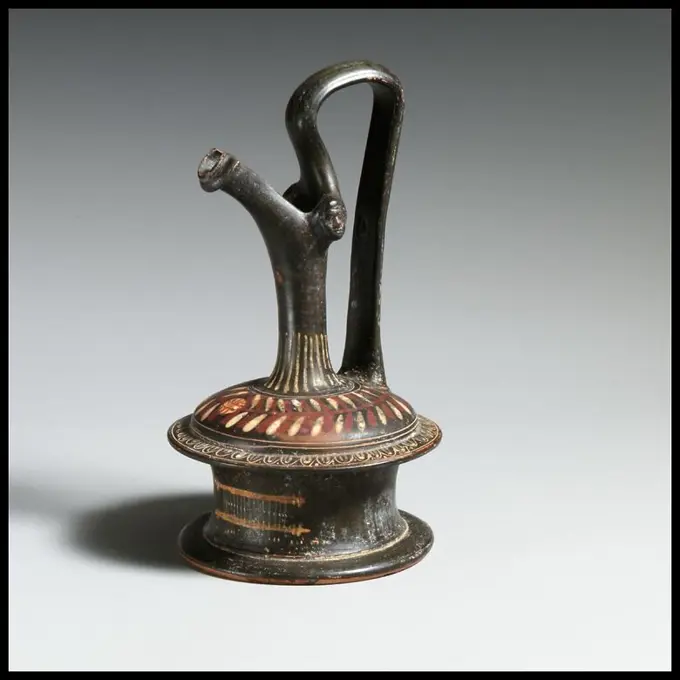
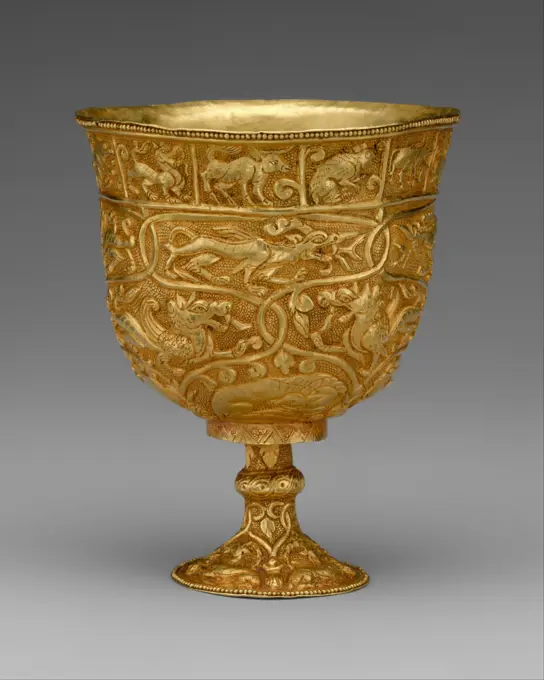
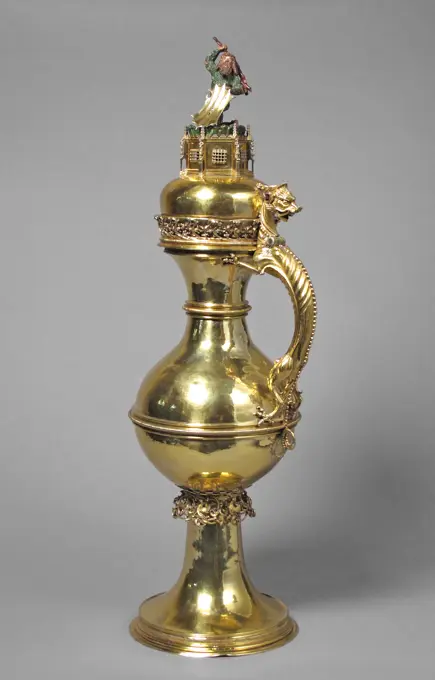
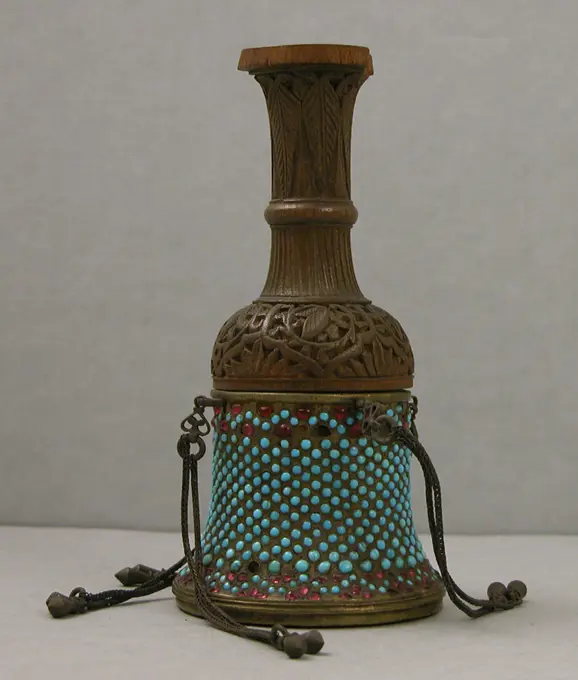
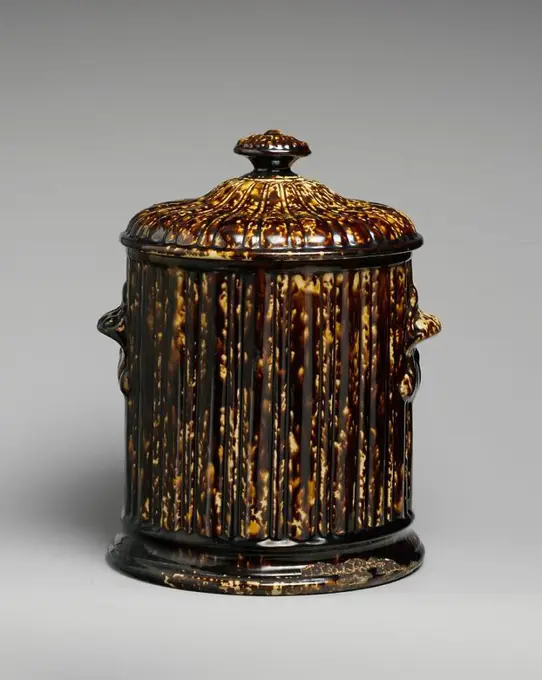
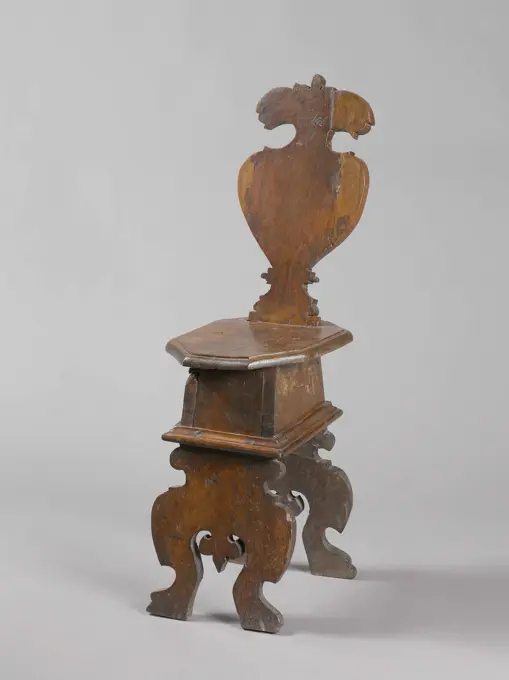
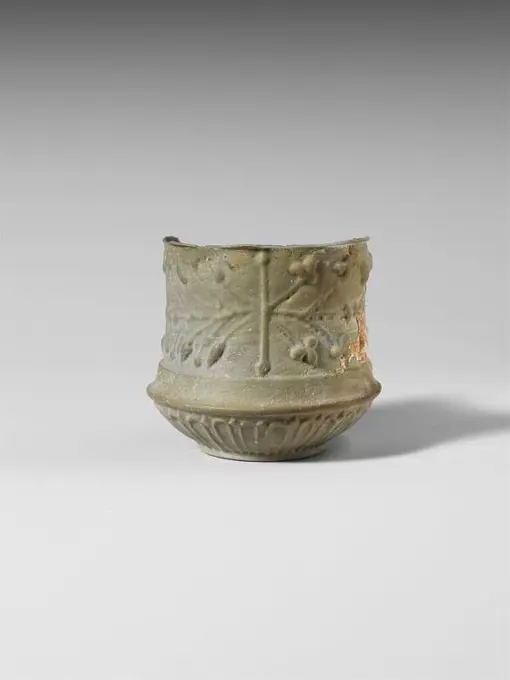
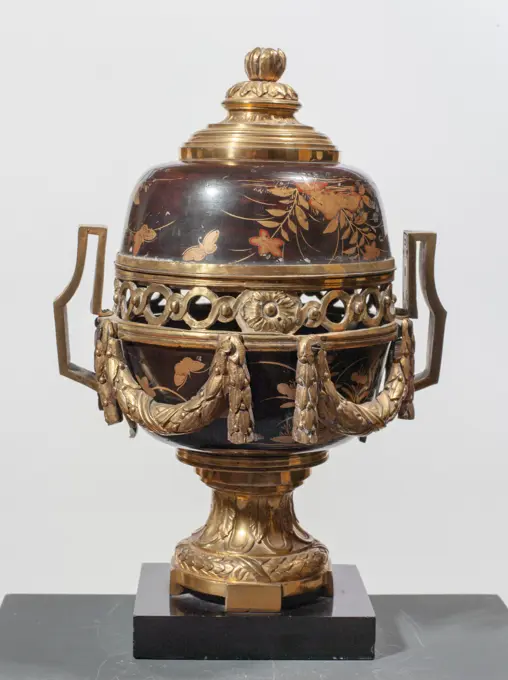
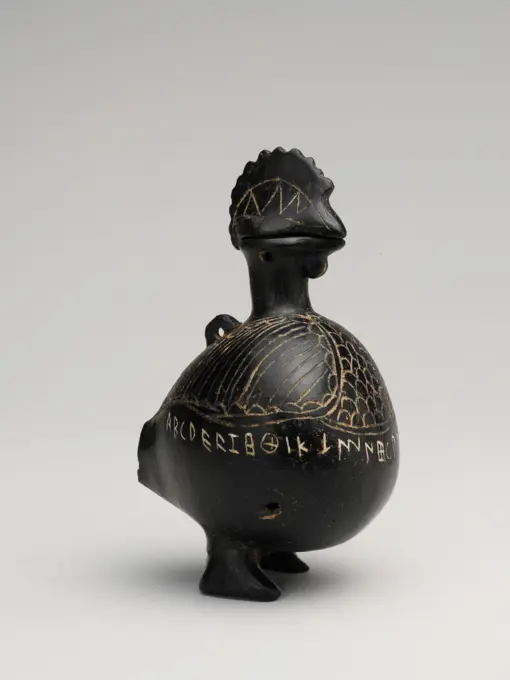
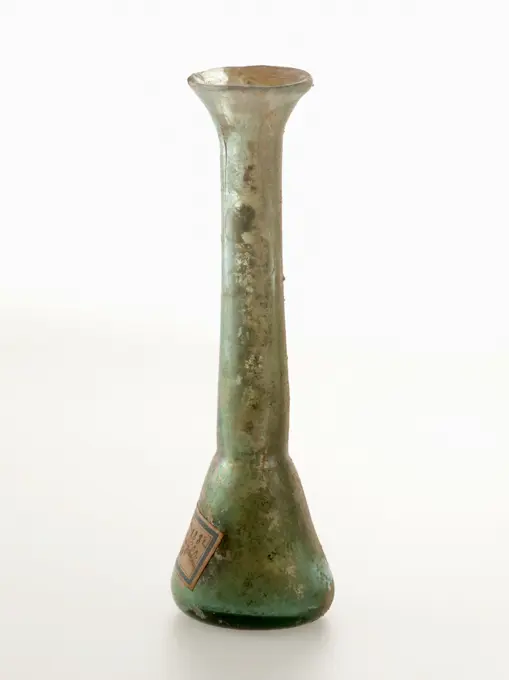
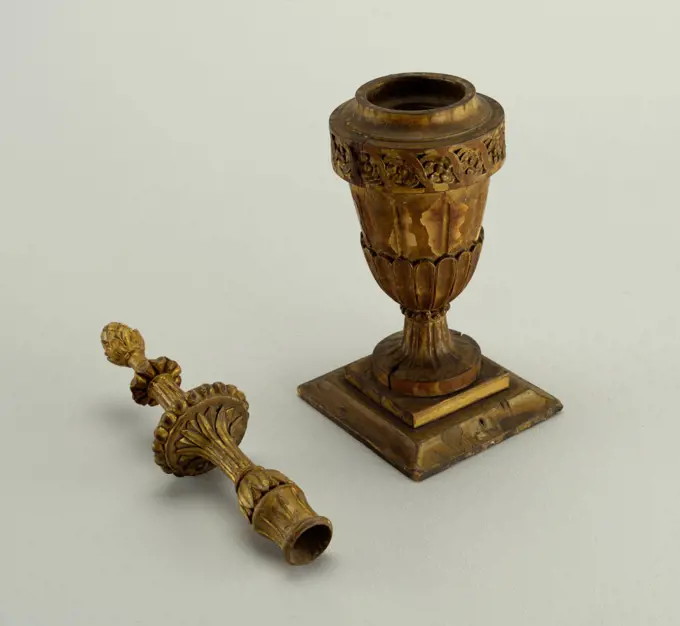
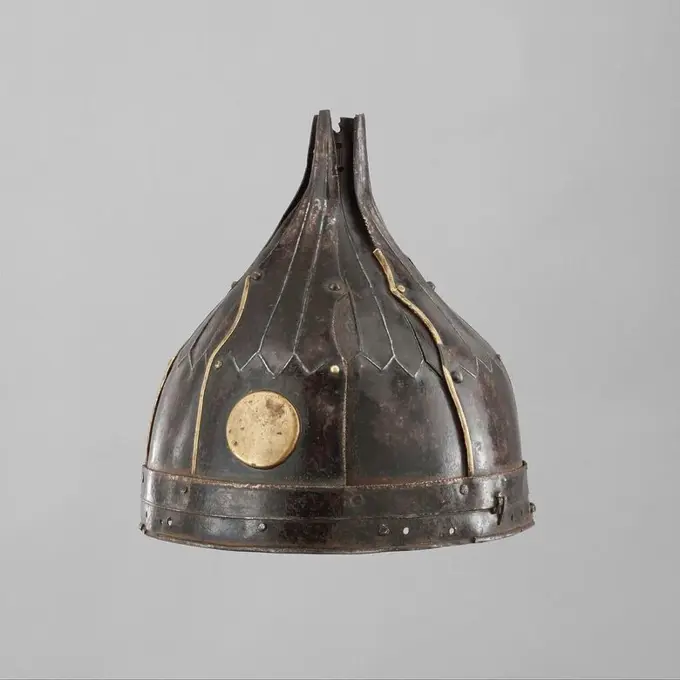
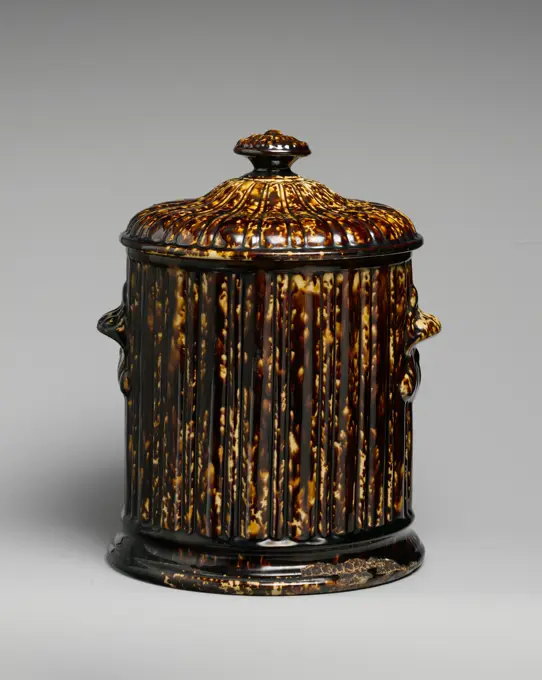
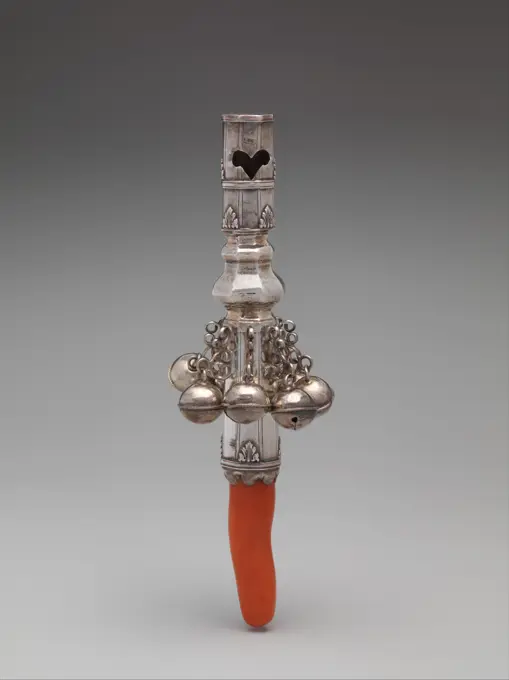
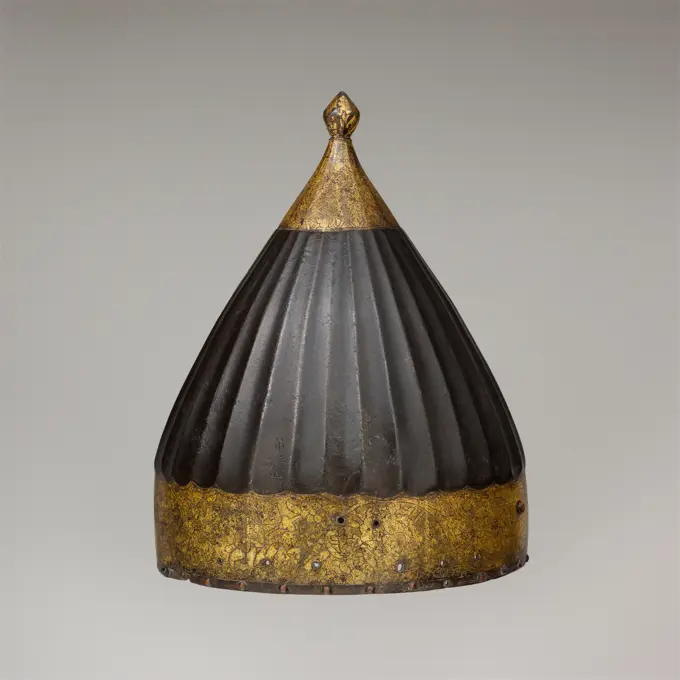
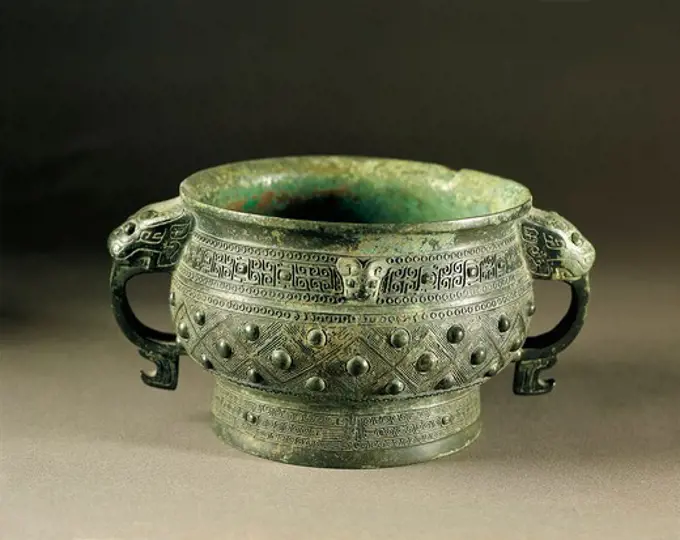
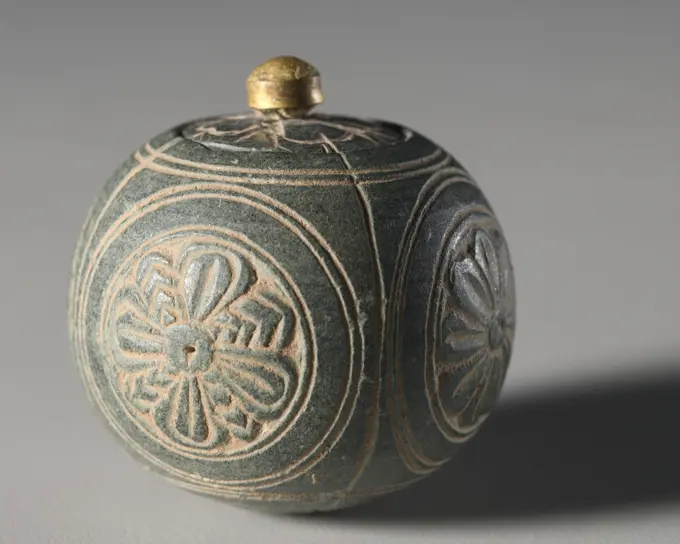
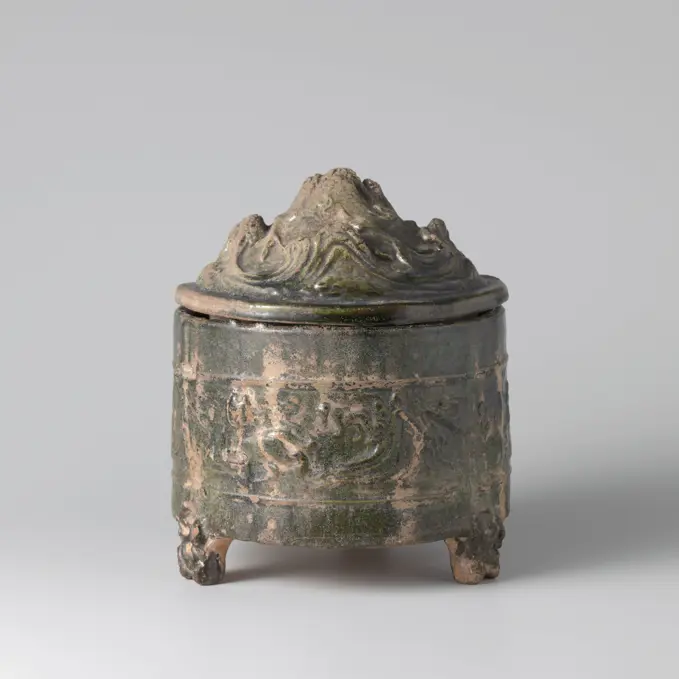
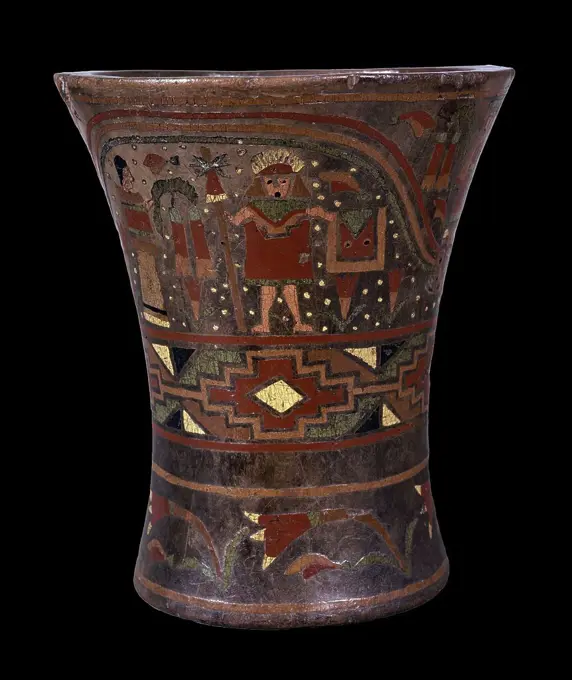
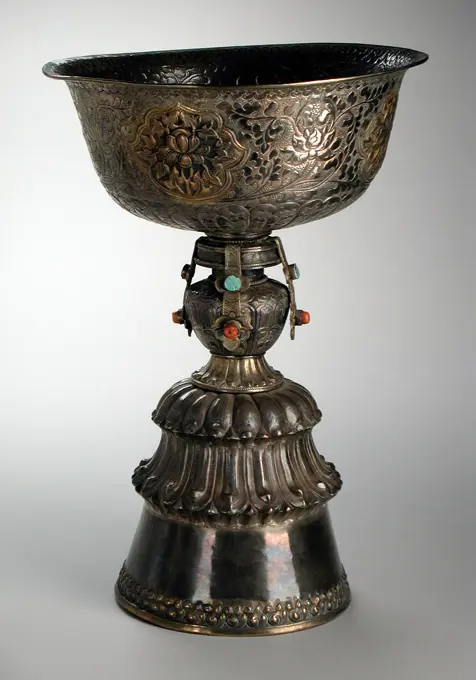
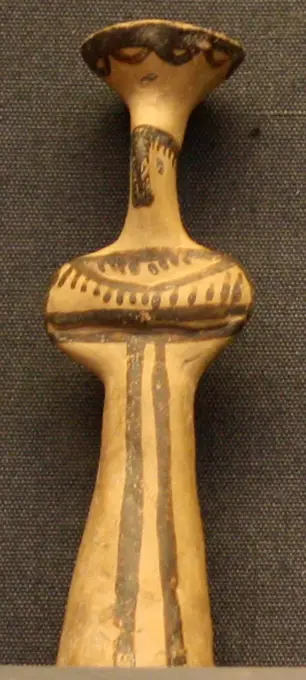
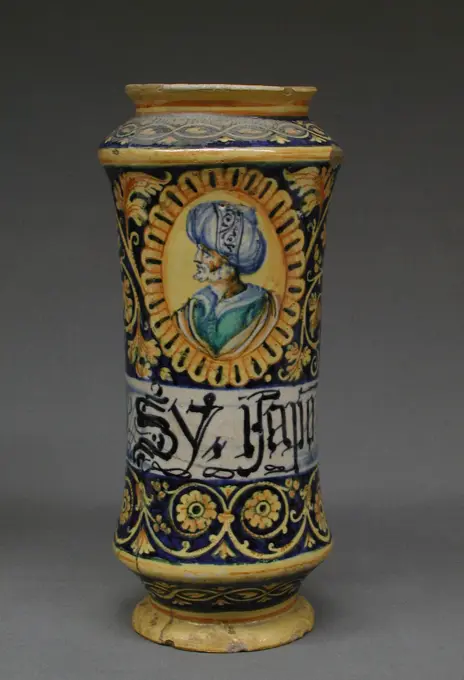
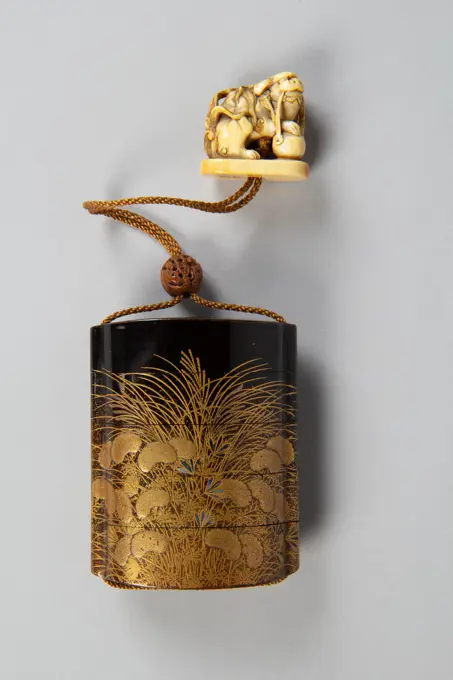
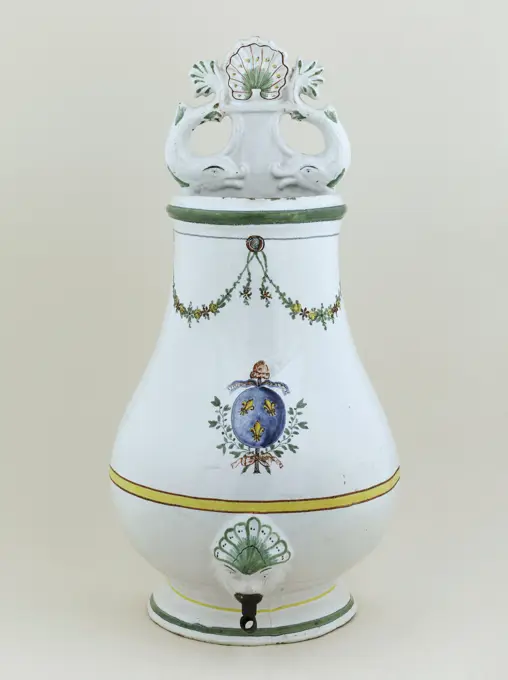
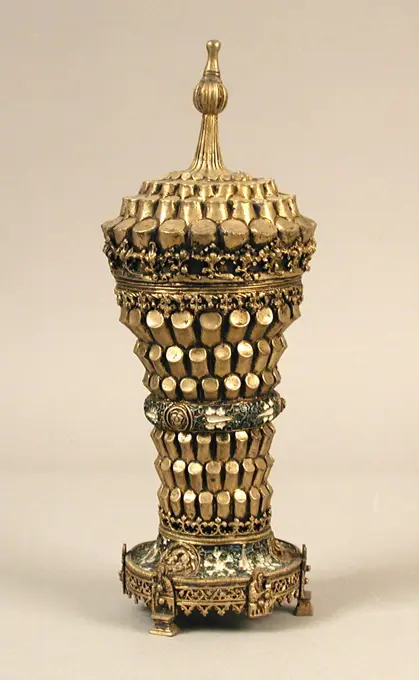
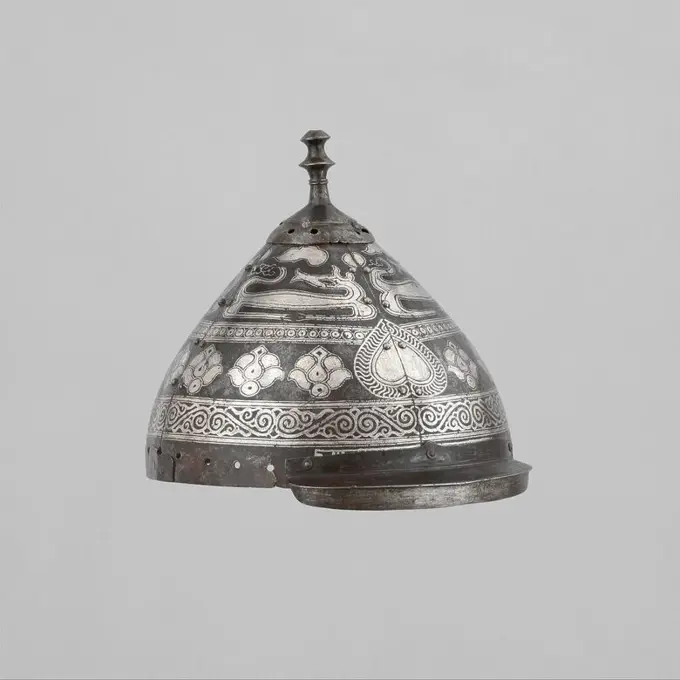
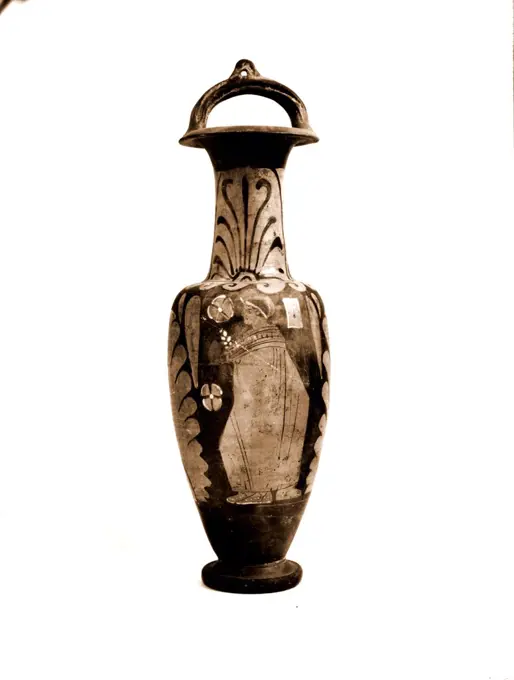
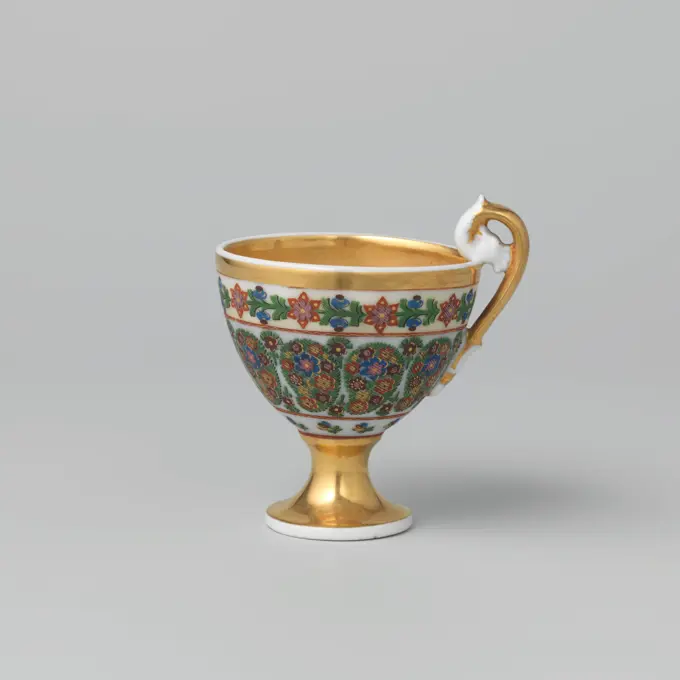
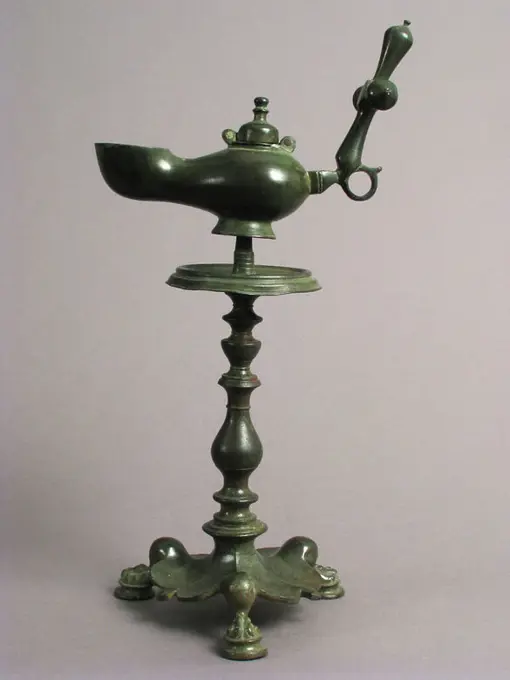
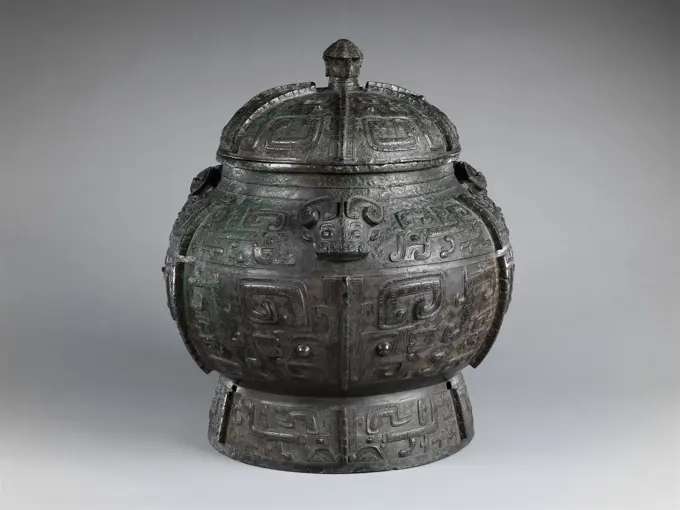
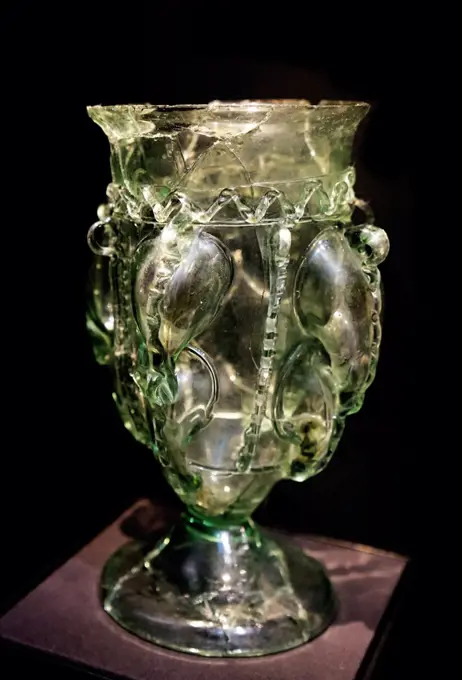
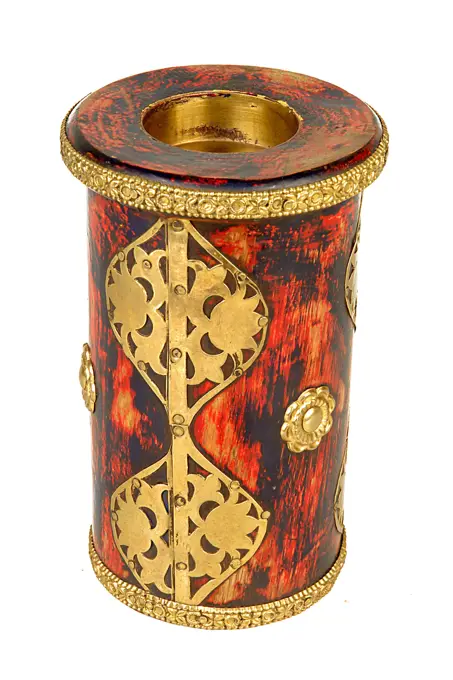
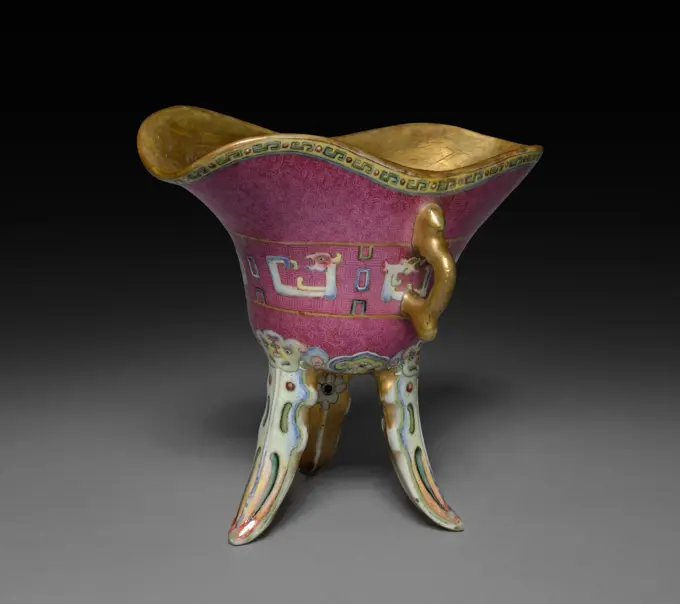
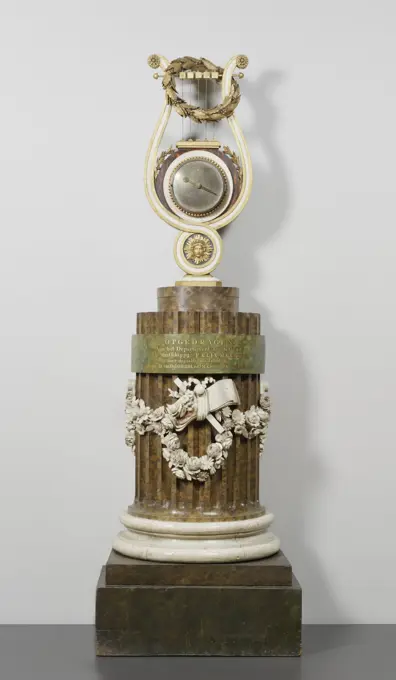
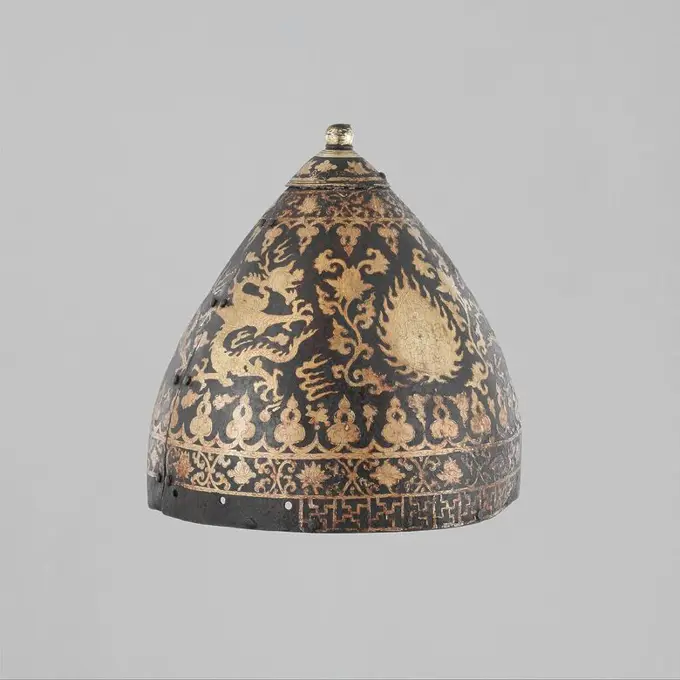
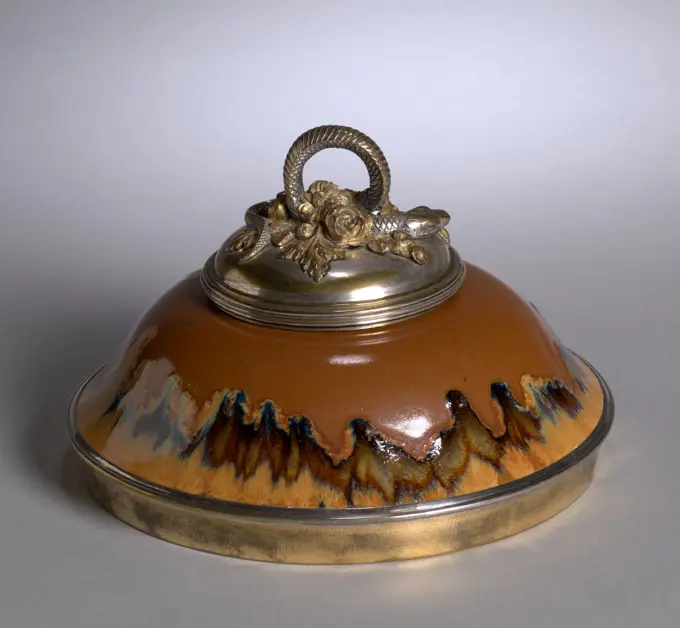
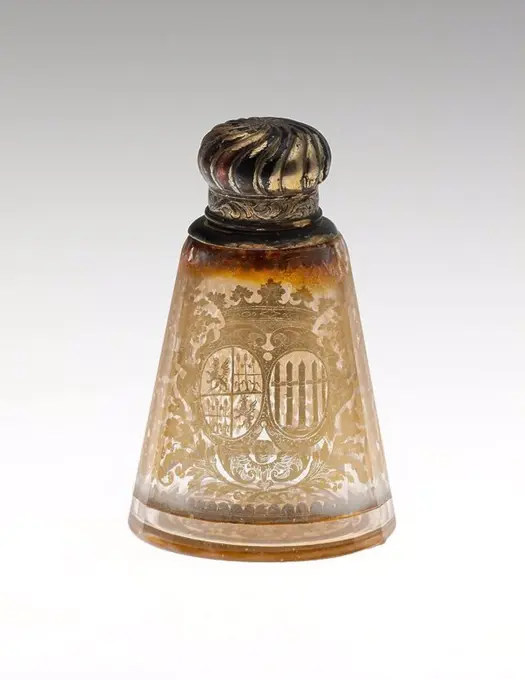
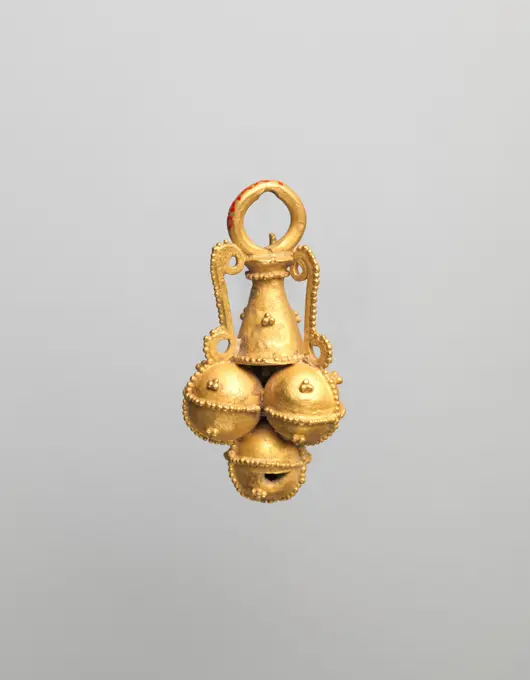
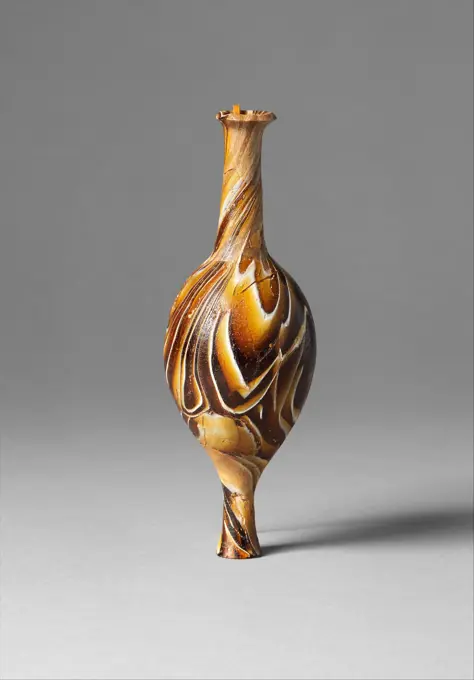
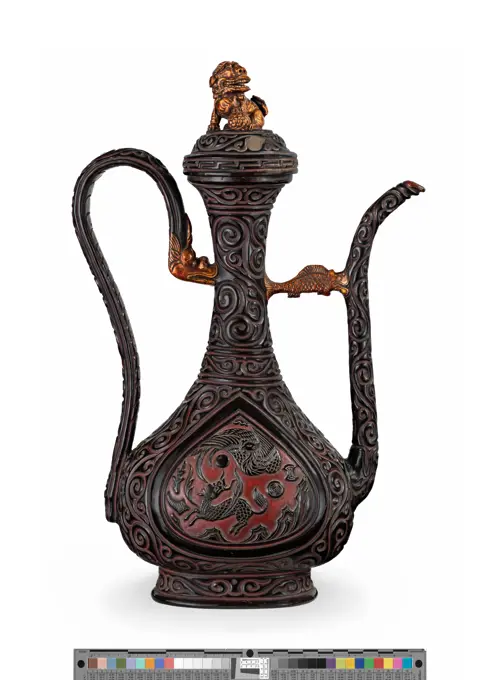
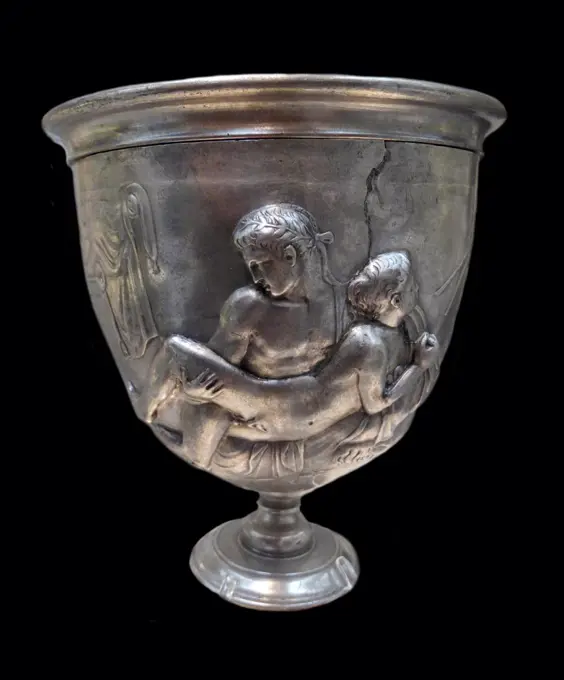
. Inro in the shape of a turtle. Insertation with mother-of-pearl.Shell Pendant, c. 1200-1519. Mexico, Oaxaca, Mixtec style. Gold; overall: 7.7 x 2.2 cm (3 1/16 x 7/8 in.).Glass perfume bottle 2nd-3rd century A.D. Roman Candlestick unguentarium.Colorless with greenish tinge.Rim folded out, over, and in; cylindrical, slightly concave neck; sides of body expanding downwards; pushed-in bottom with small, central kick, with part of pontil scar.Intact; bubbles; pitting and brilliant iridescence.. Glass perfume bottle 239597Vase. "Tea dust" covered porcelain. Paris, Cernuschi museum. 78840-6 Asian art, container, vaseVase with bouquets, floral scrolls and ornamental borders, anonymous, c. 1800 vase Vase of porcelain with an egg -shaped body, two high, curled ears and a high, profiled foot ending in a square pedestal. Painted on the glaze in blue, red, pink, green, yellow, purple and gold. The vase is covered with gold on a few lines. On the belly a wide golden band with engraved two decorative tires, between which sandlop -shaped compartments with flower vessels. In between, medallions with bouquets. On the shoulder and above the foot, a leaf shelf saved in blue. The ears are in the shape of a flower drink, with a rosette in the curl. The foot and the vase are connected by means of an iron pen. France porcelain. glaze. gold (metal) painting / gilding / vitrificationTerracotta oinochoe: epichysis (jug). Culture: Greek, South Italian, Apulian, Gnathian. Dimensions: H. 6 7/16 in. (16.3 cm). Date: late 4th-early 3rd century B.C..The motif on the body is commonly known as a xylophone. It is associated with Tarentum and first appeared on Apulian vases, whence it spread with other Apulian influences to Campanian and Paestan pottery. Museum: Metropolitan Museum of Art, New York, USA.Stem Cup 7th-9th century China (Xinjiang Autonomous Region, Central Asia) The intertwined vine with its curled leaves is reminiscent of Sogdian imagery and motifs found in Gandharan Dionysian reliefs. The twelve animals of the Chinese zodiac are placed in rectangular frames beneath the cup rim.. Stem Cup. China (Xinjiang Autonomous Region, Central Asia). 7th-9th century. Gold with repoussé decoration. Period of Tibetan Empire. MetalworkStanding Cup and Cover, 1800-1900. This is a well made example of an ornamental cup and cover which has been turned from sycamore. The decoration is built up from a number of carvings which were then glued and dowelled together... Purchased from Edward H Pinto, 1965.. .Square bough pot with figures on a terrace, birds and flower sprays, anonymous, c. 1770 - c. 1790 Square flowerpot or vase of porcelain on spreading foot and upwards, painted on the glaze in blue, red, pink, green, yellow, purple, black and gold. The walls covered with servetwork with spared whimsically formed cartouches with people on a terrace for a pavilion or three birds on a branch; shines on the foot with a paved cartouche with birds and plants; Matching loose plate on the top with five holes for loose flowers, decorated with flower branches. Contemporary, silver ears. Been broken: a crack in the vase. European forms with family rose/ mandarin. China porcelain. glaze. gold (metal). silver (metal) painting / gilding / vitrification Square flowerpot or vase of porcelain on spreading foot and upwards, painted on the glaze in blue, red, pink, green, yellow, purple, black and gold. The walls covered with servetwork with spared whimsically formed cartouches with people on a terrace forCERAMICA DE TERUEL-TARRO DE FARMACIA.Ewer late 15th century German These ewers have long been thought to be the pair mentioned in the 1526 and 1585 inventories of the Teutonic Knights. Both are unmarked, and the attribution to Nuremberg is based on stylistic comparisons, such as that of the small cast figures against the buttresses to similar examples by the Nuremberg goldsmith Sebastian Lindenast the Elder. The enameled and painted wild men, reminiscent of those in Albrecht Dürer's compositions, are heraldic supporters but may also be understood as symbols of virility and procreation. Listen to experts illuminate this artwork's story Listen Play or pause #47. Ewer Supported by Bloomberg Philanthropies We're sorry, the transcript for this audio track is not available at this time. We are working to make it available as soon as possible.. Ewer. German. late 15th century. Silver gilt, enamel, and paint. Made in probably Nuremberg, Germany. Metalwork-SilverWater Pipe Top 19th century. Water Pipe Top 453654One of a pair of lamps with archaic-style calligraphy second half 18th century China The removable sides of the lamps are jade plaques in carved wood frames, each inscribed at the top with a group of nine characters that can be read in any order. The various readings are transcribed in the middle of the plaques in different fanciful "archaic" scripts, with a note at the bottom giving the supposed source and date of each particular script. The main frame of the lamps are of zitan, a fine grained hardwood, and the ornaments are of boxwood an ivory.(One of a pair; see 20015.500.5.2). One of a pair of lamps with archaic-style calligraphy. China. second half 18th century. Jade (nephrite), wood, and ivory. Qing dynasty (1644-1911). JadeSgabello, anonymous, 1550 - 1600 Chair of Notenhout, resting on a stand-placed stand, front and backboard, which are connected by a twisted sport with a visible button at the front. The rectangular seat is chamfered on the corners and sticks over the flat wide seating rules with a profiled edge. The back has the shape of an inverted similar triangle with two flat panels, separated by three styles. The upper sill protrudes on either side with a small volute and is decorated with a row of half grinds. Toscane (possibly) wood (plant material). walnut (hardwood) Chair of Notenhout, resting on a stand-placed stand, front and backboard, which are connected by a twisted sport with a visible button at the front. The rectangular seat is chamfered on the corners and sticks over the flat wide seating rules with a profiled edge. The back has the shape of an inverted similar triangle with two flat panels, separated by three styles. The upper sill protrudes on either side with a small volute and is Campania Caserta Capua Museo Campano053. Hutzel, Max 1960-1990 Medieval: Byzantine architectural fragments; parchment fragments with miniatures (12th century) from Montecassino; painted wooden crucifix (13th century); Carolingian crucifixes; Bishop's miter (11th century) of gold and silver damask; fresco (13th century). Post-medieval: Architecture (15th century). Formerly the Palazzo Antignano. Unusual Catalan/Moorish-style portal; Paintings on panel and canvas (15th-18th centuries); marble intarsia (16th century); marble sculpture: busts of Christ and Mary (17th century); sculpture of saints in marble and in wood (15th century); painted and gilded sculpture in wood; marble grave sculpture (16th century); sarcophagus with allegorical carvings; gold reliquary "Rosa d'Oro"; crucifix made of elephant tusk Specific Location: Pianterreno Antiquities: Italic sculpture (seated women holding babies); inscription. Photo campaign #1: 533 photos. Roman relief and sculpture; cinerary urns; Greek aCovered Tobacco Jar. Culture: American. Dimensions: H. 10 1/4 in. (26 cm); Diam. 7 in. (17.8 cm). Maker: Lyman, Fenton & Co. (1849-52). Date: 1849-58. Museum: Metropolitan Museum of Art, New York, USA.. SGABELLO of walnut resting on a front and back leg in the form of two flat claw legs, between which a hanging, stylized lily. Through a profiled list, rear and former are separated from the wide seat rules; The hexagonal seat is over. The flat back is lacking vase. See also: BK-15383 and 15385.Glass fragmentary bottle. Culture: Roman. Dimensions: H.: 2 x 2 1/4 x 1 1/8 in. (5.1 x 5.7 x 2.9 cm). Date: 1st half of 1st century A.D..Opaque pale greyish blue.Cylindrical body with recessed central panel, then cup-shaped below; low circular base with flat lower edge and flat bottom. Three mold seams run down sides to top of prominent horizontal ridge; a separate cup-shaped section forms the lower body and base.Remaining decoration in two registers: on body, central panel divided into three sections by a vertical thrysos-like staff or rod, with bud-like knobs on each end, floral sprays shoot out horizontally from each staff in symmetrical but different designs of ivy, vine, and laurel leaves with berries, with a plain raised band below expanding outwards to prominent horizontal ridge; above the base, a frieze of twenty-four upturned tongues in raised outline, interspersed at top with pointed darts; on bottom, three raised concentric circles, decreasing in thickness towards center,Covered vase. Wood decorated with black black lacquer, chiseled and golden bronze; Black marble. 1775. Paris, Carnavalet museum. Anse, polished basalt, decoration wood, bronze chisel, gilding, gilding, black European lacquer, black marble, decorative pattern, sheet sheet, handle handle, vase, covered vase, simulated vase, 18th 18th 18th 18th 18th 18th 18Tripod Caldron (Ding) 599 BCE-550 BCE China. In the sixth and fifth centuries B.C., bands of continuously entwined dragons became the hallmark of a new decorative style. This style of flat, interlaced ornament, combining profile heads and snakelike trunks, came to be known as ìLiyuî after the town in northern China where a hoard of similar bronzes purportedly came to light in 1923.The source of these bronzes remained unknown until 1957, when archaeologists working at the Jin state capital of Houma (southwest of Liyu) discovered thousands of pieces of foundry debrisómost importantly, fragmentary clay blocks that were carved with intricate surface designs and then baked. These hard, reusableîpattern blocks,î were used as die-stamps to impress patterns in clay piece-mold assemblies and thereby facilitated the mass production of identical dÈcor. The surface design of this vessel closely corresponds with that seen in pattern blocks found at Houma. Those finds point to Houma as the almost ceTerracotta vase in the shape of a cockerel ca. 650-600 B.C. Etruscan This small vase, inscribed with the twenty-six letters of the Etruscan alphabet, may have been a container for ink. The head acts as a stopper and could be attached to the birds body by a cord. The missing tail no doubt curved downward to form a third foot. Listen to experts illuminate this artwork's story Listen Play or pause #1215. Terracotta vase in the shape of a cockerel, Part 1 Play or pause #1215. Terracotta vase in the shape of a cockerel, Part 2 Supported by Bloomberg Philanthropies We're sorry, the transcript for this audio track is not available at this time. We are working to make it available as soon as possible.. Terracotta vase in the shape of a cockerel 251482 Etruscan, Terracotta vase in the shape of a cockerel, ca. 650?600 B.C., Terracotta, H. 4 1/16 in. (10.31 cm). The Metropolitan Museum of Art, New York. Fletcher Fund, 1924 (24.97.21a, b)Bottle. Paris, Carnavalet museum. 51856-4 BOTTLEPrzeszo Przyszoci unknownWater Pitcher (Austro-Hungarian Empire (Klostermühle)); Designed by Karl Massanetz (Czech, 1890-1918); Manufactured by J. & L. Lobmeyr GmbH (Austria); mouth-blown colorless glass, black ink feather-pen drawing with gildingFinial, Carved wood, gessoed and gilt, Pair carved wooden mantle vases, Italy, 18th century, Decorative Arts, FinialBrush holder decorated with Hanshan and Shide, Danian Ma, c. 1644 - c. 1911  China bamboo cutting  China bamboo cuttingLámpara de aceite. Museu Català de les Arts i Tradicions Populars.Helmet. Culture: possibly Iranian or Central Asian. Dimensions: H. 8 7/8 in. (22.5 cm); W. 7 7/8 in. (20 cm); D. 8 1/4 in. (21 cm); Wt. 2 lb. 5.7 oz. (1068.8 g). Date: 14th-16th century. Museum: Metropolitan Museum of Art, New York, USA.Miniature seal 18th century Chelsea Porcelain Manufactory. Miniature seal. British, Chelsea. 18th century. Soft-paste porcelain. Chelsea Porcelain Manufactory (British, 1745-1784, Gold Anchor Period, 1759-69). Ceramics-PorcelainCovered Tobacco Jar 1849-58 Lyman, Fenton & Co.. Covered Tobacco Jar 2540Covered Jar, Sawankhalok ware, 1300s. Thailand, Sukhothai Period, 14th century. Pottery; overall: 9.2 cm (3 5/8 in.).Vase by J & L Lobmeyr, Vienna, Austria. Lead glass painted with enamels and gilt. During the 19th century Islamic objects were collected avidly throughout Europe.Rattle, Whistle, and Bells 1735-45 Richard Van Dyck This object functioned as toy with a whistle and bells, as a teething device and as an amulet. The silver of the whistle and bells made it precious while the coral was used for teething and was thought to ward off enchantment and disease. As a token of protection and prosperity a whistle with coral and bells was included in an eighteenth-century American portrait of "Mrs. Jacob Hurd and Child" (64.114.2). For similar objects in the collection, see 47.70 and 1978.287.. Rattle, Whistle, and Bells 6848Helmet dated A.H. 977/A.D. 1588-89 Turkish This example is inscribed with the name Vizier Hasan Pāshā and the date A.H. 977 (A.D. 1588-89). A number of helmets and other elements of armor are engraved with the names of high-ranking Ottoman officials. These are not necessarily owners' names but presumably served as inventory markings, indicating the vizier who was responsible for the armories at the time or designating helmets that belonged to men under the vizier's command. Hasan Pāshā was governor of Egypt from 1580 to 1583.. Helmet 24021Paterka;  End of the 19th century (1880-00-00-1900-00-00);Snuff Bottle China. Snuff Bottle. China. Ivory with stopper of coral and gilded copper alloy bezel. Qing dynasty (1644-1911), Qianlong period (1736-95). Snuff BottlesBeer mug (stein) with silver artwork. Kreussen (ośrodek ceramiczny ; XVII-XIX w.)Bronze kuei (food vessel), Shang dynastyARTE IRANI-JARRA DE COBRE METALICA. Location: MUSEO ARQUEOLOGICO NACIONAL-COLECCION. MADRID. SPAIN.Helmet 14th-16th century possibly Iranian or Central Asian. Helmet 26603Candlestick, Gilt bronze, Candlestick with wide base decorated with engraved scrolls. Hexagonal candle socket, England, 1811-20, metalwork, Decorative Arts, CandlestickMiniature Stone Reliquary or Toilette Casket, AD 1-100. Pakistan, Gandhara, probably Sirkap, early Kushan Period (AD 1-320). Gray schist; diameter: 4 cm (1 9/16 in.); overall: 4.2 cm (1 5/8 in.). Tiny reliquaries holding the cremated remains of the Buddha or a high-ranking holy person empowered monuments and made them sacred. A Buddhist monument, such as the solid hemispherical mounds called stupas, would not be worshipped until it was consecrated with the relic secreted inside. Bits of ash were combined with tiny gems inside a crystal or glass reliquary, which was then placed inside a stone or metal container, like the lidded versions seen here. These containers look like cosmetic vessels for aromatic pastes used for perfume in ancient India. Buddhist texts state that the enlightened Buddha emitted a fragrance like sandalwood paste; the form of the reliquary as a perfume bottle indicates the presence of the Buddha by the visual reference to his pleasant scent. Once enclosed in the stHandbell, anonymous, 1300 - 1600 Priesterschel with a masterpiece in the form of Hellebaard. Indonesia bronze (metal) Priesterschel with a masterpiece in the form of Hellebaard. Indonesia bronze (metal)Incense burner with a cover in the shape of a mountain, anonymous, c. 0 - c. 199 Lid of incense burner (grave gift) of earthenware in the shape of a mountain, covered with a green glaze. China earthenware. glaze vitrification Lid of incense burner (grave gift) of earthenware in the shape of a mountain, covered with a green glaze. China earthenware. glaze vitrificationKERO INCA - VASO CEREMONIAL TRONCOCONICO POLICROMADO - 1501-1600. Location: MUSEO DE AMERICA-COLECCION. MADRID. SPAIN.LimeContainerPin (part of 96.AM.110.13). UnknownKnife Urn ca. 1820 American Knife boxes typically were displayed on the top of sideboards and contained all the silver cutlery required for dining. The cylindrical form and multiple reeds with pointed Gothic profiles around the bodies of these examples are design features specific to Baltimore.. Knife Urn 4628Box, 18th century, 3 3/8 x 3 1/2 in. (8.57 x 8.89 cm), Birchbark, wood, leather, United States, 18th centuryPossibly a Model for a Ceramic Vase; China; about 1725 - 1730; Terracotta; 32.4 x 29.8 x 29.8 cm (12 3,4 x 11 3,4 x 11 3,4 in.)Anonymous / 'Porphyry vase'. Ca. 1650. Porphyry. Museum: Museo del Prado, Madrid, España.Offering Lamp. Eastern Tibet, Kham region, Derge, 18th century. Furnishings; Lighting. Parcel-gilt silver inlaid with gemstonesRitual wine cup. Ritual wine cup. Distribution by tires in three zones; Very fine spiral decor of fond and ornamentics.Powder Flask. Dated: c. 1939. Dimensions: overall: 30.6 x 23.1 cm (12 1/16 x 9 1/8 in.) Original IAD Object: 9" high; 3 1/2" wide. Medium: watercolor and graphite on paper. Museum: National Gallery of Art, Washington DC. Author: Robert W. R. Taylor.Ewer with Crocodile (Makara) Spout 1501-1600 Tibet. Brass with copper bands over bamboo core .ARTE IRANI-LAMPADARIO DE BRONCE FUNDIDO. Location: MUSEO ARQUEOLOGICO NACIONAL-COLECCION. MADRID. SPAIN.Pedestal vase and bulb pot (piédestal en gaine) (one of a pair). Culture: French, Sèvres. Decorator: Master of the Luminous Leaves. Dimensions: Height: 6 in. (15.2 cm);Height (with flowers): 10 in. (25.4 cm). Factory: Sèvres Manufactory (French, 1740-present). Date: 1759-60. Museum: Metropolitan Museum of Art, New York, USA.Terracotta female figures wearing a long skirt and a flat head-dress (polos). Made during various times between 1350-1200 BC. Found in Athens and Melos.Urn (lid), late 1700s - 1800s. England, late 18th or 19th century. Earthenware; overall: 20.7 cm (8 1/8 in.).Drug Jar for Mithridate and Drug Jar for Theriac. Attributed to Annibale Fontana (Italian, about 1540 - 1587)Albarello second half 16th century Italian, Sicily or Faenza Storage vessels were among the most frequently produced maiolica wares in late medieval and Renaissance Italy. Made in fairly standard shapes, they were designed to fit with dozens of others on a shelf, often in a pharmacy or shop. Their handles therefore tend to fit within the vessels profile, and the cylindrical albarello type is generally narrower at the middle than at the top or bottom, making it easy to grip. Other common features include inscriptions indicating contents and flanged lips to help secure cloth or paper seals. The decoration, usually more elaborate on one side than the other, can sometimes link pieces to a known dispensary or specific workshop or artist.. Albarello. Italian, Sicily or Faenza. second half 16th century. Maiolica (tin-glazed earthenware). Ceramics-PotteryCase (Inr) with Design of Wild Carrot and Autumn Grasses 18th-19th century Japan. Case (Inr) with Design of Wild Carrot and Autumn Grasses. Japan. 18th-19th century. Lacquer, roiro, nashiji, gold hiramakie, aogai inlay; Interior: nashiji and fundame. Edo period (1615-1868). InrAnonymous. Fountain with arms of France. Earthenware. Around 1790-1792. Paris, Carnavalet museum. 72437-48 Coats, Basin, Dauphin, Painted Decor, Revolutionary Faience, Fleur Lys, Fontaine, France, knot, Object, Revolution 1789, French Revolution, 18th 18th 18th 18th centuryBeaker and Cover early 20th century (original dated 16th century) Hungarian. Beaker and Cover 463217Helmet. Culture: Tibetan or Central Asian. Dimensions: H. 8 in. (20.3 cm); W. 8 7/16 in. (21.4 cm); D. 9 in. (22.9 cm); Wt. 1 lb. 14.7 oz. (870.3 g). Date: possibly 15th-17th century. Museum: Metropolitan Museum of Art, New York, USA.Campania Caserta Capua Museo Campano045. Hutzel, Max 1960-1990 Medieval: Byzantine architectural fragments; parchment fragments with miniatures (12th century) from Montecassino; painted wooden crucifix (13th century); Carolingian crucifixes; Bishop's miter (11th century) of gold and silver damask; fresco (13th century). Post-medieval: Architecture (15th century). Formerly the Palazzo Antignano. Unusual Catalan/Moorish-style portal; Paintings on panel and canvas (15th-18th centuries); marble intarsia (16th century); marble sculpture: busts of Christ and Mary (17th century); sculpture of saints in marble and in wood (15th century); painted and gilded sculpture in wood; marble grave sculpture (16th century); sarcophagus with allegorical carvings; gold reliquary "Rosa d'Oro"; crucifix made of elephant tusk Specific Location: Pianterreno Antiquities: Italic sculpture (seated women holding babies); inscription. Photo campaign #1: 533 photos. Roman relief and sculpture; cinerary urns; Greek a. In the centre of the lamp is the half-bird, half-human figure of Garuda. The woman on his knee is possibly his mother, whom he rescued, according to legend, from the naga or snakes. The base of the lamp consists of four containers for oil, each with a lip to accommodate a wick. The lamp could be suspended on a chain, probably near an altar or in a temple.Goldsmith's art, Germany, 17th century. Perfume casket in gold, red painted ivory, diamonds, crystal and silk, 1680.incense burner, China, 17th century, Bronze, Anthropology National Museum, Madrid, Spain.Campania Caserta Capua Museo Campano, Italy, 20th century, photo, photography, EuropeCup with a flower pattern, anonymous, c. 1800 - c. 1810  Porcelain head on high, spreading base and a high, curled ear, painted on biscuit in blue, red, pink, green, yellow and black and on the glaze gold. The outside wall is divided into three horizontal tires. The lower with flower branches, the middle with flowers on a green surface (cashmier or paisley pattern) separated by small flower branches and the upper with stylized flower vines. The foot, a large part of the inner wall and the ear are covered with gold. Illegible brand on the bottom. France porcelain. glaze. gold (metal) painting / gilding / vitrification. Although windmill cups were intended in first place for the amusement of dinner guests, the embellishmentof this one has a pious note. Depicted on the mill are the first two of the Seven Works of Mercy’, namely feeding the hungry, and giving water to the thirsty. Party or no party, Christian charity had to be upheld.Standing Lamp with a Cross on a Pricket Stand. Culture: Byzantine. Dimensions: Overall: 17 3/16 x 8 3/8 x 6 7/16 in. (43.6 x 21.3 x 16.3 cm)stand only: 11 11/16 x 6 7/16 in. (29.7 x 16.3 cm)lamp only: 6 1/8 x 8 3/8 x 3 1/4 in. (15.6 x 21.3 x 8.3 cm). Date: 5th century.Standing lamps decorated with crosses and supported on footed bases were common in the early Byzantine world. Bishop Theodoret of Cyrrhus in Syria (d. ca. 466) described Saint Symeon Stylites, who lived atop a column, as "this dazzling lamp, who as if placed on a lampstand, has sent out rays in all directions likes the sun.". Museum: Metropolitan Museum of Art, New York, USA.Vase with Dancing Female Figures. Iran, 224-651. Furnishings; Accessories. Hammered silver with gildingCiborie, hexagonal, anonymous, c. 1500 The object consists of foot, trunk, box and lid, which are mostly made of pieces of plate. The parts of the trunk above and below the nodus, the connecting pieces of the trunk with foot and box, as well as the horizontal edges have been cast along the box and lid. The trunk is attached to the foot with three rivets. In the bottom of the box, six rivets are applied in the middle and the lace twelve flangs. The lid is hinged attached to the box and has a pen closure. The foot ends in six lobes decorated with leaf ornament. His middle part has a battery profile in diameter. Stam, nodus, box and lid are built from six areas. The Nodus has six facets decorated with buttons, six stylized leaves at the top and six at the bottom. The transition from tribe to box extends upwards and has a high decoration on the tanges of the six areas. The lid is equipped with a raised edge of Acanthus leaf, and ends in a button, the cross of which is demolished. Rhine regWine Container (Pou) 13th century B.C. China This large wine container was one of the first significant archaic bronzes to enter the Museums holdings. Nearly two feet tall, it remains the largest example in the collection. Created as a bold display of political power, it closely resembles two monumental vessels excavated from the tomb of the royal consort Fu Hao (died ca. 1250 B.C.) at Anyang, Henan province.. Wine Container (Pou) 52617Glass claw beaker, an example of Anglo-Saxon England vessels. Dated 350 AD. Vase of earthenware, square foot and rejuvenating tribe with square nodus. Upper part of the trunk becomes narrower and is crowned on either side by two openwork ornaments. Painted with stylized flower and leafwork in the colors blue, green and red.Brass design fitting on antique wooden multicolour candle stand, Jodhpur, Rajasthan, India Copyright: xSafatxAli/DinodiaxPhotoxGał from the cane;  End of the 18th century (1791-00-00-1800-00-00);Ministry of Finance (Warsaw - 1950-) - message, National Bank of Poland (Warsaw - 1945-), precious stones, classicism (style), basket of flowers (ornament), flowers, seasons (personification), transmission (provenance), regency (ornament)Libation Cup of Bronze Format, 1800s. China, Qing dynasty (1644-1911). Porcelain; overall: 12.3 cm (4 13/16 in.).""Benvenuti"" situla, laminated bronze situla with embossed and engraved decoration, circa 600 B.C., from Este, Northern Necropolis, Villa Beneventi, tomb 126, (Veneto region, Italy).Metronome, Christiaan Welmeer, 1803 Metronome in the form of a winch on a scanned column as a pedestal. The hour and percussion is placed in De Lier, which is covered with a bay leaf. The column is decorated with a flower wreath. On the plinth on which the winch stands, nut beams have been applied. On the shaft of the column the next inscription: dedicated to the Department of Muzijk in society Felix Meritis by its fellow members. A. Buijn, D. van Dijl, C.G.N. Hilkes, I.M Kleman, J. Kuyper, G.J. Palthe. On the plinth the name of the maker: C. Welmeer. In Garlande around the channeled column dated: 1803. Amsterdam pine (wood). oak (wood). linden. brass (alloy). glass. paint (coating). gilding (material) gilding  Amsterdam Metronome in the form of a winch on a scanned column as a pedestal. The hour and percussion is placed in De Lier, which is covered with a bay leaf. The column is decorated with a flower wreath. On the plinth on which the winch stands, nut beams have been applied. On thHelmet. Culture: Mongolian or Chinese. Dimensions: H. 7 1/2 in. (19.1 cm); Diam. 8 1/4 in. (21 cm); Wt. 2 lb. 2.4 oz. (969.6 g). Date: 1350-1450.Based on its decoration and construction, this helmet appears to date from the late Yuan (1279-1368) to the early Ming dynasty (1368-1644), a period from which surviving armor is very rare. The style of decoration exhibits Tibetan and Mongolian influence. The technique of damascening with flat strips of gold instead of gold wire is found on only a few other pieces. The design centers around a flaming mandorla engraved with the image of a seated Buddha, flanked on each side by a lotus on a leafy stalk and a large four-clawed dragon. Other small motifs are interspersed throughout, including flames, clouds, and auspicious symbols from the set known as the Seven Jewels. Museum: Metropolitan Museum of Art, New York, USA.Cover for a Bowl, c. 1899-1900. Auguste Delaherche (French, 1857-1940). Stoneware with metal mounts, silvered and gilded; overall: 19.7 x 14 cm (7 3/4 x 5 1/2 in.).U-shaped vase with handle (one of a pair) 1869 Minton(s) Minton was the most important ceramics factory during the Victorian period and began exhibiting products at the first Great Exhibition of 1851. Founded in 1793 by Thomas Minton at Stoke-on-Trent, the firm initially specialized in transferware pottery before expanding under the ownership of Thomass son Herbert Minton, beginning in 1836. Under the ownership of Colin Minton Campbell, who succeeded his uncle in 1858, the factory became recognized as a specialist producer of Aesthetics movement porcelain, which were inspired by a rich array of exotic and eclectic decorative motifs. Listen to experts illuminate this artwork's story Listen Play or pause #418. Christopher Dresser and the Birth of Industrial Design Supported by Bloomberg Philanthropies We're sorry, the transcript for this audio track is not available at this time. We are working to make it available as soon as possible.. U-shaped vase with handle (one of a pair). BritishRitual flask and wine vessel. From 771 BC China was divided into a number of warring states. Their rulers emphasized their power through outward display, so bronzes of this so-called Warring States period had to be richly decorated. Repeating motifs were applied to the casting moulds using stamps. These techniques made it easy to produce impressive series of identical piecesBase of a Hexagonal Lantern with Pierced Sides. Porcelain footpiece, painted on biscuit in blue, green, yellow, eggplant and black. The foot with a band zigzag work and curling work. Email sur biscuit with famille verte colors.Candlestick (France); marble, gilt bronzeNational Museum Taipei TaiwanFlask. Bohemia, Czech Republic. Date: 1725-1735. Dimensions: 8.6 × 5.6 cm (3 3/8 × 2 3/16 in.). Glass with engraved gold leaf decoration. Origin: Bohemia. Museum: The Chicago Art Institute, Chicago, USA.Earrings ca. A.D 1st-2nd century Parthian. Earrings. Parthian. ca. A.D 1st-2nd century. Gold. Parthian. MesopotamiaGlass mosaic perfume bottle (unguentarium) 1st century B.C.-early 1st century A.D. Greek, Eastern Mediterranean Translucent honey brown and opaque white.Thick, flaring rim with beveled upper edge; tall cylindrical neck, expanding downward; ovoid body, tapering to solid pedestal base with concave side and flat bottom.Mosaic pattern, imitating banded agate, formed from large, irregularly shaped sections of a single cane in a brown ground with multiple white spiral and zigzag threads, drawn up in a twisted spiral on neck.Broken and repaired, with some minor chips and cracks, and one area of fill on rim and upper neck, and another on lower body and upper part of base; pitting of surface bubbles and faint iridescence.Rotary grinding marks on exterior.This bottle marks a transitional stage in the production of closed forms in glassfrom the core-formed and cast vessels of the Hellenistic world to the ubiquitous blown glass of the Roman Empire.. Glass mosaic perfume bottle (unguentarium) 249Ewer with Dragon Handle. China, Chinese, Ming dynasty, probably Jiajing period, 1522-1566. Carved black and red lacquer on woodCovered container 18th-19th century Indian, Gujarat. Covered container. Indian, Gujarat. 18th-19th century. Green Turban shell, brass, leather. Natural SubstancesSnuff Bottle, 2 1/8 x 1 3/4in. (5.4 x 4.4cm), Crystal; carnelian, ChinaLoraine Makimson, Fish Bitters Bottle, 1935 1942 Fish Bitters BottleAnonymous / 'Case for the Sardonyx cup with eagle's head'. 1689 - 1711. Wood, Metal, Velvet. Museum: Museo del Prado, Madrid, España.Warren Silver Cup. Roman, made about 15 BC - AD 15. found at Bittir near Jerusalem. The cup shows two male couples making love. On one side is a bearded, active lover (in Greek, the erastes), with a younger, passive lover, (the eromenos).Cylinder (base), 1800-1940. China, Qing dynasty (1644-1911) or Republican period (1912-49). Carved jade and gilt bronze; base: 8.2 x 10.5 cm (3 1/4 x 4 1/8 in.).