Candlestands and Holders

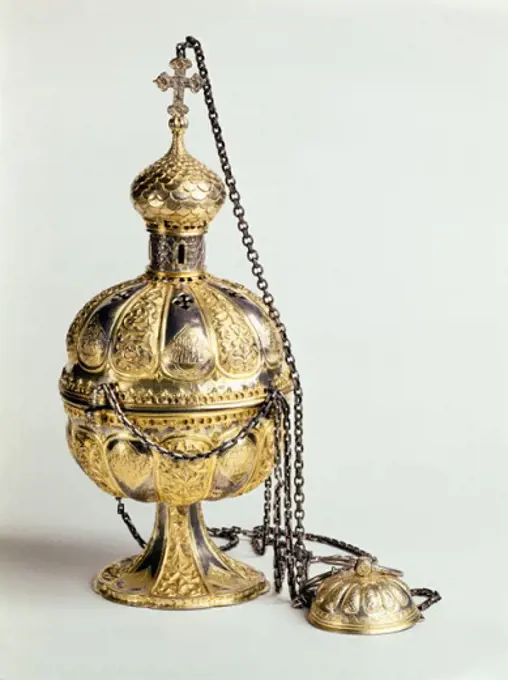
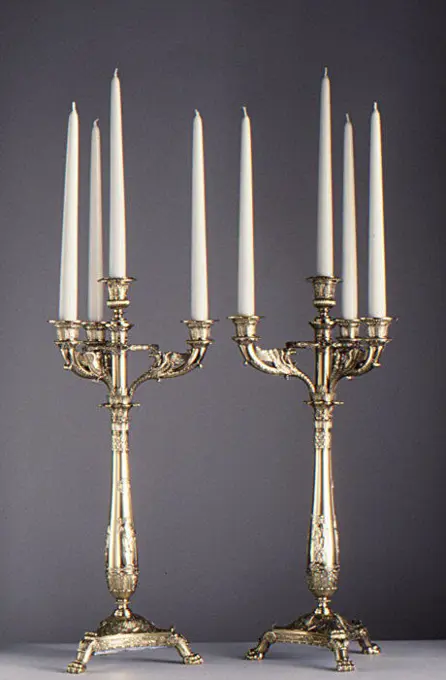
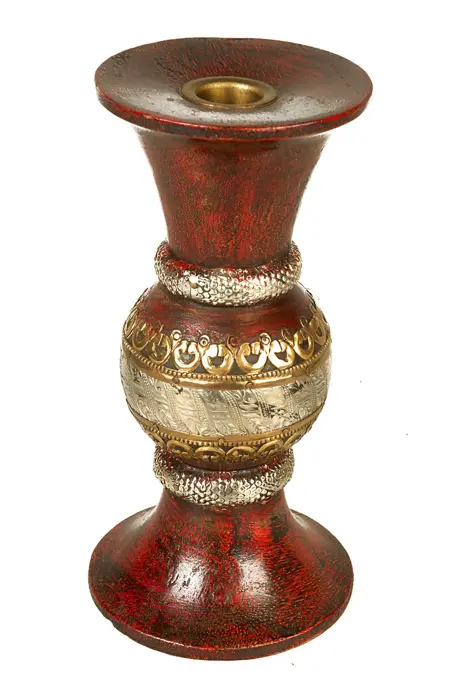
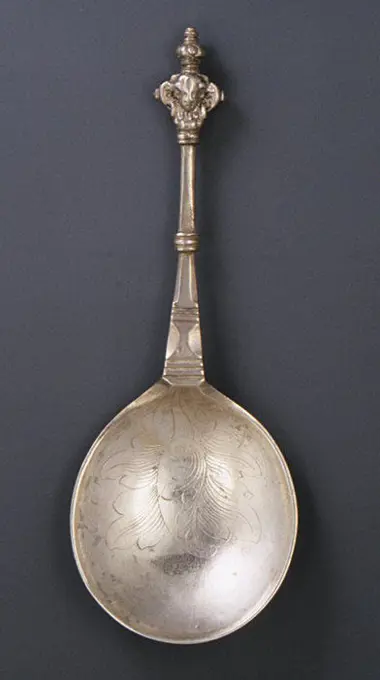
Intricately designed candlestands and holders crafted from various materials, featuring decorative elements and historical styles, all set against neutral backgrounds.

Chair walnut, with octagonal seat. Shield with intarsia tree and decorations, Anonymous, 1500 - 1600
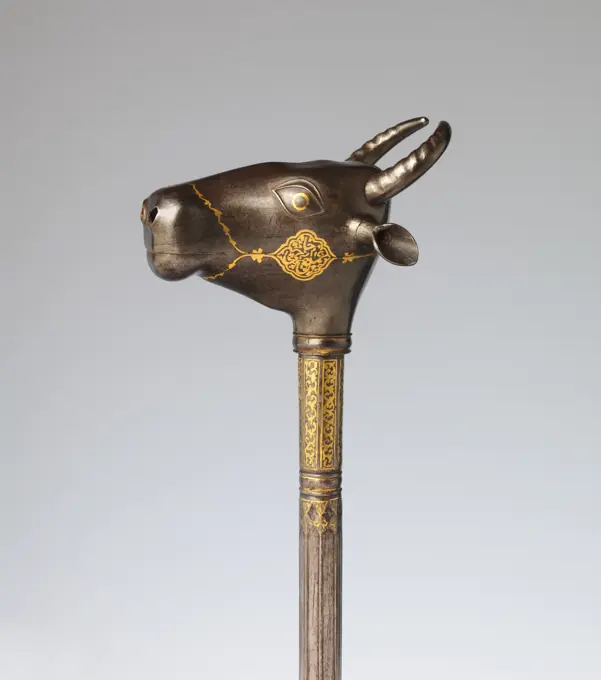
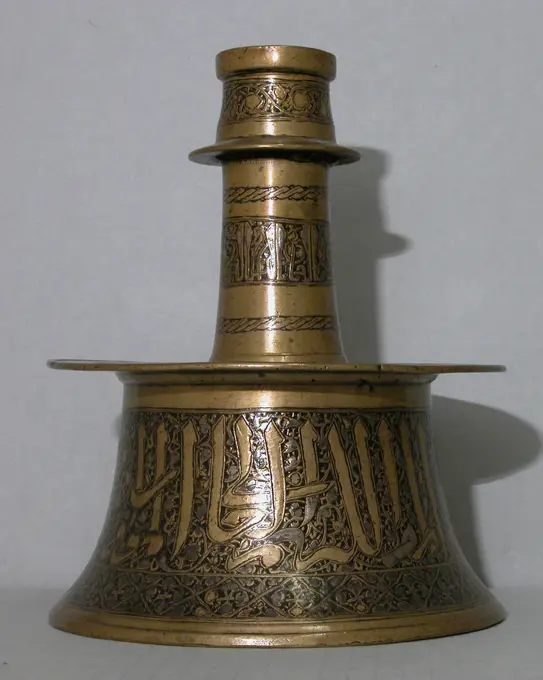
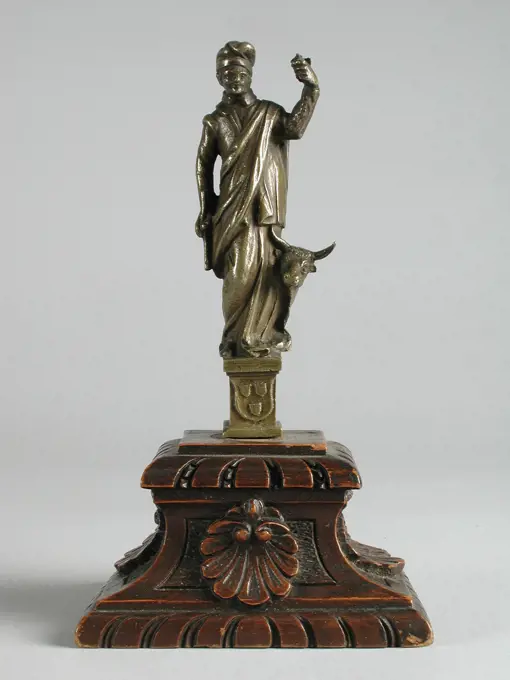
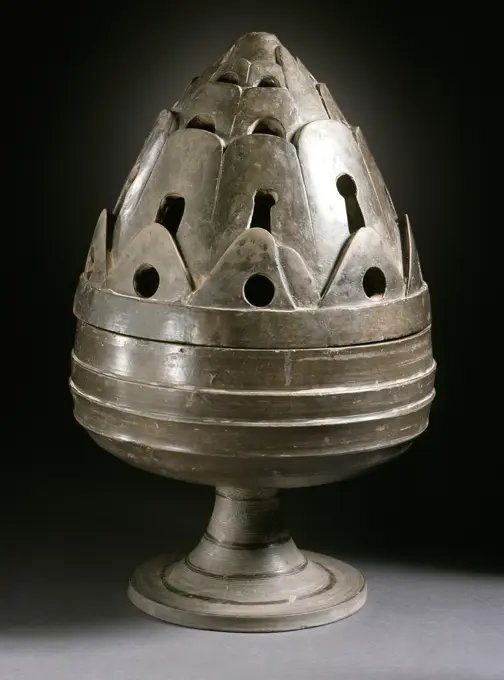
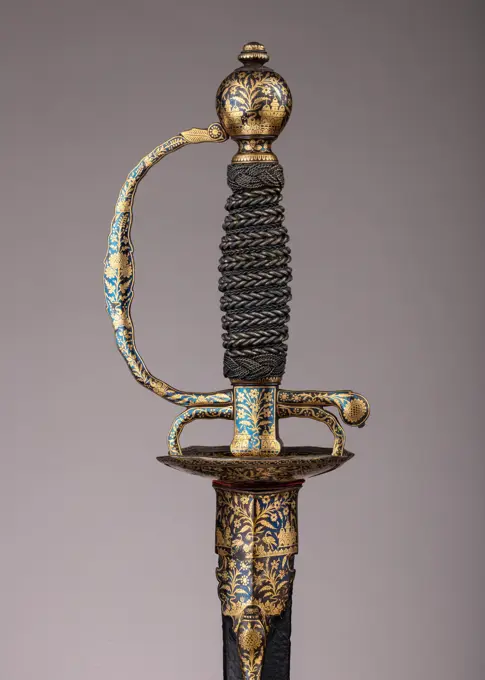
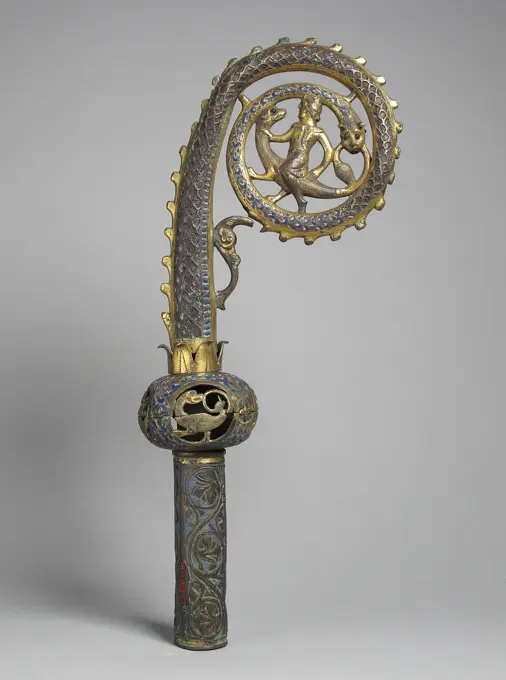
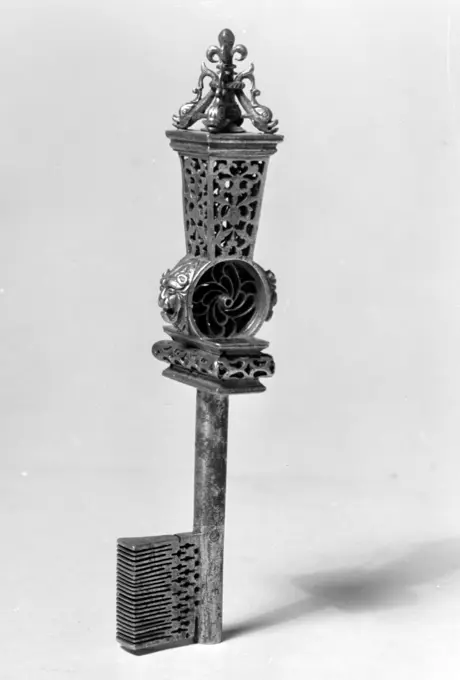
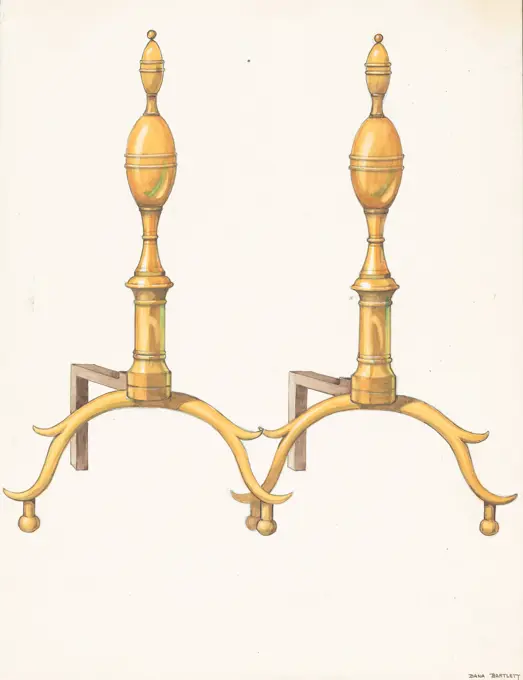
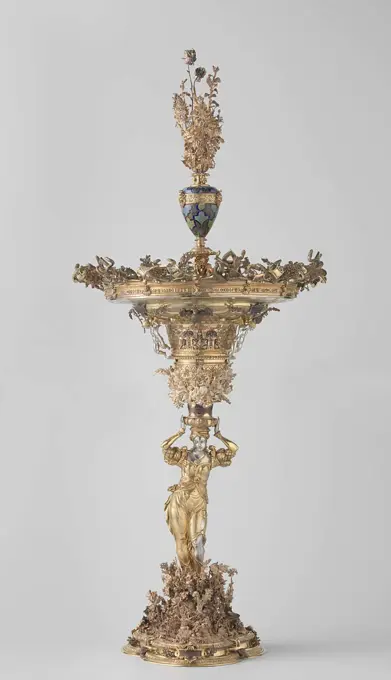
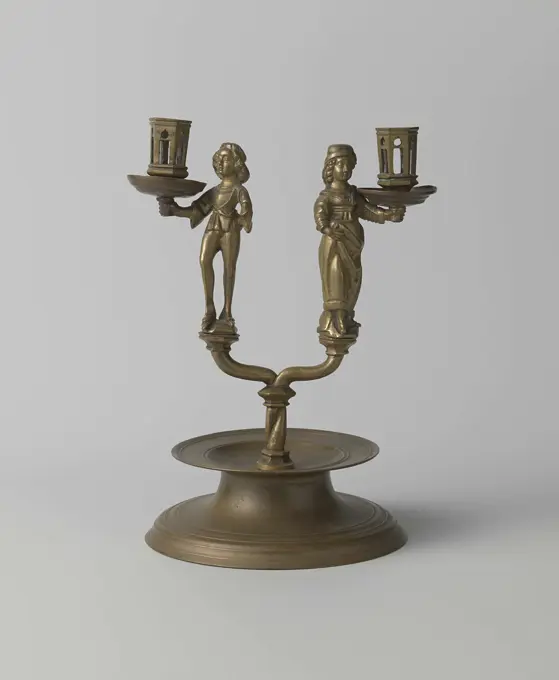
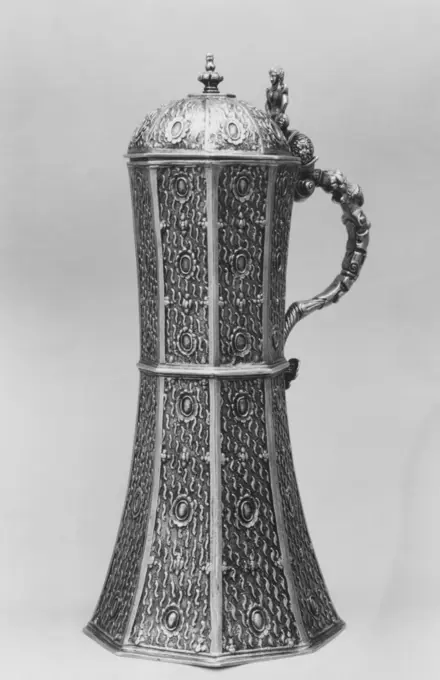
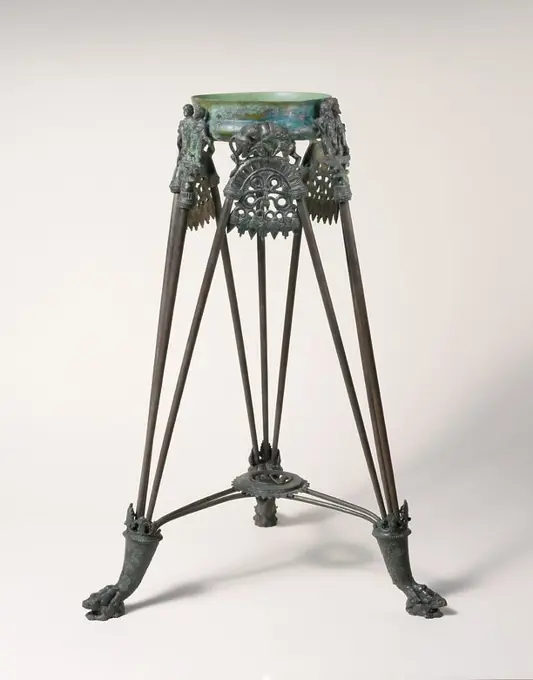
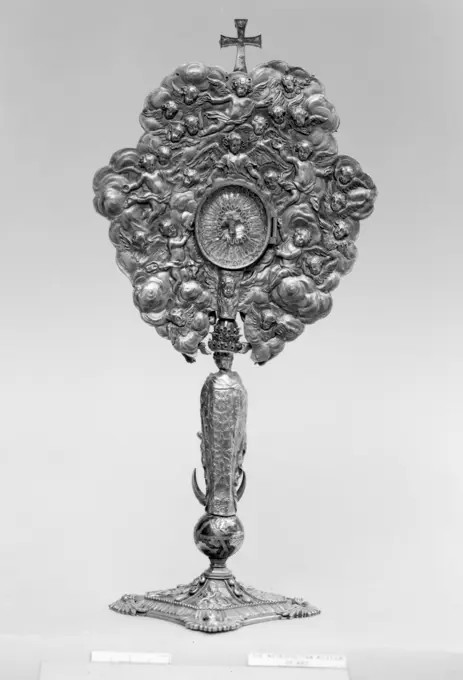
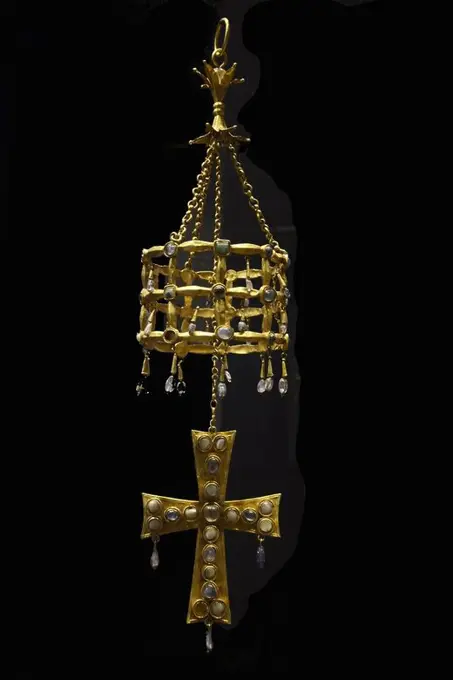
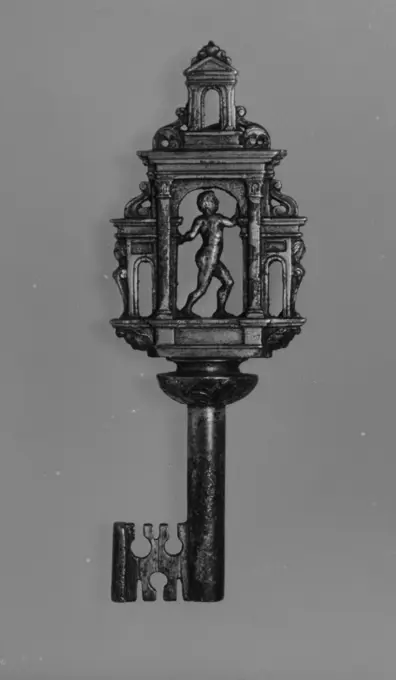
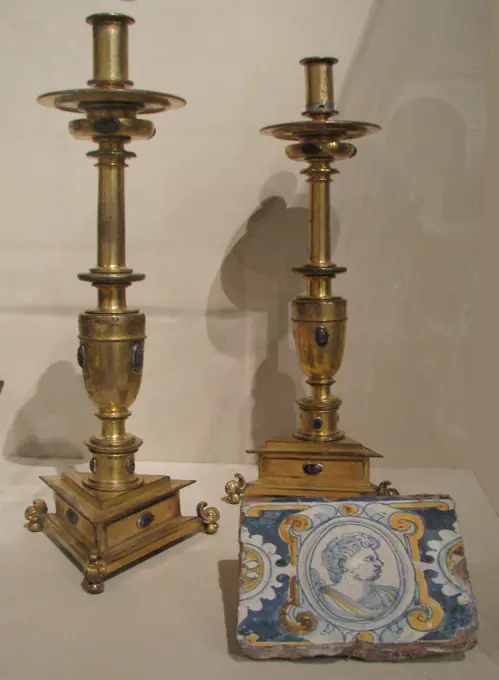
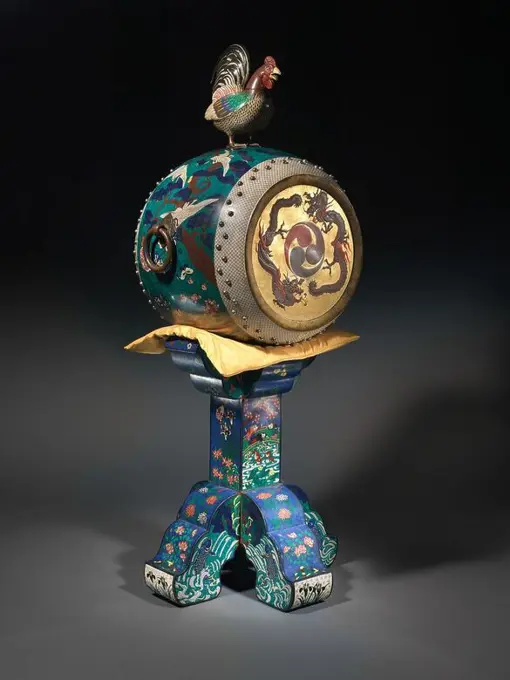
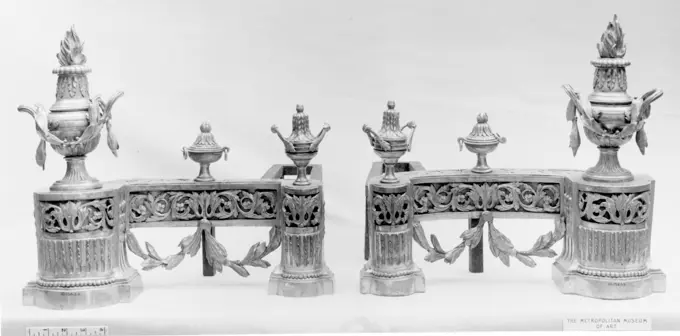
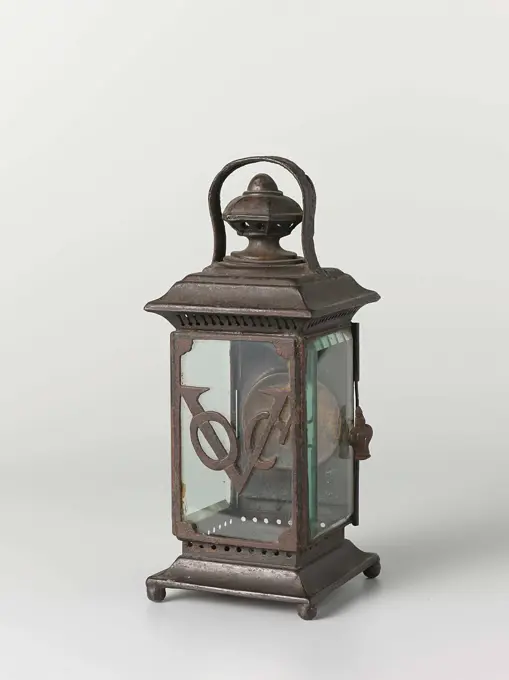
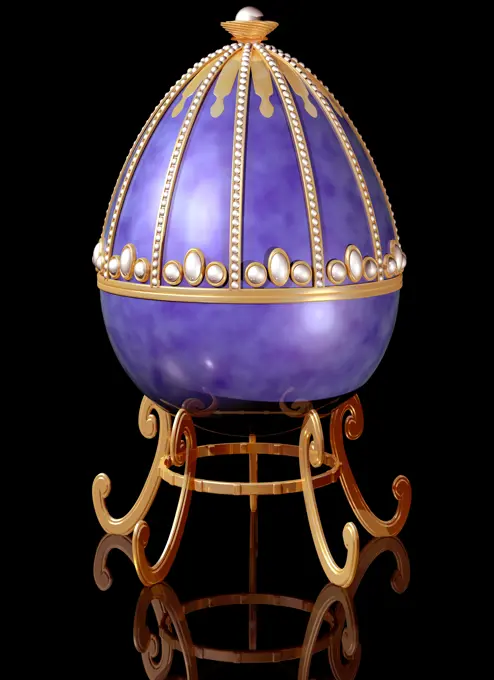
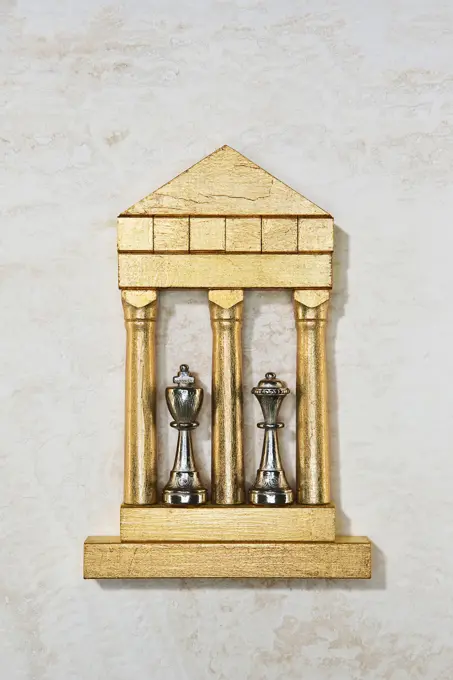
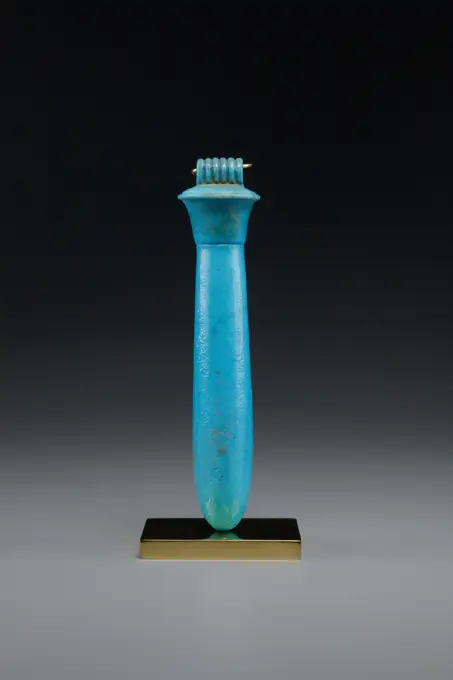
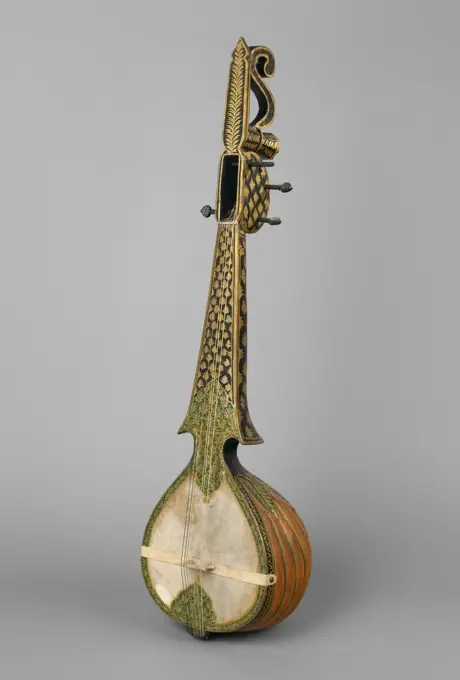
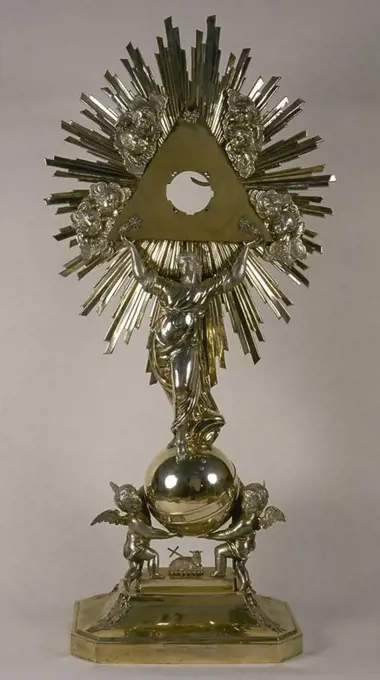
Fork, silver, Four slightly curved pointed tines. Sloping shoulders and long baluster-shaped neck. Tapered handles with flat sides, open scrolls at the top. Engraved figural designs; two figures on front and back, illegible inscription below each figure., Netherlands or Flanders, ca. 1621, cutlery, Decorative Arts, ForkStanding Cup and Cover, 1600-1700. Pinto Collection - Purchased from Edward H Pinto, 1965.. Boxwood standing cup and cover, northern Europe, 17th century. This beautifully made rose engine-turned cup is similar to lignum vitae wassail bowls made in England in the 17th century.Shaft of a pedestal of dark green marble, Maja van Panhuys, 1927 Shaft of dark green marble. Together with a basement, the base for a bust of Mr. M.P. Voûte. Rome marble (rock) Shaft of dark green marble. Together with a basement, the base for a bust of Mr. M.P. Voûte. Rome marble (rock)Lid crowned with Chinese mandarin, c. 1880 - 1883 lid Lid crowned with Chinese mandarin. Together with a silver vase on pedestal, forms a table piece with Chinese scenes. China silver (metal)   China. SumatraCeremonial Ewer. Eastern Tibet or Mongolia, circa 1800. Furnishings; Serviceware. Silver, jade, and gemstonesJamb Hook 1700-1800 American or British. Jamb Hook. American or British. 1700-1800. Brass. Possibly made in England; Possibly made in United StatesRobert Makepeace I and Richard Carter, Pair of Candlesticks, 1777/78, silver.'Candlesticks, c.1662', 1953. Artist: Unknown.Mace 19th century Iranian The ox-headed mace is associated with the heroes of the Shahnama (Book of Kings), the poet Firdausis epic of pre-Islamic Iran completed in A.D. 1010. The mace reproduces the hero Bahram Gurs weapon made in memory of the cow that nursed him. An emblem of power and good, it was inherited by other heroes in the epic, notably Feridun and Rustam. This example is representative of the Qajar revival of ancient Iranian imagery. It bears the false signature of a legendary smith, Haji 'Abbas, and the equally spurious date A.H. 951 (A.D. 1544-45).. Mace. Iranian. 19th century. Steel, gold. Shafted WeaponsCandlestick first half 14th century Penned in bold thuluth, the inscription on this candlestick praises an unnamed amir, or prince: "His Excellency, the generous, the exalted, the just; the great prince, the conqueror, the fighter of the faith." The strong vertical shafts of the letters create a sense of presence, demonstrating the suitability of this elegant script for inlaid metal objects.. Candlestick 448234Pinnacle. unknown, authorCopper statue of St. Lucas with beef, on wooden stand, wood carving sculpture sculpture wood copper, pedestal) Two identical copper statues of St. Lucas with cow on wooden pedestal with carved ornaments On the pedestal 1674 114 Rotterdam heraldry weapon guild St. Lucasgilde Originating St. Lucasgilde Rotterdam.Silver sewing. Silver sewing, with engraved zigzag line ornaments.Blue glass bottle with silver filter, anonymous, c. 1400 - c. 1950 Blue glass bottle with silver filter.  silver (metal) filigree Blue glass bottle with silver filter.  silver (metal) filigree. Sculpture of animal or man with arm board, sitting on a column. The image belongs to eleven images (BK-NM-144-1 to BK-NM-144-12).Tripot covered bowl shaped like an ancient ritual vessel, anonymous, c. 1800 - c. 1899 Porcelain lid bowl on three legs and with two ears, covered with a monochrome gray -green glaze. The bowl is covered with geometric motifs and 'taotion' masks in relief; A monster head on the legs; underside ungloss. Lid with the same decoration and three openwork compartments. An ear broken down. Monochrome. China porcelain. glaze vitrification Porcelain lid bowl on three legs and with two ears, covered with a monochrome gray -green glaze. The bowl is covered with geometric motifs and 'taotion' masks in relief; A monster head on the legs; underside ungloss. Lid with the same decoration and three openwork compartments. An ear broken down. Monochrome. China porcelain. glaze vitrificationLidded Incense Burner (Boshanlu) with Mountains. China, Western Han dynasty, 206 B.C.-A.D. 25. Tools and Equipment; burners. Wheel-thrown stoneware with carved and incised decorationSmallsword with Scabbard ca. 1775 Northern Indian, for the Western market By the early seventeenth century, the rapier, a long slender thrusting sword, began to dominate as the gentlemans weapon of choice. During the course of the century, however, as civilian fencing techniques became more specialized and refined, the rapier developed into a lighter, trimmed-down weapon known by about 1700 as the smallsword. Smallswords, often richly decorated, remained an integral part of a gentlemans wardrobe until the wearing of swords in civilian settings went out of fashion at the end of the eighteenth century, at which time pistols were replacing swords as arms most frequently used in personal duels. The majority of smallsword hilts are made of silver or steel, but many also employ a wide variety of luxurious materials, such as gold, porcelain, and enamel. At their best, smallswords combine the crafts of swordsmith, cutler, and jeweler to create an elegant weapon that was also a wearable work Head of a Crozier 1210-15 French. Head of a Crozier. French. 1210-15. Copper gilt, champlevé enamel. Volute formerly decorated with scale pattern of blue, white and red. Socket: foliated scrolls against blue enamel background (probably comes from another crosier).. Made in Limoges, France. Enamels-ChamplevéDagger (Katar) with Sheath second half 16th century Indian, Vijayanagara. Dagger (Katar) with Sheath 31541Independence Hall Tower' semi-mechanical bank, 1875, Enterprise Manufacturing Company, Philadelphia, 1875-1888, 9 1/2 x 3 15/16 x 3 15/16 in. (24.13 x 10 x 10 cm), Iron, pigment, United States, 19th centuryBase of a funeral altar of Stasion, son of Epigonos, 2nd century B.C., Archaeological Museum in the former Order Hospital of the Knights of St. John, 15th century, Old Town, Rhodes Town, Greece, EuropeMasterpiece key probably 17th century French The bit is a later addition.. Masterpiece key. French. probably 17th century. Iron, steel. Metalwork-IronBasket. Culture: Japan. Dimensions: H. 8 1/4 in. (21 cm); Diam. 3 3/4 in. (9.5 cm). Date: 19th century. Museum: Metropolitan Museum of Art, New York, USA.Poporo. Lime container used to carry the lime to the mouth while chewing coca leaves. Poporos are also attributed with mystical powers and social status. It is made with tumbaga (alloy of gold and copper) as pumpkin. From Finlandia (Quindo, Valle del Cauca Medio). Quimbaya art. Jewelry. COLOMBIA. CUNDINAMARCA. Bogot‡. Gold Museum.Jewelled Pendant 19th century India. Jewelled Pendant. India. 19th century. Nephrite, white with very faint grayish tint. JadeCandlestick. Dated: c. 1938. Dimensions: overall: 38.5 x 25.5 cm (15 3/16 x 10 1/16 in.) Original IAD Object: 10 1/2" high; base: 5 1/8" in diameter. Medium: watercolor and graphite on paperboard. Museum: National Gallery of Art, Washington DC. Author: JOHN HALL.Cup-Hilted Rapier possibly Spanish early 17th century The rapier was the principal civilian sidearm throughout the sixteenth and seventeenth centuries. Designed for cut-and-thrust fencing of progressively complex techniques, the rapier is characterized by a double-edged blade with an acute point and an elaborate guard for the hand. The guards, usually of iron or steel, were subject to a variety of embellishment. They were engraved, chiseled, gilded, damascened, and encrusted in gold and silver in keeping with fashionable styles. Unless otherwise noted, the materials, attributions, and dating given here refer to the hilts. Rapier blades, invariably of steel, bear a variety of makers marks denoting their origin in the two principal centers of blademaking, Toledo in Spain and Solingen in Germany. View more. Cup-Hilted Rapier. possibly Spanish. early 17th century. Steel. SwordsAncient tripod vesselDana Bartlett, Andirons, c 1937 AndironsTable ornament.This table ornament is an ode to the Earth and all that it brings forth, as well as an unsurpassed display of artistic and technical skill. The stem of the dish represents Mother Earth. She is surrounded by flowers, herbs and small animals - all cast from specimens collected in the wild. The lives of actual animals were sacrificed to model the young grass snakes and lizards.Two-armed candlestick with a men's and a women's figure. The candlestick is composed of the following eight parts, of which only the first two are removable: the foot, the trunk, the two figures, the two fat catchers and the two candle holders. The tribe screwed in the foot is fixed with a nut. The thread attached in the strain with tin or lead has released later. The round profiled foot is over in a holland portion that narrows upwards and that is closed by a collar. The two round arms of the trunk are turned at the bottom around each other and there is a hexagonal base there there and a hexagonal capital. They end in hexagonal pads for the two standing figures. The woman wears a long dress, of which she ceases the skirt with her right hand, so that both feet can be seen. In her left hand, she carries the captured fat catcher and the candle holder. The décolleted V-neck and the hems of the derret are trimmed with fur that is indicated in granulation. The over-sleeves are open at the rVase. Culture: Japan. Dimensions: H. 8 1/4 in. (21 cm); Diam. 4 3/8 in. (11.1 cm); Diam. of rim 1 5/8 in. (4.1 cm); Diam. of foot 2 7/8 in. (7.3 cm). Date: 18th century. Museum: Metropolitan Museum of Art, New York, USA.The Censer 17th C. Antiques Table bubble with orpheus and inscription. The object consists of three parts: the bronze bell-shelled with the handle, the iron eye, the iron clapper. On the lower edge of De Schel the inscription SVVM CVIQVE PVLChrum 1544. The figuration consists of an orpheus playing on a veed and left a bear, a monkey, a lion and on the right a wolf, a musical monkey, a rabbit, a swan, a deer, a stork and a horse. Above the inscription Oaster Dei Memento May. The handle is formed by three putti.MountCandelabrum (one of a pair) 1794-1814 Martin-Guillaume Biennais French Part of a large table service reputedly given by Napoleon I to his sister, Pauline, and her husband, Prince Camillo Borghese.. Candelabrum (one of a pair) 237235Consolet table of Gilded Lindehout, Anonymous, 1750 Sound of consolet table of gilded Lindehout. The scalloped, profiled marble cover plate is supported by two twisted C-Voluten, which flanks a crested shell; Two C-Voluten left and right. The whole rests on a bottom piece that consists of a large acanthus leaf, above which a caterpillar -shaped motif. See also: BK-16855-B. France (possibly)Germany (possibly) wood (plant material). linden. marble (rock) gilding Sound of consolet table of gilded Lindehout. The scalloped, profiled marble cover plate is supported by two twisted C-Voluten, which flanks a crested shell; Two C-Voluten left and right. The whole rests on a bottom piece that consists of a large acanthus leaf, above which a caterpillar -shaped motif. See also: BK-16855-B. France (possibly)Germany (possibly) wood (plant material). linden. marble (rock) gildingPendant second half 16th century possibly German. Pendant. possibly German. second half 16th century. Gold, enamel, rubies, pearlsBrass metal design multicolour fitting on antique wooden candle stand, Jodhpur, Rajasthan, India Copyright: xSafatxAli/DinodiaxPhotoxAbruzzo L'Aquila Sulmona Museo Civico8. Hutzel, Max 1960-1990 Museo Civico Treasures: these objects (Tesoro del Pio Istituto della SS. Annunziata and Tesoro della Cattedrale) are now housed in the security vault of a bank, not in the Museo Civico, as noted in Hutzel's photo campaign notes of August 1984. Views of the treasures include: a silver processional cross (14th century); gold, silver and enamel chalice (13th century), gold and silver crosier with sculpted figures depicting the Annunciation (13th century), a silver and gold reliquary with glass (13th century), a silver diadem (13th century), and a box-like silver and gold reliquary (15th century). German-born photographer and scholar Max Hutzel (1911-1988) photographed in Italy from the early 1960s until his death. The result of this project, referred to by Hutzel as Foto Arte Minore, is thorough documentation of art historical development in Italy up to the 18th century, including objects of the Etruscans and the Romans, as welCandlestick, c. 1740. Juste-Aurèle Meissonnier (French, 1695-1750). Gilt metal; overall: 29.4 x 18.6 x 17 cm (11 9/16 x 7 5/16 x 6 11/16 in.).Spoon probably second quarter 18th century Johan Svensson Berg. Spoon. Swedish, Norrkoping. probably second quarter 18th century. Silver. Metalwork-SilverFlagon late 16th-early 17th century probably Hungarian. Flagon 193594Peperbus of oil and vinegar set consisting of two bottles and a pepper bus in a three-lobe holder., Christoffel Radijs, 1735 Pear -shaped stray bus on foot with with a removable cap. There is a button on top of the openwork cap. An alliance weapon is engraved on the belly. The Peperbus is older than the other parts the oil and vinegar set. The Hague silver (metal) Pear -shaped stray bus on foot with with a removable cap. There is a button on top of the openwork cap. An alliance weapon is engraved on the belly. The Peperbus is older than the other parts the oil and vinegar set. The Hague silver (metal)Reliquary of San Fructuosus. Silver work with fast and heraldic ornamentation. Chiselled with transparent enamel icons. It presents the Barcelona punch. Last 14th century. Treasure of the La Seu of Tarragona, Catalonia, Spain.Spontoon ca. 1700 German. Spontoon. German. ca. 1700. Steel, wood. Shafted WeaponsBronze tripod. Culture: Etruscan. Dimensions: H. as restored 26 in. (66.1 cm). Date: ca. 525-500 B.C..The city of Vulci was famous in antiquity for its production of luxury bronzes. One popular type of item was the tripod, an elaborate stand to support either a cauldron or a brazier. Tripods were produced at Vulci for about seventy years, from about 540 to 470 B.C. This example is elaborately decorated with lion's-paw feet surmounting frogs, wild beasts attacking their prey on the arches above elegant palmette motifs, and a pair of mythical subjects at the top of each of the vertical rods. These depict the divine twins Castur and Pultuce (Greek: Kastor and Polydeukes), Hercle (Greek: Herakles) and his protectress, the goddess Menrva (Greek: Athena), and two satyrs. The three subjects do not have any obvious connections to one another. Stylistically, the execution of these small figures is similar to that of the related depictions of the divine twins on the pair of bronze volute handleReliquary early 17th century Spanish and Flemish The cult of relics was an integral part of Catholic devotion from early in the Christian era. Relics of the Passion of Christ (the events leading up to the Crucifixion), as well as those associated with numerous saints and martyrs, were prized by churches and pious individuals throughout western Europe and Byzantium. Believers in the miraculous power of relics promoted a sumptuous form of artwork by commissioning resplendent cases to surround the often miniscule fragments. Sometimes the framework would echo the source of the relic (an arm, a foot, a head). In other instances, relics were preserved in containers of more traditional form. Jewels containing relics served as gestures of piety as well as displays of personal wealth. Such devotional ornaments became especially popular in early-seventeenth-century Spain, where sumptuary laws restricted most nonreligious personal adornment. Many of the most elaborate works produced by goldsmithsFlower Basket (Hanakago) in the Shape of a Flower mid-19th century Japan. Flower Basket (Hanakago) in the Shape of a Flower. Japan. mid-19th century. Timber bamboo, dwarf bamboo, and rattan. Meiji period (1868-1912). BasketryEl tesoro de Guarrazar es un tesoro de orfebrería visigoda compuesto por coronas y cruces que varios reyes del reino visigodo de Toledo ofrecieron en su día como exvoto.Ewer late 16th-early 17th century Follower of Bernard Palissy French The figures in cartouches on the ewer represent Faith, Hope, and Charity. The central figure on the matching basin (see 04.9.20) is of Temperance, surrounded by personifications of the four elements, Earth, Air, Fire, and Water. Around the rim are Minerva and figures symbolizing the seven Liberal Arts: Astronomy, Grammar, Dialectics, Rhetoric, Music, Arithmetic, and Geometry.. Ewer 201610Key probably ca. 1550-75 Based on a design by Jacques Androuet Du Cerceau Featuring a bow in the form of a classical structure inhabited by a twisting nude male figure, this key was based on a design by the engraver and architect Jacques Androuet du Cerceau (1510/12-1585), published in his book of models for locks.. Key. French. probably ca. 1550-75. Iron-gilt. Metalwork-Gold and PlatinumSolar Lamp 1843-49 Cornelius and Son. Solar Lamp 7606Lamp in the shape of a lion;  19th century (1801-00-00-1900-00-00);Zaleski, Władysław (1852-1925) - collection, Indian (culture), Indian art, purchase (provenance)LadlePair of candlesticks 17th century Spanish King Philip II (r. 1556-98) lent his name to the Severe (Philip II) style, which was heavily influenced by his patronage and associated with the construction of the Escorial. The style was introduced into the design of Spanish metalwork in the last quarter of the sixteenth century and flourished throughout the reigns of his next two successors.. Pair of candlesticks. Spanish. 17th century. Gilt bronze, gilt brass, partially enameled silver. Metalwork-Gilt BronzeAbruzzo, L'Aquila, Celano, S. Maria Valleverde, Italy, 20th century, photo, photography, EuropeTall CaseClock.   Maker: Christopher Weaver, AmericanPochette 17th century German Dancing was an expected aristocratic accomplishment. Instruction was given at home by a visiting dance master, who played a small fiddle to provide music for the lessons. The compact, slender shape of these instruments made them easy to transport and gave them the name pochette, which suggests that they were carried in one's coat pocket. Elaborately decorated pochettes made of precious materials were often seen and collected as art objects in their own right.. Pochette 503790Pin 7th-5th Century B.C. Etruscan. Pin. Etruscan. 7th-5th Century B.C.. GOLD. Gold and SilverTassel, Medium: silk, metal thread, wooden core, linen, Turned wooden mould (ball over vase over truncated cylinder). Upper members painted gold and covered with trellis of gold thread. Skirt (over cylinder) of white silk covered with gold threads and ornamental strings of spirals and rosettes., Italy or Spain, 19th century, trimmings, TasselSword. Culture: French. Dimensions: L. 45 1/2 in. (115.6 cm); W. 7 3/4 in. (19.7 cm); Wt. 4 lb. 4 oz. (1927.8 g). Date: 19th century in 16th century style. Museum: Metropolitan Museum of Art, New York, USA.O-daiko. Culture: Japanese. Dimensions: Total H. 62 3/16 × Drum diam 22 in. (158 × 55.9 cm). Maker: Attributed to Kodenji Hayashi (Japanese, Nagoya 1831-1915). Date: ca. 1873.O-daiko, a barrel drum played in temples, theater orchestras and at festivals. This unusually ornate o-daiko, with its cloisonné stand and body, was made by order of the Japanese government for the Vienna Exposition of 1873, the first in which Japan participated formally as a nation. The drum's cowhide skins, decorated with lacquer-work dragons were never sounded. Instead the drum is a symbol of peace as indicated by the presence of a rooster atop the instrument. An ancient story tells of a drum placed at a village gate to sound an alarm during an attack. As the years passed the drum was never used. Hens and roosters began to live in the drum and this image became an emblem of contentment and peace. Museum: Metropolitan Museum of Art, New York, USA.Pair of firedogs ca. 1760 French. Pair of firedogs 191590Work table. unknown, creatorQuadrangular vase decorated with plum branches. Bronze, China. Paris, Cernuschi museum. Asian art, branch, bronze, chinese art, handle, oblong vase, plum tree, plum, quadrangular, Chinese vase, branchChild on swing. On an elongated album there is a swing on which a man is sitting. A zig-zag line is engraved along the edge of the plate. The image is marked with a dolphin and a master sign.Caddy spoon 1809 Probably by Andreas Schiotteling. Caddy spoon. Dutch, Amsterdam. 1809. Silver. Metalwork-SilverDecorated column with relief ornaments., C. 1878 - 1881 photograph  Paris photographic support albumen printKnife Handle (Kozuka), early to mid-1800s. Japan, Edo period (1615-1868). Inlaid bronze; overall: 1.4 cm (9/16 in.).Barometer, Nicolaas Lanckamp, 1709 Barometer in glass cupboard, with a gilded frame crowned by two lions on the corners and a shell motif in the middle. The board is made of black painted wood. The mercury column is surrounded by cutting work including the weapons of the seven provinces and crowned by two lions that hold the weapon of the Republic, above the saying: "Concordia res parvae crescunt". The barometer is signed at the bottom: "N. Lanckamp, 1709" and was made for the meeting room of the States General in the Hague Binnenhof. The Hague wood (plant material). linden. gilding (material). glass. silver (metal). silver (metal) gilding  Courtyard Barometer in glass cupboard, with a gilded frame crowned by two lions on the corners and a shell motif in the middle. The board is made of black painted wood. The mercury column is surrounded by cutting work including the weapons of the seven provinces and crowned by two lions that hold the weapon of the Republic, above the saying: "ConcorRELICARIO S BENITO Y STA ESCOLASTICA S XVI. Location: CONVENTO DE SAN CLEMENTE-MUSEO. Toledo. SPAIN.Schlesinger and Mayer Department Store Balustrade Panels; Designed by Louis Henry Sullivan (American, 1856-1924); Manufactured by Winslow Brothers Company (United States); USA; cast ironThe Gloucester Candlestick. 1107-1113 AD. masterpiece of English metalwork in three sections, each separately cast by a process known as 'lost wax'. The decoration is formed of figures and apes interspersed between thick intertwining shoots of foliageStandard Finial. Iran, Luristan, Luristan bronzes, circa 1350-800 B.C.. Architecture; Architectural Elements. Bronze, castA 14th century box from Certosa, 14th century. Artist: Balthazar EmbriachiInfantry Shield (Pavise). Culture: Bohemian, possibly Chomutov (now Czech Republic). Dimensions: H. 42 1/2 in. (107.95 cm); W. 20 1/2 in. (52.07 cm); H. of curvature 5 in. (12.7 cm); D. approximately 1 in. (2.54 cm); Wt. 16 lb. 11 oz. (7569 g). Date: ca. 1450.Shields of this type were carried by crossbowmen and other foot soldiers in central Europe during the fifteenth century. They were often fitted with a prop to enable them to be freestanding. This example is painted in the center with a crown surmounted by three ostrich feathers, a badge of the kings of Bohemia. Below this is the letter Y on a radiant cloud, possibly the monogram for Yhesus (Jesus). At the top is the coat of arms of the Saxon city of Zwickau (a red shield with three white swans), which was added to the shield at a later date. Museum: Metropolitan Museum of Art, New York, USA.Staff with male head, 20th century, 8 1/2 × 1 1/2 in. (21.59 × 3.81 cm), Brass, Nigeria, 20th centuryClock case. Wood; carving, painting, gilding. From Saint Petersburg. Mid. 18th century. The State Hermitage Museum. Saint Petersburg. Russia.Water Pipe Base 19th century. Water Pipe Base 445239Group of miniatures 12th-15th century Chimú or Chancay. Group of miniatures 315761Anonymous. Vase mounted. Céladon, golden bronze, 1775-1785. Paris, Cognacq-Jay museum. 78926-13 Anse, blue, bronze gilded, ceramic, ceramic, gilding, vase monte, 18th 18th 18th 18th 18th 18th 18 centuryVOC Lantern. Square hand lantern on iron pedestal with swamped seams and spherical legs. Raised edge with a hole. Front and side of glass. The glass in the sides is cut. Central to the front VOC emblem and in the four corners scalloped floral pattern. Above a raised edge with ...- Motif that switches to top with swamped edges on which a bronze button (... shape) is attached. The handle has been nailed to this. Backside: iron door with bronze plate on inside. Pressed a hollow round shape. Closure in the form of bolt with baluster-shaped closure. Hinged handle on the outside of door.Highly decorative jeweled Russian Easter Egg Illustration of a highly decorative jeweled Russian Easter Egg Copyright: xZoonar.com/PaulxFleetx 812547Rosewater Sprinkler or Bottle with Light Brown and Chrysanthemums. Rose water dropper or point bottle at high foot of porcelain with spherical body and long, narrow neck, covered with a café-au-lait glaze and painted in underglaze blue. The bottle is covered with a light brown glaze and with in front of blue three round fields with chrysanthemum saved. Monochrome brown with blue and white.Golden model of king and queen chess piecesPair of pedestals ca. 1760 British. Pair of pedestals. British. ca. 1760. Pine, painted in pale yellow and white. Woodwork-FurnitureModel or a mast. Model of an undermast with Mars, Ra and flagpole. The RA is attached to the donkey head with a locking chain.europe in the sky of london lantern and abstract illuminationAdoring Monk, early 500s. China, Northern Wei dynasty (386-534). Gilt bronze; overall: 14.9 cm (5 7/8 in.); base: 3.6 x 5.2 x 3.9 cm (1 7/16 x 2 1/16 x 1 9/16 in.); figure: 11.5 cm (4 1/2 in.).Clock given by King Henry VIII of England to Anne Boleyn, circa 1532; Black and White Illustration;Waz Amulet ca. 1295-1070 B.C. New Kingdom, Ramesside. Waz Amulet. ca. 1295-1070 B.C.. Faience. New Kingdom, Ramesside. From Egypt. Dynasty 19-20Rabab ca. 1885 Indian (north) In the 19th century when this Rabab was collected it was sometimes called a rudra vina, a Sanskrit term now associated the north Indian stick zither, the bin. Listen to experts illuminate this artwork's story Listen Play or pause #9382. Rabab Supported by Bloomberg Philanthropies We're sorry, the transcript for this audio track is not available at this time. We are working to make it available as soon as possible.. Rabab. Indian (north). ca. 1885. Tun wood. India. Chordophone-Lute-plucked-unfrettedRattle Beaker. Culture: Lambayeque (Sicán). Dimensions: H. 6 1/4 x Diam. 4 1/4 in. (15.9 x 10.8 cm). Date: 10th-11th century. Museum: Metropolitan Museum of Art, New York, USA.Lantern with glass ball, resting on a twisted bronze Standard standing on a bronze foot in the form of animal legs.; 10. Le Nouvel Opéra de Paris. Bronzes.; Le Nouvel Opéra de Paris with 50 photos ..Harp;  1780-1800 (1780-00-00-1800-00-00);Key handles from the 16th century, France, Historical, digital reproduction of an original from the 19th century, EuropeARTE S. XVIII. ESPAÑA. CUSTODIA de tipo de sol. Realizada sobre metal plateado sobredorado y plata punteada. 131 x 61 cm. (medidas máximas), 47 x 32'5 cm. (diámetro pie) y 39 cm. (figura tronco). Datada posiblemente de finales del s. XVIII, antes de 1793. Oratorio de Sant Felip Neri. Barcelona. Cataluña.Bloempiramide, Royal Tichelaar Makkum, 2003 - 2004 Segment of flower pyramid of faience, blue painted in the glaze. Music figures and figures with scale. Makkum tin glaze Segment of flower pyramid of faience, blue painted in the glaze. Music figures and figures with scale. Makkum tin glaze