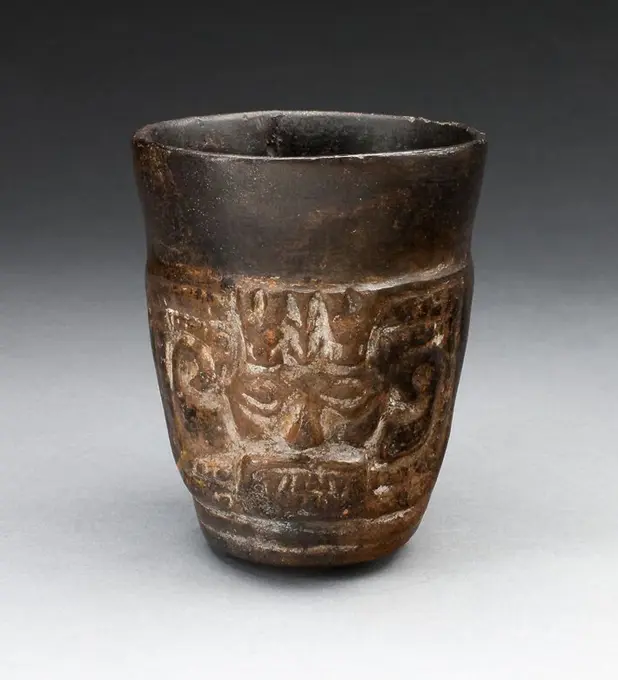
Ceramic and Bronze Jugs

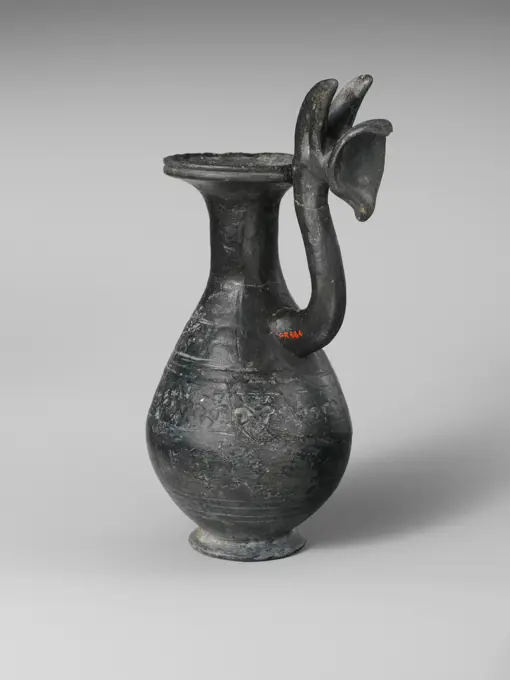
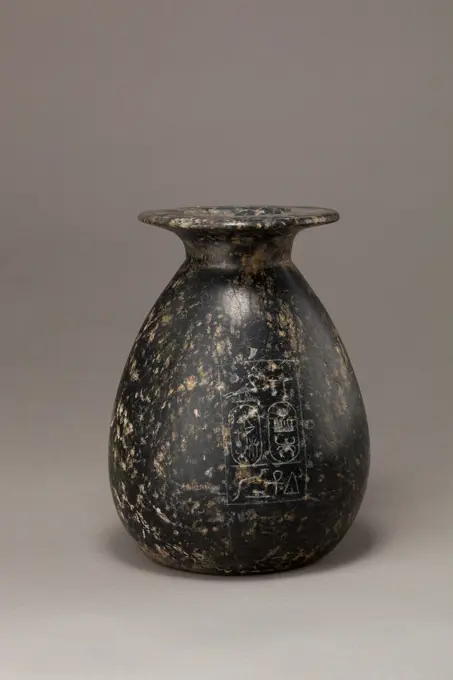
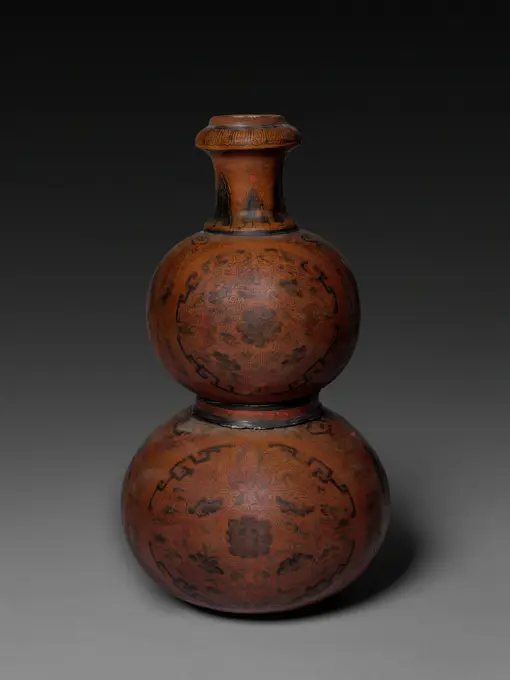
Artifacts including stoneware jugs and bronze urns, highlighting intricate patterns and historical significance from various cultures, with earthy tones and artistic designs.
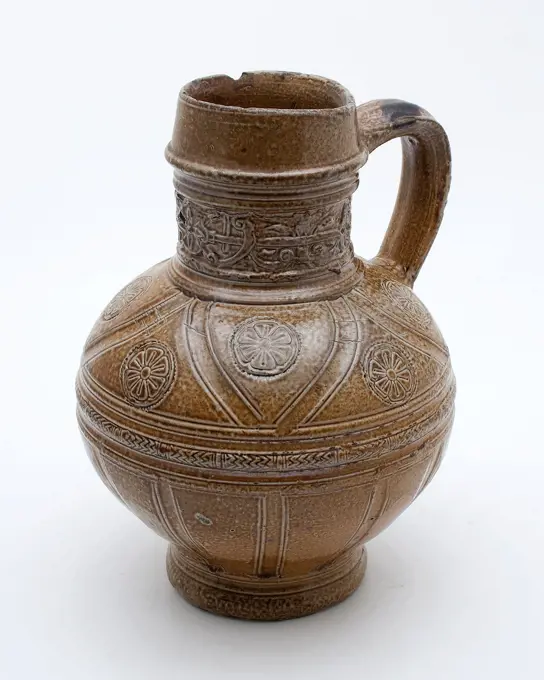
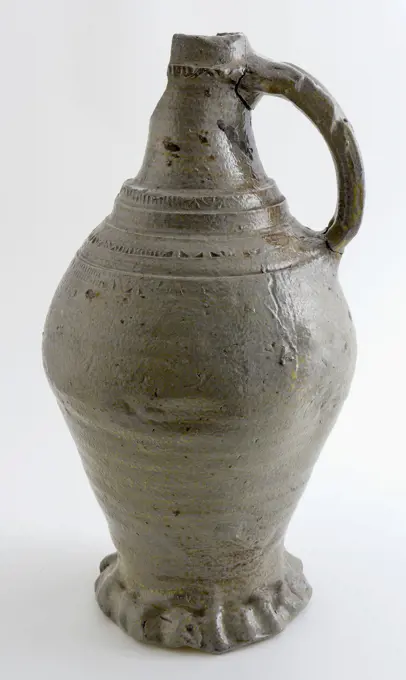
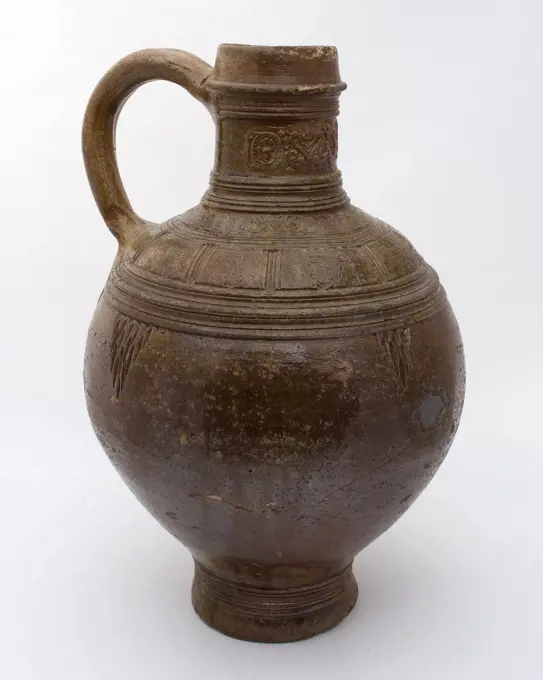
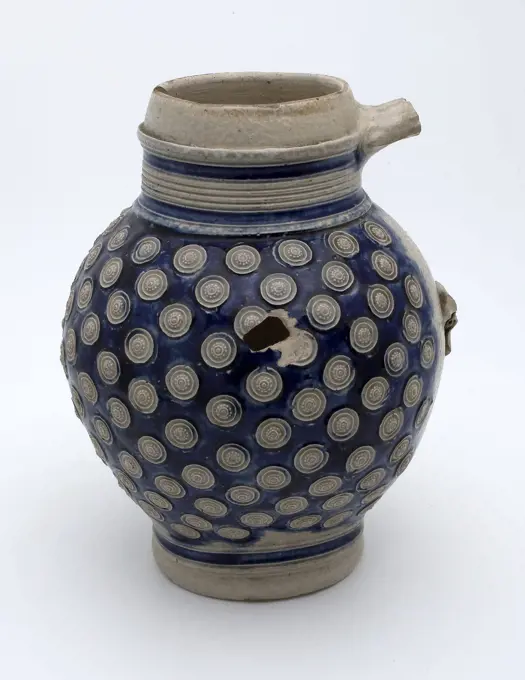
Brown stoneware jug be arranged with frieze around the neck, flower rosettes imprinted on the shoulder and flutes, jug crockery holder soil find ceramic stoneware glaze salt glaze, hand turned stamped glazed glazed baked Stoneware jug gray shard mustard colored and partly gray salt glaze profiled bandoor with short stump tail or button archeology import pottery serve serve drink wine beer
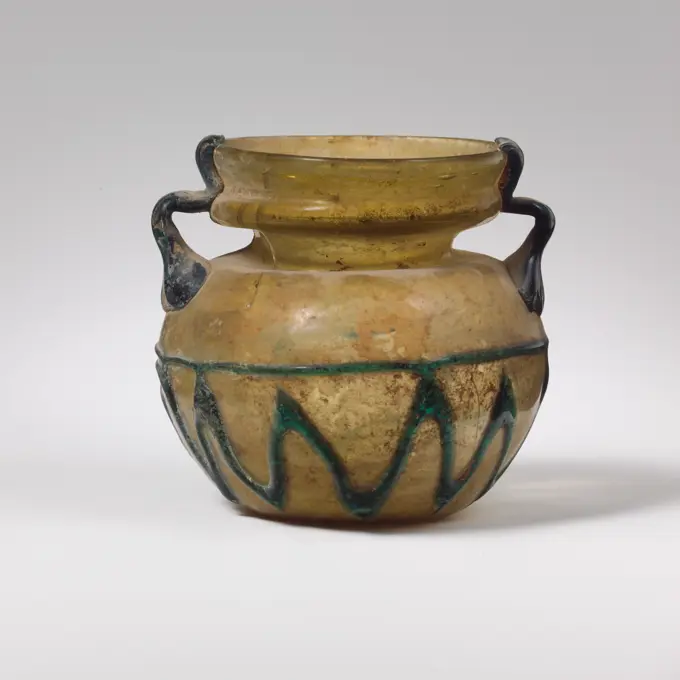
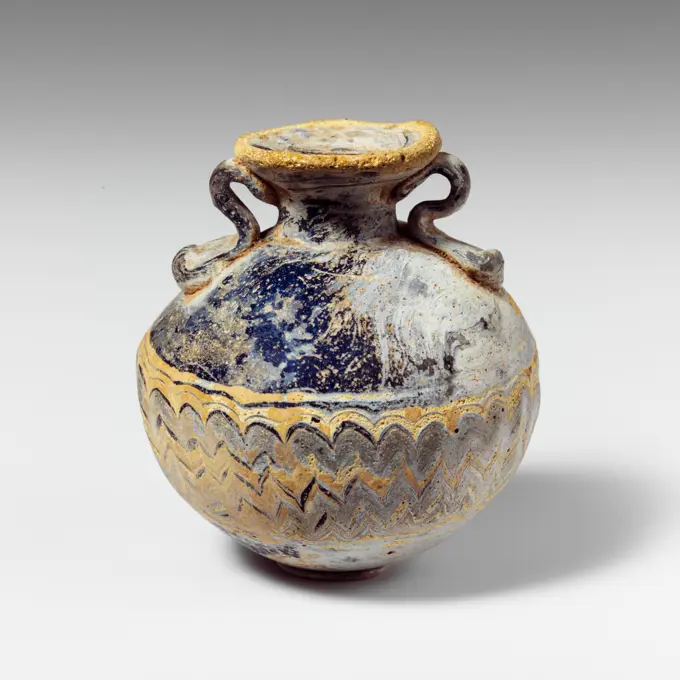
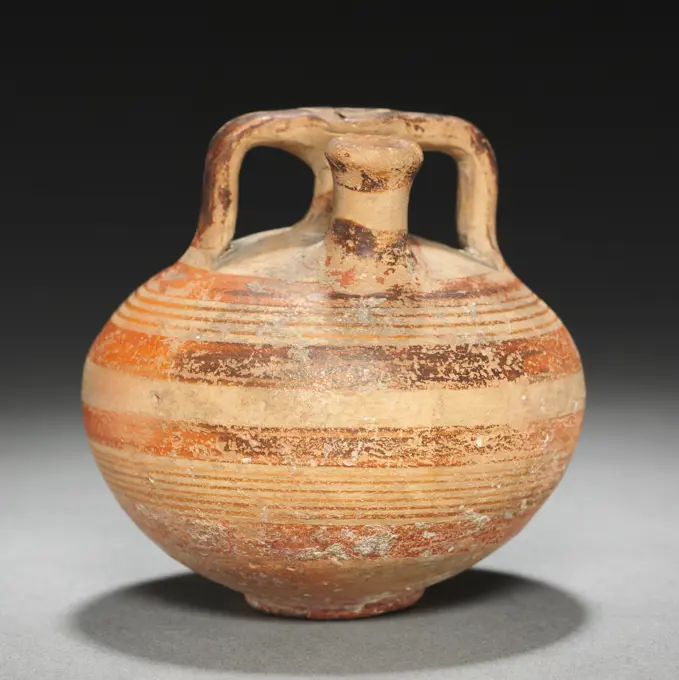
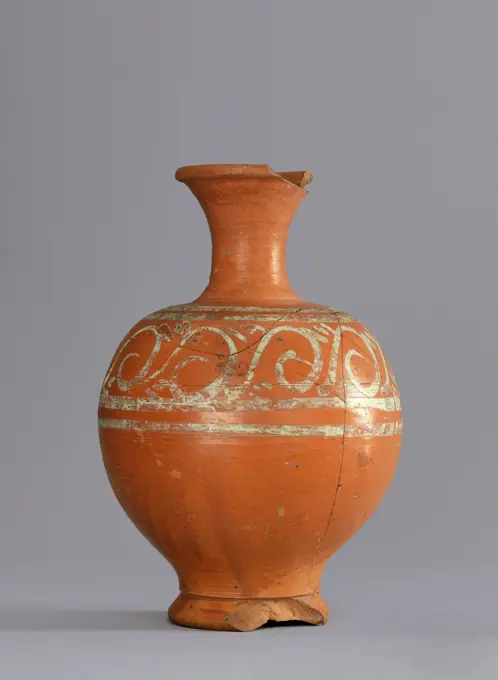
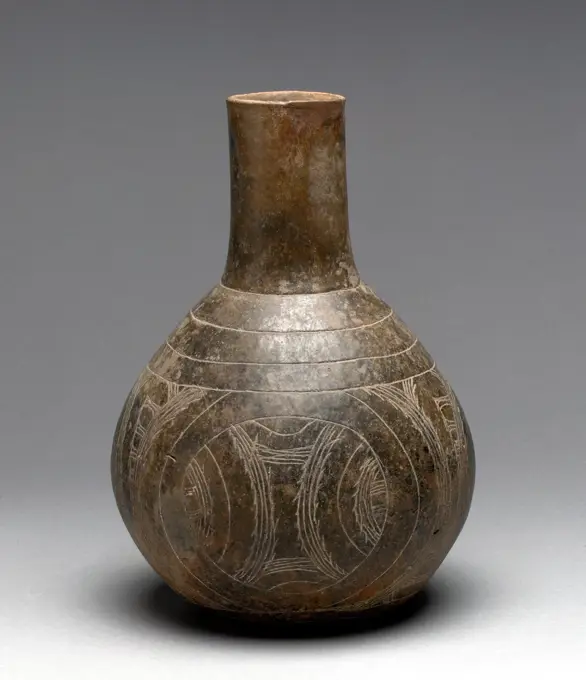
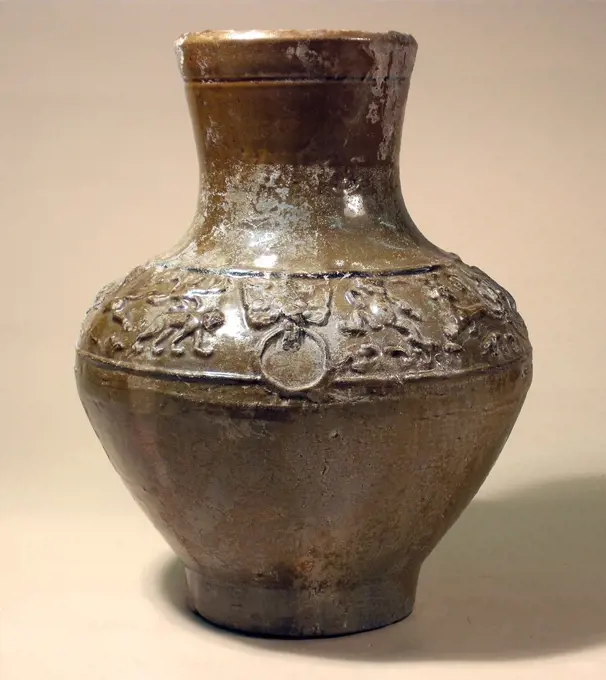
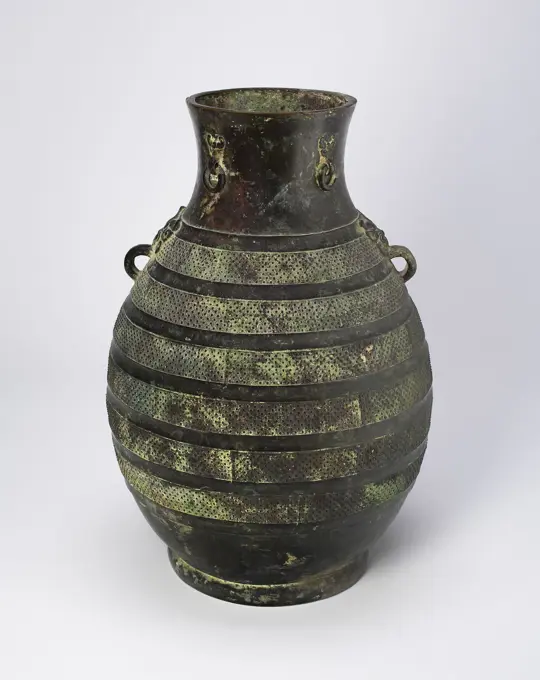
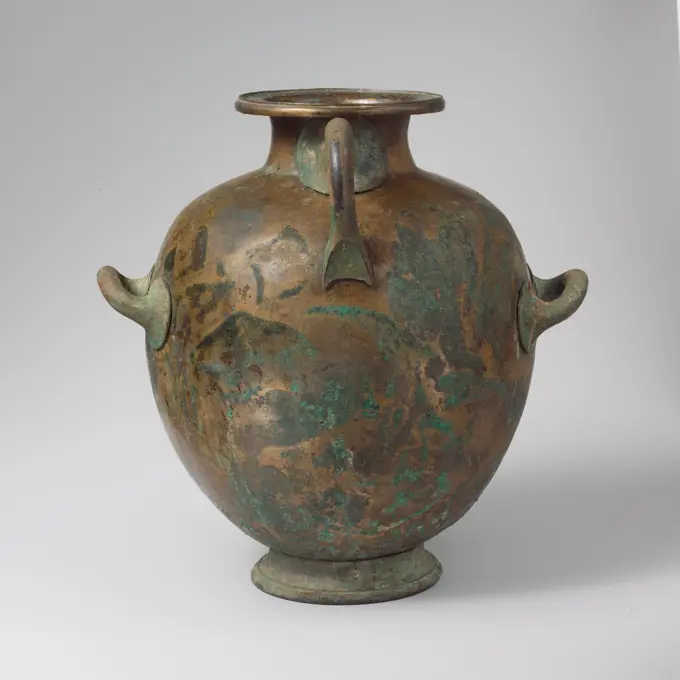
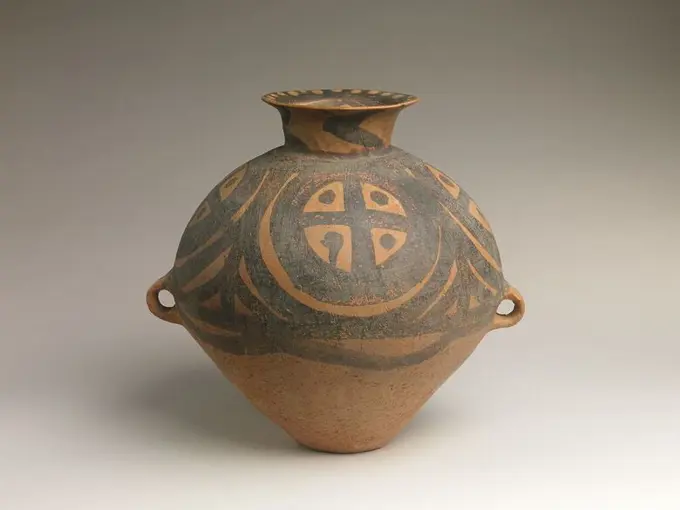
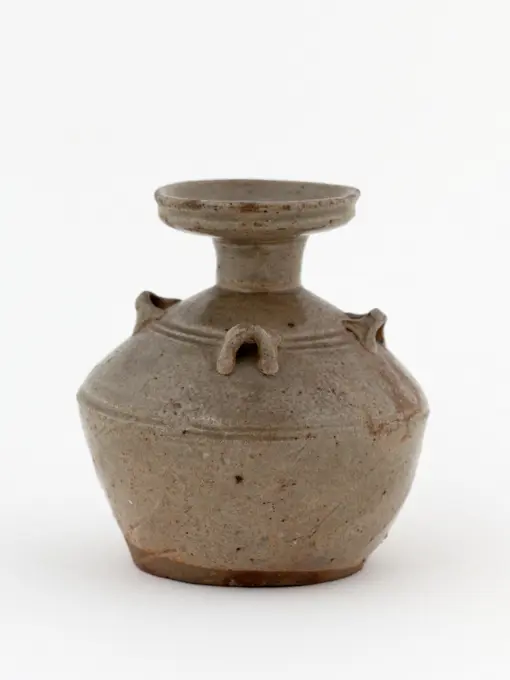
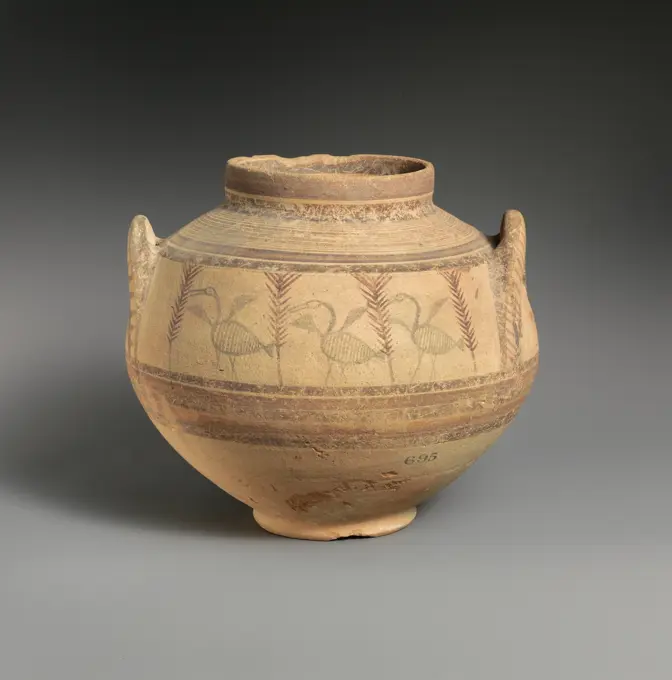
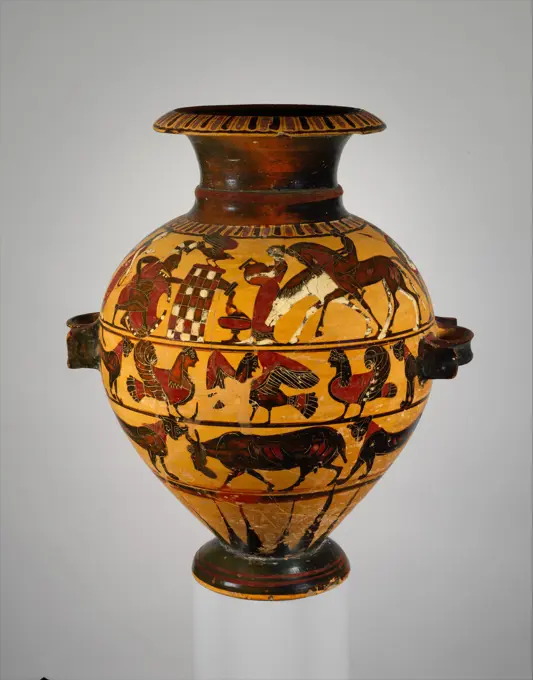
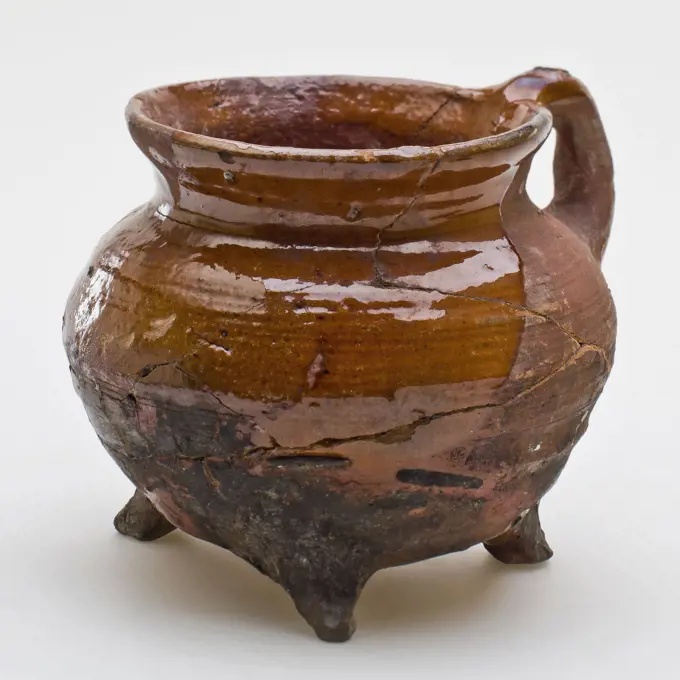
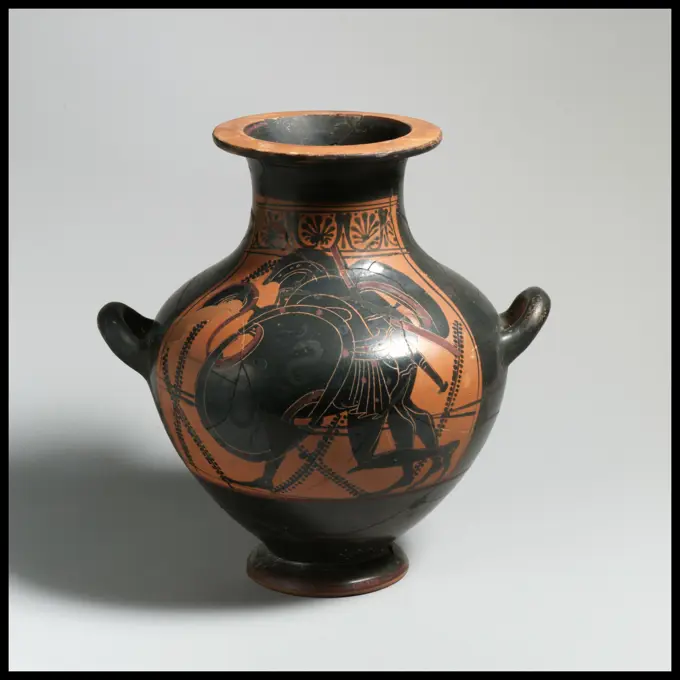
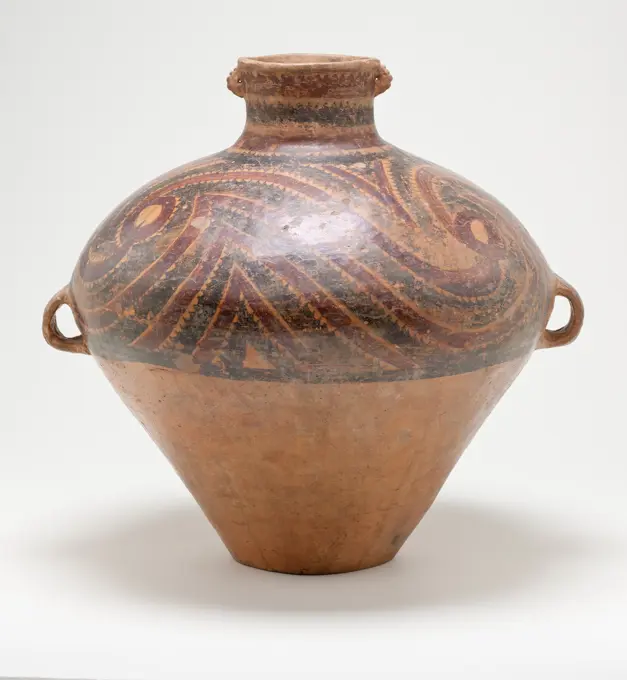
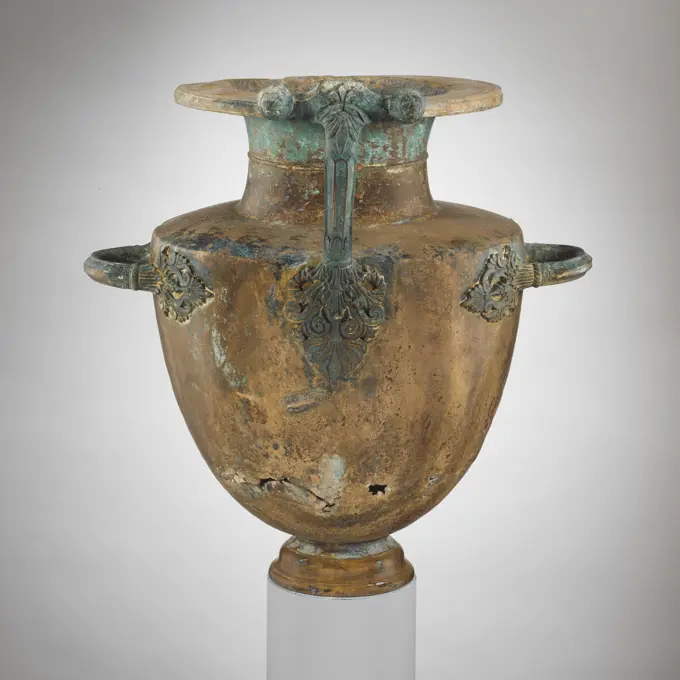
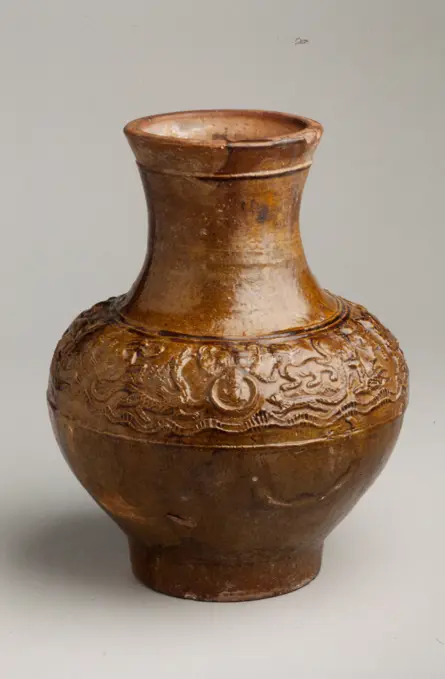
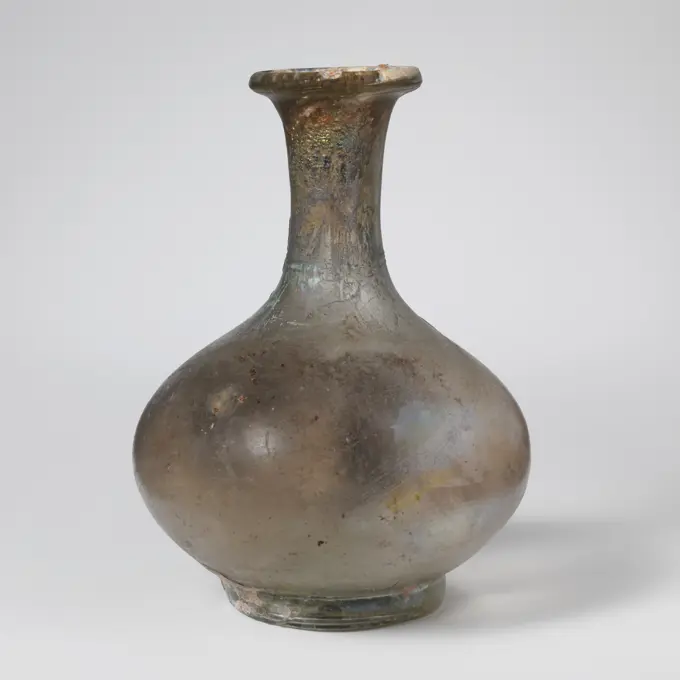
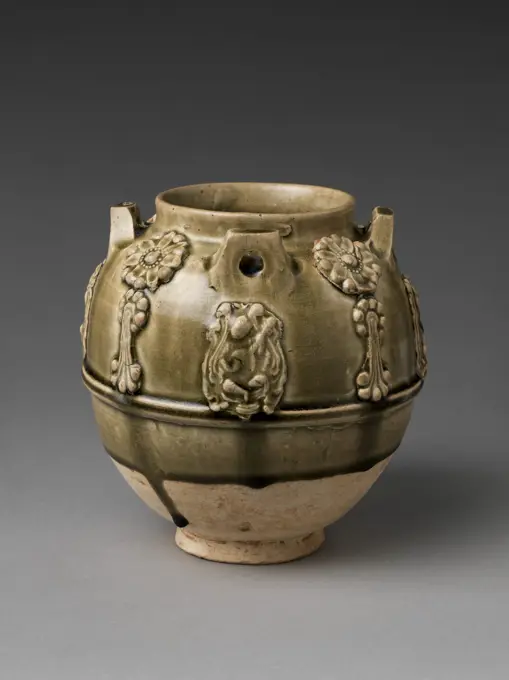
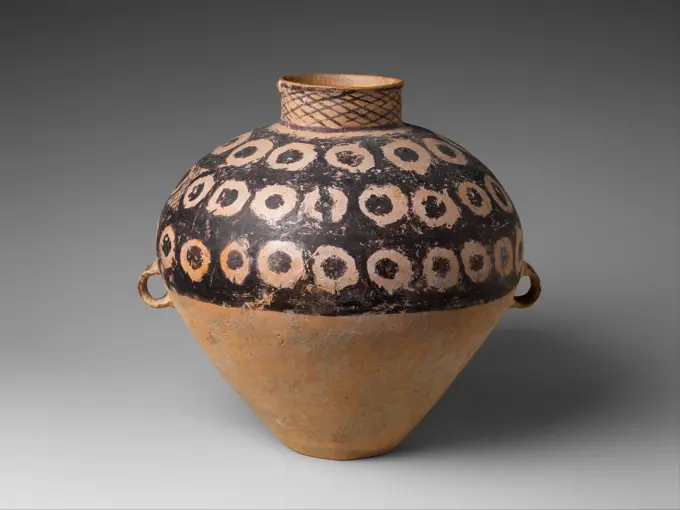
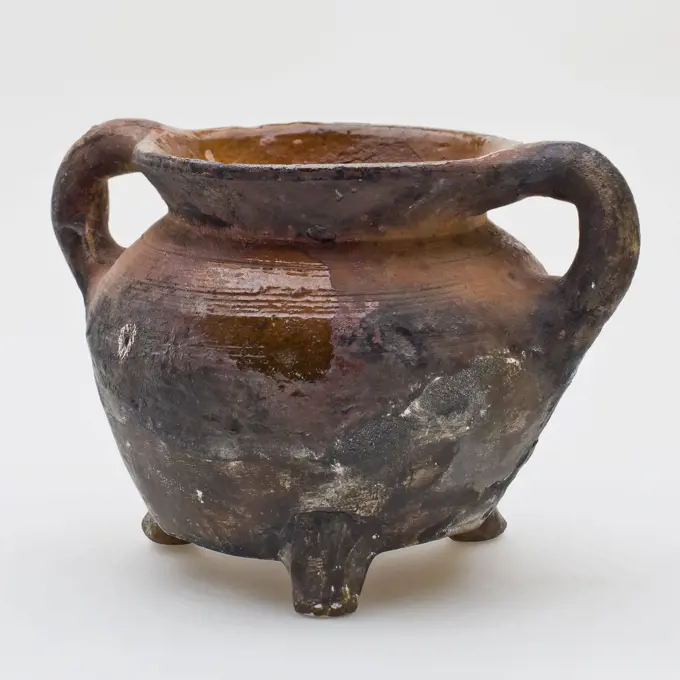
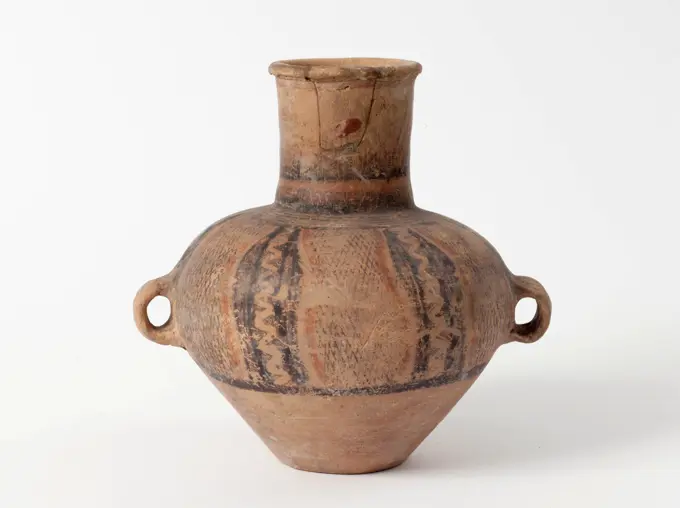
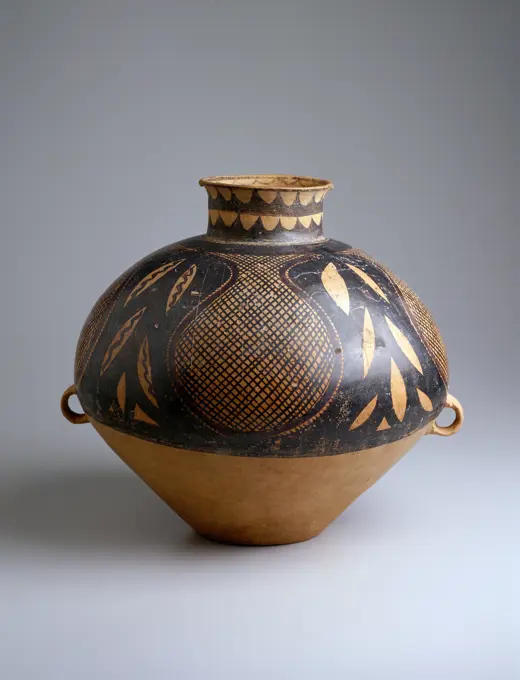
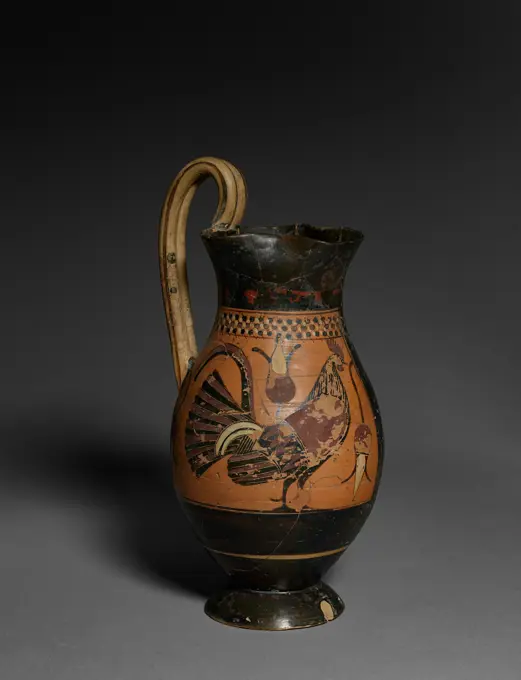
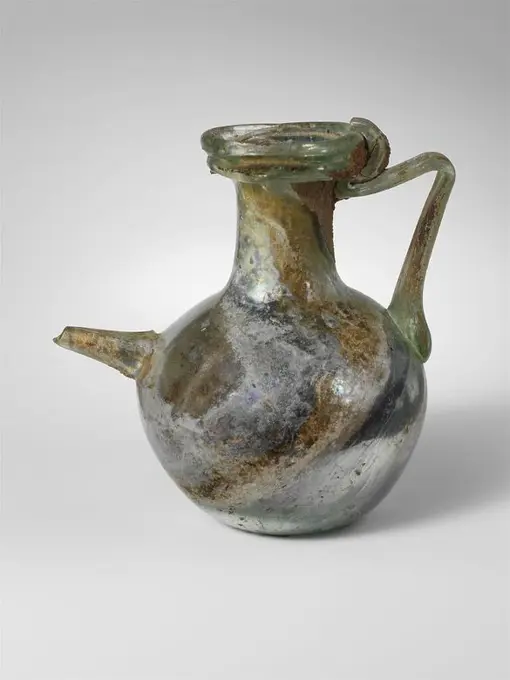
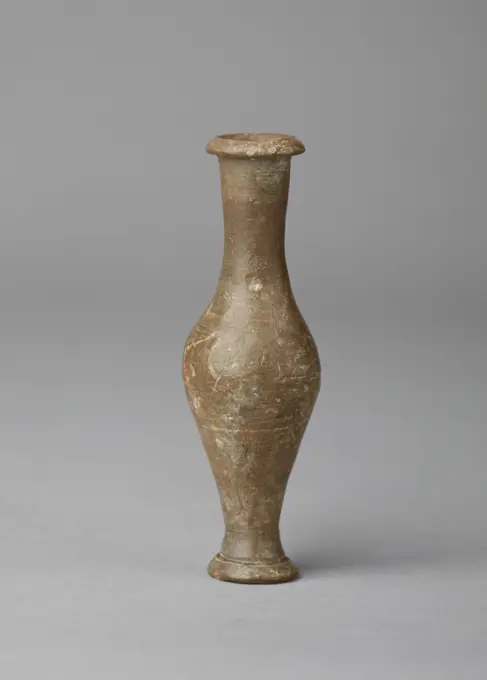
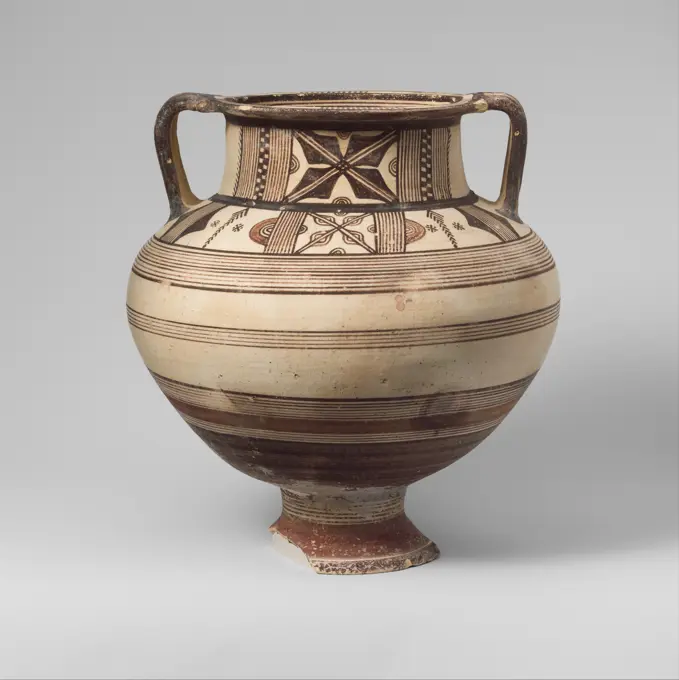
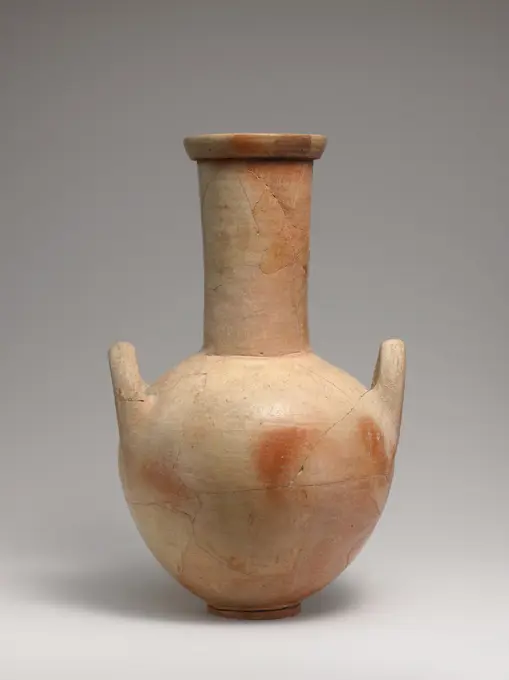
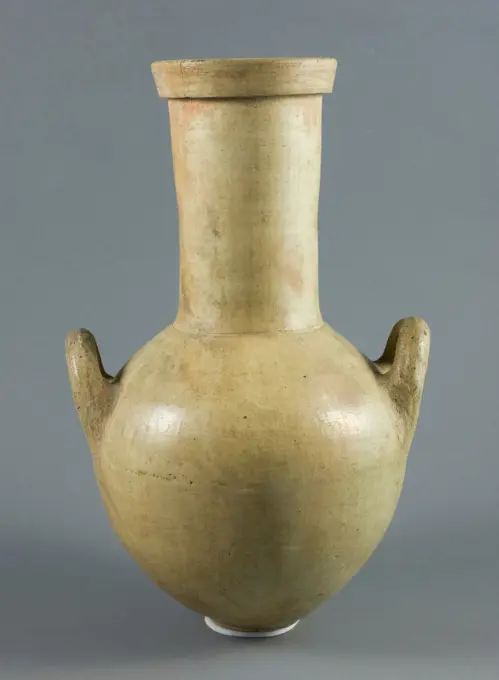
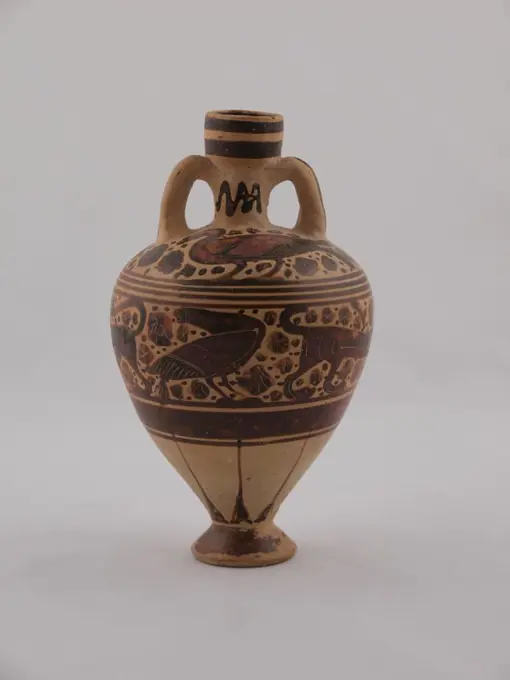
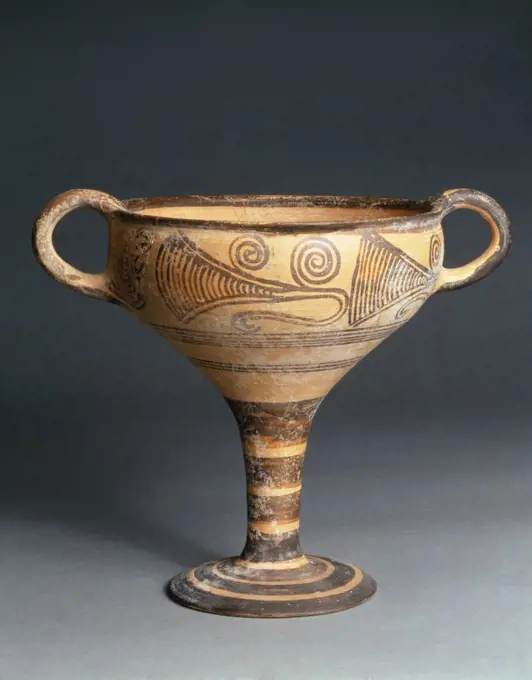
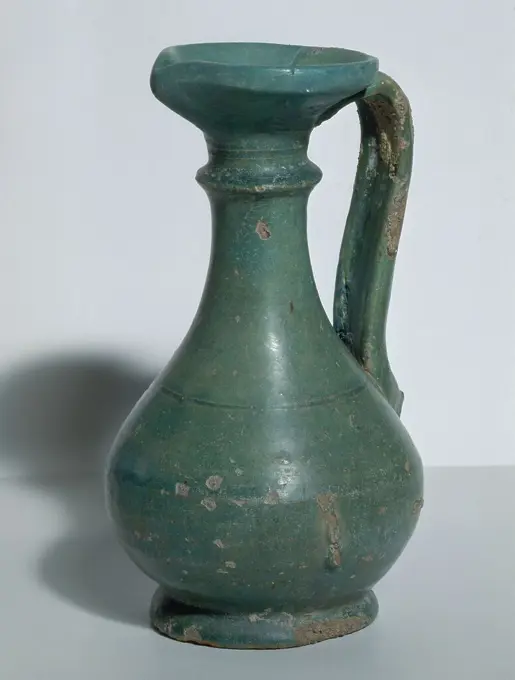
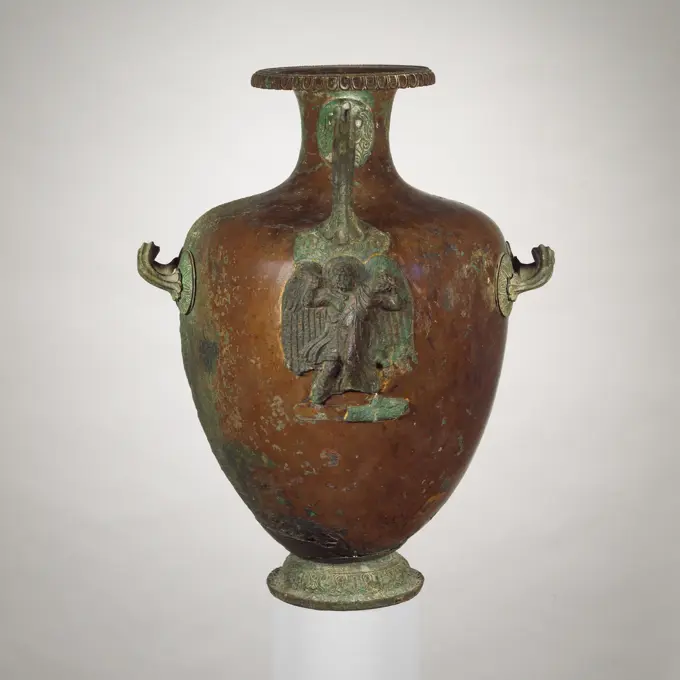
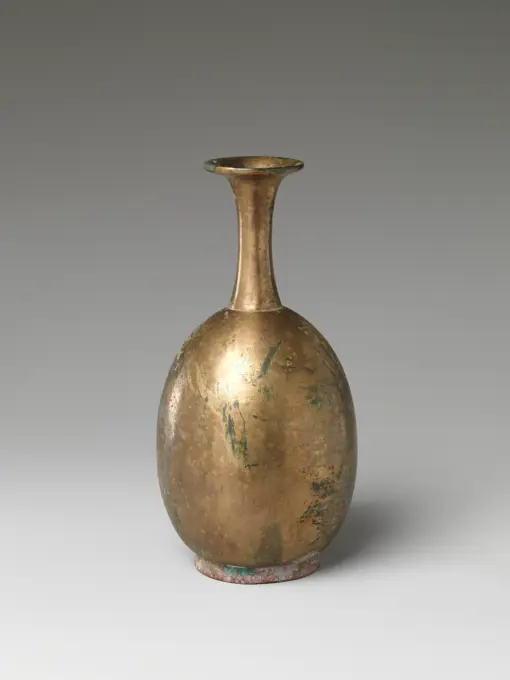
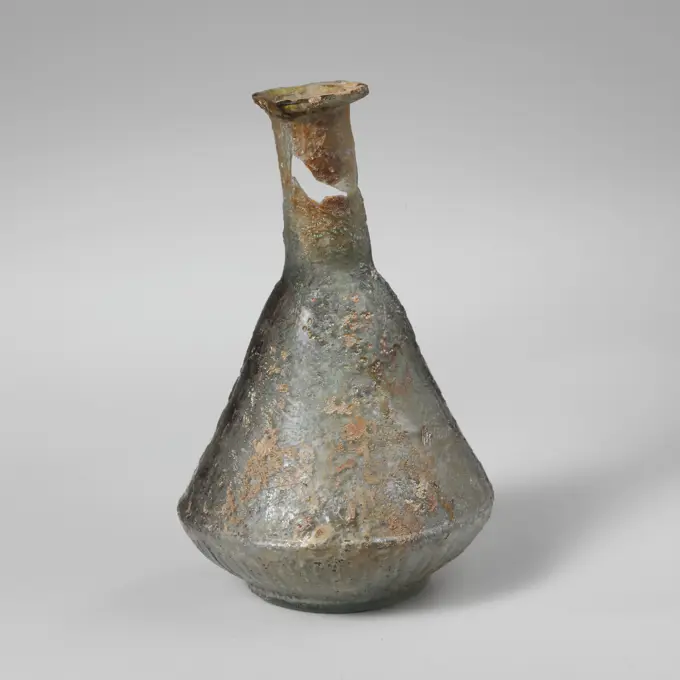
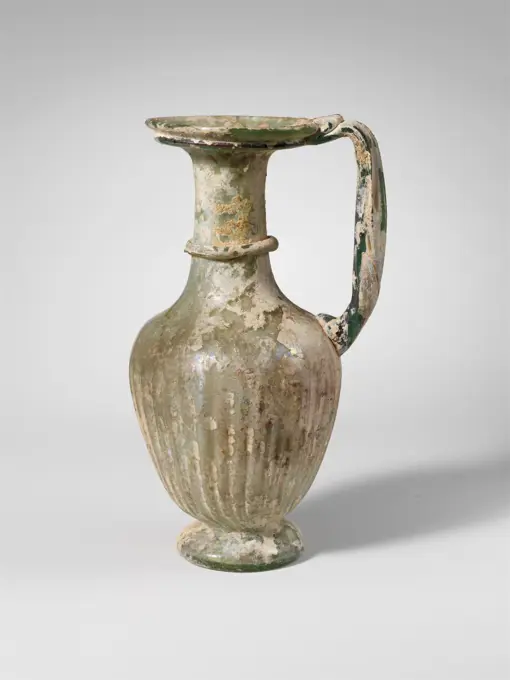
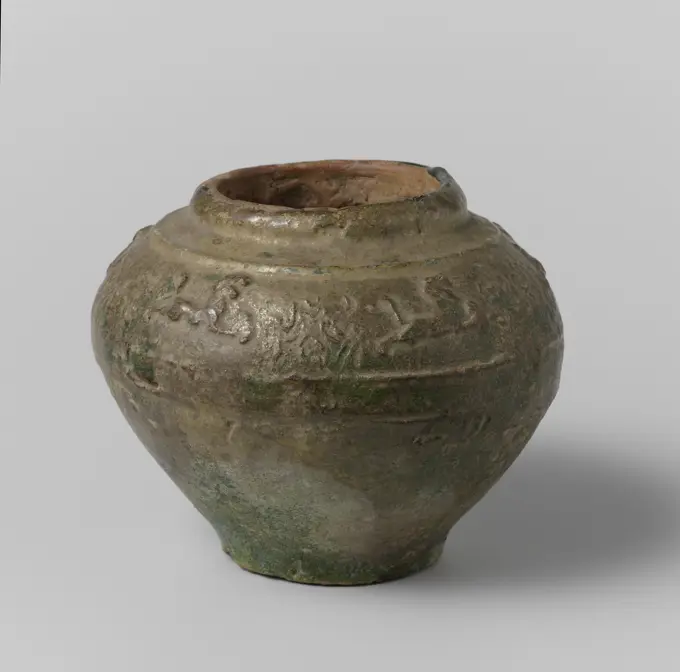
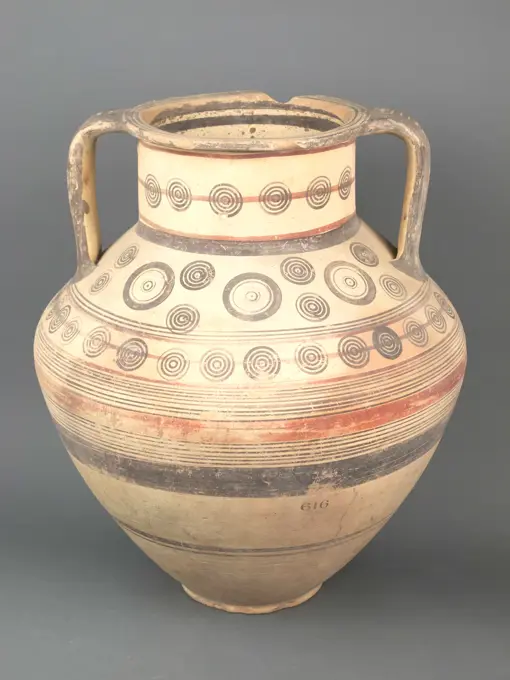
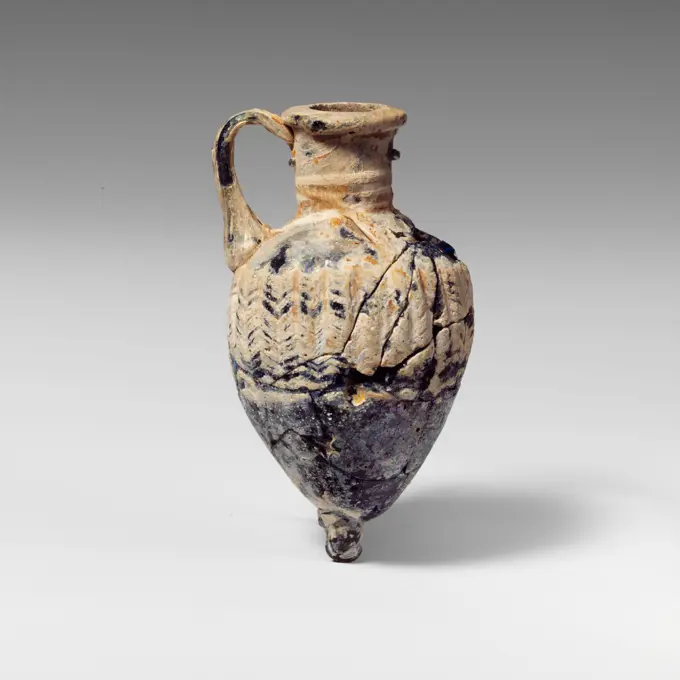
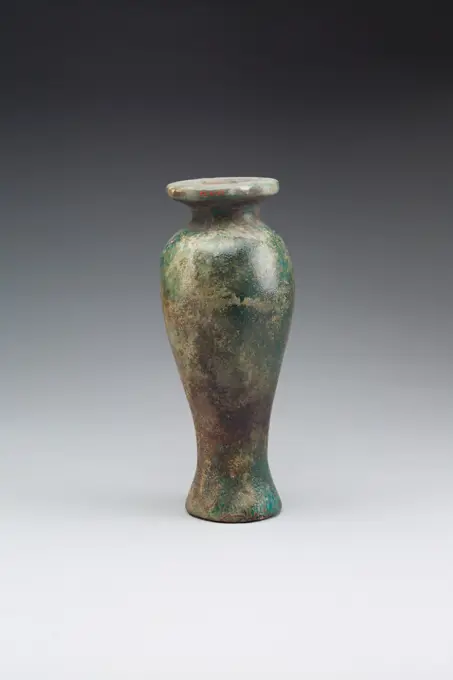
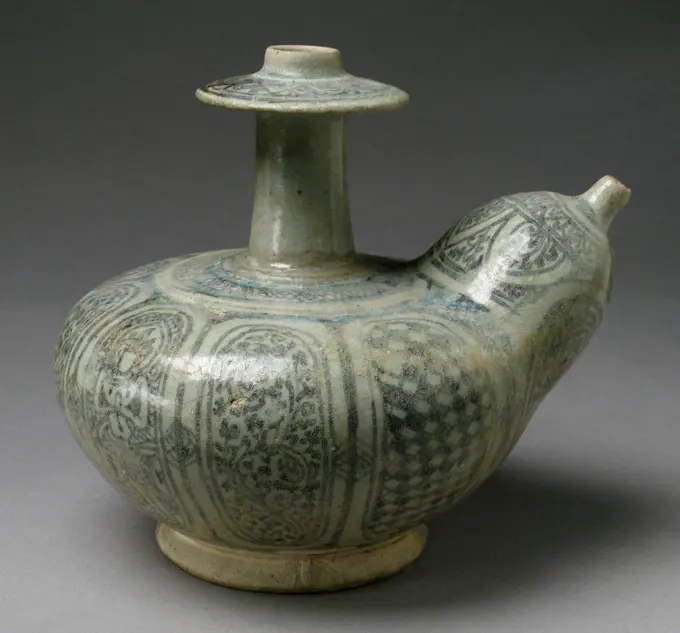
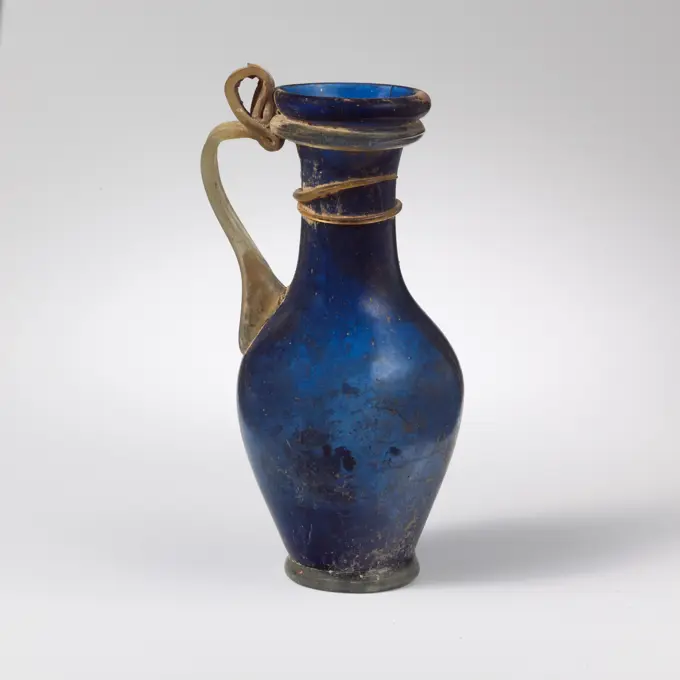
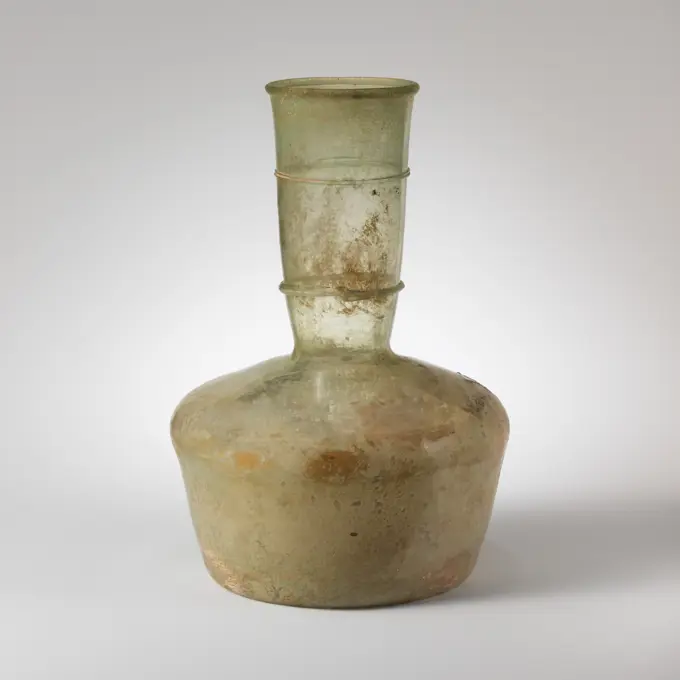
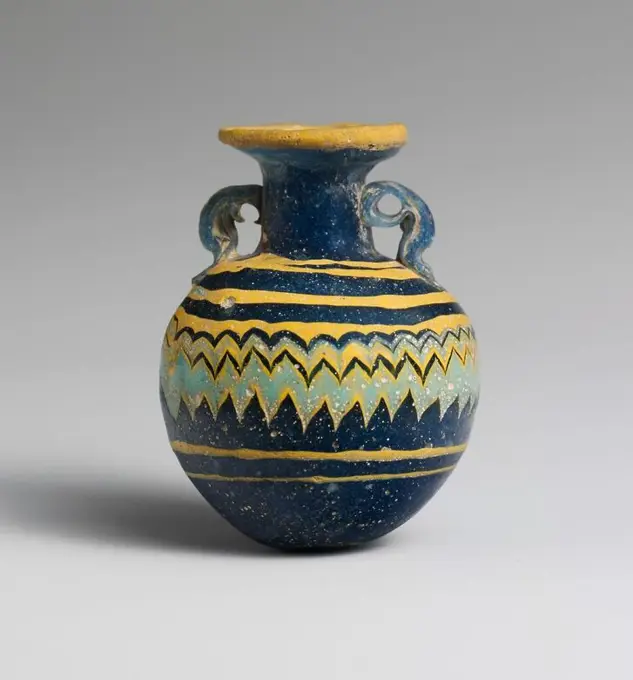
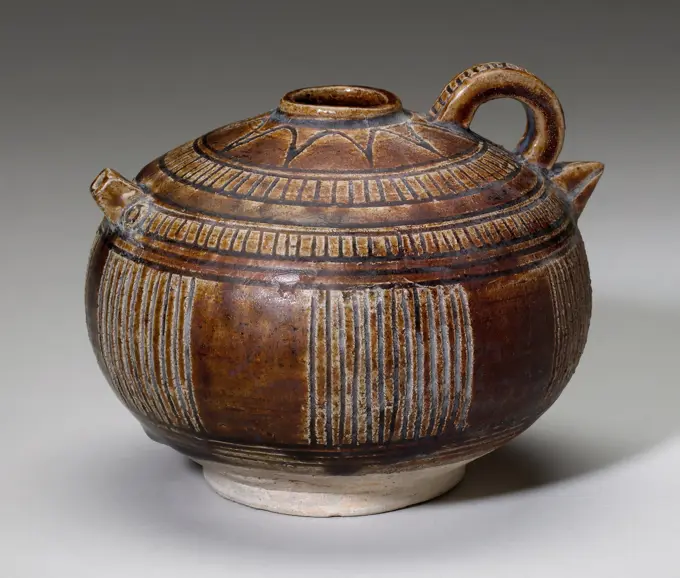
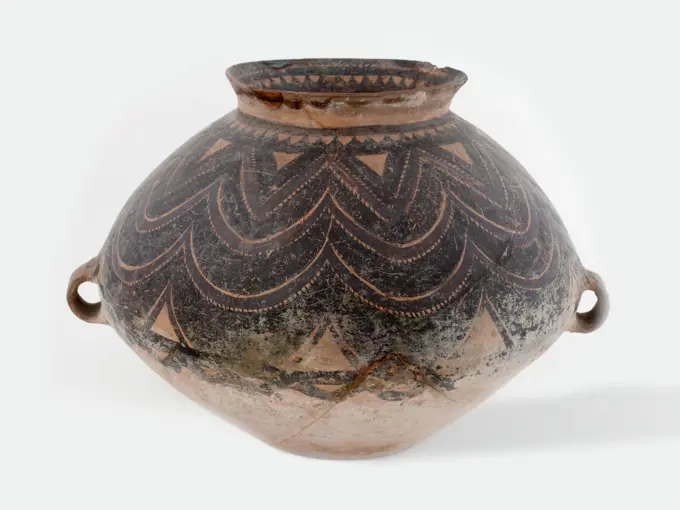
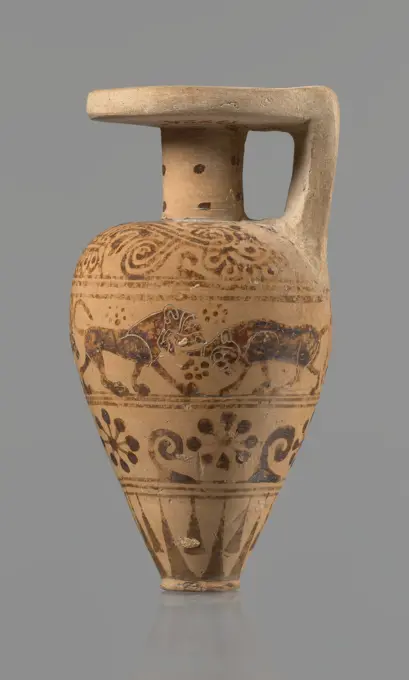
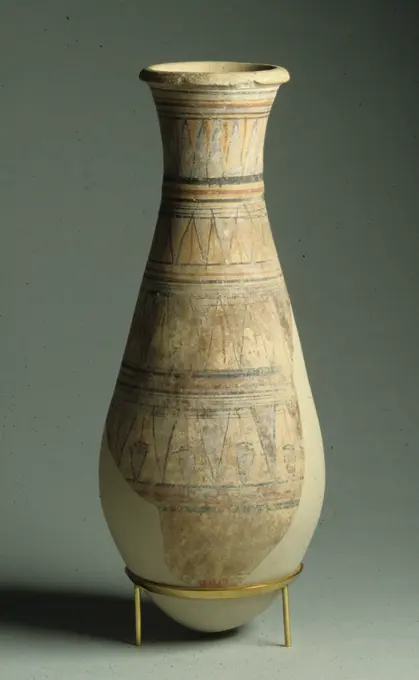
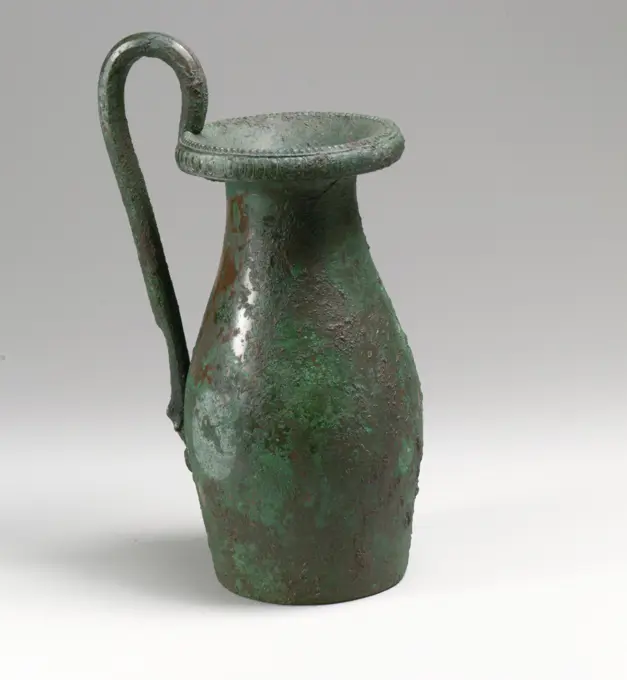
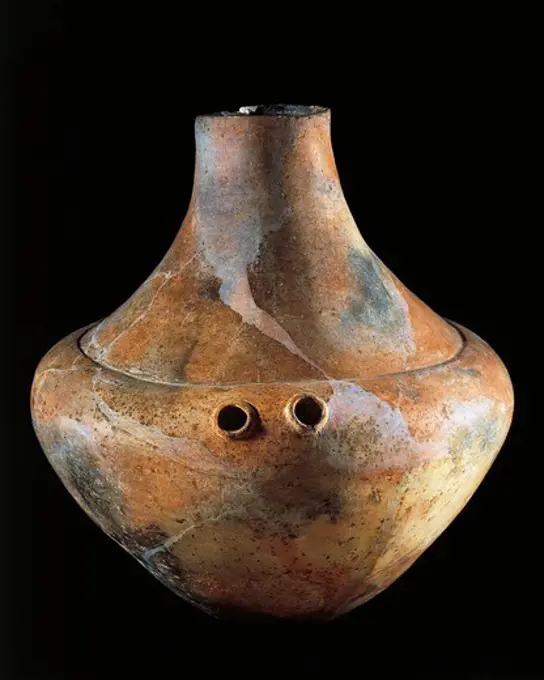
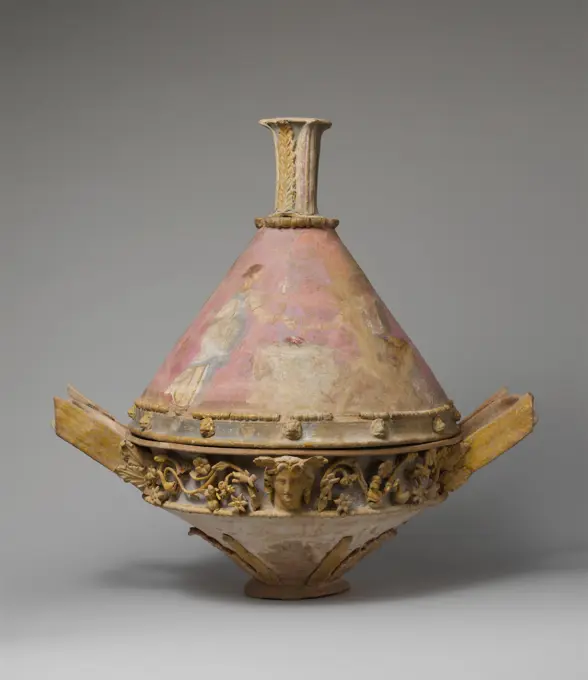
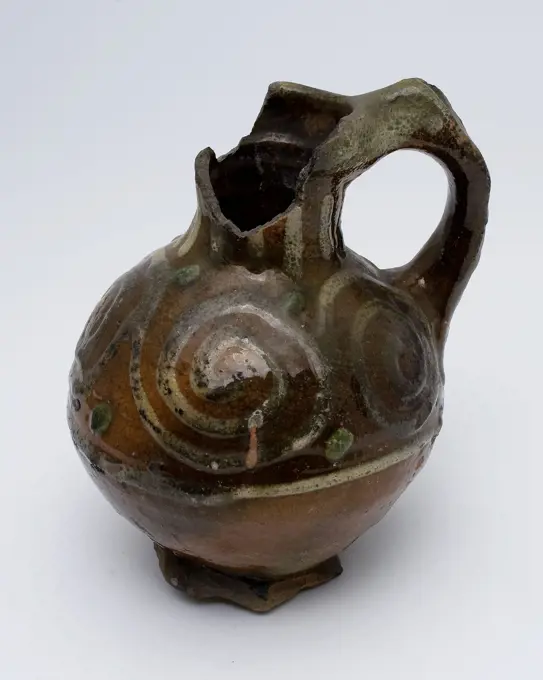
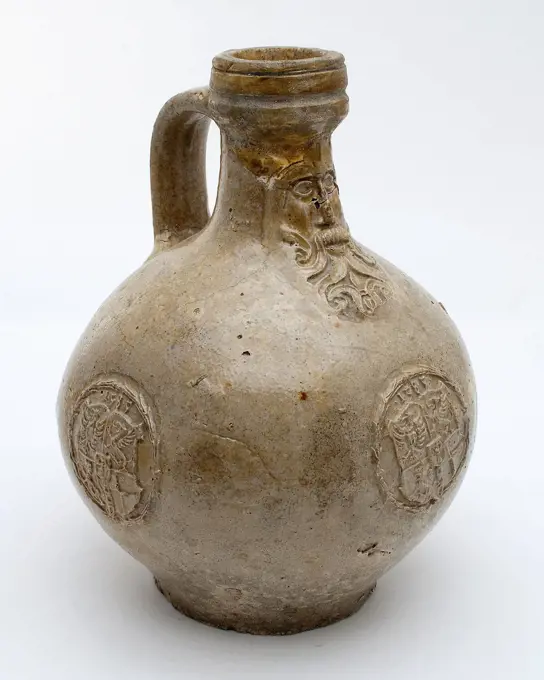
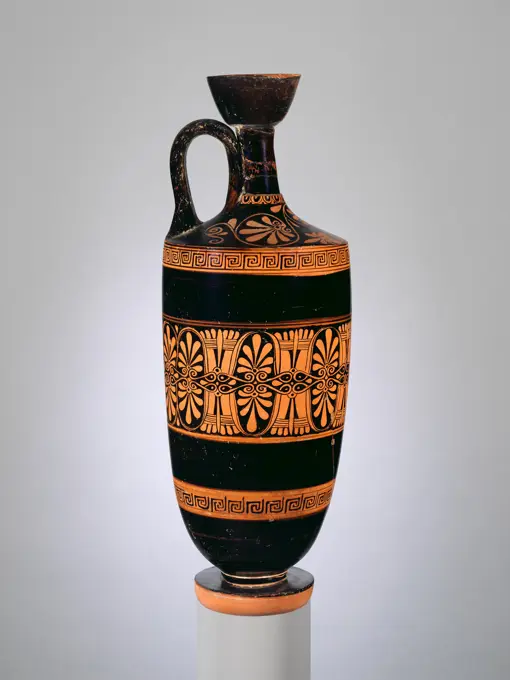
Brown stoneware jug be arranged with frieze around the neck, flower rosettes imprinted on the shoulder and flutes, jug crockery holder soil find ceramic stoneware glaze salt glaze, hand turned stamped glazed glazed baked Stoneware jug gray shard mustard colored and partly gray salt glaze profiled bandoor with short stump tail or button archeology import pottery serve serve drink wine beerTwo-handled Jar. Dimensions: h. 17.7 cm (6 15/16 in.); diam. 15.5 cm (6 1/8 in.). Dynasty: Dynasty 18, early. Date: ca. 1550-1458 B.C..This wheel-made jar with basket handles has decoration similar to that on a jug found in the same tomb (16.10.426). Both are made of marl clay , covered with a pale coating, burnished, and decorated in red and black paint. The decoration recalls Cypriot pottery that was imported into Egypt at the end of the Second Intermediate Period. The Egyptian potters of early Dynasty 18 adopted the Cypriot style of red and black decoration and used it on forms, like this one, that were typically Egyptian. Museum: Metropolitan Museum of Art, New York, USA.Jar, anonymous, c. -3300 - c. -2050 Large convex pot of red earthenware with two ears on the belly, painted in black and eggplant with a spiral pattern and a guirlandem motif. On the neck a band with a grid pattern. The lower half is not painted. A chip in the edge. Themselves earthenware painting Large convex pot of red earthenware with two ears on the belly, painted in black and eggplant with a spiral pattern and a guirlandem motif. On the neck a band with a grid pattern. The lower half is not painted. A chip in the edge. Themselves earthenware paintingUrn ". Bronze. China, Han. Paris dynasty, Cernuschi museum. 72773-2 Chinese art, bronze, han dynasty, urnGlass jar 4th-5th century A.D. Roman, Palestinian Translucent pale olive yellow; handles and trail in deep turquoise blue.Rounded, slightly everted rim; below, hollow folded flange; short concave neck; squat globular body; pushed-in bottom with interior kick and large pontil scar at center; two broad rod handles applied in large pads to upper body, drawn up and out, then folded in onto flange, drawn up again, and snipped off on top edge of rim.Trail applied to lower half of body in a zigzag pattern, then wound horizontally once over or just above top of zigzag.Complete, but one crack in rim and upper body, with other smaller cracks in body; pinprick bubbles in body, and larger bubbles in handles and trail; dulling, creamy weathering, and iridescence on exterior, light soil encrustation on interior.. Glass jar 253066 Roman, Palestinian, Glass jar, 4th5th century A.D., Glass, H.: 3 7/16 in. (8.7 cm). The Metropolitan Museum of Art, New York. Bequest of Theodore M. Davis, 1915 (30.115.5Glass aryballos (perfume bottle) late 6th-5th century B.C. Greek, Eastern Mediterranean Translucent blue, with same color handles; trails in opaque yellow, with another probably in opaque turquoise blue. Broad inward-sloping rim-disk with vertical projecting lip to mouth; short cylindrical neck; irregular, almost spherical body; convex, slightly projecting bottom; two strap handles applied in long, flattened pads to top of body, drawn up and outward, then curving in and trailed on to underside of rim-disk.Yellow trail applied to outer edge of rim-disk; another wide yellow trail applied on upper body and wound down in spiral, at first in horizontal lines, then tooled into a close-set zigzag pattern around central section of body, formed by uneven, shallow vertical tooling indents, and ending on underside in two more horizontal lines; a second trail in turquoise blue probably added to middle of body, mingling with the yellow trail.Intact; dulling, slight pitting, and iridescent milky weaMiniature Stirrup Jar, c. 1350-1300 BC. Cyprus, Late Helladic III A2. Cypro-Mycenaean ware; diameter: 9.8 cm (3 7/8 in.); overall: 9.6 cm (3 3/4 in.); diameter of base: 3.4 cm (1 5/16 in.).Ewer 11th-12th century. Ewer 447290Sigillée jug. Low-Empire. Ceramic. Paris, Carnavalet museum. Sigillee jug Antiquity, low-Empire, Ceramic, Sigillee jug, Roman time, decorative motif, ancientBottle 15th-17th century Caddoan The westernmost region in which Mississippian cultural patterns occurred was in eastern Oklahoma and adjacent areas of Missouri and Arkansas. Called Caddoan to distinguish it from the more eastern, and somewhat distinct, Mississippian patterns, its major center was at Spiro in Le Flore County, Oklahoma, where a new type of construction was undertaken in the thirteenth century that combined aspects of both ceremonial platforms and mortuary mounds into one structure. Believed to have served as the major ancestral shrine of the region, Craig Mound has thus yielded a particularly impressive array of funerary offerings associated with privilege and high status. Many of these objects, principally those of shell, are incised with decoration of apparent sacred and/or warrior imagery. The incised patterns on Caddoan pottery, while less ambitious in depiction, are elegantly conceived and executed, as this bottle illustrates. It is reported to be from Yell County Ancient China: Green-glazed vase with relief decoraton. (Earthenware Hu), Han Dynasty, 206 BC TO 220 AD. Depicting monkeys, dragons and hunting dogs.Wine Jar (Hu) Artist's working dates 499 BCE-400 BCE China. Bronze .Jug of stoneware. Conversely, egg-shaped jug of stoneware, with a threaded foot, a short cylindrical neck and a C-shaped ear.Jug, miniature ca. 500-300 B.C. Cypriot Miniature handle-ridged jug with horizontal bands and concentric circles.. Jug, miniature. Cypriot. ca. 500-300 B.C.. Terracotta. VasesGlass jug 4th-5th century A.D. Roman Translucent yellow green, with same color handle and trail.Rounded rim with slight inward fold on one side; broad, flaring mouth; cylindrical neck expanding downwards to join bulbous body; kick in bottom with pontil mark; broad, three-ribbed strap handle attached to top of body, drawn up and slightly outwards, then turned in at acute angle, and trailed onto underside of mouth, ending in jagged edge slightly above rim.Single trail wound five times round underside of mouth in an uneven spiral from rim to top of neck; on body, thirty-eight spiral ribs, extending from horizontal bulge at base of neck to edge of bottom.Intact; many bubbles and some black impurities; slight dulling and pitting, faint iridescence, and limy encrustation and weathering on underside of mouth, on bottom, and on handle.. Glass jug 245225Bronze hydria: kalpis (water jar) early 5th century B.C. Greek, Attic An inscription on the top of the mouth reads: "One of the prizes from the competition in honor of the Dioskouroi." Although the Panathenaic games were the most famous events in Attica, there were others. The Dioskouroi are the legendary twin brothers of Helen, whose beauty precipitated the Trojan War.. Bronze hydria: kalpis (water jar) 257434Corinthian ceramic vase decorated with animal figuresJar (Guan). Culture: China. Dimensions: H. 11 5/8 in. (29.5 cm); W. (not including handles) 10 5/8 in. (27 cm). Date: ca. 2300-2000 B.C.. Museum: Metropolitan Museum of Art, New York, USA.Vase. Terracotta with celadon covered. China, period of the 6 dynasties. Paris, Cernuschi museum. 72687-6 Asian art, ceramic, old ceramic, southern china, covered, email, glacure, iIieme IIIe III 3rd 3rd century, 4th 4th 4th 4th century, Chinese object, Chinese pottery, container, six 6 dynasties, terracotta, earth Cooked emaillee, vase, veme ve v 5th 5th 5th century, vieme life VI 6th 6th 6 centuryKrater 750-600 B.C. Cypriot Two-handled vase of angular form: A and B: three birds separated by trees.. Krater 240089Terracotta hydria (water jar) ca. 560-550 B.C. Attributed to the Painter of London B 76 On the shoulder, Achilles waiting to ambush Troilos and PolyxenaThe ambush depicted with verve and eloquence is one of the crucial episodes of the Trojan War. Troilos and Polyxena were children of Priam, the king of Troy. Achilles' stature is indicated by his height in relation to the fountain house and by the scale of his weapons. The raven foretells Troilos's imminent death. The youth appears lithe and lanky. His two noble horses will not save him from his fate.. Terracotta hydria (water jar) 254524 : Attributed to the Painter of London B 76, Terracotta hydria (water jar), ca. 560550 B.C., Terracotta, Overall: 15 13/16 x 13 7/8in. (40.1 x 35.2cm) diameter 11 3/8in. (28.9cm). The Metropolitan Museum of Art, New York. Rogers Fund, 1945 (45.11.2)Pottery cooking pot, cooking jug with fine twisted arms on the shoulder, one sausage ear, on three legs, cooking pot tableware container kitchenware earth finding ceramics earthenware glaze lead glaze, hand turned glazed baked Pottery cooking jug with one sausage ear on three legs. Sausage handle attached to the top edge and protruding above the edge Funnel-shaped upper edge Fine twisted arms around the shoulder. Red shard sparsely glazed Restoration is repainted archeology Rotterdam City center Stadsdriehoek Bulgersteyn indigenous pottery cooking food preparation kitchen food Soil discovery: slot Bulgersteyn in Rotterdam.Hydria ca. 490 B.C. Greek, Attic. Hydria 246581Storage Jar (Hu) with Linked Spirals. China, Gansu Province, Majiayao, Neolithic period, Banshan phase, about 2600-2300 B.C.. Furnishings; Serviceware. Coil-built earthenware with painted decorationBronze hydria (water jar) early 4th century B.C. Greek The hydria has two inscriptions on the lip, indicating that it was a prize in a contest. One inscription gives the name of the presiding official, Kalliar. The other inscription, in a different hand and dialect, indicates that the contestants dedicated the prize to Herakles, for whom the games were held. The implication is that the hydria was dedicated because there was no winner.. Bronze hydria (water jar) 254937 Greek, Bronze hydria (water jar), early 4th century B.C., Bronze, Other: 19 x 18 5/16 in. (48.3 x 46.5 cm). The Metropolitan Museum of Art, New York. Purchase, Joseph Pulitzer Bequest, 1957 (57.11.12)Amphoriskos. UnknownHu (Ritual Wine Jar), 1st-2nd century, 12 1/2 x 9 1/2 in. (31.75 x 24.13 cm), Stoneware with molded decor under a brown glaze, China, 1st-2nd century, Late Zhou potters borrowed freely from ritual bronze vessel shapes. This is understandable because through most of the Shang (1523-1028 BCE) and Zhou (1027-256 BCE) dynasties, ceremonial bronzes constituted the highest art form.Glass flask 2nd-3rd century A.D. Roman Colorless with green tinge.Rim folded over and in, with beveled outer lip; flaring mouth; concave neck; bulbous body; integral, solid base ring; pushed-in bottom, with trace of large pontil scar.Intact; many bubbles; dulling, pitting, and deep iridescent weathering.Possible traces of trail decoration around base of neck.. Glass flask 239633Jar with floral decorations and musicians late 6th century China The use of applied decoration reflects an awareness of Central Asian traditions, which were particularly important in China from the sixth to the eight century.. Jar with floral decorations and musicians. China. late 6th century. Stoneware with applied decoration under celadon glaze. Northern Qi dynasty (550-577). CeramicsJar 12th-13th century. Jar 447278Gray stoneware jug with pinched foot edge, round shoulder profiled bands and rad stamping, jug crockery holder soil find ceramic stoneware glaze salt glaze h 26.6 belly 14.2 stand 11.1 hand turned stamped glazed baked Stoneware jug gray shard with salt glaze protruding ring under the foot edge pinched foot archeology import pottery serve drink store package transportJar (Guan) Banshan phase (ca. 2650-2350 B.C.) China. Jar (Guan). China. Banshan phase (ca. 2650-2350 B.C.). Earthenware with pigment. Neolithic period, Majiayao culture (ca. 3300-2050 B.C.). CeramicsLarge stoneware bullet, big ear, brown glazed, decorated with floral motifs, medallions, Bullet pewter jug crockery holder soil find ceramic stoneware glaze salt glaze, hand-turned imprinted carved carved baked glazed Gray carve large ear with on the neck between the profiled rings belt mold On shoulder and belly decorations and some profile rings above the stand archaeology indigenous pottery import drink beer wine serving serve Rotterdam education Academy of Fine Arts and Technical Sciences Cool Coolvest Dijkzigt GJ de Jonghweg City Triangle Blaak Academy of Fine Arts and Technical Sciences Rotterdam.Pottery cooking pot, grape with two sausage ears, on three legs, cooking pot crockery holder kitchen utensils earthenware ceramics earthenware glaze lead glaze, hand turned glazed baked Earthenware grape with two sausages on three legs. Sausage handles attached to the top edge and protruding above the edge Funnel-shaped top edge Fine twisted arms on the shoulder. Red shard sparingly glazed mainly internal Roetsporen at the bottom. Restoration is repainted archeology Rotterdam Stadscentrum Stadsdriehoek Bulgersteyn indigenous pottery cooking food preparation kitchen food Soil discovery: slot Bulgersteyn in Rotterdam.Jar ". Terracotta with polychrome decoration. Neolithic period (around 8000 BC). Paris, Cernuschi museum. Anse, Chinese art, Chinese Ceramic, container, jar, decorative motif, Neolithic period, container, terracottaFunerary Storage Jar, c. 2300 BCE, 14 3/4 x 15 7/8 x 14 3/8 in. (37.47 x 40.32 x 36.51 cm), Banshan type Earthenware with painted and burnished decor, China, 24th-23rd century BCE, The most distinctive product of the Majiayao culture (3800-2000 BCE) was a type of painted pottery of extraordinary refinement which has become associated with the Neolithic grave sites at Banshan in Gansu province. This jar, like others shown here, was fashioned without the use of a potter's wheel by coiling rolls of clay into the desired shape, after which it was smoothed, burnished, painted and fired at a temperature around 1000 degrees F. Because most Majiayao pottery was a less refined, more utilitarian ware, and since elaborate jars such as this were usually buried with the deceased, it is probably that they held food for the afterlife and the designs may have held religious significance for the ancient Chinese.Black-Figure Olpe (Wine Jug): Rooster, c. 575 BC. Greece, Middle/Late Corinthian. Ceramic; overall: 35.5 cm (14 in.). Although this wine jug, simply decorated with a rooster and two lotus blossoms, looks much like Athenian vases, it was made in Corinth. The paler buff color of the Corinthian clay can be seen on the handle and in some areas of loss, but the background of the decorated area has been covered with a red slip imitating the reddish, iron-rich Attic (or Athenian) clay. On the back of the vase, two reserved (red) crescent shapes may represent eyes, like those painted in much more detail on many drinking cups of this period.Glass spouted bottle. Culture: Roman. Dimensions: 4 5/8in. (11.7cm). Date: late 2nd-4th century A.D..Translucent pale blue green, with same color handle, spout, and trail.Thick rim, folded over and in; flaring mouth; cylindrical neck, expanding at base to join globular body; low kick in bottom; straight spout, tapering to a fire-rounded point, attached at an angle to upper body on opposite side to handle; rod handle, applied as a thick pad to upper body, drawn up and outward, then turned in at an acute angle, and trailed onto top of neck, over trail and outside of rim.Below rim, a single solid trail wound round neck slightly over 1½ times before handle was attached.Intact; some pinprick and elongated bubbles, with a few black impurities; patches of gritty brown encrustation, weathering, and brilliant iridescence.Such vessels have frequently been called "feeder bottles," although it is more likely that they were used for pouring oil and other liquids onto food or into other receptaTerracotta skyphos (deep drinking cup) with lid. Culture: Lydian. Dimensions: total H. 6 3/8 in. (16.2 cm)H. without cover 3 7/8 in. (9.9 cm). Date: 6th century B.C..On the Greek mainland, cup shapes such as the skyphos and kylix do not have lids. This Lydian variety certainly reflects a specific function. Museum: Metropolitan Museum of Art, New York, USA.Glass jug 3rd-4th century A.D. Roman Small one-handled jugTranslucent pale blue green; handle and trail in same color.Rim folded over and in and pressed into outer edge of broad, flaring mouth; short and slender concave neck, expanding downwards to piriform body; integral tubular base ring; pushed-in bottom with central pontil mark; rod handle applied as a large, uneven pad to top of body, drawn up and out, curved in horizontally and trailed onto underside of mouth and edgeof rim, with outward projecting thumb-rest above.Trail in 1.5 turns around neck.Intact, except for part of trail; pinprick bubbles; pitting, dulling, and milky weathering with iridesence. Glass jug 239701FOREIGN OLDTerracotta amphora (jar) 850-750 B.C. Cypriot Geometric ornament in panels on neck and shoulder.. Terracotta amphora (jar). Cypriot. 850-750 B.C.. Terracotta. Cypro-Geometric III. VasesTwo-Handled Jar from Tutankhamun's Embalming Cache ca. 1336-1327 B.C. New Kingdom This wine jar is made of the fine, hard clay used for jars intended to hold liquid. The mouth of the jar has a wide lip that would have made it easy to seal by tying a papyrus-fiber stopper over the opening. The jar has been restored from fragments found in one of the large jars discovered in KV 54, an embalming cache in the Valley of the Kings that contained objects inscribed with the name of Tutankhamun.. Two-Handled Jar from Tutankhamun's Embalming Cache. ca. 1336-1327 B.C.. Pottery, yellow slip, burnished. New Kingdom. From Egypt, Upper Egypt, Thebes, Valley of the Kings, Embalming Cache of Tutankhamun (KV 54), Davis/Ayrton excavations, 1907-08. Dynasty 18Vessel 1350 BCE-1200 BCE Egypt. terracotta . Ancient EgyptianGlass double head-shaped bottle. Culture: Roman, Syrian. Dimensions: H.: 2 11/16 in. (6.8 cm). Date: 2nd century A.D..Translucent patchy purple.Uneven rim folded out, round, and in; flaring mouth; cylindrical neck, slanting to one side and with deep tooling indent at base; plastic body; oval base with rounded edges and slightly concave bottom; small round pontil mark on bottom. Mold seams visible on sides of head, extending to base of neck.Body in the shape of two heads, back to back, one with a smiling face, the other with a serious face; smiling face with fillet across forehead and hair parted down middle and arranged in regular horizontal rows to sides of face; the serious face with wavy hair to sides and prominent topknot; smiling face has arched eyebrows extending to bridge of nose, eyes with indents for pupils, open mouth, thick lips, and rounded chin; serious face is less well defined with raised eyebrows, a broad flat nose, pursed lips, and a receding chin.Intact; limy encrAmphoriskos (Container for Oil) 600 BCE-575 BCE Corinth. Located on the narrow isthmus that joins the Greek mainland and the Peloponnese, with natural harbors facing east and west, Corinth was the major port of trade in Greece for most of the Archaic period (700ñ480 BCE). Producers exported scented oil around the Mediterranean in terracotta containers like this one known as an amphoriskos, literally a ìlittle amphora,î that survive today in the thousands.. terracotta, decorated in the black-figure technique . Ancient GreekBlack-Figure Kotyle (Drinking Cup), 500s BC. Greek, Corinthian. Ceramic;A Fine Mycenaean Chalice  Sculpture/Relief  Christie's, LondonJARRO HISPANO MUSULMAN PINTADO EN VERDE. Location: ALHAMBRA-MUSEO-CERAMICA. GRANADA. SPAIN.Bronze hydria (water jar) ca. 375-350 B.C. Greek The relief under the handle shows Boreas, the north wind, abducting Oreithyia, the daughter of Erechtheus, legendary king of Athens.. Bronze hydria (water jar) 254776 Greek, Bronze hydria (water jar), ca. 375350 B.C., Bronze, silver, H. 19 1/16 in. (48.4 cm). The Metropolitan Museum of Art, New York. Rogers Fund, 1953 (53.11.3)Covered Box. Thailand, Sawankhalok, 16th century. Furnishings; Accessories. Stoneware with underglaze brown painted decorationBottle China The shape of this vase most likely derives from Indian examples used to sprinkle water and other libations during ceremonies. Such vessels were introduced to China with Buddhism and can often be seen in the hands of bodhisattvas, particularly Avalokiteshvara (Guanyin). One of the Chinese names for vessels of this type is Guanyin ping, or Avalokiteshvara vase.”. Bottle 64483Bearded manner with pewter lid and foot in pewter edge. Decorated with tendrils, acanthus leaves, medallions and male busts. Bearded manner of stoneware with pewter lid. The foot is caught in a pewter edge. A reflection fries has been printed on the pear-shaped belly. Below and above Acanthus leaves and medallions with men's busts. Before on the neck a beard man with symmetrical wavy beard.Glass perfume bottle mid-1st century A.D. Roman Translucent pale blue green.Rim folded out, over, and in, extending into neck on one side of mouth; carinated body, with straight, conical upper side and lower side curving in sharply to raised base disk; flat bottom with central pushed-in knob.Horizontal lines in relief around upper body; upturned gadroons on lower body; two raised concentric circles on bottom.Broken around rim and neck, with large area of neck missing; deep pitting and iridescent weathering.. Glass perfume bottle. Roman. mid-1st century A.D.. Glass; mold-blown. Early Imperial. GlassJug of stoneware. Globly jar of stoneware, with a foot edge, a C-shaped ear and a narrow, cylindrical neck. The belly is decorated with triangles in which a pressed window pattern.Glass jug 4th-5th century A.D. Roman Translucent pale blue green; trails and handle in same color; purple streak in handle and upper trail.Plain, rounded rim; broad, flaring mouth; cylindrical neck, expanding slightly downwards; sloping shoulder; piriform body; splayed, tubular base ring, made by folding, with tooling indents on upper surface; pushed-in bottom with pontil scar; rod handle applied to edge of shoulder in a pad, drawn up vertically, turned in and trailed on to underside of mouth and over rim.Single trail applied to underside of mouth; another horizontal trail wound once round lower neck; on body, forty vertical ribs in relief, tapering downwards.Intact, except for two weathered losses to lower trail; few bubbles; dulling, slight pitting, limy encrustation, and iridescent weathering.. Glass jug 249421Vase. Bronze. Chine. Par musée musée malée. Chinese art, bronze, vaseJar with tigers and floral scrolls in relief, anonymous, c. -200 - c. 200 Egg -shaped pot of earthenware, covered with a green glaze. On the shoulder a band with flower vines interrupted by five running tigers. China earthenware. glaze vitrification Egg -shaped pot of earthenware, covered with a green glaze. On the shoulder a band with flower vines interrupted by five running tigers. China earthenware. glaze vitrificationJug German, Raeren 1602 Molded low reliefs decorate this tankard, representing the seven electors of the Holy Roman Empirethe highest-ranking territorial rulers who were responsible for selecting the emperor. Raeren ceramicists produced prodigious numbers of jugs and tankards, and their workmanship was highly valued. Most of the city labored to support the large kilns. While the best pieces were likely to be exported by Dutch merchants to England and to colonists overseas in the Americas, many circulated in German markets as well. View more. Jug. German, Raeren. 1602. Salt-glazed stoneware, pewter. Ceramics-PotteryAmphora ca. 1050-900 B.C. Cypriot Bands and three zones of concentric circles.. Amphora. Cypriot. ca. 1050-900 B.C.. Terracotta. Iron Age. VasesMiniature Handled Jug with Spiral and Zigzag Motifs. Possibly Azapa; South coast, Peru or north coast, Bolivia. Date: 400 AD-1000. Dimensions: 8.9 x 8.4 cm (3 1/2 x 3 5/16 in.). Ceramic and pigment. Origin: South Coast. Museum: The Chicago Art Institute, Chicago, USA. Author: Tiwanaku.Terracotta jug with griffin protome handle 1st half of the 6th century B.C. Etruscan From the end of the seventh century to well into the sixth century B.C., in Etruria "cilindretto" ornament much like the band of impressed decoration on the body of this vase was very common. The patterns were often animal and plant motifs, human heads, and narrative scenes.. Terracotta jug with griffin protome handle 246207Negative-Painted Spotted Vessel with Bird-Head Spout 650 BCE-150 BCE Peru. Ceramic and pigment . ParacasPiriform storage jar ca. 1479-1425 B.C. New Kingdom. Piriform storage jar 548650Stoneware bell jar on standing foot completely covered with small appliqués, rosettes, jug crockery holder soil find ceramic stoneware glaze salt glaze, hand turned stamped glazed glazed baked Stoneware jug light gray shard with salt glaze profiled bandoor with short blunt tail profiled neck and foot. Buikkan on stand foot with short cylindrical neck archeology import pottery serve serve serve drink wine beerVase, 1644-1911. China, Qing dynasty (1644-1911). Lacquered wood; overall: 37.5 cm (14 3/4 in.).Glass amphoriskos (perfume bottle) 4th century B.C. Greek, Eastern Mediterranean or Italian Translucent cobalt blue, with handle and base-knob in same color; trail in uncertain color.Everted horizontal rim with rounded outer lip; cylindrical neck; sloping shoulder; ovoid body, tapering downwards; applied base-knob; strap handle applied in a large pad to shoulder, drawn up and slightly outward, then curving in and pressed on to neck under rim.Trail applied on neck below rim and wound down in spiral, drawn across shoulder, and then tooled into a close-set zigzag pattern around upper half of body, formed by uneven vertical tooling indents, and with an irregular raised line running aslant across shoulder.Broken and repaired, with several holes in body and second handle completely missing; dulling, pitting, and iridescence, with large areas of thick, milky weathering.. Glass amphoriskos (perfume bottle) 245383Glass flask decorated with intersecting circles. Culture: Roman. Dimensions: H.: 4 1/2 x 3 3/8 x 2 x 1 5/8 in. (11.4 x 8.6 x 5.1 x 4.1 cm). Date: 2nd-3rd century A.D..Translucent colorless with pale yellow green tinge.Plain rounded rim; upper half of neck funnel-shaped, then more cylindrical but still tapering downwards, with tooling indents around base; horizontal but slightly pushed-in shoulder, above vertical collar; spherical body; low base with rounded edge and concave bottom; no pontil mark. Body blown into a four-part mold of three vertical sections, joined to a shallow, disk-shaped base section.On body, sunken relief design of nine interlocking circles with a dot at the center of each circle, bordered above and below by a double row of smaller dots; on bottom, two faint raised circles around a small central knob.Intact; deep pitting, weathering, and brilliant iridescence. Museum: Metropolitan Museum of Art, New York, USA.Hes Vase from the Burial of Amenemhat ca. 1504-1447 B.C. New Kingdom The burial of a scribe named Amenemhat was found in the family tomb of established by his father, Neferkhawet. Inside Amenemhat's coffin were two ceremonial hes-vases, one on either side of the mummy's legs near the knees. The mouth of each vase had been closed with a wad of fine linen cloth. The jars appear to have held a dark liquid that had stained the inside and permeated the cloth stoppers which were blackened and disintegrating.Neferkhawet's tomb was excavated by the Museum's Egyptian Expedition in 1935 and in the division of finds at the end of the excavation season, one of the hes-vases went to the Egyptian Museum in Cairo and this one came to New York.. Hes Vase from the Burial of Amenemhat. ca. 1504-1447 B.C.. Faience. New Kingdom. From Egypt, Upper Egypt, Thebes, Asasif, Tomb of Neferkhawet (MMA 729), east chamber, Burial of Amenemhat (V), inside coffin by knees, MMA excavations, 1934-35. Dynasty 18, earlyOvoid vessel with a turquoise glaze, anonymous, c. 1175 - c. 1224 Egg -shaped jug of earthenware covered with a monochrome turquoise lead glaze. Afghanistan earthenware. lead glaze vitrification Egg -shaped jug of earthenware covered with a monochrome turquoise lead glaze. Afghanistan earthenware. lead glaze vitrificationHoly Water Container (Kendi) with Bodhisattvas. Thailand, Sawankhalok, 16th century. Furnishings; Accessories. Wheel-thrown stoneware with cream slip, underglaze brown painted decoration, and pale blue glazeGlass jug 3rd-4th century A.D. Roman, Rhenish Translucent deep cobalt blue; handle, trail, and base ring colorless with green tinge.Rim partially folded over and in, partially rounded; flaring mouth; cylindrical neck, with concave profile; sloping shoulder; piriform body, tapering to applied base ring, flattened on bottom edge; small, pushed-in bottom with pontil scar; two-ribbed strap handle attached with downward fins to shoulder, drawn up and outwards in a curve, then turned in and trailed onto underside of mouth over trail decoration and lip of rim, with a hollow loop above as thumb-rest.Thick trail wound horizontally 1½ times around underside of mouth, then dropped in a fine trail down neck, and then wound 1½ times around neck.Intact, but one internal crack in rim and neck; many bubbles and a few inclusions; dulling, iridescence, creamy weathering, and some soil encrustation.Opaque blue with yellow handle and plastic thread decoration.. Glass jug. Roman, Rhenish. 3rd-4th century APitcher 1 CE-500 CE Syria. Glass, blown technique . Ancient RomanTerracotta oinochoe (wine jug) 1st century A.D. Roman On handle, heads of lion and woman.. Terracotta oinochoe (wine jug). Roman. 1st century A.D.. Terracotta; Italian sigillata ware. VasesJar 17th century. Jar 446909Water barrel. Water vessel with wide collar, and spout in the form of an elephant head, originally placed on a tripod, and equipped with lid.Glass bottle 5th century A.D. or later Roman Translucent pale blue green; trails in same color.Everted rim, folded over and in; cylindrical neck, tapering downwards with horizontal indent at base; broad, sloping shoulder with rounded, slightly bulging outer edge; cylindrical body with sides tapering downwards; deep pushed-in bottom.On neck, one fine trail, applied as an elongated pad and wound twice round as two parallel lines; a second trail, farther down neck, wound round as one thicker overlapping line.Intact; a few bubbles and black impurities, especially in neck and rim, and numerous surface scratches of exterior of shoulder and side; some dulling, soil encrustation, brownish weathering, and iridescence.Tall, with threads on neck.. Glass bottle. Roman. 5th century A.D. or later. Glass; blown and trailed. Early Byzantine. GlassGlass aryballos (perfume bottle). Culture: Greek, Eastern Mediterranean. Dimensions: H.: 2 1/2 in. (6.4 cm). Date: late 6th-5th century B.C..Translucent blue, with same color handles; trails in opaque yellow and opaque pale turquoise blue.Broad inward-sloping rim-disk; cylindrical neck; angular shoulder; almost spherical body; convex, slightly flattened bottom; two vertical ring handles with flattened tails, applied over trail decoration, extend from shoulder to neck.Yellow trail applied to outer edge of rim-disk; another yellow trail applied unevenly on shoulder and wound spirally down, at first in horizontal lines, then tooled into a close-set zigzag pattern around central section of body; turquoise blue trails applied over yellow, also forming part of the zigzag pattern; below this, a yellow trail wound horizontally twice around body.Intact; white gritty impurities in body; dulling and pitting, and patches of milky weathering and iridescence. Museum: Metropolitan Museum of Art, Bayon Khmer Pot, 14th century, 4 5/8 x 6 in. (11.7 x 15.24 cm), Earthenware, glaze and incised decoration, Thailand, 14th centuryJug ca. 6th-8th century A.D. Sasanian or Islamic. Jug 322990Bronze hydria (water jar). Culture: Greek. Dimensions: h: 17 in. (43.2 cm). Date: late 7th-early 6th century B.C..This is one of the earliest of this kind of Archaic Greek bronze hydriae to have survived. The handles are cast. Portions of the hammered bronze body are a modern restoration. The three handles are particularly decorative, especially for this early period. The vertical handle has a pair of lion heads at the top whose features are rendered with a combination of volumetric modeling and chasing. A woman's head, shown from the neck up, appears at the bottom. Six long, hatched braids frame her face on both sides and she wears a headdress known as a polos, on top of her head. The polos typically is worn by goddesses. Two half-spools extend perpendicularly from the woman's head on both sides, each ornamented with pairs of chased lines. The strap of the handle is covered with chased geometric patterns. The side handles have swan heads with long, rounded beaks at the outer edges. TFour handled storage jar with rope-pattern design Iraq or Iran, Persian Gulf 10th-12th century Turquoise glazed earthenware storage jars of this type are an ancient form in the Gulf region. Technical studies have now established that this jar type was produced at and around Basra, the early medieval port city serving Baghdad. Undoubtedly they were not confined to Basra. Their purpose was storage of valued commodities in transit, not as commodities in their own right. Thus they circulated widely, and have been recorded archaeologically from numerous sites in the Gulf, coastal East Africa, the west coast of India, Sri Lanka, as well as littoral zones throughout Southeast Asia and southern China. Such ceramics are richly encoded objects that allow us to study and understand the global interconnectivity of the late first millennium in ways that is not otherwise possible. View more. Four handled storage jar with rope-pattern design. Iraq or Iran, Persian Gulf. 10th-12th century. EarthenwareVase. Terracotta. China, Neolithic, Banshan. Paris, Cernuschi museum. 72679-23 Anse, Chinese art, banshan, neolithic, terracotta, vaseAryballos with Four Warriors. Greece, Corinth, 6th century B.C.. Furnishings; Serviceware. CeramicAryballos orientalizujący z fryzem zwierzęcym. unknown, authorBlue-painted ware vase ca. 1410-1370 B.C. New Kingdom. Blue-painted ware vase. ca. 1410-1370 B.C.. Pottery, blue painted. New Kingdom. From Egypt, Upper Egypt, Thebes, Sheikh Abd el-Qurna, Tomb of Nakht, TT 52, burial shaft, MMA Graphic Expedition, 1914-1915. Dynasty 18. Lid of egg-shaped lid vase or can of stoneware, covered with a cream-colored, cracked glaze. To the lid knob a band with modeled flower leaves.Jug (boccale) late 14th or early 15th century Italian, probably Tuscany or Umbria. Jug (boccale). Italian, probably Tuscany or Umbria. late 14th or early 15th century. Maiolica (tin-glazed earthenware). Ceramics-PotteryBronze jug early 5th century B.C. Etruscan High handle; the lower part of the handle is in the form of a lion's paw.. Bronze jug 246905Tarxien Phase, Painted terracotta large vase, from the Tarxien TemplesTerracotta lekanis (dish) with lid and finial 2nd half of 3rd century B.C. Greek, Sicilian, Centuripe This elaborate vase belongs to a small class of vessels from Centuripe, a small town in eastern Sicily, where they were apparently made. Characteristically, sumptuous, gilt, high-relief decoration, imitating fine metalwork, is combined with bright tempera paintings. The front and sides of the lid depict a complex scene with several female figures around an altar. One figure holds a tambourine. In the handle-zone, a Medusa head is flanked by Erotes amidst a floral scroll. The finial and base are decorated with shafts of wheat and leaves.. Terracotta lekanis (dish) with lid and finial. Greek, Sicilian, Centuripe. 2nd half of 3rd century B.C.. Terracotta. Hellenistic. VasesEarthenware oil jug on stand with standing ear and silt decoration on the neck and shoulder, oil jug crockery holder soil find ceramic earthenware glaze lead glaze clay, ring 6.1 hand-turned decorated glazed fried lozenge Pottery jug cut red shard with cuff-shaped upper edge pinched up stand archaeology Rotterdam City Triangle Cool Coolsingel Town Hall indigenous pottery oil lamp relieve tear donate serve Soil discovery: Coolsingel (construction pit left of the town hall) Rotterdam (April 1957).Terracotta Columbus alabastron (perfume vase). Culture: Greek, Attic. Dimensions: H. 3 3/4 in. (9.6 cm). Date: ca. 470 B.C..Columbus alabastra are a simple solution to the problem of having the normally round-bottomed vases stand without an additional support. Their rarity is noteworthy. Museum: Metropolitan Museum of Art, New York, USA.Bartmann jug, also called Bellarmine jug, gray, with mask on neck, three identical weapon medallions with date on belly, Bartmann jug tableware holder bottomfound ceramics stoneware icing saltglaze h 18.7 neck 4.2 belly 14.5 stand 8.0 handcuffed stamped glazed baked stoneware Bartmann jugge gray shard with thick layer of salt glaze wide cuff shaped neck edge bandoor two grooves under neck edge subtraction traces to the bottom In medallions year 1585 archeology import pottery drink pour keep transport store heraldryLamp. UnknownTerracotta lekythos (oil flask) ca. 470-460 B.C. Attributed to the Workshop of the Nikon Painter On the shoulder and body, palmette-lotos ornamentNonfigural motifs could be handled in quite different ways. It is useful to compare the fluid palmettes and stylized lotoses around the body. In addition to being decorative in their own right, these zones always emphasize the various parts of the shape.. Terracotta lekythos (oil flask). Greek, Attic. ca. 470-460 B.C.. Terracotta; red-figure. Classical. VasesBlackware Cup with Abstract Faces Carved in Panels. Lambayeque; North coast, Peru. Date: 1000-1476. Dimensions: H. 11.8 cm (4 5/8 in.). Ceramic and pigment. Origin: Peruvian North Coast. Museum: The Chicago Art Institute, Chicago, USA.Terra cotta alabastron withgriffin-birdJug ca. late 8th-7th century B.C. Israelite. Jug 323148Jug with three coat of arms, anonymous, c. 1600 - c. 1649 Jug of stoneware on a high base with an egg -shaped body and tapered neck. The C-shaped ear is attached to the neck and shoulder. A wide tire profiles on the neck and shoulder, some closely. Partly covered with cobalt blue. On the abdomen three times printed and imposed weapon with a cross on the shield, leaf vines and a winged helmet sign. Blue lines on the neck and foot. Westerwald. Westerwald stoneware. glaze. cobalt (mineral) vitrification Jug of stoneware on a high base with an egg -shaped body and tapered neck. The C-shaped ear is attached to the neck and shoulder. A wide tire profiles on the neck and shoulder, some closely. Partly covered with cobalt blue. On the abdomen three times printed and imposed weapon with a cross on the shield, leaf vines and a winged helmet sign. Blue lines on the neck and foot. Westerwald. Westerwald stoneware. glaze. cobalt (mineral) vitrification