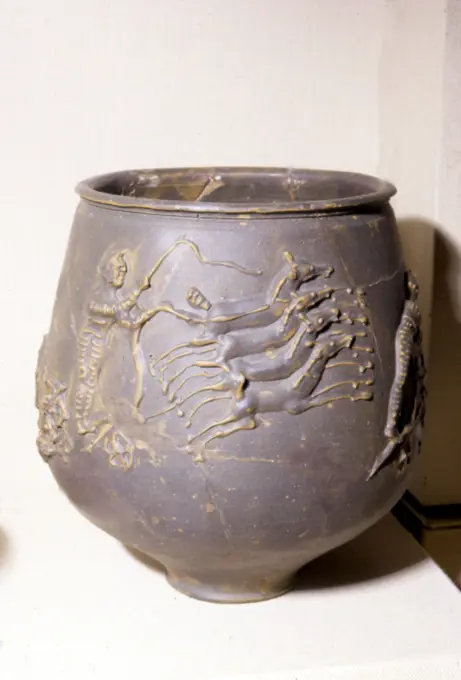
Ceramic and Glass Vessels

A variety of jars and jugs from different eras and materials, showcasing utilitarian design and historical craftsmanship.
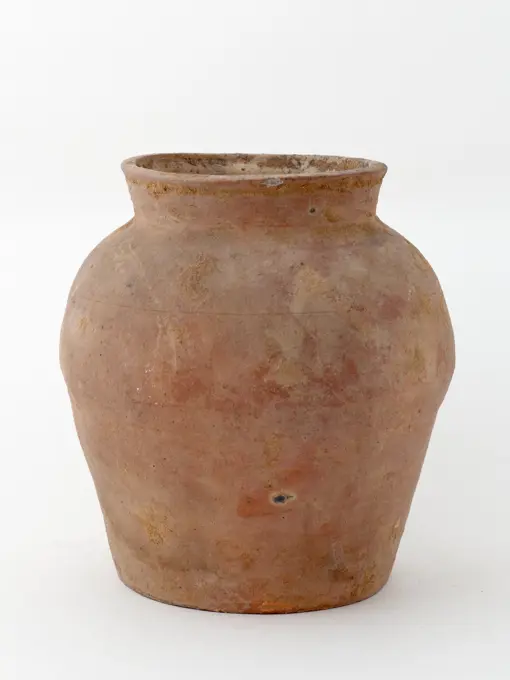
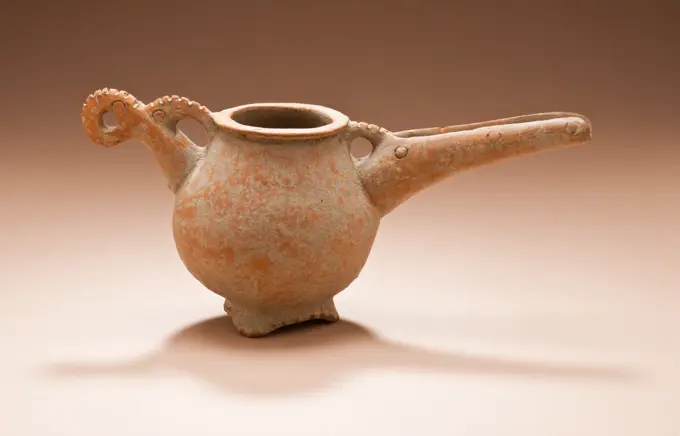
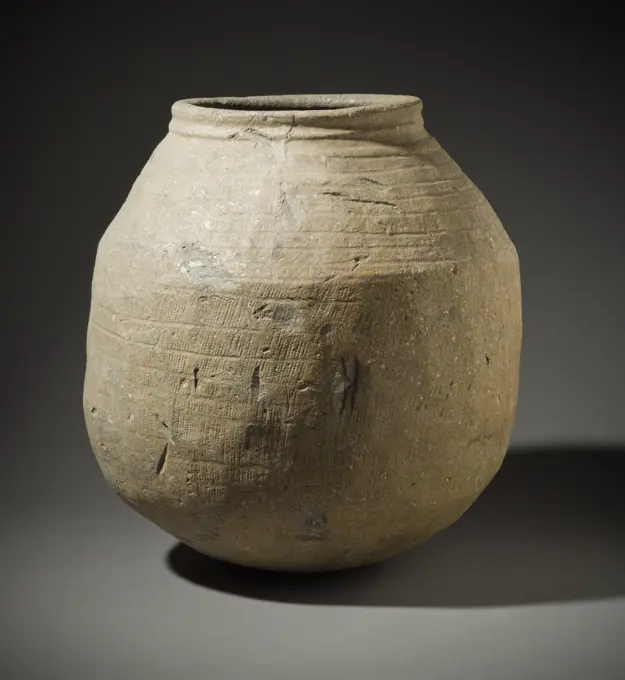
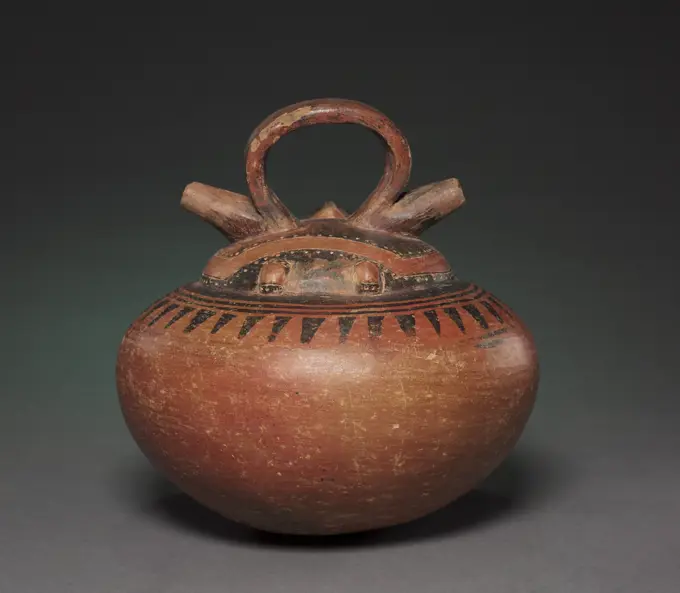
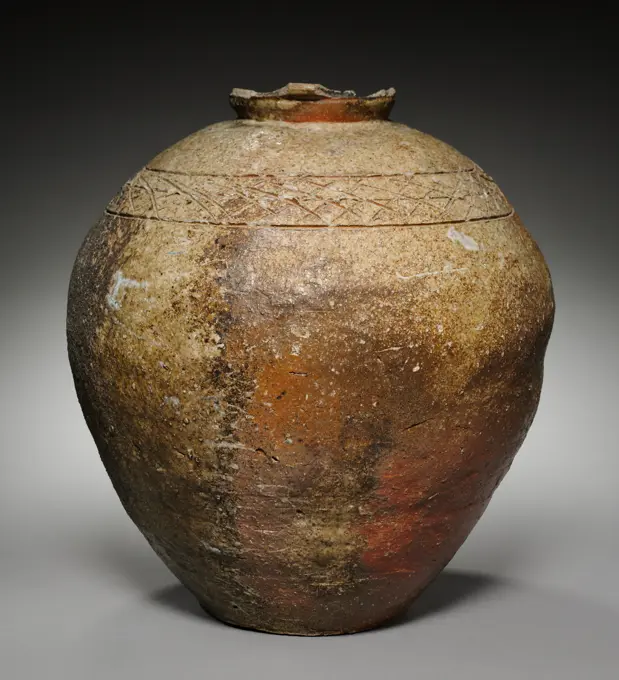
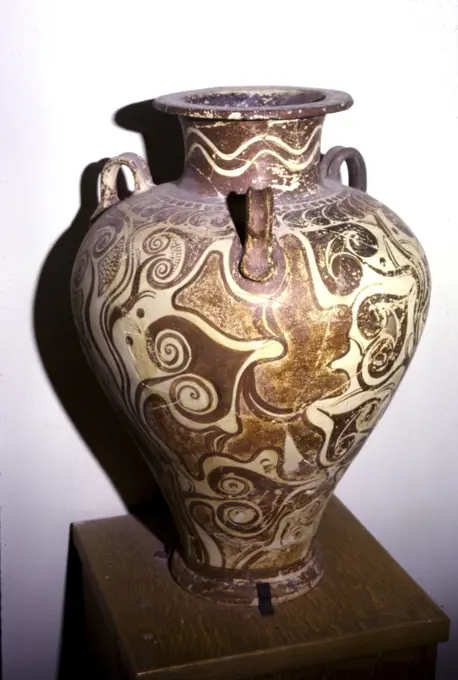
Ovoid jar ". Terracotta. Vietnam-Xe-Xive s. Paris, Cernuschi museum. 72185-7 Jarre Ovow, Vietnamese object, terracotta
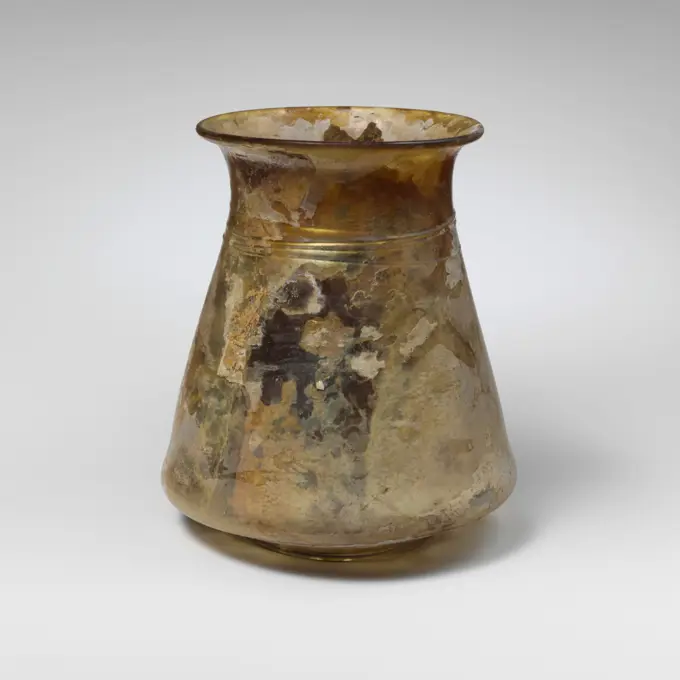
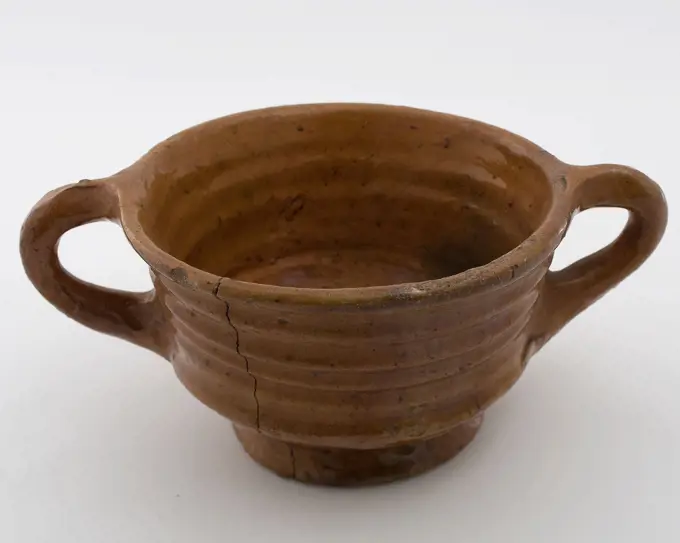
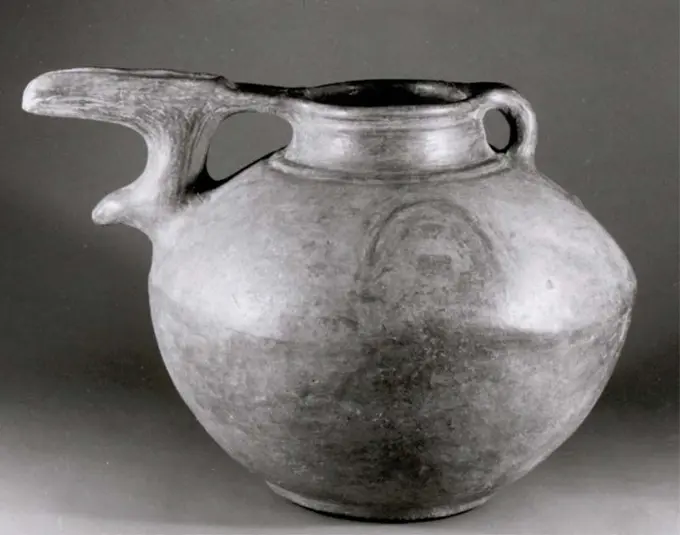
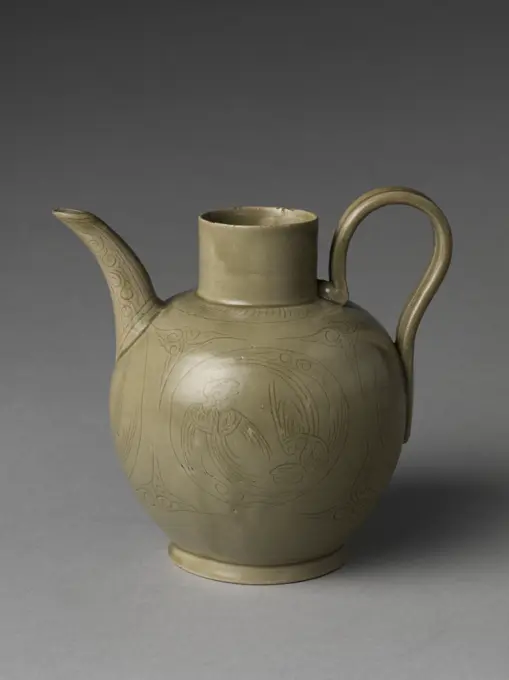
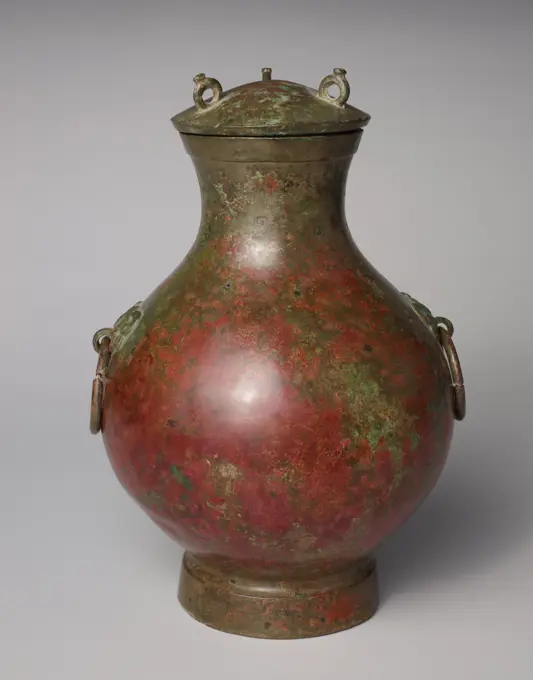
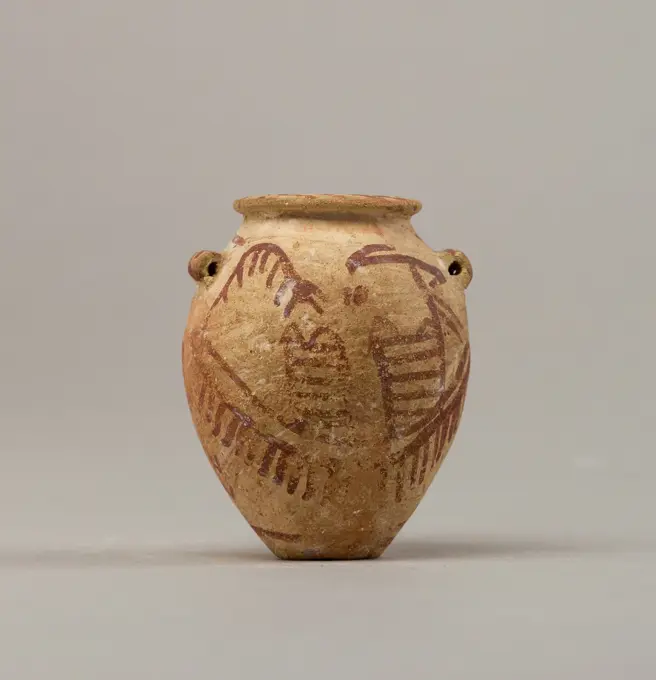
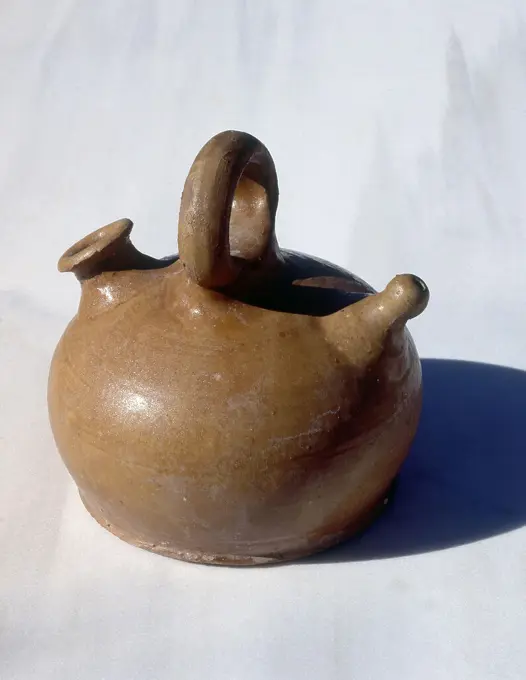
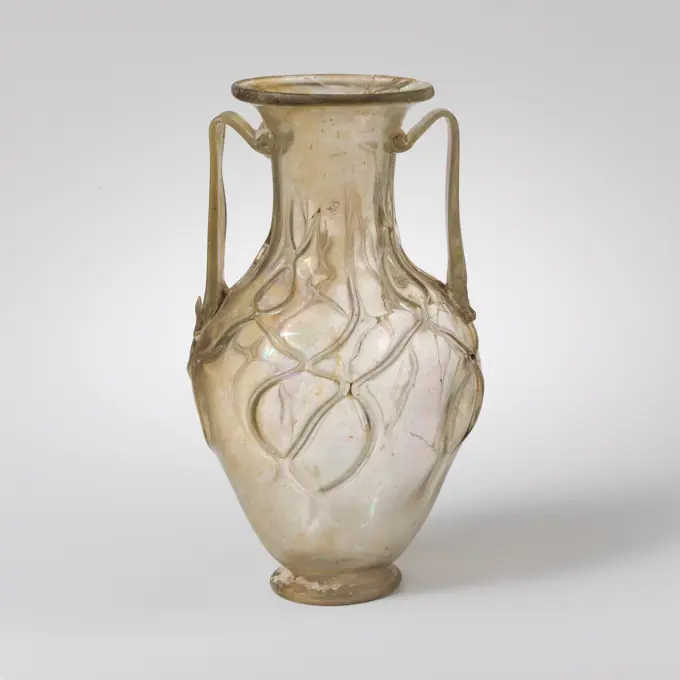
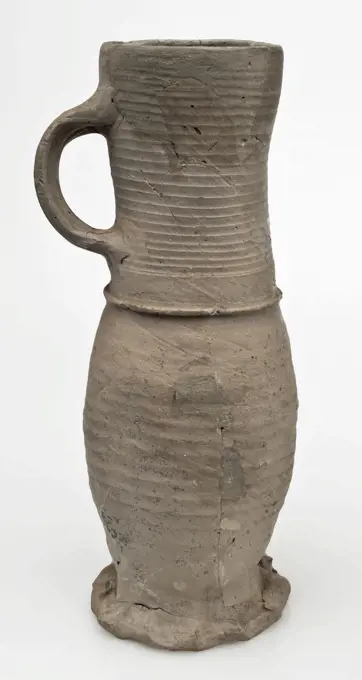
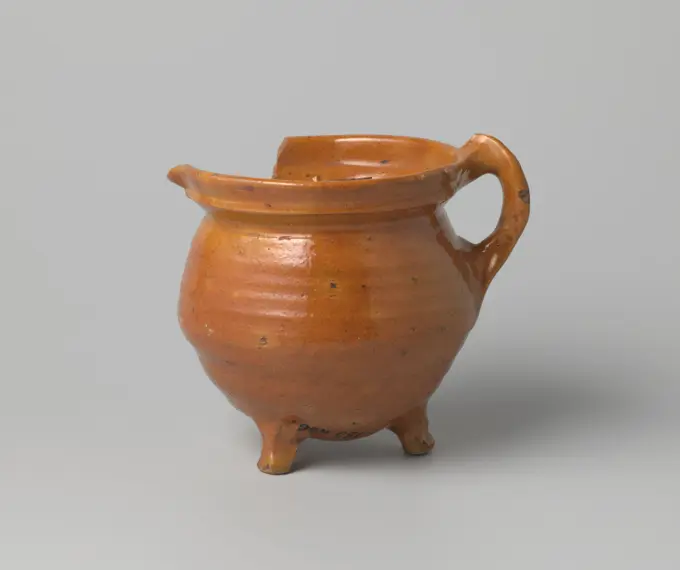
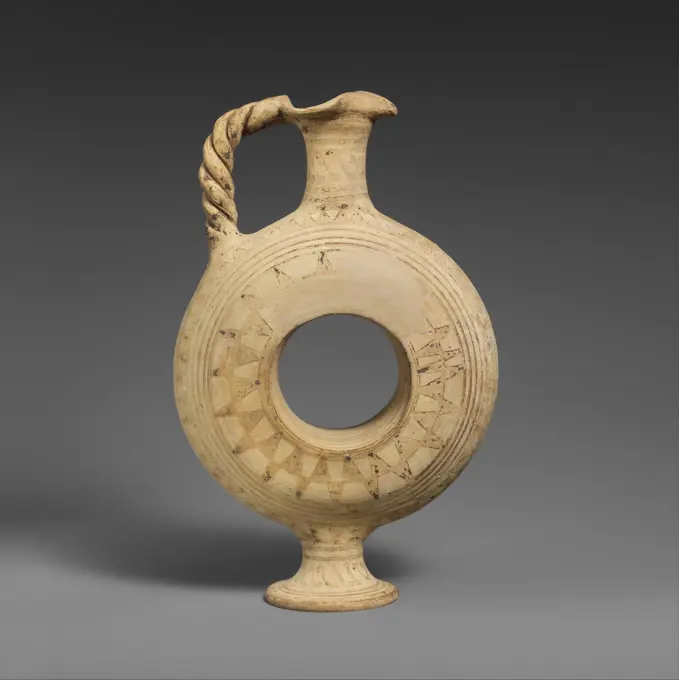
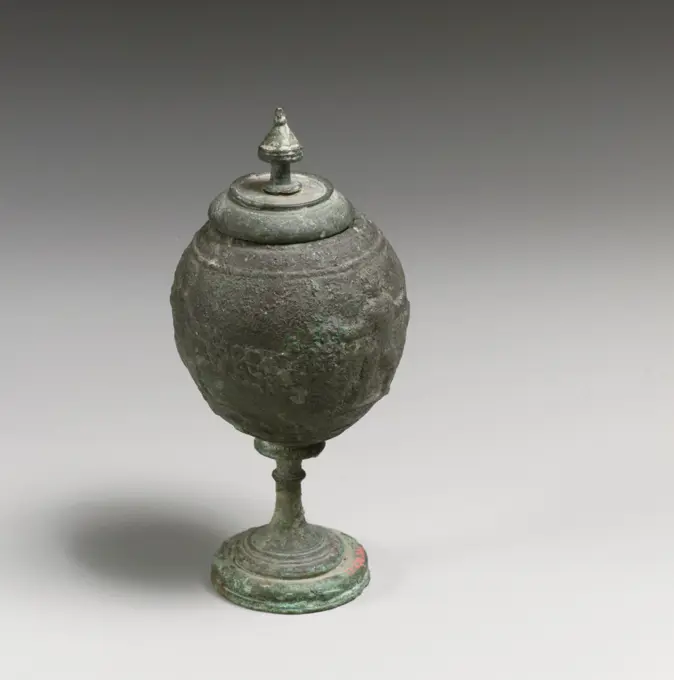
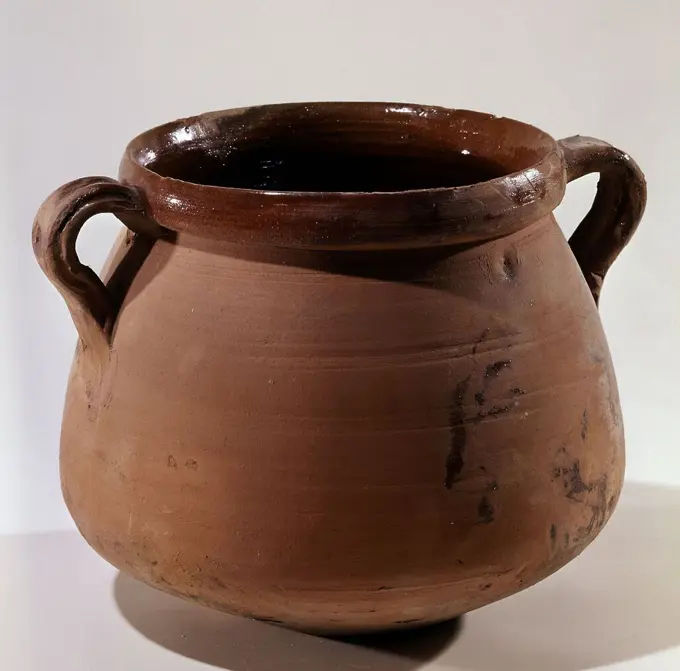
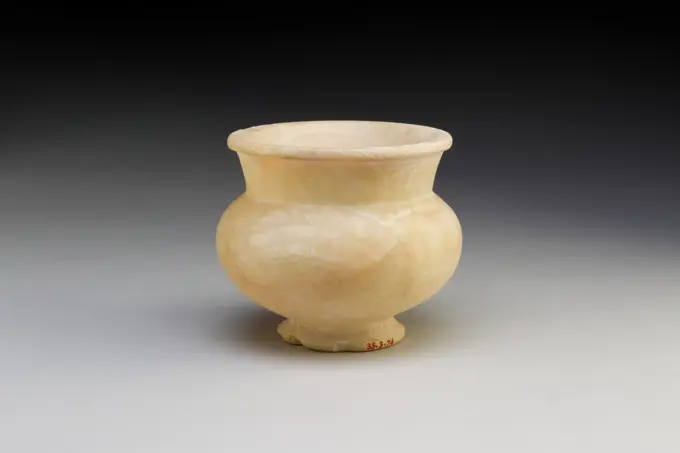
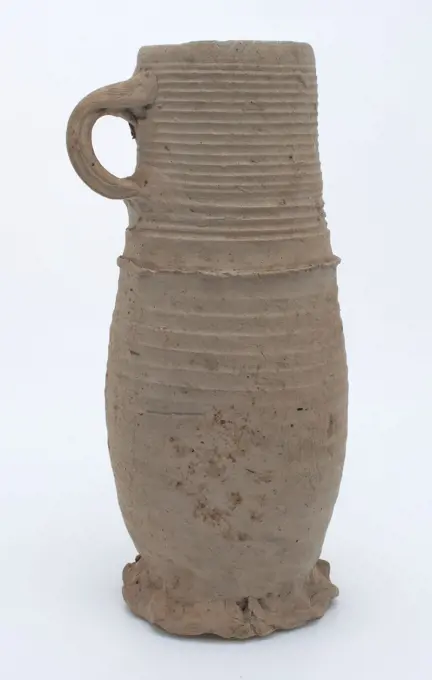
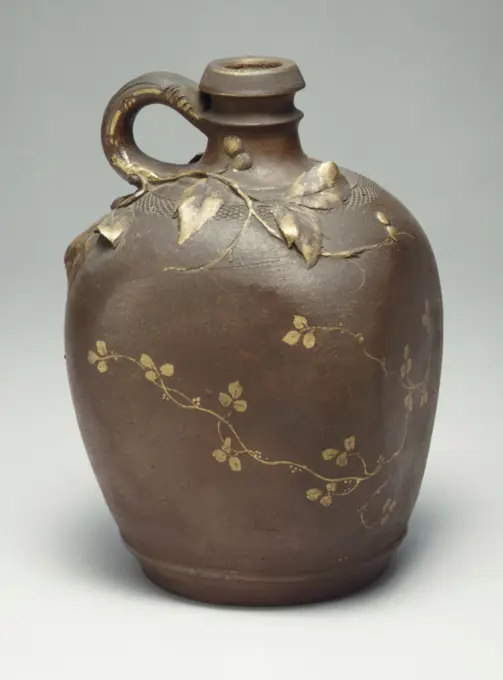
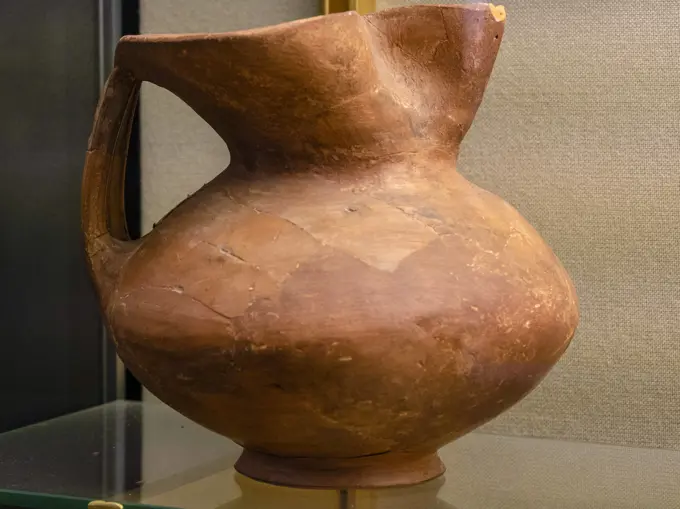
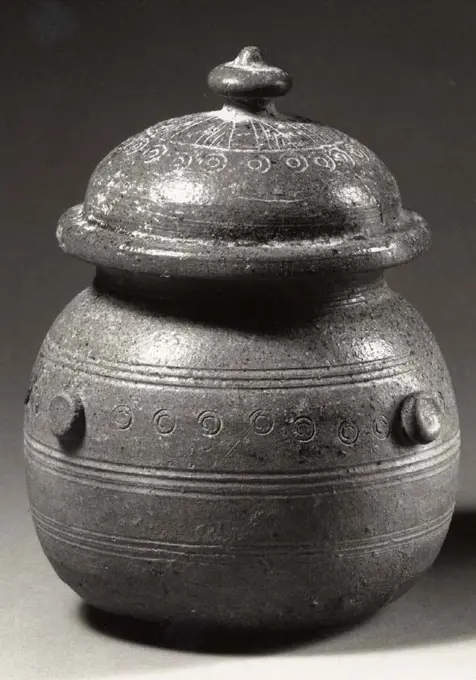
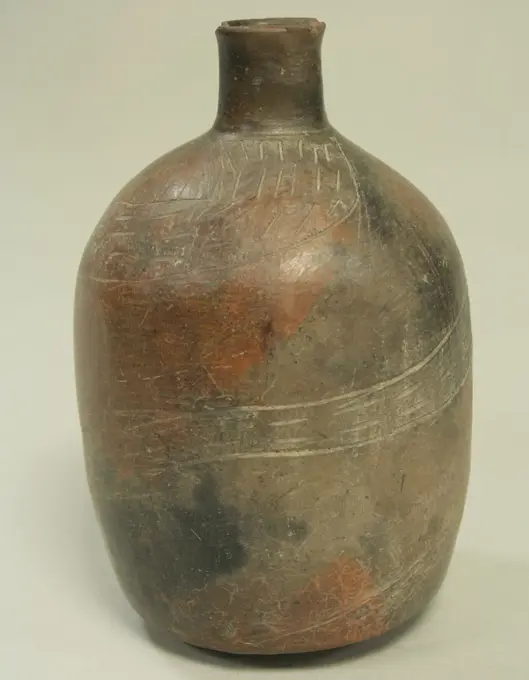
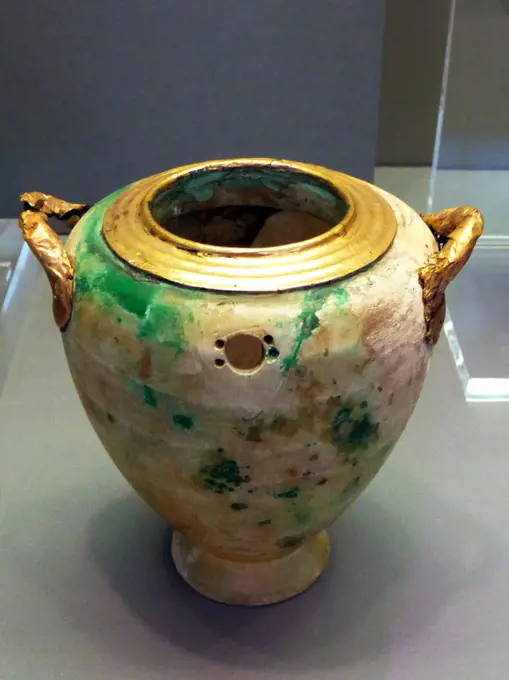
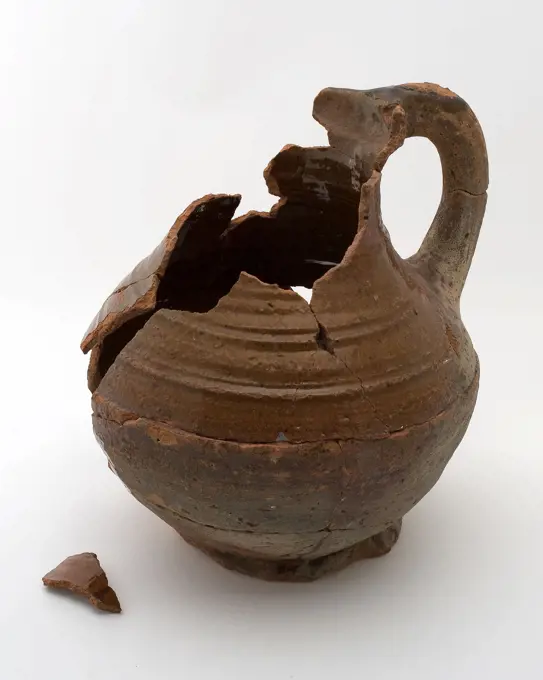
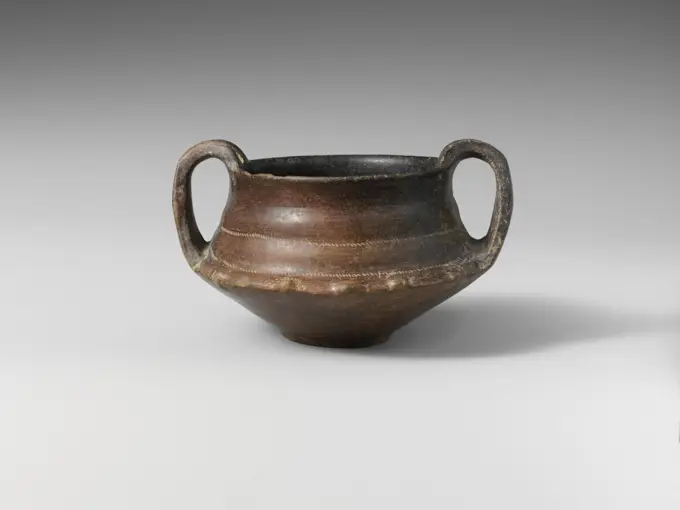
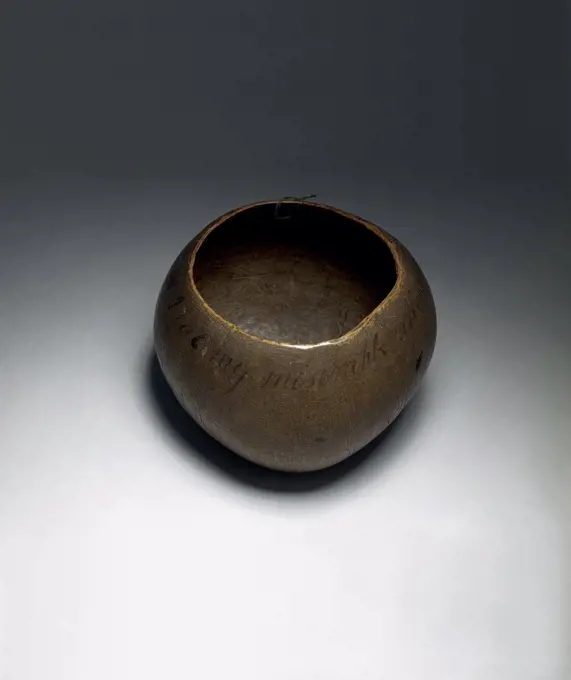
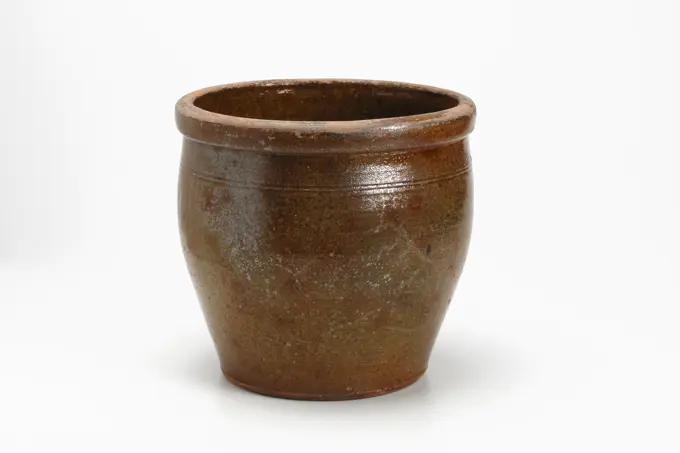
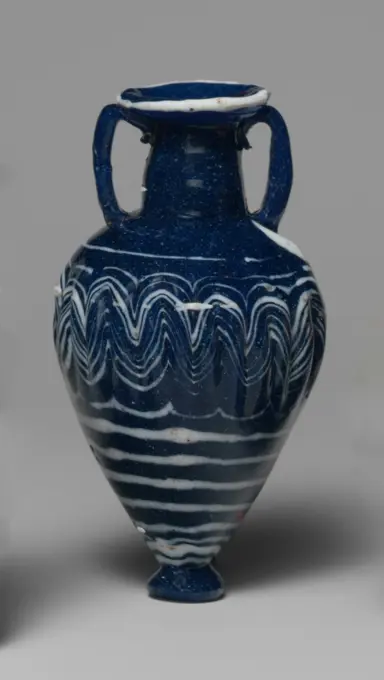
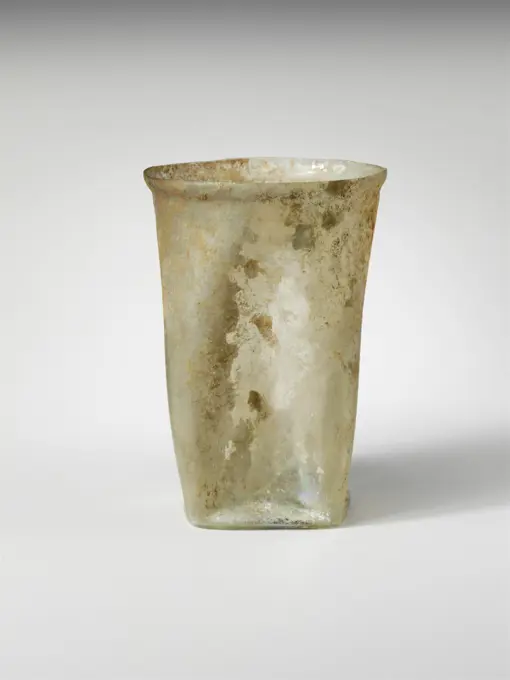
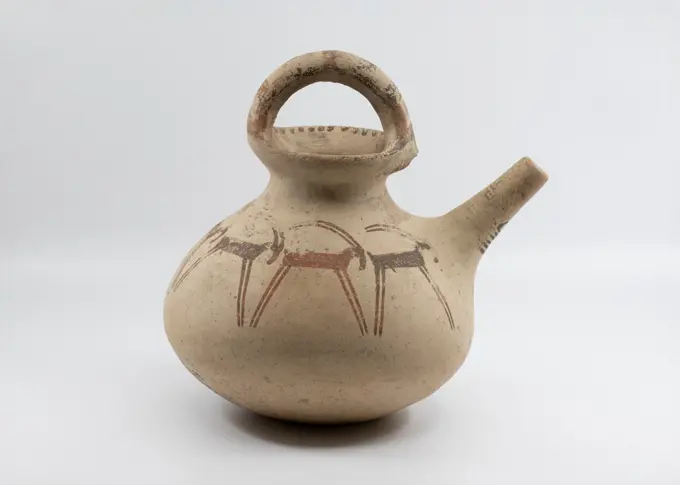
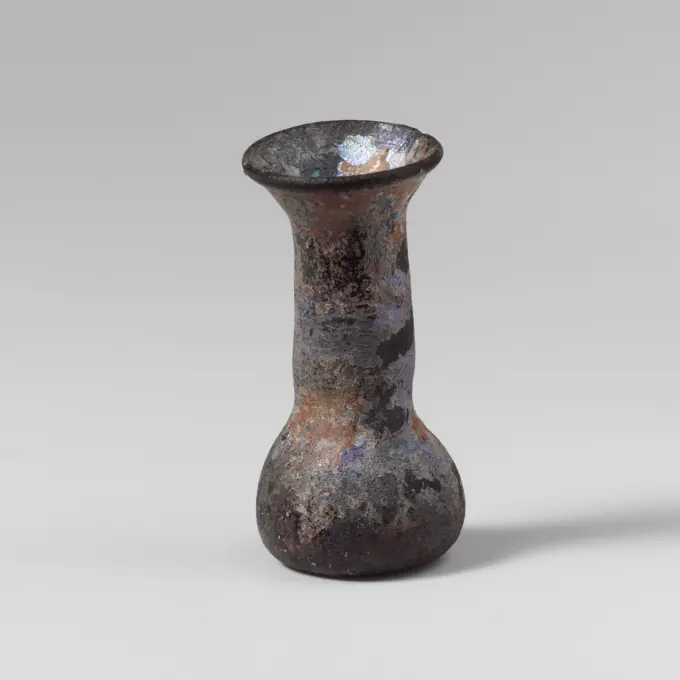
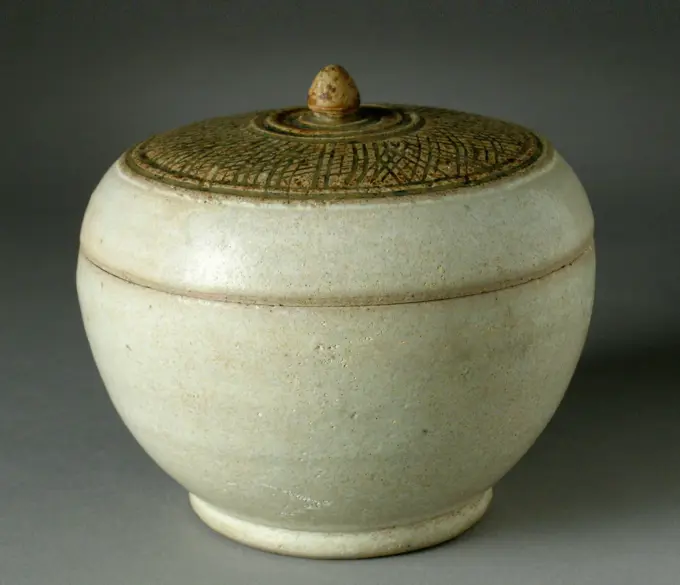
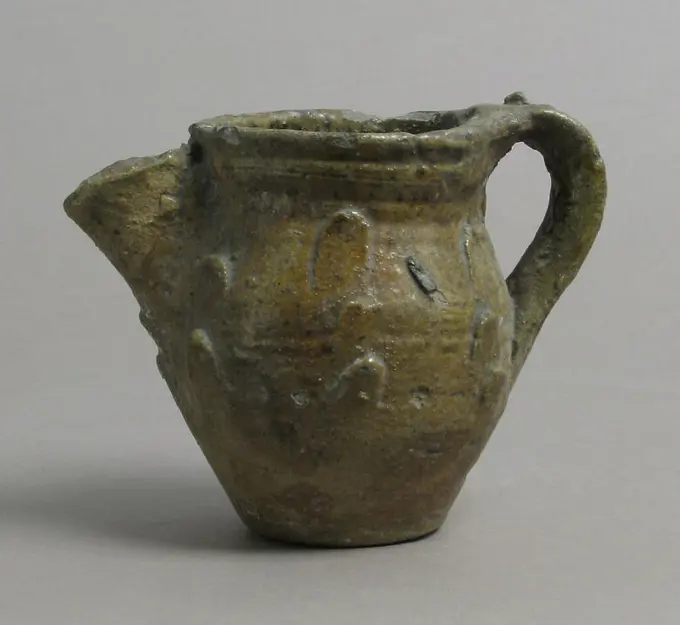
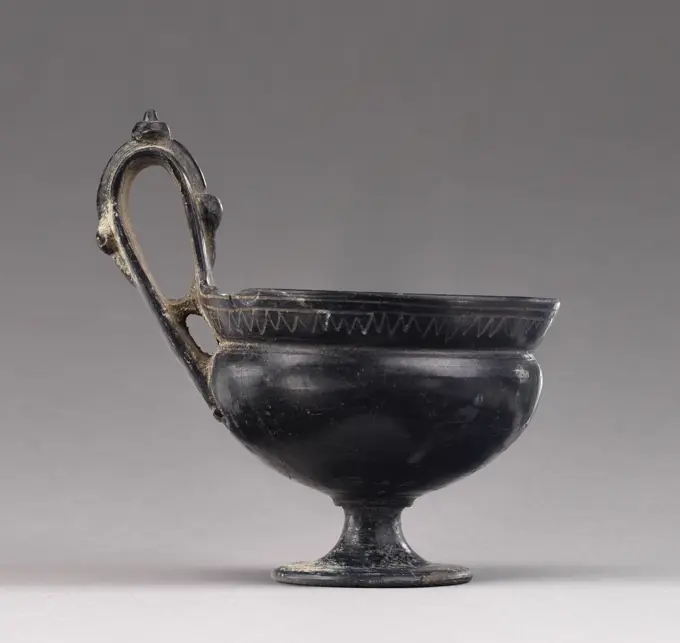
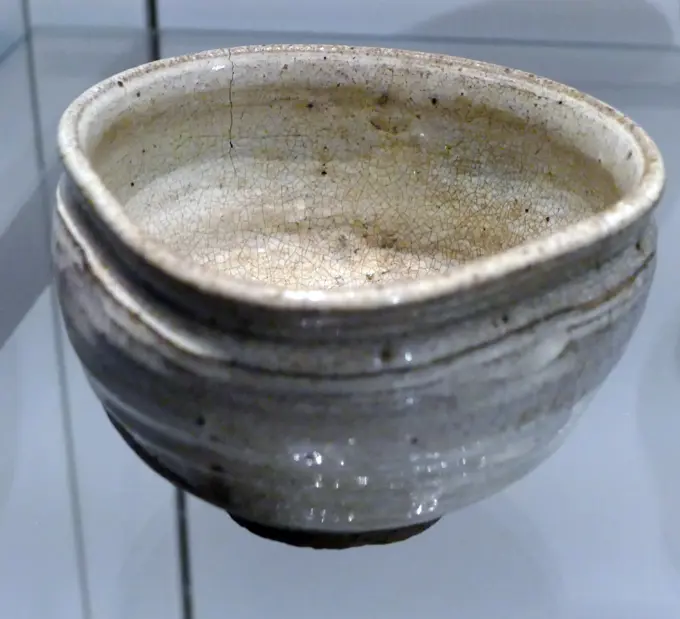
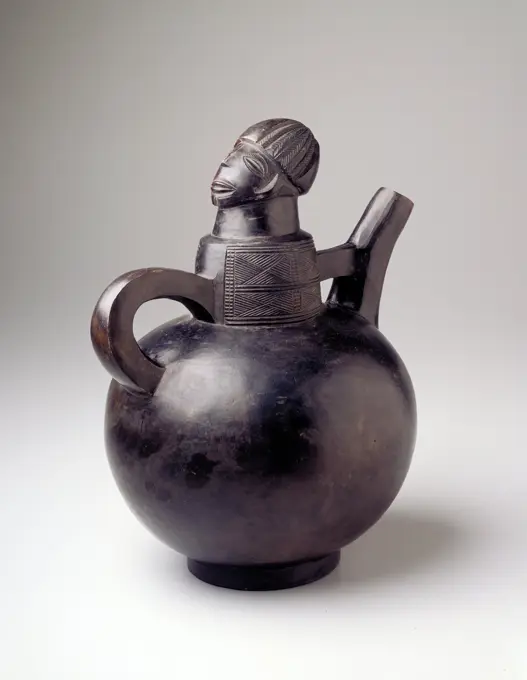
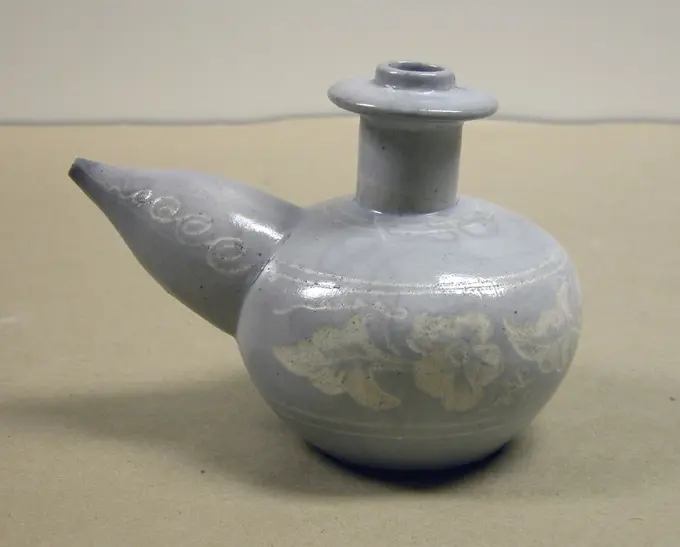
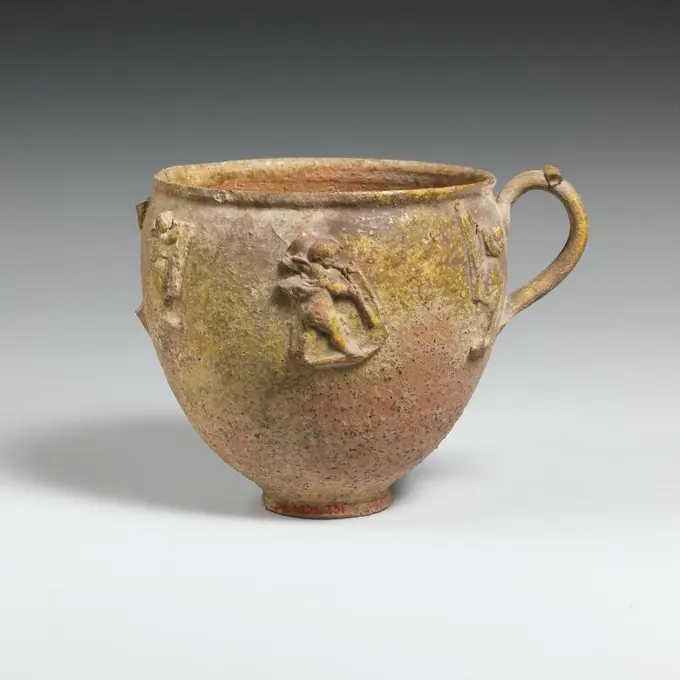
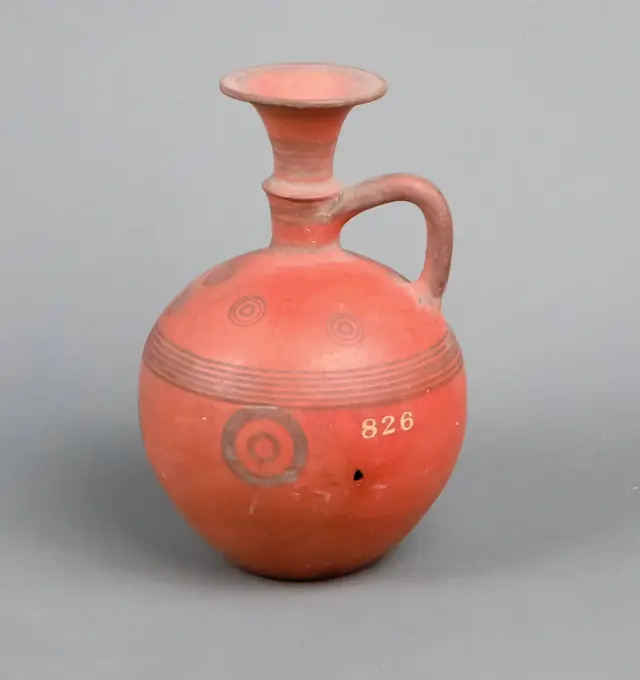
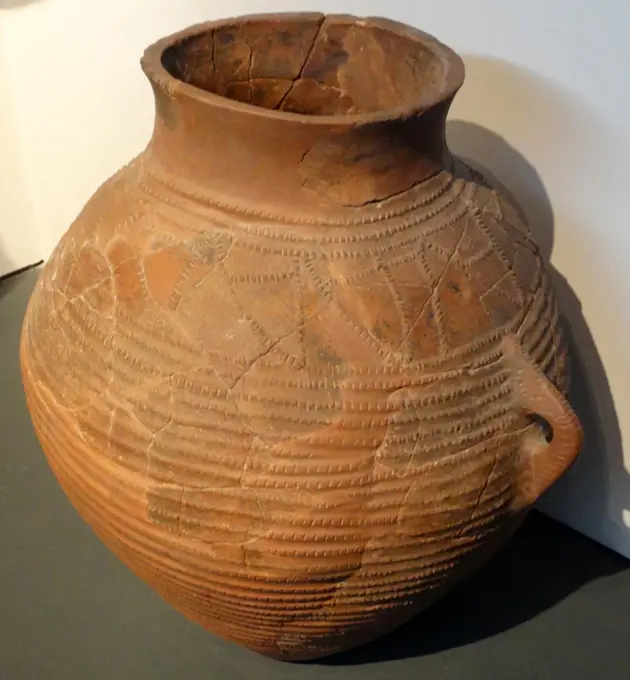
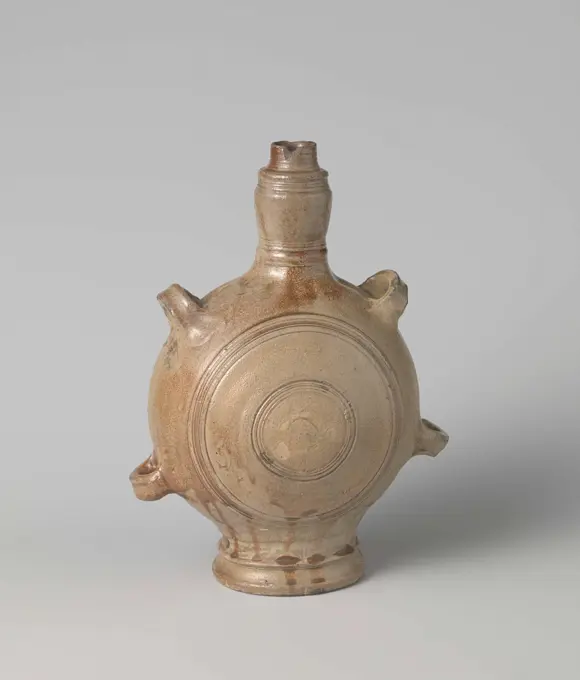
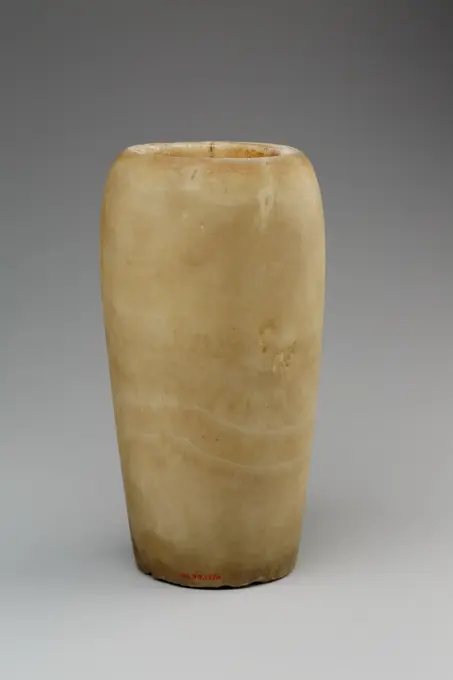
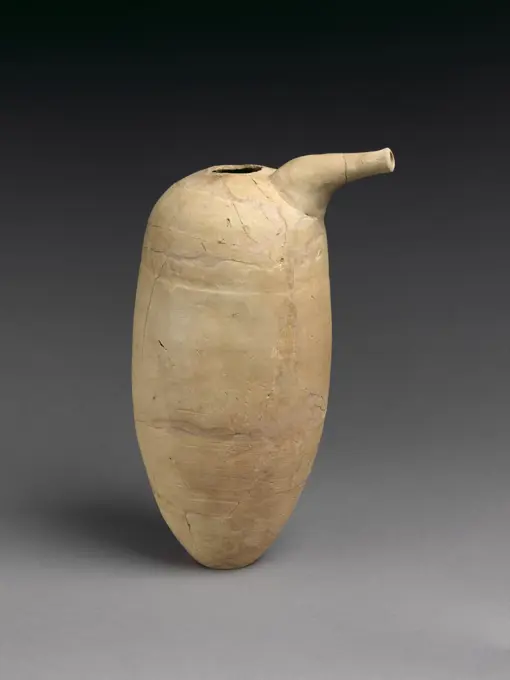
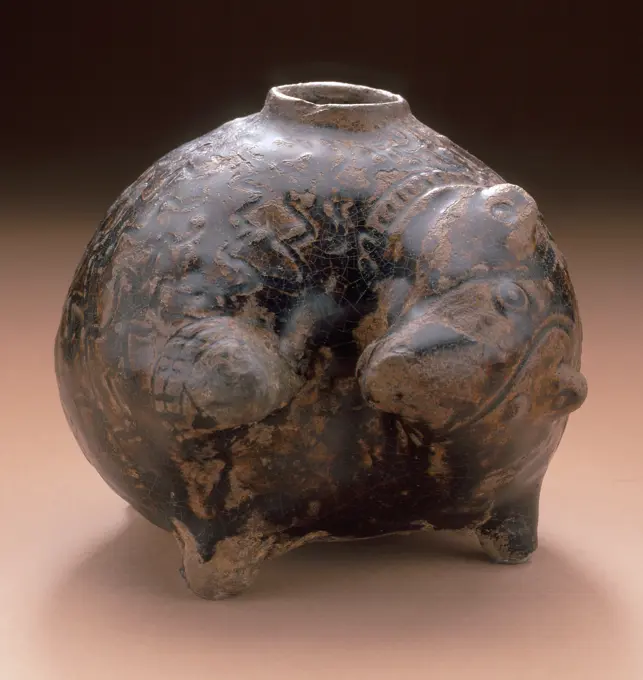
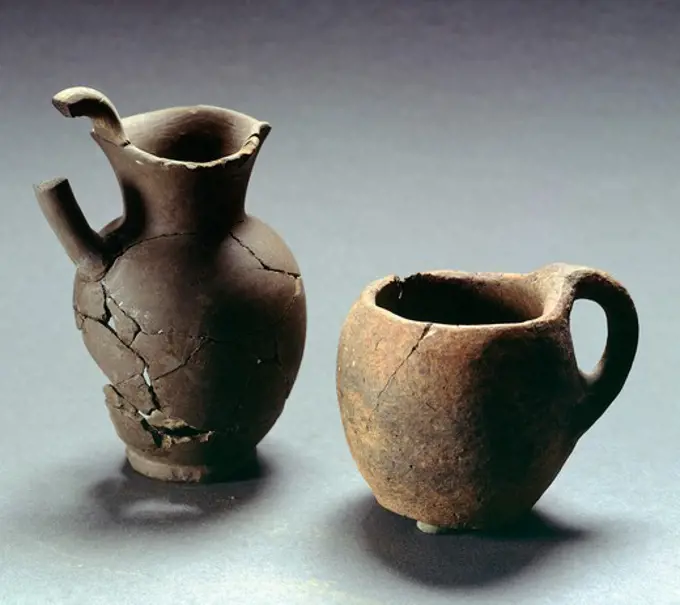
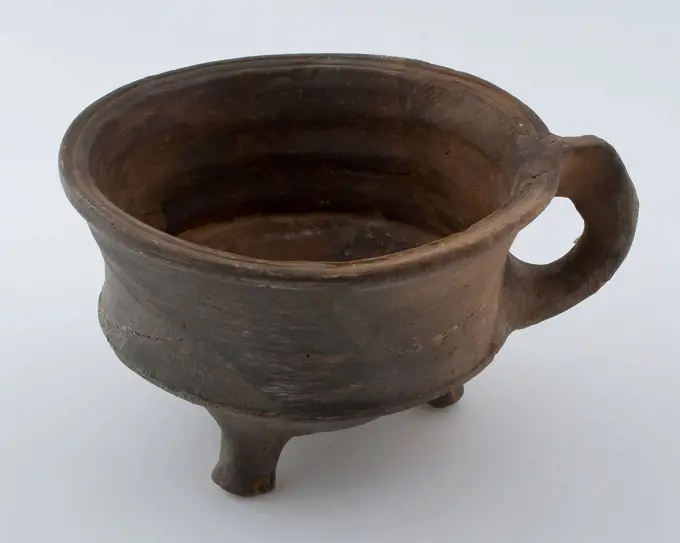
Pottery test on three legs, unglazed, test kitchen utensils earthenware ceramic pottery, hand-turned baked Pottery test on three legs Round test with standing sausage ear Half round bottom Richel on the transition from the bottom to the side wall. Grooves over the top edge Red shard. Unglazed. Restoration is repainted archeology Rotterdam City Triangle Nieuwehaven indigenous pottery cooking heating heating kitchen room Soil discovery New Haven 2nd square cesspool 22-08-1980Jug. Spherical jar of yellow gray pottery, with an ear. The jug has a stand ring and a wide, cylindrical neck. On the abdomen, a frieze is increased with four lying ellipses, cut horizontally by a band, which, as well as the space around the ovals, is filled with a network.Glass aryballos (oil bottle) mid-1st-3rd century A.D. Roman Small, thick-walled oil bottle.Colorless with green tinge and purple streaks; same color handles.Rim folded out, over, and in, forming small, central mouth; short, concave neck; squat, globular body; thick bottom with kick and large pontil scar; two handles applied in large pads to upper body, each drawn up side and neck, and folded out and down over itself.Intact; dulling, slight pitting, and most of surfaces covered with iridescent weathering.. Glass aryballos (oil bottle) 256725Bowl. Culture: Coptic. Dimensions: Overall: 1 7/8 x 3 7/8 in. (4.7 x 9.9 cm). Date: 4th-7th century. Museum: Metropolitan Museum of Art, New York, USA.Glass jar 3rd century A.D. Roman Colorless with pale bluish tinge, with trail in same color.Plain, rounded rim; flaring neck; conical body, rounded at base; integral, tubular base ring; pushed-in bottom.Single horizontal trail wound unevenly three and a half times around top of body.Intact; pinprick a nd a few larger bubbles; dulling, pitting, and iridecent weathering on exterior; patches of soil encrustion with weathering and iridescence on interior.. Glass jar 239836Jug. Culture: British. Dimensions: Overall: 6 1/4 x 6 5/16 x 4 3/4 in. (15.8 x 16 x 12 cm). Date: early-mid-16th century.Unlike Spanish and Italian tin-glazed earthenware, English pottery was not produced in a few particular sites, but over the entire country wherever the necessary clay beds existed. Produced in vast numbers for ordinary usage, these wares had little decorative value. For this reason, few examples have survived, and these have been recovered almost exclusively through excavation. The representation of English earthenware on the tables of affluent households, such as that in the Luttrell Psalter, is exceedingly rare. In spite of their commonplace nature, however, these objects can be appreciated for their pleasing profiles and simple, if occasionally careless, decoration. Vessels such as this one, produced during the first half of the sixteenth century and generally referred to as Tudor jugs, were decorated with bands incised by a stylus on the wet clay while the jug waSmall pottery chamber pot on stand, white shard and yellow glaze, pot holder sanitary earthenware ceramics earthenware glaze lead glaze, hand-turned glazed baked Small earthenware room pot white shard covered with yellow lead glaze at the top of pinched band-aid revolving round upper half of the pot stand ring Double conical model on narrow stand ring wide neck opening archeology indigenous pottery drains night sleeping room hygieneDeep Bowl(Fukabachi)Earthenware pap bowl, red shard, fully glazed, two pinched sausage ears, on stand, porcelain bowl bowl crockery holder earthenware pottery earthenware glaze lead glaze, hand-turned glazed baked Pottery pap bowl red shard entirely covered with lead glaze two pinched wrinkles standring archeology indigenous earthenware porridge eat kitchen food prepare cooking eatBridge-spouted pitcher ca. 10th-9th century B.C. Iran. Bridge-spouted pitcher 325921Ewer with Parrots 10th century China Introduced to China in the first and second century, tropical parrots from mainland and island Southeast Asia quickly became a motif in the decorative arts, valued for their exoticism and their purported ability to speak Chinese.. Ewer with Parrots. China. 10th century. Stoneware with incised decoration under celadon glaze (Yue ware). Five Dynasties (907-960). CeramicsSpouted Pitcher. Northeastern Afghanistan, circa 2000-1500 B.C.. Furnishings; Serviceware. Ceramicceramic vessel with slip decoration, Iberian period three hundred and fifty to fifty BC, Huesca museum, Aragon community, Spain.VASIJA NEOLITICA. Location: MUSEO ARQUEOLOGICO-COLECCION. CORDOBA. SPANIEN.Hu covered vessels, 3rd century BCE, 13 7/8 x 8 7/8 in. (35.2 x 22.54 cm), Bronze, China, 3rd century BCE, The hu wine or water vessel evolved from the late Shang (c. 1300-1046 BCE) to the Han dynasties (206 BCE-220 CE) and took a great variety of forms. During the Warring States period, this type of round hu, with its bulging belly, tall neck, and rimmed foot, became one of the most popular bronze vessels. In keeping with contemporary taste, it was relatively undecorated, sometimes with the exception of several raised bow strings, or flat bands, encircling the body. Most have ring handles (often in the form of animal masks) on the shoulders and a slightly domed lid embellished with three knobs in stylized animal form. In this example, there is an inscription engraved near one animal mask, which reads 'xin li,' indicating the location of the workshop in Changan, capital of the Han dynasty.Decorated ware jar illustrating two boats ca. 3850-2960 B.C. Predynastic Period. Decorated ware jar illustrating two boats. ca. 3850-2960 B.C.. Pottery, paint. Predynastic Period. From EgyptVessel. Culture: Coptic. Dimensions: Overall: 2 1/16 x 2 x 13/16 in. (5.3 x 5.1 x 2 cm). Date: 4th-7th century. Museum: Metropolitan Museum of Art, New York, USA.Two-handledjar, 9thcentury, Stoneware with slip and pigment under glaze (Changsha ware), 5 1/4 × 3 in. (13.3 × 7.6cm), China, Chinese, Tang dynasty (618-907 C.E.), Containers -CeramicsBOTIJO - S XX ARTE POPULAR -. Location: ALFARERIA. MARRATXI-PORTOL. MALLORCA. SPAIN.Glass jar with two handles (amphora) 3rd century A.D. Roman Colorless with yellowish tinge; handles and trails in same color .Everted, beveled rim; flaring mouth; broad, cylindrical neck, tapering slightly downwards; sloping shoulder; side tapering downwards; tubular, outsplayed base ring, made by folding; pushed-in bottom; two strap handles applied to top of neck, drawn out and up, then turned sharply downwards vertically, and trailed off on shoulder over trail decoration.Irregular pattern of pairs of vertical trails, extending from neck to lower body, pinched together at intervals.Broken and repaired, with one chip in rim and two small holes in neck; a few bubbles and glassy inclusions; slight dulling and weathering, and faint iridescence covering most of surfaces.The decoration was applied with molten threads of glass which fused with and were partially absorbed by the body of the amphora.. Glass jar with two handles (amphora) 245325Gray Jug or jacobakan, stoneware jug on pinched foot, Jug or jacobakan jug crockery holder soil find ceramic stoneware, hand-turned baked Stoneware jug with crooked pinched foot entirely with rings hanging out under the ear belly with imperfections gray flamed color Slim model fairly wide neck cylinder neck jug Ear crooked attached archeology Valckensteyn Poortugaal Albrandswaard indigenous pottery drink drink pour kitchen Soil discovery: castle Valckensteyn in Poortugaal now Albrandswaard 1962.Terracotta hydria (water jar). Culture: Greek, South Italian, Apulian. Dimensions: H. 24 1/8 in. (61.3 cm). Date: 4th century B.C..An ivy wreath circles the neck. Museum: Metropolitan Museum of Art, New York, USA.Pot of red -baking clay, with green lead glaze on the inside and on the outside of brown lead glaze, damaged, anonymous, 1500 - 1799   earthenware. glaze   earthenware. glazeMycenaean cup, from Kition, Cyprus, GreeceTerracotta ring vase 8th century B.C. Greek, possibly Cumaean Vases with a vertical ring-shaped body occur sporadically in the Greek world. The present example is noteworthy for the combination of a twisted handle, flaring foot, and the body that is rounded in section. The object's place of origin has not been identified.. Terracotta ring vase 247180Bronze footed globular vessel with lid ca. 1st-2nd century A.D. Roman The body is decorated in shallow relief with children, garlands, dogs and rabbits.. Bronze footed globular vessel with lid. Roman. ca. 1st-2nd century A.D.. Bronze. Imperial. BronzesJar with ear, gray, with insurgent blue floral pattern. Jar with ear, gray stoneware, high on the belly. A brokered blue floral pattern, blue spot on the neck and on the inside ear.PUCHERO SEMIVIDRIADO CON 2 ASAS - ARTE POPULAR S XX. Location: ALFARERIA. QUART. GERONA. SPAIN.Jar. Dimensions: H. 7.8 cm (3 1/16 in.). Dynasty: Dynasty 18. Date: ca. 1550-1458 B.C.. Museum: Metropolitan Museum of Art, New York, USA.Open-Mouthed Cosmetic Jar of Rennefer ca. 1504-1447 B.C. New Kingdom. Open-Mouthed Cosmetic Jar of Rennefer. ca. 1504-1447 B.C.. Travertine (Egyptian alabaster). New Kingdom. From Egypt, Upper Egypt, Thebes, Asasif, Tomb of Neferkhawet (MMA 729), west chamber A, Burial of Rennefer (II), in coffin, right ankle, MMA excavations, 1935-36. Dynasty 18, earlyJug Parthian or Sasanian ca. 2nd-4th century CE View more. Jug. Parthian or Sasanian. ca. 2nd-4th century CE. Ceramic. late Parthian-early Sasanian. Iran, Qasr-i Abu NasrStoneware jug pinched with slightly curved body and cylindrical neck, jug jug crockery holder soil find ceramic stoneware, hand-turned baked Stoneware jug pinched on foot Lightly curled body and cylindrical neck. Short ribbon ear untidy and crooked attached. Rotating lips over the lower half of the abdomen. Narrow ridge over the shoulder under the attachment of the ear Darts around the neck. Small dent above the foot on the right side of the ear archeology Huis te Woude Slikkerveer Ridderkerk indigenous pottery import drinking wine beer water Soil discovery: Huis te Woude Slikkerveer 1969.Juglet. Culture: Cypriot. Dimensions: 3 13/16in. (9.7cm). Date: 750-600 B.C..Handle-ridge jug with bands and lotus flowers. Museum: Metropolitan Museum of Art, New York, USA.Large Globular Storage Jar. Korea, Three Kingdoms period, Old Silla kingdom (57 B.C.-A.D. 668), 5th-7th century. Furnishings; Serviceware. Coil-built stoneware with combed decorationJug 1882-86 Haviland & Co. American and French Determined that pottery vessels should be regarded as true works of art, avant-garde ceramicists in France in the last decades of the nineteenth century transformed their craft into an intellectual and emotional endeavor. The pioneers of this revival were Jean Carriès, Ernest Chaplet, Théodore Deck, and Auguste Delaherche. These revolutionary artist-potters embraced artisanal traditions while pursuing lost techniques through exhaustive experimentation. Reacting to what they viewed as an excessive and improper use of ornament, they celebrated the simplicity and sincerity of their medium, following the tenets of the Art Nouveau style taking place in Europe. Based on the principles of the British Arts and Crafts movement, Art Nouveau artists sought to reform the decorative arts by emphasizing uniqueness and a return to craftsmanship. Artist-potters found inspiration in Asian ceramics, particularly Japanese stoneware (a hard, dense type of potStock jar with ear and lid, painted in light and dark brown, anonymous, c. 1700 - c. 1799 Stock jar with one ear, made of twisted wood; Painted on the inside and top edge dark brown and further light brown. Turned out of two pieces, with loose lid. Amsterdam (possibly) wood (plant material) Stock jar with one ear, made of twisted wood; Painted on the inside and top edge dark brown and further light brown. Turned out of two pieces, with loose lid. Amsterdam (possibly) wood (plant material)Lamp 13th-14th century. Lamp 447230Jar with decoration. Spherical jar of stoneware, with a pewter lid. The jug has a high, wide cylindrical neck and a C-shaped ear. The neck is ribbed and the belly is decorated with two rosettes in relief.CANTARO CON VIDRIADO DE BABERO EN LA BOCA - ARTE POPULAR S XX. Location: ALFARERIA. TAGARABUENA. Zamora. SPAIN.Vase 14th-15th century China. Vase 48625Beaker (zun), 12th century BCE, 9 1/4 x 7 3/4 in. (23.5 x 19.69 cm), Earthenware with burnished surface, China, 12th century BCEKeltischer Krug vom Typ Oinochoe Celtic jar of type Oinochoe, IV-I centuries BC, Cerro de San Miguel, Arnedo, Museo de la Romanización, Calahorra, La Rioja , Spain, Europe Copyright: xZoonar.com/BartomeuxBalaguerxRotgerx 22946342Cup 10th century. Cup. 10th century. Earthenware; slip covered and unglazed. Excavated in Iran, Nishapur. CeramicsCovered Jar 8th-9th century Korea. Covered Jar 39512Tripod Vessel 480 BCE-221 BCE China. Brick-red earthenware .Bottle 9th-6th century B.C. Paracas. Bottle 308424Alabaster vase with gold-plated rim and handles. This was originally an Egyptian vase, which was turned upside down and converted by an Aegean craftsman.Sugar bowl with lid of stoneware with salt glaze, 1901 Sugar bowl with lid of stoneware with salt glaze, part of a service. Amsterdam stoneware vitrification Sugar bowl with lid of stoneware with salt glaze, part of a service. Amsterdam stoneware vitrificationPottery jug be placed on stand, low belly and strong upright, ribs around the shoulder and abdomen, water jug crockery holder soil find ceramic earthenware glaze lead glaze, hand-turned glazed baked Pottery can be lightly squeezed stand ring Model with low belly and smooth transition to straight on standing neck. Outstanding neck edge with lid slot. Fors standing ear Decorated with some ribs over the shoulder and belly Red shard internally entirely glazed externally for about half (). Small loose fragment from the neck originating, archeology Geervliet Bernisse indigenous earthenware food preparation water washing pouring serve storage Soil discovery: Geervliet pit 1 top layer demolition Trouw.Carafe. Iraq, Iran, Syria, or Egypt, first half of 8th century. Ceramics. Earthenware, applied and incised decorationDouble-Spouted Vessel with Reclining Figure, c. 1-800. Colombia, Calima region, Yotoco style, 1st-8th Century. Ceramic, slip, resist paint; diameter: 19.6 x 19.5 cm (7 11/16 x 7 11/16 in.); overall: 19.6 x 19.5 cm (7 11/16 x 7 11/16 in.).Milkus, scalloped, with flowers and leaves in relief. Milkus from terracotta. The scalloped body with flowers and leaves in relief.Terracotta kantharos (drinking cup with high handles) ca. 700-675 B.C. Etruscan Reddish-brown two-handled cup with narrow bands of incised lines and knobs on shoulder.. Terracotta kantharos (drinking cup with high handles) 246599The Mutiny on the Bounty Lieutenant William Bligh's Coconut Cup from the Voyage in the Ship's Boat from Tofoa to Timor, Tuesday 28 April 1789 - Sunday 14 June 1789 Antiques-Misc. Jar - Shelling CrockVase 1895-1905 France. Glazed stoneware . Pierre Adrien DalpayratAmphoraStorage Jar, late 1300s-1400s. Japan, Muromachi period (1392-1573). Stoneware with natural ash glaze (Shigaraki ware); diameter: 45.7 x 39 cm (18 x 15 3/8 in.); overall: 42 cm (16 9/16 in.).Bottle-necked jar ca. 2030-1550 B.C. Middle Kingdom-Second Intermediate Period. Bottle-necked jar. ca. 2030-1550 B.C.. Gulleh ware. Middle Kingdom-Second Intermediate Period. From Egypt, Upper Egypt, Thebes, Asasif, Tomb CC 41, MMA excavations, 1915-16Glass amphoriskos (perfume bottle) late 6th-5th century B.C. Greek, Eastern Mediterranean Translucent cobalt blue, with handles in same color; trails in opaque white.Broad, inward-sloping rim-disk with radiating tool marks on upper surface; cylindrical neck tapering upward; broad rounded shoulder; top-shaped body; circular base-knob with with rounded edge and slightly concave bottom; two vertical strap handles applied to top of shoulder, drawn up, and pressed onto neck and underside of disk-rim.One trail attached at edge of rim-disk; another applied as an uneven pad on shoulder, wound spirally round one and a half times to junction of shoulder and body, then tooled into an uneven close-set zigzag pattern on upper half of body, with twenty-seven alternating upward and downward tooling strokes forming vertical ribs in sides; below this, same trail continues in a spiral to base-knob; part of a fine unmarvered trail runs horizontally around upper body over zigzag pattern.Intact; slight dulGlass beaker mid-1st-3rd century A.D. Roman Colorless with blue green tinge.Rim outsplayed, cracked off and uneven; side cylindrical at top and tapering slightly downwards, then shaped into a rough square with hollow convex corners; square, pushed-in bottom.On body, four deep and long indents, forming a star-like shape to interior.Intact; some bubbles; patches of soil encrustation, creamy weathering, dulling, and iridescence.. Glass beaker 245356Bottle. Culture: Cypriot. Dimensions: 4 3/4in. (12.1cm). Date: 480-310 B.C..Vase with narrow neck at base of which is a moulded ridge. Museum: Metropolitan Museum of Art, New York, USA.Flask Cypriot 850-750 BCE Two-handled with concentric bands in black and red. View more. Flask. Cypriot. 850-750 BCE. Terracotta. Cypro-Geometric III. VasesVaseVase. Culture: China. Dimensions: H. 6 3/4 in. (17.1 cm). Museum: Metropolitan Museum of Art, New York, USA.Small jar from the Muslim period, Zafranales site, Fraga, Huesca museum, Aragon community, Spain.Pitcher decorated with ibexes ca. 800-600 B.C. Iran This pitcher has a globular body with a narrow neck and an everted rim. A tubular spout emerges from the body at a roughly forty-five degree angle. A semicircular handle is attached to the rim. It is made of a buff clay with red-brown painted decorations, including parallel lines on the spout, dots around the rim, and a row of stylized ibexes on the body. The ibexes have lozenge-shaped bodies, legs, tails and penises indicated by straight lines, and necks, heads and horns represented by curved lines. The pitcher is handmade, but probably finished on a wheel.The distinctive painted decoration on this pitcher marks it as genre Luristan ware.’ This type of pottery was first discovered by looters at Tepe Giyan, about five miles southwest of modern Nehavand, Iran. It has also been found at Mauyilbak Tepe and Baba Jan Tepe, both near Nurabad in Lorestan Province, Iran. At all three of these sites it comes from Iron Age graves, so it is uncGlass perfume bottle 2nd-3rd century A.D. Roman Miniature perfume bottleTranslucent dark honey brown.Plain rounded rim; flaring mouth; cylindrical neck, tooled in around base; squat bulbous body; flattened bottom.Intact; dulling, pitting, and iridescent weathering.. Glass perfume bottle. Roman. 2nd-3rd century A.D.. Glass; blown. Mid Imperial. GlassBaby feeder ca. 350-325 B.C. Greek, Attic. Baby feeder. Greek, Attic. ca. 350-325 B.C.. Terracotta; black-glaze. Late Classical. VasesConfectioner;  19th century (1801-00-00-1900-00-00);Covered Box with Floral Cross-Hatching. Thailand, Sawankhalok, 16th century. Furnishings; Accessories. Wheel-thrown stoneware with incised decoration, cream slip, brown underglaze wash, and clear glazePitcher. Culture: European. Dimensions: Overall: 3 7/8 x 4 5/8 x 2 15/16 in. (9.8 x 11.8 x 7.5 cm). Date: 1400-1600. Museum: Metropolitan Museum of Art, New York, USA.Tea jar with cover ca. 1775 Japan. Tea jar with cover. Japan. ca. 1775. Shigaraki ware. Edo period (1615-1868). CeramicsStemmed Kyathos. UnknownMycenaean Vase with lilies. Stylized design. Bronze Age, GREECE.Naczynie o falistym profilu. unknown, authorColorless Sprinkler Flask with pinched decoration. UnknownCeramic Tea bowl made in the Joseon period, buncheong stoneware, Japan. Edo period, early 1600s Fukuoka, Japan, Glazed stonewareVessel, late 19th century, 13 1/2 x 10 3/4 x 8 7/16 in. (34.29 x 27.31 x 21.43 cm), Ceramic, Angola or Democratic Republic of Congo, 19th century, Lwena and Chokwe artists were inspired by European objects like chairs and teapots to make new forms of art. This spouted vessel is such an example. It has a lid shaped in the form of a human head, which has been incorporated into the main body of the pot. The fine black glossy glaze is typical for this kind of vessel, employed as a container for water or palm wine.Terra Cotta Flower Jar. Dated: c. 1936. Dimensions: overall: 35.8 x 26.6 cm (14 1/8 x 10 1/2 in.) Original IAD Object: 9 3/4" high; 9" in diameter. Medium: watercolor and graphite on paper. Museum: National Gallery of Art, Washington DC. Author: Cecily Edwards.Kendi 15th-16th century() Vietnam (). Kendi 37579Terracotta cup. Culture: Roman. Dimensions: H. 3 3/8 in. (8.6 cm); diameter 3 5/16 in. (8.4 cm). Date: 20 B.C.-A.D. 20.The sides of the cup are decorated with appliqués of cupids either holding torches or playing long trumpets. The cup was probably made in southern Italy. Museum: Metropolitan Museum of Art, New York, USA.Jug 750-600 B.C. Cypriot Handle-ridge jug with horizontal bands and concentric circles.. Jug. Cypriot. 750-600 B.C.. Terracotta. Cypro-Archaic I. VasesStorage jar from Beersheba and Golan, over 6,500-5,500 years ago. Made from pottery.urna cinerària, 30 a. C-150 AD., Ibiza and Formentera Archeological Museum, Patrimonio de la Humanidad «Ibiza, biodiversidad y cultura», Ibiza, Balear...Pair of Lotus Petal Vases, 1662-1722. China, Jiangxi province, Jingdezhen, Qing dynasty (1644-1911), Kangxi period (1662-1722). Porcelain with "peach bloom" glaze; overall: 21.2 cm (8 3/8 in.). The "peach-bloom" glaze developed during the Kangzi era has also been described as "drunken with beauty." Technical achievements were transcended with aesthetic associations, revealing the greatest sensitivity to all things beautiful in nature.Pilgrim barrel of stoneware. Flat pilgrim bush (lentils-shaped) of stoneware, on a foot and with four ears. The narrow neck walks a bit wide and has an inherited mouth. The front of the belly is decorated with concentric circles in grooves and relief.Canopic jar, uninscribed 664-332 B.C. Late Period. Canopic jar, uninscribed 553237Spouted jar ca. 3400-3200 B.C.. Spouted jar 325439Squat Jar in the Form of a Pangolin. Cambodia, Khmer, circa 1000-1200. Furnishings; Serviceware. Modeled stoneware with applied and incised decoration and brown glazeOinochoe with trefoil lip and mug, Lazio, Italy. Latin Civilization, 4th-3rd Century BC.Jug (USA); stonewareRoman pot, charioteer, 3rd cent. Colchester. Romano-British ENGLAND.Antique glass 1898, Middle EastFragment of a bowl (or lid); Unknown Etruscan workshop; Unknown (0-00-00-0-00-00);Bednarek-03, Dar, Etruria, Antical Art Collection, DarVessel, c. 1050-1125, 6 1/4 x 5 1/4 in. (15.88 x 13.34 cm), Ceramic, pigment, United States, 11th-12th centuryNaczynie, amfora. nieznany warsztat egipski, authorVase, Kataro Shirayamadani, Japanese, 1865-1948, Rookwood Pottery, American, 1880 - 1967, Glazed earthenware, Cincinnati, Ohio, USA, 1901, ceramics, Decorative Arts, VaseCANTARO REALIZADO AL MODO URDIDO Y CON PALETA - ARTE POPULAR S XX. Location: ALFARERIA. Magallón. Saragossa Zaragoza. SPAIN.Bottle China. Bottle 50722