Ceramic Dish Fragments

Artistic ceramic fragments and plates with intricate designs, featuring colorful patterns and historical significance in pottery.

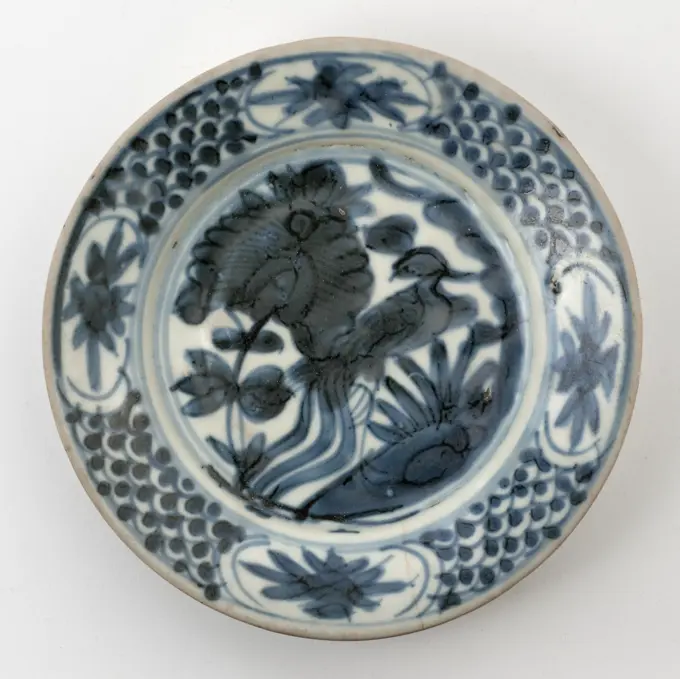
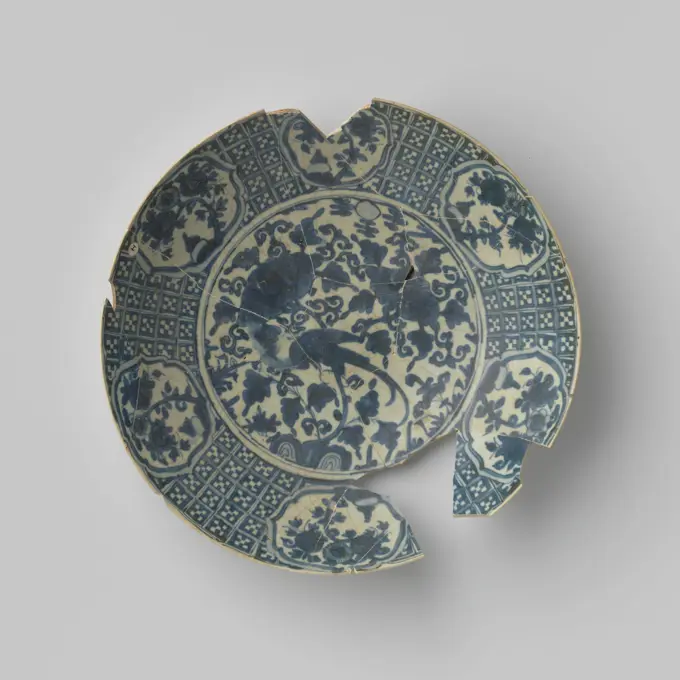
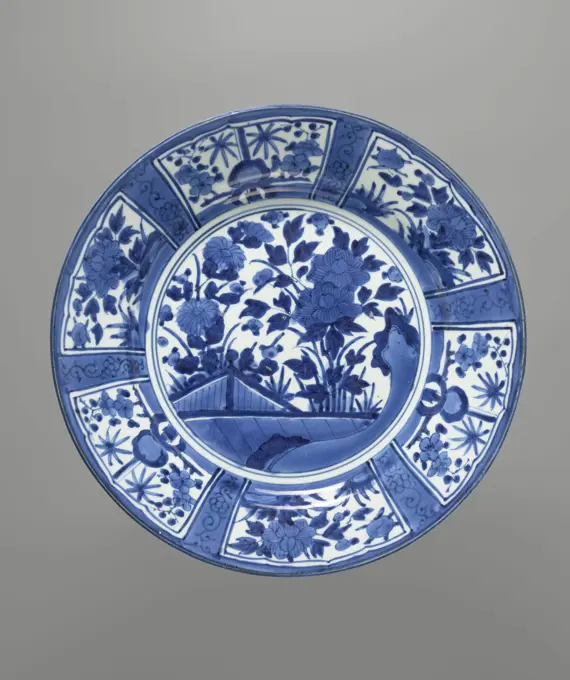
Dish, anonymous, c. 1600 - c. 1624 Porcelain saucer, painted in under -glaze blue. On the flat a star -shaped cartouche with four birds in a river landscape with flowering plants (Lotus). For the Cartouche Lotusranken, Swastika pattern and a scaly motif. The edge is divided into alternately wide and narrow courses. The wide courses with lucky symbols or a peach branch. The narrow compartments with a swastikap pattern or scaly motif interrupted by a cartouche with a bow. The outer wall is divided into alternating wide and narrow compartments, with pearls and dots stylized in the wide courses. The narrow compartments with a mushroom (Lingzhi). Crack porcelain in blue and white. China porcelain. glaze. cobalt (mineral) painting / vitrification Porcelain saucer, painted in under -glaze blue. On the flat a star -shaped cartouche with four birds in a river landscape with flowering plants (Lotus). For the Cartouche Lotusranken, Swastika pattern and a scaly motif. The edge is divided into alte
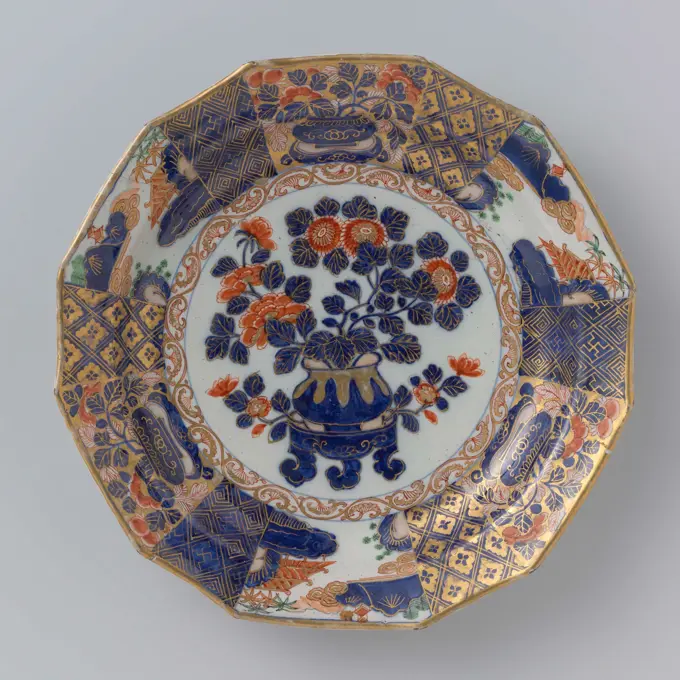
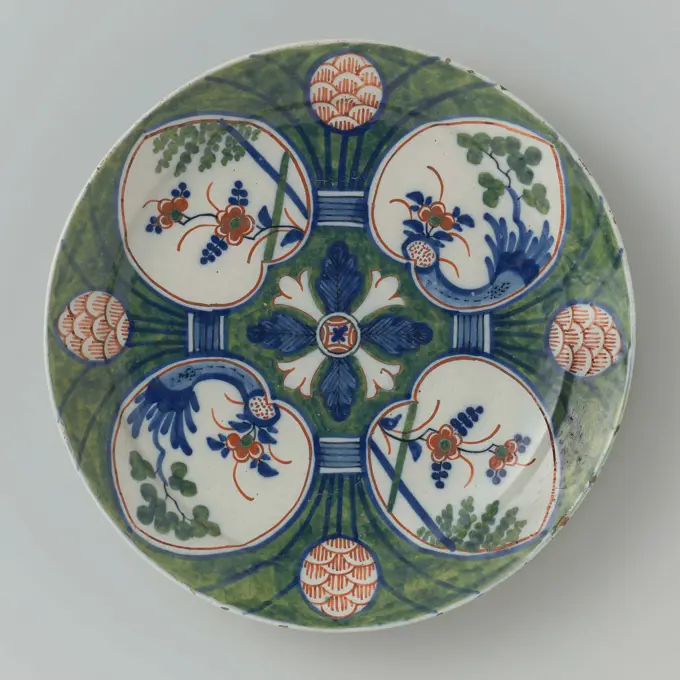
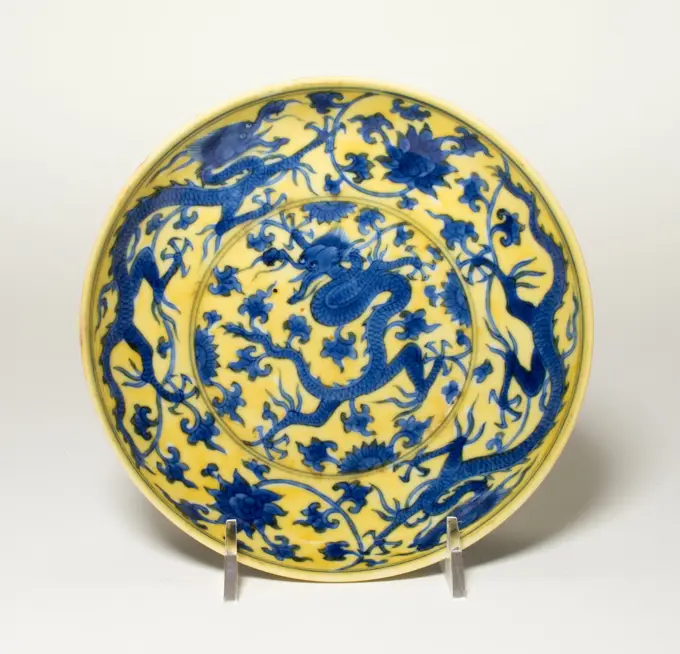
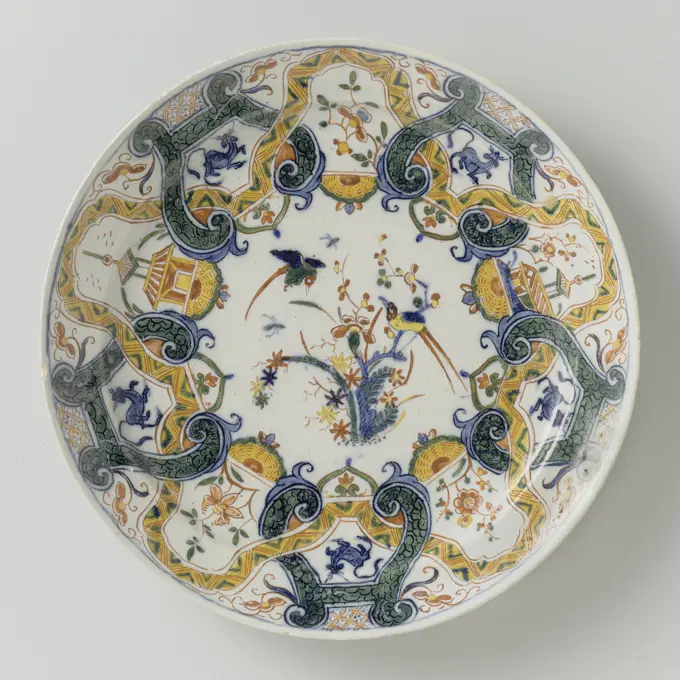
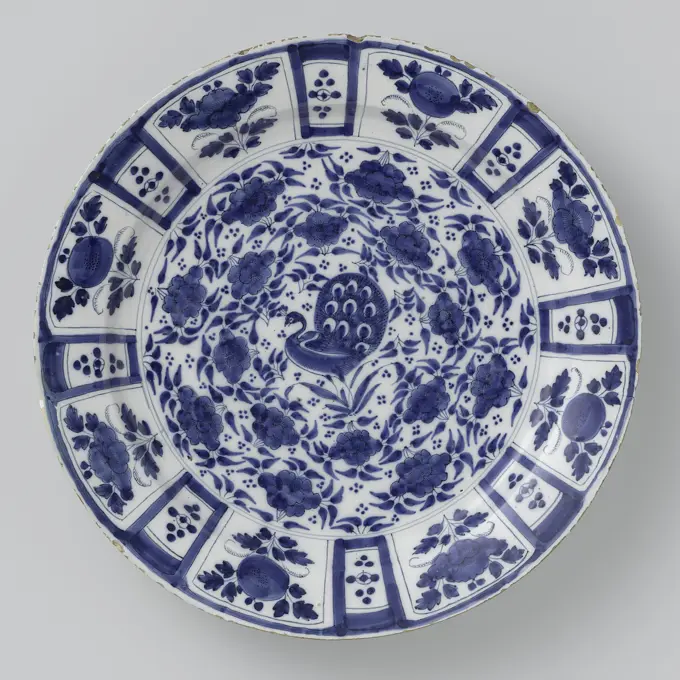
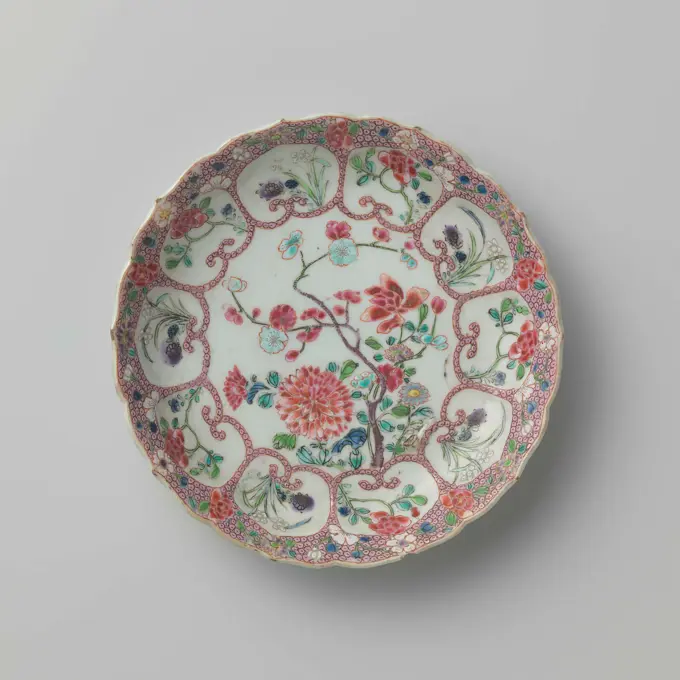
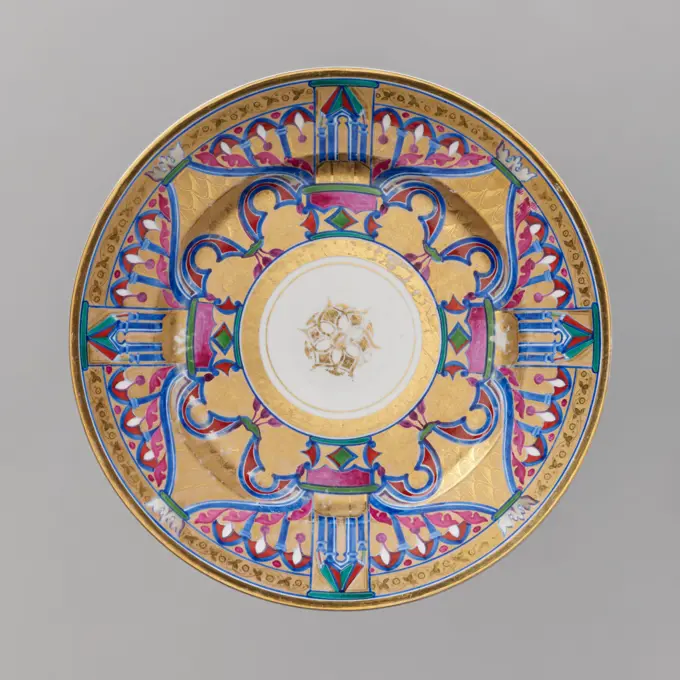
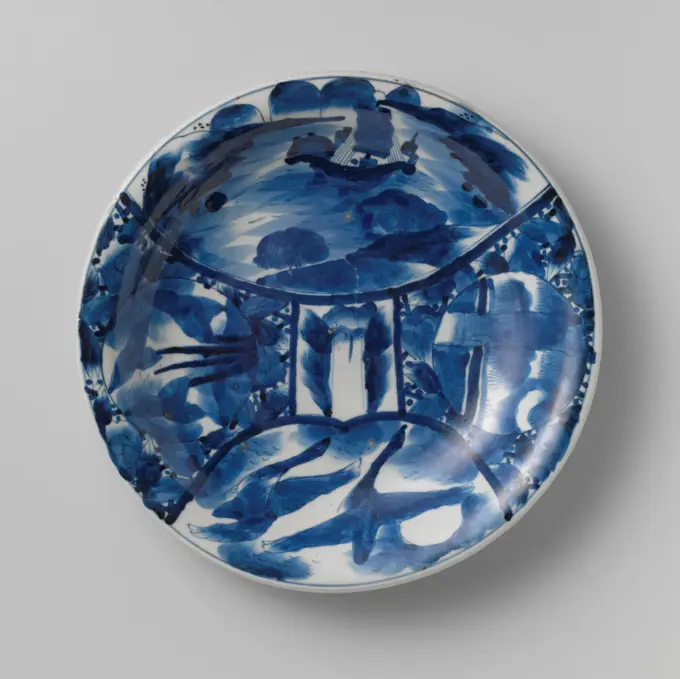
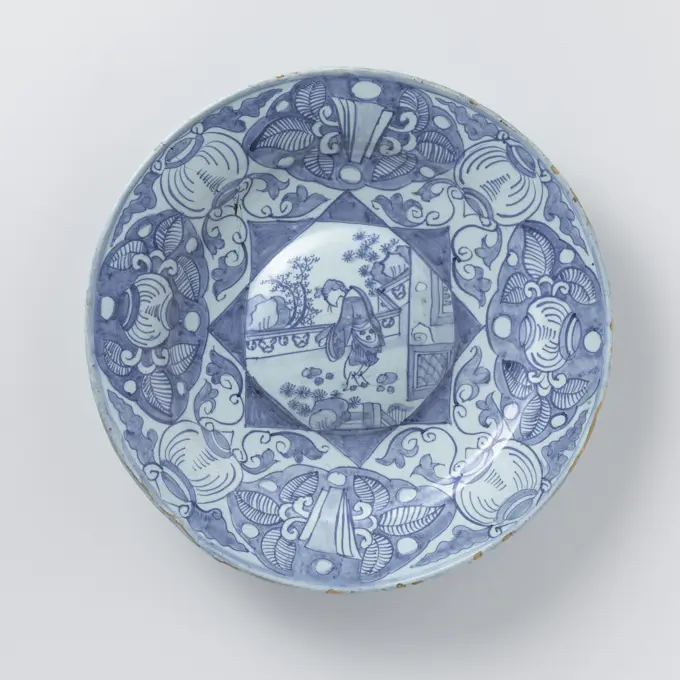
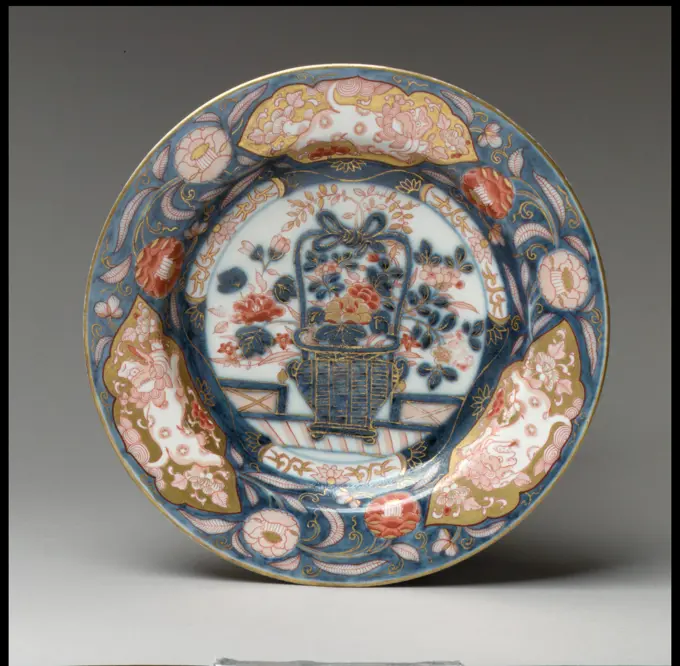
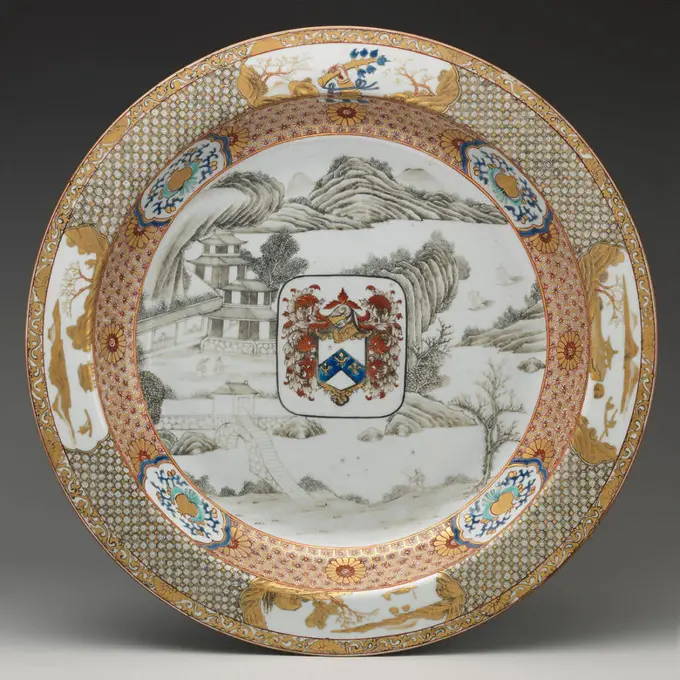
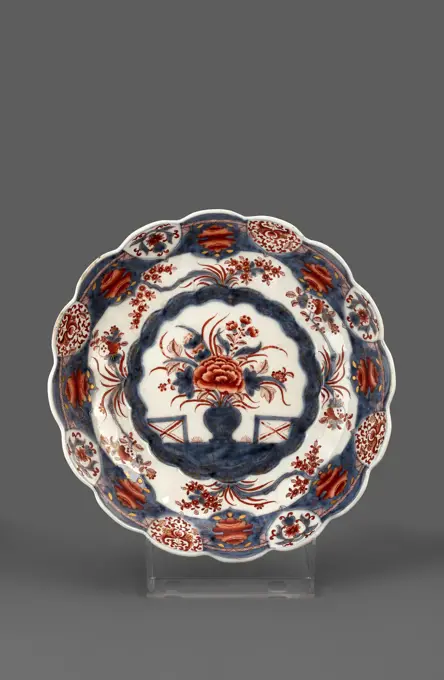
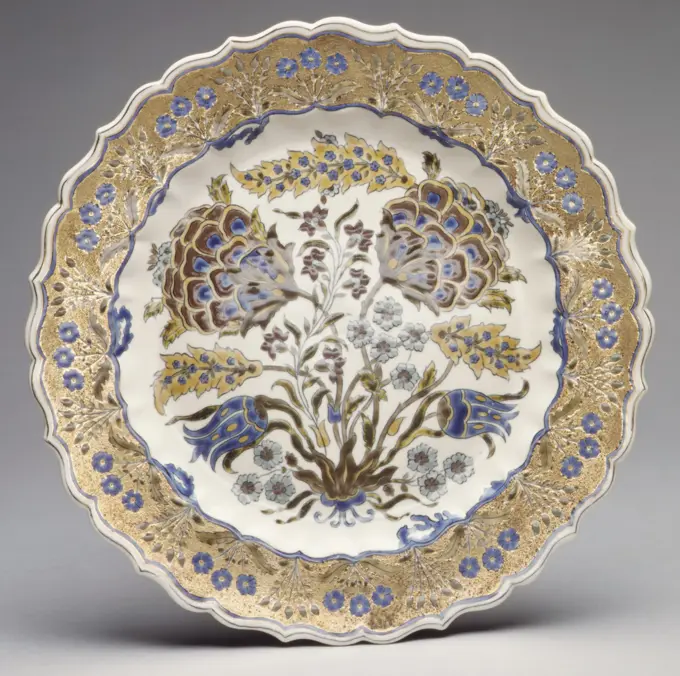
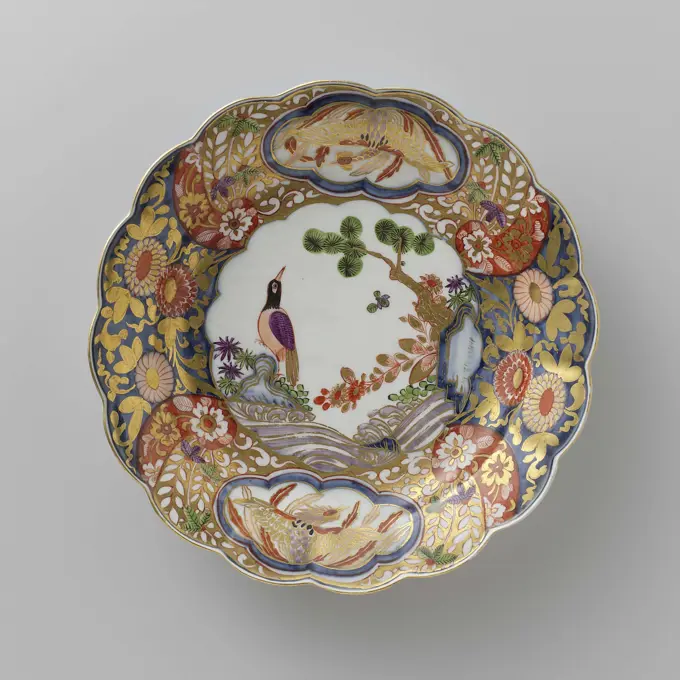
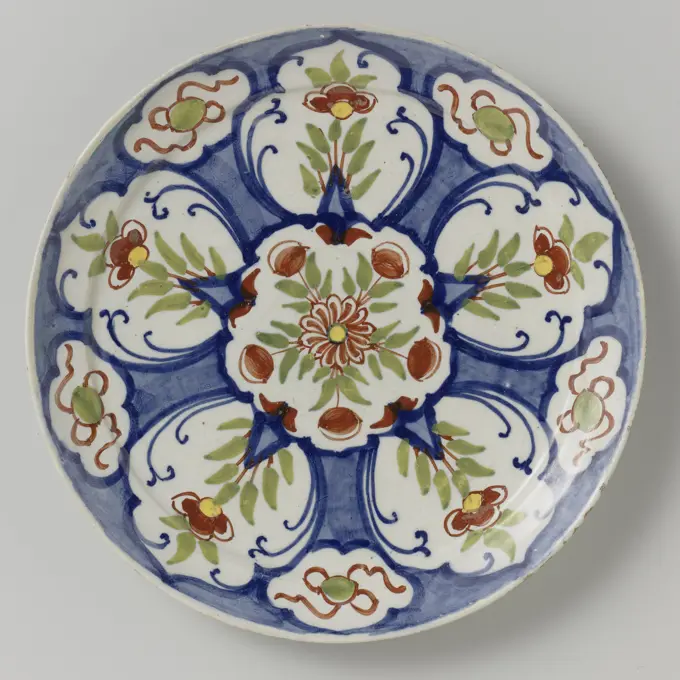
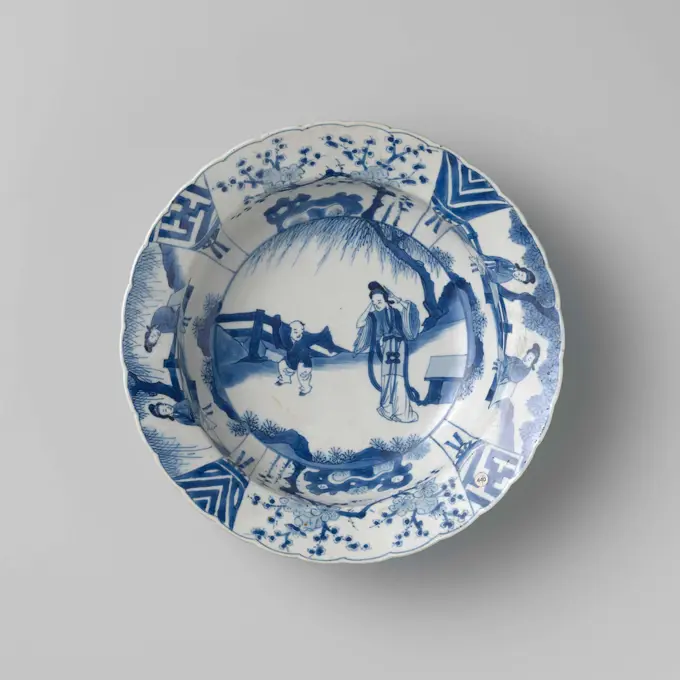
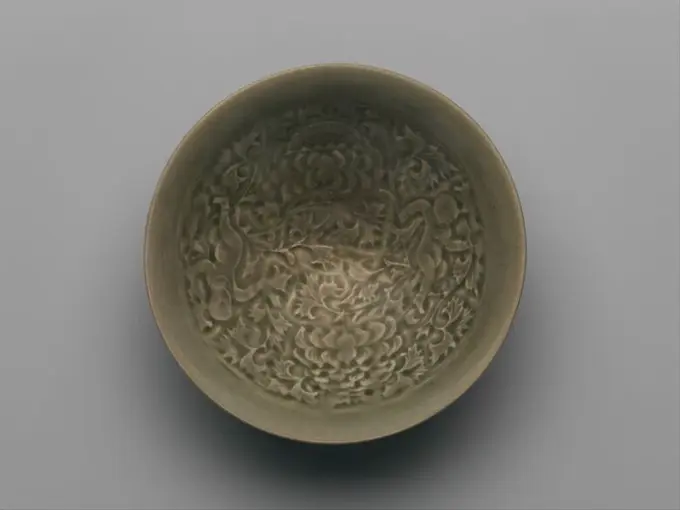
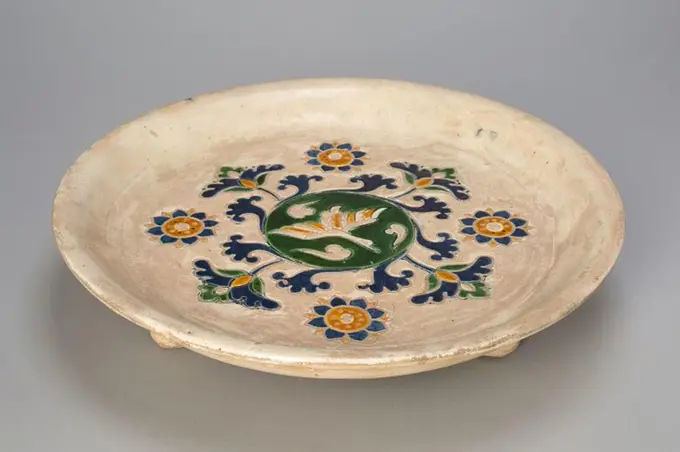
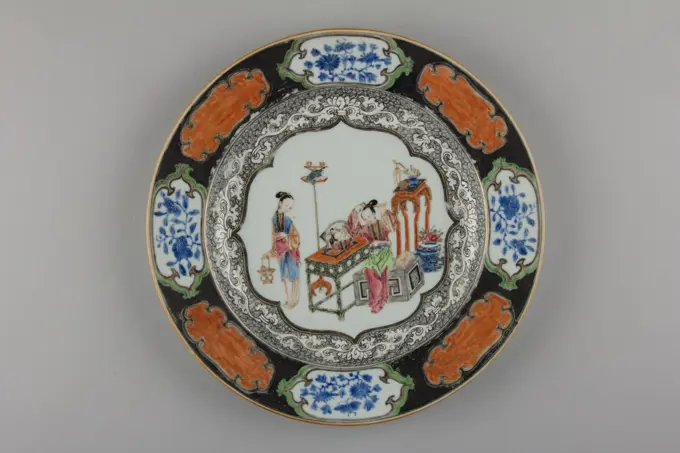
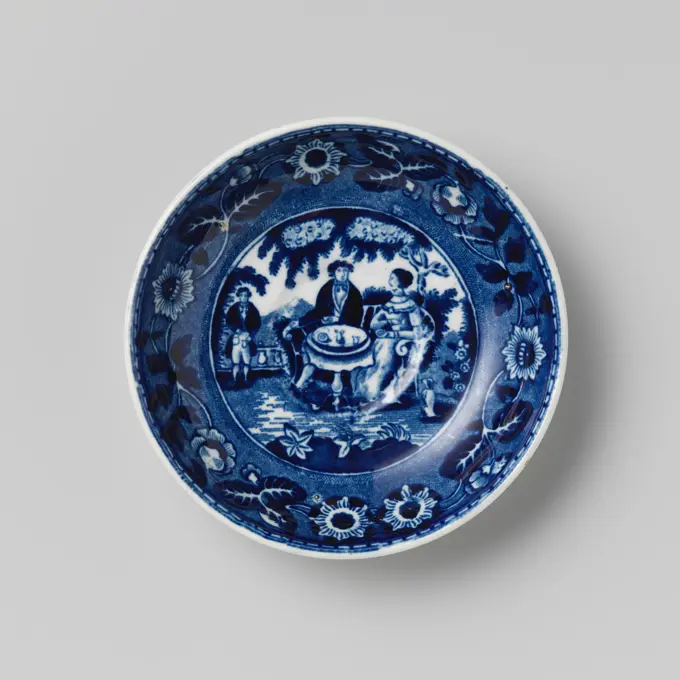
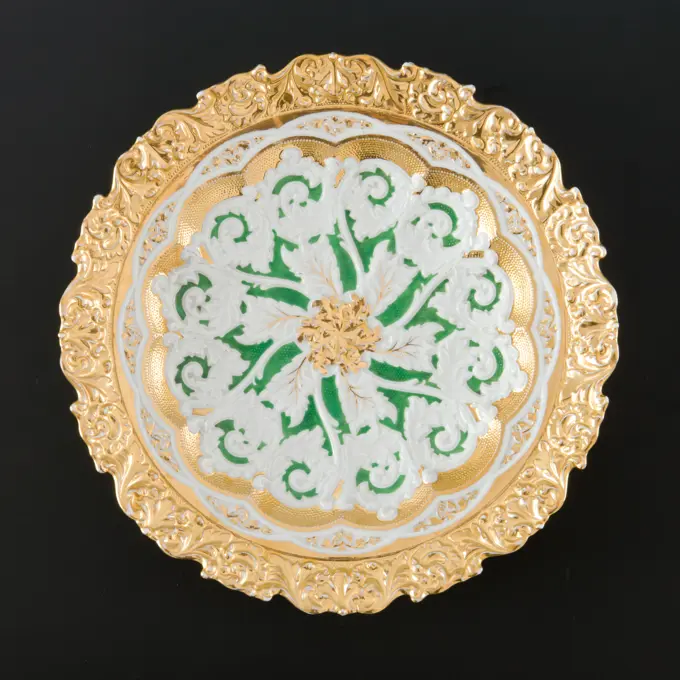
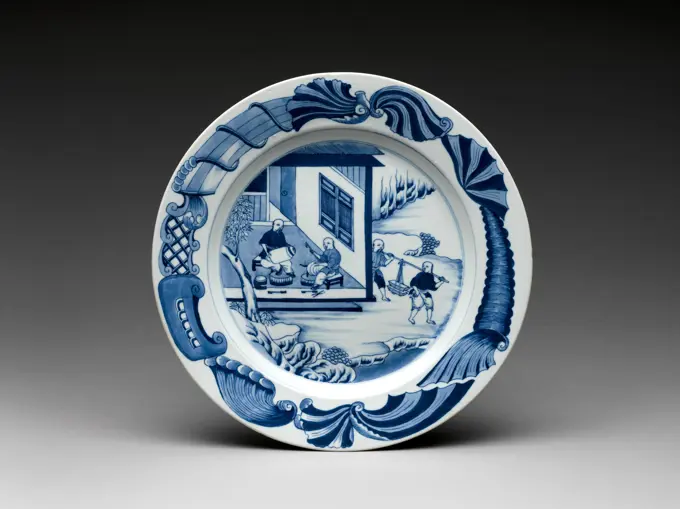
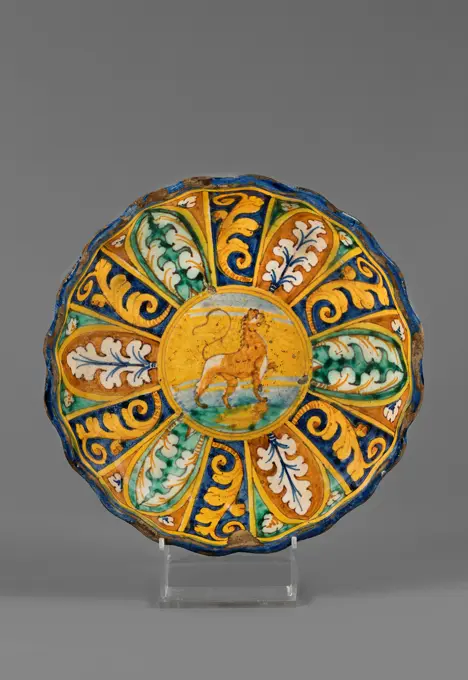
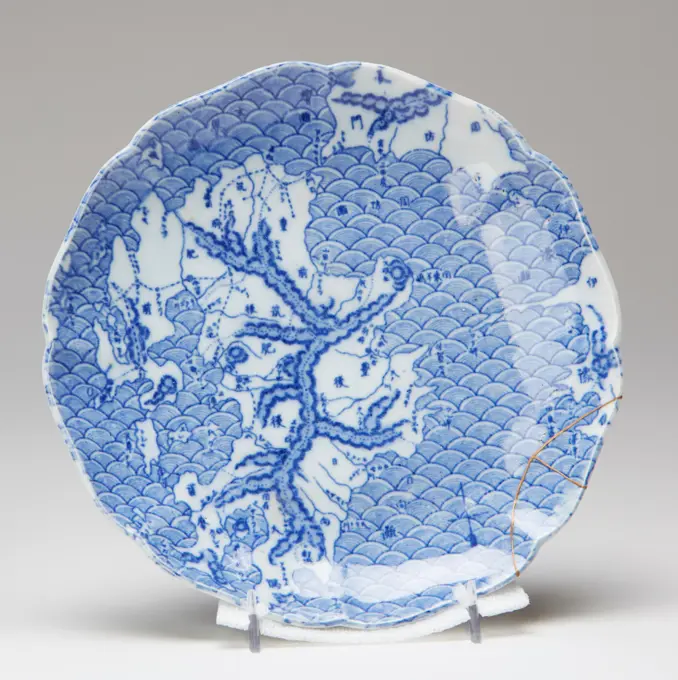
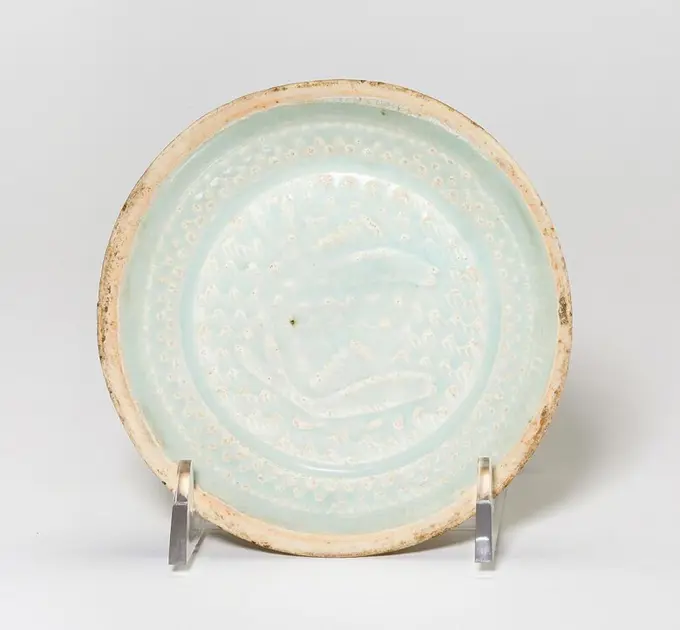
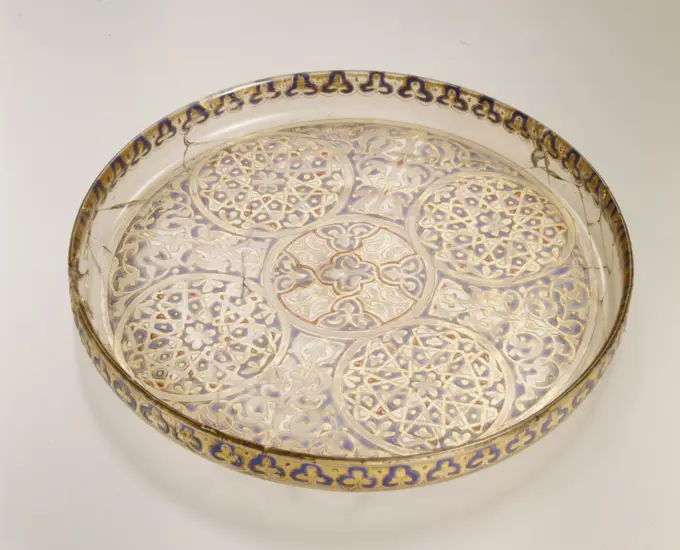
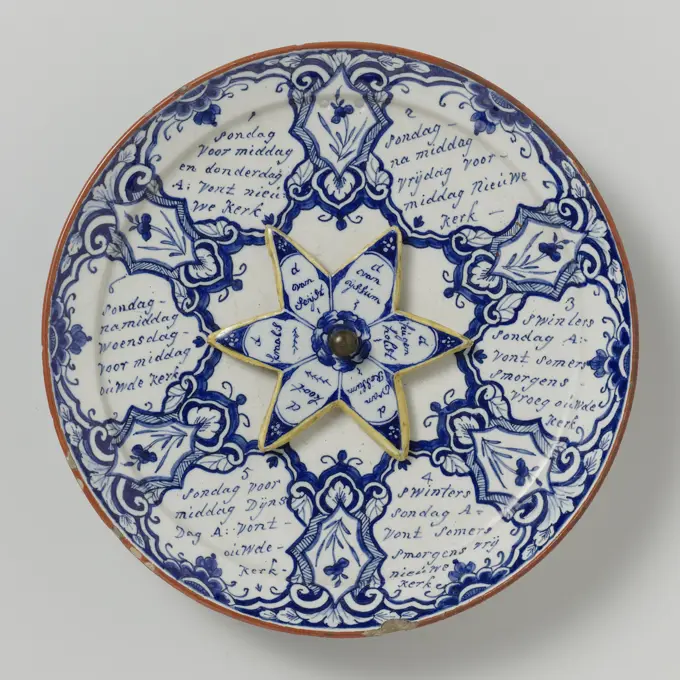
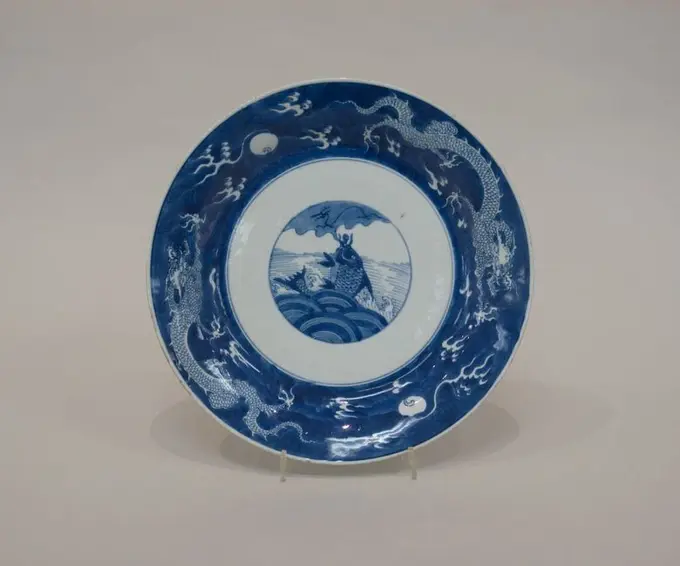
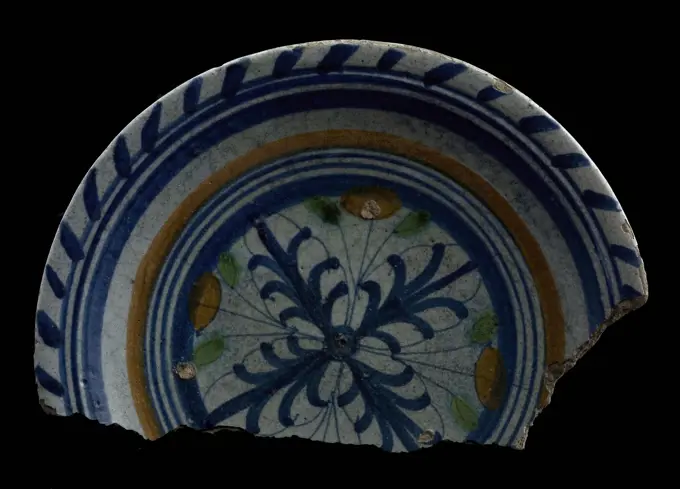
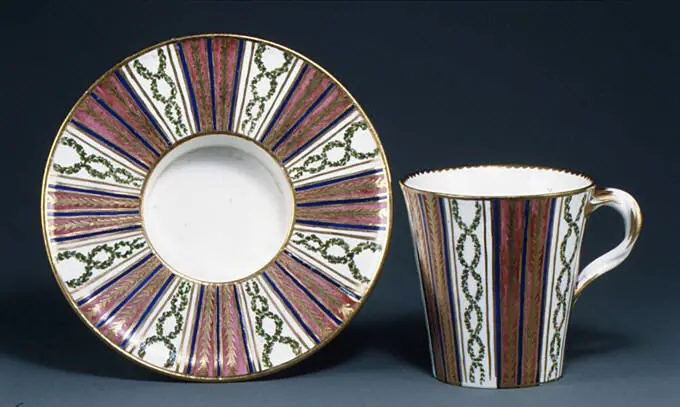
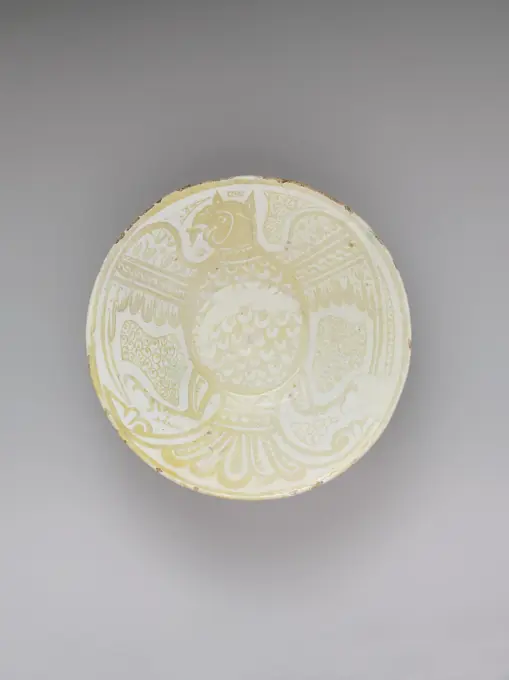
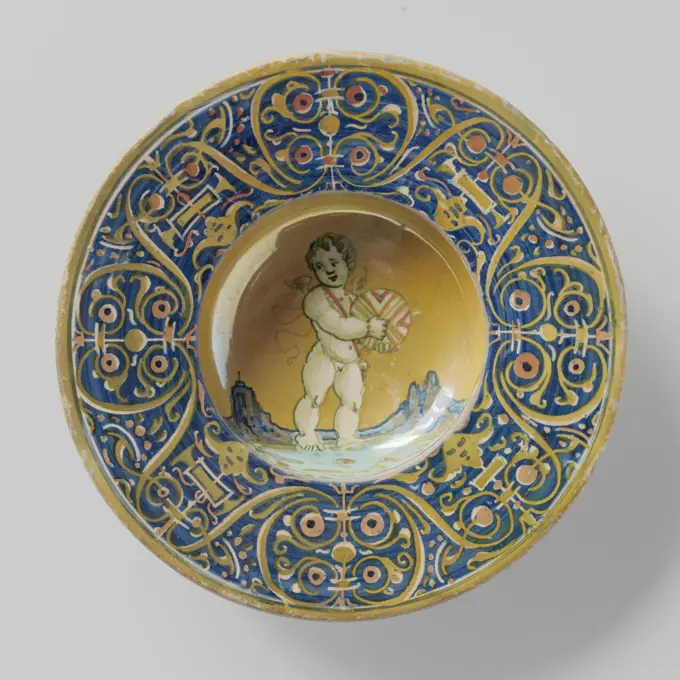
Fragment board from v.O.c.-ship the 'white lion'. Fragment board from v.O.c.-ship the 'white lion', 90% present.. Plate of Faïence. Painted multi-colored with a vase with flowers. An edge with courses, alternating with flowers and landscapes.Dish from v.O.c.-ship the 'white lion'. Dish from v.o.c.-ship the 'white lion', 99.9%% present.Saucer With a Flower Basket and Floral Scrolls. Dish of porcelain, painted in underglaze blue and on the glaze gold. On the flat in a medallion a flowerpot; The wall is divided into three impeller-shaped compartments separated by a wide stripe with a flower. In the flower exit boxes. Imari.. Plate of faience. Painted multi-colored. Signature with the monogram: A R.Dish, anonymous, c. 1600 - c. 1624 Porcelain saucer, painted in under -glaze blue. On the flat a star -shaped cartouche with four birds in a river landscape with flowering plants (Lotus). For the Cartouche Lotusranken, Swastika pattern and a scaly motif. The edge is divided into alternately wide and narrow courses. The wide courses with lucky symbols or a peach branch. The narrow compartments with a swastikap pattern or scaly motif interrupted by a cartouche with a bow. The outer wall is divided into alternating wide and narrow compartments, with pearls and dots stylized in the wide courses. The narrow compartments with a mushroom (Lingzhi). Crack porcelain in blue and white. China porcelain. glaze. cobalt (mineral) painting / vitrification Porcelain saucer, painted in under -glaze blue. On the flat a star -shaped cartouche with four birds in a river landscape with flowering plants (Lotus). For the Cartouche Lotusranken, Swastika pattern and a scaly motif. The edge is divided into alteCome with the "Los" motif, N.V. Plateelbakkerij Ram, 1920 - 1930 Come of earthenware, decorated with the "Loose" motif, six flowers on the inner country in brown/orange, yellow, red -brown, brown, violet and green. The bottom has a violet stock. The outer edge has motifs in brown/orange, green, yellow and blue. Brands: Circle stamp Colenbrander-Arnhem-Holland around Ramskop with RAM; Combination of the letters WS (); C 36 and loose in black. Ingrift 34. Arnhem earthenware Come of earthenware, decorated with the "Loose" motif, six flowers on the inner country in brown/orange, yellow, red -brown, brown, violet and green. The bottom has a violet stock. The outer edge has motifs in brown/orange, green, yellow and blue. Brands: Circle stamp Colenbrander-Arnhem-Holland around Ramskop with RAM; Combination of the letters WS (); C 36 and loose in black. Ingrift 34. Arnhem earthenwareDish with Dragons and Lotus Flowers 1662-1722 China. Porcelain with underglaze blue and overglaze yellow enamel decoration .. Pottery wall plate, ribt, polychrhouse painted with three floral patterns on the flat and three larger, two-turned parts of two shields on the edge. Suspension hole in foot ring. Marked with: W. V with flag G. / The Hague / D, below: Moite and also four points, including a horizontal stripe (all in black).Sign from V.O.C.-ship De 'Witte Leeuw', Anonymous, Before 1613 plate (dishes) Plate, consisting of three fragments glued together, from V.O.C. ship the 'Witte Leeuw', 60 present. Jingdezhen bone china (material)   Sint-HelenaPlate from v.O.c.-ship the 'white lion'. Plate from v.o.c.-ship the 'white lion', 95% present.Bord, anonymous, c. 1700 - c. 1750 plate made of multi -colored fowence. On the flat birds are painted in plants and on the edge a band ornament in which pagodas, flowers and dragons. Delft earthenware. tin glaze. plate made of multi -colored fowence. On the flat birds are painted in plants and on the edge a band ornament in which pagodas, flowers and dragons. Delft earthenware. tin glaze.Shallow Bowl with Lotus Flower and Leaves 1200-1234 China. Cizhou ware; stoneware, slip-coated with decoration in overglaze red, yellow, and green enamel .Flat. "Blue and white" porcelain, Ming. Provenance: China. Paris, Cernuschi museum. 78845-23 Asian art, Chinese art, living art, table arts, fine ceramics, ming dynasty, porcelain, dishes, dishDish of Faience, c. 1700 - c. 1740 Dish of earthenware decorated in blue on a white stock. The edge is divided into eight surfaces containing flowers that are separated by eight smaller surfaces containing nine dots each, inspired by Porcelain Kraak. The flat has flour and leaf motifs in two circles. A peacock can be seen in the middle. The edge is provided with star and circle motifs at the back. Delft earthenware Dish of earthenware decorated in blue on a white stock. The edge is divided into eight surfaces containing flowers that are separated by eight smaller surfaces containing nine dots each, inspired by Porcelain Kraak. The flat has flour and leaf motifs in two circles. A peacock can be seen in the middle. The edge is provided with star and circle motifs at the back. Delft earthenwareSaucer With Flowering Plants And Flower Sprays in Molded Petal-Shaped Panels on Diaper Pattern. Dish of porcelain with scalloped edge, painted on the glaze in blue, red, pink, green, yellow, purple and black. On the flat a scalloped medallion with flowering plants (Prunus, Peony, Chrysanthemum, Aster) with landscaped flower leaf-shaped compartments with flowering plants against a background of napkin; on the edge flower branches; The back with two mushrooms (Lingzhi). A chip in the edge. Family Rose.Charger, De Greek A, c. 1680 - c. 1685 Sausence dish with a decoration to the Chinese porcelain from the transition period: covered with tinglaze and painted in blue and manganese with five figures in a landscape on the flat and four groups of two or three Chinese figures on the edge. Delft . Sausence dish with a decoration to the Chinese porcelain from the transition period: covered with tinglaze and painted in blue and manganese with five figures in a landscape on the flat and four groups of two or three Chinese figures on the edge. Delft .Dessert plate; Imperial Porcelain Factory in St. Petersburg (1744-1917); 1825-1855 (1825-00-00-1855-00-00);Plate with flowering plants near a rock and pierced rim, anonymous, c. 1725 - c. 1749 Porcelain plate with partially openwork edge, painted in underlaze blue. On the flat a medallion with large, flowering plants (peony) in a rock. Between the openwork parts on the edge sculpted cartouches with flowering plants (orchid, Prunus, Lotus, Aster); Above a bond with shadowing. The outer wall with a continuous flower branch; The outer edge with a stylized flower branch four times. Marked on the underside with a Ruyi-Scepter in a double circle. Blue White. China porcelain. glaze. cobalt (mineral) painting / vitrification Porcelain plate with partially openwork edge, painted in underlaze blue. On the flat a medallion with large, flowering plants (peony) in a rock. Between the openwork parts on the edge sculpted cartouches with flowering plants (orchid, Prunus, Lotus, Aster); Above a bond with shadowing. The outer wall with a continuous flower branch; The outer edge with a stylized flower branch Saucer-dish with a boat, birds and flowering plants in panels, anonymous, c. 1700 - c. 1799 Porcelain saucer with a round wall and a thick, turned around. Painted in underlaze blue. On the front in the center a square with a half -round box on either side with in one two flying geese between clouds in front of the sun or the moon, in the other a river landscape with a sailboat on the water. Between these courses flower vines with two medallions with flowering plants or a tree in a landscape. The outer wall with large leaf vines with dots. A proen on the bottom. Arita, Blauw-Wit. Japan porcelain. glaze. cobalt (mineral) painting / vitrification Porcelain saucer with a round wall and a thick, turned around. Painted in underlaze blue. On the front in the center a square with a half -round box on either side with in one two flying geese between clouds in front of the sun or the moon, in the other a river landscape with a sailboat on the water. Between these courses flower vines with two meDish 17th century. Dish. 17th century. Stonepaste; underglaze painted in black, blue, and green with red and yellow slips. Attributed to Iran. CeramicsDish, Anonymous, c. 1660 - c. 1680 Dish of blue painted faience, with a bombarded bottom. On the bottom there is an eight -pointed star, in which a circle is painted and in the circle an image of a female figure on a terrace. The edge is painted with ornaments. Delft earthenware. tin glaze. Dish of blue painted faience, with a bombarded bottom. On the bottom there is an eight -pointed star, in which a circle is painted and in the circle an image of a female figure on a terrace. The edge is painted with ornaments. Delft earthenware. tin glaze.Plate ca. 1750 Imperial Porcelain Manufactory The gift of the Hans Syz Collection in 1995 endowed the Museum with nearly three hundred examples of European and Asian ceramics meticulously acquired by Swiss-born collector Dr. Syz (1894-1991) to chart the migration of models and patterns from East to West. Documenting a continuous process of influence and adaptation, these pieces provide a discriminating review of the nuances of stylistic change resulting from three centuries of trade.. Plate 208255Saucer-dish with powder blue and panels in reserve with flower sprays, anonymous, c. 1700 - c. 1724 Dish with a round wall of porcelain, painted in under -glaze blue. The front of the dish is covered with bleu poudré (powder blue) with two fan -shaped and two rectangular cartouches filled with flower branches, a round medallion filled with a flower rod with terres in the center; The back with three flower vines. Marked on the bottom with a window in a double circle. Restored with four staples; A chip in the edge. Bleu Poudré with blue and white. China porcelain. glaze. cobalt (mineral) painting / vitrification Dish with a round wall of porcelain, painted in under -glaze blue. The front of the dish is covered with bleu poudré (powder blue) with two fan -shaped and two rectangular cartouches filled with flower branches, a round medallion filled with a flower rod with terres in the center; The back with three flower vines. Marked on the bottom with a window in a double circle. Restored wiPlate. Culture: Chinese, for British market. Dimensions: Overall: 2 3/8 × 15 1/4 in. (6 × 38.7 cm). Date: 1725-30.This dish is part of a service made for John Elwick of Cornhill, London (died 1730), who was a director of the English East India Company, the firm that dominated the British trade with India and China. Museum: Metropolitan Museum of Art, New York, USA.Plate. unknown, craftsmanPlate Made 1755-1765 Bow . Bow Porcelain FactoryCovered Box mid-16th century China. Covered Box 40743Sign from V.O.C.-ship De 'Witte Leeuw', Anonymous, Before 1613 plate (dishes) Sign from V.O.C. ship De 'Witte Leeuw', 95  present.; Parts of the wall are missing. The shard is red -brown and has a lot of ingrained dirt. The glaze is pale green. The underlaze is purple in color. The bottom is partially glazed and the foot ring is inside. The foot ring has been completed and little oven sand has been found. The lip edge is unpacked. The flat is decorated with a pheasant between flowers and tenders. Swatow porcelain. glaze   Sint-HelenaPlate. Netherlands, Delft; Grieksche A Factory; Dutch, 1658-1722. Date: 1703. Dimensions: Diam. 21.6 cm (8 1/2 in.). Tin-glazed earthenware (Delftware). Origin: Delft. Museum: The Chicago Art Institute, Chicago, USA. Author: Grieksche A Factory.Dish. Worcester Porcelain Factory; Worcester, England, founded 1751. Date: 1770-1780. Dimensions: Diam. 23.2 cm (9 1/8 in.). Soft-paste porcelain, polychrome enamels and gilding. Origin: Worcester. Museum: The Chicago Art Institute, Chicago, USA. Author: Worcester Royal Porcelain Company.Maiolica: Plate (tagliere) ca. 1500 Italian (Tuscany). Maiolica: Plate (tagliere). Italian (Tuscany). ca. 1500. Maiolica (tin-glazed earthenware). Ceramics-PotteryDish, painted with Amnon who gives himself to his half-sister Tamar. Dish of Faïence, painted in blue with a representation of Amnon, son of King Solomon, who gives himself to his half-sister Tamar (2 Samuel 13).Plate (saucer); Manufacture de Porcelaine (Vincennes; 1740-1756); around 1755 (1750-00-00-1760-00-00);Platter with Imari decoration. Kaiserliche Porzellanmanufaktur in Wien (1744-1864), factoryPlate ca. 1880 Zsolnay The design is a fairly literal version of a mid-sixteenth-century Turkish (Iznik) pattern.. Plate. Hungarian, Pécs. ca. 1880. Earthenware. Zsolnay (Hungarian, Pecs 1853-present). Ceramics-PotteryFloral decorated pearl button, 1775-1800. Central faceted mirror-glass stone. Drilled brass swaged-in shank.. Produced in Birmingham.. Round dish of painted porcelain. The dish is a faithful copy of an Imari example. On the flat is a bird on a rock, painted on the edge a busy decor of flowers, in which two six-spectant fields are saved with a bird in it. The dish has been marked.bord, anonymous, c. 1730 - c. 1770 Round plate made of multi -colored fowence, with a medallion in the middle containing a flower and leaves in the colors green and red. There are five white compartments in a blue background in which flower and leaf decorations. The board includes two identical signs with the invnrs. BK-KOG-2432-A and BK-KOG-2432-C. Delft earthenware. tin glaze. Round plate made of multi -colored fowence, with a medallion in the middle containing a flower and leaves in the colors green and red. There are five white compartments in a blue background in which flower and leaf decorations. The board includes two identical signs with the invnrs. BK-KOG-2432-A and BK-KOG-2432-C. Delft earthenware. tin glaze.Fragment deep plate from V.O.C. ship De 'Witte Leeuw', Before 1613 plate (dishes) Fragment deep plate from V.O.C. ship the 'Witte Leeuw'. Jingdezhen bone china (material)   Sint-HelenaCircular dish. unknown, craftsmanDish, painted multicolored with a rosette around which concentric circles and floral drinks with spiral leaves .. round dish of multi-colored painted majolica. In the middle, a rosette has been painted, around it concentric circles and around five floral drinks with spiral leaves around it. The outer edge is slanted.Platter. Gdańsk (ośrodek ceramiczny ; XVIII w.), factorySaucer with petal-shaped panel around a central medallion, filled with flower sprays, anonymous, c. 1750 - c. 1774 Porcelain saucer, painted in underly glaze blue and on the glaze red and gold. On the flat of the dish a medallion with flour, around the medallion six petal-shaped compartments filled with flower branches; A flower vend between the courses; Three loose flowers on the back. Chinese Imari. China porcelain. glaze. cobalt (mineral). gold (metal) painting / gilding / vitrification Porcelain saucer, painted in underly glaze blue and on the glaze red and gold. On the flat of the dish a medallion with flour, around the medallion six petal-shaped compartments filled with flower branches; A flower vend between the courses; Three loose flowers on the back. Chinese Imari. China porcelain. glaze. cobalt (mineral). gold (metal) painting / gilding / vitrificationShallow dish ca. 1535-40 Italian, Faenza. Shallow dish. Italian, Faenza. ca. 1535-40. Maiolica (tin-glazed earthenware). Ceramics-PotterySaucer, late 1700s. Spode Factory (British). Porcelain; overall: 3.4 x 15 cm (1 5/16 x 5 7/8 in.).Soup plate early 19th century Chinese, probably for American market. Soup plate 201057. Round plate of multi-colored padded faience, with a circle on the flat in which a blue star and a blue border. There are four multicolored impeller-shaped boxes with flowers. There is a brand on the back.Plate from v.O.c.-ship the 'white lion'. Plate from v.O.c.-ship the 'white lion', 98%% present.Deep Dish With Flower Sprays, Chinese Ladies And Boys. Deep scale of porcelain with flat, lobed edge, painted in underglaze blue. On the bottom a lady (long lice) and dancing boy (ocean) in a fenced garden; On the wall and edge four compartments with alternating two ladies sitting under a tree in a fenced garden and a prunus branch at a rock, between the courses a geometric pattern (Swastika) including a bow; The outside with four compartments with Ruyi motif and four flower drinks. Blue White.Saucer with Rocks, Flower Sprays and Butterflies. Dish of porcelain with ribbed wall and scalloped edge, painted in underglaze blue. On the flat a rock with two flower branches (chrysanthemum, peony) and a butterfly; the wall divided into six compartments filled with flower branches and birds; Three flower branches on the back. Marked on the underside with a seal mark in a double circle. Dish has been broken. Blue White.Scale with scalloped edge; On the flat a heraldic ornament, anonymous, c. 1720 - c. 1750 Scale with scalloped edge; On the flat a heraldic ornament Delft . Scale with scalloped edge; On the flat a heraldic ornament Delft .Bowl with Two Boys among Foliage. Culture: China. Dimensions: H. 2 3/8 in. (6 cm); Diam. 7 1/8 in. (18.1 cm). Date: 11th-12th century.Although early Yaozhou wares often had elegant light blue glazes, by the mid-tenth century most wares of this type were covered with olive-toned glazes. The reasons for the change remain obscure, though it may have resulted from the switch from wood to coal as the fuel for the kiln. Museum: Metropolitan Museum of Art, New York, USA.Tripod Dish with Flying Goose, Stylized Flowers and Vines 618 CE-907 CE China. Slip-coated earthenware with three-color (sancai) lead glazes and underglaze mold-impressed decoration .Deep Dish. Culture: Spanish. Dimensions: Overall: 18 1/4 in. (46.4 cm). Date: 1420-1430. Museum: Metropolitan Museum of Art, New York, USA.Tripod Dish with Flying Goose, Stylized Flowers and Vines. China. Date: 618 AD-907 AD. Dimensions: H. 6.5 cm (2 9/16 in.); diam. 29.3 cm (11 9/16 in.). Slip-coated earthenware with three-color (sancai) lead glazes and underglaze mold-impressed decoration. Origin: China. Museum: The Chicago Art Institute, Chicago, USA.Plate. unknown, craftsmanPlate with an image of The Parasol Lady, anonymous, c. 1736 - c. 1738 Porcelain plate, painted on the glaze in blue, red, pink, green, yellow, black and gold. On the flat a woman by a pond with reeds, gesturing to three birds in front of her on the land, next to the woman a servant who holds a richly decorated parasol over her head; on the wall flower branches interspersed with a medallion; The edge with a honeycomb motif with four cartouches with a woman and four medallions with birds; The back with eight insects. The performance is designed by Cornelis Pronk (1691-1754). European performance in email colors. Chinadraughtsman: Netherlands porcelain. glaze. gold (metal) painting / gilding / vitrification Porcelain plate, painted on the glaze in blue, red, pink, green, yellow, black and gold. On the flat a woman by a pond with reeds, gesturing to three birds in front of her on the land, next to the woman a servant who holds a richly decorated parasol over her head; on the wall flower brPlate with ladies late 18th century China. Plate with ladies 46443Plate from the v.o.c.-Ship the 'Witte Leeuw'. Porcelain plate from v.O.c.-ship the 'white lion' with a flat edge and a sculpt lip, painted in underglaze blue. In the flat a large, square field, surrounded by a brace-shaped band. In the field a grasshopper seen from above, sitting on a rock at the water and plants flowering plants (aster). In the air an insect (dragonfly). Outside the field geometric motifs and styled tendrils. On the wall and edge alternately wide and narrow fields with lucky symbols (artemisia leaf, chakre) and flowering plants and fruit varieties (peach). 85%% available. Cracking porcelain in blue and white.Dish, painted multi-colored with a kakiemon decor. Dish of painted porcelain. The dish is painted with 'three friends'. Along the edge a red trim with loops runs. The dish has been marked.Dish, with tea tearing couple. Dish of pottery with liquefy transfer decor. The flat with a tea tearing couple with clerk and dog. The edge is equipped with a bond with flowers and leaves.Saucer with cock and deer on a black ground with flower scrolls, anonymous, c. 1725 - c. 1749 Porcelain dish, painted on the glaze in blue, red, pink, green, yellow and black. The flat is covered with a black glaze with in spare flower vines and four cartouches: a medallion with rooster and three leaf -shaped cartouches with deer in a landscape; The edge with a band pink 'crackled ice' pattern. A crack in the edge. Famle Rose. China porcelain. glaze. cobalt (mineral) painting / vitrification Porcelain dish, painted on the glaze in blue, red, pink, green, yellow and black. The flat is covered with a black glaze with in spare flower vines and four cartouches: a medallion with rooster and three leaf -shaped cartouches with deer in a landscape; The edge with a band pink 'crackled ice' pattern. A crack in the edge. Famle Rose. China porcelain. glaze. cobalt (mineral) painting / vitrificationDecorative plate Mi Nia (Meissen)Blackboard with a blooming plant on the flat and the edge. Plate of pottery with liquefy transfer decor. On the flat and the edge a representation of a flowering plant. The scalloped edge of the blackboard with stylized leaves in relief.Saucer with panels in the shape of a flowerhead filled with flower sprays, anonymous, c. 1680 - c. 1720 Porcelain saucer with raised wall and flat edge, painted in underlaze blue. On the flat a medallion surrounded by petal -shaped compartments; The medallion is filled with a flower branch, rock and grasshopper, in the leaf -shaped subjects a flower branch (bamboo, chrysanthemum, prunus, pine et al.); on the edge of flower branches; The rear with two flower branches and a peach branch. Marked on the underside with an artemisia leaf in a double circle. Blue White. China porcelain. glaze. cobalt (mineral) painting / vitrification Porcelain saucer with raised wall and flat edge, painted in underlaze blue. On the flat a medallion surrounded by petal -shaped compartments; The medallion is filled with a flower branch, rock and grasshopper, in the leaf -shaped subjects a flower branch (bamboo, chrysanthemum, prunus, pine et al.); on the edge of flower branches; The rear with two flower branchDish with Peony Design 14th-ca. mid-16th century Thailand (Si Satchanalai). Dish with Peony Design 37461Dish with flowers late 18th century China. Dish with flowers 49882A plate;  beginning of the 20th century (1901-00-00-1910-00-00);Tea bowl with decoration of six-petaled flowers 12th-13th century China Noted for its imaginative designs and innovative techniques, Jizhou ware was produced at kilns in Jiangxi Province in southern China. Here, paper-cut plum blossoms were placed on an initial layer of black glaze and covered with brown glaze. The paper cuts were destroyed during the firing, leaving the design of plum blossoms on the inside of the bowl.Noted for its imaginative designs and innovative techniques, Jizhou ware was produced at kilns in Jiangxi Province in southern China. Here, paper-cut plum blossoms were placed on an initial layer of black glaze and covered with brown glaze. The paper cuts were destroyed during the firing, leaving the design of plum blossoms on the inside of the bowl.. Tea bowl with decoration of six-petaled flowers. China. 12th-13th century. Stoneware with black and brown glazes and paper-cut designs (Jizhou ware). Southern Song dynasty (1127-1279). CeramicsPlate with vase of flowers mid-17th century China Most of the porcelain made for export to Europe in the late sixteenth and first half of the seventeenth century was blue-and-white. This is an extremely rare example of kraak ware painted using colored enamels.. Plate with vase of flowers. China. mid-17th century. Porcelain painted with colored enamels over transparent glaze (Jingdezhen ware). Ming dynasty (1368-1644). CeramicsBowl: Kutani Ware, early to mid-1800s. Japan, Edo period (1615-1868). Porcelain with overglaze enamel and gold decoration; diameter: 45.7 cm (18 in.).Plate. unknown, craftsmanSaucer-dish with powder blue and fish, anonymous, c. 1700 - c. 1724 Scale with a round wall of porcelain, painted with underly glaze blue and red. The front is covered with bleu poudré (powder blue) with five fish saved; The back of the wall is also covered with powder blue. Marked on the underside with one of the twelve ornaments, the Fú symbol, in a double circle. Old label on the bottom with 'Friends of Asian art'. Underglaze blue with copper red. China porcelain. glaze. cobalt (mineral). copper (metal) painting / vitrification Scale with a round wall of porcelain, painted with underly glaze blue and red. The front is covered with bleu poudré (powder blue) with five fish saved; The back of the wall is also covered with powder blue. Marked on the underside with one of the twelve ornaments, the Fú symbol, in a double circle. Old label on the bottom with 'Friends of Asian art'. Underglaze blue with copper red. China porcelain. glaze. cobalt (mineral). copper (metal) painting / vitrificDish with a scene of tea cultivation (one of a pair) ca. 1740-45 Chinese, for European, probably Dutch, market This dish depicts several stages in the production of metal canisters intended to contain tea. These cylindrical containers were used to transport tea to Canton, where it was repacked in metal-lined wooden chests for shipment to Europe and elsewhere.. Dish with a scene of tea cultivation (one of a pair). Chinese, for European, probably Dutch, market. ca. 1740-45. Hard-paste porcelain painted with cobalt blue under transparent glaze (Jingdezhen ware). Ceramics-Porcelain-ExportPlate;  XVII century (1601-00-00-1700-00-00);Arita (ceramic production center), hollow dish, Imari decor (username). Ceramics, porcelain, polychrome enamels: cobalt blue under cover, red on covered, gilding. Petit Palais, Museum of Fine Arts of the City of Paris.Coppa plate. Montelupo (ośrodek ceramiczny ; ca 1400- ), potter's workshopPlate with map design, Unknown Japanese, 1 1/4 × 8 1/2 × 8 3/4 in. (3.18 × 21.59 × 22.23 cm), Porcelain with blue glaze, JapanSaucer-Shaped Dish with Fish. China. Date: 960 AD-1279. Dimensions: H. 2.2 cm (7/8 in.); diam. 10.4 cm (4 1/16 in.). Qingbai ware; stoneware with underglaze molded decoration. Origin: China. Museum: The Chicago Art Institute, Chicago, USA.A plate;  19th century (1801-00-00-1900-00-00);Plate 14th century The spectacular enameled objects produced by Egyptian and Syrian glassmakers in the Ayyubid and Mamluk periods, especially from the mid-thirteenth to the late fourteenth century, are unsurpassed. Flat dishes, such as this fourteenth-century example, were rather uncommon. Its geometric decoration unfolds on two levels, the most immediate represented by the combination of the five tangential circles, drawn in a continuous looping line, that dominate the composition. The second and subtler level is found within the four outer circles, where a complex star pattern was created. The pleasant chromatic contrast of blue, white, and red enamels, and gilding emphasizes the basic elements of both the geometric and the vegetal motifs in this complex design.. Plate 444712Arita (ceramic production center), large dish (ozara) (common name), 1640. Porcelain, polychrome, blue, purple, yellow and green decor, on the cover. Cernuschi Museum, Asia Museum of Asia in the city of Paris. On a background dotted with pine needles, a branch, leaves and camellia flowers, and a flying butterfly.Predikbeurtenbord, anonymous, c. 1788 - c. 1800 Plate of white glazed pottery with a motif of rotating star, an inscription in blue and other ornaments. So-called preaching board 1788-1805. The names of different pastors are mentioned on the board. Delft earthenware. glaze Plate of white glazed pottery with a motif of rotating star, an inscription in blue and other ornaments. So-called preaching board 1788-1805. The names of different pastors are mentioned on the board. Delft earthenware. glazePlate, painted multily: on the flat a landscape with houses and drawbridge; Edge with a stylized flower in five courses. Round plate of multi-colored painted majolica. On the flat is a landscape painted with houses and a drawbridge and a fence in the foreground. The edge is divided into courses, a stylized flower is painted in five courses (to Chinese example).Dish;  XVII/18th century (1691-00-00-1710-00-00);Plate. Culture: China. Dimensions: H. 1 1/2 in. (3.8 cm); Diam. of rim: 10 1/2 in. (26.7 cm); Diam. of foot: 5 7/8 in. (14.9 cm). Museum: Metropolitan Museum of Art, New York, USA.Anonymous. "Flat". Earthenware, clay earth, stanniferous enamel, metal chandelier with yellow reflections. Museum of Fine Arts of the City of Paris, Petit Palais. 101893-13 Decor, graphic decor, vegetal decor, email, earthenware, metallic chandelier, dishes, dishDinner plate -Fragment board from v.O.c.-ship the 'white lion'. Fragment board from v.o.c.-ship the 'white lion' with a flat edge and a scalloped lip, decorated in underglaze blue, 70%% present. On the flat a bird on a rock at a flowering plant, surrounded by an accolaneous band with geometric motifs. On the wall and edge alternately wide and narrow fields with lucky symbols and flower branches. Type 1.1.4a.Oval bowl; Derby Porcelain Factory (Derby; 1748-1848); approx. 1800 (1800-00-00-1810-00-00);Fragment majolica dish, polychrome, four-leaved flower, dish crockery holder soil find ceramic earthenware glaze, Cooked on the underside covered with lead glaze milky and green Polychrome archeology decorate servingSign from V.O.C.-ship De 'Witte Leeuw', Anonymous, Before 1613 plate (dishes) Sign from V.O.C. ship the 'Witte Leeuw' with a flat edge and a scalloped lip, decorated in underlaze blue, 98 present. In the flat lucky symbols surrounded by a accolade band with stylized tiflets and geomteric motifs. On the wall and edge wide and narrow Velde filled with happiness symbols and flower branches. The cobalt and glaze in the flat are partially burned in the oven and jumped off in the flood of the salty water. Jingdezhen porcelain. bone china (material)   Sint-HelenaSaucer with a woman in a garden and diaper patterns on various colored grounds, anonymous, c. 1725 - c. 1749 Porcelain dish with ribbed wall and scalloped edge, painted on the glaze in blue, red, pink, green, yellow, black and gold. On the flat of the dish a woman (long lijs) sitting on a rock in a fenced garden with flowering plants; The edge divided into narrow compartments with servetwork on different colored backgrounds. Famle Rose. China porcelain. glaze. gold (metal) painting / gilding / vitrification Porcelain dish with ribbed wall and scalloped edge, painted on the glaze in blue, red, pink, green, yellow, black and gold. On the flat of the dish a woman (long lijs) sitting on a rock in a fenced garden with flowering plants; The edge divided into narrow compartments with servetwork on different colored backgrounds. Famle Rose. China porcelain. glaze. gold (metal) painting / gilding / vitrificationDish with Sacred Jewels, Plum, Pine, and Bamboo ca. 1690-1720s Japan. Dish with Sacred Jewels, Plum, Pine, and Bamboo 63038Cup (gobelet) 1765 Sèvres Manufactory French The socketed saucer (soucoupe enfoncé) provided stability by means of the deep well in which the cup sat. This type of cup, likely intended for milk drinks, was probably also used for hot chocolate; a 1771 French catalogue refers to this form as a chocolate cup. It is now thought that the gobelet et soucoupe enfoncé was for use by the sick. It was probably designed for Madame du Pompadour (d. 1764), the only purchaser of this specific type of cup and saucer during her lifetime. Later examples were acquired primarily by the French royal family or by members of the court.. Cup (gobelet) 203001Hexagonal tiles painted with underglaze, from Syria. Dated 15th CenturyBowl 12th century. Bowl 454062Bowl with Eagle ca. 1000 Muslim Ibn al-Dahhan The signature of the artist Muslim appears beneath the eagle's right claw and underneath the foot of this remarkable bowl. Muslim is the only Egyptian potter of this period (ca. 1000) whose name is known. In representing this heraldic eagle, he used a motif that had been popular for a long time and was not limited to the iconography of Fatimid works. Listen to experts illuminate this artwork's story Listen Play or pause #6698. Bowl with Eagle, Part 1 Play or pause #6698. Bowl with Eagle Supported by Bloomberg Philanthropies We're sorry, the transcript for this audio track is not available at this time. We are working to make it available as soon as possible.. Bowl with Eagle. ca. 1000. Earthenware; luster-painted on opaque white glaze. Attributed to Egypt. CeramicsPlate with deepened flat with multicolored painted putto with bulb in both hands, anonymous, c. 1530 Round plate of multicolored painted majolica, with a deepened flat. On the flat, a putto with a sphere in both hands is painted on a Goudluster soil. On the wide edge, a repeating arabesic -like litter pattern has been painted in red and Goudluster on a blue distance. Gubbio earthenware. tin glaze. lead glaze majolica Round plate of multicolored painted majolica, with a deepened flat. On the flat, a putto with a sphere in both hands is painted on a Goudluster soil. On the wide edge, a repeating arabesic -like litter pattern has been painted in red and Goudluster on a blue distance. Gubbio earthenware. tin glaze. lead glaze majolica