Ceramic Dish Fragments

Artistic ceramic fragments and plates with intricate designs, featuring colorful patterns and historical significance in pottery.

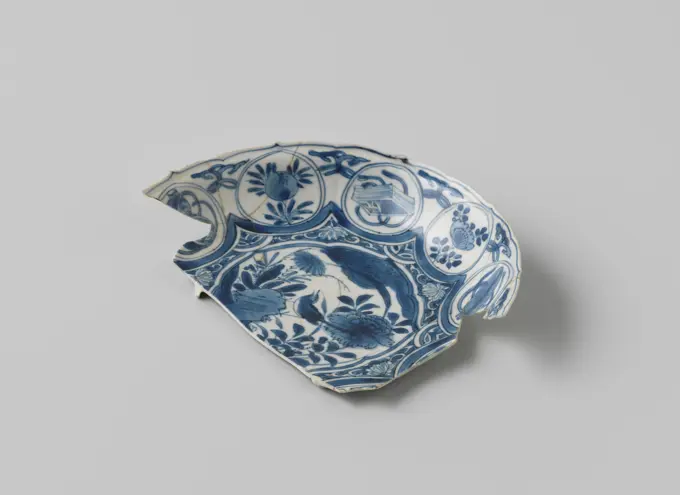
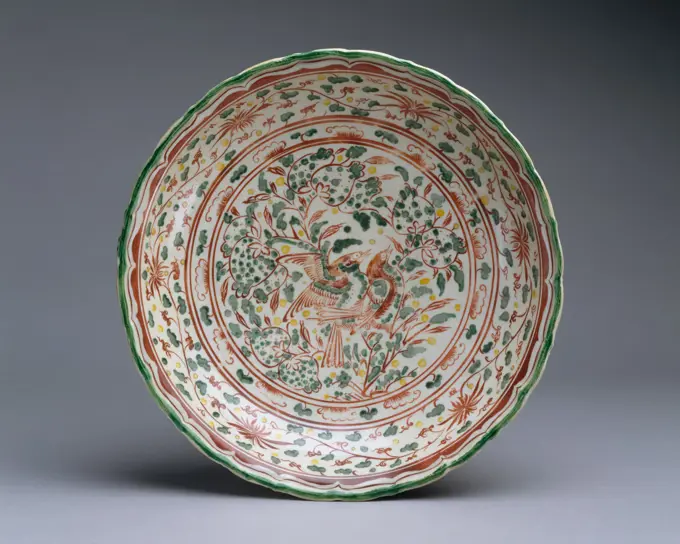
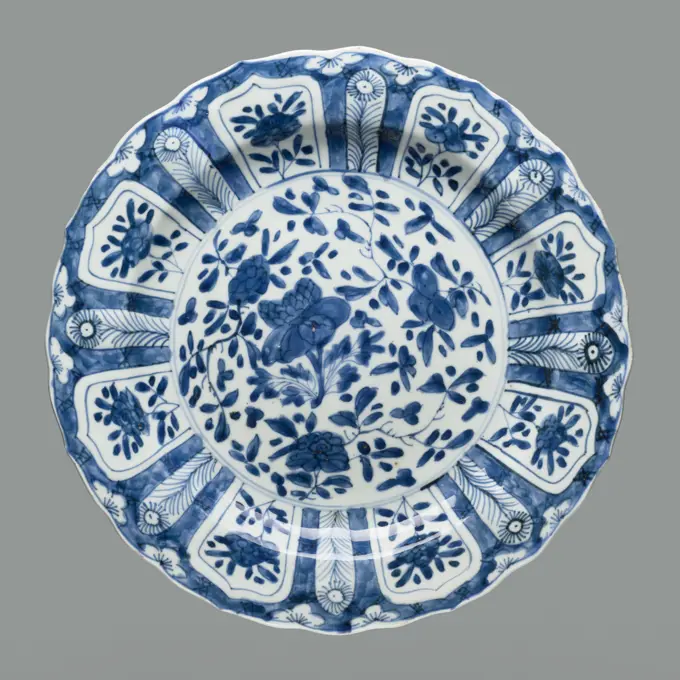
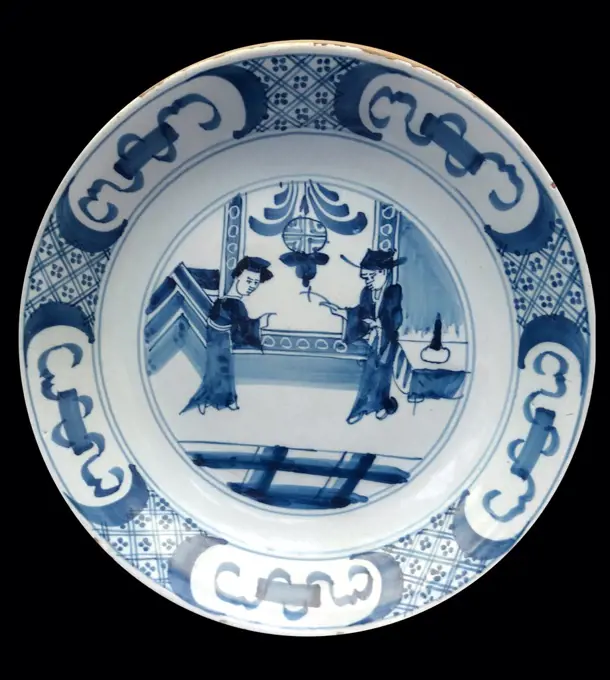
Dish, anonymous, c. 1600 - c. 1624 Porcelain saucer, painted in under -glaze blue. On the flat a star -shaped cartouche with four birds in a river landscape with flowering plants (Lotus). For the Cartouche Lotusranken, Swastika pattern and a scaly motif. The edge is divided into alternately wide and narrow courses. The wide courses with lucky symbols or a peach branch. The narrow compartments with a swastikap pattern or scaly motif interrupted by a cartouche with a bow. The outer wall is divided into alternating wide and narrow compartments, with pearls and dots stylized in the wide courses. The narrow compartments with a mushroom (Lingzhi). Crack porcelain in blue and white. China porcelain. glaze. cobalt (mineral) painting / vitrification Porcelain saucer, painted in under -glaze blue. On the flat a star -shaped cartouche with four birds in a river landscape with flowering plants (Lotus). For the Cartouche Lotusranken, Swastika pattern and a scaly motif. The edge is divided into alte
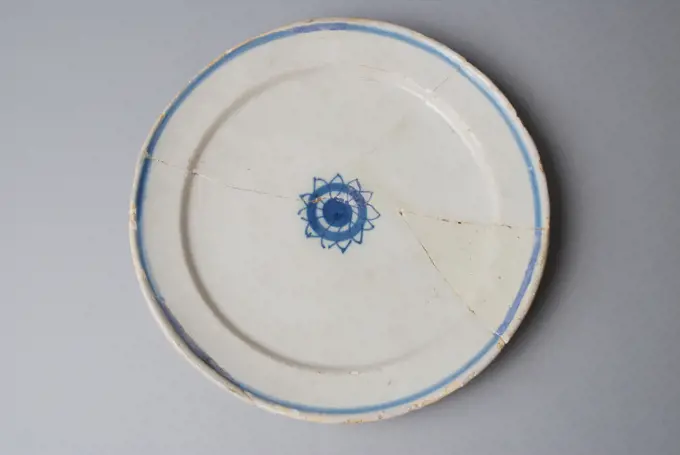
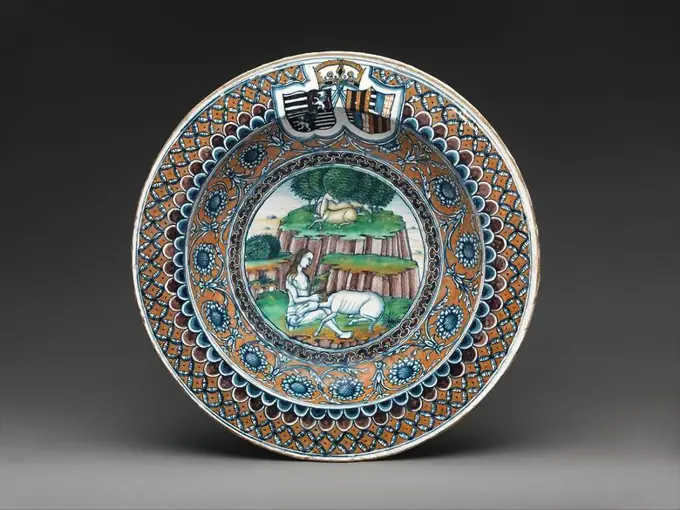
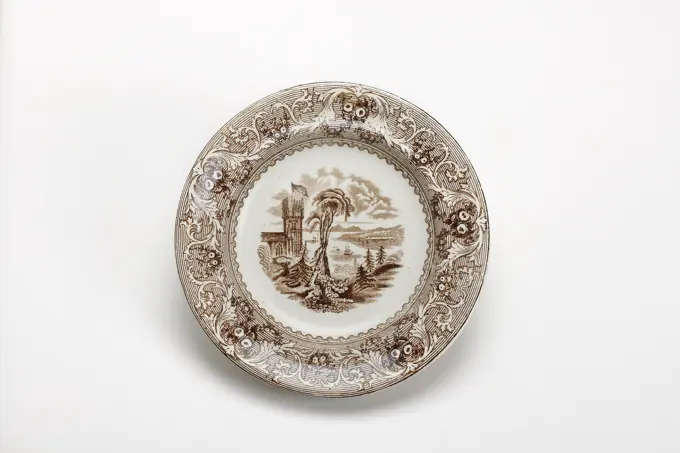
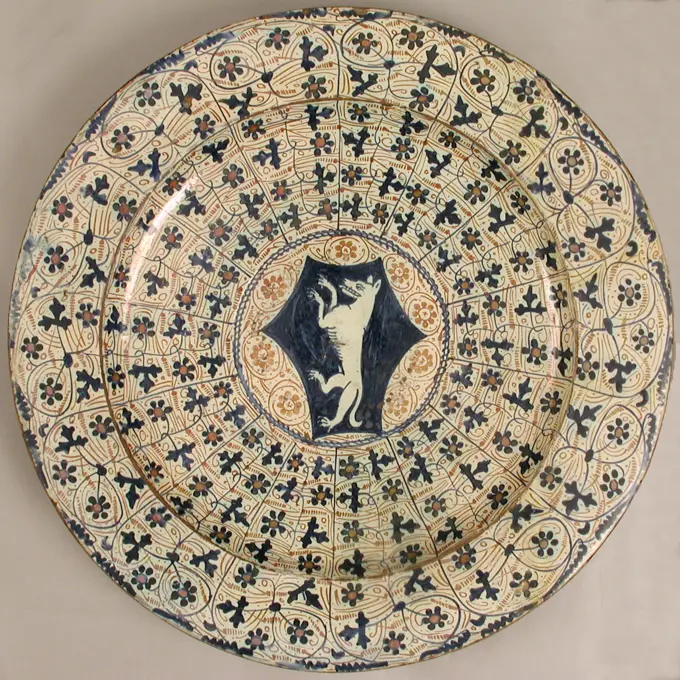
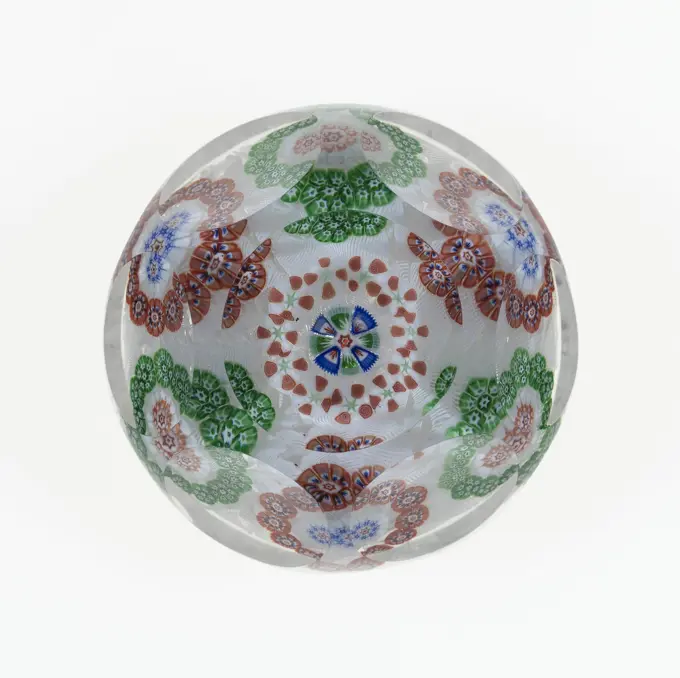
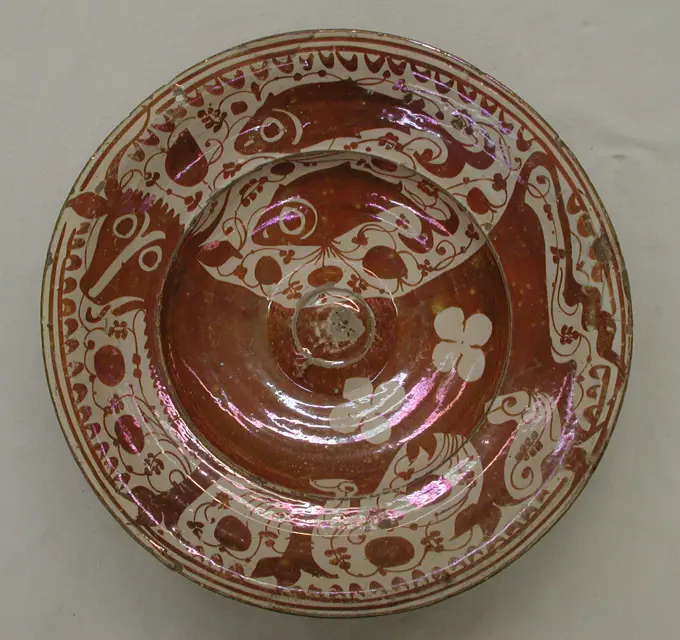
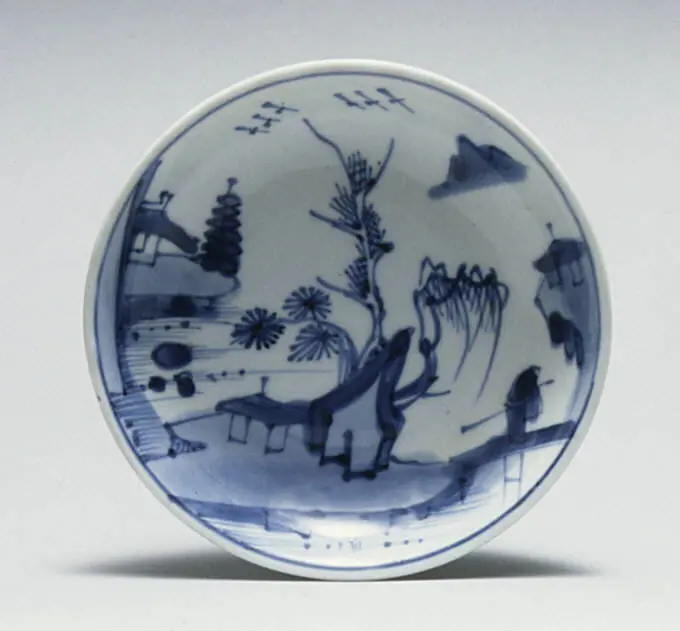
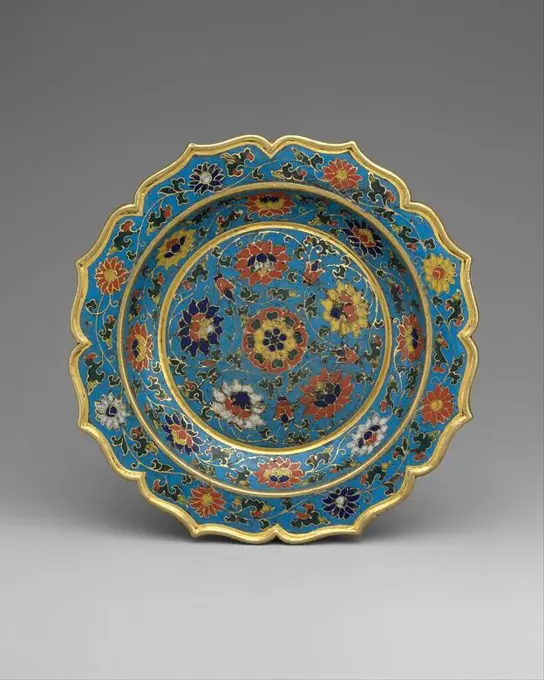
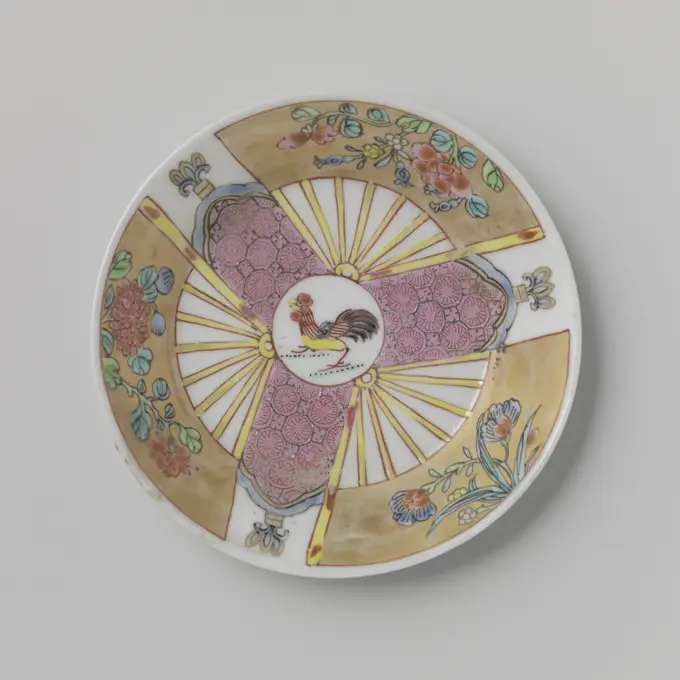
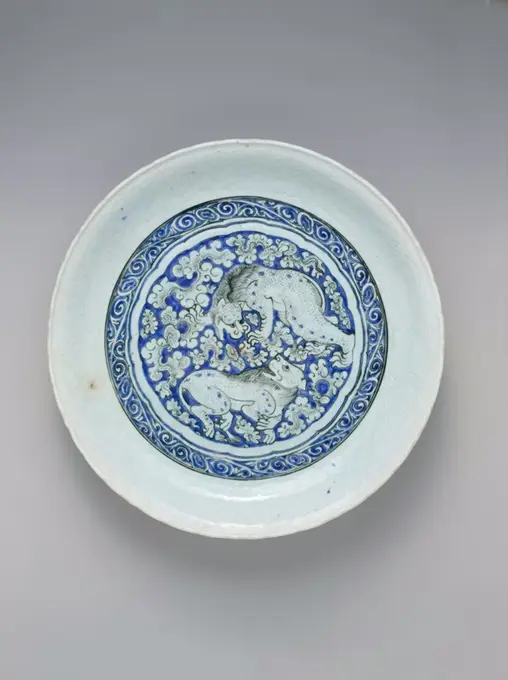
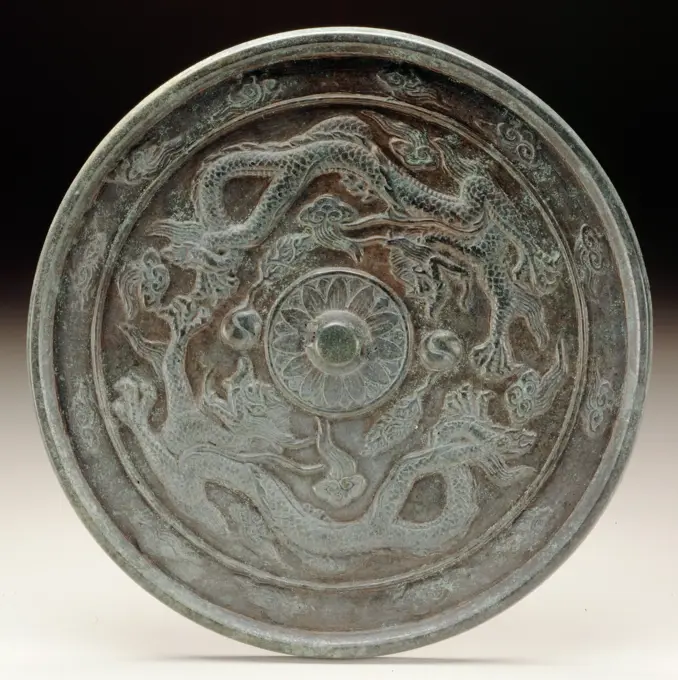
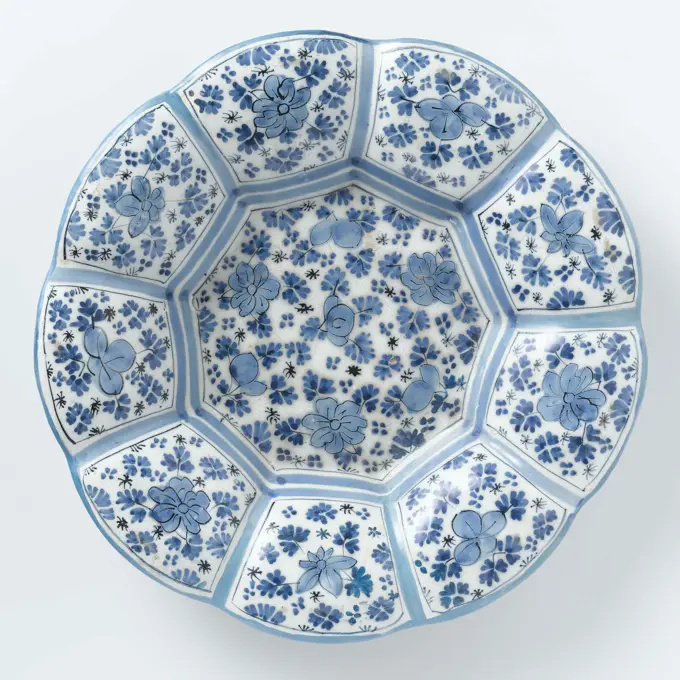
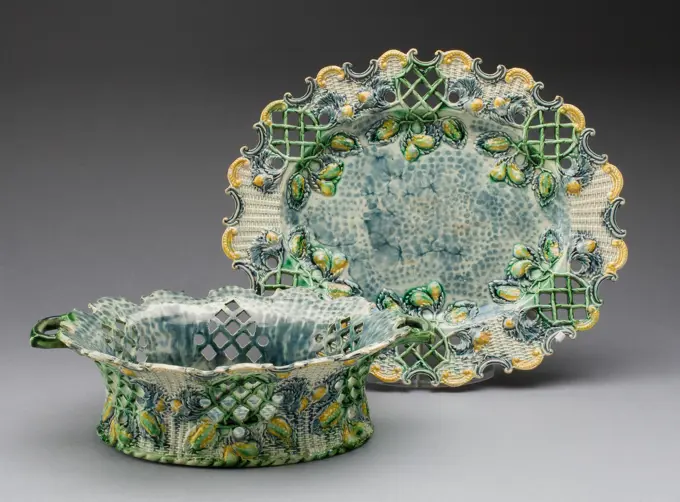
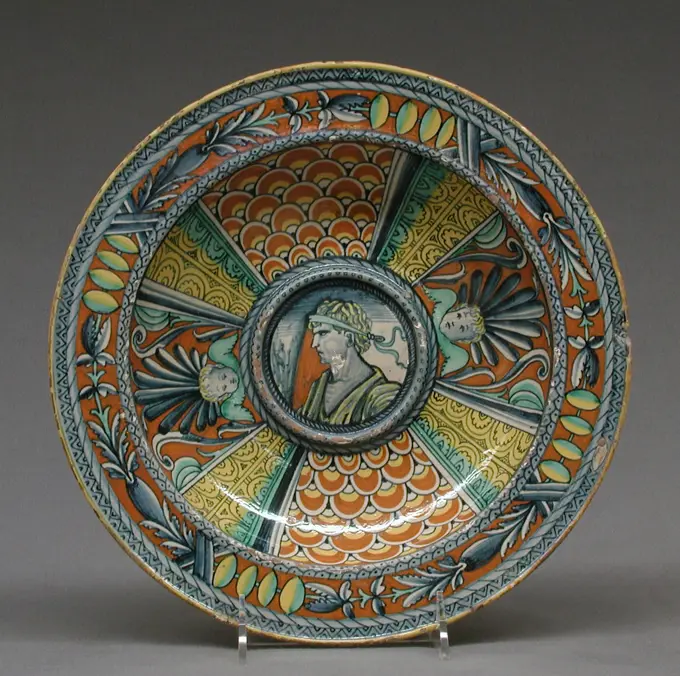
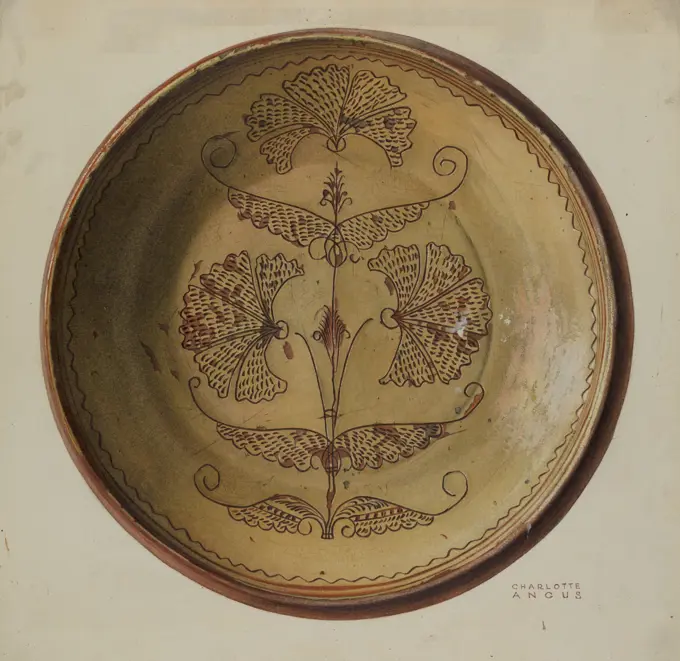
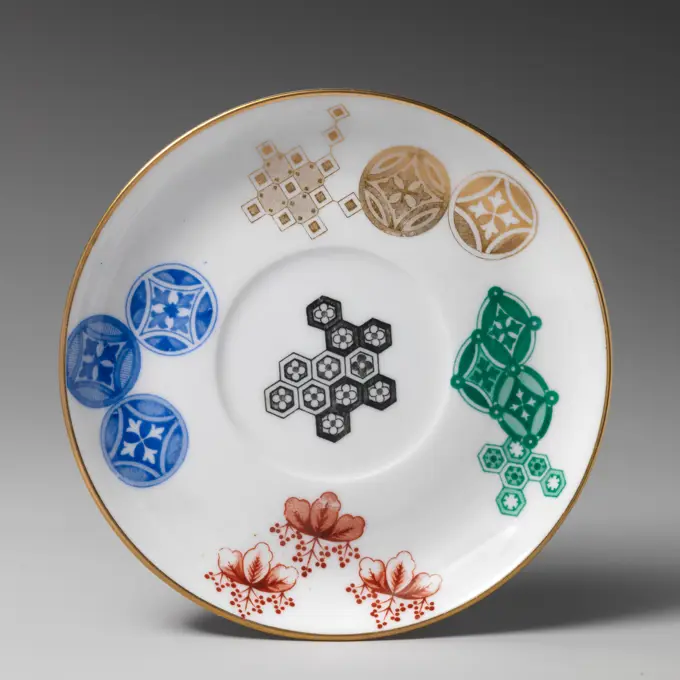
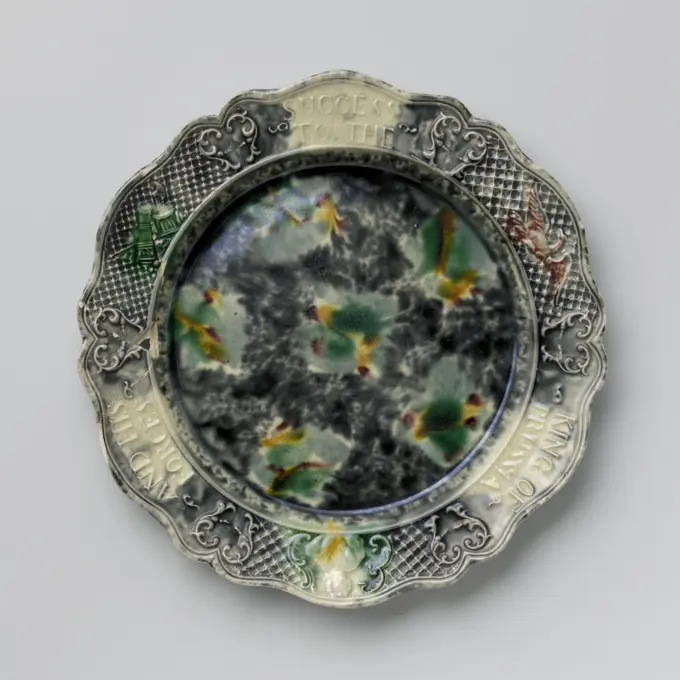
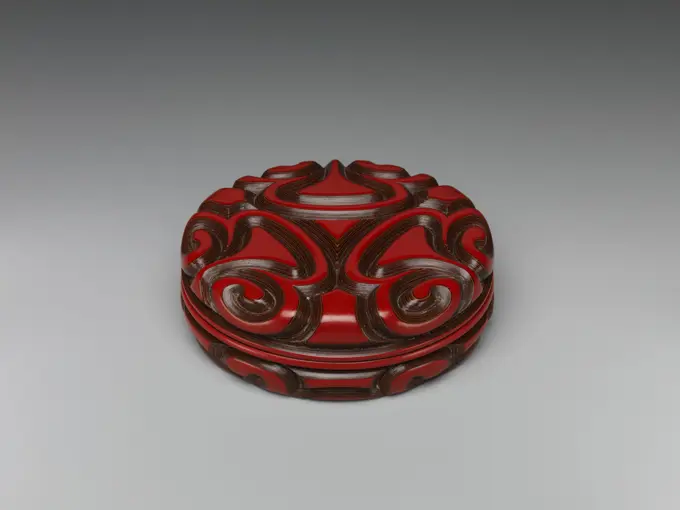
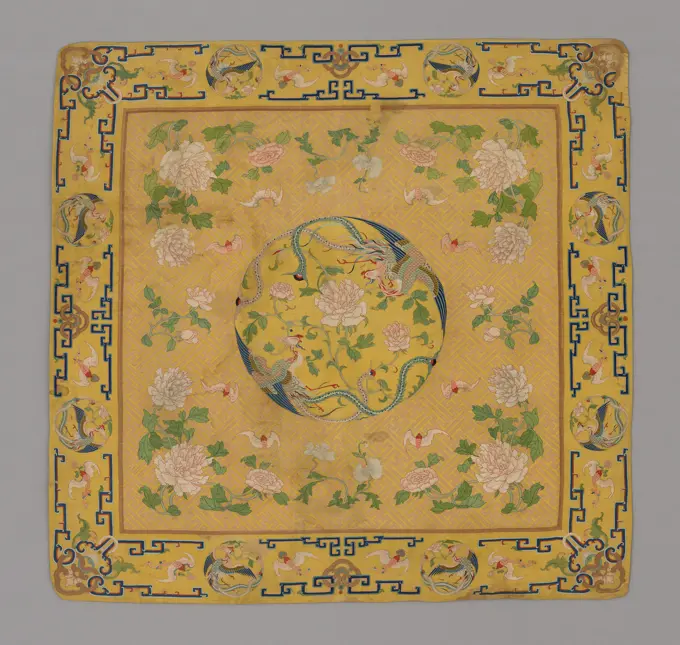
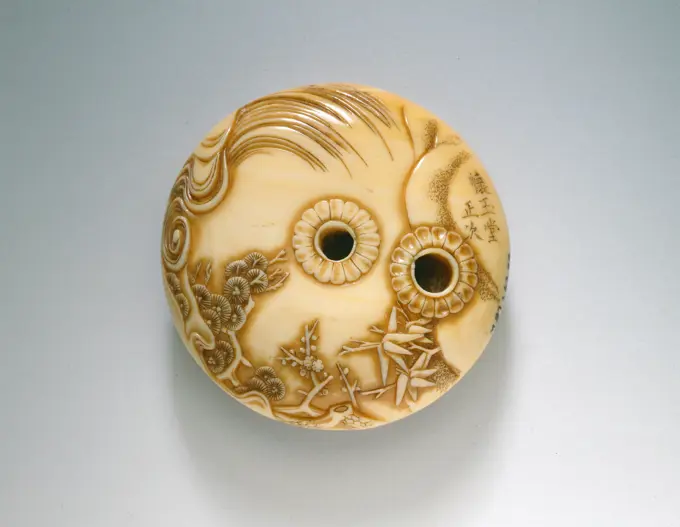
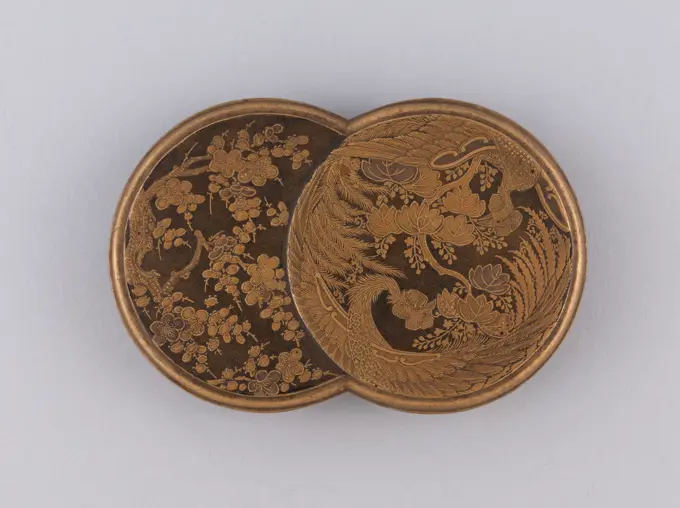
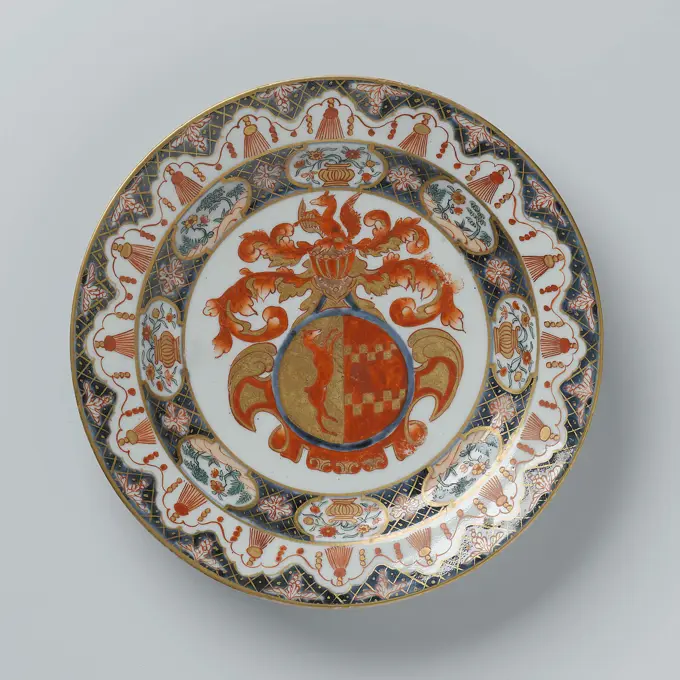
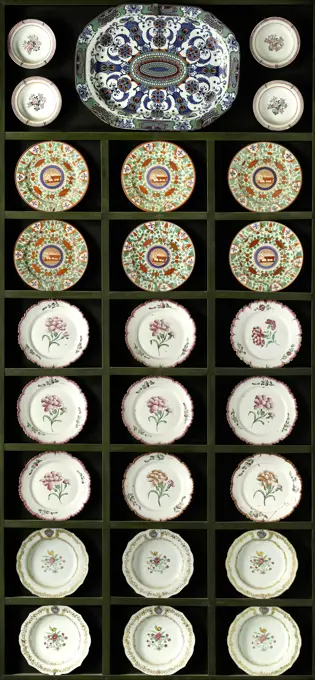
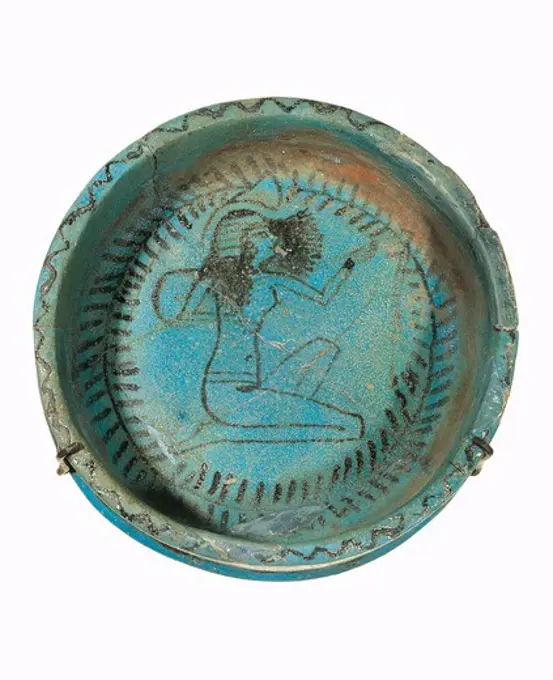
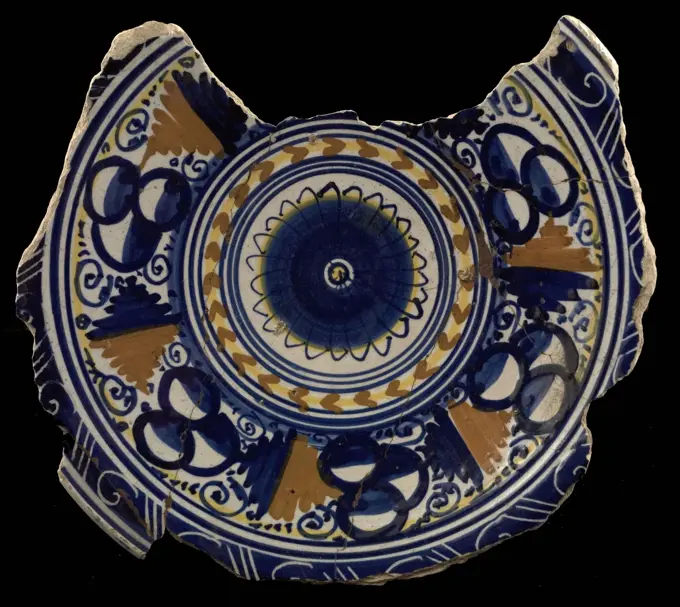
Saucer (part of a service) ca. 1780-90 Caughley Factory. Saucer (part of a service). British, Caughley. ca. 1780-90. Soft-paste porcelain. Caughley Factory (British, ca. 1772-1799). Ceramics-PorcelainSaucer-dish with powder blue and pots with pine, bamboo and prunus, anonymous, c. 1700 - c. 1724 Scale with a round wall of porcelain, painted in underly glaze blue and red. The dish is covered with bleu poudré (powder blue) with a star -shaped reserve on the flat in which two flower pots with pine, bamboo and prunus branches; Twice a bamboo branch on the bottom. Marked on the underside with the six-character brand of Keizer Chenghua in a double circle. Underglaze blue with copper red. China porcelain. glaze. cobalt (mineral). copper (metal) painting / vitrification Scale with a round wall of porcelain, painted in underly glaze blue and red. The dish is covered with bleu poudré (powder blue) with a star -shaped reserve on the flat in which two flower pots with pine, bamboo and prunus branches; Twice a bamboo branch on the bottom. Marked on the underside with the six-character brand of Keizer Chenghua in a double circle. Underglaze blue with copper red. China porcelain. glaze. cobalt (mFaience sign on stand, blue decor, small rosette and blue band across flag, plate crockery holder soil find ceramic earthenware glaze tin glaze, hand-turned baked decorated glazed fried Faience plate on stand surface Lightly curved flat and shoulder between mirror and flag Yellow shard entirely covered with tin glaze. Blue decor on white fond. Small rosette in the middle and blue stripe over the edge of the flag. Cooked archeology Valckensteyn Poortugaal Albrandswaard indigenous pottery serve serving foodSoul of majolica dish, misbaksel, decorated with blue pears in the mirror, dish crockery holder soil find ceramic earthenware glaze tin glaze lead glaze, ring 10,5 hand turned fried glazed painted baked Soul fragment of majolica dish Curved shape shallow shoulder on the transition from mirror to flag Standring with hanging hole Monochrome decor In frame of two blue circles some pears with some pear leaves. Misbaksel: too high baking temperature led to sintering of the glaze underside of lead glaze archeology City center Rotterdam indigenous pottery serve serving pottery craft war Second World War Ground finding of Rotterdam found during the clearing of the rubble in the City Center after the bombing in May 1940.Bowl with The Virgin and the Unicorn and arms of Matthias Corvinus and Beatrice of Aragon. Culture: Italian, Pesaro. Dimensions: Overall (confirmed): 4 × 18 7/8 in. (10.2 × 47.9 cm). Date: probably ca. 1486-88.This large bowl or dish belongs to a set made as a gift for the king and queen of Hungary; their royal arms appear at the top, interrupting the elaborate border. Concentric circles of ribbons, flowers, and geometric designs act as a framing device for the central scene, where the woman and unicorn probably symbolize chastity. Beautiful and functional, a dish like this one might have hung from a wall at times and been used at a table at others. Museum: Metropolitan Museum of Art, New York, USA.Chinese Blue Dish with Dragon Motif,  Qing Dynasty, early 18th centuryDessert plate - Church at Point-Levi D'après George L. Ashworth & Brothers, 1862-1968Fragment sign from V.O.C. ship De 'Witte Leeuw', Anonymous, Before 1613 plate (dishes) Fragment sign from V.O.C. ship De 'Witte Leeuw', 55 present. Jingdezhen bone china (material)   Sint-HelenaDish 15th century Spanish. Dish 467503Plat: dog, Italian majolica of Montelupo, end of the 16th century (face). Museum of Fine Arts of the City of Paris, Petit Palais. 27013-16 Ceramic, Majolic of Montelupo, Italian Renaissance, Crockery, Dog, dishBowl 12th-13th century. Bowl 446215. Plate of faïence with medallion portraitsPaperweight 1840-1865 Baccarat. This paperweight uses a traditional glass-making technique called millefiori to great effect. Italian for ìone thousand flowers,î millefiori was first developed in fifteenth-century Venice. In the nineteenth century, French glassmakers revived the technique with a cultural twist. Arranged to evoke traditional French gardens such as the Tuileries in Paris, paperweights like this example brought a little of this landscaping magic indoors.From the late 1840s to early 1860s, French manufacturers of fine glass and crystalósuch as Baccarat (Alsace), Clichy (Paris), and Saint-Louis (Lorraine)ócatered to the vast public enthusiasm for beautiful yet functional desk accessories. Paperweights, which were designed to secure loose papers against drafts, were among their most popular products.. Glass . Baccarat GlassworksCenser in the shape of lidded cup; three elements. unknown, craftsmanPlate with a View of the Chief JusticeMarshall. Manufacturer: Enoch Wood and Sons, British, 1820-1846Saucer with panels in the shape of a flowerhead filled with flower sprays, anonymous, c. 1680 - c. 1720 Porcelain saucer with raised wall and flat edge, painted in underlaze blue. On the flat a medallion surrounded by petal -shaped compartments; The medallion is filled with a flower branch, rock and insect, in the leaf -shaped compartments each time a flower branch (bamboo, chrysanthemum, prunus, pine et al.); on the edge of flower branches; The rear with two flower branches and a peach branch. Marked on the underside with an artemisia leaf in a double circle. Blue White. China porcelain. glaze. cobalt (mineral) painting / vitrification Porcelain saucer with raised wall and flat edge, painted in underlaze blue. On the flat a medallion surrounded by petal -shaped compartments; The medallion is filled with a flower branch, rock and insect, in the leaf -shaped compartments each time a flower branch (bamboo, chrysanthemum, prunus, pine et al.); on the edge of flower branches; The rear withDish late 16th-early 17th century Spanish, possibly Valencia Tin-glazed earthenware, of which lusterware is one type, was developed in the Middle East in the ninth and tenth centuries to imitate the porcelains produced in China. The opaque white glaze concealed the clay body, which could range from pale buff to brick red, allowing for brilliant effects created by painting the white surface with metal oxides that fired to a range of colors. This technique, as well as the use of metallic lusteran iridescent, coppery painted glazespread throughout the Muslim world, arriving among the potters of Valencia in the thirteenth century. The so-called Hispano-Moresque lusterware, with its fusion of Islamic and Gothic styles and motifs, often in shaped imitating those of metal vessels, was treasured by the elite in Spain during the fifteenth century and exported to the courts of Europe. The Valencian industry declined in the late sixteenth century, as colorful Italian Renaissance maiolica gainedSpoon tray with a crowned double monogram and a European ornamental border, anonymous, 1762 Rectangular, hexagonal pattipan of porcelain with ribbed wall, painted on the glaze in red, black and gold. On the flat a crowned, double monogram with left 'P.S.' and on the right 'A.J' ; The crown is worn by two trumpet -blazing angels. Under the monogram a worn inscription with '1762'. The inner wall with a decorative band in the Viennese du Paquier style with two peacocks in cartouches. European performance in Encre de Chine. China porcelain. glaze. gold (metal) painting / gilding / vitrification Rectangular, hexagonal pattipan of porcelain with ribbed wall, painted on the glaze in red, black and gold. On the flat a crowned, double monogram with left 'P.S.' and on the right 'A.J' ; The crown is worn by two trumpet -blazing angels. Under the monogram a worn inscription with '1762'. The inner wall with a decorative band in the Viennese du Paquier style with two peacocks in cartouches. EuropeanBowl with a decoration in the Far Eastern style. Frankfurt n/Menem (1666-1772), factoryThe ancient plateSaucer ca. 1700-1720 Chinese, for European market The gift of the Hans Syz Collection in 1995 endowed the Museum with nearly three hundred examples of European and Asian ceramics meticulously acquired by Swiss-born collector Dr. Syz (1894-1991) to chart the migration of models and patterns from East to West. Documenting a continuous process of influence and adaptation, these pieces provide a discriminating review of the nuances of stylistic change resulting from three centuries of trade.. Saucer 208236Tulip mania or tulipomania (Dutch names include: tulpenmanie, tulpomanie, tulpenwoede, tulpengekte and bollengekte) was a period in the Dutch Golden Age during which contract prices for bulbs of the recently introduced tulip reached extraordinarily high levels and then suddenly collapsed. At the peak of tulip mania, in February 1637, some single tulip bulbs sold for more than 10 times the annual income of a skilled craftsman. Although tulips are generally associated with the Netherlands, commercial cultivation of the flower began in the Ottoman Empire. The tulip, or lale as it is also called in Iran and Turkey, is a flower indigenous to a vast area encompassing arid parts of Africa, Asia, and Europe. The word tulip, which earlier appeared in English in forms such as tulipa or tulipant, entered the language by way of French tulipe and its obsolete form tulipan or by way of Modern Latin tulipa, from Ottoman Turkish tulbend.Dish of porcelain with multicolored decoration in cockie monkey (blossom branches and rock). Dish of porcelain, with multicolored decoration in a cockie monkey (upper glaze emails green, blue, black and iron red) of flower branches and rocks.Dish. Hellenistic or early Roman; eastern Mediterranean. Date: 150 BC-50 BC. Dimensions: H. 3.2 cm (1 1/4 in.); diam. 13.3 cm (5 1/4 in.). Glass, mosaic glass technique. Origin: Eastern Mediterranean Region. Museum: The Chicago Art Institute, Chicago, USA. Author: ANCIENT GREEK.Plate, with fishermen's flat fishermen, Petrus Regout, 1865 Plate of pottery with lilac transfer decor. On the flat two women and fishermen for a water mill. The Rands is decorated with flowers. Maastricht . Plate of pottery with lilac transfer decor. On the flat two women and fishermen for a water mill. The Rands is decorated with flowers. Maastricht .Presentation Bowl with Design of Mating Birds 15th-16th century Vietnam. Presentation Bowl with Design of Mating Birds. Vietnam. 15th-16th century. Stoneware with red, green, yellow, overglaze enamels. CeramicsBreast plate adornment, 6 x 6 1/4 x 1 3/4 in. (15.24 x 15.88 x 4.45 cm), Silver, ChinaDish with scalloped rim. Culture: China. Dimensions: H. 1 in. (2.5 cm); Diam. 6 in. (15.2 cm). Date: early 15th century.Lively scrolling lotuses and acanthus leaves are set against a turquoise blue background on the interior (and parts of the exterior) of this dish. In fifteenth-century examples, this background color is often combined with shades of red, yellow, cobalt blue, white, and dark green, which were not mixed but placed individually within each cloison. Although cloisonné was known in China in the fourteenth century, fifteenth-century pieces, such as this dish, are the earliest preserved examples. Museum: Metropolitan Museum of Art, New York, USA.Saucer with cock and three fans with flower sprays, anonymous, c. 1725 - c. 1749 Porcelain dish with straight, flared wall, painted on the glaze in blue, red, pink, green, yellow, black and gold. On the flat a medallion with a rooster; around the medallion three fans with flowering plants against a golden soil; Three elongated compartments with servetwork between the fans. Famle Rose. China porcelain. glaze. gold (metal) painting / gilding / vitrification Porcelain dish with straight, flared wall, painted on the glaze in blue, red, pink, green, yellow, black and gold. On the flat a medallion with a rooster; around the medallion three fans with flowering plants against a golden soil; Three elongated compartments with servetwork between the fans. Famle Rose. China porcelain. glaze. gold (metal) painting / gilding / vitrificationPlate of multicolored painted majolica, anonymous, c. 1600 - c. 1625 Round plate of multi -colored painted majolica. The plate is painted with fruits and leaves inside a double blue circle. The colors used are: blue, green, orange, yellow and mango purple. Netherlands earthenware. tin glaze. lead glaze majolica Round plate of multi -colored painted majolica. The plate is painted with fruits and leaves inside a double blue circle. The colors used are: blue, green, orange, yellow and mango purple. Netherlands earthenware. tin glaze. lead glaze majolicaGoblet. Culture: Coptic. Dimensions: 3 3/8 × 4 7/16 in. (8.6 × 11.2 cm). Date: 4th century. Museum: Metropolitan Museum of Art, New York, USA.Plate Made 1760-1770 Staffordshire .Plate. unknown, craftsmanCzarka, Spodek; Hausmaler (home painter); Kon. XVII century-1 after .xviii century (1680-00-00-1745-00-00);Tray. Culture: China. Dimensions: H. 2 3/4 in. (7 cm); Diam. 11 3/4 in. (29.8 cm). Date: 8th century.Combinations of white, amber, and green glazes, typically known as sancai or "three-colored" wares, were first developed in China in the late seventh century, and were used primarily for funerary goods. The bright colors, clear tones, and superior bonding power of this technique were achieved by firing twice, first at high temperature to achieve a hard pottery body, and then at low temperature, after the glazes were applied, to bring out the vibrant colors. The shape and medallion decor of this tray were derived from metalwork prototypes. The deep, intaglio lines of the floral patterns, impressed onto the surface of the still-soft clay by stamps, helped to contain the glaze in the intended areas. The pearl-like white spots on the rim were created by the use of wax or clay resists, a technique commonly employed in dyed textiles. Museum: Metropolitan Museum of Art, New York, USA.Circular casket with lid. unknown, craftsmanBord, anonymous, c. 1720 - c. 1730 Fowence board. Multicolored painted with a fantasized weapon of Great Britain. Delft . Fowence board. Multicolored painted with a fantasized weapon of Great Britain. Delft .Saucer. Culture: China. Dimensions: Diam. 4 3/8 in. (11.1 cm). Date: 18th century. Museum: Metropolitan Museum of Art, New York, USA.Plate Chinese, for Dutch market ca. 1720 The plate is one of a set of six showing Harlequin, in various poses, satirizing the speculation ("Bubble") mania that swept France, Holland, and England ca. 1720 View more. Plate. Chinese, for Dutch market. ca. 1720. Hard-paste porcelain. Ceramics-Porcelain-ExportOval brush ridge from Faïence, Anonymous, c. 1400 - c. 1950 Oval brush ridge of blue painted Faïence, painted with a vase with flowers, in which a bird on one of the flowers and along the edge a flower pattern. A second copy belongs to the brush ridge. The brush ridge has been on loan to J.H. since 1958. Loudon (Aerdenhout), returned and March 1996.  earthenware. tin glaze. Oval brush ridge of blue painted Faïence, painted with a vase with flowers, in which a bird on one of the flowers and along the edge a flower pattern. A second copy belongs to the brush ridge. The brush ridge has been on loan to J.H. since 1958. Loudon (Aerdenhout), returned and March 1996.  earthenware. tin glaze.Leaf belonging to a tea set of chromolith stoneware, decorated in blue and tan. Leaf, 12-angled belonging to a tea set from Chromolith Stoneware (BK-1977-240-A / J). Decoration in blue and tan.Dish with Two Fighting Lions. Dimensions: H. 3 1/4 in. (8.3 cm)Diam. 17 1/16 in. (43.4 cm). Date: ca. 1635.In the second quarter of the seventeenth century, Chinese blue-and-white porcelain production decreased and Iranian potters stepped up manufacture of Chinese-inspired blue-and-white ceramics. The two lions, the swirling fleshy clouds with their vegetal appearance, and the repeating scroll all allude to blue-and-white Chinese export ware. Museum: Metropolitan Museum of Art, New York, USA.Shallow Bowl with Chrysanthemum DesignPrzeszo Przyszoci unknownInkwell 1848 London. Glass; blown with millefiori canes . Whitefriars GlasshouseDish with Lotus Flower and Petals. China. Date: 960 AD-1279. Dimensions: H. 1.4 cm (9/16 in.); diam. 9.4 cm (3 11/16 in.). Stoneware with underglaze molded and carved decoration. Origin: China. Museum: The Chicago Art Institute, Chicago, USA.Decorative patterns of peacock feathers, Italian Majolique de Deruta, 1st half of the 16th century (face) ". Ceramics. Museum of Fine Arts in the city of Paris, Petit Palais. 26973-4 Ceramic, decoration, faience, face, Italy, Italian majolica, decorative motif, various object, peacock pen, plateBowl 17th century. Bowl 451869Round box with a feng huang en scrolls, anonymous, c. 1650 Round box of porcelain, painted in under -glaze blue. On the box a tire with stylized leaves. The lid with a Feng Huang and stylized tendrils. Transitional porcelain in blue and white. China porcelain. glaze. cobalt (mineral) painting / vitrification Round box of porcelain, painted in under -glaze blue. On the box a tire with stylized leaves. The lid with a Feng Huang and stylized tendrils. Transitional porcelain in blue and white. China porcelain. glaze. cobalt (mineral) painting / vitrificationDish with Cypress Tree, Saz Leaves, and Roses ca. 1575-80 The cypress tree, though known to Ottoman artists in the fifteenth century, did not become a widespread ceramic motif until after the middle of the sixteenth century. Here the cypress is the central element in a somewhat rigid yet not quite symmetrical composition that includes red carnations, pale blue hyacinths, and flowing saz leaves overlaid with tulips.. Dish with Cypress Tree, Saz Leaves, and Roses 451839Bowl;  19th century () (1801-00-00-1900-00-00);Mirror with Twin Dragons. Korea, Goryeo dynasty (918-1392). Tools and Equipment; mirrors. Cast bronzeSaucer with a Seated Lady and Two Boys Amid Antiques. Dish of porcelain, painted on the glaze in blue, red, pink, green, yellow, black and gold. On the flat a cartouche with a seated lady and two boys, one with a peach and one with a hare, between antiques and lucky symbols (vase with peacock feather and coral, incense burner, finger lemon); Around the cartouche flower drinks. A chip in the edge. Family Rose.Unknown, vase cover (common name). Porcelain, polychrome enamels, gilding. Petit Palais, Museum of Fine Arts of the City of Paris.. Dish of blue painted faience. The edge is nully. The lobes are outlined. Flowers and spreading flowers are painted on the flat and within the lobes.Small bowl. unknown, craftsmanMemorial board for one -year -old Princess Juliana, Carel Adolph Lion Cachet, 1910 Gemenkboard of earthenware, manufactured on the occasion of the first birthday of Princess Juliana, with a printed backdrop in yellow and manganese. In the middle the letter I, stabbed by a crown, around which flower skins, saved in a manganese stock. Above the I 30 April 1909, below I April 30, 1910, saved in a wide manganese Bies. On the edge at the top of a crown, then clockwise along the letters J, L, E, M and W, saved in a manganese medallion within a yellow flower challenge. A yellow piping along the edge. Hanging horses in the foot ring. Maastricht earthenware printing Gemenkboard of earthenware, manufactured on the occasion of the first birthday of Princess Juliana, with a printed backdrop in yellow and manganese. In the middle the letter I, stabbed by a crown, around which flower skins, saved in a manganese stock. Above the I 30 April 1909, below I April 30, 1910, saved in a wide manganese Bies.Plate, multicolored painted with a winter landscape, Meissener Porzellan Manufaktur, c. 1730 - c. 1735 Round plate of painted porcelain. A four -pass is painted on the flat within which a winter landscape. The four pass is surrounded by band and leaf work with a console on either side on which a Höroldt chinoiserie, consisting of figures. The edge is gilded and painted with a lace -like strip. Indianic blumes are painted on the back. The board is marked. Float porcelain Round plate of painted porcelain. A four -pass is painted on the flat within which a winter landscape. The four pass is surrounded by band and leaf work with a console on either side on which a Höroldt chinoiserie, consisting of figures. The edge is gilded and painted with a lace -like strip. Indianic blumes are painted on the back. The board is marked. Float porcelainGlazed ceramic plate with geometric decoration, 14th century. The Glassware and Ceramic Museum. Tehran, Islamic Republic of Iran.Dish late 15th-early 16th century Spanish. Dish. Spanish. late 15th-early 16th century. Tin-glazed earthenware. Made in probably Manises, Valencia, Spain. Ceramics. Plate of pottery, blue painted on tingaba acid with the gravestone of Christ over the entire surface painted.Saucer with fish, crabs and water plants. Dish of porcelain with landscaped wall, painted in underglaze blue. On the flat in the center a double medallion with a crab between aquatic plants; Four fish between plants on the wall. The back with four valuables (pearl, diamond, books, open diamond). Marked on the underside with a seal mark in a double circle. Blue White.Dish early 15th century Spanish. Dish. Spanish. early 15th century. Tin-glazed earthenware. Made in probably Manises, Valencia, Spain. CeramicsMirror Case with Pattern of Rock, Chrysanthemums, and Pomegranates China Glass was not much used before the twentieth century in making Chinese mirrors; instead, a highly polished metal surface provided the reflection. When not in use, a mirror could be stored in a case like this.. Mirror Case with Pattern of Rock, Chrysanthemums, and Pomegranates 52475Basket and Stand Made 1760-1770 Staffordshire .Dish with inscription "Leolte". Round dish of multicolored faience painted. In the colors brown yellow with blue are fine floral drinks painted with leaves, in the middle a weapon with a climbing lion and the inscription "Leolte".Fili Anka with a saucer; Korzec (Porcelain Manufaktura; 1790-1832); 1820-1830 (1820-00-00-1830-00-00);. Porcelain plate with raised wall and sloping edge, painted in underglaze blue. On the flat antiques (vases, peacock feathers, books, rolls, flock burner) and wonderful objects such as a picture of a dragon on a pillow and a parrot on standard; The edge with napkin interspersed with lobby cartouches with a dragon in white saved in a blue background; On the back values (diamond, pearl, music stone), lucky symbols (shell) and an attribute of the eight immortals (castangets). Marked on the bottom with a flower branch in a double circle. Three chips in the edge. Blue White.Bowl late 15th century Spanish. Bowl 463616Dish ca. 1510-15 Italian, Deruta. Dish. Italian, Deruta. ca. 1510-15. Maiolica (tin-glazed earthenware). Ceramics-PotteryFatePorcelain bowl, painted in enamels and gilded. Dated 18th CenturyCharlotte Angus, Pa German Pie Dish, c 1940 Pa. German Pie DishScale, Anonymous, 1650 - 1700 Scale of silver. Eight-lobe edge, decorated with lobe ornament and flower and leaf vines. Jakarta silver (metal) Scale of silver. Eight-lobe edge, decorated with lobe ornament and flower and leaf vines. Jakarta silver (metal)Pyxis with Lid (lid), c. 1901-1525 BC. Egypt, Late Middle Kingdom to early New Kingdom. Turquoise faience with black decoration; overall: 11 cm (4 5/16 in.); diameter of box: 8.3 cm (3 1/4 in.).Tray 19th century Japan. Tray. Japan. 19th century. Lacquer. Edo (1615-1868) or Meiji period (1868-1912). LacquerSaucer 1876-77 Worcester factory After the end of the Flight, Barr & Barr ownership of the Worcester factory in 1840, the firm went through a succession of owners and mergers before falling under the ownership of Kerr & Binns in 1852. During the partnership, the factory sought to rebuild its former eighteenth-century reputation in porcelain and known for Renaissance-inspired designs. With the establishment of the Royal Worcester Porcelain Company in 1862, the company gradually gained recognition for its Japanese-inspired designs, which formed part of Japonisme, a collective fascination with Japan that took place in Europe and the United States following the opening of Japanese markets to the West by Commodore Perry in 1853.. Saucer. British, Worcester. 1876-77. Bone china. Ceramics-PorcelainRound plate of hard baked pottery; Staffordshire, Anonymous, c. 1756 Round plate of hard baked earthenware, covered with blue-black lead glaze with spots in light blue, green, yellow-brown and manganese. The edge is decorated in relief with fields alternately smooth and filled with grille. On the razes alternately an eagle, a trophy and the portrait of Frederik the Great. On the slippery fields, the inscriptions are successful to the king, king of prussia, and his forces. The sign is part of five plates (BK-1987-40-A to BK-1987-40-F). England earthenware. lead glaze Round plate of hard baked earthenware, covered with blue-black lead glaze with spots in light blue, green, yellow-brown and manganese. The edge is decorated in relief with fields alternately smooth and filled with grille. On the razes alternately an eagle, a trophy and the portrait of Frederik the Great. On the slippery fields, the inscriptions are successful to the king, king of prussia, and his forces. The sign is part ofBox with pommel scrolls 15th-16th century China This design is commonly known as the "pommel scroll" pattern because the bracket-shaped scroll resembles the pommel of a Chinese sword. The design was popular in lacquer, ceramics, and metalwork in the thirteenth and fourteenth centuries and remained important in carved lacquer in the fifteenth century.. Box with pommel scrolls 40192Cushion Cover Made 1700-1750 China. Silk and gold-leaf-over-lacquered-paper-strip-wrapped silk, slit and dovetailed tapestry weave with interlaced outlining wefts; painted details; lined with silk, warp-float faced 7 1 satin weave . ManchuPlatter with red dragons". Koenigliche Porcellain Fabrique, Meissen (1710-1763), factoryRaijin, God of Thunder. Kaigyokusai Masatsugu (Japan, 1813-1892). Japan, mid- to late 19th century. Costumes; Accessories. Ivory with staining; manjū typeRound plate of hard-baked pottery; Staffordshire. Round plate of hard-baked pottery, covered with blue-black lead glazing with stains in light blue, green, tan and manganese. The edge is embossed with fields alternately smooth and filled with grille. On the trap fields alternately an eagle, a trophy and the portrait of Frederik the Great. On the smooth fields the inscriptions success to the King, King of Prussia, and His Forces. The sign belongs to five signs (BK-1987-40-A to BK-1987-40-F).Anonymous. Double box on a 4 -foot table; gold lacquer decorated with the fö bird, flowers and foliage; Interior containing gold lacquer tray. Cover, interior view. Lacquer. Museum of Fine Arts of the City of Paris, Petit Palais. Lid, decor, double box, foliage, flower, lacquer object, FO bird, gold, interior view, tableOval basin with lizard, shells, and light blue background 1865-1875 Georges Pull Georges Pulls training as a taxidermist probably aided his ability to render creatures with lifelike precision on his ceramic works inspired by the Renaissance potter Bernard Palissy (1510-ca.1589). Pull captures the minute wrinkles on the skin of the lizard found at the center of this dish. The smaller curled lizard on the rim has been left unglazed.. Oval basin with lizard, shells, and light blue background. French, Paris. 1865-1875. Glazed earthenware. Ceramics-PotterySaucer-dish with fluted sides and a water landscape, anonymous, c. 1800 - c. 1899 Porcelain bowl with a ribbed wall, painted in underlaze blue. On the front a river landscape with a bridge, two trees and mountains. On the wall a seal in red and gold email. The wall has been broken. Blue White. Japan porcelain. glaze. cobalt (mineral) painting / vitrification Porcelain bowl with a ribbed wall, painted in underlaze blue. On the front a river landscape with a bridge, two trees and mountains. On the wall a seal in red and gold email. The wall has been broken. Blue White. Japan porcelain. glaze. cobalt (mineral) painting / vitrificationSudanese Slit drum made of wood. Al Mahdiva period, late 19th century. The drum was amongst many artefacts taken from the forces of the Khalifa by the British following the Battle of Omdurman in 1898 which signalled the end of the Mahdist State.Plate with the Arms or Van Buren and Two Ornamental Borders. Porcelain plate, painted in underglaze blue and on the glaze red, green, black and gold. On the flat neighborhood of from neighbors with left a greyhound against a golden background and right twice seven golden rectangles on a red background. The helmet sign is a greyhound with wings surrounded by acanthus leaves. The wall with napkin with a stylized flower, interrupted by cartouches with a landscape or a flower vase. The edge with a band with brushes and a bond with leaves on napkin. Four preen on the bottom. Weapon porcelain in Imari. Arita.Saucer-dish with powder blue and pots with pine, bamboo and prunus. Scale with round wall of porcelain, painted in underglaze blue and red. The dish is covered with bleu poudré (powder blue) with a star-shaped reserve on the flat in which two flower pots with pine, bamboo and prunus packs; Twice a bamboo roof on the bottom. Marked on the underside with the six character mark of Emperor Chenghua in a double circle. A chip in the edge; A crack in the edge. Middle blue with copper red.Victor Hugo (1802-1885). Chinese decor from Juliette Drouet's house in Guernsey, West Wall. Green wooden record containing plates and dishes, composed of twenty-seven compartments (right side of the west wall). Painted wood. 1857-1864. Paris, house of Victor Hugo. 78171-18 Asian art, decorative arts, painted wood, green wood, Chinese cabinet, locker, chinoiserie, compartment, decor, faience, storage, Chinese living room, dishes, 19th XIX 19th 19th 19th 19th century, plate, dishDish (salver or basin) early 17th century Spanish. Dish (salver or basin) 193550Ceramic bowl decorated with figure of lute playerCup Plate 1825-60. Cup Plate 2936Bowl with Lioness 1101-1300 Iran, northwestern. This bowl belongs to a group of ceramics from 12th and 13th-century Iran known as Garrus ware. The name Garrus refers to a district in northwest Iran where these ceramics were excavated. Although these wares were found in Garrus, their exact origin of production is unknown. However, as with many modern-day appellations, these ceramics continue to be referred to as Garrus ware. The wares are united by a distinctive decorative technique the decorative elements are incised on the surface of the object and set against slip backgrounds that are removed to showcase their central motifs against darker areas of color. On this bowl, a lioness has been incised on the interior with scrolling floral motifs showcased against an exposed dark red background.. Earthenware with incised decoration and splashes of green in a transparent glaze . IslamicPier tables, Joined, turned, veneered satinwood inlaid with tulipwood, harewood and other woods, Each of demi-lune form, the top inlaid with ribbon-tied floral garlands set into the satinwood, all centered by a fluted demi-lune, that when the tables are put together becomes a patera; the border all surrounded by a contrasting border of rosettes and attenuated anthemia; the skirt inlaid with swags of husks, anthemia, and urns; the tapered quadrangular legs inlaid with husks., Dublin, Ireland, ca. 1785, furniture, Decorative Arts, Pier tablesChinese Black on Red Circular Cinnabar Lacquer Box and Stand,  Qing Dynasty, Qianlong Period, 1736 - 1795Plate.   Maker: Ball, Black and Company, New York, active ca. 1851-76Plate. unknown, craftsmanFili Anka, Spodek; Korzec (Porcelain and faience manufacture; 1790-1832); 1814 (1814-00-00-1814-00-00);Majolica dish, polychrome, rosette in the middle, decoration with three balls each, plate tableware holder soil find ceramics pottery glaze, sgraffito baked underside covered with clear lead glaze. Polychrome. Sgraffito over the edge. Special setting in the edge of three stacked spheres in blue archeology Rotterdam decorate serving food Rotterdam 1942.