Ceramic Dish Fragments

Artistic ceramic fragments and plates with intricate designs, featuring colorful patterns and historical significance in pottery.

Dish, anonymous, c. 1600 - c. 1624 Porcelain saucer, painted in under -glaze blue. On the flat a star -shaped cartouche with four birds in a river landscape with flowering plants (Lotus). For the Cartouche Lotusranken, Swastika pattern and a scaly motif. The edge is divided into alternately wide and narrow courses. The wide courses with lucky symbols or a peach branch. The narrow compartments with a swastikap pattern or scaly motif interrupted by a cartouche with a bow. The outer wall is divided into alternating wide and narrow compartments, with pearls and dots stylized in the wide courses. The narrow compartments with a mushroom (Lingzhi). Crack porcelain in blue and white. China porcelain. glaze. cobalt (mineral) painting / vitrification Porcelain saucer, painted in under -glaze blue. On the flat a star -shaped cartouche with four birds in a river landscape with flowering plants (Lotus). For the Cartouche Lotusranken, Swastika pattern and a scaly motif. The edge is divided into alte
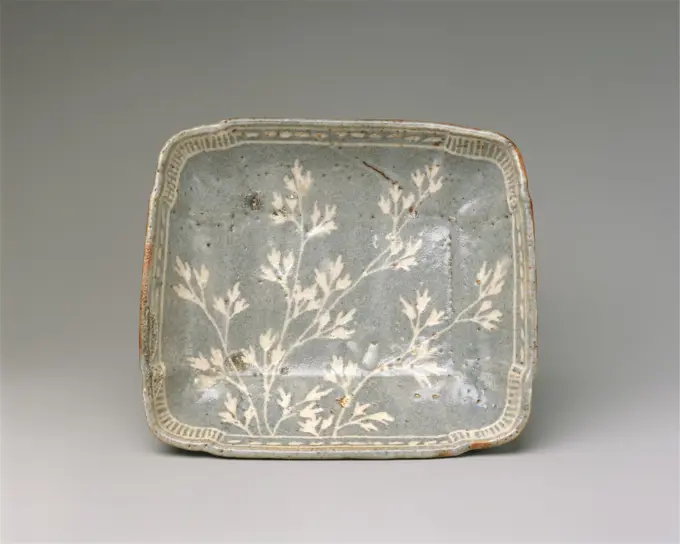
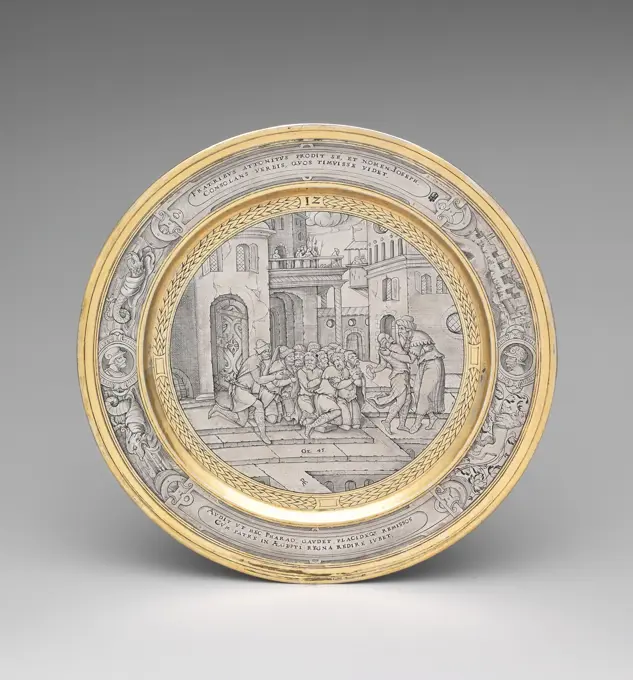
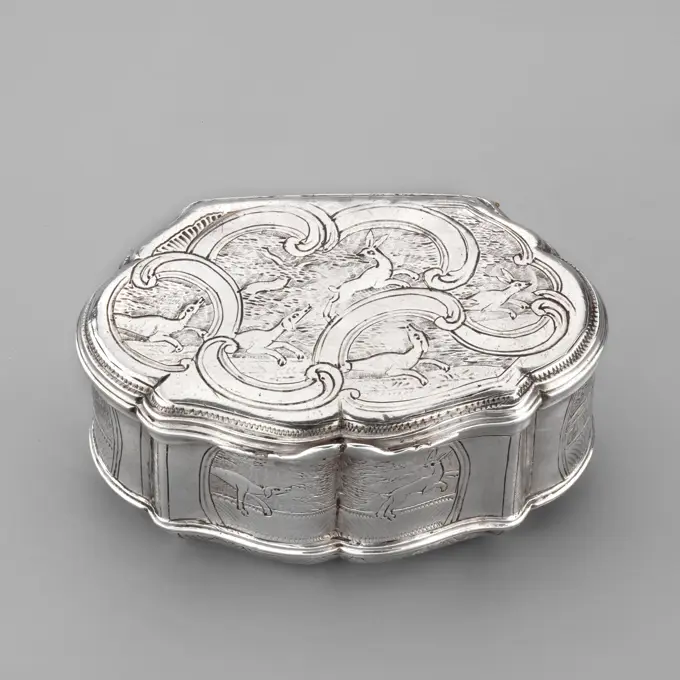
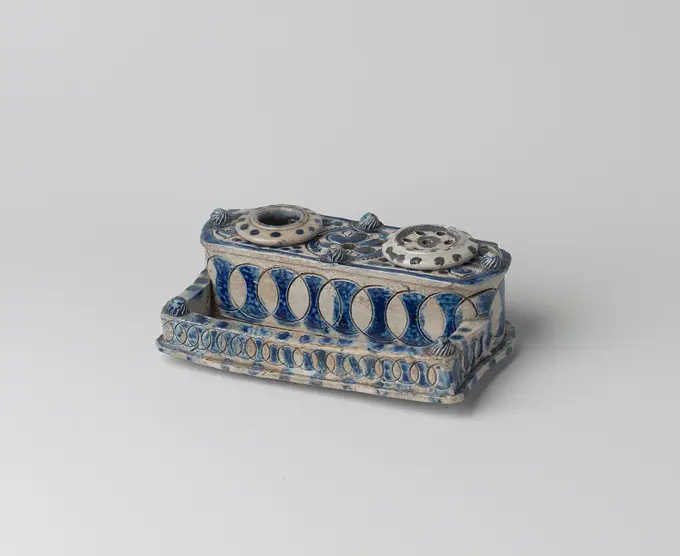
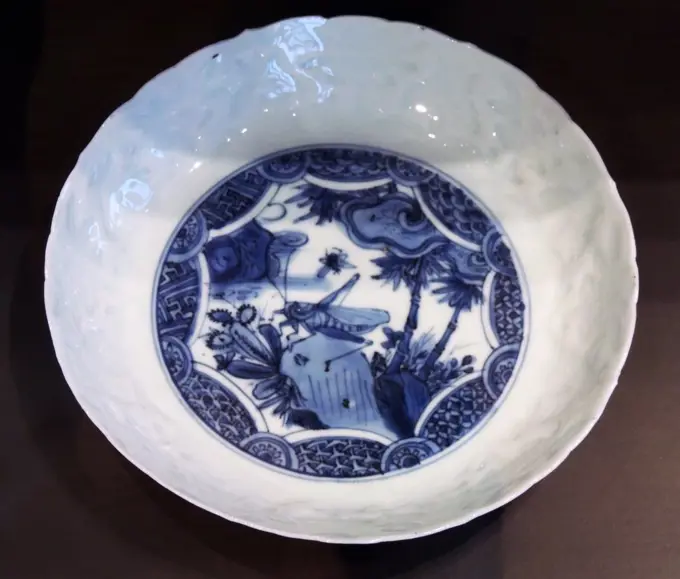
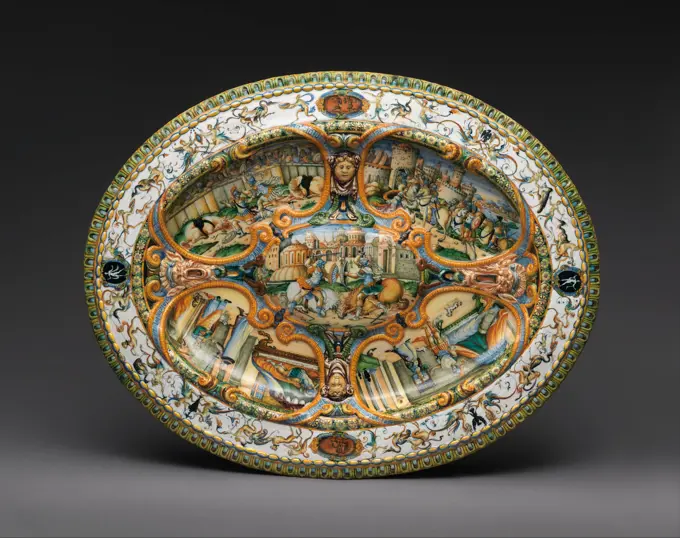
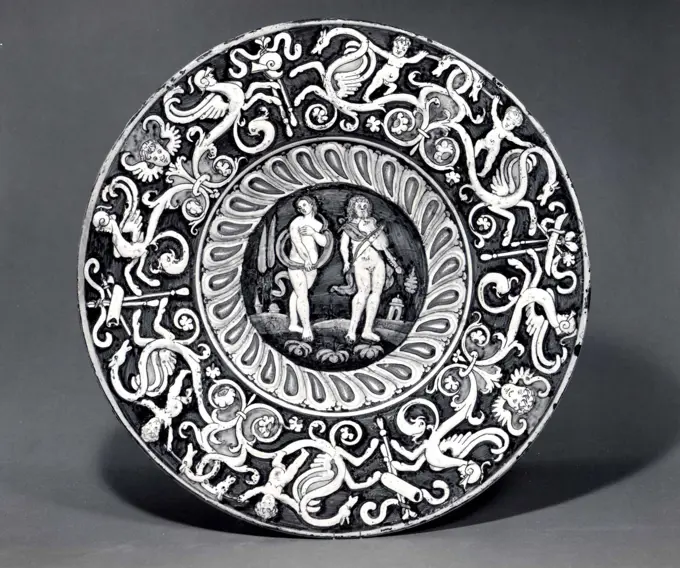
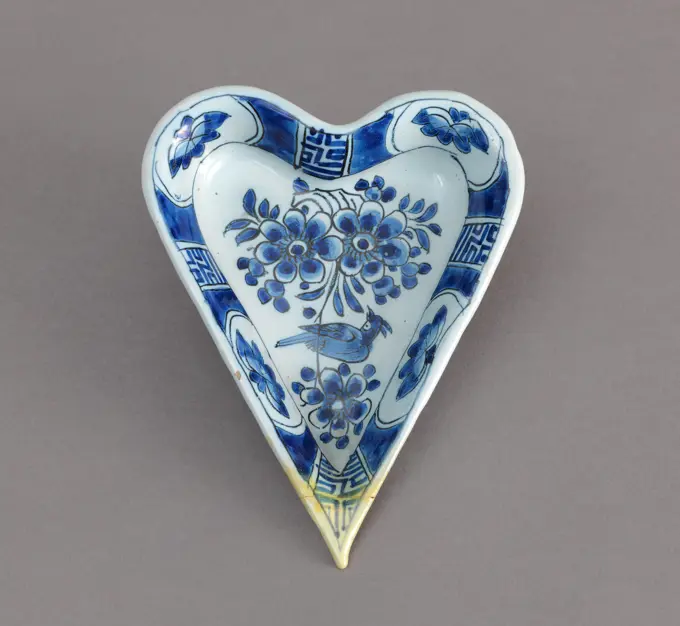
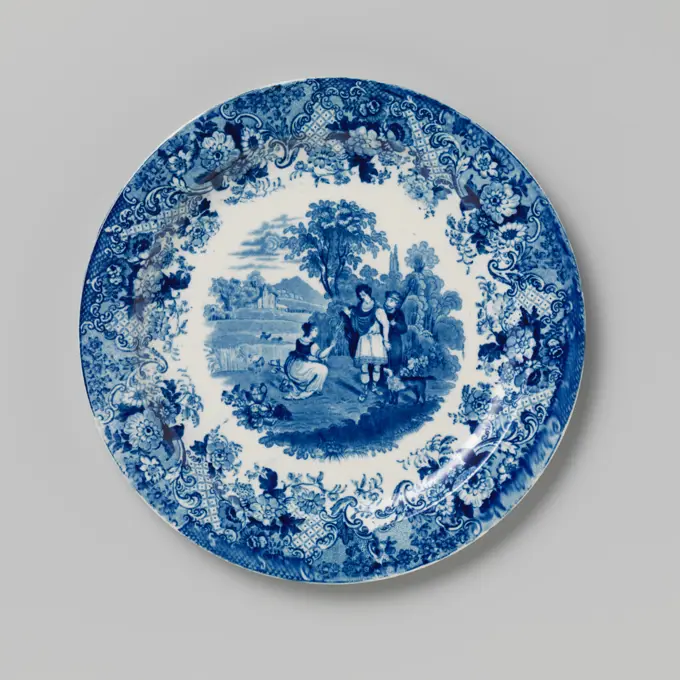
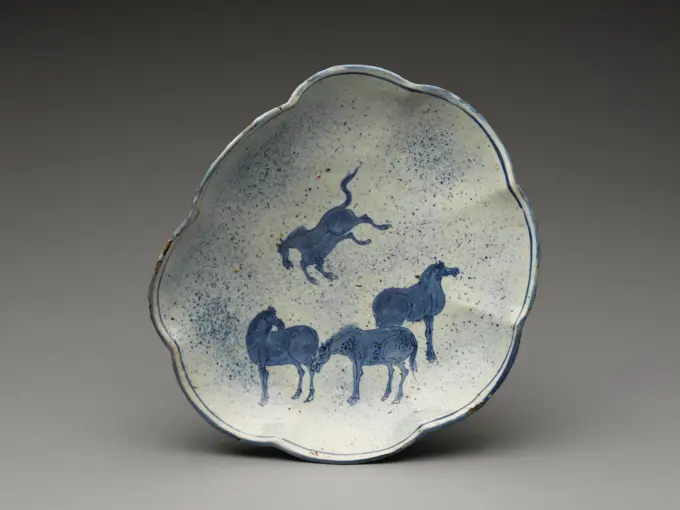
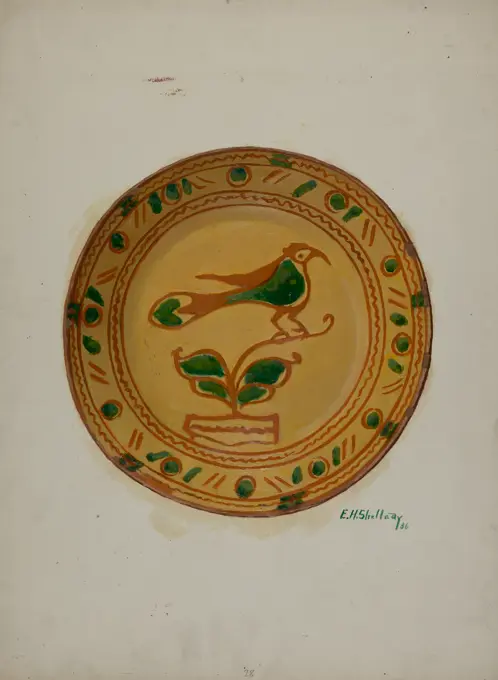
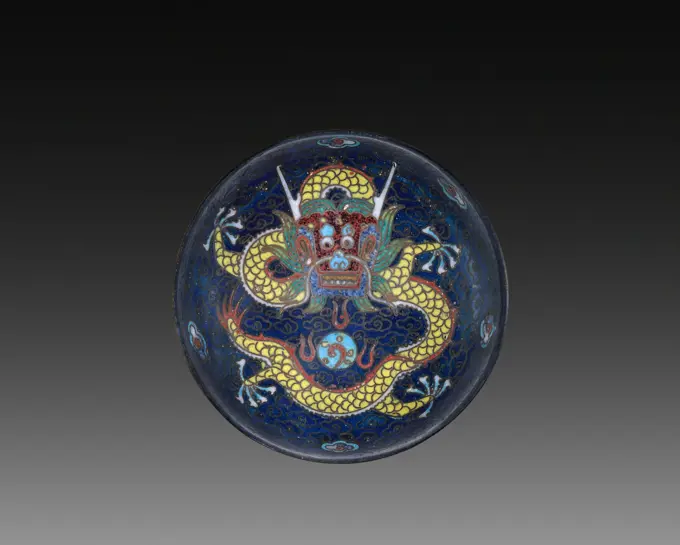
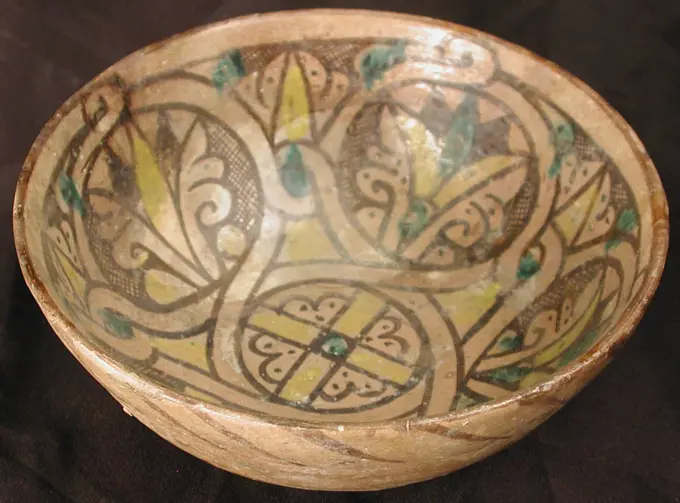
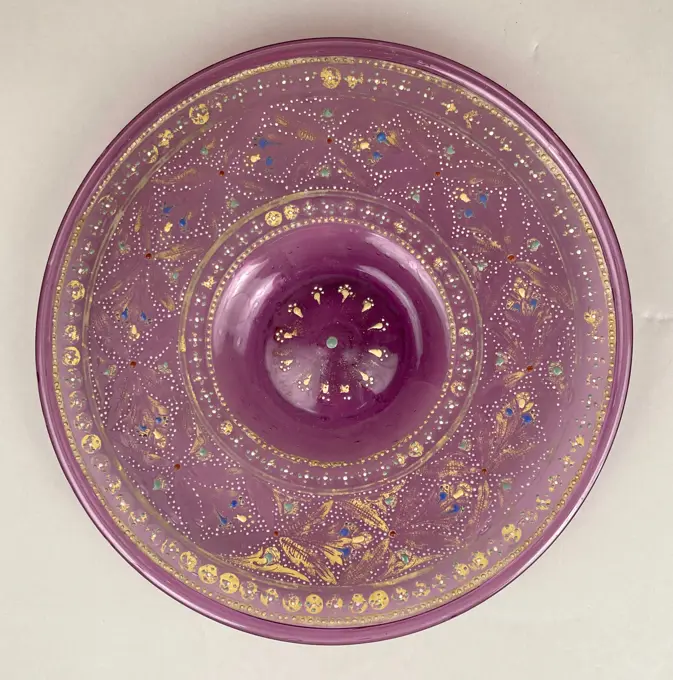
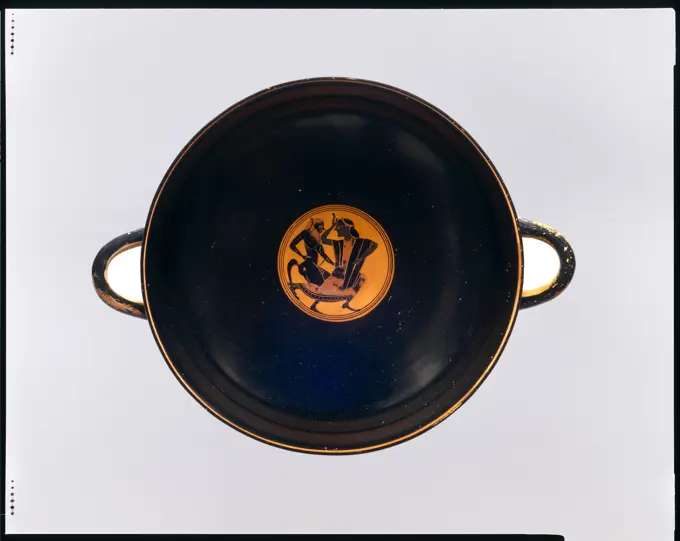
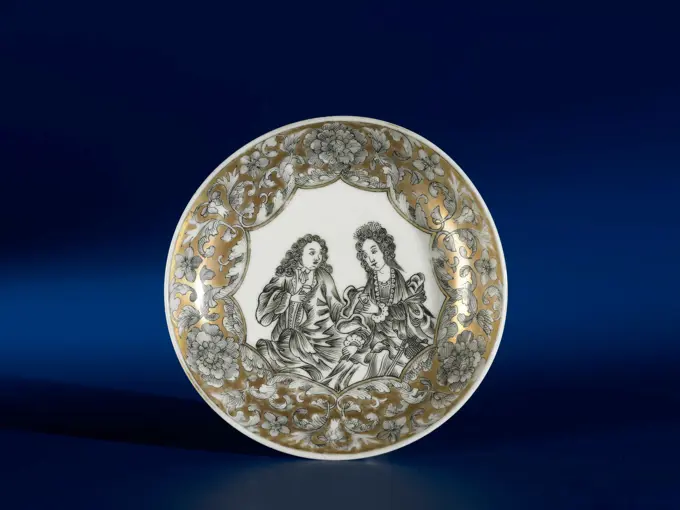
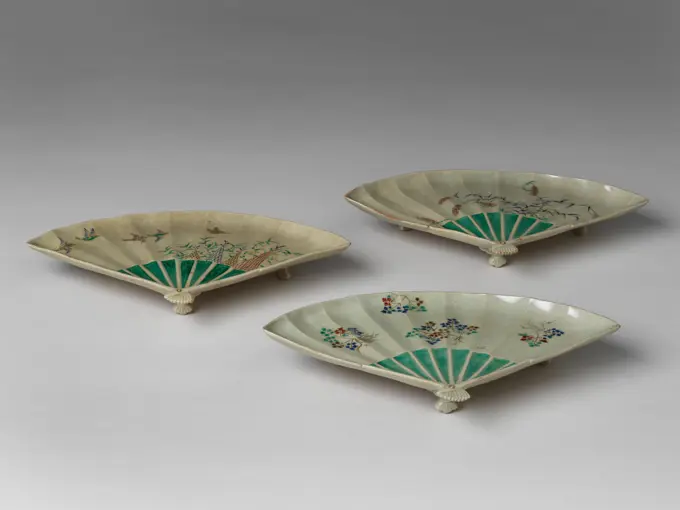
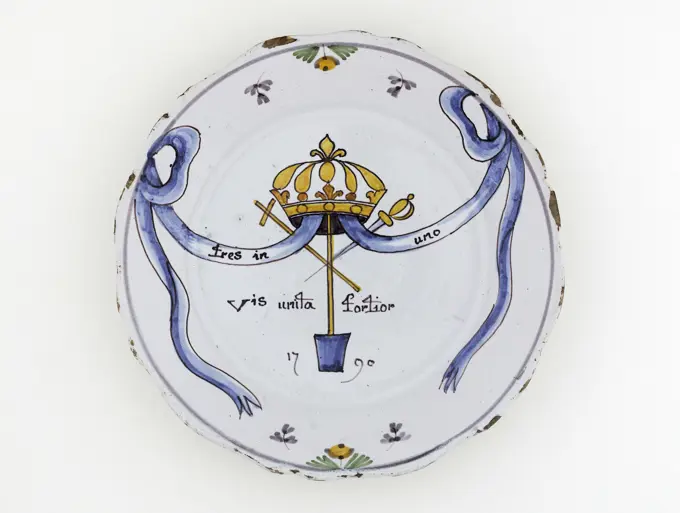
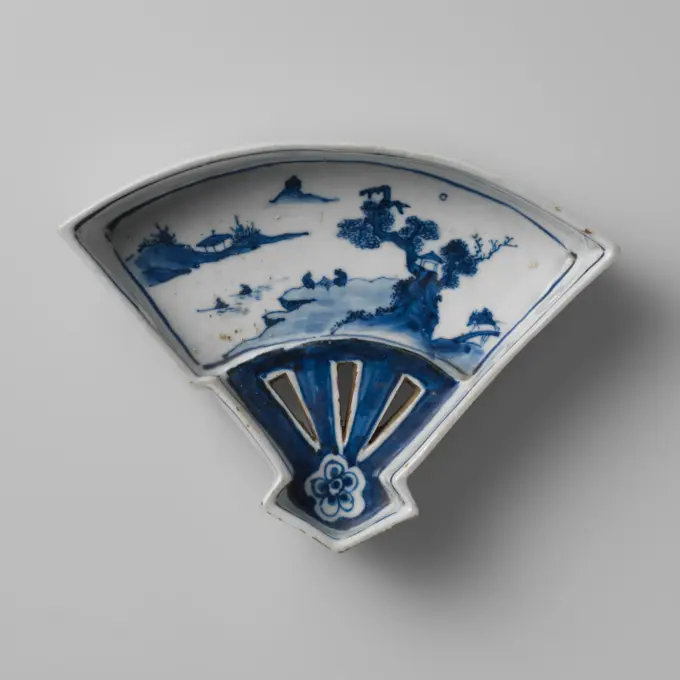
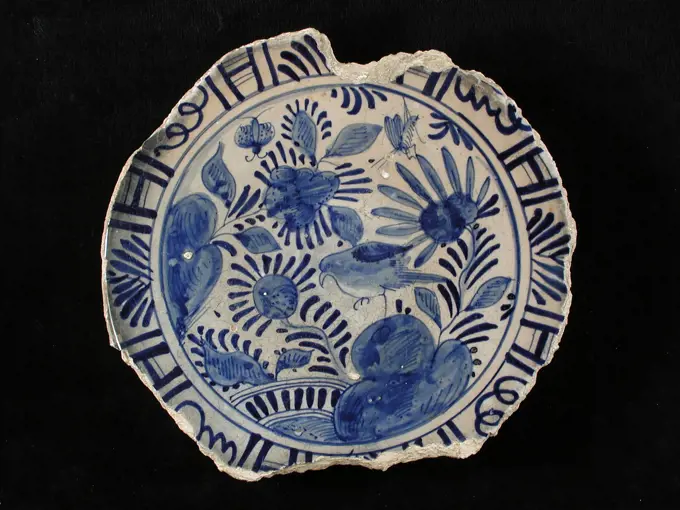
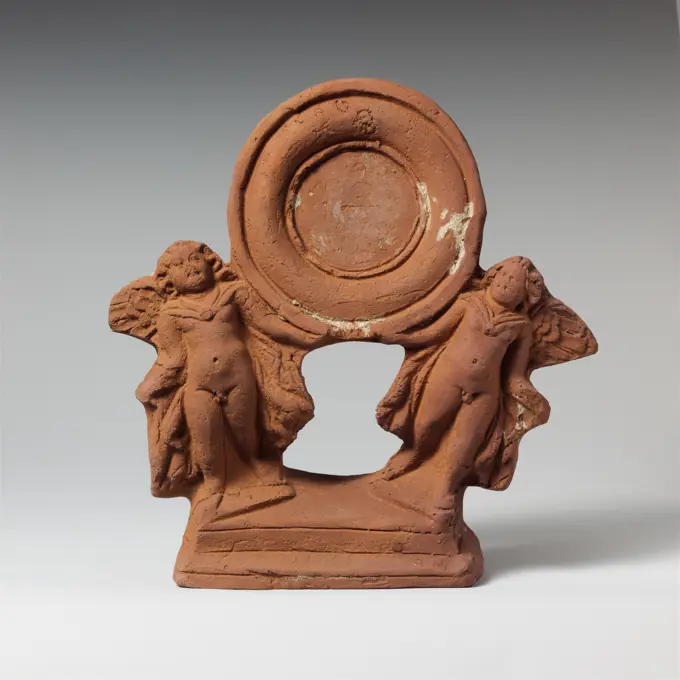
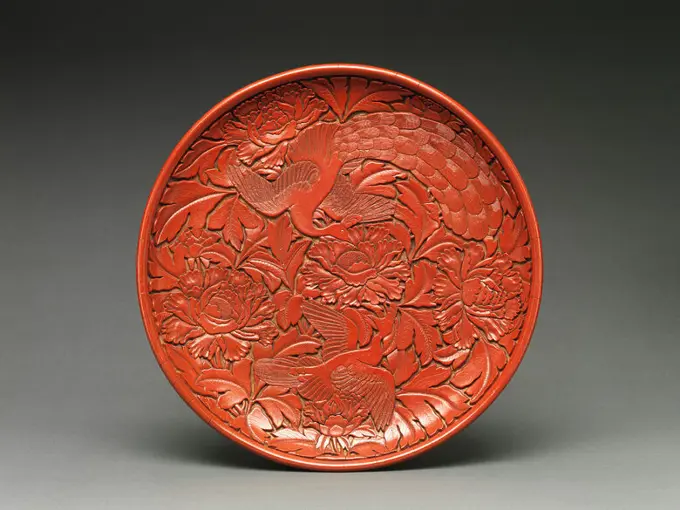
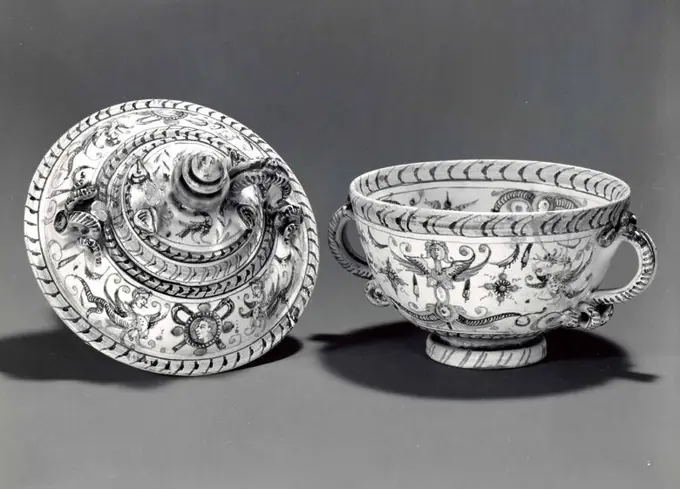
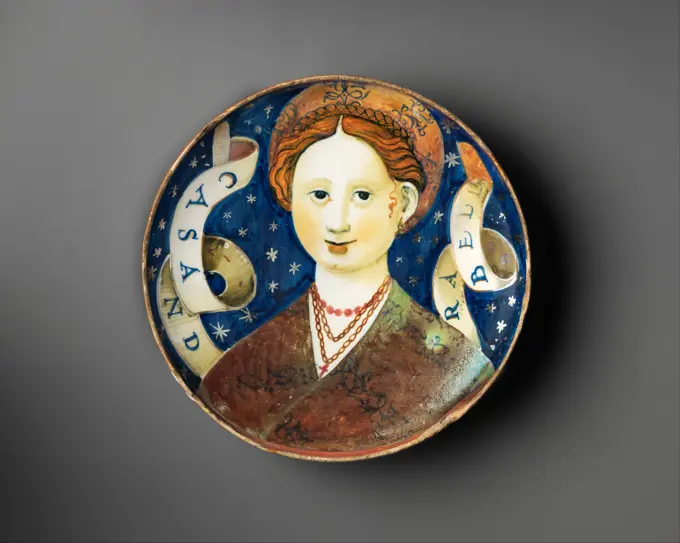
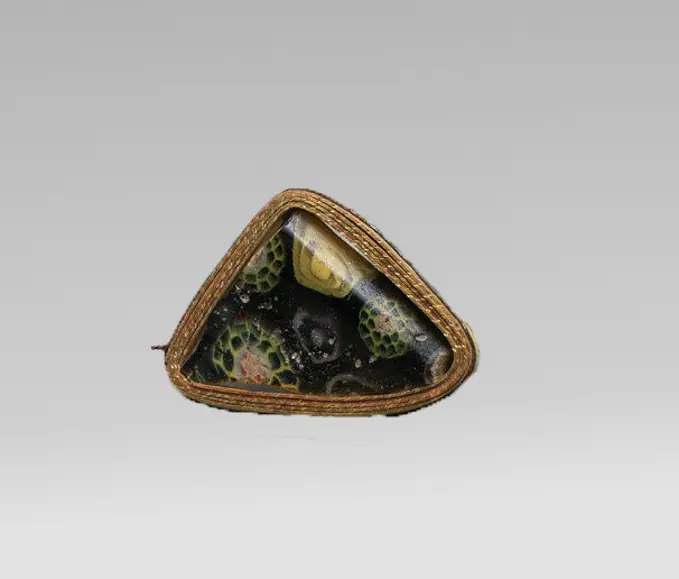
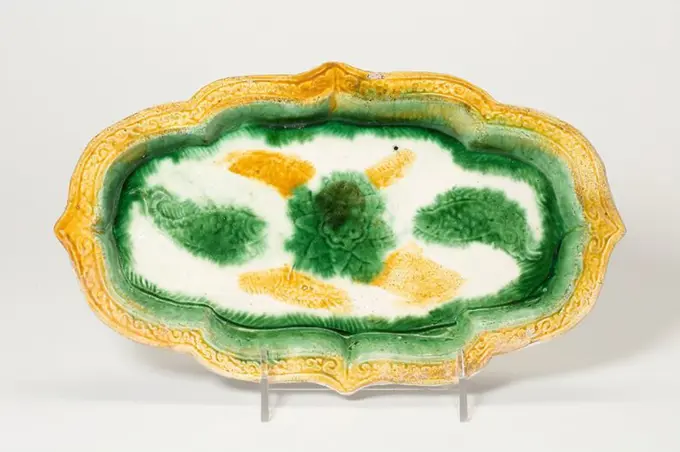
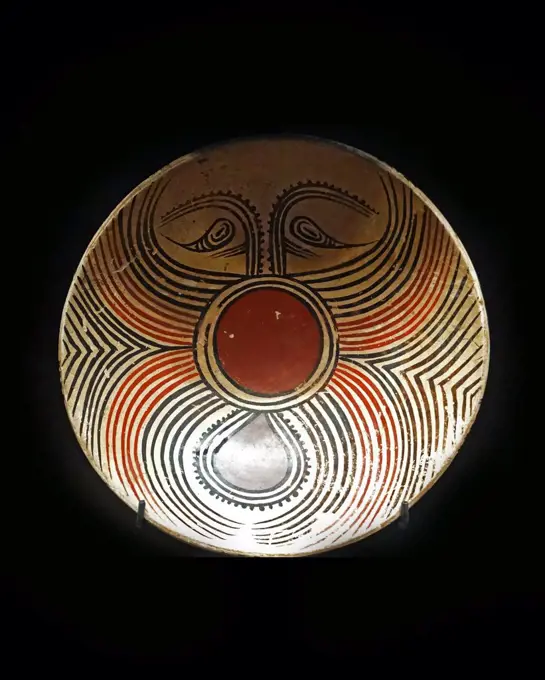
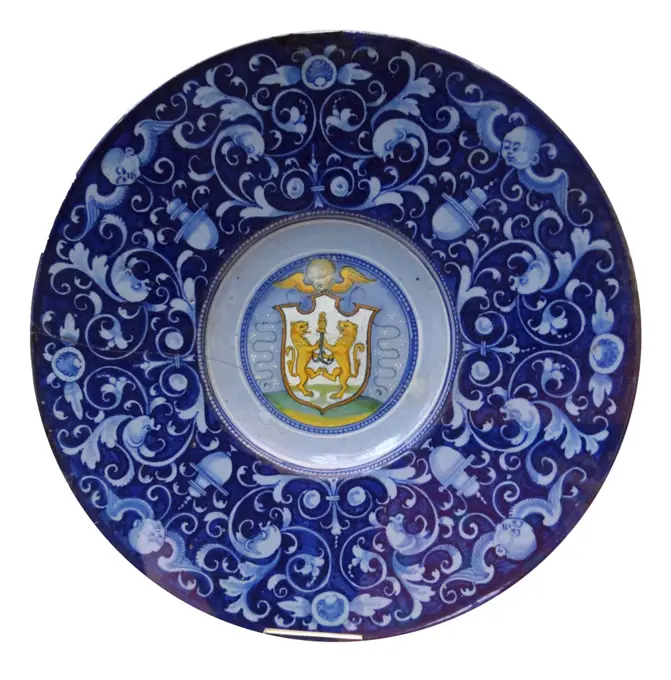
Lobed Bowl with Seated Figure and Attendants 1099-1299 Iran. Iranian 12th- and 13th-century overglaze-painted ceramics, or minaíi (meaning enameled), are particularly opulent and luxurious objects due to their broad color palette. Prior to the late 12th century, colors applied to ceramics were generally limited to one or two per vessel. This example, however, has a much wider range of color, including red, blue, purple, black, and beige. The use of multiple colors applied over the glazed allowed for the depiction of increasingly complex scenes on ceramic vessels. Note the variety of figural decoration on the bowl, which is derived from stock imagery dealing with courtly culture.. Fritware, with in-glaze painting in blue, turquoise and light-purple, and overglaze painting in red, flesh-tone and black enamels . IslamicDish with Grasses late 16th-early 17th century Japan Sprays of autumn grasses are depicted on the square surface of this dish. The outer rim, decorated with bands of abstract patternsshort vertical bars around the corners and horizontal dashes at the sidesis like a frame for a painting. The piece was initially formed not by using a wheel, but by pressing a clay slab over a kind of mold. The sides of the dish were curved gently upward and its corners rounded and shaped with indentations. Four looped feet were attached to the base. The marks left by several spurs, used to stack vessels in the kiln, are visible on the bottom.Decoration on the dish is in white against a gray background, a particular color combination in Shino ware known as Gray (nezumi, literally "mouse") Shino. To produce it, an iron-rich red clay slip was first applied onto the white clay body. The designs were scratched through the slip, and the entire piece was then covered with a thick, uneven feldspathic white overJoseph and his Brethren ca. 1567 Possibly engraved by P.M. The fine engraving on this set of plates (65.260.1-.12) depicts scenes from the Old Testament. The engraver, who must have been trained on the Continent, based his compositions on illustrations in a Concordance to the Bible, improvising where necessary to fill in the circular frame offered by the plates. The plates and a related piece engraved with a portrait of Queen Elizabeth I must have been made as a gift to or from the queen herself.. Joseph and his Brethren 204609Dish with Flying Crane and Clouds in Relief, 1300s. China, Zhejiang province, Yuan dynasty (1271-1368). Glazed porcelain with molded decoration, Longquan ware; diameter: 14.9 cm (5 7/8 in.); overall: 2.4 cm (15/16 in.).Snuffter;  1756-1762 (1756-00-00-1762-00-00);Dogs, animal tracking dogs, hunting scenes, hares, purchase (provenance), animalsFragment majolica plate, chessplate motif on the middle and the edge, cable edge, plate crockery holder soil find ceramic earthenware glaze lead glaze, majolica baked 2x painted glazed hand-turned Fragment. en hole in stand. Red shard Backside black-gray and transparent lead glaze archeology decorate food ItalyDish with a naked angel, anonymous, c. 1650 - c. 1660 Round dish of multi -colored painted faience, with a ribbed and scalloped edge. In the middle is a circle in which a standing, naked angel is painted on a ground. Leaves and animals are painted on the edge. The dish is painted in the colors yellow, purple and blue. Haarlem earthenware. tin glaze. Round dish of multi -colored painted faience, with a ribbed and scalloped edge. In the middle is a circle in which a standing, naked angel is painted on a ground. Leaves and animals are painted on the edge. The dish is painted in the colors yellow, purple and blue. Haarlem earthenware. tin glaze.Bowl 12th-13th centuryPlatter with a yellow lion". Koenigliche Porcellain Fabrique, Meissen (1710-1763), factory. Bell-shaped head of porcelain, painted on the glaze in black and gold. On the wall of the head a medallion with a portrait of Lieve Geelvinck (176-1743), mayor of Amsterdam and one of the directors of the v.O.c., to the portrait an inscription 'the noble greater Mr. Lieve Geelvinck ', the inscription is interrupted by its coat of arms; The inner edge with a decorative band in the style of the Viennese du Paquier porcelain. European performance in Encre de Chine.PlateTurkish traditional Antique decorative handmade metallic trayLAVAFRUTAS DE CERAMICA CON REFLEJOS METALICO. Location: INSTITUTO VALENCIA DE DON JUAN-COLECCION. MADRID. SPAIN.Dish, multi -colored painted. On the flat inside a circle the inscription Sta Pal, Anonymous, c. 1870 Round dish of multi -colored painted majolica. In the middle the inscription is painted in a circle. Concentric strips are painted around the circle between which a stylized continuous brower drink. Harlingen earthenware. tin glaze. lead glaze majolica Round dish of multi -colored painted majolica. In the middle the inscription is painted in a circle. Concentric strips are painted around the circle between which a stylized continuous brower drink. Harlingen earthenware. tin glaze. lead glaze majolicaSand spreader. Sand spreader of stoneware in gray with blue decoration.Chinese porcelain, China, 1600-1650 hard-paste porcelain, under glaze blue. Chinese potters supplied their wares not only to the Dutch, but to other buyers as well. The plates with the bare-bellied monk and the plate with the two people in a river landscape were made for Japanese connoisseurs. The little plates with the horse and the grasshopper were intended for European customers.Teapot stand ca. 1745 British, Staffordshire. Teapot stand. British, Staffordshire. ca. 1745. Lead-glazed earthenware. Ceramics-PotteryPlate. Montelupo (ośrodek ceramiczny ; ca 1400- ), potter's workshopOval basin or dish with subject from Amadis of Gaul ca. 1559-64 Workshop of Orazio Fontana. Oval basin or dish with subject from Amadis of Gaul 198946Plate (tagliere) ca. 1530 Italian, probably Deruta. Plate (tagliere) 460172Heart-Shaped Sweetmeat Dish Dish; Manufactured by de Paeuw (the Peacock Factory); Netherlands; tin-glazed earthenware; 2 x 13.5 x 10.5 cm (13/16 x 5 5/16 x 4 1/8 in.); Bequest of Walter Phelps Warren; 1986-61-58Plate, with three people in a landscape on the flat. Pottery plate with blue transfer decor. The flat decorated with landscape with three people and on the edge decorated with flowers, leaves, volutes and fencing.Bowl with four horses China early 17th century Known as ko-sometsuke, or old blue-and-white” in Japanese, this type of Chinese porcelain was made for the Japanese market in the early seventeenth century. Such works often feature relatively coarse bodies and glazing as well as naive” pictorial designs. Such imperfections” were intentionally created to achieve a natural, even a humble aesthetic effect that was highly appreciated by Japanese tea masters. A bowl like the current piece would have functioned as a serving dish for sweets offered at an upscale tea ceremony. Its lively decoration and irregular shape would have perfectly enhanced the aestheticized assortment of objects used on such occasions. View more. Bowl with four horses. China. early 17th century. Porcelain painted in underglaze cobalt blue (Jingdezhen ware). Ming dynasty (1368-1644), Tianqi period (1621-27). CeramicsBowl, early 1600s. Iran, Safavid period (1501-1722). Fritware with underglaze design in colored slips, Kubachi ware; overall: 27 x 10.6 cm (10 5/8 x 4 3/16 in.).Eugene Shellady, Pa German Plate, 1936 Pa. German PlatePlate. Manufacture nationale de porcelaine de Sevres (1756-), factoryBox with Dragon (lid), c 1900- 1925. Japan, Meiji period (1868-1912) to Taishō period (1912-26). Cloisonne enamel; diameter: 1.9 x 6.5 cm (3/4 x 2 9/16 in.).Dish with Cavalier by Anonymous. Copper engraving decorated with enamel and silver. Dated 13th CenturyBowl late 8th-9th century. Bowl 449705A platter with "yellow lion"; Koenigliche Porcellain Fabrique, Meissen (1710-1763); around 1740 (1735-00-00-1740-00-00);Timoszka vel Timoszew Mikołaj, Dar (provenance), Kakiemon (style), myth Gelbem Loewe (pattern)Plate Italian, Venice (Murano) probably 19th century View more. Plate. Italian, Venice (Murano). probably 19th century. Glass, enamelled and gilt. GlassSaucer with peony and antiquities on a wood-colored ground, anonymous, c. 1725 - c. 1749 Porcelain dish with spreading wall, covered with a red -brown glaze and painted on the glaze in red, pink, green, yellow, eggplant and black. The dish is covered at the front with a brown wood imitation; It saved a peon branch with two antiques (books, Ruyi-SCEPTER); outside unadorned. Famle Rose. China porcelain. glaze. painting / vitrification Porcelain dish with spreading wall, covered with a red -brown glaze and painted on the glaze in red, pink, green, yellow, eggplant and black. The dish is covered at the front with a brown wood imitation; It saved a peon branch with two antiques (books, Ruyi-SCEPTER); outside unadorned. Famle Rose. China porcelain. glaze. painting / vitrificationTerracotta kylix: Siana cup (drinking cup) ca. 560-550 B.C. Attributed to the Painter of Boston C.A. Interior, satyr pursuing maenadExterior, palmette-lotos chainWhile nonfigural motifs often frame or emphasize a specific zone or subject, they can also serve as the primary decoration. In this respect, it is useful to compare the role of ornament in architecture. The alternating stylized palmettes and lotos flowers represent a combination that later becomes standard on the necks of neck-amphorae.. Terracotta kylix: Siana cup (drinking cup) 248725For a long time;  nineteenth century (1880-00-00-1900-00-00);Goldsmith's art, Italy, 17th century. Oval tray in gilded copper, coral, enamels and silver, with engraving and openwork frame decoration. Trapani (Sicily) manufacture, late 1600.. Dish of porcelain, painted on the glaze in black and gold. On the flat a European couple each with a cup in hand in a scalloped cartouche; Flower drinks are saved on the wall in a golden ground. European performance in Encre de Chine.Set of three dishes in the shape of fans Japan early 18th century View more. Set of three dishes in the shape of fans. Japan. early 18th century. Earthenware with polychrome glaze (Ko-Kiyomizu ware). Edo period (1615-1868). CeramicsFooted Dish; lacquered woodPlate with three orders. Earthenware. Around 1789. Paris, Carnavalet museum. 76184-7 Old regime, clergy, crown, Latin cross, spell, revolutionary faience, flower lily, strength, nobility, blue knot, shovel, French revolution, royal, third state, very, three orders, union, unoStar-shaped tile with a stylized flowering plant, anonymous, c. 1250 - c. 1299 Star -shaped tile with a stylized flowering plant (Lotus) and floral motifs in gold on a cobalt blue surface. Ladjvardina. Iran earthenware. glaze. cobalt (mineral). gold (metal) painting / vitrification Star -shaped tile with a stylized flowering plant (Lotus) and floral motifs in gold on a cobalt blue surface. Ladjvardina. Iran earthenware. glaze. cobalt (mineral). gold (metal) painting / vitrificationFan-shaped dish with a water landscape. Range-shaped scale of porcelain, painted in underglaze blue. The ribs of the range are open and covered with blue with a flower in reserve at the bottom. The part with the show is slightly deepened and shows a river landscape with two people in boats, a 'go' playing couple on the shore, pavilions, trees and mountains. The outer wall with dependent branches. The dish is on three loop-shaped legs. Marked on the outer wall with an unidentified brand. Arita, blue-white.DS, Dish fragment, blue on white, bird in Chinese garden, border in Wanli style, signed, plate dish crockery holder soil find ceramics pottery glaze tin glaze lead glaze, Soul of majolica or faience dish with performance in wanli style Bird in Chinese garden Cooked on the whole Fully covered in tin glaze. Monochrome. Chinese Dutch decor. Simple decoration on the bottom Signed initials on the bottom: DS archeology Rotterdam decorate food China Soil discovery Rotterdam 1940.Dish, decorated with arrow-shaped leaves in gold and black. Dish of porcelain, decorated with arrow-shaped leaves in gold and black.Inrô - a medicine case, with netsuke and ojime, decorated on both sides with landscape in bas-relief. unknown, craftsmanPlate; Koenigliche Porzellan Manufaktur (KPM; Berlin; 1763-1918); 1870-82 (1823-00-00-1832-00-00);Terracotta mirror stand ca. 2nd century A.D. Roman, Egyptian Pair of Erotes supporting mirror.. Terracotta mirror stand. Roman, Egyptian. ca. 2nd century A.D.. Terracotta. Imperial. TerracottasPurse ca. 1760 French. Purse 156992Dish with peafowls and peonies. Culture: China. Dimensions: H. 1/8 in. (0.3 cm); Diam. 12 3/4 in. (32.4 cm); Diam. of foot 9 7/8 in. (25.1 cm). Date: early 15th century.The design of two birds among flowers was popular in Chinese carved lacquers, particularly from the thirteenth to the early fifteenth century. In this example, a pair of peafowls flies amid lush blossoming peonies. Peacocks were found only in forests in far southern China and Southeast Asia, and were therefore considered exotic and auspicious birds in Chinese culture. They were also the insignia for the third rank of civil officials in the Ming and Qing dynasties. Museum: Metropolitan Museum of Art, New York, USA.Close-up of three jewelry boxesSet of Ceramic, stylish tableware, table decor and food menu concept.. Set of Ceramic, stylish tablewareSeven porcelain shards of signs from v.o.c.-ship De 'Witte Leeuw', Anonymous, Before 1613 plate (dishes) Seven porcelain shards of signs from V.O.C. ship De 'Witte Leeuw'. Jingdezhen porcelain   Sint-HelenaCover met prunus sprays, anonymous, c. 1680 - c. 1720 Porcelain lid, painted in under -glaze blue. Prunus branches on the top and wall branched in a blue background. Used as a lid of Pot AK-NM-12469. Blue White. China porcelain. glaze. cobalt (mineral) painting / vitrification Porcelain lid, painted in under -glaze blue. Prunus branches on the top and wall branched in a blue background. Used as a lid of Pot AK-NM-12469. Blue White. China porcelain. glaze. cobalt (mineral) painting / vitrificationPlate with Decoration of Two Cranes Japan. Plate with Decoration of Two Cranes 52250Soup bowl with cover (tazza con coperchio). Culture: Italian, Deruta, or French. Dimensions: Bowl: Diameter: 5 11/16 in. (14.5cm); Height: 3 1/2 in. (8.9 cm); Cover: Height: 3 9/16 in. (9.1 cm). Date: early 17th century. Museum: Metropolitan Museum of Art, New York, USA.Shallow bowl with Beautiful Cassandra 1538 Lustered by Vincenzo Andreoli. Shallow bowl with Beautiful Cassandra 195761Glass mosaic carinated bowl fragment late 1st century B.C.-early 1st century A.D. Roman Rim fragment.Translucent deep purple, opaque white, yellow, and brick red, deep green, and colorless.Outsplayed, almost horizontal rim with rounded edge; carinated side, with part of one convex curve.Composite mosaic pattern formed from polygonal sections of three canes: one in a purple ground surrounding a circular cluster of green rods outlined in yellow and with a central red rod; another in a colorless ground with a yellow spiral, and the third in a purple ground with a white circle and central white rod.Polished interior; pitting of surface bubbles on interior; dulling and iridescent weathering on exterior, edge of rim, and jagged edges.. Glass mosaic carinated bowl fragment. Roman. late 1st century B.C.-early 1st century A.D.. Glass; cast. Early Imperial. GlassElongated Foliate Dish with Fish and Central Floret. China. Date: 907 AD-1099. Dimensions: 2.6 × 27.5 × 16.0 cm (1 × 10 13/16 × 6 5/16 in.). Slip-coated earthenware with three color (sancai) lead glazes. Origin: China. Museum: The Chicago Art Institute, Chicago, USA.Shelf of unique plates and vases in retail store.Polychrome ceramic from Panama. The ceramic would have been used in funerals and would have sat on a bed of ash.Bowl from Faenza, Italy. Tin-glazed earthenware, painted in colours. Dated 16th CenturyWine Cup 19th century Japan. Wine Cup. Japan. 19th century. Red lacquer decorated with gold. Edo (1615-1868) or Meiji period (1868-1912). LacquerLippert & Haas Manufactory, Plate, 1840, hard-paste porcelain.