Ceramic Fragments and Artifacts

A collection of earthenware and glass fragments showcasing intricate designs and colors, highlighting historical ceramics from various cultures.

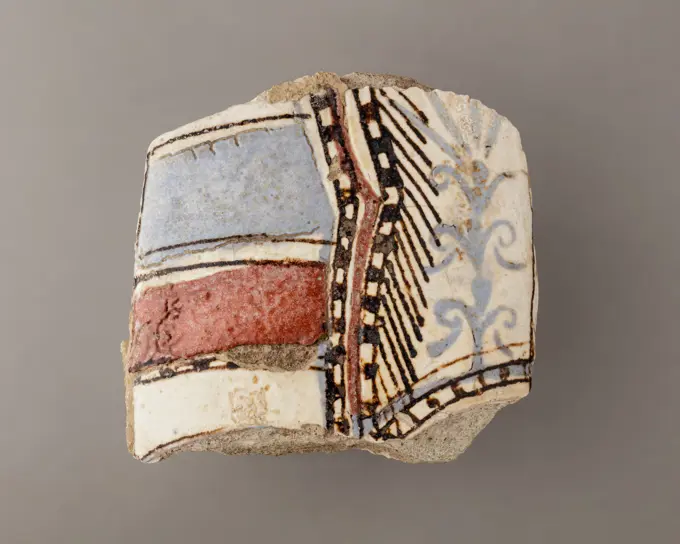
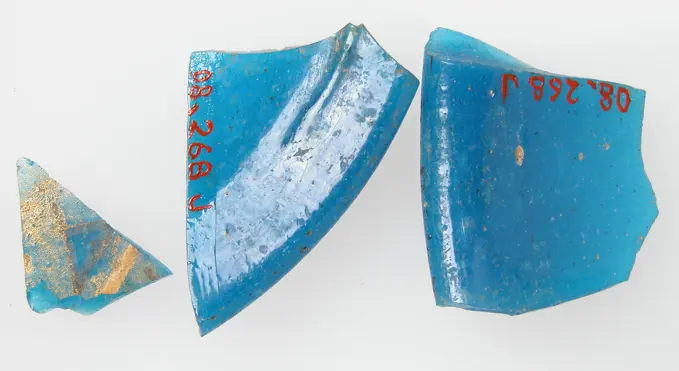
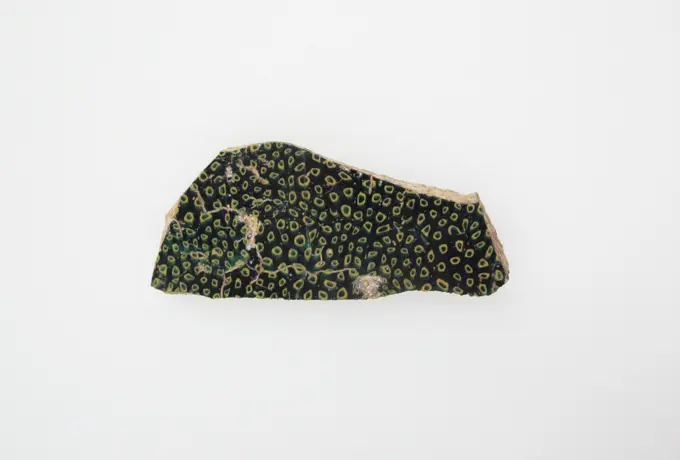
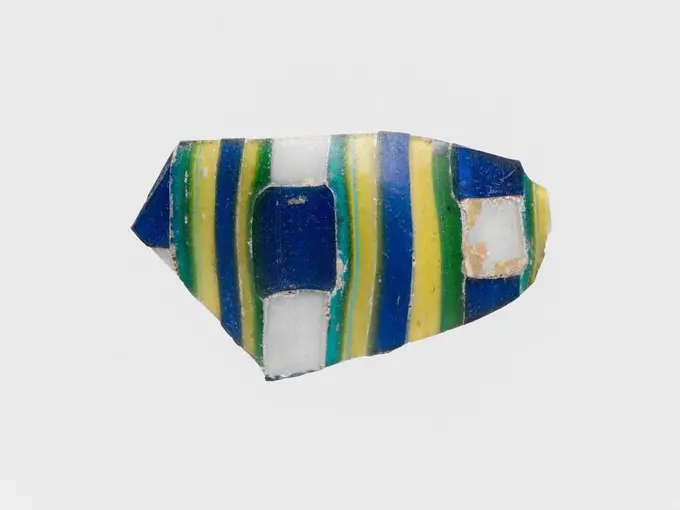
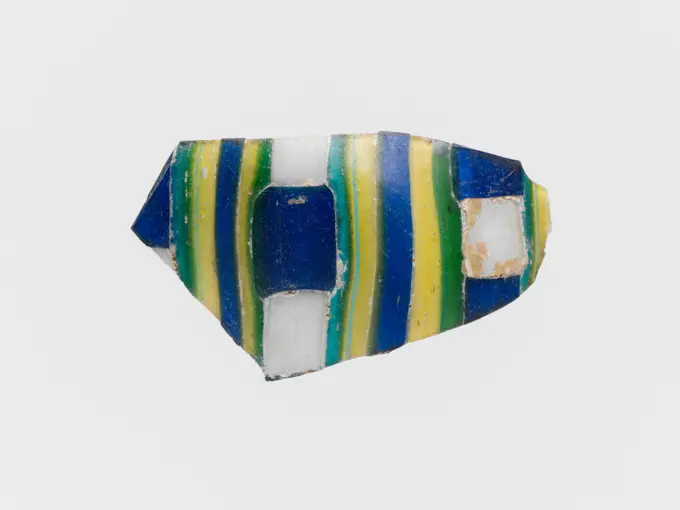
Fragment of a Mosaic Glass Vessel. Unknown 1st century A.D.
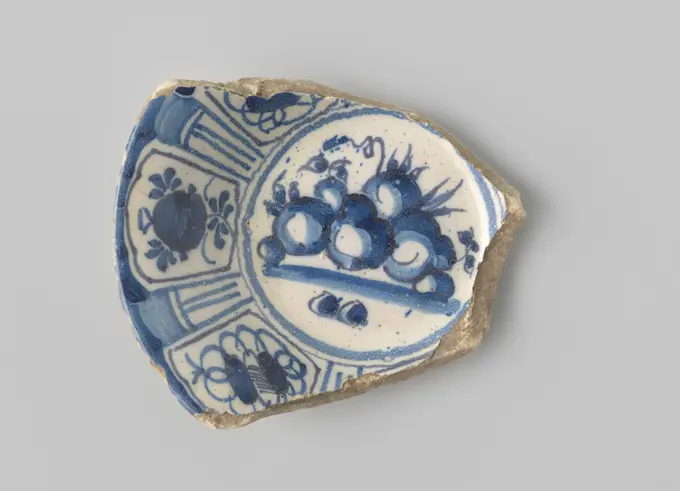
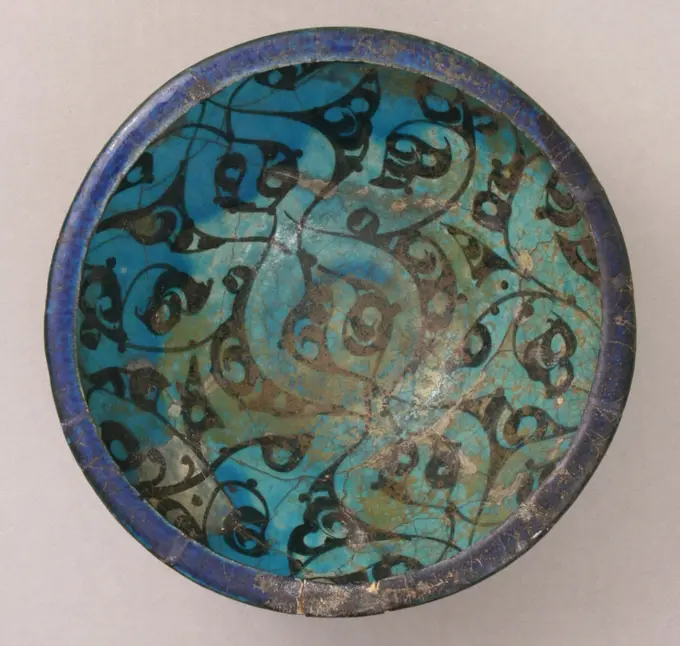
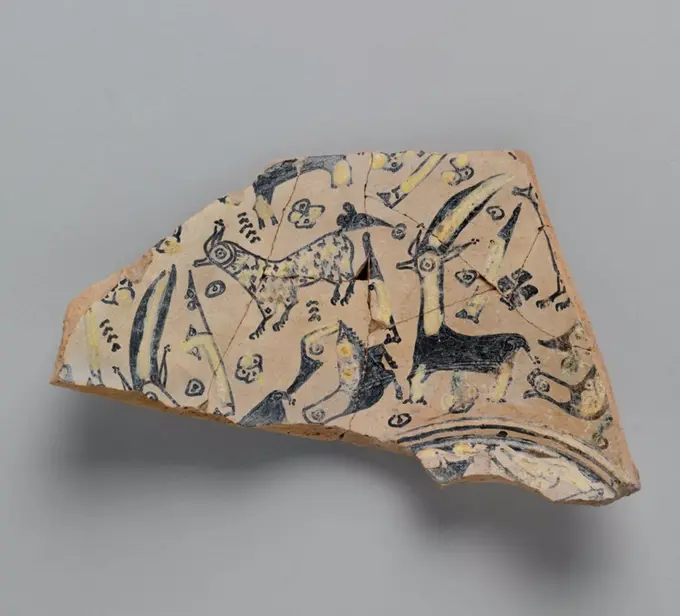
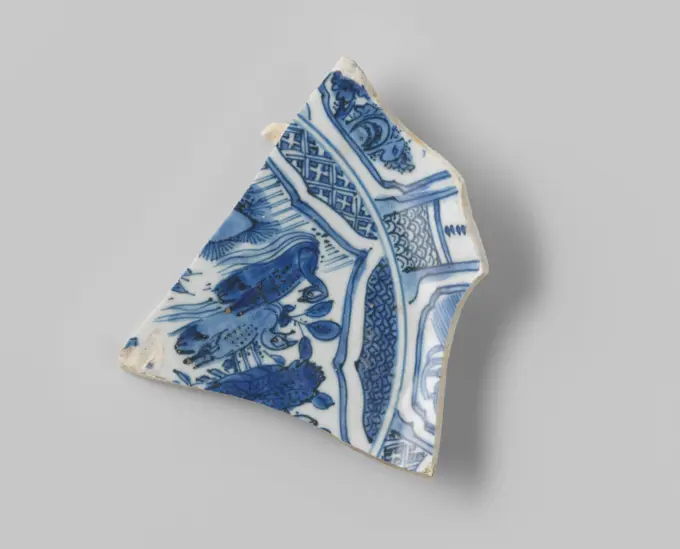
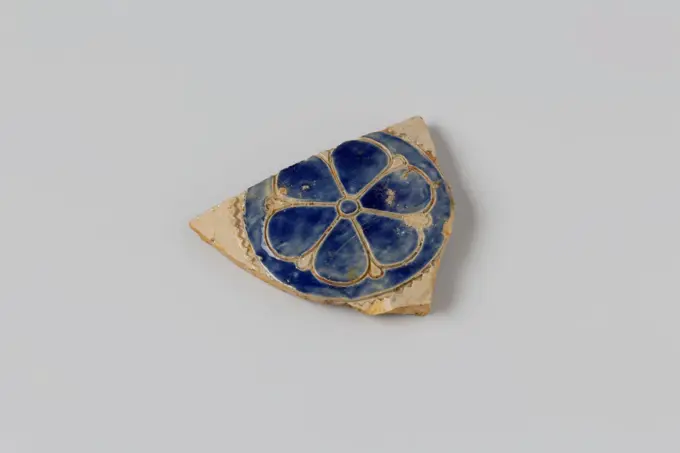
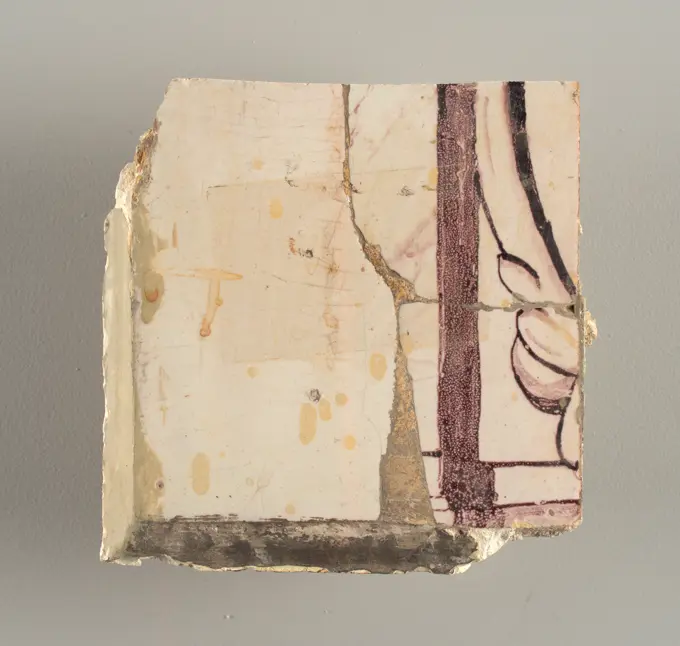
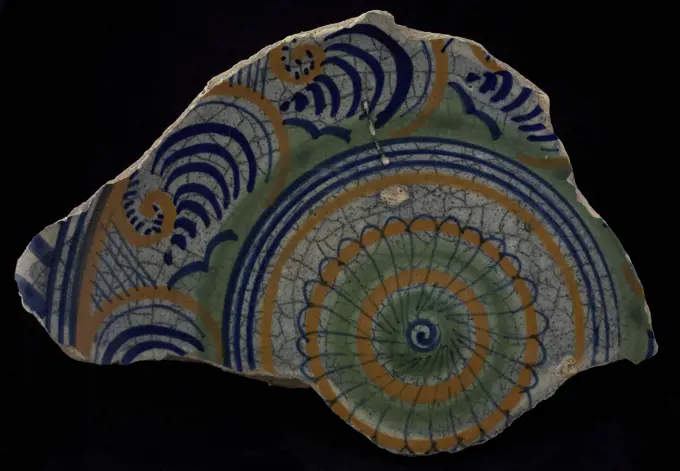
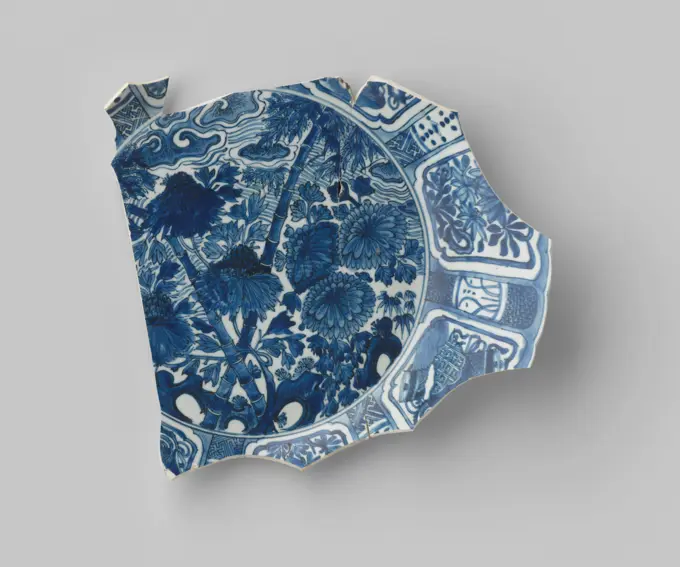
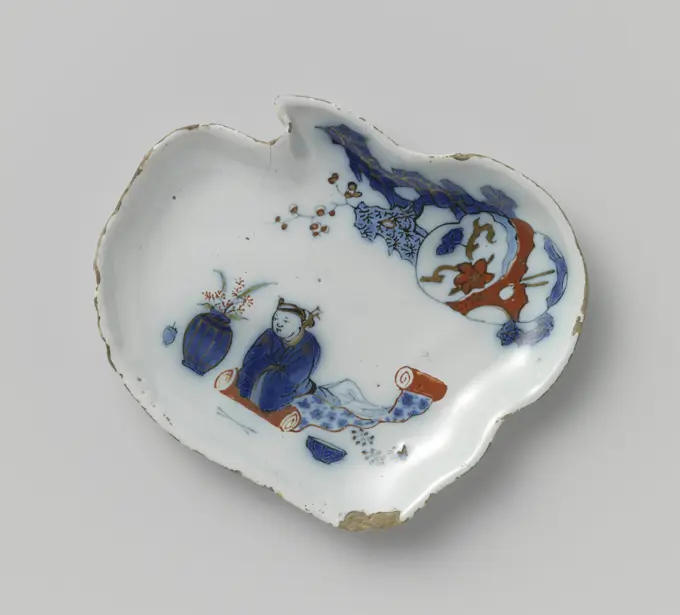
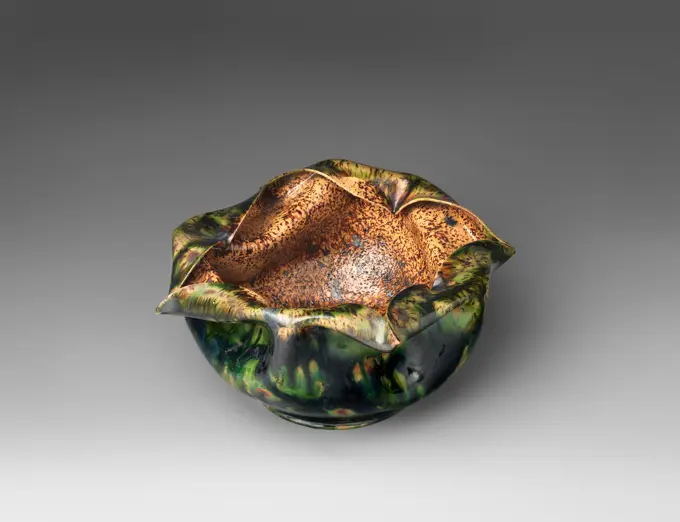
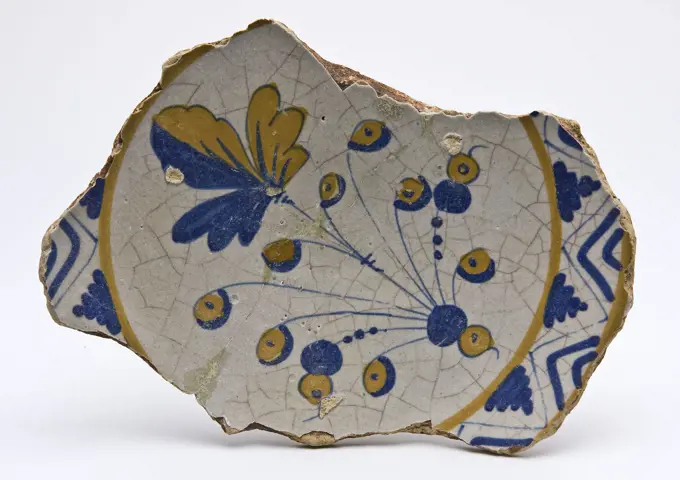
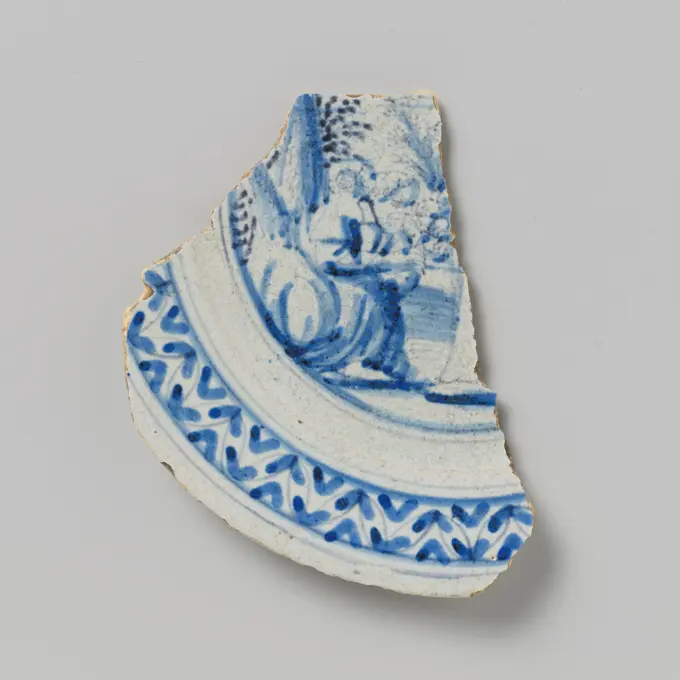
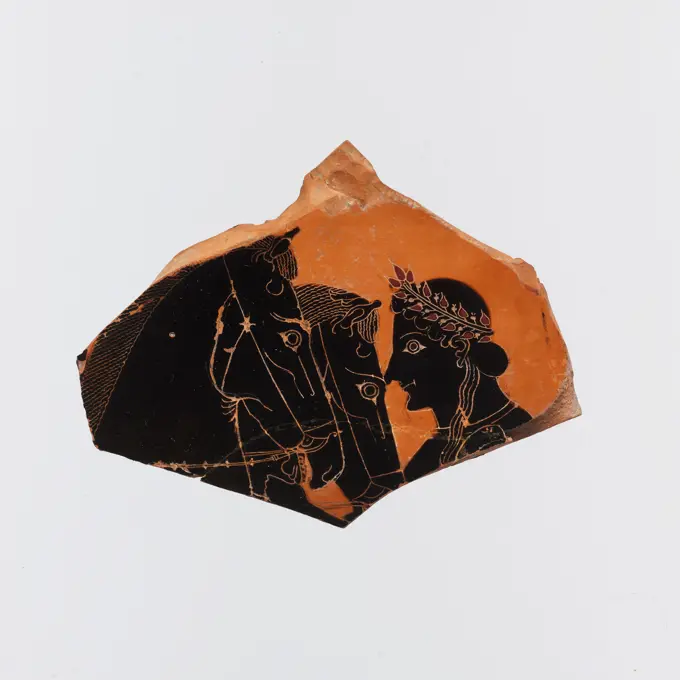
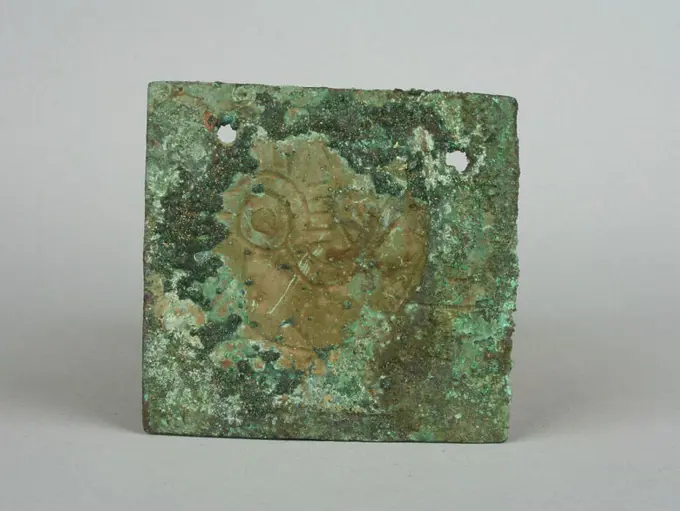
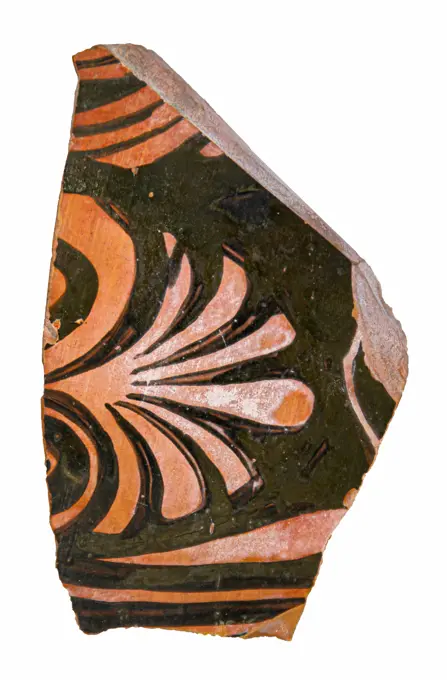
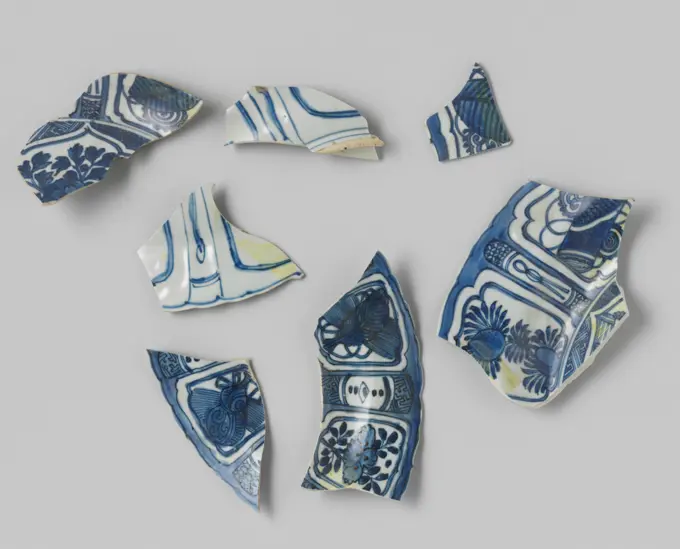
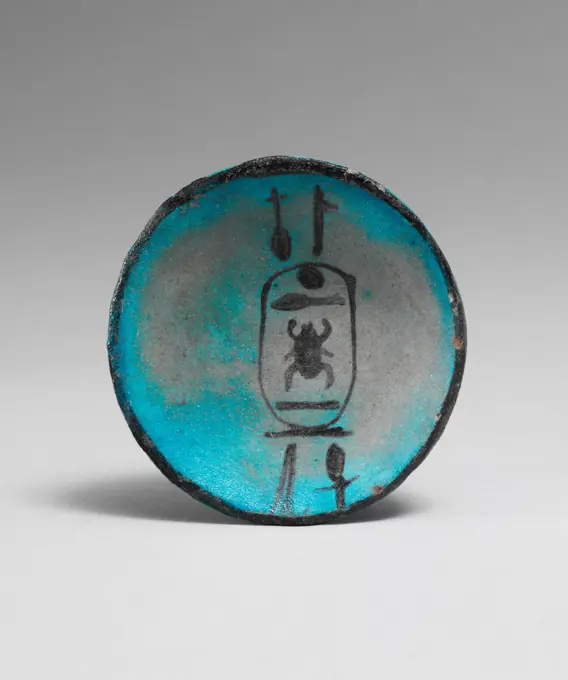
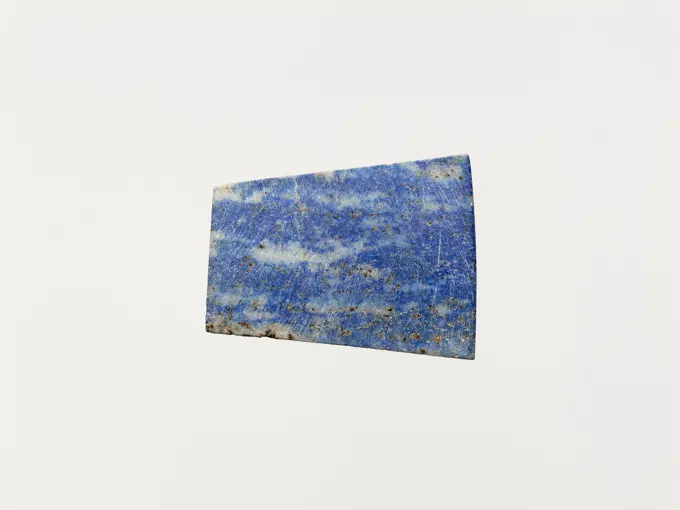
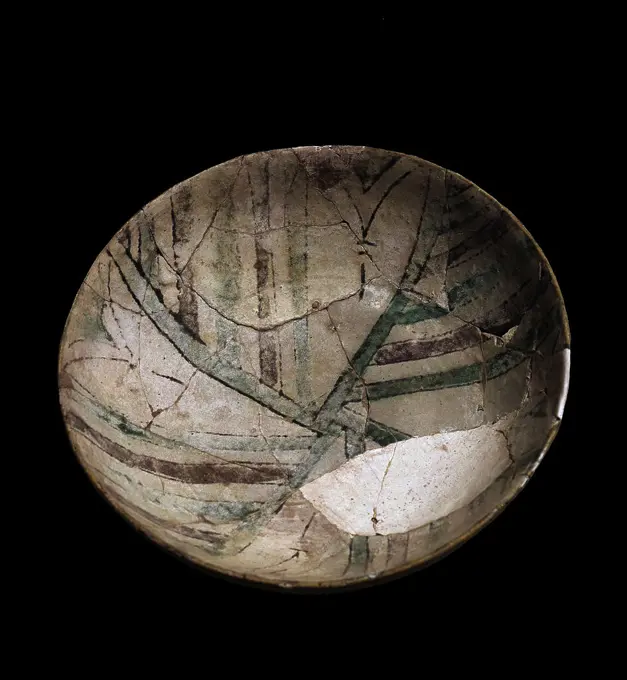
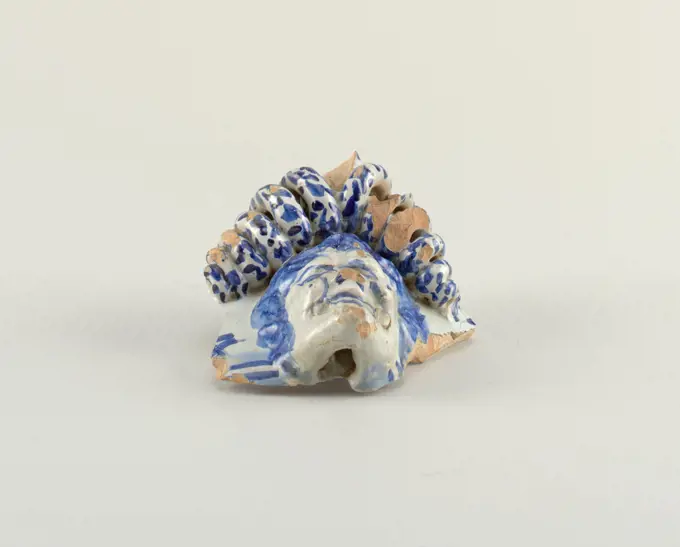
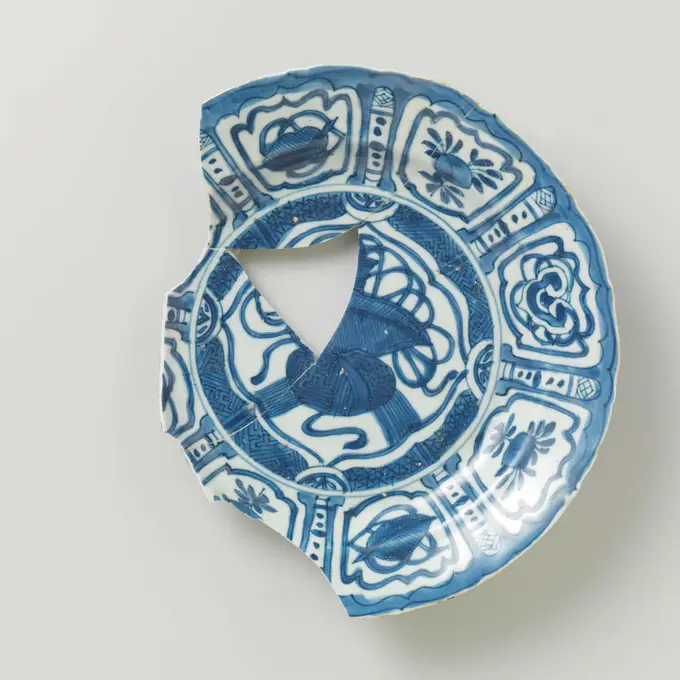
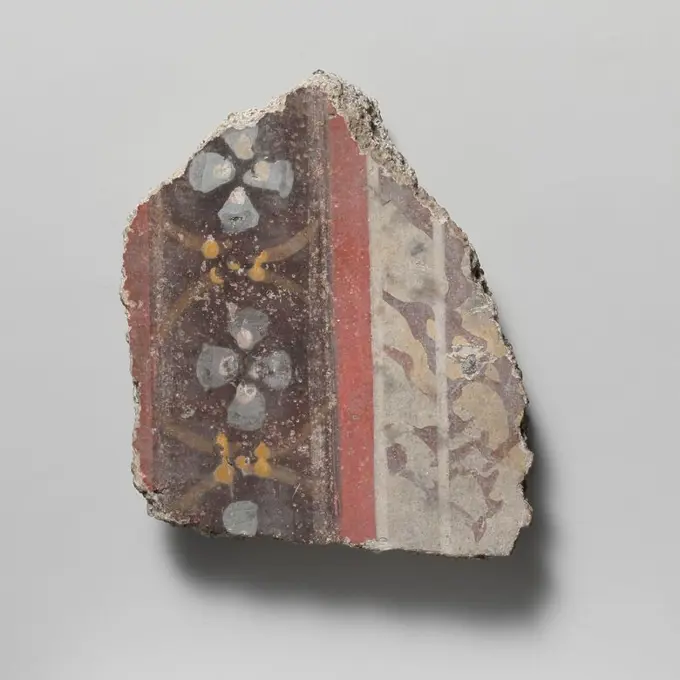
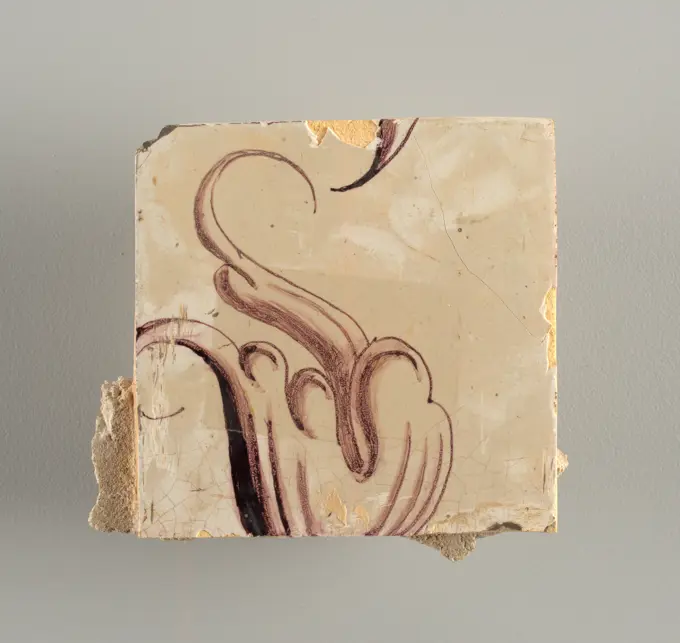
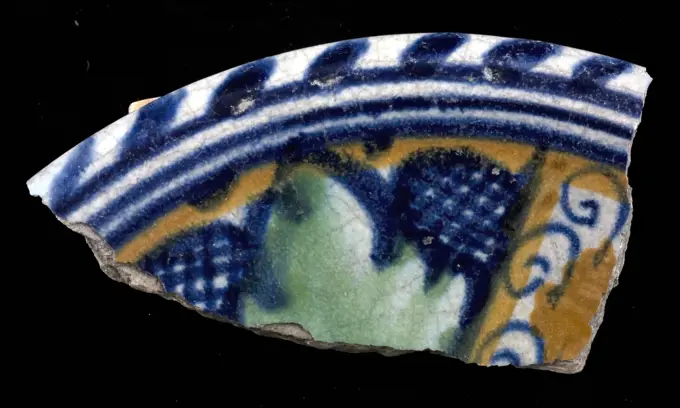
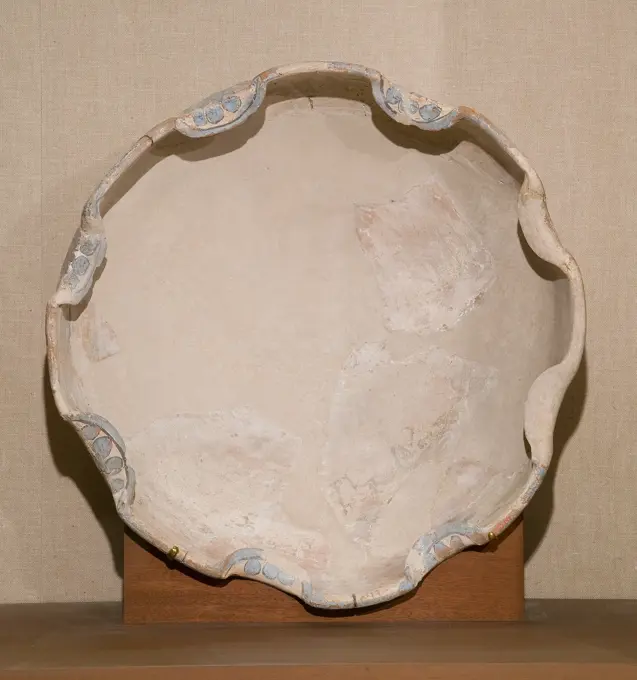
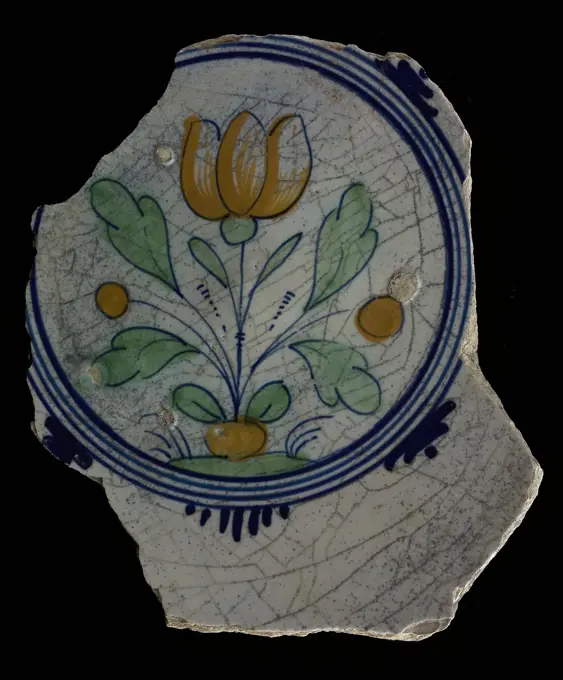
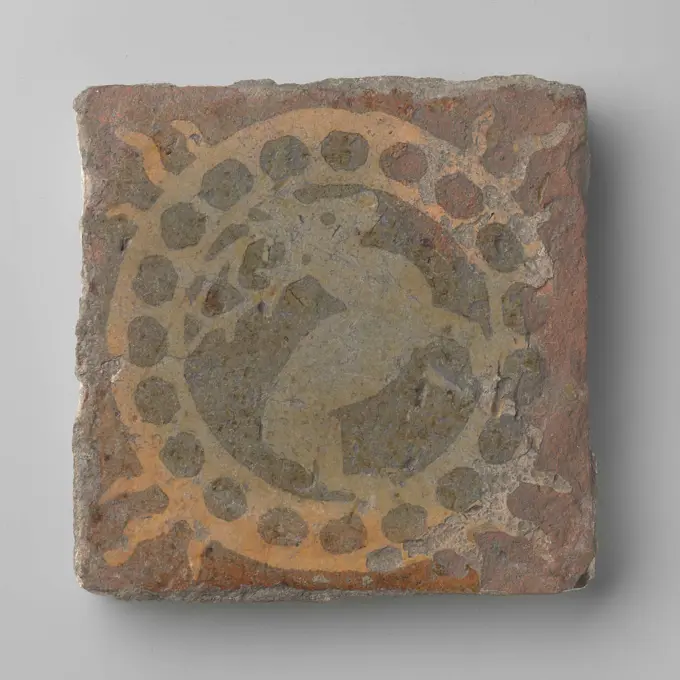
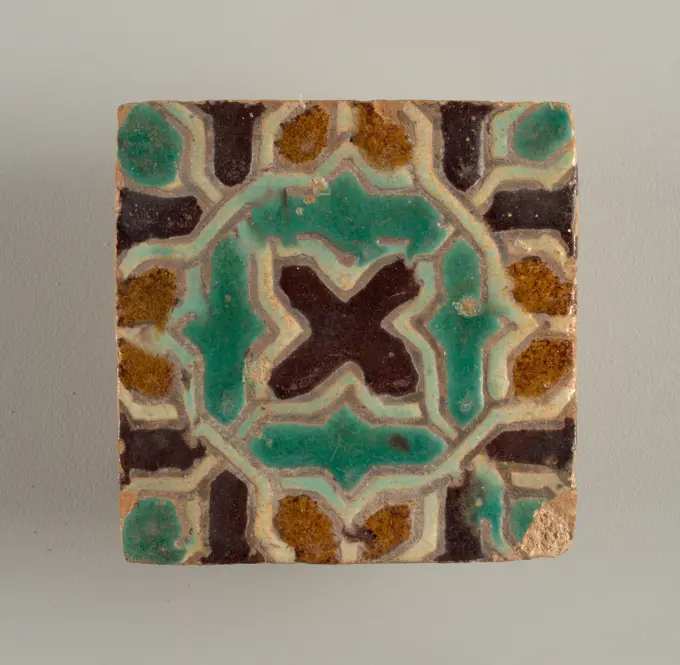
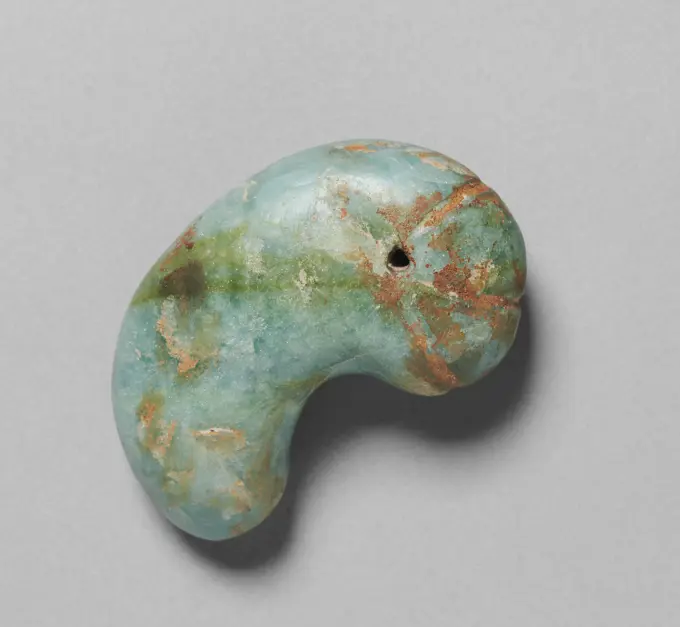
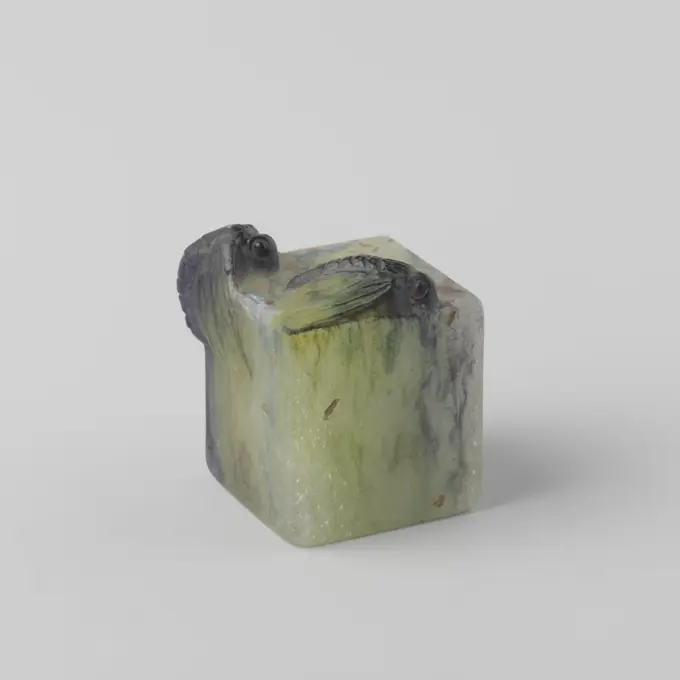
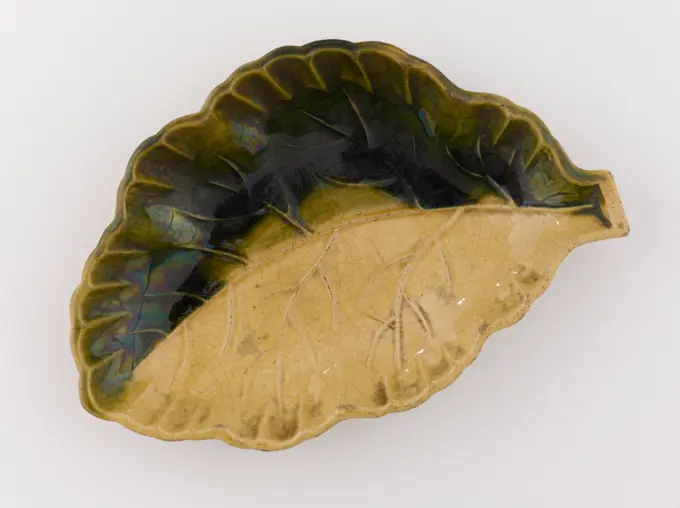
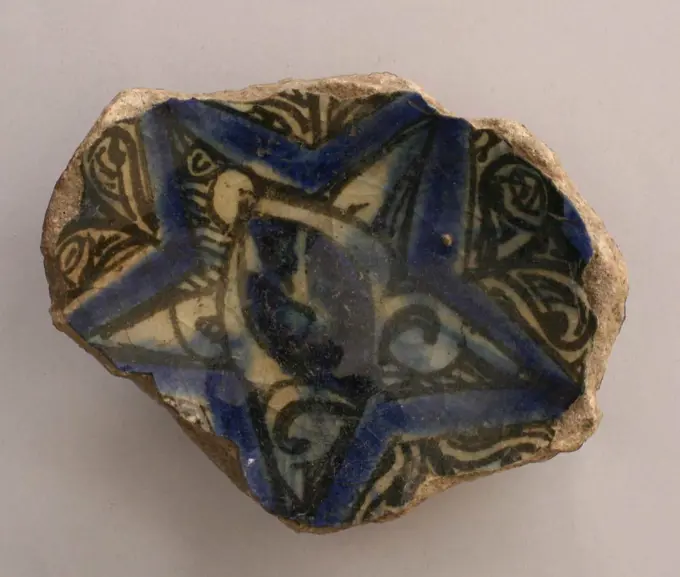
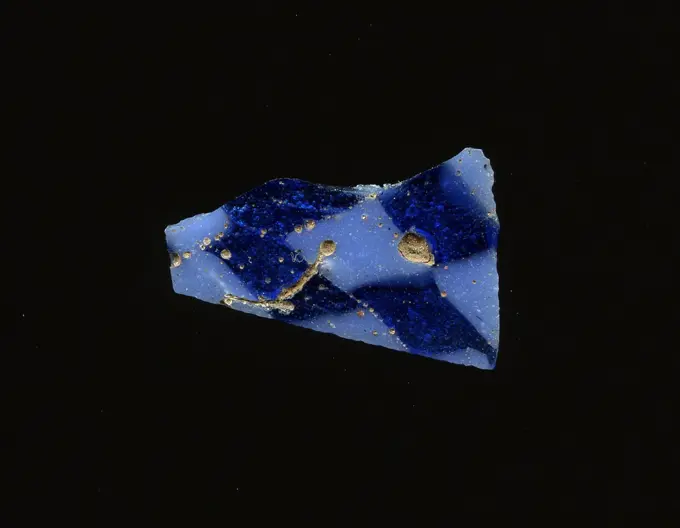
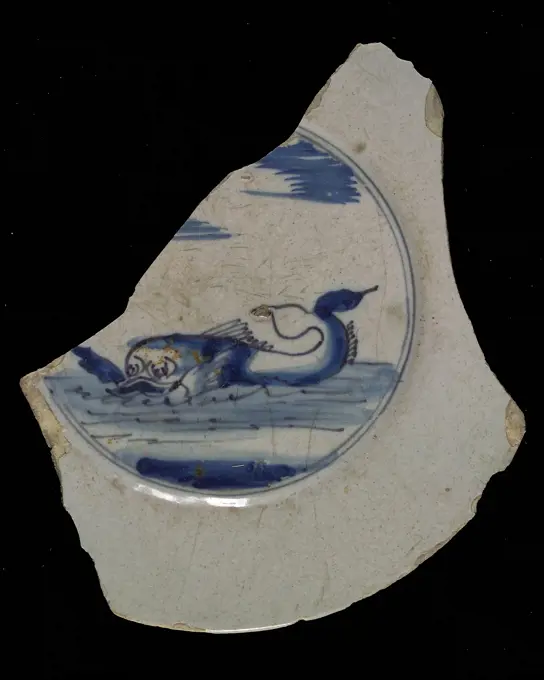
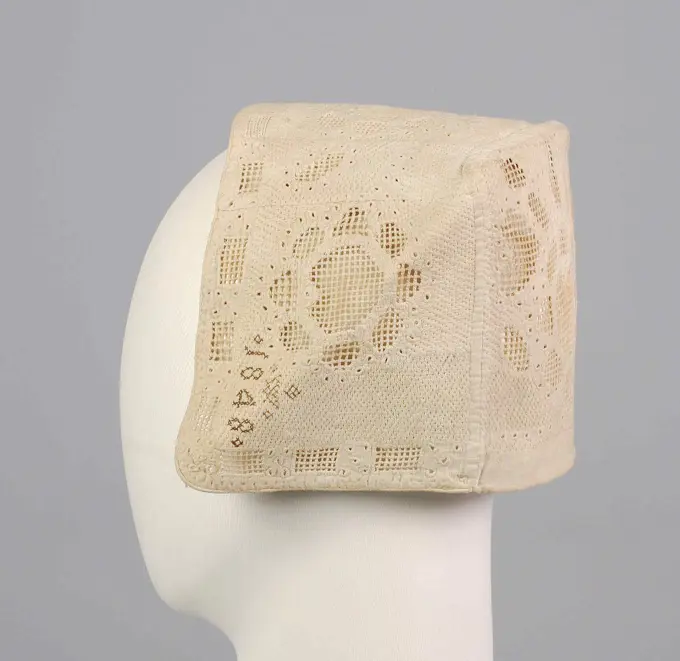
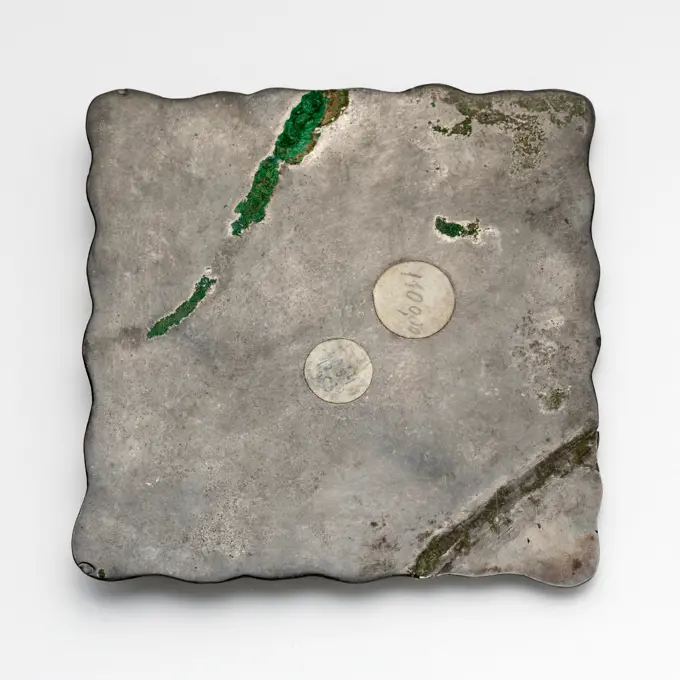
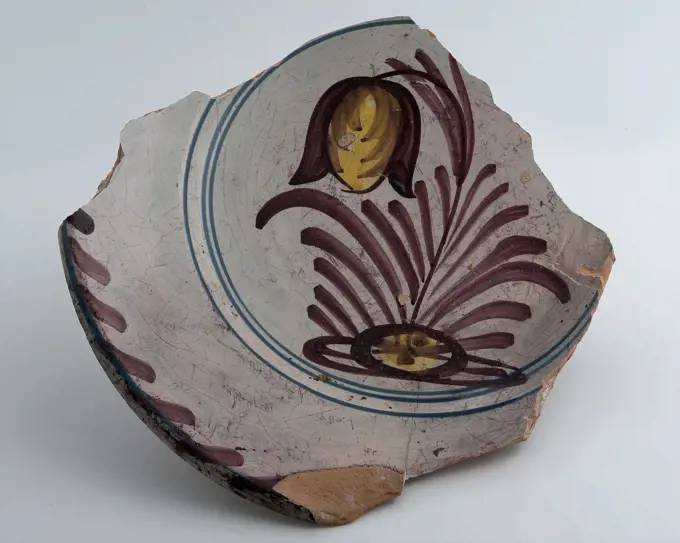
White-baking earthenware saucer, with white enamel on the top and bottom, where the remains of a framed performance can be seen on the top, anonymous, c. 1500 - c. 1699 fragment   earthenware. glazeSharf of white -baking earthenware, with an oriental decor at the front with fruits in blue, c. 1500 - c. 1899 fragment   earthenware. glazeFragment of a Mosaic Glass Vessel. Unknown 1st century B.C.-1st century A.D. Marbled blue, white turquoise, yellow, red and orange.Bowl 12th-13th century. Bowl 452000Fragment of a Bowl 11th-12th century. Fragment of a Bowl. 11th-12th century. Earthenware; light body under cobalt alkaline glaze. Excavated in Iran, Nishapur. CeramicsTwo Buff Ware Fragments with Animal Decoration. Dimensions: W. 6 1/4 in. (15.9 cm)L. 4 in. (10.2 cm). Date: 9th century.The buff clay fabric used to make this vessel forms the background to an overall decoration of animals, including birds and horned and spotted quadrupeds. Interspersed between them are small geometric motifs. None of these features seems to carry a meaning; they were simply a design innovation of the Nishapur potters. Museum: Metropolitan Museum of Art, New York, USA.Scherf of a sign from V.O.C. ship De 'Witte Leeuw', Anonymous, Before 1613 plate (dishes) Sharf of a sign from V.O.C. ship the 'Witte Leeuw'.  bone china (material)Glass Fragment 4th-early 5th century Coptic. Glass Fragment 477135Scherf of a pot from the wreck of the East Indians Hollandia, Anonymous, 1700 - in Or Before 1743 pot Stoneware, Rhenish, Westerwald, pot; of body, sim. NG 1980-27H2624r. Westerwald stoneware   SecondFragment of a Mosaic Glass Vessel. Unknown 1st century A.D.Wall Facing (Netherlands); tin-glazed earthenware, underglaze; 5 tiles tall, various wideFragment majolica dish, polychrome, in concentric circles rosette, cable edge, plate crockery holder soil find ceramic earthenware glaze, baked underside covered with lead glaze gray mottled by staying in the bottom and with some black splashes Polychrome archeology Rotterdam City Triangle Providing food inside Serving archaeological find in the soil Binnenvest Rotterdam 1966.Fragment 14th-15th century. Fragment 446414Fragment dish from v.o.c.-ship De 'Witte Leeuw', Anonymous, Before 1613  Fragment dish from V.O.C. ship De 'Witte Leeuw', 40 present; Made of three shards. Excerpt of a large dish with a flat edge and a scalloped lip, and an unglazed soil; Decorated in underlaze blue. The entire flat is painted with bamboo, chrysanthemums, rocks and clouds. In the wall and edge alternating wide and narrow fields filled with happiness symbols, flowering plants and dot work. The shard is glassy and white and has little ingrained dirt. The glaze is crawl. The foot ring is V-shaped, faceted and stands inside. Little oven sand was found. Jingdezhen porcelain. bone china (material). glaze   Sint-HelenaDish, Het Moriaanshooft, 1685 - 1690 dish Scale of Faïence. Multicolored painted with a Chinese figure with a roll silk. Delft .  Chinese (+ other cultural aspects)Button (China); cloisonne enamel, metal; Bequest of Julia Hutchins Wolcott; 1959-66-73Fragment of a Glass Dish. Culture: Byzantine. Dimensions: Overall: 3 1/8 x 4 5/16 x 13/16 in. (7.9 x 11 x 2 cm)diameter of foot: 2 9/16 in. (6.5 cm). Date: 10th century.The figures of men returning from a hunt on the bottom of this dish closely resemble ones on ivory and bone caskets of the period. Museum: Metropolitan Museum of Art, New York, USA.Tile. Tile with a blue painted square with praise surrounded by boxes.Bag in a lying oval model of dark blue gold brocade in large motifs, anonymous, c. 1915 - c. 1920 Pouch from a bracket bag made of dark blue gold brocade. Double beaten fabric, raised aside, rounded up from above and pleated. Bizarre on foot pattern from through and over each other braided reed halls, which radiate and encounter triangular fields with different grid patterns; From here, sliding lancet leaves in gold with saved flowers. Terra satin lining, with a small bag in the lining. France whole: Silk. Lining: Silk Pouch from a bracket bag made of dark blue gold brocade. Double beaten fabric, raised aside, rounded up from above and pleated. Bizarre on foot pattern from through and over each other braided reed halls, which radiate and encounter triangular fields with different grid patterns; From here, sliding lancet leaves in gold with saved flowers. Terra satin lining, with a small bag in the lining. France whole: Silk. Lining: SilkBowl ca. 1897-1900 George E. Ohr In many ways George Edgar Ohr was the quintessential Arts and Crafts potter, combining artistic vision with extraordinary skill with his hands. Working in the seaside resort town of Biloxi, Mississippi, he dug the clay, processed and prepared it, threw the shape on the wheel, altered the piece according to his vision, mixed and applied his own glazes, fired the kiln, created his own style of advertising, and took his wares on the road. Ohrs personal mantra was "no two alike," and he was as eccentric as his work was individualistic, with its manipulated forms on ultra-thin thrown vessels, crimping, ruffling, off-centering, and twisting, to create unprecedented forms for the 1890s. To these forms, he applied his own completely new and unusual glazes, applied by sponging, splashing, and spattering, resulting in works that in many ways anticipated the abstract art movements that would find form decades later.Unlike many of Ohrs works, the form of this bowSharf of white -baking earthenware, with white glaze with a border and floral motifs in orange, yellow, blue and brown, anonymous, 1600 - 1650  Northern Netherlands earthenware. glaze majolica  Northern Netherlands earthenware. glaze majolicaFragment majolica dish with leaf figure in orange and blue, dish plate crockery holder soil find ceramic earthenware glaze tin glaze lead glaze, ring 8.7 hand turned baked 2x majolica glazed Soul fragment of majolica dish Cooked on prunes. Stand ring pierced. Polychrome decor leaf figure and bulbs on stems in orange and blue 'Rotterdam decor' along the edge zigzag line with filled triangles. underside covered with lead glaze of indefinite color archeology Rotterdam Stadscentrum Stadsdriehoek Schielandshuis indigenous pottery food serving table serving decorate Soil discovery: Schielandshuis during restoration.Dish of earthenware decorated with blue geometric ornaments, anonymous, c. 1550 - c. 1575 Fragment of a dish of blue painted majolica, decorated on the flat with a star or floral ornament and concentric circles on the edge. Excavated in London. Italy (possibly) earthenware. tin glaze majolica Fragment of a dish of blue painted majolica, decorated on the flat with a star or floral ornament and concentric circles on the edge. Excavated in London. Italy (possibly) earthenware. tin glaze majolicaShards of a bowl from V.O.C. ship De 'Witte Leeuw', Anonymous, Before 1613 bowl Shards of a bowl from V.O.C. ship the 'Witte Leeuw'.  porcelain   Sint-HelenaFragment of a tile with yellow -baking shard, with white enamel, on which a drawing in manga -purple of floral ornaments, c. 1500 - c. 1899 fragment. tile   earthenware. glazeShards of a bowl from V.O.C. ship De 'Witte Leeuw', Before 1613 dish Shards Kraakporcelain from V.O.C. ship De 'Witte Leeuw'. Jingdezhen bone china (material)   Sint-HelenaFragment of glass bowl;  1st century (1-00-00-100-00-00);Daszewski, Wiktor A. (1936-), Daszewski, Wiktor A. (1936-)-collection, gift (provenance)Fragment of a plate, painted with an unclear performance, c. 1400 - c. 1950 Fragment of a Faïence plate, painted in blue with an unclear representation. Delft . Fragment of a Faïence plate, painted in blue with an unclear representation. Delft .Fragment of a terracotta amphora (jar) ca. 540-530 B.C. Attributed possibly to the Painter of Vatican 365 Youth steadying horsesThe composition of which this is a part would have been a harnessing scene.. Fragment of a terracotta amphora (jar) 251007 : Attributed possibly to the Painter of Vatican 365, Fragment of a terracotta amphora (jar), ca. 540530 B.C., Terracotta, Overall: 3 7/16 x 5 1/16in. (8.7 x 12.9cm). The Metropolitan Museum of Art, New York. Rogers Fund, 1920 (20.259)Bird Plaque Ornament. Culture: Vicús. Dimensions: H. 2 x W. 2 in. (5 x 5 cm). Date: 3rd century B.C.-A.D. 2nd century. Museum: Metropolitan Museum of Art, New York, USA.Volute-krater fragment 4th century B.C. Greek, South Italian, Apulian. Volute-krater fragment. Greek, South Italian, Apulian. 4th century B.C.. Terracotta; red-figure. Late Classical. VasesPlate (fragment) 1150-1250 Saveh. Fritware sherd decorated with minai technique over an opaque white glaze . IslamicTile Inlay from the Palace of Ramesses II New Kingdom, Ramesside ca. 1279-1213 B.C. View more. Tile Inlay from the Palace of Ramesses II. ca. 1279-1213 B.C.. Faience. New Kingdom, Ramesside. From Egypt, Eastern Delta, Qantir (Piramesse), Palace of Ramesses II. Dynasty 19Fragment of a vessel. A low curvature of the glass fragment allows the assignment to a vessel. The shard has green and dark violated games on which yellow and white spirals of different sizes can be seen. For the production, different colored glasses were shaped to tubes and rods. These were compressed and heated, causing a long bar. The glass sliced now had different amorphous or floral patterns. Thereafter, several of these platelets were merged, heated again and shaped. Burry for the elaborate manufacturing process and its fragility included glass of the luxury articles of antiquity.Fragment of a pharmacist's spot, anonymous, 1500 - 1600 Fragment of a pharmacist's jar, decorated with blue rings around the foot and with a décor of blue zigzag lines, between which crosses, alternating in blue and yellow. The bottom without glaze. White earth. Inside white glazed. NOTE: Found at the place where once the hospital of the Praemontratser Abbey was in Middelburg, so before 1570 (in that year the abbey was lifted).  earthenware Fragment of a pharmacist's jar, decorated with blue rings around the foot and with a décor of blue zigzag lines, between which crosses, alternating in blue and yellow. The bottom without glaze. White earth. Inside white glazed. NOTE: Found at the place where once the hospital of the Praemontratser Abbey was in Middelburg, so before 1570 (in that year the abbey was lifted).  earthenwareGlass ribbon mosaic base fragment late 1st century B.C.-early 1st century A.D. Roman Applied base ring fragment, probably from a deep, footed ribbed bowl.Translucent cobalt blue, honey yellow, and opaque white.Outsplayed, thick base ring, curving up and inward, with rounded edge; bottom of body flaring out and upward.Ribbon mosaic pattern formed from a length of a single cane in a blue ground with a central yellow stripe flanked by two white bands; on body, traces of a polygonal section of a cane in a yellow ground with white and blue circles around a central white rod, and a tiny part of a second cane in a blue ground.One internal crack on interior; polished interior; pitting of surface bubbles on interior; dulling, pitting and creamy iridescent weathering on exterior, edge of base ring, and some jagged edges; one jagged edge unweathered.. Glass ribbon mosaic base fragment 257192Tegel, anonymous, c. 1700 Tile, painted in blue, green, yellow, orange and manganese. Overhoeks placed band work with palmet and two flower branches. A quarter of rosette in two corners. Spain (possibly) earthenware. tin glaze Tile, painted in blue, green, yellow, orange and manganese. Overhoeks placed band work with palmet and two flower branches. A quarter of rosette in two corners. Spain (possibly) earthenware. tin glazeFragment faience bowl, blue on white, dated 1611, bowl bowl crockery holder soil find ceramic earthenware glaze tin glaze, year glazed on the mirror: 1611 archeologyGlass Fragments 4th-early 5th century Coptic. Glass Fragments 477117Wall Facing (Holland); tin-glazed earthenware, underglazeLuster Star-Shaped Tile dated A.H. 608/ A.D. 1211-12 Although the technology is believed to have originated in Iraq in the early ninth century and first spread westward to Egypt and Syria, lusterware became a dominant type of ceramic production in medieval Iran, possibly having spread from Egypt to Iran in the early 12th century by artisans migrating to set up workshops. Within Iran the town of Kashan was the finest and most prolific producer of lusterware. One aspect that sets Iranian lusterwares apart from their western Islamic counterparts is the remarkable frequency with which these pieces were accompanied by signatures and dates of manufacture. On the tile presented here, a depiction of a sultan surrounded by members of the court is framed by three quatrains of Persian poetry and dated to the year A.H. 608 (A.D. 1211-12). The leopard and birds may imply that the scene is set outdoors. Luster Star-Shaped Tile 450358Bowl 18th century. Bowl 444520Shards of signs from V.O.C. ship De 'Witte Leeuw', Anonymous, Before 1613 plate (dishes) Shards of signs from V.O.C. ship the 'Witte Leeuw' of Kraakporcelain. Jingdezhen bone china (material)   Sint-HelenaDish Inscribed with the Throne Name of Thutmose II ca. 1492-1473 B.C. New Kingdom In 1936 the Metropolitan Museum's Egyptian Expedition discovered a small sealed doorway on the hillside beneath Senenmut's tomb (TT 71). Inside lay four coffins surrounded by boxes, baskets, and pottery. This turned out to be one of the few well-preserved private burials from the early New Kingdom. Two coffins were inscribed for Hatnefer and Ramose, Senenmut's mother and father. Two others contained six anonymous mummies, almost certainly members of the same family.The chief beneficiary of the tomb was Senenmut's elderly mother, who lived to benefit from her son's rise at court. At her death, Senenmut seems to have transferred the burials of other family members to Thebes, where their spirits could reap the benefits of the grave goods he was able to provide for Hatnefer.The entrance of the small tomb was sealed with a large rock and covered by loose chip from the construction of Senenmut's chapel on the hDuckling Krakowiaki. Patron for the polychrome of the House of the Medical Society in Krakow Wyspiały, Stanis Aw (1869 1907)Inlay n.d.a.. Inlay. n.d.a.. Lapis lazuli, copper. Mesopotamia, NippurPLATO DE CERAMICA DE AL-MULK DATADO EN EL SIGLO SIGLO X PROCEDENTE DE MEDINA AZAHARA. Location: MEDINA AZAHARA MADINAT AL-ZAHRA MUSEO CERAMICA. PROVINCIA. CORDOBA. SPAIN.Tile, Anonymous, 1500 - 1600 Tile, painted in blue, yellow, manganese. Decoration of a rosette of sixteen leaves with a yellow heart. Spain earthenware. tin glaze Tile, painted in blue, yellow, manganese. Decoration of a rosette of sixteen leaves with a yellow heart. Spain earthenware. tin glazeFragment, Tin-glazed earthenware, Mascaron, crowned with coiled serpents. Pale blue glaze over pink earthenware body, with details in dark cobalt., France, late 17th century, ceramics, Decorative Arts, FragmentPlate from v.O.c.-ship the 'white lion'. Plate from v.o.c.-ship the 'white lion', 95%% present.Tile, painted multi-colored with a rosette surrounded by four marigolds and framed by leaves in the shape of a heart. Tile with a multicolored (blue, orange, green and yellow) rosette surrounded by four marigolds framed by leaves in the shape of a heart. Along the edges, half a rosette.Wall painting fragment. Culture: Roman. Dimensions: Overall: 3 7/16 x 4 1/8 x 13/16 in. (8.7 x 10.5 x 2.1 cm). Date: 1st century A.D..On black ground; blue rosettes with white highlights; yellow tendrils between rosettes. Museum: Metropolitan Museum of Art, New York, USA.pottery plate An image of a nice pottery plate Copyright: xZoonar.com/magannx 3204866Wall Facing (Holland); tin-glazed earthenware, underglaze; 5 tiles tall, various wideTile, out of four, with polychrome fruits, flowers, leaves and blue palm corner, wall tile tile sculpture earth discovery ceramics earthenware glaze tin glaze, glazed baked Tile from quatrefoil with polychrome fruit flowers leaves and blue palm corner Used colors: yellow orange green and blue Presentation is lightly flowed two holes in surface are also glazed Red shard poorly mixed pottery archeology Rotterdam Kralingen-Crooswijk Struisenburg's Gravenweg Oostmaaslaan indigenous pottery building material fireplace Soil discovery: Oostmaaslaan en's Gravenweg Rotterdam.Shards of signs from V.O.C. ship De 'Witte Leeuw', Anonymous, Before 1613 plate (dishes) Shards of signs Kraakporcelain from V.O.C. ship De 'Witte Leeuw'. Jingdezhen bone china (material)   Sint-HelenaFragment majolica dish, blue on white, in the middle rosette, convex mirror, plate crockery holder soil find ceramic earthenware glaze, baked underside covered with lead glaze. Monochrome Part of the soul of pancake dish serving archeology to decorateCutout Disk 6th-7th century Moche (Loma Negra) This gilded copper disk features a silhouette of a supernatural quadruped standing on a crescent shape. Made by artisans of the Moche culture of Perus North Coast, the figure has a long serrated tail, a tongue emanating from a fanged mouth, a curved element under the chin, and a serrated crescent above the head, echoing the shape of the tail. The horizontal position of the ear adds a sense of both forward movement and aggression to the figure. The jagged tail and crescent are characteristic features of a creature referred to as a Crescent Animal or Moon Animal, a supernatural being with elements of different animals, including canines and felines (Mackey and Vogel, 2003). The sophisticated use of gilded copper, and the understanding of the complex processes needed to achieve this effect, are hallmarks of Moche metalworking, perhaps the most advanced in all of the ancient Americas. The metalsmith skillfully removed the metal sheet around tShards of a dish from the wreck of the East Indians Hollandia, Anonymous, 1700 - in Or Before 1743  porcelain, saucer, type 2; Fragm of Base, Fragm of Rim Sim. ng 1979-209H1318. Netherlands porcelain   SecondFragment 14th-15th century. Fragment 445535Floral Plaque Fragment. UnknownServing plate - Acadia Inconnu / UnknownFragment of majolica dish, orange and green and blue on white, cross shape and in between leaves, in the middle circles, cable edge, dish plate crockery holder earth discovery ceramics pottery glaze, total with , archeology Rotterdam decorate soil discovery Rotterdam 1941.Fragment of a Jar 11th-12th century View more. Fragment of a Jar. 11th-12th century. Earthenware; white gritty body and black slip decoration under light blue glaze. Excavated in Iran, Nishapur. CeramicsBlue-Painted Dish from Malqata ca. 1390-1353 B.C. New Kingdom This enormous dish is decorated around the rim with the floral motifs found on other pottery from the site of Malqata (see 11.215.460-11.215.477).. Blue-Painted Dish from Malqata. ca. 1390-1353 B.C.. pottery, slip, paint. New Kingdom. From Egypt, Upper Egypt, Thebes, Malqata, Palace of Amenhotep III, MMA excavations, 1910-11. Dynasty 18Fragment majolica dish, polychrome, image of tulip on ground, plate crockery holder soil find ceramic earthenware glaze lead glaze, majolica hand turned painted glazed baked 2x Fragment mirror with rim. en and hole in stand Back transparent and black discolored lead glaze archeology serve adorn food tulip rasnie soil find: secondary oven wasteTile, square, of earthenware on the front covered with lead glaze and decorated with an edge of white sludge, inside a star of white sludge, anonymous, c. 1700 - c. 1800 Tile, square, of earthenware on the front covered with lead glaze and decorated with a border of white sludge, a star of white sludge on which red and purple -brown spots are applied. Limburg's work.  earthenware. lead glaze Tile, square, of earthenware on the front covered with lead glaze and decorated with a border of white sludge, a star of white sludge on which red and purple -brown spots are applied. Limburg's work.  earthenware. lead glazeGlass mosaic fragment 1st century B.C.-1st century A.D. Roman. Glass mosaic fragment. Roman. 1st century B.C.-1st century A.D.. Glass. Glass. Fragment of a cup of blue painted faience. Floral motifs have been painted on the fragment. The fragment is a soil find out of Delft.Floor tile. Floor tile decorated with a deer in a circle with dots. In the corners, flames.Triangular Five-Tiered Box with Bamboo, Plum Blossom, and Pine Trees 1501-1600 China. Fahua ware; porcelain with blue, purple, and yellow glazes and molded and incised decoration .Bracelet fragment. Dimensions: l. 3 cm (1 3/16 in). Dynasty: Dynasty 12-13. Date: ca. 1981-1640 B.C.. Museum: Metropolitan Museum of Art, New York, USA.Tile (Spain); glazed earthenwareGlass striped mosaic fragment. Culture: Roman. Dimensions: Overall: 1 1/16 x 1 3/4 in. (2.7 x 4.4 cm). Date: late 1st century B.C.-early 1st century A.D.. Museum: Metropolitan Museum of Art, New York, USA.. Fragment of a plate of pottery, painted in blue under the glaze with a border with flowers and on the flat a double trim.Console of oak. Console of oak, gilt on bolus. The body is a cube, embossed crested with acanthus leaf and ending in a capital of the ionic order, decorated with leafwork and a large egg list, including a pearl table. The cube stands on a protruding base, which shows tapered acanthus leaves at the bottom, ending in a hanging pomegranate. The abacus consists of three sections, the lower of which is decorated with a cumamotief.Vase fragment. Dimensions: h. 2.5 cm (1 in); w. 4.4 cm (1 3/4 in). Dynasty: Dynasty 12-13. Date: ca. 1981-1640 B.C.. Museum: Metropolitan Museum of Art, New York, USA.Glass striped mosaic fragment late 1st century B.C.-early 1st century A.D. Roman. Glass striped mosaic fragment. Roman. late 1st century B.C.-early 1st century A.D.. Glass; cast. Early Imperial. GlassComma-shaped Jade, AD 400s. Korea, Three Kingdoms period (57 BC-668). Jade; overall: 8 x 4.9 x 3.1 cm (3 1/8 x 1 15/16 x 1 1/4 in.).Night Butterfly Papillier ', Gabriel Argy-Rousseau, 1928 Cube-shaped press paper from green, violet and slightly gray P too far; Small particles melted leaf gold leaf. Two violet moths on the top. Paris glass. gold leaf glassblowing Cube-shaped press paper from green, violet and slightly gray P too far; Small particles melted leaf gold leaf. Two violet moths on the top. Paris glass. gold leaf glassblowingDish crush of pottery with drawing of a star, in underglaze blue. .Ravier. Sandstone, yellow and green covered. Paris, Cernuschi museum. Japanese art, Japanese ceramic, sheet, gres, ravier, dishIrrit to incentive on a double piece of cotton and with trace wires for making a part of a collar of needle side, Belgian interned (Village Elisabeth, Amersfoort), c. 1915 - c. 1924  Property for a part of a collar of Venetian needle side. The needle side pattern is drawn with ink on blue paper and holes were then stung along the pattern lines. A trace wire is sewn through this 'incentive' and the double layer of cotton. If the needle side stitches are made over and between the trace wires, the incentive and the cotton surface can be cut and removed. Then you only have a needle side, in this case a part of the collar that can then be processed with the other parts and the edge into a collar. The design of the collar was made by a person from Belgium who was interned in the 'Elisabeth-Dorp' camp in Amersfoort in the First World War. Mrs. Van Nierop started making the collar and has donated the unfinished parts to the Rijksmuseum as a study material. Designer: AmersfoortAmsterdam Pick: PFragment 14th century. Fragment 445519Two plates with the Los (Loose) pattern, N.V. Plateelbakkerij Ram, c. 1925 Plate of earthenware, painted with the "loose" pattern in the colors blue, yellow, green, brown, pink and purple. Design Colenbrander. Marked: 27 with partial sign including a D.; factory stamp; "Los" and A.K.; 27 (Inganglift). Arnhem earthenware Plate of earthenware, painted with the "loose" pattern in the colors blue, yellow, green, brown, pink and purple. Design Colenbrander. Marked: 27 with partial sign including a D.; factory stamp; "Los" and A.K.; 27 (Inganglift). Arnhem earthenwareFloor tile, Anonymous, 1700 - 1850 Tile with a rosette consisting of dots and in the corners, a quarter of circles. Belgium earthenware. lead glaze Tile with a rosette consisting of dots and in the corners, a quarter of circles. Belgium earthenware. lead glazeMosaic glass fragment. The small glass fragment consists of diamond-shaped light and dark blue surfaces arranged in the checkerboard pattern. The dark surfaces are translucent while the bright milky work. In Roman times, it used colored, ornamented glass for vessels, mosaics, wall decorations and furniture ornaments. For the production, different colored glasses were molded into tubes and rods. These were compressed and heated, causing a long bar. The glass sliced now had a wide variety of amorphous or floral patterns.Dish with Three Jars. Culture: Japan. Dimensions: H. 1 5/8 in. (4.1 cm); Diam. 6 in. (15.2 cm). Date: 1680-90s.The Hizen region of Kyushu was the center of early porcelain production in Japan. Although many designs and wares made in Kyushu were intended for export, works of Hizen ware known as the Nabeshima type were commissioned by the Nabeshima clan and produced at an exclusive kiln. A dish like this example would have been part of a dining service. These sets were frequently sent to the shogun in Edo (Tokyo) as an annual tribute. The cheerful design of jars on this dish features the bold, luminous colors and exacting standards characteristic of the high-quality porcelains produced at the Nabeshima kiln. Museum: Metropolitan Museum of Art, New York, USA.Fragment plate with seafish in blue, plate crockery holder soil find ceramic earthenware glaze tin glaze, hand-turned glazed fried Fragment of plate with fish rising from the water as representation in blue on white ground Fully glazed. Stand with light soul. Low sign with shoulder only on the inside archeology Rotterdam City Triangle Kralingen-Crooswijk Struisenburg Oostzeedijk Admiralty quay indigenous pottery served table food room serving Soil discovery Admiraliteitskade Oostzeedijk Rotterdam.Cap ca. 1880 Irish. Cap 168525Bottom fragment Werra plate, mirror decor with bird, light yellow and green glaze, plate crockery holder earth discovery ceramic earthenware glaze, Red earthenware with drawing in light yellow and green glaze archeologyFragment of terra sigillata ca. A.D. 170-220 Roman Plant forms.These fragments demonstrate how some producers of Roman fineware pottery in the Rhineland experimented with incised decoration inspired by that found on contemporary glassware.. Fragment of terra sigillata. Roman. ca. A.D. 170-220. Terracotta. VasesCap 1848 Slovak. Cap 173312Shell-shaped dish of hard-baked pottery; Wedgwood. Shell-shaped dish of hard-baked pottery. The dish is marked: Wedgwood.Fragment dish from v.o.c.-ship De 'Witte Leeuw', Anonymous, Before 1613  Fragment dish from v.o.c.-ship De 'Witte Leeuw', together with NG-1978-127-1-A-W 40 present. The shard is white and has little ingrained dirty. The glaze is blue -tinted. The bottom is unglazed and has a faceted foot ring. No oven sand was found. The lip is scooped. Lampet dish. Five fragments glued together. Jingdezhen bone china (material). glaze   Sint-HelenaMirror. China, Tang dynasty. Silver bronze. Paris, Cernuschi museum. MIRROR Chinese art, silver bronze, Chinese Art, Tang dynasty, Mirror, Silver-Plateter Bronze, Tang Dynasty, MirrorTile Wall Facing (Netherlands); tin-glazed earthenware, underglazeFragment of dish, yellow shard, polychrome decorated, depicting flowering plant, dish crockery holder soil find ceramic earthenware glaze tin glaze lead glaze, hand-turned glazed decorated baked Fragment dish yellow shard polychrome decorated with flowering plant on stand ring Used colors: blue purple and yellow Outside uniform gray colored but highly discolored archeology Rotterdam Stadscentrum Stadsdriehoek Oudehaven indigenous pottery serving table eating crockery Soil discovery: Oude Haven Rotterdam.Vase fragment ca. 1981-1640 B.C. Middle Kingdom. Vase fragment 560597Planets-manager. Cornalet Collection Sites 2013-2016. Numismatic.