Ceramic Fragments and Artifacts

A collection of earthenware and glass fragments showcasing intricate designs and colors, highlighting historical ceramics from various cultures.

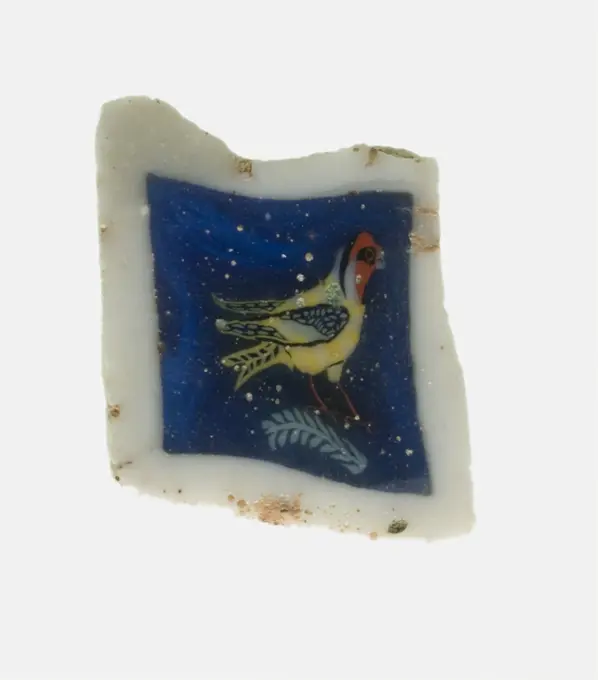
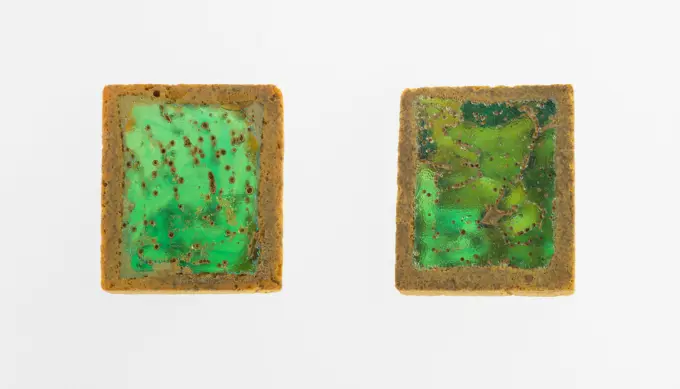
Fragment of a Mosaic Glass Vessel. Unknown 1st century A.D.
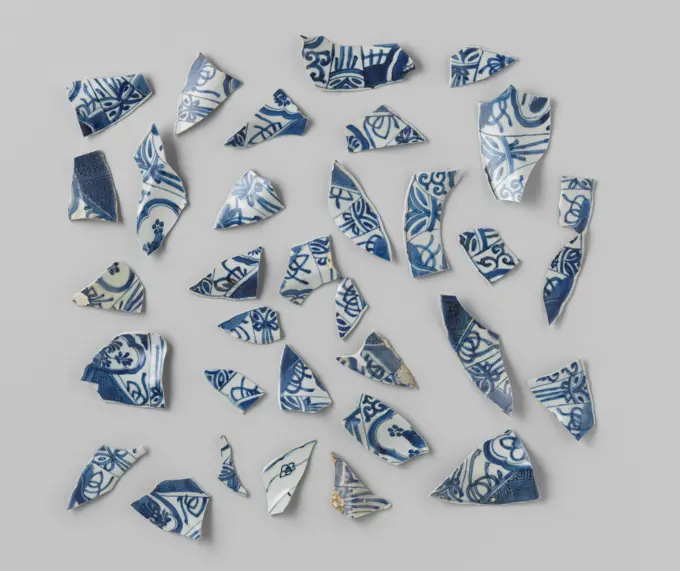
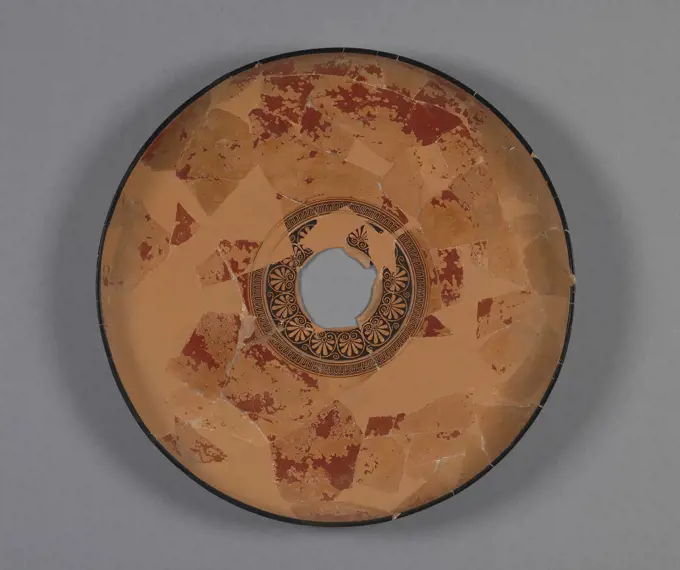
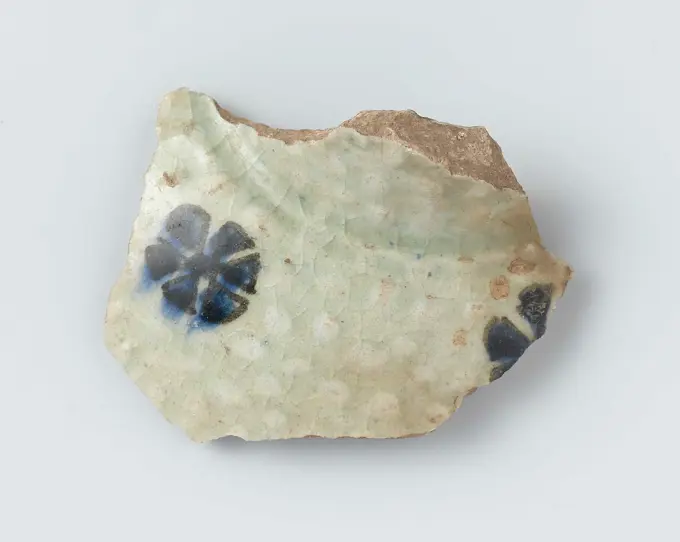
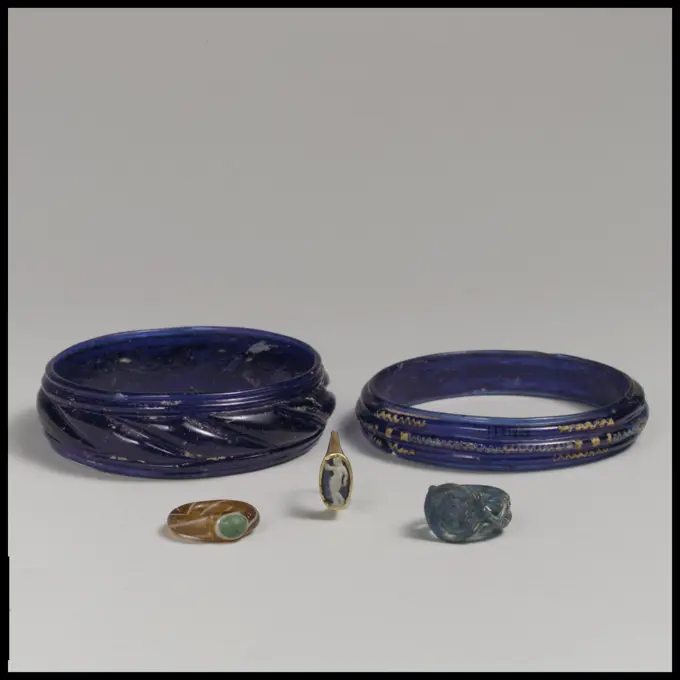
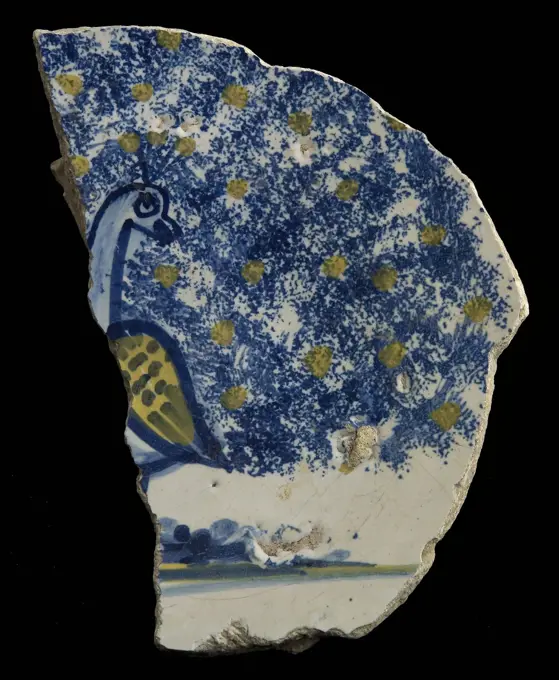
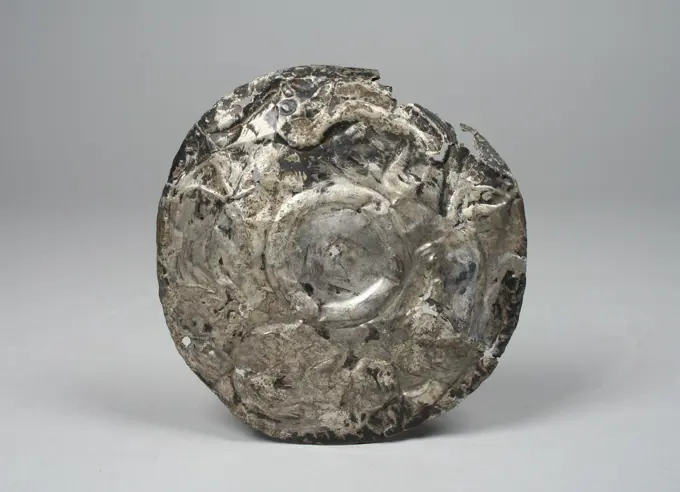
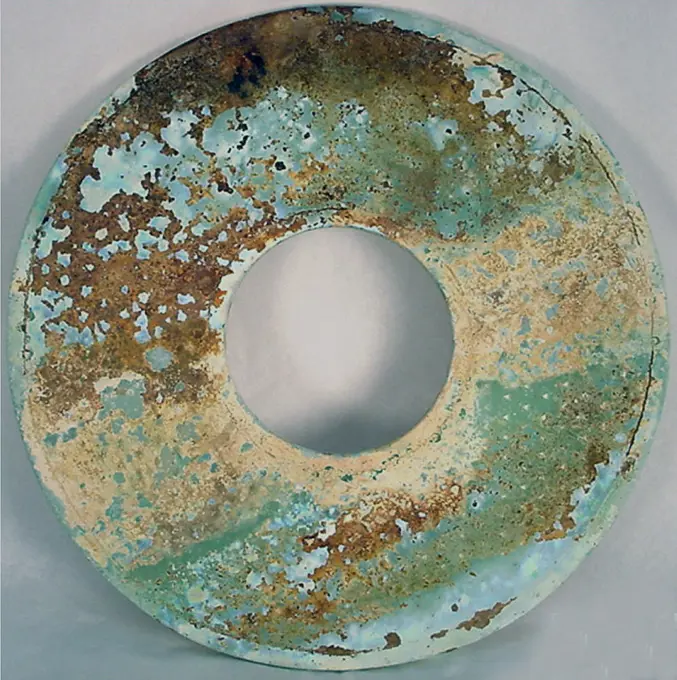
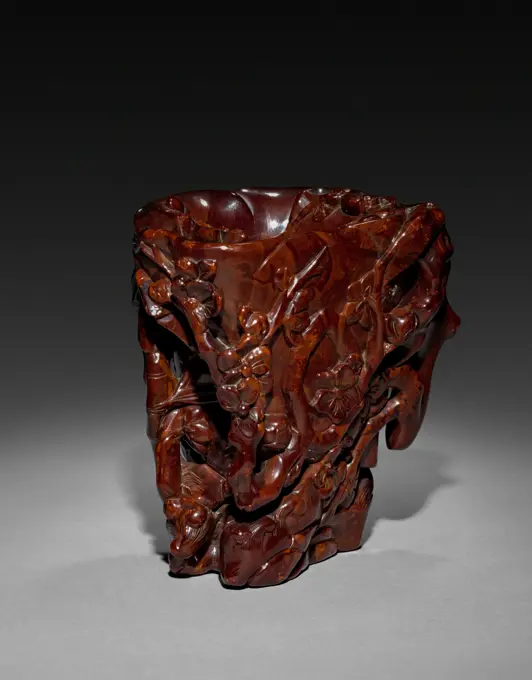
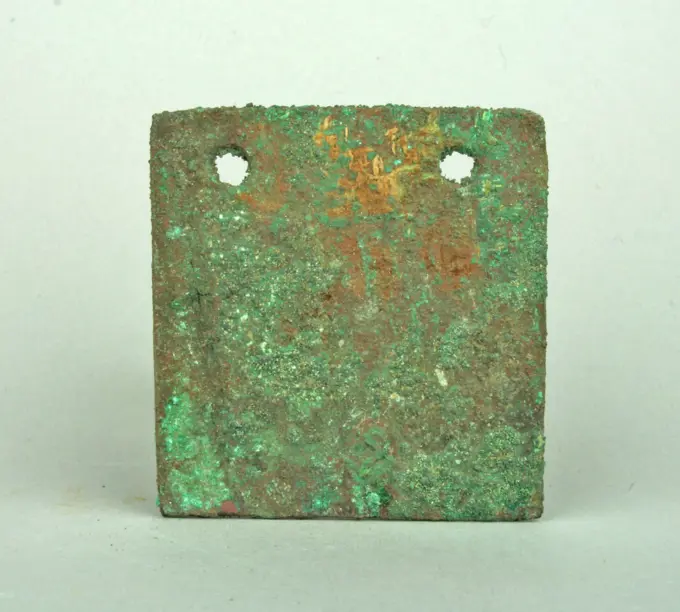
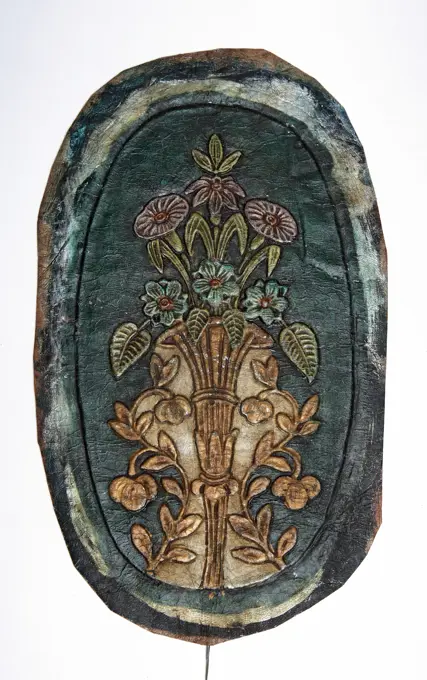
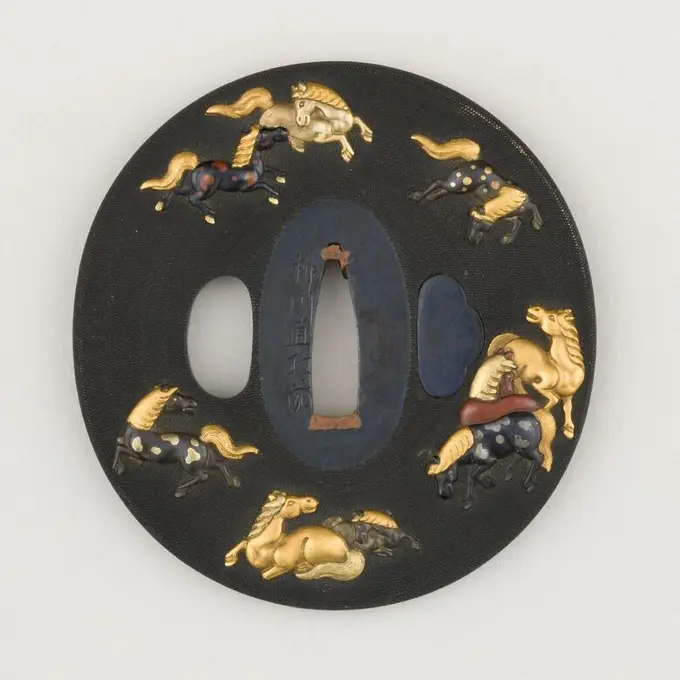
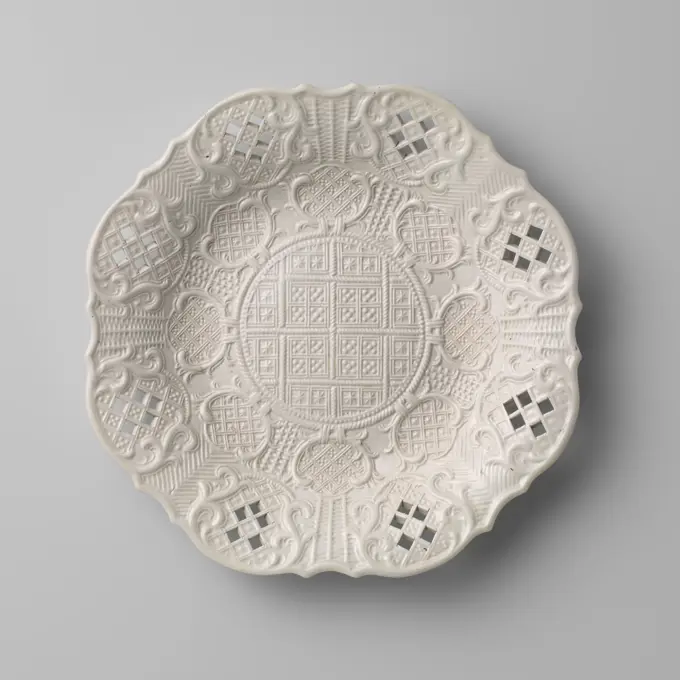
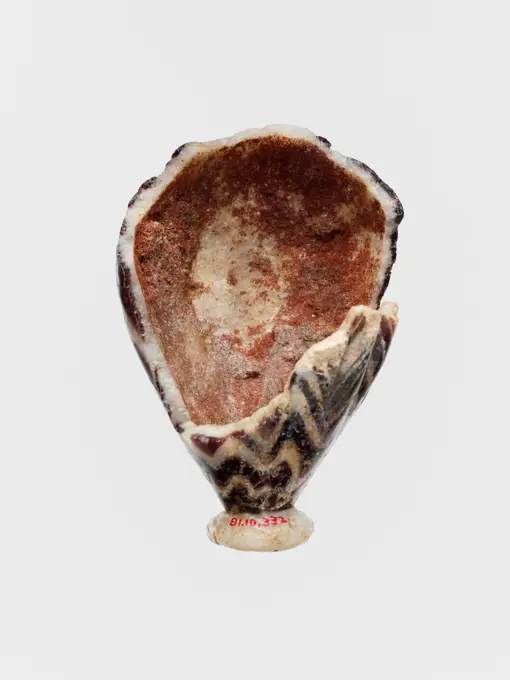
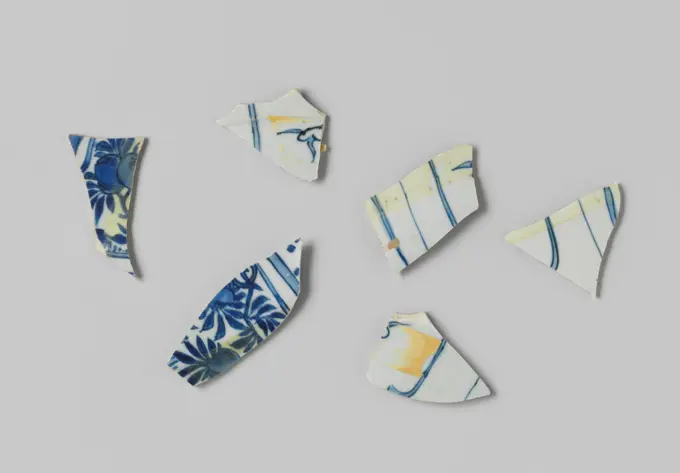
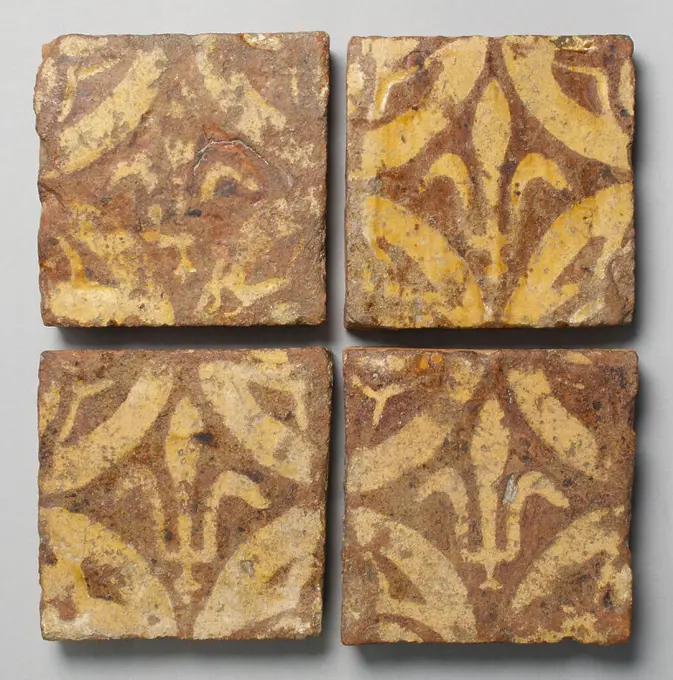
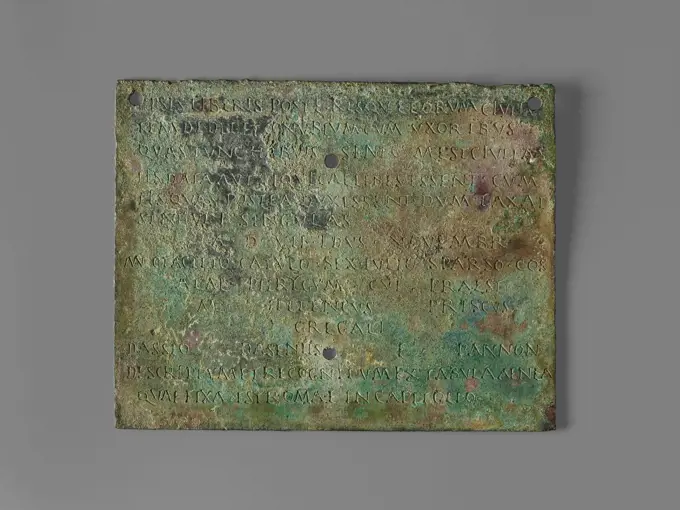
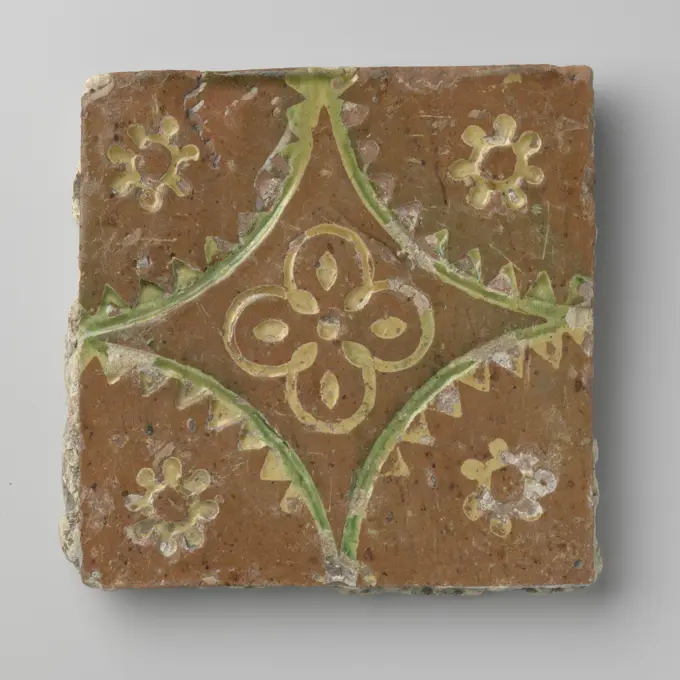
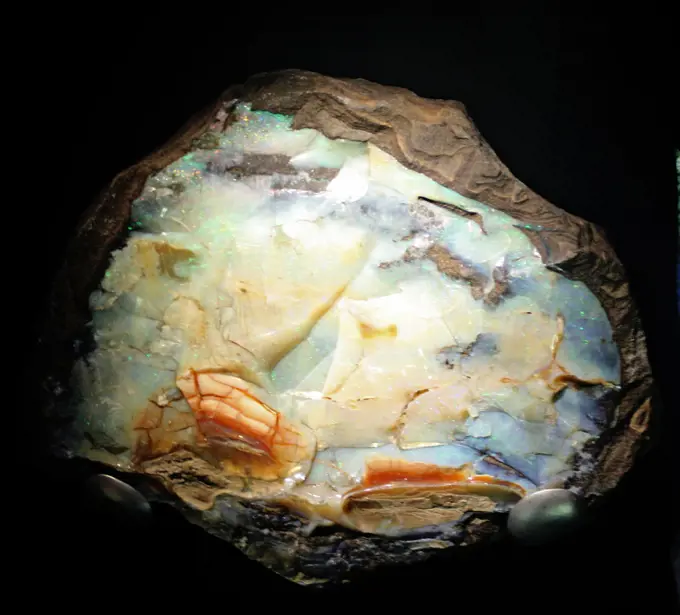
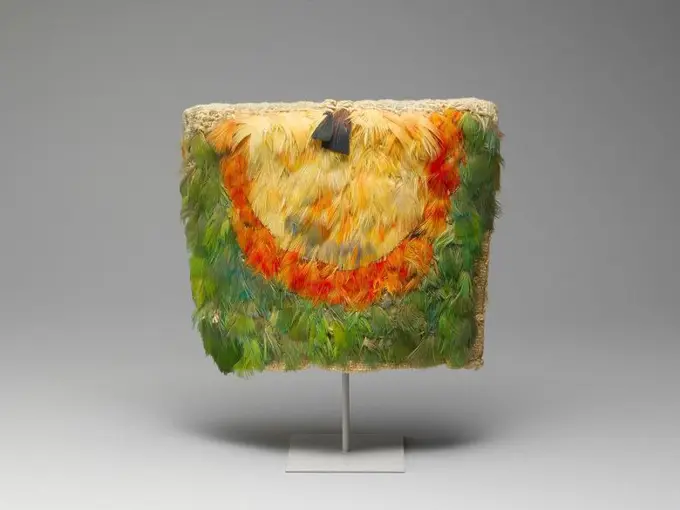
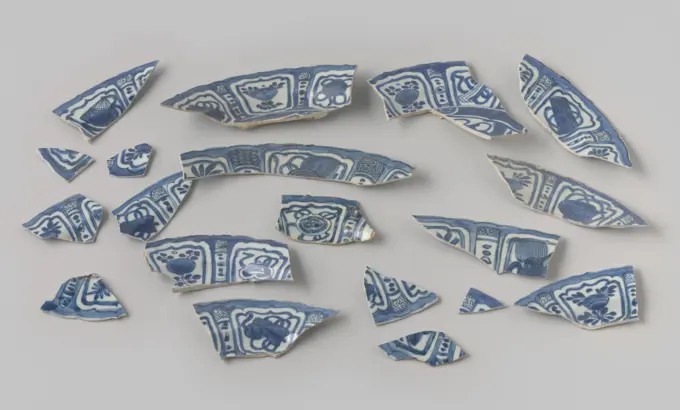
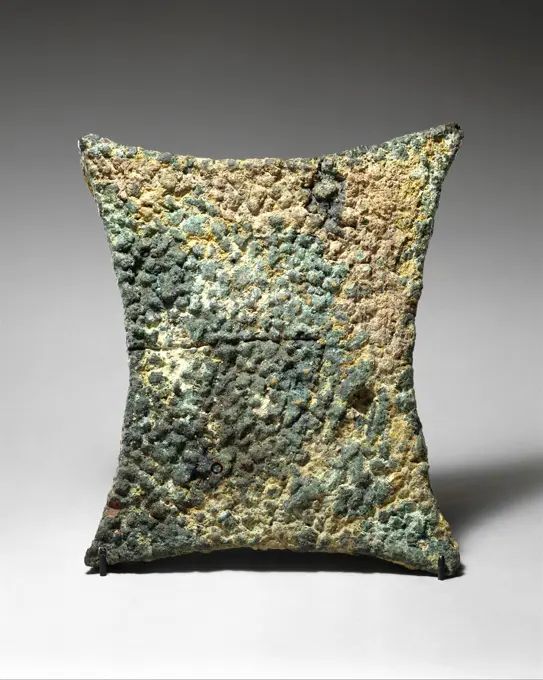
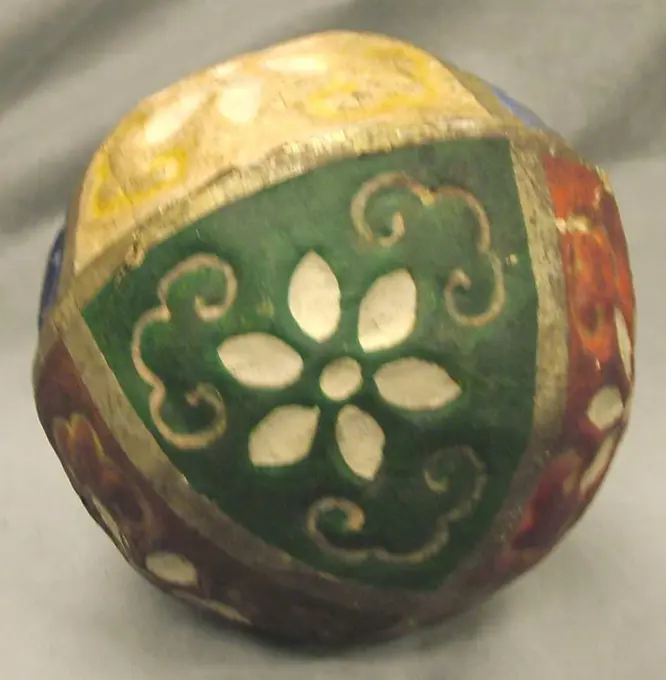
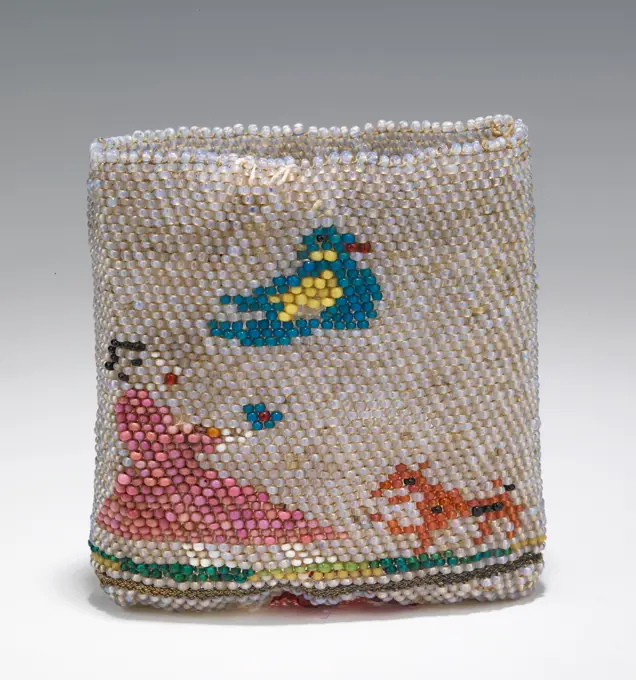
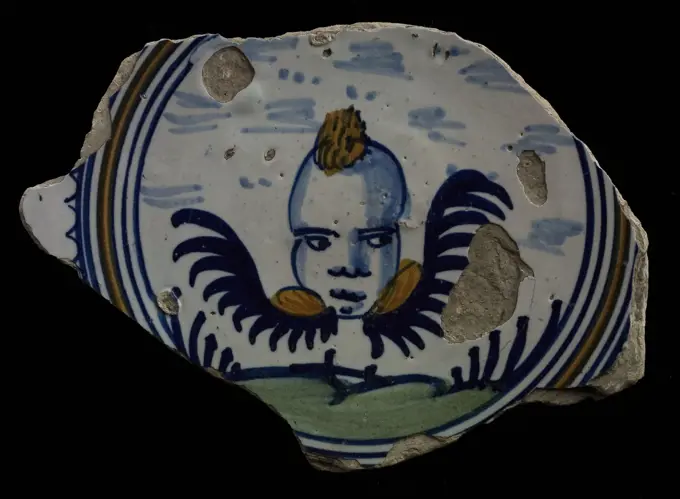
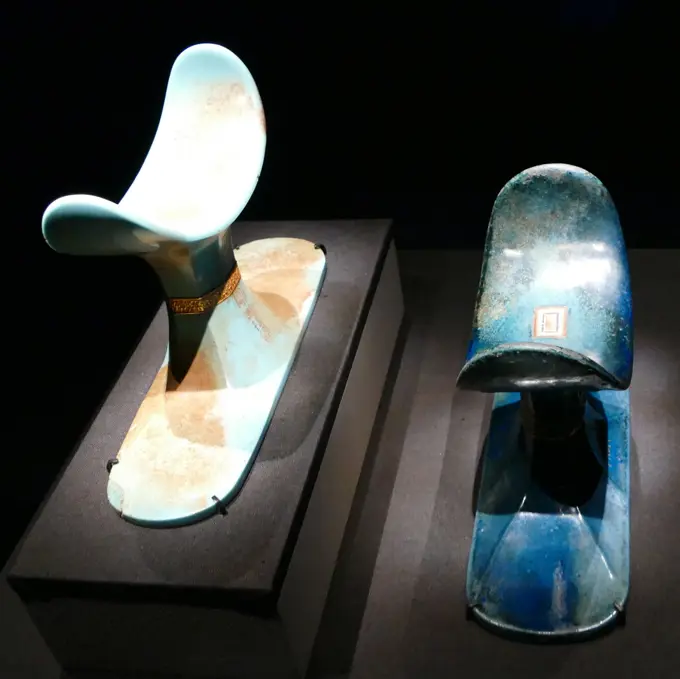
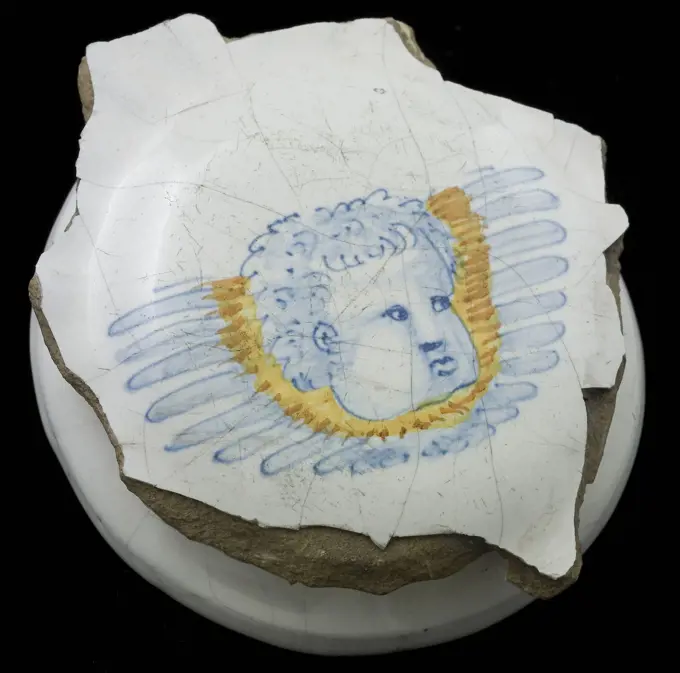
Round brooch from email on copper with two birds on a branch, c. 1950 - c. 1960 Round brooch made of email on copper with a hook closure. The rectangular brochure has been put around the round plate with four corners. The two birds on a branch are red and have green wings. The background is blue and white. Netherlands copper (metal). Round brooch made of email on copper with a hook closure. The rectangular brochure has been put around the round plate with four corners. The two birds on a branch are red and have green wings. The background is blue and white. Netherlands copper (metal).Shards Kraakporcelain from V.O.C. ship De 'Witte Leeuw', Anonymous, Before 1613  Shards Kraakporcelain from V.O.C. ship De 'Witte Leeuw'. Jingdezhen bone china (material)   Sint-HelenaAttic Red-Figure Phiale Mesomphalos; Attributed to Berlin Painter (Greek (Attic), active about 500 - about 460 B.C.), and Euphronios (Greek (Attic), active 520 - 480 B.C.); Athens, Greece; about 500 - 490 B.C; Terracotta; 3.5 × 32 cm (1 3,8 × 12 5,8 in.). Fragment of the neck and shoulder of a piece of crockery quartz friting with a green glaze. Ornament of flower rosettes in black signing, filled with dark blue.Glass beads Roman. Glass beads. Roman. Glass. GlassGlass bowl with painted decoration. Culture: Greek. Dimensions: Diameter: 8 in. (20.3 cm). Date: 3rd century B.C..Colorless; gilding and red enamel paint.Ground vertical rim; side of body sloping in and rounded at bottom; flat bottom.Painted and gilded decoration on interior: building with a gabled roof and a porch supported by columns, flanked by trees; in the left foreground is a large Macedonian shield; on the right a large box (pyxis) with pointed lid.Broken and repaired with areas of fill; some pinprick bubbles; rotary grinding marks; black, enamel-like weathering and iridescence.On the interior of these bowls (2005.269.1-.2) are painted scenes in red and gold leaf, possibly also with other colors now indiscernible. Both scenes can be taken to represent sanctuaries, suggesting that the glass bowls may have been made as ritual offerings. Museum: Metropolitan Museum of Art, New York, USA.Grahal-Manzara. Carnavalet 2013-2016 collection sites. Numismatics.Glass rings and bracelets 3rd century B.C.-4th century A.D. Greek and Roman In prehistoric times, naturally occurring glass, called obsidian, was used not only for weapons and tools but also for objects of personal adornment. After the invention of glassmaking, similar objects were fashioned in man-made glass, or a combination of glass and other precious materials. Hellenistic jewelry is characterized by intricate gold patterns augmented by bits of semi-precious stone and colorful inlay elements. Etruscan jewelry is also renowned for its masterfully crafted goldwork. Roman jewelry has been described as an amalgamation of Eastern and Etruscan jewelry styles, combining the use of colored stones favored in the East with manipulated goldwork typical of Etruscan jewelry. The Romans greatly favored the use of stone and glass in their jewelry, and expanded the Hellenistic tradition by focusing on the visual effects multicolored bits of stone and glass could achieve in their own right. The RomFragment majolica dish, yellow and blue on white, peacock with spread tail, plate dish crockery holder soil find ceramic earthenware glaze, baked underside covered with clear lead glaze. Polychrome The tail of the peacock is tamped archeology City Triangle Rotterdam Town Hall adornment serving food Soil discovery: Oude Raadhuis Rotterdam 1940.Sword Guard (Tsuba). Culture: Japanese. Dimensions: H. 3 1/8 in. (7.9 cm); W. 3 in. (7.6 cm); thickness 3/8 in. (1 cm); Wt. 7.6 oz. (215.5 g). Fittings maker: Inscribed by Ichinomiya Nagatsune (Japanese, 1721-1786). Date: 18th century.This tsuba features a design of herons and reeds. Museum: Metropolitan Museum of Art, New York, USA.Glass Fragment 12th century French. Glass Fragment. French. 12th century. Pot metal glass. Made in Bourges, France. Glass-StainedShell -shaped dish of hard baked pottery; Wedgwood, Wedgwood, c. 1810 - c. 1840 Shell -shaped dish of hard baked pottery. The dish is marked: Wedgwood. England earthenware Shell -shaped dish of hard baked pottery. The dish is marked: Wedgwood. England earthenwareDisk, Felines 12th-15th century Chimú. Disk, Felines 307468Bird Plaque Ornament. Culture: Vicús. Dimensions: H. 2 x W. 2 in. (5 x 5 cm). Date: 3rd century B.C.-A.D. 2nd century. Museum: Metropolitan Museum of Art, New York, USA.Disk (bi) China. Disk (bi). China. Glass. Western Han dynasty (206 B.C.-A.D. 9). GlassTwo-finger amulet 664-332 B.C. Late Period This amulet depicts two stylized human fingers that are about life-size. Two-finger amulets were used exclusively for the dead and were often found on the lower left of the torso. This is the area of the incision that was made during the mummification process in order to remove the internal organs. These amulets were meant magically to heal the wound. The first examples of this amulet type date to Dynasty 26. Their preferred material was obsidian or other dark stones. Sometimes the amulets were gilded, and faint traces of gilding are present on this example.. Two-finger amulet. 664-332 B.C.. Glass, black-blue. Late Period. From Egypt. Dynasty 26-30Cup with Prunus Blossoms, 18th Century. China, Qing dynasty (1644-1911). Opaque mottled reddish-brown amber; overall: 10.8 cm (4 1/4 in.).Pavement tiles 16th-17th century Spanish, Seville. Pavement tiles. Spanish, Seville. 16th-17th century. Tin-glazed earthenware. Ceramics-PotteryGrahal-Manzara. Carnavalet 2013-2016 collection sites. Numismatics.Square Plaque 3rd century B.C.-A.D. 2nd century Vicús. Square Plaque 314881Fragment of Kurdyban under the okaytnik;  18th century (1601-00-00-1700-00-00);kurdybans, flowersSword Guard (Tsuba). Culture: Japanese. Dimensions: H. 2 15/16 in. (7.5 cm); W. 2 11/16 in. (6.8 cm); thickness 5/16 in. (0.8 cm); Wt. 5.8 oz. (164.4 g). Date: dated 1757. Museum: Metropolitan Museum of Art, New York, USA.Plate of white stoneware with openwork edge; Crouch true. Blackboard of white stoneware with salt glaze. The edge is scalloped and open. The flat has a circle in which a checkered pattern and where around eight medallions formed by acanthus leaves in which a checkered pattern. The edge has eight medallions formed by acanthus leaves within which an open window pattern.Glass amphoriskos (perfume bottle) late 6th-5th century B.C. Greek, eastern Mediterranean Opaque white, with knob-base in same color; trail in translucent purple.Sloping shoulder; tall conical body tapering to rounded point; large circular base-knob with rounded edge and flat bottom.Thick unmarvered trail wound round in a spiral on shoulder, then tooled on body into zigzag pattern, extending to knob-base, with long vertical tooling indents in alternating upward and downward strokes, forming prominent rounded ribs around body.Broken and repaired, with rim-disk, neck, handles, and almost half of body missing; some pitting and iridescent weathering.This broken bottle shows how the interior of the vessel retained considerable traces of the core, made of sand, clay, and a binding agent, around which the molten glass was applied to form the vessel.. Glass amphoriskos (perfume bottle). Greek, eastern Mediterranean. late 6th-5th century B.C.. Glass; core-formed, Group I. Classical. GlassBowlMiniature Tunic 12th-13th century Ica. Miniature Tunic 312875Drapery Tieback 1810-60. Drapery Tieback 14244Silversmith's Art, Great Britain 19th century. Pair of heart shaped, decorated silver photo-frames with vegetable volutes and puttos.Shards of signs from V.O.C. ship De 'Witte Leeuw', Anonymous, Before 1613 plate (dishes) Shards of signs from V.O.C. ship De 'Witte Leeuw'. Jingdezhen bone china (material)   Sint-HelenaFour Two-Colored Tiles. Culture: British. Dimensions: Overall: 3 15/16 x 5 1/2in. (10 x 14cm). Date: late 14th century. Museum: Metropolitan Museum of Art, New York, USA.One Plaque of a Roman Military Diploma; Roman Empire; 88; Bronze; 19.2 × 15.2 × 3 cm (7 9,16 × 6 × 1 3,16 in.)Floor tile, anonymous, c. 1599 - c. 1799 Tile with a rosette within a star. A rosette in the corners. Belgium earthenware. lead glaze Tile with a rosette within a star. A rosette in the corners. Belgium earthenware. lead glazeFragment dish from v.o.c.-ship De 'Witte Leeuw', Anonymous, Before 1613  Fragment dish from v.o.c. ship De 'Witte Leeuw', 45 present. The dish is made up of seven shards. The shard is glassy and has little ingrained dirt. The glaze is blue -tinted and has pinholes and small baking cracks on the corners of the lip edge. The glaze is peeling off over parts of the lip edge. The bottom is unglazed. The foot ring is V-shaped, faceted and stands inside. More than 20 grains of oven sand have been found. The lip is scooped. Lampet dish. Jingdezhen bone china (material). glaze   Sint-HelenaOpal. Today this is valued as a semi-precious stone but this coloured opal was used in ancient Rome as a symbol of power. An Opal is not a single crystal but is made up of tiny spheres of silica. It also contains water and can dry out and crack, particularly if exposed to heat.Miniature Tunic. Culture: Ica. Dimensions: H. 8 x W. 7 in. (20.3 x 17.8 cm). Date: 12th-13th century. Museum: Metropolitan Museum of Art, New York, USA.Shards of signs from V.O.C. ship De 'Witte Leeuw', Anonymous, Before 1613 plate (dishes) Shards of Kraakporcelain plates, edge fragments, from V.O.C. ship the 'Witte Leeuw'. Jingdezhen bone china (material)   Sint-HelenaFragment majolica dish, white, yellow, blue and purple on blue, on the mirror swimming swan, dish plate crockery holder earth discovery ceramics pottery glaze, archeology Rotterdam Wagenstraat serve to decorate Soil discovery: 19 September 1944 Wagenstraat Rotterdam.Bowl 9th-10th century. Bowl 449128set of various Skarn rocks isolated on white set of various Skarn rocks isolated on white background Copyright: xZoonar.com/ValeryxVoennyyx 15151460Grahal-Manzara. Carnavalet 2013-2016 collection sites. Numismatics.Terracotta fragments of an oinochoe (jug) 480-470 B.C. Greek, Attic At the shoulder, an egg pattern; below, head, left shoulder, and feet of a draped woman to left, with a thick fillet in her hair; head, shoulder, part of upper torso with arms extended, and part of the tail and legs of a satyr to left; below, an egg pattern; one black glaze fragment with part of the rim, neck, and shoulder of the oinochoe; three black glaze fragments. Terracotta fragments of an oinochoe (jug). Greek, Attic. 480-470 B.C.. Terracotta; red-figure. Early Classical. VasesCopper ingot ca. 1450-1050 B.C. Cypriot Cyprus is thought to have been the main producer of copper in the Late Bronze Age, although very few ingots, apart from miniature votive ingots, have been found there. Ingots of this characteristic shape were made only in the Late Bronze Age and seem to be the usual form in which pure copper was transported as a raw material to the ports of the eastern Mediterranean. Copper was mixed with tin, usually in a nine-to-one ration, to make finished bronze objects such as the adjacent stand (74.51.5684). The ingot's irregular surface was produced as the pure copper cooled in the open mold in which the metal was cast. The sheer weight of the ingot, approximately sixty-three pounds, is testimony to the large scale of the copper industry at this time and the bulk quantities of copper that were being exchanged. The discovery off the coast of Anatolia at Ulu Burun of a Late Bronze Age shipwreck with a cargo of over ten tons of Cypriot copper ingots provides "Musical Ball" ("Return Ball") early 19th century Chinese. "Musical Ball" ("Return Ball") 504709Fragment of an Inlaly Depicting a Bird 304 BCE-30 BCE Egypt. In ancient Rome, there was a high demand for colorful glass that could dazzle banquet guests alongside the expensive silver and gold serving wares meant to impress. Fragments like this one would have once been a part of larger mosaic dishes. The mosaic pattern was made by sagging molten glass into bowl-shaped molds, a technique used on many of these fragments is similar to millefiori, ìthousand flowersî in Italian, a modern glass-making method in which tiny rods of colored glass are bundled together, wrapped in a sheet of glass, fused, and then thinly sliced to reveal swirls of a flower-like patterns. They were arranged side by side, sometimes together with bits of colored glass, and fused together with heat.. Glass, mosaic technique . Ancient EgyptianSword Guard (Tsuba). Culture: Japanese. Dimensions: H. 3 in. (7.6 cm); W. 2 7/8 in. (7.3 cm); thickness 1/4 in. (0.6 cm); Wt. 5.9 oz. (167.3 g). Date: ca. 1615-1868. Museum: Metropolitan Museum of Art, New York, USA.Case (Inrō) with Design of Standing Deer 18th century After Ogata Kōrin Japanese. Case (Inrō) with Design of Standing Deer 45462Relief fragments from tomb of Meketre ca. 1981-1975 B.C. Middle Kingdom. Relief fragments from tomb of Meketre 669014Pouch 1820-40 Mexican The intertwined hearts depicted at the bottom (not shown) of this personalized pouch bag suggest that the design scheme relates to romance. The animal and female figures exhibit a playful air, the detail of the dog with a bone is particularly charming and refined. The bag is part of the Mexican beadwork collection of over 600 pieces assembled by Elizabeth Morrow (1873-1955), mother of writer Anne Morrow Lindbergh, the wife of renowned aviator Charles Lindbergh. Morrow collected the objects between 1927 and 1930, when her husband, Dwight Morrow, Sr., served as U.S. ambassador to Mexico. She lent the collection to the Brooklyn Museum in 1938 and upon her death, her children donated it. A collection of 155 pieces of Mexican ceramics and other decorative arts were given to Amherst College, her husband's alma mater. Mrs. Morrow collected Mexican beadwork, along with other examples of colonial and native arts, to decorate their country home in Cuernavaca in order to proFragment majolica plate, polychrome, winged cherub head, floating above ground, plate crockery holder soil find ceramic earthenware glaze, baked underside covered with lead glaze. Polychrome Yellow shard with single red vein archeology decorate serving foodBotervloot, Blankenburg, After Arie Blankers, c. 1756 - c. 1764 Butter fleet of multi -colored painted faience and standing on a plate. The fleet has the shape of a blue grapes and is attached to the plate. Flowers and leaves are attached to the plate around the bunch. The board has a scalloped edge. The butter fleet is marked. Amsterdam earthenware. tin glaze. Butter fleet of multi -colored painted faience and standing on a plate. The fleet has the shape of a blue grapes and is attached to the plate. Flowers and leaves are attached to the plate around the bunch. The board has a scalloped edge. The butter fleet is marked. Amsterdam earthenware. tin glaze.Two Inlays 1 CE-200 CE Italy. Glass, mosaic technique . Ancient Romanblue faience headrests from the tomb of King Tutankhamen 1336 - 1326 B.C.Ink Cake, 1368-1644. China, Ming dynasty (1368-1644). Ink cake; overall: 2.4 x 15 x 22.9 cm (15/16 x 5 7/8 x 9 in.).Toilet glass jars, 1st century, National Archaeological Museum, Villa Cassis Faraone, UNESCO World Heritage Site, important city in the Roman Empire, Aquileia, Friuli, Italy, Aquileia, Friuli, Italy, EuropeFragment faience pleated plate, polychrome, winged amorkop, high stand ring, plate dish crockery holder soil find ceramic earthenware glaze tin glaze, pf 4.0 Cooked in tube archeology