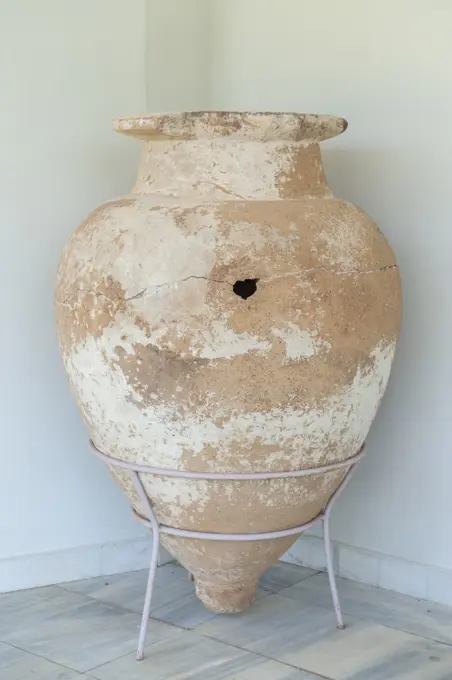
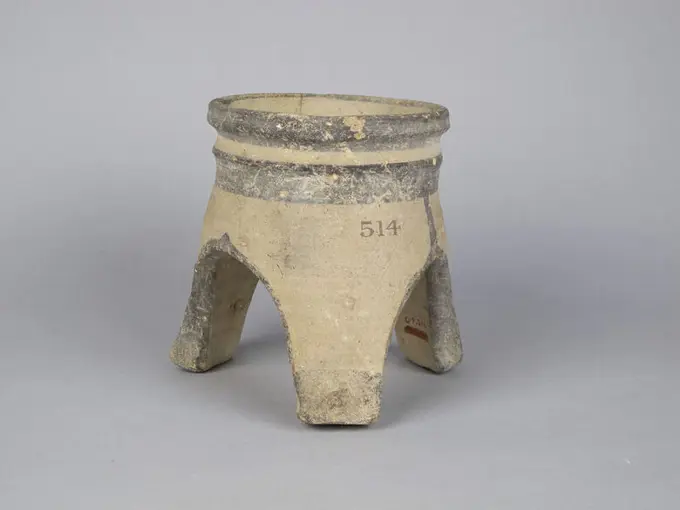
Ceramic Vessels and Lamps

Ancient pottery pieces, including cups and lamps, highlighting unique shapes and historical context, perfect for archaeological interest.

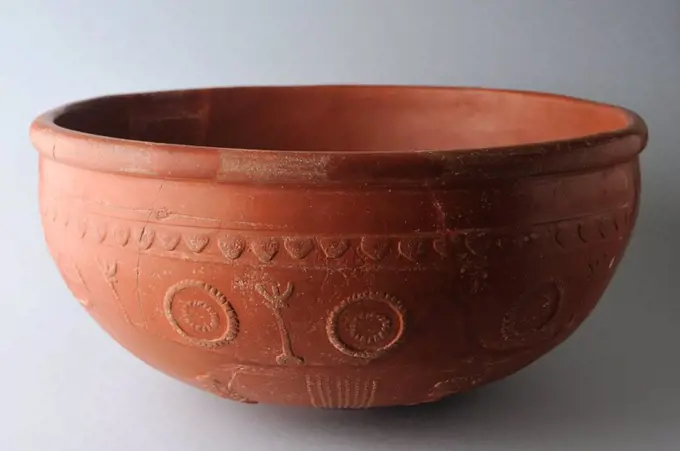
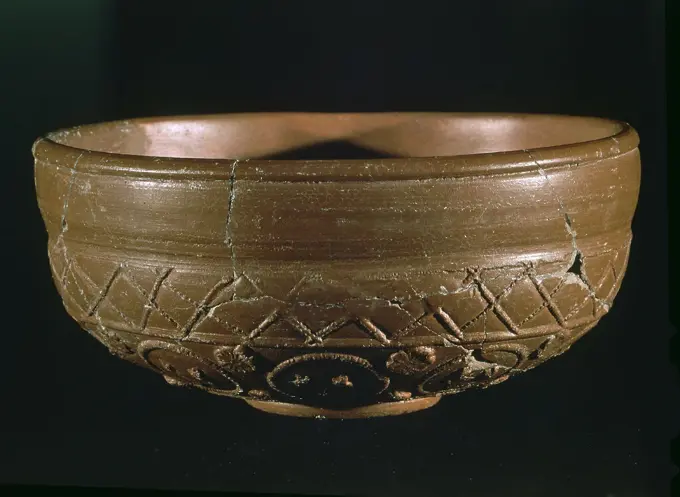
Brown Roman cup on foot, cup drinking utensils tableware holder soil find ceramic pottery paint, hand turned fried varnished Small Roman cup of red varnished earthenware. Conical model tapering upwards with strong constriction above the small foot. Stand surface. brown varnish layer archeology Poortugaal Albrandswaard indigenous pottery import drink serve serving Roman Soil discovery: Poortugaal palens slot north from freshly washed gray clay.
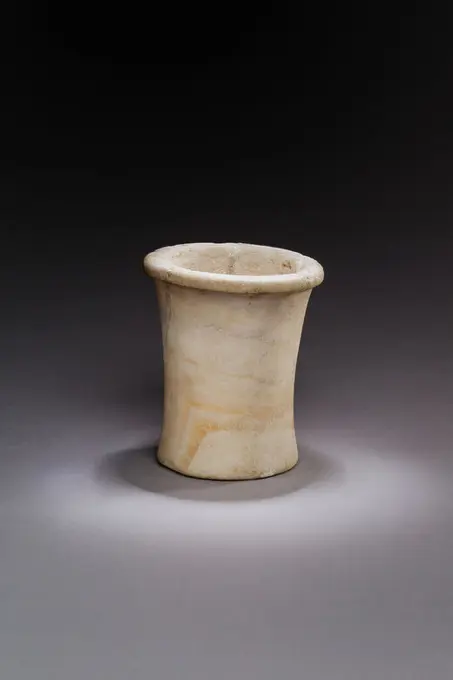
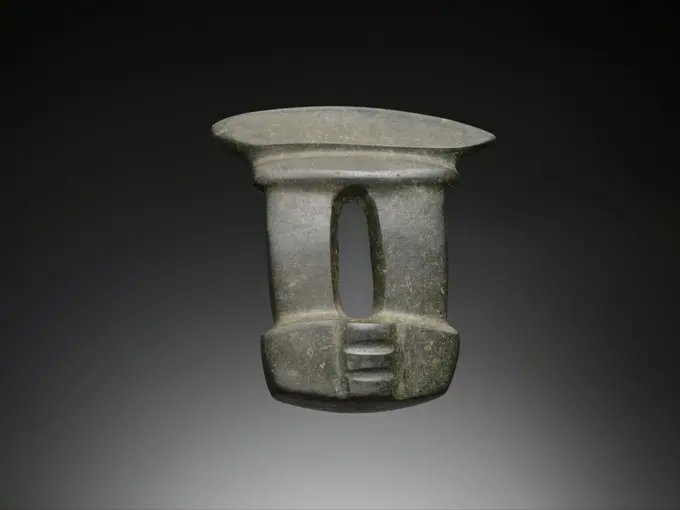
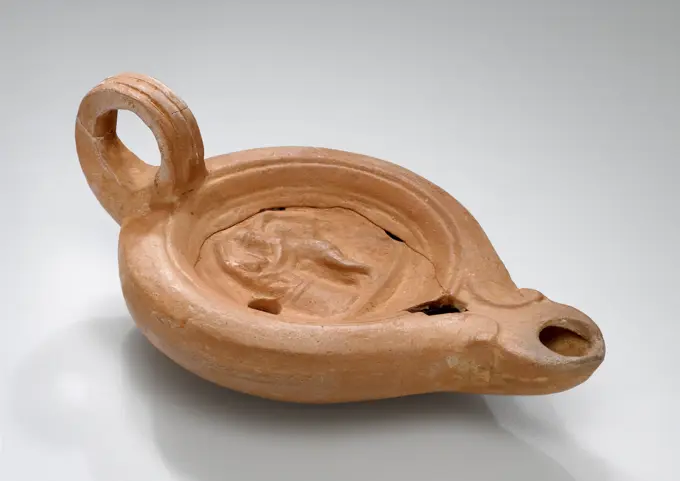
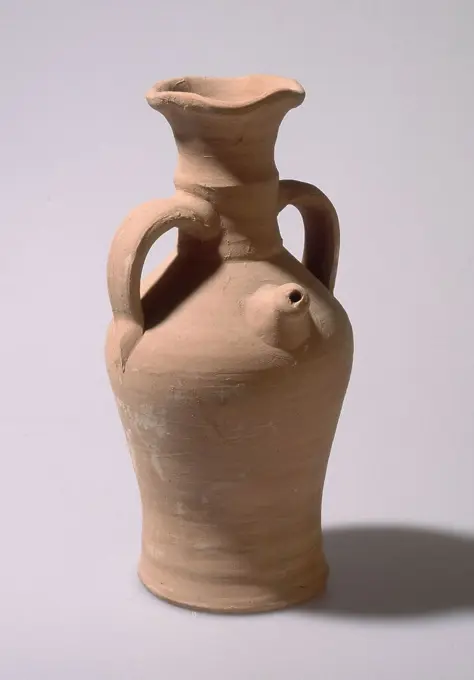
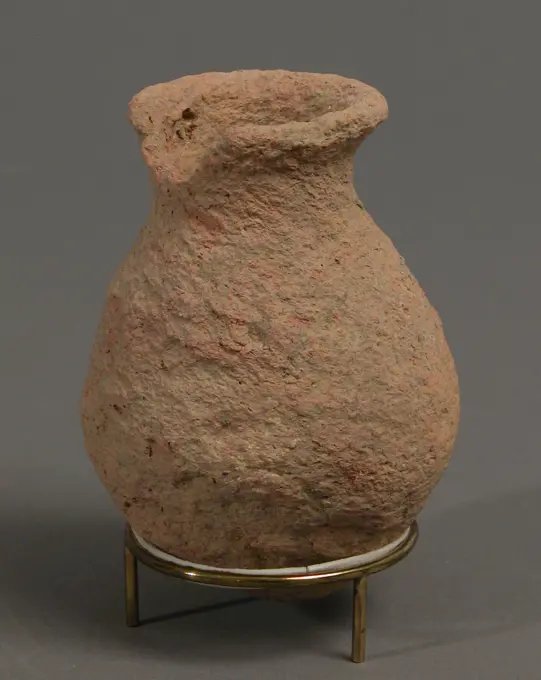
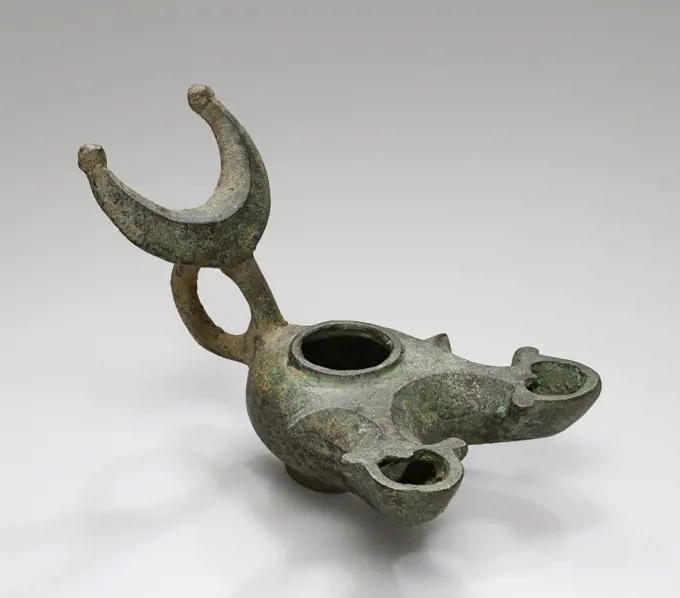
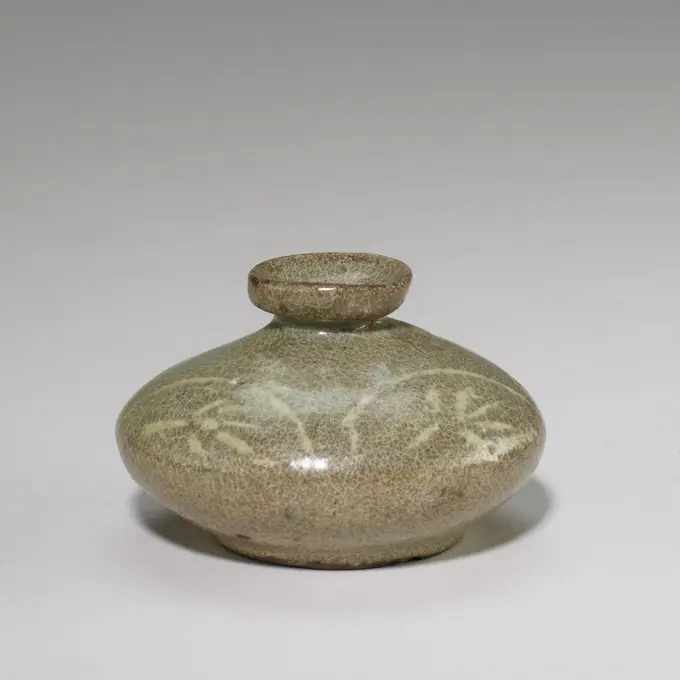
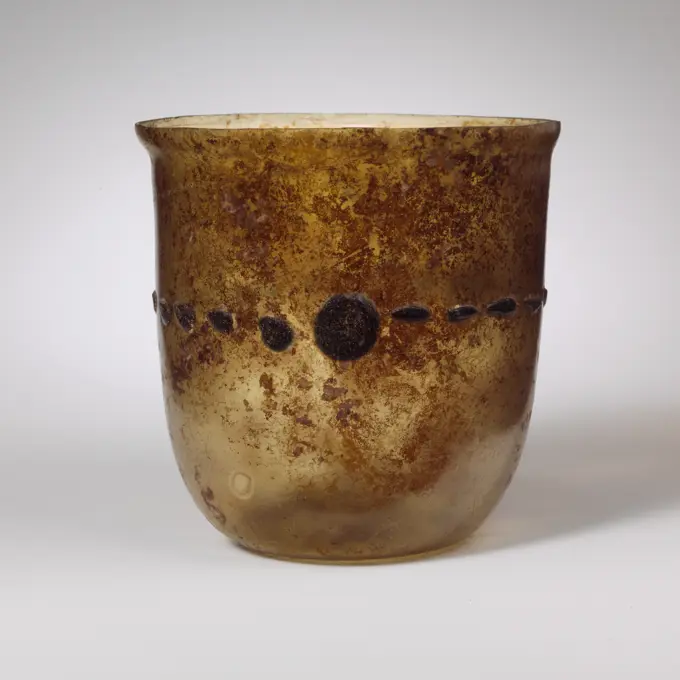
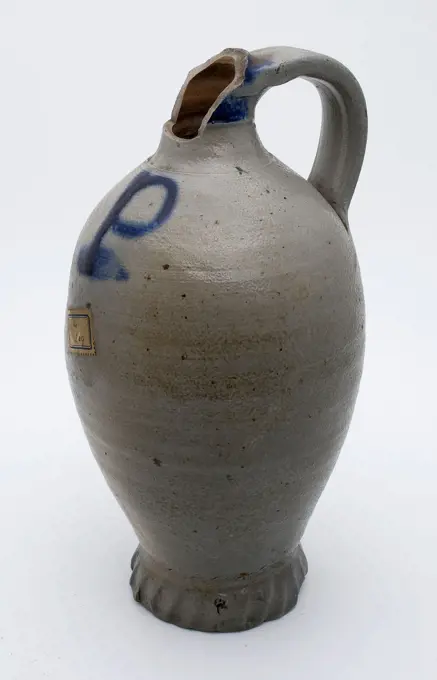
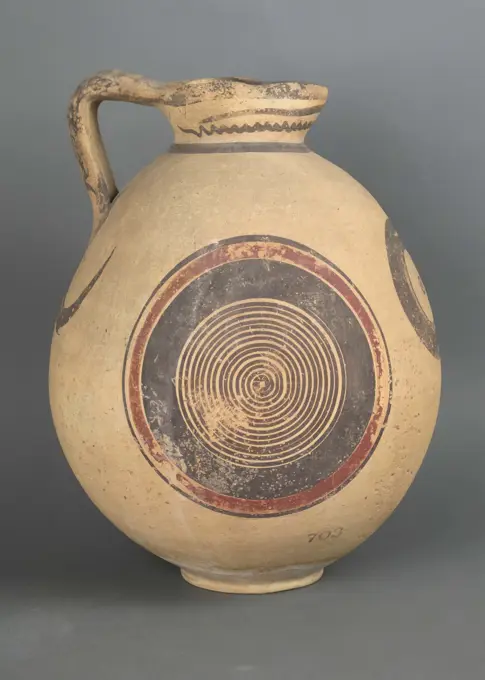
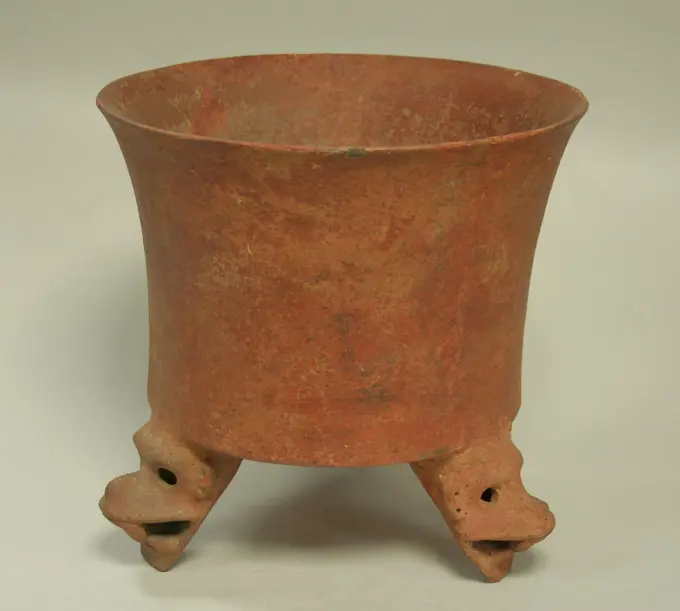
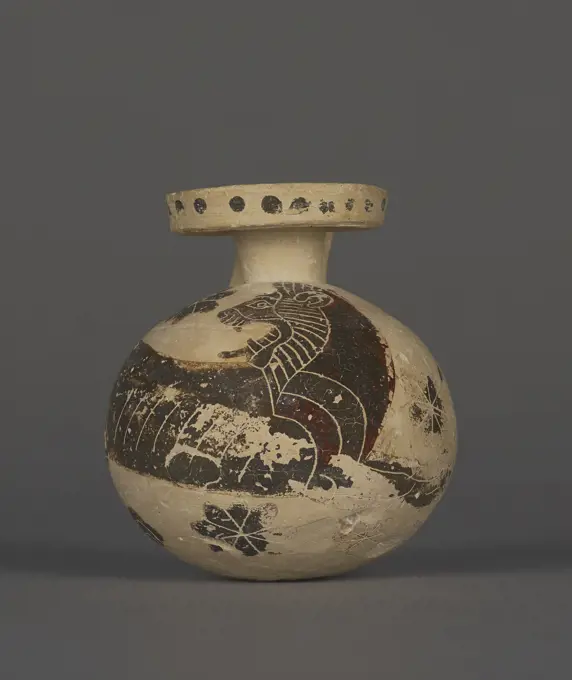
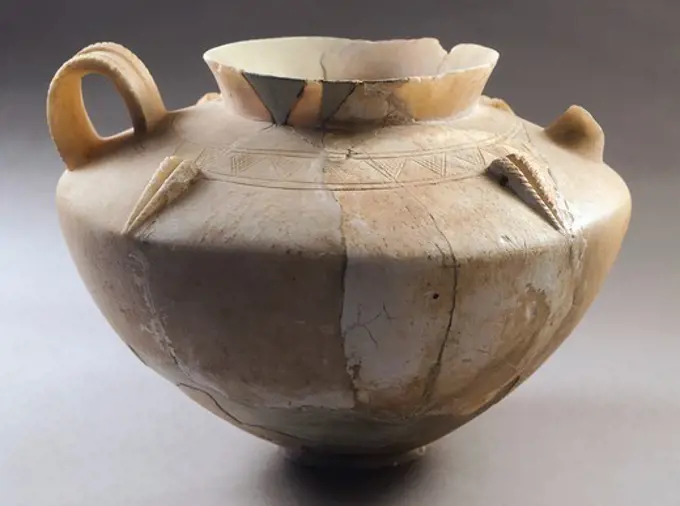
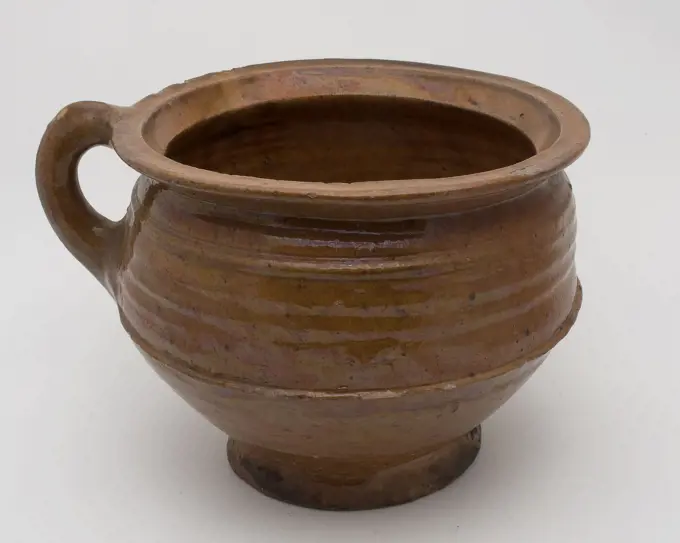
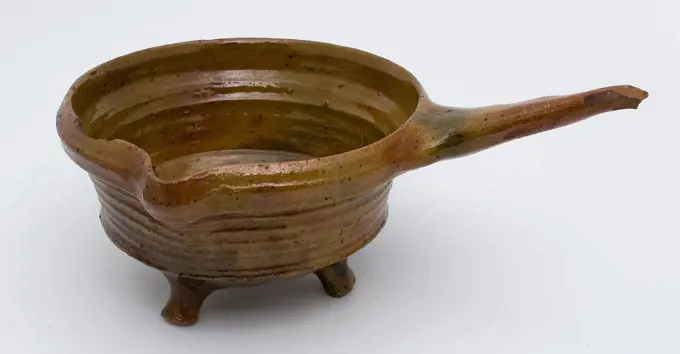
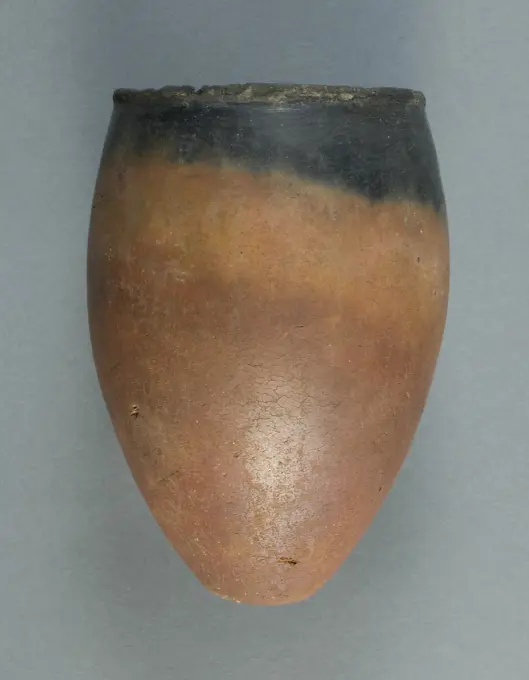
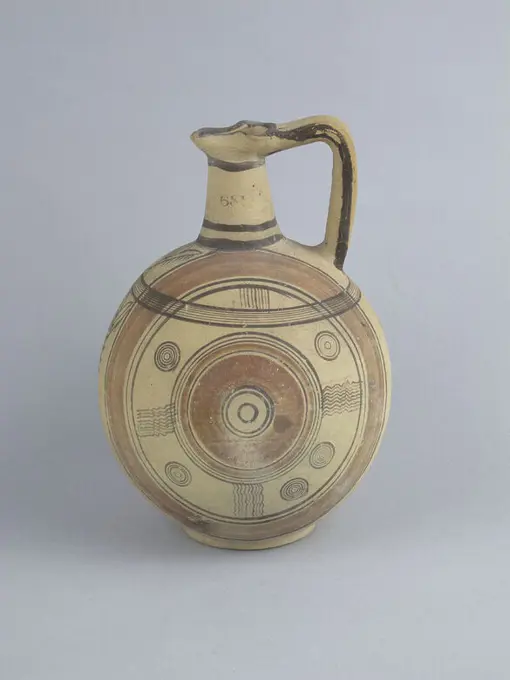
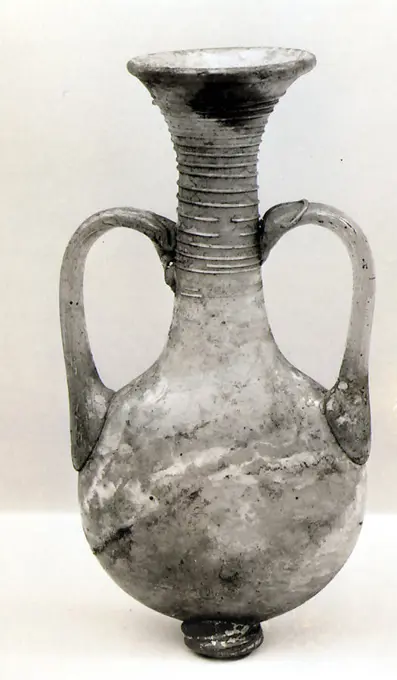
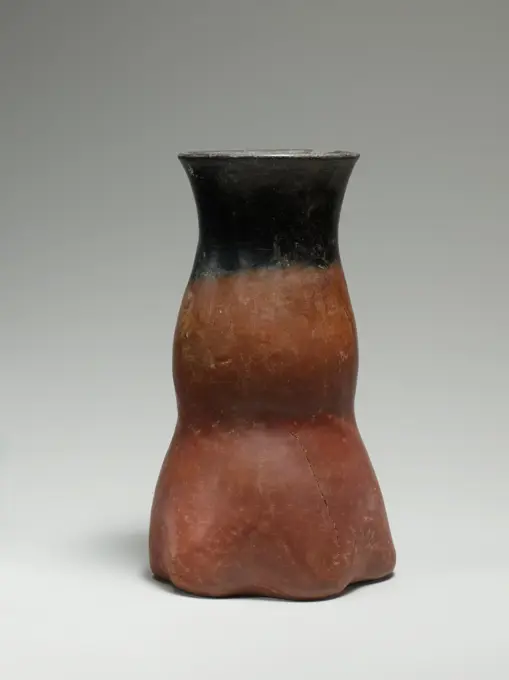
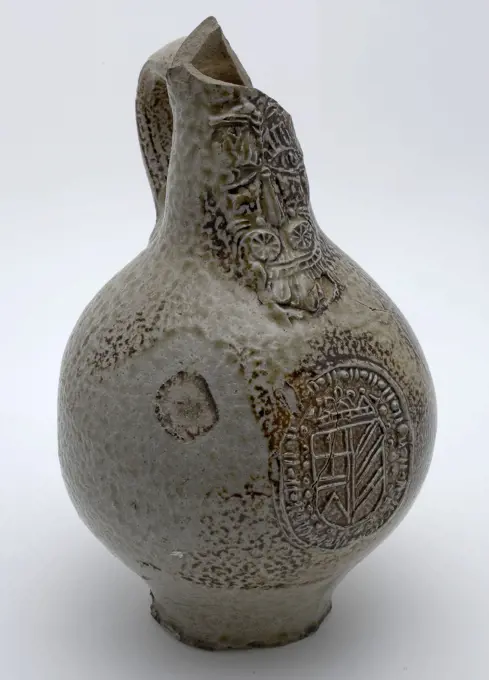
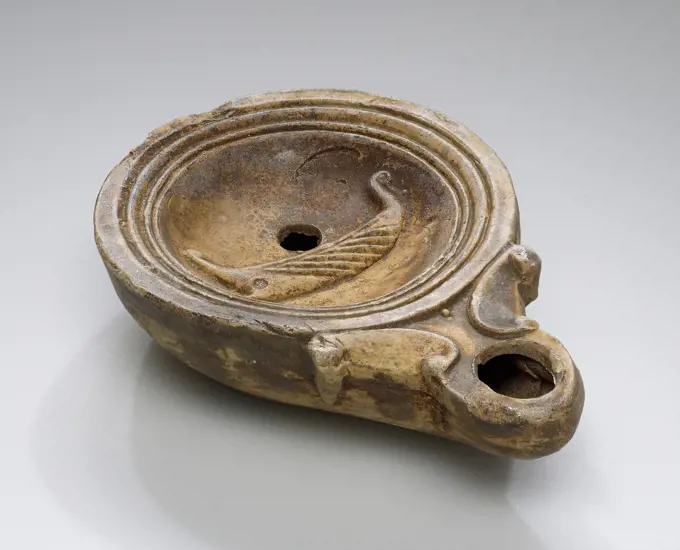
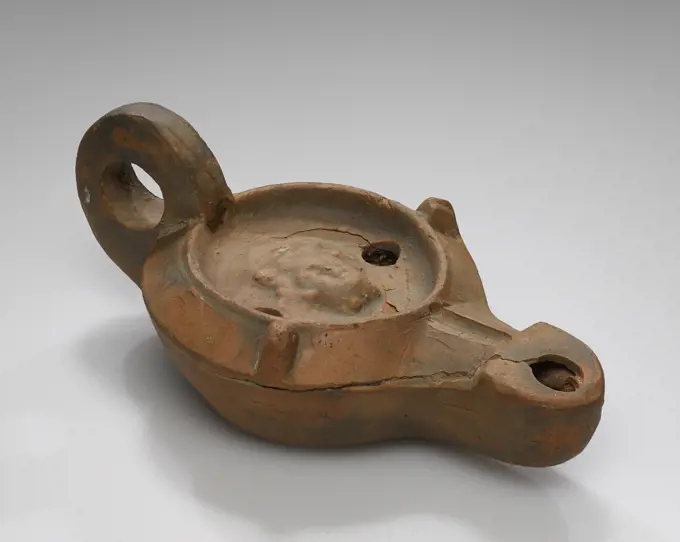
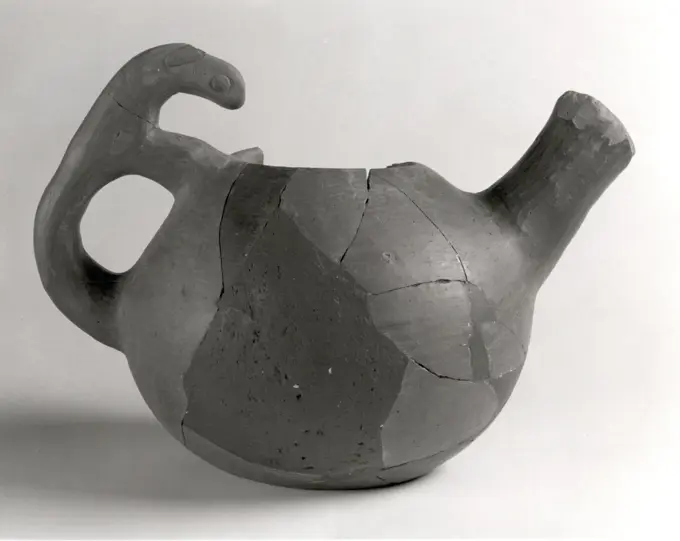
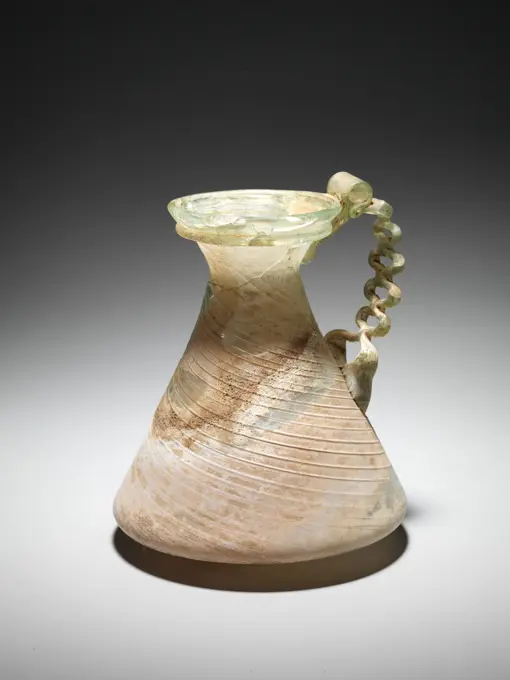
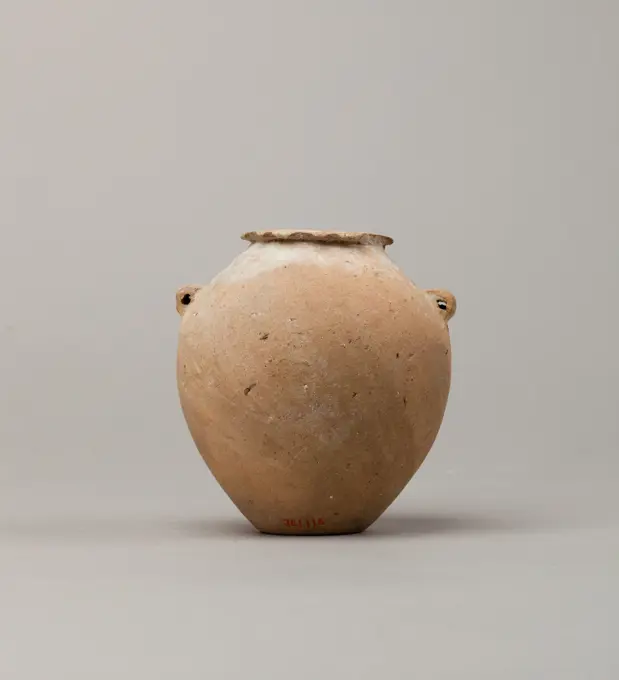
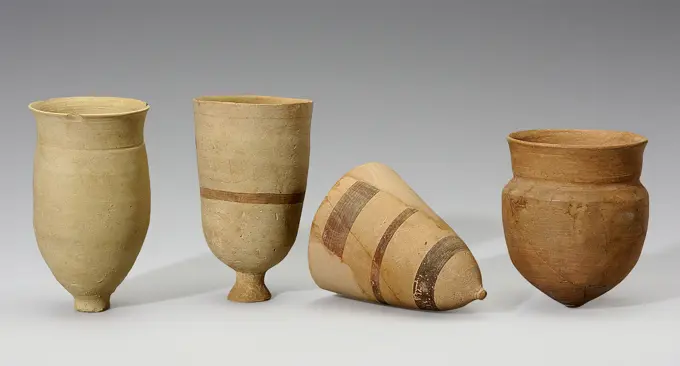
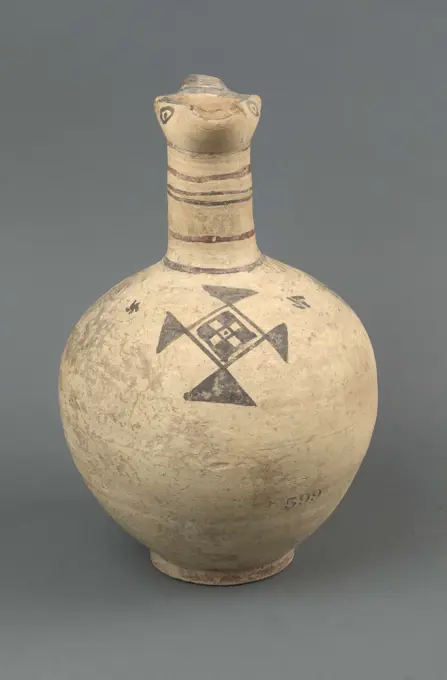
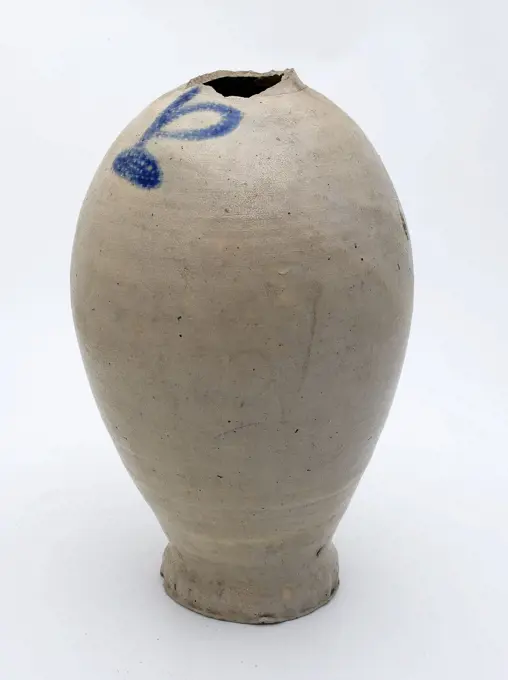
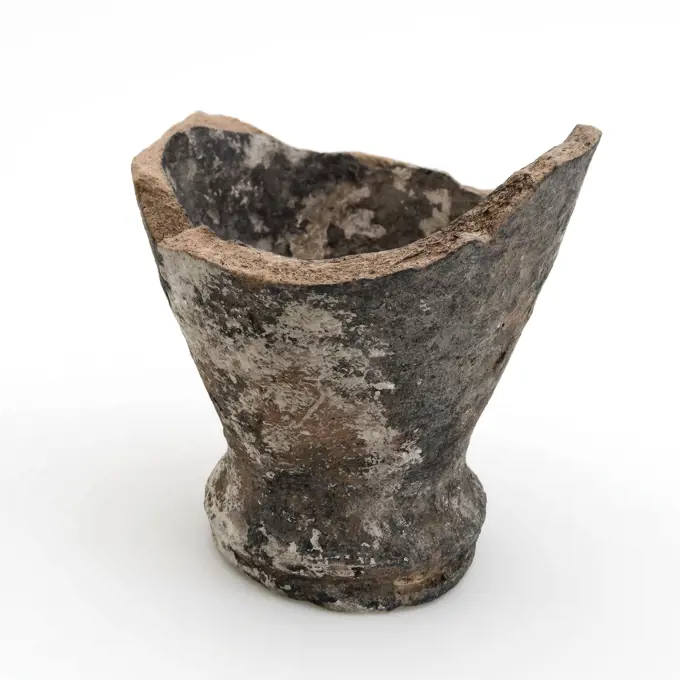
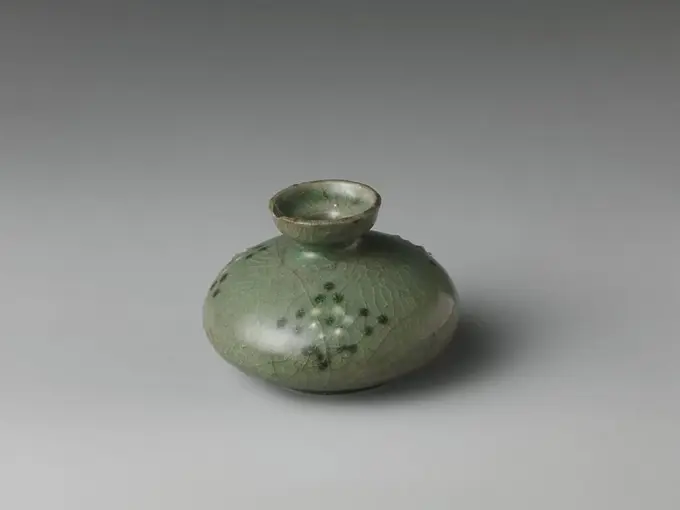
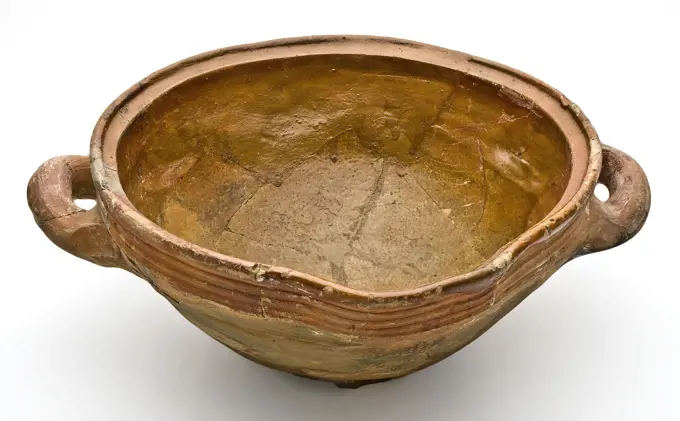
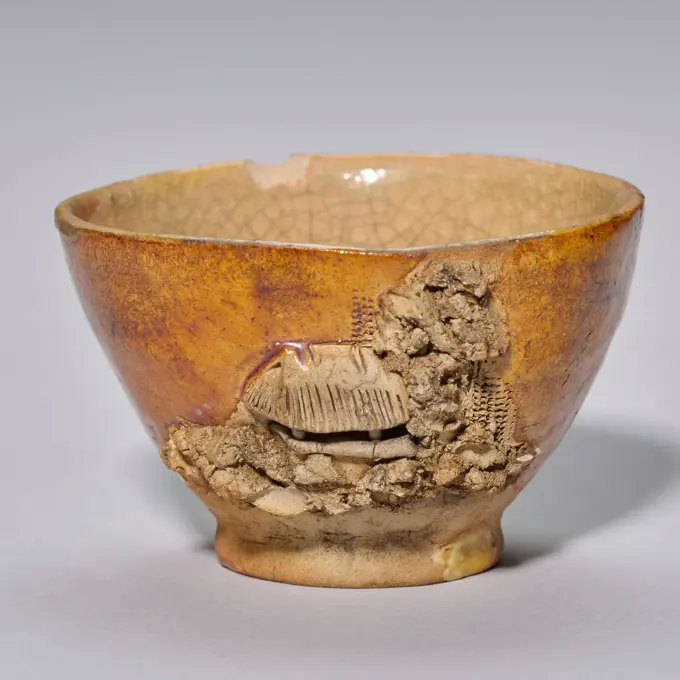
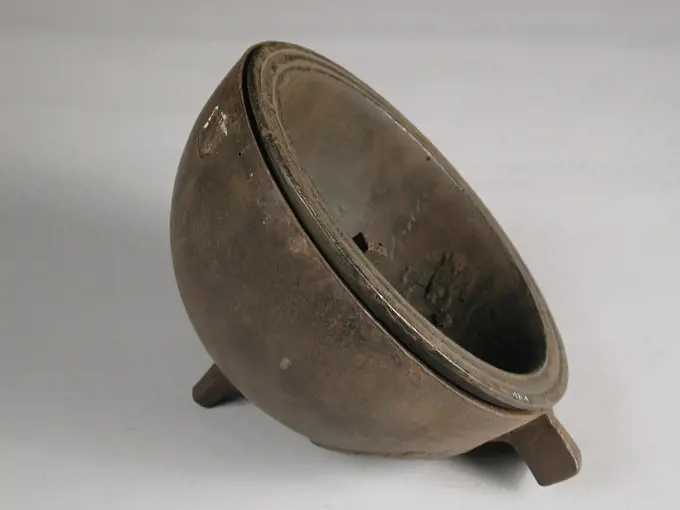
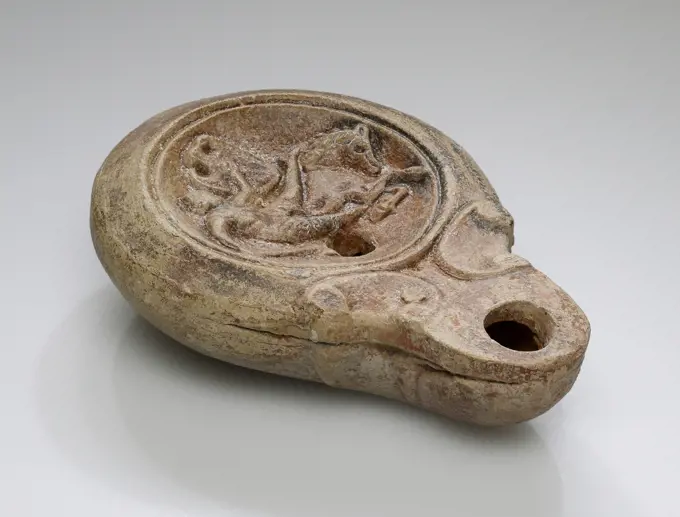
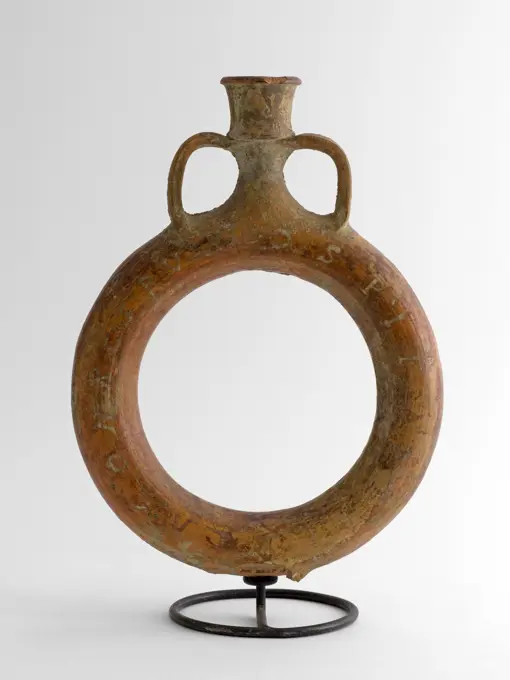
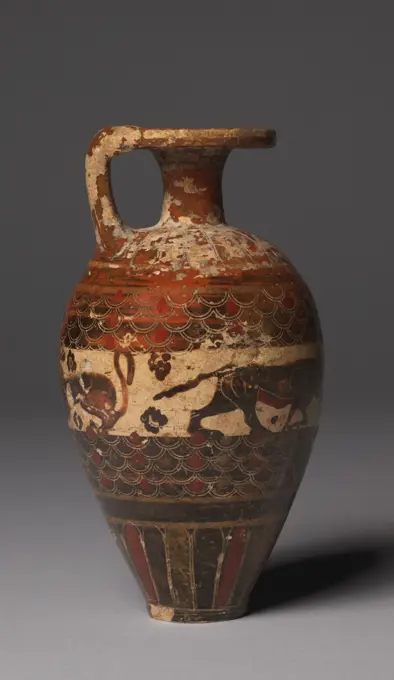
Alabaster alabastron (perfume vase) 6th-5th century B.C. Cypriot The alabastron has a pear-shaped profile, two salient lugs, a flaring neck, and an out-turned lip.. Alabaster alabastron (perfume vase) 243966Lamp. UnknownPottery cooking pot, grape-model, red shard with lead glaze, two pinched sausages, on three legs, cooking pot crockery holder kitchenware earth discovery ceramics earthenware glaze lead glaze, hand-turned glazed baked Pottery cooking pot grape-model red shard with lead glaze two at the top pinched sausages three legs underside unglazed Two protruding ribs around the shoulder archeology native pottery food prepare cooking food cuisinePrehistory, Iraq, Halaf culture. Painted ceramic pot, late 5th millennium b.C. From Tell Hassan.Pot 4th-7th century Coptic. Pot 477272Lamp, Turkey; 1st century B.C. - 1st century A.D; Bronze; 6 x 5.7 x 9.3 cm (2 3,8 x 2 1,4 x 3 11,16 in.)Prehistory, Italy. Terracotta vase in the style of the Conca d'Oro. From Sicily Region.Oil jar with floral motifs, 918-1392, Unknown Korean, 1 7/8in. (4.8cm), Glazed stoneware, Korea, 10th-14th centuryGlass beaker 4th century A.D. Roman Translucent yellowish green; blobs in translucent deep turquoise blue.Uneven outsplayed and cracked-off rim; cylindrical body, then curving in to slightly pushed-in bottom.Around body, horizontal band of blobs comprising three larger blobs interspersed with smaller ones arranged as two rows of six and one of seven; three extra small blobs accidentally applied, two above and one below band; above and below blobbed decoration, a single horizontal wheel-abraded line.Intact; pinprick and larger bubbles; dulling, slight pitting, enamel-like brown weathering, and some soil encrustation.. Glass beaker 245682Stoneware mineral water pitcher on pinched foot, arched model, marked, mineral pitcher pitcher pitcher holder soil find ceramics stoneware enamel salt enamel, hand turned fried glazed stoneware mineral pitcher dark gray shard with salt glaze bandoor with finger impression pinched foot Mark on shoulder: P archeology health care import pottery packing serve drink medicine drug pharmacyKrater. Culture: Cypriot. Dimensions: 8 5/8in. (21.9cm). Date: 750-600 B.C..Krater with bands, wavy lines, chequered triangles and lotus. Museum: Metropolitan Museum of Art, New York, USA.Mug; Unknown Nubian workshop; IV-VI century; Group X period (301-00-00-600-00-00);Nubian ceramics, cups, nubian vesselsOil LampJug 600-480 B.C. Cypriot Jug with trefoil lip and groups of vertical concentric circles.. Jug. Cypriot. 600-480 B.C.. Terracotta. Cypro-Archaic II. VasesOil Lamp with a BaseTripod Vessel with Jaguar Head Feet 9th-15th century Costa Rica. Tripod Vessel with Jaguar Head Feet 310674Corinthian Aryballos; Greece (Corinth); about 595 - 570 B.C; Terracotta; 6.2 × 5.6 cm (2 7,16 × 2 3,16 in.)Alabaster vase from Tell Qannas, Syria. Mesopotamian civilisation 3500-3300 BC.URNA. EDAD DEL BRONCE CAMPOS DE URNAS S VII a.C. (DEPOSITO: MUSEO ARQUEOLOGICO NACIONAL).Terracotta jug. Culture: Cypriot. Dimensions: H. 9 3/8 in. (23.8 cm). Date: ca. 1600-1150 B.C..White slip ware with handle, pinched lip, lattice, lozenge and wavy lines. Museum: Metropolitan Museum of Art, New York, USA.medieval ceramics medieval ceramics, muslim era, Archeological Museum. Úbeda, Jaén province, Andalusia, Spain Copyright: xZoonar.com/BartomeuxBalaguerxRotgerx 21702730Bowl mid-12th century. Bowl 445984Earthenware chamber pot, ease of use on stand ring, double conical in shape, standing ear, pot holder sanitary earthenware ceramic earthenware glaze lead glaze, hand-turned glazed baked Pottery chamber pot on stand ring. Red shard fully glazed except the underside of the bottom Double conical shape with wide neck opening and narrow foot Slanted pot edge with bend Standing and pinched bandage above the edge excellent Rotations over the shoulder archeology indigenous pottery drains night sleeping room hygienePottery saucepan on three legs, cup-shaped with pouring clip and handle, saucepan pan crockery holder kitchen utensils earthenware ceramics earthenware glaze lead glaze, hand turned molded glazed baked Pottery saucepan red shard entirely covered with lead glaze Green glaze layers Bowl shaped model with side wall and semi-circular bottom Three legs. Pouring clip and scalloped partially dense brushed handle attached to the edge and angled upwards Direction rings between the edge and the bottom archeology indigenous pottery food preparation cooking kitchenVessel 4000 BCE-3200 BCE Egypt. Ceramic . Ancient EgyptianJug. Culture: Cypriot. Dimensions: 8in. (20.3cm). Date: 600-480 B.C..Vertical circles and lotus panel. Museum: Metropolitan Museum of Art, New York, USA.Dish, before 1550. Colombia. Pottery; overall: 11.3 x 10.3 cm (4 7/16 x 4 1/16 in.).Glass lentoid flask 4th-5th century A.D. Roman Translucent pale green, with same color handles, base, and trails.Rounded, thickened rim; funnel-shaped mouth joining imperceptibly with tall, cylindrical neck, expanding slightly downward to globular lentoid body; applied small circular pad base made by coiling, with pontil scar on bottom; two rod handles applied at sides of lentoid body, drawn upward and curved inward, and attached at mid-point of neck over trail.Single fine trail wound in a spiral around neck, ending on underside of mouth.Intact, but lower part of trail missing; some pinprick bubbles in body, many elongated bubbles and some black impurities in handles; some dulling and small areas of pitting, iridescence and creamy brown weathering.. Glass lentoid flask 249728Cup with Handle 4th-7th century Coptic. Cup with Handle 478885Black-topped red ware jar ca. 3700-3500 B.C. Predynastic, Late Naqada l-Naqada II. Black-topped red ware jar. ca. 3700-3500 B.C.. Pottery. Predynastic, Late Naqada l-Naqada II. From EgyptVessel (Peru); painted earthenwareJARRA - CERAMICA SIN VIDRIAR. Location: ALFARERIA. VALDEVERDEJA. Toledo. SPAIN.Gray-brown speckled Bartmann jug, also called Bellarmine jug, under beardsman mask coat of arms in oval, Bartmann juggeruik tableware holder soil find ceramic stoneware glaze salt glaze, hand turned stamped glazed glazed baked stoneware jug gray shard with salt glaze partly dark brown brindled salt glaze bandoor with tail archeology heraldry import pottery drink transport packingMiniature vessel;  I-II century (1-00-00-200-00-00);The collection of ancient EgyptBowl ca. 3500-3300 B.C.. Bowl 326496Lamp, Germany; 1st - 4th century; Terracotta; 2.5 x 6.6 x 9.5 cm (1 x 2 5,8 x 3 3,4 in.)Cylindrical jar. Dimensions: H. 10.1 cm (4 in.); Diam. 8.9 cm (3 1/2 in.). Dynasty: Dynasty 2, second half. Date: ca. 2750-2649 B.C.. Museum: Metropolitan Museum of Art, New York, USA.Temple Model 200 B.C.-A.D. 500 Mezcala Stone models in the Mezcala style come largely from the present-day state of Guerrero, in southwest Mexico. A particularly long-lived tradition, these works may have been produced over some one thousand years, from as early as 500 B.C. Little is known about their archaeological contexts, and there are few points of reference with surviving architecture in the region. It is possible that these models emulate buildings with stone columns, such as those from Cuetlajuchitlán; alternatively they could recall above- or below-ground funerary structures, in which case the columns would represent wood supports of a tomb or a funerary pyre. Mezcala models may have served multiple functions over time, in keeping with the Mesoamerican custom of repurposing or recarving stone objects. Oblong models, for example, may have been recarved from celts, ritual tools of great symbolic importance. Several have holes drilled into the base, which could have been used to Lamp, Cologne, Germany; 1st - 2nd century; Terracotta; 3.5 x 7.5 x 14 cm (1 3,8 x 2 15,16 x 5 1,2 in.)Single-handled ceramic bottle, Crimea. Bulgarian Civilization, 8th-10th Century.Satsuma (Ceramic Production Region) Flower Vase (Hana-ike) (usual name), 1750. Covered. Inlaid of white earth. Cernuschi Museum, Asia Museum of Asia in the city of Paris.Bottle, Feline Face 5th century B.C.-A.D. 5th century Paracas. Bottle, Feline Face. Paracas. 5th century B.C.-A.D. 5th century. Ceramic, pigment. Peru. Ceramics-ContainersLamp, Cologne, Germany; 2nd - 3rd century; Terracotta; 2.2 x 3.1 x 6.1 cm (7,8 x 1 1,4 x 2 3,8 in.)OLLA CON DOS ASAS JUNTAS - CERAMICA PARA FUEGO. Location: ALFARERIA. VALDEVERDEJA. Toledo. SPAIN.Hole-mouthed jar ca. 1st century B.C.-1st century A.D. Parthian This vessel, which has been heavily reconstructed, has a globular body with a tubular pouring spout emerging from one side and a handle in the form of a quadruped. It is made of a red clay, using a potters wheel, with the handle and spout added. It was excavated at Shahr-i Qumis in northern Iran, which has been identified as the ancient city of Hecatompylos, established by the Parthians as their capital by about 200 B.C. In Greek Hecatompylos means ‘a hundred gates, suggesting that the city was quite large. Indeed, the modern archaeological site includes several mounds, only a few of which have been excavated, and a vast area covered with potsherds. This vessel was found in a large building at Site V, which has been tentatively identified as an elite residence. This building was completely filled with dirt sometime in the late 1st century B.C. or early 1st century A.D., perhaps when the Parthian capital was moved elsewherecipientes de ceramica, Museo arqueologico Son Fornes, sala de época postalayótica, Montuiri, Comarca de Es Pla, Mallorca, Spain.A cup with decoration rite; Unknown Night -Tamanian workshop; 1. PO. 3 thousand BC ; Early period D Azira III (-3000-00-00--2501-00-00);Ryte decorations, early period Dżazira III (approx. 2600-ok. 2350 BC), anthropomorphic performance, transmission (provenance), cups, excavations of the Center of Mediterranean Archeology at the University of WarsawÁnfora romana de cerámica para aceite procedente de Can Modolell, siglo I. Can Serra Museu de Mataró.One-handledjarTerracotta stirrup jar. Culture: Mycenaean. Dimensions: H. 4 9/16 in. (11.6 cm.). Date: ca. 1400-1050 B.C..Broad and narrow bands, and waves on shoulder. Museum: Metropolitan Museum of Art, New York, USA.Kohl jar ca. 1635-1458 B.C. Second Intermediate Period-Early New Kingdom. Kohl jar 546929Vessel with Handle 7th-5th century B.C. Paracas. Vessel with Handle. Paracas. 7th-5th century B.C.. Ceramic, pigment. Peru, Ica Valley. Ceramics-ContainersGlass jug with chain handle 3rd century A.D. Roman Colorless with pale blue green tinge; handle and trails in same glass.Outsplayed and rounded rim; funnel-shaped mouth and almost no neck; conical body, then turned in sharply with broad, shallow undercurve; applied solid foot ring, sloping inwards with tooled irregular indent in one side; central kick in bottom with circular pontil mark; chain handle applied to body as two large, thick pads, drawn up and outwards as two rods, pinched together five times to form vertical row of loop, then turned in horizontally as a single strap, folded up into a hollow loop above rim, and trailed off on underside of mouth.Single horizontal trail on underside of mouth below rim; a finer trail wound horizontally 1½ times around base of mouth; body decorated with a pattern of sixteen evenly-spaced ribs extending from base of mouth to edge of side.Broken and repaired, but complete, with cracks around mouth and top of handle; many pinprick bubbles in foot rWooden bowl from the wreck of the Dutch East Indiaman Witte Leeuw, before 1613  Wooden container or NAP with stand ring from V.O.C. ship the 'Witte Leeuw'.  wood (plant material)   Sint-HelenaLamp, North Africa; 1st - 4th century; Terracotta; 2.5 x 7.4 x 10.3 cm (1 x 2 15,16 x 4 1,16 in.)Bowl, 3rd-5th century, 3 1/8 x 6 3/8 x 6 3/8 in. (7.9 x 16.2 x 16.2 cm), Polychromed earthenware, Mexico, 3rd-5th centuryPitcher;  XVIII-XIX century (1790-00-00-1810-00-00);Marl ware jar with lug handles ca. 3850-2960 B.C. Predynastic Period. Marl ware jar with lug handles. ca. 3850-2960 B.C.. Pottery. Predynastic Period. From Egypt, Southern Upper Egypt, Hierakonpolis (Nekhen), Fort Cemetery (Hk 27), Tomb 68, MMA excavationsCup; Unknown, unknown Magnijski workshop, unknown workshop Rediumasrian, unknown New Sasyr workshop; 1. PO. 2 thousand BC (-2000-00-00--1501-00-00), XV-XIV century BC ; Madyanian period (-1500-00-00--1301-00-00), XIV-XIII century BC ; Dennutasrian period (-1400-00-00--1201-00-00), IX-VII century BC ; New Easyrian period (-900-00-00--601-00-00);Kalah, Northern Mesopotamia, Mitannia, Zofia Chrapkiewicz-Gutkowska, Ceramics of Manny, palace ceramics, cups, cups on the legVASIJA DE CERAMICA CON DECORACION INCISA - S XX. Location: ALFARERIA. LAS PALMAS. SPAIN.Juglet 750-600 B.C. Cypriot Geometric ornament including eyes and swastikas.. Juglet. Cypriot. 750-600 B.C.. Terracotta. Cypro-Archaic I. VasesDish;  around 2686- 2181 BC ; Old state (-2686-00-00--2181-00-00);Ceramic Bowl "Terra Sigillata Hispanic" type Drag 37 with geometric decoration in concentric circles . Dimensions 20 cm x 12 cm. ( 2 nd CE )- Roman period, from the archaeological site of Complutum in Alcala de Henares ( Madrid ). SPAIN.Lamp. UnknownVase fragment East Greek/Sardis, Lydian Black lines on light ground.. Vase fragment 252698 East Greek/Sardis, Lydian, Vase fragment, Terracotta, Overall: 2 1/2 x 1 3/4in. (6.3 x 4.5cm). The Metropolitan Museum of Art, New York. Gift of The American Society for the Excavation of Sardis, 1926 (26.199.130)Aryballos (Container for Oil) 550 BCE-450 BCE Eastern Mediterranean Region. Glass, core-formed technique . Ancient Eastern MediterraneanStoneware mineral water bottle on slightly pinched foot, arched model, marked on shoulder, mineral pitcher pitcher pitcher container soil find ceramic stoneware icing salted glaze, hand turned fried glazed stoneware mineral pitcher light gray shard with salt glaze bandoor with finger impression pinched foot mark on shoulder: P archeology health care import pottery packing serve drink medicine drug pharmacyEarthenware lead white pot, unglazed, conical, on stand foot, lead white pot pot holder soil find ceramic pottery, hand-turned baked Pottery lead white pot. Conical shape on profiled base Unglazed red shard Lead white pots were used to solidify the lead white paste and harden; the resulting cones were traded or ground archeology Rotterdam Heliport site indigenous pottery lead white paint glaze craft Soil discovery: Heliport site Rotterdam June 1978.Trefoil Oinochoe. UnknownBasalt tripod vessel or mortar ca. 2500-1050 B.C. Cypriot The mortar has three quite tall legs.. Basalt tripod vessel or mortar. Cypriot. ca. 2500-1050 B.C.. Basalt. Late Bronze Age. Miscellaneous-Stone VasesOil Bottle. Culture: Korea. Dimensions: H. 1 3/4 in. (4.4 cm); Diam. 2 3/4 in. (7 cm). Date: 13th century. Museum: Metropolitan Museum of Art, New York, USA.Archeological Museum. Úbeda Archeological Museum. Úbeda, Jaén province, Andalusia, Spain Copyright: xZoonar.com/BartomeuxBalaguerxRotgerx 21702902Potter ink well found in Cannon Street, London. Dated 12th CenturyGlass bottle 4th-5th century A.D. Roman Translucent light green.Thick, uneven rim, cracked off and ground; funnel-shaped neck; slightly pushed-in shoulder, with outer horizontal ridge; broad, globular body; concave bottom.Body decorated with numerous ribs, extending in a regular spiral pattern from left to right from below ridge on shoulder, becoming fainter, and disappearing on lower part of side.Intact; many pinprick and a few large bubbles, and blowing striations, with one black inclusion in neck; faint iridescence on exterior, large patches of blackish weathering and brilliant iridescence on interior.Round vase with diagonal ribs and long, funnel-shaped neck.. Glass bottle 245221BARREÑON DE MATANZA CON DOS ASA-PROCEDE DE NINODAGUIA (ORENSE). Location: MUSEO DEL PUEBLO ESPAÑOL. MADRID. SPAIN.VASIJA PUNICA PROCEDENTE DE GIRIDALLE. Location: MUSEO ARQUEOLOGICO-COLECCION. JAEN. SPAIN.Lentoid Bottle (Pilgrim Flask) ca. 1353-1336 B.C. New Kingdom, Amarna Period These are marl-clay pots excavated in the North Suburb at Amarna. The lentoid flask (29.7.1) is a type that originates outside Amarna itself. It probably came with particular trade contents: many such lentoid flasks from Amarna show a pitting on the interior that suggests their special contents was somewhat corrosive. The two-handled jar (29.7.2) is lidded with a small upside down silt-clay dish. It had a brown contents when excavated. The jar was found in a house with many others, some sunk into the floor for storage, and plentiful remains of pigments in the house suggested to the excavators that it belonged to a painter.. Lentoid Bottle (Pilgrim Flask) 550060Funerary urns for children. 1950-1550 BC. Aliante, Spain. Archaeology Museum of Catalonia. Barcelona. Spain.Pottery comes on three stand fins with grooves over the outer edge, two lying ears, bowl bowl earthenware pottery earthenware glaze lead glaze, foot 13.0 hand turned set pinched glazed fried Bowl red earthenware internally glazed two horizontal ears pouring lip thickened edge with grooves along the outside edge of the lid three pinched stand lobes of which one restoration in plaster. Deep and hemispherical model. Deep finger impressions on the attachment of the ears archeology Capelle aan den IJssel House in Capelle castle native pottery crockery kitchen utensils tableware cooking kitchen food preparation Soil discovery: cesspool 1420-1425 house in Capelle Capelle aan den IJssel 1963.Ring. Culture: Coptic. Dimensions: Overall: 2 1/2 x 4 in. (6.3 x 10.2 cm). Date: 4th-7th century. Museum: Metropolitan Museum of Art, New York, USA.Ritual Pouring Vessel for Water (Yi) 6th century B.C. China. Ritual Pouring Vessel for Water (Yi). China. 6th century B.C.. Bronze. Eastern Zhou dynasty (770-256 B.C.). MetalworkPottery vessels Ceramic.Satsuma tea cup, c. 1900, Unknown Japanese, 2 1/2 x 3 x 3 in. (6.35 x 7.62 x 7.62 cm), Satsuma ware; glazed stoneware, Japan, 19th centuryTwo-piece bronze mold for bottom of large tap jug with angel figures, mold casting tool tools equipment base metal bronze, cast turned Two-piece bronze mold for casting the bottom of large tap jug; on the outside decorated with so-called angels figures, however, is medallion with portrait with two laurel wreaths on both sides signed I D H Rotterdam tin foundry tin stainer tin Meeuws Druy craft Shapes are from the originally 18th century Rotterdam tinnegieter J Druy. The large molds that were not signed or dated were the property of the tinker guild and were rented to the small tin caster.TARRO PARA EL ORDEÑO SIN VIDRIAR - ARTE POPULAR S XX. Location: ALFARERIA. PERERUELA. Zamora. SPAIN.Jean Carriès (1855-1894). "Back to handles". Enameled sandstone. Museum of Fine Arts of the City of Paris, Petit Palais. 24205-22 Handle, ceramic, gres emaille, bucketLamp, North Africa; 1st - 4th century; Terracotta; 2.5 x 6.9 x 9.6 cm (1 x 2 11,16 x 3 3,4 in.)Jar, before 1921. Colombia. Pottery; diameter: 8.4 cm (3 5/16 in.); overall: 9.6 cm (3 3/4 in.).Annular gourd with red slip. Low-Empire. Ceramic. Paris, Carnavalet museum. Roman antiquity, low-Empire, ceramic, Roman Empire, Red slip, Annular, Ancient GourdTankard (schnelle) with the life of Jonas and two coats of arms, Christian Knütgen, c. 1574 - c. 1600 Jug (schnelle) of stoneware with a cylindrical, slightly tapered body and C-shaped ear. Profiles above the foot and below the edge. On the body in relief a printed and imposed decoration of a scene from Jonas's life with the inscription 'Iona' between two weapons. Under the left weapon the inscription 'Herzog zu Wirtenberg'; On the right the weapon of Gulik, Kleef and Berg with the date '1574' and the brand 'K.'. Siegburg. Siegburg stoneware. glaze vitrification Jug (schnelle) of stoneware with a cylindrical, slightly tapered body and C-shaped ear. Profiles above the foot and below the edge. On the body in relief a printed and imposed decoration of a scene from Jonas's life with the inscription 'Iona' between two weapons. Under the left weapon the inscription 'Herzog zu Wirtenberg'; On the right the weapon of Gulik, Kleef and Berg with the date '1574' and the brand 'K.'. Siegburg. SiegProtocorinthian (Early Black-Figure) Aryballos (Oil Flask): Animals, c. 650-640 BC. Greek, Corinthian. Ceramic; overall: 13.7 cm (5 3/8 in.).Deep Pot 2500 BCE-500 BCE Japan. Here intersecting ribbons made up of incised lines and additional cord-impressed decoration within the spaces created by the ribbons cover roughly two-thirds of the potís surface. On the rim, the decoration continues on four spool-shaped protrusions. This particular tall, conical form is a rare shape in ceramics of the Jomon period. Only one other pot of this exact shape is known (Tokyo National Museum); it was excavated at the Horinouchi site near Funabashi, Chiba, and it is likely that this jar was unearthed in the same region.. Earthenware .Terracotta vessel, Olympia Museum, Olympia, GreeceBowlBottles and bowls in fired clay. First Intermediate Period. C. 2150-2050 BC. From a tomb of burial area from Sedment, Egypt. Ny Carlsberg Glyptotek Museum. Copenhagen. Denmark.Undecorated lenticular bowl with suspension holes. Culture: Paracas. Dimensions: Overall: 2 1/16 in. (5.16 cm)Other: 4 1/8 in. (10.49 cm). Date: 4th-3rd century B.C.. Museum: Metropolitan Museum of Art, New York, USA.Lamp. UnknownCANTARO O BOTIJA SIN VIDRIAR-CERAMICA POPULAR. Location: ALFARERIA. SPAIN.Tripod. Culture: Cypriot. Dimensions: 5 3/8in. (13.7cm). Date: 1050-950 B.C..Decorated with black bands. Museum: Metropolitan Museum of Art, New York, USA.Pre-Columbian art. Mesoamerica. Valley of Mexico culture. Ceramic vessel decorated with incised geometric motifs. 14 x 17,5 cm (diameter). Private collection.