Ceramic Vessels and Lamps

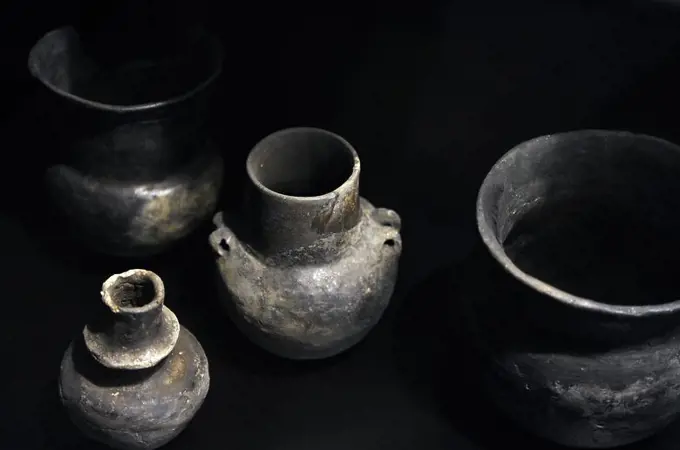
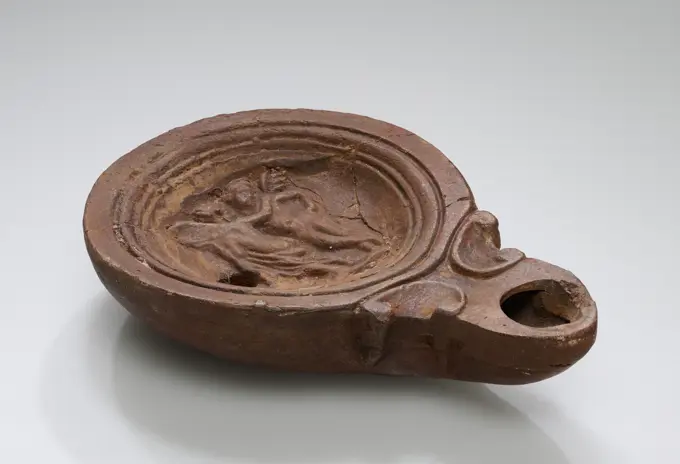
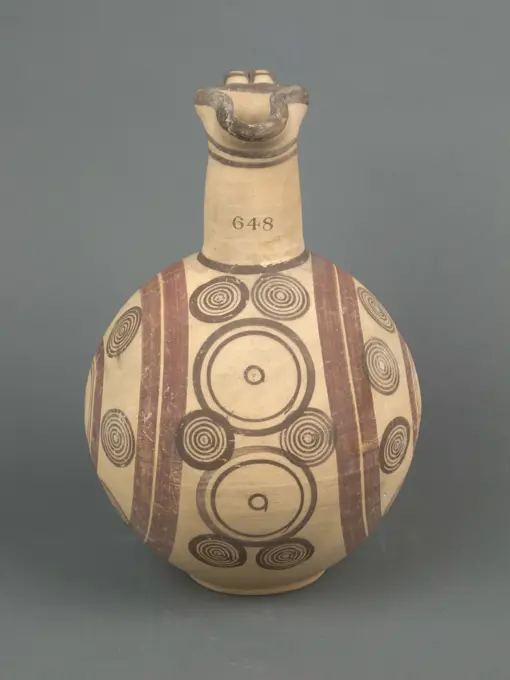
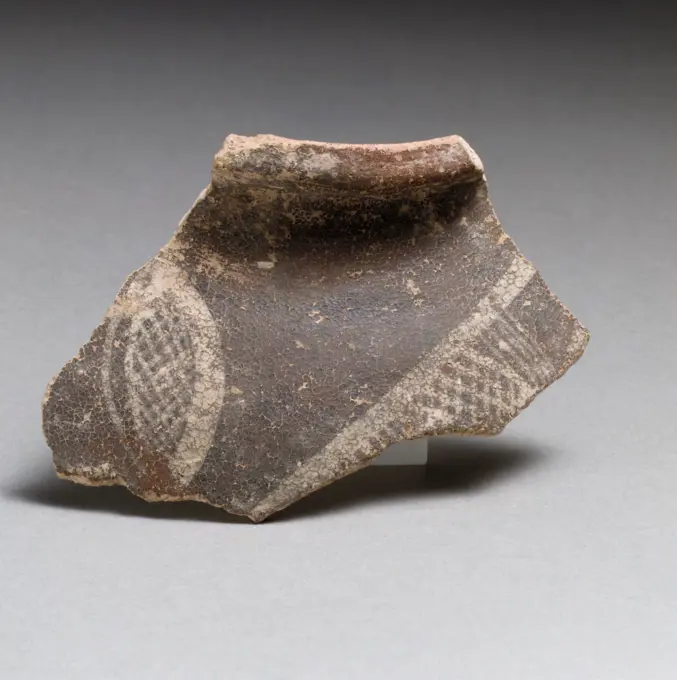
Ancient pottery pieces, including cups and lamps, highlighting unique shapes and historical context, perfect for archaeological interest.

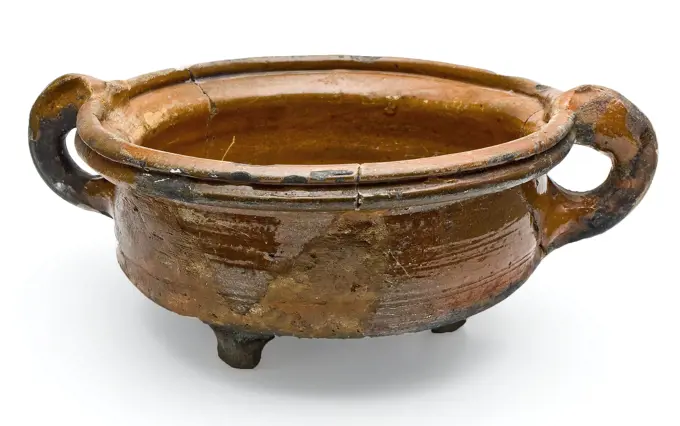
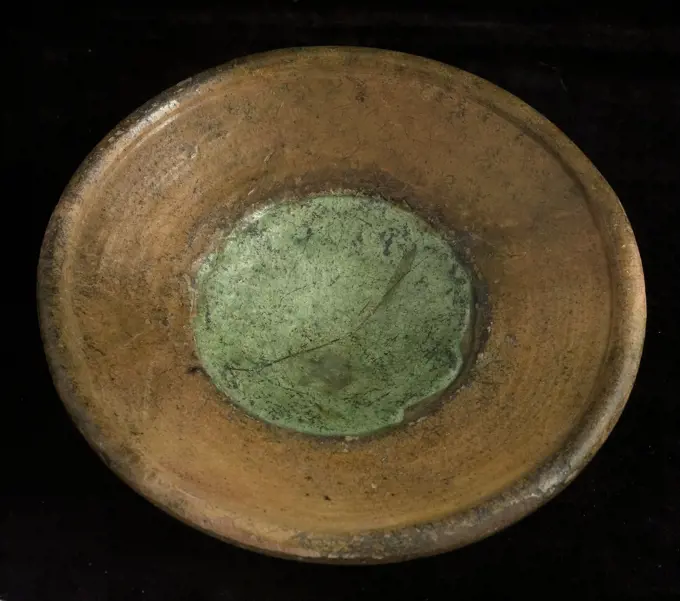
Brown Roman cup on foot, cup drinking utensils tableware holder soil find ceramic pottery paint, hand turned fried varnished Small Roman cup of red varnished earthenware. Conical model tapering upwards with strong constriction above the small foot. Stand surface. brown varnish layer archeology Poortugaal Albrandswaard indigenous pottery import drink serve serving Roman Soil discovery: Poortugaal palens slot north from freshly washed gray clay.
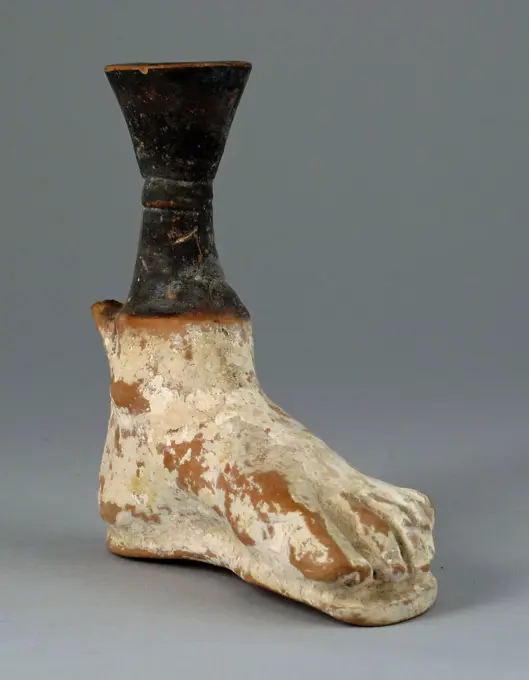
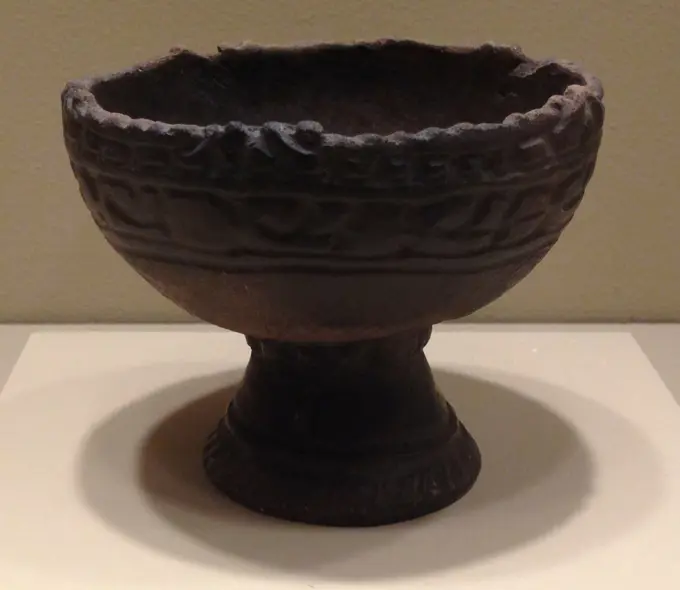
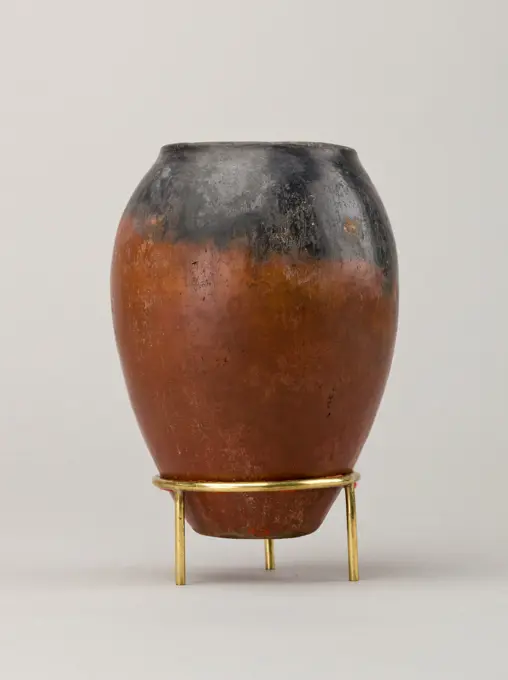
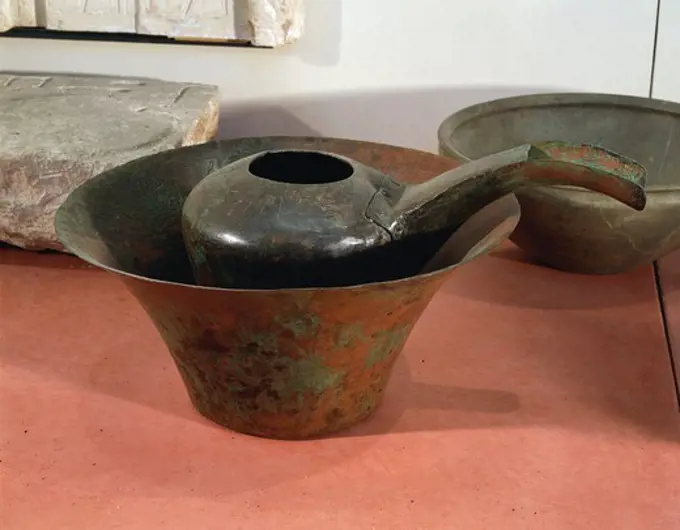
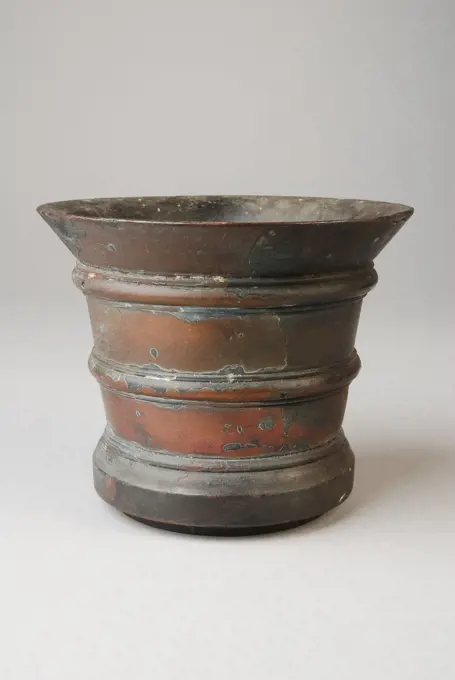
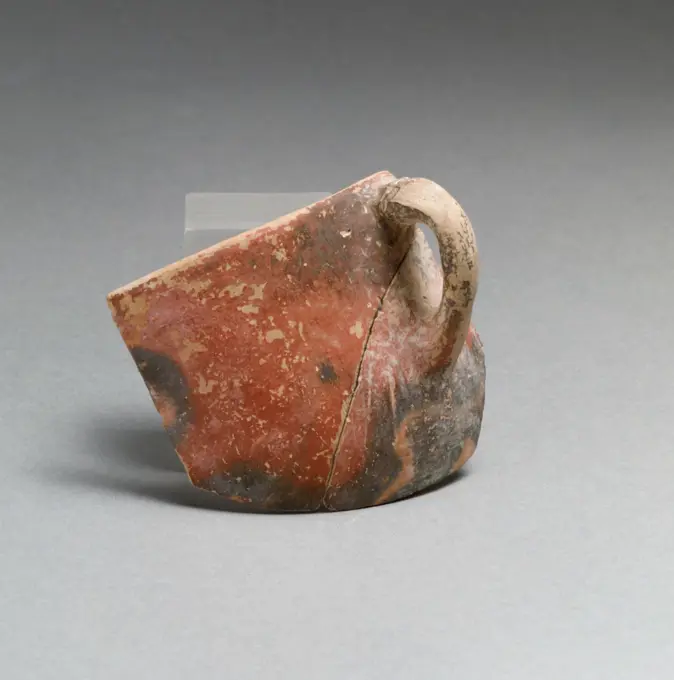
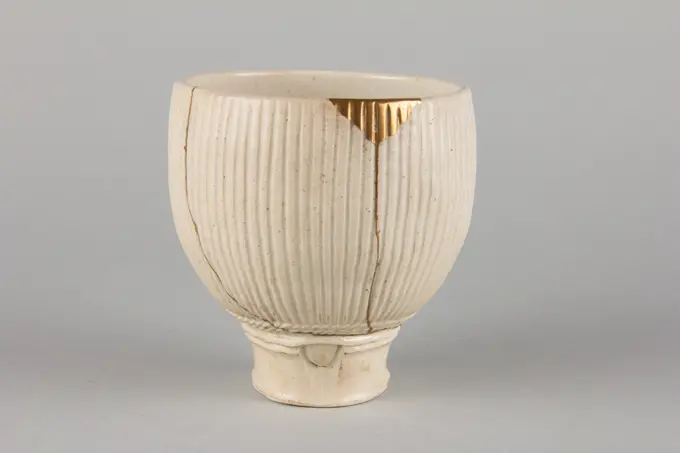
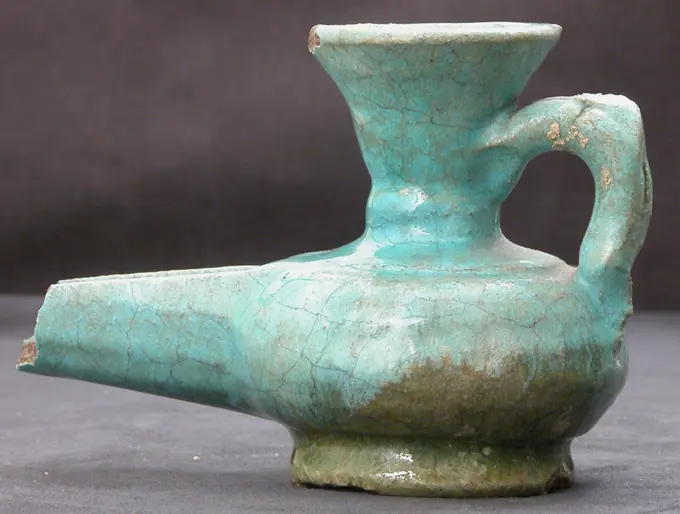
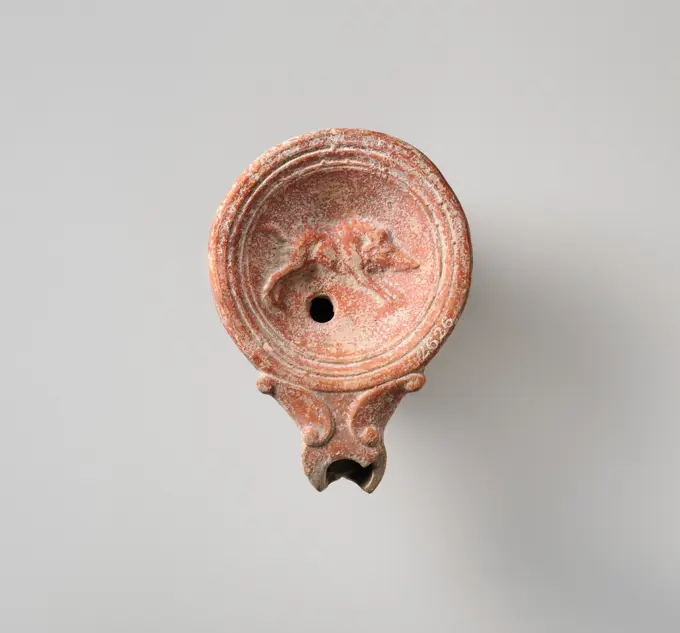
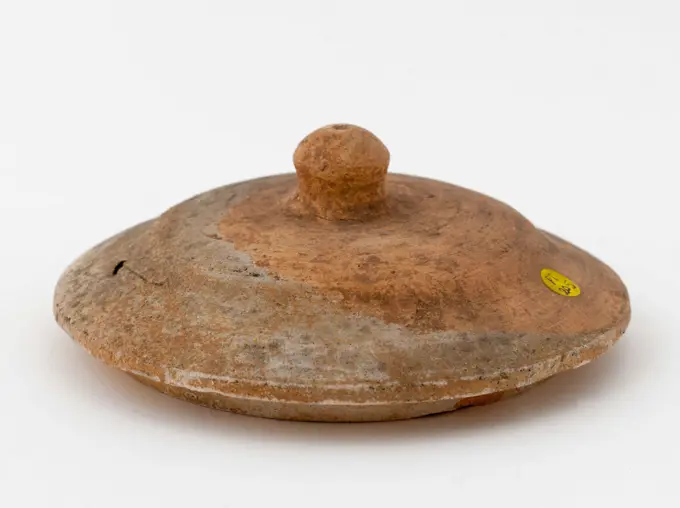
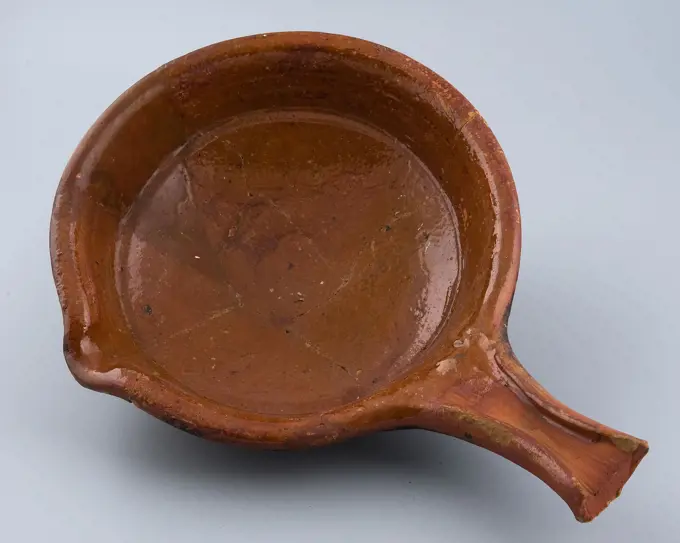
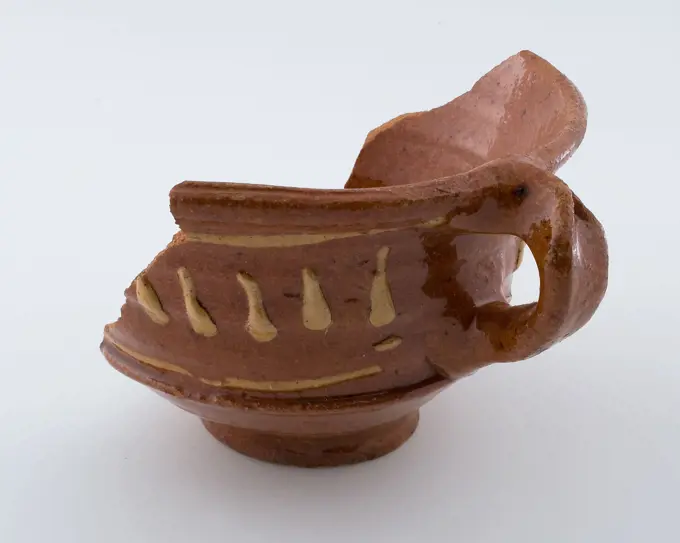
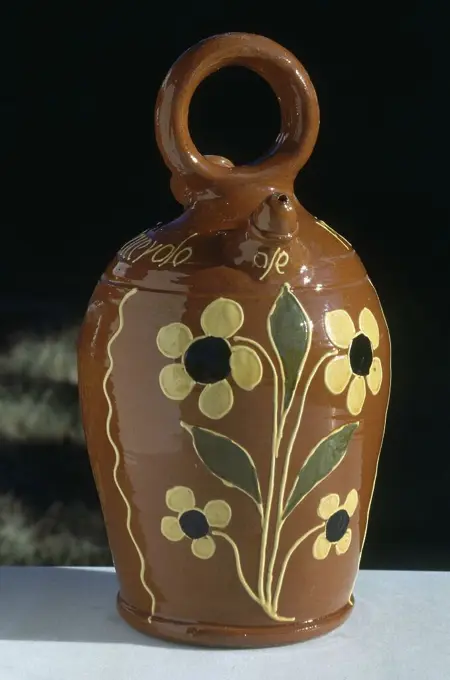
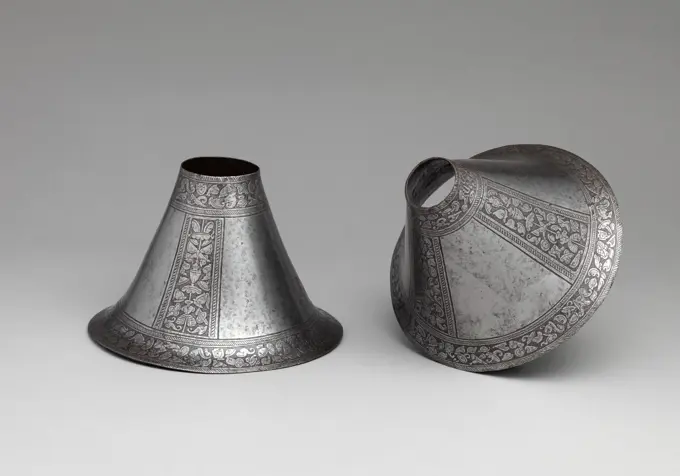
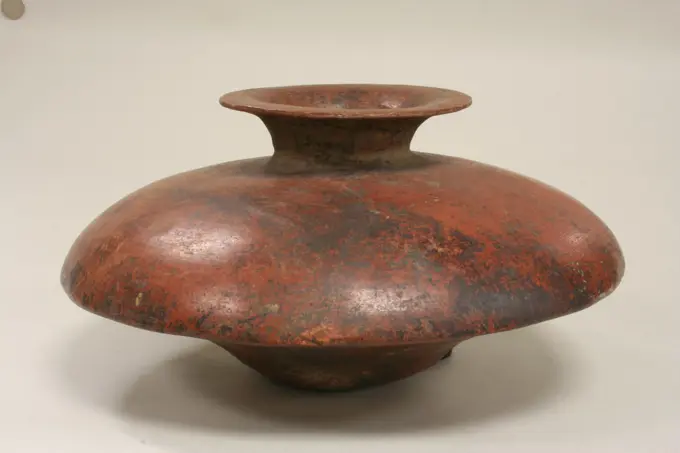
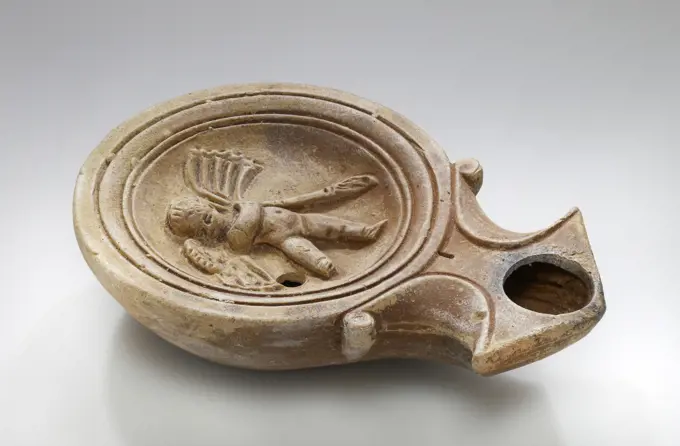
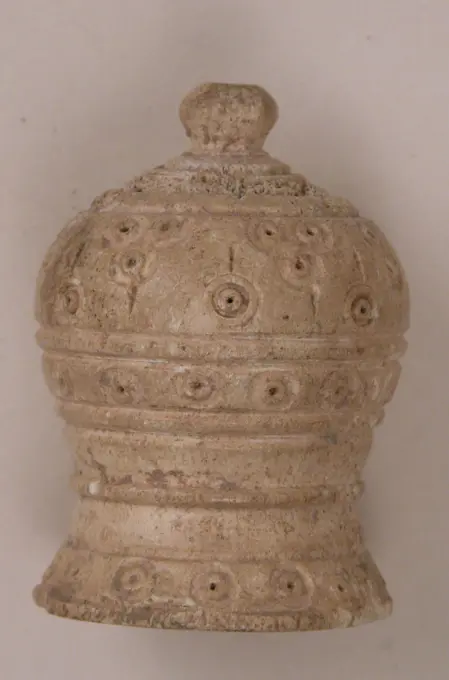
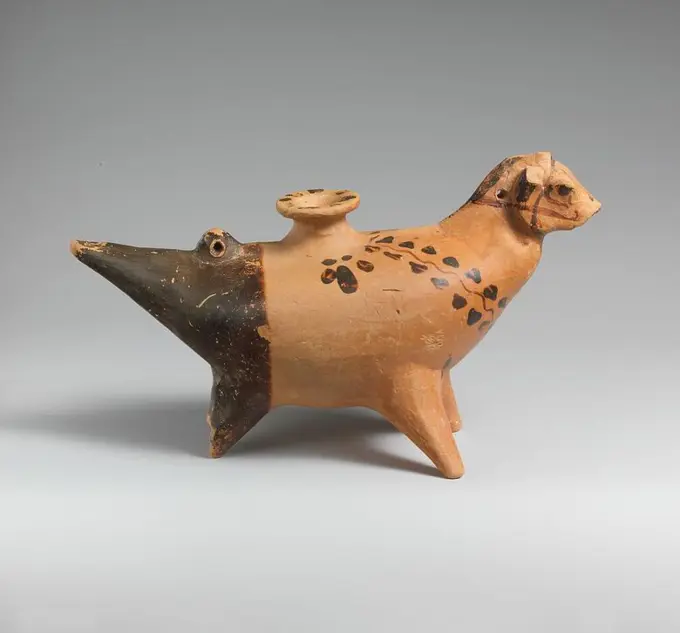
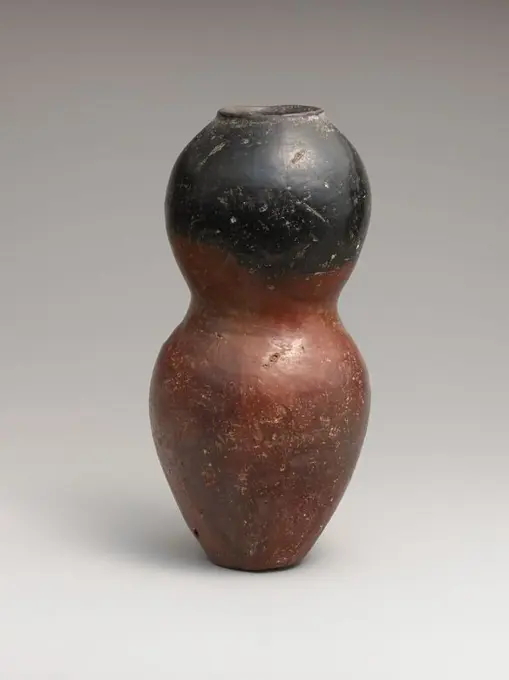
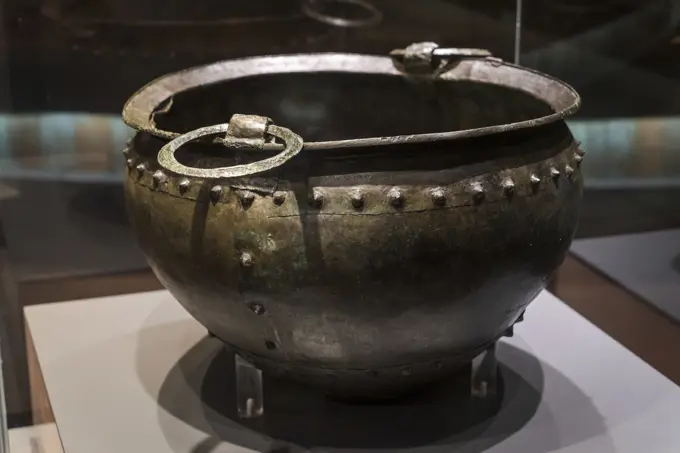
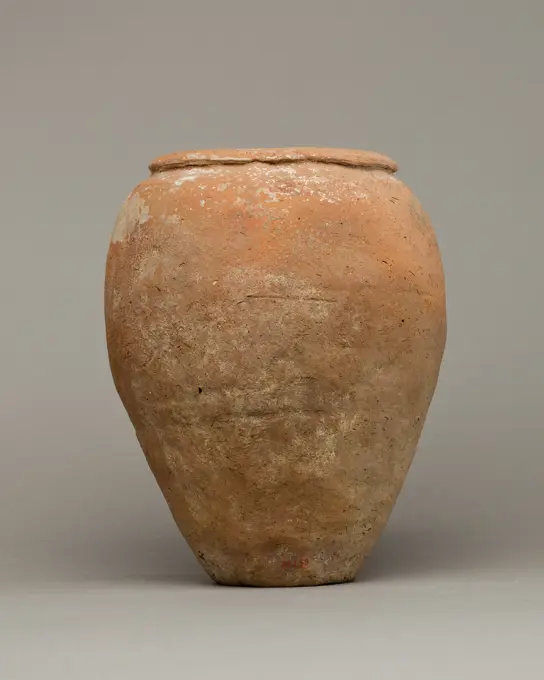
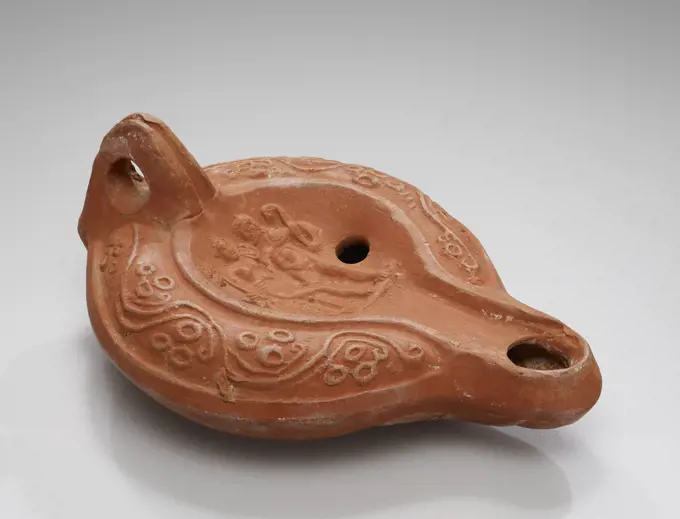
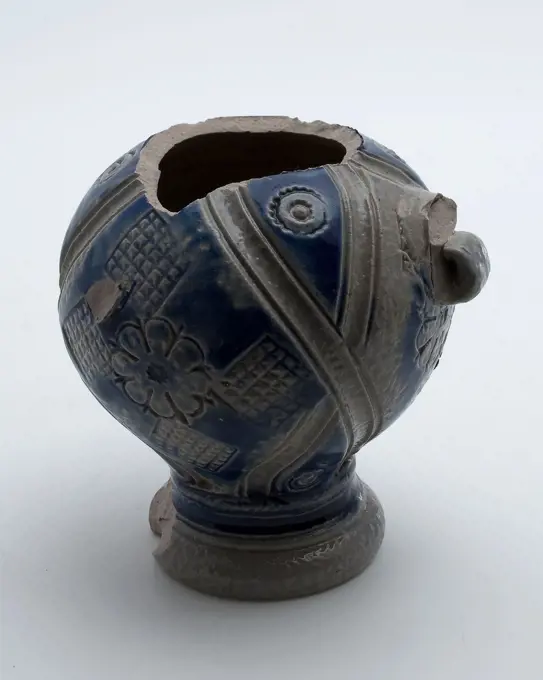
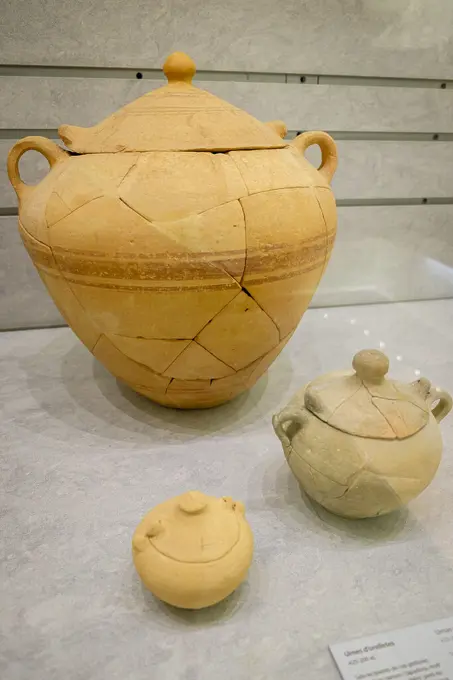
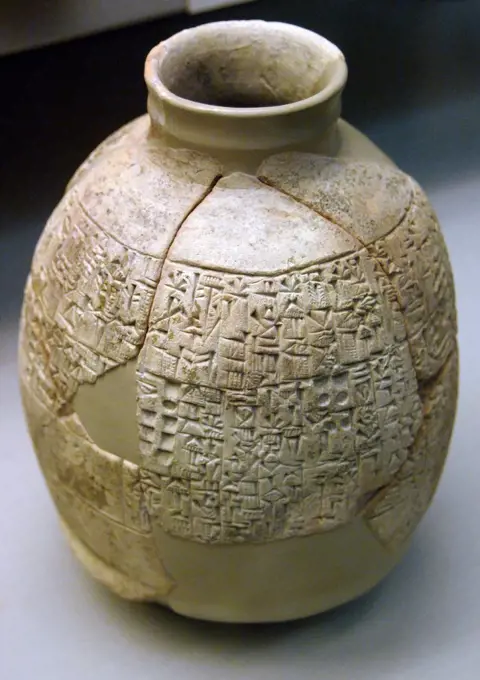
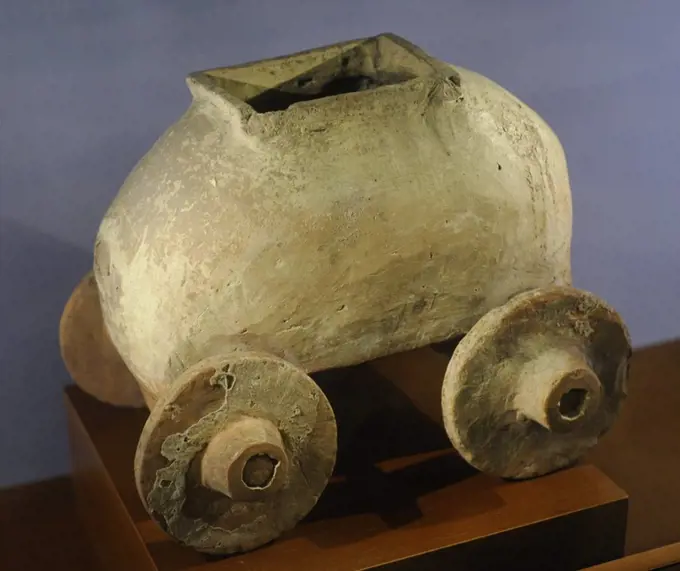
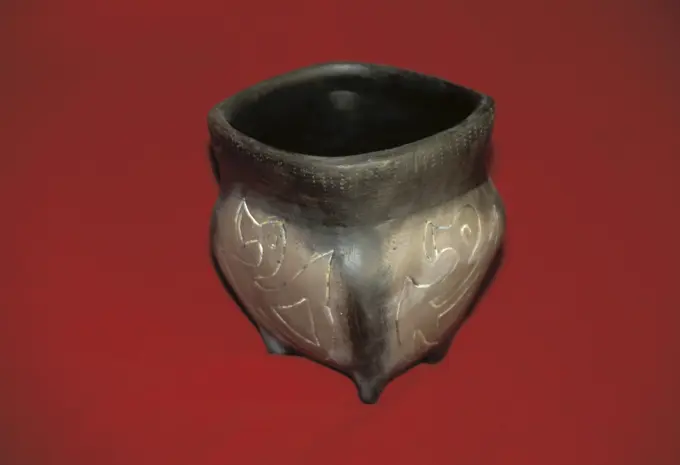
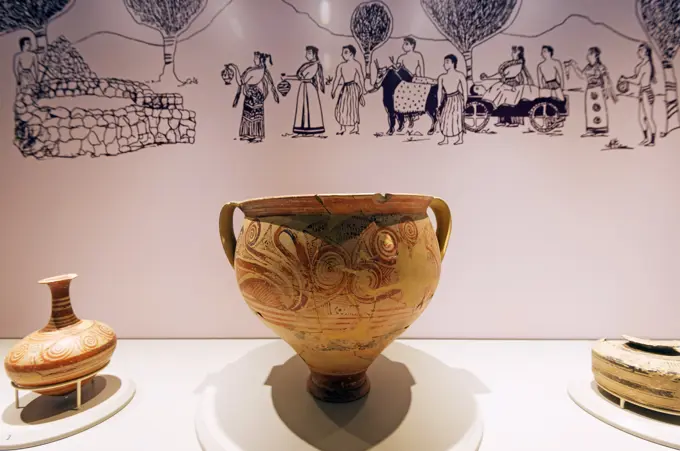
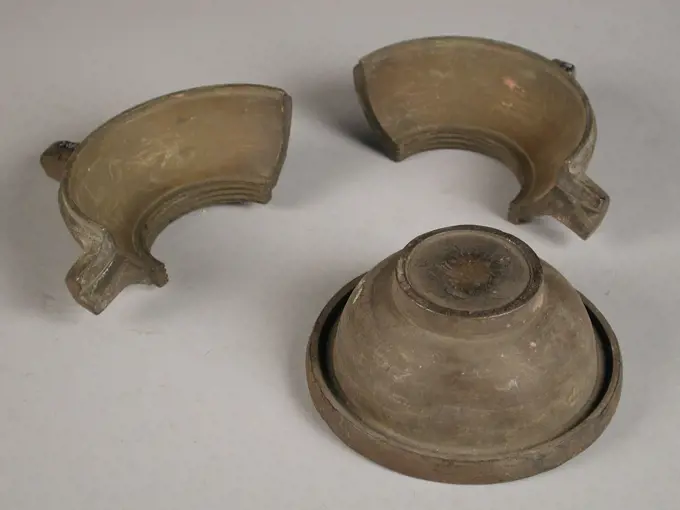
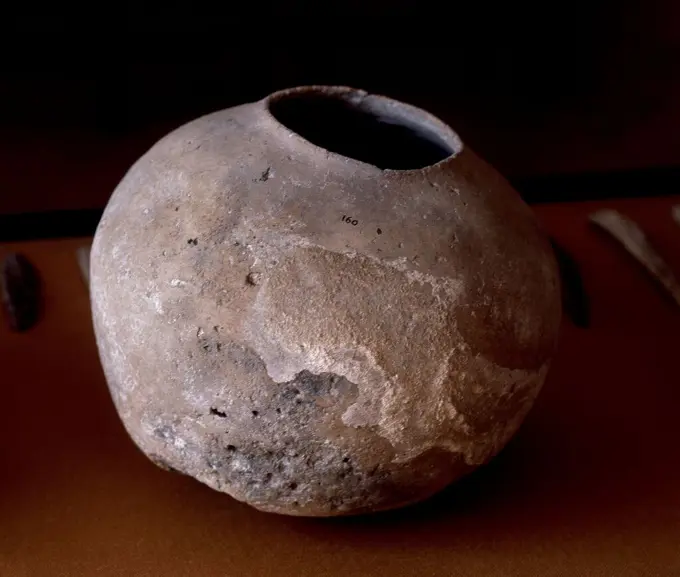
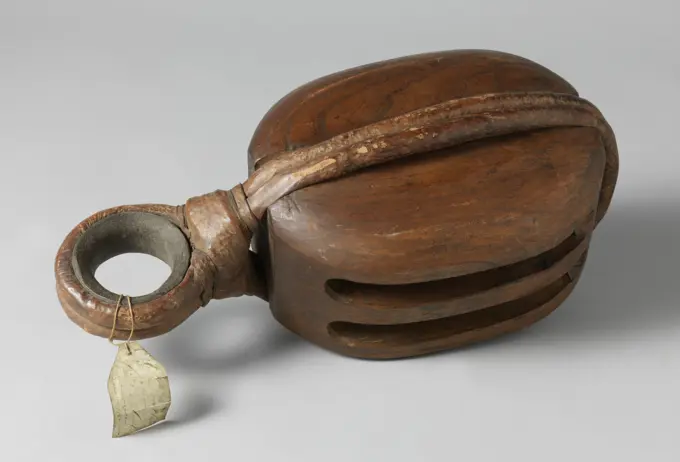
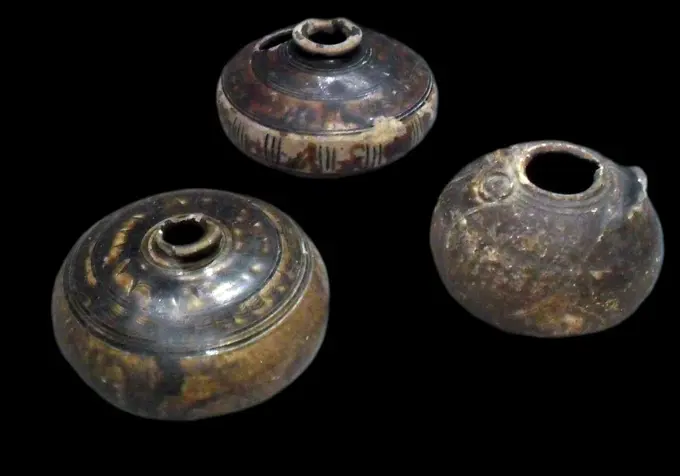
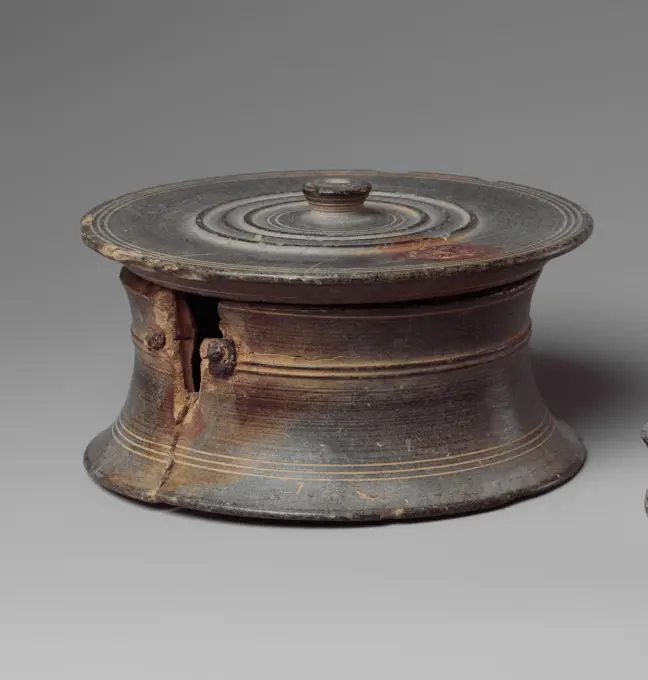
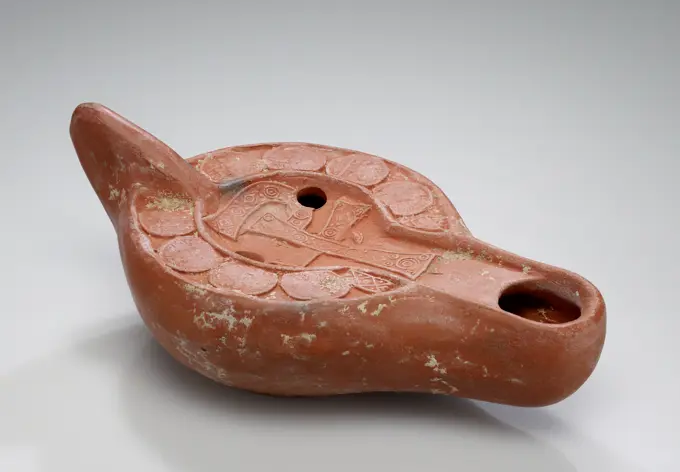
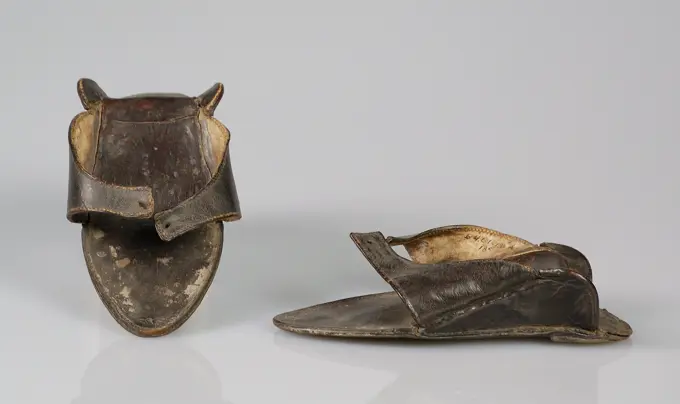
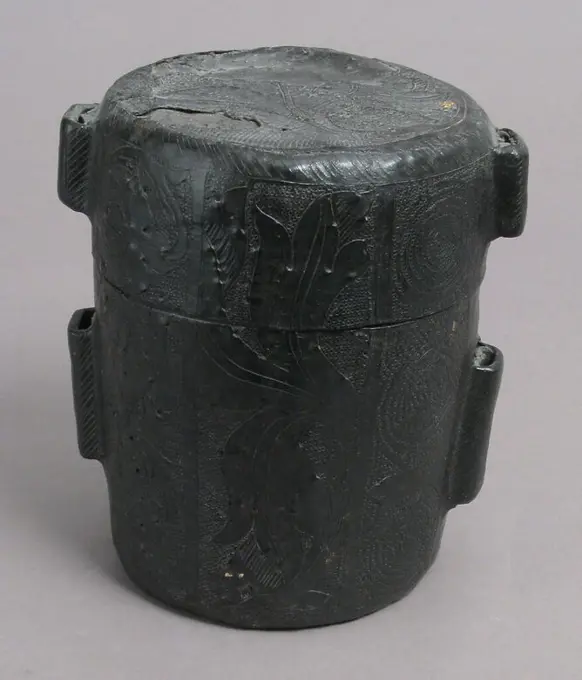
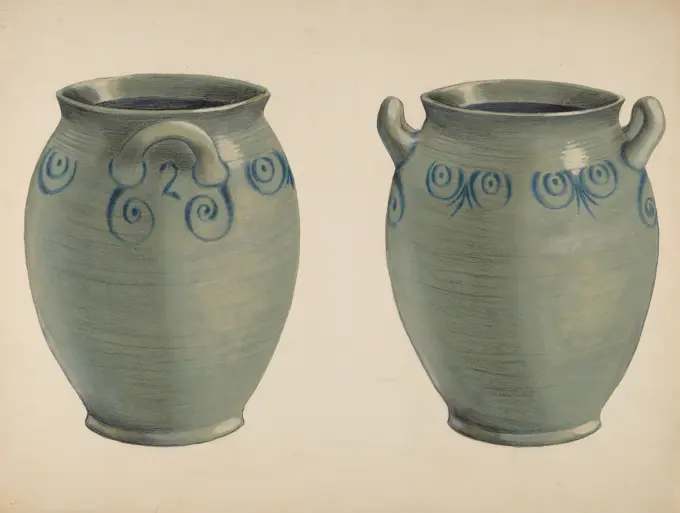
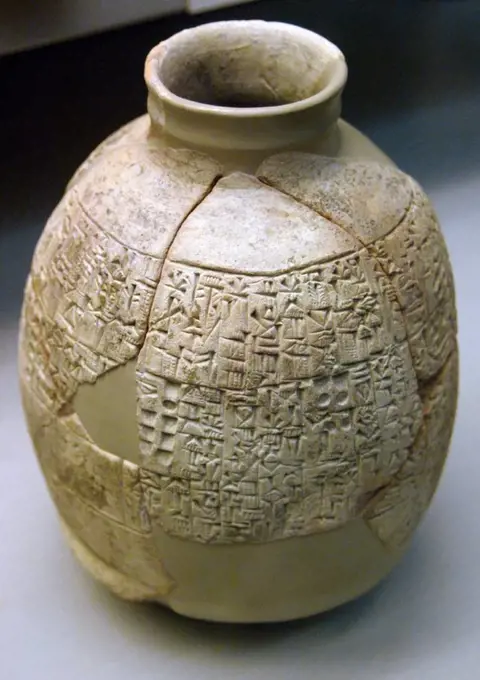
Frog-Shaped Guttus (Oil Flask), 300s BC. South Italian, Apulian. Ceramic; diameter: 1.5 cm (9/16 in.); overall: 5.8 x 11.2 x 9.1 cm (2 5/16 x 4 7/16 x 3 9/16 in.).Aryballos in the form of a foot. Culture: Greek, Attic. Dimensions: Other: 3/8 × 1 5/16 × 3 7/16 × 1 in. (1 × 3.3 × 8.8 × 2.6 cm). Date: ca. 400 B.C..In the shape of a left foot. Museum: Metropolitan Museum of Art, New York, USA.Ewer, waster 11th-12th century. Ewer, waster. 11th-12th century. Earthenware; gritty composite body under blue glaze. Excavated in Iran, Nishapur. CeramicsTerracotta amphora handle with stamp ca. 220-180 B.C. Greek, Rhodian The circular stamp bears the name of the potter Damokrates, with at the center a large rose, symbolizing Rhodes (the Greek word Rhodon means rose).The inscription reads Δαμοκράτευς.. Terracotta amphora handle with stamp 241973Stem Cup, 1000-400 BCE, Unknown Japanese, 3 1/8 x 3 15/16 x 4 in. (7.94 x 10 x 10.16 cm), Earthenware, Japan, 10th-4th century BCE, Throughout Japans prehistoric Jōmon era (14,000-300 BCE), artisans made deep jars for ritual use and food storage. Toward the end of this era, they also began to shape small clay bowls and cups for individual use. These vessels suggest the practical concerns of a more settled society as the Japanese began to organize into larger communities. Despite its modest scale, this cup exhibits distinctive markings that were made by pressing ropes and cords onto its surface before it was fired. These markings, called jōmon (literally, 'rope markings') in Japanese, lent the Jōmon era its name.Black-topped red ware jar ca. 3850-2960 B.C. Predynastic Period. Black-topped red ware jar. ca. 3850-2960 B.C.. Pottery. Predynastic Period. From Egypt, Southern Upper Egypt, Hierakonpolis (Nekhen), MMA excavationsAncient Egyptian toilet objects: copper basin and jug, Old Kingdom.Round lamp with eightholes, 5th-6th century A.D., Terracotta, 10.16 cm (4in.), The Yale-British School Excavations atGerasa, Excavated in Gerasa, Jordan, Gerasa(Jordan), Roman, LightingDevicesWazonik. unknown, craftsmanBronze mortar, auger equipment bronze lacquer, ca 2 kg cast Cylindrical upwardly widening body made of raised profiled base smooth wall with ribbed edge in the middle profiled. Ripples on transition canting and middle section bombardment May 14, 1940 May Days Second World War War Healthcare Public Health Pharmacy Municipal Pharmacy City Pharmacy GGD GG and GD Rotterdam City Triangle Hoogstraat Baan Schiedamsedijk Building for Public Health The municipality-pharmacy in Rotterdam (1603-1993) made from 1938 until privatization in 1993 was part of the GG and GD (later GGD) of the municipality of Rotterdam. In 1940 the building of the municipality pharmacy on the Hoogstraat was destroyed during the bombing. Only several jacks have been saved from the rubble according to the sources. In 1941 new pharmacy was involved in the Building for Public Health on the Baan (and later on Schiedamsedijk).Terracotta rim, body and handle from a cup ca. 2900-2300 B.C. Minoan From Vasiliki, CreteWith handle; mottled red and black.. Terracotta rim, body and handle from a cup 247682Terracotta lamp with gladiators. Culture: Roman. Dimensions: Overall: 1 x 4 1/4 in. (2.5 x 10.8 cm). Date: late 1st century B.C.-early 1st century A.D.. Museum: Metropolitan Museum of Art, New York, USA.Teabowl 18th century Japan. Teabowl 56163Lamp 13th-14th century. Lamp 444511"Opening of the Mouth" vessel of Perneb. Dimensions: H: 3.4 cm (1 5/16 in.); diam: 4.7 cm (1 7/8 in.). Dynasty: Dynasty 5. Reign: reign of Isesi-Unis. Date: ca. 2381-2323 B.C..An essential rite performed during the funeral ceremonies was the "Opening of the Mouth." Thought to have evoked the rituals carried out at the birth of a child, this served to restore the senses of the newly deceased (resident in spirit within the mummified body or a statue), so that he or she could once again breathe, speak, eat, drink, see, and hear.This vessel is part of a set used for this ceremony. It would have held milk, or salt or fresh water (see also 14.7.30; 14.7.92; and 14.7.94).For a complete set of implements for this ritual, see 07.228.117a-h. Museum: Metropolitan Museum of Art, New York, USA.Terracotta oil lamp 1st century A.D. Roman Loeschcke Type 4. Mold-made. Discus: a boar, running to left; a single filling hole below boar towards nozzle, and a band of lines and grooves towards edge. Volutes flanking nozzle. Incised base ring, and slightly concave base.Complete, except for hole in front of nozzle.. Terracotta oil lamp. Roman. 1st century A.D.. Terracotta. Early Imperial. TerracottasTall Plain Cup 5th-2nd century B.C. Paracas. Tall Plain Cup 308637Lid ". Glazer terracotta. Paris, Muse Cernuschi. Lid Vietnamese art, Vietnamese collection, cover, glacure, terracotta, archeological vestigePottery saucepan with scalloped stem and curved bottom, saucepan casserole tableware container kitchenware earth discovery ceramics earthenware glaze lead glaze, steel, hand turned molded glazed fry Flat pan pinched flat handle pouring lip convex bottom round top edge Steel tilted up focused. Red shard. Inside glazed. Restoration is repainted archeology underground pit Rotterdam City Triangle Groenendaal indigenous pottery frying food preparation cooking kitchen Soil discovery: underground pit Groenendaal cesspool 1975-09-11.Rhinoceros HornCupNeolithic Period. Temple Period (4000 to 2500 BC). Malta. Small amphora with two handles made of very fine ware. From Tarxien. National Museum of Archaeology. Valletta. Malta.Terracotta oil lamp late 3rd century A.D. Roman, Cypriot Loeschcke Type 8. Unpierced handle. Mold-made. Discus: rosette around central filing hole. On shoulder: impressed herring-bone wreath. On base, within irregular incised ring, inscribed Greek letters: CYP/IWN. Accretion around nozzle and left front of shoulder.. Terracotta oil lamp. Roman, Cypriot. late 3rd century A.D.. Terracotta. Late Imperial. TerracottasJar with mixed decoration; Korean, Joseon period, 1400-1500 Buncheongware, stoneware with incised and stamped decorationPottery. From sacrifices done by the farmers at the lakeside. Early Neolithic Period. 3900-3500 BC. National Museum of Denmark. Copenhagen. Denmark.Lamp. UnknownCong. China. Date: 3000 BC-2000 BC. Dimensions: 26.7 × 7.6 × 7.6 cm (10 1/2 × 3 × 3 in.). Jade. Origin: China. Museum: The Chicago Art Institute, USA.Celtic Bass Yutz Flagon , La Tene. 400 BC. FRANCE.Juglet 750-600 B.C. Cypriot Vertical circle ornament and concentric circles.. Juglet. Cypriot. 750-600 B.C.. Terracotta. Cypro-Archaic I. VasesTABLILLA ROMANA EN PLOMO, CON QUE SE CONJURABA A DETERMINADAS PERSONAS - PROCEDENTE DE CORDOBA. Location: MUSEO ARQUEOLOGICO NACIONAL-COLECCION. MADRID. SPAIN.Terracotta rim fragment with cross-hatched lozenges ca. 2300-2100 B.C. Minoan From Gournia, CreteRim fragment with design of cross-hatched lozenges.. Terracotta rim fragment with cross-hatched lozenges. Minoan. ca. 2300-2100 B.C.. Terracotta; White-on-dark ware. Early Minoan III. VasesVase China. Vase. China. Pottery. Song dynasty (960-1279). CeramicsOffering vessels. Iberian Culture. 3rd-1st centuries BC. Limestone. From the Shrine of Cerro de los Santos (Montealegre del Castillo, Albacete province, Castile-La Mancha, Spain). National Archaeological Museum. Madrid. Spain.15th century jug, Archeological Museum. Úbeda, Jaén province, Andalusia, Spain.Teapot with a horsemen in a landscape, anonymous, c. 1800 - c. 1825 Teapot of stoneware with a pear -shaped body, three small legs around the foot and the handle at right angles to the spout, covered with a beige glaze and painted under the glaze with a white sludge, brown and green. On the belly a landscape with a rider, next to a servant. A tree on the other side. A chip in the handle. Japan stoneware. glaze painting / vitrification Teapot of stoneware with a pear -shaped body, three small legs around the foot and the handle at right angles to the spout, covered with a beige glaze and painted under the glaze with a white sludge, brown and green. On the belly a landscape with a rider, next to a servant. A tree on the other side. A chip in the handle. Japan stoneware. glaze painting / vitrificationChalcolithic ceramics, Marroquies Altos, Archeological Museum. Úbeda, Jaén province, Andalusia, Spain.Ancient clay vessel, Mon Repos Palace, Corfu, GreeceStone Temple Model. Culture: Mezcala. Dimensions: Height 3-11/16 in.. Date: 1st-8th century. Museum: Metropolitan Museum of Art, New York, USA.Vessel with Handle 5th-2nd century B.C. Paracas. Vessel with Handle 308716Vessel with a hieratic inscription;  around 2686- 2181 BC ; Old PAtalaiotic clay pots, Can Martorellet, pollensa museum, Majorca, Balearic Islands, Spain.Earthenware twin bowl, inward-facing upper edge and elongated vertical sausage ear, bake crockery holder soil find ceramic earthenware glaze lead glaze, hand turned glazed baked Pottery twin or double bin red shard entirely covered with lead glaze consisting of two connected round trays with inwardly curved mouth edge at the point of attachment set up vertical oblong sausage ear archeology indigenous pottery eating roomHandle. Culture: Iran. Dimensions: 3.39 x 0.98 in. (8.61 x 2.49 cm). Date: ca. 9th century B.C.. Museum: Metropolitan Museum of Art, New York, USA.Bowl Korea. Bowl 57352Conch Shell TrumpetEarthenware pap bowl with silt decoration on stand ring, pinched ear, porcelain crockery holder soil find ceramic earthenware clay engobe glaze lead glaze, hand-turned painted glazed fried lemonade pottery pap bowl. Red shard lead glaze Yellow stripe decor applied in white engobe sludge technique. Turning springs under the edge. Sloping side wall with thickened ridge on the transition to the narrow stand ring Pinched bandoor archeology Rotterdam City Triangle Newport indigenous pottery porridge food feeding serve serving Soil discovery New Haven 2nd square cesspoolIncense burner 18th century China. Incense burner. China. 18th century. Bronze. Qing dynasty (1644-1911). MetalworkBOTIJO VIDRIADO CON DECORACION VEGETAL - S XX ARTE POPULAR. Location: ALFARERIA. CUENCA. SPAIN.Vamplate ca. 1550 to 1575 Italian This vamplate is part of an unusually large armor garniture (acc. no. 27.159.1) from the armory of the Dos Aguas family in Valencia, Spain. The garniture contains pieces for use in battle and for the tilt in both the Italian and German fashions. The tilt was a tournament fought on horseback between two opponents armed with lances and separated by a lengthwise barrier.The armor as mounted is equipped with a helmet and vambraces (arm defenses) for the tournament. The buffe (chin defense), second breastplate (27.159.2), and manifer (reinforced left gauntlet) (27.159.6) would have been added to make the armor ready for exchange pieces for different forms of the tournament. For the German tilt, the trellised targe (shield) (27.159.7), small elbow defense (27.159.5), and small stomach defense (27.159.3) were added. For the Italian tilt, these elements were replaced by the form-fitting reinforce covering the left half of the torso and left shoulder (mezzo sovJar 2nd century B.C.-A.D. 3rd century Colima. Jar 312571Lamp, North Africa; 1st - 4th century; Terracotta; 3.5 x 8.5 x 11.2 cm (1 3,8 x 3 3,8 x 4 7,16 in.)Anonymous / 'Porphyry vase with lid'. XVII century. Porphyry. Museum: Museo del Prado, Madrid, España.Chess Piece, Pawn 8th-11th century The dot-in-circle motif recalls designs presumed to be of magical significance, most likely an abstract eye to ward off the evil-eye, which serves an apotropaic function. Easily reproduced with a tool and visible in many cultures and times, this symbol may have lost its meaning, and become simply a decorative pattern, or may have one that we have not yet discovered. Chess Piece, Pawn. 8th-11th century. Bone. Attributed to Western Islamic Lands. Gaming piecesTerracotta vase in the form of a three-legged horse. Culture: East Greek. Dimensions: H. 5 3/4 in. (14.6 cm); length 9 15/16 in. (25.2 cm). Date: 6th century B.C..The askos is a bag-shaped vase that normally has a vertical spout as well as a handle over the top. The horse belongs to a class of pieces datable to the late sixth and fifth century B.C., believed to have been made in eastern Greece and found in particular numbers in Sicily and Southern Italy. Museum: Metropolitan Museum of Art, New York, USA.Mortar originating from Chiriqui (Costa Rica). Pre-Colombian Civilization.Pot of red earthenware, on three legs, two vertical ears, wide top edge, grape cooking pot crockery holder kitchenware earth discovery ceramics earthenware glaze lead glaze, hand-turned glazed fried Cooking pot red shard brown glaze internally and externally glazed three legs lid edge rings two pinched ears stands slightly crooked by one shorter leg Low model with wide top edge and slightly convex bottom straight sidewall archeology Valckensteyn Poortugaal Albrandswaard indigenous pottery food preparation nutrition food kitchen cooking Soil discovery: canal at kitchen castle Valckensteyn at Poortugaal now Albrandswaard 1961.incineracion punica, 125-100 aC, Museo arqueológico de Ibiza y Formentera, Patrimonio de la Humanidad «Ibiza, biodiversidad y cultura», Ibiza, balearic islands, Spain.Jar -Kero 15th-early 16th century Inca. Kero 317791Ánfora romana de Mauritania. Can Serra Museu de Mataró.Black-topped red ware jar. Dimensions: H. 17.6 x W. 8.8 x diam. (rim) 4.1 cm (6 15/16 x 3 7/16 x 1 5/8 in.). Date: ca. 3700-3500 B.C.. Museum: Metropolitan Museum of Art, New York, USA.Lazio Roma Grottaferrata Museo95. Hutzel, Max 1960-1990 German-born photographer and scholar Max Hutzel (1911-1988) photographed in Italy from the early 1960s until his death. The result of this project, referred to by Hutzel as Foto Arte Minore, is thorough documentation of art historical development in Italy up to the 18th century, including objects of the Etruscans and the Romans, as well as early Medieval, Romanesque, Gothic, Renaissance and Baroque monuments. Images are organized by geographic region in Italy, then by province, city, site complex and monument.Cabárceno cauldron, bronze, 900-650 BC. , Museum of prehistory and archeology (MUPAC), Santander, Cantabria, SpainLarge shouldered jar ca. 3850-2960 B.C. Predynastic Period. Large shouldered jar. ca. 3850-2960 B.C.. Pottery. Predynastic Period. From Egypt, Southern Upper Egypt, Hierakonpolis (Nekhen), MMA excavationsLamp, North Africa; 1st - 4th century; Terracotta; 2.8 x 9 x 12.5 cm (1 1,8 x 3 9,16 x 4 15,16 in.)Stoneware jug, small model with blue decoration, on stand foot, jug crockery holder soil find ceramic stoneware glaze salt glaze cobalt cobalt oxide, hand turned decorated glazed fried small bullet belly. Congealed belly round foot over the foot constricted Perched tail of ear. Blue gray Completely glazed also underneath archeology Rotterdam rail tunnel of indigenous earthenware import serving table room kitchen serving Soil discovery: rail tunnel Rotterdam.PUCHERO SIN VIDRIAR Y CON UNA SOLA ASA-ARTE POPULAR S XX. Location: ALFARERIA. QUART. GERONA. SPAIN.VASIJA DE BARRO TRONCO-CONO PINTADA CON MOTIVOS GEOMETRICOS. Location: ARCHAEOLOGICAL MUSEUM. LAS PALMAS. GRAN CANARIA. SPAIN.Cup with scene of Loves of Mars and Venus, by Unknown artist, 1st Century, embossed silver. Italy: Campania: Naples: National Archaeological Museum: inv. 145514. Whole artwork. Cup vase loops silverChinese, Yellow vase, made for the Temple of the Earth; Porcelain, Qing dynasty, Qianlong period (AD 1735-1796)Earthenware salt bowl on stand, glazed with light green glaze in the middle, salt bowl salt barrel tableware holder soil find ceramic earthenware glaze lead glaze clay, hand-turned glazed baked Small dish intended as salt dish. Red shard entirely glazed In the bowl green glaze other brown Low saucer on stand with wide flag Slightly thickened outer edge. Restoration is color-repainted archeology native earthenware salt condiment serve serve table foodTRIPLE CANDIL CON DECORACION INCISA Y ASA A MODO DE BOTIJO. Location: ALFARERIA. Órjiva. GRANADA. SPAIN.Clay ceramic whistle Clay ceramic whistle isolated on white toned in vintage style Copyright: xZoonar.com/melkiu.gallery.rux 9681126(Storage Jar), 3rd-5th century, Unknown Korean, 10 5/16 x 11 3/4 in. (26.19 x 29.85 cm), Stoneware, Korea, 3rd-5th centuryVASO CAMPANIFORME PROCEDENTE DE ECIJA - 2200-1700 AC - 12x14,3 cm - FINALES DE LA EDAD DEL COBRE. Location: MUSEO ARQUEOLOGICO-COLECCION. Sevilla. Seville. SPAIN.Beaker 19th century. Beaker 443156Oil LampUrns with lugs, 425-200 BC, Archaeological Museum of Ibiza and Formentera, Spain.Ewer 9th century This ceramic ewer was excavated at the site of Tepe Madrasa in Nishapur.Nishapur was a vital city in the early and middle Islamic periods, located along one of the main trajectories that connected Iran and West Asia Islamic lands with Central Asia and China. These itineraries are often referred by the term Silk routes but were in fact crucial to the movement of constellations of materials and objects, as well as people and ideas. The diverse population of Nishapur and its surroundings, from the better-researched elite groups of merchants, land-owning aristocracy, and literates, to the less-known artisans, farmers, miners, and servants, were instrumental in adapting global cultural trends to create their own distinctive visual languages. This is seen in the material remains of everyday life in medieval Nishapur - from pots and pans to lighting devices, inkwells, textiles and trimmings, jewelry, games and toys, talismanic devices, weapons, coins, and architectural fragmeShell, Possibly an Arm Band, Incised with Profile Head Framed by Geometric Motifs (Fragment) 1000-1400 Guerrero state. Shell . MixtecCabárceno cauldron, bronze, 900-650 BC. , Museum of prehistory and archeology (MUPAC), Santander, Cantabria, Spain.Mesopotamia. Terracotta vase. Probably from Umma. Iraq. Early Dynastic Period. 2330 BC. Document referring to a conflict between the city-states of Umma and Lagash in ancient Sumer. British Museum. London. England. United Kingdom.Bosporan Kingdom. Cart. Clay. From Necropolis of Pantikapaion (Kerch. Crimea), grave 312. 1st-2nd century AD. The State Hermitage Museum. Saint Petersburg. Russia.The Shawnee people made clay pots for storage and sometimes would decorate the pots with etched designs such as this duck effigy and rim pattern. (PR)Cylindrical wine bottle, clock model, wine bottle bottle holder soil find glass, free blown and molded in mold blown glass application Cylindrical (wine) bottle in clear green glass clock model. Pontil mark under wide upset bottom Straight body to convex shoulders and slightly rejuvenated neck with round irregularly flattened glass wire and sloppy flattened sloping lip archeology packageTurkey, Aegean, Selcuk, Ephesus museumBowl 10th century. Bowl 449493Three parts of four-piece bronze mold for top of jug, cast molding tool tools base metal bronze, cast turned Four-piece bronze mold for casting threaded top for possible socket jug Rotterdam tin foundry tin stain tin Meeuws Druy craft Shapes are from from the originally 18th century Rotterdam tinnegieter J Druy. The large molds that were not signed or dated were the property of the tinker guild and were rented to the small tin caster.CERAMICA DE SEPULTURA NEOLITICA DE ALCANTARA. Location: ARCHAEOLOGICAL MUSEUM. JEREZ DE LA FRONTERA. SPAIN.Block, Rijkswerf Willemsoord, 1863 block A 26 cm two -disc block according to the regulations of 1865, with iron wire strop with short splits; The binding is made of leather and the block has an iron stocking and a parchment label with inscription. den Helder wood (plant material). iron (metal). rope. leather. linen (material). parchment (animal material)Lenticular vases (left and centre), with an anthropomorphic vase (right), from Cambodia. X-XIII Century.Reliquary with Ancient Repairs ca. 1st century Pakistan (ancient region of Gandhara). Reliquary with Ancient Repairs. Pakistan (ancient region of Gandhara). ca. 1st century. Schist. SculptureLamp. UnknownHispano-Arabic bowl, rock crystal and relief decoration, twelfth century, Church of Sant Vicenç de Besalú, Girona art museum, Girona, Catalonia, Spain.Satsuma water pot, c. 1900, Unknown Japanese, 2 x 4 3/4 x 2 3/4 in. (5.1 x 12.07 x 6.99 cm), Satsuma ware; glazed stoneware, Japan, 19th centuryPattens 1750-89 European. Pattens 168962Case, Cup. Culture: Italian or French. Dimensions: Overall: 6 3/8 x 5 11/16 x 4 7/8 in. (16.2 x 14.5 x 12.4 cm). Date: 15th century.Since travelers in the Middle Ages usually carried their own eating utensils, there were a number of leather cases molded to fit the shapes of cups, knives, forks, or spoons, which would protect the objects while they were being carried on a journey. As such objects were often made of costly materials, their value alone warranted the making of cases for them, often with rich decoration. Lavishly tooled and painted cases made for the imperial crown and ceremonial sword of the Holy Roman Empire have survived. However, others less ornately adorned and identifiable by their shapes as bases for a variety of eating utensils and drinking vessels are not uncommon. While the shape of this case is not explicit, it was probably intended for a wine cup or similar drinking vessel. The loops on the sides, through which a strap could be passed, indicate that the case waTetrapod Bowl. Culture: Maya. Dimensions: H. 5 1/2 in. (14 cm). Date: 1st-4th century.Wide-mouthed bowls or plates are believed to have been used as presentation or serving vessels. Those raised on four bulbous feet are identified with the Maya lowlands of Mexico and Guatemala in the earliest centuries A.D. and include a rather showy type surfaced with an arresting, bright orange-red slip, as seen here. The surface is continuous, even, and smooth in color; the shape is clean lined and well balanced. This type of vessel represents a considerable display of proficiency in the art and technique of the potter and was valued as a precious object at the time of manufacture. Other ceramics of specialized shape and size were finished with the same orange-red surface color. Perhaps suites of similarly hued ceramic containers were particularly meaningful together. This example has dark gray firing-clouds on the bottom of the feet, the only change in color from smooth orange-red on the vessel. MFred Weiss, Two Handled Crock, c 1936 Two-Handled CrockTerracotta lamp in the form of a grotesque head East Greek, Lydian. Terracotta lamp in the form of a grotesque head. East Greek, Lydian. Terracotta. TerracottasMesopotamia. Terracotta vase. Probably from Umma. Iraq. Early Dynastic Period. 2330 BC. Document referring to a conflict between the city-states of Umma and Lagash in ancient Sumer. British Museum. London. England. United Kingdom.