Ceremonial Weapons and Tools

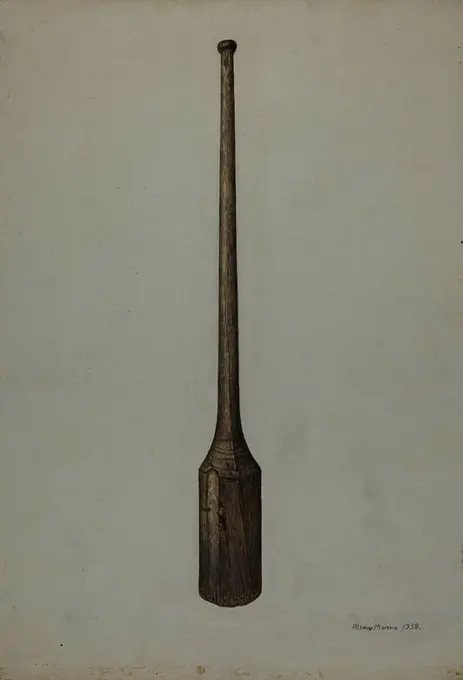
A selection of historical weapons including a ceremonial arrowhead, luxurious hanger, a decorative dagger, and a wooden forked staff, showcasing intricate craftsmanship.
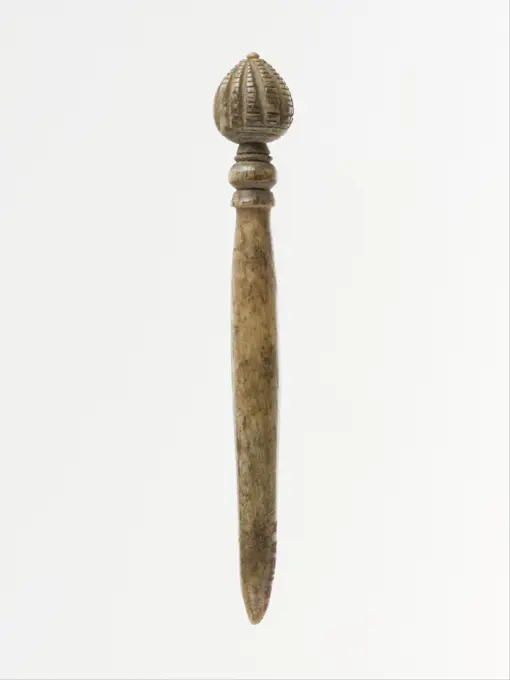
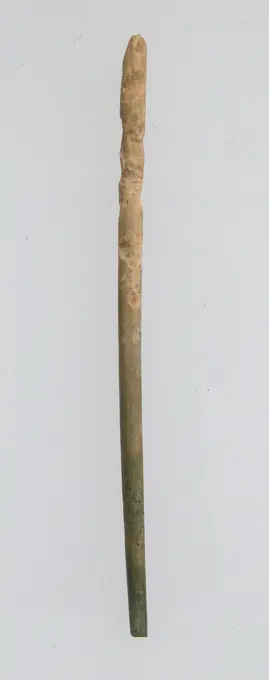
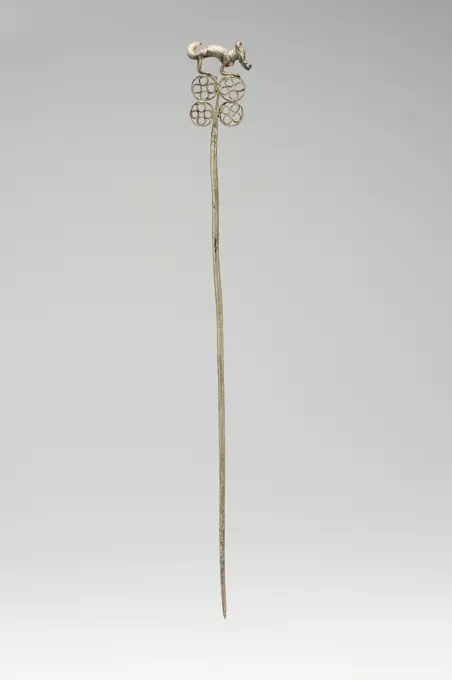
Bone pin ca. A.D. 300-450 Roman Similar pins found in excavations in Rome have been dated to the late Roman period (4th-5th century A.D.).. Bone pin 246463
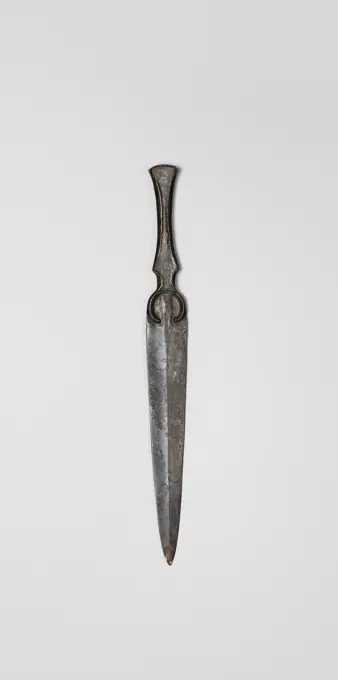
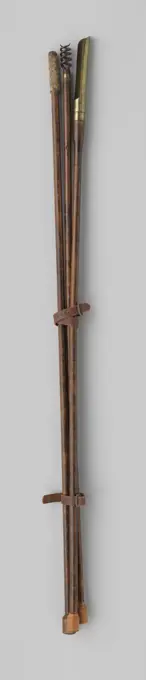
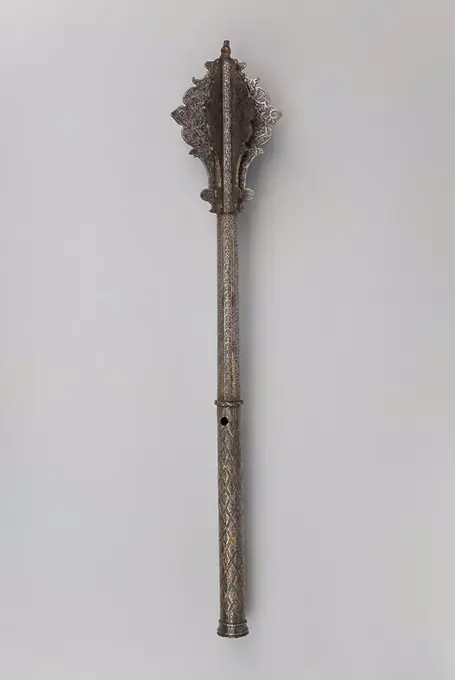
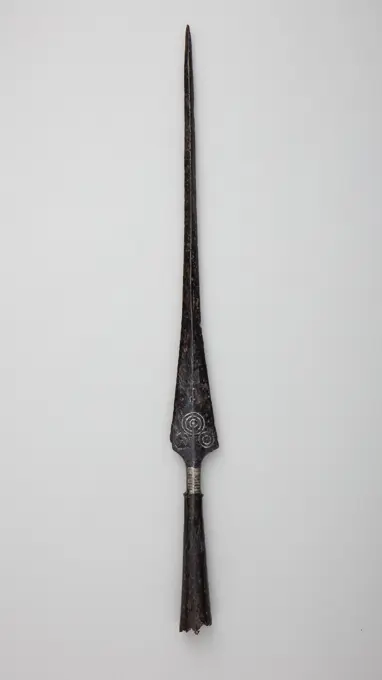
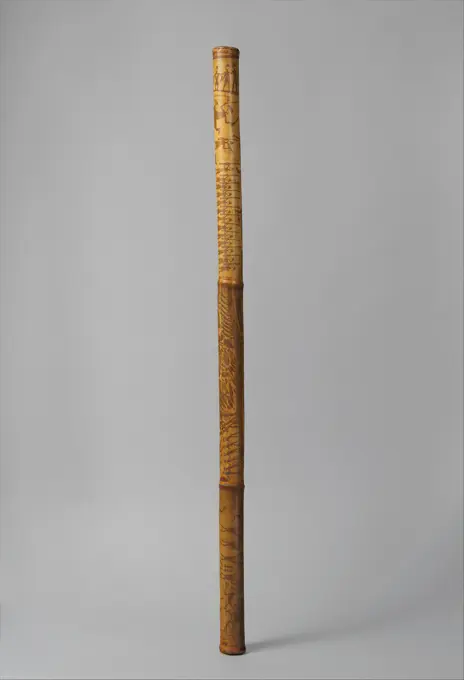
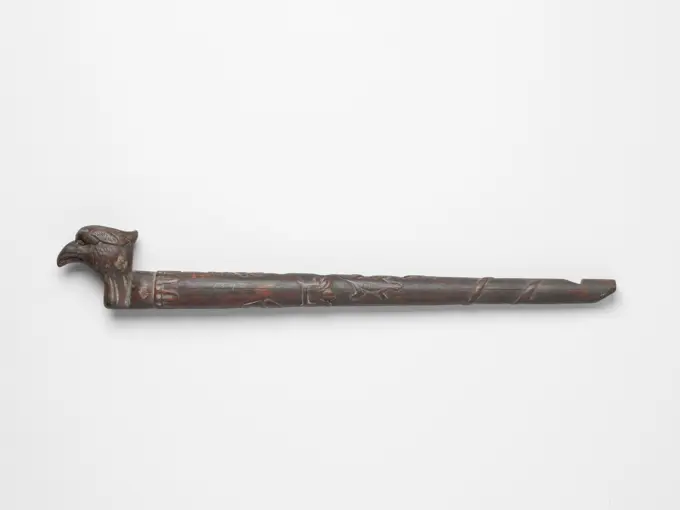
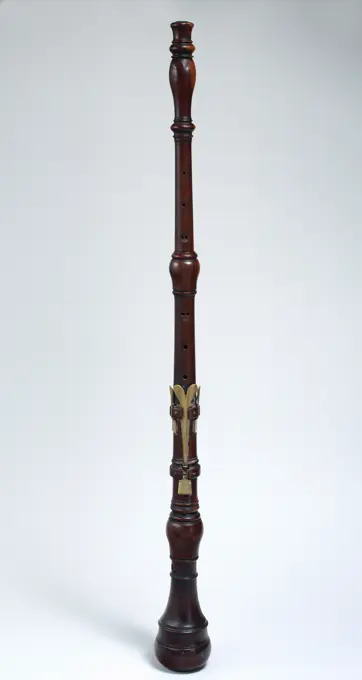
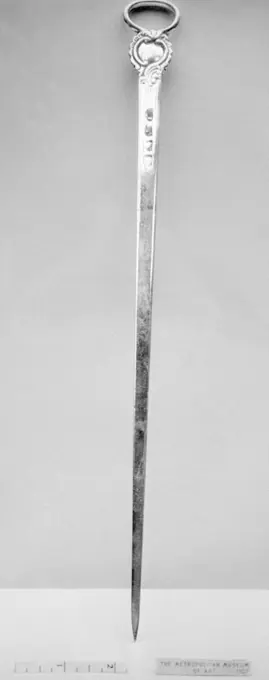
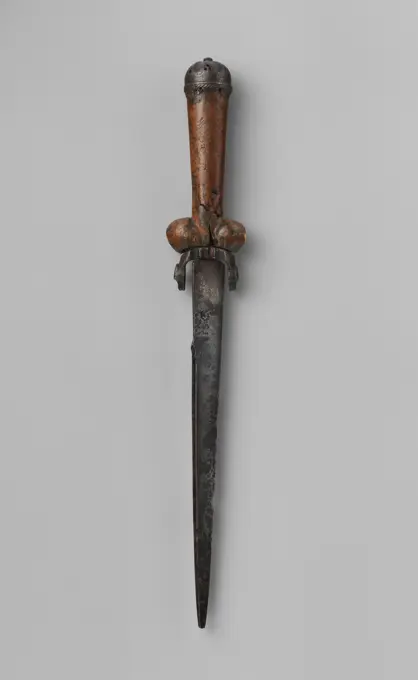
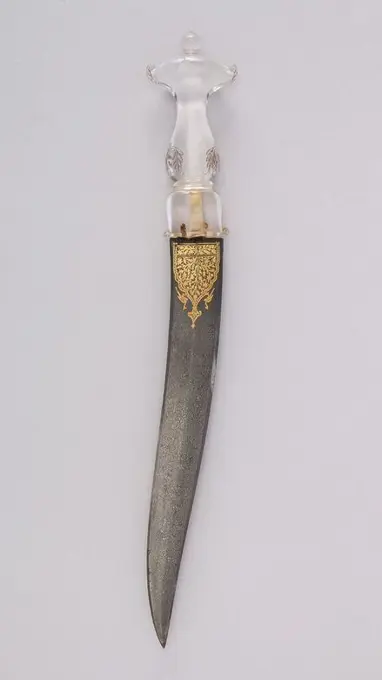
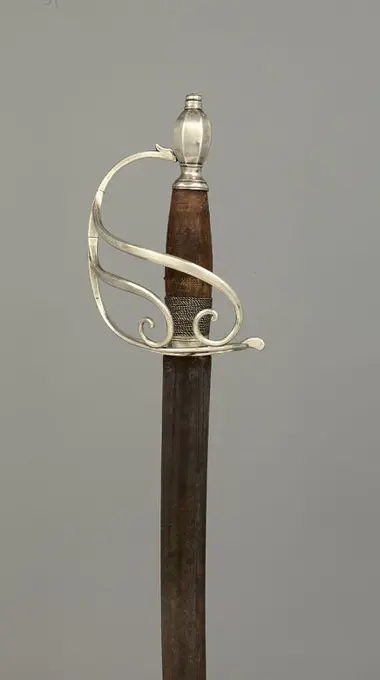
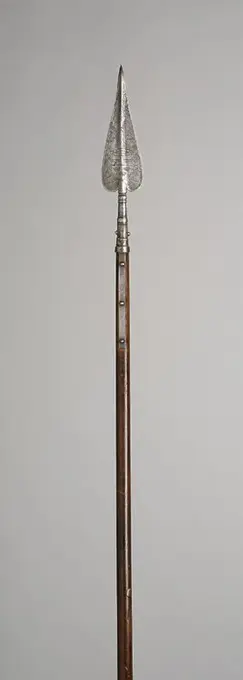
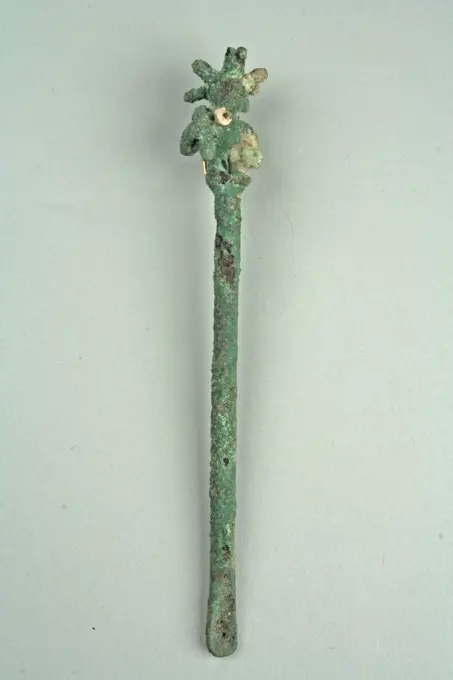
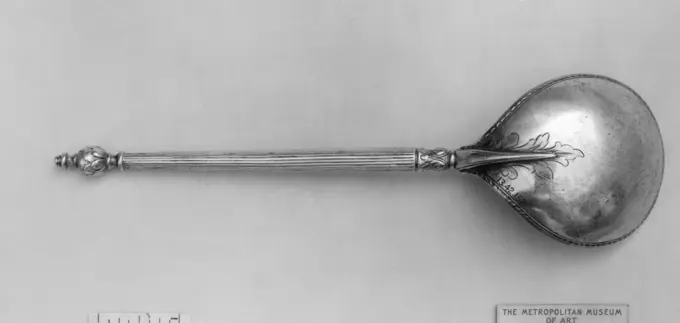
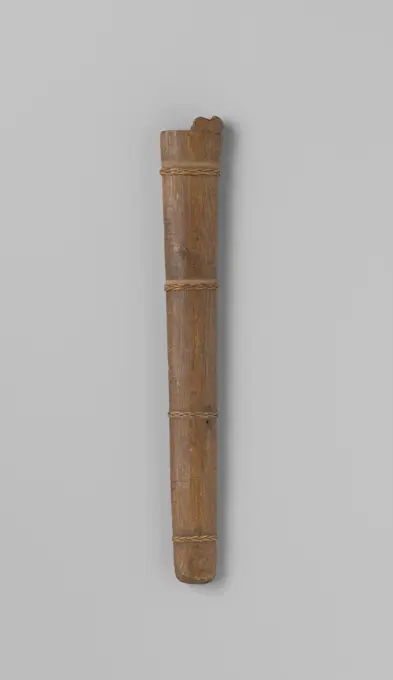
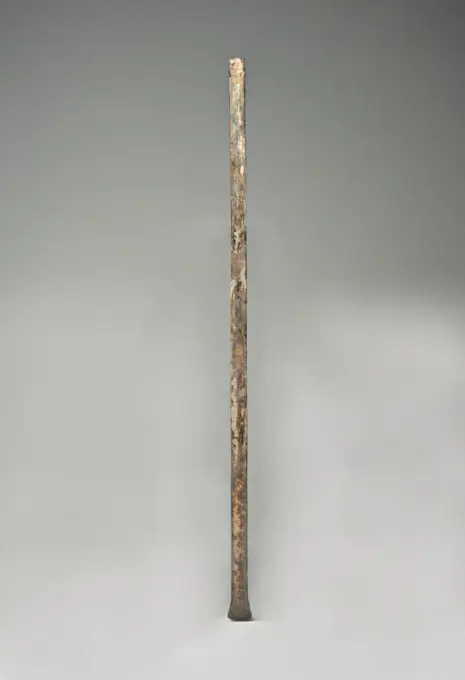
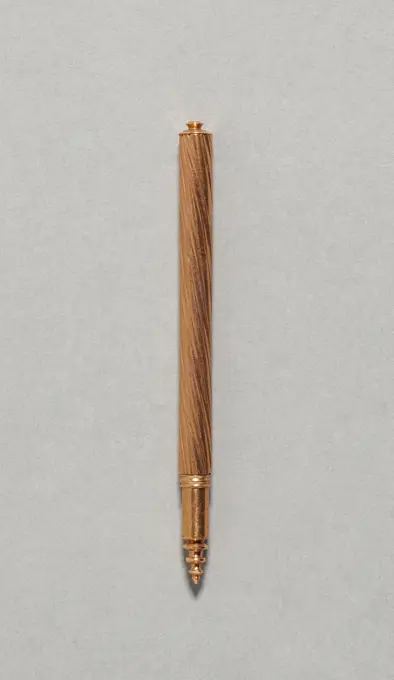
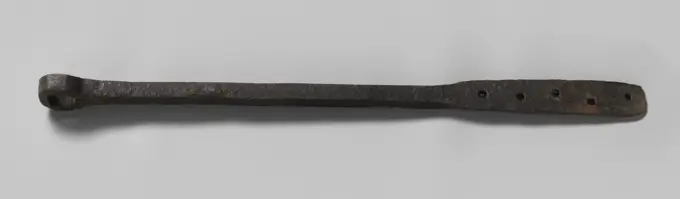
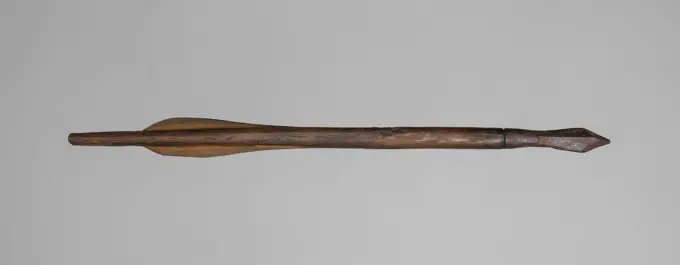
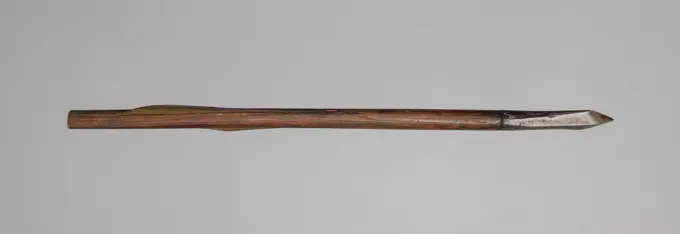
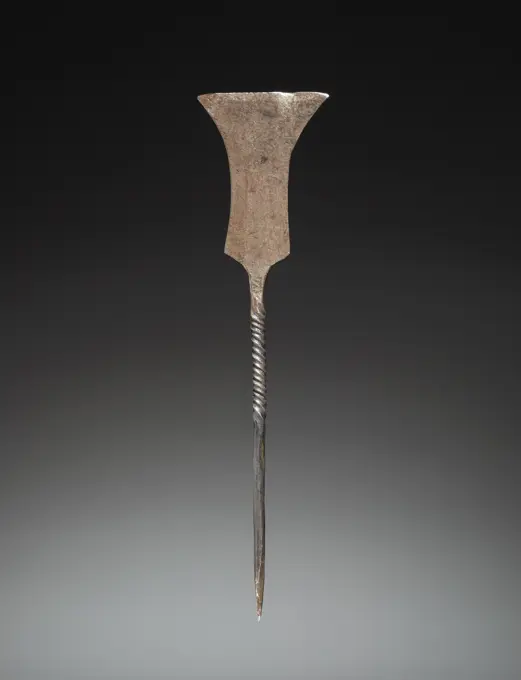
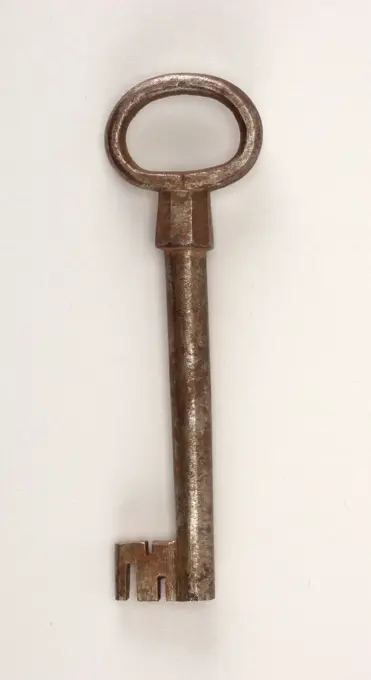
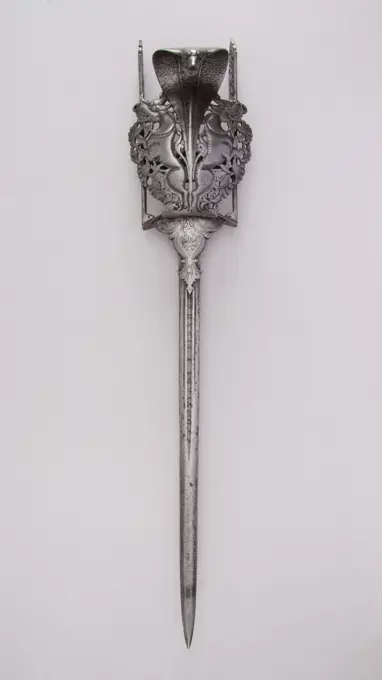
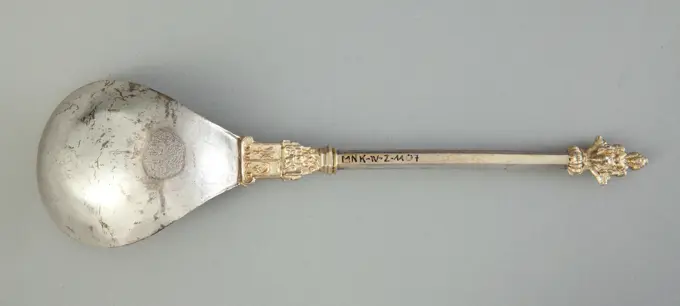
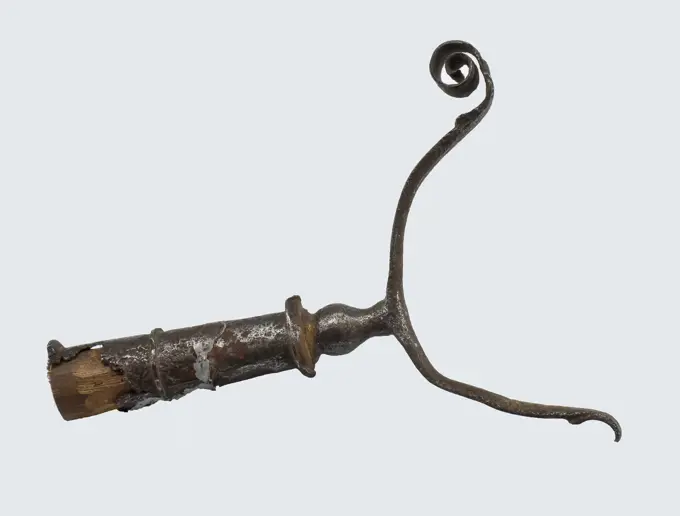
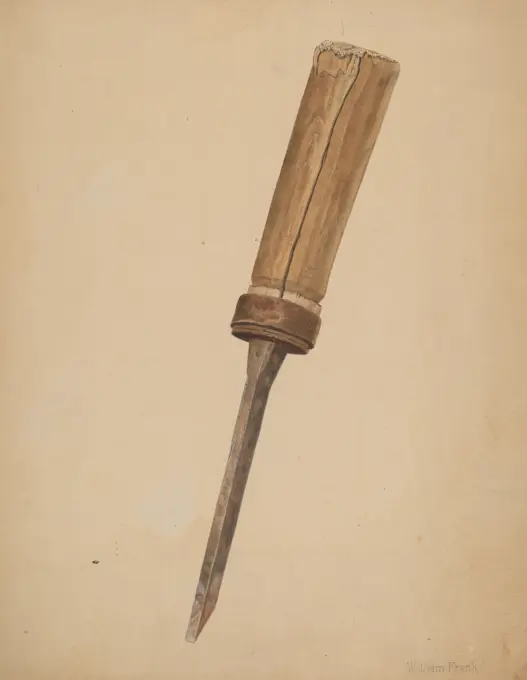
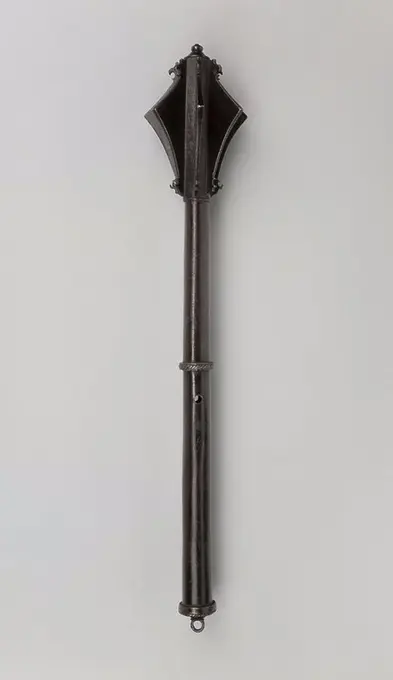
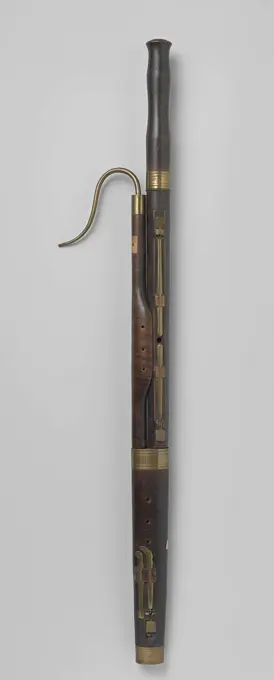
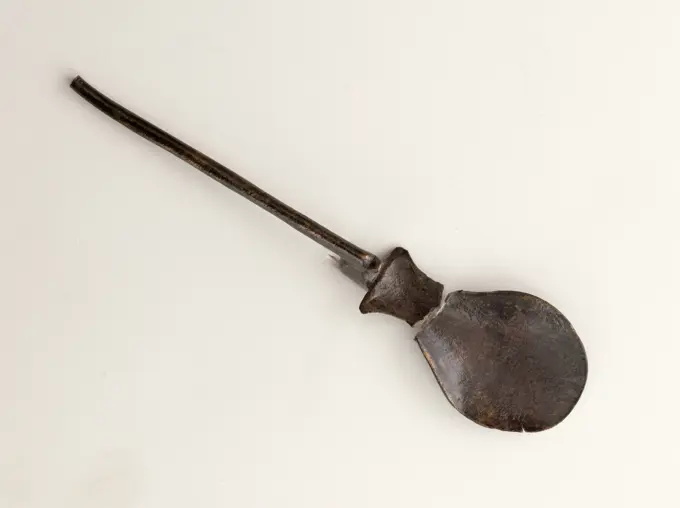
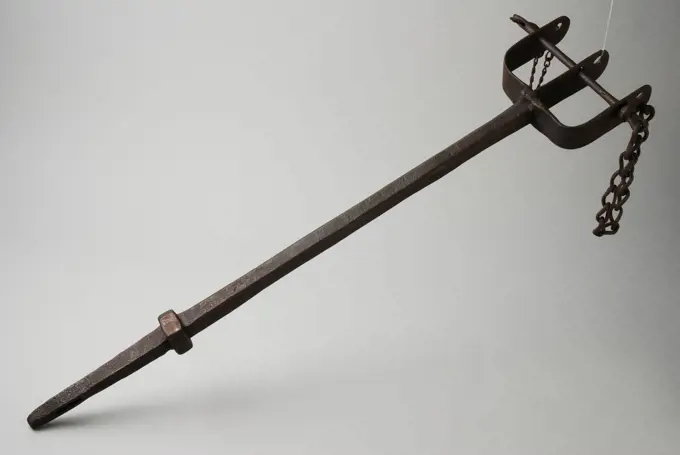
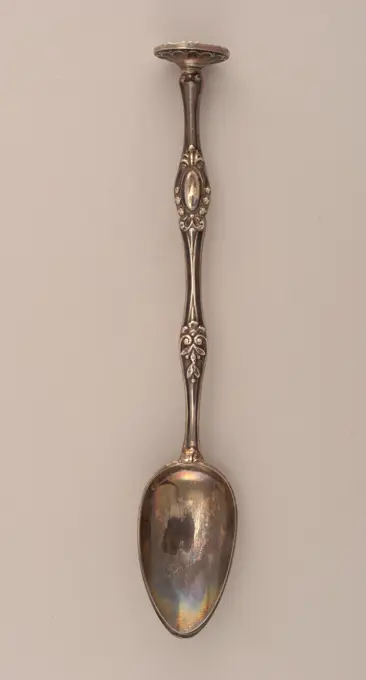
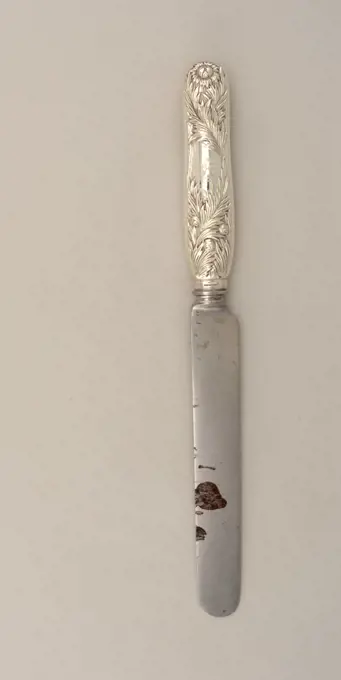
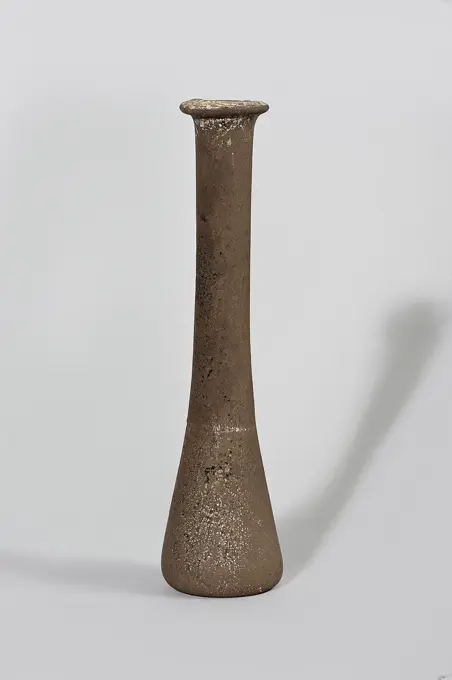
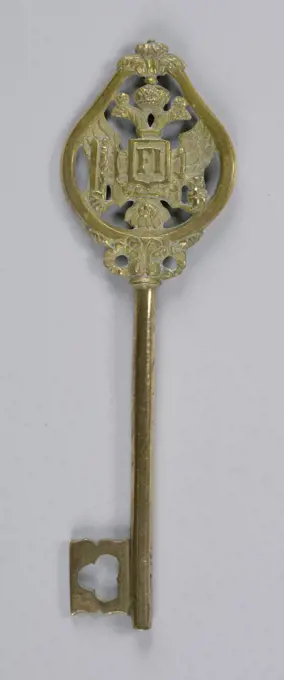
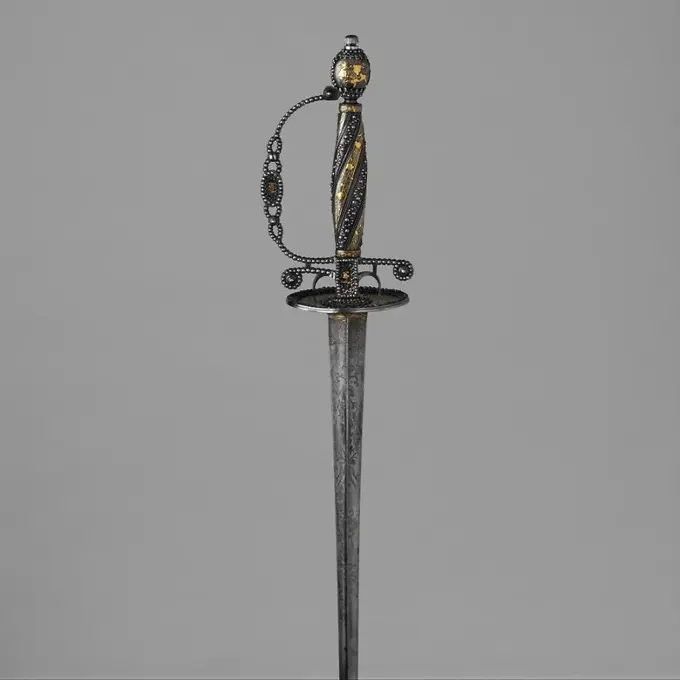
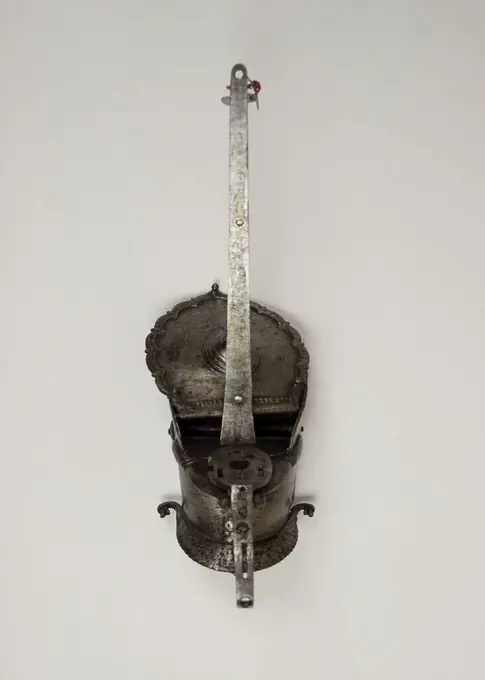
Ceremonial Arrowhead. Italian. Date: 1500-1600. Dimensions: Blade L. 28.9 cm (11 3/8 in.)Wt. 1 lb. 14 oz. Steel, gilding. Origin: Italy. Museum: The Chicago Art Institute, Chicago, USA.Hanger of Johannes van Leenen.This hanger - a weapon with a short, broad blade - was made for Johan van Leenen, a high-ranking official in the Dutch East India Company. It is exceptionally luxurious, with a hilt of sawasa, a very expensive alloy of fire-gilt copper, gold and arsenic. The scabbard is covered with shagreen (rayskin). The hilt and scabbard were probably shipped separately to Europe, where a Dutch-made blade completed the weapon.Sztylet. nieznany warsztat luristański, workshopForked Wooden Staff before 16th century Peruvian. Forked Wooden Staff 309280Table knife early 17th century German, Nuremberg. Table knife. German, Nuremberg. early 17th century. Steel, wood, gilded brass. Metalwork-SteelBone pin ca. A.D. 300-450 Roman Similar pins found in excavations in Rome have been dated to the late Roman period (4th-5th century A.D.).. Bone pin 246463Walking stick of iron wood (). The button consists of a sliced ​​satellite head with the stick connected by an ornament. Button and stick from one piece.Dagger (Katar) 16th century Indian, Thanjavur; blade, European. Dagger (Katar) 31426Wiper, 1700 - 1800  Wisser, a round wooden stick with light widened upstairs where white sheepwear is stuck. The fabric is worn and the wood is visible through it. At the bottom of the stick is a bobbin with a flat bottom. A copper plate has been beaten on the bottom.  wood (plant material). copper (metal) cuttingMace. German. Date: 1550. Dimensions: L. 60 cm (23 5/8 in.)Wt. 2 lb. 6 oz. Iron and gilding. Origin: Germany. Museum: The Chicago Art Institute, Chicago, USA.Spearhead ca. 800-1000 European The decoration, featuring concentric circles inlaid in silver, is unusual on a spearhead of this period.. Spearhead. European. ca. 800-1000. Steel, silver. Shafted WeaponsSword (Katungung orLadingin)Mace. German. Date: 1550. Dimensions: L. 62 cm (24.7 in.)Wt. 3 lb. 11 oz. Steel. Origin: Germany. Museum: The Chicago Art Institute, Chicago, USA.Engraved Bamboo Container (Kare U Ta) mid to late 19th century Kanak people The engraved bamboo containers (kare u ta) of New Caledonia appear to haveserved primarily to hold blends of magical plants, whose powers protected thebearer from harm. They also may have been carried, like batons, as symbolsof authority. In one oral tradition, they reportedly were used by young menwhen courting, their refined designs adding distinction to the suitor.The containers portray both indigenous and colonial subjects. Somescenes likely depict episodes from oral tradition, serving as illustrations andmemory aids to speakers in storytelling. However, many, such as this one,also portray the colonial activities of the French, who annexed NewCaledonia in 1853; these include depictions of military encampments. Listen to experts illuminate this artwork's story Listen Play or pause #1739. Engraved Bamboo Container (Kare U Ta) Supported by Bloomberg Philanthropies We're sorry, the transcript for this audio traFlute 16th century () Aztec. Flute. Aztec. 16th century (). Wood. Late Postclassic (Pre-Columbian). Central Plateau, Mexico. Aerophone-Whistle Flute-recorderHunting dagger with a scabbardPart of a door rod, anonymous, 1600 - 1800 Door fittings of Vertind IJzer, part of a door strap, decorated with engraving. The batter is from the hinge as follows: a baluster -shaped start, transfersing into a narrow, straight from which some leaf motifs spring from the end, which curls like volutes. The whole ends in a pointed leaf.  iron (metal). tin (metal) forging / engraving Door fittings of Vertind IJzer, part of a door strap, decorated with engraving. The batter is from the hinge as follows: a baluster -shaped start, transfersing into a narrow, straight from which some leaf motifs spring from the end, which curls like volutes. The whole ends in a pointed leaf.  iron (metal). tin (metal) forging / engravingTenor Oboe ca. 1730 Johann Wolfgang Köningsperger German This tenor oboe, or taille de hautbois, was made by the master woodwind maker Johann Wolfgang Köningsperger, perhaps the most important member of a family of woodwind makers in Roding Oberpfalz, Bavaria. This beautiful instrument is built of stained pearwood in three sections: the upper and lower body joints and the bulbous bell. There are six finger holes and three brass keys. Like oboes of the time, a player could make the choice about which hand to use for the top or bottom holes. The instrument, which measures approximately 818 mm in length, is pitched a fifth lower than Köningspergers soprano oboe, which measure about 570 mm.Although the taille de hautbous was composed for by both Lully and J. S. Bach, its greatest use would have been in outdoor bands paired with other oboes. The instrument would later be replaced by the English horn.. Tenor Oboe 506785Knife with an Ivory Handle and Qur'anic Inscriptions early 19th century This dagger has been inscribed with Qur'anic passages on the forte of the blade, as well as on the ivory handle. The inclusion of holy words on this object imbues it with talismanic properties, believed to offer protection and ward off evil. The most efficacious talismanic objects are those that are inscribed with prayers that evoke the name of God, the Prophet Muhammad and his companions."Damascus" or "Watered" steel refers to blades like this one that have been given a wavy or "watered" pattern, created by specific smelting and crucible techniques, prior to forging. In Western Europe such blades were believed to originate from Damascus, though this technique was practiced in the Islamic Middle East at least since the Middle Ages. This 19th century example illustrates how even in the later period of Islamic art these artistic traditions remain popular and celebrated.. Knife with an Ivory Handle and Qur'anic InscriUpper Portion of Hairpin 1st-4th century Roman. Upper Portion of Hairpin 465102 Roman, Upper Portion of Hairpin, 1st4th century, Bone, Overall: 2 9/16 x 1/16 in. (6.5 x 0.2 cm). The Metropolitan Museum of Art, New York. Gift of J. Pierpont Morgan, 1917 (17.191.54)Partisan 1510-1530 Italy. Steel, wood (pine), iron, velvet, and tassel .Skewer ca. 1740 Possibly by John Sanders. Skewer 195555Italian 16th Century, Pestle, early 16th century PestleBallock Knife late 15th century possibly French or German The ballock knife, also referred to as a kidney dagger, was widely used in the later Middle Ages, in both civilian and military contexts. In Talhoffer's Fechtbuch it is shown in use by armored combatants to deliver a coup de grce, and in the section devoted to unarmored knife fighting.. Ballock Knife. possibly French or German. late 15th century. Steel, wood, lead. DaggersSpoon (France); Made by Louis-Emile Lecornet; silver, gilt; L x W x D: 18.4 x 3 x 2.3 cm (7 1/4 x 1 3/16 x 7/8 in.)Dagger (Khanjar). Culture: Indian, Mughal or Deccan. Dimensions: H. 13 7/8 in. (35.2 cm); H. of blade 9 1/4 in. (23.5 cm); W. 2 1/16 in. (5.2 cm); Wt. 8 oz. (226.8 g). Date: 18th-19th century. Museum: Metropolitan Museum of Art, New York, USA.Cavalry Officer's Saber. Culture: American, Philadelphia. Dimensions: H. 41 in. (104.1 cm); H. of blade 34 1/2 in. (87.6 cm); W. 4 5/8 in. (11.7 cm); D. 4 in. (10.2 cm); Wt. 1 lb. 10.3 oz. (745.6 g). Silversmith: Hilt by Parry & Musgrave (American, Philadelphia 1792-1796 Philadelphia). Date: ca. 1793-95.This saber is exceptional among eighteenth-century American silver-hilted examples for the fact that it is constructed with a basket-hilt. The design for the hilt is likely to have been derived from British prototypes as the knuckleguard with scrolled side-bars is related in conception to the hilts of some eighteenth-century British sabers, including a silver-hilted officer's spadroon made in London ca. 1744-45, which is preserved in the Royal Armouries, Leeds (inv. IX.2187); a saber, of ca. 1775-85, in the Royal Collection at Windsor Castle; and a 1788 pattern Royal Regiment of Horse Guard saber, of ca. 1788, in Brown University, Rhode Island. The olive shape of the pommel is equally Officer's Half-Pike (Spontoon). Swedish. Date: 1670-1700. Dimensions: L. 238.8 cm (94 in.)Blade L. 34 cm (13 3/8 in.)Wt. 3 lb. 1 oz. Steel and wood (oak). Origin: Sweden. Museum: The Chicago Art Institute, Chicago, USA.Builder's reel and cord ca. 2124-1504 B.C. Middle Kingdom-Early New Kingdom. Builder's reel and cord 544315Hairpin 200-500 Roman. Hairpin 465115 Roman, Hairpin, 200500, Copper alloy, Overall: 2 11/16 x 1/4 in. (6.8 x 0.6 cm). The Metropolitan Museum of Art, New York. Gift of J. Pierpont Morgan, 1917 (17.191.66)Riding Whip 18th-19th century Caucasian. Riding Whip 31899Fork (Italy); Made by PD; silver; L x W: 11.5 x 2 cm (4 1/2 x 13/16 in.); The Robert L. Metzenberg Collection, gift of Eleanor L. Metzenberg; 1985-103-9Arrowhead (Yanone). Culture: Japanese. Dimensions: L. 7 3/4 in. (19.7 cm); L. of head 2 3/4 in. (7 cm); W. 1 3/8 in. (3.5 cm); Wt. 1.2 oz. (34 g). Date: 18th century. Museum: Metropolitan Museum of Art, New York, USA.Figure Lime Spoon 15th-16th century Inca. Figure Lime Spoon 315633Fruitlet spoon 16th-17th century possibly German. Fruitlet spoon. possibly German. 16th-17th century. Silver gilt. Metalwork-SilverWooden sheath from a Golok or Sassaks knife, Anonymous, in Or Before 1894 Machete Golok of Sassaks knife with crooked, for cutting bamboo, in wooden sheath with four braided tires. Taken on the Expedition of Lombok in 1894. Indonesia (possibly) wood (plant material)   LombokSpatula 2nd-7th century Moche. Spatula 315140Inkwell with sleeve for writing tool. The object consists of an inkwell and a tube, which are brassed to each other. The inkwell has a cast a cast-up-square convex wall with the bustled bottom and top plate, in which an oval opening. Then a lid to be excluded with a hook fits two eyes. The long and narrow sleeve made from plate has two cast seal parts on the ends, one of which is designed as a lid with hinge and button. The sleeve is provided in three places with a branded brand, consisting of a square surrounded by a star with eight points, in which a letter sign.Parrying Dagger 1650 Spain. Steel, wood, and iron .Sheath, silver, leather, brass, Wooden sheath covered with black leather. Silver chape and mount at top, decorated along the rim. Small 'handle' shouldered on mount., Greece, possibly ca. 1700s, cutlery, Decorative Arts, SheathSpontoon ca. 1630 Italian, Savoy. Spontoon 26737Agate-handled knife and fork, with sharkskin sheath, Steel, silver, agate, Saber-shaped blade, rounded bolster. Plain silver ferrule, faceted flaring handle, small metal pin on top of handle., England, 1675-1700, cutlery, Decorative Arts, Knife, KnifePencil from a Sewing Box (Nécessaire), c. 1765. Austria, Vienna(), 18th century. Gold and mother-of-pearl;Key, c. 1400 - c. 1950 Key with circular handle whose openings consist of fish blowing and holes. It is crowned by half a round disk on which there is a leaf motif. The capital is octagonal, rejuvenating upwards. Handle, capital and key breast of copper, shaft and iron beard; Neo-gothic.  iron (metal). copper (metal) Key with circular handle whose openings consist of fish blowing and holes. It is crowned by half a round disk on which there is a leaf motif. The capital is octagonal, rejuvenating upwards. Handle, capital and key breast of copper, shaft and iron beard; Neo-gothic.  iron (metal). copper (metal)Glaive for the Civic Guard of Rome Made 1590-1610 Italy. Steel, wood, and modern tassel .Ferry and shooter belonging to a wall anchor of the Gelderse Spijker in Arnhem, Anonymous, c. 1500 - c. 1600 Ferry and shooter belonging to a wall anchor from the Gelderse Spijker in Arnhem. demolished in 1880. unknown iron (metal) Ferry and shooter belonging to a wall anchor from the Gelderse Spijker in Arnhem. demolished in 1880. unknown iron (metal)Crossbow Bolt, 1500s-1600s. Germany, 16th-17th century. Wood, leather, steel; average: 37.2 cm (14 5/8 in.).Crossbow Bolt, 1500s-1600s. Germany, 16th-17th century. Wood, leather, steel; average: 37.2 cm (14 5/8 in.).Hair Ornament, Unassigned, before 1915. Africa, Central Africa, Democratic Republic of Congo, Luba, 20th century. Iron; overall: 11.3 cm (4 7/16 in.).Key; 1904-23-5Guarded Dagger (Katar) 16th century Indian, Thanjavur; blade, European The hilt in the form of a rearing cobra may symbolize either Shiva or Subrahmaņya.. Guarded Dagger (Katar) 31406Openwork PinKey, c. 1600 - c. 1699 Key with handle consisting of one, on two rods resting, descending downwards, which was built from two C-Voluten. The whole rests on a ball -shaped capital. The shaft is profiled at the top.  iron (metal) Key with handle consisting of one, on two rods resting, descending downwards, which was built from two C-Voluten. The whole rests on a ball -shaped capital. The shaft is profiled at the top.  iron (metal)Wine Masher. Dated: 1938. Dimensions: overall: 35.7 x 24.5 cm (14 1/16 x 9 5/8 in.) Original IAD Object: 43 1/2" long; 4" in diameter. Medium: watercolor and graphite on paperboard. Museum: National Gallery of Art, Washington DC. Author: Alfonso Moreno.Knife (Khyber) with Sheath 18th-19th century Afghan. Knife (Khyber) with Sheath. Afghan. 18th-19th century. Steel, ivory, gold, iron, wood, leather. KnivesSpontoon 17th century Italian, Savoy. Spontoon 27028Group of pins 14th-15th century Chimú or Inca. Group of pins 315610Carving fork last quarter 18th century Dutch. Carving fork. Dutch. last quarter 18th century. Steel, ivory, silver. Metalwork-SteelRifle; Lontslotmusket. Rifle with lont slot, copper ornaments and carving.Knife, silver, gold, jasper, Silver-gilt sabre-shaped handle with engraved scalloped decoration on the bolster. Banded ferrule, tapering jasper handle, oval in section. Light blue ground with raised design in white, in the centre a bow and arrow, a quiver filled with arrows, a flower wreath and an incense burner surrounded with ribbons, olive twigs and a bow. Beaded cresting along the sides, floral decoration at the top of handle, a metal cap in the centre., England, 1805-15, cutlery, Decorative Arts, KnifeSpoonArrow Point, 1700s. Japan, Edo period (1615-1868). Steel; overall: 17 cm (6 11/16 in.); head: 3.1 cm (1 1/4 in.).Metal forquet, support fork with curled ends for supporting musket Spanish Style, forquet soil find metal_metal iron metal, Metal forquet (standard for musket) archeology arming shooting firing militariaWilliam Frank, Wagon Maker's Chisel, c 1942 Wagon Maker's ChiselPerfume Sprinkler. Unknown 300-250 B.C.Rapier blade, Spanish, Toledo; hilt, European, possibly Spanish blade, ca. 1635; hilt, late 17th century or later The rapier was the principal civilian sidearm throughout the sixteenth and seventeenth centuries. Designed for cut-and-thrust fencing of progressively complex techniques, the rapier is characterized by a double-edged blade with an acute point and an elaborate guard for the hand. The guards, usually of iron or steel, were subject to a variety of embellishment. They were engraved, chiseled, gilded, damascened, and encrusted in gold and silver in keeping with fashionable styles. Unless otherwise noted, the materials, attributions, and dating given here refer to the hilts. Rapier blades, invariably of steel, bear a variety of makers marks denoting their origin in the two principal centers of blademaking, Toledo in Spain and Solingen in Germany. View more. Rapier. blade, Spanish, Toledo; hilt, European, possibly Spanish. blade, ca. 1635; hilt, late 17th century or later. Steel. Apostle spoon probably 1647 Dutch, Enkhuizen Apostle spoons are thought to have originated in late-fifteenth century England but also became popular in the Netherlands, where household goods were frequently embellished with biblical imagery reminding the owner of Christian virtues.. Apostle spoon 188134 Dutch, Enkhuizen, Apostle spoon, probably 1647, Silver, Overall: 7 11/16  2 5/16 in. (19.5  5.9 cm). The Metropolitan Museum of Art, New York. Gift of Mrs. Samuel P. Avery, 1897 (97.2.99)Crossbow Bolt, 1500s-1600s. Germany, 16th-17th century. Wood, leather, steel; average: 37.2 cm (14 5/8 in.).Cavalry Sword with Calendar Blade Made 1625-1675 Germany. Steel, wood, and brass .Mace. German. Date: 1550. Dimensions: L. 57 cm (22 7/16 in.)Wt. 3 lb. 1 oz. Iron. Origin: Germany. Museum: The Chicago Art Institute, Chicago, USA.English horn, anonymous, c. 1800 English horn (or althobo) of fruit wood, mounted with ivory and two brass valves. The third gap is double. There is a hole in the cup and in the lower part, probably in front of the cord ring. Vienna (possibly) fruitwood. ivory. brass (alloy) English horn (or althobo) of fruit wood, mounted with ivory and two brass valves. The third gap is double. There is a hole in the cup and in the lower part, probably in front of the cord ring. Vienna (possibly) fruitwood. ivory. brass (alloy)Crossbow Bolt, 1500s-1600s. Germany, 16th-17th century. Wood, leather, steel; average: 37.2 cm (14 5/8 in.).Dagger (Kard) with Shealth. Culture: Blade, Iranian; hilt and scabbard, Turkish. Dimensions: H. with sheath 19 1/2 in. (49.5 cm); H. without sheath 18 1/4 in. (46.4 cm); H. of blade 12 1/2 in. (31.8 cm); W. 1 1/8 in. (2.9 cm); D. 7/8 in. (2.2 cm); Wt. 9.5 oz. (269.3 g); Wt. of sheath 6.2 oz. (175.8 g). Date: Blade, dated 1738-39; hilt and scabbard, 19th century.The blade of watered steel is chiseled in the same high-relief style as another in the Museum's collection that was made in the Iranian city of Shiraz in 1732-33. This example, dated 1738-39, is also probably Iranian and appears to have been mounted in Turkey in the early nineteenth century. Museum: Metropolitan Museum of Art, New York, USA.Bassoon.A dark brown wooden bassoon with eight valves, seven holes and four pipes. The copper parts are fire-gone. The instrument is slightly damaged. The bladder grit is missing. Fagot belonging to Joh. Van Stokkum, in 1830-32 staff musician at the 18th Infantry department.Sheath 1805-7 Hart and Wilcox. Sheath. American. 1805-7. Silver, leather. Made in Norwich, Connecticut, United StatesEar Plug or Kohl Applicator; Egypt; 1365 - 1347 B.C; Glass, bronze; 14.7 cm (5 13,16 in.)Model of A Time Signal, Petrus van der Loo, 1849 demonstration model Model of a time signal on a wooden foot. Four round metal blades cross on top of a wooden pole mounted can be done by means of A lever on the foot are put in vertical or horizontal position. The lever can be guaranteed if the blades are in a vertical position. The Hague wood (plant material). brass (alloy)Arrow Point, 1700s. Japan, Edo period (1615-1868). Steel; overall: 15.2 cm (6 in.); head: 3.8 cm (1 1/2 in.).Faience amulet representing Djed pillar, symbol of stability and endurance, linked to god OsirisCopper spoon with oval bowl and flat, slightly curved handle with spatula-shaped end, spoon cutlery soil find copper metal, Smashed mark on the handle: PF under two star shapes archeologyIron Persian crossbow headsSpoon. Copper alloy. Gallo-Roman. Paris, Carnavalet museum. 51465-11 Copper alloy, spoon, Gallo-Roman, Gallo-Roman, dishesFoot iron with extra long boom and stern that can be placed in the beam hole, from Rotterdam scaffold, foot iron tool equipment iron, locking iron, Foot iron consisting of three flat bars that are forged as fork to one square angel in diameter Rotterdam executioner executioner scaffold execution verdict justice tool toolSpoon (France); silver; L x W x D: 17.8 x 3 x 1.9 cm (7 x 1 3/16 x 3/4 in.)Chrysanthemum, Tiffany & Company, American, established 1853, silver, New York, New York, USA, 1880-91, cutlery, Decorative Arts, Dinner knife, Dinner knifeBottle;  1st century BC.Daszewski, Wiktor A. (1936-), Daszewski, Wiktor A. (1936-)-collection, gift (provenance)Matchlock Musket Made 1630-1670 Wien. Wood, walnut, and steel .Pair of andirons possibly 1777 Northern Italian. Pair of andirons. Northern Italian. possibly 1777. Iron, copper. Metalwork-IronSpoon with handle carved with putto playing a pipe 1744 Swedish, Stockholm. Spoon with handle carved with putto playing a pipe. Swedish, Stockholm. 1744. Silver gilt, ivory. Metalwork-Silver In CombinationCarvedCaneKey, Gilt bronze, Bow in shape of hanging pear, supported by blossoms and leaves; contains worked a jour the Imperial eagle with the monogram F I (Francis I) in a shield on a cross, which is, below, surronded by the chain of the Golden Fleece., 1806-35, metalwork, Decorative Arts, KeySword. SS-UNTERFührerdegen Mit Portepee, sword of non-commissioned officer aspiring SS with his wrist strap. Metal nickel -in, painting, silver son, Ébonite, 1934. Museum of General Leclerc de Hauteclocque and the Liberation of Paris, Jean Moulin Museum. 78984-10bamboo stick on a green backgroundAxe Blade Pendant 1200-900 B.C. European. Axe Blade Pendant 472837Pipe key. Pipe wrench with silver handle and key chest; Shaft and beard of iron. Set of 4: BK kog-2314-a to -d. The shafts are drilled to the four figures of the card game.Half meter with handle, anonymous, c. 1820  Half a meter with distribution and calculation in decimeters. First decimeter in centimeters. End roof is missing. V.z.v. Label and brand. Netherlands wood (plant material)   NetherlandsSmallsword. Culture: Russian, Tula. Dimensions: L. 38 3/4 in. (98.5 cm); L. of blade 31 3/4 in. (80.5 cm); W. 3 7/8 in. (9.8 cm); D. 2 3/4 in. (7 cm); Wt. 15.6 oz. (442.3 g). Date: ca. 1775-80. Museum: Metropolitan Museum of Art, New York, USA.Knife with Jade Handle, c. 1750. East India. Steel and jade; overall: 43.7 cm (17 3/16 in.).Hilt of a Gauntlet Sword. Culture: Indian, South Indian. Dimensions: H. 8 in. (20.3 cm); L. 12 1/2 in. (31.8 cm); W. 4 1/2 in. (11.4 cm); 25.6 oz. (725.7 g). Date: 19th century. Museum: Metropolitan Museum of Art, New York, USA.Ladle with a goose-shape handle. unknown, author