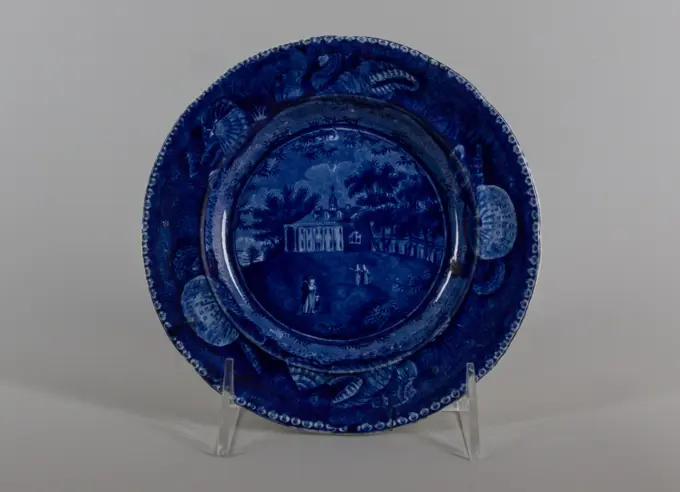
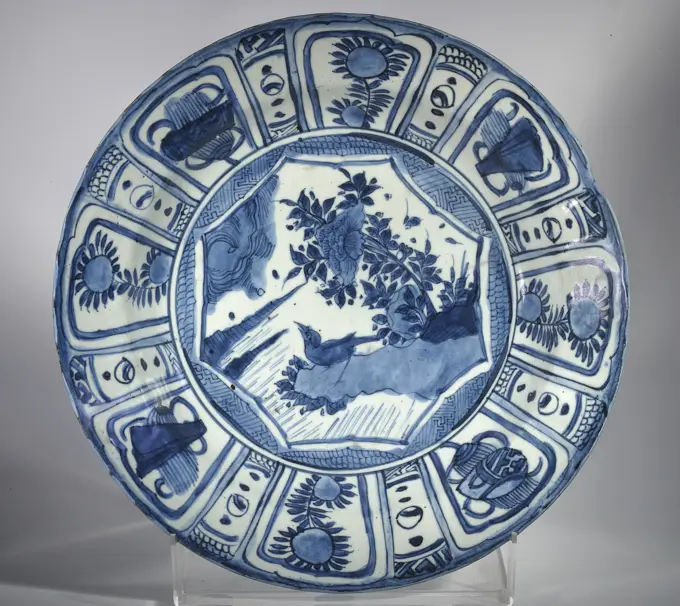
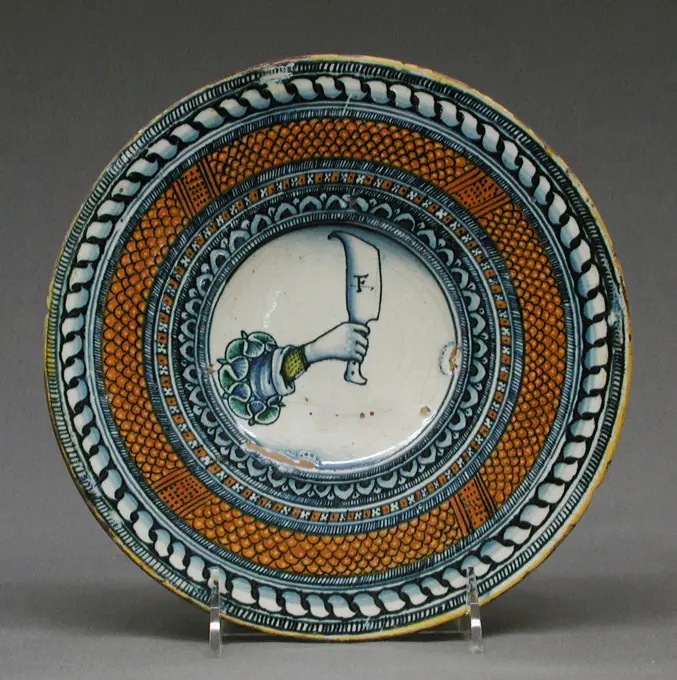
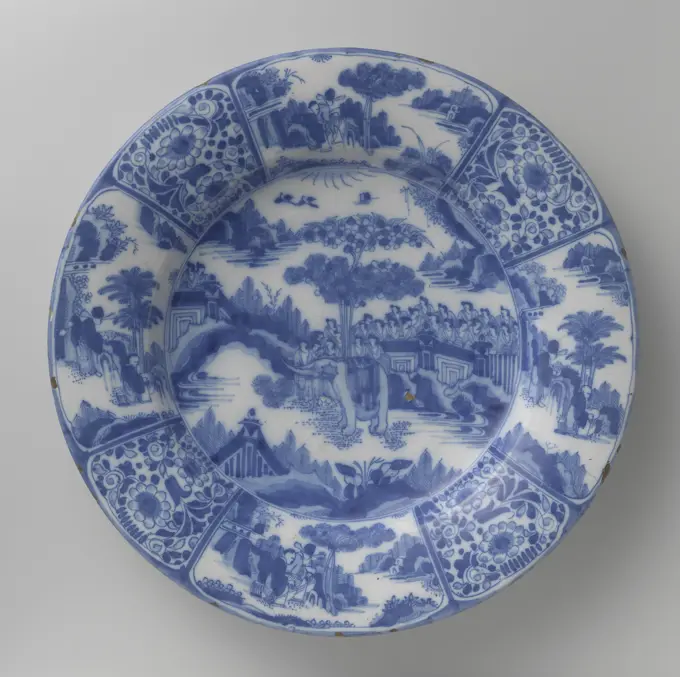
Chinese Porcelain Plates

A collection of ornate Chinese porcelain plates from different eras, featuring intricate blue and white designs, floral motifs, and historical significance.

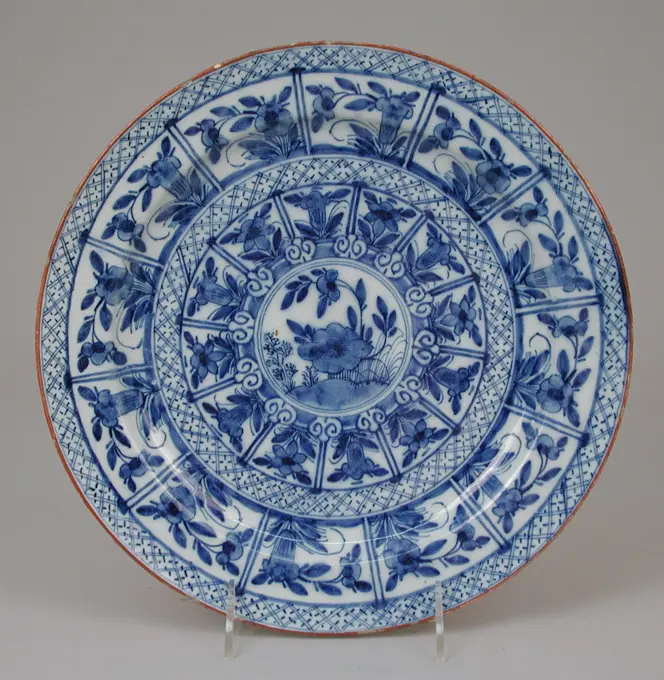
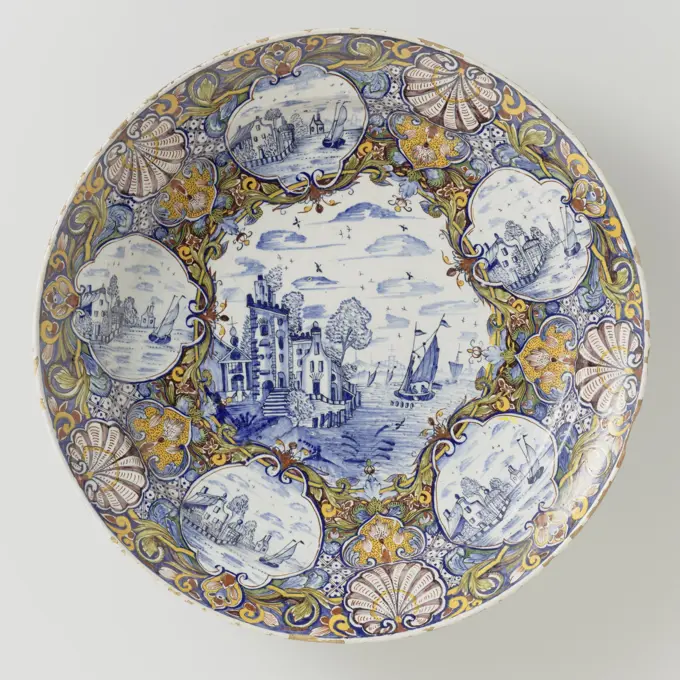
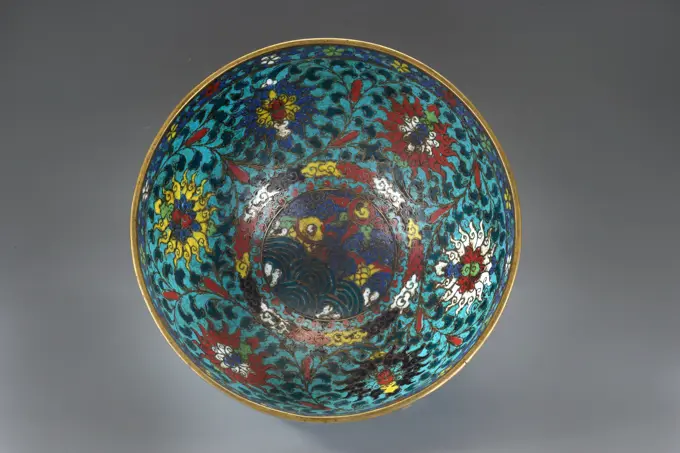
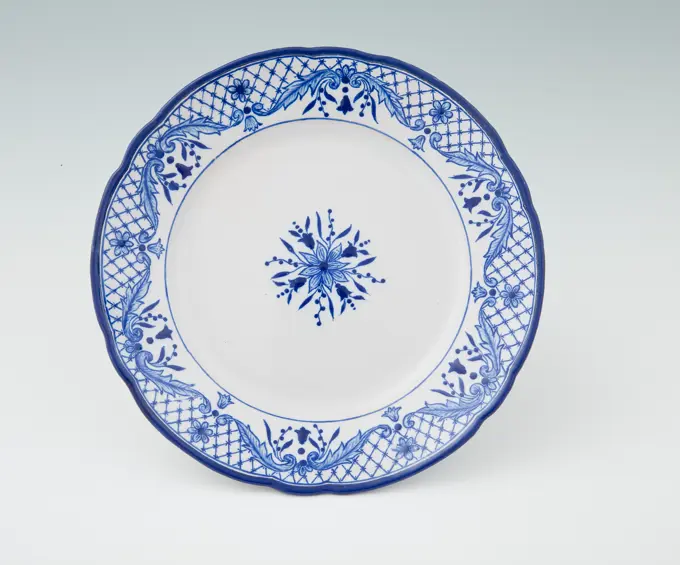
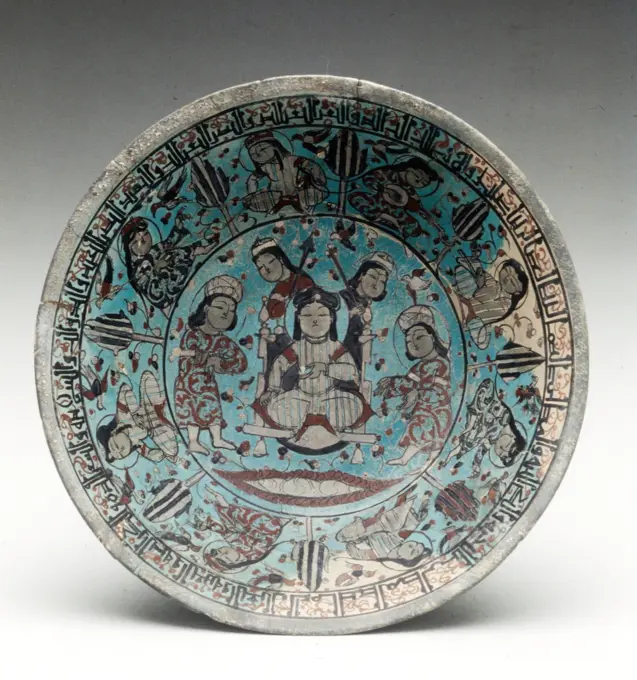
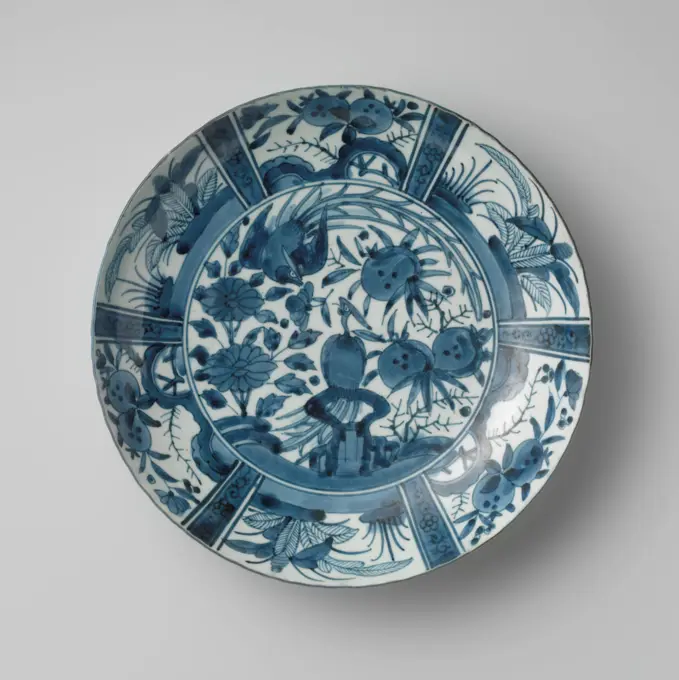
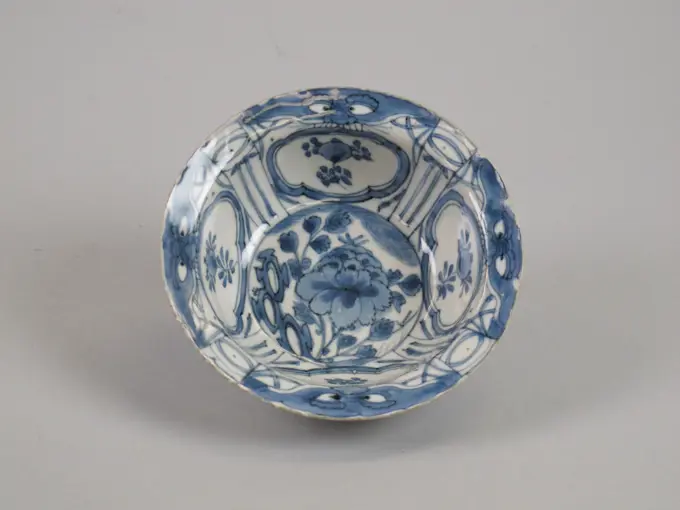
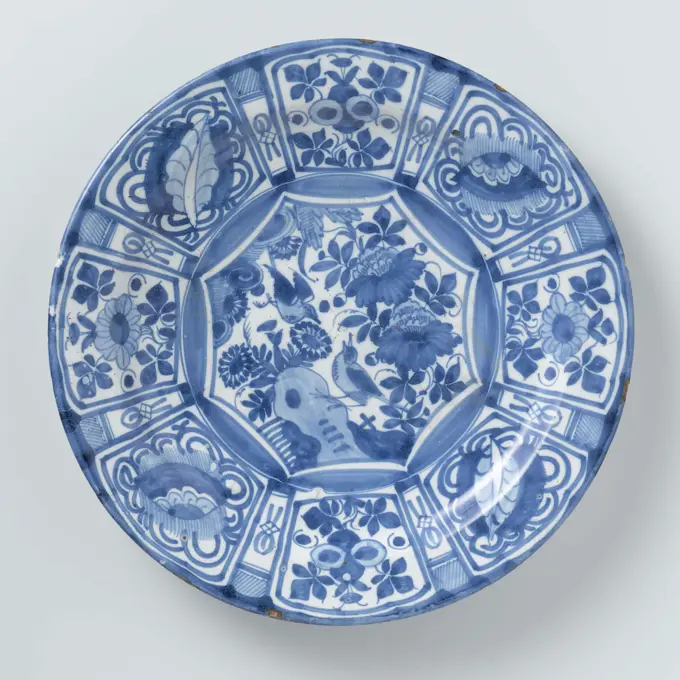
Faience plate on stand with blue decor in Wanli style, plate crockery holder soil find ceramic earthenware glaze tin glaze, hand-turned baked decorated glazed fried Low dish on standing surface smooth curved plate edge at the top with shallow shoulder. Yellow-orange shard. Blue decor on white background with Chinese garden and cassetterand in the style of the period wanli Cooked archeology Valckensteyn Poortugaal Albrandswaard indigenous pottery decorate serving food archaeological find in the soil Poortugaal Valckensteyn
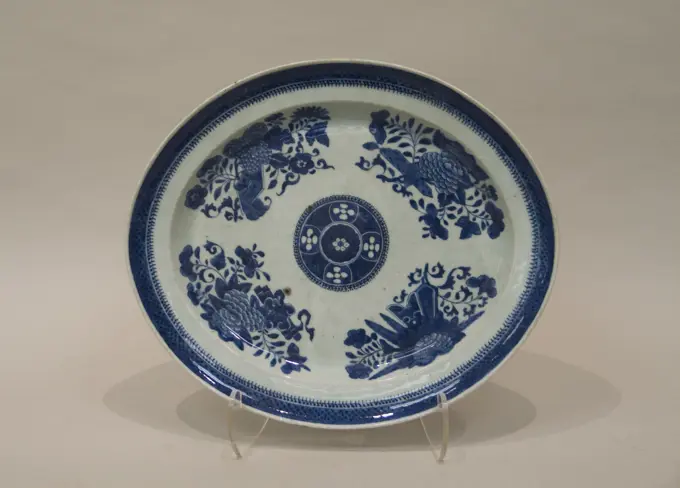
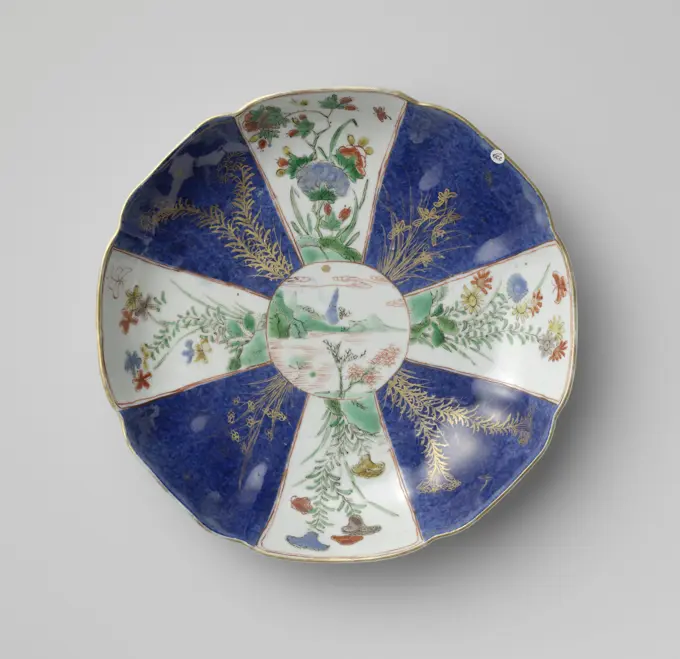
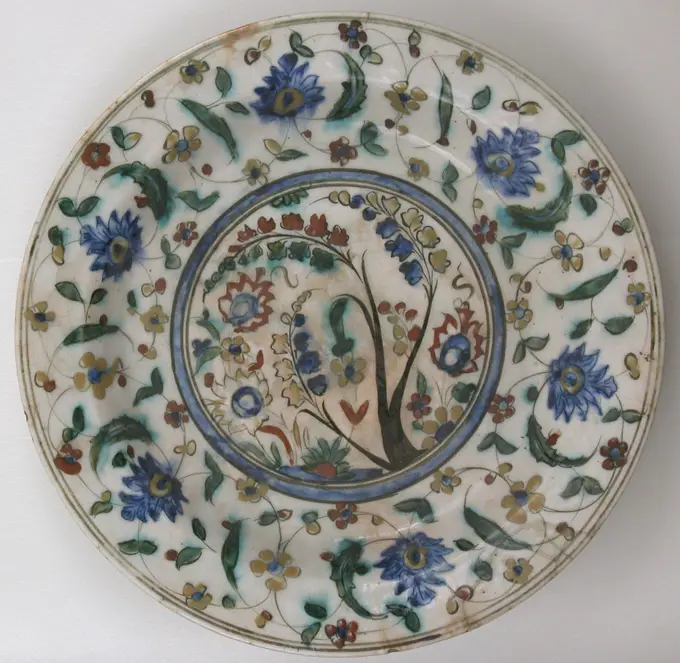
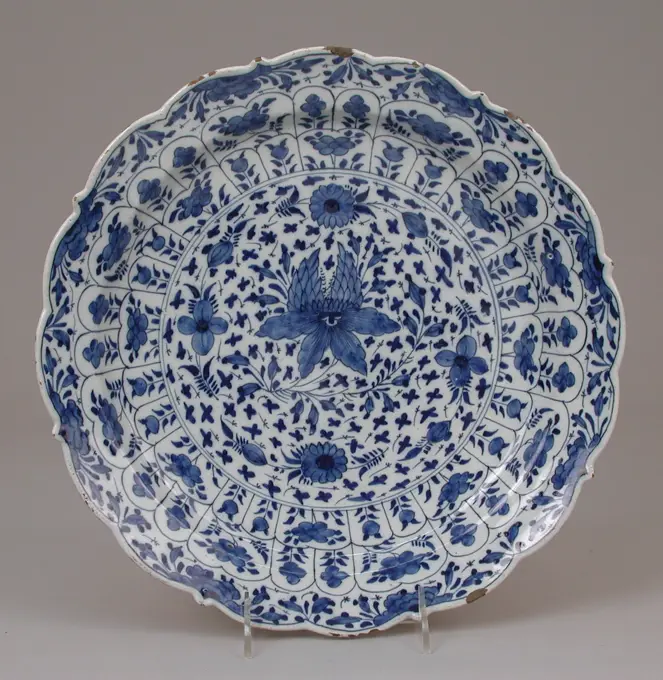
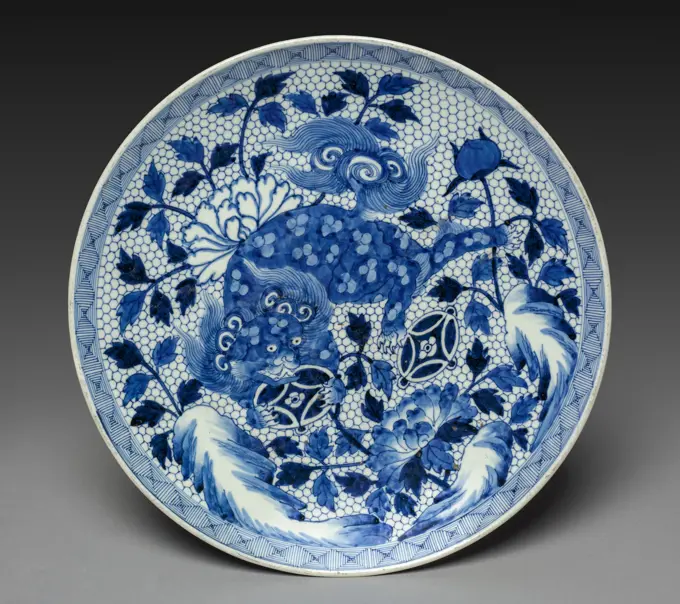
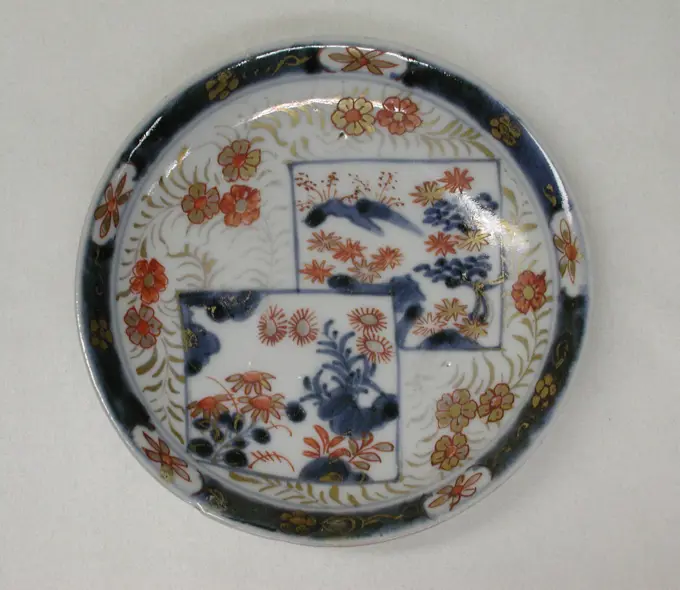
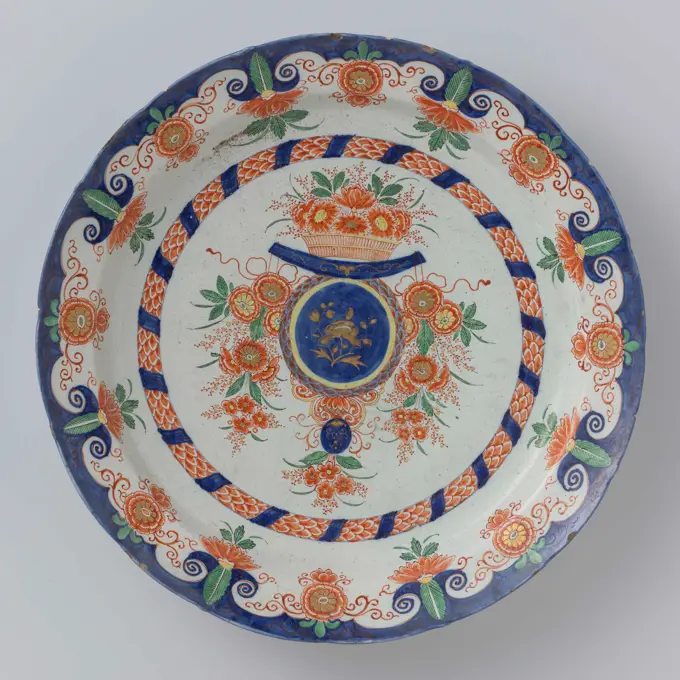
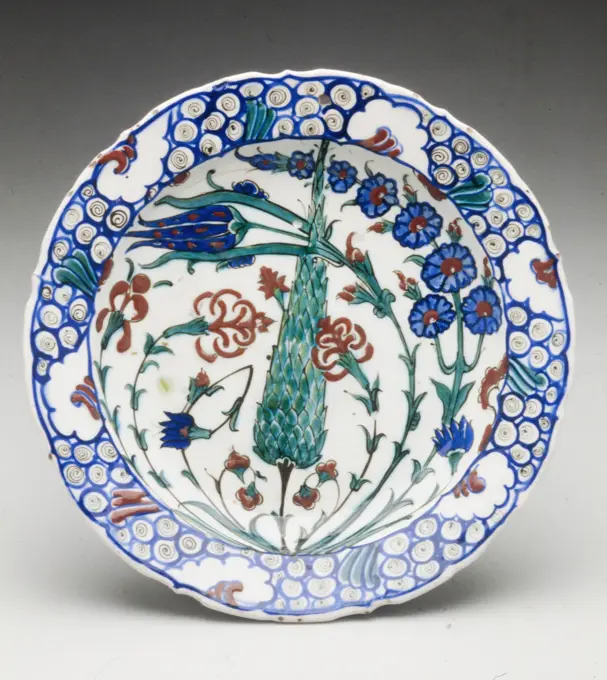
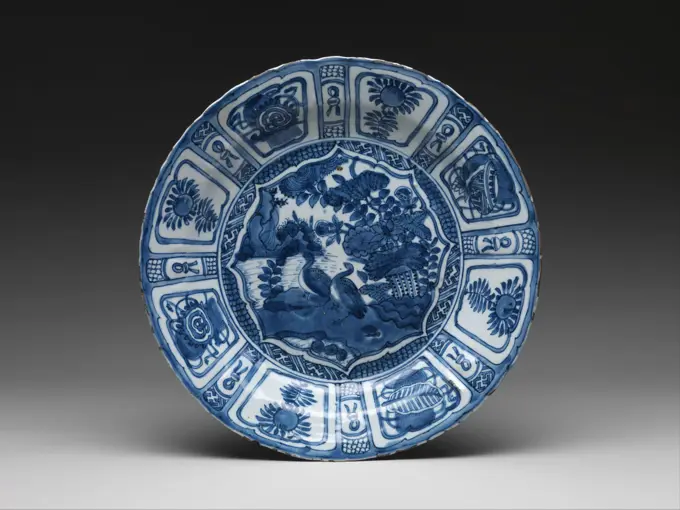
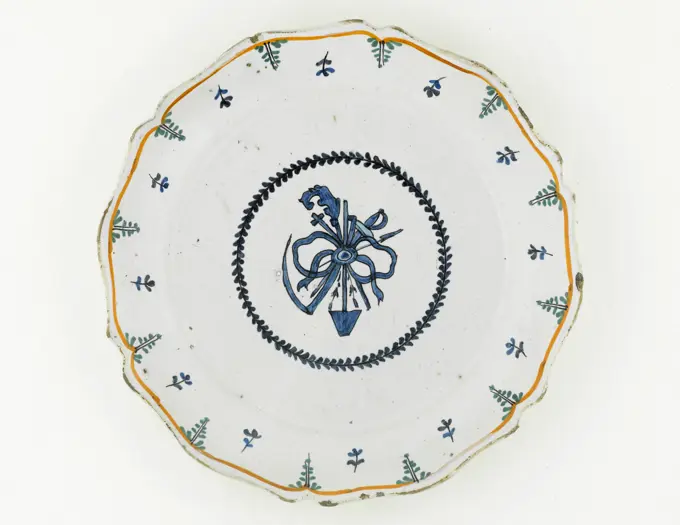
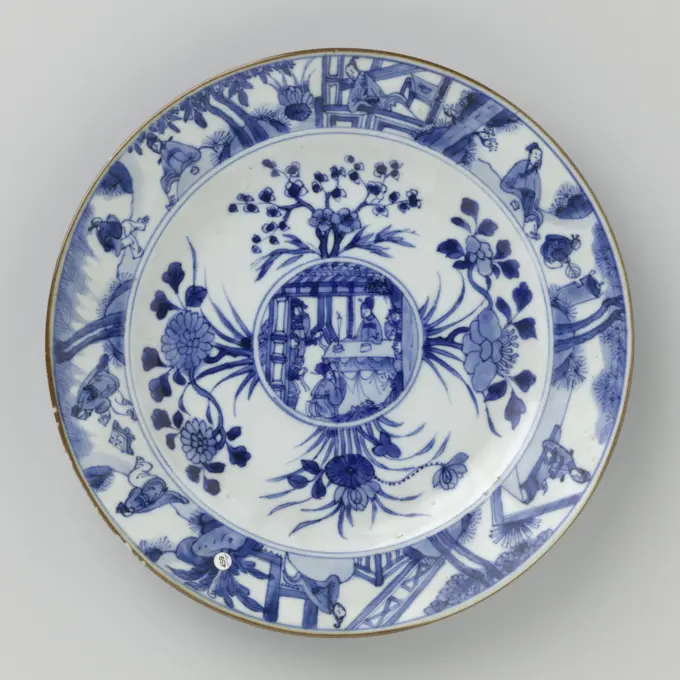
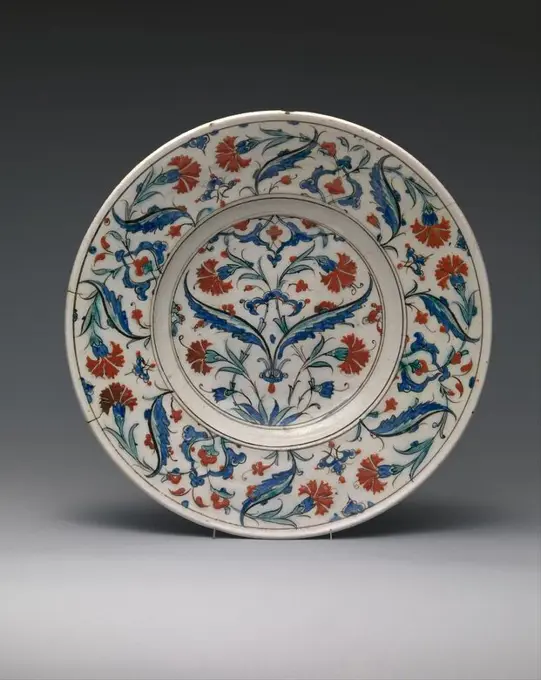
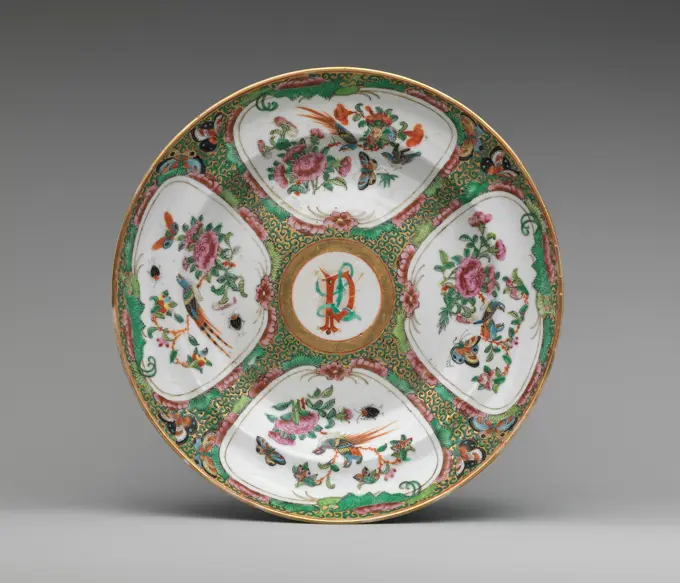
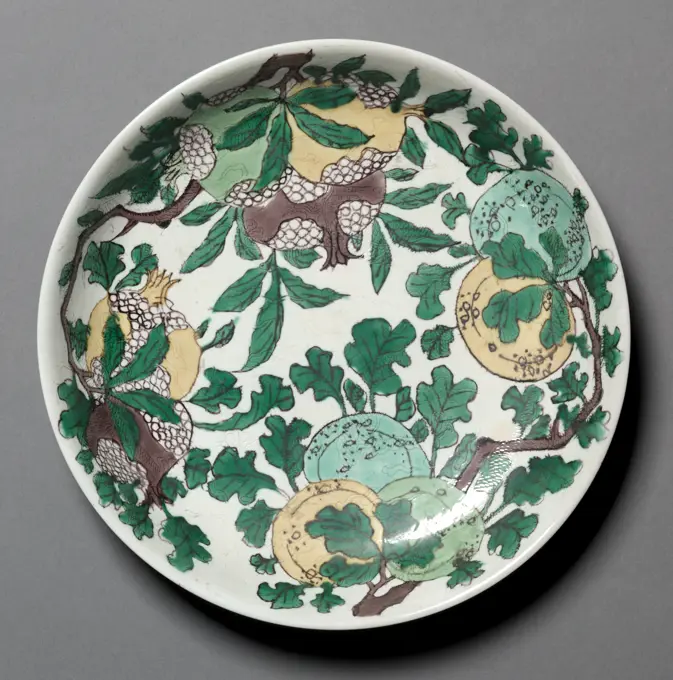
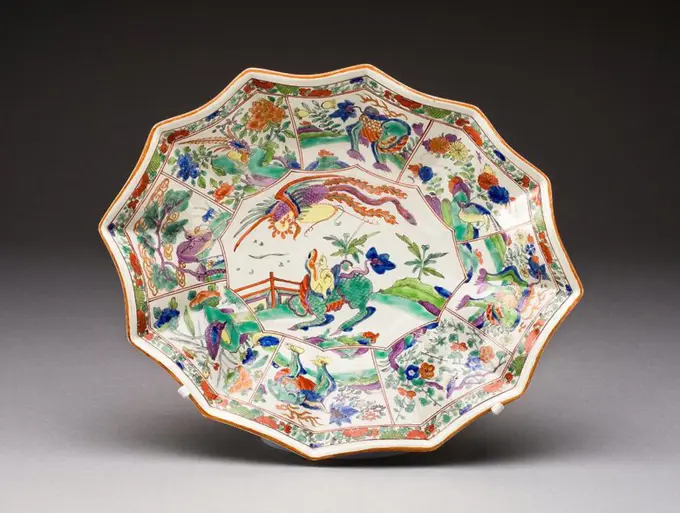
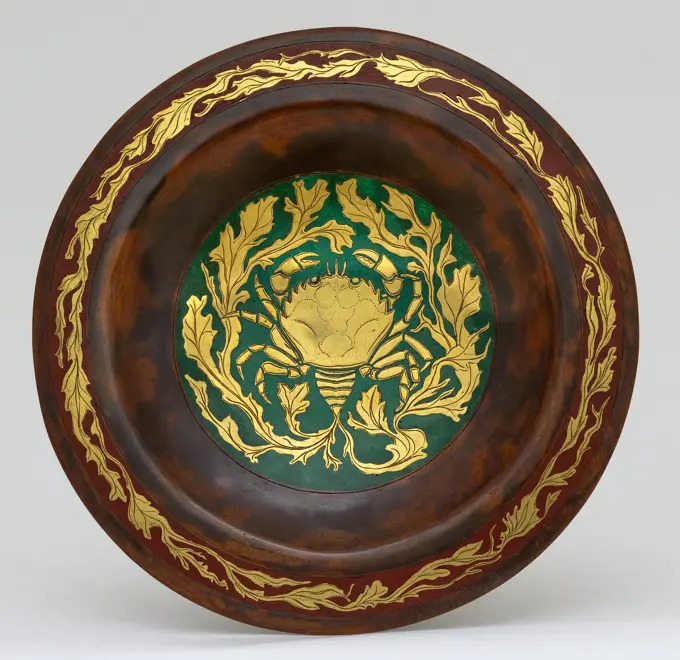
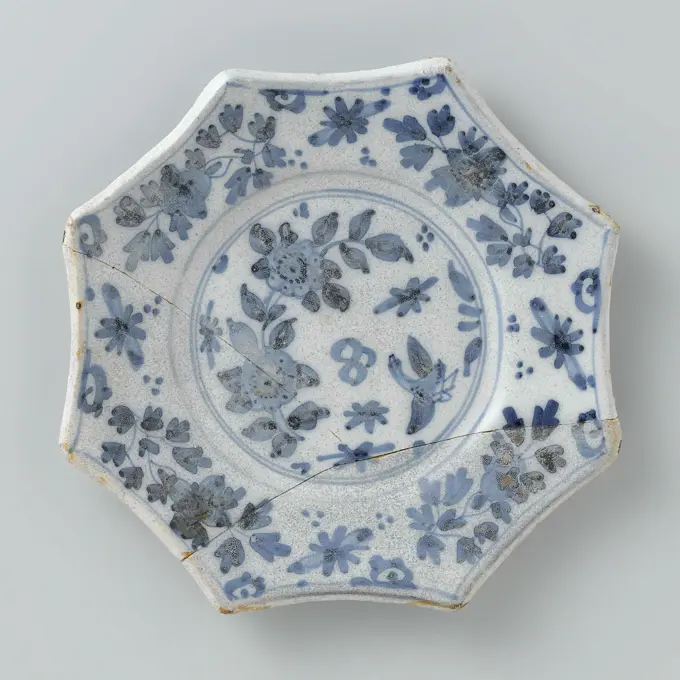
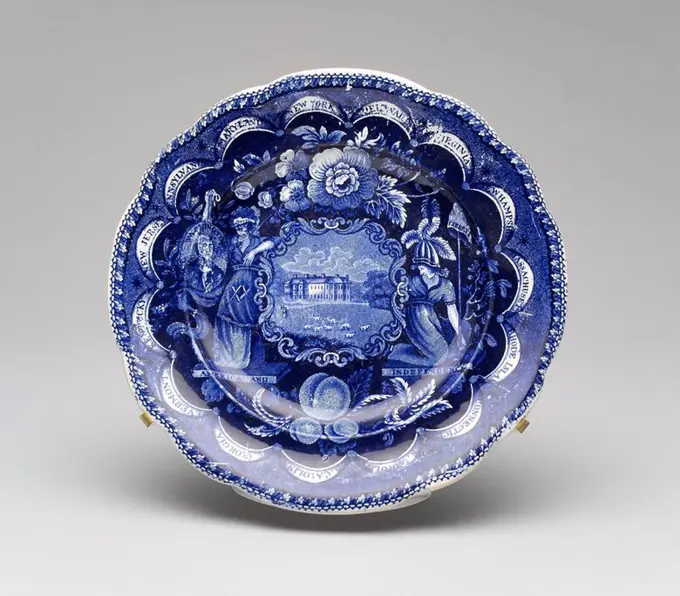
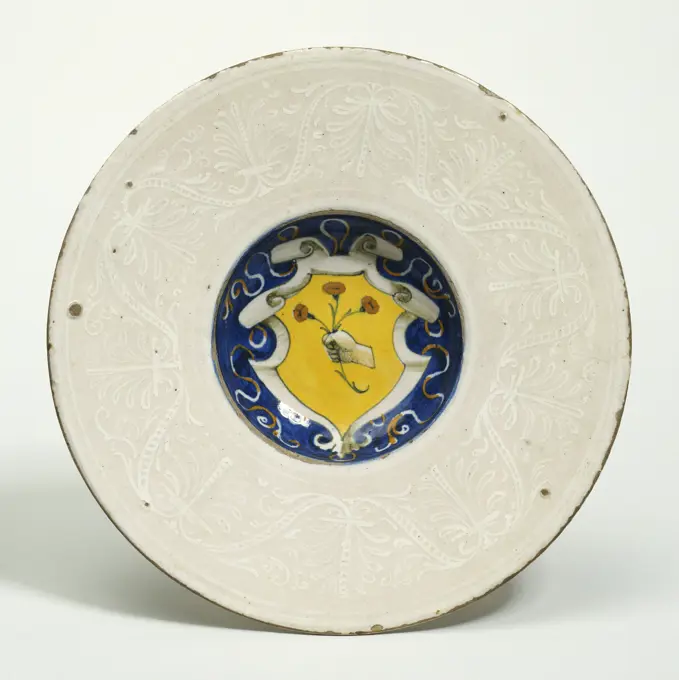
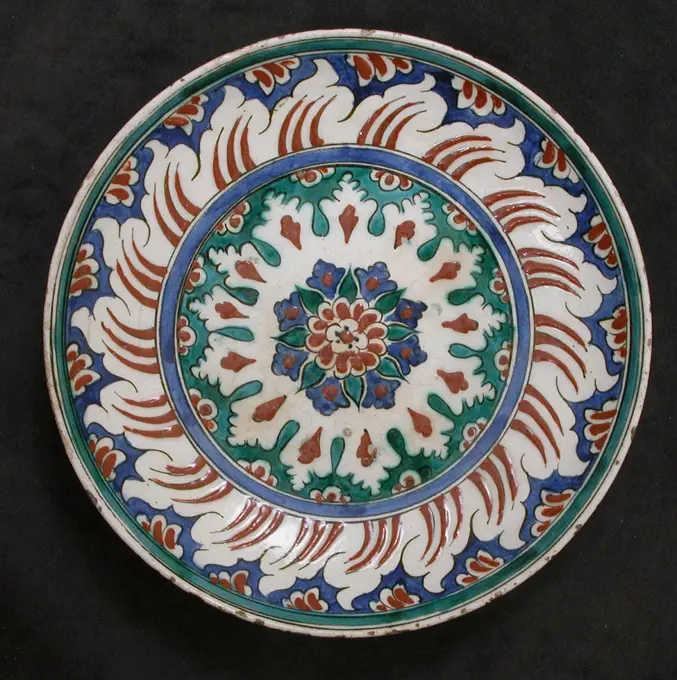
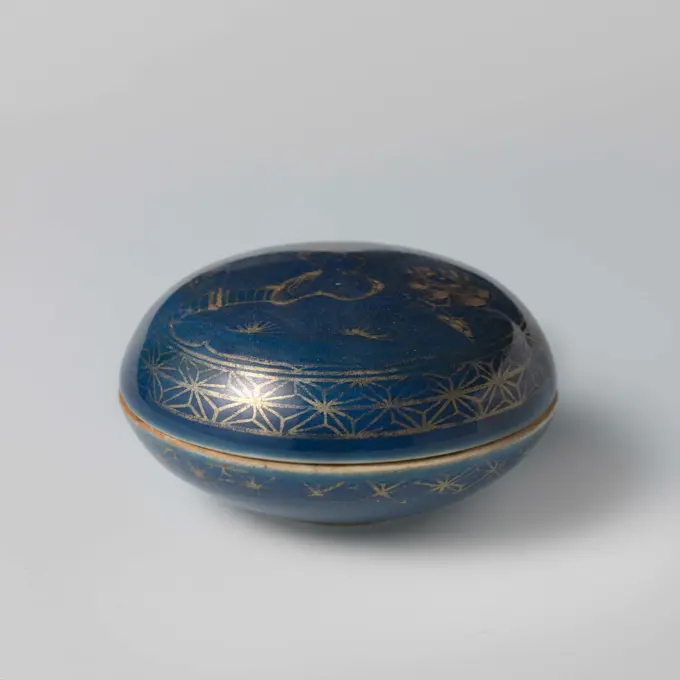
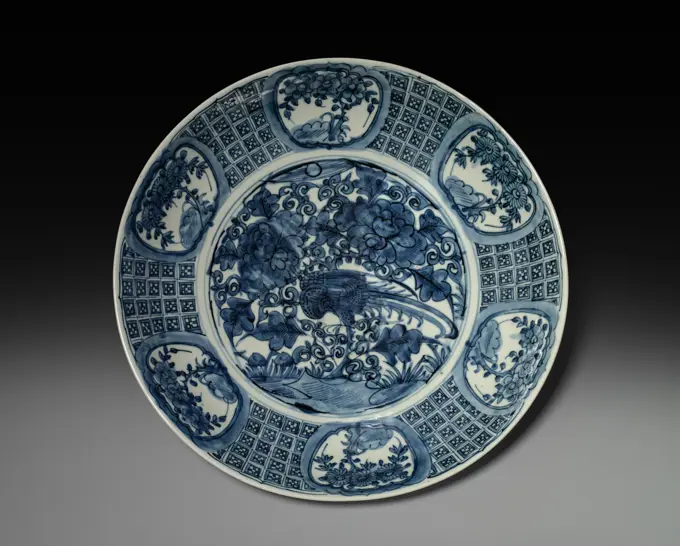
Plate. unknown, craftsmanOval Platter 19th century China. Oval Platter 48729. The decor and the inscription on the back of this charger make it an exceptional object. It is decorated entirely in the style of the earliest Chinese porcelain brought back to the Netherlands by the VOC, which was already somewhat old-fashioned by 1718. As the inscription relates, the charger was made for Gerardus Nahuys, probably by his housemate Anthonij van der Kloet, the brand-new owner of De Drie Vergulde Astonne pottery.Saucer-dish in the shape of a flower with bleu poudré and panel decoration, anonymous, c. 1700 - c. 1724 Porcelain saucer with round, lobed wall and scalloped edge in the shape of a flower, painted in underly glaze blue and on the glaze blue, red, green, yellow, eggplant, black and gold with a professional decoration. On the flat a medallion with river landscape with pavilion, rocks and trees; The wall is modeled in eight petals alternately filled with a flower branch and butterfly in gold on a bleu poudré (powder -blue) soil and a flower branch on a rock with butterfly on a white soil. Bleu Poudré with Famle Verte. China porcelain. glaze. cobalt (mineral). gold (metal) painting / gilding / vitrification Porcelain saucer with round, lobed wall and scalloped edge in the shape of a flower, painted in underly glaze blue and on the glaze blue, red, green, yellow, eggplant, black and gold with a professional decoration. On the flat a medallion with river landscape with pavilion, rocks and tDish with Dragons and Lotus Flowers. China. Date: 1662-1722. Dimensions: H. 3.3 cm (1 5/16 in.); diam. 15.7 cm (6 3/16 in.). Porcelain with underglaze blue and overglaze yellow enamel decoration. Origin: China. Museum: The Chicago Art Institute, Chicago, USA.Plate 17th century. Plate 446922Dish with an empty coat of arms, flowering plants and scrolls, anonymous, c. 1675 - c. 1699 Porcelain saucer, painted in under -glaze blue. On the flat in a double medallion, an empty coat of arms with a crown and leaf vines as a helmet. On the wall and edge leaf vines with birds interrupted by four medallions with flowering plants. Under two medallions twice a human figure that holds the branch of the flower lriever above his head. Dish has been broken; Sixteen prenes on the bottom. European performance in Blauw-Wit. Japan porcelain. glaze. cobalt (mineral) painting / vitrification Porcelain saucer, painted in under -glaze blue. On the flat in a double medallion, an empty coat of arms with a crown and leaf vines as a helmet. On the wall and edge leaf vines with birds interrupted by four medallions with flowering plants. Under two medallions twice a human figure that holds the branch of the flower lriever above his head. Dish has been broken; Sixteen prenes on the bottom. European perfFaience plate on stand with blue decor in Wanli style, plate crockery holder soil find ceramic earthenware glaze tin glaze, hand-turned baked decorated glazed fried Low dish on standing surface smooth curved plate edge at the top with shallow shoulder. Yellow-orange shard. Blue decor on white background with Chinese garden and cassetterand in the style of the period wanli Cooked archeology Valckensteyn Poortugaal Albrandswaard indigenous pottery decorate serving food archaeological find in the soil Poortugaal ValckensteynFor a long time;  16th century (1501-00-00-1600-00-00);Dish ca. 1750-75 De Porceleyne Bijl. Dish. Dutch, Delft. ca. 1750-75. Tin-glazed earthenware. De Porceleyne Bijl. Ceramics-PotteryDish, early to mid-1800s. Japan, Edo period (1615-1868). Porcelain with underglaze blue (Hizen ware, Kutani type); diameter: 40 cm (15 3/4 in.).Bord van faience, anonymous, 1730 - 1770 Fowence board. Crazy painted. Delft . Fowence board. Crazy painted. Delft .Dish 17th century. Dish 446914bord, anonymous, c. 1730 - c. 1760 Round plate of multicolored painted faience, with a vase with flowers on the flat for a bowl of flowers in the colors green, red, blue and yellow and around it a ten -angled border in the colors green and red. A Chinese motif is painted on the edge of the board. The board includes two identical signs with invnrs. BK-KOG-2427-A and BK-KOG-2427-B. Delft earthenware. tin glaze. Round plate of multicolored painted faience, with a vase with flowers on the flat for a bowl of flowers in the colors green, red, blue and yellow and around it a ten -angled border in the colors green and red. A Chinese motif is painted on the edge of the board. The board includes two identical signs with invnrs. BK-KOG-2427-A and BK-KOG-2427-B. Delft earthenware. tin glaze.Imari Plate, c. 1715, 15/16 x 8 7/16 in. (2.38 x 21.43 cm), Porcelain with underglaze blue, enamel and gilded decoration, China, 18th centurySaucer 18th century Japanese. Saucer 231612. Dish of Faïence. Painted with flower decorations.Plate. China, Swatow, 16th century. Furnishings; Serviceware. Stoneware with underglaze blue painted decorationPlate, 16th century, 11 3/8 in. (28.89 cm), Iznik ware Slip-coated earthenware with blue, red and green pigments under a clear glaze,, Turkey, 16th century, This brilliant plate exemplifies the Ottomans' successful attempt at polychromy, in which a clear white body (tin-glazed earthenware) forms the ground for bright blue, green, and red underglaze motifs. The foliate rim is decorated in a stylized wave pattern ultimately based on a Chinese prototype. Because Ottoman sultans amassed large collections of Chinese ceramics, imported wares naturally influenced local production. The potters of Iznik, however, soon created an original decorative vocabulary. The tulips, pinks, irises, and cypress comprising the center of this dish, for instance, are not found in this combination on Chinese wares.. Round plate of multi-colored padded faience, with a circle in the middle with multicolored flowers in it on a red shed behind. The edge has five vase-shaped compartments, each compartment is interspersed with a flower in the colors red, green and blue.Plate early 18th century Possibly Adriaen Kocks. Plate. Dutch, Delft. early 18th century. Tin-glazed earthenware. Ceramics-PotteryFooted Bowl with Lotuses first half 16th century The stylized flowers in the center ultimately derive from Chinese prototypes; however, the rendering of the blossoms, probably those of a lotus, and their arrangement, differ from those found in Yuan and Ming porcelains, as does the stylized decoration on the rim.. Footed Bowl with Lotuses 448237OLYMPUS DIGITAL CAMERADish 17th century. Dish 446915Three-footed Dish. Turkey or Iran, first half of 13th century. Ceramics. Fritware, overglaze-painted and leaf-gildedDish with Pomona. Round dish of multicolored painted majolica. In the middle is a circle painted in which a standing woman (Pomona) on a floor with a basket with flowers in her left hand (). The edge is divided into four courses through four lines within which fine leaflets and animals are painted (patanazzi decor).Plate ca. 1725 French, Rouen With the arms of Saint Evremond and a border suggestive of the contemporary taste for tortoiseshell inlays on brass as furniture embellishments.. Plate. French, Rouen. ca. 1725. Faience (tin-glazed earthenware). Ceramics-PotteryFaience dish with blue decor in Quanlong style, flat with bird on branch and insect, plate dish crockery holder soil find ceramic earthenware glaze tinglage, hand-turned baked decorated glazed fried Large dish on wide stand ring. Flat and wide mirror steep shoulder and angled flag Lightly deformed Blue decor in Chinese style. Bird in Chinese garden. Particularly the brown border on the dish edge is good imitation attempt of the original. Cook-inscribed archeology Valckensteyn Poortugaal Albrandswaard Soil discovery of Poortugaal Castle Valckensteyn.Dish late 18th century Alcora Manufactory. Dish. Spanish, Alcora. late 18th century. Tin-glazed earthenware. Alcora Manufactory (Spanish, 1727-1895). Ceramics-PotterySaucer, c. 1784. Wedgwood Factory (British). Jasper ware with relief decoration; diameter: 13.2 cm (5 3/16 in.).Bowl. Egypt or Syria, 14th century. Ceramics. Fritware, underglaze-paintedPlate with Geese in a Lotus Pond late 16th-early 17th century China Popularly known as kraak ware, ceramics such as this were produced in large numbers for trade, particularly with Europe. They are thought to have been named after the word carrack (a transmutation of an Arabic term), which was used to describe large sailing vessels.. Plate with Geese in a Lotus Pond 42544Plate. unknown, craftsmanOctagonal saucer with light brown, animals and flower sprays, anonymous, c. 1700 - c. 1724 Octagonal dish of porcelain, partially covered with café-au-lait, painted in underly glaze blue and on the glaze red, green, yellow, aubergine and black. On the flat two hares and two birds with a rock with flowering plants; the wall with flower branches and butterflies in a professional decoration; The edge with zigzag work interspersed with flowers. The outside is covered with a cafe-au-lait-colored glaze with flower branches. Marked on the underside with a hare in red email. Two chips in the edge of the dish. Famle distance with monochrome brown glaze. China porcelain. glaze. cobalt (mineral) painting / painting Octagonal dish of porcelain, partially covered with café-au-lait, painted in underly glaze blue and on the glaze red, green, yellow, aubergine and black. On the flat two hares and two birds with a rock with flowering plants; the wall with flower branches and butterflies in a professionAnonymous. "Plate with three orders". Earthenware. 1789-1791. Paris, Carnavalet museum. 70956-5 Latin cross, butt, speech, faience, knot, shovel, revolutionary period, peak, three orders, dishes, plateSchotel, de porceley was, c. 1750 - c. 1790  Round dish of blue painted faience, with a scalloped edge. On the flat, a bird (heron) Is painted between flowers and on the edge of flower and leaf vines. The dish is marked: p and p <. The dish was on loan in 1967 to the Historisch Museum in Venlo. Four identical specimens with invnrs belong to the dish. BK-NM-13285-B, BK-NM-13285-C, BK-NM-13285-D and BK-NM-13285-E. Amsterdam earthenware. tin glaze.Saucer, 1764. Sèvres Porcelain Factory (French, est. 1756), Louis-Jean Thévenet pere (French, 1708-). Soft-paste porcelain; overall: 16 x 3.9 cm (6 5/16 x 1 9/16 in.).Plate. Wedgwood Manufactory; England, founded 1759. Date: 1805-1815. Dimensions: Diam. 24.8 cm (9 3/4 in.). Earthenware (pearlware) with underglaze blue decoration. Origin: Burslem. Museum: The Chicago Art Institute, Chicago, USA.Plate with flower sprays and figures in an interior and in a landscape, anonymous, c. 1700 - c. 1724 Plate of porcelain with upright wall and sloping edge, painted in underlaze blue. On the flat a raised medallion in the center with six people in an interior around a table; Around it four times a flower branch (Prunus, Pioen, Lotus, Chrysanthemum); the edge with a continuous landscape with scholars and their servants; the back of the edge with flower vines; The back of the wall with four times a flower branch (Prunus, Pioen, Lotus, Chrysanthemum). Edge damaged. Blue White. China porcelain. glaze. cobalt (mineral) painting / vitrification Plate of porcelain with upright wall and sloping edge, painted in underlaze blue. On the flat a raised medallion in the center with six people in an interior around a table; Around it four times a flower branch (Prunus, Pioen, Lotus, Chrysanthemum); the edge with a continuous landscape with scholars and their servants; the back of the edge with flower Plate with graviata decoration  plant flagellum and two shou characters unknownDish. Dimensions: H. 2 1/4 in. (5.7 cm)Diam. 12 3/8 in. (31.4 cm). Date: 16th century. Museum: Metropolitan Museum of Art, New York, USA.Soup Dish ca. 1860-66 Chinese, for American market. Soup Dish. Chinese, for American market. ca. 1860-66. Porcelain. Made in ChinaDish of blue painted faience, the metal pot (Possibly), c. 1700 - c. 1735 Round dish of blue painted faience. A circle is painted on the flat within which flower vines. Six compartments are painted on the edge framed by leaves and within which a flower branch. The dish is marked and belongs to two identical specimens with invnr. BK-14968-B and BK-14968-C. Delft earthenware. tin glaze. Round dish of blue painted faience. A circle is painted on the flat within which flower vines. Six compartments are painted on the edge framed by leaves and within which a flower branch. The dish is marked and belongs to two identical specimens with invnr. BK-14968-B and BK-14968-C. Delft earthenware. tin glaze.Dish with Dragons, Pomegranates, and Peaches, 1662-1722. China, Jiangxi province, Jingdezhen, Qing dynasty (1644-1911), Kangxi mark and period (1662-1722). Porcelain with incised and enamel decoration, susancai ware; diameter: 24.8 cm (9 3/4 in.).Basin Depicting a Cistern, Tower and Domed Building 1775-1825 Puebla. Barely a decade after the Spanish conquered Aztec (Mexica) Tenochtitlan (present-day Mexico City) in 1521, they founded the city of Puebla de los Angeles sixty miles to the southeast. As colonial society began to take shape, a new visual environment was called into being, supplanting the major forms of native art and affirming the cultural ascendancy of the ruling order. Ceramics became important in this endeavor, and Puebla emerged as the principal center of a thriving pottery industry that included glazed tableware, secular and religious accessories, and tiles used in architectural ornamentation. The imagery of these objects stemmed from opposite ends of the earth, reflecting a New World synthesis that came into being as the Silk Road became global.Master ceramists from Spain settled in Puebla, bringing with them the potterís wheel as well as tin-glazed earthenware and Hispano-Moresque ornamentation, both originallPlate. Bow Porcelain Factory; London, England, 1744-1775. Date: 1755-1765. Dimensions: Diam. 22 cm (8 11/16 in.). Soft-paste porcelain, underglaze blue decoration. Origin: Bow. Museum: The Chicago Art Institute, Chicago, USA.Dish. Worcester Porcelain Factory; Worcester, England, founded 1751. Date: 1770-1780. Dimensions: W. 28.6 cm (11 1/4 in.); diam. 23.5 cm (9 1/4 in.). Soft-paste porcelain, polychrome enamels and gilding. Origin: Worcester. Museum: The Chicago Art Institute, Chicago, USA. Author: Worcester Royal Porcelain Company.Terracotta dish. Culture: Greek, South Italian, Campanian, Teano. Dimensions: Other: 2 1/2 in. (6.4 cm). Date: ca. 330-300 B.C..Flat dish with ring base, decorated with ivy vine and stamped pattern. Museum: Metropolitan Museum of Art, New York, USA.Henri Husson / Adrien-Aurélien Hébrard. Cut. Copper, Champlevé enamel. 1909-1914. Museum of Fine Arts of the City of Paris, Petit Palais. 75296-8 Cup, crab, copper, champleve emailSaucer with ruby back, flower scrolls, fruit and butterfly, anonymous, c. 1725 - c. 1749 Porcelain dish, painted on the glaze in blue, red, pink, green, yellow, black and gold. On the flat in the center a cartouche with flowers, fruit and butterfly; Around the cartouche flower ranks with three medallions with flower branch and three times a four -pass with flower branch and fruit. The back of the dish is covered with a pink glaze (Ruby Back). Wand has been broken. Famle Rose. China porcelain. glaze. gold (metal) painting / gilding / vitrification Porcelain dish, painted on the glaze in blue, red, pink, green, yellow, black and gold. On the flat in the center a cartouche with flowers, fruit and butterfly; Around the cartouche flower ranks with three medallions with flower branch and three times a four -pass with flower branch and fruit. The back of the dish is covered with a pink glaze (Ruby Back). Wand has been broken. Famle Rose. China porcelain. glaze. gold (metal) painting / gilding. Octagonal plate of blue painted faience. On the flat is painted a flower branch and a bird and floral branches on the edge. The plate is a soil find.Plate. James and Ralph Clews; English, active 1818-36; Made for the American market; West Midlands, Stoke-on-Trent, England. Date: 1821-1831. Dimensions: . Earthenware. Origin: England. Museum: The Chicago Art Institute, Chicago, USA.Dish 18th century French, Moustiers The combination of so many motifs of different references on one object is unusual and may point ot a relatively late date.. Dish 208002Dish with Two Intertwined Dragons. Dimensions: H. 2 3/4in. (7cm)Diam. 17 1/4in. (43.8cm). Date: ca. 1640.In the seventeenth century, Iranian imitations of Chinese blue-and-white export porcelain increased markedly. Using a stonepaste body instead of porcelain, Safavid potters synthesized Chinese Ming idioms with local tastes and created vessels such as this dish. At the center, two intertwined dragons grapple with each other, forming a six-pointed star against a concentric wave pattern. While in Chinese mythology the dragon is a beneficent symbol, in Iran it is a fearsome, poison-breathing creature. Museum: Metropolitan Museum of Art, New York, USA.Dish with a couple and phoenixes China This dish displays a romantic story known as Phoenixes Arriving for Flute Playing (chuixiao yinfeng). Nongyu, the daughter of Duke Mu of Qin State (reigned 659-21 B.C.) married a famous flute (xiao) player. According to this legend, the couple spent all their time practicing the flute. After several years, even phoenixes came to listen to their music. One day, the couple rode away on the phoenixes and never returned.. Dish with a couple and phoenixes. China. Porcelain painted in underglaze cobalt blue (Jingdezhen ware). Qing dynasty (1644-1911). CeramicsPlate. China, Kangxi period, 17th century. Furnishings; Serviceware. Porcelain with underglaze blue painted decorationDish, painted with water landscapes, Anonymous, 1756 Dish of Faïence, multi -colored painted with water landscapes. Delft . Dish of Faïence, multi -colored painted with water landscapes. Delft .Saucer ca. 1876 Union Porcelain Works. Saucer. American. ca. 1876. Porcelain. Made in Brooklyn, New York, United StatesBowl;  15th century (1650-00-00-1750-00-00);Jingtai (period-1450-1456), Ming (Styl), Paderewski, Ignacy Jan (1860-1941), Paderewski, Ignacy Jan (1860-1941)-collection, Chinese (culture), Chrysanthemus, Cloisonné, Dar (provenance), Plant (ornament), fish, anti -heavy signatures, Chinese art, Lotos (ornament). Round plate of multicolored padded faience. A pot of flowers is painted on the board.Plate, multi -colored: a landscape with houses and drawbridge on the flat; edge with a stylized flower in five courses., Anonymous, c. 1630 - c. 1650 Round plate of multi -colored painted majolica. A landscape is painted on the flat with houses and a drawbridge and a fence in the foreground. The edge is divided into courses, a stylized flower is painted in five courses (after Chinese example). Holland (possibly) earthenware. tin glaze. lead glaze majolica Round plate of multi -colored painted majolica. A landscape is painted on the flat with houses and a drawbridge and a fence in the foreground. The edge is divided into courses, a stylized flower is painted in five courses (after Chinese example). Holland (possibly) earthenware. tin glaze. lead glaze majolicaPlate MieleówDish with King of Prussia inscription ca. 1756 British, Staffordshire The Success to the King of Prussia” plates (see also 2014.712.6) can be dated to the time of Frederick the Great’s successes against the French in the Seven Years’ War, after an alliance was formed between Britain and Prussia in 1756. In this context, the two plates offer insight into the political and military history of the time, as well as providing an interesting comparison between two styles of decoration.[Elizabeth Sullivan, 2014. Dish with King of Prussia inscription. British, Staffordshire. ca. 1756. Lead-glazed earthenware. Ceramics-PotteryBowl Depicting a Seated King with Attendants, c. 1180-1220, 3 1/2 x 8 1/2 in. (8.89 x 21.59 cm), Earthenware with overglaze polychrome colors, Minai ware, Iran, Seljuk period (1038- c.1194)Octagonal Bowl with Dragons and Auspicious Motifs second half of the 19th century Eiraku Tokuzen. Octagonal Bowl with Dragons and Auspicious Motifs. Eiraku Tokuzen (Japanese, 1853-1909). Japan. second half of the 19th century. Porcelain painted with red and gold over a transparent glaze (Kyoto ware, Eiraku type). Meiji period (1868-1912). CeramicsBowl, 20th century, 2-3/4 x 8-1/14 x 8-1/4 in. (7.0 x 20.5 x 21.0 cm), Cloisonné, China, 20th centuryBowl with Two Figures on Horseback. Iran; probably Kashan. Date: 1099-1299. Dimensions: 8.4 x 4.5 cm (3 1/4 x 8 1/2 in.). Fritware with in-glaze and overglaze painting in enamels and gilding (mina'i technique). Origin: Iran. Museum: The Chicago Art Institute, Chicago, USA.Plate - Ontario Lake Scenery Joseph Heath Joseph HeathPlate ca. 1715-20 Chinese, for European market. Plate 205239Salad bowl; Manufaktura Majoliki in Nieborów (Nieborów; Wytwórnia; 1881-1899); 1881-1899 (1890-00-00-1900-00-00);PLATO DE CUERDA SECA CON ESTRELLA DE DOCE PUNTAS Y CENEFA DE ESPIGAS EN EL ALA - 1500. Location: INSTITUTO VALENCIA DE DON JUAN-COLECCION. MADRID. SPAIN.Saucer-dish with a flower spray, bird and scalloped panels with fruit sprays and diaper pattern. Scale of porcelain with a round wall and a thick, folded edge, painted in underglaze blue. On slightly more than half the front a flower branch with two large flowers and a flying bird; In addition, a decorative band about the flat with napkin work and leaf refines. On the other side of this band scalloped cartouches with a flower branch, peach branch, leaf reflection or napkin. The edge with loose leaves. On the outside wall six medallions with lucky symbols. A chip in the edge. Arita, blue-white.Dish with two hoo-birds near flowering plants, anonymous, c. 1600 - c. 1699 Porcelain saucer, painted in under -glaze blue. On the flat a Hoo bird on a rock and one flying in flowering plants (aster, pomegranate). The inner wall is divided into six courses with alternately a pomegranate polish and a fern; The courses are separated by a flower drink. The outer wall with a continuous slender. Three prenes on the bottom. The performance is following the Chinese squateline. Arita, Blauw-Wit. Japan porcelain. glaze. cobalt (mineral) painting / vitrification Porcelain saucer, painted in under -glaze blue. On the flat a Hoo bird on a rock and one flying in flowering plants (aster, pomegranate). The inner wall is divided into six courses with alternately a pomegranate polish and a fern; The courses are separated by a flower drink. The outer wall with a continuous slender. Three prenes on the bottom. The performance is following the Chinese squateline. Arita, Blauw-Wit. Japan porcelain. glaze. Bowl decorated with flowers and beast faces late 16th-early 17th century China. Bowl decorated with flowers and beast faces. China. late 16th-early 17th century. Porcelain with underglaze cobalt-blue design (Kraak ware). Ming dynasty (1368-1644). CeramicsDish with Chrysanthemums and Stylized Floral Scrolls 1400-1499 China. Stoneware with white slip decoration on powder blue glaze .Bowl 13th century. Bowl 447749Dish 17th century. Dish 445346Sawankhalok Ware Stem Bowl with Incised Lotus Petal Design 1401-1500 Thailand. Stoneware with celadon glaze .Bowl 18th century. Bowl 452008Plate: shield with coiled leathers, Italian Majolic of Faenza between 1520 and 1530 (face on a yellow background) ". Museum of Fine Arts of the city of Paris, Petit Palais. 26971-8 Coat of arms, ecu, faenza, flower, yellow background, face, Italian, hand, majolica, various object, plateDavenport Manufacture. Davenport lunch service. "Cakes plate". English earthenware of Davenport. Paris, Museum of Romantic Life. English faienceDish last quarter 16th century This unusual piece is adorned with trios of spiny lappets that encircle a central blossom and a series of simplified lotus panels; the overall design suggests a turning wheel. The combination of colors, especially the liberal use of bright green, is typical of many late sixteenth-century Iznik designs, both abstract and figural.. Dish 444879Fragment majolica plate, blue on white, with plume motifs, brush strokes, plate dish crockery holder soil find ceramic earthenware enamel, baked underside covered with lead glaze. Polychrome yellow orange circle is still just visible along the perimeter Italian decor archeology Italy adorn serving foodBowl 13th century. Bowl 452617Round Box With Powder Blue, Rocks And Flowering Plants. Round box of porcelain, painted in underglaze blue and on the glaze gold. The box is, on the underside, covered with bleu poudré (powder blue); To the edge a decorative tire with napkin. A crack in the box. Bleu poudré with gold.vintage porcelain floral plate over white, clipping pathOctagonal saucer with lotus-shaped panel with lotus scrolls and diaper pattern, anonymous, c. 1725 - c. 1749 Octagonal dish of porcelain, painted on the glaze in blue, pink, green and black. On the flat a lotus -shaped compartment with a medallion filled with Lotusrank in the center; A Lotusrank also around the center in eight petal subjects; Between the leaves of servetwork with a flower on a green soil; On the edge of servetwork on a pink soil. Wand has been broken. Famle Rose. China porcelain. glaze. painting / vitrification Octagonal dish of porcelain, painted on the glaze in blue, pink, green and black. On the flat a lotus -shaped compartment with a medallion filled with Lotusrank in the center; A Lotusrank also around the center in eight petal subjects; Between the leaves of servetwork with a flower on a green soil; On the edge of servetwork on a pink soil. Wand has been broken. Famle Rose. China porcelain. glaze. painting / vitrification. Dish of pottery, painted in blue on white Tinglobic with a chinoiser docon of two figures in a landscape inside a diamond, a blue square surface on the corners after covering, the whole inside a double circle. On the edge a flower and leaf garland on a substrate of curly motifs, which also occur around the window on the flat. On the back stripes and circles.. Dish of faience with a decoration to the Chinese porcelain from the emperor Wan Li (1600-1630) period.Sharp of rossy baking earthenware with stand ring, with white glaze on the front and back and a decoration of a scene of a pool surrounded by flowers and two birds in blue, anonymous, 1600 - 1650  Northern Netherlands earthenware. glaze majolica  Northern Netherlands earthenware. glaze majolicaPlate. Manufacture nationale de porcelaine de Sevres (1756-), factoryPlate from v.O.c.-ship the 'white lion'. Plate from v.o.c.-ship the 'white lion' with a flat edge, decorated in underglaze blue, 80%% present; parts of the wall are missing. The shard is glassy white and has little ingrained dirt. The glaze is blue tinted and cracked and reflects over parts of the lip edge. There are pinholes and small frying tears on the corners of the lip edge. The bottom is glazed. The foot ring is V-shaped, faceted and stands inside. More than 20 granules of oven sand were found. In the flat two birds on a rock at the water, next to them a flowering plant; The representation is surrounded by a brace-shaped edge filled with geometric motifs. On the wall and edge wide and narrow fields filled with lucky symbols and floral motifs. Type 1.1.3b.Plate with Phoenix and Peonies: Swatow Ware, late 1500s-early 1600s. China, Southern Fujian province, Ming dynasty (1368-1644). Porcelain with underglaze blue decoration; diameter: 47.3 cm (18 5/8 in.); overall: 9.7 cm (3 13/16 in.).PLATO JAPONES DE PORCELANA S XIX. Location: PALACIO TOPKAPI-MUSEO. ISTANBUL. TURQUIA.Plate of multi -colored hard baked pottery; Staffordshire., Anonymous, c. 1750 - c. 1780 Plate of multi -colored hard baked pottery. The edge is decorated in relief with grille work, interspersed with two next to each other -placed symmetrical floral motifs. The scalloped edge is decorated on the inside with volutes and leaf motifs. The plate is covered with a spotted lead glaze in manganese, green, gray and yellow. The back is dotted in manganese and has a foot edge. The sign is part of five plates (BK-1987-39-A to BK-1987-39-F). England earthenware. lead glaze Plate of multi -colored hard baked pottery. The edge is decorated in relief with grille work, interspersed with two next to each other -placed symmetrical floral motifs. The scalloped edge is decorated on the inside with volutes and leaf motifs. The plate is covered with a spotted lead glaze in manganese, green, gray and yellow. The back is dotted in manganese and has a foot edge. The sign is part of five plates (BK-1987-39-A tPlate ca. 1818-ca. 1846 Enoch Wood & Sons British. Plate. British (American market). ca. 1818-ca. 1846. Earthenware, transfer-printed. Made in Staffordshire, Stoke-on-Trent, EnglandFor a long time;  XVII century (1621-00-00-1644-00-00);Paderewski, Ignacy Jan (1860-1941), Paderewski, Ignacy Jan (1860-1941)-collection, qing (style), gift (provenance), Kraak, white-blue porcelain, Chinese art, bird imagesPlate ca. 1510 Italian, Deruta or Siena. Plate. Italian, Deruta or Siena. ca. 1510. Maiolica (tin-glazed earthenware). Ceramics-PotteryDish ca. 1780 Japan. Dish. Japan. ca. 1780. White porcelain decorated with blue under the glaze, polychrome enamels. Edo period (1615-1868). CeramicsDish, anonymous, c. 1650 - c. 1675 Daadel van Faience with a decoration to Chinese porcelain from the transition period Delft . Daadel van Faience with a decoration to Chinese porcelain from the transition period Delft .