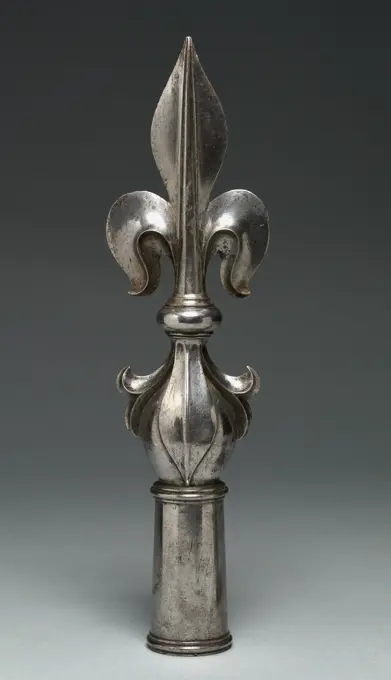
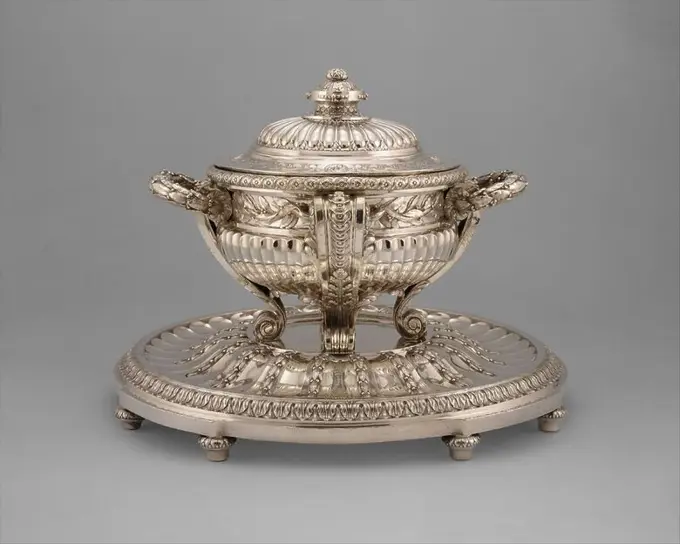
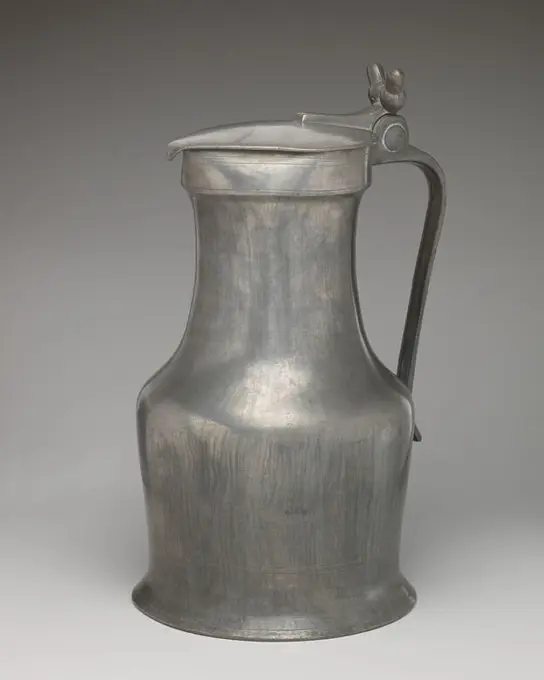
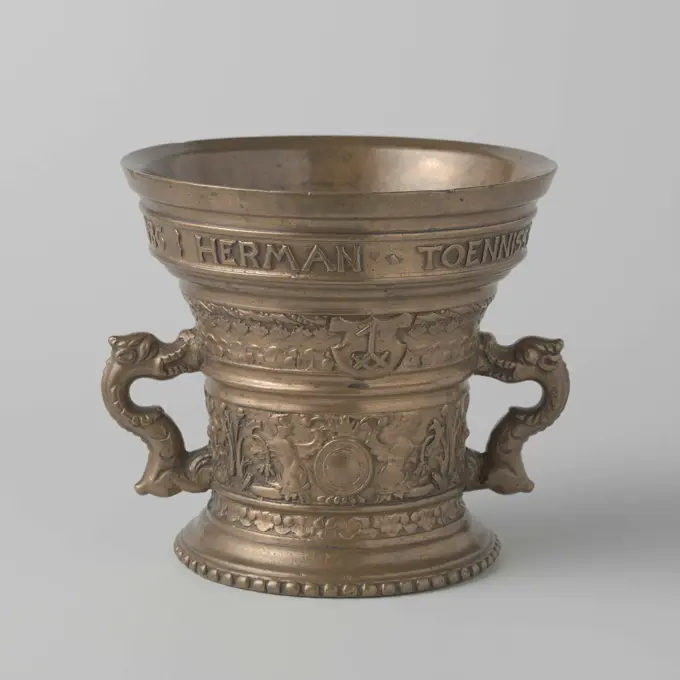
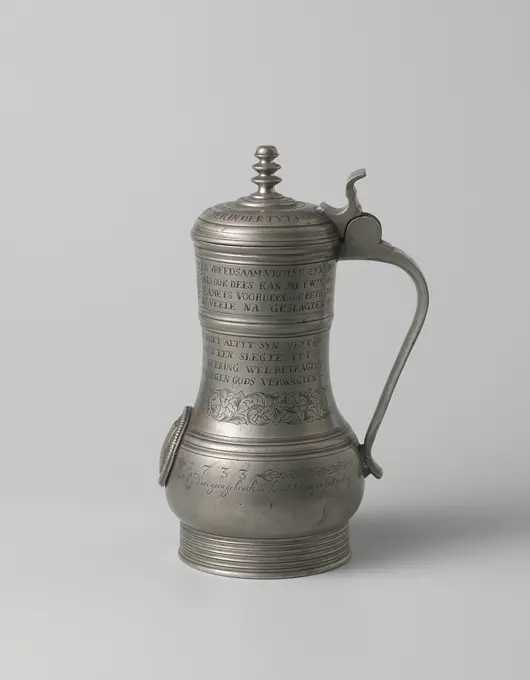
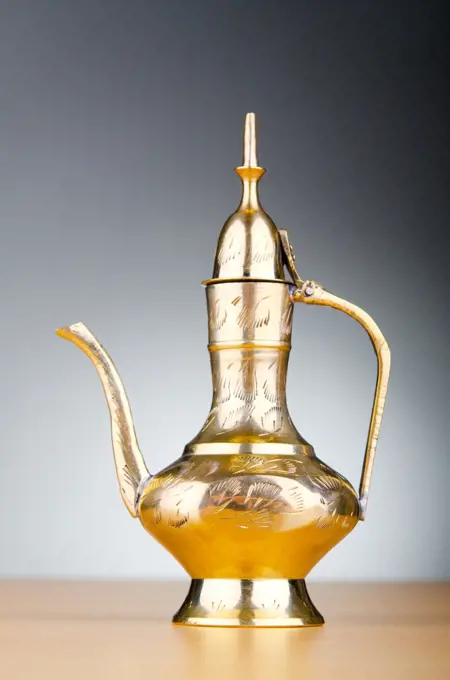
Classic Silverware Collection

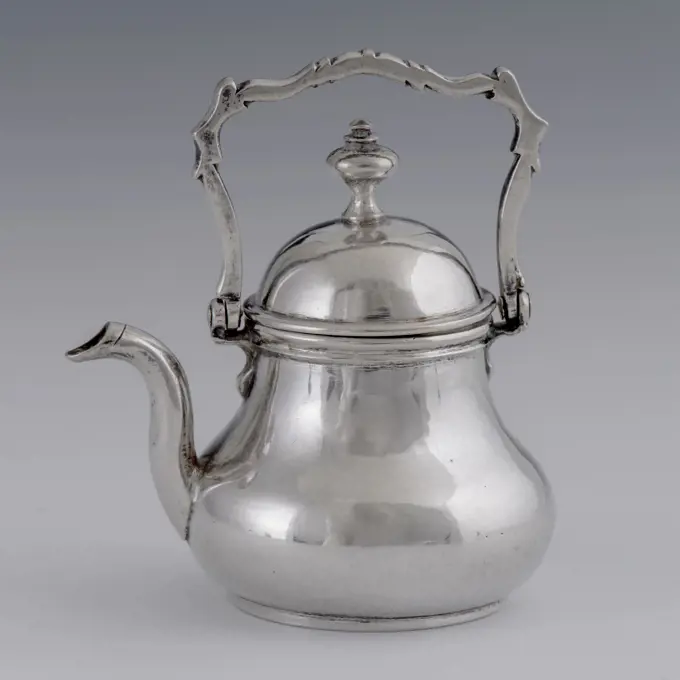
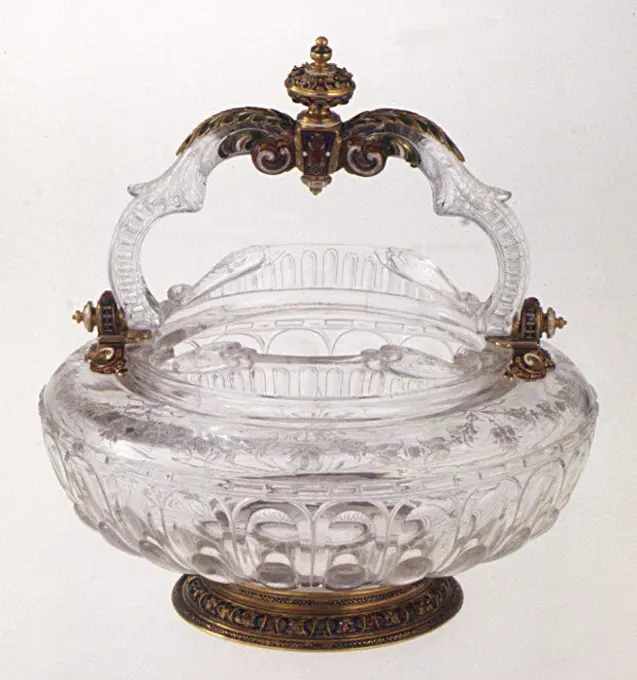
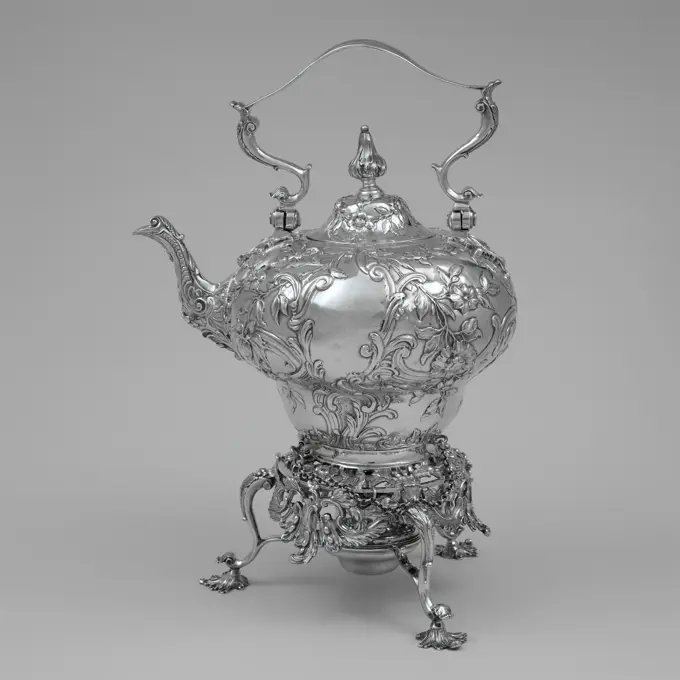
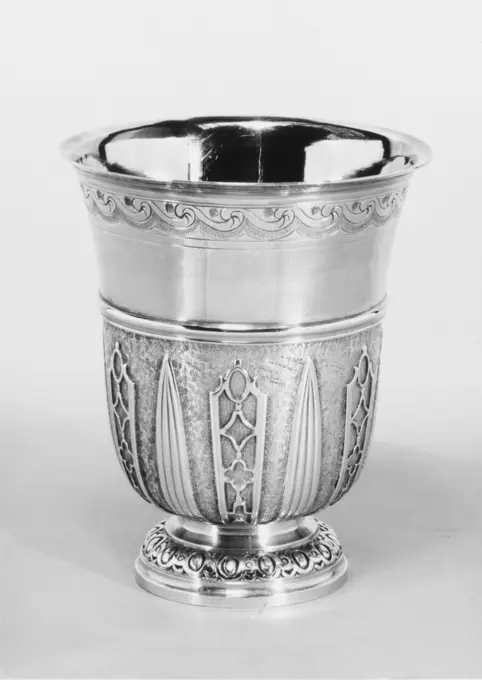
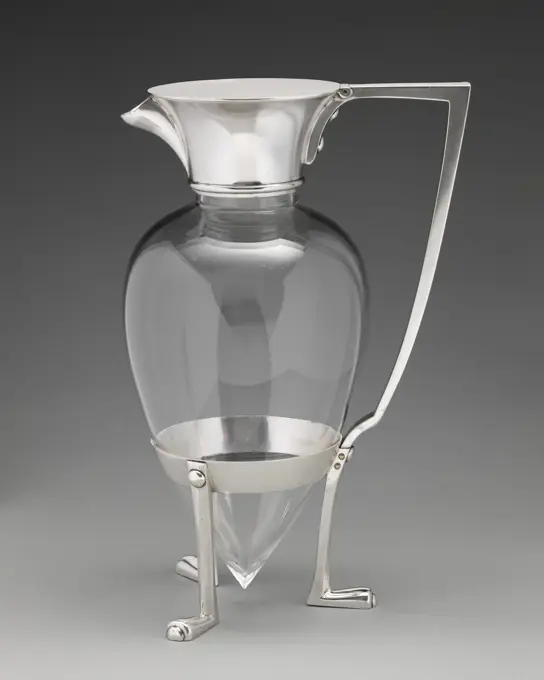
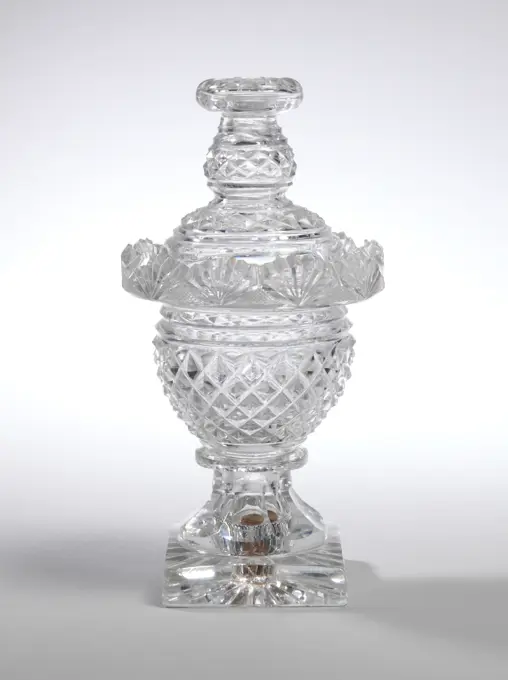
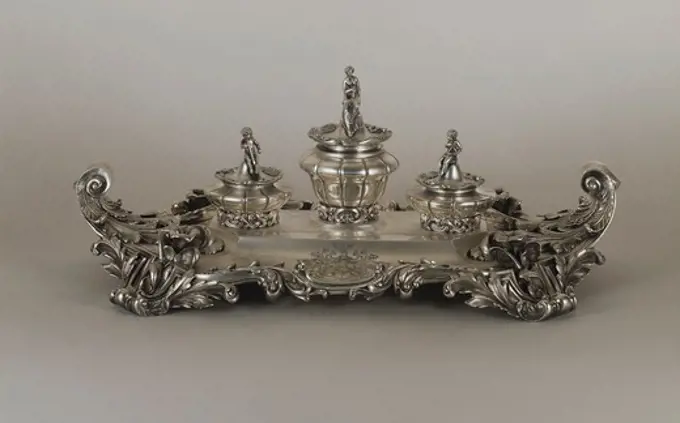
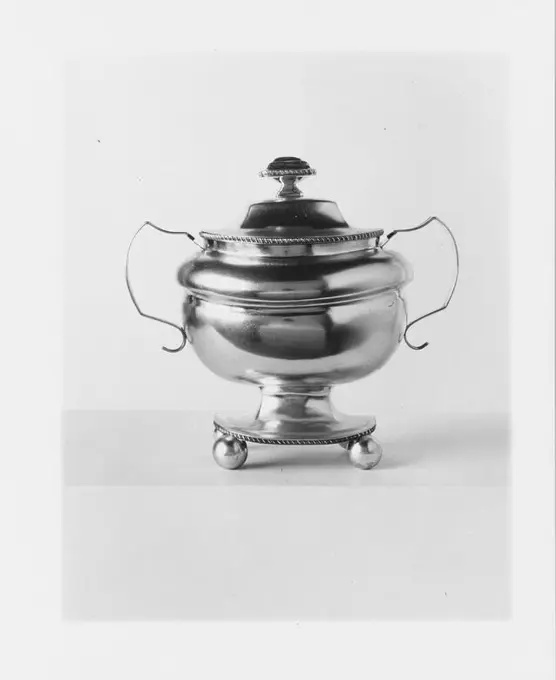
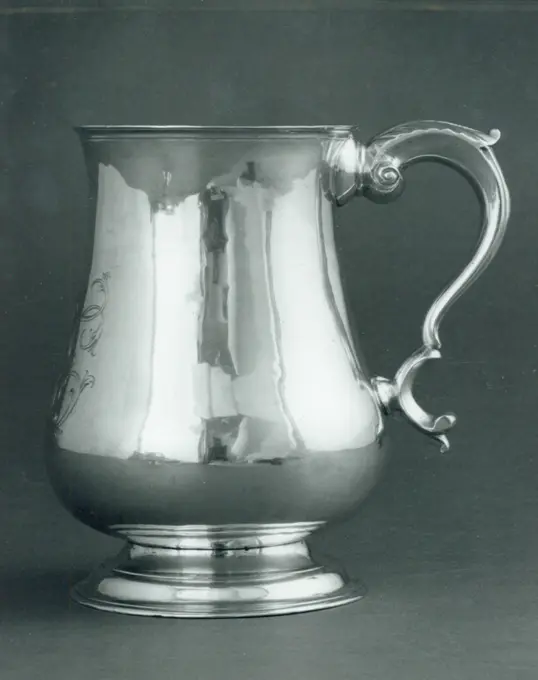
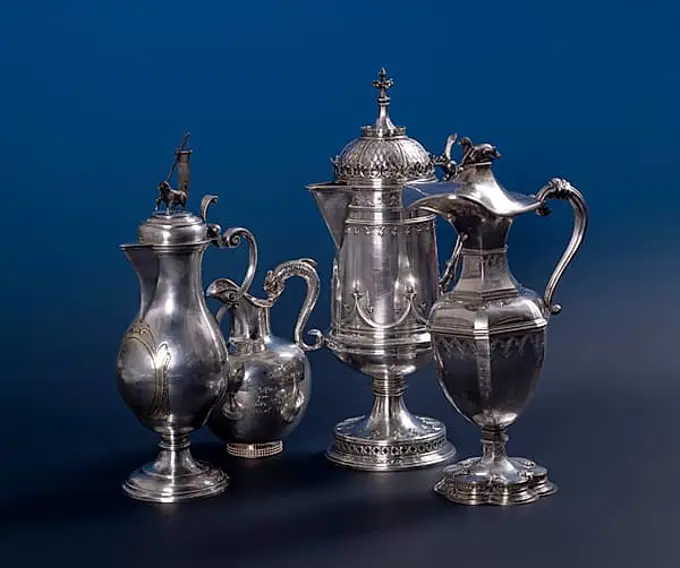
A variety of vintage silver items including jugs, cauldrons, and ewers, showcasing intricate engravings and decorative designs from different centuries.
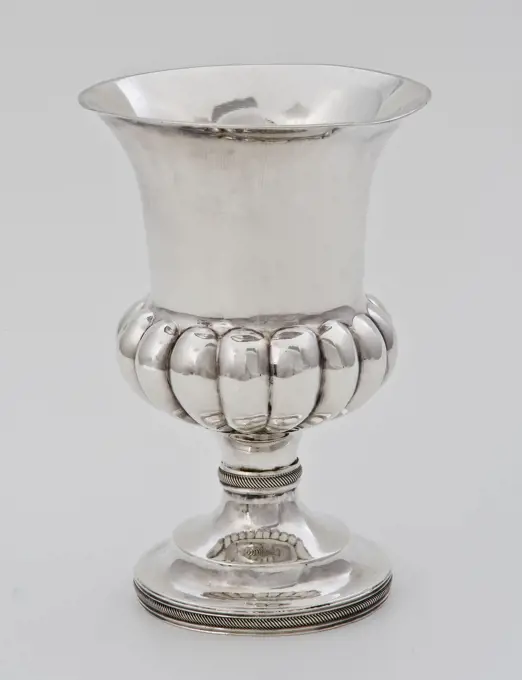
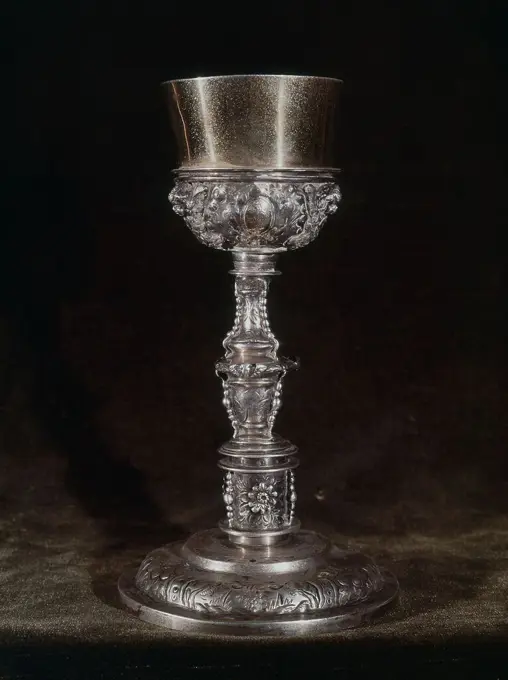
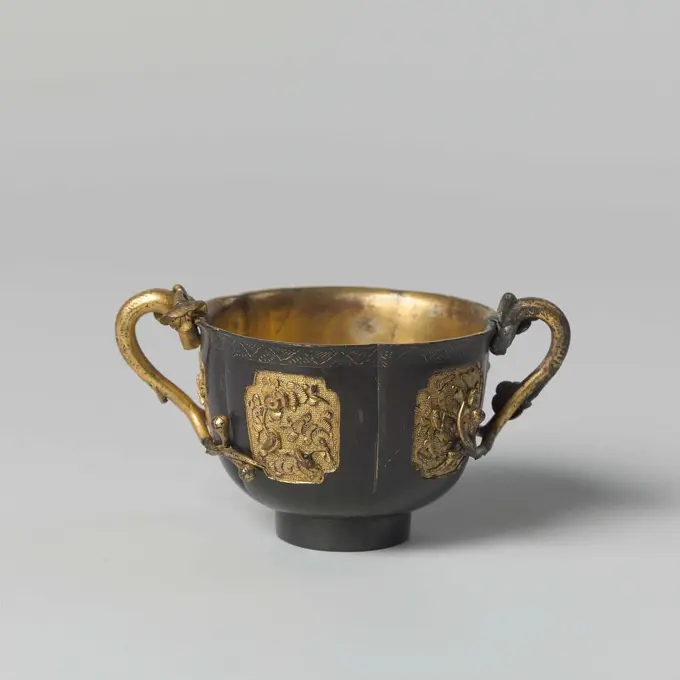
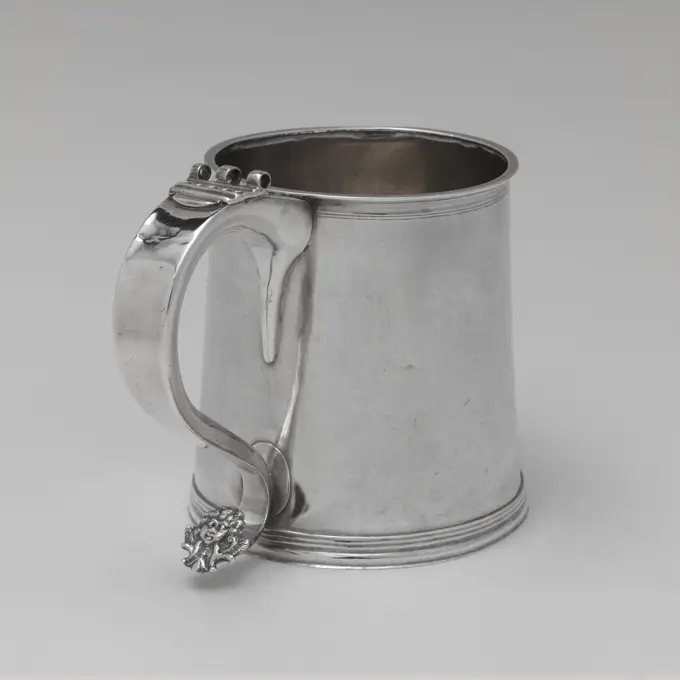
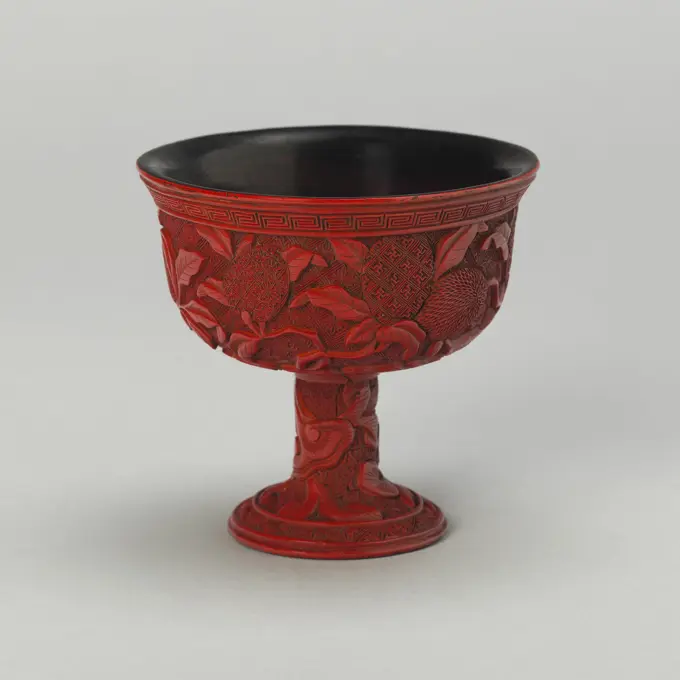
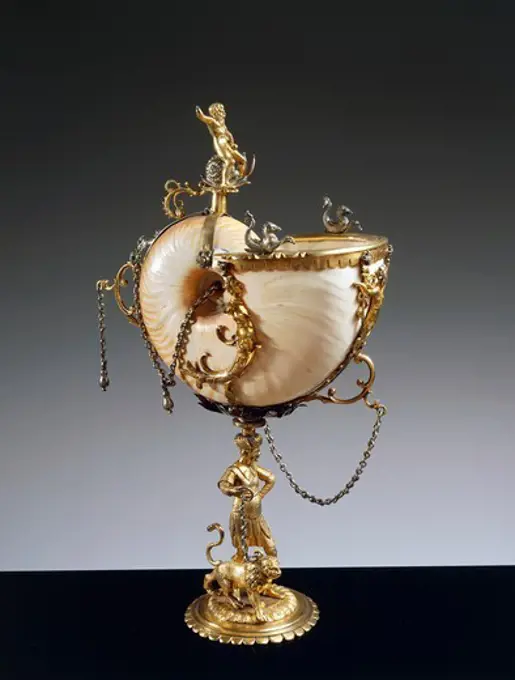
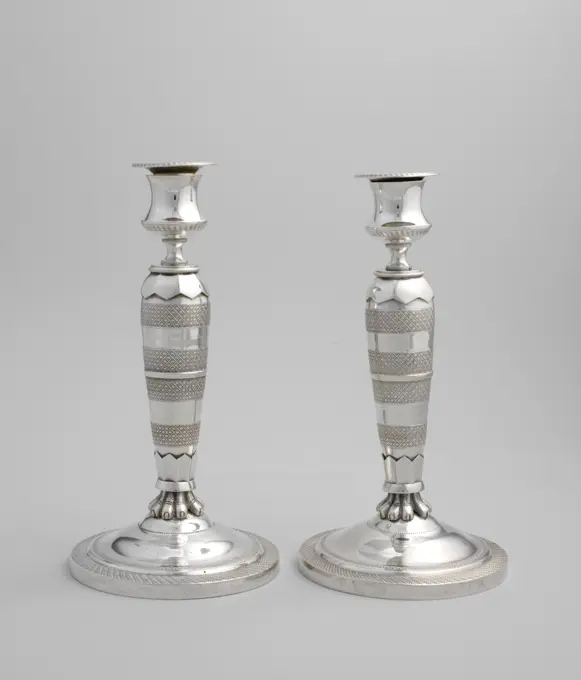
Coerts Hoorn (), Silver cup, chalice liturgical vessel silver, religion church Rotterdam Blijdorp Originating from the H Albertus the Great in Blijdorp (possession of the Dominicans).
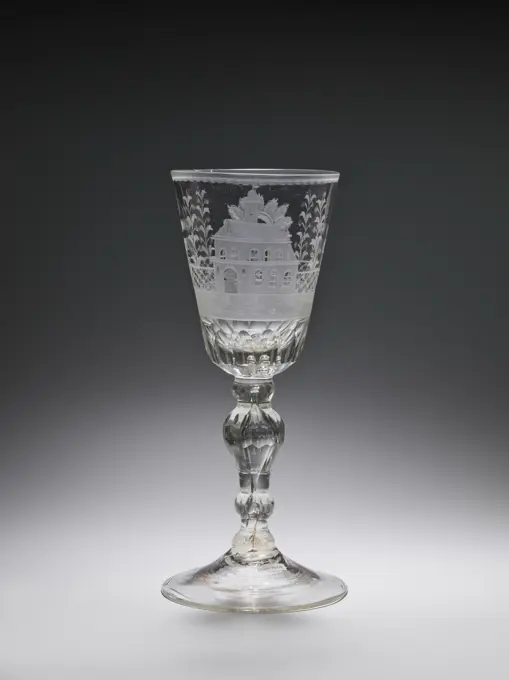
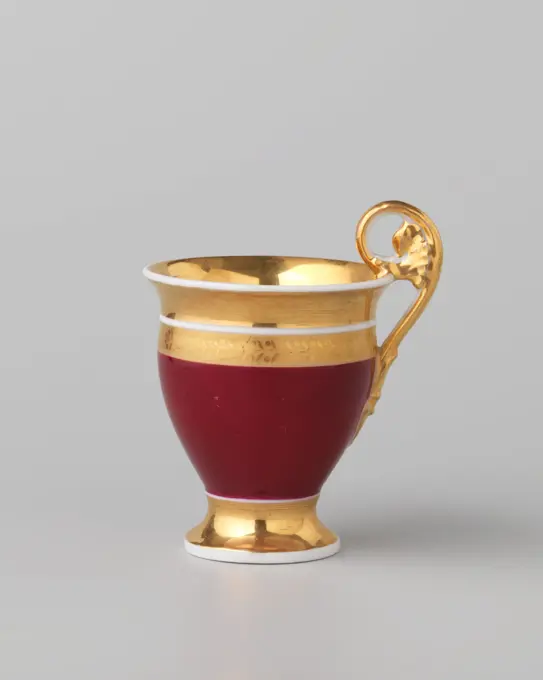
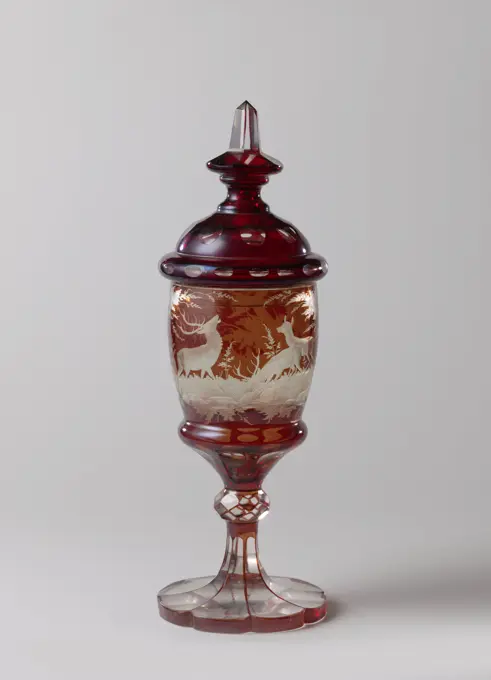
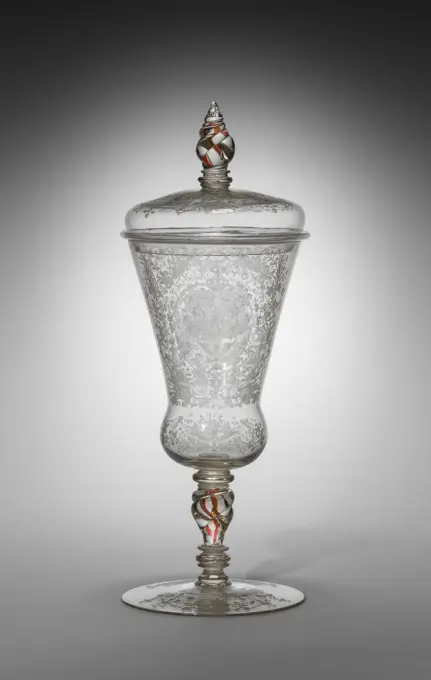
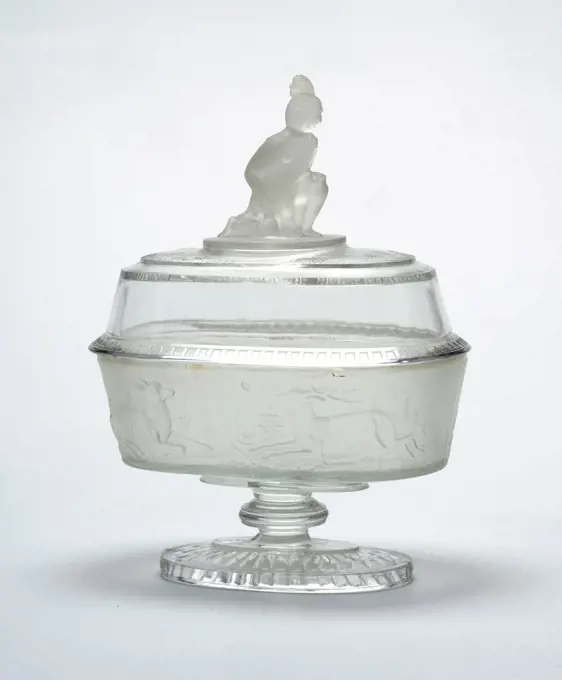
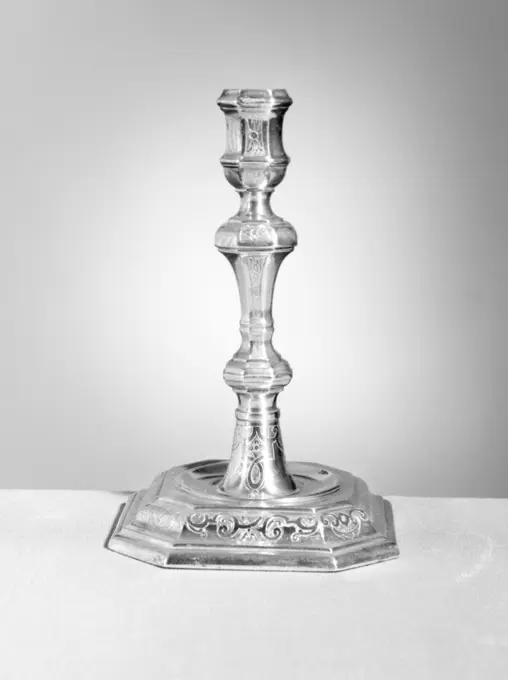
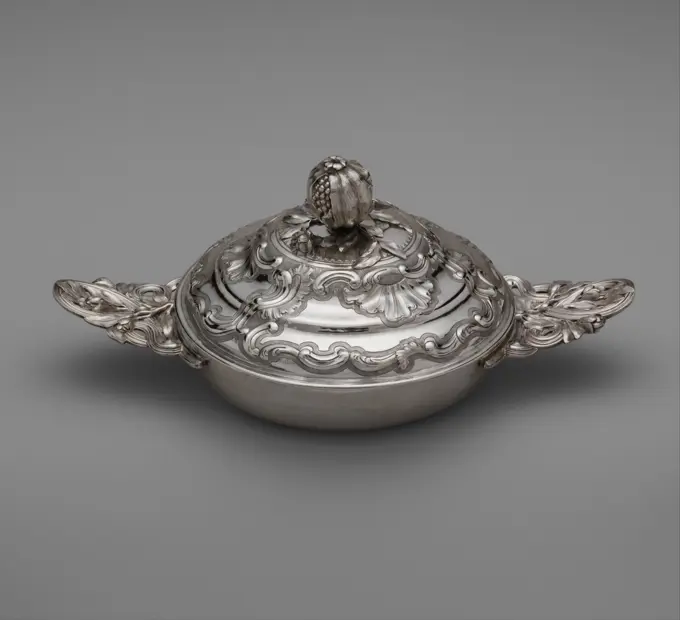
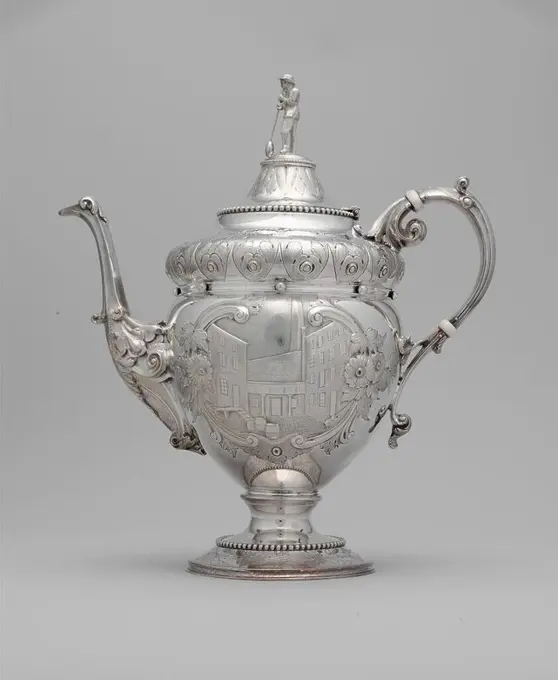
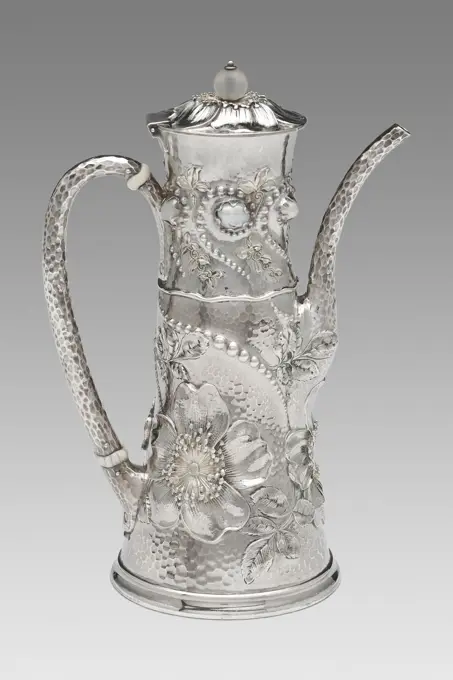
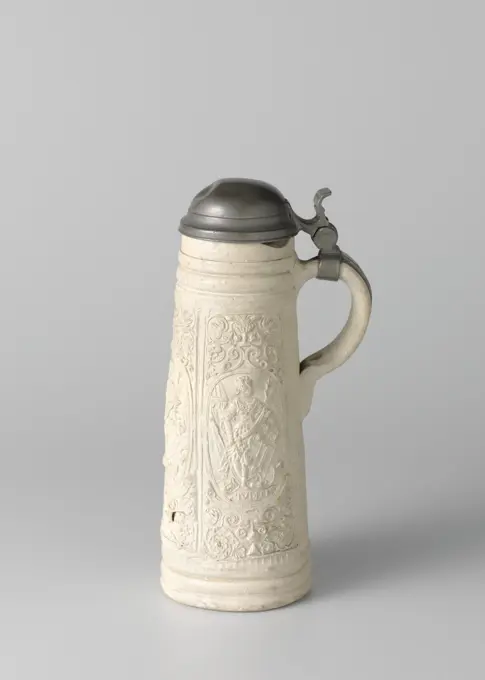
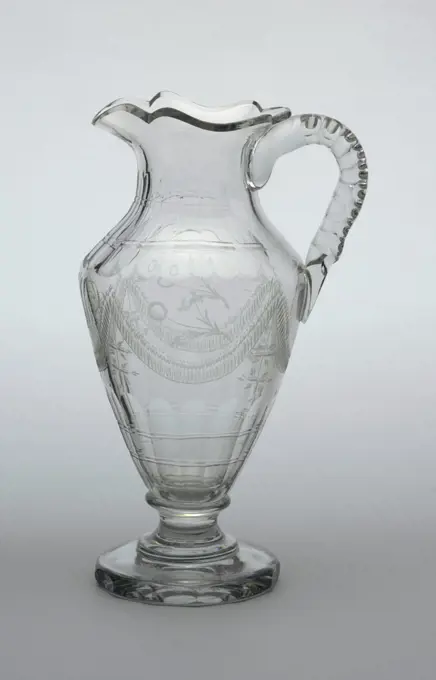
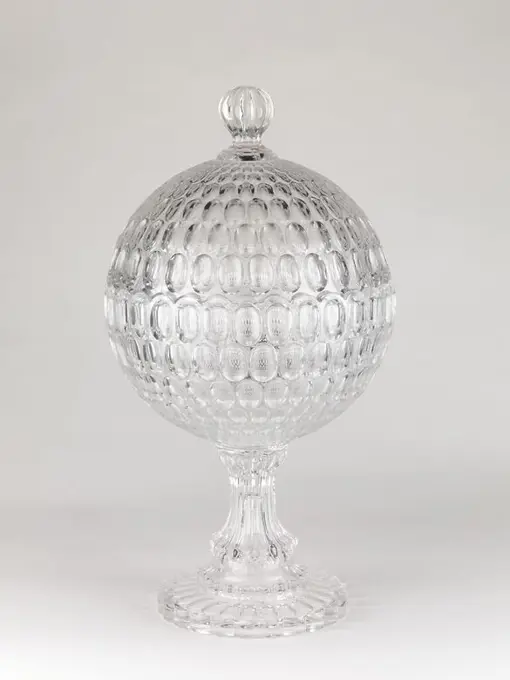
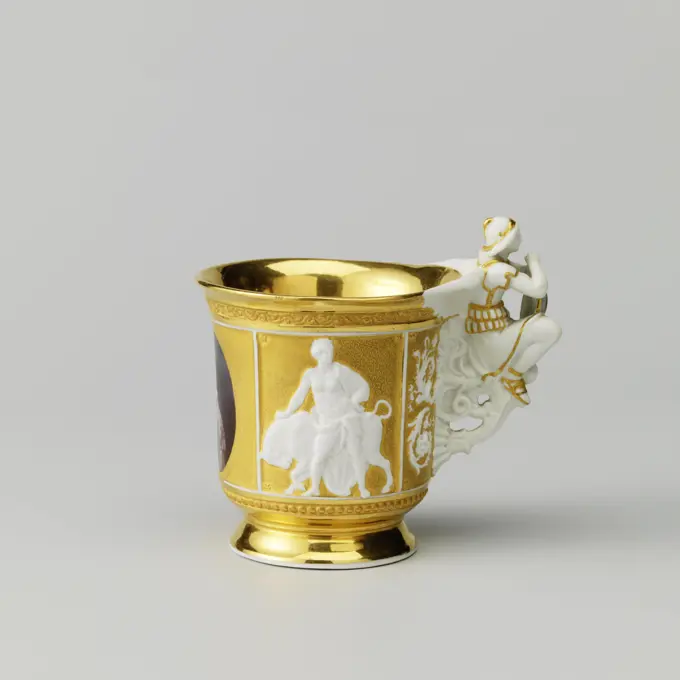
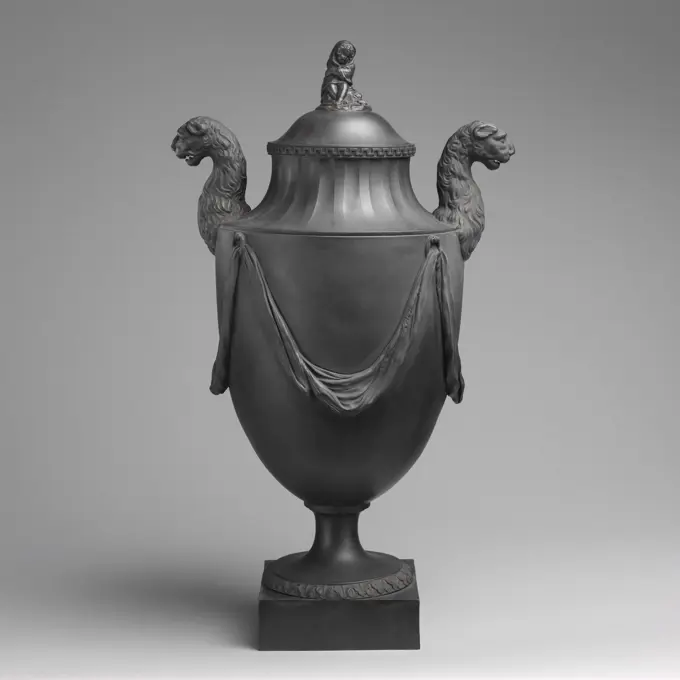
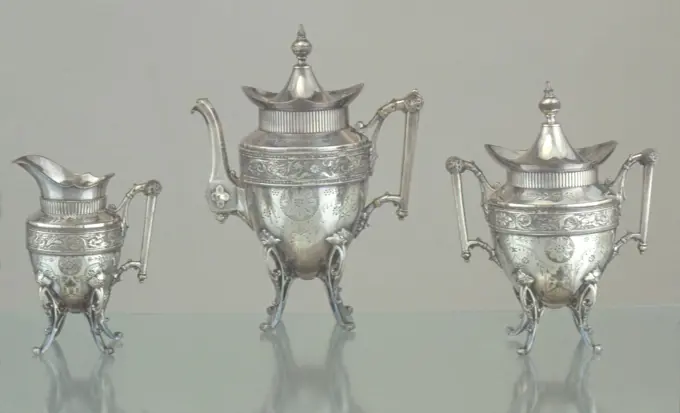
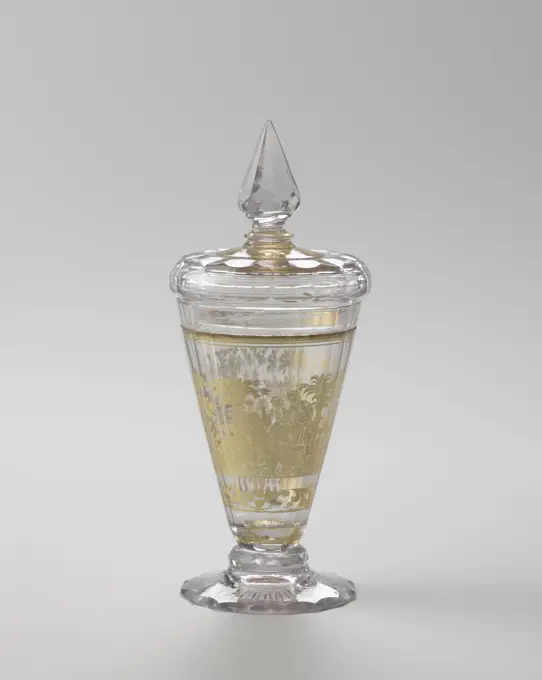
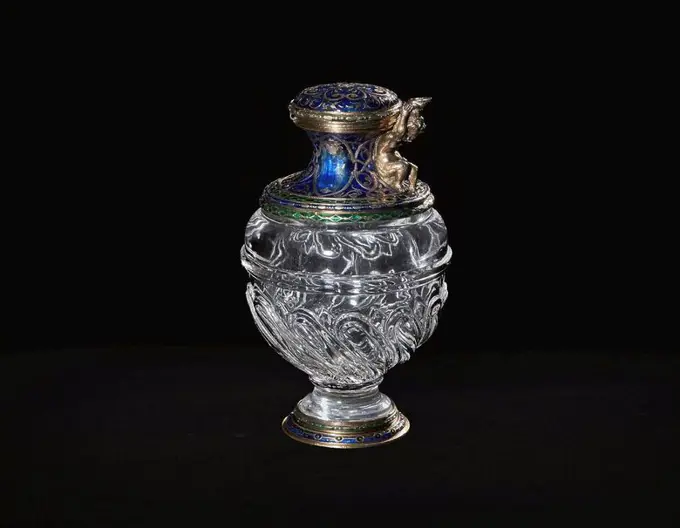
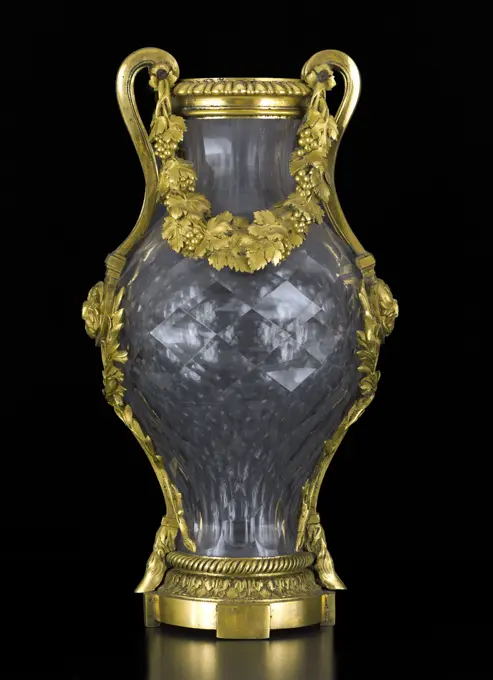
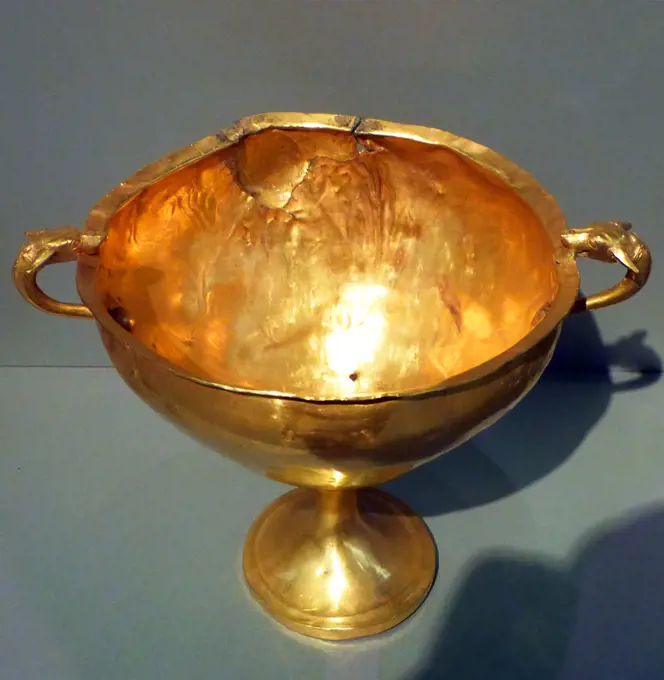
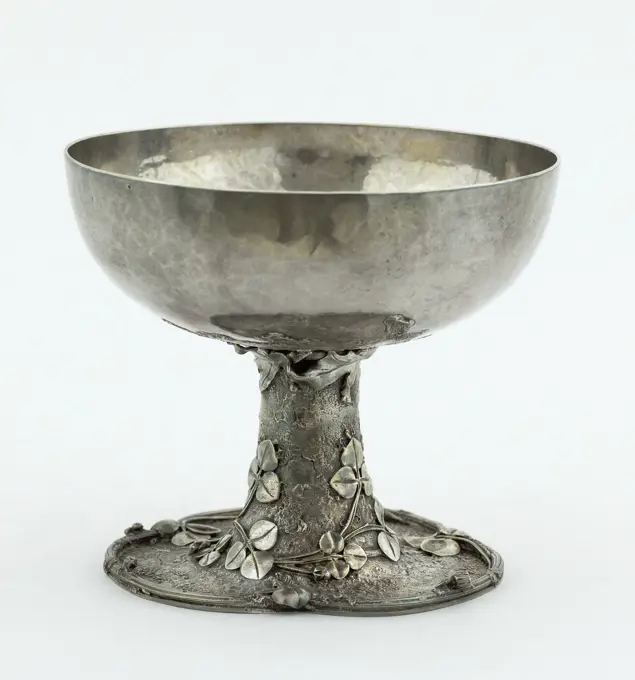
Chalice glass with two rabbits and a dog, anonymous, c. 1725 - c. 1749 Conical foot with cut decoration of ellipsen on the bottom. In facets sharpened, baluster -shaped tribe with one disk. Funnel -shaped, facets -sharpened chalice with a concave bent bottom. Two rabbits and a dog in a landscape on the chalice in Gilding. Along the top edge of the chalice a golden trim. Bohemia glass glassblowing / grinding / gilding Conical foot with cut decoration of ellipsen on the bottom. In facets sharpened, baluster -shaped tribe with one disk. Funnel -shaped, facets -sharpened chalice with a concave bent bottom. Two rabbits and a dog in a landscape on the chalice in Gilding. Along the top edge of the chalice a golden trim. Bohemia glass glassblowing / grinding / gildingCup; Non -like Lona Huta; 2. PO. 18th century (1750-00-00-1800-00-00);Cup with gold borders on a red ground, anonymous, c. 1800 - c. 1824 Porcelain head on spreading foot and with a high, curled ear, covered on the glaze with red and gold. The outer wall is covered with red and the foot, edge, ear and part of the inner wall with gold. On the outer edge a flower vank in one of the golden tires. Empire. France (possibly) porcelain. glaze. gold (metal) painting / gilding / vitrification Porcelain head on spreading foot and with a high, curled ear, covered on the glaze with red and gold. The outer wall is covered with red and the foot, edge, ear and part of the inner wall with gold. On the outer edge a flower vank in one of the golden tires. Empire. France (possibly) porcelain. glaze. gold (metal) painting / gilding / vitrificationJar with lid, with a forest face with three deer, Gebrüder Lorenz, c. 1920 - c. 1940 Flat, eight -lobe, faceted foot transferred to a faceted tribe and button. Convex chalice with funnel -shaped underside. A forest face with three deer is engraved on the chalice. Oval and circles cut on the underside of the chalice. Steinschönau glass glassblowing / grinding Flat, eight -lobe, faceted foot transferred to a faceted tribe and button. Convex chalice with funnel -shaped underside. A forest face with three deer is engraved on the chalice. Oval and circles cut on the underside of the chalice. Steinschönau glass glassblowing / grindingStanding Cup with Cover, c. 1715. Bohemia, 18th century. Glass; diameter: 17.8 cm (7 in.); overall: 48 x 16.3 cm (18 7/8 x 6 7/16 in.). Engraved with arms of Saxony-Poland and Hunting Scene.Dice glass, anonymous, c. 1580 - c. 1590 Dice glass with baluster -shaped trunk with tear -shaped bubble. Bucket -shaped chalice with horizontal band from Lattimo Glas, made up of three tires. Between the tires, consisting of drops, smooth and corrugated lines and large studs, the inscription ick brings my love. Under the baluster of the trunk is an atmosphere of silver mounted with a dice. On one of the tires of the atmosphere the inscription Bybe Cum Gavdio Vinvm Eclesiastes IX Cap (Drink the wine with joy; eccl. IX). glassblower: Low CountriesNorthern Netherlands glass. silver (metal) glassblowing Dice glass with baluster -shaped trunk with tear -shaped bubble. Bucket -shaped chalice with horizontal band from Lattimo Glas, made up of three tires. Between the tires, consisting of drops, smooth and corrugated lines and large studs, the inscription ick brings my love. Under the baluster of the trunk is an atmosphere of silver mounted with a dice. On one of the tires of the atmosphere tWood water lining around. The object is composed of the following parts: the bucket (cast and turned), the handle, the hook and the eye (beaten). The round bucket has a thin shaft at the bottom, which passes into a round downwardly sloping hollow feet (with centergat at the bottom). The shaft has been profiled twice in the middle with a convex rib in the middle. Such a profiling also occurs at the top of the bucket. The handle with the other parts has been updated.. Wing glass on flat foot, hollow, ribbed and cherted baluster shaped trunk. On both sides a wing in the shape of a sea horse from blue and colorless glass. Above a flat disc a bell-shaped chalice, which runs into an octagonal border.Roemer with four rows of Braamnoppen, Anonymous, c. 1650 - c. 1700 Large Roemer with inserted bottom on low, conical, spun from a wire. The bowl -shaped chalice as a whole blown the trunk, which is set with four rows of brambles. The transition from the chalice to the trunk indicated by a ribbed thread Low Countries glass glassblowing Large Roemer with inserted bottom on low, conical, spun from a wire. The bowl -shaped chalice as a whole blown the trunk, which is set with four rows of brambles. The transition from the chalice to the trunk indicated by a ribbed thread Low Countries glass glassblowingMiniature porringer 1702-3 Thomas Waterhouse. Miniature porringer. British, London. 1702-3. Silver. Metalwork-Silver-MiniatureSilversmith: Arnoldus van Geffen, Silver miniature kettle, kettle cauldron dolls toy relaxing medium miniature model silver, poured hammered kettle with separate lid with round knob handle with volutes. stadskeur: three crosses under crown play decorate food prepare cooking kitchen home interior dollhouse Bisschop RotterdamWaste Bowl (USA); Made by R. & W. Wilson, Philadelphia; silverHoly-water stoup second half 19th century Handle and mounts made by Alfred André French. Holy-water stoup 192696Westward Ho! pattern, James Gillinder & Sons, American, 1860 - 1930, Pressed glass, acid frosted, Compote with cover. Oblong shape with frosted sides on colorless base; sides decorated with molded figures of buffalo and deer. Conforming lid is colorless glass surmounted by figure of a kneeling Indian, ca. 1880, glasswares, Decorative Arts, Compote, CompoteCandlestick (one of a pair) ca. 1730 German, Augsburg. Candlestick (one of a pair) 206425Bowl (Écuelle) with cover 1774 Louis Landes Covered bowls such as this were known in France as ecuelles, and were intended for the serving of hot broth or soup. Broth was commonly served in the morning in the bedroom during the toilette, the elaborate washing and dressing ritual. The bowl's cover kept the contents warm, and the broth could be sipped from the bowl by using the two handles, while bread rested on the stand.This basin and stand are decorated with the most common of all Rococo motifs, scrolls in the form of the letter C, and with abstract shell and vegetal forms. The handles are formed of looping bands entwined with laurel branches. The design of this ecuelle is masterful; little is known about the Toulouse silversmith Louis Landes, but the Rococo silver produced in Toulouse in the third quarter of the eighteenth century is among the finest French silver made in this style.. Bowl (Écuelle) with cover 200066Teapot. Culture: American. Dimensions: 11 1/4 x 9 15/16 in. (28.6 x 25.2 cm). Maker: Wood and Hughes (1845-99). Date: 1862-63.Presented to Christian Dorflinger upon his retirement from the Long Island Flint Glass Works in 1863, this service (2006.90.1-4) is ornamented with meticulously chased scenes of the glassworks itself. The teapot depicts a back courtyard of the factory, with a loading dock and packing barrels, while the cream pot (2006.90.2) features a vignette of a gaffer at his bench finishing a blown glass pitcher. The finials, cast in the form of glassblowers, also reference Dorflinger's trade. Dorflinger was one of the most successful nineteenth-century American glassmakers, operating several factories in Brooklyn before his retirement. He later established a thriving glasshouse in White Mills, Pennsylvania. The Museum has two important glass items from Dorflinger's Brooklyn period: an 1859 presentation vase (1988.391.1) and an 1861 compote (1972.232.1) made for President aCoffee Pot c 1881-1889 New York City. Silver, pearls, chalcedony, and ivory . Charles OsborneCup.  Maker: Peter L. Krider, American, 1821-1895Tankard (schnelle) with Judith, anonymous, c. 1570 - c. 1600 Jug (schnelle) of stoneware with cylindrical, tapered body and C-shaped ear. Profiles under the edge and above the foot. On the body in relief three times a printed and imposed, elongated box with Judith in a medallion, 'Ivdith', with the head of Holofernes. The medallions are surrounded by curls and flower vines. The jug is caught in a pewter frame with lid. Siegburg. Siegburg Stoneware. Glaze. frame: tin (metal) vitrification Jug (schnelle) of stoneware with cylindrical, tapered body and C-shaped ear. Profiles under the edge and above the foot. On the body in relief three times a printed and imposed, elongated box with Judith in a medallion, 'Ivdith', with the head of Holofernes. The medallions are surrounded by curls and flower vines. The jug is caught in a pewter frame with lid. Siegburg. Siegburg Stoneware. Glaze. frame: tin (metal) vitrificationCALIZ DE ORO Y ESMALTES. Location: MUSEE D'ARTS DECORATIFS. MADRID. SPANIEN.Cruet 1745-1755 Silesia. Glass .Flambuity candlestick, five -part, anonymous, c. 1590 - c. 1596 candlestick Flam -building candlestick, five -part with a wide -ranging circular base with two egg lists. The candlestick has a baluster -shaft or trunk with a disc -shaped button at the bottom a concave fat bowl with egg frame, a baluster -shaped shaft and a cylindrical candle holder with two round holes, intended to be able to remove the candle stumps, and an egg list at the top. Pouring burrs are visible in the eggs. The candlestick has a crowned rose as a quality brand. Netherlands tin (metal) casting  Nova Zembla. Saving HuysEwer, Glass, Urn-shaped body, tapered neck, shaped lip with pouring spout, loop handle with 2 rows of cut facets along sides; sides decorated with engraved decoration of swags, flowers and the initials 'S A N' under spout, fluting above and below; tapered foot on spool stem and flat disk-shaped base with faceted edge., Ireland, late 18th century, glasswares, Decorative Arts, EwerCovered compote. Culture: American. Dimensions: H. 14 1/8 in. (35.9 cm); Diam. 8 in. (20.3 cm). Maker: Bakewell, Pears and Company (1836-1882). Date: 1850-70.One of the earliest patterns used in the Pittsburgh area, "Argus," also known as "Thumbprint," is a deliberate imitation of cut glass. The concave oval facets create a highly reflective surface and a dramatic optical effect. The rims of the cover and the bowl are scalloped to fit seamlessly together and form a perfect sphere. Museum: Metropolitan Museum of Art, New York, USA.Teakettle 1762-63 Benjamin Brewood II The wealthy colonial merchant Samuel Verplanck owned several pieces of London silver, including this teakettle-on-stand marked by Benjamin Breewood II in 1762. Its repoussé-decorated body, open floral stand, and shell-shaped feet represent the height of English rococo styling. Samuel was sent to study banking in Holland, where he met and married his cousin Judith Crommelin. The couple returned to New York in 1763 and moved into the familys elegant Wall Street home. Verplank family silver, furniture, and paintings now in the Metropolitans collection exemplify the imported luxury goods owned by prominent colonists.. Teakettle 8323Footed bowl ca. 6th century A.D. Sasanian. Footed bowl 325373Beaker 1750-68 Jean-Baptiste Brissot (or Brisseau). Beaker 200292Anonymous. "Ovoid vase". Porphyry and bronze. 1760-1790. Paris, Carnavalet museum. 76109-1 Antiquity, bronze, porphyry, ovole, ancient vaseDecanter 1879 Christopher Dresser This decanter or claret jug was produced by the Birmingham and London based firm of Hukin & Heath to the designs of Christopher Dresser. The latter began to advise the firm around 1878. Alongside the traditional makers mark, Hukin & Heath had their products stamped with a replica of Dressers own signature. Somewhat more conservative in style, the present decanter is an example of Christopher Dressers clean design looking back at neo-classical forms established in the eighteenth-century, such as claret jugs or chocolate pots. Listen to experts illuminate this artwork's story Listen Play or pause #418. Christopher Dresser and the Birth of Industrial Design Supported by Bloomberg Philanthropies We're sorry, the transcript for this audio track is not available at this time. We are working to make it available as soon as possible.. Decanter. British, Birmingham. 1879. Silver plate, glass. Metalwork-SilverplateCaster; glassBeaker.   Maker: Jacob Hurd, American, 1702-1758Toy Decanter. United States, 1815-1840. Furnishings; Serviceware. Blown glassCup with the portrait of Maria van Hohenzollern-Sigmaringen, c. 1867 Porcelain head on foot, painted on the glaze in email colors and gold. The outer wall is divided into four courses with a medallion with the portrait of Maria van Hohenzollern-Sigmaringen, signed 'A. Ambronn '. On both sides of this in relief a classic performance: Hercules with the lion and Europe with the bull. The ear is in the form of a winged, classically dressed person, kneeling on curl work that runs out in leaf vines upside down. The figure leans with both arms on a coat of arms with the alliance weapon of the couple with the motto 'Nichts Ohne Gott'. Marked on the underside with the scepter including a medallion with the eagle, a scepter and a globe in his claws. The edge script reads' Koenigl. Porzellan Manufaktur '. In addition, the letter S and D. Berlin porcelain. glaze. gold (metal) painting / gilding / vitrification Porcelain head on foot, painted on the glaze in email colors and gold. The outer wall isBasketCovered Filigrana Beaker (Stangenglas). UnknownTeapot, 18th century, 8 5/8 x 9 1/4 x 4 1/2in. (21.9 x 23.5 x 11.4cm), Pewter, United States, 18th centuryCovered Tureen, 19th century, 11 1/4 x 15 1/4 x 10 1/4 in. (28.58 x 38.74 x 26.04 cm), Silver plate, England, 19th centuryVase with cover 1769-80 Wedgwood and Bentley. Vase with cover 191375Three piece teaservice.  Manufacturer: Simpson, Hall, Miller and Company, American, 1866-1898Cup on foot with lid of Zwischengoldglas, Anonymous, c. 1720 - c. 1740 Light conical foot with cut decoration. Facetted disk, multi -Time faceted, conical chalice. On the chalice, above a stylized edge leaves, in leaf gold and engraving, a fountain with a water -breathing dolphin for a balustrade with garden vases, a gallant scene and a Chinese garden wall with a basket of flowers. With accompanying lid (BK-NM-10754-269-2). Bohemia glass glassblowing / grinding Light conical foot with cut decoration. Facetted disk, multi -Time faceted, conical chalice. On the chalice, above a stylized edge leaves, in leaf gold and engraving, a fountain with a water -breathing dolphin for a balustrade with garden vases, a gallant scene and a Chinese garden wall with a basket of flowers. With accompanying lid (BK-NM-10754-269-2). Bohemia glass glassblowing / grindingBowl with winged stem. Flat foot with blown in the form, grinding ribs. Hollow, baluster-shaped strain with vertical ribs, above which a hollow disk with a wreath bulbs. To the tribe spirally wrapped two teared rods of colorless glass with a white, red and yellow garland, ending in blue combs. Fully shaped, partly embossed form, smooth outlying chalice.Household effects. Among the remnants from the Safe House’ were many utilitarian household objects, such as plates, cutlery andbrushes. The taps originally were attached to wooden barrels containing water or wine. The spike candleholders’,which could be hammered into a wooden beam, were particularly convenient.Vase with cover ca. 1775 Wedgwood and Bentley. Vase with cover 198656Wine fountain and cooler, attributed to Alger Mensma, 1731Mortar 15th century North German. Mortar. North German. 15th century. Bell metal. Metalwork-Bell MetalTeapot ca. 1830 Robert and William Wilson. Teapot. American. ca. 1830. Silver. Made in Philadelphia, Pennsylvania, United StatesEwer (Germany); pewterAnonymous / 'Small rock crystal ewer with a boy, without a handle'. 1550 - 1575. Rock crystal / Hyaline quartz, Enamel, Gold, Silver-gilt. Museum: Museo del Prado, Madrid, España.Covered Bowl for Preserves. France. Date: 1695-1730. Dimensions: 7.6 × 12.7 cm (3 × 5 in.). Glass; mold blown. Origin: France. Museum: The Chicago Art Institute, Chicago, USA.Anonymous. Vase mounted. Roche crystal, gilded bronze, 1775-1785. Paris, Cognacq-Jay museum. 78926-5 Anse, bronze gilded, rock crystal, gilding, leaf, bunch grapes, vase monte, 18th 18th 18th 18th 18th 18th 18 century, fruitHammered gold goblets, each with two cast handles ending in naturalistic dogs' heads depicted biting the vessel's rim.. Conical foot, nodes under a baluster-shaped strain, cylinder-shaped candle holder. The edge of the base caught in a gold-plated silver frame with a border cracks and a stripped edge. The nodus and the candle holder caught in a smooth frame with a stripped edge, the fat catcher with a border cracks. The foot and trunk with the wheel engraved with putti, flower festivals and flower branches. Marked on the foot edge with an unknown Master's sign and the Stadswark in Augsburg.Henri Husson / Adrien-Aurélien Hébrard. Cut. Bronze, hammered silver, pushed and chiseled, silver frog. 1909-1914. Museum of Fine Arts of the City of Paris, Petit Palais. 75295-17 Silver hammer, bronze, chisel, cut, silver frog, regrowthSilversmith's art, Italy, 18th century. Silver coffeepot, side-handled.Milk Wagner, Krzysztof (fl. 1796 1843)Galvanoplastic reproduction of a drinking jug decorated with flowers, fruits and band work, fa. Elkington & Co., after 1875 - Before 1880 Galvanoplastic reproduction of a drinking jug decorated with driven flowers, fruits and band work. Gilded. London copper (metal). silver (metal) gilding Galvanoplastic reproduction of a drinking jug decorated with driven flowers, fruits and band work. Gilded. London copper (metal). silver (metal) gildingDish on high foot with pierced sides, anonymous, c. 1800 dish Porcelain bowl on a high, spreading foot ending in a square pedestal and with an openwork wall with a serrated edge. Painted on the glaze in gold. Halfway through the openwork wall a closed band with flowers. The scale and the foot are connected by means of an iron pin. France porcelain. glaze. gold (metal) painting / gilding / vitrificationCover for Wine Cup ca. 1740 American. Cover for Wine Cup 2290Covers; Unfolded author, indefinite Lona Huta; XVII/18th century (1680-00-00-1710-00-00);Purse with inscription: Sebastiaen of Geysse 1581. The cast round mortise widens slightly upwards, has a high-wearing profiled border and a flared profiled foot. On the edge in Latin Majuskels The inscription Sebastaen van Geersbege 1581 with interpunctions consisting of a rosette with three large and three small leaves (three times) and an X. The upper fries consists of buckranies with garlands (six times), The bottom of a dancing farmer, farmer's, sater and a farmer with a dog (eight figures).Cup. Cup-shaped cup on foot ring, outside black Basketed, inside (fire) gold-plated suassa. Top edge light scollates with five vertical ridges from edge to foot ring. Five rectangular cartouches with excised decorations in gold-plated relief of branches with leaves and flowers, birds and one cartouche with palm branches and fruits. On the outside along the top edge, a horizontal bond with entered decoration. Wing-shaped ears were closed on either side, to two sides on the underside. Ears are stylized branches, partly smooth and round, which split into two, with (flower) buttons and on top of flowers.Decanter with Stopper. United States, 1815-1840. Furnishings; Serviceware. Mold-blown glassAnonymous / 'Case for lapis lazuli goblet'. 1650 - 1711. Leather, Wood, Cloth. Museum: Museo del Prado, Madrid, España.Milk Pot 1835-40 William Forbes. Milk Pot 4398. A basket of silver filigree.Darabukka possibly Algerian 19th century Darabukka with ornately engraved brass body. Such drums are held either under the arm or on the player's thigh. Elaborate finger and palm techniques produce a variety of tonal effects.Tankard ca. 1730-1755 American. Tankard 8176Cáliz, 1400. Iglesia del Pi de Barcelona.Possibly Boston and Sandwich Glass Works, Cream Pitcher, c. 1820-40, colorless glass.Banner Head in the Form of a Fleur-de-lys, 1700s. France, 18th century. Steel; overall: 25 x 6.7 cm (9 13/16 x 2 5/8 in.).Tureen with cover and stand. Culture: French, Paris. Dimensions: Overall (tureen with cover (2a, b), wt. confirmed): 2 7/8 × 18 3/8 × 15 3/8 in., 14 lb. (7.3 × 46.7 × 39.1 cm, 6.3 kg);Overall (stand (.2c), wt. confirmed): 2 7/8 × 18 3/8 in., 14.9 lb. (7.3 × 46.7 cm, 6.8 kg). Maker: Jacques-Nicolas Roettiers (1736-1788, master 1765, retired 1777). Date: 1770-71.This tureen and stand comprise one of twenty-two such tureens in the most extensive silver service of the second half of the eighteenth century, numbering more than 3,000 items. Catherine the Great commissioned it to be "made in the latest fashion" in Paris. The empress was concerned with the smallest details of the design and production. The sculptor Étienne-Maurice Falconet, who had been instrumental in introducing the Neoclassical style to the Sèvres porcelain factory, advised on stylistic matters and may have been responsible for some of the drawings, whereas imperial Russian agents periodically supervised the execution at Creampot.  Maker: Thomas Barton Simpkins, American, 1728-1804Miniature chamber candlestick 18th century Probably by John Robins. Miniature chamber candlestick. British, London. 18th century. Silver. Metalwork-Silver-MiniatureMeasure. Culture: French, Normandy. Dimensions: 10 1/2 × 3 3/4 in. (26.7 × 9.5 cm). Date: early 18th century. Museum: Metropolitan Museum of Art, New York, USA.Spoutcup.   Maker: William Cowell, Jr., American, active ca. 1713 - 1761Cup with cover 1682 Thomas Jenkins. Cup with cover 205684Purse with inscription: Herman Urnissz and Sin Hvisfrov Ano 1586. The cast round mortar widens upwards, has a high-wearing profiled border and a flared profiled foot. On the edge in Latin Majuskels, the inscription Herman Urnissz and Sin Hisfrov Ano 1586 with interpunctions consisting of a diamond (six times) and from two windows. The upper fries has a shield with a private label (a 1 with twice at the bottom of the letter X together), a wound pearl and string edge, hanging stylized winger leaves and stylized acanthus leaves. The lower frieze has three times the motif of a round shield between a winged male and a female tenant, whose tailed tail or a nodus o.. Below it is an edge of stylized acanthus leaves. The foot is decorated with a pearl edge. The ears have the form of dragons with hind legs.Silversmith's Art, Great Britain 19th century. Silver desk-set, neo-rococo' style.Sugar Bowl. Culture: American. Dimensions: Overall: 7 3/4 x 8 3/8 x 5 1/8 in. (19.7 x 21.3 x 13 cm); 15 oz. 10 dwt. (482 g)Body: H. 6 3/16 in. (15.7 cm); 12 oz. 3 dwt. (377.9 g)Cover: 2 1/8 x 4 9/16 x 3 15/16 in. (5.4 x 11.6 x 10 cm); 3 oz. 7 dwt. (104.1 g). Maker: William B. Heyer (active ca. 1807-22). Retailer: Hyde and Nevins (active ca. 1814-19). Date: ca. 1815. Museum: Metropolitan Museum of Art, New York, USA.Daniel Dupuy, Cann, c. 1765, silver.Schweinfurt, Church of the Holy Cross. Baptismal jugs from the 19th century, St., Sankt, SaintTankard 1700-1725 Edward Winslow American. Tankard 8244Candlestick ca. 1815-30 American. Candlestick. American. ca. 1815-30. Glass, blown. Probably made in Pittsburgh, Pennsylvania, United StatesSugar basket, Johannes Schiotling, 1789 The oval basket rests on a hollow position ring, and has a vaulted body that is bent at the ends and in the middle upwards. The bottom and top of the position ring are decorated with a large pearl edge, which is repeated at the top of the basket. The pattern of the openwork and engraved wall suggests that it is built from braided toes. In the basket a straight, bent at the top, shot, on which the pearl edge is repeated. The whole is crowned by a bouquet open and closed flowers; They can be identified as copies of the Plant Jasminum Nudiflorum. Amsterdam silver (metal) The oval basket rests on a hollow position ring, and has a vaulted body that is bent at the ends and in the middle upwards. The bottom and top of the position ring are decorated with a large pearl edge, which is repeated at the top of the basket. The pattern of the openwork and engraved wall suggests that it is built from braided toes. In the basket a straight, bent at the top, shotTeapot on Stand, Model 730 Teapot, Stand, And Burner; Designed by Benson, William Arthur Smith Benson (English, 1854 - 1924); Manufactured by W.A.S. Benson Ltd. (United Kingdom); England; silver-plated metalChalice 1762 Scottish. Chalice. Scottish. 1762. Pewter. Metalwork-PewterCupStem Cup with Leechee and Vines 1400-1599 China. Carved cinnabar lacquer .Tankard Manufacturer Elkington & Co. British 19th century, after 17th century original This electrotype is after a seventeenth-century original at the Gewerbe Museum, Nuremberg, at the time of reproduction.Silversmith's art, Germany, 17th century. Nautilus vase with gilded silver and gilded bronze mount, around 1600. Height 33.5 cm.Warwick Vase. Paul Storr; English, 1771-1844; London, England. Date: 1823-1824. Dimensions: 23.5 × 36.2 × 26.7 cm (9 1/4 × 14 1/4 × 10 1/2 in.)Wt.: 9 lb. 10 oz. Silver. Origin: England. Museum: The Chicago Art Institute, Chicago, USA.Cream Pitcher 1770-1800 Chinese. Cream Pitcher. Chinese. 1770-1800. Porcelain. Made in ChinaMustard pot 1758-59 Antoine Plot. Mustard pot. French, Paris. 1758-59. Silver. Metalwork-SilverA pewter oil lamp with glass reservoir, anonymous, c. 1750 - c. 1800 Tin oil lamp. The round foot has a raised edge and runs clockwise in the middle with a trunk on it, which runs up wider and wears the oil lamp with the spout and the glass lamp on a short, ribbed trunk. Opposite the spout is the handle that runs just below the ribbed part of the trunk. Münster tin (metal). glass casting / blow molding Tin oil lamp. The round foot has a raised edge and runs clockwise in the middle with a trunk on it, which runs up wider and wears the oil lamp with the spout and the glass lamp on a short, ribbed trunk. Opposite the spout is the handle that runs just below the ribbed part of the trunk. Münster tin (metal). glass casting / blow moldingPair of candlesticks ca. 1821-30 Carl Heinrich Hoffmann German. Pair of candlesticks 232013Tea Caddy 1797-ca. 1815 Christian Wiltberger American. Tea Caddy 8264Gildcan of tin with lid and inscription. Jug of tin, from the bakers guild. The foot is decorated with profiled tires. Above it the baluster-shaped jug with inscription and a generous medallion with a weapon. The top is closed with a vaulted lid with a button. The simple thumb trust runs over into the handle via a double-dinner hinge, which curls down slightly down.Water Pitcher ca. 1846 William F. Ladd. Water Pitcher. American. ca. 1846. Silver. Made in New York, New York, United StatesAncient lamp against gradient background