Classic Wooden Side Chairs

A collection of elegant wooden side chairs featuring intricate designs, varying seat materials, and classic American craftsmanship.

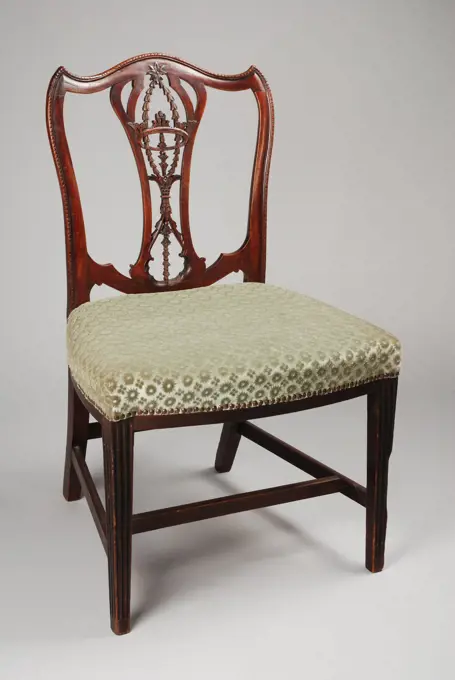
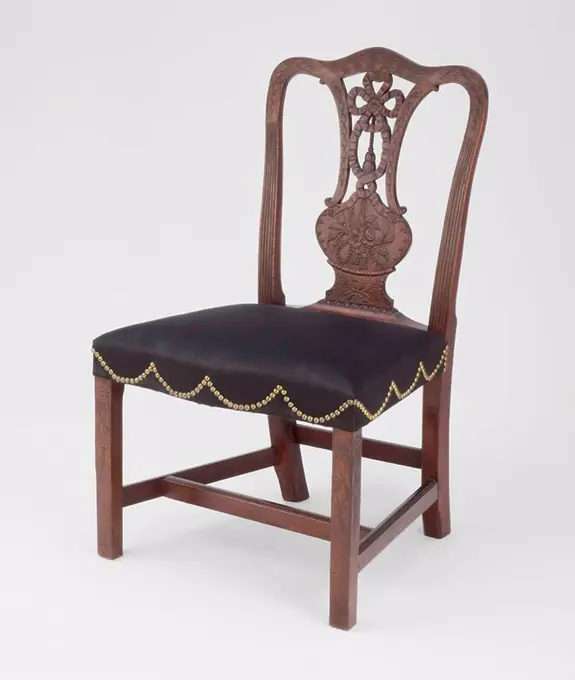
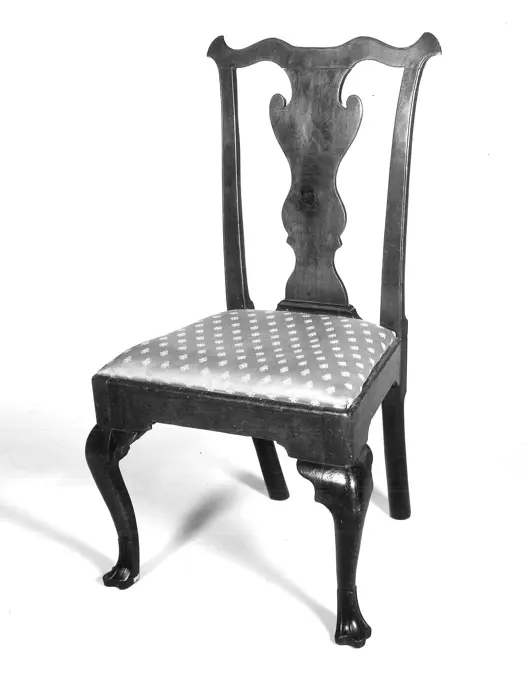
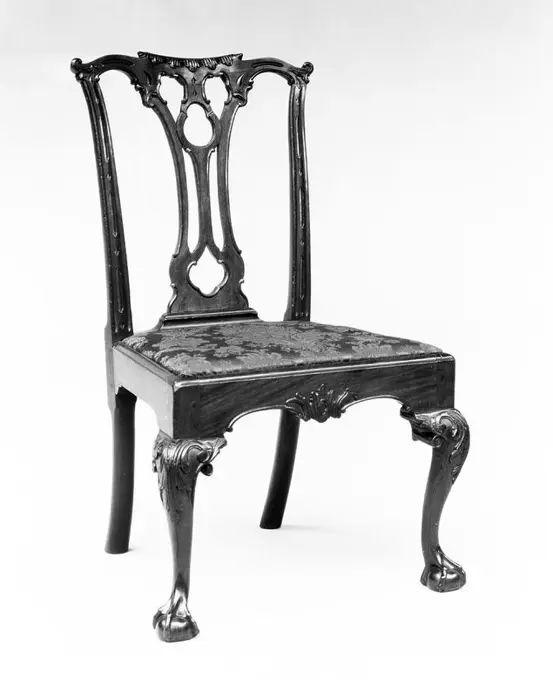
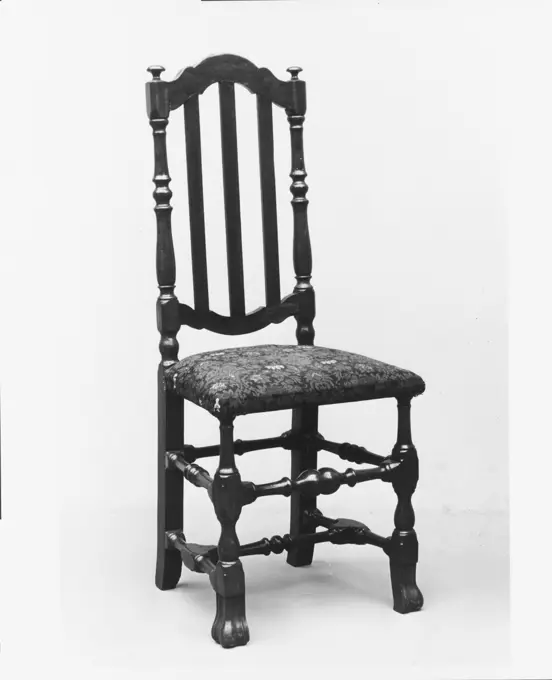
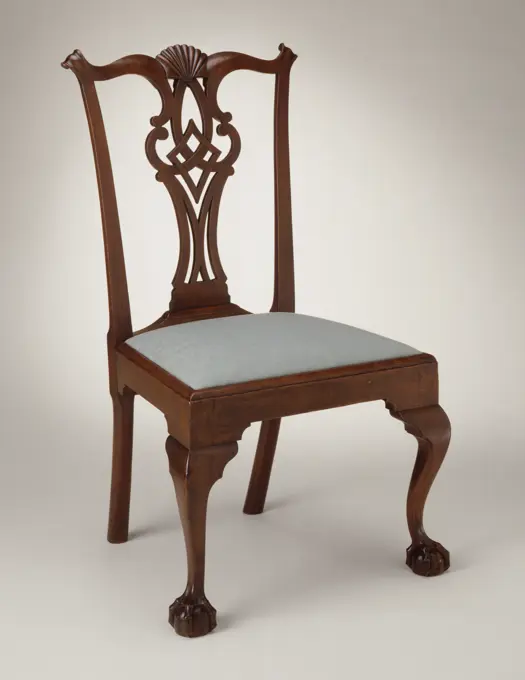
Side Chair with Scroll Splat and Stretchers. United States, Massachusetts, 1765-1775. Furnishings; Furniture. Mahogany wood, pine wood and replaced upholstery
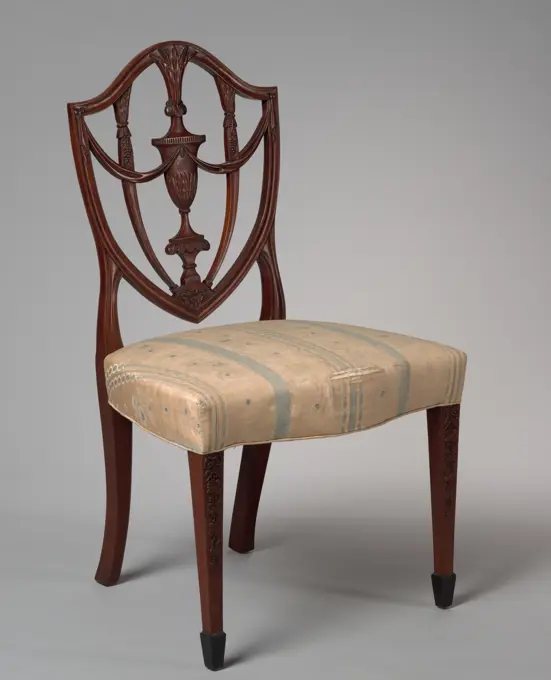
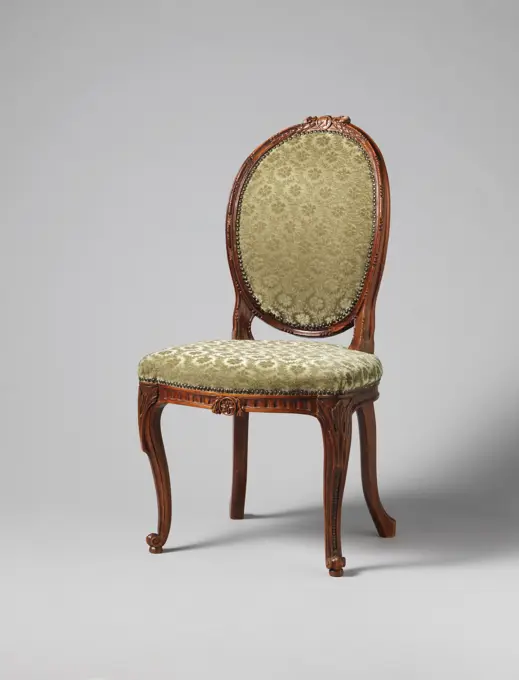
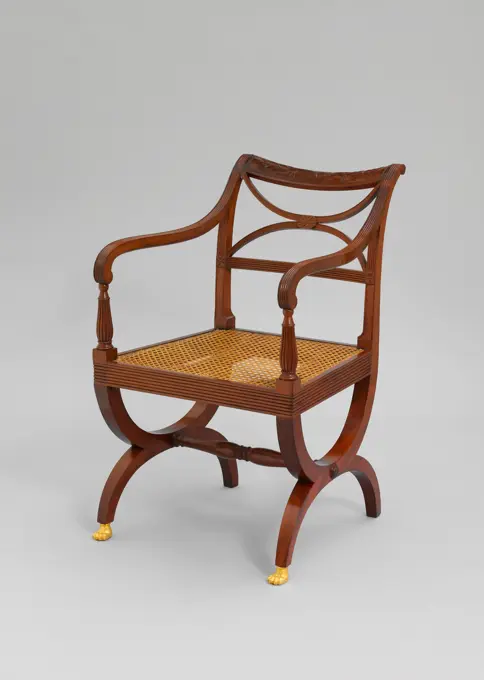
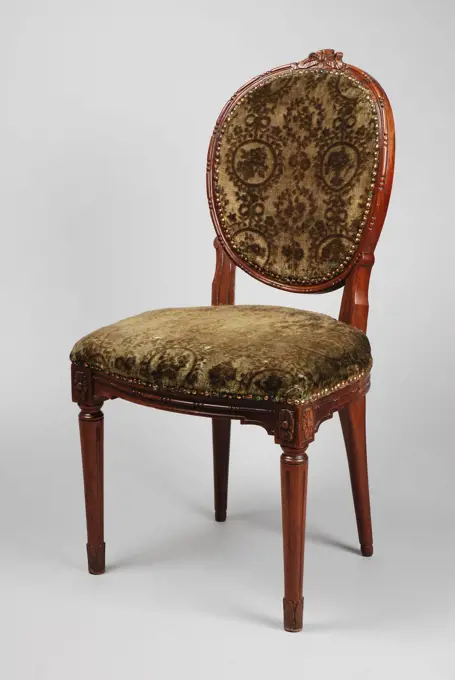
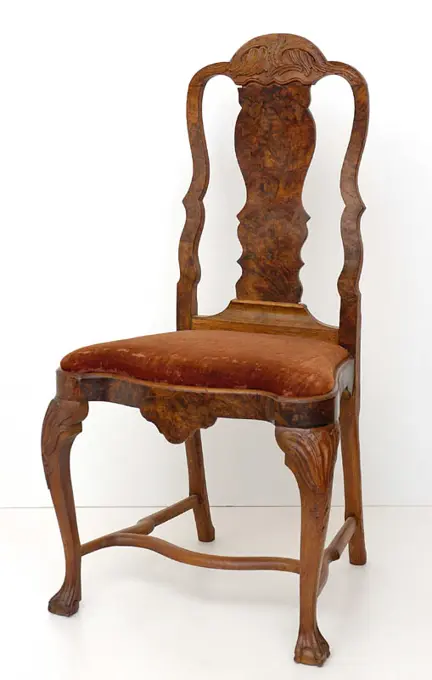
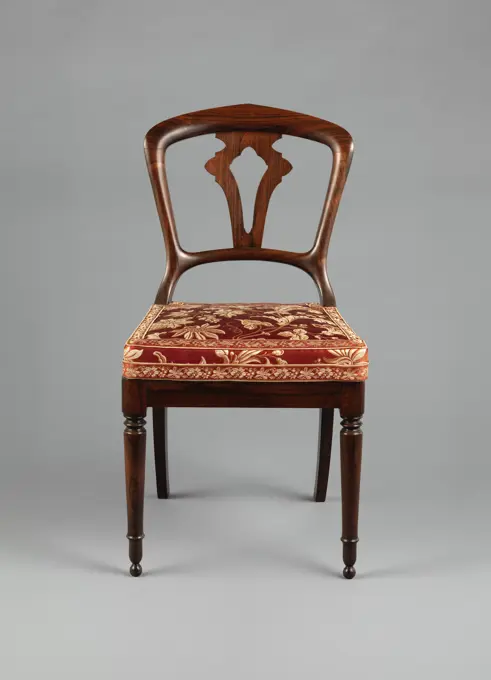
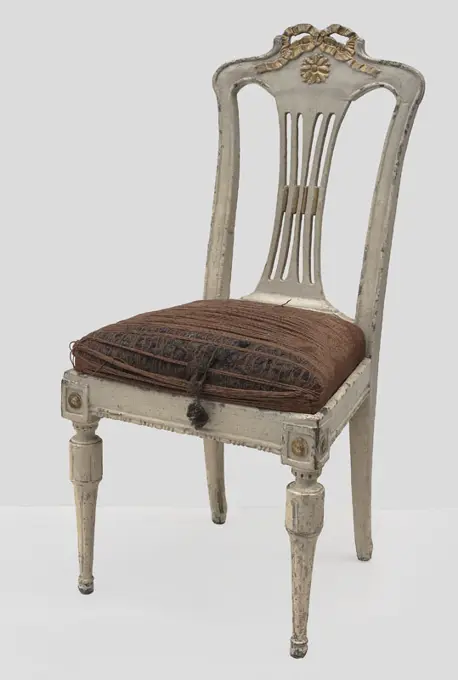
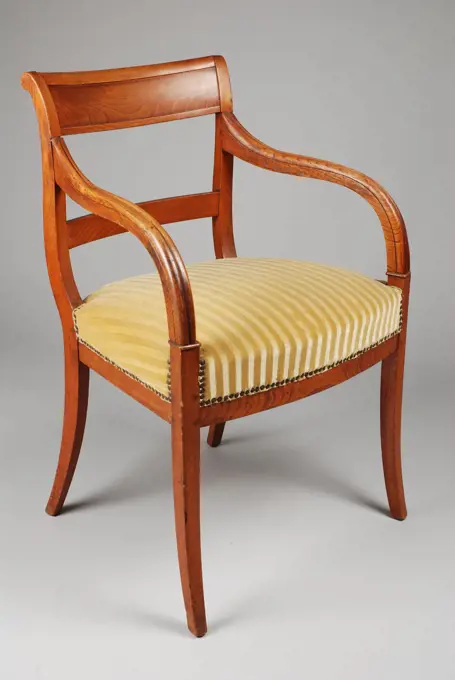
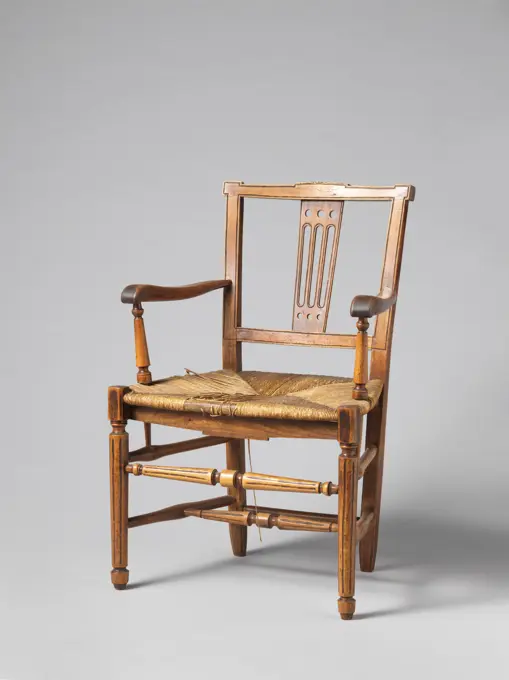
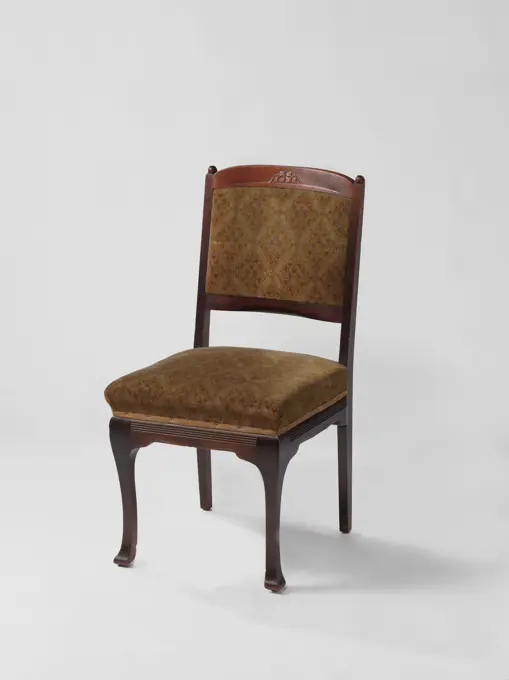
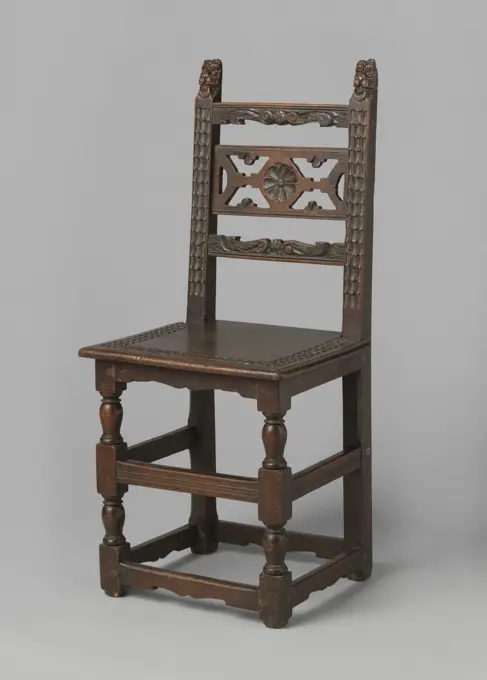
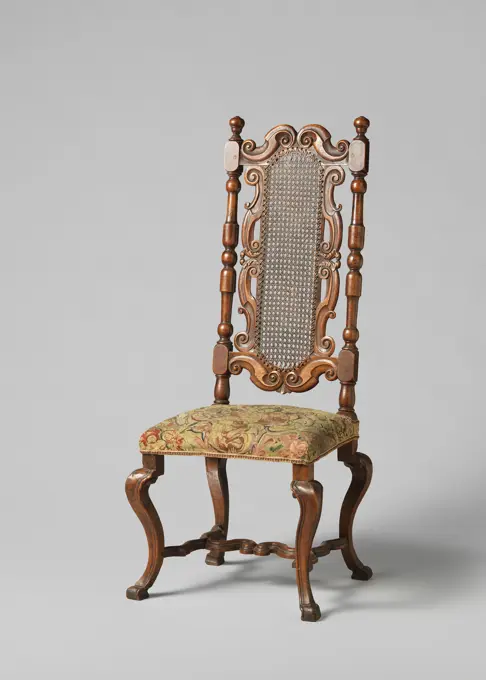
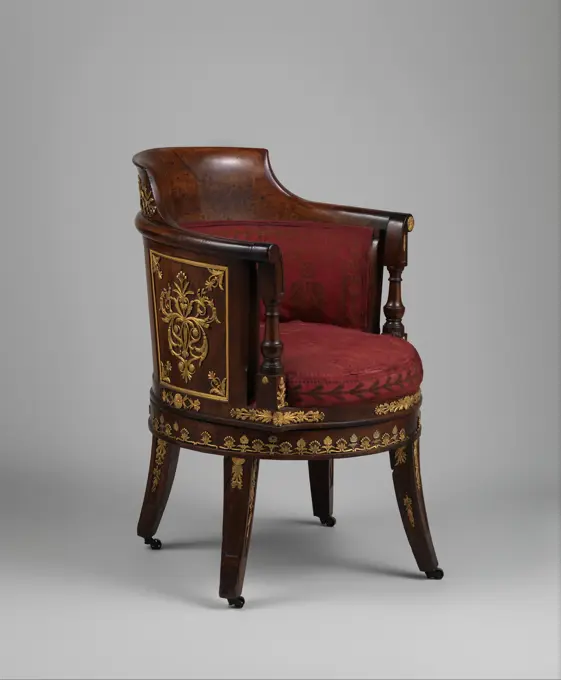
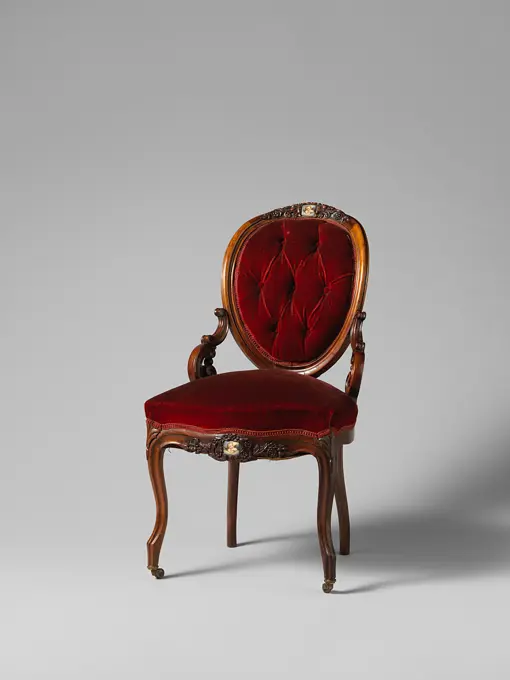
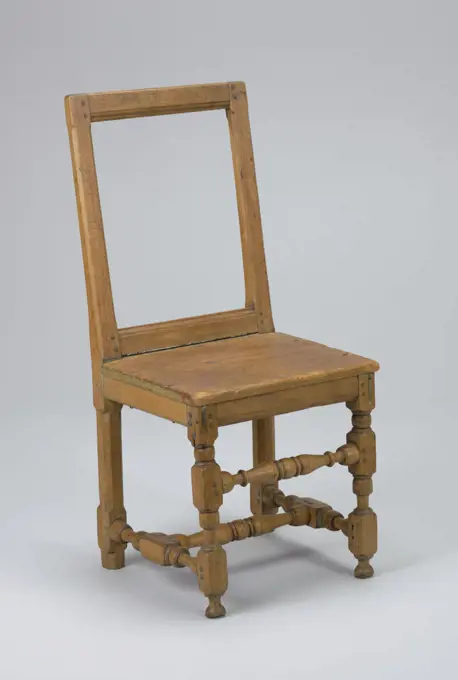
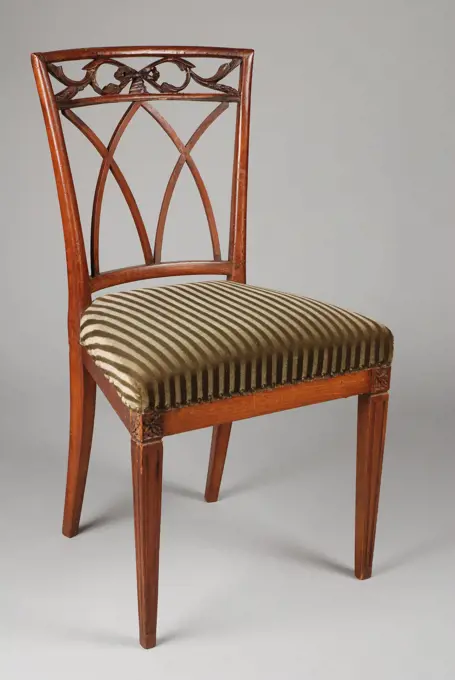
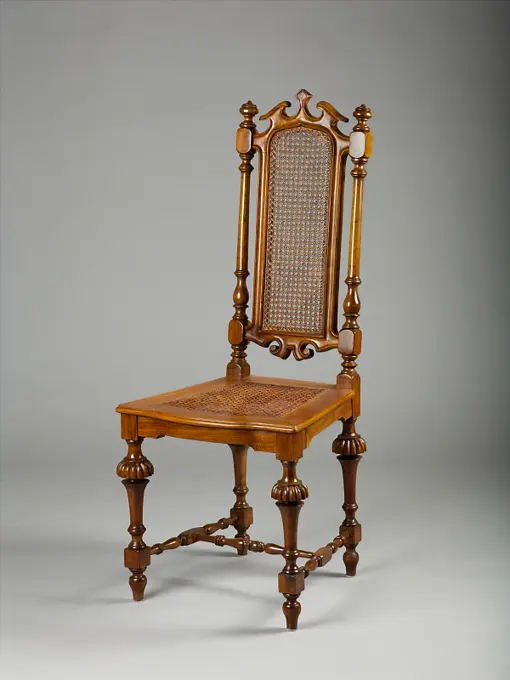
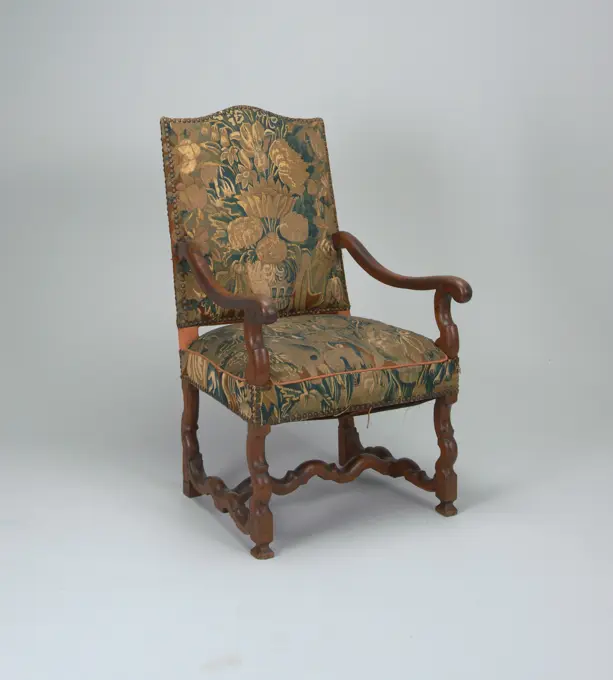
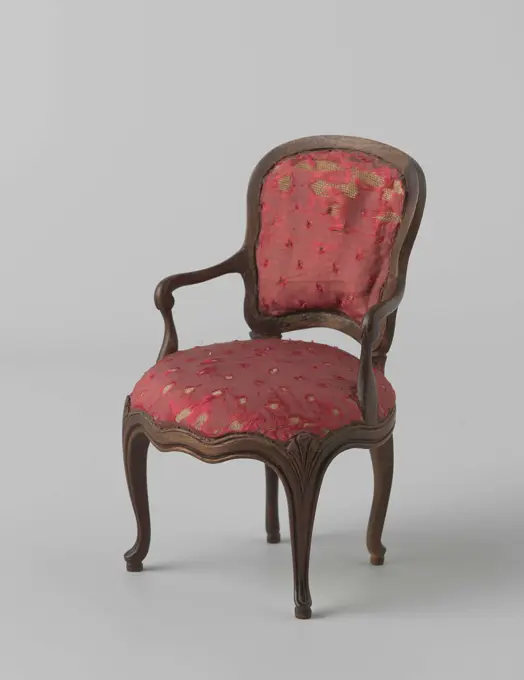
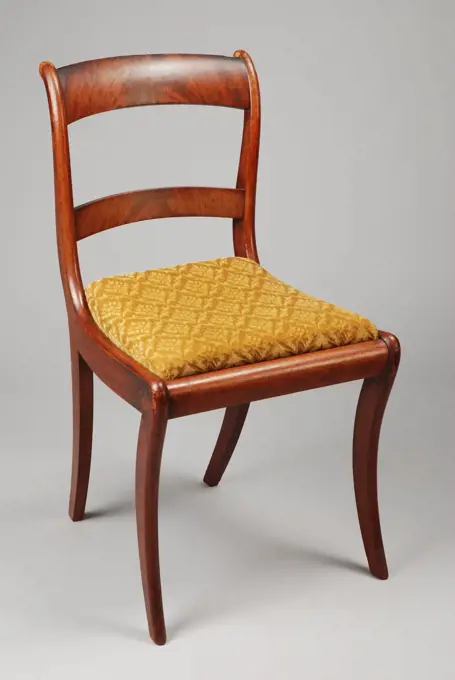
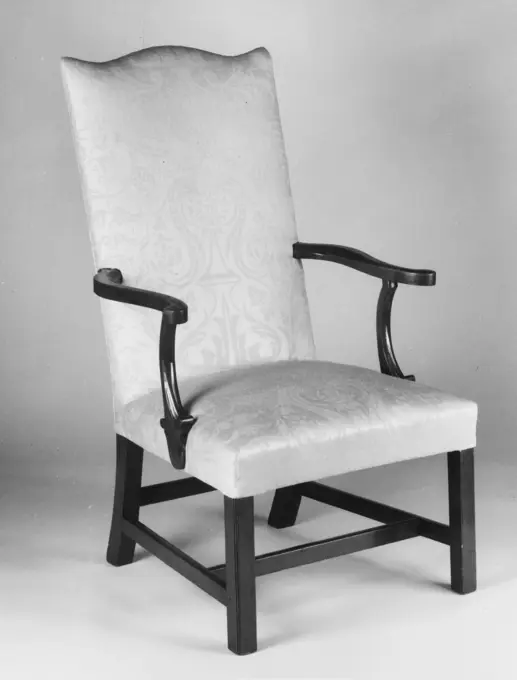
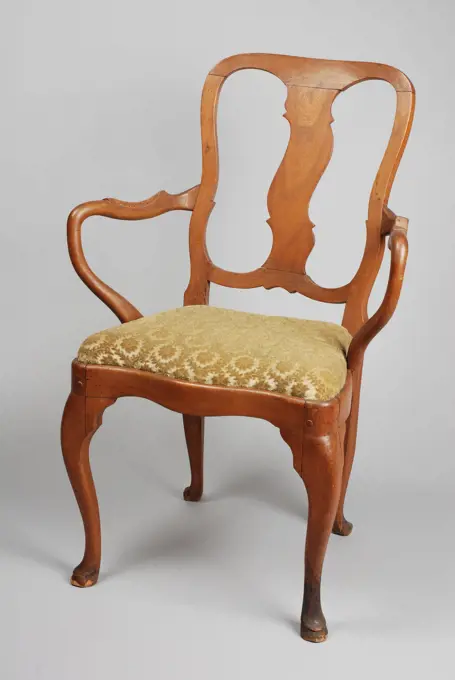
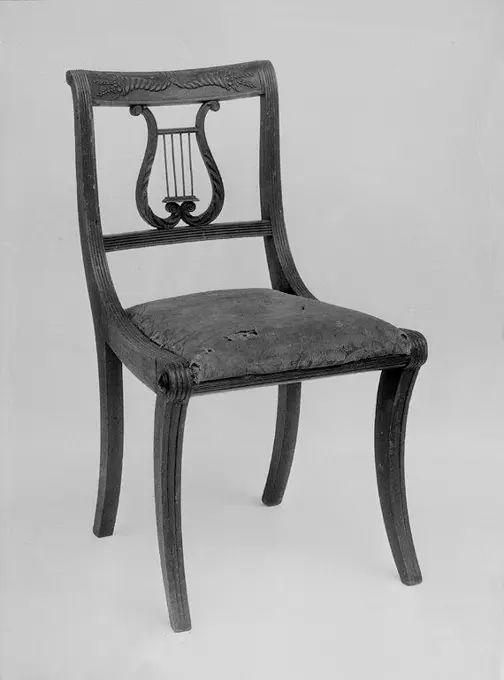
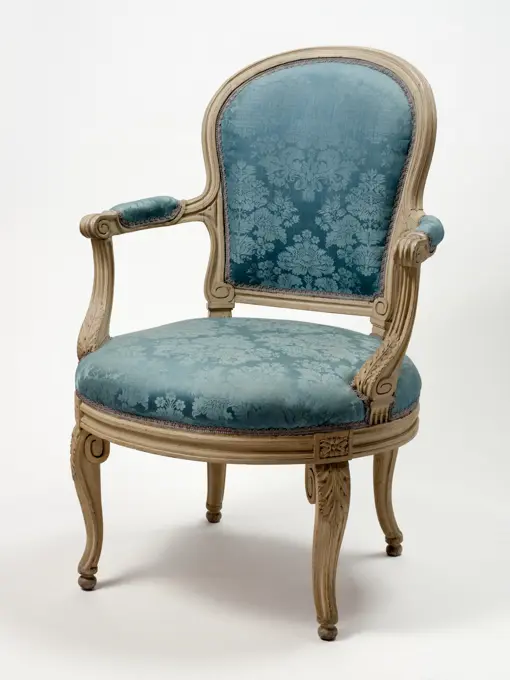
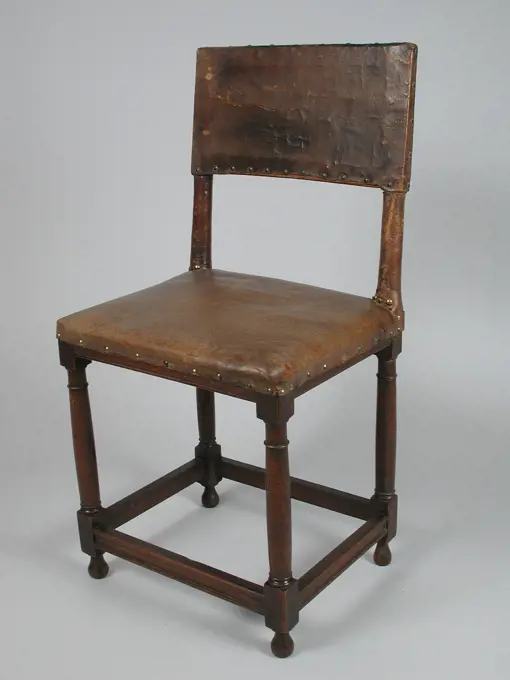
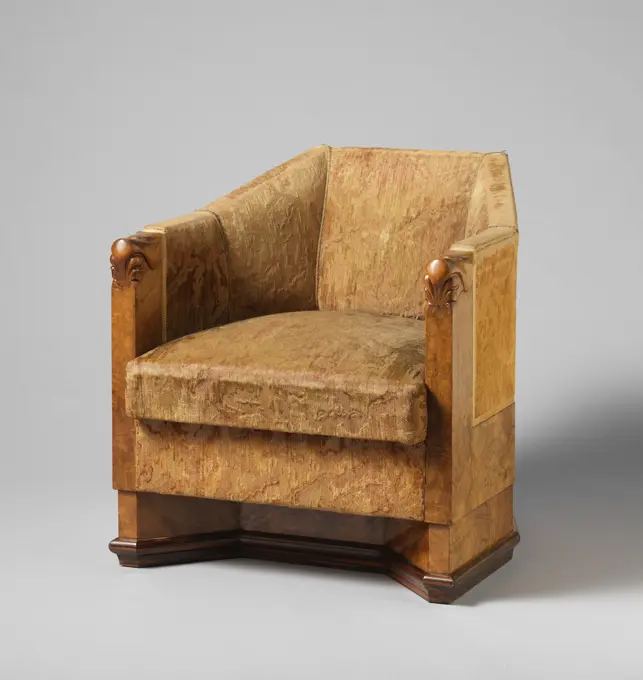
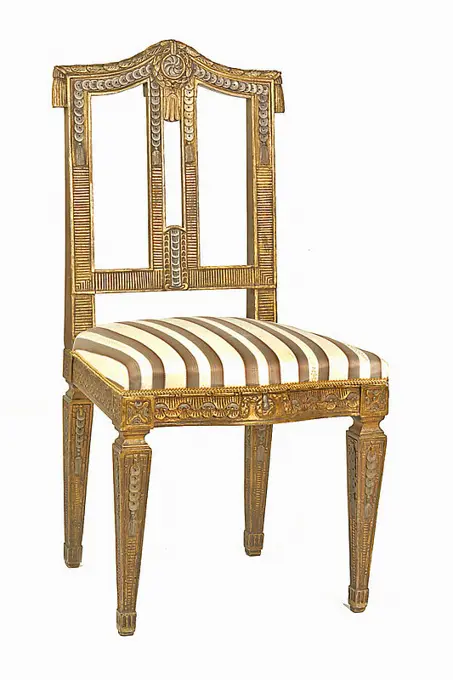
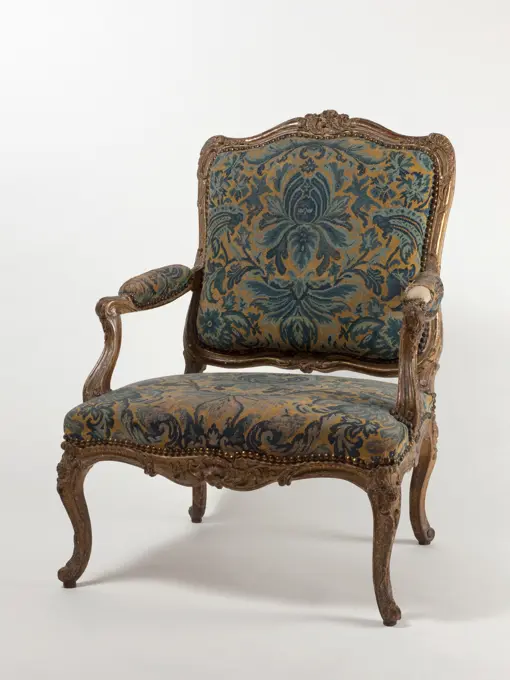
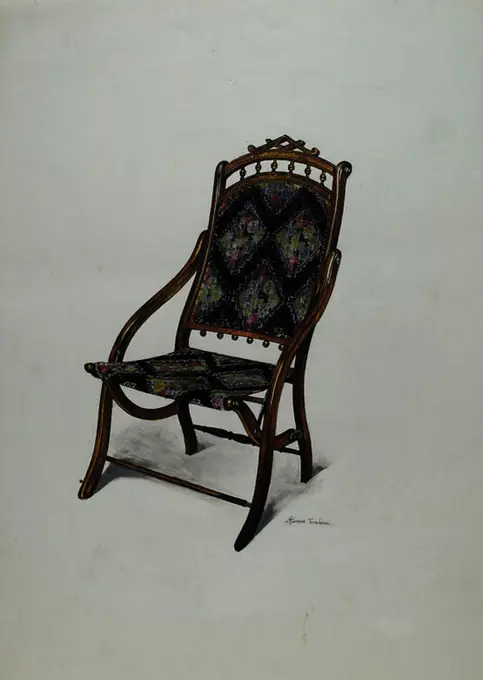
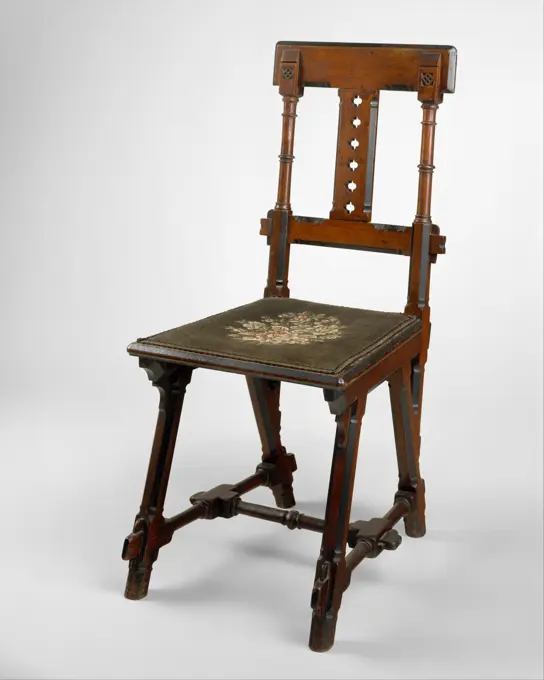
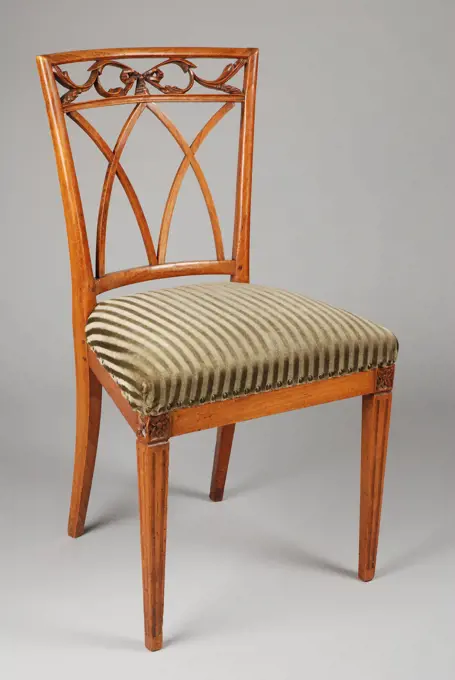
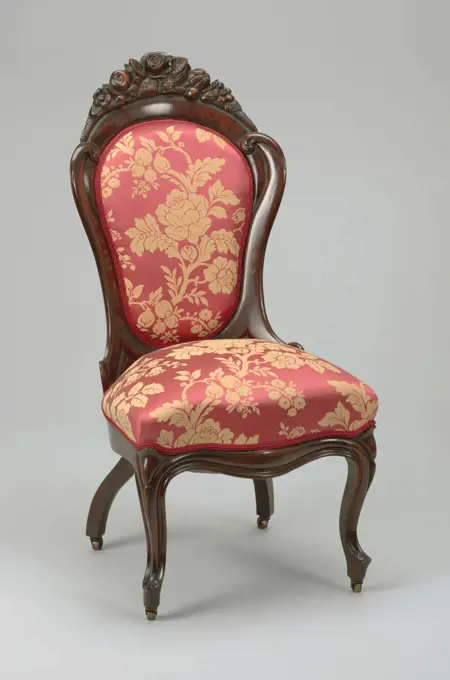
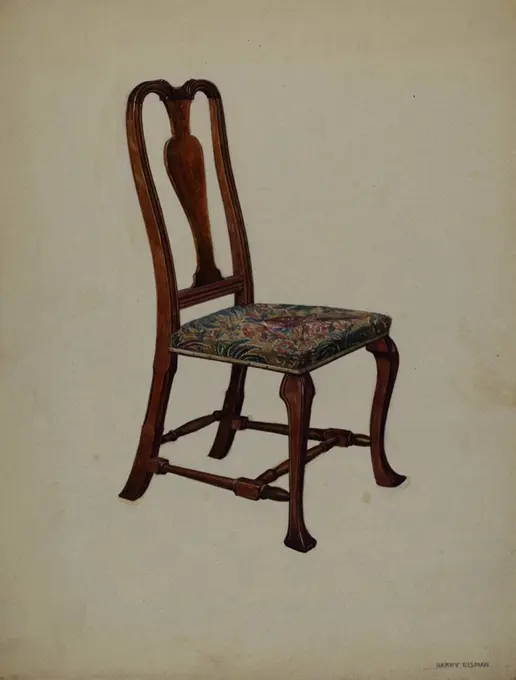
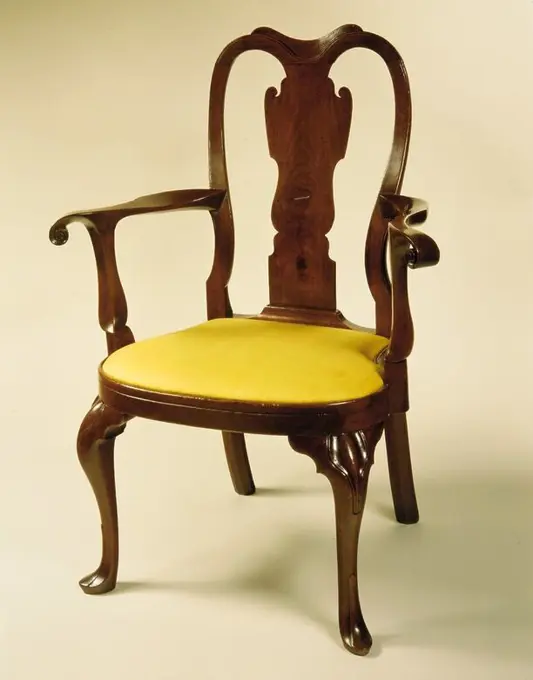
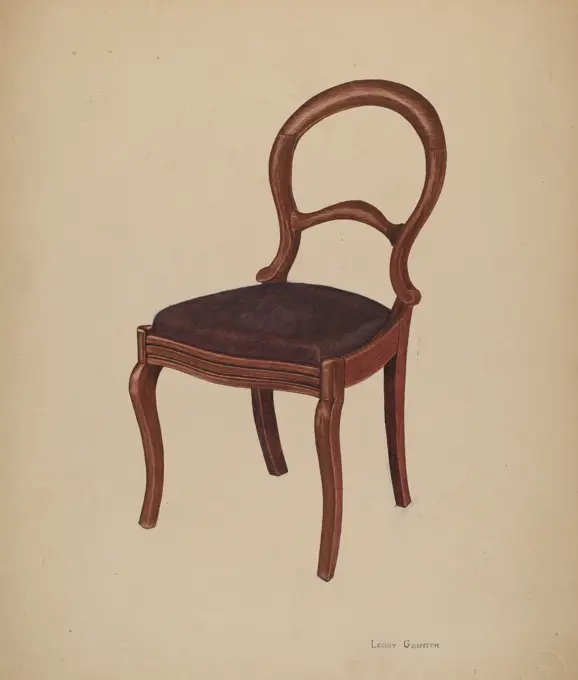
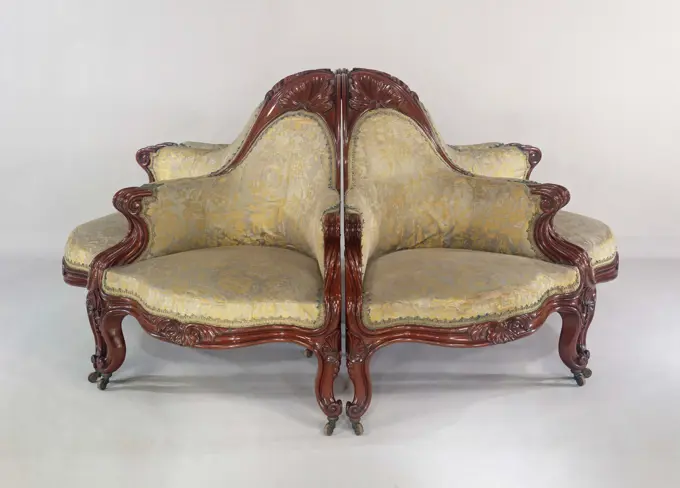
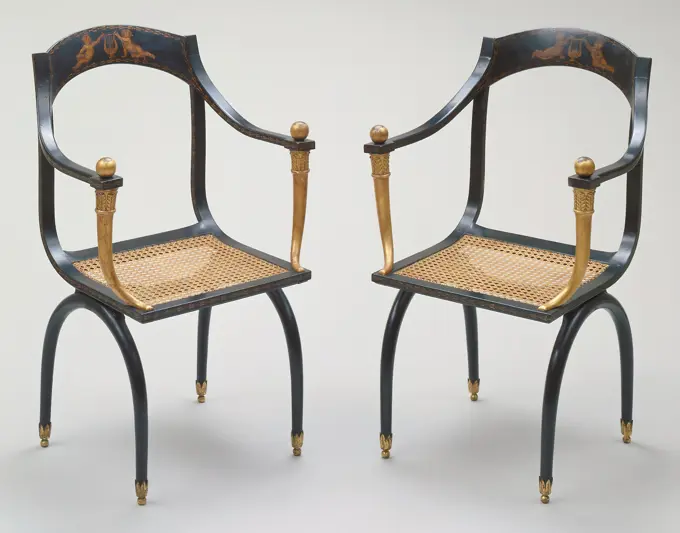
Side Chair (USA); Style of Duncan Phyfe (American, 1768-1854); mahogany caned seatChairSide Chair, wood (mahogany), wood (poplar), horse hair (seat), Back legs flat-sided, front legs flat excepting rounded front face; legs curve outward towar bottom, and back legs incline toward each other at bottom. Corner posts of back terminate in a double curve with elementary volute form. Flat top rail bowed toward back, slightly arched, with a rectangular panel of inset veneer surrounded by beading. Splat horizontal, composed of small oblong faced with veneer, flanked on either side by horizontal coupled C-scrolls deeply carved with foliage, terminating in volutes. Seat flares from back to front, with straight edges., New York, USA, ca. 1820, furniture, Decorative Arts, Side ChairChair, c. 1800. Attributed to Samuel McIntire (American, 1757-1811). Mahogany; overall: 97.2 x 57.2 x 46.4 cm (38 1/4 x 22 1/2 x 18 1/4 in.). This chair exemplifies the neoclassic style in America. Design books published by British cabinetmakers transmitted the style to the New World. Indeed, Samuel McIntire found inspiration for this chair in Plate 2 from the 1794 edition of George Hepplewhite's Cabinetmaker and Upholsterer's Guide. The McIntire chair's shield-shaped back, however, is pointed rather than rounded, and the front legs, enriched with carved grapevines, have tapered "spade" feet with ebony applied. McIntire's carving skill brought him great success in Salem, a town half the size of Boston, but where some of the finest furniture of the period was made. This chair comes from a set owned by the Derby family, one of the most prominent in Salem.ChairArmchair covered with red tripe. Armchair in light Gothic style, covered with red tripe. Note: Original upholstery: green tripe.Chair. unknown, authorChair. unknown, creatorSide Chair with Scroll Splat and Stretchers. United States, Massachusetts, 1765-1775. Furnishings; Furniture. Mahogany wood, pine wood and replaced upholsteryIron wood chair and rattan -stretched seat (series of 4 seats), Anonymous, 1725 - 1750 Chair (series of four identical seats BK-1994-A, B, C, D) of ironwood with rattan-stretched seat. Faint backwards bent hind legs and overhoeks placed S-shaped front legs that end in Leeuklauws and are decorated at the top with shell motifs. The cross has scalloped side sports and a scalloped cross -sport. The hind legs are connected by a second transverse sport under the session. The lower edge of the seating rules on front and sides is made up of two S-Voluten with a shell motif in the middle. The high back has scalloped styles and a wide baluster -shaped center leaf that is crowned by a shell from which leaf clocks depend on leaf voltuten, and that is decorated from below with a standing leaf clock on a pedestal. Where the styles touch the center leaf, they end up with leaf motifs decorated volutes. Indonesia wood (plant material). ironwood. rattan Chair (series of four identical seats BK-1994-A, BChair with a woman's head cut into a medallion with Lauwerslingers, Anonymous, c. 1775 - c. 1780 Mahoniehout chair, covered with green trijp (not original). The two slightly s-shaped bent legs are decorated with a ribbed band that is crowned by a large motif an acanthus leaves. The powerful curved hind legs are unadorned. The straight seating rule shows cannelures at the front and sides, interrupted in the middle of the front by a round medallion with rosette of which laurelslingers hang on either side. Along the oval, slightly hollow back and the high, C-shaped bent supports, a list of alternating bars and three pearls. This is interrupted at the top by a round medallion with a women's head in profile, used to the right, hanging on a bow and flanked on either side by hanging Lauwerslingers. Netherlands mahogany (wood). textile materials Mahoniehout chair, covered with green trijp (not original). The two slightly s-shaped bent legs are decorated with a ribbed band that is crowned by a Armchair Attributed to Duncan Phyfe American, born Scotland 1791-1818Mahogany Louis Seize medallion chair, medallion chair seat furniture furniture interior design wood mahogany velvet metal, With bow as crest and dark green ropes with medallions round rejuvenated legs with cannelures Louis XVI Louis XVI Louis SeizeChair. unknown, contractorSide chair 1841 D. Phyfe & Son This side chair and its pair (see 2013.22.2) were originally part of a large suite of rosewood furniture made for the double parlor at Millford, a magnificent Greek Revival mansion built for John Laurence Manning (1816-1889) and Susan Hampton (1816-1845) on their Clarendon (now Sumter) County, South Carolina plantation in 1839-41. The Egyptian lotus piercing in the back splat, slender proportions and seamless shaping of the arched crest and lower back rails illustrates the blending of Classical- and Gothic Revival designs of the period. Manning likely ordered the furniture from D. Phyfe & Son during an 1840 visit to New York. According to invoices and shipping records, between 1841 and 1842, D. Phyfe & Son supplied an astonishing quantity of rosewood, mahogany, and walnut furnishings for the parlors, dining room, entrance hall, and bedchambers of his new residence. The Museum has a related window seat from Millfords parlors (see 2006.400) in its collectiArm chair with a vertical leaf with abstract decoration in the open backrest, art dealership E.J. van Wisselingh, c. 1910 Arm chair of oak, beech and coromandel wood with a vertical leaf with abstract decoration in the open backrest. Modern upholstery. Amsterdam oak (wood). beech (wood). textile materials Arm chair of oak, beech and coromandel wood with a vertical leaf with abstract decoration in the open backrest. Modern upholstery. Amsterdam oak (wood). beech (wood). textile materialsMahogany straight Chippendale chair, straight-seat chair seat furniture furniture interior design wood mahogany beechwood velvet brass, Openwork back with crown and garlands light green velor upholstery rejuvenated front legs with cannelures ChippendaleChair;  1850-1860 (1850-00-00-1860-00-00);Chair. unknown, authorEgret Empire armchair, armchair seat furniture furniture interior design wood elm wood velor, Modern striped green velvet upholstered open backrest with wide hood and narrow lane tile Rotterdam City Center Cool Eendrachtsweg Empire Repositioned from the former Schielandshuis of the Netherlands Hoogheemraadschap at the Eendrachtsweg Rotterdam.Armchair. unknown, authorSide Chair c 1755-1775 Philadelphia. Mahogany, yellow pine, white pine, and Atlantic white cedar . Artist unknownArm chair with mats seat, anonymous, 1785 - 1800 Arm chair of cherry wood with sports of ash wood and a mats seat. The front legs, the H-shaped cross and the three sports are turned and partially scanned. The flat, slightly held armrests rest on twisted struts, which are attached through the side seats in the side sports that are thickened at that location. The slightly hooked back has square styles and sills and a center track with open cannelures. The upper sill has an elevation on the corners and in the middle. Northern Netherlands (possibly)Netherlands (possibly) wood (plant material). cherry (wood). ash (wood) Arm chair of cherry wood with sports of ash wood and a mats seat. The front legs, the H-shaped cross and the three sports are turned and partially scanned. The flat, slightly held armrests rest on twisted struts, which are attached through the side seats in the side sports that are thickened at that location. The slightly hooked back has square styles and sills and a center Chair of brown stained mahogany, Theo Nieuwenhuis, c. 1916 The back and the shifting cushion upwards are covered with green woolen trijp with yellow -brown and purple leaf motifs. The front legs placed overhoek are faint s-shaped; The straight hind legs continue in the backstyles, ending in a volute. The seating rules are profiled at the top and under the rules are wavy corner pieces. The top sill of the back shows cut leaf motifs; The sill is vaulted. See: BK-1970-93-A and C to E. designer: Northern NetherlandsAmsterdamHengelo wood (plant material). mahogany (wood). stain (coating) The back and the shifting cushion upwards are covered with green woolen trijp with yellow -brown and purple leaf motifs. The front legs placed overhoek are faint s-shaped; The straight hind legs continue in the backstyles, ending in a volute. The seating rules are profiled at the top and under the rules are wavy corner pieces. The top sill of the back shows cut leaf motifs; The sill is vaulted. See: BK-1970Chair. Chair of beech wood with oak seat and handrail. The front legs with house and articulation and the hind legs are connected by four bracelet-shaped scalloped and three-exported upper sports. The braco-shaped scalloped seat rules bear the seat, decorated with a border of triple Schubsteek. The similarly decorated back styles end in lion heads. There are three flat sports among the back styles, under and upstairs with rosette and acanthus volutes; The middle with open-cut chain ornament.Side Chair. American; Boston, Roxbury, or Salem, Massachusetts. Date: 1780-1790. Dimensions: 93.5 × 57 × 50.8 cm (36 11/16 × 22 1/2 × 20 in.). Mahogany, white pine, and maple. Origin: Massachusetts. Museum: The Chicago Art Institute, Chicago, USA.Chair;  End of the 18th century (1780-00-00-1800-00-00);Chair of nut and beech wood with s-shaped overhoeks places placed; X-shaped cross with rosette; Sliced flower and leafwork, back and seat of reeds, with loose cushion. Loose from note and beech wood (amublement) with s-shaped overhoeks places placed, connected by a swapped X-shaped cross with rosette. Rules and sills and legs are decorated with sliced flower and leaf motifs. Back and seat of braided reeds. Loose kisses from green shaved tripe (modern). See also BK-16852-E T / M P.Chair of nut and beech wood with S-shaped overhoeks placed legs; X-shaped cross with rosette; Cut flower and leaf work, Reed back and seat, with loose pillow, anonymous, 1750 Chair of Note and Beukehout (ameblement) with s-shaped overhoeks placed legs, connected by a flung X-shaped cross with rosette. Rules and sills and legs are decorated with cut flower and leaf motifs. Back and seat of braided reeds. Loose pillow of green Shaved Trijp (Modern). See also: BK-16852-E t/including O. France wood (plant material). walnut (hardwood). beech (wood). Chair of Note and Beukehout (ameblement) with s-shaped overhoeks placed legs, connected by a flung X-shaped cross with rosette. Rules and sills and legs are decorated with cut flower and leaf motifs. Back and seat of braided reeds. Loose pillow of green Shaved Trijp (Modern). See also: BK-16852-E t/including O. France wood (plant material). walnut (hardwood). beech (wood).Cherrywood renaissance chair, chair furniture interior design wood cherry leather brass, Twisted legs joined by two sets of rules seat and back covered with leather lion heads as crown on the Renaissance backstagesLawrence Phillips, Side Chair, 1936 Side ChairFurniture. Chair of walnut, first half of the 18th century, embroidered sitting, wicker braided back. Paws connected by scaly. Rear styles turned from above. Pretty much carving.Arm chair, with reeds stretched; Middle sport open with crowning putti and acanthus vranks. Vases on corner styles back, anonymous, 1650 - 1700 Armchair of walnut. The furniture has a reed covering and flinged legs. The flat open work for-means sport shows stabbed putti, which wear a crown and acanthus vranks. The armrests are slightly walked, end in volutes with rosettes and are decorated with acanthus leaf. The armrest stars have been hurled. The corner styles of the back are crowned by vases. The upper sill is decorated as the forefront, the sill and the oval around the Middveld, decorated with acanthus vranks. Northern Netherlands wood (plant material). walnut (hardwood). Armchair of walnut. The furniture has a reed covering and flinged legs. The flat open work for-means sport shows stabbed putti, which wear a crown and acanthus vranks. The armrests are slightly walked, end in volutes with rosettes and are decorated with acanthus leaf. The armrest stars have been hurled. The cornerCherry-wood straight chair, chair furniture furniture interior design wood cherry wood elmwood piping, Hose seat and high back with tufted knobs and open work back.Armchair, Der reiche Fischzug (The Rich Catch of Fish). Koloman Moser (Austria, 1868-1918, active 1910-1928)Portois & Fix (Austria, Vienna, established 1874). Austria, 1900. Furnishings; Furniture. Stained maple veneer, mahogany and boxwood inlays, cedar, bronze and (original) velvetChippendal chair (attributed title). Carved wood. House of Victor Hugo - Hauteville House.Armchair third quarter 17th century British. Armchair. British. third quarter 17th century. Walnut and cane. Woodwork-FurnitureChair with open backrest with middle style, the seat with green velvet, anonymous, c. 1750 Chair of mahogany, round open backrests with middle style; Straight pre-line, backward hind legs and overhoeks placed S-shaped front legs; Seat covered with green velvet with filling on board paper. Amsterdam (possibly) mahogany (wood). velvet (fabric weave) Chair of mahogany, round open backrests with middle style; Straight pre-line, backward hind legs and overhoeks placed S-shaped front legs; Seat covered with green velvet with filling on board paper. Amsterdam (possibly) mahogany (wood). velvet (fabric weave)SILLA MODERNISTA - SIGLO XX. Author: ANTONI GAUDI (1852-1926). Location: CASA CALVET. Barcelona. SPAIN.Desk chair (fauteuil de bureau) 1804-14 French During the mid-eighteenth century, French menuisiers or joiners made both practical and elegant chairs, specifically for use behind a desk. By changing the traditional layout of a chair, they created a so-called fauteuil de cabinet or office armchair. For greater stability, they placed one upright in front so that the user could arrange his legs on either side. With their undulating outline, these chairs have a rounded back offering support for the upper body while the curving arms are provided for additional support. During the second half of the eighteenth century, a variant was introduced, a chair with a rotating seat, to allow the user greater mobility. This kind of swiveling office chair remained popular until the early nineteenth century. Richly decorated with gilt bronze, this mahogany desk chair not only rotates but also has castors underneath the legs to move it around with ease. Surmounted by a ducal crown, the initials CMJ are bChair of stained beech wood, anonymous, 1700 - 1750 The furniture is stretched with reeds and has overhoeks placed, s-shaped front legs on ribbed feet and with a palmet on the swelling. The hind legs show house and section. The side sports are bent, the transverse sport accolade -shaped. The seating rules are sculpted, the prescription rule with a palmet adorned. The high back has a profiled, scalloped window at the top and is divided into two compartments by a wide center style. A palmet between volutes serves as a crown. Northern Netherlands wood (plant material). beech (wood). The furniture is stretched with reeds and has overhoeks placed, s-shaped front legs on ribbed feet and with a palmet on the swelling. The hind legs show house and section. The side sports are bent, the transverse sport accolade -shaped. The seating rules are sculpted, the prescription rule with a palmet adorned. The high back has a profiled, scalloped window at the top and is divided into two compartments by aSeat of palisander wood decorated with porcelain plaques. Seat of palisander wood decorated with porcelain plaques.Armchair ca. 1660-85 British. Armchair. British. ca. 1660-85. Walnut. Woodwork-FurnitureSide Chair, one of a pair, 17th century, 40 1/2 x 20 x 19 1/2in. (102.9 x 50.8 x 49.5cm), Walnut, wool, Italy, 17th centuryChair of nut and beech wood with s-shaped overhoeks places placed; X-shaped cross with rosette; Sliced flower and leafwork, back and seat of reeds, with loose cushion. Loose from note and beech wood (amublement) with s-shaped overhoeks places placed, connected by a swapped X-shaped cross with rosette. Rules and sills and legs are decorated with sliced flower and leaf motifs. Back and seat of braided reeds. Loose kisses from green shaved tripe (modern). See also: BK-16852-E to O.Anonymous, chippendal chair (lined seat) (dummy title). Sculpted wood, seat covered with tapestry. House of Victor Hugo - Hauteville House.Chair with dark colored triangles, Cornelis Jouke Blaauw (attributed to), c. 1920 - c. 1930 Chair of mahogany, beech wood and mahogany -wooded plywood resting on four legs. The four legs have dark colored convex feet. The flat cuttle front legs have zigzag sawn fronts. The hind legs continue in the backstyles. The backstyles rejuvenate upwards. The broad rules on which the seat rests are sawn in a zigzag shape on the underside and contain darkly colored dark triangles. The upper sill is tympanum -shaped. Both the seat and the backrest are covered with wool with geometric patterns in green, yellow and brown. Amsterdam mahogany (wood). wool Chair of mahogany, beech wood and mahogany -wooded plywood resting on four legs. The four legs have dark colored convex feet. The flat cuttle front legs have zigzag sawn fronts. The hind legs continue in the backstyles. The backstyles rejuvenate upwards. The broad rules on which the seat rests are sawn in a zigzag shape on the underside and contain daSidechairChair, Anonymous, 1700 Chair of Notenhout. The furniture is stretched with reeds and rest on S-shaped front legs and articulated hind legs, which are connected by an H-shaped articulated cross. The front legs wear stabbed acanthus leaf at the top. The seating rules are decorated at the top and at the front and sides with stabbing. The detached backstyles show sections and are awarded by vases. The upper sill has two putti in the middle, which wear a flower basket. The houses have flower motifs at the front. Northern NetherlandsNetherlands wood (plant material). walnut (hardwood). Chair of Notenhout. The furniture is stretched with reeds and rest on S-shaped front legs and articulated hind legs, which are connected by an H-shaped articulated cross. The front legs wear stabbed acanthus leaf at the top. The seating rules are decorated at the top and at the front and sides with stabbing. The detached backstyles show sections and are awarded by vases. The upper sill has two putti in the midSide Chair 1740-90 American. Side Chair 1582Chair, wood, This side chair is comprised of turned stretchers, a flat seat, and an open back. The void rectangular area of the chair's back may have been filled with webbing at one point. The chair rests on elaborately carved legs and feet., Canada, early 18th century, furniture, Decorative Arts, ChairPratt House Model Rocking Chair; Designed by Greene and Greene; Made by Peter Hall (American, b. Sweden (1867-1939)); joined and carved honduras mahogany and ebony, leather -upholstered slip-in seat cushionEggshade Louis Seize chair, chair furniture furniture interior design wood elmwood velvet, Elders Louis Seize chair with curved bars in the back of the hood intersecting spike with spikes as ends green striped (new) velor upholstery on the front legs corner rosettes Louis XVI Louis XVI Louis SeizeAntoni Gaudi i Cornet. Silla de brazos de roble. 96,5 x 67 x 59 cm. Barcelona, hacia 1904.Armchair. Culture: American. Dimensions: 59 1/4 x 33 x 26 3/8 in. (150.5 x 83.8 x 67 cm). Maker: George Washington Maher (1864-1926). Date: ca. 1914. Museum: Metropolitan Museum of Art, New York, USA.American 20th Century, Chair, 1935 1942 ChairChair. unknown, authorArmchair; wood, metal, upholstery; 115 x 66 x 66 cm (45 1/4 x 26 x 26 in. )Chair;  End of the 19th century (1890-00-00-1900-00-00);Fuglewicz, Joanna (1909-2008), Fuglewicz, Joanna (1909-2008)-collection, gift (provenance), eclecticism (style), tricksSide chair. Culture: American. Dimensions: 38 3/4 x 22 3/8 x 21 1/2 in. (98.4 x 56.8 x 54.6 cm). Date: 1760-90.Chairs with trefoil-pierced splats enjoyed great popularity in Philadelphia. On the most richly embellished examples, such as this one, the stiles and crest rail are finely carved in alternating long and short lozenges. Museum: Metropolitan Museum of Art, New York, USA.Armchair for dollhouse. Poppen arm chair covered with red silk. With jokes. Louis XV style.Furniture. Thonet chair.Side Chair 1700-1725 Bermudian, possibly. Side Chair 1715Arm chair of nuthout, anonymous, 1750 Arm chair of walnut, covered on a removable window. The S-shaped legs, ending in Acanthus leaf, turn into the scalloped seating rules. The legs, the line, armrests and armrest stars, the back window and back window stins are decorated with stoned leaf and floral motifs; Striking on the top sill is the stabbed rocaille cavity with flower branches. The sitting window is trapezoidal. Profile lists, uninterrupted or with C and S-Voluten, the contour emphasize. See also: BK-15592. France (possibly) wood (plant material). walnut (hardwood). textile materials. pine (wood) Arm chair of walnut, covered on a removable window. The S-shaped legs, ending in Acanthus leaf, turn into the scalloped seating rules. The legs, the line, armrests and armrest stars, the back window and back window stins are decorated with stoned leaf and floral motifs; Striking on the top sill is the stabbed rocaille cavity with flower branches. The sitting window is trapezoidal. ProfilEdward L Loper, Low back Stretcher Chair, c 1942 Low-back Stretcher ChairArmchair (Fauteuil) (1 of 2), c. 1765. Jean-Baptiste II Tilliard (French, 1797). Carved and gilded wood; overall: 101.9 x 73.7 x 63.5 cm (40 1/8 x 29 x 25 in.).Mahogany Biedermeier chair, chair seating furniture furniture interior design wood mahogany velvet, Veneered hood and lining saber legs and ocher yellow velor upholstery on the seat backstyles ending in volutes BiedermeierLolling Armchair 1790-1800 American. Lolling Armchair 4826Chair. Mohr, Jan (fl. ca 1825-1850), joinerChair with Swans, Anonymous, 1830 Chair from a set of ten chairs and four arm chairs of partly solid and partly glued mahogany on elm core. Loose covered seats. The square hind legs areas backwards. Nine chairs and an armchair have square, slightly rounded at the front, front legs; The rest has round articulated front legs. The stretched S-shaped backs have a sculpted intermediate rule with a palmet flanked by two swans bending back with the necks. The flat volute -shaped armrests run high in the back. Northern NetherlandsNetherlands wood (plant material). mahogany (wood). elm (wood). textile materials Chair from a set of ten chairs and four arm chairs of partly solid and partly glued mahogany on elm core. Loose covered seats. The square hind legs areas backwards. Nine chairs and an armchair have square, slightly rounded at the front, front legs; The rest has round articulated front legs. The stretched S-shaped backs have a sculpted intermediate rule with a palmet flanked by two swans Chair;  Kon. XVIII century (1765-00-00-1790-00-00);Ivory wooden rococo armchair, armchair chair furniture furniture interior design wood elm wood velor, Armrests also covered upholstery of the seat green velvet rococoFurniture set: armchairWalnut chair, probably from the secretary of the Schepenbank van Rotterdam, chair furniture furniture interior design wood walnut leather, Twisted legs covered with light brown leather on seat and backrest no drop in the back Rotterdam.Side Chair 1805-15 Attributed to the Workshop of Duncan Phyfe Scottish. Side Chair. American. 1805-15. Mahogany, brass with ash, yellow poplar. Made in New York, New York, United StatesJacob Georges (1739-1814). Cabriolet armchair. Carved and painted beech; Garnish: blue damask. 1770. Paris, Carnavalet museum. Damas blue, dore, gilding, armchair, queen's armchair, convertible armchair, stuck in sculpt, furniture, modern evening, fabric, 18th 18th 18th 18th 18th 18th 18th century, furnitureWalnut renaissance chair, chair furniture interior design wood walnut oak leather metal, Legs in the shape of Tuscan columns (no flutes) connected by rules seat and back covered with dark leather renaissance Remonstrant church hiding church remonstrant Rotterdam City center Stadsdriehoek Vissersdijk Originating from the Remonstrant church on Visserschdijk Demolished in 1907.Armchair with upholstery of pressed pink velvet. Armchair of carrot nuts and palisanderlhout on whitewood core, with the original upholstery of pressed pink velvet.Chair. unknown, authorAnonymous. Archair at the Queen. Carved and golden beech; Tapestry at point, around 1730. Paris, Carnavalet museum. 77642-16 Dore, gilding, Louis XV time, queen chair, stretch, marker, furniture, Louis XV style, seat, tapestry at point, 18th century, wood, furnitureClose-up of rattan chairFolding Oak Chair. Dated: c. 1937. Dimensions: overall: 54.3 x 40.1 cm (21 3/8 x 15 13/16 in.) Original IAD Object: 35 1/2"high; 18"wide at arms, 16"wide at seat.. Medium: watercolor, colored pencil, graphite and some heightening on paper. Museum: National Gallery of Art, Washington DC. Author: Florence Truelson.Side Chair ca. 1878 A. Kimbel and J. Cabus The design of this walnut side chair emphasizes its constructionor, rather, the appearance of construction which was a hallmark of the Modern Gothic style. The intersections of the chair’s components are accentuated by simulated mortise-and-tenon joints. Kimbel and Cabus was among the first American firms to produce furnishings in the Modern Gothic style and received high praise for it at the 1876 Centennial International Exhibition, held in Philadelphia, where models of this chair were exhibited.. Side Chair. American. ca. 1878. Walnut. Made in New York, New York, United StatesEgg-wood Louis Seize chair, armchair chair furniture furniture interior design wood elmwood velvet, d. 55.86909090 Louis Seize chair with curved bars in the back that are intersecting in the back bow with spikes green striped (new) velvet upholstery on the front legs corner rosettes Louis XVI Louis XVI Louis SeizeArmchair mid-18th century French. Armchair 196350Meubel, c. 1400 - c. 1950 A wooden chair.  wood (plant material) A wooden chair.  wood (plant material)Side Chair. Attributed to Eliphalet Chapin (United States, 1741-1807). United States, Connecticut, East Windsor, circa 1780. Furnishings; Furniture. Mahogany-stained cherry, upholstery (replaced)Rosalie, Laminated rosewood, hardwood, cotton upholstery, metal, Upholstered, laminated rosewood back in kshape of inverted pear, topped by carved flowers-and-fruit garland; elongated S-scroll on each side of back. Upholstered spring seat on rosewood frame with serpentine front, cabriole forelegs with slipper seat, scrolled at each side, on tapered supports; reverse-curve rear legs; casters., New York, New York, USA, ca. 1850, furniture, Decorative Arts, Side chairs, Side chairsSide Chair. Dated: 1936. Dimensions: overall: 29 x 23.3 cm (11 7/16 x 9 3/16 in.) Original IAD Object: none given. Medium: watercolor, colored pencil and some heightening onpaperboard. Museum: National Gallery of Art, Washington DC. Author: Harry Eisman.Herman O Stroh, Child's Rocking Chair, c 1942 Child's Rocking ChairAnonymous. "Pierre-Jean de Béranger mortuary chair". Mahogany. Garnish: green -hit velvet. 1850. Paris, Carnavalet museum. 99384-15 Furniture, furnitureArmchair;  4. W. 19th century (1876-00-00-1900-00-00);Easy Chair. Dated: 1937. Dimensions: overall: 29 x 22.8 cm (11 7/16 x 9 in.) Original IAD Object: 45 1/2"high, 31"wide. Medium: watercolor, colored pencil, and graphiet on paperboard. Museum: National Gallery of Art, Washington DC. Author: ARTHUR JOHNSON.Low-back Stretcher Chair. Dated: c. 1942. Dimensions: overall: 45.7 x 35 cm (18 x 13 3/4 in.) Original IAD Object: 32"high, 51"long. See data sheet for details.. Medium: watercolor, colored pencil, and graphite on paperboard. Museum: National Gallery of Art, Washington DC. Author: Edward L. Loper.Settee (part of a set) 1751-52 British. Settee (part of a set) 205447Armchair. Culture: American. Dimensions: 41 x 31 1/2 x 21 1/4 in. (104.1 x 80 x 54 cm). Date: 1740-60.To compete with Boston imports, chair makers in Philadelphia introduced a local interpretation of the fashionable Queen Anne style, wherein virtually all the structural members were gracefully curved. This armchair is an elegant example, made inviting by its "balloon" seat and splayed arms with crisply scrolled armrests. Museum: Metropolitan Museum of Art, New York, USA.LeRoy Griffith, Parlor Chair, c 1940 Parlor ChairArmchair of walnut with petit point upholstery. Armchair of walnut with petit point upholstery and oak back styles and hind legs. The seats rest on overhoeks placed S-shaped legs. The front legs are at the bottom of a liquute with a leaf motif and above the swelling a shell pattern. The armrest tricks are about in malted armrests, ending in Acanthus. The upholstery shows motifs from flower vases and bouquets. Part of an Ameublement of six armchairs (inv.no. BK-16024- A to F) from Castle Eerde (O.).. Armchair belonging to a set of six armchairs from mahogany with a triangular ground surface, forming a round bench together. Flowered silk coating with passing element. The two overhoeks placed front legs, the hind leg, rules, struts, armrests and the ruling of the backrest are curved, profiled and almost all end in a volute. The armrests close the backrest and shapes a triangular crown that, just like the rule and the swellings of the front legs, shell-shaped acanthus leaves.Armchair, one of a pair, c. 1805, Jean-Joseph Chapuis, Belgian (Brussels), Belgian, 1765-1864, 35 1/2 x 22 x 21 1/2 in. (90.17 x 55.88 x 54.61 cm), Painted and gilt bentwood, gilt brass, cane, Belgium, 19th century