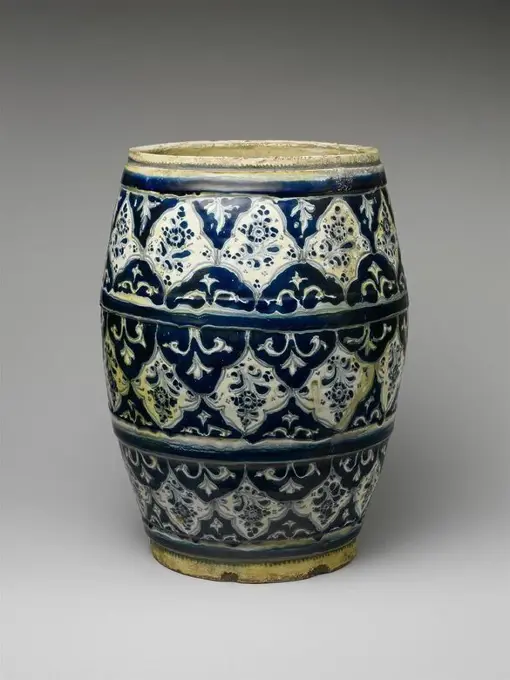
Colorful Decorative Jars

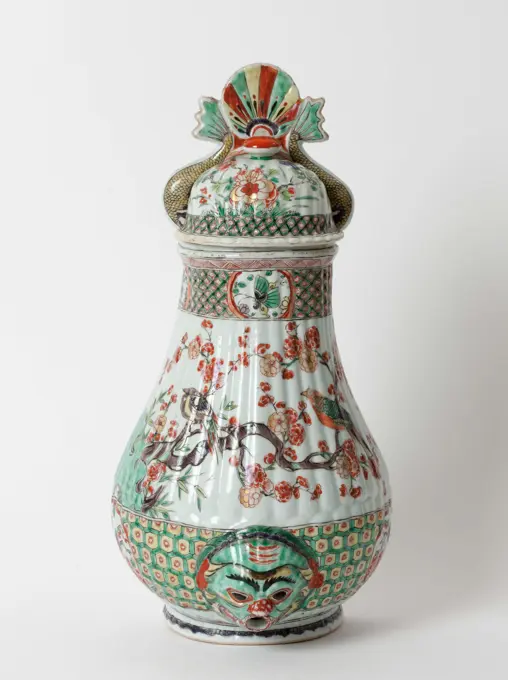
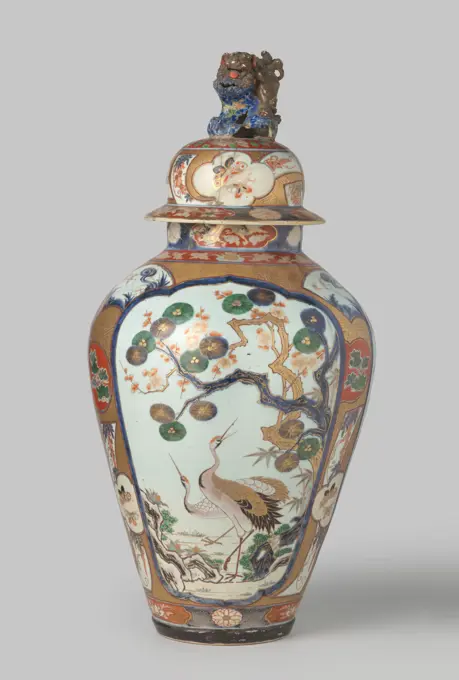
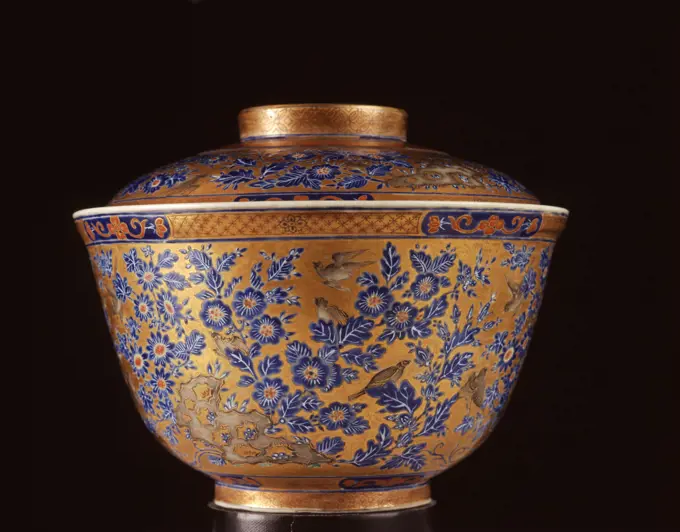
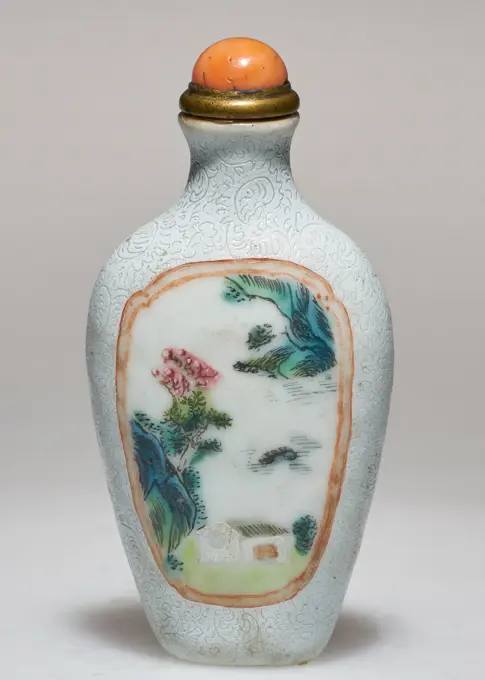
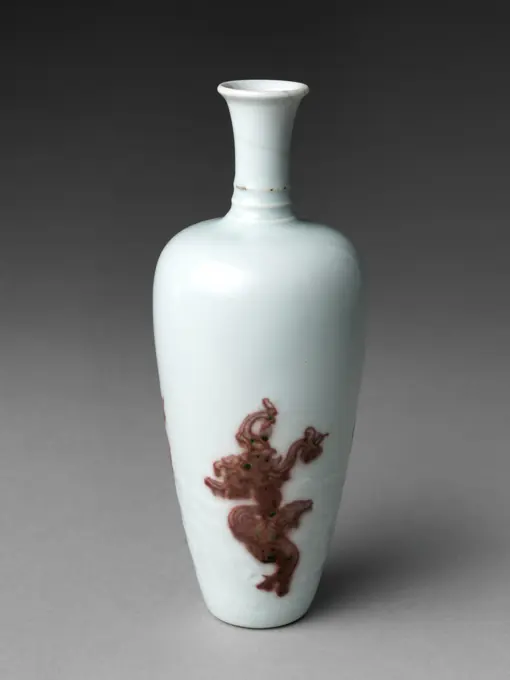
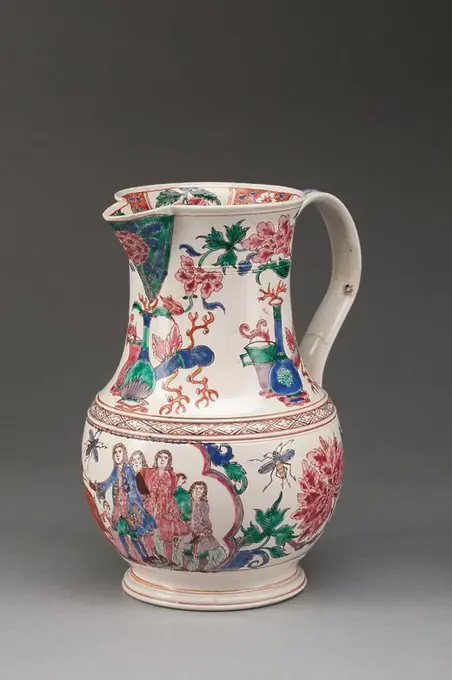
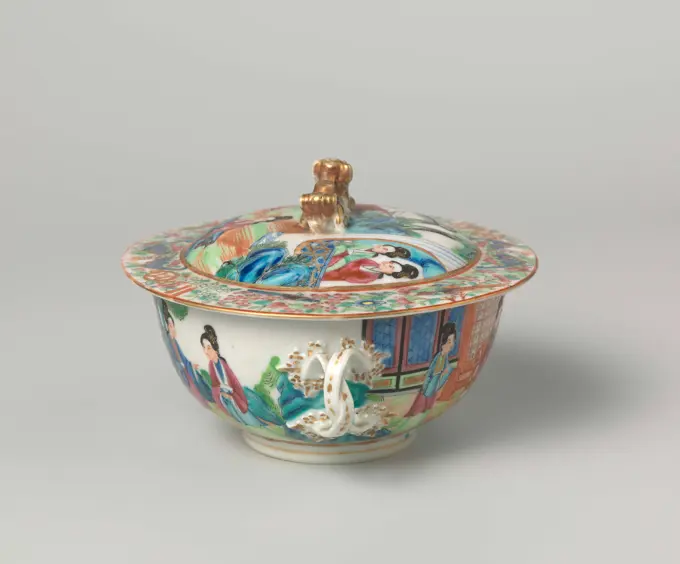
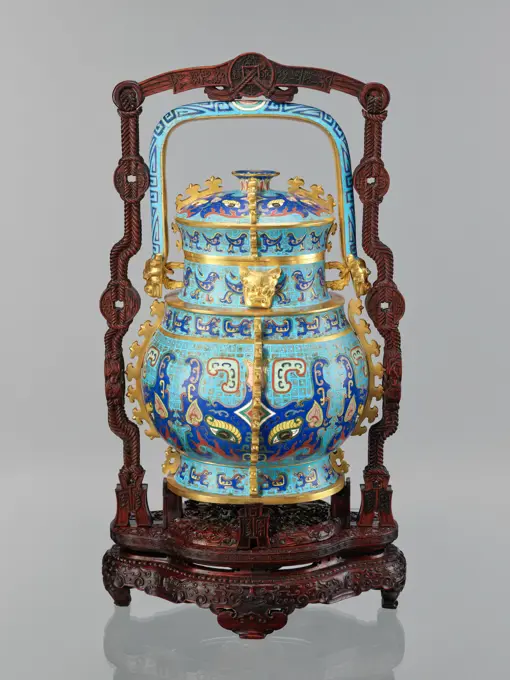
A collection of ornate ceramic jars featuring intricate floral and scenic designs, combining vibrant colors and detailed craftsmanship typical of Chinese porcelain.
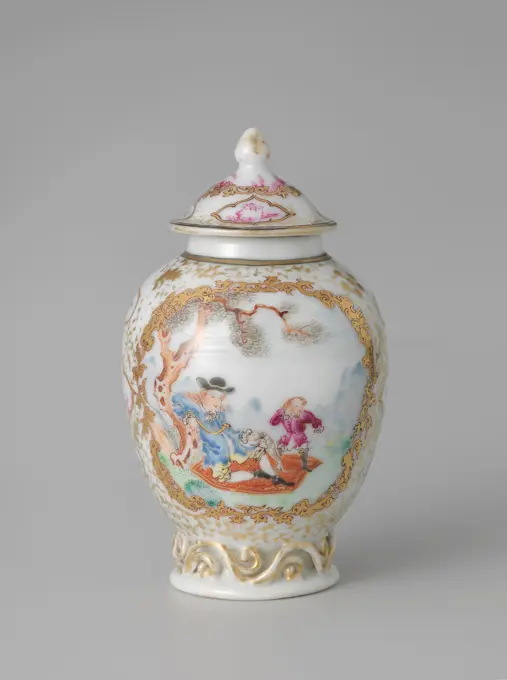
Ovoid tea caddy with European figures in landscapes, anonymous, c. 1740 - c. 1745 Egg -shaped porcelain tea, on a base with open worked curly, painted on the glaze in blue, red, pink, green, yellow, eggplant, black and gold. On the wall twice a cartouche of leaf vines with a European with a basket on its back in a river landscape. The other cartouche with a European sitting on a rug under a tree with a dog. He has a Ruyi-SCEPTER in his hand. A servant next to him. Between the cartouches flower ranks with two medallions and a four -pass with plants in Encre de Chine of Pink. European performance in email colors and Encre de Chine. China porcelain. glaze. gold (metal) painting / gilding / vitrification Egg -shaped porcelain tea, on a base with open worked curly, painted on the glaze in blue, red, pink, green, yellow, eggplant, black and gold. On the wall twice a cartouche of leaf vines with a European with a basket on its back in a river landscape. The other cartouche with a European sit
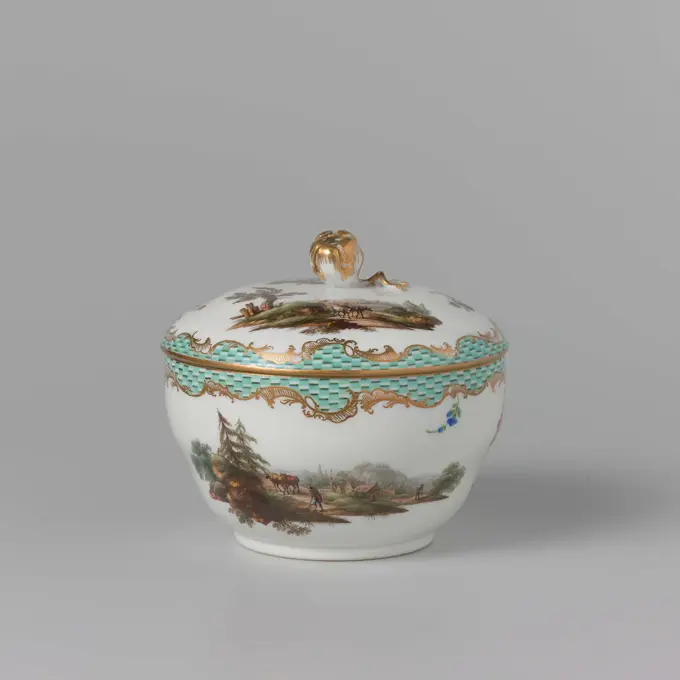
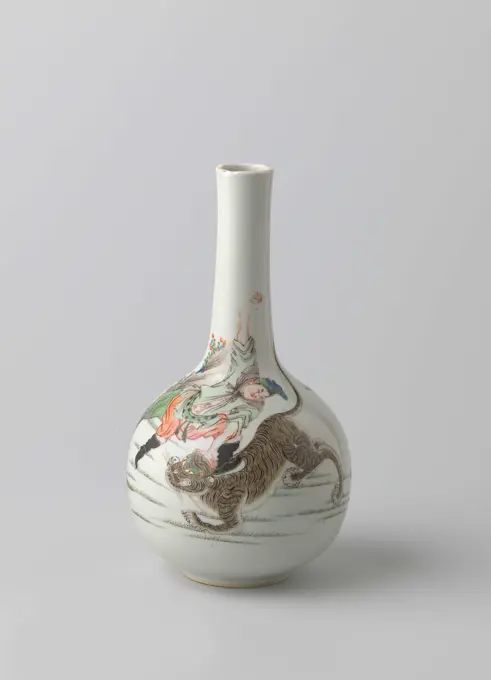
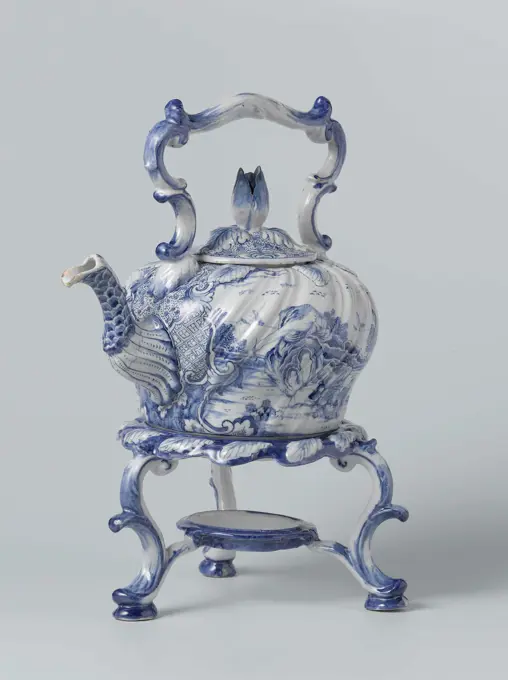
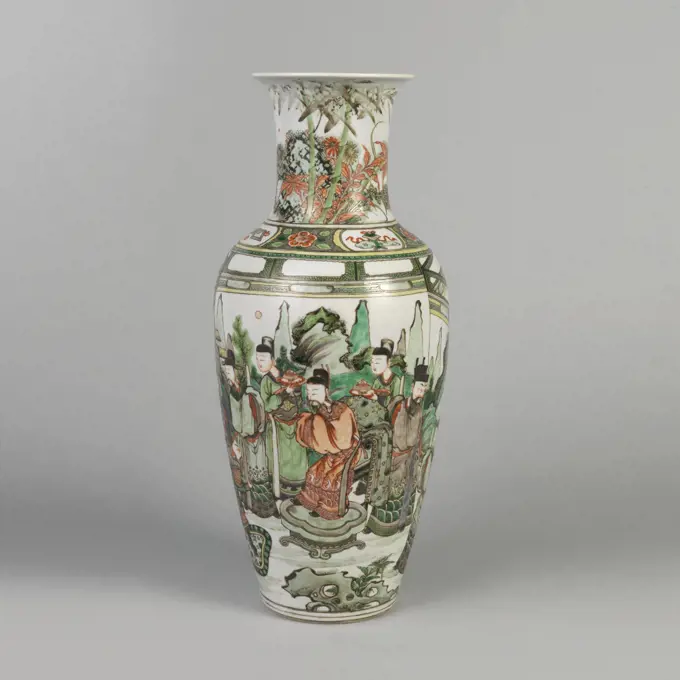
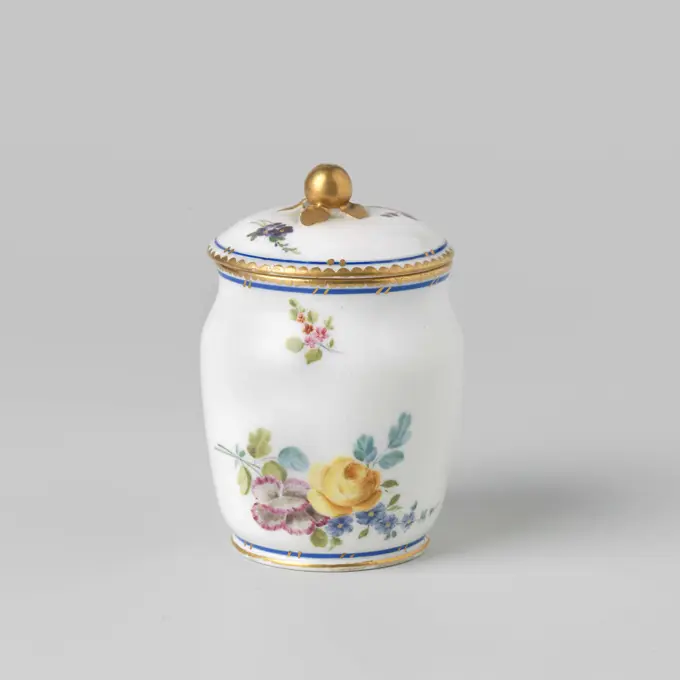
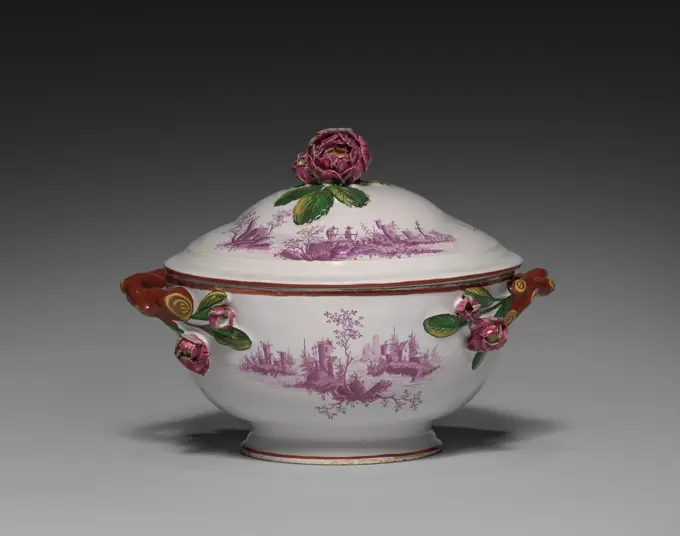
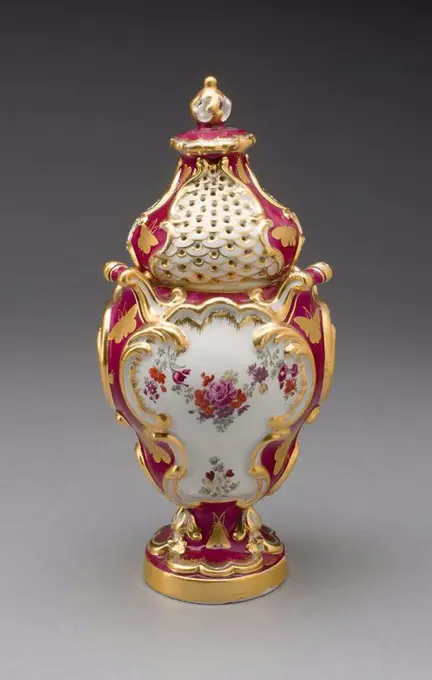
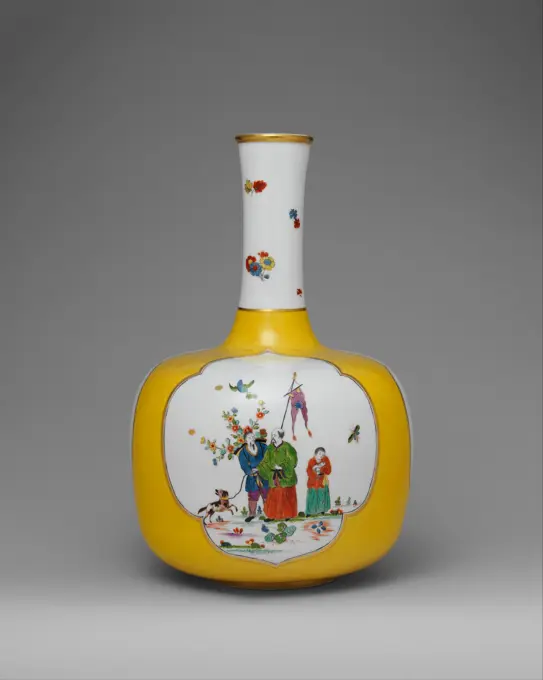
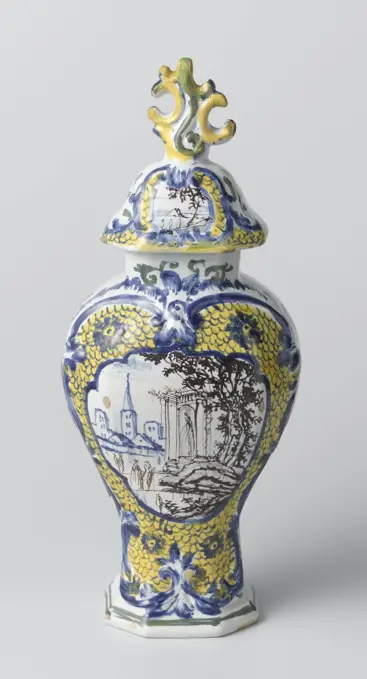
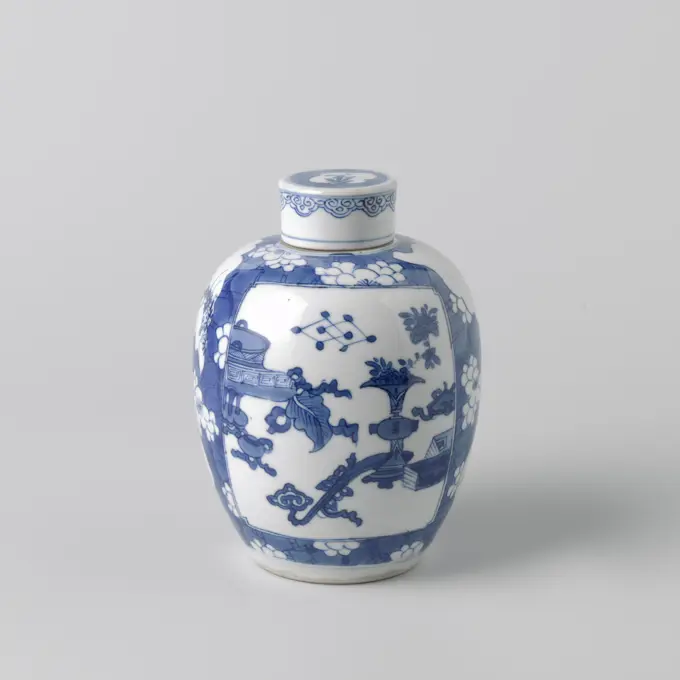
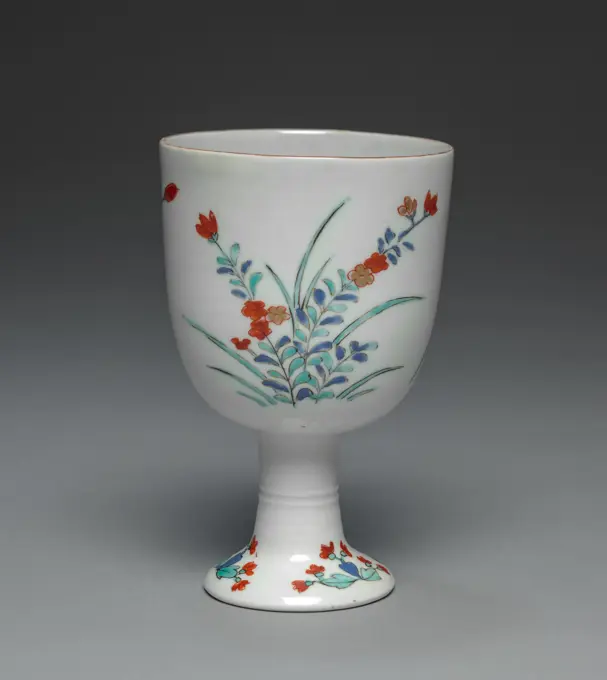
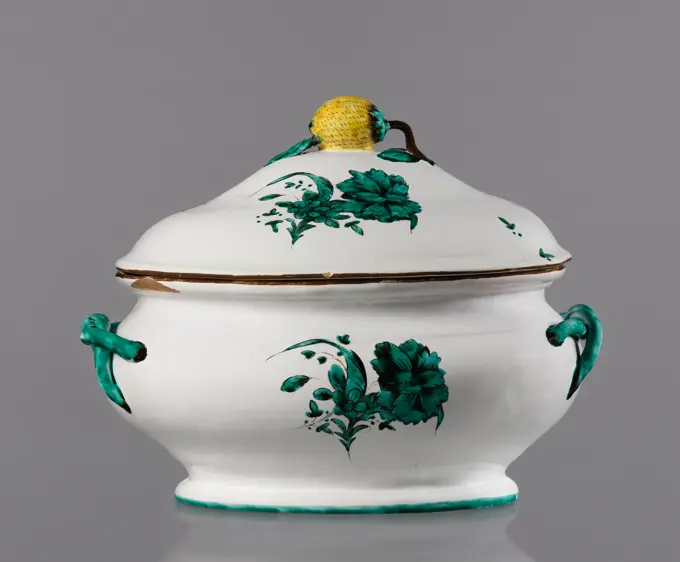
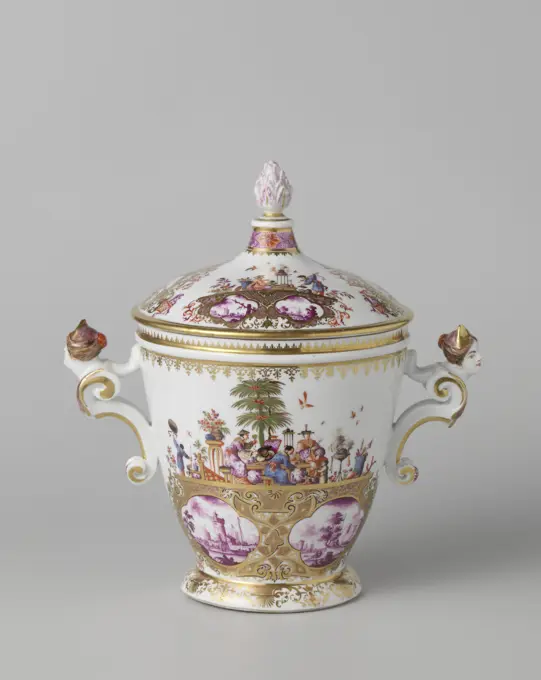
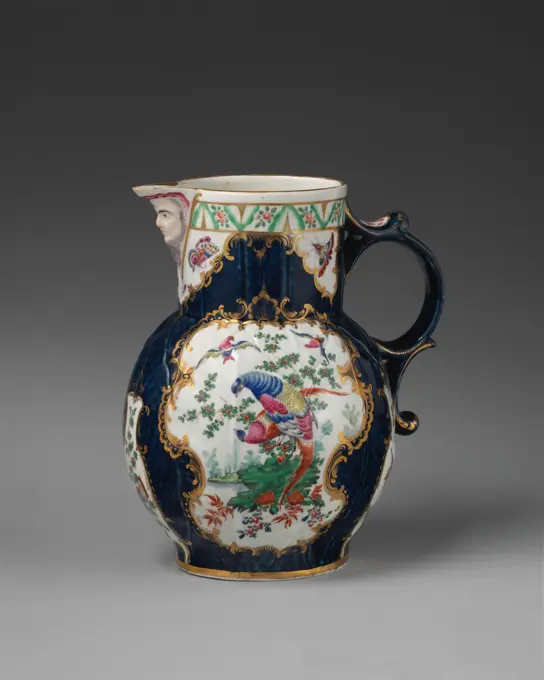
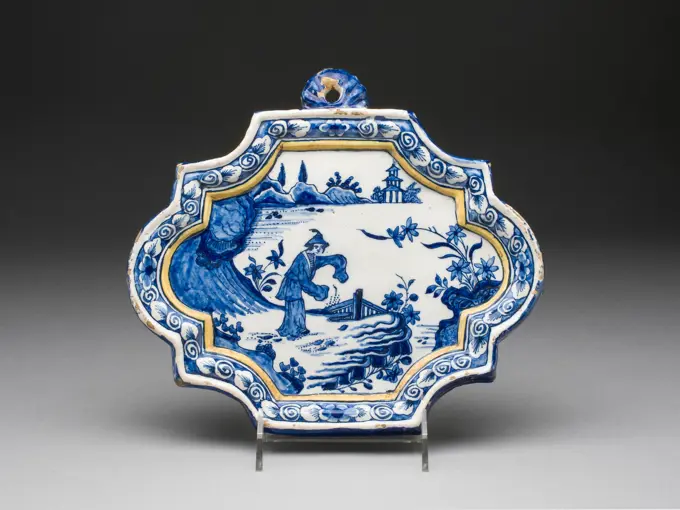
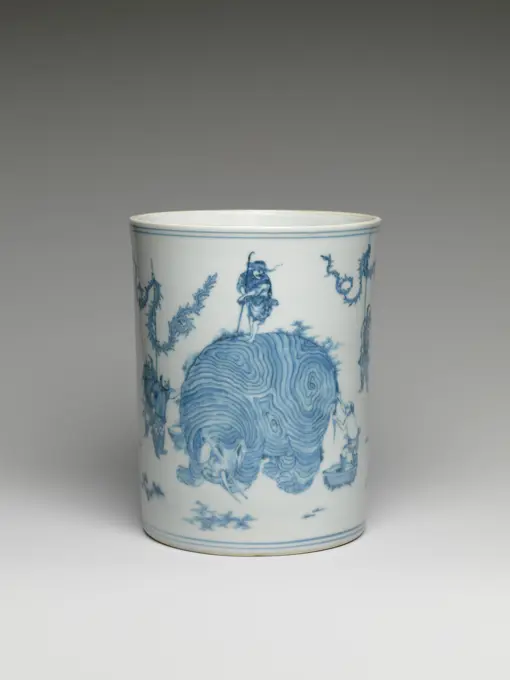
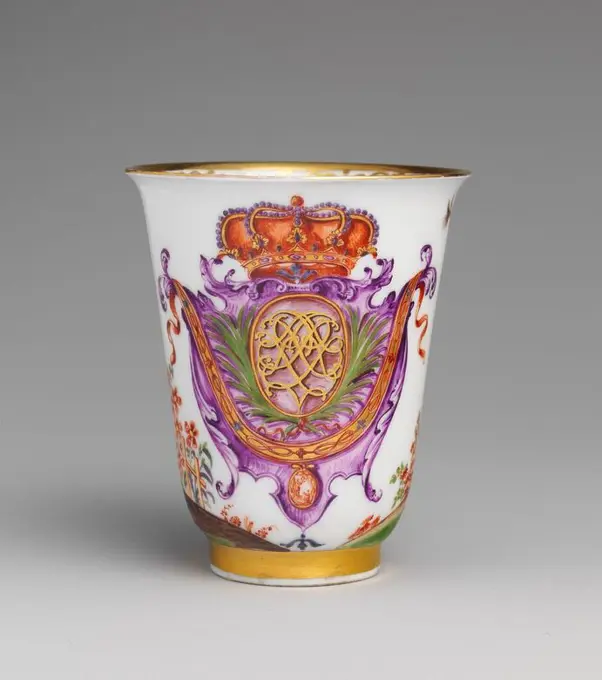
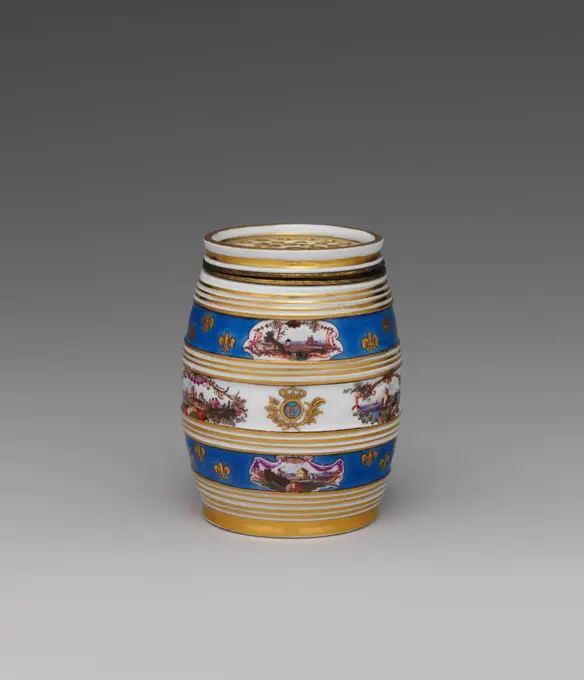
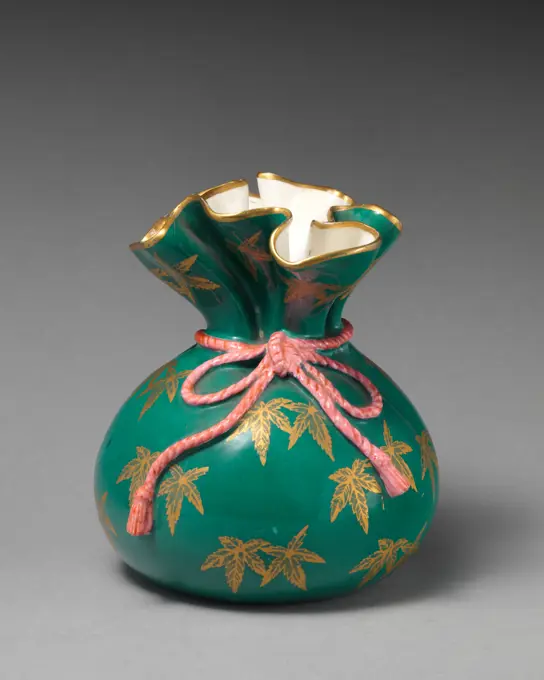
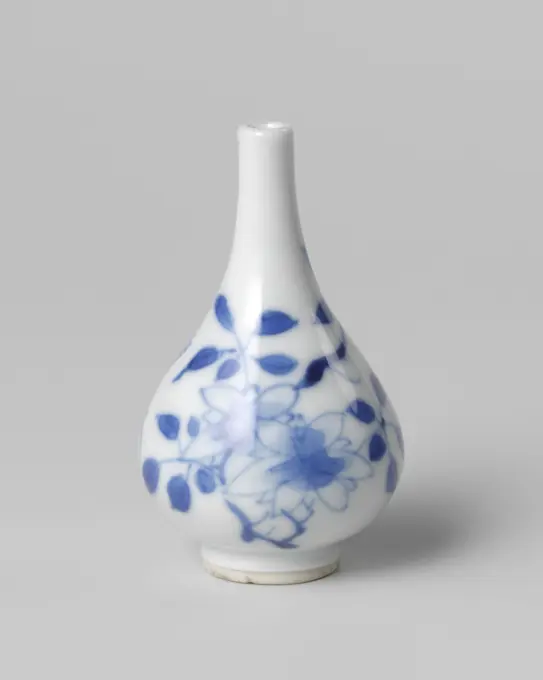
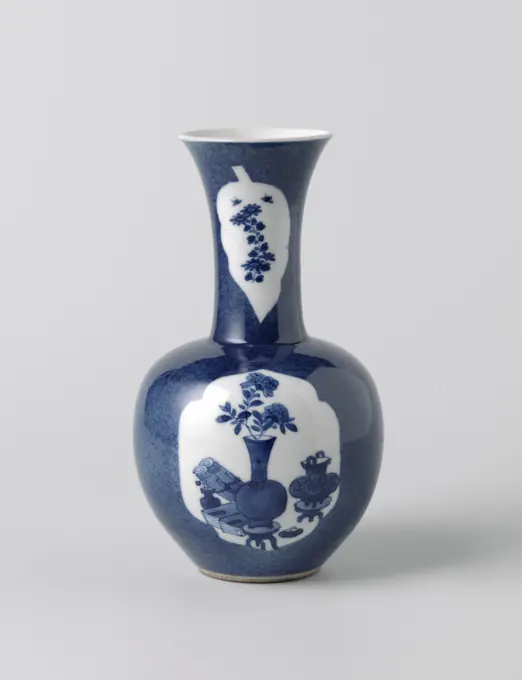
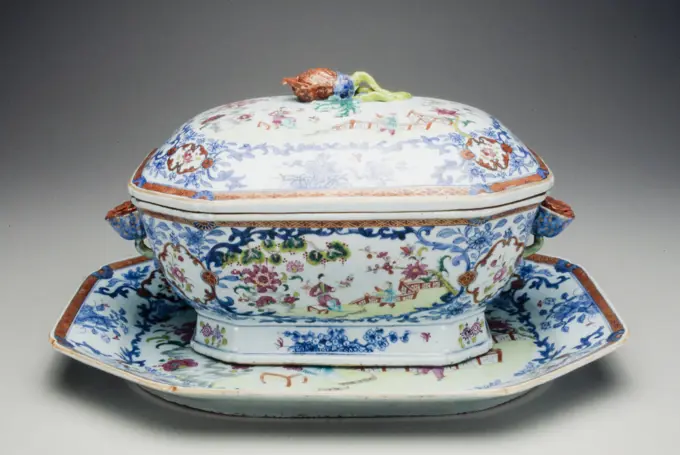
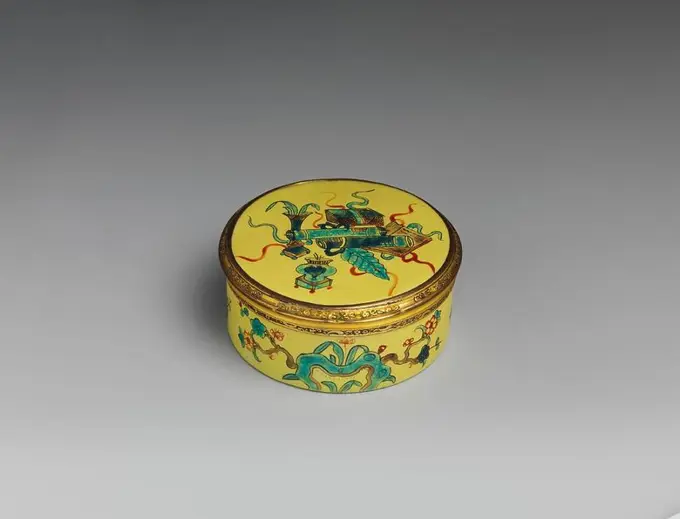
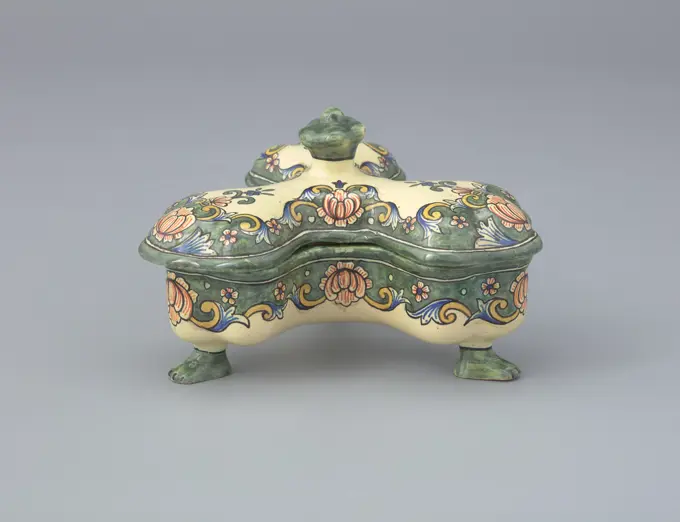
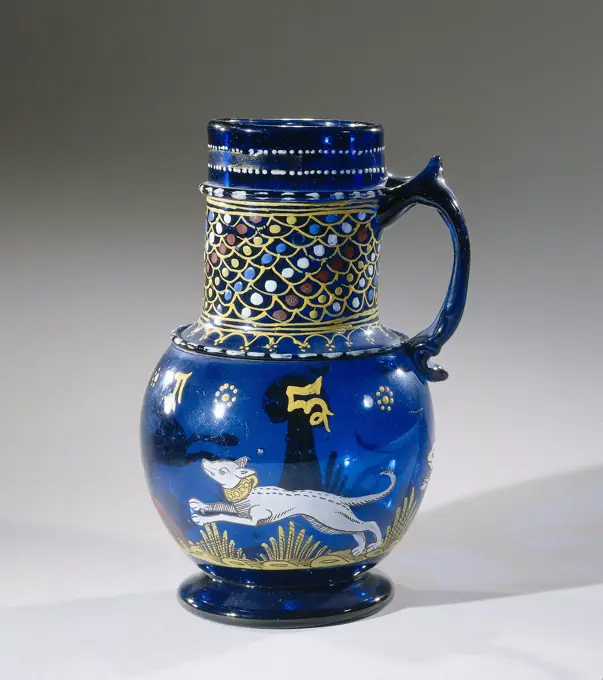
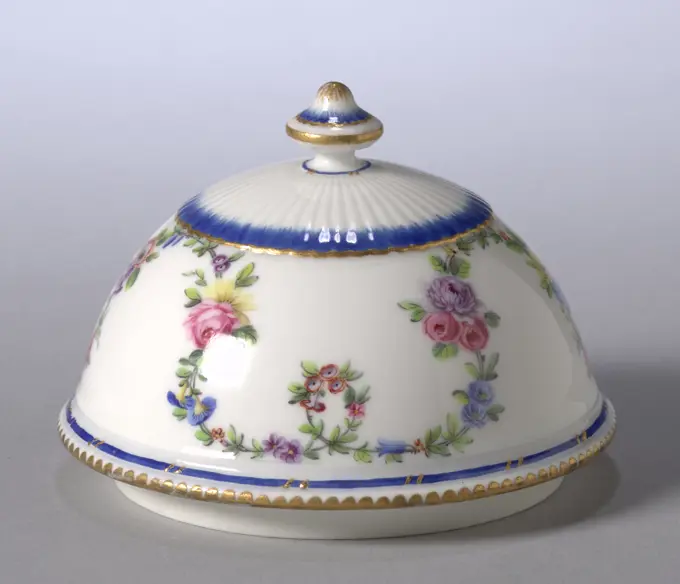
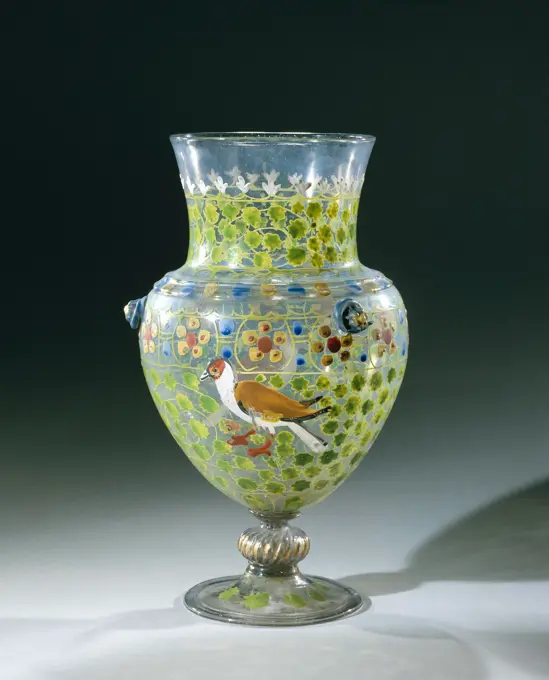
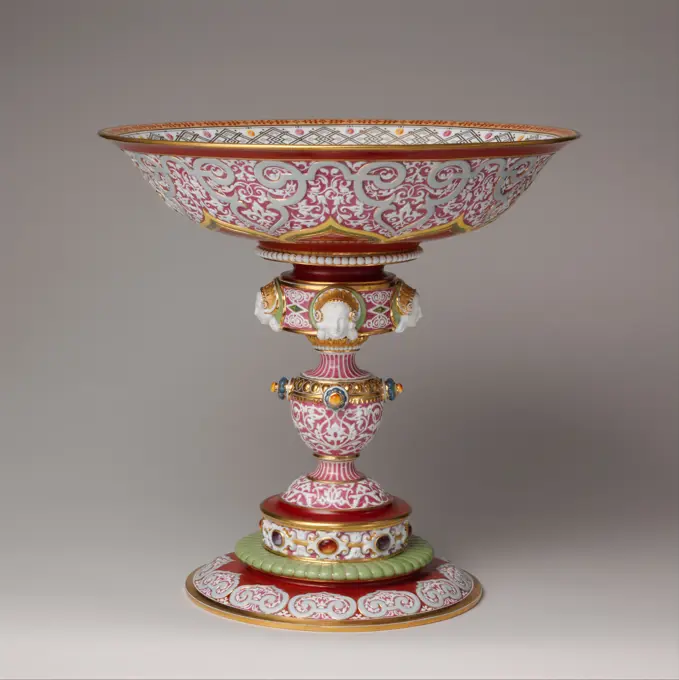
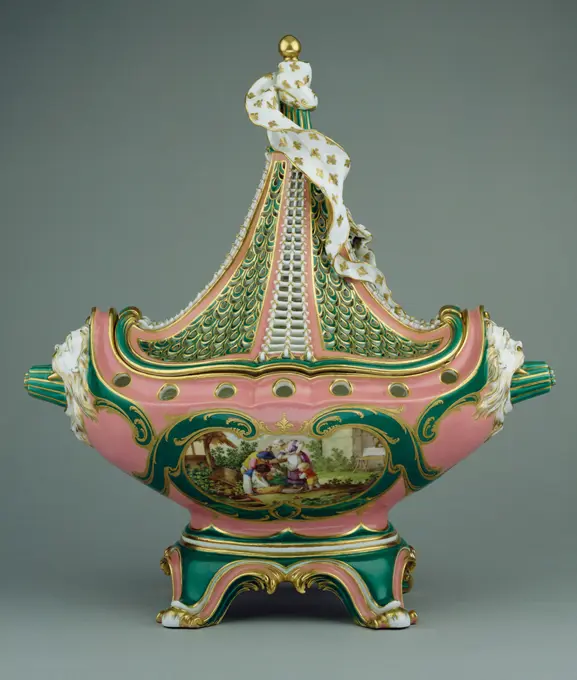
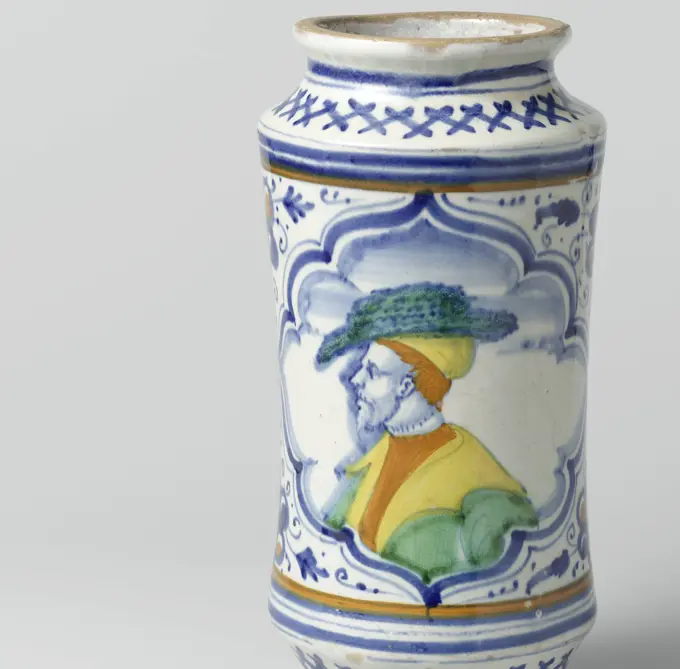
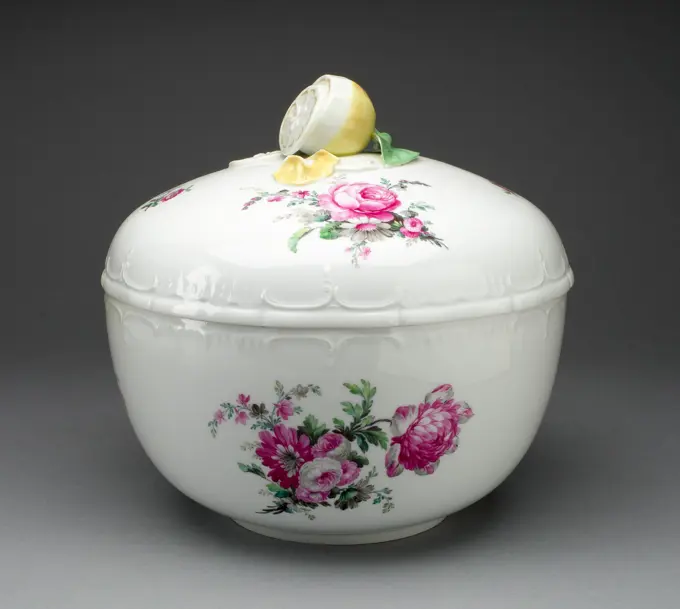
Lid of lid pot. Lid of lid pot of multi-colored padded faience. The button of the lid is one in a fruit pecking bird.Vase;  around 1910-1920 (1891-00-00-1900-00-00);. Large box of thick porcelain, with a shallow body on foot ring, spherical lid with four round, openwork medallions and flat button, painted in underglaze bleu poudré (powder blue) and red. On the body of the box, four precious objects in underglaze red; On the lid two spaced dragons that are hunting a flaming pearl in underglaze red. The white button is painted with a flower. The inside is divided into six compartments around a circular center. Crack in the lid; Twice copper batter on circular center. On the underside the six character mark of Emperor Chenghua in a double circle. Middle blue with copper food.. Half-ball-shaped sugar bowl of painted porcelain. The pot has a vaulted lid with a knob in the shape of a flower bud to a branch. The pot is painted with landscapes in which figures and along the edge a wide strip of green braid. The pot has been marked.Lidded vase. unknown, craftsmanPear-shaped bottle with two fight scenes. Bottle-shaped vase of porcelain with pear-shaped body, painted on the glaze in blue, red, green, yellow, eggplant, black and gold. On the wall two fighting scenes, one of a man with a rifle threatening above a kneeled man with a javelin in a tiger, the other with a basket that fights with his bare hands with a tiger. Border chipped. Famille Verte.Perfume bottle. huty szkła hr Buquya (ca 1600-1914), creatorLid of vase painted with musical instruments. Porcelain lid painted with musical instruments.Vase. Meissen porcelain manufactory ice cream, c. 1730-1735Hard paste porcelainFontaine ". Porcerelae. END KANGXI (1662-1723). Paris, Museum Cryice. Flower branches on which birds are perched. Chinese art, ere kangxi, porcelainSalt cellar with birds and scrolls, anonymous, c. 1700 - c. 1749 Salt barrel of stoneware with a square body and a round bowl. Decorated in cobalt blue. On each side a printed and imposed relief decoration of two birds standing on an inverted heart shape with curl. Westerwald. Westerwald (possibly) stoneware. glaze. cobalt (mineral) vitrification Salt barrel of stoneware with a square body and a round bowl. Decorated in cobalt blue. On each side a printed and imposed relief decoration of two birds standing on an inverted heart shape with curl. Westerwald. Westerwald (possibly) stoneware. glaze. cobalt (mineral) vitrification. Kettle on Komfoor van Faience, painted in blue with flowers and birds in a garden. The upper half of the boiler is decorated with Ajour decorated.Flower vase ca. 1695-1705 The "Greek A" Factory Although marked with the monogram AK, the mark used from 1687 to 1703 at the Delft "Greek A" factory during the management of Adrianus Koecks, his widow, and their son, Pieter, this flower vase is probably an example of a stock product made well into the eighteenth century, a simplified version of a high-style Baroque-period model of the late seventeenth century. Molds for such shaped ceramic wares were expensive to produce and would have remained in use over an extended period. Here, Chinese blue-on-white decoration has taken the place of the European ornament seen in early examples of this form. Originally, the panels had alternating blue and white grounds, with reserve decoration (white on blue and vice versa) of pictorial scenes such as boys playing in landscapes. The multi-tiered cover also has been reduced from earlier forms to a single concentrated row of flower holders around a larger central one. This example exists in interestinLid pot. Faience lid pot. Multicolored painted with chinoiserie decoration.Coffeepot with Battle Scenes (Bataillen-Malerei), Royal Porcelain Manufactory, Berlin, German, established 1763, hard paste porcelain, vitreous enamel, gold, Pear-shaped body, slightly compressed in lower part. Open spout, triple scrolled handle. Domed cover with pine-cone knob. Unglazed relief lines, forming four compartments. The area between these, and the edge are painted yellow. Polychrome overglaze battle scene, equestrian scene, and flower clusters alternating in panels on pot and cover. Gold edge and scents on spout, handle and knob., Germany, 1870-1900, ceramics, Decorative Arts, coffeepot, coffeepotOvoid covered jar with flowering plants and birds near a rock in panels, anonymous, c. 1800 - c. 1899 lid Porcelain lid of egg -shaped lid jar, painted in underly glaze blue and on the glaze blue, red, green, black and gold. On the wall a Swastika pattern interrupted by differently shaped small compartments with flowering plants, insects or butterflies. It saved three large, scalloped cartouches with a flying Hoo-Vogel above a flowering plant (peony) above rocks, a bird of prey above a flowering plant (peony) in rocks on the edge of a pond with two mandarin ducks or two cranes next to rocks, pine And Prunus. On the edge a band with stylized chrysanthnums interrupted by three lobed cartouches with a stylized lotus drink. The top of the wall with peoning drinks interrupted by three lobed cartouches with a cloudy. Lid button in the form of a shishi (lion dog) on a rock. Lid has been broken. Imari. Japan porcelain. glaze. cobalt (mineral). gold (metal) painting / gilding / vitrificationOvoid covered jar with flowering plants and birds near a rock in panels, anonymous, c. 1800 - c. 1899 can. Lid Egg -shaped lid pot of porcelain, painted in underly glaze blue and on the glaze blue, red, green, black and gold. On the abdomen a swastika pattern interrupted by differently shaped small compartments with flowering plants, insects or butterflies. It saved three large, scalloped cartouches with a flying Hoo-Vogel above a flowering plant (peony) above rocks, a bird of prey above a flowering plant (peony) in rocks on the edge of a pond with two mandarin ducks or two cranes next to rocks, pine And Prunus. On the shoulder a band with pearls between clouds. The neck with peony ranks interrupted by three lobed cartouches with a cloudy. Around the foot a band with stylized chrysanthnums interrupted by three lobed cartouches with a stylized lotus drink. The neck has been broken, restored with five hits. Imari. Japan porcelain. glaze. cobalt (mineral). gold (metal) painting / gilding . Attributed to the old Moriaanshooft (Geertruij Versting) Delft, c. 1765-1770TIN-Glazed Earthenware (Faience). Pot of faience. Painted blue. The lid is missing.Vase, Enameled and glazed porcelain, 'Famille verte' decoration; oviform vase; the sides depicting four sages in a rought, rocky landscape., China, 17th-18th century, ceramics, Decorative Arts, VaseHookah Base, 1600-1700. Safavid Dynasty (1500-1722). Two seated single figures on either side, wearing loose belted robes with halos in blue and white .Pot. High pot of multicolored porcelain, with lid. The pot is slightly nosed under the neck. Sprinkle bouquets are painted on the pot and golden edges. The lid has a gold-plated fruit as a button. The pot has been marked and belongs to a similar pot.Ovoid tea caddy with the arms of the Van Schoonhoven and Geraerds family, anonymous, c. 1739 Porcelain tea leisure with egg -shaped body, painted on the glaze in blue, red, black and gold. On the belly the weapon of the families of Schoonhoven and Geraerds. The weapon to the left of the Van Schoonhoven family consists of two fields: above a stork on blue background and under three pike. The weapon to the right of the Geraerds family consists of two fields: above a pigeon and under three roses or flower buds on a black background. The helmet sign is a crown with pearls with a diadem above it. The weapons are on a pedestal in red and gold. The wall is further covered with flower vines in Bianco Sopra Bianco. Around the foot curry in relief; A Spearhead border around the shoulder. Weapon porcelain with email colors. China porcelain. glaze. gold (metal) painting / gilding / vitrification Porcelain tea leisure with egg -shaped body, painted on the glaze in blue, red, black and gold. On the Covered Bowl, c. 1775. Saint-Clément Factory (French). Tin-glazed earthenware (faience) with enamel decoration; overall: 13.4 x 16.9 cm (5 1/4 x 6 5/8 in.). The faience factory at Saint-Clément in eastern France closely imitated the styles and techniques employed by the Hannong's at Strasbourg. The monochrome landscapes in red on this covered bowl demonstrate the influence of German, in this case Meissen, porcelain on the faience made in this part of France.Pear-shaped Milk Jug with Ladies, Boy and Silver Mounts. Porcelain pear-shaped milk jug with silver frame, painted in underglaze blue and white and on the glaze turquoise, red, pink, purple and black. The can be covered with napkin work with flowers and butterflies in Bianco Sopra Bianco and a GeloD cartouche with a lady at a table and a lady sitting on the ground with a boy next to him, around them a hare and vases; Equipped with a silver frame. The lid with the same decoration. Lid has been restored. Family Rose.Moon flask with paisley motif ca. 1875 Coalport. Moon flask with paisley motif. British, Coalport. ca. 1875. Bone china with enamel decoration and gilding. Ceramics-PorcelainPotpourri Vase. Chelsea Porcelain Manufactory; London, England, c. 1745-1784. Date: 1760-1770. Dimensions: 18.7 × 8.7 cm (7 3/8 × 3 7/16 in.). Soft-paste porcelain, polychrome enamels and gilding. Origin: Chelsea. Museum: The Chicago Art Institute, Chicago, USA.Ovoid tea caddy with a European country scene in two panels with flower sprays in between, anonymous, c. 1725 - c. 1749 Porcelain tea leopard with an egg -shaped body, on a base with open -worked curly, painted on the glaze in black and gold. On the wall two oval cartouches in which a European farming landscape with working people, cattle, a farm and a village in the background; A flower branch between the cartouches; On the shoulder a bond with branches in Meissen-style. The lid with two flower branches and a tire with tendrils. European performance in Encre de Chine. China porcelain. glaze. gold (metal) painting / gilding / painting Porcelain tea leopard with an egg -shaped body, on a base with open -worked curly, painted on the glaze in black and gold. On the wall two oval cartouches in which a European farming landscape with working people, cattle, a farm and a village in the background; A flower branch between the cartouches; On the shoulder a bond with branches in Meissen-style. Vase ca. 1735 Meissen Manufactory German Very few painters working at Meissen under Johann Gregorius Höroldt (German, 1696-1775) developed a distinctive, recognizable style, in part because the type of chinoiserie decoration implemented by Höroldt in the early 1720s evolved into a factory style in which the hands of individual artists were difficult to detect. Among the few artists whose work stands out from that of his peers is Adam Friedrich von Löwenfinck (German, 1714-1754). His stay at Meissen was relatively short but nevertheless very influential in terms of creating a particular style of chinoiserie decoration. Löwenfinck joined the factory in 1727 at the age of thirteen to apprentice under Höroldt, and by 1734 he had completed his training.1 Löwenfinck left Meissen in October 1736, perhaps due to frustration with his compensation as determined by Höroldt.2 After his departure, Löwenfinck worked for a number of faience factories in Germany, beginning with one in Bayreuth, anVase, Ernest Chaplet, c. 1885 - c. 1886  Paris stoneware. glaze. gilding (material) gilding  Paris stoneware. glaze. gilding (material) gildingPot, the gilt Blompot, 1780 - 1820  Powence pot. Multicolored painted. The pot is marked: B-p. Delft .Potpourri Vase 1760-1770 Chelsea. Soft-paste porcelain, polychrome enamels and gilding . Chelsea Porcelain FactoryRosewater Bottle 1765-1775 Worcester. Soft-paste porcelain with polychrome enamels and gilding . Worcester Royal Porcelain Company (Manufacturer)Wucai (Five-Color) Baluster Jar and Cover, c. 1640. China, Jiangxi province, Jingdezhen kilns, Qing dynasty (1644-1911), Shunzhi reign (1644-61). Porcelain with wucai (five-color) enamels; overall: 36.8 x 23.8 cm (14 1/2 x 9 3/8 in.).Ovoid covered jar with peachblossoms on 'crackled ice' and antiquities, anonymous, c. 1680 - c. 1720 Egg -shaped lid pot of porcelain, painted in underlaze blue. The body is covered with saved peach blossoms (prunus) against a background of 'crackled ice'. Two cartouches with valuables (Artemisiablad, Mint, Pearl) and Antiques (flower vase, incense burner, Ruyi-Skeptter, Drunkenpoot, Packaged Qin, Lotusrank). The lid with a saved, lobed cartouche with a flowering plant against a background of 'crackled ice'. The edge with a tire hanging Ruyi motifs. Blue White. China porcelain. glaze. cobalt (mineral) painting / vitrification Egg -shaped lid pot of porcelain, painted in underlaze blue. The body is covered with saved peach blossoms (prunus) against a background of 'crackled ice'. Two cartouches with valuables (Artemisiablad, Mint, Pearl) and Antiques (flower vase, incense burner, Ruyi-Skeptter, Drunkenpoot, Packaged Qin, Lotusrank). The lid with a saved, lobed cartouche with a floweringGoblet with Flowers, c. 1700. Japan, Edo period (1615-1868). Porcelain with overglaze color enamel and gold (Hizen ware Ko-Imari style); diameter: 8.1 cm (3 3/16 in.); overall: 13 cm (5 1/8 in.).Waza from the cover; Wolff, Karol (Fiansusu Factory; 1783-Ca 1800); approx. 1780 (1775-00-00-1785-00-00);Cylindrical vase. unknown, craftsmanlid jar, the gilded blompot, c. 1810 - c. 1840  Pot of multi -colored painted faience. On the pot is a cartouche with two houses inside a landscape in the colors blue, yellow, green, brown and purple painted. The pot belongs to an identical legs a cup. Delft earthenware. tin glaze.Potpourri Vase 1760-1770 Chelsea. Soft-paste porcelain, polychrome enamels and gilding . Chelsea Porcelain FactoryLotus-Seed Bowl with Petals and Arabesques, 1403-1424. China, Jiangxi province, Jingdezhen, Ming dynasty (1368-1644), Yongle period (1403-1424). Porcelain with underglaze blue decoration; diameter: 10.2 cm (4 in.); overall: 6 cm (2 3/8 in.).Lidded Tureen, Meissener porcelain manufactory, c. 1730 - c. 1735 Terrine with lid of painted porcelain. The Terrine has been awarded two volute -shaped ears by a women's head, with a gilded acanthus leaf in relief at the bottom. The lid ends in an artichoke. Terrine and lid are decorated with two Höroldt chinoiseries on consoles consisting of band, sheet and network with palmets in gold. A relief band runs under the mouth rim. The foot is decorated with tire, leaf and network and palmets in gold. The terrine is marked. Float porcelain Terrine with lid of painted porcelain. The Terrine has been awarded two volute -shaped ears by a women's head, with a gilded acanthus leaf in relief at the bottom. The lid ends in an artichoke. Terrine and lid are decorated with two Höroldt chinoiseries on consoles consisting of band, sheet and network with palmets in gold. A relief band runs under the mouth rim. The foot is decorated with tire, leaf and network and palmets in gold. The terrine is markedFragment of a jug with a portrait of Christan II, Elector of Saxony, anonymous, c. 1590 - c. 1620 Fragment of a jug of stoneware on stand ring with a spherical body. Neck and ear are missing. Partly covered with cobalt blue. On the abdomen in relief a printed and imposed medallion with a portrait of Christiaan II, Elector of Saxen, with the edge of Christian II DVX Saxoniae etc septemviratvs Caes'. The medallion is surrounded by bred ranks with stamped flowers. Raeren. Rae stoneware. glaze. cobalt (mineral) vitrification Fragment of a jug of stoneware on stand ring with a spherical body. Neck and ear are missing. Partly covered with cobalt blue. On the abdomen in relief a printed and imposed medallion with a portrait of Christiaan II, Elector of Saxen, with the edge of Christian II DVX Saxoniae etc septemviratvs Caes'. The medallion is surrounded by bred ranks with stamped flowers. Raeren. Rae stoneware. glaze. cobalt (mineral) vitrificationJar 14th century China. Jar. China. 14th century. Porcelain painted in underglaze blue. Yuan dynasty (1271-1368). CeramicsJar, anonymous, c. 1350 - c. 1399 Egg -shaped pot of stoneware, covered with a white sludge and painted in dark brown under the enamel. On the belly a large scalloped cartouche with a Feng Huang between clouds and one with a four -clawy, pearl pursuit of dragon between clouds. In between, two opposite, triangular cartouches with a flower vank. On the shoulder a band with peony drinks and a band with leaf motifs. Around the foot a band with stylized flowers. Some chips in the edge. Cizhou. China stoneware. glaze painting / vitrification Egg -shaped pot of stoneware, covered with a white sludge and painted in dark brown under the enamel. On the belly a large scalloped cartouche with a Feng Huang between clouds and one with a four -clawy, pearl pursuit of dragon between clouds. In between, two opposite, triangular cartouches with a flower vank. On the shoulder a band with peony drinks and a band with leaf motifs. Around the foot a band with stylized flowers. Some chips in the edge. CizhouMiniature sixloby, bottle-shaped vase of porcelain, painted in underglaze blue. On the wall, six times flowering plants and Chinese ladies (long tales). Blue White.Vase;  around 1905-1908 (1905-00-00-1908-00-00);Jug (one of a pair) ca. 1770 British, Worcester. Jug (one of a pair). British, Worcester. ca. 1770. Soft-paste porcelain. Ceramics-PorcelainPlaque 1725-1735 Delft. Tin-glazed earthenware (Delftware) .Brush Pot with Scene of Washing an Elephant mid-17th century China Found in paintings as well as the decorative arts, the theme of figures washing an elephant, or sao xiang, is a pun on the Buddhist notion of the illusionary nature of the phenomenal world.. Brush Pot with Scene of Washing an Elephant 74336Covered Box with Phoenixes. Thailand, Sawankhalok, 16th century. Furnishings; Accessories. Wheel-thrown stoneware with cream slip, underglaze brown painted decoration, and pale blue glazeMiniature baluster-shaped vase of porcelain, painted in underglaze blue. Plants blooming on the wall (Aster) and loose twigs. The neck with plants. A chip in the foot. Blue White.Bottle ca. 1760 British. Bottle. British. ca. 1760. Opaque glass with enamel decoration. Probably made in Bristol, Bristol, EnglandFlower Vase 1759 Sèvres. Soft-paste porcelain, polychrome enamels, and gilding . Manufacture nationale de Sèvres (Manufacturer)Beaker. Culture: German, Meissen. Decorator: Johann Gregor Höroldt (1696-1775). Dimensions: Overall (confirmed): 3 × 2 1/2 × 2 9/16 in. (7.6 × 6.4 × 6.5 cm). Factory: Meissen Manufactory (German, 1710-present). Date: ca. 1725.This beaker and saucer were part of a tea and chocolate service given to Vittorio Amadeo II, King of Sardinia (1666-1732) by Augustus the Strong, the Elector of Saxony, under whose patronage the Meissen factory was established. Museum: Metropolitan Museum of Art, New York, USA.Pounce pot 1740-50 Meissen Manufactory German This pounce pot, which would have held a fine sand used to dry ink, and its stand (02.5.31) are decorated with the royal arms of France.. Pounce pot 188545 Factory: Meissen Manufactory, German, 1710present, Pounce pot, 174050, Hard-paste porcelain, Height: 3 3/8 in. (8.6 cm). The Metropolitan Museum of Art, New York. Gift of W. B. Osgood Field, 1902 (02.5.30a, b)Bencharong bowl in the Jim Thompson House collection, Bangkok,Thailand.Vase (one of a set of three). Culture: British, Chelsea. Dimensions: Height: 12 9/16 in. (31.9 cm). Factory: Chelsea Porcelain Manufactory (British, 1745-1784, Gold Anchor Period, 1759-69). Date: ca. 1761. Museum: Metropolitan Museum of Art, New York, USA.Snuff Bottle, 18th century, H.2-3/4 x W.1-1/2 in., Porcelain, China, 18th centuryVase with Dragon 1678-1712 China. Vase with Dragon. China. 1678-1712. Porcelain with relief decoration painted with copper red under transparent glaze (Jingdezhen ware). Qing dynasty (1644-1911), Kangxi period (1662-1722). CeramicsJug. Staffordshire, England. Date: 1755-1765. Dimensions: 18.1 x 15.2 x 12.1 cm (7 1/8 x 6 x 4 3/4 in.). Salt-glazed stoneware, polychrome enamels. Origin: Staffordshire. Museum: The Chicago Art Institute, Chicago, USA.. Vase of quartz Fritgoed with lead, decorated with flower drinks in blue and black on white Engobe under transparent glaze. The neck has been open.Vase in the form of a beggar's purse 1876 Worcester factory After the end of the Flight, Barr & Barr ownership of the Worcester factory in 1840, the firm went through a succession of owners and mergers before falling under the ownership of Kerr & Binns in 1852. During the partnership, the factory sought to rebuild its former eighteenth-century reputation in porcelain and known for Renaissance-inspired designs. With the establishment of the Royal Worcester Porcelain Company in 1862, the company gradually gained recognition for its Japanese-inspired designs, which formed part of Japonisme, a collective fascination with Japan that took place in Europe and the United States following the opening of Japanese markets to the West by Commodore Perry in 1853.. Vase in the form of a beggar's purse. British, Worcester. 1876. Bone china. Ceramics-PorcelainBottle vase with powder blue, antiquities and precious objects, anonymous, c. 1700 - c. 1724 Bottle -shaped vase of porcelain with a pear -shaped abdomen, ring -shaped thickening in the neck and flared edge, painted in under -glaze blue. The bottle is covered with bleu poudré (powder blue) with three scallops on the wall filled with antiques and valuables; Three -saved courses in the thickening on the neck filled with three different incense burners; A double circle on the bottom. Bleu Poudré with blue and white. China porcelain. glaze. cobalt (mineral) painting / vitrification Bottle -shaped vase of porcelain with a pear -shaped abdomen, ring -shaped thickening in the neck and flared edge, painted in under -glaze blue. The bottle is covered with bleu poudré (powder blue) with three scallops on the wall filled with antiques and valuables; Three -saved courses in the thickening on the neck filled with three different incense burners; A double circle on the bottom. Bleu Poudré with blue Teacup. Nieokreślona manufaktura, factoryMiniature pear-shaped bottle vase with flowering plants, anonymous, c. 1675 - c. 1724 Miniature bottle -shaped vase made of porcelain with a pear -shaped body, painted in underlaze blue. Plants flowering on the abdomen (Prunus, aster). Blue White. China porcelain. glaze. cobalt (mineral) painting / vitrification Miniature bottle -shaped vase made of porcelain with a pear -shaped body, painted in underlaze blue. Plants flowering on the abdomen (Prunus, aster). Blue White. China porcelain. glaze. cobalt (mineral) painting / vitrificationBowl, c. 1790. England, Derby, 18th century. Soft-paste porcelain; diameter: 15 cm (5 7/8 in.).Sugar pock, painted with a river landscape with farms and figures, Royal Porcelain Factory Dommer & Co., 1809 - in or before 1814 Vase -shaped sugar bowl of porcelain, painted with a river landscape with farms surrounded by trees, and some figures on the water. Also two sprinkling flowers. Marked under the glaze in blue: Amstel. Nieuwer-Amstel porcelain Vase -shaped sugar bowl of porcelain, painted with a river landscape with farms surrounded by trees, and some figures on the water. Also two sprinkling flowers. Marked under the glaze in blue: Amstel. Nieuwer-Amstel porcelainBottle vase with powder blue, antiquities and flower sprays, anonymous, c. 1700 - c. 1724 Bottle -shaped vase of porcelain with a wide, flared neck, covered with and painted in underlaze blue. On the belly three scalloped cartouches with antiques (vase with peacock springs, flower vase, lotus leaf, perseel holder, rolls, fan, ruyi-scepter, incense burner, lotus-skeptic, books). On the neck two leaf -shaped cartouches with flower branches (aster, splendidanjer). Blue Poudré. China porcelain. glaze. cobalt (mineral) painting / vitrification Bottle -shaped vase of porcelain with a wide, flared neck, covered with and painted in underlaze blue. On the belly three scalloped cartouches with antiques (vase with peacock springs, flower vase, lotus leaf, perseel holder, rolls, fan, ruyi-scepter, incense burner, lotus-skeptic, books). On the neck two leaf -shaped cartouches with flower branches (aster, splendidanjer). Blue Poudré. China porcelain. glaze. cobalt (mineral) painting / vitrification. Octagonal vase of porcelain with two standing ears on the neck, painted on the glaze in red, green, yellow, eggplant and black. The belly is divided into eight compartments with flowering plants at a rock. Above belly an annular thickening with a kind of gate and a bond with leaf motifs. The neck with vertical tires with napkin. On the ears loose flowers and black dots. The inner edge with a band arce. The base of the pedestal with yellow flowers and black dots; Above a bond with curling work. The top with arrearing. Famille Verte.Balustervase with stylized flower pattern. Baluster-shaped vase of soft-paste porcelain (Pte tendre) with wide, straight neck and trumpet-shaped mouth, painted in underglaze blue. The vase is covered with stylized flower drinks; To the base of the neck a band with spiral forms. Marked on the bottom with the four-character mark of Emperor Chenghua. The edge has been broken. Blue White.Jug. Culture: American. Dimensions: H. 9 in. (22.9 cm). Date: 1790-1830.The Great Seal of the United States, featuring an eagle grasping an olive branch and a bundle of arrows, was endorsed by Congress in 1789. Soon after, limitless variations decorated all types of objects, including stoneware. Museum: Metropolitan Museum of Art, New York, USA.Vase;  19th century (1801-00-00-1900-00-00);Wine Jug 1695-1705 Germany. Tin-glazed earthenware (faience) and pewter .Platter for Lidded Tureen, c. 1760, 1 11/16 x 16 1/2in. (4.3 x 41.9cm), Porcelain, China, 18th centuryCharger. England, London. Date: 1680-1690. Dimensions: Diam. 33.3 cm (13 1/8 in.). Tin-glazed earthenware. Origin: London. Museum: The Chicago Art Institute, Chicago, USA. Author: Lambeth Potteries.Vase with two handles, Italian majolica of Montelupo, between the end of the 16th century and early 17th centurySnuffbox. Culture: French, possibly Saint-Cloud. Dimensions: 1 5/16 × 3 in. (3.3 × 7.6 cm). Factory: Possibly Saint-Cloud factory (French, before 1698-1766). Date: 18th-19th century.In eighteenth-century Europe, Paris led the production of high-quality luxury goods. Parisian goldsmiths made a wide range of small, personal articles such as snuffboxes; étuis to hold sealing wax, tweezers, or utensils for sewing; souvenirs, which contained thin ivory tablets for note taking; and shuttles for knotting lace. Gold snuffboxes and boxes decorated with portrait miniatures were prized and frequently given as royal gifts, often to ambassadors or members of the court in lieu of cash payments for their services. Coveted and admired, these boxes were produced from a variety of materials. The best were skillfully made of gold and embellished with diamonds, enameled decoration, lacquer, and other luxurious materials. By the middle of the century, the taking of snuff had become an entrenched social riJug. Spherical jar of stoneware, with a pewter lid. The wide neck is short and cylindrical, the ear is C-shaped and the abdomen is narrow in the foot. The jug is in relief decorated with a medallion in which the letters gr in blue, on either side a medallion with a careting horse inside.Tri -day salt shaker with lid; Manufaktura Majoliki in Nieborów (Nieborów; Wytwórnia; 1881-1899); 1881-1886 (1881-00-00-1886-00-00);Jug with a deer show, Anonymous, 1596 Smooth, wide position ring. Spherical body under a cylindrical neck. Turned C-shaped ear with thumb piece. A smooth thread with white dots around body and neck, at the height of the turn on. On the body a hunting scene: a brown deer with a white antler, chased by two white dogs in a landscape. Above it the year 1596, the figures separated by rosettes. The neck is decorated with scales, in which sloping tires of green, red, blue and white dots. Along the top edge a gilded bond between two edges white dots. Bohemia glass glassblowing Smooth, wide position ring. Spherical body under a cylindrical neck. Turned C-shaped ear with thumb piece. A smooth thread with white dots around body and neck, at the height of the turn on. On the body a hunting scene: a brown deer with a white antler, chased by two white dogs in a landscape. Above it the year 1596, the figures separated by rosettes. The neck is decorated with scales, in which sloping tires of green, reSoap Box (cover), c. 1769. Sèvres Porcelain Factory (French, est. 1756). Soft-paste porcelain; overall: 11.5 x 9.1 cm (4 1/2 x 3 9/16 in.).. Spice box of painted porcelain. The sparkle box is rectangular and has two oval-deepened parts on either side of a round part, which is closed by a lid in a copper frame in the form of a shell. The wall is painted with bound hedges and flowers. The spice box has been marked.. Vase on flat foot with beaten edge. The foot and body connected by a ribbed nodes under a disc. Vase-shaped body with escaped neck. Three bram buds on the body. A flat wire around the shoulder. The foot, body and neck painted with apple green serrated leaves. In addition, two birds and a border rosettes on the body. Remains of gildings on the nodus.Wucai 'Dragon' Box and Cover 1563-1620 China. Porcelain painted in underglaze blue and overglaze enamels .Bottle 16th century China. Bottle 50463Turen With Stand With Figures on a Terrace near a Pavilion. Terrine of porcelain with two braided ears, painted on the glaze in blue, red, pink, green, yellow, black and gold. The terrine with two different representations of a group of ladies and a seated man; The lid with a sitting woman in a garden, two standing people with a range and two ladies looking from the window of the pavilion. Family Rose.You type with a cover on the stand;  1736-1795 (1736-00-00-1795-00-00);Garniture of Three Lidded Vases and Two Open Vases. UnknownVase with lid. unknown, craftsmanGar from the cover;  18th century (1601-00-00-1700-00-00);Standing cup (coupe Chenavard) 1837 Sèvres Manufactory French The Sevres factory developed this model of standing cup in 1836 and named it after its designer, Aimé Chenavard. Both its form and its decoration refer directly to French Renaissance metalwork and ceramics, and indeed one of the first coupes Chenavard produced was described in factory records as "a goblet in the 16th century style." The low-relief interlace patterns of the coupe are derived from those found on a type of French Renaissance pottery known as Saint-Porchaire ware. The first piece of Saint- Porchaire pottery to be identified as dating to the sixteenth century was sold at auction in Paris in 1837. It has been suggested that the then director of the Sevres factory was aware of its existence prior to the sale and used it as a source of inspiration for the coupe Chenavard. The exuberant color scheme of the coupe, however, is far removed from the restrained palette of white and browns that characterizes Saint-PorchairVase, c. 1760, 8 1/4 x 7 1/8 x 7 1/8 in. (20.96 x 18.1 x 18.1 cm), Glazed ceramic, England, 18th centuryLidded Pot-pourri Vase (vase or pot-pourri vaisseau à mt, deuxième grandeur).Vase (part of a set) ca. 1740-50 Meissen Manufactory German. Vase (part of a set) 203152Vase;  19th century (1801-00-00-1900-00-00);Jardiniere with stand. unknown, craftsmanAlbarello, multicolored painted with two cartouches: in one man with a triple, in the other a man with flat dotted hat., Anonymous, c. 1550 - c. 1570 pot Pot of multicolored painted majolica, with a struggling neck and foot. Two cartouches were painted on the pot in which a man's portrait and profile. One man wears a hat with a yellow ball (three -pointed hat) and has a round profile. The other man wears a flat, blue and green dotted hat and has a sharp profile. Browse vines, spirals and a rosette are painted between the cartouches. Antwerp earthenware. tin glaze. lead glaze majolica. Hard-paste porcelain and polychrome enamels . Königliche Porzellan-Manufaktur in Berlin (Prussia)Flower Pot. Culture: Mexican. Dimensions: H. 17 in. (43.2 cm). Date: ca. 1700-1750. Museum: Metropolitan Museum of Art, New York, USA.